RACISM

Racism, also known as racialism, is the belief that humans can be divided into distinct biological entities known as “races,” that there is a causal link between inherited physical traits and personality, intellect, morality, and other cultural and behavioral characteristics, and that some races are innately superior to others.

While contemporary social science considers race and ethnicity to be distinct categories, the two terms have a long history of equivalency in public usage and earlier social science literature.

“Ethnicity” is frequently used in a sense similar to that of “race”: the classification of human groups based on attributes thought to be inherent or necessary to the group.

The term “racial discrimination” refers to any distinction, exclusion, restriction, or preference based on race, color, descent, national or ethnic origin that has the purpose or effect of nullifying or impairing the recognition, enjoyment, or exercise of human rights and fundamental freedoms on an equal footing in the political, economic, social, cultural, or other fields of public life.
The phrase also refers to political, economic, or legal institutions and systems that participate in or perpetuate racial discrimination or otherwise exacerbate racial disparities in wealth and income, education, health care, civil rights, and other sectors.

With the rise of critical race theory, an extension of the critical legal studies movement, such institutional, structural, or systemic racism became a special focus of scholarly research in the 1980s.

Since the late twentieth century, biological race has been recognized as a cultural construct with no scientific foundation.

Racism dictated that different races (primarily blacks and whites) be separated from one another, that they should have their own distinct communities and develop their own institutions such as churches, schools, and hospitals, and that it was unnatural for members of different races to marry in North America and apartheid-era South Africa.

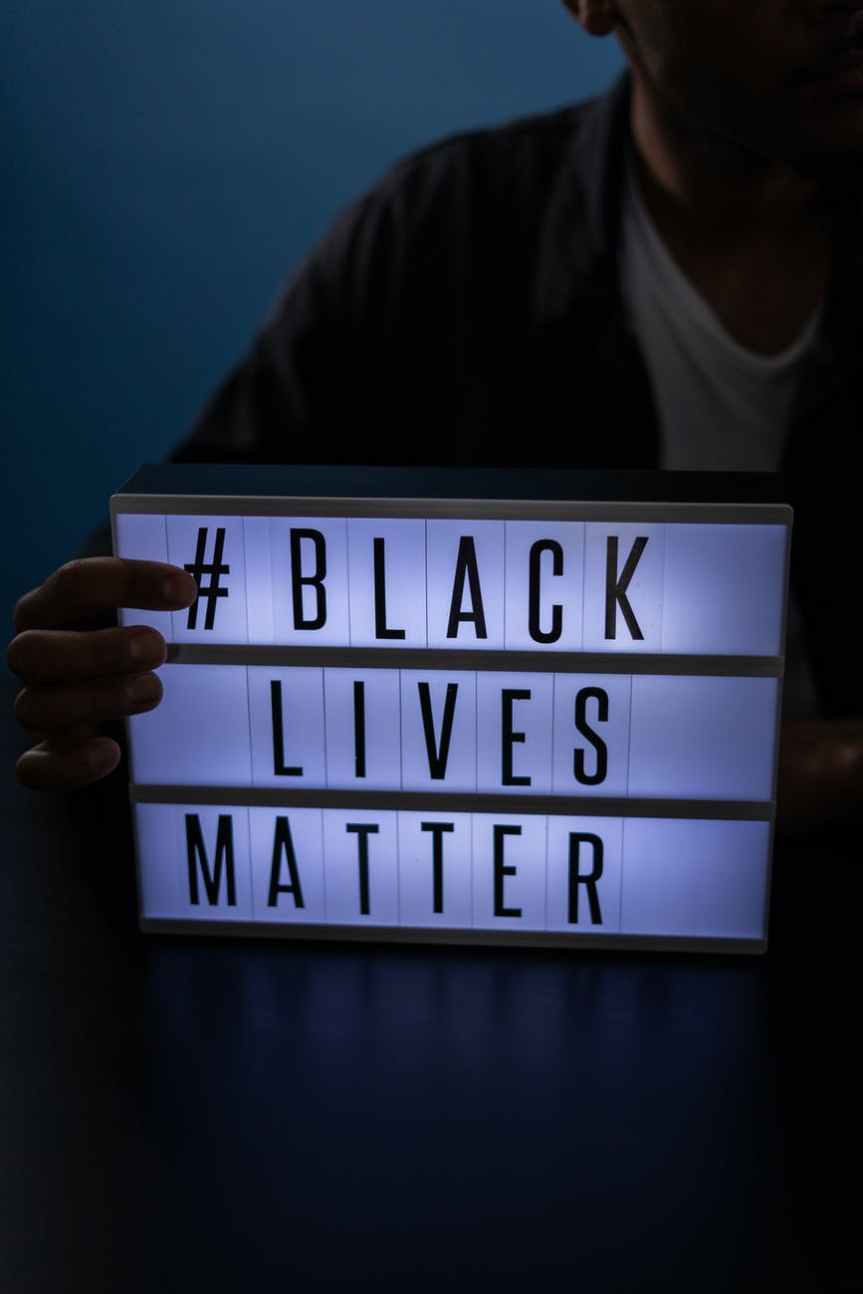
BLACK LIVES MATTER

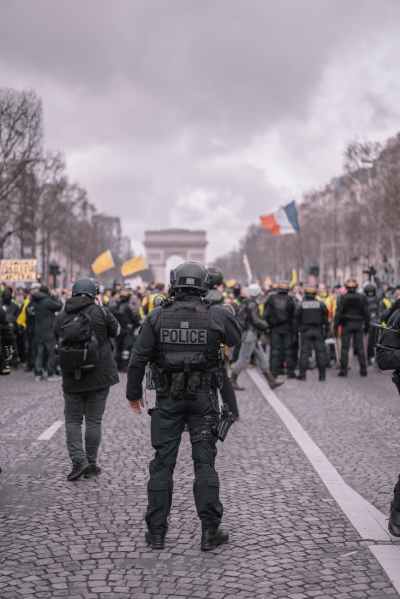
On June 6, half a million people showed out in approximately 550 locations around the United States for the recent Black Lives Matter rallies, which peaked on June 6. That was just one day in a month of protests that are still going on today.
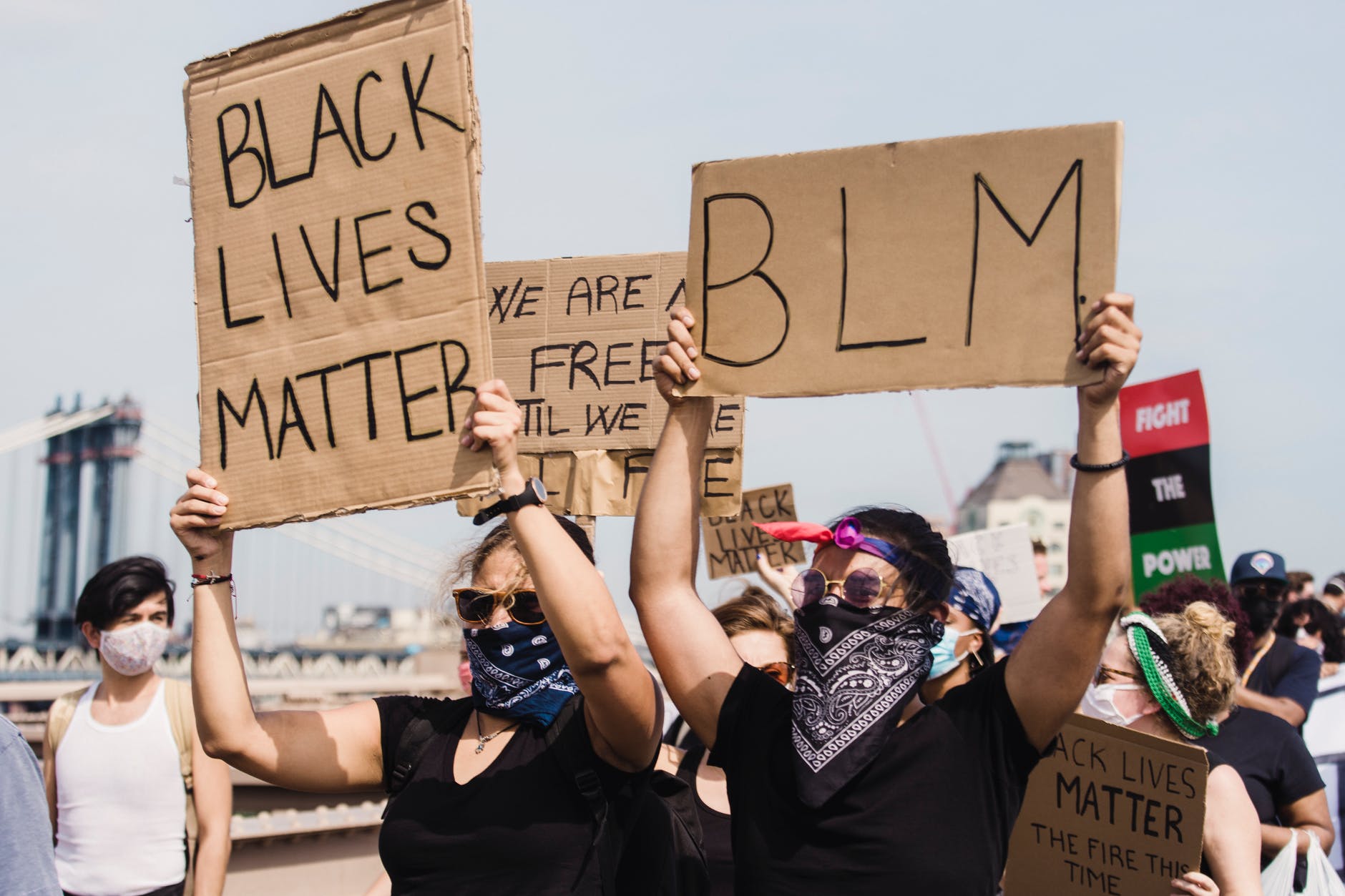
Photo by Life Matters on Pexels.com

Four recent polls, including one released this week by Civics Analytics, a data science firm that works with businesses and Democratic campaigns, estimate that between 15 million and 26 million people in the United States have participated in protests in recent weeks in response to the death of George Floyd and others.

These figures would make the recent protests the largest movement in the country’s history, according to interviews with scholars and crowd-counting experts.

While it’s likely that more people stated they protested than actually did, even if only half of them were telling the truth, the surveys indicate that over seven million people took part in recent protests.

There have been protests in more than 40% of counties in the United States (at least 1,360).

Unlike previous Black Lives Matter events, approximately 95 percent of counties with recent protests are majority white, with nearly three-quarters of counties having a white population of more than 75 percent.

Half of those who claimed they demonstrated indicated it was their first time participating in some type of activism or protest.

Within the recent year, the majority of people claimed they had seen a video of police violence against protestors or the Black community. And half of those polled thought it strengthened their support for the Black Lives Matter movement.

According to the Crowd Counting Consortium, the number of protests has decreased significantly over the last two weeks, notwithstanding a rise on Juneteenth.

“Our ability to reach unity in diversity will be the beauty and the test of our civilization.”

– Mahatma Gandhi, 1925

Professor McAdam stated, “It appears, for all the world, that these protests are accomplishing what very few do: putting in motion a period of profound, persistent, and broad social, political change.” “We look to be on the verge of a social transformation tipping point, which is both rare and possibly significant in society.”
BLACK LIVES MATTER OR DO ALL LIVES MATTER?

BY: VAIBHAVI MENON

“I learned that courage was not the absence of fear, but the triumph over it. The brave man is not he who does not feel afraid, but he who conquers that fear.”- Nelson Mandela

Racism has always existed and still is an ongoing struggle for a lot of us. Discrimination on the basis of color is very frequently experienced where the “whites” are considered on the higher scale of an hierarchy and the “colored” and “blacks” are considered on the lower scales. The black lives matter moment began after the acquittal of George Zimmerman in the shooting death of African-American teen Trayvon Martin 17 months earlier in February 2012.The overall Black Lives Matter movement is a decentralized network of activists with no formal hierarchy. he movement returned to national headlines and gained further international attention during the global George Floyd protests in 2020 following the murder of George Floyd by Minneapolis police officer Derek Chauvin. An estimated 15 million to 26 million people participated in the 2020 Black Lives Matter protests in the United States, making it one of the largest movements in the country’s history. The movement comprises many views and a broad array of demands but they center on criminal justice reform. The popularity of Black Lives Matter has rapidly shifted over time. Whereas public opinion on Black Lives Matter was net negative in 2018, it grew increasingly popular through 2019 and 2020. A later poll conducted in September 2020 showed that support among American adults had dropped to 55%, with notable declines among whites and Hispanics, while support remained widespread among black adults.

The phrase “Black Lives Matter” can refer to a Twitter hashtag, a slogan, a social movement, a political action committee, or a loose confederation of groups advocating for racial justice. Activist DeRay McKesson has commented that the movement “encompasses all who publicly declare that black lives matter and devote their time and energy accordingly.” BLM generally engages in direct action tactics that make people uncomfortable enough that they must address the issue. BLM has been known to build power through protest and rallies. BLM has also staged die-ins and held one during the 2015 Twin Cities Marathon. Black Lives Matter demonstration in Oakland, California, December 2014. Political slogans used during demonstrations include the eponymous “Black Lives Matter”, “Hands up, don’t shoot” (a later discredited reference attributed to Michael Brown), “I can’t breathe” (referring to Eric Garner and later George Floyd), “White silence is violence”, “No justice, no peace”, and “Is my son next?”, among others. According to a 2018 study, “Black Lives Matter protests are more likely to occur in localities where more black people have previously been killed by police.” The phrase “All Lives Matter” sprang up as response to the Black Lives Matter movement, shortly after the movement gained national attention. Several notable individuals have supported All Lives Matter. Its proponents include Senator Tim Scott. NFL cornerback Richard Sherman supports the All Lives Matter message, saying “I stand by what I said that All Lives Matter and that we are human beings.” According to an August 2015 telephone poll, 78% of likely American voters said that the statement “all lives matter” was closest to their own personal views when compared to “black lives matter” or neither. Only 11% said that the statement “black lives matter” was closest. Nine percent said that neither statement reflected their own personal point of view. According to professor David Theo Goldberg, “All Lives Matter” reflects a view of “racial dismissal, ignoring, and denial”. Professor Charles “Chip” Linscott said that “All Lives Matter” promotes the “erasure of structural anti-black racism and black social death in the name of formal and ideological equality and post-racial colorblindness”. Founders have responded to criticism of the movement’s exclusivity, saying, “#BlackLivesMatter doesn’t mean your life isn’t important – it means that Black lives, which are seen without value within White supremacy, are important to your liberation.” President Barack Obama spoke to the debate between Black Lives Matter and All Lives Matter. Obama said, “I think that the reason that the organizers used the phrase Black Lives Matter was not because they were suggesting that no one else’s lives matter rather what they were suggesting was there is a specific problem that is happening in the African American community that’s not happening in other communities.” He also said “that is a legitimate issue that we’ve got to address.”

To conclude this, the Black lives matter movement was never a way to discriminate the others(whites). The whites were always placed on a superior level and it was the colored who were continuously bashed because of their color. they were killed because of this difference and because of this they definitely deserve to have the title that ” Blacks lives matter.”

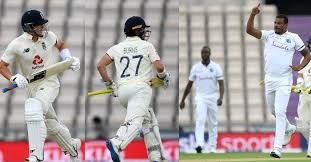
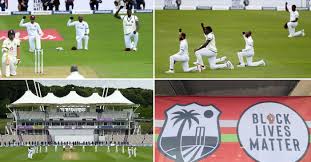
Southampton Test:West Indies ,England players take a knee to show solidarity with black lives matter movement.

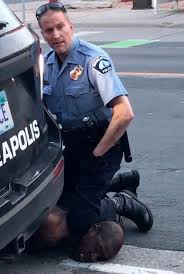
The international cricket resumed after 117 days due to corona pandemic with all due precautions of safety. In this 117 days world witnessed many challenges besides impact of corona virus, one such major was the brutal killing of George Floyd by a us police officer for using counterfeit money to buy cigarettes. The officer knelt on neck of Floyd for almost 8 minutes, where Floyd pleaded the officer to leave him as he was unable to breathe,but to no mercy from officer he later chocked to death.This was most brutal act and against humanity, many protests were done against the officer and he was even suspended.

This led to disclosure of many incidents of racism ,discrimination on color many cricketers came forward to explain how they had faced such things.

England and West Indies cricketers took a knee to show their solidarity against racism and support the ‘Black Lives Matter’ movement before the start of the first Test of the three-match series here at the Ageas Bowl on Wednesday.

Cricketers take a knee to show solidarity with Black Lives Matter movement

A minute of silence was also observed before the start of play to pay respect to the victims of the coronavirus pandemic and West Indies legend Everton Weekes, who passed away last week at the age of 95.

The Premier League resumed its suspended season in June and all teams have been sending out a strong message to show solidarity with the ‘Black Lives Matter’ movement.All teams have been taking a knee to show their support, while jerseys of all teams have ‘Black Lives Matter’ written on them.

How television shaped our views on police

Television and media, the one source for early all people to tune to whether they need entertainment, news or anything else. It is a portal which connects us to others within the world. It is also a place from where we form most of our opinions. In the wake of the Black Lives Matter movement, many are wondering not just in US but throughout the world as to why this chain of thoughts not grip us sooner. Why is it that most of the people were oblivious to the abuse of power police use throughout the world? One of the main reasons for this are cop shows and movies. Its usually because as individuals not many of us have much actual experience with the police. We form our opinions through the junk that is fed to us by the television.

Photo by Alou00efs Moubax on Pexels.com

It can be noted by anyone that most tv shows and movies far too readily show the cops as trustworthy and infallible, all the while undermining real life claims of systemic racism and abuse of power. There are many reasons for this, ranging from the money hungry producers simply chasing after TRP to negligence from the writers and directors about not showing realism within the shows. However one of the main reasons for this is that no matter whether it is a movie or a TV show cops are not only consulter during the making of such shows but are also aware that their portrayals impact public perception and thus have a vested interest in making sure that the portrayal stays positive. A 2015 study showed that viewers of crime dramas are more likely to believe that police are very often successful at lowering crime, use force only when necessary and misconduct never results in false arrests. Now part of it is due to the viewers human nature, everyone wants to believe that the people who enforce laws do so effectively and fairly so that we as citizen don’t have to take the burden. The shows and movies like Law and order or Singham and Dabangg show the cops using force only when they necessarily have to. They make it seem that bending the rules set in place to govern their misbehaving is the only way to keep the general populace safe.  This is the power of such shows they make us believe that the only way the police can truly be effective is if they broke the rules that society created to protect us from the police. And the way they show mainstream cops bending the rules is by plain torturing a suspect who may have committed the crime. And showing that if the suspect hadn’t committed the crime it would serve as a deterrent from committing one in the first place. By that logic a parent should pre-beat their children to make sure that they do not stray to a bad path, but that is not the case. One has to realize that the cop shows are the only profession-based show where they show wanton unwarranted abuse of power as a good thing. However, beating a suspect in real life makes a person confess to a crime they didn’t commit. Which means an innocent was locked away while the real guilty party walks free. Beating a suspect to solve crimes has the same effect that washing a computer to remove a virus would have, sure the virus is gone but so is the computer.

What we do further is upon us but as Trevor Philips once said “The media and the government would have us believe that torture is some necessary thing. We need it to get information, to assert ourselves…… Torture’s for the torturer or for the guy giving orders to the torturer. You torture for the good times – we should all admit that. It’s useless as a means of getting information.”