Different ways to do Advertisement

 Different ways to do Advertisement

An advertisement is a form of communication process in which a product, service, event, or program is promoted in public to get their attention, engagement, and sales. It is a guaranteed method of reaching an audience. By creating an engaging ad, and spending enough to reach your target users, advertisements can have an immediate impact on business. 

The way you advertise the product and service is depend on your target audience and the cost-effective way to you reach the masses. The advertising can be done in the following ways:


Newspaper

Newspaper advertising can promote your business to a wide range of customers. Display advertisements are placed throughout the paper.

Magazine

Advertising in a magazine can reach your target market quickly and easily. Readers tend to read magazines at their leisure and keep them for longer, giving your advertisement multiple chances to attract attention. If your products need to be displayed in color then glossy advertisements in a magazine can be a good choice.

Radio

Advertising on the radio is a great way to reach your target audience. If your target audience listens to a particular station, then regular advertising can attract new customers.

Television

Television has an extensive reach and advertising this way is ideal if you want to reach a large audience. Television advertisements have the advantage of sight, sound, movement, and color to persuade a customer to buy from you. They are particularly useful if you need to demonstrate how your product or service works.

Outdoor and transit

There are many ways to advertise outside. Outdoor billboards can be signs by the road or hoardings at sports stadiums. Transit advertising can be posters on buses, taxis, and bicycles. Large billboards can get your message across with a big impact. If the same customers pass your billboard every day as they travel to work, you are likely to be the first business they think of when they want to buy a product.

Online

The Internet can be a cost-effective way to attract new customers. You can reach a global audience at a low cost. Many customers research businesses online before deciding whom to buy from. A well-designed website can attract customers to buy from you. There are several ways you can promote your business online via paid advertising or improve your search engine rankings. 


Advertisements can be a great way to increase market reach. It is one of the easiest ways to reach your target audience. The way companies want to advertise their product and service is depend on themselves.

What is Journalism ? Write different aspects of journalism?

What is Journalism?

Journalism is the collection and distribution of news and related updates on what’s happening around the world on social media, distributing posters and pamphlets, e-mails, magazines, blogs and many more. Journalism is the main pillar of our society or for our whole world because they work hard and they update news so we can watch, and read it. 

As in today’s world, the channels are increasing so much and the audience is also increasing watching it. Without journalism or journalist, we are nothing, we will not know any single news whatever is happening around us.

In today’s world if any student is making up their mind to start a career in journalism. You have taken the right decision. You will end up with a beautiful career in the Journalism field.

What are the different aspects of Journalism?

News

News is the most important factor in Journalism. News should be very much clear and it should be true. Remaking and over-repeating news bore citizens. Straightforward news likes people very much as they want to hear the fact.

Investigate

Before delivering any news on any platform we should investigate the matter. The investigation is necessary. If a matter has not been investigated and news has been delivered it shows a very bad impact on the news channel or the company.

Reviews

People share their reviews and their feedback. Reviews help a lot to understand the importance of the thing and help to improve or not. It might help in any way. Without review, nothing is accepted as good.

Columns

Columns are based primarily on the personality of the author, allowing him or her to write about subjects in a personal style. Column writers can take a humorous approach, or specialise in a particular subject area or topic. IColumnists need to develop a voice that is recognisable by their readership. Columnists can interpret events or issues or write about their own experiences or thoughts. Columns are usually published weekly.

Journalism is a very good profession and hard working. Journalists are the main pillar of our world.

Different aspects of Journalism

 Different aspects of Journalism

Journalism means covering, producing, and distributing news and information about various events, facts, ideas, and people. This is a form of communication where you interact with the audience. 

Journalism is not limited to one thing, each event, and happening, has different aspects of journalism like investigation, online, watchdog, politics, sports, entertainment, education, crime, etc. These are different aspects of Journalism:

Investigation Journalism

Investigation journalism deal with work toward uncovering hidden truth or facts about a person, matter, event, etc. It works to find the facts by studying cases that required a lot of effort. The scandals can be exposed by making headlines. A single case can take a few months or years due to complex procedures, so one should have a lot of knowledge and patience to work as an investigative journalist.

Watchdog journalism

Watchdog journalism guards society against illegal activity or inefficiency from societal powers, such as corporations and politicians. It is similar to investigative journalism. Watchdog journalists monitor the activities of large companies and influential figures and report activities that may have negative impacts on society. This type of journalism helps ensure societal powers remain accountable for their actions.

Online journalism

Online journalism reports facts through internet media, such as digital newspapers, blogs, or social media. All kinds of information are freely available on the internet, but sources are not always credible. Online journalists create and deliver content that is related to traditional journalism practices reporting the facts of a situation or event. Online journalism allows reporters to quickly deliver information to audiences through online media without delays for print layout, processing, and delivery or broadcast time slots.

Sports journalism

Sports journalism focuses on athletic news. Sports journalists report scores, standings, and rankings for different teams or athletes in different sporting events. It can be both print and broadcast media. Sports commentating is a form of sports journalism in broadcast and online journalism.

Entertainment journalism

Entertainment journalism relates to the current events of popular figures and trends. Entertainment journalists provide news about the entertainment business, including celebrities, movies, television, books, and events. Entertainment journalists may cover movie premiers and awards ceremonies as well as news about the entertainment industry. 

Political journalism

Political journalism focuses on government, politics, and political candidates. It covers different segments of political activity, such as local, national, or international news. Political journalists often report on the activities of elected officials, political processes, and the results of political work. It includes reporting political news and conducting investigative and watchdog reporting to ensure that the public has access to information about political activity.

Rural Development

 What is Rural Development?

Rural development is a method where you can enhance the quality if life. Now a days rural area is also getting developed but they need more good facilities to upgrade their life.

In rural areas people mainly do agriculture and forestry. It is their main occupation in which they are living their life. But today nature have also changed a lot. People of rural areas also need better and good facilities to upgrade themselves.

Rural development is important not only for the majority of the population residing in rural areas, but also for the overall economic expansion of the nation.

Rural development is considered to be of noticeable importance in the country today than in the olden days in the process of the evolution of the nation. It is a strategy that tries to obtain an improved  and productivity, higher socio-economic equality and ambition, and stability in social and economic development.

The primary task is to decrease the famine that exists in roughly about 70 percent of the rural population, and to make sufficient and healthy food available.

The secondary task is to ensure the availability of clothing and footwear, a clean environment and house, medical attention, recreational provision, education, transport, and communication.

New Education Policy 2022

 New Education Policy (NEP) 2022

New education policy (NEP) 2022 is a policy in which all the education systems have been taken to a new and good quality level. With this policy, you will get all the world-class education in which you will make your career better.

In 2022 new education policy system they have three language formulas and a 5+3+3+4 strategy.

Some of the points in which you will get to know more about policy:-

* They will have the three language formulas i.e regional language, Hindi and English.

* They have changed the 10+2 strategy and instead of that now they have 5+3+3+4. Students will have various stages. They are

5 – Foundational stage

3 – Preparatory stage

3 – Middle stage

4 – Secondary stage

* They have mainly aimed at vocational education as a new education policy which will aim the students to know their regional language, mother tongue till 5 the years.

* Till class 5 they will only have their local language and in school and higher education, they will include the Sanskrit subject. 

* To learn the students the regional language easily they will get their instruction in that regional language instead of English till class 5.

* Master’s degree will be longer required.

* The policy wants that all the students get quality and equitable education in India in the gas group of 3 – 18 years.


Foundational stage (5)

The foundational stage will be the first 5 years of a child’s schooling. After 3 years the education the children will go to Anganwadi, kidzee and the nursery’s play school.

For the next 2 years, the children will develop their basic knowledge, activity-based learning

Preparatory stage (3)

The next preparatory stage will start from 8 – 11 years in which the children will learn basic literacy and numeracy skills that will help students to know more about the various subjects.

Middle stage (3)

The middle stage will compromise 11 – 14 years in which they will learn academic skills like reading, writing and language competencies. They will also develop their teamwork, and problem-solving.

Secondary stage (4)

In this last stage, they will be 14 – 18 years of age. During this stage, the students will learn all the basic subjects like Social science, Mathematics, Science, and English and they get the opportunity to learn various elective subjects. The secondary stage aim is to provide students with the skills and the knowledge they need to prepare for further education.

In this new education policy 2022, they aim to provide all the students get a world-class education and they can gain the knowledge of various things which will help to make their life better.


Online Banking

 Online Banking

Online banking means accessing your bank account online and carrying out financial transactions through the internet on your smartphone, tablet, or computer. It’s quick, usually free, and allows you to do tasks, such as paying bills and transferring money, without having to visit or call your bank. Many banks have free apps which let you use these services on your phone at any time. 

Facilities offered by Online Banking

  • You can check your bank balance at any time
  • You can pay your bills and transfer money to other accounts
  • You can check any linked mortgages, loans, savings accounts or ISAs
  • You can check your bank statements and go paperless 
  • You can set up or cancel Direct Debits and standing orders
  • You can check on any investments you might have that are linked to your account.

Security in Online Banking

Banks take lots of precautions to make sure your online account is safe. These include encrypted websites, timed logouts, and many authentication processes. Accessing your bank account online is generally safe. You should learn how to use online banking safely to secure your account.

Here are a few tips to keep your account safe:

  • Check your statement often and report any unusual activity to your bank.
  • Don’t reply to emails that claim to be from your bank that ask for personal details or passwords.
  • Always remember to log out of your online banking session.
  • Only use secure wi-fi connections to access your bank account.
  • Public wi-fi connections are often not secure, so it’s important not to use them for banking or to make purchases. 
  • Keep your operating system and anti-virus software up to date.
  • If you notice anything strange on your account, or you accidentally make a payment to the wrong account, get in touch with your bank as soon as possible.
  • Some banks offer instant card freezing, where you can block your card in your app without having to call or visit a branch. 
  • Choose your password carefully – create it by combining three random words and don’t re-use the same one for different accounts.


You can easily set up online banking with the help of instructions provided by your bank or you can contact them to take help with using the online banking services.

Quality Education- Part of Sustainable Development Goal

Quality Education- Part of Sustainable Development Goal


Sustainable development goals are actions to create a just, fair, and equitable world ensuring no one is left behind. In 2015, all member states of the United Nations adopted the 2030 Agenda for Sustainable Development. This agenda is comprised of 17 sustainable development goals (SDGs) that provide a shared blueprint for a more peaceful, prosperous, and sustainable future for all.

Quality education

Ensure inclusive and equitable quality education and promote lifelong learning opportunities for all. Education is a key to escaping poverty. Over the past decade, major progress was made towards increasing access to education and school enrolment rates at all levels, particularly for girls.

More than half of all children and adolescents worldwide are not meeting minimum proficiency standards in reading and mathematics. In 2020, as the COVID-19 pandemic spread across the globe, a majority of countries announced the temporary closure of schools, which affect the education of children worldwide.

The covid-19 has created a great education crisis. Most education systems in the world have been affected by education disruptions and have faced unprecedented challenges. School closures brought on by the pandemic have a great effect on children’s learning and well-being. It is estimated that 147 million children missed more than half of their in-class instruction over the past two years. This generation of children could lose a combined total of $17 trillion in lifetime earnings at present value. School closures have affected girls, children from disadvantaged backgrounds, those living in rural areas, children with disabilities, and children from ethnic minorities more than their peers.

Early indications from low-income countries based on phone surveys point to a small decline in attendance upon a return to school but a larger increase in repetition, which may increase dropout rates in coming years. The participation rate in organized learning one year before the official primary entry age rose steadily in the years before the COVID-19 pandemic, from 69 percent in 2010 to 75 percent in 2020. In most countries, early education facilities and schools were partially or fully closed for more than a full school year.

Insufficient skills are often mentioned as an impediment to effective information and communications technology use. Only 10 percent of countries could more than 70 percent of individuals carry out one of the activities that compose basic skills.

Gender inequalities remain for many indicators. Basic school infrastructure is far from universal. In 2020, approximately one-quarter of primary schools globally did not have access to basic services such as electricity, drinking water, and basic sanitation facilities.

Shares among least developed countries tend to be substantially lower. During the pandemic, schools in comparatively disadvantaged areas were less equipped to keep children and staff safe. In 2020, there were about 12 million pre-primary school teachers, 33 million primary school teachers, and 38 million secondary school teachers working in classrooms around the world, and 83 percent of primary and secondary school teachers were trained.

Thus, this sustainable goal aims to improve the education facility worldwide and provide good quality education which can lead to removing poverty.

Glimpse of New Education Policy

Glimpse of New Education Policy

The National Education Policy (NEP) 2022 is a policy document released by the Government of India on 29th July 2020. It outlines the government’s vision for the education sector in India over the next ten years. The policy has been developed after extensive consultations with various stakeholders, including teachers, students, parents, education experts, and civil society organizations. It covers all aspects of education, from early childhood education to higher education and vocational training. 


NIP aims to transform the education system of India by providing world-class education. The policy also aims at creating a “Global Knowledge Superpower” in the field of education. It focuses on the individual need of every student. The policy also seeks to create a more flexible and adaptive education system that can meet the needs of students and the economy.

Vocational Education is part of the New Education Policy. It includes teaching the mother tongue and regional languages up to the 5th year of schooling. The policy also makes it mandatory for schools and colleges to make their curriculum flexible and holistic.

Major Highlights of New education policy

  • It focuses on providing quality and affordable education to all children in the age group of 3-18 years.
  • Students will now be tested on their abilities to apply concepts to solving real problems rather than on how well they remember things from books.
  • The school curriculum in India has been updated to incorporate more core concepts and vocational education.
  • It focuses on using technology in education to make it more effective.
  • It focuses on a system where there is no distinction between rural and urban areas, and all children have access to quality education.
  • The policy wants to set up a National Higher Education Regulatory Council to oversee the regulation of higher education institutions.
  • It introduces a new 5+3+3+4 education structure, which moves away from the current 10+2 system.
  • The master’s degree (MPhil) course will no longer be required.
  • It says all higher education institutes (HEIs) will be governed by a single regulator, except the Medical and Law Colleges.
  • School board examinations will continue in 10th and 12th classes and redesigned to be more holistic and developmental.
  • Higher education will receive flexibility in subjects. There will be multiple entry points and exit points for all students.
  • UG programmed courses can range in duration from three to four years. The minimum duration required to get a certificate is one year. However, students can opt for a different route if they want to, such as obtaining a two-year Advanced Diploma or getting a B. Tech degree.
  • An academic bank of credit (ABC) will be created as a digital recognition awarded for a student’s academic performance.

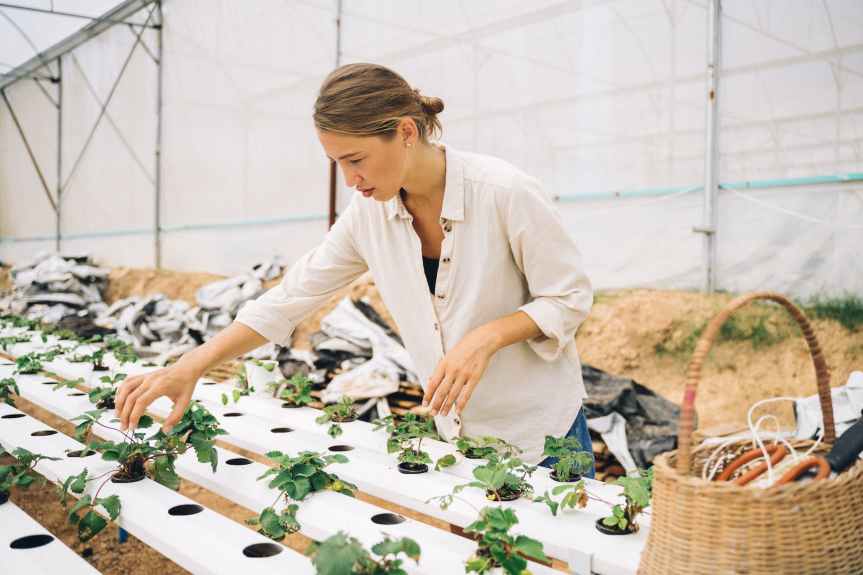
Hydroponics

Hydroponics is the method of growing plants without soil. It generally uses less water as compared to traditional soil system. It allows faster growth and higher yield.

William Frederick Gericke is known as father of hydroponics. He grew tomato vines in his backyard in nutrient solution.

The nutrients used in hydroponics include fish and poultry excreta , duck manure, chemical fertilizers, artificial nutrient solution etc.

Plants are commonly grown hydroponically in a greenhouse, on inert media, include tomatoes, peppers, cucumbers, strawberries, lettuces, and cannabis, usually for commercial use, and Arabidopsis thaliana, which serves as a model organism in plant science and genetics.

Advantages:

  • Does not require soil for cultivation.
  • Promotes faster and efficient plant growth.
  • It uses less water as compared to conventionally grown plants. Hence, helps to save water.
  • It does not depend on climate for favourable growing conditions.
  • Saves labour due to automatic watering and fertilizing capability.
  • Have fewer pest can can be grown closely.
Photo by Pragyan Bezbaruah on Pexels.com
  • The plant has less root and nutrient competition than grown in soil.

There are six main types of hydroponic system for garden: wicking, deep water culture (DWC), nutrient film technique (NFT), ebb and flow, aeroponics, and drip systems.

Disadvantages:

  • Involves high installation cost.
  • Need to test the solution frequently to avoid infection and damage.
  • System are prone to equipment failure and power outage.
  • Prone to water borne infection.
  • Requires constant monitoring and assistance.

Some systems, known as aquaponics involves use of nutrient-rich wastewater from aquaculture to fertilize hydroponic plants. Freshwater fish, such as tilapia, and crayfish are common aquatic animals utilized for these hybrid systems.

Nowadays, hydroponics is being implemented in large scale as a start up to meet the demand of fresh leafy vegetables as is a part of urban farming.

Rural Development for Better Nation

 Rural Development for Better Nation

Rural development means improving the quality of life of people living in rural areas. Its main concern is to secure natural resources like agriculture and forest, from exploitation. But the change in the global production network and urbanization have changed the rural areas. A lot of things like manufacturers, tourism, recreation, etc., have affected agriculture as the domain of economic drives. Education, entrepreneurship, physical infrastructure, and social infrastructure all play an important role in developing rural regions. Rural development remains the core of the overall development of the country. More than two-thirds of the country’s people are dependent on agriculture for their livelihood, and one-third of rural India is still below the poverty line.


Rural development focus on Education, Public health and Sanitation, Women empowerment, Infrastructure development (electricity, irrigation, etc.), Facilities for agriculture extension and research, Availability of credit, Employment opportunities, sufficient and healthy food, etc.


Importance of Rural Development

Rural development is important for the population to live in rural areas and overall economic expansion of the nation. It is very important to be concerned about rural development because it is very important for the evaluation of our nation. It will help to increase productivity, stability in socio and economic development, and social-economic equality.


The main objective of Rural Development

The main objective of the government for rural development is to improve the productivity and wages of rural people, increase the standard of living of the underprivilege population, increase employment opportunities, and provide the basic needs like education, healthcare, rural roads, clean drinking water, sanitation, etc.


Ministry of Rural Development

The Ministry of Rural Development has two departments, the Department of Rural Development and the Department of Land Resources. The Department of Rural Development came into existence as a part of the Ministry of Food and Agriculture in October 1974. On 23 January 1982, this ministry was renamed the Ministry of Rural Development. as the Ministry of Agriculture in September 1985. On July 5, 1991, this department was again given the status of Ministry of Rural Development. After that, the name of the department was changed many times. In the year 1999. The department gets it to rename as Ministry of Rural Development. 

The ministry aims to bring change in rural development with various programs. The main objective of this ministry is to remove rural poverty and provide a better quality of life to the rural population, especially the people living below the poverty line. To further enhance the efforts being made in these areas, the government launched the Pradhan Mantri Gramin Yojana (PMGY), and the Ministry of Rural Development was entrusted with the responsibility of implementing the following parts of the Pradhan Mantri Yojana (PMGY), namely – drinking water supply, Housing construction and construction of rural roads. Many other policies were started by the government for the welfare of the rural population.


Keeping in view the needs and aspirations of the local people, the cooperation of Panchayati Raj Institutions was taken in the implementation of this program. These institutions are a form of decentralized development of planning and its implementation. The Ministry is urging the State Governments to give requisite administrative and financial powers to the Panchayati Raj Institutions at the earliest as stipulated in the 73rd Constitutional Amendment of India. The empowerment of rural women is important for the development of rural India. Therefore, provision has also been made for the contribution of women in poverty alleviation programs so that adequate funds can be arranged for this section of society. The Constitution (73rd) Amendment Act, 1992 provides for reservation of selected posts for women.


The following major programs are being operated in rural areas by the Ministry of Rural Development,

  • Mahatma Gandhi National Rural Employment Guarantee Act (MGNREGA) provides employment,
  • National Rural Livelihoods Mission (NRLM) for self-employment and skill development,
  • Pradhan Mantri Awas Yojana Gramin (PMAYG) to provide housing to BPL families,
  • Pradhan Mantri Gram Sadak Yojana (PMGSY) for the construction of quality roads,
  • National Social Assistance Program (NSAP) for Social Pension,
  • Integrated Watershed Management Program (IWMP) to improve the productivity of the land.

The annual budget of Rs. 1 35944.29 crores have been allocated to the department of Rural Development for the Financial Year 2022-23.

The rising burden of E- waste

E- waste or electronic waste refers to the waste created by discarding the electronic devices which is rather caused due to its end of useful life, high repair cost , outdated technologies etc. which makes it underrated for further use. These waste includes TV, mobile phones, computer/ desktop, electronic items, wires, machineries etc. This is one of the fastest waste generated.

Everyday lakhs and lakhs of e-waste is generated. The country’s e-waste output is growing at over 30 per cent year on year, and stood at over 10 lakh tonnes in 2019-20, according to government data, comparable to about one lakh six-wheeled truckloads of waste.

It is the third largest in volume globally and growing at a rate ten times faster than its plastic waste output.

Mountains of e-waste pile up, which are as much a threat to the environment as they are to the health of their handlers .It proves vulnerable as people are sifting and processing the waste of the privileged without knowing that it could cause them cancer, reproductive disorders, endocrine disruption and other health complications.

Problems:

The most alarming aspect of e-waste is that less than a quarter of it is being processed.It possess hazardous metals and can contaminate soil, air, water, posing significant risk to human health by entering the food chain.

Unsafe disposal of e waste: About 95% of e waste is recycled by informal sectors and scrap developers without knowing the hazardous effect and use of safe handling practice.

Concern : Majority of e waste are imported to developing countries like India, China, Ghana etc from developed countries for recycling purpose.

With advancement in technologies, standard of living people are more inclined towards use of more gadgets, phones and tend to change them more frequently.

Way forward

E waste clinics for proper segregation, processing and disposal of e waste. Effective ways to implement proper and safe handling of waste.

Initiative taken by government includes: Prime Minister Narendra Modi launched the LiFE or Lifestyle for Environment movement in June—a concept that he said is borrowed from the past and focuses on the future.

The right to repair is introduced to reduce the e waste and it’s proper management as it is environmental friendly too. But this also concerns the major industries involved in sector as it could lead to their loss and some technologies can’t be added to existing devices .

Top 10 medical colleges in India


Medical colleges in India provide medical education. It provides all the various medical courses and they can do training as well. The students can choose their career in the medical if they have a passion to study. There are various medical courses available in the best colleges in India.

1. Kasturba Medical College, Manipal

Kasturba medical college is established in 1953 in Karnataka, India. The colleges were established in a single unit and later became colleges with teaching hospitals.
2. King George’s Medical University
King George’s medical university is located in Lucknow, Uttar Pradesh, India. This is a medical college, and hospital which has 1250 undergraduate students including 280 dental students and 450 postgraduate students. In 2002 the Government of Uttar Pradesh, led by Mayawati of the Bahujan Samaj Party (BSP), granted university status to the college and renamed it Chhatrapati Shahuji Maharaj Medical University (CSMMU), under the Uttar Pradesh Chhatrapati Shahuji Medical University Act, 2002.
3. Maulana Azad Medical College

Maulana Azad medical college is a medical college in New Delhi, India affiliated with the University of Delhi and run by the Delhi government. It is established in 1959 at Bahadur Shah Zafar Marg near Delhi gate.
4. St. John’s medical college

It was established in 1963. St. John’s medical college is situated in Bangalore, India and is a private medical college. The college annually accepts 150 students for the MBBS undergraduate course based on a national entrance exam. It also accepts 100 postgraduate students (80 MD & 20 Diploma) in several medical specialities. The college culfest Autumn Muse is one of the oldest in South India.
5. Madras Medical College

Madras Medical College (MMC) is a public medical college located in Chennai, Tamil Nadu, India. Established on 2 February 1835, it is the third oldest medical college in India, established after the Jawaharlal Institute of Postgraduate Medical Education.
6. Dayanand Medical College

Dr Banarsi Dass Soni, former Captain in the Indian Military Service, conceived the idea in 1934 and started Arya Medical School in a rented building in Civil Lines, Ludhiana. In 1936, the management of the school was handed over to the Arya Samaj, Saban Bazar, Ludhiana, under the aegis of Arya Pratinidhi Sabha, Punjab.
7. Grant Medical College

The Grant Government Medical College, Mumbai, is a public medical college, affiliated with the Maharashtra University of Health Sciences. Founded in 1845, it is one of the oldest institutions teaching medicine in South Asia.
8. JSS Medical College

JSS Medical College (JSSMC) is a medical college based in Mysore, Karnataka, India. The graduate and post-graduate programs of the college are recognized by the Medical Council of India. The courses offered are also recognized by General Medical Council (UK), Sri Lanka Medical Council and WHO. The college has been recognized by the Royal College of Obstetricians. 
9. Armed Forces Medical College

Established in May 1948 as a post-graduate teaching institution after World War II on the recommendation of the BC Roy Committee, remnants of various Indian Army Medical Corps units were amalgamated to create the Armed Forces Medical Services. 
10. University College of Medical Sciences

The University College of Medical Sciences was founded in 1971 by efforts of the Health Minister of Delhi.[2] The Health Ministry proposed to provide medical education to every student who qualified. Even with the presence of two medical colleges in Delhi, MAMC and LHMC, many students were denied the opportunity to study medicine.

India’s Performance in Commonwealth game 2022

 India’s Performance in Commonwealth game 2022

Commonwealth games were held in Birmingham, United Kingdom. India performs really good in commonwealth games 2022, with 22 Gold Medals, 16 Silver, and 23 Bronze. 215 Indian athletes participate in CWG and the star athletes of the country proudly marked themselves in the multi-sport event. From Table Tennis to Badminton to Wrestling, India Medal Tally at the Commonwealth Games 2022 reached to total of 61 medals by grabbing 4th position in the medal standings.

Commonwealth Games 2022 started with the opening ceremony on July 28 while, the closing ceremony of the event will be held on August 8, 2022. CWG 2022 saw the athletes competing in 20 sports and India had successfully named over 200 athletes or players who participated in 16 sports including hockey, cricket, badminton, and athletics, to name a few.

Various Indian sportsperson who participates in CWG 2022:

Mirabai Chanu

Mirabai Chanu, a star weightlifter from India, went on a record-smashing spree in Commonwealth Games 2022, claiming four of them in a power-packed performance. Mirabai Chanu claimed India’s first Gold Medal at Commonwealth Games 2022 in Birmingham on July 30, 2022.

Anchita Sheuli

Weightlifter Anchita Sheuli continued India’s victory spree at Commonwealth Games 2022 as he clinched India’s third Gold Medal in CWG 2022.

Bindyarani Devi

Weightlifter Bindyarani Devi won a Silver in the women’s 55 kg as India continued its medal rush at the Commonwealth Games 2022.

Vijay Kumar Yadav

The 26-years old Vijay Kumar Yadav produced a superlative performance and grabbed Bronze Medal in Men’s 60-kg class at the ongoing CWG 2022. He pounded on the mistake of his opponent and pinned him down for 10 seconds to end the contest in just 58 seconds.

Harjinder Kaur

India’s Harjinder Kaur won Bronze Medal in the women’s 71 kg weightlifting competition after the dramatic climax at the Commonwealth Games 2022.

Lovepreet Singh

India’s weightlifter Lovepreet Singh has won Bronze Medal in the men’s 109 kg category at the ongoing Commonwealth Games 2022.

Tejaswin Shankar

Tejaswin Shankar, a National Record holder, opened the Indian athletics team’s medal account with a Bronze in the men’s high jump event in the Commonwealth Games 2022.

Bajrang Punia

Tokyo Olympics Bronze Medalist Bajrang Punia defended his title in the 65 kg competition that he won three of his four bouts inside first rounds. Wrestler Bajrang Punia made the country proud by winning Gold in Men’s 65 Kg category.

Sakshi Malik

Wrestler Sakshi Malik won Gold in the Women’s 62 Kg category in the Commonwealth Games 2022. Her winning gave a boost to the country’s increasing medal tally.

Deepak Nehra

Deepak Nehra outplayed Pakistan’s Tayab Raza 10-2 in the bronze play-off as the country signed off from the wrestling competition with a high success rate.

Kidambi Srikanth

World Championship Silver Medallist Kidambi Srikanth signed off with the Bronze Medal in the Badminton competition of the Commonwealth Games 2022.

PV Sindhu

PV Sindhu has once again made the country proud by winning Gold Medal in the ongoing Commonwealth Games 2022 in Birmingham. The badminton player defeated Michelle Li of Canada 21-15 21-13 in the final of Women’s Singles to win a Gold Medal at CWG 2022.

The names of our stars are not limited. Their performance has made India proud. It was their hard work and courage which took our country at the height.


Top 10 Engineering Collage in India

 Top 10 Engineering collage in India

Getting admission to an engineering college is a dream for a lot of students in India. IITs and NITs are engineering colleges that provide education in the field of engineering.


These are the top ten engineering collage in India:

1. Indian Institute of Technology, Madras

It is an internationally complemented institution and stands in the top five engineering institutions by the ranking system of NIRF. The IIT Madras has all the basic amenities including a beautiful garden which is always taken care of and the Central library present at the hostel. As the students are excellent in their technical efficiency and have a very good practical knowledge in their field of engineering, there are always pre-placement offers and many workshops are conducted by these companies to hire the students. Interaction seminars are also conducted and internships are also a medium for the placement procedure.

2. Indian Institute of Technology, Delhi      

 Indian Institute of Technology Delhi has bagged the second position in the NIRF ranking for its efficient faculties and excellent teaching content. The knowledge provided is not only commendable but also layered up with technical enhancements so that theoretical, as well as practical knowledge, grows up simultaneously. A total of 11 hostels for the boys and three hostels for the girls are present on the campus with the facilities of a beautiful launch, areas of gaming, computer rooms, and study rooms provided. The placements are based on a procedure and over 500 companies come to the campus to hire the students. The placement is totally on campus and more than 60% of the students get selected for the offers which provide a dream package. Unlike all other IITs, it has a beautiful robotics room, a gymnasium for fitness awareness, and swimming pools with a central library that is always open. All the laboratories work according to the latest technologies.

3.Indian Institute of Technology, Bombay 

As it is one of the most reputed engineering institutions in India, it stands within the top 10 engineering institutions by the ranking system of NIRF. Not only it is highly qualified faculty members but also innovative methods in the field of teaching and practical application. A total of 16 hostels with all the facilities are provided on the campus. Generally, the placement records show a 100% placement rate, and the companies which offer and provide packages in lakhs are very popular including Amazon, Flipkart, and Cadbury. The placement as well as the professional board of IIT Bombay with all the companies is not only strong but also provides commendable statistics for building up the career of the students. The infrastructure is not only beautiful but has all the amenities including the staff room, library, lecture halls and seminar halls, and E consortium.

4.Indian Institute of Technology, Kanpur  

Academically, the IIT Kanpur bags its position in the top five of the NIRF ranking and it is also complimented for its extracurricular activities. Students not only better themselves in the field of engineering but also polish their extracurricular talents. The placement records stand is very high and the packages of the salary increase arithmetically each year. Sometimes there are international companies that provide packages in crores.


5. Indian Institute of Technology, Kharagpur

Like all other IITs, it also provides quality education along with commendable teachers Who are highly educated in the field of teaching with many years of experience. Apart from this, it is fully facilitated with fans that work according to the Wi-Fi and the campus LANs. The highest packages are offered to the students in lakhs and around 15 LPA is the average score of the batch Income.       

6. Indian Institute of Technology, Roorkee

It has multi-variant courses along with 14 undergraduate and 24 post-graduate courses. It also provides Ph.D. courses which is not only restricted to engineering but also extend to the field of science and architecture, social studies, and business management. With a total of 13 hostels among which two are for girls and 11 are for male students, it facilitates the mess, stationery shop, a salon, gymnasium, gaming room, reading space, and laundry. It also facilitates a guest room which is provided in every single hostel. For the history of placements, 85% of the students are completely placed and both international, as well as domestic offers, are received. The average amount goes to INR 2.17 crores for the international packages and 1.92 crores for the domestic packages.

7. Indian Institute of Technology, Guwahati

It has highly skilled professors along with experienced teachings are provided in the IIT Guwahati. It comprises a canteen, mess, a juice corner, an in-campus shop of stationery, a gymnasium, and a laundry room. The central library and TV room are common in every IIT. The Wi-Fi connections are very efficient. For the enhancement of the sports activities, various basketball, football, and volleyball courts are available on the campus.


8. Birla Institute of Technology and Science (BITS)

The Birla Institute of science and technology has a very good bond with both the students as well as the teachers. The first campus was situated at Pilani on the year 1943. Later it stretched its branches all over India and outside like Dubai, Hyderabad, etc. The BITS Pilani is the most famous institution for the engineering field and various courses including BE, management, B pharma, M.Sc. Every year, the Birla Institute of technology and science conducts its entrance examinations for the students to get admitted for these courses.


9. Vellore Institute of Technology

 This institute provides many courses including graduate, postgraduate, and also research programs. It also gives dual integrated courses for the students. The placement records are excellent and the whole average batch is being offered jobs from various companies. The B.Tech courses are the most popular in the field of biotechnology, electronics and communication, and computer science engineering. The Vellore Institute of Technology conducts its examination and students have to achieve the minimum cut-off to get admitted to this college.

10. Delhi Technological University

This college was previously known as Delhi College of engineering. After it had got its affiliated with the University of Delhi the year of 1962 it came to be known as Delhi Technological University. It also provides a lot of courses including BTech, MTech, MBA, and BBA courses, and offers research programs. The facility of both shifts is provided while conducting the classes. The mode of admission is by the scores of the joint entrance examination and students have to achieve the minimum cut-off to get into this college.

Thus, if you want to get admission to an engineering college you can choose the best collage of your choice.


Online learning platforms

What do you mean by an online learning platform?

The online learning platform is a website where students can learn online. They can attend all the lectures, recordings, live classes and tests. Online learning platform are very easy to attend. It is very helpful because you can do from your own comfort zone.

From 2020 onwards when covid – 19 came from that time the online learning platforms are very much active and have came forward to help the students with their academics.

Some of the best online learning platforms are below –

1. Skill share

Skill share is a online learning platform where you can get free trial for 1 month and you can cancel at any time before the month get over to not being charged. In skill share you get all the courses on ver high quality. The lectures are very good. You can easily learn from their videos

2. Unacademy

Unacademy is an Indian online platform where you can get all the live classes and recordings after you get subscription. They take a fee from Rs 1200 to Rs 6200 per annum. They also prepare for all the competitive exams like UPSC, NEET, JEE, CUET and many more.

3. Udemy

Udemy is a online learning platform where you can learn various course in all the particular fields. In udemy there are 49 millions students have been enrolled. You can learn various programmes like python, programming, photography and more.

4. Coursera

Coursera is a online learning platform where that provide top learning courses from top educators around the world. It has 23 million users. Coursera provides university level courses and certification programmes.

5. edX

edX is a MOOC platform that offers university level online courses. You can enroll onedX and learn various courses according to your interests and make you career growth personally and professionally.