

If you love to read, at some point you will want to share a book you love with others. You may already do this by talking about books with friends. If you want to share your ideas with more people than your circle of friends, the way you do that is by writing a review. By publishing the reviews you write, you can share your ideas about books with other readers around the world.
It’s natural for young readers to confuse book reviews with book reports, yet writing a book review is a very different process from writing a book report. Book reports focus on the plot of the book. Frequently, the purpose of book reports is to demonstrate that the books were read, and they are often done for an assignment.
A book review is a totally different task. A book review’s purpose is to help people decide whether or not the book would interest them enough to read it. Reviews are a sneak peek at a book, not a summary. Like wonderful smells wafting from a kitchen, book reviews lure readers to want to taste the book themselves.
This guide is designed to help you become a strong book reviewer, a reader who can read a book and then cook up a review designed to whet the reading appetites of other book lovers.
Form: What should the review look like?
How Long Should It Be?
The first question we usually ask when writing something is “How long should it be?” The best answer is “As long as it takes,” but that’s a frustrating answer. A general guideline is that the longer the book, the longer the review, and a review shouldn’t be fewer than 100 words or so. For a long book, the review may be 500 words or even more.
If a review is too short, the review may not be able to fulfill its purpose. Too long, and the review may stray into too much plot summary or lose the reader’s interest.
The best guide is to focus less on how long to write and more on fulfilling the purpose of the review.
How Do You Create A Title?
The title of the review should convey your overall impression and not be overly general. Strong titles include these examples:
- “Full of action and complex characters”
- “A nail-biter that will keep you up all night”
- “Beautiful illustrations with a story to match”
- “Perfect for animal lovers”
Weak titles may look like this:
- “Really good book”
- “Three stars”
- “Pretty good”
- “Quick read”
How Should It Begin?
Although many reviews begin with a short summary of the book (This book is about…), there are other options as well, so feel free to vary the way you begin your reviews.
In an introductory summary, be careful not to tell too much. If you retell the entire story, the reader won’t feel the need to read it him/herself, and no one appreciates a spoiler (telling the end). Here are some examples of summaries reviewers from The New York Times have written:
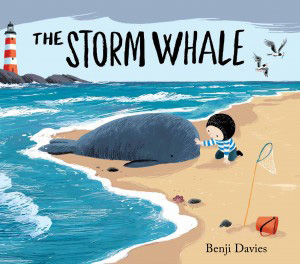
“A new picture book tells a magically simple tale of a lonely boy, a stranded whale and a dad who rises to the occasion.”
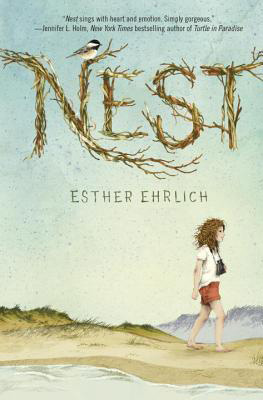
“In this middle-grade novel, a girl finds a way forward after the loss of her mother.”
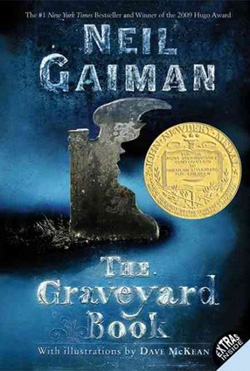
“Reared by ghosts, werewolves and other residents of the hillside cemetery he calls home, an orphan named Nobody Owens wonders how he will manage to survive among the living having learned all his lessons from the dead. And the man Jack — who killed the rest of Nobody’s family — is itching to finish the job.”
“In vivid poems that reflect the joy of finding her voice through writing stories, an award-winning author shares what it was like to grow up in the 1960s and 1970s in both the North and the South.” Other ways to begin a review include:
- Quote: A striking quote from the book (“It was a bright cold day in April, and the clocks were striking thirteen.”) can make for a powerful beginning. This quote begins George Orwell’s novel 1984.
- Background: What makes this book important or interesting? Is the author famous? Is it a series? This is This is how Amazon introduces Divergent: “This first book in Veronica Roth’s #1 New York Times bestselling Divergent trilogy is the novel the inspired the major motion picture.”
- Interesting Fact: For nonfiction books in particular, an interesting fact from the book may create a powerful opening for a review. In this review of The Middle East by Philip Steele, Zander H. of Mid-America Mensa asks, “Did you know that the Saudi Arabia’s Rub’ al-Khali desert reaches temperatures of 140 degrees Fahrenheit in the day and plummets to the freezing point at night?”
- Explanation of a term: If a word or phrase in the book or title is confusing or vitally important to understand, you may wish to begin the review explaining that term.
Process: What should I write about?
Deciding what to say about the book can be challenging. Use the following ideas as a guide, but remember that you should not put all of this into a single review — that would make for a very long review! Choose the things that fit this particular book best.
General Information
What the reader ought to know
- What kind of book is it? (Picture book? Historical fiction? Nonfiction? Fantasy? Adventure?)
- Does the book belong to a series?
- How long is the book? Is it an easy or a challenging read?
- Is there anything that would be helpful for the reader to know about the author? For instance, is the author an expert in the field, the author of other popular books, or a first-time author?
- How does the book compare to other books on the same topic or in the same genre?
- Is the book written in a formal or informal style? Is the language remarkable in any way?
- What ages is the book geared to?
- Is the book written in normal prose? If it is written in poetic form, does it rhyme?
Plot
What happens?
Writing about the plot is the trickiest part of a review because you want to give the reader a feel for what the book is about without spoiling the book for future readers. The most important thing to remember is that you must never give away the ending. No one likes a spoiler.
One possibility for doing this is to set up the premise (A brother and a sister find themselves lost in the woods at the mercy of an evil witch. Will they be able to outsmart her and escape?). Another possibility is to set up the major conflict in the book and leave it unresolved (Sometimes the waiting is the hardest part or He didn’t know what he stood to lose or Finding your purpose in life can be as easy as finding a true friend.)
Try to avoid using the tired phrase “This book is about…” Instead, just jump right in (The stuffed rabbit wanted more than anything to live in the big old house with the wild oak trees.)
Characters
Who lives in the book?
Reviews should answer questions about the characters in fiction books or non-fiction books about people. Some possible questions to answer include:
- Who are the main characters? Include the protagonist and antagonist.
- What makes them interesting?
- Do they act like real people act or are they too good or too evil to be believable?
- Are they human?
- What conflicts do they face?
- Are they likeable or understandable?
- How do they connect with each other?
- Do they appear in other books?
- Could you relate to any of the characters in the story?
- What problems did the main characters face?
- Who was your favorite character, and why?
- We learn about characters from things they do and say, as well as things other characters say about them. You may wish to include examples of these things.
Theme
What is the book about at its heart?
What is the book really about? This isn’t the plot, but rather the ideas behind the story. Is it about the triumph of good over evil or friendship or love or hope? Some common themes include: change, desire to escape, facing a challenge, heroism, the quest for power, and human weaknesses.
Sometimes a book will have a moral — a lesson to learn. If so, the theme is usually connected to that moral. As you write about the theme, try to identify what makes the book worth reading. What will the reader think about long after the book is finished? Ask yourself if there any particular lines in the book that strike you as meaningful.
Setting
Where are we?
The setting is the time and place the story occurs. When you write about the setting in a review, include more than just the location. Some things to consider:
- Is the book set in the past, present or future?
- Is it set in the world we know or is it a fantastical world?
- Is it mostly realistic with elements of fantasy (animals that can talk, for example)?
- Is the setting unclear and fuzzy, or can you easily make the movie in your mind?
- How much does the author draw you into the setting and how does s/he accomplish that?
Opinion & Analysis
What do you really think?
This is where the reviewer shares his/her reactions to the book that go beyond the essential points described above. You may spend half of the review on this section. Some possible questions to address include:
- Why do you think other readers would enjoy it? Why did you enjoy it (if you did) or why didn’t you (if you didn’t).
- What ages or types of readers do you think would like the book?
- How does it compare with other books that are in the same genre or by the same author?
- Does the book engage your emotions? If a book made you laugh or cry or think about it for days, be sure to include that.
- What do you like or dislike about the author’s writing style? Is it funny? Is it hard to follow? Is it engaging and conversational in tone?
- How well do you think the author achieved what s/he was going for in the writing of the book? Do you think you felt what the author was hoping you would feel?
- Did the book feel complete, or did it feel as though key elements were left out?
- How does the book compare to other books like it you’ve read?
Are there parts that are simply not believable, even allowing for the reader’s understanding that it is fiction or even fantasy?
- Are there mistakes?
- Would you describe the book as for entertainment, self-improvement, or information?
- What was your favorite part of the book?
- Would you have done anything differently had you been the author?
- Would any reader enjoy this book? If not, to what ages or type of reader would it appeal?
Special situations: Nonfiction and young reviewers
Some of the tips and ideas above work best for fiction, and some of it is a little too complicated for very young reviewers.
Nonfiction
What to do if it’s real
When reviewing a book of nonfiction, you will want to consider these questions:
- What was the author’s purpose in writing the book? Did the author accomplish that purpose?
- Who is the target audience for the book?
- What do you think is the book’s greatest value? What makes it special or worthwhile?
- Are the facts shared accurate?
- Is the book interesting and hold your attention?
- Would it be a useful addition to a school or public library?
- If the book is a biography or autobiography, how sympathetic is the subject?
- Is it easy to understand the ideas?
- Are there extra features that add to the enjoyment of the book, such as maps, indexes, glossaries, or other materials?
- Are the illustrations helpful?
Young Reviewers
Keeping it simple
Reviewing a book can be fun, and it’s not hard at all. Just ask yourself these questions:
- What is the book about? You don’t need to tell the whole story over — just give an idea of what it’s about.
- Do you think other people would like it?
- Did you think it was funny or sad?
- Did you learn something from the book?
- l Did you think it was interesting?
- Would you want to read it again?
- Would you want to read other books by the same author or about the same subject?
- What was your favorite part?
- Did you like the pictures?
Remember! Don’t give away the ending. Let’s keep that a surprise.
General Tips & Ideas
Use a few quotes or phrases (keep them short) from the book to illustrate the points you make about the book. If there are illustrations, be sure to comment on those. Are they well done? Has the illustrator done other well-known books?
Make sure you include a conclusion to the review — don’t leave it hanging. The conclusion can be just one sentence (Overall, this book is a terrific choice for those who…).
You can use the transition word handout at the end of the Writer’s Toolbox to find ideas for words to connect the ideas in your review. If you would like to read some well-written reviews, look for reviews of books for young people at The New York Times or National Public Radio.
Rating Books
How to award stars?
Most places you post reviews ask you to rate the book using a star system, typically in a range of from one to five stars. In your rating, you should consider how the book compares to other books like it. Don’t compare a long novel to a short poetry book — that’s not a valid comparison.
It’s important to remember that it’s not asking you to only give five stars to the very best books ever written.
- 5 Stars: I’m glad I read it or I loved it (this doesn’t mean it was your favorite book ever).
- 4 Stars: I like it. It’s worth reading.
- 3 Stars: It wasn’t very good.
- 2 Stars: I don’t like it at all.
- 1 Star: I hate it.

 Eduindex