MAGIC IN A CUP OF TEA!!!

Every morning won’t be complete without a cup tea right? Many people can’t do their work without a cup pf tea. Tea gives us refreshness and make us active. Though many like coffee, there are people who love tea too. The reason for me to talk about tea is nothing but today’s topic revolves around tea. Let me tell you an essay written by Eric Arthur Blair about a cup of tea.

Eric Arthur Blair, known by his pename George Orwell, was an English Novelist, journalist and a critic. He opposed totalitarianism and supported democratic socialism. He is best known for the Allegorical novella ‘Animal farm” and the dystopian novel “Nineteen Eighty Four”. He wrote an essay about ‘A nice cup of tea’ and it was published in London Evening Standards in 1946. It is about the discussion of the art of making tea. He states ten rules to be followed while making tea. Let me tell you about his essay.

Eric Arthur Blair (George Orwell)

The author said that there are no cookery books that has the preparation of tea as a recepie. Countries like Eire, NewZealand and Australia which has tea as a part of civilization. He says that Chinese tea has virtues but there is no much stimulation in it. So the author prefers Indian or Ceylonese tea.

  • The first rule is that one should prefer Indian or Ceylonese tea. One does not feel wiser or more optimistic after drinking it. ‘A nice cup of tea’ literally means Indian tea.
  • Second rule is that tea should be made in small quantities in a tea pot. The teapot should be made of China or earthenware. Silver and birtannia ware tea pots produce inferior tea and enamel parts are worse. In the army, the tea is made in a big cauldron, tastes of grease and whitewash.
  • Thirdly, the pot should be warmed beforehand rather than placing it with water in it.
  • Fourthly, the tea should be strong. He states that one strong cup of tea is better than twenty weak ones. All tea lovers not only love a strong tea but like it a little longer with each year that passes.
  • Fifthly, the tea should be put straight into the pot. Don’t use strainers or muslin bags to imprison the tea. One can swallow tea-leaves in considerable quantities without ill effect and if the tea is not loose in the pot it never infuses properly.
  • Sixthly, one should take teapot to the kettle and no other way about. The water should be boiling at the time, one should keep it on the flame while pouring it.
  • Seventhly, after making the tea, one should stir it, or better give it a good shake allowing the leaves to settle.
  • Eighthly, one should drink it out in a cylindrical type of cup rather than a shallow type of cup. The shallow cup will have the tea half cold before one starts, drinking it.
  • Ninthly, one should pour the cream off the milk before using it for tea. Milk with cream gives a sickly taste.
  • Tenthly, one should pour tea into the cup first and then add milk. By pouring the tea first, one can regulate the amount of milk to be added to the tea. He also says that one should drink tea without adding sugar. Adding sugar, destroys the taste of the tea. He also asks the question to the tea lovers, How can you call yourself a tea lover if you destroy the flavour of your tea by adding sugar into it? He also says that adding sugar is similar to drinking a hot water.

The points said by him are quite controversiable. But try to drink a cup of tea without sugar for a fortnight, and you will never ruin your tea by adding sugar to it. Think about yourself guys. This essay is quite interesting. I like this essay and how about you guys?

Read more;

THE AGRARIAN REVOLUTION

The term Agrarian Revolution implies the great changes that took place in the agricultural methods of England during the second half of the 17th century and the first half of the eighteenth century.

Causes of the Revolution:

  • The old open field system was wasteful of land because, according to this arrangement, every year one of the three fields was to be out of cultivation.
  • Secondly, come the old system of distribution of land was wasteful of time.
  • Thirdly, there was the necessity of confirming the customs of the village and thus made experiments in agriculture method possible.

In the 18th century, the population was increasing and so more food was needed. Owing to the scarcity of food materials there was a rise in prices. The old-fashioned farmers thought that they could get more money if they produce more. This idea was an incentive for them to improve their agricultural methods.

Reallocation of Lands:

Reallocation of lands in consolidated blocks which could be enclosed, several Enclosure Acts were passed in the reign of George II and George III. There were many cases of the poor peasants being not satisfied with the reallocation. Such people sold their small holdings to wealthy businessmen of the city who were eager to possess lands of their own. The final result of this tendency was that the class of rural inhabitants known as yeomen disappeared.

Advantages of enclosure system:

One of the advantages of the enclosure system was that it gave scope for many enterprising people to make experiments. Jethro Tull of Berkshire was the inventor of the drill for sowing seeds. He also emphasized the necessity of capital selection of seeds if good crops were to be obtained.

Another pioneer is Charles Townshend of Norfolk. He adopted Tull’s principles and paid much attention to the question of rotation of crops. He introduced the four-course rotation of turnips, barley, clover, and ryegrass, and wheat. These measures prevented an unprotective fallow. His innovation made Norfolk a leading agricultural country. With the result that in the thirty years the rental of the one farm rose from 180 pounds to 800 pounds a year.

The work of Townshend was continued by Thomas Cook. He followed the precepts of Tull and in addition fed the soil with manures including bones. In nine years he was able to grow excellent wheat crops. He also introduced new artificial foods such as oil cake under led the way in fattening cattle for the London markets. He held a yearly meeting for farmers at his house and these meetings farming topics were discussed and much advice was given and received. It is estimated that the annual rental of his estate Rose from 2,200 pounds in 1776 to 20,000 pounds in 1816.

Cattle farming:

While Norfolk landlords were thus making great improvements in arable farming, a Leicestershire farmer, Kama Robert Bakewell was revolutionizing English methods of stock breathing. Up to this time sheep had been valued chiefly for their wool, the production of mutton had been only secondary. Bakewell was the first to turn his attention to the production of meat as the main consideration of stock breeding. By patient choice and experiment, he succeeded in producing a new breed of sheep with fattened quickly and weighed heavy. His success attracted the attention of many. Farmers from far and wide visited his farm at Dishley and became converts to his new methods. Others who did pioneering work in this field were George Culley, Charles Colling, and John Salman.

Board of agriculture:

Royal patronage was also given to the moment of revolutionizing the agriculture methods. George III, affectionately known to his subjects as a farmer George, established a model farm at Windsor. The success of the moment was due to the writings of agriculture writers, the most famous was Arthur Young. When a board of agriculture was established in 1793. Young was made its secretary.

Conclusion:

With the advent of the enclosure system, the English banking system also grows, for even the wealthy landlords did not have money to do the fencing and other improvements. So they have to borrow money from the banks. Through all those methods was very desirable from the point of view of production, it had a harmful effect on the partition. The system deprived him of the privilege of grazing his cattle and cutting fuel from the commons.

What is a Novel

Picaresque Novel

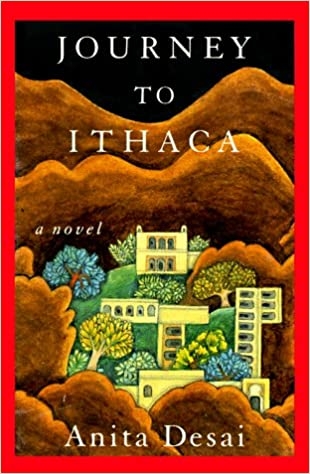
Journey to Ithica

How the character of 'the Mother' was dubious.

Introduction:
The novel Journey to Ithica is a literary genre from the second half of the 19th century. Novel as a literary genre rose in Spain in the 17th century, France and Europe in the 18th century and America in the first half of the 19th century. Literary novel is a criticism of life and gives an authentic picture of life. It’s only character based and the central character revolves around the growth and development of that character.

The main theme is how Sophie wants to prove that what the Mother is seen for is fake, and she wants to expose her true self. Things weren’t exactly harmonic between Sophie and her husband Matteo, Matteo was ill from hepatitis (dangerous form of jaundice). He finds the Mother/Guru and starts to live in her ashram and blindly believes everything be sees. On the other hand, Sofie, the more mature one, realized that there is more to what meets the eye and tries to uncover the truth as only then can Matteo be treated in the hospital. In this article, I’ll be expanding my thoughts on how the character of the Mother is dubious.

About the author:
Anita Desai was born on June 24, 1973 in Missouri, India. She is an English language Indian novelist who excels in evoking character and mood through visual images. Most of her novels reflect the tragic view of Life. Journey to Ithica was first published in 1995.

Journey to Ithica describes a pilgrimage to India by a young couple, Matteo and Sophie and the life of a mysterious woman, ‘the Mother’, who runs the ashram where they live. The ashram is located at the foothills of the Himalayas.

~ The character of ‘the Mother’ in the novel is portrayed as very suspicious or dubious. Even though Matteo completely trusted and devoted himself to her, Sophie was still unsure about her and the fact that she went on a whole journey just to learn more about her or learn about her spiritual journey does raise a lot of suspicion.

~ We see how Matteo was so ill, he still chose to stay with ‘the Mother’ and learn more about scriptures rather than go home to his kids and wife. This shows how devoted he was to ‘the Mother’. It is also suspicious how every time the mother falls, all her devotees fall ill too. It is very a natural for something like that to happen.

~ Even though, in the story she is shown as someone who might be doing better than other gurus, the readers do not find it amusing or any different as she sits among her devotees and not at the top. This raises suspicion of her being a Guru.

~ The novel tells us how ‘the Mother’ has childhood roots from Egypt but the doubtful part here is that she possesses the Indian English accent of dragging the letters.

~ It is still a question as to why she travelled to India and what was the reason that she decided to do things differently compared to other cult leaders. All of her actions points towards the fact that she has not yet attained enlightenment or even any kind of divinity. Her actions are childish and immature which makes us question if she is even worthy of the title ‘Guru’.

~ She also does not treat her devotees equally. She mainly focuses on the new members and ignores the old members which is suspicious.

Conclusion:
Henceforth, all her actions prove that she is a very doubtful and dubious person.

https://www.boloji.com/articles/2371/journey-to-ithaca

Stopping by Woods on a Snowy Evening

BY ROBERT FROST

Whose woods these are I think I know.   

His house is in the village though;   

He will not see me stopping here   

To watch his woods fill up with snow.   

My little horse must think it queer   

To stop without a farmhouse near   

Between the woods and frozen lake   

The darkest evening of the year.   

He gives his harness bells a shake   

To ask if there is some mistake.   

The only other sound’s the sweep   

Of easy wind and downy flake.   

The woods are lovely, dark and deep,   

But I have promises to keep,   

And miles to go before I sleep,   

And miles to go before I sleep.

        Summary

The speaker thinks about who owns the woods that he is passing through, and is fairly sure of knowing the landowner. However, the owner’s home is far away in the village, and thus he is physically incapable of seeing the speaker pause to watch the snowfall in the forest.
The speaker thinks his horse must find it strange to stop so far from any signs of civilization. Indeed, they are surrounded only by the forest and a frozen lake, on the longest night of the year.
The horse shakes the bells on its harness, as if asking if the speaker has made a mistake by stopping. The only other sound besides, is that of the wind and falling snowflakes.
The speaker finds the woods very alluring, drawn both to their darkness and how vast and all-encompassing they seem. However, the speaker has obligations to fulfill elsewhere. Thus, though he or she would like to stay and rest, he knows there are many more miles to go before that is possible.

       Themes

  • Nature vs. Society
    The speaker reflects on the natural world and its implicit contrast with society.The natural world it depicts is “lovely” and overwhelming. The fact that it seemingly lures the speaker to linger in the dark and cold suggests that nature is both a tempting and a threatening force, a realm that resists people’s efforts to tame it while also offering respite from the demands of civilized life. The complete lack of signs of civilization, meanwhile, further emphasizes the distance between society and nature. Far from the sights and sounds of the village, the speaker stands alone “Between the woods and frozen lake” on the “darkest evening of the year.” Together all these details present nature as a cold and foreboding space distinct from society. At the same time, however, the woods are “lovely” enough that they tempt the speaker to stay awhile, complicating the idea of nature as an entirely unwelcoming place for human beings. However raw and cold, nature also allows for the kind of quiet reflection people may struggle to find amidst the stimulation of society. 
  • Social Obligation vs. Personal Desire(Hesitation vs. Choice)

Though the speaker is drawn to the woods and would like to stay there longer to simply watch the falling snow, various responsibilities prevent any lingering. The speaker is torn between duty to others and his wish to stay in the dark and lovely woods. The poem can thus be read as reflecting a broader conflict between social obligations and individualism. He seems worn by travel and social obligation, and the woods seem to represent his or her wish to rest. But this wish cannot be realized because of the oppressive “miles to go,” which must be traveled as a result of duty to others. He is  torn between the tiresome duties of society, and the desire for individual freedom, that is manifested in the woods. This poem points to the reality of making decisions in complex situations in order to fulfill our responsibilities.

SettingAs the title makes clear, the poem is set in the “woods on a snowy evening.” It’s the “darkest evening of the year,” which suggests that this might be the winter solstice.The setting is also mostly silent, with the exception of the sound of wind and snowfall. The woods are expansive, as evidenced in the description “dark and deep.”


Tone

The poem conjures a tone of quiet reflection and wintry reminiscence. The last lines are not of pain or sadness, but more of a meditative appreciation and realization that there’s still much to be done that day.While most readers agree that the general tone is calm and serene, quiet and contemplative, others argue that this is dark and depressing.

Poetic Devices

Metaphor: The last line of the third stanza, “sweep of easy wind and downy flake” and the second metaphor is used in the last line with repetition, “and miles to go before I sleep.” Here, miles represent life’s journey, while sleep represents death.

Personification: Frost has personified the thinking of the horse mildly in the second stanza when it stops, and in the third stanza he gives a sign to the rider. “He gives his harness bells a shake/ to ask if there is some mistake.” It shows as if the horse is a human being who understands his owner’s needs or inquires if they have to stop.

Imagery: The poet has used the images for the sense of sights such as woods, houses, lakes, and they help readers see the woods as a source of solace and comfort to a lonely traveler.

Alliteration: “watch his woods”, “sound’s the sweep”, “His house”.

Euphony: It refers to the sound that is pleasing to the ears. While the journey through the forest is of loneliness, according to Robert Frost woods are not haunting or even scary but provide comfort and calmness. The woods also represent an uncorrupted world that the traveler wishes to stay in. 

         Structure

The whole poem follows the AABA rhyme scheme. Frost has used end rhyme in every first, second and fourth line of the poem. The third line of each stanza rhymes with the next stanza. Such as, “know”, “though” and “snow” rhymes with each other in the first stanza and” here” rhymes with “near” in the second stanza.

Repetition (Refrain): There is a repetition of the verse “and miles to go before I sleep” “and miles to go before I sleep “which has created a musical quality in the poem

Dulce et Decorum Est

BY WILFRED OWEN

Bent double, like old beggars under sacks,

Knock-kneed, coughing like hags, we cursed through sludge,

Till on the haunting flares we turned our backs,

And towards our distant rest began to trudge.

Men marched asleep. Many had lost their boots,

But limped on, blood-shod. All went lame; all blind;

Drunk with fatigue; deaf even to the hoots

Of gas-shells dropping softly behind.

Gas! GAS! Quick, boys!—An ecstasy of fumbling

Fitting the clumsy helmets just in time,

But someone still was yelling out and stumbling

And flound’ring like a man in fire or lime.—

Dim through the misty panes and thick green light,

As under a green sea, I saw him drowning.

In all my dreams before my helpless sight,

He plunges at me, guttering, choking, drowning.

If in some smothering dreams, you too could pace

Behind the wagon that we flung him in,

And watch the white eyes writhing in his face,

His hanging face, like a devil’s sick of sin;

If you could hear, at every jolt, the blood

Come gargling from the froth-corrupted lungs,

Obscene as cancer, bitter as the cud

Of vile, incurable sores on innocent tongues,—

My friend, you would not tell with such high zest

To children ardent for some desperate glory,

The old Lie: Dulce et decorum est

Pro patria mori.

    Summary:

    The speaker begins with a description of soldiers, bent under the weight of their packs like beggars, their knees unsteady, coughing like poor and sick old women, and struggling miserably through a muddy landscape. They turn away from the light flares and begin to march towards their distant camp, as lethargic as the walking dead. Many have lost their combat boots, yet continue on despite their bare and bleeding feet. They are tired to the point of hindered eyesight, and don’t even notice the sound of the dangerous poison gas-shells dropping just behind them.
Somebody cries out an urgent warning about the poison gas, and the soldiers fumble with their gas masks, getting them on just in time. One man, however, is left yelling and struggling, unable to get his mask on. The speaker describes this man as looking like someone caught in fire or lime (an ancient chemical weapon used to effectively blind opponents). The speaker then compares the scene—through the panes of his gas-mask and with poison gas filling the air — to being underwater, and imagines the soldier is drowning.
The speaker jumps from the past moment of the gas attack to a present moment sometime afterward, and describes a recurring dream that he can’t escape, in which the dying soldier races towards him in agony.

  Theme:The Horror and Trauma of War
The banal daily life of a soldier is excruciating, the brutal reality of death is unimaginable agony, and even surviving a war after watching others die invites a future of endless trauma. 

The speaker thrusts the reader into the mundane drudgery and suffering of the wartime experience, as the speaker’s regiment walks from the front lines back to an undescribed place of “distant rest.” They are miserable: “coughing like hags,” cursing as they “trudge” through “sludge” with bloody feet. They march “asleep,” suggesting that these soldiers are like a kind of living dead. The terror and brutality of war have deadened them.
The poem reveals another aspect of the horror of war: even surviving war offers ceaseless future torment. The speaker’s sleep is permanently haunted by the trauma of the death he has witnessed.

The Enduring Myth that War is Glorious
This poem presents a vision of war—that is entirely brutal, bitter, and pessimistic. Owen wrote the poem with the belief that by highlighting the juxtaposition between a sanitized image of honorable death versus the messy, horrifying truth of actual war, perhaps the poem’s audience will change its attitude towards war and cease cheerfully sending young men to die in agony. The speaker suggests that if readers could experience their own such suffocating dreams,marching behind a wagon in which the other men have placed the dying soldier, seeing the writhing of the dying soldier’s eyes in an otherwise slack and wrecked face, and hearing him cough up blood from his ruined lungs at every bump in the path—a sight the speaker compares to the horror of cancer and other diseases that ravage even the innocent, they would not so eagerly tell children, hungry for a sense of heroism, the old lie that “it is sweet and fitting to die for one’s country.”

The poem demands that the readers face the truth and no longer be complicit with that old Lie, but even as it does so, it seems to bitterly perceive that nothing will change, because nothing ever has.


 Structure: 

The poem is a combination of two sonnets. In the first sonnet, the poet describes his experiences of the war, in the second sonnet he becomes analytic and attempts to correct the outlook of others about the war.

Sonnet: A sonnet is a fourteen-line poem in which a single idea floats throughout the poem.

Rhyme Scheme: The whole poem follows the ABAB, CDCD rhyme scheme.


Poetic Devices:

  1. Alliteration: “But someone still was yelling out and stumbling” and /w/ sound in “And watch the white eyes writhing in his face.
  2. Simile: Owen has used many self-explanatory similes in this poem such as,” Bent double, like old beggars under sacks”, “Knock-kneed, coughing like hags”, “like a man in fire or lime” and “like a devil’s sick of sin.”
  3. Metaphor: “Drunk with fatigue; deaf even to the hoots.” It presents the physical state of the men.
  4. Consonance: Consonance is the repetition of consonant sounds in the same line such as the /r/ sound in “Come gargling from the froth-corrupted lungs.”
  5. Synecdoche: It is a figure of speech in which a part is made to represent the whole. For example, the word “sight” in the second stanza represents the speaker.
  6. Imagery: Imagery is used to make the readers perceive things with their five senses. “old beggars under sacks”, “had lost their boots”, “His hanging face, like a devil’s sick of sin” and “white eyes.”

          Setting:

Wilfred Owen wrote “Dulce et Decorum Est” while he was fighting as a soldier during World War I. The use of “flares” and “gas-shells” are specific to World War I, since they had not been used in combat before this time.The majority of British troops in WWI were deployed to France. Chlorine gas, with its distinctive green color, was first deployed by the German army in Belgium in 1915.The “clumsy helmets,” or gas masks, were developed in response to the introduction of gas.  

Language:The way Owen uses language to put readers inside the experiences of a soldier helps them begin to understand the horrific experience of all of these awful aspects of war.If the audience could experience the trauma the speaker describes (“the white eyes writhing,” the “gargling from froth-corrupted lungs”), then they wouldn’t pass their patriotic militarism down to their children. But they don’t experience it, except through the language of the poem 

Tone

The tone of this poem is angry and critical. Owen’s own voice in this poem is bitter – perhaps partly fuelled by self-recrimination for the suffering he could do nothing to alleviate. Owen dwells on explicit details of horror and misery in order to maximise the impact he wishes to have on those who tell the ‘old Lie’. The way in which he addresses as ‘My friend’ those with whom he so strongly disagrees is ironic.


Critical Analysis of Small pain in my Chest

SMALL PAIN IN MY CHEST

    BY MICHAEL MACK

SUMMARY:

The poem records a dying soldier asking for aid from the narrator. He is injured and about to meet the horn of death. He finds himself lucky as his injury is not severe as he is alive in comparison to those who met their death already, yet doesn’t deserve this fate only for fulfilling the ill-desires of some warmongers.  

The young soldier was smiling at his best to hide his pain and asked for the narrator’s aid.The narrator saw a number of soldiers lying dead, who had fought a long and difficult battle throughout the night and had died in the battle.

The narrator finds a large reddish-brown stain of blood on the soldier’s shirt which is a mixture of his blood and the local Asian dirt. The soldier then describes his experience of the battle which took place at night, that he along with a troop of two hundred soldiers was climbing a hill and as they reached the top, there was an explosion and then he felt this small pain in his chest. The soldier then feels bad and tells the narrator that though he is an enthusiastic and big man, he was defeated and left with a small pain in his chest. It seemed that the soldier was injured in the explosion and the pain was of the injury that he went through, and was hiding the pain with his subtle yet brave smile. Finally,the soldier succumbs to the fatal pain, the world closed in on him.The narrator had put his arms around the dead soldier and as he pulled him towards himself, he could feel their wounds pressed against each other- the large one in the narrator’s heart due to the deep agony he was in after watching a soldier die for his country, against the small one in the soldier’s chest.  

SETTING:

This poem is based on the prolonged struggle of the Vietnam War between 1955 and 1975.  The word ‘HERE’ is written in capital letters to indicate the battlefield, which is of no use to humanity. 

THEME:

“Small Pain in My Chest” is another addition to the ‘Anti-war’ poem group. This poem joins the crusade against the uselessness and negativity of war. 

Irony: The title of the poem Small Pain in My Chest is used ironically. The expression “small pain” is repeatedly used in the poem only to make sure we get the irony. The pain was not at all a small one, rather it was a fatal injury that the soldier boy succumbed to. But, the poet is hinting that the injury of the soldier boy was small compared to the destruction war can cause.

The narrator felt extremely sad at the futility of war which takes away so many great young lives. He saw the soldier boy, helped him respond to his call, talked to him, felt his concerns and saw him yield to the injury. So he can’t, but feel the evils of war at heart, which overwhelmed him to an extent that his pain seemed greater than the physical pain of the soldier boy. 

The pity of war is felt all over the poem. War cannot bring merriment; it always has a sad ending. The real pity is aroused when the soldier boy expresses his concern regarding what his mother and wife, who immensely depend on him, would think if they saw him in such helpless condition.War doesn’t have any productive potential; it only destroys. The soldier wouldn’t mind even dying for a noble cause, but to be sitting here without a good reason seems silly to him. 

Theme of sacrifice: The soldier boy has been used as an idol of Sacrifice to portray the sacrifice made by the soldiers while fighting for their country which comes out of a sense of duty and bravery without having any grudge against anyone on the opposite side of the battle.He says:

We fought all day and fought all night with scarcely any rest –

I kept firing at them, sir. I tried to do my best,

But we see he has no complaints against anyone, not even any demand. He fought bravely and tried to do his best just from his sense of giving service for his motherland. We see him covering up his fatal pain with a subtle smile that only imparts strength to think of it as a “small” pain. 

War takes away those lives for a wrong reason. All those lives are lost and spoiled. It’s a sacrifice more of a nation than for a nation. The love and spirit of sacrifice the soldier has within himself for his country does not consider his injury as fatal but just a small pain in his chest. He showed his bravery till which gives us the emotions of the poet on the sacrifice made by the soldier boy who died happily even after making such a huge sacrifice out of the sense of duty and responsibility. 

TONE: 

We find ‘Small Pain in My Chest’ to reflect strong condemnation against the war. This poem through the conversation between the two soldiers reflects that war brings pain, separation, agony, hatred and above all loss of all innocent lives.The death of the young soldier hints that warmongers do go in the battlefield and fight rather guileless young soldiers are sent to kill and to be killed. War does not bring any solution, it kills humans and humanity. Nothing influences a soldier on the battlefield than the fear of being killed and the task of killing the enemy.They have no space for emotion, feelings, sympathy or leisure. Food, rest, recreation etc. become baffling to them

STRUCTURE/STYLE/LANGUAGE:

“Small pain in my chest” is a ballad with a refrain. The poem has a musical tenet. The whole poem is of 36 lines and divided into nine four-line stanzas.It maintains the rhyme scheme of aa bb. It comprises stanzas that can be sung to musical instruments. We find the use of alliteration, inversion, enjambment, imagery, and refrain in the poem.

A Refrain is a repeated line or number of lines in a poem or in a song that comes typically at the end of each verse, which generally carries the main message of the poem. Here the refrain hints at the horrors of war, pain and suffering of a soldier in the war.

POETIC DEVICES:

Alliteration

Alliteration is repetition of consonant sounds in the beginning of nearby words.

What would my Wife be thinking…

Refrain

The poet has repeated the expression ‘a small pain in my chest’ at the end of each stanza beginning from the second one. 

Symbolism

Can it be getting dark so soon?…

I thought that the day had just begun.

These two lines are symbolic. Here, ‘getting dark’ signifies the approaching death of the young soldier. ‘The day’ indicates his life which he thought had just begun.

The ill-fated soldier boy can no longer withstand the fatal wound and the great pain. He is nearing his death. ‘The day’ here symbolises the life of the soldier, which had just begun, and he had a long future ahead. He could not believe that it was ending so soon. 

Euphemism

This is the use of good-sounding indirect words to substitute harsh and unpleasant ones.

They’re all gone while I feel this…

In the above example, ‘gone’ is used to mean ‘dead’ to make it sound milder.

Transferred Epithet

The night exploded and …

Here, the night didn’t really explode, rather the bombs that exploded at night. 

Hyperbole

It is an exaggerated statement, generally to make an emphasis.

…the brightest that I’ve seen.

The speaker has described the soldier’s smile as the brightest smile he has ever seen. Clearly this is an exaggeration.

Critical Analysis of Daffodils

DAFFODILS

by William Wordsworth

I wandered lonely as a cloud

That floats on high o’er vales and hills,

When all at once I saw a crowd,

A host, of golden daffodils;

Beside the lake, beneath the trees,

Fluttering and dancing in the breeze.

Continuous as the stars that shine

And twinkle on the milky way,

They stretched in never-ending line

Along the margin of a bay:

Ten thousand saw I at a glance,

Tossing their heads in sprightly dance.

The waves beside them danced; but they

Out-did the sparkling waves in glee:

A poet could not but be gay,

In such a jocund company:

I gazed—and gazed—but little thought

What wealth the show to me had brought:

For oft, when on my couch I lie

In vacant or in pensive mood,

They flash upon that inward eye

Which is the bliss of solitude;

And then my heart with pleasure fills,

And dances with the daffodils.

SUMMARY:

The speaker was walking aimlessly down the hills and valley when he stumbled upon a beautiful field of daffodils which sparked up his creative spirit. He is transfixed by the daffodils seemingly waving, fluttering, and dancing along the waterside. Albeit, the lake’s waves moved as fervently but the beauty of daffodils outdid with flying colors. The poet feels immensely gleeful and chirpy at this mesmerizing naturalistic sight. He remains transfixed at those daffodils wavering with full vigor, oblivious to the fact that this wondrous scenery brings the poet immense blithe and joy when he’s in a tense mood or perplexed. His heart breathes a new life and gives him exponential happiness at a sight worth a thousand words.The flowers were a “jocund company” to him that he could not find in humans. Their silent presence told more than the words of humans could convey to him. They had a purity that made the poet spellbound, and celebrated the beauty of nature along with the bliss of solitude, which he deems as an asset that inspires him to live a meaningful life.

STRUCTURE/FORM:

The poem is composed of four stanzas, six lines each. It is an adherent to the A-B-A-B-C-C (quatrain couplet rhyme scheme) as it uses consistent rhyming to invoke nature at each stanza’s end. Consonance and alliteration are used to create rhymes.

This poem is written from the first person point of view, therefore it is an ideal example of a lyric poem.

POETIC DEVICES and LITERARY TOOLS:

Similes are used since the poet alludes himself to an aimless cloud, as he takes a casual stroll.The poet metaphorically compares him to a cloud for describing his thoughtless mental state on that day.  The daffodils are compared to star clusters in the Milky Way to explicate the magnitude of daffodils fluttering freely beside the lake. 

Hyperbole is used to explain the immensity of the situation. By “ten thousand”, he meant a collection of daffodils were fluttering in the air. It’s just a wild estimation at best as he supposes ten thousand daffodils at a glance.  

The poet makes an  allusion to the Milky Way, our galaxy filled with its own planetary solar systems stretched beyond infinity. Along the Milky Way’s premises lie countless stars which the poet alludes to daffodils fluttering beside the lake.

The daffodils are even made anthropomorphous in order to create a human portrayal of Mother Nature in this instance.

He has also used personification, equating humans to clouds, and daffodils to humans with constant movement. He personifies the daffodils, dancing, a trait relatable to humans. The term “sprightly” comes from sprite which is primarily dandy little spirits, people deemed existed in such times. They are akin to fairies.

THEMES:

Symbolism: The poem begins with a symbolic reference to the cloud, wandering aimlessly and lonely. The poetic persona is the embodiment of such a cloud.Although the clouds mostly travel in groups, this cloud prefers singular hovering. Hence, it symbolises being lonely and thoughtless, free from mundane thoughts. The daffodils act as a symbol of rejuvenation and pure joy. In his pensive mood, they become a means for the poet’s self-reflection, through which the flowers express their vibrance.

The “inward eye” is a reference to the mind’s eyes. When one shuts his physical eyes, it unleashes those eyes. Wordsworth compares the daffodils to the “bliss” of his solitary moments. 

According to him, the memory associated with the daffodils fills his heart with pleasure, making his heart leap up once again like a child. Blissful memories are so gripping that they stick with a person throughout his or her life.

Imagery: The image of the cloud describes the poet’s mental state, and the images that appear thereafter vividly portray the flowers. These images are visual and some have auditory effects (Example, “Fluttering and dancing in the breeze.”) The waves are sparkling due to the sunlight. This image is contrasted with the dance of daffodils.

 The space continuum holds great mystery for our Romantic Era poet as he envisions the daffodils to be in a constant state of wonder as are the stars beyond the reach of humans.

TONE and MOOD:

The tone  of this poem is emotive, hyperbolic, expressive, and thoughtful. Using this clever tactic of personification, the poet brings people closer to nature, becoming a hallmark of William Wordsworth’s most basic yet effective methods for leading the readers to appreciate nature’s pristine glory. Throughout, the poet maintains a calm and joyous mood. This poem is famous for its simplicity, sing-song-like rhythm, and thematic beauty.

NIKOLA TESLA!!!

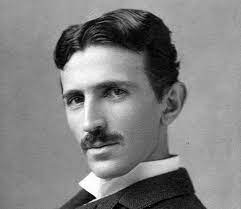
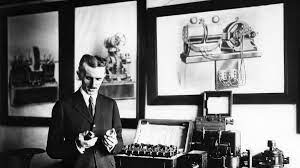
Many scientists have left their mark in the field of science. Their hardwork have led us to this development. Yes, if those scientists wern’t think of those different ideas, will you be able to live in this cosy and comfortable world. Think of those days, there were no mobile phones, mixer grinder, car and even current. When we think of this, the fullest credits goes to the scientists who invented this right? If there is no Edison, will there be any current now? If there is no Graham Bell, will there be a telephone? Have you ever thought if you can live without current and mobile phones? The answer would be no. Okay, let me get the point. You know about Edison, Graham Bell, Albert Einstein etc., and you know something about them. I will tell you about a scientist who left his mark in the field of physics. Yes. I’m to talk about our Nikola Tesla. He made many breakthrough in the production, application and transmission of the electric power. The first alternating current motor was invented by him. This made a breakthrough in the field of engineering. Come on! Let’s know something about him.

NIKOLA TESLA (1856 – 1943)

Nikola Tesla was born on 10th July 1856 in Croatia, America. His father, Milutin Tesla was preist in Eastern Orthodox Church. His mother,Đuka Mandić was very talented and she has the power to memorise Serbian epic poems. The crave for knowledge in Tesla came from his mother. Tesla was the fourth child of the family. He had three sisters and an older brother. His brother died when Tesla was five years old.

Tesla said that his interest in demonstration of electricity came from his physics teacher. He has a talent to calculate integral calculus in his head which prompted his teachers to believe that he was cheating. In 1875, Tesla enrolled at the Imperial Royal Technical College, Gauz, on a Military Frontier scholarship. During his first year, Tesla never missed a lecture, earned the highest grades possible, passed nine exams. He even got the letter of recommendations from his dean. After his father’s death in 1879, Tesla lost his scholarship and addicted to gambling. He never get through the final semester exams and didn’t finish of his degree. To hide fact, he severed the ties with his family and his friends thought that he was dead.

TESLA IN THE FIELD OF ELECTRICITY

  • In 1884, he reached America with the letter of inrtoduction to work with Thomas Edison, whose DC-based electrical works were fast becoming the standard in the country. Edison hired Tesla and the two worked hard tirelessly on Edion’s inventions. After some months, they two parted their ways due to some issues related to their business.
  • Tesla discovered, designed and developed ideas for a number of important inventions which were officially patented by other inventors including dynamos and the induction motor. Tesla designed the alternating-current (AC) electrical system, which had become the prominent power system of the 20th century and has remained the worldwide standard ever since.
  • In 1887, Tesla found funding for his new Tesla Electric Company, and by the end of the year, he had successfully filed several patents for AC-based inventions.
  • In 1895, Tesla designed what was among the first AC hydroelectric power plants in the United States.
  • In the 19th century, Tesla patented Tesla coil, which laid the foundation for wireless technologies and is still used in radio technology today. The heart of an electrical circuit, the Tesla coil is an inductor used in many early radio transmission antennas. The coil works with a capacitor to resonate current and voltage from a power source across the circuit.

Tesla died due to Chronic Thrombosis on 7th January 1943. He died in New York where he lived for sixty years. He worked hard to prove himself in the field of electricity. As the result of his hardwork, he was able to leave his marks in the field of elctricity. These are just a few information given by me. If you began to search on him, you can know various interesting facts about him.

Read more;

THE PICARESQUE NOVEL

The Picaresque novel is a famous technique in earlier periods. These techniques were used to record the Kings’ and other person’s victories in and out of the battlefields even during his adventures. This form of literature helped in recording the real historical heroes and events from various perspectives. Many authors adapted these techniques and succeeded in making new epic fictions, mythologies, and other real events and incidents.

The Picaresque Novel originated in Spain. The term ‘Picaresque’ is derived from the Spanish ‘picaro’ meaning an anti-hero or rogue. A Picaresque novel is generally an autobiography account of the hero’s fortunes, sufferings and wanderings. It is a combination of episodic tales arranged as journeys. They episodes generally depict low life in a rambling manner and come to an abrupt ending.

The first prose fiction in the nature of the picaresque was John Lyly’s ‘Euphues’ published in 1578 detailing the loves and adventures of a young Athenian called Euphues. Six years later, Thomas Nash published his ‘Unfortunate Traveller’, a more perfect picaresque romance dealing with the travels and adventure of a page called Jacky Wilton. Defoe’s ‘Moll Flanders’ published in 1722 had an affinity with the picaresque mode of writing. But Smollett’s  ‘The Adventure of Ferdinand Count Fathom’ is a more perfect form of the picaresque. However, it was Fielding’s ‘Tom Jones’ which established the respectability of the picaresque novel. Fielding’s novel describes through 18 book’s the adventures and several love affairs of The Young anti-hero Tom Jones. Elements of the picaresque can be found in Dickens’s Nicholas Nickleby and in Joyce Cary’s “The horse’s mouth.”

The object of the picaresque novel is to take a central figure through a succession of scenes and adventures, introduce a great number of characters around him and thus build-up picture of society. In the eighteenth century and before travel was the only way to get acquainted with social life. That is why heroes in the Picaresque novels are travelling heroes. The hero in a picaresque novel is always in the Whirlpool of adventures and he has to be present in several human situations. The picaresque hero often transcends the level of the rogue into a tragic figure with human attributes as in the case of Fielding’s Tom Jones.

Another feature of the picaresque novel is the dynamic movement of the hero. He should run through a succession of scenes as Tom does during his journey to London. The novelist constructs the picture of society through the narration of the hero’s wanderings. Smollett sends his hero Roderick Random not only to London but also to France and for a ship journey. The picaresque novel may go deeper into a contemplation of the more intricate relationship between good and evil. They also reveal the strange truth that generous impulses exist even in those whom society considers as rougues. Tom Jones is a generous and manly youth in spite of the rouguish elements in his character.

Until now this technique is used by various authors for various books in the name of Mythologies, fiction, and other Genres.

Short stories within novels

All about autobiography

WHAT IS A NOVEL

The novel owes its existence to man’s interest in other men and the great panorama of human passion and action. Both the drama and the novel are compounded of the same material but in drama and the literary element is bound up with the elements of stage settings and interpretations through acting. So, Marion Crawford terms the novel as “Pocket theatre”. The novel may be defined as long narrative prose detailing the actions of fictitious people. Meredith calls it a ‘summing of actual life’. The novel combines narration and description, history and philosophy, poetry and fantasy, social criticism, and a particular view of life.

Elements of the Novel:

The novel has various elements.

  1. In the first place, it should have a plot. The novel deals with elements and actions and how these are presented is the plot.
  2. Secondly, the men and women who are involved in these elements and actions appear as characters in the novel.
  3. The third element is the dialogue the mean of interaction among the characters.
  4. The fourth element is the scene and the time of action because the characters must interact, do or suffer at some place or time.
  5. The fifth element is the style in which the narration is done.
  6. The Sixth Element is the view of life presented by the novelist.

The Plot:

The plot in a novel is the organization of incidents. The theme should have substantial value and human interest. It is primarily concerned with the things which make life strenuous, intense, and morally significant.

There are two types of plots – organic and episodic. In the first, the characters and events are well interwoven that no character or incident can be removed from the novel without causing damages to the whole. The plot and Jane Austen novels are examples. The second type of plot is loosely formed and characters and incidents have no essential bearing on each other. The picaresque novels of Fielding and even some of the novels of Dickens have episodic plots. How the various elements in the plot or organized to achieve a definite artistic purpose is called the structure. Unity in structure and plot is to be observed.

The Characterization:

Characterization is the act of presenting the characters alive and real to our imagination. The men and women in the novel must move through it like living beings they should remain in the readers’ memory after the novel is laid aside. There are two types of characterization – the direct or the analytic and the indirect or dramatic. In the analytical method, the novelist portrays his Characters from outside, dissects their passion, thoughts, and feelings, and even passes judgment upon them.

The Dialogue:

Dialogue is well managed, gives vividness, and actually to the plot and the characters. Dialogue reveals the passion and the emotion of the character and advises the movement of the plot. Dialogue should Constitute an organic element in the story. It should be natural, appropriate, and dramatic. It should be in keeping with the personality of the speaker.

The Time and Place of Action:

Time and place of action in a novel refer to the whole setting of the story, both social and material. They are novels of sea life, military life, industrial life of district life, and life of different classes of people. There are novels with a regional background; there are novels written in the historical background. whatever may be the setting, the novelist should master its details and then present a lively picture of it.

The novel is concerned with life and so the novelist’s view of life may be revealed in the novel. A novelist may make creative observations on human life. By the selection and organization of the material, and by the presentation of character and development of the plot, the novelist can show us what he thinks of life. However, the novelist should not indulge in propaganda or preaching. His philosophy is a part of the structure of the novel and should reveal itself through the interpretation of life, thought, character, and temper of the work as a whole.

The chief characteristics of Shakespearean novels

Must read two books by Paulo Coelho-2

Comparing Writing forms of two Indian Writers- Twinkle Khanna and Dr. Shashi Tharoor

Twinkle Khanna has disarmed the audience with her thought- provoking writing and her charming wit. She is a popular newspaper columnist, Indian author, interior designer, film producer and a former Bollywood actress. She writes columns in The Times of India and Daily News Analysis (DNA), her discernible writing skills and her liberal opinions have captured the attention of her readers. Her craft of penning down funny fables and satirical writing has set her apart. She firmly believes that in life nothing is more sacred than laughter.

  • She writes anecdotes about everyday situations that a woman has to go through. The situations are mundane yet significant incidents in life. Her columns are random, though interesting, slice of life entries, adds life to her words through her self-deprecatory humour and unmatched wit with bits and pieces of life- learnings.
  • Her Popular works include – Mrs.Funnybones, Pyjamas are forgiving, The Legend of Laxmi Prasad
  • Her style of writing can be described as discernible, easy to read and has a smooth way of expressing herself through her writings. If a person is not an adamant reader, they will still be able to understand the picture that she is framing through her writings. Her flow of words is effortless.

 She deals with a wide range of topics from focusing on women empowerment, mental health and normalizing finding love at the age of sixty to WhatsApp forwards and her staff members being a menace to her. She masterfully manages to never belittle a problem or the issue and never diminishes their relevance in any way. Through her columns she can give words to your thoughts. Her columns are an amalgamation of intelligence, sarcasm, practicality and adulation.

  • Her choice of words is interesting, mostly uses expressive adjectives which intensifies her anecdotes. Includes – details that are distinctive, uses similes in her work which adds humor in situations and uses satire and irony which conveys absurdity and silliness of people, situations and things.
  • Her tone is joyful, sarcastic and cheerful.
  • Mood – she is comical, humorous and maddening.
Twinkle Khanna is ready with her third book and it is all about 'pyjama  girls' | Lifestyle News,The Indian Express

Dr. Shashi Tharoor is a best-selling author, columnist and a politician. He is currently member of parliament of Thiruvananthapuram. He has also served as a peacemaker and an administrator in the United Nations for over three decades. He certainly did not let his political career stop his pen. He is known to be the man of having many skills. Over the years he has made a reputation of an impactful orator and a prolific writer.

  • His popular work includes- The paradoxical prime minister, An era of darkness: The British Empire in India, Why I am a Hindu
  • He writes about politics and topical issues of caste system, society, democracy, foreign policy, patriotism, citizenship, nationalism and modern India. He chooses an immersive narrative for all his books and columns. His way of writing exhibits the qualities of good research and personal knowledge which gives a different and a new perspective to readers.

Readers who are looking for a refined viewpoint on the current events that unfold in our country’s political system must read his work. His ability to include the application of critical analysis creates better understanding of important matters that the country is facing or has faced.

  • He is known for having an inimitable style of writing. He has an extensive vocabulary and many people cannot perceive his work easily and often call it obscure in a way. His books are not an easy read and takes a time and efforts to understand vast concepts, debates, history and terminologies that he includes in his columns.
  • His choice of words is complex and informative. His work is recognized for brilliancy in the usage of satire to deliver serious messages. In his columns he has shown that a strong and thoughtful argument can be presented in a humorous way to prevent monotonousness, yet he manages to deliver the required message. By inculcating satire in his work, he candidly expresses himself.
  • His tone is firm, serious and formal.
  • Mood – critical and humorous  

The similarities in their work are that both have chosen topics that are relevant in our country. They both have strong stands and a sense of individuality which sets them apart in their felid of work. They are not hesitant to candidly express themselves and explain their point of views to the readers. Both have an interesting way to put across their messages. There writings include a few scathing statements but are thought-provoking and will entice the readers.

Books- Our best companion

INTRODUCTION

Our best companies are books because they provide us with knowledge and comfort of mind.

Despite the fact that we have family and friends with whom we may discuss our opinions, we believe that books are the finest way to live a life full of wisdom and without explanation.

A book may be the one thing that one may read all day and leave all of their difficulties behind.

Photo by Mau00ebl BALLAND on Pexels.com

Although a book might provide us with knowledge, we should never expect us to remain obedient to the information provided. Books can also teach you about other facets of life.

Books are regarded for providing unbiased and reliable information. Books provide us with reliable research and information on a subject.

Like a wonderful buddy, good books approach our minds with knowledge and nice thoughts.

It is true that books are our best friends. Books will not abandon us in the face of adversity. They will be a terrific company for us at all times.

There are a lot of fantastic books out there that can help us modify our minds. To be motivated and inspired in our daily lives, we need a lot of good thoughts.

Learning new abilities by reading a book is a great approach to do so.

We can gain a comprehensive understanding of a subject. When we are feeling lonely, we can curl up with a nice book. I can assure you that you will begin to feel better. We must constantly avoid reading terrible novels.

A poor book can destroy your head and cause you to think negatively. That is why, before selecting a book, we should seek recommendations from friends or the internet.

Books can be expensive to purchase at times, but investing in a good book is well worth it. Money cannot be used to measure knowledge. That is why you should never stop purchasing books.

The public library has a lot of free books. If you like to read, you can also borrow books from your friends and elders. When you’re having a bad day and are feeling down, books can assist. Books can help you get out of a bind.

Photo by Leah Kelley on Pexels.com

We can learn many good things while reading a good book.

Books written by famous and experienced people helps us to become a better human being and also teach us how to serve the society in the best possible way.

When we are alone, we can always pick up a book and start reading to feel relax.

FAMOUS QUOTES

Good friends, good books, and a sleepy conscience: this is the ideal life.- Mark Twain

A great book should leave you with many experiences, and slightly exhausted at the end. You live several lives while reading.- William Styron

QUALITIES WE CAN LEARN FROM GOOD BOOKS

Being smart entails having a strong learning ability.

Brave: Willing to tackle challenges head on.

Nothing is impossible if you keep trying.

Demonstrate compassion by expressing positive thoughts toward people.

Don’t Insult Anyone: Be humble.

Always be grateful for what others have done for you.

Help others: Be a source of assistance to everyone.

Be Positive: Enjoy yourself in whatever you do.

Respect for people and their property is one of the most important moral values.

REFERENCES

http://www.vowelor.com

http://www.paragraphbuzz.com

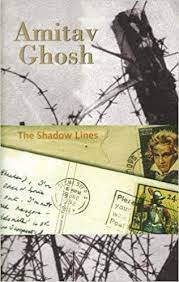
The Shadow Lines – A Story about lost Identity!

The novel ‘The Shadow Lines by Amitav Ghosh centers around a young boy, the narrator, whose growth in age and maturity is traced slowly through his understanding of the memories that connect him and his family members. Through the novel, we see that the narrator has flashbacks in time as bits and pieces of stories, both half-remembered and imagined, come together in his mind until he arrives at an intricate, interconnected picture of the world where borders and boundaries mean nothing, mere shadow lines that we draw dividing people and nations.

The title ‘The Shadow Lines’ depicts the author’s perspective on the cultural, ideological, geographical, and psychological borders, which he asks us to disregard in favor of broader humanism. The title ‘shadow lines’ can refer to many different things, but I believe that the allusion of Amitav makes is to the borders that separate nations from each other.

Divisions between nations – shadow lines

Amitav Ghosh asserts that the borders that separate nations are nothing more than artificial lines created by humans. Thus, the ‘shadow lines of the title are the borders that divide people, and one of the main emphases of the novel is on the arbitrariness of such cartographic demarcations.

Why are these lines ‘shadowy’ then? Because like shadows, they lack substance, they lack meaning. Ghosh believes that these ‘shadow lines’, these meaningless borders, can and should be crossed – if not physically, then at least mentally through our imagination and open-minded acceptance of people, irrespective of nationality, religion, or race.

In the novel, the lives of the narrator’s family have been irrevocably changed as a consequence of Bengal’s Partition between India and Pakistan at the time of Independence and the subsequent experience of the East Pakistan Civil War of 1971, which led to the creation of Bangladesh. Towards the end, when members of the family are about to undertake a journey from Calcutta to their former home in Dhaka, the narrator’s grandmother asks whether she will be able to see the border between India and East Pakistan from the plane.

     She is puzzled when told that there will be no such visible demarcation and says: “But if there aren’t any trenches or anything, how are people to know? I mean, where’s the difference then? And if there’s no difference both sides will be the same; it’ll be just like it used to be before when we used to catch a train in Dhaka and get off in Calcutta the next day . . .”

The novel is about how pain inflicts in human life even though it is a heart-throbbing past. The burden of the past never leaves is quite visible through this novel, as the characters in the novel who have suffered from the feeling of losing their real homes, their originality, and motherland show the readers about the devastation of Humans and the consequences with humans community due to war and riots.


This ingenious response on her part highlights the absurdity of the revisionist map-making of the politicians responsible for Partition. Because the truth is that there is no difference between this side of the border and that. There’s nothing concrete about these borders for they only exist in maps and our minds.


The Shadow Lines – A Story about lost Identity!

The novel ‘The Shadow Lines by Amitav Ghosh centers around a young boy, the narrator, whose growth in age and maturity is traced slowly through his understanding of the memories that connect him and his family members. Through the novel, we see that the narrator has flashbacks in time as bits and pieces of stories, both half-remembered and imagined, come together in his mind until he arrives at an intricate, interconnected picture of the world where borders and boundaries mean nothing, mere shadow lines that we draw dividing people and nations.

The title ‘The Shadow Lines’ depicts the author’s perspective on the cultural, ideological, geographical, and psychological borders, which he asks us to disregard in favor of broader humanism. The title ‘shadow lines’ can refer to many different things, but I believe that the allusion of Amitav makes is to the borders that separate nations from each other.

Divisions between nations – shadow lines

Amitav Ghosh asserts that the borders that separate nations are nothing more than artificial lines created by humans. Thus, the ‘shadow lines of the title are the borders that divide people, and one of the main emphases of the novel is on the arbitrariness of such cartographic demarcations.

Why are these lines ‘shadowy’ then? Because like shadows, they lack substance, they lack meaning. Ghosh believes that these ‘shadow lines’, these meaningless borders, can and should be crossed – if not physically, then at least mentally through our imagination and open-minded acceptance of people, irrespective of nationality, religion, or race.

In the novel, the lives of the narrator’s family have been irrevocably changed as a consequence of Bengal’s Partition between India and Pakistan at the time of Independence and the subsequent experience of the East Pakistan Civil War of 1971, which led to the creation of Bangladesh. Towards the end, when members of the family are about to undertake a journey from Calcutta to their former home in Dhaka, the narrator’s grandmother asks whether she will be able to see the border between India and East Pakistan from the plane.

     She is puzzled when told that there will be no such visible demarcation and says: “But if there aren’t any trenches or anything, how are people to know? I mean, where’s the difference then? And if there’s no difference both sides will be the same; it’ll be just like it used to be before when we used to catch a train in Dhaka and get off in Calcutta the next day . . .”

The novel is about how pain inflicts in human life even though it is a heart-throbbing past. The burden of the past never leaves is quite visible through this novel, as the characters in the novel who have suffered from the feeling of losing their real homes, their originality, and motherland show the readers about the devastation of Humans and the consequences with humans community due to war and riots.


This ingenious response on her part highlights the absurdity of the revisionist map-making of the politicians responsible for Partition. Because the truth is that there is no difference between this side of the border and that. There’s nothing concrete about these borders for they only exist in maps and our minds.

SHORT STORIES WITHIN NOVELS – PART 2

As we already read about the secret to living happily from The Alchemist book by Paulo Coelho. Today we will look at two different stories from different books.

THE KITE RUNNER BY KHALID HOSSEINI

It was a dark little tale about a man who found a magic cup and learned that if he wept into the cup, his tears turned into pearls. But even though he had always been poor, he was a happy man and rarely shed a tear. So he found ways to make himself sad so that his tears could make him rich. As the pearls piled up, so did his greed grow. The story ended with the man sitting on a mountain of pearls, knife in hand, weeping helplessly into the cup with his beloved wife’s slain body in his arms.

This story must give you goosebumps but, the real conclusion is when Amir the protagonist and the narrator of the book The Kite Runner wrote this story and shared it with his friend Hassan, who is a servant’s boy of Amir’s family. Hassan was shocked and impressed with Amir’s story but, he asked why he has to kill his own wife, instead of he can shed tears by cutting onions?

MORAL: When you have to choose something… Choose wisely.

VERONICA DECIDES TO DIE BY PAULO COELHO:

Zedka started to narrate a story to Veronica.

A powerful wizard, who wanted to destroy an entire kingdom, placed a magic potion in the well from which all the inhabitants drank. Whoever drank that water would go mad.

The following morning, the whole population drank from the well and they all went mad, apart from the king and his family, who had a well set aside for them alone, which the magician had not managed to poison.
The king was worried and tried to control the population by issuing a series of edicts governing security and public health.
The policemen and inspectors, however, had also drunk the poisoned water, and they thought the king’s decisions were absurd and resolved to take no notice of them.

When the inhabitants of the kingdom heard these decrees, they became convinced that the king had gone mad and was now giving nonsensical orders. They marched on the castle and called for his abdication.

In despair the king prepared to step down from the throne, but the queen stopped him, saying:
‘Let us go and drink from the communal well. Then we will be the same as them.’

The king and the queen drank the water of madness and immediately began talking nonsense.
Their subjects repented at once; now that the king was displaying such wisdom, why not allow him to continue ruling the country?

After drinking water from the poisonous well all became mad and equal. The country continued to live in peace although its inhabitants behaved very differently from those of its neighbors. And the king was able to govern until the end of his days.

Zedka asked veronica: Do you know what exists outside beyond the walls of this asylum?

Veronica said People who have all drunk from the same well.

MORAL: Zedka and Veronica both are patients in the asylum. Through this story, Zedka symbolically tells that people think they are civilized and normal. But, when they encounter some strange people they started to divide the borders and make them as a patient.

SHORT STORIES WITHIN NOVELS https://eduindex.org/2021/07/24/short-stories-within-novels/

THE GOTHIC NOVEL https://eduindex.org/2021/07/21/the-gothic-novel/