Public policy And Politics in India : How institution matterBy kuldeep Mathur, Oxford University Press 2013; ISBN -13: 978-0-19-9466054

Public policy is a new discourse that emerged in the early 1950s. Public policy is designed as goal oriented action to stimulate decision making. Policy mounted on law & regulations, funding management with the concern of governmental representation. It is a discipline to solve the Conflict by making policies such as education Policy, health Policy, employment policy, foreign policy, Agriculture Policy and labor policy.

Public policy developed in the context of the Indian governance scenario; is becoming more and more significant in today’s world. The importance of civil societies, non-profit organizations, and the media have a communicative role in producing policies. 

This book carved out a few questions that needed to be answered like what is the nature of this new style of governance ? How does it affect the role of the state in framing public policy? And this book also delve deep into the nature and role of these networking to determine public policy, promoting the sledgehammer research in this area of public policy.

Kuldeep Mathur, the author of this book put forward his own research essays that focus on an analysis of Indian public policies. The theme of the book also concerned the processes of policy making. Author explores the impoverished aspects of Policies in india; what was lost in the dominant theme pursued by most scholars was that policy was an arena of Contestation – of bargaining & Compromises of politics. 

Questioning the bureaucratic imperative of impersonality and neutrality inhibited an understanding of how policies were formulated and implemented.

Main Content

This book emphasizes on certain Sphere or excessive involvement of political executive, exclusiveness of politics in Policy Making. Discuss the Guidance of Governance in India, Research bases Policy Analysis and how policy research organized in the South Asian region provides the understanding for Supreme Court, Technocrats and populist Politics in india in the sphere of Policymaking, importance of policy evaluation for education Policy. 

The impact of privatization, Liberalization and public sector Enterprises in India, how governance is used as networks between state, Business, NGOs for enhancement of relationships. Development of cognitivism towards strengthening the Bureaucracy: state and  Development in India, enforces the Administrative reform in india as policy fixation and Consequences.

 Following tenets explained by author; Book explained the Policy mechanism of different Commissions, Active inputs of parliamentary Committees, Concentrate on political and Administrative Constraints. Introductory policy Analysis from planning to implementation failure.

Articulation of how formulation of policies differ in South Asia; social political environment and character of Social Science research context that shapes the characteristics of policy research organization, emergence of policy research organization in South Asia. However, South Asian Countries do not have Common model for the growth of such institutions. Below mentioned important outlining from the book.

“Initiative taken by the govt establishing research institution at the beginning of the planning period indicates recognition of the fact that research can contribute to policy making”. Policy failure were seen to be located in the bureaucratic/managerial process rather than in programme design & formulation of objectives.

“The dilemma of increased political participation within a system of limited economic benefit is the major Challenge for policymakers as india enters the second millennium”.Author underline the role of supreme Court in Policymaking; Political Contestation & govt reluctance in implementing what had already long been on the statute books and nature of environmentalist politics. 

Explored the role of various actors in shaping outcomes, the impact of education policy since independence. The significance of privatization emphasis on the virtue of the market is highlighting the weaknesses of the public sector hence the need of privatization political leadership 

promoting economic reform in india, prescribed few reforms and possible reasons for failure lead to desirability of wholesome privatization.

Consideration of the role of legislation in the making of Public Policy has been a relatively neglected area of Political environment. Articulation of Governance as networks with ngos, state & market ponderability of relationship of the state with the corporate sector is based on a transformed view of the role of the state in neo liberal economic framework.

 Also, In this book the author emphasizes strengthening of bureaucracy for ameliorate the Governance. All the following, explanatory principles in the book require the administrative Reforms; changing the intellectual climate that provides understanding of the role & scope of Public Administration propelled this discourse.

Conclusion

I highly recommend this book not only to those who are studying Public Policy but to all who desire to acquire knowledge regarding public policies mechanisms & approaches of Public Policy in India. The language of the book is moderate to understand, easy to absorb and grasp.

Also, This book clear the idea of policy making, social science, economic decision making, necessity of pivotal agencies gravitate our attention towards policy 

processes rather than focus on consequences. Dominant Strategy of development and the state determined development outcomes. Propounded economic reform was a response to the economic crisis and became an instrument of crisis management by the government.

Critical significant stream in the general area of policy studies which here attracted considerable attention of policy evaluation. Critical evaluations of various policies and programmes have sought to identify the factors responsible for policy failures and to suggest what the Government should have done to improve their chances of successful Policy structure. 

Policies could not achieve their objectives without bureaucratic and administrative adequate sophistication. Discussion on little attention was paid to the policies themselves and their appropriateness by Government, Policies began to be assessed in relation to plan models, sectoral relationships and the global economic context. Importance of public policies have primarily focused on the dimensions of efficiency and effectiveness. 

Policies are shaped and designed. Social scientists need to fill the gap in our comprehension of how state institutions function particularly when policy is a political statement and not a techno-rational output of State action. This book provide all kind of reasoning and perception to improve the Public Policy structure.

IMPORTANT BOOKS TO READ IN YOUR 20’S

Reading is good for you because it improves your focus, memory, empathy, and communication skills. It can reduce stress, improve your mental health, and help you live longer. Reading also allows you to learn new things to help you succeed in your work and relationships.Reading has been proven to keep our minds young, healthy and sharp, with studies showing that reading can even help prevent alzheimer’s disease. Reading also develops the imagination and allows us to dream and think in ways that we would have never been able to before.

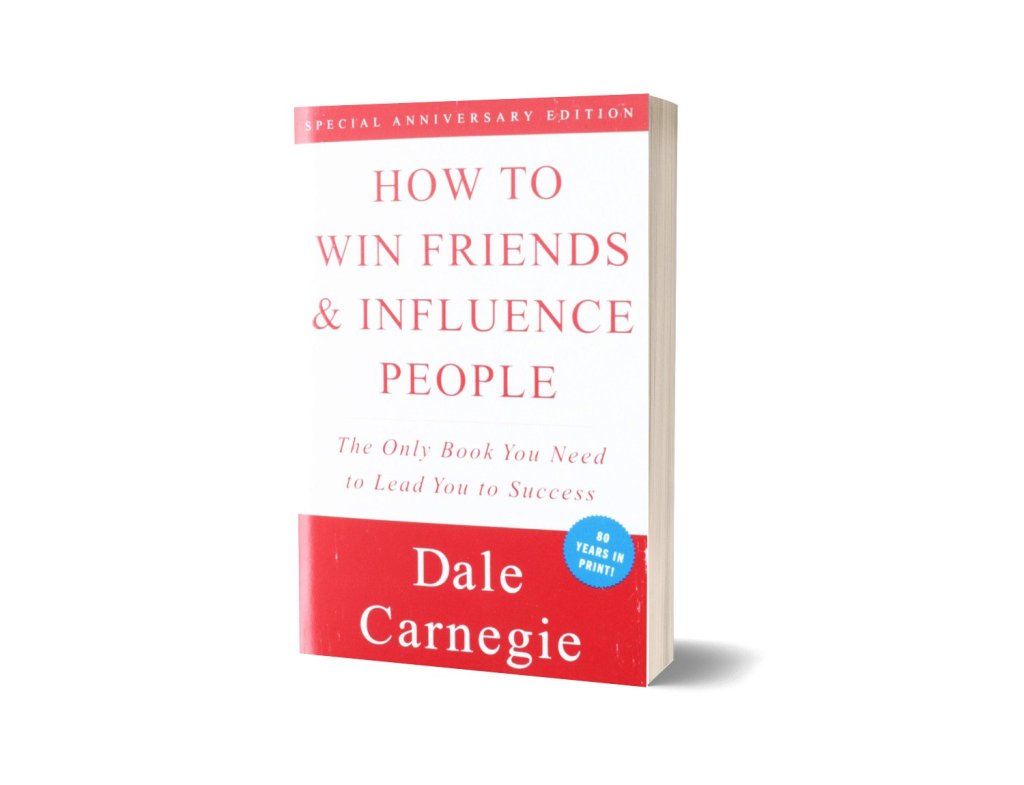
1) How to win friends and influence the people

How to Win Friends and Influence People is a self-help book written by Dale Carnegie, published in 1936. Over 30 million copies have been sold worldwide, making it one of the best-selling books of all time. Carnegie had been conducting business education courses in New York since 1912. The book is very easy to read and provides great examples and stories which makes it 10x easier to relate to and remember. I highly recommend this book, it has helped me improve certain aspects of my relationships and interactions with others.The core idea is that you can change other people’s behavior simply by changing your own. It teaches you the principles to better understand people, become a more likable person, improve relationships, win others over, and influence behavior through leadership.https://en.m.wikipedia.org/wiki/How_to_Win_Friends_and_Influence_People

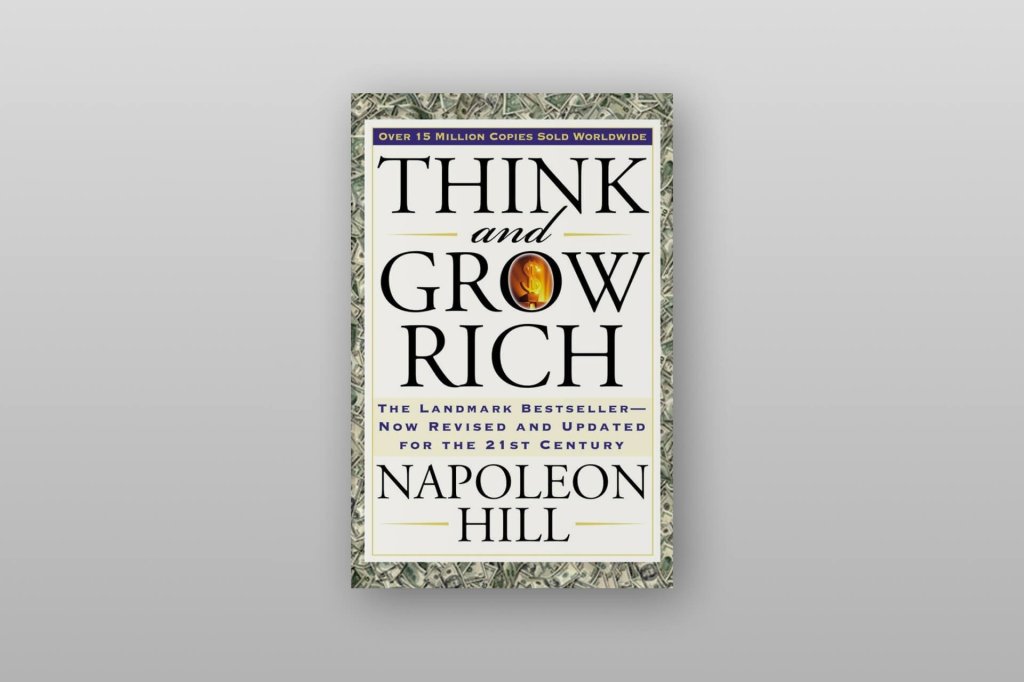
2) Think and Grow Rich

Think and Grow Rich was written by Napoleon Hill in 1937 and promoted as a personal development and self-improvement book. He claimed to be inspired by a suggestion from business magnate and later-philanthropist Andrew Carnegie. https://en.m.wikipedia.org/wiki/Think_and_Grow_Rich The “secret” of Think and Grow Rich is to place yourself within the overall scheme of creation, obeying natural laws that inevitably and invariably beget growth, expansion, renewal, and generativity.

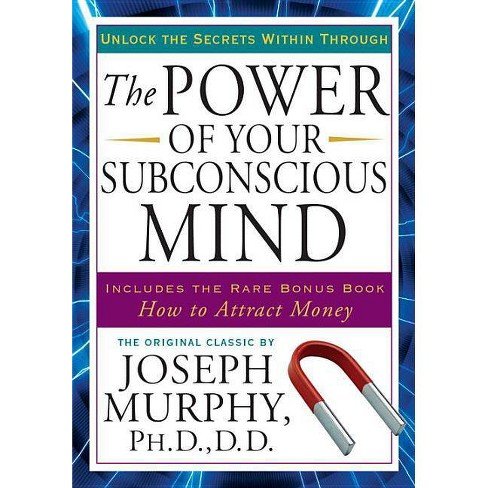
3) The Power of your subconscious mind

The Power of Your Subconscious Mind has been a bestseller since its first publication in 1963, selling many millions of copies since its original publication. It is one of the most brilliant and beloved spiritual self-help works of all time which can help you heal yourself, banish your fears, sleep better, enjoy better relationships and just feel happier. The techniques are simple and results come quickly. You can improve your relationships, your finances, your physical well-being. Your subconscious mind is a powerful force to be reckoned with. It makes up around 95% of your brain power and handles everything your body needs to function properly, from eating and breathing to digesting and making memories.

4) The Richest Man in Babylon

The Richest Man in Babylon is a 1926 book by George S. Clason that dispenses financial advice through a collection of parables set 4,000 years ago in ancient Babylon. The book remains in print almost a century after the parables were originally published, and is regarded as a classic of personal financial advice.This point is actually the crux of the book: the classic principle of paying yourself first. Clason recommends saving at least 10% of all income earned. Even in his example of those who are paying off debt, he still advocates setting aside this one-tenth. https://en.m.wikipedia.org/wiki/The_Richest_Man_in_Babylon#:~:text=The%20Richest%20Man%20in%20Babylon%20is%20a%201926%20book%20by,classic%20of%20personal%20financial%20advice.

5) Atomic Habits

An atomic habit is a regular practice or routine that is not only small and easy to do but is also the source of incredible power; a component of the system of compound growth. Bad habits repeat themselves again and again not because you don’t want to change, but because you have the wrong system for change. While it is well worth reading cover-to-cover as it is chock full of useful and actionable information about habits, from how and why we form them to how to break them and make them, I’ve decided to highlight my top takeaways and share with you the lessons I felt were the most profound. https://medium.com/tom-thoughts/i-finally-read-atomic-habits-here-are-my-top-5-takeaways-57dd6f904ab4

Booktok made me read it. – Review on the book ‘We were liars’

Yes, you read it write. This book has been trending on Booktok (book recommendation tiktoks) under the titles of “books that I would sell my soul to read for the first time again”, “books that will make you sob” or something as simple as “must have books”. But this particular book made many heads turn.

So, what’s all the hassle about? That’s exactly what we are here to find out.

Book history-

This book was written by E. Lockhart in 2014 and did a commendable job. The real hype began when in 2019 this book made an appearance in Booktok and ever since it’s still in the lists of many.

Popular sites like Daily Trojan recently added “We were liars’ on their must read pile. Publishers weekly too has named it as one of the most discussed book on TikTok.

Plot check.-

Nope, sorry can’t say. My lips are sealed.

 But still for the sake of our lovely readers I will give you some insight. The plot is everything. It’s about a family, a rich one, whose story is narrated by a girl who can’t remember the last summer she spent on that island. No literally she can’t remember what happened. And believe me when I say that’s the only the start of the mysteries that revolve around the great Sinclair family.

Next up comes the plot twist. The suspense of this book will make you question reality. It will toy with your brain. But this book make every misery it puts us through worth it.

Theme park.-

The themes portrayed by the author E. Lockhart is quite literal slap on the society. The book challenges social norms head on. Ranging from racism to rich/poor and everything in between this book has it all. It also deals with psychological disorders which I might add is a very sensitive and controversial territory. But E. Lockhart sashayed her way into it quite elegantly.

This book can be added in our school syllabus and no one would question it. Cause that is life. Real one not the Shakespearean where people die unnecessarily or take unfinished revenges.

Why are Tiktokers hyped about it?

The reason behind this is one word “narration”. The lines can be stolen, plot can be copied, hell even if entire idea of this book is plagiarized, still no one can copy the way the author narrates this book. The narration keeps you on edge, makes you restless and leaves a mark right on your soul. The ending will have you wailing in a corner of your room and question life and the entire credit goes to how beautiful the story has been narrated.

And that’s right I would personally sell my soul to read for the first time again.

Not just luck-

‘We were liars’ made I to the popular list mainly due to Booktok but what makes this entire ordeal a little disappointing is that why such a great book written by a very talented author need a social media platform to get popular and sell some copies. It’s been a long time since I have been a reader, whilst social media is a great advertising platform, I still feel books should have a separate platform where we can find genuine books which are of our interest and not just the books which were lucky enough to reach Tiktokers.

‘We were liars’ is like a ride on emotional rollercoaster. It takes you to another level of epiphany. This book has the capability to change one as a person and I am so not exaggerating.

Booktok made me read it but I hope you can say the review made you read it.

Shutter Island – book review

About the book

Author : Dennis Lehane

Genre : Gothic, Psychological Horror, Crime

Pages : 380

Publication date : April 15, 2003

Story plot

In 1954, widower U.S. Marshal Edward “Teddy” Daniels and his new partner, Chuck Aule, go on a ferry boat to Shutter Island, the home of Ashecliffe Hospital for the criminally insane, to investigate the disappearance of a patient, Rachel Solando (who was incarcerated for drowning her three children). Despite being kept in a locked cell under constant supervision, she has escaped the hospital and the desolate island.

In Rachel’s room, Teddy and Chuck discover a code that Teddy breaks. He tells Chuck that he believes the code points to a 67th patient, when records show only 66. Teddy also reveals that he wants to avenge the death of his wife Dolores, who was murdered two years prior by a man called Andrew Laeddis, whom he believes is an inmate in Ashecliffe Hospital. The novel is interspersed with graphic descriptions of World War II and Dachau, which Teddy helped to liberate. After Hurricane Carol hits the island, Teddy and Chuck investigate Ward C, where Teddy believes government experiments with psychotropic drugs are being conducted. While separated from Chuck for a short while in Ward C, Teddy meets a patient called George Noyce, who tells him that everything is an elaborate game designed for him, and that Chuck is not to be trusted.

As Teddy and Chuck return to the main hospital area, they are separated. Teddy discovers a woman (in a sea cave he tried to take refuge in) who says she is the real Rachel Solando. She tells him she was actually a psychiatrist at Ashecliffe, and when she discovered the illegal experiments being run by them, she was incarcerated as a patient. She escaped and has been hiding in different places on the island. She warns him about the other residents of the island, telling him to take care with the food, medication and cigarettes, which have been laced with psychotropic drugs. When Teddy returns to the hospital, he can’t find Chuck and is told he had no partner. He escapes and tries to rescue Chuck at the lighthouse, where he believes the experiments take place. He reaches the top of the lighthouse and finds only hospital administrator Dr. Cawley seated at a desk. Cawley tells Teddy that he himself is in fact Andrew Laeddis (an anagram of Edward Daniels) and that he has been a patient at Shutter Island for two years for murdering his wife, Dolores Chanal (an anagram of Rachel Solando), after she murdered their three children.

Andrew/Teddy refuses to believe this and takes extreme measures to disprove it, grabbing what he thinks is his gun and tries to shoot Dr. Cawley; but the weapon is a toy water pistol. Chuck then enters, revealing that he is actually Andrew’s psychiatrist, Dr. Lester Sheehan. He is told that Dr. Cawley and Chuck/Sheehan have devised this treatment to allow him to live out his elaborate fantasy, in order to confront the truth, or else undergo a radical lobotomy treatment. Teddy/Andrew accepts that he killed his wife and his service as a US Marshal was a long time ago.

The ending of the novel has Teddy receive a lobotomy in order to avoid living with the knowledge that his wife murdered their children and he is her murderer.

Review

Have you seen the movie Shutter Island starring Leonardo DiCaprio? If you haven’t yet, read the Shutter Island book first. It was originally published in 2003 by Dennis Lehane, and made into a movie not long ago, 2010 actually. I personally haven’t seen the movie either, but after reading the book I’ve decided I HAVE to see the movie adaptation.

Why was the book so good? Many people will already be familiar with Lehane’s work, he’s a famous thriller/crime novelist, so to start off the book is really well written. Not only that, but the plot is fantastic, with lots of twists that you never see coming, which always makes great for a screenplay as well. The copy of the book that I read was a lent to me by a colleague of mine, so it was an older, well-loved paperback from a while back; a nice change from the brand new books I typically get! Anyway, as mass market paperbacks typically do, it had quotes and blurbs from press reviews all over the cover, and a few of them described the book as ‘cinematic’, meaning the descriptions of the scenery and characters are so vivid that readers can easily imagine these scenes in their mind. Of course these were just predictions at the time, but the book was good enough for Martin Scorsese to take notice, as he was the eventual director of the film.

For those of you who like ‘spooky’ summer time reads, this book is definitely for you, so make some time for some ‘oldies but goodies’ on your shelf, and then clear away an afternoon to watch the movie when you’re done the book.

BOOK REVIEW “THE WIZARD’S OF OZ”

. ABOUT THE AUTHOR

L.Frank Baum was an American author born on May 15,1856 Chittenango New York. He has written 14 novel on Oz, plus 41 on others and many more works.

. SUMMARY

Let’s talk about one of the greatest literary work of L.Frank ‘The Wizard’s of Oz’ which became a classic of children literature. The novel is about a girl named Dorothy, who lives with her uncle Henry and aunt Em with her pet dog Toto in Kansas. A sudden cyclone strikes and swift away Dorothy and Toto along with her uncle’s farmhouse and dumped it in the land of Munchkin of Oz’s, in the process killing the wicked witch of East. Wanting to go back to her homeland the story embarks her journey on the yellow brick road to the emerald City of great wizard of oz. On the way she makes friends with the Scarecrow who wants a brain, the Tin woodmen who wants a heart and a cowardly Lion who wants courage. After many adventures they reach the Emerald City to the great wizard of Oz. The wizard lay’s a condition only if they kill the wicked witch of west the desires will be fulfilled. They commence their journey on killing the witch , after a lot of difficulties they are able to kill the witch. On returning back to the wizard they are left shocked………. Let me leave the summary on this note so the readers curiosity is not killed.

. THEME

The story has many theme ; one must find their strength in oneself and their friendship. The courage to tackle the problems comes from within and the good circle of friends who surrounds them. The grass is not greener on the other side , we should enjoy our present and stay contented from within . It also depicts there no place like home one can not find the happiness of a family to a foreign land but their own land . Life throws you many hurdles but one must fight with it with their full potential and never to lose hope .

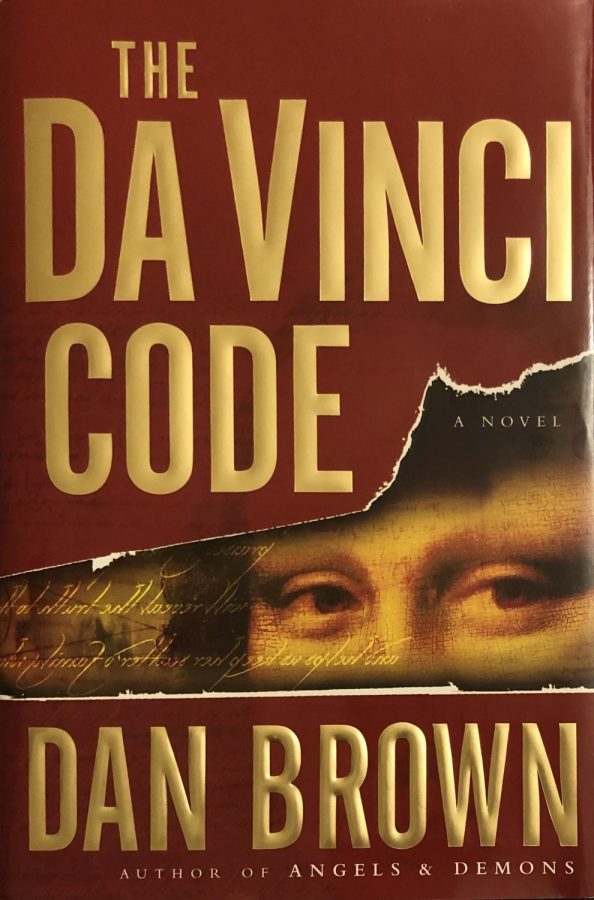
The Da Vinci Code – book review

About the book

Author : Dan Brown
Publication date : April 2003
Pages : 689 (U.S. hardback)
489 (U.S. paperback)


The novel explores an alternative religious history, whose central plot point is that the Merovingian kings of France were descended from the bloodline of Jesus Christ and Mary Magdalene, ideas derived from Clive Prince’s The Templar Revelation (1997) and books by Margaret Starbird. The book also refers to The Holy Blood and the Holy Grail (1982) though Dan Brown has stated that it was not used as research material.

Characters

Robert Langdon: A professor of symbology at Harvard University and the protagonist of the novel.

Jacques Saunière: The grandmaster of priory of Sion, Curator of Louvre Museum and primary antogonist of the novel.

Sophie Neveu: A Cryptologist of French police and granddaughter of Saunière.

Bezu Fache: A member of Opus dei and a French police.

Silas The monk: A member of Opus dei who murders Saunière.

Manuel Aringarosa: A bishop of Vatican and member of Opus dei.

Sister Sandrine: A Seneschal of priory of Sion and sister of St. Sulpice.

André Vernet: A guard of Zurich bank.

Sir Leigh Teabing The Teacher: A Grail scholar, living in Paris and secondary antogonist of the novel.

Rémy Legaludec: A maid who assist Teabing.

Jérôme Collet: A French police.

Marie Chauvel Saint-Clair: Sophie’s grandmother and Saunière’s wife.

Summary


In the Louvre, a monk of Opus Dei named Silas apprehends Jacques Saunière, the museum’s curator, and demands to know where the Holy Grail is. After Saunière tells him, Silas shoots him and leaves him to die. However, Saunière has lied to Silas about the Grail’s location. Realizing that he has only a few minutes to live and that he must pass on his important secret, Saunière paints a pentacle on his stomach with his own blood, draws a circle with his blood, and drags himself into the center of the circle, re-creating the position of Da Vinci’s Vitruvian Man. He also leaves a code, a line of numbers, and two lines of text on the ground in invisible ink.

A police detective, Jerome Collet, calls Robert Langdon, the story’s protagonist and a professor of symbology, and asks him to come to the Louvre to try to interpret the scene. Langdon does not yet realize that he himself is suspected of the murder.

After murdering Saunière, Silas calls the “Teacher” and tells him that, according to Saunière, the keystone is in the Church of Saint-Sulpice in Paris. The Teacher sends Silas there. Silas follows Saunière’s clues to the keystone’s location and discovers that he has been tricked. In a fit of rage, he kills Sister Sandrine Bieil, the church’s keeper and a sentry for the Priory of Sion. At the Louvre, Langdon meets Jerome Collet and Bezu Fache, the police captain, and realizes that the two policemen suspect him of the murder.

Sophie Neveu, an agent of the department of cryptology and Saunière’s granddaughter, arrives at the crime scene and tells Langdon that he must call the embassy. When Langdon calls the number Sophie gave him, he reaches her answering service. The message warns Langdon that he is in danger and should meet Sophie in the bathroom at the Louvre.


In the bathroom, Sophie shows Langdon that Fache is noting his movements with a tracking device. She throws the device out the window onto a passing truck, tricking the police into thinking that Langdon has escaped from the Louvre.

Sophie also tells Langdon that the last line in the secret message, “P.S. Find Robert Langdon,” was her grandfather’s way of alerting her: P.S. are the initials of her grandfather’s nickname for her, Princesse Sophie. Langdon thinks that P.S. might stand for Priory of Sion, an ancient brotherhood devoted to the preservation of the pagan goddess worship tradition, and to the maintenance of the secret that Saunière died protecting.

Langdon decodes the second and third lines in Saunière’s message: “Leonardo Da Vinci! The Mona Lisa!” Sophie returns to the paintings to look for another clue. The police have returned to the Louvre as well, and they arrest Langdon. Sophie finds a key behind the Madonna of the Rocks. By using the painting as a hostage, she manages to disarm the police officer and get herself and Langdon out of the building.

As Sophie and Langdon drive toward the Swiss bank identified on the back of the key, Langdon explains the history of the Priory of Sion and their armed force, the Knights Templar. He reveals that the Priory protects secret documents known as the Sangreal, or the Holy Grail. Langdon’s latest manuscript is about this very subject.

When Sophie and Langdon enter the bank, an unnamed security guard realizes that they are fugitives and calls the police, but André Vernet, the bank’s manager and a friend of Saunière’s, recognizes Sophie and helps her and Langdon escape. Sophie and Langdon figure out that the number left near Saunière’s body must be the account number that will open the vault. When they open the vault they find a cryptex, a message delivery device designed by Da Vinci and crafted by Saunière. The cryptex can only be opened with a password.

Vernet successfully smuggles Sophie and Langdon past Collet in the back of a locked armored car. Vernet turns on them, but they manage to get away with the cryptex, which Langdon realizes is actually the Priory keystone—that is, the key to all of the secrets the Priory holds about the location of the Holy Grail.

Langdon and Sophie go to the house of Sir Leigh Teabing, a historian, to ask for his help opening the box. Teabing tells them the legend of the Grail, starting with the historical evidence that the Bible didn’t come straight from God but was compiled by Emperor Constantine. He also cites evidence that Jesus’ divinity was decided by a vote at Nicaea, and that Jesus was married to Mary Magdalene, who was of royal blood, and had children by her. Teabing shows them the hidden symbols in The Last Supper and the painted representation of the Magdalene. He tells them that the Holy Grail is actually Mary Magdalene’s body and the documents that prove Mary’s blood line is related to Jesus. He says he thinks Saunière and the others may have been killed because the Church suspected that the Priory was about to unveil this secret.

As Langdon is showing off the cryptex, Silas appears and hits him over the head. Silas holds Sophie and Teabing at gunpoint and demands the keystone, but Teabing attacks Silas, hitting him on the thigh where his punishment belt is located, and Sophie finishes him off by kicking him in the face. They tie Silas up.

Collet arrives at the castle, but Sophie, Langdon, the bound Silas, Teabing, and his servant, Rémy, escape and board Teabing’s private plane to England. Sophie realizes that the writing on the cryptex is decipherable if viewed in a mirror. They come to understand the poem, which refers to “a headstone praised by Templars” and the “Atbash cipher,” which will help them arrive at the password. Langdon remembers that the Knights Templar supposedly worshipped the god Baphomet, who is sometimes represented by a large stone head. The word, unscrambled by the Atbash Cipher, is Sofia. When they open the cryptex, however, they find only another cryptex, this one with a clue about a tomb where a knight was buried by a pope. They must find the orb that should have been on the knight’s tomb.

Fache realizes that Teabing and the rest of them are in the jet. He calls the British police and asks them to surround the airfield, but Teabing tricks the police into believing that there is nobody inside the plane but himself. Then he goes with Sophie, Langdon, Rémy, and Silas to the Temple Church in London, the burial site of knights that the Pope had killed.

Rémy frees Silas and reveals that he, too, follows the Teacher. Silas goes to the church to get the keystone, but when he tries to force Langdon to give it up, Langdon threatens to break it. Rémy intervenes, taking Teabing hostage and thus forcing Langdon to give up the cryptex.

Meanwhile, Collet and his men look through Teabing’s house and become suspicious when they find that he has been monitoring Saunière. Over the phone, the Teacher instructs Silas to let Rémy deliver the cryptex. The Teacher meets Rémy in the park and kills him. The Teacher calls the police and turns Silas in to the authorities. As Silas tries to escape, he is shot, and he accidentally shoots his idol, Bishop Aringarosa.

Silas takes Bishop Aringarosa to the hospital and staggers into a park, where he dies. In the hospital the next day, Aringarosa bitterly reflects that Teabing tricked him into helping with his murderous plan by claiming that if the Bishop delivered the Grail to him, he would help the Opus Dei regain favor with the Church.

Sophie’s and Langdon’s research leads them to the discovery that Sir Isaac Newton is the knight they are looking for, the one buried by a Pope, because they learn he was buried by Alexander Pope. They go to Westminster Abbey, where Newton is buried. There, the Teacher lures them to the garden with a note saying he has Teabing. They go there only to discover that Teabing himself is the Teacher. Teabing suspected that Saunière had decided not to release the secret of the Priory of Sion, because the Church threatened to kill Sophie if the secret was released. Wanting the secret to be public knowledge, he had decided to find the Grail himself.

Teabing gives Langdon the cryptex and asks Langdon and Sophie to help him open it. Langdon figures out that the password is apple—the orb missing from Newton’s tomb. He opens the cryptex and secretly takes out the papyrus. Then he throws the empty cryptex in the air, causing Teabing to drop his pistol as he attempts to catch it and prevent the map inside from being destroyed. Suddenly, Fache bursts into the room and arrests Teabing.

The papyrus inside the second cryptex directs Sophie and Langdon to Scotland, where Sophie finds her brother and her grandmother. During the reunion, she discovers that her family is, indeed, of the bloodline of Jesus and Mary Magdalene. Sophie and Langdon part, promising to meet in Florence in a month. Back in Paris, Langdon comprehends the poem, which leads him to the small pyramid built into the ground in the Louvre, where he is sure the Grail must be hidden

Review

The Da Vinci Code by Dan Brown was a wonderful book. At several points in the book I found myself wondering what the next twist would be. The Da Vinci Code is about a symbologist named Robert Langdon.

I enjoyed how the author tied symbology into his novel. I learned things that I was not expecting to in a way that did not feel like I was in a class. I also feel that the action-packed novel kept me engaged with the characters. I often found myself sitting on the edge of my seat waiting for the next piece of the puzzle to be revealed. I highly recommend The Da Vinci Code to any who love mysteries or even to those looking for an adventure.

THE LUCKY ONE – BOOK REVIEW

About the book

Author : Nicholas Sparks


Genre : Romance Drama


Publication date : 2008


Pages : 386

Story plot

The book starts from Keith Clayton’s perspective. Keith is a local police officer. He is at a location where local college students go for nude swimming. He is carrying a camera he borrowed from the Police Department and is taking pictures of three female college students. One of them leaves the beach and comes upon Keith who is supposed to be on duty. He hides the camera and talks with the girls about their breaking the law by nude bathing. He lets them go. He comes across a man whom Keith describes as looking like a hippie walking down a logging road by the beach with a dog. It is Logan Thibault and his dog, Zeus. Keith is concerned Logan saw everything that had happened and tries to find a way to take Logan in. However, after running a background check on Logan and Logan refusing to let him search his bags he lets Logan go. He asks Logan where he is going and states he is heading to Arden. Keith goes back to find the camera he hid, but it is gone and the tires on his squad car are slashed. Keith becomes concerned as his father is the local Sheriff and his grandfather is a local judge.

When the story changes to Logan’s perspective, he is in the car with the three college girls who picked him up when he indicated he wanted to hitch a ride. He gives the camera (from which he removed the memory disk) to the college girls. The story also back tracks to Logan witnessing Keith taking the pictures and Logan taking the camera, destroying the disk, and slashing the tires of Keith’s cruiser. The story then goes back further into Logan’s life as he reflects on his walking all the way from Colorado and even further back as to why he decided to join the Marines. It is explained how Logan began to play Poker while tensions were building in the Middle East and this was his outlet. He lost all of his money while doing this and eventually gave up joining in on the games. It is then mentioned that Logan liked to go for early morning runs while in the Middle East and one day he came upon a picture half buried in the sand. It turns out to be a picture of Beth who is wearing a shirt that says Lucky Lady. His luck then begins to change. It is first noticed when his friend in his squad, Victor, encourages him to join in a poker game that night. Victor also believes in omens and superstitions and is the one who slowly convinces Logan the picture and the girl in the picture are powerful to Logan and the picture may have a deeper meaning in Logan’s life.

Elizabeth (Beth) is next introduced in the story. It starts at a birthday party her son, Ben, is attending. It comes up that Beth’s grandmother, Nana, recently had a stroke and Beth has been helping her run the dog kennel/obedience school Nana owns. It is also mentioned that Nana raised Beth, because Beth’s parents died in a car accident when Beth was 3 years old. Beth is also a teacher at a local school. It slowly becomes known that Keith Clayton is the ex-husband of Beth, and the father of Ben. Beth expresses her frustration about Keith’s disappointment in Ben as Ben is not as athletically inclined as other boys of his age. It becomes apparent that Ben does not care for his father much and does not like spending every other weekend with Keith.

The story goes back to Logan and the beginning of his experience in the Middle East is mentioned. A story is told about how the two comrades in his fire team are killed by a RPG and Logan survives. Logan is staying at a local motel and first decides to find the fairgrounds where the picture he had of Beth was taken. He finds the exact location where the picture was taken and knows he is in the right place. He determines he is going to go to a pool hall/bar to ask the locals if anyone knows the girl in the picture.

Next, Keith reminisces about his day and having to explain the slashed tires to his father. It comes to light that his dad and grandfather are well known in the town and Keith is stuck between keeping out of trouble and his family being able to get him out of trouble due to their status in town. Keith also explains his dislike for his son’s (in Keith’s eyes) weaknesses. Instead of wanting to be with Ben, Keith wants to be out looking for Logan to make him pay for what he did. Keith receives a phone call from a co-worker, Tony, who says a stranger has a picture of Beth at a local pool hall and was asking about her. Keith asks if the guy looks like what Logan had looked like earlier, but the co-worker says that is not the description of the man at the pool hall. Keith is disappointed and decides to do nothing about man with the picture.

Logan’s version of the bar/pool hall encounter is described and he learns Beth’s full name. The next day Logan goes to the dog kennel and meets Beth for the first time. He applies for a position at the kennel and Beth becomes suspicious due to the half told story Logan tells her. (He leaves the part out about the picture as the reason why he came to Hampton). Beth is skeptical and decides to have Nana talk with Logan. Nana decides to hire Logan, but admits she feels he isn’t telling the whole truth about being in Hampton. Once hired, Logan finds a place to rent in town and begins working at the kennel. Over the next few weeks Logan (and Zeus) becomes closer with Nana, Beth and Ben.

Nana decides to go on a trip to visit her sister in Greensboro, leaving Beth and Logan to tend to the kennel. Beth and Logan get to know each other better, and this is one of the weekends when Ben spends time with his father. Logan and Beth make ice cream on the Saturday night Ben is gone when Keith brings him back to Beth. Ben has a bruise on his face and his glasses are broken. Keith tells Ben to tell Beth it wasn’t his fault, but it’s apparent Keith threw a baseball too hard and it hit Ben in the face. Keith does not notice Logan initially, but when he does he demands to know what Logan is doing there. Zeus becomes defensive and Logan tells Keith to leave. Keith does, but is upset about the incident, because he does not like being challenged and forced to back down. He also upset to have found out that Logan had never left town and is concerned Logan may still have the camera’s memory disk.

Beth and Logan go on a date and Logan opens up about Victor and Logan’s boating trip in Minnesota. Logan informs Beth that Victor died when another boat hit their boat. Logan and Beth continue to date, and eventually Keith breaks into Logan’s home to see if he could the photo disk. Logan suggests to Beth that Keith has been the reason why none of her relationships have lasted and tells her about the break-in he had had in his home. Nana implies she agrees with Logan. Beth goes to a former boyfriend’s home and he weakly admits Keith may have been involved in his breaking up with her. Beth (politely) confronts Keith about this. Keith during this conversation tries to convince Beth that she knows nothing about Logan and this could dangerous. Keith thinks he has begun to convince Beth and is in high spirits. However, Logan did research on Keith’s family and meets Keith at his Keith’s home. Logan tells Keith he knows it was Keith who broke into his home and bluffs that he has a video recording of the break in. Logan said he would take the information to Keith’s family if Keith did not stay out of Beth’s business. Keith realizes he no longer has the upper hand and begins to drink heavily.

Later, there is a storm that comes through Hampton and it rains for days/weeks and the area begins to flood. Ben convinces Logan to go to his tree house and Logan realizes it is no longer safe because of the flooding. They still enter the tree house and Logan gives Ben the picture because he feels it will keep Ben safe. Logan mentions his friend Victor’s belief in the luck of the photo. Logan also plays the piano in church for Nana and the town begins to admire Logan, and even Keith’s grandfather praises Ben, deepening Keith’s hatred of Logan.

Tony, the co-worker who called Keith from the pool hall when Logan first arrived in town, goes to Keith’s house and informs Keith that Logan was the guy who had had the picture of Beth which Keith had ignored. Keith goes to the school where Beth works and convinces Beth that Logan is a stalker. Beth doesn’t necessarily believe Keith at the time and confronts Logan who admits to having the photo. Beth becomes extremely upset and demands the picture. Logan informs Beth that he had given it to Ben.

Later, Beth asks Ben for the photo and asks him to tell her everything Logan had said when Logan had given it to Ben. Beth realizes Logan had been honest about how he felt the photo was a good luck charm. Beth goes to Logan’s home and he tells her everything. He also mentions the tree house being very unsafe to Beth. Keith spies on Beth and Logan and is enraged. When Beth leaves Logan’s house Keith follows her to her home. Keith tells her he was going to take her to court to obtain full custody of Ben if she doesn’t follow his rules. He wants her to stop seeing Logan and date him (Keith) again. Ben overhears Keith threatening to take full custody, and tells Keith he doesn’t want to live with him. Ben runs away to his tree house. Logan had seen the extra set of tire tracks and realizes Keith had been around when Beth was at his house. Logan runs to Beth’s house.

Beth finally realizes Ben had run to the tree house and both Keith and Beth struggle to get to the tree house through the flooding and rain. When they arrive at the tree house it has partially collapsed and Ben was in the creek running under the tree house clinging to the rope bridge. Keith tries to go to the tree house but falls through the rotten wood and breaks his ribs and clings to rope bridge as well. Beth broke her foot on the way to the tree house and only able to watch everything unfold. Logan and Zeus arrive and try to help, as well. Logan ends up closer to Keith and Keith clings to Logan dragging him under when the whole tree house collapses and Logan and Keith disappear into the abyss. Zeus saves Ben.

In the epilogue it becomes apparent that Keith died and Logan survives. Ben continues to carry the photo around for good luck.

Review

Over the past few years I have have come to realize that I am a hopeless romantic. I love reading stories about two people having a chance meeting and just knowing from that moment that they were meant to be together, no matter how much their relationship gets tested. That is why this week’s selection happens to be from the man that I like to call the King of Romance Novels, Nicholas Sparks.
“The Lucky One” tells the story of Logan Thibault, a U.S. Marine who finds a lost picture while in Iraq. When nobody claims the picture he decides to keep it, providing him with good luck in every situation he is put into. After coming home he decides to find the woman in the picture even though he knows nothing about her. When he meets Beth Clayton there is an instant attraction and a passionate love affair begins, but Logan has a secret that may tear them apart for good.

I liked this book. I have read two previous Nicholas Sparks novels -“A Walk To Remember” and “Dear John,” and enjoyed them, even though they both had sad endings. The ending to this novel is also sad but happy at the same time.
The book drags in certain spots because there is a lot of back story about each character that needs to be told, but there are also moments of action. Now, keep in mind because this is a romance novel the action scenes are few and far between, but the few that do exist leave an impact on the reader, especially the ending.

Sparks writes from the perspective of the main love triangle – Logan, Beth, and Beth’s ex-husband, Keith. As I’ve mentioned before, I am not the biggest fan of multiple points of view, but this method helps push the plot along. It also shows the readers how the characters are connected. This book is great for anyone, especially those who love a great love story every now and then. I enjoyed reading it and I hope you do too. Maybe someday we will have that chance meeting where we meet the right person.

P.S. I LOVE YOU – book review

About the book

Author: Cecelia Ahern

Genre:  Romance, Womens Fiction chick- lit

Published: September 1st 2003

Pages: 470

PS, I Love You was a number-one bestseller in the United States, Ireland, and several other countries. It was made into a hit movie in 2007 starring Hillary Swank as Holly and Gerard Butler as Gerry. Ahern wrote a sequel, titled Postscript, released in the United Kingdom in 2020.

Summary

PS, I Love You (2004), a novel by Irish author Cecelia Ahern, tells the story of a young widow who receives a series of letters written by her late husband before his death; these letters help her through her grief, compelling her to embark on a series of fun—and often funny—adventures. PS, I Love You is ultimately a tale of love and marriage, death and survival, loss and recovery, and the eternal bond that can unite two people, even after one of them has passed away. It is also about the very human and awkward experience of moving forward alone after the death of a soulmate.

Holly Kennedy holds the sweater of her husband, Gerry Clark. Gerry has just died at the age of thirty from a brain tumor. Holly smells his sweater to remind her of his scent and presence. But as soon as she does, the reality of her loss hits her, and she feels as if she is going to be sick. Holly cannot imagine a life without Gerry, who had been her junior high sweetheart and her one constant source of love and strength for more than fifteen years.

Holly spends her days alone, wandering from room to room inside the home she had shared with Gerry. Consumed with loss, her sleep is fitful, and she rarely leaves the house. One day, her mother, Elizabeth, calls her to check in. Elizabeth has received a large envelope addressed to Holly; Holly assumes it is just another sympathy card. Her mother’s comment that the words The List are written on the top of the envelope shocks Holly. She suddenly knows what the envelope contains and who it is from.

She flashes back to a scene from her past with Gerry. When he jokes that someday he might not be around to do the little things like turn off the bedroom light before bed, Holly laughingly suggests he write her a list of things to do and leave it in his will. It started as a joke, but now, Holly knows, he followed through, sending the list to her mother before he passed away.

After a visit with her best friend, Sharon McCarthy, Holly decides to retrieve the envelope from her mother. She discovers that it is not really an envelope, but a package with no return address. Above the main address are the words The List. She opens the package. On top is a letter in which Gerry assures Holly that she will be able to go on after his death and that she should open and follow the directions inside each small envelope only on the date written on the front of each one. The package contains ten small envelopes labeled with the months March through December. This month’s envelope tells her to buy a bedside lamp so she doesn’t have to get out of her cozy bed every night to shut off the bedroom light-switch. This letter, like all subsequent ones, ends with the words, “PS, I love you.”

For the next nine months, Holly looks forward to opening Gerry’s letters. She, Sharon, and Sharon’s husband, John, marvel at Gerry’s ability to put this project together. He had been so weak and ill toward the end of his life, it must have required a herculean effort.

In April, Gerry instructs Holly to buy a smart new outfit because she will need it in time for next month’s letter. In May, he tells her to put on her new outfit to face one of her biggest fears: singing karaoke live onstage. In June, he asks her to get rid of his belongings; “I’m already here…always wrapping my arms around you,” he writes. In July, he wishes her a “good Holly day,” which she interprets as an order to get ready to go on vacation. In August, he sends her on vacation to Spain for a week with her friends. In September, Gerry advises Holly—who has a hard time finding a job she likes—to get a career she finds fulfilling. In October, he sends her sunflowers with the instructions to plant more, in order “to brighten the dark October days you hate most.” In November, he encourages her to start dating. Finally, in December, he gives his permission for her to fall in love again.

Throughout these letters, buoyed by Gerry’s love and guidance, Holly emerges from the shell she has built around herself. She starts gradually by shopping for an outfit that will get her out of the blue-jeans-and-Gerry’s-shirts combination she’s been living in. The letters introduce more and more action and engagement, providing the springboard for Holly to reenter life once again. In the end, she doesn’t feel abandoned by Gerry or alone and single at a vulnerable time. She feels reconnected to all the amazing things in her life: her friends, her family, her newfound career in magazine advertising—and the eternal memory of one incredible man.

My Review

It is a very interesting read and very emotional one too. Love is the central theme of the book and it is presented in such a beautiful way. Dealing with the death of the beloved can be devastating but life goes on. You have to be keep on living and learn to be happy again for the sake of your family and friends but most importantly, for the same of your lost love who would never have wanted to see you unhappy.

A beautiful well written story which will make you cry for sure and also make you appreciate your loved ones. Cecilia Ahern has created some compelling characters. Her style of writing is simple and sometimes amateurish but the beauty of the story covers all the flaws. The poignancy of loss, letting go and rediscovery is beautifully captured in this story. Its a touching and emotional story about the long road of healing and finding yourself again after losing a loved one. I will definitely recommend this book to anyone who loves to read chick-lit.


Book Review – You can win

Winners don’t do different things; they do things differently.”

YOU CAN WIN - SHIV KHERA Reviews, Summary, Story, Price, Online, Fiction,  Nonfiction

You Can Winis authored by Shiv Khera and was released in 1998. Since then, it has become an international bestseller. This book has been translated into sixteen languages and sold more than two million copies around the world. This book has a title in Hindi Jeet Aapki. The writer is well known as a motivational speaker, educator, activist, business consultant, entrepreneur, etc.

Both you and I want to win. This is a fact, as well as everyone’s heartfelt wish. The new revised edition of the book, titled ‘You Can Win,’ emphasises of winning and focuses on what it takes to succeed. The book presents inspiring examples to follow, allowing one to create a triumphant, meaningful, and satisfying life. The book provides the appropriate orientation and adds ingredients for the suitable formulas needed for success in life. There are eleven chapters in this book.

The author provides the reader with a good attitude and sends the reader on the proper paths in life right from the start of the first chapter. In reality, the author aspires to have a positive outlook on life that will enable him or her to win and thrive. An optimistic outlook on life can aid in overcoming all obstacles in one’s path to achievement. He also suggests to the reader to achieve one’s goal in life, one must embark off on an effective action plan, too.

The author encourages the reader to develop confidence by practising positive thinking in their daily lives. A cheerful outlook on life has the same effect as medicine. It heals and motivates one to continue on with one’s life. The remaining chapters focus on adopting a good attitude toward life, regardless of what obstacles may arise or what walks of life one may belong to. Self-esteem must be developed. This can be beneficial in a variety of situations. This can assist one in dealing with life’s obstacles. Personal growth, according to the author, is a critical component of life achievement. As a result, a few chapters in this book reflect on and emphasise personality traits, interpersonal skills, positive thinking, habits, and choosing appropriate life objectives.

To make it more fascinating, the writer incorporates moral stories and anecdotes into his works and explains them to the best of his ability. The morals of novels do indeed convince the reader that nothing is truly impossible in life. The most important thing in life is to develop the proper mindset and formula for success.

The author also underlines the importance of being proactive in order to control, rather than be governed by, events in life. He encourages the reader to transform their weaknesses into strengths by cultivating positive outlooks on life, applying positive strokes to oneself and others, and developing positive habits and character. The author also instructs the reader on how to develop mutual respect and loyal relationships with each other.

Book Review – Half Torn Hearts

Half Torn Hearts is the 14th novel of Novoneel Chakraborty. Novoneel usually writes the suspense and thriller novel, but this novel differs from Novoneel’s other books, and is definitely a masterpiece.

Half Torn Hearts : Chakraborty, Novoneel: Amazon.in: Books

SYNOPSIS

Shanay Bansal, a young and successful entrepreneur, is looking forward to his engagement with Afsana Agarwal. But a few weeks before the engagement, he receives intriguing voice message from someone from Afsana’s past. Curious, Shanay plays the voice message and through those other such messages, a different world from the past opens up about a beautiful relationship that got broken because of a terrible lie.

PLOT

There are mainly three characters: Nirmaan, Raisa and Afsana. Nirmaan and Raisa are childhood, good friends. They meet in the year 1996 in Guwahati. Nirmaan offers her to play with him and his friends. In the beginning, she doesn’t but later agrees and becomes good friends. Besides Nirmaan, she doesn’t have any friends.

After six years, in 2002, they again meet in Kolkata in the school named St. Peter’s High. In the beginning, he gets surprised to see her. She tells how she gets admission in the school. Time has changed, and they have grown up, but Raisa doesn’t prefer to change. She wants everything to be like earlier times. She doesn’t leave Nirmaan most of the time and he gets annoyed. He tries to explain to Raisa that things have changed, time has changed, but she didn’t seem to understand. 

Later, in the same school, she meets Afsana Agrawal, and they become best friends. They become soul sisters; whereas Nirmaan doesn’t like Afsana and tells Raisa to stay away from Afsana, but she still hangs out with Afsana. Time passes and these innocent minds did not know how thier lives would turn. Raisa fails in class X whereas Afsana and Nirmaan pass the exam. They get admission to the same college. With time, both fall in love but they weren’t able to express their feelings. 

On the one hand, Afsana is in with Nirmaan and her parent has searched her guy ten years elder and her parents want her to marry when she returns 18. She couldn’t share this with Nirmaan and shares with Raisa. Raisa is one who makes them together and gets intimate with him, but she doesn’t share about her so-called soon fiancée.

With time, they get separated. What is the reason for the separation, and why is she getting married to Shanay? What will Shanay do after knowing the truth?

CONCLUSION

This story has three main characters and their selfless love and that willingness to destroy owns self for the person they love. There are quite few many difficulties in their life but the way their love has been portrayed it won my heart. Some secrets, some revelations and then an unexpected climax – everything is just so catchy that I could not put the book down till I completed reading it. So, half torn hearts will definitely win many hearts of the readers!! And the most beautiful part about this book is the Hindi poems in between the story which gave that storyline the perfect essence of emotions.

While reading the novel, we can tell that not every relationship is about flowing together forever. People who meant the world to us at one time will seem like a distant memory at another.
In conclusion, I could say it’s interesting and engaging. It’s a heart crushing story with surprising revelations and a touching climax.

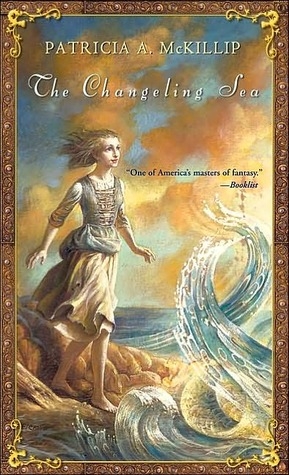
Book review of The Changeling Sea

Introduction:
The changeling sea is a fantasy novel for juvenile readers by Patricia McKillip. It is a slender book, but one written with lush and evocative prose that is as beautiful as it is simple. It is a fable about a changeling whose heart is tied to the sea. It is a book about yearning for something that no longer exists.


When Peri completes her hexes and casts them into the water, she includes an offering from the prince. To her surprise, her magic succeeds beyond expectations, disrupting the sea queen’s magic. A chained sea dragon appears, the wandering magician Lyo arrives in the village in response, and Kir’s sea-dreams grow even more tortured.


Peri’s efforts to help Kir eventually lead to her undertaking a strange journey into the depths, uncovering a tragic secret from the king’s past and the true identity of the sea dragon, and a dawning realization of her own power.


The sea drowned Peri’s father and even took away her mother through depression. Peri respected and saw an old wise woman as a caring figure gets taken away by the sea or when she suddenly disappears, she decides to hurt the sea or avenge the deaths of her loved ones. She decides to draw three hexes to curse the sea and somehow, her magic works beyond her expectations.
Peri was a hardworking young girl who worked at the inn, mopped floors, cleaned tables. After the death of her father, she could not care less about her appearance, she always looked untidy, her hair undone/unwashed. Her clothes were too tight or too loose, torn and not in a good shape. The only thing she really cared about was her revenge on the sea.


One night, she witnesses a man on a dark horse and the next afternoon realizes that it is none other than prince Kir. He was acquainted with the old woman. He too, notices Peri that night. The next day when he arrives at the sea, he asks her about the old woman and she is fascinated that he knows the old woman. He wants to visit the old woman as he was hoping for the wise woman’s aid in curing his own haunting obsession with the sea.


Kir has deep troubles of his own, also connected to the watery depths, and hopes that Peri can help him make his peace with the ocean that haunts his every waking moment. When Peri finishes her hexes and throws them deep into the great water, she also includes an offering from Kir hoping it would be of help to him.


A great sea dragon starts to appear amongst the fishermen’s boats on the sea, with an impossibly large gold chain around its neck. Then, a magician comes to town, promising that he will be able to remove the chain and give the gold to the villagers – for a price. And most importantly, Kir’s dreams of the sea grow more fevered and frantic, as his own unknown, hidden past catches up to him. And it is all up to Peri to set everything back to rights.


Conclusion:
I would recommend this book to those who have found their new interest in the genre fantasy and all in all it is a book which captures the attention of its readers from the beginning. I rate this book a 8.1/10.

THE HANDMAID’S TALE

The Handmaid’s Tale is a dystopian novel by Canadian author Margaret Atwood, published in 1985. It is set in a near-future New England, in a strongly patriarchal, totalitarian theonomic state, known as Republic of Gilead, that has overthrown the United States government.The central character and narrator is a woman named Offred, one of the group known as “handmaids”, who are forcibly assigned to produce children for the “commanders” – the ruling class of men.The novel explores themes of subjugated women in a patriarchal society and the various means by which they resist and attempt to gain individuality and independence. The novel’s title echoes the component parts of Geoffrey Chaucer’s The Canterbury Tales, which is a series of connected stories (such as “The Merchant’s Tale” and “The Parson’s Tale”)

Plot

After a staged attack that killed the President of the United States and most of Congress, a radical political group called the “Sons of Jacob” uses theonomic ideology to launch a revolution.[7] The United States Constitution is suspended, newspapers are censored, and what was formerly the United States of America is changed into a military dictatorship known as the Republic of Gilead. The new regime moves quickly to consolidate its power, overtaking all other religious groups, including traditional Christian denominations. In addition, the regime reorganizes society using a peculiar interpretation of some Old Testament ideas, and a new militarized, hierarchical model of social and religious fanaticism among its newly created social classes. Above all, the biggest change is the severe limitation of people’s rights, especially those of women, who are not allowed to read, write, own property, or handle money. Most significantly, women are deprived of control over their own reproductive functions.

The story is told in first-person narration by a woman named Offred. In this era of environmental pollution and radiation, she is one of the few remaining fertile women. Therefore, she is forcibly assigned to produce children for the “Commanders,” the ruling class of men, and is known as a “Handmaid” based on the biblical story of Rachel and her handmaid Bilhah. Apart from Handmaids, other women are also classed socially and follow a strict dress code, ranked highest to lowest: the Commanders’ Wives in blue; the Handmaids in red with white veils around their faces; the Aunts (who train and indoctrinate the Handmaids) in brown; the Marthas (cooks and maids) in green; Econowives (the wives of lower-ranking men who handle everything in the domestic sphere) in blue, red and green stripes; young, unmarried girls in white; and widows in black.

Offred details her life starting with her third assignment as a Handmaid to a Commander. Interspersed with her narratives of her present-day experiences are flashbacks of her life before and during the beginning of the revolution, including her failed attempt to escape to Canada with her husband and child, her indoctrination into life as a Handmaid by the Aunts, and the escape of her friend Moira from the indoctrination facility. At her new home, she is treated poorly by the Commander’s wife, a former Christian media personality named Serena Joy who supported women’s domesticity and subordinate role well before Gilead was established. To Offred’s surprise, the Commander requests to see her outside of the “Ceremony,” a reproductive ritual obligatory for handmaids and intended to result in conception in the presence of his wife. The two begin an illegal relationship where they play Scrabble and Offred is allowed to ask favours of him, whether in terms of information or material items. Finally, he gives her lingerie and takes her to a covert, government-run brothel called Jezebel’s. Offred unexpectedly encounters Moira there, with her will broken, and she learns that those who are found breaking the law are sent to the Colonies to clean up toxic waste or are allowed to work at Jezebel’s as punishment.

In the days between her visits to the Commander, Offred also learns from her shopping partner, a woman called Ofglen, of the Mayday resistance, an underground network working to overthrow the Republic of Gilead. Not knowing of Offred’s criminal acts with her husband, Serena begins to suspect that the Commander is infertile, and arranges for Offred to begin a covert sexual relationship with Nick, the Commander’s personal servant. After their initial sexual encounter, Offred and Nick begin to meet on their own initiative as well, with Offred discovering that she enjoys these intimate moments despite memories of her husband, and shares potentially dangerous information about her past with him. However, shortly after, Ofglen disappears (reported as a suicide), and Serena finds evidence of the relationship between Offred and the Commander, which causes Offred to contemplate suicide.

Offred tells Nick that she thinks she is pregnant. Shortly afterward, men arrive at the house wearing the uniform of the secret police, the Eyes of God, known informally as “the Eyes”, to take her away. As she is led to a waiting van, Nick tells her to trust him and go with the men. It is unclear whether the men are actually Eyes or members of the Mayday resistance. Offred is still unsure if Nick is a member of Mayday or an Eye posing as one, and does not know if leaving will result in her escape or her capture. Ultimately, she enters the van with her future uncertain.

The novel concludes with a metafictional epilogue, described as a partial transcript of an international historical association conference taking place in the year 2195. The keynote speaker explains that Offred’s account of the events of the novel was recorded onto cassette tapes later found and transcribed by historians studying what is then called “the Gilead Period”.

Muna Madan

Almost no one hasn’t heard of Devkota’s most well-known creation, the Muna Madan. This short epic about Muna and Madan is well-known in Nepali, but its English translation is equally well-known. Madan, a hopeless rancher, decides to go to Tibet as a vendor in order to get money, leaving behind his elderly mother and lovebird wife, Muna. Muna begs her husband to stay, but Madan withdraws in the hopes of accumulating wealth for the family. The hardships Muna and Madan have while trying to reunite with one another are depicted in a horrible way in sonnet. Muna Madan, while being a short epic, has become a commercial success and is regarded as a model of Nepali writing.

Plot

Muna Madan is a Nepalese epic that tells the heartbreaking story of Muna and Madan. It was written in a melodious version in 1935 by Nepalese writer Laxmi Prasad Devkota. It is one of the most well-known works of Nepali literature. Not long before his death in 1959, Devkota observed, “It would be fine if every one of my works were singed, except for Muna Madan.” In terms of deals, it is the best Nepali book ever written. It’s not a Jhaurey song in the traditional sense. The plot revolves around a man (Madan) who abandons his significant other (Muna) and travels to Lhasa in order to bring in money. Madan represents all Nepalese young people who migrate abroad to make ends meet.

Muna, Madan’s wife, is the queen of sacrifice and love. She adores her Madan and is devastated that she must send him to Lahsa, a dangerous and difficult region. However, she accepts the challenge and decides to remain in the country with her elderly and weak mother-in-law. On his way back to his residence, Madan becomes unwell. His friends abandon him on the road and come home to tell him he has died. Finally, a Nepalese man from a lower caste comes to his aid. That is why a guy is said to be magnificent because of his heart, which is full of love and humanity, rather than his caste or ethnicity.

Madan returns to Kathmandu after regaining his health only to discover that both his mother and beloved wife had died. Madan ultimately comes to the realization that money has no meaning at the time. The story also recounts the life of a poor widow who suffered greatly without her husband and died in sorrow. In this poem, Devkota addresses the most important challenges plaguing Nepalese society at the moment. Through the story of Muna and Madan, Laxmi Prasad Devkota hopes to stabilize the truths of archaic societies, unscientific notions, and the negative impacts of unemployment and poverty in Nepalese society. The poet has brilliantly characterized love by writing about Muna and Madan’s connection.

MUST-READ TWO BOOKS BY PAULO COELHO – 2

Paulo Coelho wrote many best-selling books most of which are popular all around the world. And translated in various languages. One of his masterpieces is Alchemist. All of his works are related to self-help and motivational genres.

Book: Veronica Decides To Die

Veronica is a young woman who commits suicide due to being full of emptiness in her life. While she waiting for death after taking a lot of sleeping pills she fainted and found herself in an asylum alive. But Doctor said that she has only a few days to live due to a heart condition caused by the overdose. Her presence there affects all of the mental hospital’s patients, especially Zedka, who has clinical depression; Mari, who has panic attacks; and Eduard, who has schizophrenia, and with whom Veronika falls in love. At least she wants to live or not is the key base of this novel.

Why you should read this book: 

This one is not a boring plot, book content moves slow still does not let you drop the idea to read it. And this contains good vocabulary which is worth recommending to every reader. If you ever tried or at least thought once to end your life read this one it will make you believe in Miracle. 

Book Quotes:

People never learn anything by being told, they have to find out for themselves.

You are someone who is different, but who wants to be the same as everyone else. 

You have two choices, to control your mind or to let your mind control you.

Note: This book is also adapted as a film by Emily Young in 2009. 

Book: The Spy

Mata Hari, the beautiful woman, the dancer, the courtesan, and the spy. She was the center of attraction wherever she goes… As a dancer she delighted her audiences, as a courtesan, she bewitched the richest and powerful men of the era. But is she really a spy? 

Why you should read this one:

This book is based on real events. Mata Hari is a real person who is accused of espionage and executed.

On the back cover, it says, “Fiction.” But, I would rather love to say it’s a historical work. 

When a man sleeps with many women, do we care to say any terms? So, I can’t criticize Mata Hari for being a courtesan. 

In this work, I can visualize how men treated women as an object during those time. They gave preference for outer appearance. They wanted their wife to be loyal. But, those rules aren’t for them. And those things made my heart shrunk.

Book Quotes:

I decided to be who I always dreamed of. And the price of a dream is always high.

When we don’t know where life is taking us, we are never lost. 

At this moment, I look back at my life and realize that memory is a river, one that always runs backward.

Recommendations:

I don’t recommend both of these books to children especially if you are younger than sixteen. One book contains intimate scenes and another one contains sexual harassment scenes. Thus I would like to recommend these to elder readers who are more than sixteen.

TWO MUST-READ BOOKS OF PAULO COELHO https://eduindex.org/2021/07/18/two-must-read-books-of-paulo-coelho/

BOOK REVIEW: THE DA VINCI CODE https://eduindex.org/2021/07/19/book-review-the-da-vinci-code/