Student Life Hacks for Creating Perfect Photos

Photo by Samer Daboul from Pexels

Getting the perfect shot isn’t just for pros – it’s a journey every student can take with the right hacks and a little creativity. With budgets tight and time even tighter, students can still produce amazing images that capture memories, tell stories, and even impress on social media. From understanding the basics of natural light to trying out new photo editing techniques, every step is an opportunity to level up your photography game.

Today, resources for learning photography have never been more accessible. For instance, learning how to use natural light can turn your photos from meh to amazing. A great resource to dive into this is the “What Students Need to Know for Perfect Photos” article, which can help you greatly. Plus, with a plethora of online tutorials and free courses from reputable platforms like National Geographic Photography, students have a treasure trove of information at their fingertips.

Beyond the technical know-how, student photographers are now using social media to showcase their skills. The rise of instant upload, engagement-driven challenges, and the ability to share an Instagram photo in seconds means creativity is not only rewarded but also has a global platform. Integrating unique perspectives and pushing the boundaries of traditional photography is now part of a student’s daily grind.

Photography Tips for Students

What Photography Hashtags to Use

One simple yet effective life hack for students is to learn how to use social media effectively. Crafting the post with the right photography hashtags can get you more exposure and open doors to a wider audience. Hashtags like , , or can get your work in front of not only your peers but pros looking for fresh talent. By combining these with trending terms and local tags, you can increase your post’s visibility. Plus, regularly checking out popular hashtags can give you an idea of what other budding photographers are trying out.

Where to Find Photography Inspiration

Students often struggle to stay motivated and have multiple responsibilities to juggle. Following visual storytellers on Instagram and Pinterest can spark creativity. Whether it’s capturing the golden hours on campus or framing life in a college town, inspiration is often just around the corner. Diving into photography blogs and watching tutorials can ignite passion and birth new photography ideas for students who want to capture moments in a fresh way.

What Photography Accessories to Buy

Investing in basic photography accessories doesn’t have to break the bank. Affordable gear like portable tripods, cleaning kits, and external lenses for mobile phones can upgrade your photo quality. Try out creative attachments or even use vintage accessories to give your images a unique look. This experimentation can lead to exciting discoveries on how different tools affect lighting, composition, and the mood of a photo.

Use Polaroid

The charm of a Polaroid lies in its instant tangibility. Although digital photography is the norm, using Polaroid cameras can be a nice break from editing heavy workflows. These instant prints offer a tactile experience and make students think critically before clicking. Polaroid cameras can also be an aesthetic tool in mixed media projects or scrapbooks, blending old school with modern storytelling.

How to Do Creative Photography

Every student should push the boundaries of creative photography. It’s not just about taking a picture but about telling a story. The journey of creative photography starts with the willingness to experiment. We offer some innovative tips to get you started.

A great way to fuel your creative fire is to regularly visit photography websites, attend local exhibitions, and follow photography forums. Inspiration can come from unexpected places – a unique shadow cast by a window, an unusual angle of a campus building, or the play of natural light in a forest. Coupling these with personal experiences makes for a solid creative approach that’s authentic and fresh. Combine these with innovative photo editing software, and you can turn regular snaps into masterpieces.

Along with these creative explorations, students shouldn’t forget the basics. With options ranging from Adobe Photoshop to free alternatives like GIMP, learning to edit your shots is as important as taking them. Plus, the market is flooded with guides on the best photo editing apps for mobile devices, so turning an ordinary snap into an Instagram photo masterpiece is just a tap away.

How Photography Classes Can Help

For many students, formal instruction can take their natural talent to the next level. Enrolling in photography courses – online or in-person – can give you structured knowledge and constructive feedback.

In a classroom setting, you are introduced to an array of photography accessories – from simple lens filters to more complex lighting setups. Learning how these tools work and how to use them in a controlled environment gives you the practical skills for both studio and field photography. Universities and community centers often offer discounted or even free access to specialized equipment so you can experiment without breaking the bank.

An often overlooked part of academic learning is networking with peers and professionals. The connections you make during coursework can lead to collaborations, internships, or even freelance work. Many photography programs invite guest speakers who are industry experts, providing insights into current trends, innovative techniques, and career paths in photography. These interactions broaden your horizons and integrate theoretical learning with real-world applications.

How to Deal with Travel Photos

Travel exposes you to a multitude of cultures, landscapes, and stories that are endless sources of photography inspiration. The change of environment often sparks new ideas that challenge conventional photography norms. From striking natural landscapes to the bustling streets of cities, every scene is an opportunity to experiment with composition, lighting, and perspective. Engaging with local traditions and unique settings can lead to iconic images that capture the essence of a place.

Travel photography requires a balance between convenience and quality. Investing in lightweight but robust photography accessories – like compact tripods, portable lighting kits, or multi-purpose lenses – ensures you are well equipped on the go without being weighed down by heavy gear. Opting for versatile items can save you time and money and make travel smoother while still delivering great images.

When traveling, make sure to back up your photos regularly and edit them to get the final output right. Many students rely on photo editing apps to fine-tune colors and contrast and remove imperfections so that every snap meets the high standards of a photo. With practice and exploration, your journey to perfect travel photos will become a rich tapestry of technical skill and artistic flair.

Final Thoughts on Photography Ideas for Students

Experimentation is at the heart of photography. By pushing yourself, using refined editing software, and exploring photography ideas for students, you’ll soon find that photography is as much about personal expression as it is about technical knowledge. And by engaging with reputable sources like National Geographic Photography, you’ll stay connected to industry standards and trends.

Ultimately, whether you’re taking your first steps through photography classes or you’re a self-taught enthusiast, remember every click of the shutter is an opportunity to tell a story. Embrace the learning curve, apply the hacks, and let curiosity be your guide. The world is full of scenes waiting to be captured, and with the right mix of passion, technique, and creativity, you too can create perfect photos that are authentic and artistic.

By incorporating these hacks into your daily routine, you’ll develop a unique photographic style. The combination of structured learning, creative experimentation, and real-world practice is the secret sauce that turns ordinary images into visual stories that inspire and captivate. So go ahead, be confident, learn every opportunity, and watch as every pixel of your work reflects not only your skills but your perspective on life.

Prime Minister’s Young Authors Mentorship Scheme (YUVA) Scheme

Daily writing prompt
What job would you do for free?

Introduction

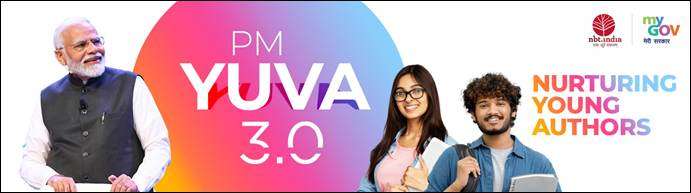
The Ministry of Education (MoE) and the National Book Trust (NBT) of India launched the third edition of the Prime Minister’s Young Authors Mentorship Scheme, known as YUVA 3.0, on March 11, 2025. The initiative aims to nurture young writers under 30 years of age, providing them with mentorship and exposure to hone their creative writing skills. YUVA 3.0 builds upon the success of its predecessors, YUVA 1.0 and YUVA 2.0, continuing the government’s commitment to fostering literary talent and promoting reading, writing, and book culture in India. The scheme aligns with the vision of Ek Bharat, Shreshtha Bharat, encouraging the documentation and dissemination of India’s rich cultural heritage and knowledge.

YUVA 3.0: Features and Objectives

Theme and Focus

The Themes of PM-YUVA 3.0 are: Contribution of Indian Diaspora in Nation BuildingIndian Knowledge System; and Makers of Modern India (1950-2025). The scheme will help to develop a stream of writers who can write on various facets of India encompassing the past, present and future. Besides, the scheme will also provide a window to the aspiring youth to articulate themselves and present a comprehensive outlook of contribution of Indians across fields in ancient and present times.

Selection Process

  • The scheme invites applications from aspiring writers through MyGov India’s online portal.
  • A competitive process shortlists 50 young authors based on a well-defined evaluation criterion.
  • The National Book Trust (NBT) will constitute the selection committee.
  • Applicants are required to submit a book proposal of 10,000 words, which is then reviewed by a panel.
  • The shortlisted candidates undergo a multi-stage selection process before the final selection.

Mentorship and Support

  • Selected authors receive a mentorship program spanning six months.
  • The authors undergo workshopsinteractions with mentors, and exposure to India’s literary ecosystem.
  • They receive financial assistance of ₹50,000 per month for six months.
  • Their works are published and promoted by the NBT in multiple languages.
  • Under the mentorship, a National Camp will be held for the PM-YUVA 3.0 Authors during the New Delhi World Book Fair 2026.
  • Selected authors get the opportunity to present their work at literary festivals and international forums.

Background of the YUVA Scheme

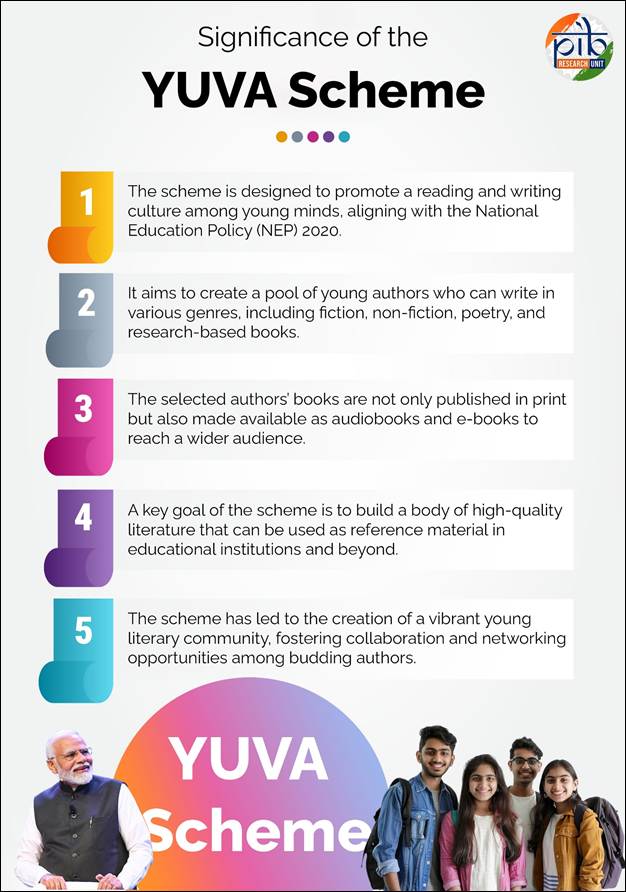
National Education Policy 2020 has emphasized on the empowerment of the young minds and creating a learning eco-system that can make the young readers/learners ready for leadership roles in the future world. India is considered to be a ‘young country’ because 66% of its total population are young and can be tapped for capacity and nation building. In this context, a national scheme for mentoring generations of young authors has proven to be a significant stepping stone for laying the foundation of the future leaders of the creative world. This scheme has been conceptualised on the premise that the 21st century India needs to groom a generation of young authors to create ambassadors of Indian literature and world view. In view of the fact that our country is ranked third in the arena of book publishing and we have a treasure trove of indigenous literature, India must project it at the global stage. The first mentorship scheme was launched on 31st May 2021, then subsequently in October 2022 and now in March 2025.

YUVA 2.0: Expansion and Achievements

Launched in October 2022YUVA 2.0 built upon the foundation of YUVA 1.0 with a renewed focus on ‘Democracy’ as the core theme. The scheme aimed to foster young writers’ engagement with India’s democratic values, traditions, and governance structures.

Theme and Vision

The Theme of PM-YUVA 2.0 was Democracy (Institutions, Events, People, and Constitutional Values). The scheme helped in developing a stream of writers who can write on various facets of Democracy in India encompassing the past, present and future. Besides, the scheme also provided a window to the aspiring youth to articulate themselves and present a comprehensive outlook of Indian democratic values at domestic as well as international platforms.

Selection and Implementation

  • The competition received an overwhelming response, with a diverse pool of participants from across the country.
  • 75 authors were selected through a competitive process. They were also required to submit a book proposal of 10,000 words.
  • The mentorship program included interaction with constitutional experts, historians, and renowned authors.
  • Special training sessions were held to enhance research skills, language proficiency, and storytelling techniques.

Outcomes and Impact

  • The Union Minister for Education launched 41 new books under the PM YUVA 2.0 scheme at the New Delhi World Book Fair 2025 in February.
  • Several books were published in multiple Indian languages, making them accessible to a broad readership.
  • Young authors gained national and international recognition, participating in events like the World Book Fair and literary forums.
  • Many participants had their books included in academic and government libraries for research and reference.
  • Some authors had the opportunity to meet and interact with policymakers and scholars, further enriching their perspectives.

YUVA 1.0: Inception and Legacy

The inaugural editionYUVA 1.0, was launched in May 2021 as part of the Azadi Ka Amrit Mahotsav celebrations to commemorate 75 years of India’s independence. The scheme aimed to empower young authors and provide them a platform to express their perspectives on India’s history and contemporary narratives.

Theme and Inspiration

The theme was National Movement of India with focus on Unsung Heroes; Little known facts about the Freedom Struggle; Role of various places in National Movement; Entries bringing out new perspectives related to political, cultural, economic, or science related aspects of national movement etc. as part of Azadi ka Amrit Mahotsav. This scheme helped to develop a stream of writers who can write on a spectrum of subjects to promote Indian heritage, culture and knowledge system.

Selection and Implementation

  • The contestants were asked to submit a manuscript of 5000 words.
  • 75 young authors were selected, representing diverse linguistic and regional backgrounds.
  • The selection was made by a committee constituted by National Book Trust (NBT).
  • Mentorship included training in writing, editing, and publishing processes.
  • Special sessions were conducted by eminent historians, journalists, and literary figures.
  • A consolidated scholarship of Rs.50,000 per month for a period of six months per author will be paid under the Mentorship Scheme.

Outcomes and Impact

  • The results were announced on 25.12.2021.
  • The books produced under YUVA 1.0 were translated into multiple Indian languages, enhancing their reach.
  • The initiative contributed to India’s literary heritage, encouraging young voices to document historical narratives.
  • Several young authors gained recognition, contributing to mainstream literature and academic discussions.
  • The scheme established a strong foundation for young writers, many of whom went on to publish additional books independently.
  • 10% royalty is being paid by NBT on publication and sale of the books.

Conclusion

The YUVA scheme, in its three editions, has played a crucial role in nurturing young literary talent in India. As the program continues to evolve, it reinforces India’s commitment to promoting creative expression, multilingual literary heritage, and a culture of reading and writing among the youth. The impact of the scheme is evident in the success stories of young authors whose voices have been amplified at both national and international levels. With continued support and innovation, the YUVA scheme will remain a cornerstone of India’s literary and cultural renaissance.

References

Click here to see PDF.

PM’s Scheme for Mentoring Young Authors (PM-YUVA 3.0) launched to promote reading, writing and book culture

Daily writing prompt
If you could be a character from a book or film, who would you be? Why?

The Ministry of Education, Department of Higher Education, launched PM-YUVA 3.0 -Prime Minister’s Scheme for Mentoring Young Authors, an Author Mentorship programme to train young and budding authors (below 30 years of age) in order to promote reading, writing and book culture in the country, and project India and Indian writings globally on 11th March, 2025. In view of the significant impact of the first two editions of PM-YUVA Scheme with large scale participation from young and budding authors in 22 different Indian languages and English, PM-YUVA 3.0 is now being launched.

The launch of PM-YUVA 3.0 (Young, Upcoming and Versatile Authors) is in tune with the Prime Minister’s vision to encourage the youth to understand and appreciate India’s rich culture, heritage and contribution of visionaries in the development and growth of the country.PM-YUVA 3.0 intends to bring to the fore the perspectives of the young generation of writers on the themes:1) Contribution of Indian Diaspora in Nation Building; 2) Indian Knowledge System; and 3) Makers of Modern India (1950-2025) in an innovative and creative manner. This scheme will thus help to develop a stream of writers who can write on a spectrum of subjects to promote Indian heritage, culture and knowledge system.

NEP 2020 has emphasised on the empowerment of the young minds and creating a learning ecosystem that can make the young readers/learners ready for leadership roles in the future world. India tops the chart in youth population being 66% of the total, waiting to be tapped for capacity building and thereby nation building. With the purpose of mentoring a new generation of young creative writers, there is an imminent requirement to take initiatives at highest level, and in this context, PM-YUVA 3.0 will go a long way in laying the foundation of the future leaders of the creative world.

The National Book Trust, India, under the Ministry of Education as the Implementing Agency, will ensure phase-wise execution of the Scheme under well-defined stages of mentorship. The books prepared under this scheme will be published by National Book Trust, India, and translated into other Indian languages, fostering cultural and literary exchange while promoting ‘Ek Bharat Shreshtha Bharat’. The selected young authors will engage with esteemed writers, participate in literary festivals, and contribute to a diverse body of work that reflects India’s rich heritage and contemporary progress.

The scheme aims to cultivate a new generation of writers who can articulate the contributions of the Indian diaspora in nation-building, highlighting their peaceful integration and influence across political, economic, and socio-cultural spheres. It will also emphasise on the role of Indian Knowledge System in preserving historical wisdom, generating new opportunities, and synthesising indigenous knowledge for national development. Through this initiative, young   authors will explore the impact of visionaries in various fields like education, science, economy, social empowerment, etc. thereby presenting a comprehensive narrative of India’s growth and resilience.

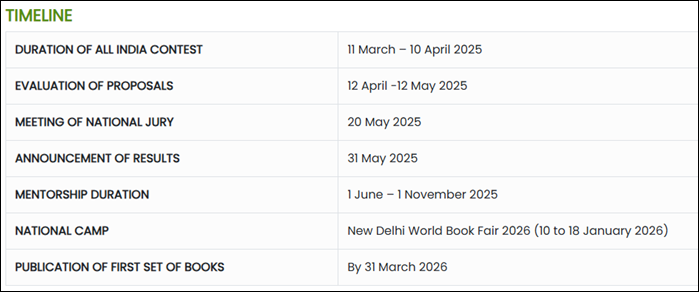
The Schedule of PM-YUVA 3.0 (Young, Upcoming and Versatile Authors) is as follows:

  • Announcement of the Scheme 11 March 2025.
  • A total of 50 authors will be selected through an All India Contest to be conducted through https://www.mygov.in/ from 11 March 2025 – 10 April 2025.
  • The number of authors to be selected as per the theme:

1) Contribution of Indian Diaspora in Nation Building – 10 authors

2) Indian Knowledge System – 20 authors

3) Makers of Modern India (1950-2025) – 20 authors

  • The received proposals would be evaluated in April 2025.
  • The list of selected authors will be announced in May- June 2025.
  • The young authors will be trained by eminent authors/mentors from 30 June – 30 December 2025.
  • Under the mentorship, a National Camp will be held for the PM-YUVA 3.0 Authors during the New Delhi World Book Fair 2026.

*****

AIIMS Bilaspur’s Milestones and Development Progress

Union Minister of Health and Family Welfare and Minister of Chemicals and Fertilizers, Shri Jagat Prakash Nadda, visited the All-India Institute of Medical Sciences (AIIMS) Bilaspur, Himachal Pradesh to review the institute’s progress and evaluate the implementation of important healthcare initiatives. The Health Minister visited facilities of the institute and enquired about availability of various patient care services and their functioning. Shri Jagat Prakash Nadda also congratulated everyone for Jan Aushadhi Diwas. Senior officials from the Ministry of Health and Family Welfare and AIIMS Bilaspur were present on the occasion.

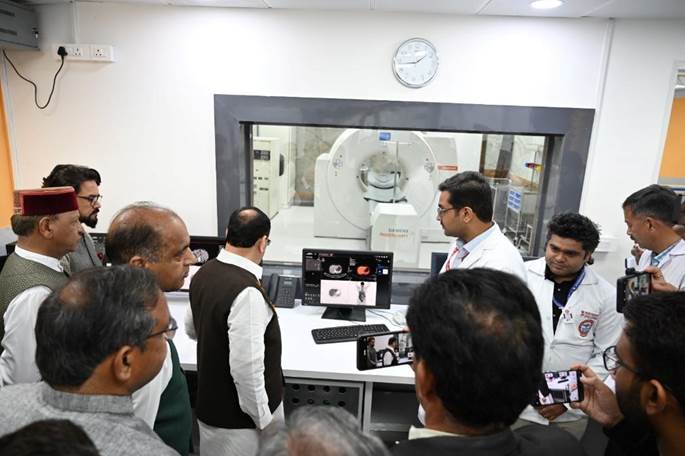
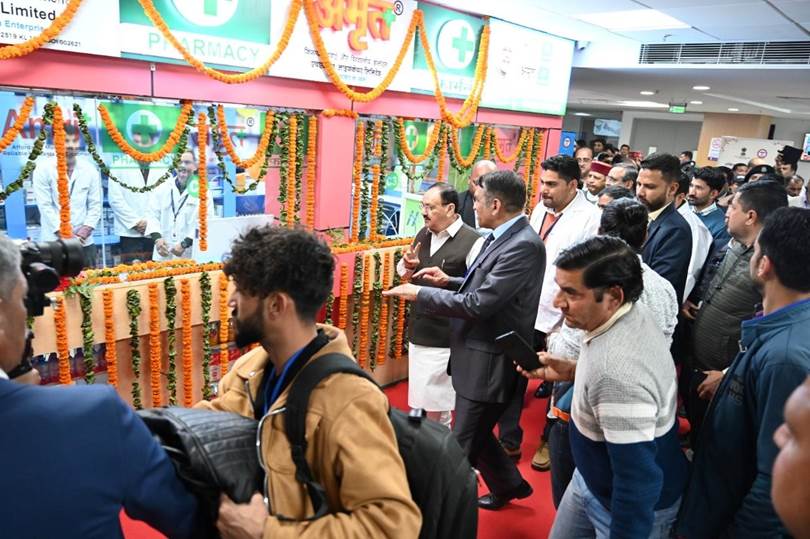
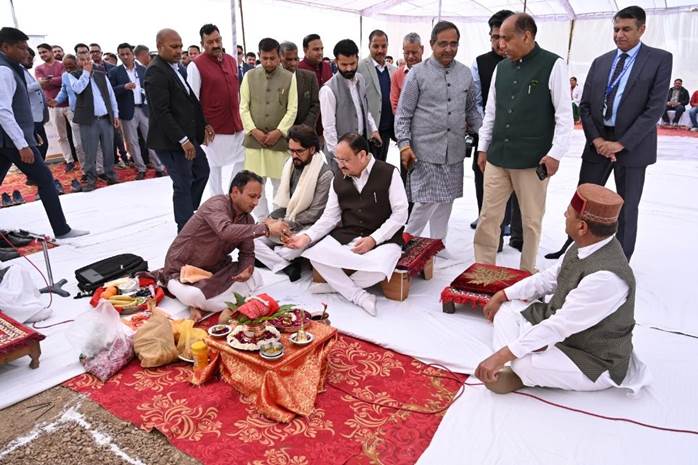
Shri J. P. Nadda laid down the foundation stone of Regional VRDL (Viral Research and Diagnostic Laboratory), inaugurated the Nuclear Medicine Facility at AIIMS Bilaspur, an additional Amrit Pharmacy Unit-3 at AIIIMS Bilaspur (HP). Union Health Minister also visited the site for Vishram Sadan

Shri Nadda praised the remarkable growth of AIIMS Bilaspur since its foundation was laid by the Prime Minister Shri Narendra Modi on October 3, 2017. The review meeting was attended by Shri Anurag Thakur, MP, Shri Jai Ram Thakur, Ex-Chief Minister of HP and Leader of opposition, HP, H.P., Sh. Srikant Sharma, Former Minister and MLA, U.P., Sh. Randhir Sharma, Sh. Jeet Ram Katwal, Sh. Trilok Jamwal, Members of Legislative Assembly, Bilaspur, H.P., and the officials from AIIMS Bilaspur and the State Government.

Addressing the gathering remarks, Shri Nadda reiterated the government’s commitment to continue fortifying the healthcare infrastructure in the region. He expressed his profound pleasure with the advancements made by AIIMS Bilaspur within a short span of its establishment. He stressed that the people of Himachal Pradesh and beyond would continue to benefit greatly from the top-notch medical education and healthcare services provided by AIIMS Bilaspur with the help and active cooperation of the Government of India and Himachal Pradesh.

AIIMS Bilaspur Unveils State-of-the-Art Nuclear Medicine Facility

Shri J. P. Nadda has officially inaugurated the Nuclear Medicine Facility at AIIMS Bilaspur, marking a significant milestone in the region’s healthcare capabilities. This advanced facility is equipped with cutting-edge technology, including PET/CT, SPECT/CT, SPECT radio-pharmacy/hot lab, and a Low-Dose Therapy (LDT) Ward, with an investment of Rs. 30.43 crore. With these in-house state-of-the-art facilities, the department will be able to synthesize most of the necessary radiopharmaceuticals, enabling a wide range of diagnostic investigations such as renal scans, liver scans, bone scans, thyroid scans, cardiac scans, gastro-intestinal scans, and cancer imaging.

In addition to comprehensive diagnostic services, the facility will also provide low-dose radionuclide therapy for patients suffering from thyroid cancer, prostate cancer, neuro-endocrine cancer, liver cancer, and those experiencing bone and joint pain. Shri Nadda mentioned that  “these services will be offered at significantly lower prices compared to the private sector, and patients enrolled in the PMJAY and Himcare insurance schemes, as well as those living below the poverty line, will receive these services free of charge”. The dedicated ward will facilitate day-care treatment for patients with low-risk thyroid cancer, prostate cancer, and other conditions at minimal costs.

Union Health Minister has highlighted the significance of the newly established SPECT/CT and PET/CT facilities at AIIMS Bilaspur, describing them as transformative for patients in Himachal Pradesh. This local availability is expected to significantly lower healthcare costs and minimize travel times for patients seeking advanced diagnostic services.. Furthermore, the Nuclear Medicine Facility will enable the synthesis and evaluation of new radiopharmaceuticals for research purposes, with plans to establish a High Dose Therapy (HDT) Ward in the future. This initiative underscores AIIMS Bilaspur’s commitment to enhancing healthcare access and quality for the community it serves.

Union Health Minister Shri Nadda also visited the site for Vishram Sadan. The 250 bedded facility is being built at the project cost of Rs. 13.57 Crore. In the near future, the bed capacity will be enhanced to 500 beds. He reviewed the progress of the construction at site. The institute is situated in a remote hilly terrain with no facilities for the stay of the patient’s attendees in the nearby area. The beneficiaries to AIIMS are coming from Himachal Pradesh and the adjoining states of Punjab and Haryana. The Vishram Sadan will help the poor and needy, requiring shelter, besides protection from biting cold, harsh summer and incessant rains during monsoon,during treatment of patients suffering from cancer, cardiac and other disorders requiring treatment at AIIMS Bilaspur (H.P.). Their stay in the Vishram Sadan will save multiple visits and expenditure from their far away residences. This will also help in diagnosis and treatment in a single visit resulting in rapid recovery, reduced load on hospital services, improved healthcare delivery, better patient satisfaction and reduced out of pocket expenditure of the individuals visiting the institute.

AIIMS Bilaspur Launches Additional Amrit Pharmacy Unit to Enhance Patient Care

This new unit is designed to address the increasing patient load and aims to provide affordable medications to all patients, thereby reducing waiting times and enhancing overall patient care.

Unit-3 will cater specifically to outpatient department (OPD) patients from various specialties, including Cardiology, Neurology, Endocrinology, Oncology, and Eye departments. Additionally, it will serve inpatient department (IPD) patients under the Ayushman Bharat and Himcare schemes, as well as those enrolled in other government insurance programs, offering services on a credit basis.

 The Amrit Pharmacy Unit-3 will not only supply essential medicines, surgical supplies, and consumables but will also provide high-end items such as implants, medical devices, stents, pacemakers, and oncology medications at significantly discounted rates, ensuring that patients receive the best possible care around the clock.This initiative reflects AIIMS Bilaspur’s commitment to making healthcare more accessible and affordable, ultimately improving the health and well-being of the community it serves.

AIIMS Bilaspur Marks a Milestone with the Foundation Stone Laying of Regional VRDL. This facility will be one of 11 regional VRDLs among a total of 165 across India, equipped with a state-of-the-art Biosafety Level 3 laboratory, advanced sequencing capabilities, and comprehensive diagnostic and research facilities. The establishment of the Regional VRDL is poised to play a pivotal role in diagnosing viral illnesses and other infectious diseases, addressing the evolving epidemiology of both known and emerging viral threats.

.

The Regional VRDL will not only enhance the capacity for timely identification of viral infections but will also provide localized expertise and services that are often lacking in smaller or remote healthcare settings. It aims to track disease outbreaks, improve understanding of disease epidemiology through robust surveillance and reporting systems, and bolster public health preparedness. Additionally, the laboratory will focus on training and capacity building in diagnostic procedures, pathogen handling, and outbreak management, fostering collaborative research to create a cohesive network for viral and infectious disease research and diagnostics. To date, 12 research staff have been recruited, and facilities for serological services and molecular testing against over 35 pathogens have been established.

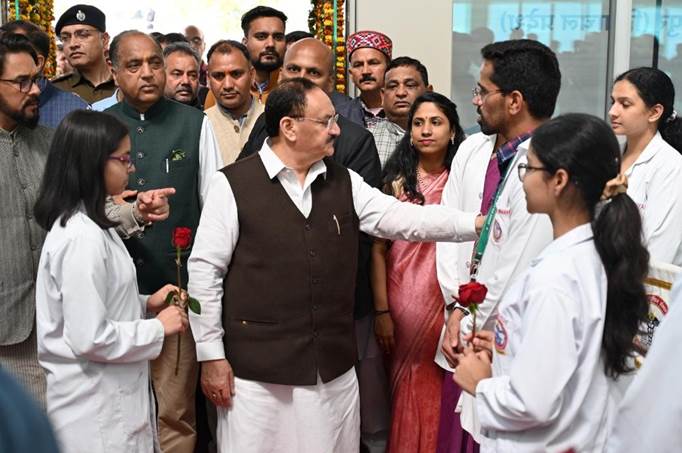
During the event, Shri Nadda also took the opportunity to engage with specialist DM and MCH students currently undergoing training in various departments at AIIMS Bilaspur. He encouraged them to embrace their roles with dedication and commitment to serving the nation, emphasizing the importance of their contributions to healthcare and public health. The establishment of the Regional VRDL marks a significant step forward in enhancing health security and research capabilities in the region, ultimately benefiting the communities of northern India. Shri Nadda also extended his heartfelt congratulations to AIIMS Bilaspur on the successful recruitment of 35 new faculty members, who are set to join the institution soon. He said that, “This influx of talent is poised to significantly enhance the academic landscape and clinical capabilities of AIIMS Bilaspur” .

AIIMS Bilaspur Enhances Disaster Response Capabilities with Allocation of BHISHM Cubes under Pradhan Mantri Aarogya Maitri Bhishm Scheme. Each set comprises two mother cubes, each containing 33 RF-tagged mini-cubes filled with essential medical and surgical supplies, designed to support up to 200 casualties during mass disasters. These cubes can be deployed through various transport methods, including air, water, land, and even drones, ensuring rapid response in critical situations. The investment for each set is approximately 3 crore rupees, reflecting a commitment to improving emergency healthcare infrastructure.

In addition to disaster preparedness, AIIMS Bilaspur is set to enhance its facilities and educational offerings. A state-of-the-art indoor stadium, costing around 4.90 crore rupees, has been approved for use by faculty, students, and staff, equipped with modern amenities for various indoor sports. Furthermore, starting in the 2025 academic session, the institute will introduce a diploma course in Emergency Medical Technician (EMT), initially accepting 10 students, with plans to expand intake in the future. This initiative aims to train skilled technicians who will provide critical care during patient transport. Additionally, AIIMS Bilaspur is preparing to launch comprehensive cancer services, including bone marrow transplants and stem cell therapy, thereby broadening access to advanced treatment options. Recent review meetings have focused on the institute’s achievements and future goals, emphasizing its dedication to improving healthcare services in Himachal Pradesh.

In his concluding remarks, Shri Nadda reiterated the government’s commitment to continue fortifying the healthcare infrastructure in the region. He expressed his profound pleasure with the advancements made by AIIMS Bilaspur within a short span of its establishment. He stressed that the people of Himachal Pradesh and beyond would continue to benefit greatly from the top-notch medical education and healthcare services provided by AIIMS Bilaspur with the help and active cooperation of the Government of India and Himachal Pradesh.

****

Sahitya Akademi will be organising “Festival of Letters 2025”

Eduinde News

Sahitya Akademi, India’s premier literary institution working under the Ministry of Culture, Government of India, will be organizing its annual Festival of Letters at Rabindra Bhavan in New Delhi from 7th March 2025 to 12th March 2025. Union Minister for Culture and Tourism Shri Gajendra Singh Shekhawat, Government of India, will inaugurate the festival. Sri Mahesh Dattani, eminent English Playwright will be the chief guest of the award ceremony in which the prestigious Sahitya Akademi Awards in 23 languages will be presented and Sri Upamanyu Chatterjee, eminent Writer and Scholar will deliver this year’s Samvatsar Lecture.

This is Asia’s Largest Literature Festival with about 700 writers from different parts of the country representing more than 50 languages participating in the festival that spans over 100 sessions. The theme of the festival will be Indian Literary Traditions and a National Seminar on the topic featuring eminent thinkers and writers will be organized during the last three days of the festival.

The festival will feature Young Writers, Women Writers, Dalit Writers, Writers from North East, Tribal writers and poets, LGBTQ writers and poets along with many eminent writers, translators, publishers, poets and distinguished personalities from different walks of life and Festival of Letters continue its status as India’s Most Inclusive Literature Festival since 1985.

A daylong programme for children, Spin A Tale, will be organized on the final day of the festival. Throughout the festival, there will be presentations, readings and discussions by eminent authors, poets, translators, publishers and critics on a wide range of subjects.

On three evenings, cultural performances by eminent artists like Rakesh Chaurasia (flute recital), Nalini Joshi (Hindustani Vocal) and Fouzia Dastango and Ritesh Yadav (Dastan-e-Mahabharata) will be organized. The Festival of Letters is open and free for all the literary lovers and those who wish to taste the flavour of Indian’s longest running Literature Festival.

*****

Daily writing prompt
Write a letter to your 100-year-old self.

Prime Minister Shri Narendra Modi interacted with students during the 1st episode of Pariksha Pe Charcha 2025

Daily writing prompt
What movies or TV series have you watched more than 5 times?

Pariksha Pe Charcha 2025 has redefined student engagement, transforming into a dynamic, interactive experience that is resonating deeply with students, teachers, and parents across the country. Moving beyond the traditional Town Hall format, this edition fosters meaningful, two-way conversations, equipping young minds with practical strategies, life skills, and a fresh perspective on learning.

The eighth edition began on 10 February 2025 in the serene surroundings of Sunder Nursery, New Delhi, where Prime Minister Shri Narendra Modi connected with 36 students from across India. In a free-flowing, insightful discussion, he explored themes like Nutrition & Wellness, Mastering Pressure, Leadership, and 360º Growth, offering real-world wisdom on tackling academic challenges with confidence. His words inspired students to think beyond exams, embrace curiosity, and develop a mindset geared for lifelong learning.

In today’s engaging fourth episode, leading nutrition experts Shonali Sabherwal, Rujuta Diwekar, and Revant Himatsingka—popularly known as the Food Pharmer—interacted with students on the vital role of nutrition in staying healthy and stress-free during exams.

They emphasized the power of superfoods like millets such as jowar, bajra, and ragi, which are packed with fibre, protein, and essential nutrients. These grains, they explained, help sustain energy levels and sharpen focus, making them a must-have in every student’s diet.

Shonali Sabherwal highlighted the link between a balanced diet, quality sleep, and concentration. She urged students to opt for light, nutritious meals to maintain focus and avoid sluggishness. Her golden rule? Ghar ka khana (home-cooked food) is always the best! She also suggested smart swaps for unhealthy snacks, like beetroot juice instead of soda and sweet potato chips instead of packaged snacks.

Rujuta Diwekar explained the benefits of rice and served students with delicious, exam-friendly recipes. From vegetable biryani and curd rice to homemade chakli and chaas/lassi, she explained why these wholesome foods are ideal for maintaining energy and mental clarity.

Revant Himatsingka talked about another crucial aspect of exam preparation—setting realistic goals. He warned against the stress and disappointment of unrealistic expectations, urging students to take a practical, step-by-step approach instead. He echoed the wisdom of Prime Minister Shri Narendra Modi, who encourages young minds to focus on setting attainable targets.

The session also saw participation from students beyond India, who had their queries answered by the experts. Many students later shared their experiences, calling the session eye-opening, enjoyable, and incredibly helpful in understanding the role of good nutrition in exam success.

On 12th February 2025 renowned actor Deepika Padukone interacted with around 60 in the second episode of the 8th edition of Pariksha Pe Charcha. Deepika shared how addressing mental health challenges can be empowering and spoke about the valuable lessons she learned from her own struggles.

On 13th February 2025, tech and finance took center stage as Gaurav Chaudhary (Technical Guruji) and Radhika Gupta (MD & CEO, Edelweiss Mutual Fund) introduced students to Artificial Intelligence and Machine Learning. They explored practical applications of AI tools, including ChatGPT and AI-powered image generation, while also discussing financial literacy – a crucial skill for future success.

Postdoc Candidate Required for the project “Climate Citizenship”

Daily writing prompt
Do you believe in fate/destiny?

Vacancy

Postdoc Candidate for the project “Climate Citizenship”

Vacancy number15478Job typeAcademic staffHours (in fte)0,8External/ internalExternalLocationLeidenPlaced on18 February 2025Closing date31 March 2025 38 more days to apply

Apply now

Leiden University’s Institute of Cultural Anthropology and Development Sociology (CADS) is looking for

Postdoc Candidate for the project “Climate Citizenship” (2 years, 0.8 fte)

We welcome applications for a Postdoc position in the project “Climate Citizenship: Infrastructures, Environments, and Democracy in the Era of Climate Change,” funded by a European Research Council Starting Grant (ERC-StG). The project is led by Principal Investigator Dr. Andrew Littlejohn and hosted by Leiden University’s Institute of Cultural Anthropology and Development Sociology.

Climate Citizenship explores how adapting environments to climate change through new forms of nature-based infrastructure reshapes people’s relationships with each other and the state. Examples range from green roofs and vertical gardens to urban parks, flood plains and more ambitious efforts to transform landscapes. The project treats these infrastructures as social and political as well as environmental experiments. It asks: when and how do they stimulate behavioural change, create new alliances between stakeholders, or transform the division of rights and responsibilities within a society?

The case studies will employ an “ecographic” approach combining quantitative data from the ecological and material sciences with qualitative data gathered through ethnographic methods such as participant observation. As a Postdoc, you will help to develop this approach. You will visit scientists researching and/or working on green infrastructure projects in Japan, the Netherlands, and the United States and interview them on their methods. You will then analyse what kinds of data and techniques the PhD researchers will need familiarity with, and where in the process of gathering ecological data ethnographic methods and insights can be interpolated.

What you will do

  • Conduct interviews and observations with scientists in the Tokyo Bay area (Japan), the Rhine-Meuse-Scheldt Delta (the Netherlands), and Louisiana Delta (the United States);
  • Assist the PI in developing an “ecographic” approach and an ecographic protocol for the PhD candidates;
  • Write a peer-reviewed journal article with the PI on ecographic methods and their potential;
  • Contribute to fine-tuning the research agendas of the PhD candidates through evaluating their proposals and participating in regular team meetings (online where necessary).


You will be part of a team also comprising two PhD candidates and the PI. The entire team is expected to reside in the Netherlands and work from Leiden for the duration of the project, except during fieldwork.

What you bring

  • PhD in Science and Technology Studies, Cultural Anthropology, or another relevant social science (if your PhD is not in Science and Technology Studies, you must have demonstrated expertise in the social study of science or interdisciplinary research methods);
  • Demonstrated passion for developing interdisciplinary and transdisciplinary research projects and approaches;
  • Experience with independently coordinating and conducting ethnographic research, and ideally, some experience with quantitative and/or ecological research methods;
  • Excellent research and writing skills as demonstrated by a track record of scholarly publications commensurate with your career stage;
  • Excellent command of English (speaking and writing);
  • Independent work attitude and demonstrable ability to work in a team.


Where you will work
The Faculty of Social and Behavioural Sciences consists of five institutes: Centre for Science and Technology Studies, Cultural Anthropology and Development Sociology, Education and Child Studies, Political Science, and Psychology. The faculty has approximately 7000 students and 1000 staff members. Within the institutes, not only education is provided but also groundbreaking research is conducted that pushes the boundaries of our understanding of human behaviour and societal structures. What makes our faculty unique is the diversity of research topics, the various styles of teaching, and the way professional support is organized; this provides you with the opportunity to explore and develop your interests and expertise. Visit our website for an impression: Welcome to the Leiden Faculty of Social and Behavioural Sciences – Leiden University.

Leiden University’s Institute of Cultural Anthropology and Development Sociology (CADS)
Leiden University’s Institute of Cultural Anthropology and Development Sociology concentrates on ‘global vulnerability and social resilience’. The institute has three main themes: diversity, sustainability, and digitalisation. CADS is dedicated to making a real-world impact, not just studying change, but also working with communities to promote positive change through education and research. We use a unique approach that blends qualitative, quantitative, audiovisual, and digital methods based on ethnographic fieldwork.

With our unique blend of interdisciplinary interests, comparative regional studies, and social science research methods, we emphasize our role in the extensive collaborative network within Leiden University. In both our research and education, we engage in extensive interdisciplinary and international networks.

What we offer
Our goal is to work together to create a transparent and inclusive work environment in which everyone feels welcome and appreciated. Our organisation is always evolving, and we need your ideas for improvement and innovation to take us further. We want to devote attention to your personal development.

You can expect an enjoyable job within the socially relevant world of education and research. The University’s challenging and international work environment is located just steps away from Leiden’s lively city centre or the bustling city centre of The Hague. We also want to work with you to devote attention to your health and vitality, for example with the fun activities we organise through Healthy University.

We also offer:

  • A 0,8 fte employment contract, initially for a period of 1 year, with the possibility of extension for a second year after a positive evaluation. This contract falls under the Collective Labour Agreements (CLA) of Dutch Universities;
  • A salary of a minimum of € 4,060 and a maximum of € 5,331 gross per month, based on a full-time appointment (38 hours) (scale 10.4-10.12); with increments based on the CLA.
  • A holiday allowance (8%), an end-of-year bonus (8,3%), and an attractive pension scheme at ABP;
  • Our individual choices model gives you some freedom to assemble your own set of terms and conditions.
  • Candidates from outside the Netherlands may be eligible for a substantial tax break.

More here: https://www.universiteitleiden.nl/en/working-at/job-application-procedure-and-employment-conditions

What we find important
Promoting an inclusive community is central to Leiden University’s values and vision. Leiden University aims to be an inclusive community in which all students and staff members feel valued and respected and are able to develop to their full potential. Diversity in experiences and perspectives enriches our teaching and strengthens our research. High-quality education and research mean inclusive education and research.

Want to apply or find out more?
If you want to apply straight away, click the application button.
If you would like more information about what the job entails, please contact: Dr. Andrew Littlejohn, Assistant Professor at a.l.littlejohn@fsw.leidenuniv.nl

You can apply until March 31, 2025; applications will be processed immediately.
Online interviews will be held with shortlisted candidates in April-May 2025. The intended starting date is August 2025.

To apply, please submit:

  • A cover letter explaining your motivation for working in the climate citizenship project (maximum 2 pages);
  • Curriculum vitae (CV), including publications (maximum 2 pages);
  • A short research proposal (maximum 500 words) in which you outline your approach to the role described above;
  • A copy of either a representative publication or your PhD thesis;
  • Names and contact details of two referees.

To help us get to know each other better, we follow a number of steps in the application procedure. For more information, see:
https://www.universiteitleiden.nl/werken-bij/sollicitatieprocedure-en-arbeidsvoorwaarden

  • A pre-employment screening (references, diplomas, certificate of good conduct (VOG) may be part of the selection procedure.
  • Acquisition in response to this vacancy is not appreciated. If you nevertheless choose to send us CVs, no rights can be derived from this. -Hybrid

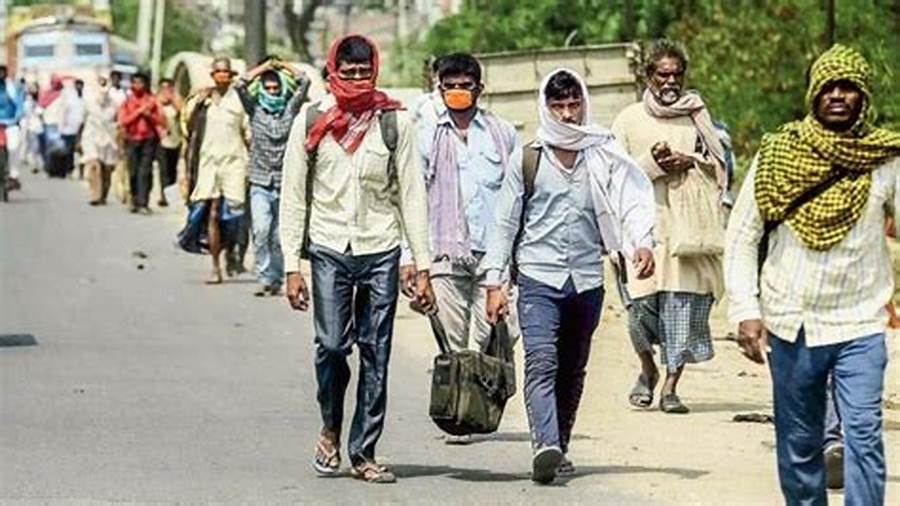
Poetry Depicting the Plight of the Rural Migrants

Daily writing prompt
What technology would you be better off without, why?

By Shashikant Nishant Sharma

In the vast expanse of fields they toil,

The rural migrants, their hopes embroiled.

Leaving their homes, their villages behind,

Seeking better prospects, a new life to find.

Through dusty roads and uncertain trails,

They journey forth, their spirit never fails.

Dreams in their eyes, determination their guide,

They face the challenges with an unwavering stride.

From sunup to sundown, their hands never rest,

Working the soil, giving it their best.

Yet, their economic status remains a plight,

As they battle hardships, day and night.

Their labor fuels the cities’ bustling might,

Yet their own pockets struggle, a constant fight.

They build the skyscrapers, brick by brick,

But their own dreams seem just out of reach.

Their wages are meager, their earnings slim,

Struggling to provide, their chances seem grim.

But within their hearts, resilience resides,

A burning fire that no hardship can hide.

They yearn for a future where opportunities abound,

Where their efforts and sacrifices are truly renowned.

A world where their economic status can rise,

And their aspirations can touch the skies.

Let us not forget their struggles, their plight,

For they are the backbone, the true source of light.

Together, let’s work towards a better tomorrow,

Where rural migrants find solace from their sorrow.

For every field they sow, every harvest they reap,

Deserves a fair share, a promise we must keep.

So, let us join hands, bridge the divide,

And empower their dreams, side by side.

For in their hands lies the potential untold,

To transform their lives, to break the mold.

May their economic status find new heights,

As they journey towards prosperous sights.

Special Book Publication Offer: Publish Your eBook for Just $50 with EduPub

EduPub is excited to present an exclusive offer for authors! For a limited time, you can publish your eBook for only $50. Whether you’re an academic, researcher, novelist, or a first-time writer, this is the perfect opportunity to share your work with the world.

What’s Included in the $50 Offer:

  • Professional Formatting: Your manuscript will be professionally formatted for digital platforms.
  • ISBN Assignment: Get a unique ISBN for your eBook, ensuring it is recognized globally.
  • Global Distribution: Your eBook will be available on leading platforms such as Amazon, Google Play, and other major online stores.
  • Author-Friendly Rights: You retain full copyright ownership of your work.
  • Dedicated Support: Our team will guide you through the entire publishing process, ensuring a smooth and hassle-free experience.

Why Choose EduPub?

EduPub is a trusted name in academic and professional publishing. We are committed to providing high-quality services at affordable rates, making publishing accessible to all authors.

Take advantage of this special offer and make your mark as an author. Submit your manuscript today and reach a global audience with your eBook!

For more details, visit EduPub or contact us directly at support@edupub.org.

Hurry! This offer is available for a limited time only.

Basics of Research Methodology- Writing and Publication by Dr. Kavita Dehalwar

Daily writing prompt
What is your favorite genre of music?

The journey of research is both challenging and exhilarating, marked by the pursuit of knowledge and the quest to uncover new truths. For young researchers and newly enrolled PhD scholars, embarking on this journey can be an overwhelming experience, replete with complex methodologies, rigorous writing standards, and the daunting task of publication. This book, Basics of Research Methodology: Writing and Publication, is crafted with the intent of serving as a comprehensive guide and companion for those at the nascent stage of their academic careers. Research is a dynamic and evolving process, requiring a solid foundation in methodological principles and an ability to communicate findings effectively. This book aims to demystify the intricacies of research methodology, offering a structured approach to planning and executing research projects. From formulating research questions to selecting appropriate methods, we cover the essential steps required to build a robust research framework. The emphasis is on clarity and simplicity, ensuring that even complex concepts are accessible to readers without extensive prior experience. Writing is an integral part of the research process, serving as the medium through which discoveries are shared with the broader academic community. This book provides practical advice on developing a clear and concise academic writing style, tailored to meet the expectations of various scholarly audiences. Whether you are drafting your first research paper, preparing a thesis, or writing a dissertation, the principles outlined in these pages will equip you with the skills necessary to produce high-quality academic work. We delve into the nuances of writing different sections of a research paper, from the introduction to the conclusion, highlighting the purpose and structure of each component.


The publication process, while rewarding, can often seem like a labyrinth to those unfamiliar with its intricacies. This book offers a step-by-step guide to navigating the world of academic publishing, from selecting the right journal to understanding the peer review process. We provide tips on how to respond to reviewers’ comments, handle rejections, and ultimately succeed in getting your work published. The aim is to empower you with the knowledge and confidence needed to disseminate your research effectively, contributing to the advancement of your field and establishing your presence as a scholar. Throughout this book, we draw upon the experiences of seasoned researchers and successful academics, providing insights and practical examples that illustrate the real-world application of the concepts discussed. We recognize the diversity of research disciplines and strive to present information that is broadly applicable while acknowledging the unique requirements of different fields. Our goal is to create a resource that not only educates but also inspires, encouraging you to approach your research with curiosity, diligence, and a passion for discovery. As you embark on your research journey, we hope this book will serve as a valuable resource, guiding you through the challenges and helping you to achieve your academic and professional aspirations. Remember, research is a continuous learning process, and each step you take brings you closer to making a meaningful impact in your field. We wish you success and fulfillment in your endeavors, and look forward to the contributions you will make to the world of knowledge.

Link to Buy Print Copy

Link to Download Free eBook 

Book Details

Publisher: Edupedia Publications Pvt Ltd
ISBN: 9789392585937
DOI:

https://doi.org/10.5281/zenodo.12654218
Binding: Paperback (Perfect Binding)
Year: 2024
Genre: Reference (Research Methodology)
Pages: 346
Dimensions: 6.00″x9.00”

The Importance of ISBNs in Book Publication: Understanding Its Benefits

Daily writing prompt
What makes you nervous?

In the world of book publishing, obtaining an International Standard Book Number (ISBN) is a critical step for authors and publishers alike. This unique identifier does more than just catalog a book; it facilitates its distribution, sales, and even its recognition in the literary market. This article explores what ISBNs are, how they function within the book publishing industry, and the myriad benefits they offer.

Photo by Suzy Hazelwood on Pexels.com

What is an ISBN?

An ISBN is a 13-digit number that uniquely identifies books and book-like products published internationally. Instituted in 1970, the ISBN standardizes the identification of books, making it easier for publishers, booksellers, libraries, and readers to find or reference a specific book.

How is an ISBN obtained?

Publishers apply for ISBNs from the ISBN agency in their country. In the United States, for instance, Bowker is the official source of ISBNs. Each ISBN is unique to a particular edition and format of a book. This means that the paperback, hardcover, e-book, and audiobook versions of the same title will each have different ISBNs.

Benefits of ISBNs

1. Market Accessibility

An ISBN is essentially a passport for entering the global book market. It allows books to be sold in bookstores, both physical and online, and to be included in the inventory systems of book retailers worldwide. Without an ISBN, a book’s reach is severely limited.

2. Efficient Distribution and Logistics

The ISBN system helps streamline the distribution and logistical processes involved in book selling. Retailers and distributors use ISBNs to track inventory, order stock, and manage sales records. This efficiency is crucial in the modern market where the accurate tracking of sales data is vital for success.

3. Data Collection and Sales Tracking

ISBNs facilitate the collection and analysis of sales data, enabling publishers and authors to measure a book’s performance in various markets. This data is crucial for making informed decisions regarding marketing strategies and future print runs.

4. Eligibility for Awards and Listings

Many literary awards and competitions require an ISBN for entry. Additionally, having an ISBN allows a book to be listed in various bibliographic databases which are used by libraries and academic institutions, thus increasing its potential audience.

5. Professional Credibility

Publishing a book with an ISBN lends professional credibility. It signals that the book meets international standards for publishing and is taken seriously by the industry stakeholders. This is particularly important for self-published authors who are looking to establish themselves.

6. International Recognition

An ISBN provides a book with international recognition, allowing it to be easily identified and ordered from anywhere in the world. This is invaluable for authors seeking to reach an international audience.

7. Rights Management

An ISBN helps in managing rights associated with a book, especially in the digital market. It helps delineate different formats and editions, ensuring that royalties are accurately distributed according to sales.

Conclusion

The use of ISBNs in book publication is more than just a procedural necessity; it is a strategic asset that enhances a book’s visibility, accessibility, and success in the market. For authors and publishers aiming to maximize their book’s potential, obtaining an ISBN is an essential step. Not only does it streamline sales and distribution processes, but it also opens doors to wider markets and provides the necessary tools for effective marketing and rights management. In the evolving landscape of publishing, the ISBN remains a cornerstone of professional and efficient publishing practice.

Book – Farming at Home

 Welcome to “Farming at Home”. In today’s fast-paced world, where urbanization is on the rise and environmental concerns loom large, reconnecting with nature and integrating it into our living spaces has become more crucial than ever. This book is a comprehensive guide to help you embark on a journey of creating vibrant greenery within the confines of your home, whether it’s a cozy apartment, a suburban house, or a bustling urban rooftop.


The book help to explore the diverse range of topics we’ll explore together. From unraveling the intricate relationships between plants and people to understanding the benefits of indoor plants in purifying the air we breathe, from combatting pollution with green solutions to harnessing the power of sustainable water management and alternative energy sources, this book covers it all.
We delve into practical advice on setting up your own mini gardens, whether it’s a nutritional kitchen garden brimming with fresh herbs and vegetables or a rooftop oasis flourishing with vibrant blooms. We also explore innovative techniques like vertical farming and soil-less food production, revolutionizing the way we think about agriculture and food sustainability.
Moreover, we provide insights into how you can incorporate backyard poultry rearing for a steady supply of protein and explore homemade recipes to nurture your indoor plants and gardens. We even guide you through the process of fixing your own water utilities, ensuring that every drop is utilized efficiently.
Our aim with this book is not just to provide information but to inspire action. We want to empower you to transform your living spaces into green sanctuaries that promote not only your well-being but also contribute positively to the environment.
So, whether you’re a seasoned gardener looking to expand your horizons or a novice eager to embark on your green journey, “Farming at Home” has something for everyone. Let’s embark together on this enriching and rewarding adventure of cultivating green spaces for a healthier, happier home.

Published By: Edupedia Publications Pvt Ltd, New Delhi

Copyright © 2024

Editors: Prof. C. Swaminathan, Dr. V. Geethalakshmi, Dr. S. Pazhanivelan and Dr. P. Kathirvelan

© Authors / EduPub

Year: 2024

Edition: First

Pages: 251

ISBN: 978-93-92585-71-5

DOI: https://doi.org/10.5281/zenodo.10969053

Imprint: EduPub

Publisher: Edupedia Publications Pvt Ltd

Format: Print

Genre: Gardening & Landscape Design

Price: Rs. 500

eBook LINK      eBook on Amazon or Kindle Book on Amazon 

The Power of Publishing: Why Getting Your Book into the World Matters

Daily writing prompt
Write a letter to your 100-year-old self.

In the vast landscape of literature, the act of publishing a book holds an undeniable allure. It’s not merely about seeing your name in print or holding a tangible manifestation of your ideas; it’s about the profound impact that your words can have on the world. Whether you’re a seasoned author or an aspiring writer, the journey from manuscript to publication carries immense significance, both personally and culturally.

Photo by Ena Marinkovic on Pexels.com

At its core, publishing a book is an act of sharing. It’s about taking the stories, insights, and knowledge that reside within the depths of your mind and offering them to the world. In doing so, you open the door to connection, conversation, and understanding. Your words have the power to resonate with readers, to evoke emotion, to provoke thought, and perhaps even to inspire action.

One of the key reasons why getting your book published is important lies in its potential to reach and impact others. In a world where ideas are exchanged at lightning speed through digital mediums, the written word still holds a unique and enduring power. Books have the ability to transcend barriers of time, space, and culture, allowing readers to explore new worlds, gain fresh perspectives, and delve into the depths of the human experience.

Moreover, the act of publishing a book can be a deeply fulfilling and transformative experience on a personal level. It’s a testament to your dedication, creativity, and perseverance as a writer. The process of bringing a manuscript to publication involves countless hours of writing, revising, and refining—a journey that demands both skill and tenacity. Seeing your book on shelves or in the hands of readers is not just a moment of validation; it’s a reminder of your capacity to turn dreams into reality.

Furthermore, publishing a book can provide numerous opportunities for growth and learning. It requires you to engage with editors, agents, publishers, and readers, each offering valuable insights and feedback that can help you hone your craft. Whether it’s learning to navigate the intricacies of the publishing industry or developing a deeper understanding of your own voice and style as a writer, the journey to publication is rich with lessons and experiences.

Beyond the personal and professional benefits, the importance of getting your book published extends to its broader cultural impact. Literature has the power to shape societies, challenge norms, and spark movements. Throughout history, books have served as catalysts for change, fostering empathy, tolerance, and social justice. By adding your voice to the collective tapestry of human expression, you contribute to the ongoing dialogue that shapes our understanding of the world.

In essence, the act of publishing a book is not just about putting words on paper; it’s about sharing your voice, your stories, and your ideas with the world. It’s about embracing the power of the written word to connect, inspire, and transform. So, if you’re sitting on a manuscript, wondering whether to take the leap into the world of publishing, remember this: your words matter, and the world is waiting to hear them.

Top ten Books of Financial Management

 Here are ten highly regarded books on financial management:

  1. “The Intelligent Investor” by Benjamin Graham – Considered a classic in value investing, this book provides timeless wisdom on investing and managing risk.

  2. “A Random Walk Down Wall Street” by Burton Malkiel – Malkiel explores various investment strategies and offers insights into the principles of financial markets.

  3. “Common Stocks and Uncommon Profits” by Philip Fisher – Fisher’s book focuses on stock selection and long-term investing strategies, emphasizing the importance of understanding a company’s business.

  4. “Security Analysis” by Benjamin Graham and David Dodd – This foundational work provides in-depth insights into the principles of security analysis and valuation.

  5. “The Interpretation of Financial Statements” by Benjamin Graham – Graham’s guide helps readers understand and interpret financial statements to make informed investment decisions.

  6. “Corporate Finance” by Stephen A. Ross, Randolph W. Westerfield, and Jeffrey Jaffe – This textbook is widely used in finance courses, covering essential topics in corporate finance.

  7. “Financial Management: Principles and Applications” by Sheridan Titman and John D. Martin – This book is known for its comprehensive coverage of financial management principles and their real-world applications.

  8. “Margin of Safety: Risk-Averse Value Investing Strategies for the Thoughtful Investor” by Seth A. Klarman – Klarman discusses value investing principles and the importance of a margin of safety in investment decisions.

  9. “Capital in the Twenty-First Century” by Thomas Piketty – While not specifically a financial management book, Piketty’s work explores economic inequality and its implications, offering insights for those interested in financial policy.

  10. “Financial Shenanigans: How to Detect Accounting Gimmicks & Fraud in Financial Reports” by Howard M. Schilit – This book helps readers identify common accounting tricks and frauds that companies may use in their financial reports.

Remember to check for updated editions or newer releases, as the field of financial management continually evolves, and new insights may have emerged

Top ten Book on Social Change

can recommend ten influential books on social change that have been widely recognized for their impact and insight.

  1. “The Power of Habit: Why We Do What We Do in Life and Business” by Charles Duhigg

    • This book explores the science behind habits and how they can be transformed to bring about personal and social change.
  2. “The Tipping Point: How Little Things Can Make a Big Difference” by Malcolm Gladwell

    • Gladwell explores the concept of the tipping point, examining how small actions can lead to significant societal changes.
  3. “Evicted: Poverty and Profit in the American City” by Matthew Desmond

    • This Pulitzer Prize-winning book sheds light on the impact of eviction on poverty in American cities, offering insights into social and economic challenges.
  4. “The New Jim Crow: Mass Incarceration in the Age of Colorblindness” by Michelle Alexander

    • Michelle Alexander critically examines the U.S. criminal justice system, highlighting its impact on racial inequality and advocating for social change.
  5. “Silent Spring” by Rachel Carson

    • Although originally published in 1962, this groundbreaking book by Rachel Carson played a crucial role in sparking the environmental movement by addressing the dangers of pesticides.
  6. “Nickel and Dimed: On (Not) Getting By in America” by Barbara Ehrenreich

    • Barbara Ehrenreich’s immersive journalism explores the challenges faced by low-wage workers in America, shedding light on economic inequality.
  7. “Pedagogy of the Oppressed” by Paulo Freire

    • A classic work in education and social change, Freire’s book explores transformative education and the liberation of oppressed individuals.
  8. “The Sixth Extinction: An Unnatural History” by Elizabeth Kolbert

    • Kolbert investigates the ongoing biodiversity crisis, examining the impact of human activities on the planet and advocating for environmental awareness.
  9. “Half the Sky: Turning Oppression into Opportunity for Women Worldwide” by Nicholas D. Kristof and Sheryl WuDunn

    • This book explores the challenges faced by women worldwide and offers solutions for empowering women as a means of creating positive social change.
  10. “The Audacity of Hope: Thoughts on Reclaiming the American Dream” by Barack Obama

    • Written by the 44th President of the United States, this book reflects on the themes of unity, social justice, and the potential for positive change in America.

These books cover a range of social issues, and reading several of them can provide a comprehensive understanding of different aspects of social change. Always check for more recent publications and reviews to find the most up-to-date and relevant works.