
China’s 5 Year Plan (2021-2025): Proposed Dam on River Brahmaputra

The five-year plans are a sequence of economic and social development initiatives furnished by the CCP (Chinese Communist Party) since 1949. The five-year plans were inspired by the five-year plans from the USSR and the focus was on launching new schemes, reforms and setting new growth targets.

Since the 11th five-year plan (2006-2010), the Chinese government has mentioned it as ‘Guidelines’ instead of plans. Currently China is on its 14th five-year plan/ guidelines. Unlike the previous five year plans, there is no specific GDP growth target and instead, the government announced that growth would be kept in “reasonable range” and an annual target would be set based on the specific conditions each year. The focus of the current plan is on self-sufficiency as the country had to endure difficulty after the United States had restricted China’s major chip makers from using American technology. Other areas of focus will be on the above 7 percent growth in the research and development spending. The government will also try to raise the urban residents to 65 percent of the population while maintaining green development and increasing the life expectancy by 1 year. Infrastructure will also be an area of priority with a focus on high-quality development of the belt and road initiative.

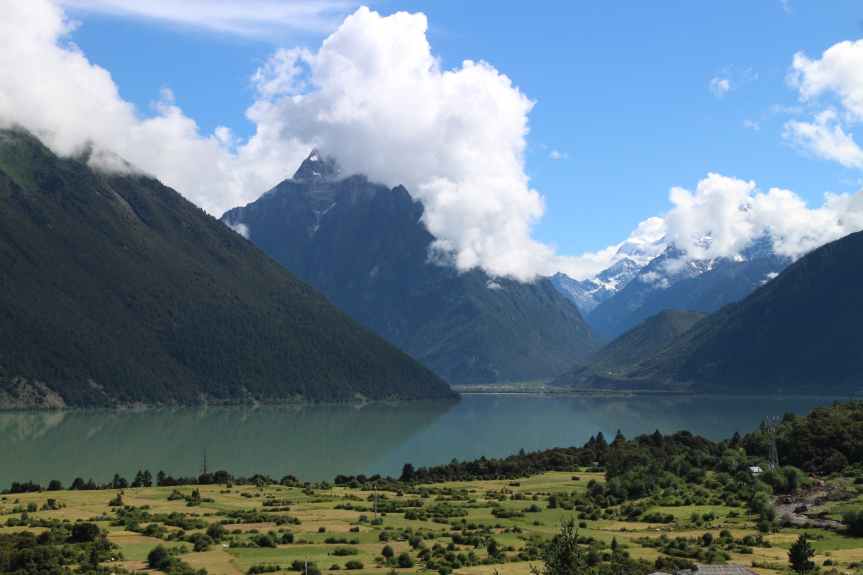
One of the biggest infrastructure projects of the 14th The five-year plan (2021-2025) has been officially approved to build a series of dams in the lower reaches of the Yarlung Zangbo River, as the Brahmaputra is known in Tibet before it flows into India.

The proposed dam would be in Medog, Tibet region will have a maximum possible capacity of 60 gigawatts and could potentially produce 300 billion kWh annually. The location is an area called ‘the great bend’ also known as ‘Yarlung Tsangpo Grand Canyon’ where the river goes through a very drastic U-turn and then the river descents from an elevation of 3000 meters to around 800 meters. Due to the drastic elevation change, the river flow is quite strong and is also an ideal location to build the dam.

The location of the dam could be a strategically risky move by china as it is very close to the Indian border but the other issue is that this proposed dam can undermine the water security of India. India relies heavily on the Brahmaputra River for agriculture and various other purposes.  Due to this, the proposed Dibang Dam by India in downstream (Arunachal Pradesh) might be the solution to offset the effect of the Chinese proposed dam. Although the majority of the catchment area of Brahmaputra is on the Indian side there is still the issue of water flow from the upstream as Assam usually suffers from floods in the rainy season and any additional water flow from the Chinese dam would make the situation worse. The problem will not only affect India but also Bangladesh due to its low-lying land and flood-prone region. Problem is that the region is ecologically diverse and sensitive and any kind of development in this region will negatively affect the ecology of this region. Due to turbulent tectonic plates, there are high chances of landslides and earthquakes as well. India will have to be vigilant and develop its strategy according to the developments on the Chinese side.
References:

Assam-Mizoram border dispute

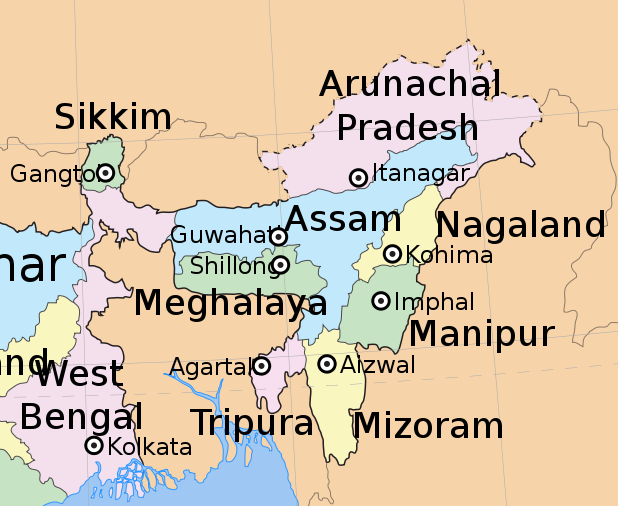
On July 11, 2021, two grenade explosions occurred in Cachar district in Assam near Mizoram border, targeting construction workers. This attack was followed by counter attack from the people of Assam. The main reason appears to be the infamous, unrelenting Assam-Mizoram border dispute.

Image source: https://commons.wikimedia.org/wiki/File:Northeast_india_map.png#filelinks

The Assam-Mizoram border dispute, one of the many state border disputes in India, dates back to the colonial era when several state boundaries were demarcated to suit the British administrative needs. The states of Assam, Meghalaya, Nagaland, Mizoram and Arunachal Pradesh were earlier collectively known as the ‘Greater Assam’. The regional and cultural diversity in this large state was the cause of internal conflict in the state. Also keeping in mind the 1962 border dispute with China, the division of state was essential for national integrity as well as internal peace.

So, the state of Assam was disintegrated to form Arunachal Pradesh(union territory in 1972 and upgraded to a state in 1987) , Nagaland(1987), Meghalaya(1972) , Mizoram(UT-1972 and state-1987) . However, Britishers passed two notifications- 1. The notification of 1875- Defines the boundary between Lushai Hills(present day Mizoram) and Cachar Hills 2. The notification of 1933- Defines the boundary between Lushai hills and Manipur, And thus, when the state of Mizoram was formed, the conflict between Mizoram and Assam started. The state of Assam and Mizoram share a 164 km (approx.) border between Cachar, Hailkandi and Karimganj districts of Assam and Kolasib, Mamit and Aizwal district of Mizoram. Both sides follow a natural border(those of mountains). While disintegrating Assam, the government did not pay due attention to the Tribal realities and ethnic composition. Hence, there continues to be a considerable population of Mizos and Nagas in the Cachar Hills, making it possible for both Mizoram and Nagaland to claim these territories in Assam. Also, the people of Mizoram follow the 1875 notification(they believe the Mizo community was not consulted before issuing the notification) and those of Assam follow the 1933 notification.

This is a long unresolved dispute and its high time that it be solved. Amidst this raging pandemic and its socio-economic implications and growing international tensions, the central government has already got a lot in its plate and dumping these inter-state disputes upon the central government in such times of crisis in no wise move on anybody’s part. And so, the states must themselves come together for a peace negotiation as early as possible or otherwise accept a third party intervention. Or, the central government should revive the inter-state council or set up a zonal council to effectively address these disputes. With the NDA government in power in all these states as well the center, a political solution seems a relatively lucrative option. With growing concerns of Chinese developments amongst several Asian countries, addressing disputes of states that are bound to face Chinese interference via its BRI near India’s North-east becomes all the more important.