Developing world class manufacturing facilities is a must for realizing the Prime Minister’s vision of “Make in India “with “Zero Effect; Zero Defect”

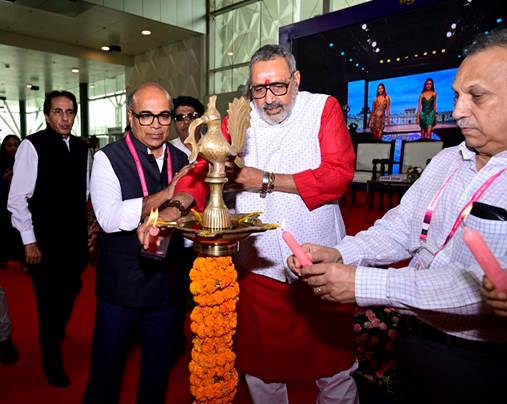
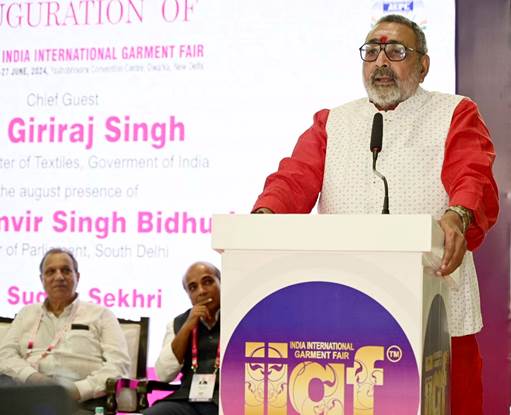
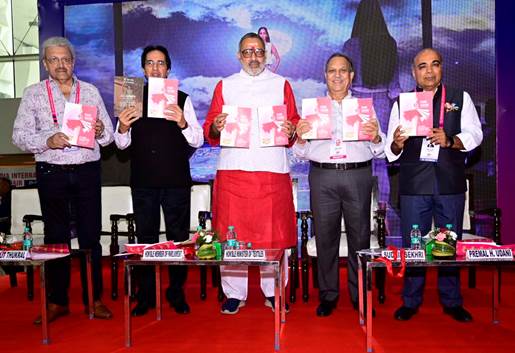
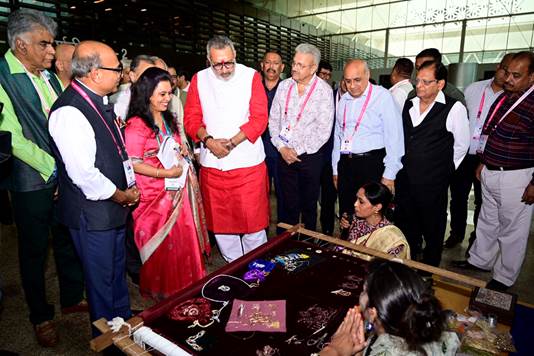
 Union Minister for Textiles, Shri Giriraj Singh inaugurated the 71st edition of the India International Garment Fair (IIGF) at Yashobhoomi Convention Centre today. Delivering his inaugural address, the Union Minister emphasized that the India International Garment Fair (IIGF) offers a unique marketing platform for micro, small, and medium exporters, showcasing India’s latest trends and diverse offerings to the rest of the world. Shri Giriraj Singh further said that developing world class manufacturing facilities is a must for realising the Prime Minister’s vision of “Make in India “with “Zero Effect; Zero Defect” at each level of the value chain.

Shri Singh also called for the adoption of the ‘hub and spoke’ model to enhance domestic manufacturing, encouraged industry collaboration and underscored the importance of establishing Indian brands. The ministry is also poised to revive the Scheme for Integrated Textile Parks (SITP) to create internationally standardized parks.

Shri Giriraj Singh stated that, “Today, India is one of the fastest growing economies in the world with a GDP growth rate of 7.2% and is expected to be 3rd largest economy by 2027-28.” The convergence of a positive domestic outlook with a growth-oriented political establishment has provided a conducive ecosystem for business in India. Several measures have been taken by the Government of India to enhance the infrastructure sector and ease of doing business, he added.

Further, the Minister stated that, the Indian Apparel and textiles market is of the size of 165 billion USD which has to touch 350 USD billion; a target, which has been fixed after industry consent. I request you to take it to 50 billion USD by 2030. Prime Minister made a roadmap to promote technical fiber and Geo textile, which is providing huge options for growth.


“I have said that my challenge is not Bangladesh. I would like to take ahead of China in time to come. Bangladesh water and raw material charges are going high. Further Shri Singh suggested that we will make small clusters for smaller players in India to boost RMG exports”.

Textiles Minister Giriraj Singh announces the expansion of the Rs 10,000 crore PLI scheme to the garment sector to boost domestic manufacturing and exports. Addressing the India International Garment Fair, Singh emphasizes revamping textile parks, and promoting green textiles will be our focus.

Shri Sudhir Sekhri, Chairman AEPC during his address underlined, “the global headwinds negatively affected Indian apparel exports. But despite these adverse scenarios, the Indian apparel export industry was able to hold its own and contain the damage to quite an extent.

Shri Mithileshwar Thakur, Secretary General said that there is a greater chance for Indian apparel exporters to expand its footprint across developed countries in coming years. The Indian apparel industry must in-cash this opportunity and start dreaming big.

Knowledge sessions are also being organised on the sidelines on the 25th and 26th June’2024 covering various topics like Navigating Global Trade: Challenges and Opportunities for the Industry, The Efficiency Advantage: Driving Manufacturing – Excellence in Apparel and Sustainable Fashion: From Concept to Reality.

This fair being organised by the Apparel Export Promotion Council (AEPC) through the International Garment Fair Association (IGFA), in association with three major garment Associations of India namely, Clothing Manufacturers Association of India (CMAI), Garment Exporters & Manufactures Association (GEMA) & Garment Exporters Association of Rajasthan (GEAR), is a testimony of the collective spirit, team-work and synergies built by these associations to achieve greater goal. More than 600 buyers from 50 countries participated in the event. 71st Edition will also host two fashion shows each day, from 25th to 27th June’2024, showcasing the best of the collections exhibited during the show.

***

Indian Railways’ PSUs, RITES Ltd and IRCON granted Navratna status

 Ircon International Limited (IRCON) and RITES Ltd(RITES) both Central Public Sector Enterprise (CPSE) under the Ministry of Railways, have been announced as 15th and 16thNavratna respectively among CPSEs. The Ministry of Finance on Thursday conferred ‘Navratna’ status on RITES and IRCON.

Entering its 50th year of incorporation, RITES Ltd is a leading transport infrastructure consultancy and engineering firm in India. It provides services in the diverse sectors of transportation, railways, export of rolling stock, highways, airports, metros, urban engineering & sustainability, ports & waterways, and energy management.

The award of Navratna status will enable RITES to further nurture its brand, compete more effectively in the global market and pursue new frontiers more aggressively for growth.

The core competence of IRCON in 47th years is in Railways, Highways & Extra High Tension substation engineering and Construction. The company has executed projects operated in the areas of Railway construction including ballast less track, electrification, tunnelling, signal & telecommunication as well as leasing of locos, construction of roads, highways, commercial, industrial & residential buildings and complexes, airport runway and hangars, metro and mass rapid transit system, etc. IRCON has widespread operations in several states in India and other countries. The company has posted a consolidated annual turnover of Rs.10,750crore and Profit after Tax of Rs.765 crore in the Financial Year 2022-23.

With the grant of “Navratna” status, the companies should benefit in enhancing the market credibility and in undertaking larger size PPP projects.

Export of Basmati rice to prevent exports of Non-Basmati white rice

 To check the domestic prices and to ensure domestic food security, the Government has been taking measures to restrict export of rice from India. The export of non-basmati white rice was prohibited on 20th July 2023.

It has been noticed that despite restriction on certain varieties, rice exports have been high during the current year. Up to 17th August 2023, total exports of rice (other than broken rice, export of which is prohibited) were 7.33 MMT compared to 6.37 MMT during the corresponding period of previous year, registering an increase of 15.06%. There has been a spurt in the export of parboiled rice and Basmati rice; both of these varieties did not have any restriction on exports. While the export of parboiled rice has grown by 21.18% (3.29 MMT during the current year compared to 2.72 MMT during previous year), export of Basmati rice has increased by 9.35% (1.86 MMT during the current year compared to 1.70 MMT during previous year). Export of non-basmati white rice, which had an export duty of 20% since 9th September 2022 and has been prohibited w.e.f. 20th July 2023, has also registered an increase of 4.36% (1.97 MMT compared to 1.89 MMT during previous year). On the other hand, as per third Advanced Estimate of Department of Agriculture & Farmers Welfare, during the Rabi Season 2022-23, the production was only 158.95 LMT against 184.71 LMT during Rabi Season of 2021-22 i.e., there was a decline of 13.84%.

Internationally, due to strong demand from Asian buyers, production disruptions registered in 2022/23 in some major producing countries like Thailand, and fears of possible adverse effect of the onset of El Nino, international rice prices have also been rising continuously since last year. The FAO Rice Price Index reached 129.7 points in July 2023; its highest value since September 2011, registering an increase of 19.7% over past year levels. As the prices of Indian rice are still cheaper than the international prices, there has been a strong demand for Indian rice, resulting in record exports during 2021-22 and 2022-23. 

The Government has received credible field reports regarding misclassification and illegal export of non-basmati white rice, export of which has been prohibited with effect from 20th July 2023. It has been reported that non-basmati white rice is being exported under the HS codes of parboiled rice and Basmati rice.

As the Agricultural & Processed Food Products Export Development Authority (APEDA) is responsible for regulation of export of Basmati rice and already has a web-based system in place for the purpose, the Government has issued following instructions to APEDA to introduce additional safeguards to prevent the possible illegal exports of white non-basmati rice in the garb of Basmati rice:

  1. Contracts for Basmati exports with the value of USD 1200 per MT only and above should be registered for issue of Registration – cum – Allocation Certificate (RCAC).
  2. Contracts with the value of below USD 1200 per MT may be kept in abeyance and may be evaluated by a committee to be set up by the Chairman, APEDA, for understanding the variation in prices and use of this route for export of non-Basmati white rice. It has been noted that there has been large variation in the contract price of Basmati being exported with lowest contract price being USD 359 Per MT in backdrop of average export price of USD 1214 per MT during the current month. The Committee should submit its report within a period of one month, whereafter a decision on lower price exports of Basmati planned by industry can be taken appropriately.
  3. APEDA should hold consultations with trade to sensitize them about the matter and work with them to discourage any use of this window for export of non-basmati white rice.

***

6th India-Canada Ministerial Dialogue on Trade & Investment

 India and Canada held the sixth Ministerial Dialogue on Trade & Investment (MDTI) in Ottawa on May 8, 2023, co-chaired by Shri Piyush Goyal, Union Minister of Commerce and Industry, Consumer Affairs and Food, and Public Distribution and Textiles, Government of India and the Hon’ble Mary Ng, Minister of International Trade, Export Promotion, Small Business and Economic Development, Government of Canada. The Ministers emphasised the solid foundation of the trade and economic relationship between India and Canada and recognized the significant opportunity to deepen bilateral ties and economic partnership.

The Ministers touched on the important discussions taking place at the various meetings of the G-20 being held in India this year under the Indian Presidency. In this context, Minister Ng noted India’s role as a global economy of the future and congratulated the Government of India and the Indian business organizations on the successes enjoyed so far at the G-20 events in India. She expressed her support for India as G20 Chair, and the priorities pursued by India in the G20 Trade and Investment Working Group. Minister Ng indicated that she is looking forward to participating in the upcoming G-20 Trade and Investment Ministerial meeting in India scheduled to take place in August 2023.

In recognition of the critical importance of the Indo-Pacific region for Canada’s prosperity, security, and its capacity to address environmental challenges, Minister Ng noted the rolling out of Canada’s Indo-Pacific Strategy and noted India’s importance in the region.

The Ministers noted the resilience of bilateral trade in 2022 following the challenges of the COVID-19 pandemic and the disruptions caused by the war in Ukraine. Canada-India bilateral trade in goods reached nearly C$12 billion in 2022, a substantial 57% increase over the previous year. The Ministers also underlined the contribution of the services sector in furthering the bilateral relationship and noted the significant potential for increasing bilateral services trade which stood at C$8.9 billion in 2022. Ministers recognized the significant growth of two-way investments and their contribution to deepening economic and trade ties, appreciative of the improvements made by both countries to facilitate business growth and attract investment.

The Ministers noted that the trade-related strengths of India and Canada are complementary and real potential exists for trade in both goods and services to expand significantly in both traditional and emerging sectors. With that goal in mind, the Ministers called for boosting the commercial ties between the two countries through enhanced cooperation and by forging partnerships to take advantage of the complementarities in such sectors as agricultural goods, chemicals, green technologies, infrastructure, automotive, clean energy, electronics, and minerals and metals. The Ministers further asked their officials to discuss trade remedy issues of bilateral importance on a regular basis.

The Ministers emphasized the key institutional role that the MDTI can play to promote bilateral trade and investment ties and to strengthen economic cooperation between the two countries. Recognising the need for a comprehensive trade agreement to create vast new opportunities for boosting trade and investment flows between India and Canada, in 2022 the Ministers formally re-launched the India-Canada Comprehensive Economic Partnership Agreement (CEPA) negotiations. In pursuit of that goal, negotiations towards an Early Progress Trade Agreement (EPTA), as a transitional step towards the CEPA, have been underway and several rounds of discussions have already taken place. The EPTA would cover, among others, high level commitments in goods, services, investment, rules of origin, sanitary and phytosanitary measures, technical barriers to trade, and dispute settlement, and may also cover other areas where mutual agreement is reached.

The two sides also agreed to explore enhanced cooperation through measures such as coordinated investment promotion, information exchange and mutual support between the two parties in near future. This cooperation between India and Canada will be finalized by way of a Memorandum of Understanding (MoU) preferably in Fall 2023.

The Ministers noted that global supply chains remain under the threat of disruption from the fallout of the COVID-19 pandemic, as well as the effects of the ongoing war in Ukraine. In this context, they discussed the continued importance of working together to promote the international rules-based order and supply chain resiliency in critical sectors. They emphasised enhancing cooperation in sectors such as clean technologies for infrastructure development, critical minerals, electric vehicles and batteries, renewable energy/hydrogen, and AI.

Recognising the importance of critical minerals for the future economy and green economy, the Ministers agreed on the importance of government to government coordination to promote critical mineral supply chain resiliency. Ministers also agreed to explore options for business to business engagement on critical minerals between the two countries, and have committed to an annual dialogue between the appropriate points of contact at the officials level on the margins of the Prospectors and Developers Association Conference in Toronto to discuss issues of mutual interest.

Both sides discussed the potential for strengthening the cooperation in the field of science, technology and innovation in priority areas by building on the ongoing work in the Joint Science and Technology Cooperation Committee (JSTCC) and seeking enhanced collaboration in the areas of start-ups and innovation partnerships. The Ministers agreed that there is significant potential to strengthen such cooperation and to enhance collaboration between their research and business communities in support of a sustainable economic recovery and the prosperity and wellbeing of their citizens.

The Ministers recognised the value of further deepening the India-Canada commercial relationship through initiatives such as organized fora for SMEs and women entrepreneurs.

Minister Mary Ng appreciated the visit of the Indian business delegation at the sidelines of the 6th MDTI which has enhanced B2B engagement. To continue the momentum of B2B engagement, both Ministers look forward to the relaunch the Canada-India CEO Forum with renewed focus and a new set of priorities. The CEO Forum could be announced at a mutually-agreed early date. Further, Minister Mary Ng announced that she looks forward to leading a Team Canada trade mission to India in October 2023 which was welcomed by Minister Goyal.

The Ministers noted the significant movement of professionals and skilled workers, students, and business travelers between the two countries, and its immense contribution to enhancing the bilateral economic partnership and, in this context, noted the desire for enhanced discussions in the area of migration and mobility. Both sides agreed to continue to discuss ways to deepen and strengthen the bilateral innovation ecosystem through an appropriate mechanism to be determined. In addition, in accordance with Canada’s Indo-Pacific Strategy, further investments will be made to support industrial research and development partnerships.

In line with the announcement made in the National Education Policy 2020 of India for facilitating foreign universities and educational institutions, India also invited top Canadian Universities to set up their campuses in India.

The Ministers noted that India and Canada have agreed to an expanded air services agreement in 2022 which enhances people to people ties through enhanced commercial flights by carriers of both the countries.

The Ministers reaffirmed their commitment to the rules-based, transparent, non-discriminatory, open, and inclusive multilateral trading system embodied by the World Trade Organization and concurred to work together to further strengthen it.

The Ministers agreed to remain engaged to provide sustained momentum including having an annual work plan which is reported on a regular basis to build linkages and strengthen cooperation across sectors to harness the full potential of the trade and investment relationship between India and Canada.

***

Bangladesh and India complement, not compete in garment sector export

Absolutely, Bangladesh and India often complement each other rather than directly compete in the garment sector export despite both being major players in the global textile and apparel industry. Here’s how they do so:

  1. Different Niches: Bangladesh primarily focuses on ready-made garments, especially knitwear, and is known for its cost-effective manufacturing processes. India, on the other hand, has a diverse textile industry, excelling in various segments like traditional textiles, technical textiles, and high-end fashion.

  2. Different Markets: Both countries serve different markets and have distinct strengths. Bangladesh often caters to mass-market retailers and has been a key supplier for fast-fashion brands due to its cost competitiveness. India targets a more diverse market, including luxury, high-end fashion, and technical textiles, leveraging its quality, craftsmanship, and diverse product range.

  3. Supply Chain Collaboration: There are instances where companies in both countries collaborate within the textile supply chain. Indian companies might supply raw materials, textiles, or machinery to Bangladesh for garment manufacturing, fostering a collaborative rather than competitive relationship.

  4. Complementary Factors: Factors like labor costs, infrastructure, and specific expertise in certain garment types or processes differ between the two countries, allowing them to complement each other rather than directly compete.

  5. Trade and Investment: Both countries engage in trade and investment partnerships within the textile industry. Indian companies might invest in or collaborate with Bangladeshi garment manufacturers to leverage each other’s strengths and markets.

  6. Global Industry Dynamics: The global textile and apparel industry is vast and diverse, allowing room for both Bangladesh and India to thrive without intense direct competition. Factors like consumer preferences, geopolitical situations, and trade policies influence their respective positions in the global market.

Overall, while there might be some level of competition, the textile and garment industries of Bangladesh and India often find ways to complement each other by capitalizing on their unique strengths, targeting different market segments, and collaborating within the global supply chain. This collaboration often proves more beneficial than direct competition in the highly dynamic and diverse textile industry.

Ease of Doing Business further and reduce compliance burden on “small companies"

 The Ministry of Corporate Affairs (MCA) has taken several measures in the recent past towards ease of doing business and ease of living for the corporates.  These included decriminalisation of various provisions of the Companies Act, 2013 & the LLP Act, 2008, extending fast track mergers to start ups, incentivising incorporation of One Person Companies (OPCs) etc. Earlier, definition of “small companies” under the Companies Act, 2013 was revised by increasing their thresholds for paid up capital from “not exceeding Rs 50 lakh” to “not exceeding Rs 2 crore” and turnover from “not exceeding Rs 2 crore” to “not exceeding Rs 20 crore”. This definition has, now, been further revised by increasing such thresholds for paid up Capital from “not exceeding Rs. 2 crore” to “not exceeding Rs. 4 crore” and turnover from “not exceeding Rs. 20 crore” to “not exceeding Rs. 40 crore”.

Small companies represent the entrepreneurial aspirations and innovation capabilities of lakhs of citizens and contribute to growth and employment in a significant manner. The Government has always been committed to taking measures which create a more conducive business environment for law-abiding companies, including reduction of compliance burden on such companies.

Some of the benefits of reduction in compliance burden as a result of the revised definition for small companies are as under:

  • No need to prepare cash flow statement as part of financial statement.
  • Advantage of preparing and filing an Abridged Annual Return.
  • Mandatory rotation of auditor not required.
  • An Auditor of a small company is not required to report on the adequacy of the internal financial controls and its operating effectiveness in the auditor’s report.
  • Holding of only two board meetings in a year.
  • Annual Return of the company can be signed by the company secretary, or where there is no company secretary, by a director of the company.
  • Lesser penalties for small companies.

The relevant notification issued by the Ministry of Corporate Affairs is available on the Ministry’s website at the following link:

https://www.mca.gov.in/bin/dms/getdocument?mds=tiMs9IFJ8xuPm%252B%252Foxc6fUw%253D%253D&type=open

Click to see the notification: Small Companies Notification


India provides the best investment opportunity to the investors across the world

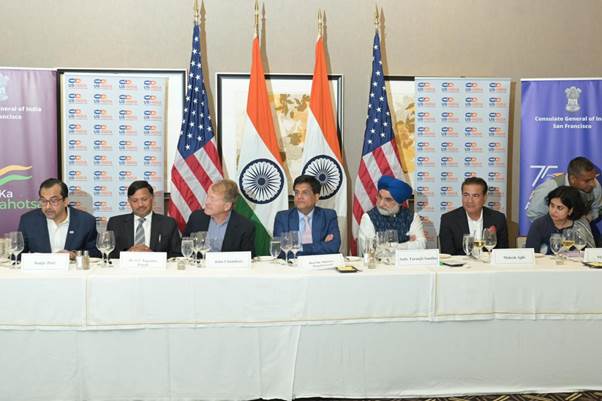
 The Union Minister of Commerce and Industry, Consumer Affairs, Food and Public Distribution and Textiles, Shri Piyush Goyal has said that India today provides the best investment opportunity to the investors across the world and called upon investors in the US to avail the opportunities that India offers stressing that the next 25 years, the golden period of Amrit Kaal is the appropriate time to invest in India. He said this while addressing the US India Strategic Partnership Forum (USISPF) in San Francisco.

Speaking on India-US relations, Shri Goyal said partnership between India-US partnership is a ‘Partnership of Trust’, which rests on 3Ts of Trade, Technology and Talent.  He noted that India-US relations are based on strong government to government engagement, people to people ties, large Indian diaspora, business to business relations, increasing bilateral trade, deep engagement in geopolitically relevant vibrant  Quad, Ministerial Dialogue, IPEF and robust trade policy forum. Reaffirming India’s commitment to working closely in areas of mutual interest, Shri Goyal said focus is on further expanding the India-US relationship.

Recognizing that India and the US are natural partners in terms of competitive advantages and opportunities they offer to each other, Shri Goyal spoke about the talent that India has provided to the US and  investment that the US has provided to India.  He asked US investors to share newer ideas, suggestions on taking the India-US relations to the next level. Noting that both countries share tremendous interest in the world which is peaceful, open to business, and believes in democracy, transparency, Shri Goyal asserted that the two countries can work collectively to promote global security, stability and resilient supply chains and a growing economy.

Stating that India’s credibility has strengthened across the world in last few years, Shri Goyal

mentioned that we have taken transformative reforms and structurally prepared the economy for higher degree of honest business, recognizing and respecting integrity in business processes, reducing compliance burden, decriminalisation of laws, respecting and trusting and honesty of business persons.

Highlighting that India is a much more open economy now, Shri Goyal pointed out that India is opening up discussions with countries on subjects that were never taken up before such as gender, environment, small and medium enterprises, labour and anti-corruption laws. We are committed to providing growth opportunities both for domestic and foreign investors, he added.

usisf

In his speech, Shri Goyal highlighted the fact that lots of innovation is taking place in different fields and new areas are opening up in India such as Artificial Intelligence, Big Data, E Commerce, Edutech, Fintech, Agritech and Healthtech. He sought suggestions and ideas to explore the engagement further in areas around textiles, geotextiles, technology for testing labs. 

Squid Game cryptocurrency scam, investers lose over Rs 15 Crore

 Squid Game cryptocurrency scam, investers lose over Rs 15 Crore

Netflix’s hit show, Squid Game inspired Cryptocurrency value turns zero many people lose their money because it was a scam.

HIGHLIGHTS

  • Squid Game cryptocurrency turned out to be a rug pull.
  • Creators of the crypto took the currency off the exchange in just about two weeks.
  • They are estimated to have made around Rs 15.3 crore.

Squid Game turned out to be a scam, after all. I am not talking about the blockbuster Netflix show that had the world hooked to it for weeks. I am referring to the eponymous cryptocurrency inspired by the series. The Squid cryptocurrency collapsed on Monday, but the hucksters who leveraged the popularity of the show managed to make off an estimated $2.1 million (roughly Rs 15.3 crore). After reaching a peak value of $2,861, according to CoinMarketCap, the currency tanked to just $0, and the investors lost all their money. Anonymous scammers made over $2.1 million before shutting the crypto project.

The SQUID crypto coin now trading at $0.003203, as reports CoinMarketCap.

The developers behind the crypto project have left the project after the price of its affiliated token crashed to nearly zero.

They claimed on its official Telegram channel that its developers do not want to continue running the project due to the stress of dealing with scammers.

The Ultimate Guide to Cryptocurrency


Want to be
a crypto expert? Well, I have got your back. Cryptocurrency is something that
everyone wants to talk about. But only a few of them know. So, let’s discuss cryptocurrency.

                                                              (Photo: The Economic Times)

Since man
evolved, the currency has become a part of our lives. Before the caveman used
the “Barter System”. In the barter system, a commodity was exchanged
for another commodity. However, the barter system fell out as it had some
flaws. Then the modern currency as we know it came into existence. In 110 BC,
an official currency was minted. In 1250 AD, gold-plated florins were
introduced. And in 1600 AD – 1900 AD, the paper currency gained popularity.
This is how modern currency came into existence. There’s a centralized
regulatory authority to limit the modern currency. Now imagine the scenario of
doing an online transaction. This transaction takes place successfully but
there are several ways this could have gone wrong like a technical issue,
account hack, or the transfer limit must have exceeded. This is why the future
of currency lies with cryptocurrency. 

Imagine a
transaction between two people in the future. One of them has the bitcoin app
and there’s a notification asking whether they are ready to transfer 5
Bitcoins. If yes, then processing takes place. All of this happens in a matter
of seconds. This in return removes all the flaws of modern banking. There’s no
limit to the funds which you can transfer, your accounts cannot get hacked and
there’s no central point of failure.

So,
cryptocurrency is a digital or virtual currency that is secured by
cryptography, which makes it nearly impossible to counterfeit. There are
thousands of cryptocurrencies. Cryptocurrency is quite similar to any physical
currency, it’s just that it does not has any physical embodiment.

Features of
Cryptocurrency:

1. There’s
a limit to how many units can exist.

2. Easily
verifies the transfer of funds.

3.
Operating independently of a bank.

4. Working
in a decentralized manner.

5. Allows
new units to be added only after certain conditions are met.

So, what
makes cryptocurrency so special?

1. Little
to no transaction cost.

2. 24/7
access to money.

3. No
limits on purchases and withdrawals.

4. Freedom
for anyone to use.

5. International
transactions are faster.

What’s the
“CRYPTO” in cryptocurrency?

Crypto
refers to cryptography. It is a method of using encryption and decryption to
secure communication in the presence of third parties with ill intent.
Cryptography usually requires a computational algorithm (like SHA256), a public
key (that the user shares with everyone), and a private key (which acts as a
digital signature of the user).

Now let’s
talk about a normal bitcoin transaction. First, you have the transaction
details. Now, these details who you want to send to and how many bitcoins you
want to send. Then it’s passed through a hashing algorithm. For Bitcoin, we use
the SHA256 algorithm. The outcome which you get is passed through a signature
algorithm with the user’s private key. This is used to uniquely identify the
user. This output is then distributed across the network with the sender’s
public key. The people who verify the transaction to check whether it’s valid
or not are known as MINERS. Now after this is done, the transactions are added
to the blockchain where they cannot be changed again.

Now let’s
talk about the biggest cryptocurrency. Not every crypto coin is good. The top
two are Bitcoin and Ether. The similarities between these two are:

1. They are
the biggest and most valuable cryptocurrencies.

2. Both of
them use blockchain and mine currency using proof of work.

3. Widely
used across the globe.

The
differences between these two are:

1. Bitcoin
is used to send money to someone. Ether is used as a currency in the Ethereum
network.

2. Bitcoin
transactions are manual. Ether transactions are manual or automatic.

3. Bitcoin
is slow. It takes 10 minutes to perform a transaction. Whereas, Ether is fast.
It takes about 20 seconds to perform a transaction.

4. Bitcoin
is used as money for real-world transactions. Ether is used to power the
Ethereum network and power real-life transactions.

5. Bitcoin
is used for transactions involving goods and services. Ether uses blockchain to
create a ledger that triggers a transaction when a condition is met.

6. Bitcoin
uses an algorithm known as SHA256 for hashing. Ethereum uses the Ethash
algorithm for hashing.

How to
invest in cryptocurrency?

Everything
in life involves risk and so does crypto. One needs to have proper knowledge to
start investing. The first thing which we need to do is to find a crypto
exchange. We need to do a detailed background check. Some of the popular
exchanges in India are Wazir X, Coin DCX, and Coin Switch Kuber. The next step
is to create an account. Once it gets created, we need to deposit the amount to
buy bitcoins. Then pick a crypto coin. And then you can get started.

The Future
of Cryptocurrency

Before
people used to invest in gold and real estate. With time, the return decreased.
It was only after this when cryptocurrency started rising. This digital coin has
very fast gained popularity mainly because of the support from billionaire
tycoons like Elon Musk, Jack Dorsey, and Michael Novogratz. More and more
people are getting drawn towards it especially after the pandemic. It has
gotten so high after the COVID happened. Lots of countries printed trillions of
dollars. Investors have doubled their amount. However, cryptocurrency is
predicted to face a conflict between regulation and anonymity. Futurists
believe that by 2030, cryptocurrencies would occupy 25% of national currencies.
There have also been demands to classify Bitcoin as an asset class in India.
India is currently on the cusp of the next phase of the digital revolution. And
blockchain and cryptocurrency will be an integral part of it.


Role of IBC in the credit sector


                                                                (Photo: SignalX)
As per the Reserve Bank of India (RBI), India’s banking sector is sufficiently capitalized and well – regulated. Credit, market and liquidity risk studies suggest that Indian banks are generally resilient and have withstood the global downturn well. The Indian economy is a mixed economy. It is known to be the world’s sixth largest in terms of nominal GDP. The legal environment plays a vital role in the economic development of a country.

After GST, IBC is the second most crucial reform in the legal setting of India. It was implemented through an act of Parliament. The law was necessitated due to huge pile up of non-performing loans of banks and delay in debt resolution. Insolvency resolution in India took 4.3 years on an average against other countries such as U.K (1 year) and U.S.A (1.5 years), which is sought to be reduced besides facilitating the resolution of big-ticket loan accounts. Two years on the IBC has succeeded in a large measure in preventing corporates from defaulting on their loans. The IBC process has changed the debtor-creditor relationship. A number of major cases have been resolved in two years, while some others are in advanced stages of resolution. 

With a strict 180+90 days ‘resolve-or-liquidate’ diktat, the Code has received commendation, not only from the Indian Industry, but from the global fraternity, including The World Bank and IMF, and has materially contributed to India’s 30 place jump in 2018’s Ease of Doing Business ranking. IBC truly enforces the concept of ‘creditor in control’ instead of ‘debtor in possession’, and maximize value recovery potential corporate debtors.  “Capitalism without Bankruptcy is like Catholicism without Hell,” said Frank Borman, renowned astronaut and erstwhile chairman of a failed US airline. As such, the institutions established by the state should promote freedom to start a business (entry), to run the business (level playing field) and to exit/discontinue the business. The reforms of the 1990s focused on freedom of entry (dismantling the license-quota raj) and then, from the beginning of this century, the focus shifted to freedom of continuing business. The third leg, which is freedom to exit, has now been provided in the shape of the IBC, to provide a mechanism to stressed businesses to resolve insolvency in an orderly manner.

The IBC seeks to consolidate scattered and unstructured jurisprudence on insolvency prevalent in various Acts, like the Presidency Towns Insolvency Act, 1909, Sick Industrial Companies Act, 1985, Limited Liability Partnership Act, 2008, Companies Act, 2013, etc. On the positive side, we have witnessed that debtors were reconciling with the ‘creditor in control’ scenario, with the committee of creditors (CoC) becoming all- powerful in the resolution process.

It was the first time that the government and Reserve Bank of India were on the same page for effective resolution of the problem of bad debt and improving overall financial discipline in the way business is conducted in India. As Nelson Mandela said, “I never lose; I either win or I learn.” The jury is still out on the IBC even though the World Bank has acknowledged the efforts.

WHAT IS INSOLVENCY AND BANKRUPTCY CODE, 2016?

“In One line we can say that in case of a default by the equity owners to meet their debt obligations, control is transferred to the creditors and equity owners take a back seat.”

The insolvency and Bankruptcy code, 2016 (IBC) is the bankruptcy law in India and whose aim is to consolidate the existing framework by creating a single law for insolvency and bankruptcy and amend the laws relating to the entities in India with the time being enforce. The consolidation of laws in India is not a new concept like GST was framed by consolidating 17 laws into one. This code was introduced in Lok Sabha in December 2015. It was passes by Lok Sabha on 5 May 2016. 

The purpose of this act can be divided into the following two goals:

 1. Making sure that the insolvency proceedings can be completed within a minimum amount of time.

 2. Making sure that the financial risks to the foreign investors is decreased.
Its primary goal was to consolidate insolvency resolution process for LLPs. Companies, individuals and partnerships.
 That being said, the purposes of these codes, being a part of The Companies (Amendment) Act 2017, are the following:

 1.  Establishing and amending the laws associated with reorganizing and resolving the insolvency of entities like partnership firms, individuals and corporate persons.

 2.  Providing resolution in a time bound manner.

3.  Promoting entrepreneurship in India.

4.  Maximizing the availability of credit in the Indian market.

5.  Establishing Insolvency and Bankruptcy Board in India.

The four pillars of supporting institutional infrastructure, to make the Insolvency and Bankruptcy Process work efficiently are:

  1. The regulator – The Insolvency and Bankruptcy Board of India (IBBI)
  2. Adjudicating Authority (AA):
    1. National Company Law Tribunal (NCLT) – For Corporate, i.e., Companies and Limited Liability Partnerships
    2. National Company Law Appellate Tribunal (NCLAT) will act as Appellate Authority.
    3. Debt Recovery Tribunal (DRT) – For Individuals and Unlimited Partnership Firms
  3. A private industry of Insolvency Professionals (IPs) with oversight by private Insolvency Professional Agencies (IPAs)
  4. A private industry of Information Utilities (Ius)

THE ROUTE TO THE IBC

The main objective of the act is to consolidate and amend the laws relating to reorganization and insolvency resolution of corporate persons, partnership firms and individuals in a time bound manner for maximization of value of assets of such persons, to promote entrepreneurship, availability of credit and balance the interests of all the stakeholders including alteration in the order of priority of payment of Government dues and to establish an Insolvency and Bankruptcy Board of India, and for matters connected therewith or incidental thereto.

IBC provides for a time-bound process to resolve insolvency. When a default in repayment occurs, creditors gain control over debtor’s assets and must make decisions to resolve insolvency. When a default in repayment occurs, creditors gain control over debtor’s assets and must make decisions to resolve insolvency. Under IBC, debtor and creditor both can start ‘recovery’proceedings against each other.


It is a comprehensive Code enacted as the Preamble states, to

“consolidate and amend the laws relating to reorganization and insolvency resolution of corporate persons, partnership firms and individuals in a time bound manner for maximization of value of assets of such persons, to promote entrepreneurship, availability of credit and balance the interests of all the stakeholders including alteration in the order of priority of payment of Government dues and to establish an Insolvency and Bankruptcy Board of India, and for matters connected therewith or incidental thereto”.

The Preamble clearly states that the legislative intent to incorporate this code is

Firstly, to remove the ambiguity that had been prevailing in the previous legislations;

Secondly, to prevent unnecessary delays and to ensure fast dismissal of matters, i.e., within 180 days;

Thirdly, to prevent loss to corporate creditors due to depreciation of assets of the insolvent company;

Fourthly, to establish a balance among the interests of the various stakeholders, and

Lastly, to create a common forum to deal with such matters.

IMPACT OF IBC

The Covid-19 pandemic has been driving corporate failures around the world, including in India. The global financial news reveals an increase in bankruptcies due to the Covid-19 induced global lockdowns. While the bankruptcies are unfortunate, a recognition of the bankruptcies facing companies in the face of the collapse and an efficient resolution of such bankruptcies (which will allow both the companies and creditors involved to move along) is vital to rejuvenating the economy.

 In the light of the Covid-19 pandemic and business failures globally, it is important that financially distressed companies can still access the credit market thanks to a strong bankruptcy system and survive under stressed scenarios. Using a panel of 33,845 non-financial firms for the period of 2008-19 and by exploiting a difference-in-differences analysis, a study has been undertaken revealing the impact of the IBC policy on the availability of long- and short-term financing for, and the cost of, credit of distressed firms as compared to their non-distressed counterparts. As in most emerging markets, India’s debt market is dominated by state-owned banks and the domestic credit to private sector by banks (percentage of GDP) is 50 per cent in 2019 compared to a world average of 90.5 per cent (Source: World Development Indicators). Recent statistics from World Bank’s Doing Business Data show the creditor rights index in India improving from 6 in 2014 to 9 in 2019 compared to the world average of 5.67 in 2019.

Bose et al. (2021) study shows that after the introduction of the IBC reform, the access to long-term debt increased by 6.3 per cent, short-term debt increased by 1.4 per cent, while the cost of borrowing declined for distressed firms. This is the first study that provides evidence on the impact of the IBC policy on the “credit channels” of distressed firms. The enactment of the code has helped to enforce discipline in the country’s credit culture. IBC has created a credit culture that discourages defaults. There has been a change in the business culture as well: there is now an understanding that when things go wrong, companies will not get an automatic rescue package from the taxpayer funds. The objective of IBC was to create conditions so that credit could be generated from the domestic market and investments drawn from the international market. In order to achieve those objectives, it was necessary to create a culture of deterrence against default. The practice of dragging lenders to court to delay the repayments of outstanding loans is slowly coming to an end. India’s Insolvency and Bankruptcy Code is ensuring that lenders get repaid on time and this is making India a more attractive investment destination.

IBC has played a great role in macroeconomic objectives providing India a strong stand in the global platform. After the enactment of the code, the FDI has substantially increased. In 2012-13, the FDI of India was 34298 US$ Million and just after enactment of the code it rose to 61463 US$ Million in 2017-18 which is growing by approximately 80%. There has been an increase in Mergers and Acquisitions activity in the country. It also led to the establishment of Information Utilities (IUs) which further accelerated the development of the credit market of India.

In previous, no law prevented the operational creditors but under the code, there is a provision that the operational creditors (domestic as well as international) have right to file suit against the default. Thus, the code provides right to the foreign creditors which will enhance the economic transactions of India and others.

 MEASURES TAKEN DUE TO COVID

The global COVID-19 pandemic and its consequential lockdown are having an economic ripple effect on the business of Indian citizens. To mitigate its impact, in the last tranche of economic reforms, the Central Government made numerous changes upon the Insolvency and Bankruptcy Code, 2016 (“IBC”), and its adjudicatory processes, which will have wide-ranging ramifications. In exercise of its powers under Section 4 of the IBC, the Central Government has raised the threshold for invoking insolvency to Rs 1 crore from the existing Rs 1 lakh. This provision will relegate MSMEs to civil remedies for debt recovery and may have an effect of excluding it under the IBC. At this cost, the amendment may have successfully addressed the issue of frivolous recovery claims initiated under the grab of insolvency processes due to the seemingly low original threshold of rupees one lakh.

The government has come up with IBC 2020 to streamline the CIRP, protect last-mile funding, and boost investment in financially distressed sectors. The changes put a threshold condition for initiating CIRP by the financial creditors, who are allottees under a real estate project. It also imports safeguards for successful bidders, the corporate debtors, and its assets from the offenses of the former promoters or management.

India took decades to implement such an effective insolvency regime and improve its global ranking of doing business. It promotes entrepreneurship and tries to balance the interest of the various stakeholders.

CONCLUSION

Resolving insolvency in a strict time bound manner is an important challenge for any country to maintain a healthy and robust economic system. This study has made an attempt to understand and analyze the impact of the IBC on the credit sector of the economy. The study emphasizes the fact that IBC is a big step in the direction of resolving the issues of Non-Performing Assets and hence will act to the rescue of banks which have been facing a lot of difficulties due to corporate defaults. The number of companies that have benefitted from this law is large, there has been improvement in the speed as well as the success rate of the resolution process.

There is still a long way to go ahead and as the saying goes,

“We have to acknowledge the progress we made, but understand that we still have a long way to go. That things are better, but still not good enough.”


 

Benefits of Investing in Mutual Funds in India


(Photo: Bank Bazar)

Investment in any form is considered to be the best way of achieving additional income. It’s like waiting for an extra reward. One such word with which we all are familiar is “equity mutual funds”.There’s a large structural growth in equity mutual funds for Indian industries.  The Indian Mutual Fund AUM/GDP ratio currently stands at 12% vis-à-vis the global average of 60%.

India has seen a significant growth rate in equity mutual funds investment. Indian investors are usually keen on investing in equity mutual funds because of the risk management. Investing in mutual funds has many advantages. Let’s discuss them briefly. 

  •       Return:  Mutual funds involves higher risk but generally the return that it gives is greater than in any other investment plan.
  • Ø  Professional Management: Even a person who does not have professional knowledge can invest. They are assured by the experts. The experts manage and operate mutual funds. They allocate it in different securities thereby assuring them profit.
  • Ø  Flexibility in Investment amount: There’s no fixed amount to be invested. You can invest even with a minimal amount of Rs 100. This is the most important benefit which the investors get in equity mutual funds.
  • Ø  Liquidity: This is also another benefit of investing in mutual funds. It’s not like fixed deposit where you are unable to withdraw amount at any point. You can redeem it at any point. Mutual funds have flexible withdrawal.
  • Ø  Safety & Transparency: All the equity mutual funds have now become safe and transparent after the introduction of SEBI guidelines. They’ve a color coding through which the investors can assess the risk level.
  • Ø  Diversification: Diversification is another factor which reduces the risk involved in building a portfolio.  Mutual Funds consist of many securities, so investor’s interests are safeguarded if there is a downfall in other securities purchased.
  • Ø  Accessibility: Mutual Funds are easily accessible. By accessibility, it means that you can buy mutual funds from anywhere in the world. You don’t require a Demat account for it. Mutual funds are very easy to buy.
  • Ø  Lower cost: In Mutual Fund, funds are collected from many investors, and then the same is used to purchase securities. These funds are however invested in assets which therefore helps one save on transaction and lower its cost. Investors get the savings as lower costs of investing in Mutual Funds.

Mutual Fund is a strong financial tool which has helped in increasing the growth of Indian economy. Mutual Fund have provided financial stability to the Indian economy. The Indian capital market has been increasing significantly during last few years. With the Industrial revolution and reforms of financial sector, the economy has been opened up and many developments have been taking place in the Indian money market and capital market. In order to help the small investors, mutual fund industry has come to occupy an important place in the Indian market.

Although there are many benefits of investing in mutual funds in India, but we must remember that every good thing comes with some flaws. The market condition is very dynamic. Not anyone can invest in mutual funds. One needs to have a proper knowledge to do that.  However, one thing which is certain is that there’s no harm in it. India still has many steps to climb.