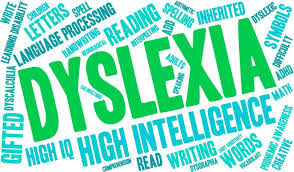
What is Dyslexia? – Student's Problems

Hello Friends !.. . Take a moment to read the following. How was that? Frustrating? Slow? What were those sentences about? They’re actually a simulation of the experience of dyslexia, designed to make you decode each word. Those with dyslexia experience that laborious pace every time they read. When most people think of dyslexia, they think of seeing letters and words backwards, like seeing “b” as “d” and vice versa, or they might think people with dyslexia see “saw” as “was”. The truth is people with dyslexia see things the same way as everyone else. 

Dyslexia is caused by a phonological processing problem, meaning people affected by it have trouble not with seeing language but with manipulating it. For example, if you heard the word cat and then someone asked you, “Remove the ‘c’,” what word would you have left? At. This can be difficult for those with dyslexia. Given a word in isolation, like fantastic, students with dyslexia need to break the word into parts to read it: fan, tas, tic. Time spent decoding makes it hard to keep up with peers and gain sufficient comprehension. Spelling words phonetically, like s-t-i-k for stick and f-r-e-n-s for friends is also common. These difficulties are more widespread and varied than commonly imagined. Dyslexia affects up to one in five people. It occurs on a continuum.

One person might have mild dyslexia while the next person has a profound case of it. Dyslexia also runs in families. It’s common to see one family member who has trouble spelling while another family member has severe difficulty decoding even one syllable words, like catch. The continuum and distribution of dyslexia suggests a broader principle to bear in mind as we look at how the brains of those with dyslexia process language. 

Neurodiversity is the idea that because all our brains show differences in structure and function, we shouldn’t be so quick to label every deviation from “the norm” as a pathological disorder or dismiss people living with these variations as “defective.” People with neurobiological variations like dyslexia, including such creative and inventive individuals as Picasso, Muhammad Ali, Whoopi Goldberg, Steven Spielberg, and Cher, clearly have every capacity to be brilliant and successful in life. So, here’s the special way the brains of those with dyslexia work. 

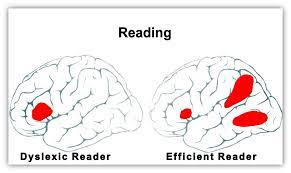
The brain is divided into two hemispheres. The left hemisphere is generally in charge of language and, ultimately, reading, while the right typically handles spatial activities. fMRI studies have found that the brains of those with dyslexia rely more on the right hemisphere and frontal lobe than the brains of those without it. This means, when they read a word, it takes a longer trip through their brain and can get delayed in the frontal lobe. Because of this neurobiological glitch, they read with more difficulty.’

 But those with dyslexia can physically change their brain and improve their reading with an intensive, multi-sensory intervention that breaks the language down and teaches the reader to decode based on syllable types and spelling rules. The brains of those with dyslexia begin using the left hemisphere more efficiently while reading, and their reading improves. 

The intervention works because it locates dyslexia appropriately as a functional variation in the brain, which, naturally, shows all sorts of variations from one person to another. Neurodiversity emphasizes this spectrum of brain function in all humans and suggests that to better understand the perspectives of those around us, we should try not only to see the world through their eyes but understand it through their brains.

What is Dyslexia? – Student's Problems

Hello Friends !.. . Take a moment to read the following. How was that? Frustrating? Slow? What were those sentences about? They’re actually a simulation of the experience of dyslexia, designed to make you decode each word. Those with dyslexia experience that laborious pace every time they read. When most people think of dyslexia, they think of seeing letters and words backwards, like seeing “b” as “d” and vice versa, or they might think people with dyslexia see “saw” as “was”. The truth is people with dyslexia see things the same way as everyone else. 

Dyslexia is caused by a phonological processing problem, meaning people affected by it have trouble not with seeing language but with manipulating it. For example, if you heard the word cat and then someone asked you, “Remove the ‘c’,” what word would you have left? At. This can be difficult for those with dyslexia. Given a word in isolation, like fantastic, students with dyslexia need to break the word into parts to read it: fan, tas, tic. Time spent decoding makes it hard to keep up with peers and gain sufficient comprehension. Spelling words phonetically, like s-t-i-k for stick and f-r-e-n-s for friends is also common. These difficulties are more widespread and varied than commonly imagined. Dyslexia affects up to one in five people. It occurs on a continuum.

One person might have mild dyslexia while the next person has a profound case of it. Dyslexia also runs in families. It’s common to see one family member who has trouble spelling while another family member has severe difficulty decoding even one syllable words, like catch. The continuum and distribution of dyslexia suggests a broader principle to bear in mind as we look at how the brains of those with dyslexia process language. 

Neurodiversity is the idea that because all our brains show differences in structure and function, we shouldn’t be so quick to label every deviation from “the norm” as a pathological disorder or dismiss people living with these variations as “defective.” People with neurobiological variations like dyslexia, including such creative and inventive individuals as Picasso, Muhammad Ali, Whoopi Goldberg, Steven Spielberg, and Cher, clearly have every capacity to be brilliant and successful in life. So, here’s the special way the brains of those with dyslexia work. 

The brain is divided into two hemispheres. The left hemisphere is generally in charge of language and, ultimately, reading, while the right typically handles spatial activities. fMRI studies have found that the brains of those with dyslexia rely more on the right hemisphere and frontal lobe than the brains of those without it. This means, when they read a word, it takes a longer trip through their brain and can get delayed in the frontal lobe. Because of this neurobiological glitch, they read with more difficulty.’

 But those with dyslexia can physically change their brain and improve their reading with an intensive, multi-sensory intervention that breaks the language down and teaches the reader to decode based on syllable types and spelling rules. The brains of those with dyslexia begin using the left hemisphere more efficiently while reading, and their reading improves. 

The intervention works because it locates dyslexia appropriately as a functional variation in the brain, which, naturally, shows all sorts of variations from one person to another. Neurodiversity emphasizes this spectrum of brain function in all humans and suggests that to better understand the perspectives of those around us, we should try not only to see the world through their eyes but understand it through their brains.

What is Dyslexia? – Student's Problems

Hello Friends !.. . Take a moment to read the following. How was that? Frustrating? Slow? What were those sentences about? They’re actually a simulation of the experience of dyslexia, designed to make you decode each word. Those with dyslexia experience that laborious pace every time they read. When most people think of dyslexia, they think of seeing letters and words backwards, like seeing “b” as “d” and vice versa, or they might think people with dyslexia see “saw” as “was”. The truth is people with dyslexia see things the same way as everyone else. 

Dyslexia is caused by a phonological processing problem, meaning people affected by it have trouble not with seeing language but with manipulating it. For example, if you heard the word cat and then someone asked you, “Remove the ‘c’,” what word would you have left? At. This can be difficult for those with dyslexia. Given a word in isolation, like fantastic, students with dyslexia need to break the word into parts to read it: fan, tas, tic. Time spent decoding makes it hard to keep up with peers and gain sufficient comprehension. Spelling words phonetically, like s-t-i-k for stick and f-r-e-n-s for friends is also common. These difficulties are more widespread and varied than commonly imagined. Dyslexia affects up to one in five people. It occurs on a continuum.

One person might have mild dyslexia while the next person has a profound case of it. Dyslexia also runs in families. It’s common to see one family member who has trouble spelling while another family member has severe difficulty decoding even one syllable words, like catch. The continuum and distribution of dyslexia suggests a broader principle to bear in mind as we look at how the brains of those with dyslexia process language. 

Neurodiversity is the idea that because all our brains show differences in structure and function, we shouldn’t be so quick to label every deviation from “the norm” as a pathological disorder or dismiss people living with these variations as “defective.” People with neurobiological variations like dyslexia, including such creative and inventive individuals as Picasso, Muhammad Ali, Whoopi Goldberg, Steven Spielberg, and Cher, clearly have every capacity to be brilliant and successful in life. So, here’s the special way the brains of those with dyslexia work. 

The brain is divided into two hemispheres. The left hemisphere is generally in charge of language and, ultimately, reading, while the right typically handles spatial activities. fMRI studies have found that the brains of those with dyslexia rely more on the right hemisphere and frontal lobe than the brains of those without it. This means, when they read a word, it takes a longer trip through their brain and can get delayed in the frontal lobe. Because of this neurobiological glitch, they read with more difficulty.’

 But those with dyslexia can physically change their brain and improve their reading with an intensive, multi-sensory intervention that breaks the language down and teaches the reader to decode based on syllable types and spelling rules. The brains of those with dyslexia begin using the left hemisphere more efficiently while reading, and their reading improves. 

The intervention works because it locates dyslexia appropriately as a functional variation in the brain, which, naturally, shows all sorts of variations from one person to another. Neurodiversity emphasizes this spectrum of brain function in all humans and suggests that to better understand the perspectives of those around us, we should try not only to see the world through their eyes but understand it through their brains.

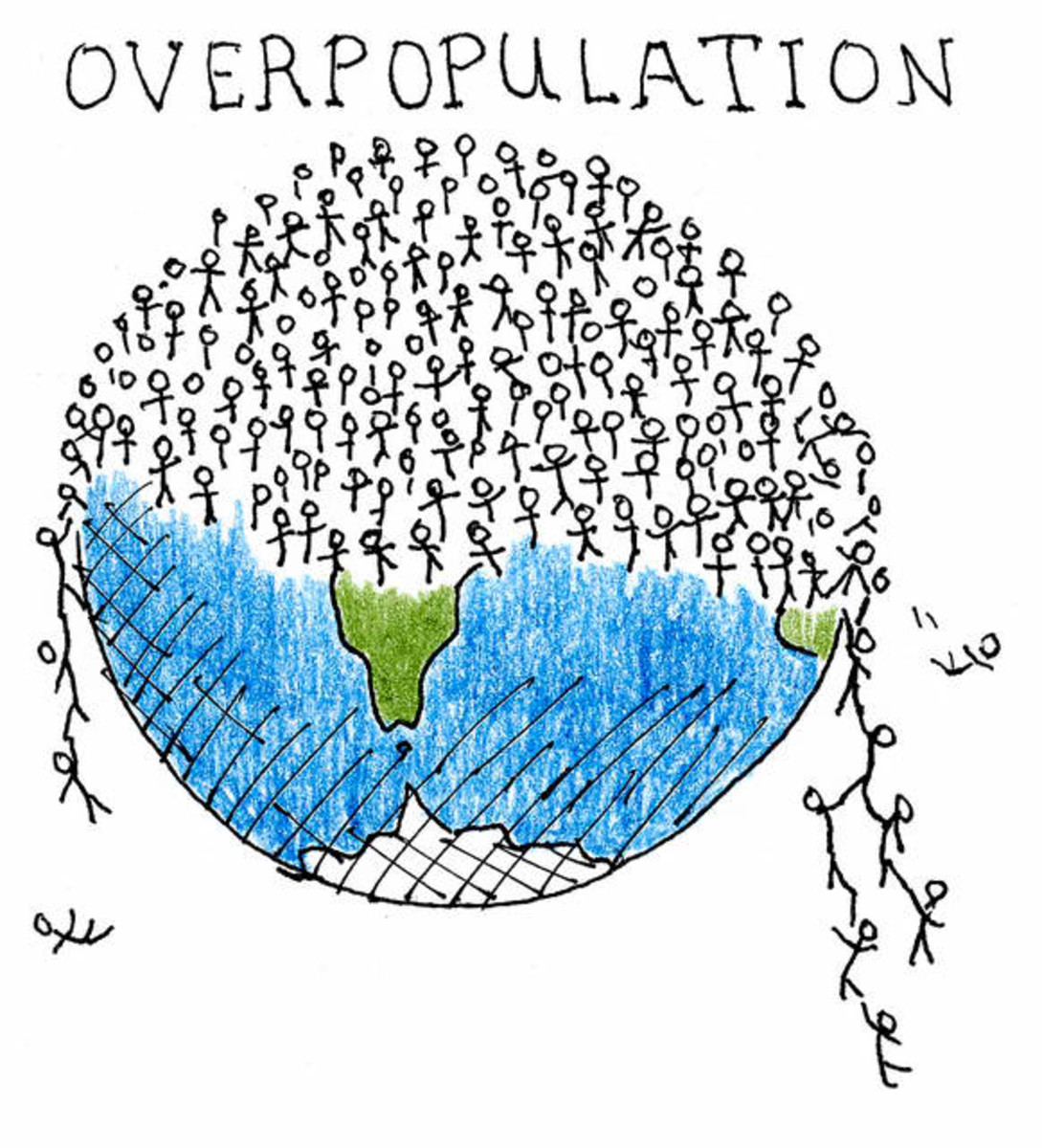
Overpopulation – The Human Explosion

Never before in history, have there been so many people on Earth as right now. Our numbers have skyrocketed, from 1 billion in 1800, to 2.3 billion in 1940, 3.7 billion in 1970, and 7.4 billion in 2016. The world population increased fourfold in the last century, so what can we expect for the next century? And what does population growth mean for our future? Will there be mass-migration? Overcrowded slums and megacities covering continents? Diseases and pollution? Chaos and violence over energy, water, and food? And a human species focused only on sustaining itself? Will population growth destroy our way of life? Or is this prophecy just ungrounded panic? In the 1960s population growth reached an unprecedented rate. Which lead to apocalyptic prophecies. 

The poor would pro-create endlessly and overrun the developed world. The legend of overpopulation was born. But it turns out high birth rates and the population explosion are not permanent features of some cultures or countries, But rather a part of a four step process the whole world is going through, The demographic transition. Most developed countries have already made the transition, while other countries are doing it right now. Let’s go back to the 18th century, when the entire world, including Europe, was in the first stage of the demographic transition. By today’s standards, Europe was worse off, than a developing region, suffering from poor sanitation, poor diets, and poor medicine. 

A lot of people were born, but lots of them died just as fast, so the population hardly grew. Women had between 4 and 6 children, but only 2 of them would reach adulthood. Then the industrial revolution happened in the UK and bought the greatest change in human living conditions since the agricultural revolution. People went from being peasants to workers. Manufactured goods were mass produced and became widely available. The sciences flourished and advanced transportation, communication, and medicine. The role of women in society shifted and created the conditions for their emancipation. Slowly this economic progress not only formed a middle class, but also raised standards of living and health care for the poor working population. The second transition stage started. 

Better food supplies, hygiene and medicine, meant people stopped dying all the time, especially so, at a very young age. The result was a population explosion. Doubling the UK’s population between 1750 and 1850. The main reasons families used to have lots of children was that only a few of them were likely to survive. Now that had changed, so the third stage of transition was set in motion. Fewer babies were conceived, and population growth slowed down. Eventually a balance emerged, fewer people were dying and fewer children were born, so the death rate and birth rate became stable. 

Britain had reached the fourth stage of the demographic transition. This didn’t only happen in the UK, more and more countries went through the four stages. First, many births and many deaths due to bad living conditions. Second, better living conditions leading to fewer deaths and a population explosion. Third, fewer deaths resulting in fewer births, and population growth came to an end. But if birth rates have dropped so much, why is the population still growing so fast? Well, the children born in the population explosion of the 70s and 80s are having kids themselves now. Leading to a noticeable spike in overall population. But they are having far fewer children on average than their parents.

 The average today is 2.5, it was 5, 40 years ago. So as this generation gets older, and fertility declines further, the rate of population growth will keep on slowing. This is true for every country. In the west, we tend to overlook progress in other regions of the world. But actually most of the world’s countries have made it to the fourth stage. Just look at Bangladesh. In 1971, the average woman had 7 kids, but 25% of them would die before the age of 5. In 2015, the mortality rate was down to 3.8% and women had only 2.2 kids on average. This is the rule, not an exception, we’re not special, we just had a head start. It took developed countries about 80 years to reduce fertility from more than 6 children, to less than 3. Others are catching up fast. 

Malaysia and South Africa did it in only 34 years; Bangladesh took just 20. Iran managed it in 10 years. All these countries that are catching up didn’t have to start from scratch and the more support they get, the faster they catch up. This is why programs that help lower child mortality or help poor nations develop, are so important, No matter what your motivation is, whether you dream of a world where all people live in freedom and wealth, or you just want fewer refugees coming into your country, 

The simple truth is, that it’s beneficial to you personally if people on the other side of the globe can live a good life. And we are getting there, the percentage of people living in extreme poverty has never been as low as today. So the future of global population growth is not an apocalyptic prophecy, it’s a promise! Population growth will come to an end. The UN forecasts that the 12th billionth human will never be born at all. And as the development level of the world rises, the number of people a higher education will increase tenfold. Countries who used to be a need, will help advance development instead. More people is going to mean more people able to advance our species.

India's Best School – Ratnavati School In Rajasthan

Hello, friends! In terms of historical architecture, I consider Rajasthan to be the most beautiful state of India. Here, you can find forts, palaces and mansions each more grand and beautiful than the last. This state is also rich culturally. The folk dance and folk music here and the Rajasthani cuisine, they’re all unparalleled. As well as the lakes, desert, camel safari. So it’s not surprising that Rajasthan is a very popular tourist destination for foreigners. But behind this facade of beauty, lies a harsh truth. Friends, Rajasthan is the worst state in the country in terms of female literacy. Only 57% of the females in the entire state are literate. They can read and write. Do you know the name of the country we’re living in? Country, as in? Do you know which country we live in? Which country do we live in? 

Rajasthan. Because of female illiteracy, female unemployment is also very high. According to a study, 73% of women in Rajasthan are jobless. Do you teach this to your children? So you teach it to your daughter.  You don’t teach it to your son. Why? Because my daughter will have to do these chores. Many people hide this bitter truth with a veil. And look the other way. But there are some brave people who try to bring about a change. In Rajasthan’s Jaisalmer, one such change was successfully introduced. Come, the Gem of India is not an individual. 

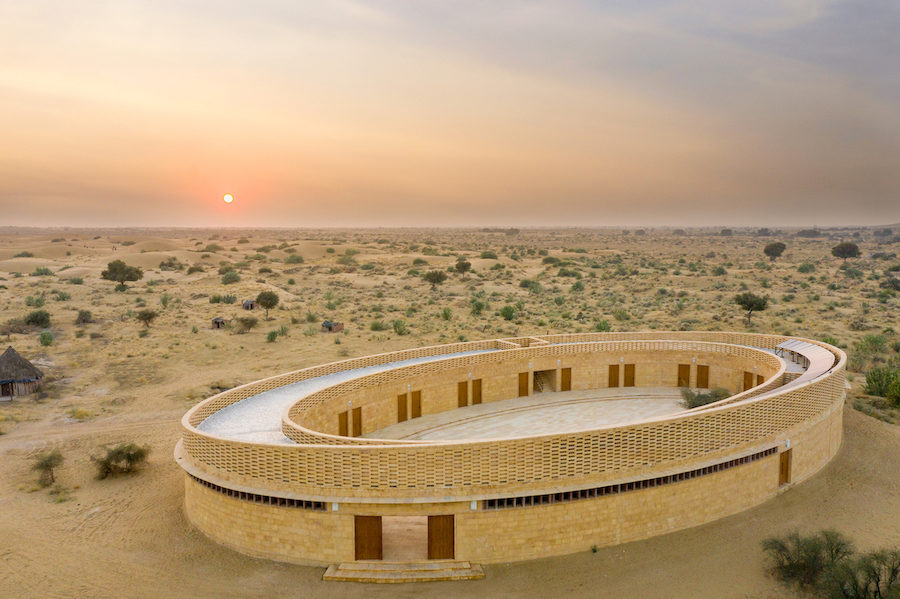
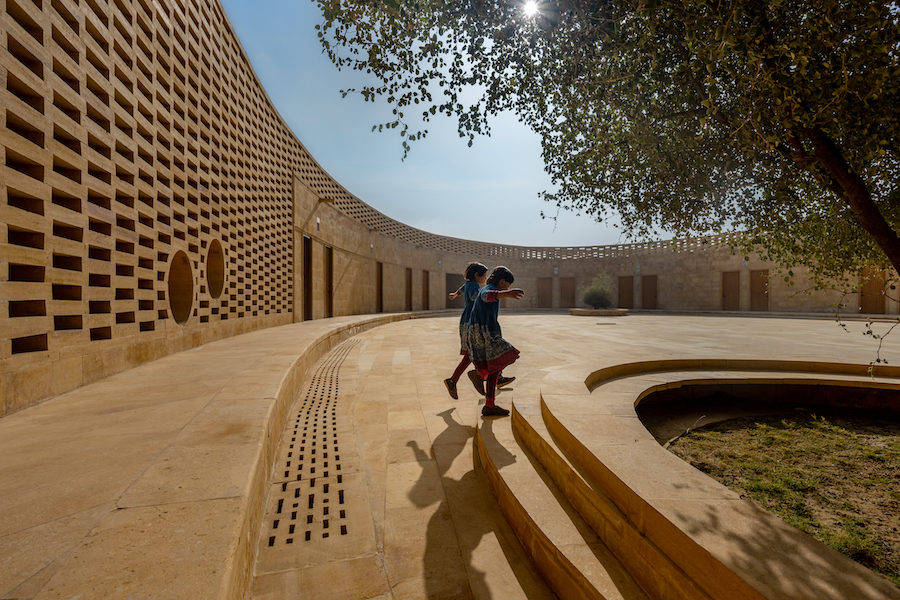
It is a school building. About 40 km from the city of Jaisalmer, there is a popular tourist spot known as Sam Sand Dunes. A few kilometres before this Sam desert, there is a village. This new school is built near this village. What’s special about the school is that not only is it a completely free school, to educate girls from below the poverty line, but the building of this school is also an architecture marvel. Look at this building. Look, at how beautiful it is. It is built in a futuristic-modern style. The building also looks minimalistic. Additionally, the traditional architecture of Rajasthan has also been used in it. To top it all, this is a sustainable building. There are solar panels on the roof of this building. There are no ACs inside. Instead, traditional architecture is used in the building in such a way that the stones used to build it, will keep it cool from the inside. And the design of this building, will help to cool down the interiors. Who built this school? And how? .

There’s a non-profit organisation, CITTA. Its founder is Michael Daube. He had a dream to build a school like this. So really it’s kind of, it didn’t happen like an epiphany, but it did mould like a chess game. It was kind of like realising ‘in the next 20 moves, what’s gonna happen?’ and really kinda mapping out the ripple effects of this. Talking about implementing dreams, the supervisor of this project is Chahat Jain. When our reporter Vijeta Dahiya was on site to film this school, the school hadn’t opened up then. At least, hadn’t completely opened up. Teachers were being recruited. For Class 1 through Class 10th. The plan is, there will be 40 girls in each class, in total, 40 x 10 400 girls would be given free education in this school. Everything will be free. Their transport facility. The transport from their homes to the school and back will be free. Their education. Their books and uniforms will be free. They would also get free lunch at school. About the curriculum of the school, Chahat has experience in handling several such projects. 

So, keeping holistic development in the forefront, he has designed a curriculum for the girls. Things like the local textile, singing, dance forms we included these in the curriculum so that the children can be proud of their heritage and the slowly fizzling out artforms can be protected and revived. It will be a holistic development of the child. It also includes computer skills, third languages that a child should normally know. To fulfill this dream, Michael had local support as well. Like, the support of Chaitanya Raj Singh Bhati who belongs to the erstwhile Royal family of Jaisalmer. And his mother, Mrs Raseshwari Rajya Laxmi was also on the Board of Directors of the CITTA India. Another member of the Board of Directors is Manvendra Singh Shekhawat. He is a hotelier. And a co-founder of the NGO I Love Jaisalmer.

 It was Manvendra who had contributed the land to build this school. While doing so, he had put forth a condition to the architect, that two berry bushes that were there, should not be harmed. They shouldn’t be removed. And the school should be built around them. Now at the centre of the school, those two berry bushes are proudly thriving. The architect used lime for the walls of the school. And the ceiling has been raised quite a bit. And windows at placed near the top. All these things improve air circulation. And the temperature remains cool inside. Not only solar panels are installed on the roof for generating electricity, but there is also a rainwater harvesting system in this building. It is a wholesome package of Sustainability and Eco-friendliness. The architect of this building is Diana Kellogg. And impressively, she didn’t charge anything for designing this building. Same with the costume designer.

 The costume designer that designed the uniforms for the girls, did not charge for this. To design the uniforms, what he did was that he went in and found local textiles like Ajrakh. Then it’s an age-old It’s one of the oldest block printing techniques in the world, and most complex. It’s one thing to design a building. But to actually build it with the design is the biggest challenge. And many local contractors refused to work on it. Because they looked at this complicated design and it was unlike anything they had ever done before so they decided to not do it. After a long search they found one contractor. Karim Khan. He implemented this plan and made it possible in real life. He helped in its building. This place is in the middle of a desert. There’s nothing around. It took us 2 years to build this. We used to work here even at 50°C temperatures. We had to carry food and water with us. One couldn’t find anything for miles here. This was a challenge for us. How could the girls study in those conditions? That’s why we build this school. So Diana and Karim Khan coordinated and local labourers were employed for this project and finally, this building was completed within one year. Once the school was built, Parag Ji takes care of the security of the school. And Raju Ji and Mange Khan see to the cleanliness of the school. From Michael to Raju this is the entire team that is enabling this dream to come true. After the school was ready their team carried out publicity of the school in the nearby villages.

 And the Chief of the nearby village also joined the CITTA team. We conducted a small event on behalf of the school, on behalf of the school’s management on behalf of Mr Shekhawat and the other members of the Board. Distributing ice cream among kids, that was really successful. Then we had another event on Republic Day, Many villagers attended that, adults as well as kids, We had a magic show there. The magic show was a huge success. It was great, all of us enjoyed it. 

How can someone sleep on a cloud? To make this whole project possible the money came through charitable donations. As I said, this is an NGO. You too can donate to it if you want to. They claim that all contributions are used for the education of the girls. The link to donate will be in the description below, in case you’re interested. We’re giving free education to the girls. They’ll get food and a uniform as well. The medium of instruction will be English. Teachers will come from Jaisalmer. The kids will be picked up and dropped off at home. That’s about the school. Now we want that the women in the neighbourhood of our students, like you their mother or their elder sister, we want to do something for them as well. Two more buildings are being built like the school building In it, we will provide training to women. Like what your mother-in-law was working on. 

You will get to learn something new. And we’ll even pay you for learning. Since you’ll work hard to learn. So we intend to support the women and girls around here. The most exciting thing is that, friends, while only one building has been built by now, but in reality, this entire project, called the Gyaan Centre, three buildings will be built in total. The two other buildings are yet to be built. Here, in the computer animation, you can see how the other two buildings will look. In one of the buildings, there will be a Women’s Cooperative. 

India's Best School – Ratnavati School In Rajasthan

Hello, friends! In terms of historical architecture, I consider Rajasthan to be the most beautiful state of India. Here, you can find forts, palaces and mansions each more grand and beautiful than the last. This state is also rich culturally. The folk dance and folk music here and the Rajasthani cuisine, they’re all unparalleled. As well as the lakes, desert, camel safari. So it’s not surprising that Rajasthan is a very popular tourist destination for foreigners. But behind this facade of beauty, lies a harsh truth. Friends, Rajasthan is the worst state in the country in terms of female literacy. Only 57% of the females in the entire state are literate. They can read and write. Do you know the name of the country we’re living in? Country, as in? Do you know which country we live in? Which country do we live in? 

Rajasthan. Because of female illiteracy, female unemployment is also very high. According to a study, 73% of women in Rajasthan are jobless. Do you teach this to your children? So you teach it to your daughter.  You don’t teach it to your son. Why? Because my daughter will have to do these chores. Many people hide this bitter truth with a veil. And look the other way. But there are some brave people who try to bring about a change. In Rajasthan’s Jaisalmer, one such change was successfully introduced. Come, the Gem of India is not an individual. 

It is a school building. About 40 km from the city of Jaisalmer, there is a popular tourist spot known as Sam Sand Dunes. A few kilometres before this Sam desert, there is a village. This new school is built near this village. What’s special about the school is that not only is it a completely free school, to educate girls from below the poverty line, but the building of this school is also an architecture marvel. Look at this building. Look, at how beautiful it is. It is built in a futuristic-modern style. The building also looks minimalistic. Additionally, the traditional architecture of Rajasthan has also been used in it. To top it all, this is a sustainable building. There are solar panels on the roof of this building. There are no ACs inside. Instead, traditional architecture is used in the building in such a way that the stones used to build it, will keep it cool from the inside. And the design of this building, will help to cool down the interiors. Who built this school? And how? .

There’s a non-profit organisation, CITTA. Its founder is Michael Daube. He had a dream to build a school like this. So really it’s kind of, it didn’t happen like an epiphany, but it did mould like a chess game. It was kind of like realising ‘in the next 20 moves, what’s gonna happen?’ and really kinda mapping out the ripple effects of this. Talking about implementing dreams, the supervisor of this project is Chahat Jain. When our reporter Vijeta Dahiya was on site to film this school, the school hadn’t opened up then. At least, hadn’t completely opened up. Teachers were being recruited. For Class 1 through Class 10th. The plan is, there will be 40 girls in each class, in total, 40 x 10 400 girls would be given free education in this school. Everything will be free. Their transport facility. The transport from their homes to the school and back will be free. Their education. Their books and uniforms will be free. They would also get free lunch at school. About the curriculum of the school, Chahat has experience in handling several such projects. 

So, keeping holistic development in the forefront, he has designed a curriculum for the girls. Things like the local textile, singing, dance forms we included these in the curriculum so that the children can be proud of their heritage and the slowly fizzling out artforms can be protected and revived. It will be a holistic development of the child. It also includes computer skills, third languages that a child should normally know. To fulfill this dream, Michael had local support as well. Like, the support of Chaitanya Raj Singh Bhati who belongs to the erstwhile Royal family of Jaisalmer. And his mother, Mrs Raseshwari Rajya Laxmi was also on the Board of Directors of the CITTA India. Another member of the Board of Directors is Manvendra Singh Shekhawat. He is a hotelier. And a co-founder of the NGO I Love Jaisalmer.

 It was Manvendra who had contributed the land to build this school. While doing so, he had put forth a condition to the architect, that two berry bushes that were there, should not be harmed. They shouldn’t be removed. And the school should be built around them. Now at the centre of the school, those two berry bushes are proudly thriving. The architect used lime for the walls of the school. And the ceiling has been raised quite a bit. And windows at placed near the top. All these things improve air circulation. And the temperature remains cool inside. Not only solar panels are installed on the roof for generating electricity, but there is also a rainwater harvesting system in this building. It is a wholesome package of Sustainability and Eco-friendliness. The architect of this building is Diana Kellogg. And impressively, she didn’t charge anything for designing this building. Same with the costume designer.

 The costume designer that designed the uniforms for the girls, did not charge for this. To design the uniforms, what he did was that he went in and found local textiles like Ajrakh. Then it’s an age-old It’s one of the oldest block printing techniques in the world, and most complex. It’s one thing to design a building. But to actually build it with the design is the biggest challenge. And many local contractors refused to work on it. Because they looked at this complicated design and it was unlike anything they had ever done before so they decided to not do it. After a long search they found one contractor. Karim Khan. He implemented this plan and made it possible in real life. He helped in its building. This place is in the middle of a desert. There’s nothing around. It took us 2 years to build this. We used to work here even at 50°C temperatures. We had to carry food and water with us. One couldn’t find anything for miles here. This was a challenge for us. How could the girls study in those conditions? That’s why we build this school. So Diana and Karim Khan coordinated and local labourers were employed for this project and finally, this building was completed within one year. Once the school was built, Parag Ji takes care of the security of the school. And Raju Ji and Mange Khan see to the cleanliness of the school. From Michael to Raju this is the entire team that is enabling this dream to come true. After the school was ready their team carried out publicity of the school in the nearby villages.

 And the Chief of the nearby village also joined the CITTA team. We conducted a small event on behalf of the school, on behalf of the school’s management on behalf of Mr Shekhawat and the other members of the Board. Distributing ice cream among kids, that was really successful. Then we had another event on Republic Day, Many villagers attended that, adults as well as kids, We had a magic show there. The magic show was a huge success. It was great, all of us enjoyed it. 

How can someone sleep on a cloud? To make this whole project possible the money came through charitable donations. As I said, this is an NGO. You too can donate to it if you want to. They claim that all contributions are used for the education of the girls. The link to donate will be in the description below, in case you’re interested. We’re giving free education to the girls. They’ll get food and a uniform as well. The medium of instruction will be English. Teachers will come from Jaisalmer. The kids will be picked up and dropped off at home. That’s about the school. Now we want that the women in the neighbourhood of our students, like you their mother or their elder sister, we want to do something for them as well. Two more buildings are being built like the school building In it, we will provide training to women. Like what your mother-in-law was working on. 

You will get to learn something new. And we’ll even pay you for learning. Since you’ll work hard to learn. So we intend to support the women and girls around here. The most exciting thing is that, friends, while only one building has been built by now, but in reality, this entire project, called the Gyaan Centre, three buildings will be built in total. The two other buildings are yet to be built. Here, in the computer animation, you can see how the other two buildings will look. In one of the buildings, there will be a Women’s Cooperative. 

India's Best School – Ratnavati School In Rajasthan

Hello, friends! In terms of historical architecture, I consider Rajasthan to be the most beautiful state of India. Here, you can find forts, palaces and mansions each more grand and beautiful than the last. This state is also rich culturally. The folk dance and folk music here and the Rajasthani cuisine, they’re all unparalleled. As well as the lakes, desert, camel safari. So it’s not surprising that Rajasthan is a very popular tourist destination for foreigners. But behind this facade of beauty, lies a harsh truth. Friends, Rajasthan is the worst state in the country in terms of female literacy. Only 57% of the females in the entire state are literate. They can read and write. Do you know the name of the country we’re living in? Country, as in? Do you know which country we live in? Which country do we live in? 

Rajasthan. Because of female illiteracy, female unemployment is also very high. According to a study, 73% of women in Rajasthan are jobless. Do you teach this to your children? So you teach it to your daughter.  You don’t teach it to your son. Why? Because my daughter will have to do these chores. Many people hide this bitter truth with a veil. And look the other way. But there are some brave people who try to bring about a change. In Rajasthan’s Jaisalmer, one such change was successfully introduced. Come, the Gem of India is not an individual. 

It is a school building. About 40 km from the city of Jaisalmer, there is a popular tourist spot known as Sam Sand Dunes. A few kilometres before this Sam desert, there is a village. This new school is built near this village. What’s special about the school is that not only is it a completely free school, to educate girls from below the poverty line, but the building of this school is also an architecture marvel. Look at this building. Look, at how beautiful it is. It is built in a futuristic-modern style. The building also looks minimalistic. Additionally, the traditional architecture of Rajasthan has also been used in it. To top it all, this is a sustainable building. There are solar panels on the roof of this building. There are no ACs inside. Instead, traditional architecture is used in the building in such a way that the stones used to build it, will keep it cool from the inside. And the design of this building, will help to cool down the interiors. Who built this school? And how? .

There’s a non-profit organisation, CITTA. Its founder is Michael Daube. He had a dream to build a school like this. So really it’s kind of, it didn’t happen like an epiphany, but it did mould like a chess game. It was kind of like realising ‘in the next 20 moves, what’s gonna happen?’ and really kinda mapping out the ripple effects of this. Talking about implementing dreams, the supervisor of this project is Chahat Jain. When our reporter Vijeta Dahiya was on site to film this school, the school hadn’t opened up then. At least, hadn’t completely opened up. Teachers were being recruited. For Class 1 through Class 10th. The plan is, there will be 40 girls in each class, in total, 40 x 10 400 girls would be given free education in this school. Everything will be free. Their transport facility. The transport from their homes to the school and back will be free. Their education. Their books and uniforms will be free. They would also get free lunch at school. About the curriculum of the school, Chahat has experience in handling several such projects. 

So, keeping holistic development in the forefront, he has designed a curriculum for the girls. Things like the local textile, singing, dance forms we included these in the curriculum so that the children can be proud of their heritage and the slowly fizzling out artforms can be protected and revived. It will be a holistic development of the child. It also includes computer skills, third languages that a child should normally know. To fulfill this dream, Michael had local support as well. Like, the support of Chaitanya Raj Singh Bhati who belongs to the erstwhile Royal family of Jaisalmer. And his mother, Mrs Raseshwari Rajya Laxmi was also on the Board of Directors of the CITTA India. Another member of the Board of Directors is Manvendra Singh Shekhawat. He is a hotelier. And a co-founder of the NGO I Love Jaisalmer.

 It was Manvendra who had contributed the land to build this school. While doing so, he had put forth a condition to the architect, that two berry bushes that were there, should not be harmed. They shouldn’t be removed. And the school should be built around them. Now at the centre of the school, those two berry bushes are proudly thriving. The architect used lime for the walls of the school. And the ceiling has been raised quite a bit. And windows at placed near the top. All these things improve air circulation. And the temperature remains cool inside. Not only solar panels are installed on the roof for generating electricity, but there is also a rainwater harvesting system in this building. It is a wholesome package of Sustainability and Eco-friendliness. The architect of this building is Diana Kellogg. And impressively, she didn’t charge anything for designing this building. Same with the costume designer.

 The costume designer that designed the uniforms for the girls, did not charge for this. To design the uniforms, what he did was that he went in and found local textiles like Ajrakh. Then it’s an age-old It’s one of the oldest block printing techniques in the world, and most complex. It’s one thing to design a building. But to actually build it with the design is the biggest challenge. And many local contractors refused to work on it. Because they looked at this complicated design and it was unlike anything they had ever done before so they decided to not do it. After a long search they found one contractor. Karim Khan. He implemented this plan and made it possible in real life. He helped in its building. This place is in the middle of a desert. There’s nothing around. It took us 2 years to build this. We used to work here even at 50°C temperatures. We had to carry food and water with us. One couldn’t find anything for miles here. This was a challenge for us. How could the girls study in those conditions? That’s why we build this school. So Diana and Karim Khan coordinated and local labourers were employed for this project and finally, this building was completed within one year. Once the school was built, Parag Ji takes care of the security of the school. And Raju Ji and Mange Khan see to the cleanliness of the school. From Michael to Raju this is the entire team that is enabling this dream to come true. After the school was ready their team carried out publicity of the school in the nearby villages.

 And the Chief of the nearby village also joined the CITTA team. We conducted a small event on behalf of the school, on behalf of the school’s management on behalf of Mr Shekhawat and the other members of the Board. Distributing ice cream among kids, that was really successful. Then we had another event on Republic Day, Many villagers attended that, adults as well as kids, We had a magic show there. The magic show was a huge success. It was great, all of us enjoyed it. 

How can someone sleep on a cloud? To make this whole project possible the money came through charitable donations. As I said, this is an NGO. You too can donate to it if you want to. They claim that all contributions are used for the education of the girls. The link to donate will be in the description below, in case you’re interested. We’re giving free education to the girls. They’ll get food and a uniform as well. The medium of instruction will be English. Teachers will come from Jaisalmer. The kids will be picked up and dropped off at home. That’s about the school. Now we want that the women in the neighbourhood of our students, like you their mother or their elder sister, we want to do something for them as well. Two more buildings are being built like the school building In it, we will provide training to women. Like what your mother-in-law was working on. 

You will get to learn something new. And we’ll even pay you for learning. Since you’ll work hard to learn. So we intend to support the women and girls around here. The most exciting thing is that, friends, while only one building has been built by now, but in reality, this entire project, called the Gyaan Centre, three buildings will be built in total. The two other buildings are yet to be built. Here, in the computer animation, you can see how the other two buildings will look. In one of the buildings, there will be a Women’s Cooperative. 

Genius Marketing That To $19.6 Billion – American Express Case Study

Hi everybody, If you want to be a legendary entrepreneur, this episode is for you. because the story that I’m about to tell you today is the story of a brand that has leveraged, perhaps, the most undervalued attributes of mankind and made a billion dollars out of it. And if you learn how to use these attributes you can easily go on to outperform your competition regardless of which domain you belong to. These attributes that I’m talking about are kindness and empathy. Now, in this capitalistic world while most people might consider empathy and kindness to be intangible qualities . I gotta tell you that it’s an open secret recipe that can enable you to design game changing marketing strategies in the 21st Century. To tell you about it, let me take you back to 2010 America. 

This is when the American economy was still experiencing the wrath of the 2008 recession which caused the stock market to hit rock bottom, the giant corporations to shut down, and caused millions of job losses within a fortnight. When this happened, while the entire economy was collapsing there was one company that did not just survive but also went on to make a profit of $13.4 billion during the very same times of recession. This company that I’m talking about is the giant American retailer- Walmart. And as it turns out during the two years of recession Walmart improved its profitability by $700 million year on year. Additionally, Walmart never had a return of equity of less than 20% during the same time of recession. Now, on the outside this might sound amazing but if you take a closer look at the impact of Walmart on retail America it’s quite devastating. 

In fact, it has even got a term called the Walmart effect. Among the multiple studies that were conducted, it was proved time and again that every time a Walmart store opens up in a city or a town hundreds of small businesses along the radius of the store shut down within 1 year or at max 2 years. This was because Walmart bought all of its product at such high quantities that it was able to lower the price of products to such a low level that small business couldn’t even come close to competing with Walmart’s prices. Now, just to give you an example of the same, let’s say if you have a small retail shop. You would buy notebooks from the wholesaler for ₹30/notebook, alright? And when you buy it at ₹30 , you will sell it at ₹40 in the market but at the same time Walmart would sell the same notebook at ₹28 per piece. Which means what? Walmart’s selling price is lower than your cost price. And this made it impossible for small businesses to survive in the market. 

In fact, more often than not there are even protests that are held every time Walmart announces that it’s going to open up a store in a town. But you know what? There was a small twist in the tale here. As it turns out another giant company stepped up and became a saviour for small businesses during the times of recession. And this company lodged a campaign that was such an amazing hit that the senate of the United States itself unanimously passed a resolution to support the initiative. And cherry on the cake, President Barack Obama himself publically supported the campaign. The question is- What is this company and how did the American president himself end up endorsing a marketing campaign. Well, the company that I’m talking about is American Express and the campaign that it launched is known the ‘Small business Saturday’ This was an initiative where American Express gave away $25 dollars of special credit to 100,000 credit card members wherein they could only redeem these $25 if they shopped at a small business on a Saturday, after thanksgiving. And they also gave away $100 of Facebook advertising credits to 10,000 small businesses just so that these small businesses could utilise digital marketing in order to maximise their profits. 

On top of the incentives, they also ran T.V. ads, radio ads and even social media campaigns to educate the American population about their impact on the small businesses. And you know what? Soon enough, hundreds of small business owners all across the country participated in the campaign and what followed next was nothing short of a capitalistic miracle that many considered to be impossible. Millions of Americans started walking into a small business store and rather than shopping from a Walmart they began shopping from a small business inspite of knowing that they were making a more expensive purchase as compared to Walmart. In it’s second year, ‘Small Business Saturday’ became even more successful wherein 5,000 small businesses participated in the campaign and 103 million Americans shopped small. And soon enough the Small Business Saturday became such a social phenomenon that it generated over 2.7 million Facebook likes and became a top trend in topic on Twitter. And #SmallBusinessSaturday became so popular that even President Barack Obama tweeted his support towards the campaign. 

This is how the capitalistic America went beyond their conventions and came together as a community to spread kindness and showed empathy towards small businesses in their community. By 2012, American Express took the campaign to the next level wherein they did not just give out credit card incentives but they also provided the small business owners with social media kits, email templates and various marketing materials to help them maximise their marketing. This further maximised their sales and within just 2 years Small Business Saturday became a part of the annual American tradition wherein everybody starting from small business owners to the President himself participate in the campaign. And soon enough, it turned into a beautiful occasion with lots of happines, lots of smiles and most importantly it became an occasion of communal unity for the United States of America. 

In 2015, President Obama even documented taking his daughters to the local bookstore to promote the initiative of shopping at a small business. Fast forward to 2020, American Express estimates that 110 million people participated in the Small Business Saturday and sales hit a record high with an estimated $19.6 billion in spending and all of this money helped keep small businesses alive even during COVID-19 recession. This is how a bank like American Express was able to use empathy and kindness to make an economic miracle come true even during the toughest times of American history. 

Now, there are 3 very important lessons that we need to learn from this case study while we execute these ideas to our domain. Lesson 1, identifying the pain and the interest of the audience is always the key to unlocking extraordinary business ideas. In this case, American Express identified the pain of the shoppers and used its service to give them a $25 credit just so that it could motivate the shoppers to shop from a small business. Therefore, the interest of the shoppers has been addressed, at the same time it has also catered to the pain of small business owners. 

Lesson 2, in the 21st Century participatory campaigns will always turn out to be more powerful than even an award winning advertisement. Why? because the new age of marketing is moving from impressions to expressions. So, more than a T.V. ad it is the participation of the customers that is going to create more impact. In this case, because American Express gave out email templates and social media kits the shopkeepers automatically became the local ambassadors who participated in the campaign which eventually led to a chain reaction and got millions of shoppers on board too. This is what we call as participatory marketing campaign.

 And last and most importantly, always remember that empathy and compassion are the most undervalued attributes of this capitalistic world and very few people know that these are two of those qualities that are so powerful that they can turn a commoner into a king. In this case, they were powerful enough to give rise to a capitalistic miracle that America will cherish forever.

How Facebook become Powerful & Giant Company

 Hi everybody, We all know Facebook as the giant, powerful company that it is today but very few of us know that when Facebook actually came out in the market it was neither the first social media product in the market nor was it the best social media website in the market. In fact, when Facebook came out, there was already another social media website that had about 1 million users. And it was already one of the most visited websites on the Internet. But somehow, within the next four years Facebook made history by overtaking this huge company and went onto become one of the most powerful companies on the planet. 

And the reason why this happened has got some very very important business learnings for each one of us because more often than not, we all must have had a brilliant idea but then after doing a little bit of research, we tend to realize that there is already a giant company as our competitors doing the exact same thing as we planned to do. And that could be demotivating. But guys, what if I told you that instead, you should be super happy to build a business if there is already a giant competition in the market. And the fact that it will actually provide you a golden opportunity to build a business. The question is- How is it even possible and how can you go on to build a business to compete with a billion dollar company. The answer to this question lies in a story that dates back to 2004.

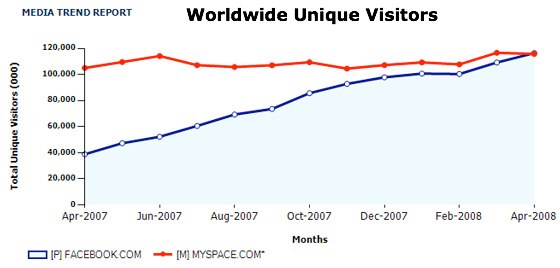
 This is when a social media website called Myspace had arrived on the Internet. It was just like the modern day Facebook which allowed people to form connections and helped them find new friends on the Internet. And within just one year Myspace became a sensation in the making with more than 1 million users signing up within the first month itself. And by the end of the year, Myspace had 5 million users. This is when in 2005, it got purchased by a gigantic media company called News Corp for $580 milllion. Because somehow, News Corp was one of those few organisations that actually realized the potential of social media ads, back in 2005. And the day this purchase happened it marked the beginning of the capitalistic Internet era. During this time, Facebook was just a college student website which was open to only Ivy League students in the US. But on the other side, from 2005 to 2008 Myspace became the most visited social networking site in the world. And in 2006, it even surpassed Google to becoming the most visited website in the world. 

But something happened in the next 4 years because of which the same Myspace had 115 million users while on the other side Facebook, the college community website had more than 1 billion users. The question is What exactly happened and how did two companies inspite of being in the exact same space, doing the exact same thing have such a vast difference in their success. The first reason is based on the fundamental concept of social network and human psychology which is known as the triadic closure property. And this is something that was suggested by a german sociologists named Georg Simmel in 1908. In simple words what it means is if there are three people: Shyam, Baburao and Raju If Raju knows Babu and Babu knows Shyam then automatically, Raju will form a connection with Shyam and Raju will be more inclined to trust Shyam. So, basically, if A knows B, and B knows C then A is more inclined to form a connection with C eventually leading to speed of trust. And you must have observed this while you used Facebook or Instagram, that is when you get a request from a person who has 200 mutual friends you easily tend to accept their request. 

At the same time if you get a request from a person whom you possibly know but has got zero mutual friends there’s a little bit of skepticism that pops in. This is how the triadic closure property plays out. In case of Myspace and Facebook, the major drawback with Myspace was that it did not allow users to use their real names as their usernames and because of this, although you could meet new people on the Internet through similar interests you couldn’t really tell who exactly are you chatting with. So, this kinda turned into a fine mix of privacy and creepiness. But on the other hand Facebook insisted on getting people to use their real names as their usernames. Why? Because as legend has it, Facebook was meant to stalk girls and if you didn’t know the names of those girls stalking wouldn’t be user-friendly right? Will do anything for girls Just kidding guys! It was meant to be that way because Mark Zuckerberg believed in helping people build authentic connections through digital technology. 

And regardless of the truth behind this statement the strategy of using real names turned out to be Facebook’s X factor because of which apart from connecting with people in their own respective social circle users actually started to expand their network to form second and third connections. And this is where the mutual friend feature came in handy and because of this, the networks on Facebook became far more deep rooted and helped people expand their connections beyond their social circle. And this is the reason why in 2006, when Facebook opened itself to the general public people flocked to create a Facebook account inspite of having a Myspace account already. Now, this begs the question If this was just this simple feature of using real usernames that distinguished Facebook from Myspace then why didn’t Myspace incorporate that feature and kill Facebook altogether? In fact, this is what Facebook did with Snapchat right? By introducing Instagram stories. In fact, the Myspace team even had the backing of a large corporation like News Corp, right? Then why couldn’t they incorporate this feature? Well, as it turns out, this is exactly why they couldn’t incorporate the feature in their website. Because News corp turned Myspace into a proper corporate organisation which had to follow protocols and procedures And more than the ideas and the execution, the focus went to register quarterly profits, yearly profits and all the other corporate procedures. 

In fact, even if the Myspace team came out with a brilliant idea. It first used to get scrutinized by the lawyers, then by so-called experts and then a series of meetings used to be held and then a series of emails to be sent and it just kept going back and forth. And in the process, things got so slow that the ideas just got lost into bureaucracy and even something as simple as adding a feature also took forever to be executed. While on the other side, Facebook was being run by a bunch of college students who could add, change, modify and delete features overnight. And make major modifications to the website without any formalities. And unfortunately finally when Myspace incorporated the option of real usernames it was already 2008 and Facebook had already surged way ahead.

 So, to put that straight, while Myspace became a rigid organisation that was focused on procedures and protocols. And was constantly debating about who is right and who is not. Facebook was obsessively focused on what is right and executed ideas with agility. And this became the second reason for the fall of Myspace and the rise of Facebook. And the story didn’t end here the rigid corporate structure of Myspace also lead to another huge setback that literally became the golden recipe for Facebook to surge way ahead of Myspace. And this recipe also became a game changer for Amazon, Google and Apple. And this was the idea of third party integration wherein Facebook practically tranformed from a product to becoming a platform. 

On 24th of May 2007, Facebook launched the Facebook platform to provide a framework for software developers to create applications that could interact with core features of Facebook. For example, Spotify could use Facebook API to allow users to share music directly within the Spotify application itself. Candy Crush used Facebook for instant login and I’m sure most of you must have used it. And thirdly, Nike run club used Facebook API to enable its users to share their achievements of their run with their friends by posting directly to the Facebook’s news feed. So, this way Facebook allowed developers and gave them the freedom to use their technology and build products and services of their own.

 Whereas on the other hand, Myspace was set to be a notoriously closed system and Myspace even used to block contents from potential competitors. And for some reason it also ended up blocking Photobucket which was at that time the most popular photo sharing website. And this is the third reason why Facebook became an incredible platform not just for consumers and advertisers but also for developers. And by the way, this concept of going from a product to a platform is also the reason for the unprecedented success of Apple because back then even Steve Jobs was skeptical about allowing third party developers. But when Apple started providing its platform to developers the iconic App Store was born and that changed Apple forever. 

Even Android did the same with Play Store. But If you look at Nokia Nokia acted like Myspace and made it very difficult for developers to operate because the symbianOS was too rigid for third party apps to be built upon. And fast forward to 2006, Amazon launched its own version of third party integration by allowing third party sellers to use this technology to sell their products. And guess what? In 2020 alone, Amazon generated $80.46 billion dollars in third-party seller services revenue which is more than the revenue generated by its own sellers. This was the insane revenue stream that Myspace passed on and turned Facebook into the billion dollar company that it is today.

Now, let’s talk about the 3 important lessons from this case study. Lesson number one, Every entrepreneur and a leader needs to realize that the fundamental purpose of an organisational structure is not just to help you make strategic decisions but to enable you to make those strategic decisions before its too late. And the day you realize that these protocols are making the execution of ideas tedious you need to kill those protocols straightaway or else those very same protocols will end up killing your organisation. 

Lesson 2, regardless of how marvelous your technology is if you’re building a business to consumer product human centred design must always be taken into consideration because if you see, in this case, it was the simple feature of mutual friends that actually got Facebook the same amount of popularity as Myspace. Because knowingly or unknowingly it abided by the triadic closure property. 

And last and most importantly, even if you’re not the first mover in the industry it’s completely fine guys. In fact, it is great because regardless of how big a company is if they are venturing into a new space, they will make mistakes. And if you carefully learn from those mistakes you can save yourself a lot of time, a lot of money and a lot of efforts. And more importantly, merely by learning from those mistakes you will have the opportunity to race ahead of the game Because afterall, wisdom is that attribute that often separates a few legendary entrepreneurs from the many good ones.

How Facebook become Powerful & Giant Company

 Hi everybody, We all know Facebook as the giant, powerful company that it is today but very few of us know that when Facebook actually came out in the market it was neither the first social media product in the market nor was it the best social media website in the market. In fact, when Facebook came out, there was already another social media website that had about 1 million users. And it was already one of the most visited websites on the Internet. But somehow, within the next four years Facebook made history by overtaking this huge company and went onto become one of the most powerful companies on the planet. 

And the reason why this happened has got some very very important business learnings for each one of us because more often than not, we all must have had a brilliant idea but then after doing a little bit of research, we tend to realize that there is already a giant company as our competitors doing the exact same thing as we planned to do. And that could be demotivating. But guys, what if I told you that instead, you should be super happy to build a business if there is already a giant competition in the market. And the fact that it will actually provide you a golden opportunity to build a business. The question is- How is it even possible and how can you go on to build a business to compete with a billion dollar company. The answer to this question lies in a story that dates back to 2004.

 This is when a social media website called Myspace had arrived on the Internet. It was just like the modern day Facebook which allowed people to form connections and helped them find new friends on the Internet. And within just one year Myspace became a sensation in the making with more than 1 million users signing up within the first month itself. And by the end of the year, Myspace had 5 million users. This is when in 2005, it got purchased by a gigantic media company called News Corp for $580 milllion. Because somehow, News Corp was one of those few organisations that actually realized the potential of social media ads, back in 2005. And the day this purchase happened it marked the beginning of the capitalistic Internet era. During this time, Facebook was just a college student website which was open to only Ivy League students in the US. But on the other side, from 2005 to 2008 Myspace became the most visited social networking site in the world. And in 2006, it even surpassed Google to becoming the most visited website in the world. 

But something happened in the next 4 years because of which the same Myspace had 115 million users while on the other side Facebook, the college community website had more than 1 billion users. The question is What exactly happened and how did two companies inspite of being in the exact same space, doing the exact same thing have such a vast difference in their success. The first reason is based on the fundamental concept of social network and human psychology which is known as the triadic closure property. And this is something that was suggested by a german sociologists named Georg Simmel in 1908. In simple words what it means is if there are three people: Shyam, Baburao and Raju If Raju knows Babu and Babu knows Shyam then automatically, Raju will form a connection with Shyam and Raju will be more inclined to trust Shyam. So, basically, if A knows B, and B knows C then A is more inclined to form a connection with C eventually leading to speed of trust. And you must have observed this while you used Facebook or Instagram, that is when you get a request from a person who has 200 mutual friends you easily tend to accept their request. 

At the same time if you get a request from a person whom you possibly know but has got zero mutual friends there’s a little bit of skepticism that pops in. This is how the triadic closure property plays out. In case of Myspace and Facebook, the major drawback with Myspace was that it did not allow users to use their real names as their usernames and because of this, although you could meet new people on the Internet through similar interests you couldn’t really tell who exactly are you chatting with. So, this kinda turned into a fine mix of privacy and creepiness. But on the other hand Facebook insisted on getting people to use their real names as their usernames. Why? Because as legend has it, Facebook was meant to stalk girls and if you didn’t know the names of those girls stalking wouldn’t be user-friendly right? Will do anything for girls Just kidding guys! It was meant to be that way because Mark Zuckerberg believed in helping people build authentic connections through digital technology. 

And regardless of the truth behind this statement the strategy of using real names turned out to be Facebook’s X factor because of which apart from connecting with people in their own respective social circle users actually started to expand their network to form second and third connections. And this is where the mutual friend feature came in handy and because of this, the networks on Facebook became far more deep rooted and helped people expand their connections beyond their social circle. And this is the reason why in 2006, when Facebook opened itself to the general public people flocked to create a Facebook account inspite of having a Myspace account already. Now, this begs the question If this was just this simple feature of using real usernames that distinguished Facebook from Myspace then why didn’t Myspace incorporate that feature and kill Facebook altogether? In fact, this is what Facebook did with Snapchat right? By introducing Instagram stories. In fact, the Myspace team even had the backing of a large corporation like News Corp, right? Then why couldn’t they incorporate this feature? Well, as it turns out, this is exactly why they couldn’t incorporate the feature in their website. Because News corp turned Myspace into a proper corporate organisation which had to follow protocols and procedures And more than the ideas and the execution, the focus went to register quarterly profits, yearly profits and all the other corporate procedures. 

In fact, even if the Myspace team came out with a brilliant idea. It first used to get scrutinized by the lawyers, then by so-called experts and then a series of meetings used to be held and then a series of emails to be sent and it just kept going back and forth. And in the process, things got so slow that the ideas just got lost into bureaucracy and even something as simple as adding a feature also took forever to be executed. While on the other side, Facebook was being run by a bunch of college students who could add, change, modify and delete features overnight. And make major modifications to the website without any formalities. And unfortunately finally when Myspace incorporated the option of real usernames it was already 2008 and Facebook had already surged way ahead.

 So, to put that straight, while Myspace became a rigid organisation that was focused on procedures and protocols. And was constantly debating about who is right and who is not. Facebook was obsessively focused on what is right and executed ideas with agility. And this became the second reason for the fall of Myspace and the rise of Facebook. And the story didn’t end here the rigid corporate structure of Myspace also lead to another huge setback that literally became the golden recipe for Facebook to surge way ahead of Myspace. And this recipe also became a game changer for Amazon, Google and Apple. And this was the idea of third party integration wherein Facebook practically tranformed from a product to becoming a platform. 

On 24th of May 2007, Facebook launched the Facebook platform to provide a framework for software developers to create applications that could interact with core features of Facebook. For example, Spotify could use Facebook API to allow users to share music directly within the Spotify application itself. Candy Crush used Facebook for instant login and I’m sure most of you must have used it. And thirdly, Nike run club used Facebook API to enable its users to share their achievements of their run with their friends by posting directly to the Facebook’s news feed. So, this way Facebook allowed developers and gave them the freedom to use their technology and build products and services of their own.

 Whereas on the other hand, Myspace was set to be a notoriously closed system and Myspace even used to block contents from potential competitors. And for some reason it also ended up blocking Photobucket which was at that time the most popular photo sharing website. And this is the third reason why Facebook became an incredible platform not just for consumers and advertisers but also for developers. And by the way, this concept of going from a product to a platform is also the reason for the unprecedented success of Apple because back then even Steve Jobs was skeptical about allowing third party developers. But when Apple started providing its platform to developers the iconic App Store was born and that changed Apple forever. 

Even Android did the same with Play Store. But If you look at Nokia Nokia acted like Myspace and made it very difficult for developers to operate because the symbianOS was too rigid for third party apps to be built upon. And fast forward to 2006, Amazon launched its own version of third party integration by allowing third party sellers to use this technology to sell their products. And guess what? In 2020 alone, Amazon generated $80.46 billion dollars in third-party seller services revenue which is more than the revenue generated by its own sellers. This was the insane revenue stream that Myspace passed on and turned Facebook into the billion dollar company that it is today.

Now, let’s talk about the 3 important lessons from this case study. Lesson number one, Every entrepreneur and a leader needs to realize that the fundamental purpose of an organisational structure is not just to help you make strategic decisions but to enable you to make those strategic decisions before its too late. And the day you realize that these protocols are making the execution of ideas tedious you need to kill those protocols straightaway or else those very same protocols will end up killing your organisation. 

Lesson 2, regardless of how marvelous your technology is if you’re building a business to consumer product human centred design must always be taken into consideration because if you see, in this case, it was the simple feature of mutual friends that actually got Facebook the same amount of popularity as Myspace. Because knowingly or unknowingly it abided by the triadic closure property. 

And last and most importantly, even if you’re not the first mover in the industry it’s completely fine guys. In fact, it is great because regardless of how big a company is if they are venturing into a new space, they will make mistakes. And if you carefully learn from those mistakes you can save yourself a lot of time, a lot of money and a lot of efforts. And more importantly, merely by learning from those mistakes you will have the opportunity to race ahead of the game Because afterall, wisdom is that attribute that often separates a few legendary entrepreneurs from the many good ones.

How Facebook become Powerful & Giant Company

 Hi everybody, We all know Facebook as the giant, powerful company that it is today but very few of us know that when Facebook actually came out in the market it was neither the first social media product in the market nor was it the best social media website in the market. In fact, when Facebook came out, there was already another social media website that had about 1 million users. And it was already one of the most visited websites on the Internet. But somehow, within the next four years Facebook made history by overtaking this huge company and went onto become one of the most powerful companies on the planet. 

And the reason why this happened has got some very very important business learnings for each one of us because more often than not, we all must have had a brilliant idea but then after doing a little bit of research, we tend to realize that there is already a giant company as our competitors doing the exact same thing as we planned to do. And that could be demotivating. But guys, what if I told you that instead, you should be super happy to build a business if there is already a giant competition in the market. And the fact that it will actually provide you a golden opportunity to build a business. The question is- How is it even possible and how can you go on to build a business to compete with a billion dollar company. The answer to this question lies in a story that dates back to 2004.

 This is when a social media website called Myspace had arrived on the Internet. It was just like the modern day Facebook which allowed people to form connections and helped them find new friends on the Internet. And within just one year Myspace became a sensation in the making with more than 1 million users signing up within the first month itself. And by the end of the year, Myspace had 5 million users. This is when in 2005, it got purchased by a gigantic media company called News Corp for $580 milllion. Because somehow, News Corp was one of those few organisations that actually realized the potential of social media ads, back in 2005. And the day this purchase happened it marked the beginning of the capitalistic Internet era. During this time, Facebook was just a college student website which was open to only Ivy League students in the US. But on the other side, from 2005 to 2008 Myspace became the most visited social networking site in the world. And in 2006, it even surpassed Google to becoming the most visited website in the world. 

But something happened in the next 4 years because of which the same Myspace had 115 million users while on the other side Facebook, the college community website had more than 1 billion users. The question is What exactly happened and how did two companies inspite of being in the exact same space, doing the exact same thing have such a vast difference in their success. The first reason is based on the fundamental concept of social network and human psychology which is known as the triadic closure property. And this is something that was suggested by a german sociologists named Georg Simmel in 1908. In simple words what it means is if there are three people: Shyam, Baburao and Raju If Raju knows Babu and Babu knows Shyam then automatically, Raju will form a connection with Shyam and Raju will be more inclined to trust Shyam. So, basically, if A knows B, and B knows C then A is more inclined to form a connection with C eventually leading to speed of trust. And you must have observed this while you used Facebook or Instagram, that is when you get a request from a person who has 200 mutual friends you easily tend to accept their request. 

At the same time if you get a request from a person whom you possibly know but has got zero mutual friends there’s a little bit of skepticism that pops in. This is how the triadic closure property plays out. In case of Myspace and Facebook, the major drawback with Myspace was that it did not allow users to use their real names as their usernames and because of this, although you could meet new people on the Internet through similar interests you couldn’t really tell who exactly are you chatting with. So, this kinda turned into a fine mix of privacy and creepiness. But on the other hand Facebook insisted on getting people to use their real names as their usernames. Why? Because as legend has it, Facebook was meant to stalk girls and if you didn’t know the names of those girls stalking wouldn’t be user-friendly right? Will do anything for girls Just kidding guys! It was meant to be that way because Mark Zuckerberg believed in helping people build authentic connections through digital technology. 

And regardless of the truth behind this statement the strategy of using real names turned out to be Facebook’s X factor because of which apart from connecting with people in their own respective social circle users actually started to expand their network to form second and third connections. And this is where the mutual friend feature came in handy and because of this, the networks on Facebook became far more deep rooted and helped people expand their connections beyond their social circle. And this is the reason why in 2006, when Facebook opened itself to the general public people flocked to create a Facebook account inspite of having a Myspace account already. Now, this begs the question If this was just this simple feature of using real usernames that distinguished Facebook from Myspace then why didn’t Myspace incorporate that feature and kill Facebook altogether? In fact, this is what Facebook did with Snapchat right? By introducing Instagram stories. In fact, the Myspace team even had the backing of a large corporation like News Corp, right? Then why couldn’t they incorporate this feature? Well, as it turns out, this is exactly why they couldn’t incorporate the feature in their website. Because News corp turned Myspace into a proper corporate organisation which had to follow protocols and procedures And more than the ideas and the execution, the focus went to register quarterly profits, yearly profits and all the other corporate procedures. 

In fact, even if the Myspace team came out with a brilliant idea. It first used to get scrutinized by the lawyers, then by so-called experts and then a series of meetings used to be held and then a series of emails to be sent and it just kept going back and forth. And in the process, things got so slow that the ideas just got lost into bureaucracy and even something as simple as adding a feature also took forever to be executed. While on the other side, Facebook was being run by a bunch of college students who could add, change, modify and delete features overnight. And make major modifications to the website without any formalities. And unfortunately finally when Myspace incorporated the option of real usernames it was already 2008 and Facebook had already surged way ahead.

 So, to put that straight, while Myspace became a rigid organisation that was focused on procedures and protocols. And was constantly debating about who is right and who is not. Facebook was obsessively focused on what is right and executed ideas with agility. And this became the second reason for the fall of Myspace and the rise of Facebook. And the story didn’t end here the rigid corporate structure of Myspace also lead to another huge setback that literally became the golden recipe for Facebook to surge way ahead of Myspace. And this recipe also became a game changer for Amazon, Google and Apple. And this was the idea of third party integration wherein Facebook practically tranformed from a product to becoming a platform. 

On 24th of May 2007, Facebook launched the Facebook platform to provide a framework for software developers to create applications that could interact with core features of Facebook. For example, Spotify could use Facebook API to allow users to share music directly within the Spotify application itself. Candy Crush used Facebook for instant login and I’m sure most of you must have used it. And thirdly, Nike run club used Facebook API to enable its users to share their achievements of their run with their friends by posting directly to the Facebook’s news feed. So, this way Facebook allowed developers and gave them the freedom to use their technology and build products and services of their own.

 Whereas on the other hand, Myspace was set to be a notoriously closed system and Myspace even used to block contents from potential competitors. And for some reason it also ended up blocking Photobucket which was at that time the most popular photo sharing website. And this is the third reason why Facebook became an incredible platform not just for consumers and advertisers but also for developers. And by the way, this concept of going from a product to a platform is also the reason for the unprecedented success of Apple because back then even Steve Jobs was skeptical about allowing third party developers. But when Apple started providing its platform to developers the iconic App Store was born and that changed Apple forever. 

Even Android did the same with Play Store. But If you look at Nokia Nokia acted like Myspace and made it very difficult for developers to operate because the symbianOS was too rigid for third party apps to be built upon. And fast forward to 2006, Amazon launched its own version of third party integration by allowing third party sellers to use this technology to sell their products. And guess what? In 2020 alone, Amazon generated $80.46 billion dollars in third-party seller services revenue which is more than the revenue generated by its own sellers. This was the insane revenue stream that Myspace passed on and turned Facebook into the billion dollar company that it is today.

Now, let’s talk about the 3 important lessons from this case study. Lesson number one, Every entrepreneur and a leader needs to realize that the fundamental purpose of an organisational structure is not just to help you make strategic decisions but to enable you to make those strategic decisions before its too late. And the day you realize that these protocols are making the execution of ideas tedious you need to kill those protocols straightaway or else those very same protocols will end up killing your organisation. 

Lesson 2, regardless of how marvelous your technology is if you’re building a business to consumer product human centred design must always be taken into consideration because if you see, in this case, it was the simple feature of mutual friends that actually got Facebook the same amount of popularity as Myspace. Because knowingly or unknowingly it abided by the triadic closure property. 

And last and most importantly, even if you’re not the first mover in the industry it’s completely fine guys. In fact, it is great because regardless of how big a company is if they are venturing into a new space, they will make mistakes. And if you carefully learn from those mistakes you can save yourself a lot of time, a lot of money and a lot of efforts. And more importantly, merely by learning from those mistakes you will have the opportunity to race ahead of the game Because afterall, wisdom is that attribute that often separates a few legendary entrepreneurs from the many good ones.

Goa Mollem Protests- The Fight Against Coal

Hello everybody, Chances are that you don’t know about it because it is an issue that hasn’t been talked about much by our national media. For the last many months, thousands of people are protesting against a critical environmental issue, the Mollem National Park. 19th December is celebrated as the Goa Liberation Day because Indian government threw out Portuguese colonisers from Goa on this very day in 1961. So, on this occasion on 18th December, 2020, some protesters stood holding sign boards and wearing t-shirts that said “Save Mollem”. 

Without any provocation, they did not even do anything…there even were some children there standing with their posters, Police detained them. So, let’s get to know why this entire protest is happening in the first place. In simple words, the government in the name of development wants to clear forests in an ecologically sensitive area without consulting the public. In this case, the ecologically sensitive area is the Bhagwan Mahavir Sanctuary and Mollem National Park, the pride of Goa. Spread across 240 sq kms, it is Goa’s largest protected area. It is one of the 8 hottest biodiversity hotspots in the world. 

That means a high variety of plant and animal life is found here, the likes of which are found at very few places in the world. There are some great tourist attractions here as well such as the Dudhsagar Falls, Devil’s Canyon. There is a temple too so it is quite a popular destination for tourism as well. So, what is the development that the government wants to do here? There are three projects: one is a highway which the government wants to be four-lane, another one is a railway line and the third is a power transmission line. All these three projects are going through the middle of this wildlife sanctuary. Geographically, if you look at it on a map then these three projects will look this way. 

A railway line is going from the lower region, highway is crossing from the middle and in the upper region is the power transmission line. So, for all the three projects, trees would be cut off. It has been estimated that about 20, 000 trees would be felled for the railway line, 40,000 for the highway and about 5,000 for the power transmission line In total, it is being estimated that 60,000-80,000 trees are to be felled. Now you will ask here, what’s the harm? Some trees will have to be felled for a little bit of development.

 These are three main problems First problem is that prior to approving these projects, the government did not do any assessment, did not follow proper procedure and did not even consult the public. In fact, two of three projects were approved during lockdown due to Covid 19. In the month of March, the National Board of Wildlife approved these projects through video conferencing. When the central government was asked how this was approved then they said that the state panel approved it therefore we approved it as well.

 News is that some 5-6 members of the state panel have alleged that they were not even consulted. In fact they did not even know that clearance had already been given. Omkaar Dharwaskar is naturalist who also attended the State Wildlife meeting has said that they have not given any approval in that meeting. This project was not approved. But the minutes of the meeting say exactly the opposite and the project was subsequently approved after being forwarded to the National Wildlife Board. 

The second problem is that environmental activists and protesters believe that this is not only about a few trees but the entire Goa is being transformed into a coal hub. The extension of the railway line and the highway is not for the convenience of the public but rather for the convenience of big corporations. It is being done so that the transportation of coal is simpler. RTI activist and lawyer Savio Correia says that all three projects are part of the government’s Sagarmala project which was approved by the central government in 2016 for the development of Goa’s port. This project aims to develop Goa into a coal transportation corridor. Mormugao port is a port in South Goa and according to the projections of its trust, by 2030, they wish to import 51.6 million tonnes of coal for Adani group, JSW Group and Vedanta. The names of these groups have come up here although the Adani group denies it. 

This is the reason, many protesters of Goa have pointed out Adani as well. If this railway will in fact be used to transport coal then remember one thing, the coal dust can travel up to 5-15 kms due to the wind and depending on the speed of the train. “-Coal is entering their houses, if you…-in what way? -You just have to ask them for tea and probably you will see that in the saucer and you see that in their kitchen … -There’s coal in their saucer? -Exactly! You see that in the kitchen, the living room. You can’t live in that house. Your children need nebulizers from morning to afternoon In the morning they start brooming, they collect coal in their house and by evening again… -black particles of dust… This coal dust is not only a threat to the environment but also for the fishing industry, agriculture, tourism as well as for the public. 

If Goa really turns into a coal hub then think about it, would you want to go to Goa beaches as a tourist where you will find coal dust in the air? Perhaps this is the reason that in 2013 the then CM of Goa Manohar Parrikar rejected this railway line project in Goa. This is the reason friends that today the protesters stand with banners that say “Goyant Kollso Naka”. Forgive me if the pronunciation is not correct but it basically means that we don’t want coal in Goa. 

The third problem is that if any railway line or highway goes through a wildlife sanctuary then it results in habitat fragmentation which can eventually lead to the extinction of many animal and bird species. Habitat fragmentation basically means that you split a big ecosystem in small pieces due to which animals are not able to interact from one piece to another. This usually happens whenever a highway goes through a wildlife sanctuary. Imagine, there is a squirrel species and it has only 50 members left because it is an endangered species. So, 50 squirrels live in a big forest but if a highway goes right through the middle of the forest then the forest will be divided into two. 

Now, assume that 25 squirrels live on each side. Now animals living in each of these parts cannot go to the other part because of the highway. It is quite difficult for them to transfer from one side to another. The first problem arising out of this is that if the minimum number of any animal does not exist in any part then its entire species will become extinct due to inbreeding depression. You can search about inbreeding depression. It is quite an interesting thing. Secondly, any natural calamity or if any disease spreads that say results in the death of 23 out of 25 squirrels so it is not possible for that species to survive with so few animals. 

This can happen in a big forest as well but if you start splitting the forest from the middle and making fragments of it, then the chances of it happening increase manifold. Overall, the highway and the railway line will split the wildlife sanctuary in three fragments This increases the chances of any animal extinction by three times. The public has expressed its protest through various means. There are different trends on social media on hand while there are protests on ground on the other hand. Even children have participated in these protests. More than 150 scientists have written letters to the government to tell them why this project should not go through. 

The common public has even written emails to the government as to why this project must not be executed. If you want to see the latest updates on this protest on twitter then you can follow this account “Save Mollem campaign”. I will attach the link in the description below. Goa’s youth also wrote letters to their respective MLAs in order to pressurize the government. What was the government’s response regarding all of this? What would you expect? Think about it, what would be the government’s response in such cases? If you are thinking that the way the government responded to the farmers’ protest, they would respond the same way here as well then you are right. Because the government has said that all protests are funded by the opposition and all these protesters are misled. 

The famous leaders of this protest have been booked under several FIRs, detained and like I mentioned in the beginning, even children have been detained by the government. But fortunately, the good news is that the High Court has stayed at least one of the three projects. On 8th December, the High Court stayed the power transmission line project. But for the rest of the two projects, the government can still execute. This is why it is important to raise a voice regarding this, whichever way you can do it. If you live in Goa, you can join the protesters.

 If you are not living in Goa then you can raise your voice on social media by using #SaveMollem Share this video with as many people as you can so that the voice raised reaches the government and pressurizes them to stop these projects for the sake of climate and the public. The good news is that when the public raises a voice then it does create pressure on the government. Remember the Aarey forest case; the final end result has been a positive one. As soon as Uddhav Thackeray was made the CM, he took a decision in favour of Aarey forest by moving the metro rail project elsewhere and saving the Aarey forest. 

The Story of Spice King Of India From A Tonga Driver To A Millionaire

Hi everybody , one of the most iconic business Maharajas of India whose name was Mahashay Dharampal Gulati. This is a story of a man who went from being a tonga driver to building an empire with an operating revenue of 2000 crores. And the reason why his story is even more special is because he built a business during a time when people were struggling hard even to stay alive because back then India was still recovering from the massacres of partition.

 Dharampal Ji was born in the year 1923 in Sialkot, which today, falls in modern-day Pakistan in a Hindu family which had high ideals of honesty and simplicity. And since childhood, he was a carefree kid but with a sheer will to do something extraordinary. 

Gulati Ji, since childhood, experienced a lot of failures, he first dropped out of school in class 5 and tried doing several jobs where he couldn’t find any fulfilment. 

Then he tried selling Mehendi (Henna) from street to street. and even that did not work out. Then, his father tried to set up a separate shop for him and his brother and eventually, even that venture failed. So after spending years trying to do different kinds of jobs like selling wood, mirrors he finally decided to settle in and start running his father’s spice shop which at that time was named as Mahashian Di Hatti. 

But when he was just 25 years old and he began to settle down in his business and his business began to pick up the India-Pakistan partition happened. and within a midnight, the entire nation was in chaos. And because Sialkot became a part of Pakistan soon enough there was such a massive bloodshed that hundreds of innocent people were being killed due to the Hindu-Muslim riots. 

During that time they somehow managed to board a train that brought them to Amritsar and people, if you have seen the movie ‘Bhaag Milkha Bhaag’ you would pretty much have an idea of how terrible the situation of partition was. In fact, the very train that Gulati Ji’s family boarded had the dead bodies of the people who had been killed due to the massacres of partition.

 So, he stayed in the refugee camp of Amritsar for quite some time and then decided to move to Delhi wherein he became a tonga driver. Now people, back then he was already married for 7 years because he got married at the early age of 18. So he had responsibilities on his shoulders to provide good life for his family.

 But then after a few months he understood that tonga driver’s profession was not good enough to provide a good life for his family. And that is when he decided to restart his father’s business and set up a small spice shop in Delhi. And that is when he named his shop Mahashian Di Hatti which today is known by the name MDH

Now, people, even after partition India was still struggling hard to recover from the massacres of partition. There were millions of people who had lost their everything and India as a country was in a state of poverty wherein 80% of the entire country’s population lived below the poverty level. 

So, the markets, in general, never focused on quality because if you had to produce quality product during that time it would increase the cost of production, it would decrease your margins of profit and most importantly, because the cost of the product will increase majority of the peope will not be able to afford it eventually, resulting into decrease in sales. 

So running a viable business during that time by selling quality products was practically impossible. So, the majority of the poducts that were being sold in he market including milk and salt were being completely . 

For example, milk was being mixed with a lot of water to increase the quantity. And to compensate for the density, even harmful chemicals were used. Similarly, yellow soil was mixed with haldi (turmeric) and sawdust was being mixed with dhaniya (coriander) powder. And just like that, even spices were being adulterated to a large extent because it was practically impossible for a common man to be able to understand the difference between pure spices and adulterated spices.

But even during that time Gulati Ji poured his blood and sweat and always made sure that his shop always sold pure spices. Because he believed that the primary intent of any business should not be to make money but to do great service. And money should always be a bi-product of great service.

That is why Gulati Ji worked very hard to monitor every single process of the production of spices just so that he can give a common man of India, a taste of pure spices And people can you imagine how difficult it would have been ? 

He had to keep the cost low just so that he can match the cost of the adulterated spices. Number two, he had to keep his margins very thin because his cost of production was way higher as compared to adulterated spices. 

And most importantly he was making very less money, inspite of making the best product in the market. But all throughout these difficult times, this great man worked tirelessly with the hope that he’ll be able to build a brand one day that the mother of a common household can blindly trust upon when she makes a meal for her family. And guess what ? 

Slowly and steadily, people began to realize the differnce between Gulati Ji’s spices and the adulterated spices and soon enough people started to line up at his shop just to buy his products. And that is how Gulati Ji’s small shop- Mahashian Di Hatti Masale as in, MDH masale, became a popular brand in Delhi. 

And as his business started growing, he started to recruit his friends and family into his business with the hope that they will be able to stand by his belief of providing excellent quality spices to people. And he also started outsourcing a few processes like powdering turmeric. 

And yet again, when everything looked well, he faced even tougher challenges and here’s where ordinary people like you and me have something very important lesson to learn. 

People, Gulati Ji was a person who did every small thing in his shop starting from the raw material transportation to the grinding of spices, he participated in every single activity and that is the reason why he soon enough became an expert in finding out even a little bit of adulteration in his spices.

 So, when he was scaling up he was able to maintain the same excellent quality standards that he used to maintain while he was selling spices from his small shop. And because of his sharpness and diligence he was able to spot certain loopholes in his system which could have completely destroyed his business altogether.

 Because soon enough he discovered that the contractor who was powdering his turmeric was actually mixing Chana Dal to adulterate the turmeric powder. And when he spotted similar practices being followed in a lot of these outsourcing ventures.

 He understood that this loophole would betray the trust of his customers. And just to keep the trust of his customers he ended all of his outsourcing practices and poured in his entire life saving to open up his own factory wherein he could powder all the spices.

 And not just that. He was betrayed by his childhood friend who used to take a commission on every single material which used to come in from the supplier. And many of his friends and family who were supposed to help him grow, started causing a lot of troubles while this man was putting his blood and sweat just to make sure that he can sell pure spices to the mothers of India. 

And that is how, by facing a lot of hurdles Gulati Ji was able to establish a brand which the mothers of India could trust. And that is how due to the incredible hard work of Gulati Ji, today, people like you and me have the luxury of having mouth watering dishes like Chole Batture and Pav Bhaaji.

 And in this world where people talk about retiring at the age of 30 and people like you and me who often feel lazy inspite of achieving nothing. This legendary person was shooting for an advertisement even at the age of 97. 

So because of this incredible dedication and persistence combined with extraordinary business acumen today, MDH has reached a level wherein it exports its spices to US, China, Vietnam, UAE, Malaysia, Saudi Arabia, UK, Germany, Singapore, Sri Lanka with US exports alone valued at $351.6 million. And all of this put together, turned Gulati Ji into one of those icons because of whom India, today, is known for spices all across the world.

 Now the question is- What can we learn from this incredible story of the king of spice ?

 Lesson 1, we all need to realize that optimism is the faith that leads to greatness and the real test of optimism is how you choose to react even during the times of calamity just like partition in Gulati Ji’s life. While and optimist will try to see an opportunity in every difficulty, a pessimist will try to see difficulty even during the times of great opportunity. 

Lesson 2, while outsourcing is essential for scaling up of any business it is also important to note that outsourcing along with a lot of growth will also bring in a lot of loopholes. So, as a leader of a business organisation it is important that you do all the petty works in the beginning because what might look like petty experience in the beginning will eventually help you find the loopholes in your business which could potentially destroy your whole business. 

And last and most importantly, each one of us needs to understand that greatness comes at a cost that very few people can afford. For example, at that time, very few people could actually settle in for less profits by selling pure spices.

 Very few people had the ability to put in the hardwork to have a look at every single process just so that they could sell pure spices and keep the trust of an innocent mother when she wanted to make something tasty for her family because very few people understand that the cost of greatness cannot be paid with stacks of currency notes but with every ounce of blood and sweat that you put in to achieve it.

 Because at the end of the day, greatness comes at a cost of persistence. And once a great man said that “Nothing in this world can take place of good old persistence. Talent will not, which is why in this world there is nothing more common than unsuccessful men with talent. 

Genius will not, which is why unrecognised genius is practically a cliché. Education will not, which is why the world is full of educated fools. 

Persistence and determination alone are all powerful.” In our case they were powerful enough to turn an ordinary refugee into the spice king of India who will live in our hearts forever. Thank you.


CRED's Master Plan – CRED Business Study

Hello everybody, CRED is one of the most fascinating business case studies in the Indian start-up ecosystem. In just 2 years, CRED went from 0 to hitting a $2B valuation and became one of the youngest Indian startups to reach this milestone. Now, the peculiarity of CRED is that in 2020 alone CRED incurred a massive loss of ₹360 crores which is a massive increase of 492% from 2019. And for every rupee of revenue that CRED generated they spent ₹727 which is a massive cashburn. 

We all have seen the result of massive expenditure into creative marketing. *beating noises* So now the question is, even with such massive losses how is it that CRED is getting so much funding ? And what exactly is Kunal Shah’s strategy ? Well, the beauty of this case study is the that if you only understand what CRED is doing you will more or less understand a large chunk of the Indian startup ecosystem because most of the giant companies like Jio, Ola, PharmEasy also operate in a similar fashion. and the most important factor that is common in all of them is that they extensively work on altering the behavioural design of the society. And the anticipation of that behavioural design, is what makes them billion dollar companies. 

This golden strategy works out in 4 discrete steps The first phase is what we call cash burn and here’s where The company, first identifies a major problem in the society, Number two, it designs a system to fix that problem Number three, it raises a million dollars in funding and lastly it entices the customers to use the product by giving out unbelievable offers which are almost too good to be true.

 A very simple example of the same is Jio. First of all, Jio identified internet accessibility as a major problem in the Indian society and then Reliance spent about ₹1.5 lakh crores into building the infrastructure required for Jio. And then in 2016 when Jio got launched, they gave out offers that almost looked impossible. -free sim cards, free calls and free internet. And the moment this announcement happened, millions of people rushed to buy Jio sims. And Jio did everything in it’s capacity to maximise it’s number of it’s users without even bothering about profits. Which is why, on top of the heavy investment that they made they further incurred a loss of Rs. 31 crores in 2016.

 Just like this, when CRED rolled out in 2018 they identified 3 of the biggest pains of a credit card holder which are; number one, hidden charges Number two, late fees due to forgetfulness and number three is the extra interest. And they rolled out massive cashbacks and offers to incentivise the act of on-time payment. And these offers were as amazing as free flight tickets extremely lucrative discounts and ₹1000 cashbacks also Fast foward to 2021, CRED today, has over 30 lakh users and today, CRED is already processing 20% of all the premium credit card transactions. 

So this is how within a short span of time, in Phase 1, companies present incentives in order to get customers to use their product, eventually, to increase their user base. And this is what brings us to Phase 2. Phase 2 is all about habituation. Once you bought a Jio sim, you never bothered about talktime, you never bothered about data. And we all recklessly got habituated to this newfound luxury of Internet Similarly, in case of CRED, the people who have 2-3 credit cards found it so simple to use CRED that they stopped using their conventional method wherein they had to go through this long list of their statements or putting in effort to dig in and find out whether there are hidden charges, on each credit card As a CRED user myself, I can’t even tell you how amazing it feels as compared to having this terrible feeling wherein you have no idea where the hell your money is going. 

In fact, there was a time when I thought that some hacker is stealing my money, alright ? and I’m not even kidding about this. So, this is how in Phase 2, using their super efficient system companies seemlessly get us habituated to new normal wherein we are no longer used to adjusting to the ‘hurdles of the system’. Here’s where we enter the most crucial phase of all, that is, Phase 3 and Phase 3 is what we can call as Irreversibility. 

A classy example of the same is Google Maps Now you might have observed that most of the people of our generation never even bother to remember the name of a landmark, street or chowk In fact, I’ve got so used to Google Maps that in my own city, if you leave me in some street I will start wandering as if I am in some strange jungle. That is how much I have got habituated to Google Maps And by the way, this does not include those superhumans who have this amazing memory to remember any route, even if they have visited that place only once and you know which friend am I talking about… So the point is, 

Google Maps has made our lives so easy that finding a way to a place no longer occupies our headspace and in case of CRED, users no longer have to remember to pay their credit card bills, they no longer have to remember when exactly is their due dates or bother about late fees. Similarly in case of Ola, we are no longer used to finding taxi on the streets In case of Jio, when there is no Internet you all know how you feel So you see, once these companies came in there has been an irreversible change in our behaviour wherein the small acts of booking a cab or paying a credit card bill has changed to such a large extent that we will never ever go back to our past system. 

Now CRED is yet to complete this phase which is why all the numbers that you see about CRED is in the negatives now because CRED is yet to change a significant part of the consumer behaviour. After this we come to Phase 4. Now, this is the goldmine that every investor waits for wherein the company starts making profits and if you look at the numbers, it literally looks like a goldmine. For that matter look at the numbers of Jio. In just 1.5 years, Jio became profitable that is in the 3rd quarter of 2017 with a profit of ₹504 Crores From there onwards it has been on a magnificent run wherein in 2020, Jio has posted a net profit of ₹5,562 crore and the reason why CRED is also sitting on a similar goldmine is because the customers of CRED are by default the richest 1% of the country.

 These people are literally the dream customers of any company. Their incomes are high, so they make expensive purchases on a regular basis which results into massive profit margins for every company And my sense is that in the 4th phase, CRED could leverage it’s golden customer base in three very very powerful ways. 

Number one, CRED could become this must have expense management app which will also allow it’s users to file their income tax and just like it cured the headaches of the credit card users by saving their money from hidden charges. CRED might also might start saving it’s customers a ton of money through their income tax rebate filings by turning the entire process of income tax filing into a very simple and efficient process and if this happens, I don’t think any of us will ever leave the CRED club.

So, Kunal sir if you’re watching this please help us out over here. Number two, CRED has one of the most valuable customer data in terms of purchase preferences For example, CRED clearly knows that Parsh loves to spend ₹20,000 into sports. Ganesh loves to spend ₹10,000 in education and books. So CRED could use this data to show relevant advertisements with exclusive coupons to get people to spend heavily on the things they absolutely love eventually, to make a comission out of it. 

Lastly, CRED could also became a bank for the top 1% of India and the reason why I think so is because there are two important factors that are very very crucial for any bank’s existence.

 Number one, every bank wants customers who have a lot of money deposited in their bank account after all their investment and expenses. And this money is what the bank uses to lend to businesses and customers in the form of home loans, car loans etc. 

Number two, every bank needs borrowers who pay back their loans judiciously. So that they can charge an interest on top of it eventually to make money out of the lending business. And guess what ? CRED literally has these exact people in it’s customer base which is why my sense is, CRED could literally extend itself to become a full fledged bank or maybe even become a full fledged portfolio management system for the top 1%.

 Eventually to become the most revolutionary fintech start-up of India So to put that straight, for ordinary people like you and me CRED might look like a weird idea but in reality it is a revolutionary idea coming from one of the most amazing entrepreneurs in the Indian start-up space. 

And we must consider ourselves to be extremely fortunate that we are getting to witness their processes and we must learn from these revolutionary start-ups that are going to redefine 21st century India forever.  

CRED's Master Plan – CRED Business Study

Hello everybody, CRED is one of the most fascinating business case studies in the Indian start-up ecosystem. In just 2 years, CRED went from 0 to hitting a $2B valuation and became one of the youngest Indian startups to reach this milestone. Now, the peculiarity of CRED is that in 2020 alone CRED incurred a massive loss of ₹360 crores which is a massive increase of 492% from 2019. And for every rupee of revenue that CRED generated they spent ₹727 which is a massive cashburn. 

We all have seen the result of massive expenditure into creative marketing. *beating noises* So now the question is, even with such massive losses how is it that CRED is getting so much funding ? And what exactly is Kunal Shah’s strategy ? Well, the beauty of this case study is the that if you only understand what CRED is doing you will more or less understand a large chunk of the Indian startup ecosystem because most of the giant companies like Jio, Ola, PharmEasy also operate in a similar fashion. and the most important factor that is common in all of them is that they extensively work on altering the behavioural design of the society. And the anticipation of that behavioural design, is what makes them billion dollar companies. 

This golden strategy works out in 4 discrete steps The first phase is what we call cash burn and here’s where The company, first identifies a major problem in the society, Number two, it designs a system to fix that problem Number three, it raises a million dollars in funding and lastly it entices the customers to use the product by giving out unbelievable offers which are almost too good to be true.

 A very simple example of the same is Jio. First of all, Jio identified internet accessibility as a major problem in the Indian society and then Reliance spent about ₹1.5 lakh crores into building the infrastructure required for Jio. And then in 2016 when Jio got launched, they gave out offers that almost looked impossible. -free sim cards, free calls and free internet. And the moment this announcement happened, millions of people rushed to buy Jio sims. And Jio did everything in it’s capacity to maximise it’s number of it’s users without even bothering about profits. Which is why, on top of the heavy investment that they made they further incurred a loss of Rs. 31 crores in 2016.

 Just like this, when CRED rolled out in 2018 they identified 3 of the biggest pains of a credit card holder which are; number one, hidden charges Number two, late fees due to forgetfulness and number three is the extra interest. And they rolled out massive cashbacks and offers to incentivise the act of on-time payment. And these offers were as amazing as free flight tickets extremely lucrative discounts and ₹1000 cashbacks also Fast foward to 2021, CRED today, has over 30 lakh users and today, CRED is already processing 20% of all the premium credit card transactions. 

So this is how within a short span of time, in Phase 1, companies present incentives in order to get customers to use their product, eventually, to increase their user base. And this is what brings us to Phase 2. Phase 2 is all about habituation. Once you bought a Jio sim, you never bothered about talktime, you never bothered about data. And we all recklessly got habituated to this newfound luxury of Internet Similarly, in case of CRED, the people who have 2-3 credit cards found it so simple to use CRED that they stopped using their conventional method wherein they had to go through this long list of their statements or putting in effort to dig in and find out whether there are hidden charges, on each credit card As a CRED user myself, I can’t even tell you how amazing it feels as compared to having this terrible feeling wherein you have no idea where the hell your money is going. 

In fact, there was a time when I thought that some hacker is stealing my money, alright ? and I’m not even kidding about this. So, this is how in Phase 2, using their super efficient system companies seemlessly get us habituated to new normal wherein we are no longer used to adjusting to the ‘hurdles of the system’. Here’s where we enter the most crucial phase of all, that is, Phase 3 and Phase 3 is what we can call as Irreversibility. 

A classy example of the same is Google Maps Now you might have observed that most of the people of our generation never even bother to remember the name of a landmark, street or chowk In fact, I’ve got so used to Google Maps that in my own city, if you leave me in some street I will start wandering as if I am in some strange jungle. That is how much I have got habituated to Google Maps And by the way, this does not include those superhumans who have this amazing memory to remember any route, even if they have visited that place only once and you know which friend am I talking about… So the point is, 

Google Maps has made our lives so easy that finding a way to a place no longer occupies our headspace and in case of CRED, users no longer have to remember to pay their credit card bills, they no longer have to remember when exactly is their due dates or bother about late fees. Similarly in case of Ola, we are no longer used to finding taxi on the streets In case of Jio, when there is no Internet you all know how you feel So you see, once these companies came in there has been an irreversible change in our behaviour wherein the small acts of booking a cab or paying a credit card bill has changed to such a large extent that we will never ever go back to our past system. 

Now CRED is yet to complete this phase which is why all the numbers that you see about CRED is in the negatives now because CRED is yet to change a significant part of the consumer behaviour. After this we come to Phase 4. Now, this is the goldmine that every investor waits for wherein the company starts making profits and if you look at the numbers, it literally looks like a goldmine. For that matter look at the numbers of Jio. In just 1.5 years, Jio became profitable that is in the 3rd quarter of 2017 with a profit of ₹504 Crores From there onwards it has been on a magnificent run wherein in 2020, Jio has posted a net profit of ₹5,562 crore and the reason why CRED is also sitting on a similar goldmine is because the customers of CRED are by default the richest 1% of the country.

 These people are literally the dream customers of any company. Their incomes are high, so they make expensive purchases on a regular basis which results into massive profit margins for every company And my sense is that in the 4th phase, CRED could leverage it’s golden customer base in three very very powerful ways. 

Number one, CRED could become this must have expense management app which will also allow it’s users to file their income tax and just like it cured the headaches of the credit card users by saving their money from hidden charges. CRED might also might start saving it’s customers a ton of money through their income tax rebate filings by turning the entire process of income tax filing into a very simple and efficient process and if this happens, I don’t think any of us will ever leave the CRED club.

So, Kunal sir if you’re watching this please help us out over here. Number two, CRED has one of the most valuable customer data in terms of purchase preferences For example, CRED clearly knows that Parsh loves to spend ₹20,000 into sports. Ganesh loves to spend ₹10,000 in education and books. So CRED could use this data to show relevant advertisements with exclusive coupons to get people to spend heavily on the things they absolutely love eventually, to make a comission out of it. 

Lastly, CRED could also became a bank for the top 1% of India and the reason why I think so is because there are two important factors that are very very crucial for any bank’s existence.

 Number one, every bank wants customers who have a lot of money deposited in their bank account after all their investment and expenses. And this money is what the bank uses to lend to businesses and customers in the form of home loans, car loans etc. 

Number two, every bank needs borrowers who pay back their loans judiciously. So that they can charge an interest on top of it eventually to make money out of the lending business. And guess what ? CRED literally has these exact people in it’s customer base which is why my sense is, CRED could literally extend itself to become a full fledged bank or maybe even become a full fledged portfolio management system for the top 1%.

 Eventually to become the most revolutionary fintech start-up of India So to put that straight, for ordinary people like you and me CRED might look like a weird idea but in reality it is a revolutionary idea coming from one of the most amazing entrepreneurs in the Indian start-up space. 

And we must consider ourselves to be extremely fortunate that we are getting to witness their processes and we must learn from these revolutionary start-ups that are going to redefine 21st century India forever.