Taxation System and Reform of Taxation Policy

Source: thenews.com.pk

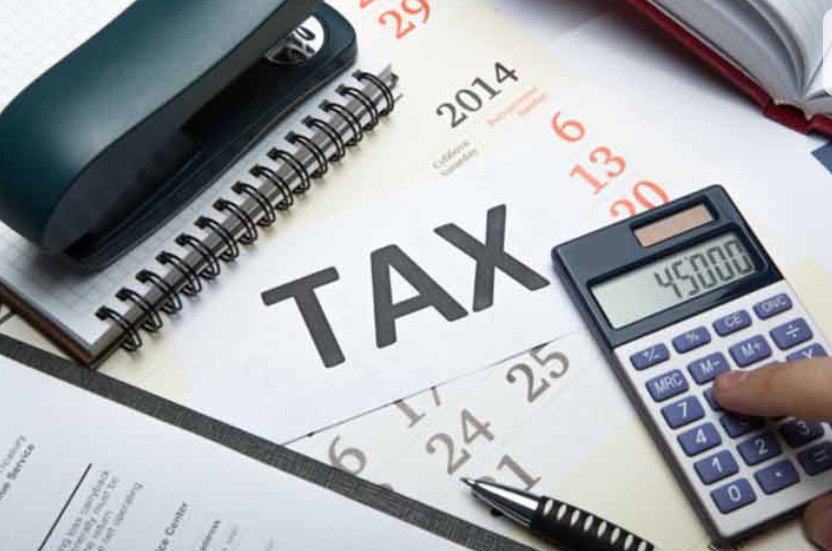
Attribution of compulsory taxes by government is main characteristic of financial system. Taxes are levies in every country to generate revenue. Rudimentarily to raise revenue for government expenditure, and for other purposes as well. Without taxes, government would be unable to meet demands of the societal needs. Taxes are crucial because government collect the revenue and use it to finance social projects.

Tax system based on equality module that rich in the society will pay more than the poor. According to Adam Smith’s four principle in his famous book ‘Wealth of Nations’. Adam Smith stated that taxes should be proportional to income, that is everybody should pay the same rate or percentage of his income as tax.

Another important principle of a accurate tax system as per Adam Smith laid a good deal of stress in his cannon theory of certainty. The tax which each individual is bound to pay ought to be certain and not arbitrary. The time of payment, method of payment, the quantity to be paid ought all to be clear and plain to the contributor and to every other person.

 A successful function of an economy requires that the people, especially business class, must be certain about the sum of tax that they have to pay on their income from work or investment. The sum, the time payments of tax should not be certain but the time and manner of it’s payment should also be convenient to the contributor.

The Government has to spend money on collecting taxes levied by it’s collection costs of taxes and nothing to the national product, they should be minimised as  far as possible. If the collection costs of a tax are more than the total revenue yielded by it, it is not worth while to levy tax.

 Productivity of taxes when levied to generate sufficient revenue from the government. If few taxes imposed yield a sufficient funds for the state, they should be preferred over a large number of small taxes which are expensive in collection. Fair elasticity at any the government need of more funds, it should increase it’s financial resources without incurring any additional cost of collection.

Simplicity of tax system must be simple, plain and intelligible to tax payer. System of taxation should include a large number of taxes that is economical. The government should collect revenue from it’s subjects by levying direct and indirect taxes.

 Reforms in Taxation Policy

Source: canarahbsc.life

Tax Policy in India has evolved as an important component of fiscal Policy which had to play core role in the planned development strategy. Taxation Policy cannot be same always it keep on changing with changes in economic scope of the country. To structure and strengthen in taxation Policy various reforms we’re implemented and many are in stream like recent change was good and services tax was country’s biggest reform.

The taxation enquiry commission 1953 was the first comprehensive attempt to review the tax system, it design to structure. Holist tax system for the country; covered central and state also local taxes. In 1985, Government of India introduced long term fiscal policy; this policy led to Modified System of Value Added Tax (MODVAT) in 1986.

Economic crisis of 1991, tax reforms we’re initiated as a part of structural reform process. Tax reform committee recommend major reforms to stabilize economic turbulence in the country. Changes are Reflection of custom duty, Rationalize the capital gain tax and wealth tax, Reduce excise duty, bring the service sector in the VAT tax system, Improving quality of tax Administration, reduction of corporate taxes and reduce the cost of imported inputs.

Reform of Direct Taxes

The government brought consolidated direct taxes. The income tax act was passed in 1961. Direct Taxes Enquiry Committee was constituted to look into affair of direct taxes, tax reform committee (1991) has recommended various point to consolidated direct taxes and task force on tax Policy and administration gave explained path to reform direct taxes in country. National Securities Depository Limited (NSDL) established tax information network to moderate the collection, and monitoring accounting.

Reform of Indirect Tax

The indirect tax Enquiry report in 1977 recommended valuable reform in indirect tax regime. Initiated modified value added tax (MODVAT) for commodities in 1986 to replay the central excise duty, extend to all commodities through Central Value Added Tax (CENVAT). State replace sale tax and have Value added tax.

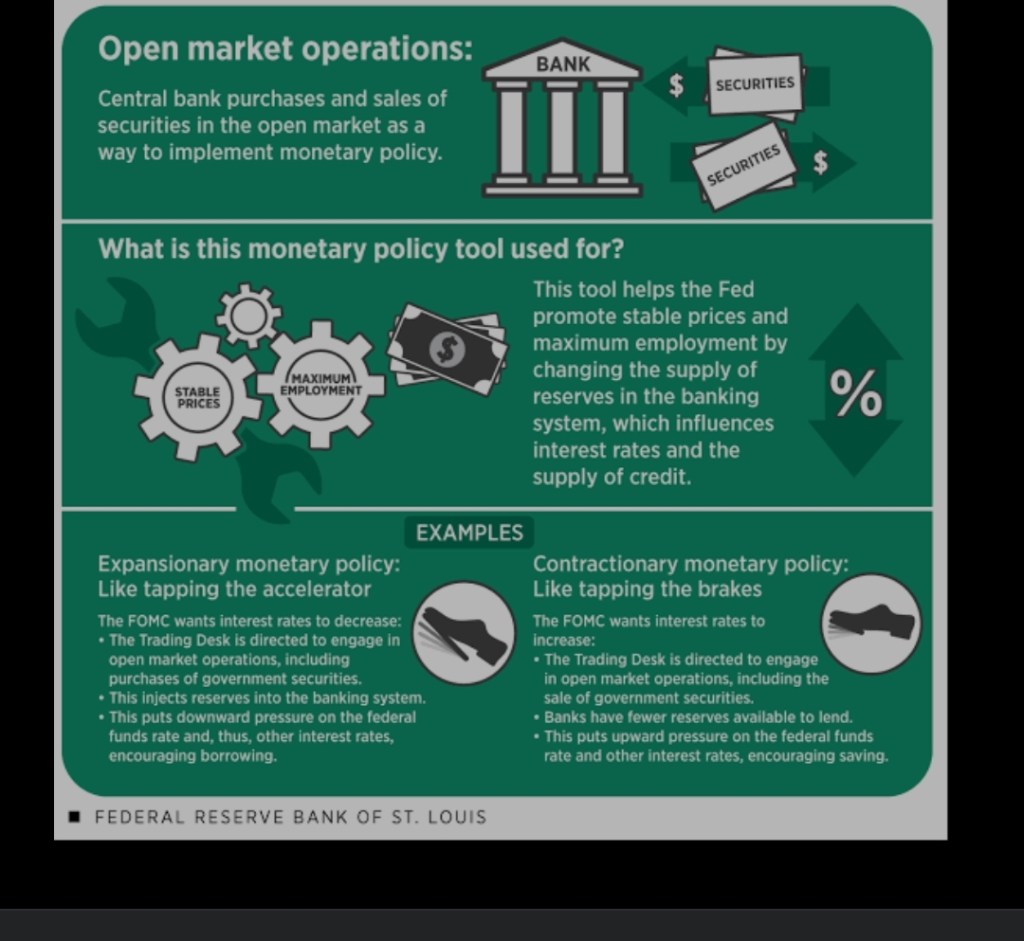
What is Open Market Operations ( OMO ) ?

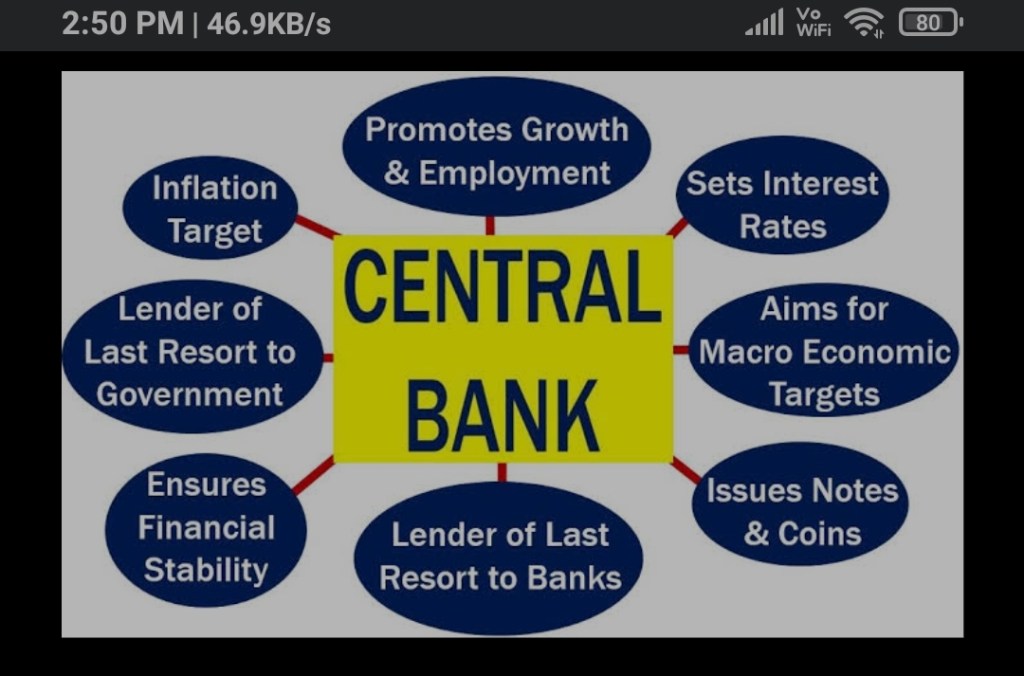
A central bank is the apex institution of the monetary and banking structure of the country.

It performs several important monetary  functions in the banking system.

According to A.C.L. Day a central bank ” helps and controls and stabilizes the monetary and banking system .

Along with several other essential functions, the central bank ‘s most important function is to control the credit creation power of commercial banks .

“Central Bank also known as Controller of Credit “

Credit control is the means to control the lending policy of commercial banks by the Central Bank .

The central bank controls credits in accordance with the needs of business and with a view to carrying out the broad monetary policy adopted by the state.

It adopted two methods of credit control :-

Quantitative Credit Control Methods

Qualitative Credit Control Methods

Open market is one of the methods of quantitative credit control used by the central bank .

What is open market Operations ( OMO ) ?

Open market Operations in general terms means dealing with government securities and bonds.

To elaborate more, Open Market Operations  refers to the sale and purchase of securities , bills and bonds of government as well as private financial institutions by the Central Bank . 

OMO is an activity by a central bank to give or take  liquidity in its currency to or from a bank or a group of banks.

There are two principle motives of open market Operations

• to influence the reserves of commercial bank in order to control power of credit creation 

• to affect the market rates of interest and supply of base money

In order to manipulate the short-term interest rate and the supply of base money in an economy, i.e to  indirectly control the total money supply, the central bank  buys and sells government securities, or other financial instruments.

 Monetary targets, such as inflation, interest rates, or exchange rates, are used to guide this implementation.

In the given figure , S is the supply curve of bank money which shifts to the left as S¹ showing a decrease in the supply of bank money from B to A , given the level of interest rate r .

When the central bank aims at an expansionary policy during a recessionary period , it purchases government securities from the commercial banks and institutions dealing with such securities .

The supply curve of bank money shifts from S¹ to S², showing an increase in the supply of bank money from B to C .

The bank will now lend more at the given rate of interest r.

As the result of change in supply of bank money in market through the open market operations

The market rates of interest also change .

A decrease in the supply of bank money through sale of securities will raise the interest market  rates and an increase in supply of bank money will reduce the market rate interest. ___________________________________________

Open Market Operation policy in India 

The  fact that India  is a developing country its  capital flows are very different from those in developed countries which influence   the Open Market Operation policy .

 India’s central bank, the Reserve Bank of India (RBI), has to make policies and use instruments accordingly.  RBI’s major source of funding and control over credit and interest rates was the cash reserve ratio (CRR) and the SLR (Statutory Liquidity Ratio). But after the reforms, the use of CRR as an effective tool was deemphasized and the use of open market operations increased. OMOs are more effective in adjusting. 

RBI use two types of OMOs :- 

Outright purchase (PEMO):

 It is  outright buying or selling of government securities. 

Repurchase agreement (REPO):

It  is short term, and is subject to repurchase.

OMOs are the most effective credit control instrument with the central bank and are preferred over other methods.

__________________________________________

Limitations of Open Market Operations

Although being an effective method OMO has certain limitations such as :-

Lack of Securities Market :-. It is important to have an organised security market system for central banks to buy or purchase securities on a large scale.

Unstable Cash Reserve Ratio:-  The buying and selling of securities and bonds by central banks highly influence the cash reserve ratio which is to be maintained at a fixed rate .

Penal Bank Rate  : – According to Profs Aschheim penal rate is one the necessary conditions for success of open market operations. If the penal bank Rate of discount is higher than the market rates of interest , the commercial bank can not increase their borrowings.

Pessimistic and Optimistic Attitude :- The pessimistic and optimistic attitude of the business community also limits the operations of open market policy. A business may be unwilling to take the risk of taking out a loan during a depression . 

Velocity of Credit and Money not Constant :- The velocity of credit increases during periods of brisk business activities and decreases in periods of falling prices. Hence ,the unstableness of velocity of credit and money constantly affects open market operations. 

Despite the given limitations , the central banks find the Open Market Operations instrument the most successful for controlling credit in developed as well as developing countries.