Place Of A Women In Society

It is rightly said woman is the backbone of society. From times immemorial, woman have been considered inferior to man in a patriarch society. Man has always treated woman not as an equal partner in life but as a mere slave. Biological superiority of man over woman has made him callous towards her. She has always being confined to the four walls of the house. Man has just treated her as an object of gratifying his sexual lust and physical desires.

Women have been denied most of the rights that give dignity of human beings. She has suffered a lot because of the whims and prejudices that man harbours towards her. But at the same time she has been called the better half of the man but unfortunately these are just sugar coated words. He abuses her physically, sexually, morally, economically and socially. There is no doubt that she has certainly been the victim of discrimination on the basis of sex. However, the scenario is changing very fast. The Constitution of India protects women’s rights by granting her equal status.
Woman have played a vital role in Indian struggle for freedom. Today, women are becoming more and more vigilant about their rights. They have discarded the Pardah system and have crossed the boundaries by exposing them in outer world. They are jostling with men in every walk of life braving their worth.

Education, political awareness and the impact of western culture have made her more vigil and aware about her rights. The concept of superiority of man is tottering. Today, woman have proved to be better doctors, administrators, pilots, academicians then many of the male counter parts. But despite this she is at the lower rung of the ladder in society. Though she is gaining economic independence but lately she is also exposed to sexual exploitation in offices and working places. Ironically, man still regards her as an unusual commodity.
Safety Of Women In Public Transport

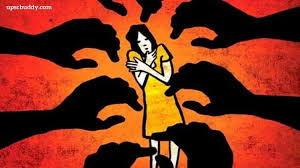
Have you ever travelled in a public transport or in any bus, train, or metro train? Do you think public transports are safe for women? Being a women do you feel safe while travelling in any mode of public transport? Public transport is on essential service that provides individuals with access to work, to an education and to all of life’s opportunities. And yet, the access of many women and girls to safe public transport options is threatend by the potential of being assaulted or victimised. The findings revealed that 59% of women use public transport like buses, trains and on demand taxis as it is affordable but only 9% of women feel public transport is completely safe, while 3% claim it is completely unsafe and rest 47% claiming that they felt somewhat safe using it during the day, but not at night. The fear of molestation, assault, eve-teasing and male-gaze makes women feel unsafe in modes of public transport. Everyday 7 out of 10 women face some kind of bad behaviour, molestation, male-gaze while travelling in a public transport. Travelling late at night alone in train, bus, on demand taxis is a topic of concern for women. As you remember the Nirbhaya case happened in 2012, a 23 year old girl was beaten, gang raped and tortured in a bus in which she was travelling. Lack of road lighting is a key factor behind feeling unsafe, with 40% women stating only major roads were well lit. Sanitisation is also a problem for women in public transport/bus. Train stations and trains are vulnerable spaces for women due to crowded space or, due to isolated areas where there is no one available to intervene and help in case of emergency. Sexual assault, molestation and even rape are reported on trains and have been on the rise. Not reporting sexual harassment is also a common occurence. Only 30% women report the case of molestation as the women fears that reporting the case will degrade her family’s reputation. More than 50% of the cases remain upreported and the culprit live freely in the society.

The cases against women in public transport are on a rise but the following written measures can be taken to stop the increasing and high pace of these evil acts. Improving the lighting on the roads and on railways; bus and metro stations will have a direct influence over the perception of safety. Having more entry and exit prints to ease congestion. Improving infrastructure including toilets; staircase and pedestrain bridges; publicising helpline numbers; having functional and visible helpdesks where women can get immediate assistance; Making reporting incidents simple and easy so that more women do it- this can help show the patterns and trends and lead to pre-emptive solutions.

In conclusion, i would like to say that the world is changing at a rapid pace and we are living in the 21st century in a technological world but still the women in our society doesn’t feel safe while travelling in a public transport. Women fear molestation, rape, assault and male-gaze in public transport. Measures should be taken to safeguard women as women are the important pillar of our society and safeguarding them is the need of the hour. Men and boys should also be taught to respect women instead of disrespecting them and seeing them as a sex object. Both women and men are equal in society and should be treated equally and respected to make the society a better place for living.

IS THERE A GLASS CEILING?

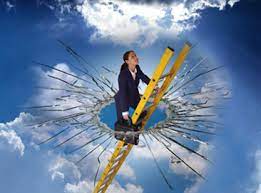
Glass ceiling is a metaphor that is used to represent invisible barrier that prevents women from reaching the highest executive levels within their respective organizations. This term was first popularized in the 80’s to describe the challenges women face when their respective careers.

The United States Federal Glass Ceiling Commission defines the glass ceiling as “the unseen, yet unbreachable barrier that keeps minorities and women from rising to the upper rungs of the corporate ladder, regardless of their qualifications or achievements”.

REASONS WHY IT STILL EXIST:

  • Psychological differences between men and women would be the main reason for this and it can account for up to 10 percent pay gap.
  • The need child care, housework and other chores outside of work depend heavily on women than on men which eventually leads them taking the back seat.
  •  College-educated women, more often than men, avoid majors that lead to higher-earning occupations.
  • Women are still expected to be deferential, polite and timid.

EFFECTS:

It leads to unwanted

  • Stress
  • Self doubt
  • Sense of Isolation
  • Depression
  • Sadness

CRACKING THE CEILING:

However nowadays women are appointed in higher positions faster than men in high income countries, but data shows that women have still a long way to go and equalize the number of men in these roles. Also the fact that bigger the company, lesser we are to see women at the helm which has to overcome and there is a need to achieve something closer to gender balance. Raise your voice. It is you who have to stand up for yourself. Also, apart from standing up for yourself try to raise awareness and address the problem so that others can also benefit from it. One can also crack this stereotype by normalizing the practice of parental leave. A study by the Institute for Labour Market Policy Evaluation in Sweden found that a mother’s earnings increase by about 7%  for each additional month her spouse takes off work. Pair that with the fact that 87% of women want men to take the parental leave available to them. Recruit equally across all levels and departments

At the end of the day, companies win when women and other underrepresented minorities are treated with fairness. When they focus on fairness and opportunity for all, everyone wins