

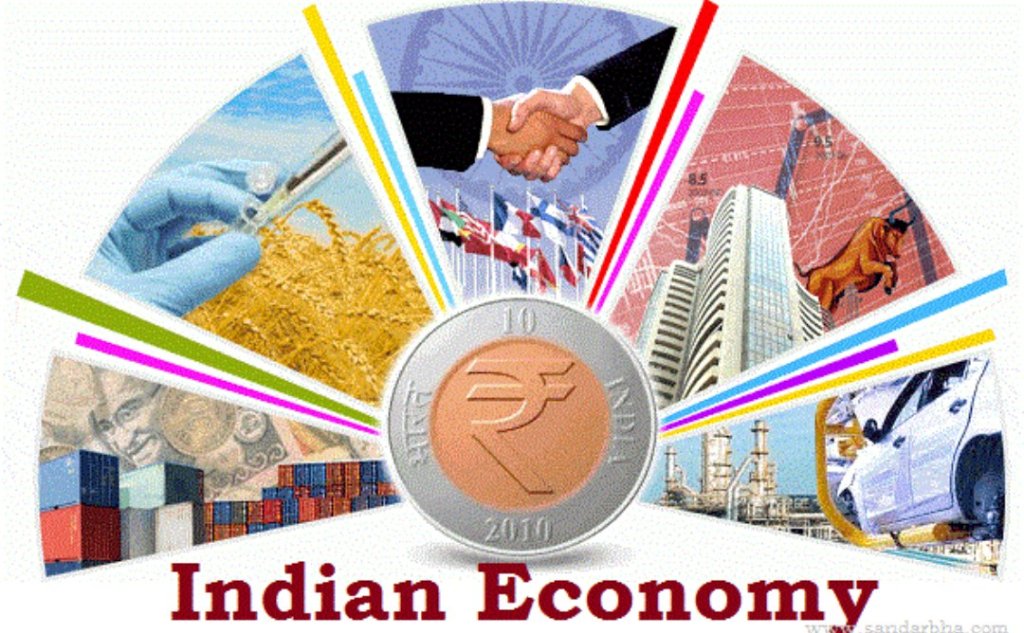
Indian economy at the time of Independence was in crucial state. This situation occurred due to the British Colonialism. After independence the Government changed plan for economic growth. The area of attention was shifted from agriculture to industry.
The growth of public enterprise generate employment and reduce poverty. In 1991, a revolution came into place in terms of liberalization, privatization and globalization that shaped the face of Indian economy. The Indian have the lowest per capital income and also the lowest consumption in the world.
The low income level consequent into low saving and thus small or no investment which end with low capital formation. Therefore, the dangerous cycle of poverty running in the country. The First Five Year Plan stated that the Indian economy remained more or less stagnant during colonial regime, because the basic conditions of economy was continuously remain the same.
The impact of modern industrialism in the later half of the 19th century was emerged through import of machine made goods from abroad that impact adversely on the traditional pattern of economic life, however unable to create the spark for Development. The conditioning of state led to decline of productivity especially those engaged in agriculture, the adverse effects. The consequence was a continuously increasing of employment. Hence, there could be no economic progress.
At the time of Independence 80% of population living in rural areas were engaged in agriculture for subsistence purposes; using traditional low productive technique for agriculture. The underdevelopment of Indian economy is reflected in it’s unbalanced occupational structure. Illiteracy was 84% , Communicable disease were widespread due to the absence of a good public health services, mortality rate was very high.
Agricultural activity contributed nearly 50% to Indian’s National Income. Mines, factories and small craftsmen work contributed only one – sixth, even lower than the numbers for trade, transport and communication. After independence, the government concern in the sphere of economic policy was to control persistent and severe inflationary pressure and to alleviate shortage of essential food items, which was increased by the partition of the country.
The industrial Policy Resolution of 1948 stamped as fundamental departure from earlier policy of laissez faire. Finally, the concept of planning Development programme under the auspices of the central government, was accepted and the planning commission was set up in March 1950 to make an assessment of the material capital and human resources of the country and to formulate a plan for the most effective and balanced utilisation of the countries resources.
India embarked upon the programme of planned economic development of the country with the formulation of first year plan that covered the period of 1951 – 1956. The second plan that followed was form 1956 – 1961 and third plan from 1961 to 1966. The other plans followed there after. The Eleventh Five Year Plan has been launched from 2007 – 2012; Twelfth Five year Plan was started from 2013 – 2014.
The first five year plan provided an inclusive general analysis the nature of the country’s Developmental problem and various options for mobilising resources and achieving Development with more equal distribution. There was special emphasis on the role of mass mobilization of idle rural labour and land reform. The plan optimistically project that saving and investment as a proportion of National Income would rise from an estimated 5 – 6% in the early 1950 to 20% by 1968 – 69.
S Chakravarti had mentioned some shortcomings of Indian economy. Such as
• The basis cause of development was seen as being an acute deficiency of material capital, which prevented the introduction of more productive technologies.
• The limitation on the speed of capital accumulation was seen to lie in the low capacity to save.
• It was assumed that domestic capacity to save and raised by means of suitable fiscal and monetary policies. There were structural limitations preventing conversion of saving into productive investment.
• The inequality in income distribution was considered to a bad thing, a precipitate transformation of the ownership of productive assets was held to be detrimental to the maximization of production and savings.
• Agriculture was subject to secular diminishing returns, industrialization would allow surplus labour currently under employed in agriculture to be more productively employed in industry.
 Eduindex
You must be logged in to post a comment.