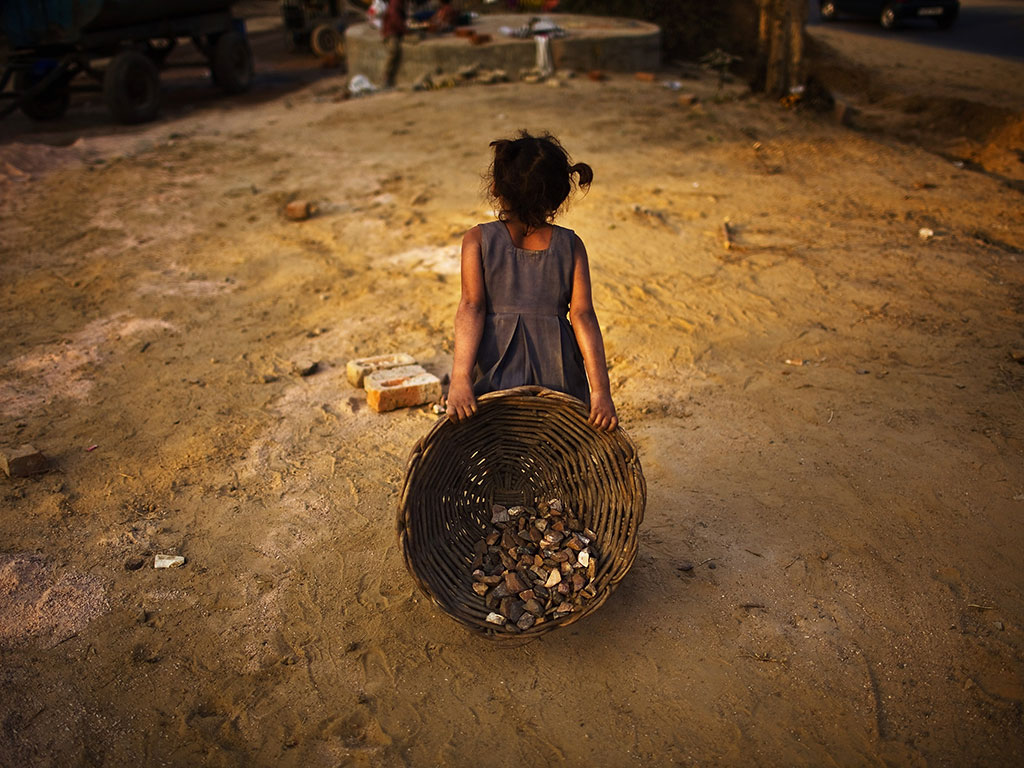
Child Labour in India.

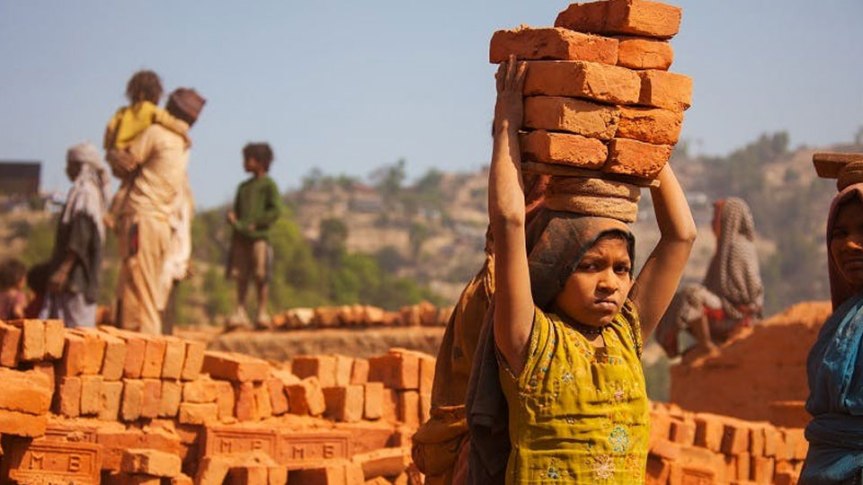
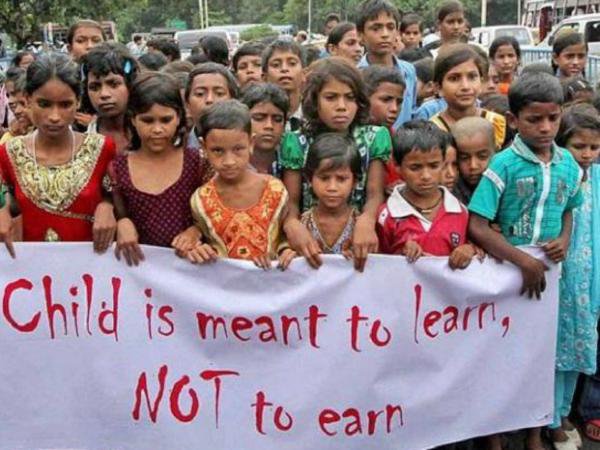
Child labor is the deprivation of children’s childhood, affecting their ability to attend regular school and exploiting them through all forms of work that are mentally, physically, socially and morally harmful.

After gaining independence from colonial rule, India enacted many constitutional protections and child labor laws. The Constitution of India in the principles of basic rights and public policy prohibits child labor under the age of 14 in factories, mines, castles or other dangerous occupations (Article 24). The Constitution also stipulated that by 1960 India would provide all children aged 6 to 14 with the infrastructure and resources for compulsory free of charge education . (Articles 21-A and 45).
In 2011, the Indian Census found that of the 259.64 million children in this age group, the total number of child laborers [ages 5-14] was 10.1 million. The problem of child labor is not unique to India. Approximately 217 million children work worldwide, many of whom work full-time.

In India child labour is defined as the involvement of children under the age of 17 in economically productive activities, with or without compensation and wages . Such participation can be physical, mental, or both. This work includes part-time or unpaid work on farms, family businesses, or other economic activities such as cultivation or milk production for sale or personal consumption. The Government of India divides child labor into two groups. The main workers are those who work more than 6 months a year. And marginal child laborers are workers who work all year round, but less than six months a year. In 1979, the Government of India established the Gurupadswamy Commission to learn about child labor and how to fight it. The Child Labor Probation and Regulation Act was enacted in 1986 on the recommendation of the Commission. A national child labor policy was developed in 1987 focusing on the rehabilitation of children working in dangerous professions. Since 1988, the Ministry of Labor and Employment has established approximately 100 industry-specific national child labor projects to rehabilitate child laborers.

The Government of India has enacted numerous laws, organizations and institutions to combat the issue of child labor. Some initiatives include child labor bans and regulations, laws prohibiting the employment of children in certain occupation and regulating the working conditions of children. The National Child Labor Policy attempts to take a sequential approach with a primary focus on the rehabilitation of children working in dangerous professions and processes of works. The Ministry of Labor and Employment is responsible for providing and supervising a range of child labor policies in India. In addition, as Osment reported, NGOs such as Care India, Child Rights and You, and Global March Against Child Labor were implemented to tackle child labor through access to education and resources. However, these efforts were of little success.

Non-governmental organisations:
Bachpan Bachao Andolan, Child Rights and You, ChildFund, CARE India, GoodWeave India,Talaash Association, Global March for Child Labor, and many other NGOs are campaigning to eliminate child labor in India. increase.

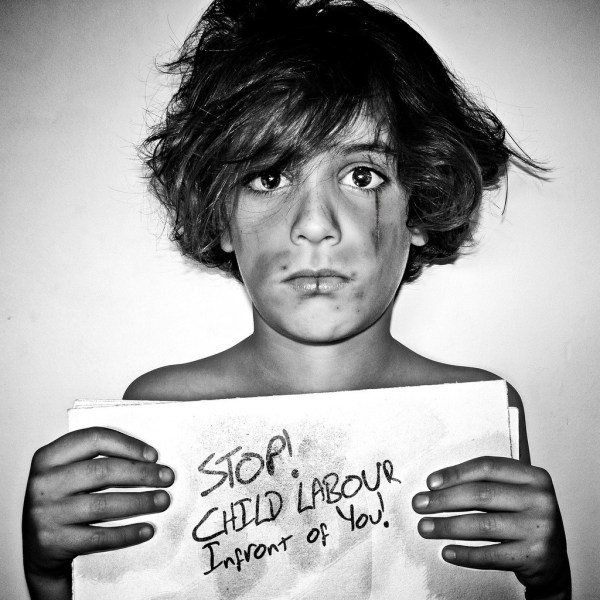
CHILD LABOUR

See the source image

Child labor — a social ill that continues to plague Indian society

We live in 21st century which is an era of a modern and advanced society. There are some dark truths that run deep in our roots, Child Labour being one of them. While some of us are aware about it, many others deny to acknowledge this truth. Child Labour occurs when children are forced to take up work at an age they need to study and enjoy the phase of innocence. Child Labour leads to the loss of childhood and escalates the exploitation of children in various forms. India faces situations where children are forced to work under adverse conditions. Despite Laws against Child Labour, many children remain exploited as cheap Labour as the authorities are unable to implement strict laws and actions to protect children.

Laws in India

The Child Labour (Prohibition and Regulation) Act, 1986, was the only enacted provision by the Indian Constitution against child Labour and its atrocities. Other provisions stated by the Indian Constitution are: Article 24 of the Indian Constitution states that no child below the age of fourteen shall employ in any hazardous employment or factory but not in non-hazardous industries. Article 39(f)) of the Indian Constitution states that children and young adults are to be protected against moral and material abandonment or any forms of exploitation. Unfortunately, these laws and regulations lack active and proper implementation and enforcement.

Root of child labour

The leading cause of child Labour is extreme poverty in India. To supplement their parents income or being the only wage earners in the family, children end up as Labourers in various industries. Hence, enforcement alone cannot help solve it. The Government has been laying a lot of emphasis on the rehabilitation of these children and on improving the economic conditions of their families. Child Labour is quite relevant in India due to poor schooling opportunities and the country’s high poverty rate. The other major factor is that children provide cheap labour, the person who wants labour has to pay less to them than adult labour. The child can be commanded more than an adult. The pull factor of the child labour is the profit maximization. The causes to failure to control the child labour are poverty, low wages than adult, unemployment, absence of schemes for family allowance, migration to urban areas, large family size, children being cheaply available, non existence of strict provisions for compulsory education, illiteracy, ignorance of parents and traditional attitudes13.

CONCLUSION

Child labour is a significant problem in India. The prevalence of it is shown by the child work participation rates which are higher in Indian than in other developing countries. Equal opportunities for development to all children during the period of growth should be our aim. For this purpose even we citizen should join hands with government and other institutions which are set up for this purpose. Educating the child can be a solution for solving the problem of child labour. To provide compulsory primary education and in order to reduce the burden on parents to meet the expenditure for their children’s education, while they are struggling for a day’s meal, our Government had allotted funds. But due to the lack of awareness most of the poor families are not availing these facilities. So, proper steps have to be taken to create awareness.

Child Labor – That can be your child too


Article by – Shishir Tripathi
Intern at Hariyali foundation in collaboration with Educational News

Every child has the right to live a beautiful childhood filled with a lot of memories of laughter, enjoyment and mischief. It is basically a very lovely process of modeling an infant into a responsible, smart, endearing, productive and a well developed human being. At this tender age, proper nurturing of a kid is really important. A child demands attention, love, care and a hand above his head that will protect him from all the adversities and problems in life.


But not every kid is blessed to have a childhood as described above. According to UNICEF and ILO, the total number of children engaged in child labor, within the age group 5-17 in the year 2013, is 168 million.


Talking about India itself becomes far more essential and sensible too, when one is living in India. According to 2011 census, out of 259.64 billion children, 10.1 million children were working as child laborers within the age group of 5-17.

The constitution of India in the Fundamental rights and the Directive Principles of State Policy prohibits child labor in any mine or factory or castle or engaged in any other hazardous employment.


The Child Labor Prohibition and Prevention Act was passed on 23 December, 1986. Further in 2016, certain amendments were made in the act. The amendment has introduced the concept of adolescent labor for the first time. An adolescent has been defined as a person between the ages of 14-18 years. The amendment permits employment of adolescent labor except in hazardous processes or occupation. The number of hazardous occupations and processes has been reduced from 83 to only 3. The offences under the Act have now been made compoundable and cognizable notwithstanding the provisions of the Criminal Procedure Code. The Child Labor Act provides for rehabilitation of children and adolescent who have been victims under the provisions of the Child Labor Act. It provides for setting up of the Child and Adolescent Labor Rehabilitation Fund in which all the amounts of penalty have to be realized. Liability has been affixed upon the parents and guardian of the affected child/children separately from the employers. The Act provides for increased penalty and imprisonment which shall not be less than 6 months and may extend up to 2 years and fine which may vary between Rs.20, 000 to Rs. 50,000.


Despite all this, incidents of child thefts are increasing day by day. Very few of those get rescued by Police. The others, where do they go, what they do, how do they live, are all unanswered questions to the families and the society.

But deep down everyone knows that those missing children are the ones cleaning dirty utensils in the roadside dhabas and in the fancy restaurants of city too. They are forced to do begging, they are made physically handicapped, they are brutally beaten and even exploited sexually. They are sent to abroad to work in mines, and do child labor. They are sold as servants to the so called big people and they even face trafficking basically meant for their sexual exploitation.


According to the latest data from National Crime Records Bureau, 63,407 children went missing in 2016 in India. On an average, 174 children in India go missing per day.


All over the world, children are being exploited through child labor. This mentally and physically dangerous work interferes with schooling and long-term development. Innocent little children are thrown into such a hazardous world that put them at the risk of getting a disease, being physically handicapped and simply death.


A child needs love. Love by his family, and the society. He has full right to live an amazing childhood and the right to cherish memories to be made with family and school too. Several NGOs are working to prevent children from child labor and providing them the right childhood by the means of either sending them to their real parents or in some cases adoption.


Through this article just carry one lesson with yourself that a small attempt by your side to stop child labor can help a child living a beautiful childhood and hence a beautiful life.

Whenever one witnesses a child being engaged in child labor, or finds a missing child, they must report the police station or call the helpline 1098.


A missing child is a parent’s worst nightmare. He or she can be your child too.


Hence, wake up and stand boldly against Child Labor.

Child Labour Prohibition and Regulation Act – A great step to eradicate child labour

Children are one of the vulnerable groups in the society. Child labour is socio-economic phenomenon. This phenomenon is trapped in vicious circle by poverty, illiteracy, unemployment, demographic expansion, deep social prejudices and above all the government interest are commonly consider as the most prominent causative factors for large scale employment children.

As per the Child and Adolescent Labour (Prohibition and Regulation) Act, 1986, amended in 2016 (“CLPR Act”), a “Child” is defined as any person below the age of 14, and the CLPR Act prohibits employment of a Child in any employment including as a domestic help. It is a cognizable criminal offence to employ a Child for any work. Children between age of 14 and 18 are defined as “Adolescent” and the law allows Adolescent to be employed except in the listed hazardous occupation and processes which include mining, inflammable substance and explosives related work and any other hazardous process as per the Factories Act, 1948.

Indian constitution provides many provisions to the child, prohibited child labour and it also mention the rights of the child. They are,

The Article 15 : The state shall not discriminate against any citizen on grounds only of race, religion, caste, sex and place of birth.


Article 23: prohibition of employment children from factories


Article 39: certain principles of policy to be followed by state that are referring to the secure of children that the health and strength of workers, men and women and the tender age of age children are not abused and that citizens are not forced by economic necessity to enter evacuation and unsuited their age and strength.


Article 45: provision for early childhood care and education to the children below the age of six years.


Article 21-A: right education the state shall provide free and compulsory education to all children age of six to 14 year.


Article 24 of Indian Constitution says Prohibition of employment of children in factories, etc. which means child below the age fourteen years should not be employed in work in any factory or mine or engaged in any other hazardous employment.

Child Labour Technical Advisory Committee


The Central Government may, if it thinks it to be necessary can constitute an advisory committee i.e. the Child Labour Technical Advisory Committee by giving notification about it in the Official Gazette. It is the duty of the Committee to advise the Central Government if there’s a need to add occupations or processes to the Schedule. The Central Government appoints the members of the Committee but the Committee should not exceed more than 10 members. The Committee shall also consist of a Chairman. There isn’t any limitation on the number of meetings Committee shall have. The Committee shall meet whenever they feel necessary and the meetings shall be regulated according to the procedure which shall be decided by them.
The Committee may itself constitute one or more sub-committees if they feel a need to do so.
The Chairman and other members of the Committee are entitled to an allowance.

THE CHILD LABOUR (PROHIBITION AND REGULATION)AMENDMENT ACT, 2016

Objectives of the Act

Prohibit the engagement of children in all occupations and to prohibit the engagement of adolescents in hazardous occupations and processes and thematters connected therewith or incidental thereto

Under the Child Labour (Prohibition and Regulation) Amendment Act, 2016, children younger than 14 years can now work in family enterprises and farms after school hours and during holidays. Children working as artists in the audio-visual entertainment industry, including advertisement, films, television serials or any such other entertainment or sports activities, except the circus, have also been granted exemption, provided the work does not affect their school education.
Besides, the Act provides banning employment of children between 15-18 years in hazardous works, in sync with the Right to Children to Free and Compulsory Education Act 2009.

The Bill enhances the punishment for employing any child in an occupation. It also includes penalty for employing an adolescent in a hazardous occupation.

The penalty for employing a child was increased to imprisonment between 6 months and two years (from 3 months-one year) or a fine of Rs 20,000 to Rs 50,000 (from Rs 10,000-20,000) or both.


The penalty for employing an adolescent in hazardous occupation is imprisonment between 6 months and two years or a fine of Rs 20,000 to Rs 50,000 or both.
anyone repeats offences like employing child or employing adolescents in hazardous occupations mentions in this act under section 3A, they shall be punishable with imprisonment for a term which shall not be less than one year but which may extend to three years.

[section 2] of The Child Labour (Prohibition & Regulation) Act, 1986 defines, ‘child’ means a person who has not completed his 14 years of age.

[section 2 (i)]
(i ) “adolescent” means a person who has completed his fourteenth year of age but has not completed his eighteenth year;

[section 3] No child shall be employed or permitted to work
in any occupation or process (The Child Labour (Prohibition and
Regulation) Amendment Bill, 2012 ) under this section, no child shall be employed are permitted to work in any establishment, occupation or process. Which means child should not be employed are permitted to work anywhere. but according to the [section 3 (2)] child is permitted to work at their own family business and audio & visual industry. provided that such work should not hamper or effect School education of a child.

[section 3 (2)]
According to the new amendment, child is allowed to work at certain places mentioned below.
(a) helps his family or family enterprise, which is other than any hazardous occupations or processes set forth in the Schedule, after his school hours or during vacations;

(b) works as an artist in an audio-visual entertainment industry, including advertisement, films, television serials or any such other entertainment or sports activities except the circus, subject to such conditions and safety measures, as may be prescribed: Provided that no such work under this clause shall effect the school education of the child.

Explanation.—
For the purposes of this section, the expression,

(a) ‘‘family’’ in relation to a child, means his mother, father, brother,sister and father’s sister and brother and mother’s sister and brother;
(b) ‘‘family enterprise’’ means any work, profession, manufacture or business which is performed by the members of the family with the engagement of other persons;

(c) ‘‘artist’’ means a child who performs or practices any work as a hobby or profession directly involving him as an actor, singer, sports person or in such other activity as may be prescribed relating to the entertainment or sports activities falling under clause (b) of sub-section
(2).section 3A] No adolescent shall be employed or permitted to work in any of the hazardous occupations or processes set forth in the Schedule:

THE SCHEDULE

(1) Mines.
(2) Inflammable substances or explosives.
(3) Hazardous process.

Explanation.—
For the purposes of this Schedule, “hazardous process” has the meaning assigned to it in clause (cb) of the Factories Act, 1948.’
(cb) “hazardous process” means any process or activity in relation to an industry specified in the First Schedule where, unless special care is taken, raw materials used therein or the intermediate or finished products, bye-products, wastes, or effluents thereof would-
(i) cause material impairment to the health of the persons engaged in or connected therewith, or
(ii) result in the pollution of the general environment:

[section 7] Hours and period of work (adolescent only)

(1) No adolescent shall be required or permitted to work in any establishment in excess of such number of hours, as may be prescribed for such establishment or class of establishments.

(2) The period of work on each day shall be so fixed that no period shall exceed three hours and that no adolescent shall work for more than three hours before he has had an interval for rest for at least one hour.

(3) The period of work of a adolescent shall be so arranged that inclusive of his interval for rest, under sub-section (2), it shall not be spread over more than six hours, including the time spent in waiting for work on any day.

(4) No adolescent shall be permitted or required to work between 7 p.m. and 8 a.m.

(5) No adolescent shall be required or permitted to work overtime.

(6) No adolescent shall be required or permitted to work in, any establishment on any day on which he has already been working in another establishment.

[section 8] Weekly holidays (adolescent only)
Every adolescent employed in establishment should be allowed to have a holiday for a whole day once in a week.

[section 9] Notice to Inspector
Every employer who employed adolescent at his establishment should intimate to the inspector appointed by the government within 30 days from date of employment of child.

[Section 10]. DISPUTES AS TO AGE. (adolescent) –
If any question arises between an Inspector and an occupier as to the age of any adolescent who is employed or is permitted to work by him in an establishment, the question shall, in the absence of a certificate as to the age of such child granted by the prescribed medical authority, be referred by the Inspector for decision to the prescribed medical authority.

[section 11] Maintenance of register any establishment where adolescent is employed or permitted to work, a register should be maintained by the owner of establishment and should be made available all the times during working hours for inspection by Inspector appointed by the government for this purpose. The register should contain following details

  1. Name of the child
  2. date of birth of the child
  3. number of working hours and internal for rest to child
  4. nature of work dealing child
  5. any other particulars
  6. Section 13 ] Healthy and Safety (adolescent )

Appropriate government is having power make rules on the following matters for the health and safety of the children employed or permitted to work in any establishment or class of establishments.

(a) cleanliness in the place of work and its freedom from nuisance;
(b) disposal of wastes and effluents;
(c) ventilation and temperature;
(d) dust and fume;
(e) artificial humidification;
(f) lighting;

  1. (g) drinking water;
    (h) latrine and urinals;
    (i) spittoons;
    (j) fencing of machinery;
    (k) work at or near machinery in motion;
    (l) employment of children on dangerous machines;
    (m) instructions, training and supervision in relation to employment of children on dangerous machines;
    (n) device for cutting off power;
    (o) self-acting machines;
    (p) easing of new machinery;
    (q) floor, stairs and means of access;
    (r) pits, sumps, openings in floors, etc.;
    (s) excessive weights;
    (t) protection of eyes;
    (u) explosive or inflammable dust, gas, etc.;
    (v) precautions in case of fire;
    (w) maintenance of buildings; and
    (x) safety of buildings and machinery

Constitution of Child and Adolescent Labour Rehabilitation Fund

Section 14B. (1) The appropriate Government shall constitute a Fund in every district or for two or more districts to be called the Child and Adolescent Labour
Rehabilitation Fund to which the amount of the fine realized from the employer of the child and adolescent, within the jurisdiction of such district or districts, shall be credited.

(2) The appropriate Government shall credit an amount of Rs. 15000/- to the Fund for each child or adolescent for whom the fine amount has been credited under sub-section
(1).

(3) The amount credited to the Fund under sub-sections (1) and (2) shall be deposited in such banks or invested in such manner, as the appropriate Government may decide.

(4) The amount deposited or invested, as the case may be under sub-section (3), and the interest accrued on it, shall be paid to the child or adolescent in whose favour such amount is credited, in such manner as may be prescribed.

Explanation:—


For the purposes of appropriate Government, the Central Government shall include the Administrator or the Lieutenant Governor of a Union territory under article 239A of the Constitution.

Rehabilitation of child or adolescent
14C. The child or adolescent, who is employed in contravention of the provisions of this Act and rescued, shall be rehabilitated in accordance with the laws for the time being in force.

Fails to pay


Section 14D (2) If the accused fails to pay such amount for composition of the offence, then, the proceedings shall be continued against such person in accordance with the provisions of this Act.

Inspite of all the measures taken by the government, child labour still prevails in the society. Let us hope for a better future where child labour will be eradicated completely.


Broken wings

“They began work at 5:30 and quit at 7 at night. Children six years old going home to lie on a straw pallet until time to resume work the next morning! I have seen the hair torn out of their heads by the machinery, their scalps torn off, and yet not a single tear was shed, while the poodle dogs were loved and caressed and carried to the seashore.”

Mother Jones

In the present morden society where everyone run towards their dreams and goals there are people who wish to have ‘Going to school‘ as their unattainable dream!

When we make plans with our friends to dine in a fancy restaurants and complain about how less our pocket Money are! There are children who less then 10 years old yearning money by working more than their Age!

Get admitted in one of the top Schools/University and complaining ‘there is lot to study I want to party & chill’. There are people who dropped out of there schools/University and dreaming your normal life!

In their very own room laying on the fluffiest bed having a great wifi with latest gadgets and your own private space. Where some people are dead frozen while sleeping on streets!

While our Pantries are filled with things need for atleast a month. There are some people dieing of starvation!

I am not saying all the west things to make you all feel bad. I just want you all to feel thankful for the life which we are living is the biggest dream for millions of people out there.

It was a beautiful evening of my senior secondary year. I was returning home from school with my friends on our school bus. It’s the busiest hour in the city so the small travel from school to home took 40 mins. Me and my friends usually used to take a short naps during the travel. But that day was our last day of our exams so we decided let’s have fun!

Our bus stopped on the busiest junction. I turned my head to enjoy the weather outside. My eyes fall on a young girl around 5 years old with red pakoda skirt carring flowers and small accessories from one vehicle. She is trying to sell them before the signal turn from red to green. It’s not the first time I have seen such scene but what made me realise there is something wrong is beside the girl on the platform I saw a beautiful little girl around the girls age. She is carring a school bag on her back and holding her hands with her elder brother.

My bus started moving but I can’t forget the scene I just saw. Somehow I felt guilty in my heart eventhough I am totally unrelated to her situation.

I tried to distract myself by talking to my friends but my eyes keep looking through the window. The next scene hit me even hard there are two children doing their homework on their platform home which is less than 5 feet. There is no lamp in their house they are using the street lamps!

I been traveling this path since I started my high school but I never noticed this! This is what my first taught but I am wrong. When I refreshed my memory I have seen thi place on my first day to school too! And during that time as soon as I saw this slum area I turned my head to look in the opposite area. When this memory comes back I am really ashamed of myself.

I asked my friends to look outside the window of our bus they all looked out they give me a glare like what’s wrong everything seems normal. I started to point out the people who I saw. When they all saw the same thing I saw with my exaggerated explanation. I noticed a rare seen emotion on my friends faces that’s empathy!

In our next school activity we informed it to our class coordinator can we do anything regarding this. Our school suggested that we can do a charity fair!

I know it’s a small pin in a huge ocean but we did some to make their lives better. Even it’s a little thing after seeing the smiles on the children faces we all felt like we had done a big thing. I don’t know how to say but trust me that feeling felt so great.

When we born in this world we can’t decide whom our parents are or how our lifestyle will be. So begin born poor/disabled is not their fault.

But why should this society wants to broke their dreams and shatter their hopes?

People will answer simply that they are not responsible for this people. But I want to ask what makes us different from other living this is Humanity if this humanity is gone are we still humans?

“If we can’t begin to agree on fundamentals, such as the elimination of the most abusive forms of child labor, then we really are not ready to march forward into the future.”

Alexis Herman