ESSENCE OF INDIAN TRADITION

HERITAGE

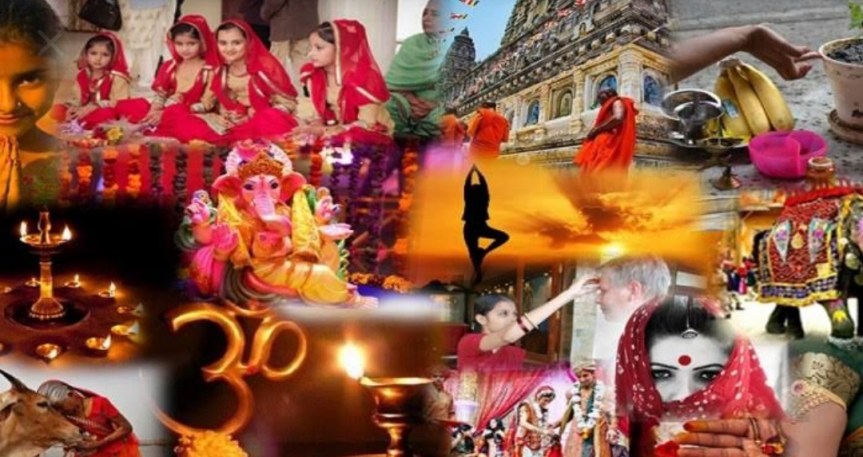
The word heritage is defined as “Anything transmitted from ancestors or past ages”. The Indian heritage is often best appreciated concerning different historical periods. We are the inheritors of a cultural and non-secular tradition stretching over 4000 years.

CULTURE AND CIVILIZATION

The word ‘culture’ and ‘civilization’ are often used as the same. However, they have their own clearly defined meanings which differentiate them.

CIVILIZATION

‘Civilization’ means making better ways of living and making use of nature to satisfy daily needs. Civilization includes developing societies into politically well-defined groups that work together for improved conditions of life in terms of food, dress, and communication.

CULTURE

The English word ‘Culture’ is coined from the Latin word ‘cult or cultus’ which means tilling, or cultivating or refining and worship. ‘Culture’ refers to the inner self, a refinement of mind, soul, and heart. Culture includes various art forms and sciences, music and dance, and several higher activities of human life which also are classified as cultural activities. On the whole, it is cultivating and refining a thing to an extent such that its outcome evokes our admiration and esteem. This is often practically an equivalent as ‘Sanskriti’ of the Sanskrit language.

CHARACTERISTICS OF CULTURE

 • Culture is learned and purchased

 • Culture is shared by a cluster of individuals

 • Culture is cumulative

 • Culture changes

 • Culture is dynamic

 • Culture gives us a variety of permissible behaviour patterns

 • Culture is diverse

 • Culture is ideational

CULTURAL HERITAGE

Cultural development may be a historical process. Cultural heritage includes all those aspects or values of culture transmitted to citizenry by their ancestors from generation to generation. They’re cherished, protected, and maintained by them with unbroken continuity, and that they feel pleased with it. Architectural works like monuments, material artifacts, the intellectually achieved properties, philosophy, treasures of data, scientific inventions, and discoveries also are a part of heritage.

TRADITIONAL KNOWLEDGE

Traditional knowledge or ‘local knowledge’ may be a record of human achievement in comprehending the complexities of life and survival in often unfriendly environments. Traditional knowledge, which can be technical, social, organizational, or cultural was obtained as a part of the good human experiment of survival and development. We have to analyse, evaluate conserve, and revive the normal Knowledge Systems for the economic betterment of the planet in a holistic manner. It is that the knowledge system possessed by various communities across the world. Such knowledge has been accumulated, used, and has been bequeathed through several generations. It’s usually regarding the natural surroundings of the community and includes agricultural knowledge like manner of cultivation, environmental knowledge, and knowledge of natural medicines.

TYPES OF TRADITIONAL KNOWLEDGE

 • Cultural knowledge

 • Artistic knowledge

 • Biodiversity or natural resources

 • Agricultural knowledge

 • Sacred knowledge

CHARACTERISTICS OF TRADITIONAL KNOWLEDGE

 • It has been handed on from generation to generation.

 • In many cases, it’s transmitted orally for generations from person to person.

 • It is being considered by the communities as a gift of God and not as personal property.

 • This knowledge generally distinguishes one community from another community.

 • It is typically impossible to spot the first creator of the knowledge.

 • It is learned by observing continuously, experiencing, and practicing it.

 • It is inseparable a part of the communal and cultural life of its holders.

 • It is typically related to biological resources.

NEED FOR SHIELDING TRADITIONAL KNOWLEDGE

 • Lack of proper legal policy framework for the protection of traditions.

 • Exploitation of traditional knowledge and indigenous resources.

 • Patenting the medicinal plants and their derivatives.

 • Commercial interests violate indigenous property rights.
The Origin Of Vedic Civilization

Early Vedic Age

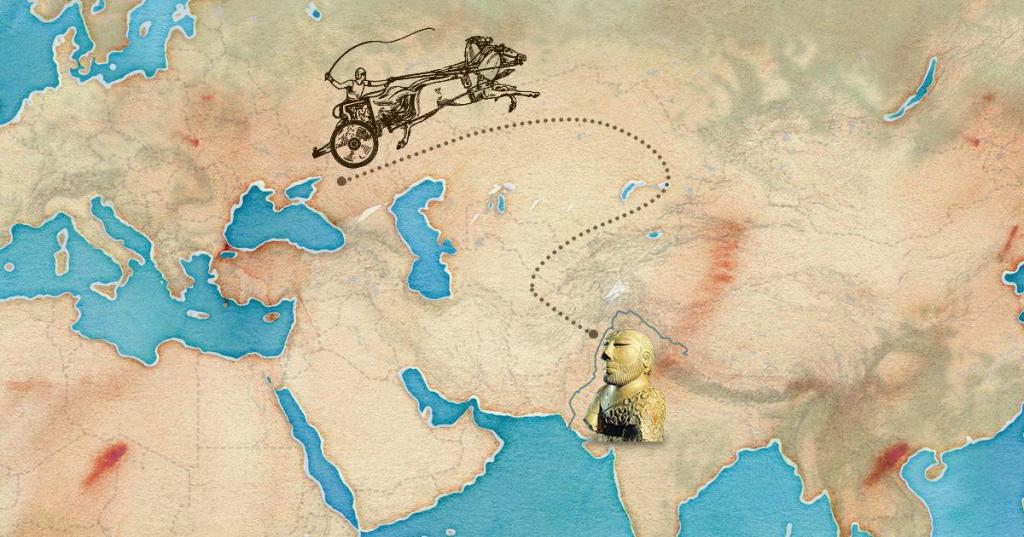
The early Vedic age is historically dated to the second half of the second millennium BCE. Historically, after the collapse of the Indus Valley Civilisation, which occurred around 1900 BCE, groups of Indo-Aryan peoplesmigrated into north-western India and started to inhabit the northern Indus Valley. The Indo-Aryans represented a sub-group that diverged from other Indo-Iranian tribes at the Andronovo horizon before the middle of the 2nd millennium BCE, The Indo-Iranians originated in the Sintashta culture, from which arose the subsequent Andronovo horizon. The Indo-Aryans migrated through the adjacent Bactria-Margiana area (present-day northern Afghanistan) to northwest India, , followed by the rise of the Iranian Yaz culture at c. 1500 BCE, and the Iranian migrations into Iran at c. 800 BCE.

The Indian Civilization an Unbroken Tradition

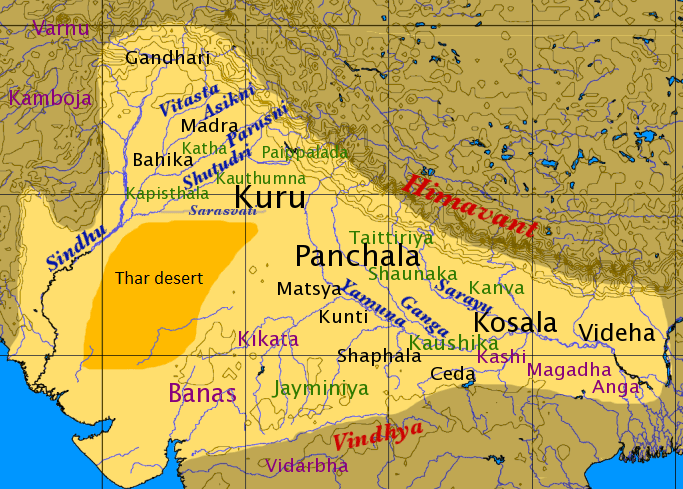
Indian writers and archaeologists have opposed the notion of a migration of Indo-Aryans into India, and argued for an indigenous origin of the Indo-Aryans. In this view, “the Indian civilization must be viewed as an unbroken tradition that goes back to the earliest period of the Sindhu-Sarasvati (or Indus) tradition (7000 or 8000 BCE).” Though popular in India, and reflecting Indian views on Indian history and religion,the idea of a purely indigenous origin of the Indo-Aryans is outside the academic mainstream.

The Aryans

The knowledge about the Aryans comes mostly from the Rigveda-samhita,i.e. the oldest layer of the Vedas, which was composed c. 1200–1000 BCE. They brought with them their distinctive religious traditions and practices. The Vedic beliefs and practices of the pre-classical era were closely related to the hypothesised Proto-Indo-European religion,and the Indo-Iranian religion. Funeral sacrifices from the Sintashta-culture show close parallels to the sacrificial funeral rites of the Rigveda, while, according to Anthony, the Old Indic religion probably emerged among Indo-European immigrants in the contact zone between the Zeravshan River (present-day Uzbekistan) and (present-day) Tajikistan.It was “a syncretic mixture of old Central Asian and new Indo-European elements”, which borrowed “distinctive religious beliefs and practices” from the Bactria–Margiana culture, including the god Indra and the ritual drink Soma.

EVOLUTION VS CIVILIZATION

Humans are gradually developing themselves since the very beginning of the creation. They are continuously evolving. What is most important while evolving is to maintain the civilization, so that the society in which a person lives, does not get harmed or affected. Today, we have come a long way in terms of evolution but the question is, would we be able to protect the civilization?


Animal abuse by humans is not a new thing. Though cruelty to animals is a punishable offence, we, the so-called civilized humans cannot resist ourselves from tormenting those helpless and innocent creatures, just for mere entertainment. Our planet is blessed with diverse species, but because of the cruelties caused upon them some of the very beautiful species are on the verge of extinction. The humans have threatened their existence to such an extent that the Earth is no more a safe place for the animals to live. Being the strongest species in the entire eco system, humans are going beyond their limits to commit brutality on the pure and beautiful animals.


Recently, in a small village called Malappuram, in Kerala an extremely heinous crime was attempted by some of the villagers on a 15 years old pregnant elephant, who came into the village in search of food. The innocent elephant was fed a pineapple loaded with firecrackers by some of the villagers. The crackers exploded in her mouth causing severe injury to her tongue and jaws. To get some relief and to save her unborn child the elephant ran to a river nearby and stood in the water for a long time, but inspite of her brave attempts, she could not save herself and her child. These people do not deserve to be called civilized. How much regression is needed to commit such an atrocious crime to a guiltless, pure animal, is really not known. Since the humans have been thinking from a very long time now that they are the superior species amongst all, so, they can do anything they want and most of the times they even do not get punished for these mischievous acts. Being the superior creature, humans should be venerated for what facilities they have got. Instead, some of them are acting as demons by misusing those advantages and heading towards destruction.


Though it is not proved yet, if anyone deliberately fed the crackers stuffed pineapple to the pregnant elephant, they are still at fault. Even if the pineapple was lying on the road and the elephant ate it accidentally, how could anyone keep fruits stuffed with firecrackers on the roads knowing that animals can eat them? Human behavior will always remain an enigma. Elephants are the most expressive animals. There are conjectures that elephants’ mind react to humans the same way humans’ mind reacts to puppies. If the humans do not cause discomfort to them or torment them, they do not harm anyone. The innocent elephant trusted humankind and delightfully ate the food she got at the vicinity. As a result, she got deceived. Even in writhing pain, while running towards the river, she did not harm a single human. She knew the value of lives more than any human out there. May be because, she herself was creating a life inside her.


What happened with the innocent and voiceless elephant in Kerala, was really shameful as well as reprehensible. Yet the enlightened humans across the world are politicizing this incident and also quoting Kerala’s literacy rate since it has the highest literacy rate in India. What they have forgotten is literacy rate has nothing to do with animal maltreatment. Humanistic values do not come entirely from formal education. Humanity and literacy do not go in hand in hand. Many illiterate people may have more humanistic values than some highly educated people. More than being empathetic to the poor animal, some so-called educated people of our society are showing their hypocrisy by targeting and taunting Kerala for its highest literacy rate.


These incidents point out how we are evolving. From throwing stones or water to the stray dogs to feeding fruits loaded with explosives to a pregnant elephant, humans have shown how they have retained their civilization. May be, the animals have not evolved much, that is why corruption could not enter into their world. The speechless, innocent animals are already suffering a lot for the humans’ unending experiments and adventures. Our planet is as much theirs’ as ours’. Together we have to make the Earth a safe place for the animals to live on. Only then we will be able to evolve with the civilization in right means.