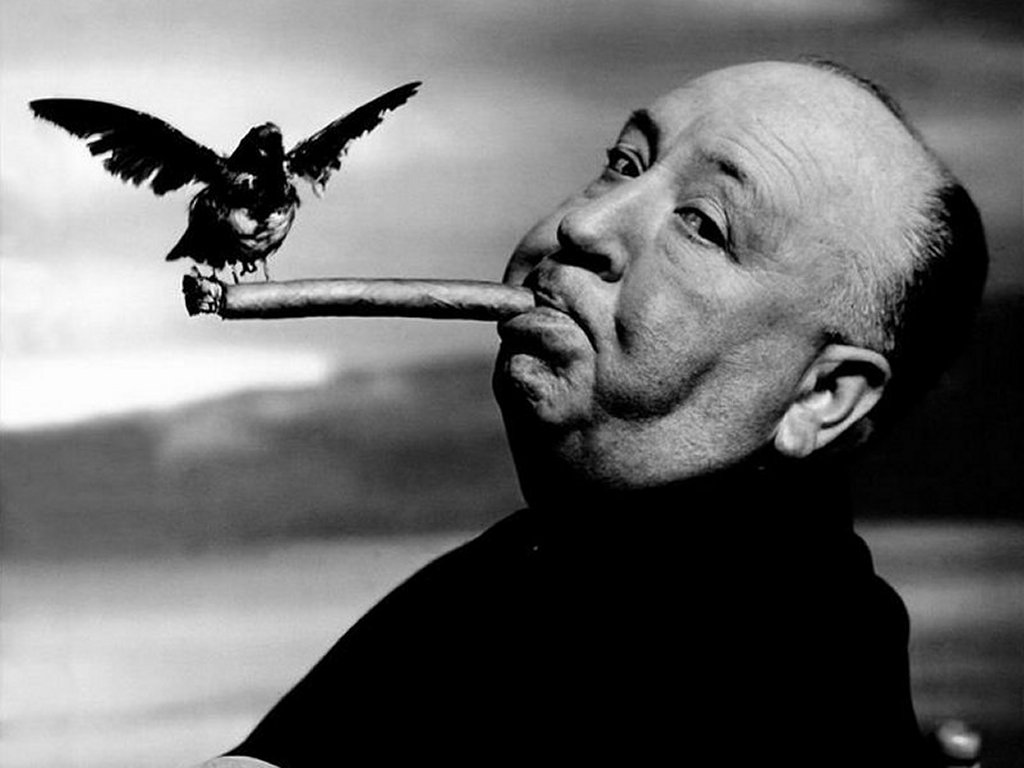
Analyzing Alfred Hitchcock: The Psychological Genius Mind

Sir Alfred Hitchcock

Introduction

The movies of Alfred Hitchcock, seem to have a permanent place in both American and Global Cinematic history. He is a common topic to turn when discussing auteur directors, film history,  suspense and psychoanalysis. His visual style is very distinct, the close-ups, subjective camerawork, unusual camera angles and the list goes on. Today, in this article, we intend to analysis the visual choices of Hitchcock’s most well known works including Vertigo, Rear Window and Psycho.
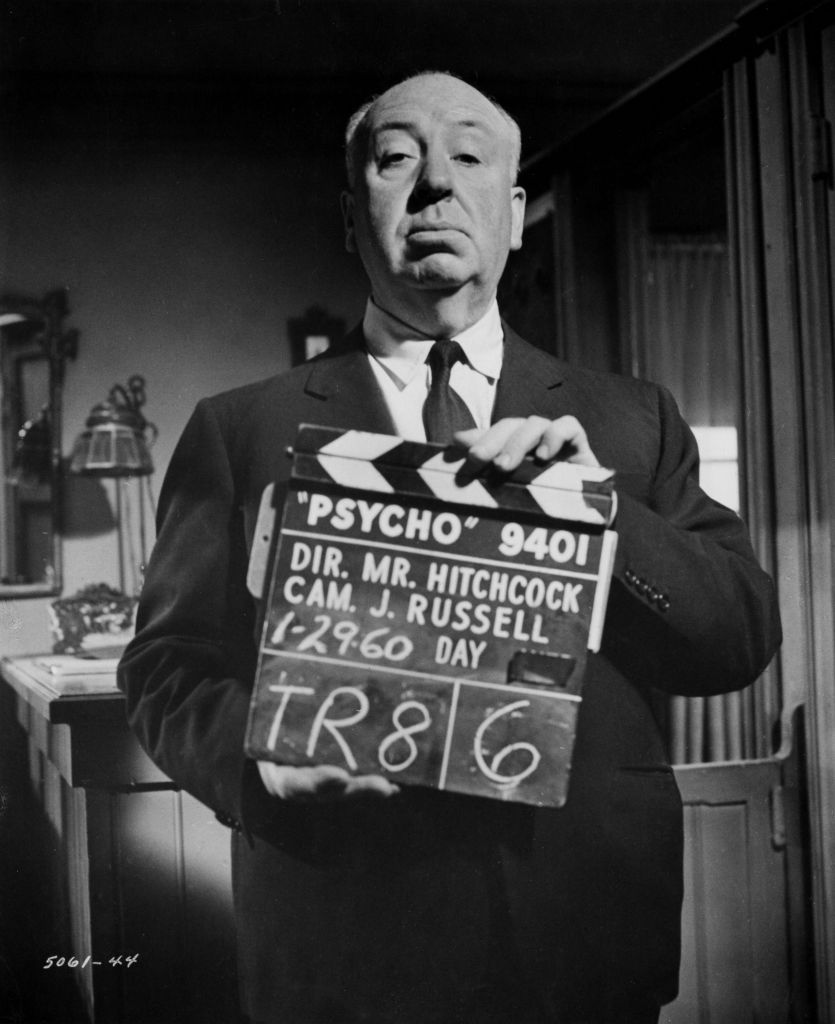
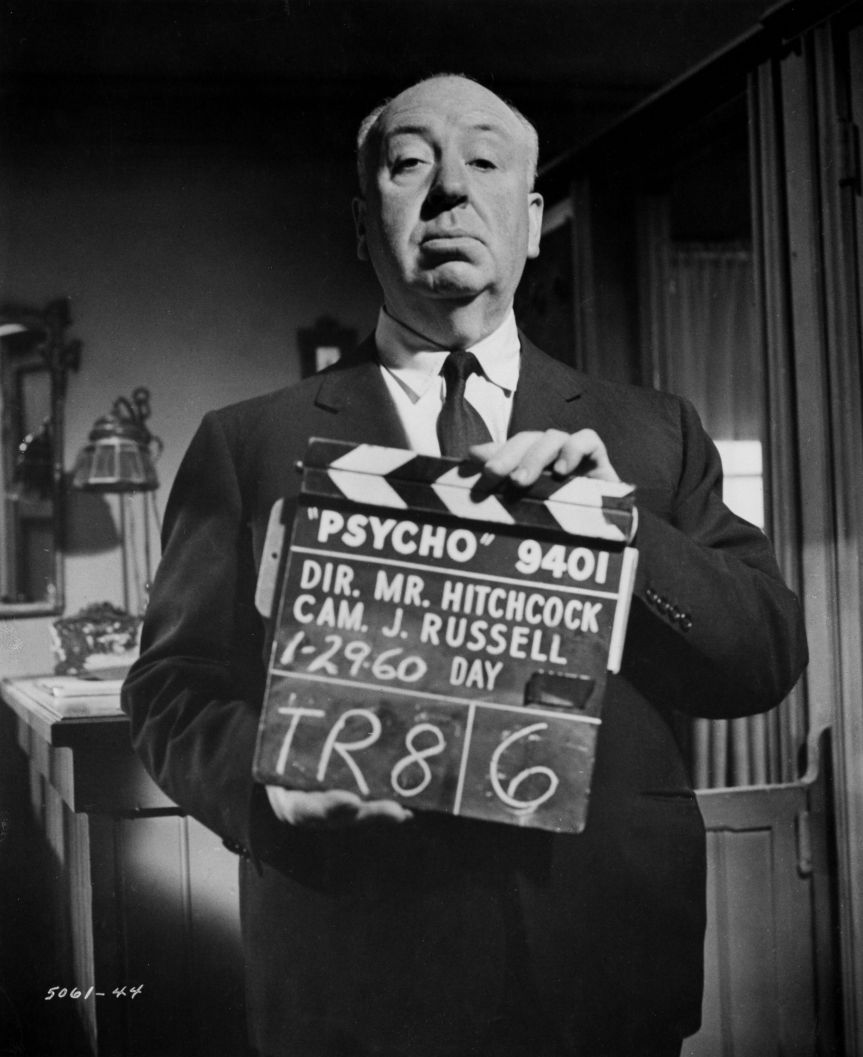
Sir Hitchcock before the shooting for Psycho (1960)

About Alfred Hitchcock

Sir Alfred Joseph Hitchcock  (13 August 1899 – 29 April 1980) was an English filmmaker who was one of the most influential figures in the history of cinema. In a career spanning six decades, he directed over 50 feature films, many of which are still widely watched and studied today. Known as the “Master of Suspense“, he became as well known as any of his actors thanks to his many interviews, his cameo roles  in most of his films, and his hosting and producing the television anthology Alfred Hitchcock Presents  (1955–65). His films garnered 46 Academy Awards nominations, including six wins, although he never won the award for Best Director despite five nominations.
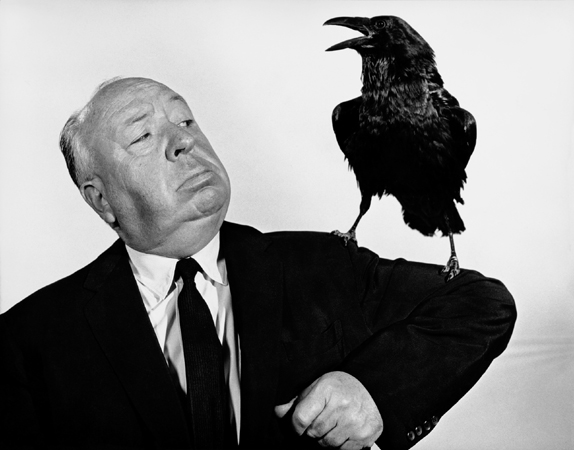
Sir Hitchcock

Techniques and Methodology of Hitchcock’s Works

Alfred Hitchcock’s attention to detail in his films is one of the many things that makes him one of the most recognized film auteurs of all time. He was very particular what about he wanted seen on screen and how he wanted to get those shots. From camera movements to the things found in the mise-en-scène, Hitchcock was very precise about every little thing that is seen in his on screen worlds. He would strategically place objects throughout the mise-en-scène and have characters wear certain clothing. By doing this, Hitchcock is able to let the audience know things about the characters and the plot without it having to be said on camera. Hitchcock once said that “If it’s a good movie, the sound could go off and the audience would still have a perfectly clear idea of what was going on” . To Hitchcock, the conversations in his films were not important.  Visuals were of the utmost importance.  He loved point of view shots, which showed a shot of the actor and then cut to a shot of what the actor was looking at in order to convey what the actor is looking at; pretty much, the Kuleshov effect.
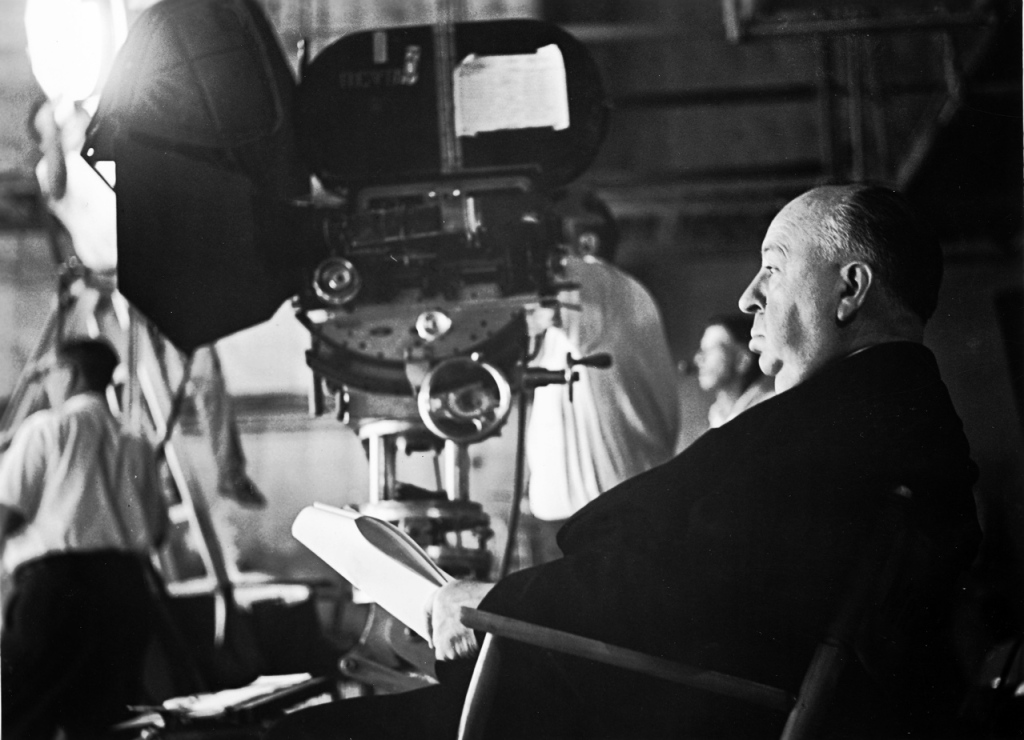
Sir Alfred Hitchcock on the set of one of his movies

The soundtrack was extremely important to Alfred Hitchcock, as he managed to sync the music with the actions of the scenes.  His most famous scene would be the shower scene in Psycho, where the orchestra is perfectly correlated with the murder.  In his famous film, Hitchcock also incorporated the use of shot/reverse shot, a standard shot pattern that directors use to film conversations between two characters. In general, the actors avoid speaking directly to the viewer, because doing so acknowledges the audience’s presence and destroys the illusion of a naturally unfolding story. From panning shots, to tracking shots Alfred Hitchcock used his techniques in filming and editing in order to create great products that continue to intrigue audiences to this day.
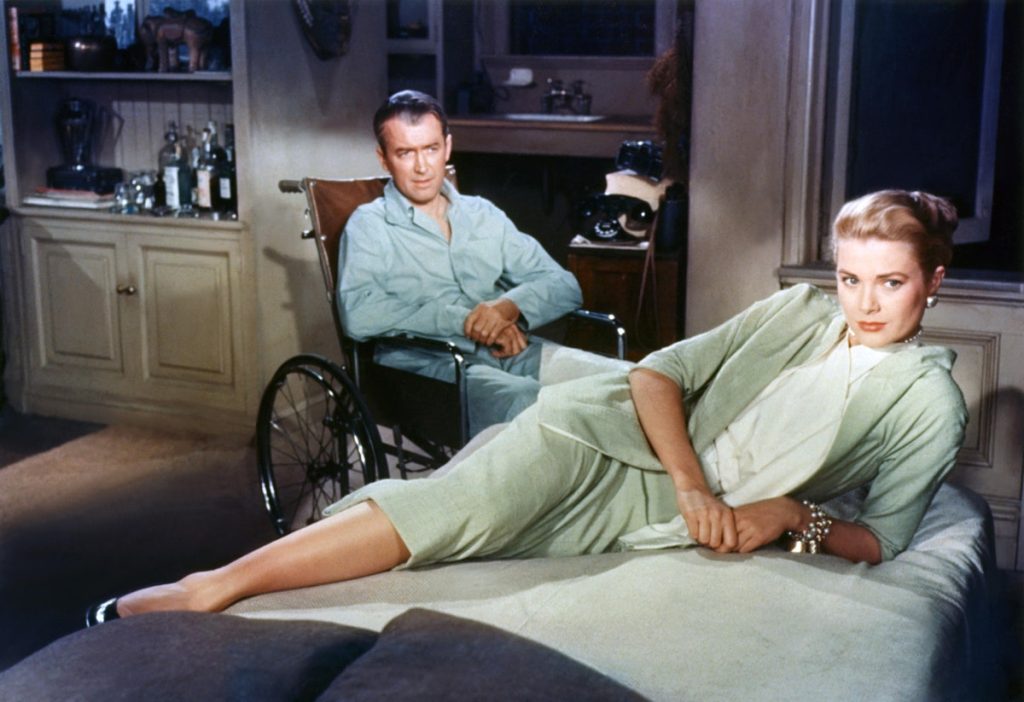
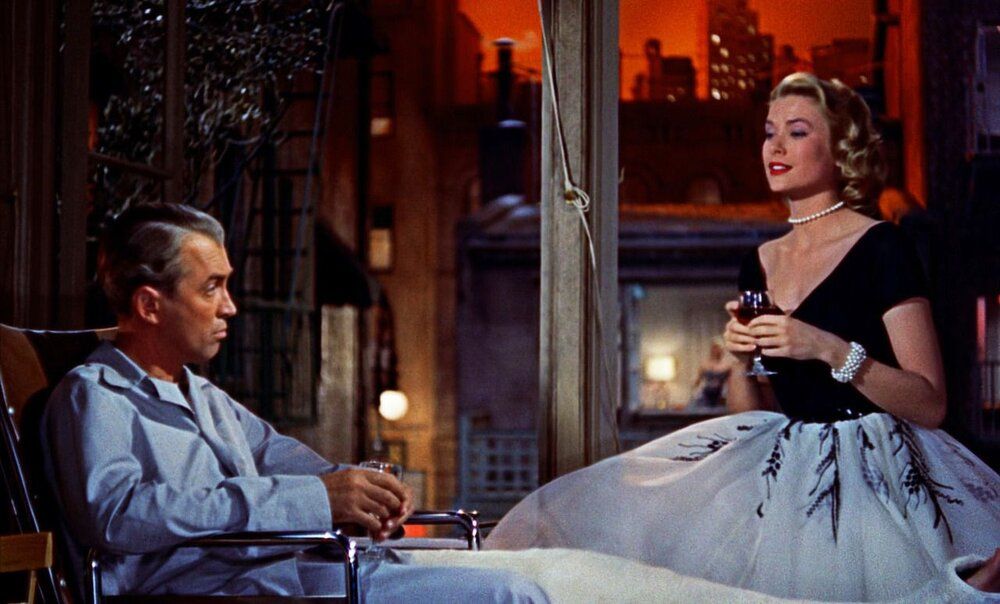
James Stewart as Jeff and Grace Kelly as Lisa Carol in Hitchcock’s Rear Window (1954) movie

Analysis of The Film “Rear Window” (1954)

The cinematography of Rear Window mainly focuses on the use of lighting and shadows. With the darkness and mystery of the film, Alfred Hitchcock was able to use his lighting to his best advantage. The light always is picking up on important symbols or messages in the scene. Such as the scene when the salesman finally comes into Jeff‘s room, the light only picks up on Jeff’s most valuable senses; his hands and eyes. Along with the lighting, the interesting angles are very common.  Not only did it create suspense, it creates confusion and the viewer wants to see more. Mise en Scene was very important in this film, as all of the scenes happened in the same group of apartments. In the city of New York, everything is very tight because of the huge population. The use of the differently decorated rooms also created personality and character for the roles who didn’t even speak

Scene from Hitchcock’s Rear Window (1954) movie

Although sound and music weren’t always in the film, it was there when it needed to be. The traffic and sounds of the city were placed delicately to remind the viewer of the area. The mix of piano from the songwriter in one apartment, from the screeching violins during nail-biting moments, created emotions for the viewer. Editing was evident everywhere, especially during a fight scene, or used very consciously during high suspense. The fades were apparent from day to day, which helped the viewer better understand the passage of time.
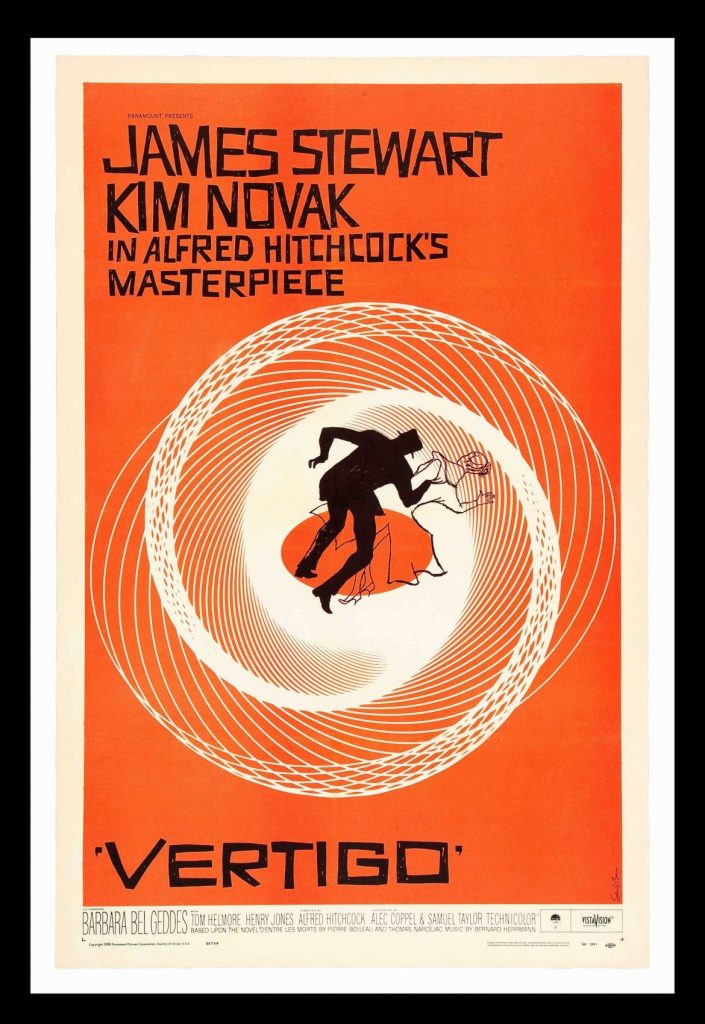
Poster of Hitchcock’s Vertigo (1958) movie

Analysis of The Film “Vertigo” (1958)

Vertigo is a 1958 suspense thriller directed by Alfred Hitchcock, written by Alec Coppel and Samuel Taylor and based upon the 1954 novel ‘D’entre Les Morts’ by Pierre Boileau and Thomas Narcejac. Starring James Stewart, Kim Novak and co-starring Barbara Bel Geddes.
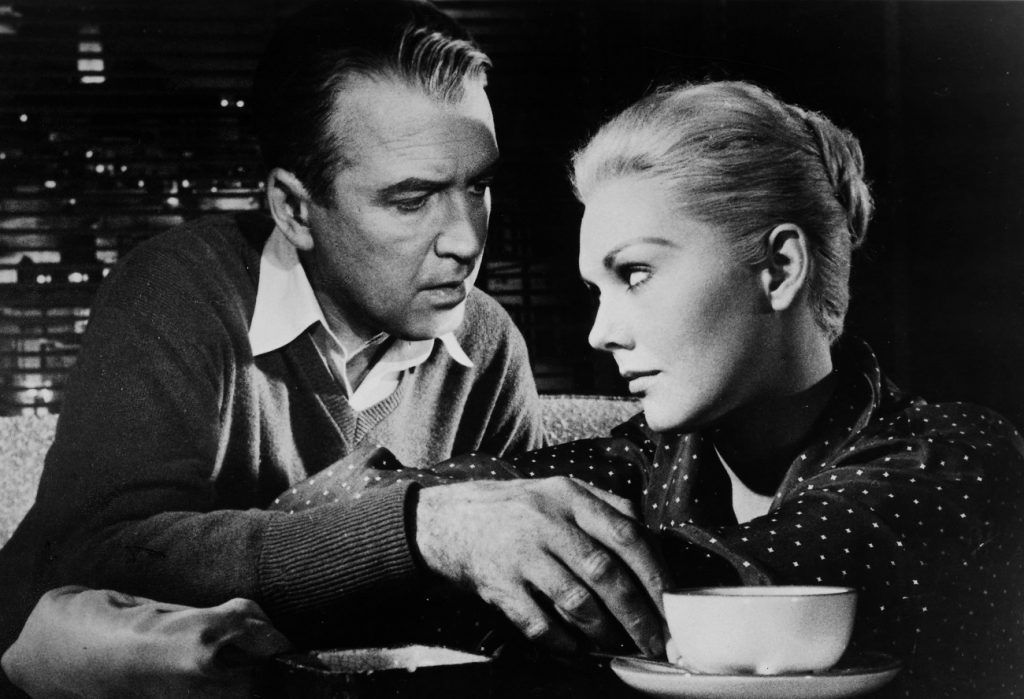
James Stewart as John Ferguson and Kim Novak as Madeleine in Hitchcock’s Vertigo (1958) movie

Vertigo is a film which functions on multiple levels simultaneously. On literal level it’s a mystery suspense story of a man hoodwinked into acting as an accomplice in a murder, his discovery of a hoax, and the unravelling of the threads of the murder plot. On a Psychological level, the film traces the twisted , circuitous routes of a psyche burdened down with guilt, desperately searching for an object on which to concentrate its repressed energy. Finally, on an allegorical or figurative level, it is a retelling of a immemorial tale of a man who has lost his love to the death and in hope of redeeming her descends into the underworld,  the most famous of these stories being that of Orpheus and Eurydice in Greek Mythology. Vertigo’s complexity however does not end with this multilevel approach to its tale, the film also succeeds in blurring the already fine line between objectivity and subjectivity . It takes the viewers so far into the mind of its main characters ( Scottie, played by Hitchcock veteran James Stewart), that audiences’ own objectivity, at least initially, is lost and replaced by complete identification with Scottie’s fantasies and obsessions.
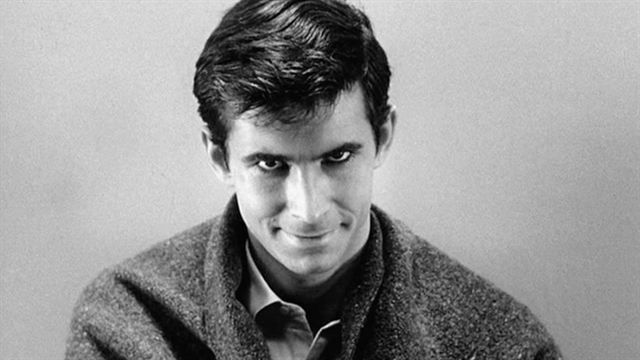
Anthony Perkins as Norman Bates in Hitchcock’s Psycho (1960) movie

Analysis of The Film “Psycho” (1960)

Hitchcock’s Psycho has been commended for forming the archetypical basis of all horror films that followed its 1960 release. The mass appeal that Psycho has maintained for over three decades can undoubtedly be attributed to its universality.
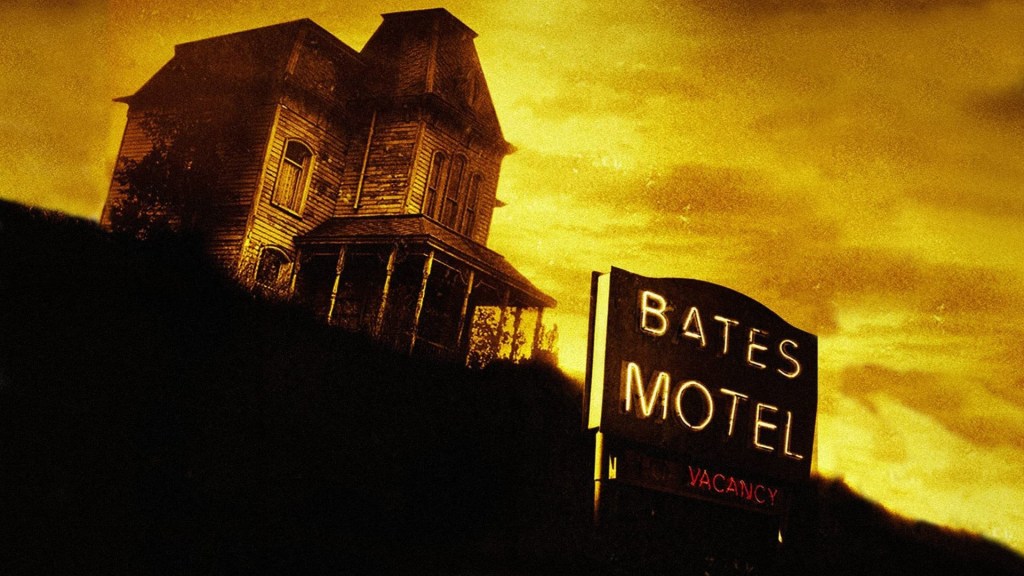
Scene from Hitchcock’s Psycho (1960) movie

In Psycho, Hitchcock allows the audience to become a subjective character within the plot to enhance the film’s psychological effects for an audience that is forced to recognize its own neurosis and psychological inadequacies as it is compelled to identify, for varying lengths of time, with the contrasting personalities of the film’s main characters. Hitchcock conveys an intensifying theme in Psycho, that bases itself on the unending subconscious battle between good and evil that exists in everyone through the audience’s subjective participation and implicit character parallels. The initial confrontation between Marion and Norman Bates is used by Hitchcock to subtly and slowly sway the audience’s sympathy from Marion to Norman. Hitchcock compels the audience to identify with the quiet and shy character whose devotion to his invalid mother has cost him his own identity. Upon the introduction of Norman, Hitchcock introduces the first of several character parallels within Psycho. The clash between Marion and Norman, although not apparent to the audience until the end of the film, is one of neurosis versus psychosis.
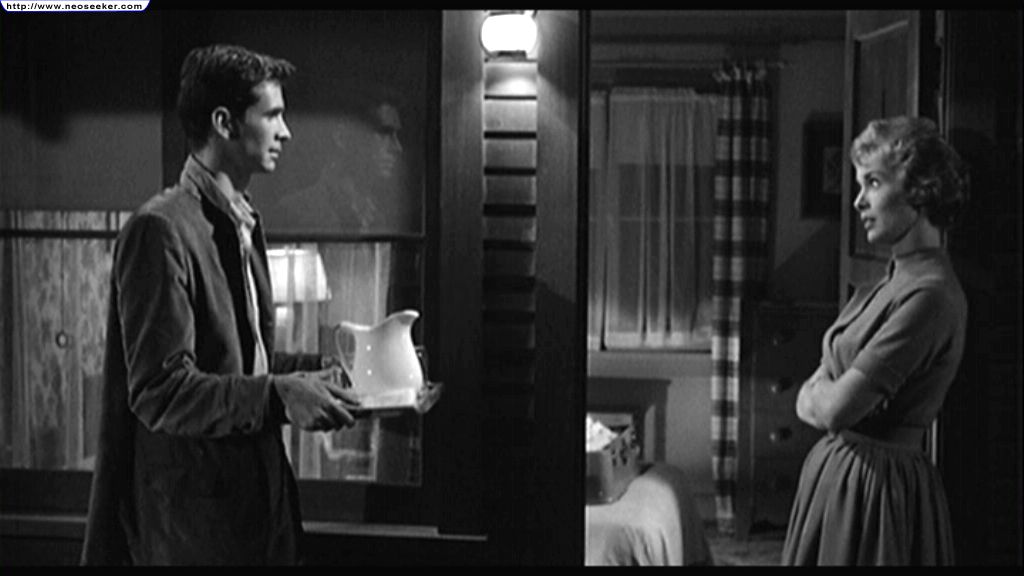
Anthony Perkins as Norman Bates and Janet Leigh as Marion Crane in Hitchcock’s Psycho (1960) movie

The fear that Psycho creates for the audience does not arise from the brutality of the murders but from the subconscious identification with the film’s characters who all reflect one side of a collective character. Hitchcock enforces the idea that all the basic emotions and sentiments derived from the film can be felt by anyone as the unending battle between good and evil exists in all aspects of life.The effective use of character parallels and the creation of the audience’s subjective role in the plot allows Hitchcock to entice terror and convey a lingering sense of anxiety within the audience through a progressively intensifying theme. Hitchcock’s brilliance as a director has consolidated Psycho’s place among the most reputable and profound horror films ever made.
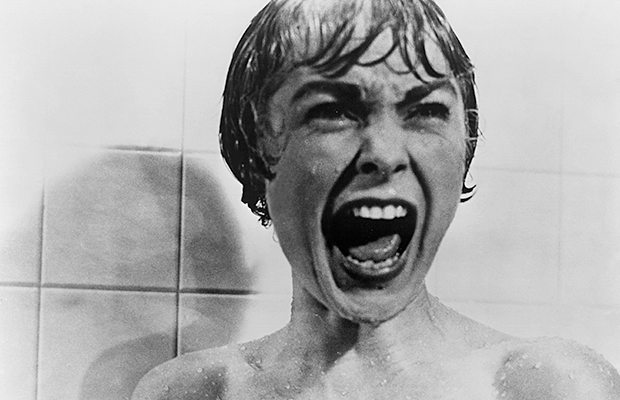
Scene from Hitchcock’s Psycho (1960) movie

Conclusion

Alfred Hitchcock who has been entitled to the master of apprehension, suspense and fear, entices the audience to discern his unknown inner in a simulation over cinema curtain. Human, sets back his instincts for years; withholds sex and anger and wrap it in his inner depths where even is impenetrable for himself. But there is always probability of arising it in the society as a coarse event. Eruption of anger from sub-consciousness of Hitchcock’s characters brings along murder, crime and often imagination, tragic psychic disturbances. Anyone might be involved with the condition of these characters in real world. Most of Hitchcock’s movies create suspense in very first minutes of the show. The propensity to know arouses in him. He limits and draws attention of the audience to the film.Dark spaces, long and fearsome roads, deserted places and empty of habitat, are signs and symbols which sometimes refers to unaware and its inner events. Making use of sharp-pointed lines and thorn-shaped edges in locations and shades, which are taken from Gothic style, makes the movies horror and terror. Hitchcock through increasing vigilance, guides the audience toward making a powerful “ego” against incidents which mostly indicates determinism.
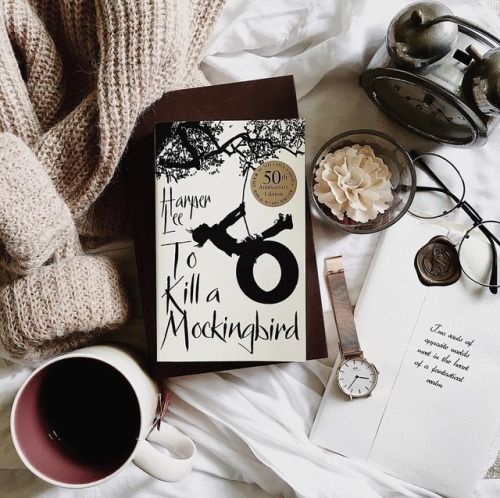
To Kill A Mockingbird: The Book Review

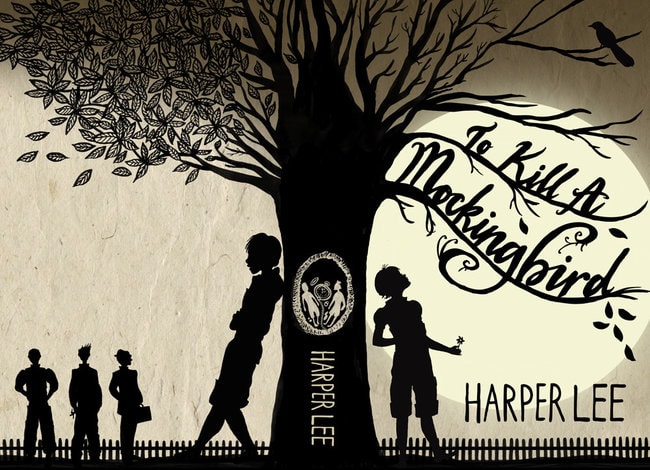
Cover of To Kill A Mockingbird novel (1960)

Introduction

To Kill a Mockingbird is a very popular modern classic by the American author Harper Lee, that narrates a coming-of-age story with a theme of social equality and prejudice. It was published in 1960 and was instantly successful. The unforgettable novel of a childhood in a sleepy Southern town and the crisis of conscience that rocked it. In the United States, it is widely read in high schools and middle schools. To Kill A Mockingbird  has become a classic of modern American Literature, winning the Pulitzer Prize in1961 and was later made into an Academy Award-winning film, also a classic.

About The Author

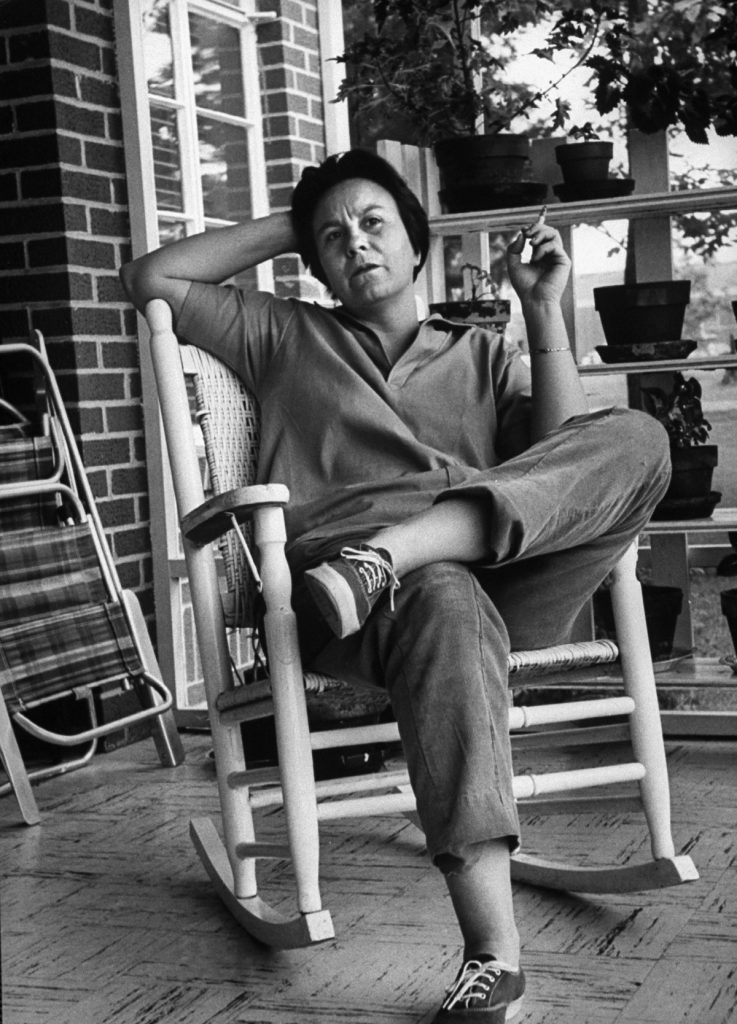
Nelle Harper Lee (April 28, 1926 – February 19, 2016) was an American novelist best known for her 1960 novel To Kill A Mockingbird. Lee has received numerous accolades and honorary degrees, including the Presidential Medal of Freedom  in 2007 which was awarded for her contribution to literature. She assisted her close friend Truman Capote  in his research for the book In Cold Blood (1966). Capote was the basis for the character Dill Harris in To Kill a Mockingbird.

Harper Lee

Storyline of The Novel

The novel follows the story of a black man in the 1930s, convicted for the rape of a white girl. It is written from the perspective of two young children and their confusion at topics like race and the discriminatory ways of adults around them. Despite been written in a child’s perspective, the story does not diminish the meaningful themes of the novel in any way. Even after 80 years of its publication, the book is still popular and highly relates to our society.

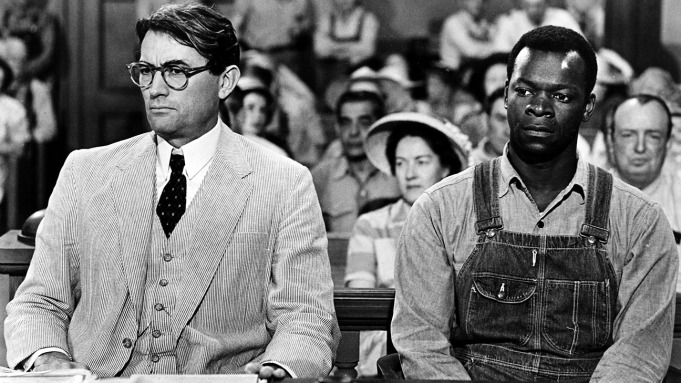
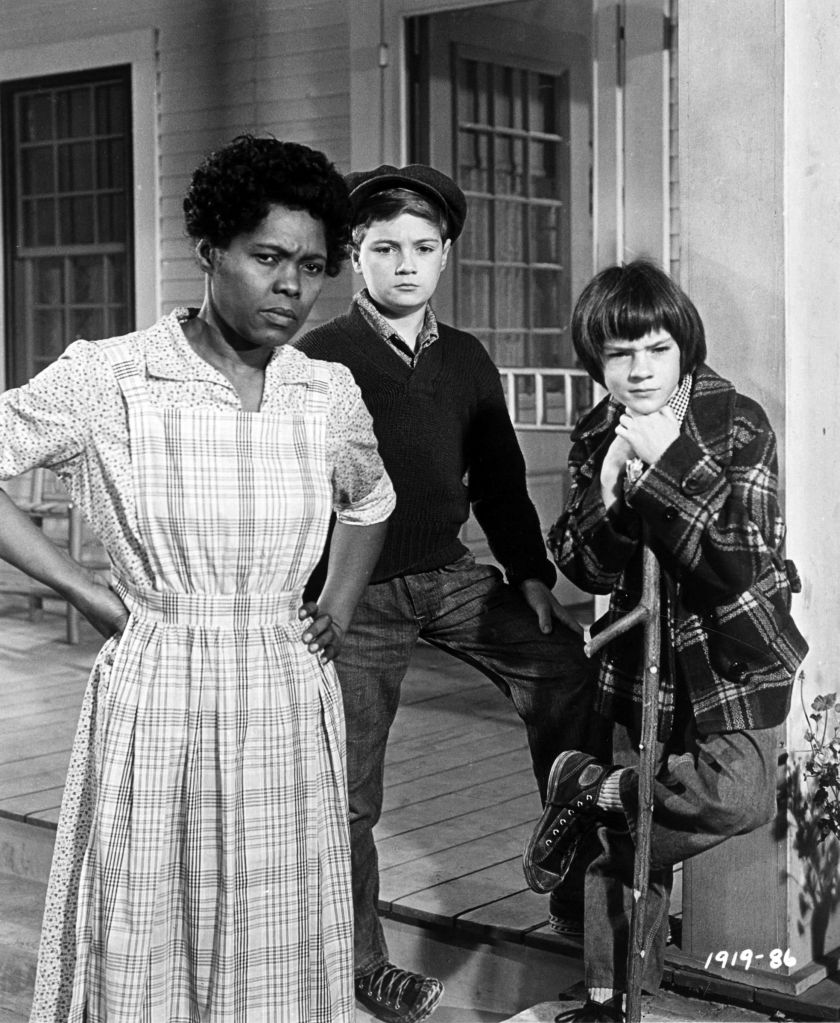
Gregory Peck as Atticus Finch and Brock Peters as Tom Robinson in To Kill A Mockingbird movie(1962)

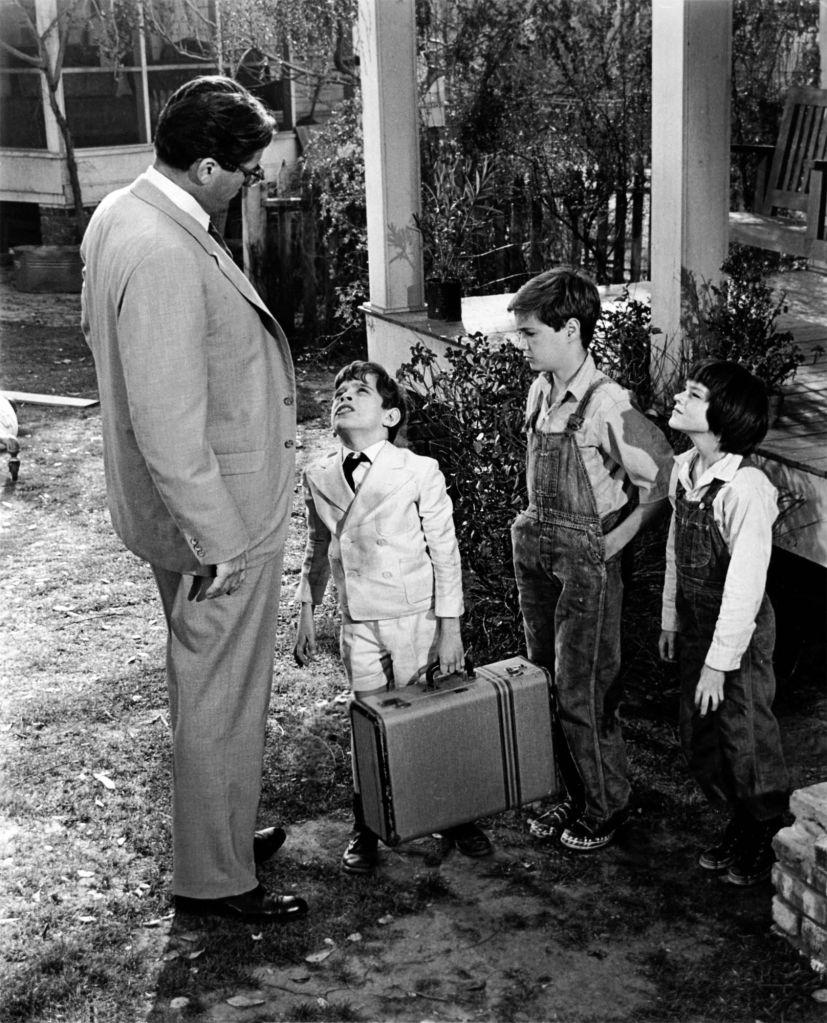
The story evolves around six-year-old Scout Finch is living in the small town of Maycomb, Alabama during the Great Depression. Raised by Atticus Finch, Scout and her brother, Jem, are very comfortable with Maycomb and understand the well being of their neighbours, except the house of the mysterious Arthur Radley, whom they obsess over. Half the book is basically about Scout, Jem, and Dill (their new friend) trying to lure Arthur Radley out of his house. However, when Atticus, a lawyer, decides to take the case of a black man named Tom Robinson, tensions become high and the trial to see whether Tom Robinson is guilty or innocent based on his crime and, especially, his skin colour is at stake. 

Analysis of The Storyline

To Kill a Mockingbird focuses on that gut instinct of right and wrong, and distinguishes it from just following the law. Even the titular quote: “Shoot all the blue jays you want, if you can hit ’em, but remember it’s a sin to kill a mockingbird” is in itself an allegory for this message. Being in itself a generic message, the idea of ‘doing what’s right’ obviously has a different meaning depending on when and where you’re reading the book. If you take 1960, when the book was written, America was in a state of ethical development as social inequality was – very – gradually being overcome. Women’s rights and black rights movements were beginning to emerge and some campaigned through violence. Would Atticus Finch condone this?

In the 1930s, when the book was set, America was in the midst of the Great Depression. This was a time when economic difficulties meant that the American Dream was receding further and further away. We could consider that Atticus Finch felt that his own dream of an equal, morally decent society was also heading in the wrong direction.

Scene from To Kill A Mockingbird movie (1962)

Criticism and Relevance of The Storyline

This 1960 novel is ahead of its time; carrying a message that is still needed by today’s world, Harper Lee’s debut novel is regarded as one of the best contemporary classics. Prejudice against the black community is the main theme of this novel. The lives of the main character revolve around this. Standing up for what’s right, defending the weak, swimming against the current; all these righteous acts comes at a huge price, sometimes even risking the lives and dignity of our loved ones. The novel gives us a strong message to the readers. It so skilfully presents the vulnerability of a minority community and how they fall prey to prejudice. The author very skilfully brings forth the sub of racism, that too very tenderly through characters who peacefully struggle against this evil. Harper Lee shows us that in every society, there are some people who would stay firmly at the side of justice, though they may face severe consequences.

scene from To Kill A Mockingbird movie (1962)

Conclusion

Without denying the constancy of the moral message, and the pure ingenuity of the book, it’s still open to debate whether, as with all classics, schoolchildren should be forced to read the novel and go over it page-by-page. Therefore everyone who reads it can take something out of it which no one has before. Let it not be forgotten that a true piece of literature, like To Kill a Mockingbird, is meaningful in every period and that today, Atticus Finch’s message should be heard in the midst of all the global conflicts that we hear of on the news every day and night.

Lolita: The Book Review

Introduction

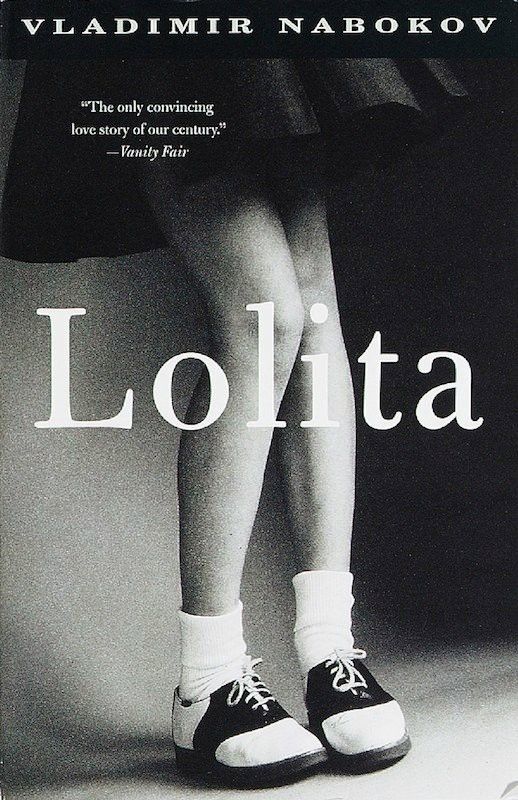
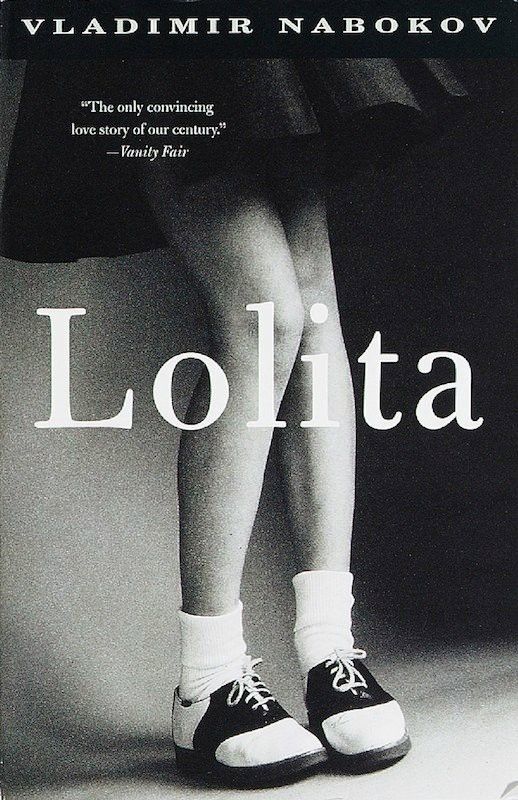
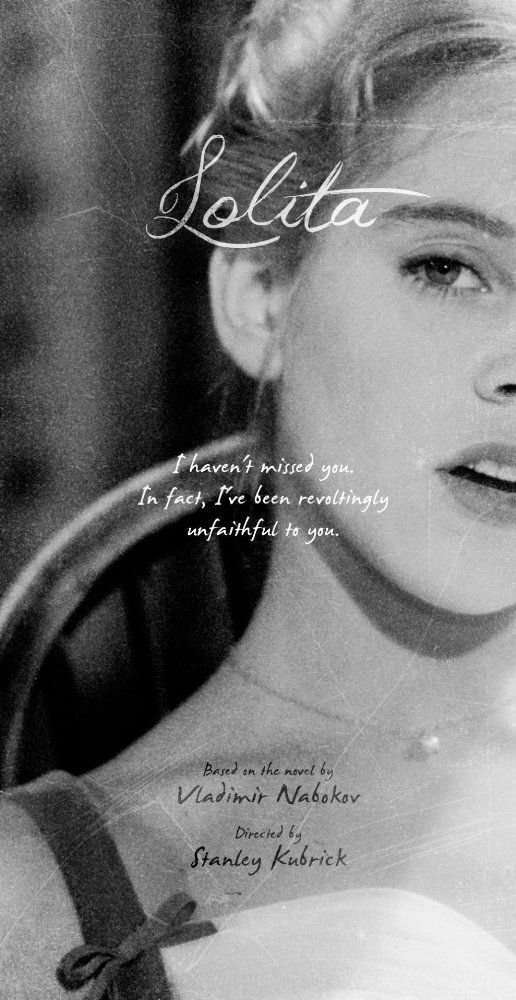
The cover of Lolita (1955)

Lolita  is a 1955 novel written by Russian-American novelist Vladimir Nabokov. The novel is notable for its controversial subject, which engages an unethical relationship between a middle aged man and a minor girl. First issued in 1955 by an unorthodox Paris press after being rejected by a string of American publishers; banned by the French government, presumably out of solicitude for immature English-speaking readers (the ban was later quashed by the French High Court); pronounced unobjectionable by that blue-nosed body, the U. S. Customs office; and heralded by ovations from writers, professors, and critics on both sides of the Atlantic, became a near-instant bestseller in the US, shifting over 100,000 copies in its first three weeks alone. The shocking subject matter, gleefully punning unreliable narrator, and Nabokov’s spellbinding sentence-level prowess combined to create a book as repulsive as it was inviting—comic and horrific and utterly absorbing. The novel was later adapted in two movies with the same name of the novel, Lolita(1962) and Lolita(1997) .

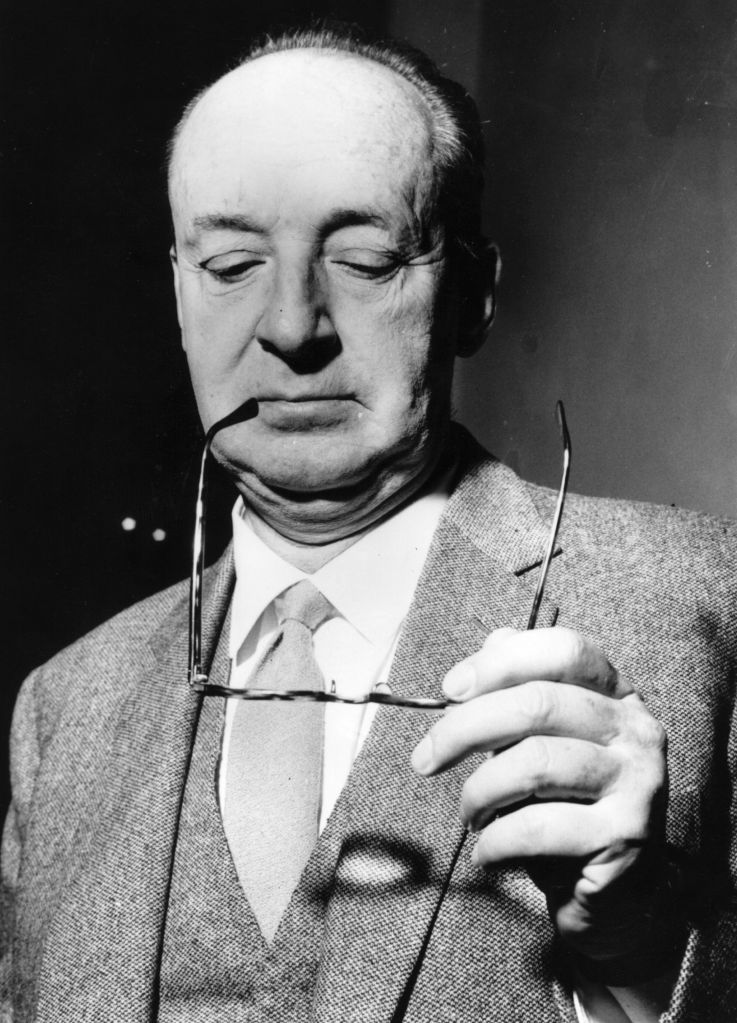
Russian writer Vladimir Nabokov (1899 – 1977) in Rome to work on the film screenplay of his most famous book, ‘Lolita‘.

About The Author

Vladimir Vladimirovich Nabokov , also known by the pen name  Vladimir Sirin, was a Russian-American novelist, poet, translator, and entomologist. Born in Russia, he wrote his first nine novels in Russian (1926–1938) while living in Berlin. He achieved international acclaim and prominence after moving to the United States and beginning to write in English. Nabokov became an American citizen in 1945, but he and his wife returned to Europe in 1961, settling in Montreux, Switzerland.

Nabokov’s Lolita  (1955) was ranked fourth in the list of the Modern Library 100 Best Novel  in 2007, Pale Fire  (1962) was ranked 53rd on the same list; and his memoir, Speak Memory (1951), was listed eighth on publisher Random House list of the 20th century’s greatest nonfiction. He was a seven-time finalist for the National Book Award for Fiction.

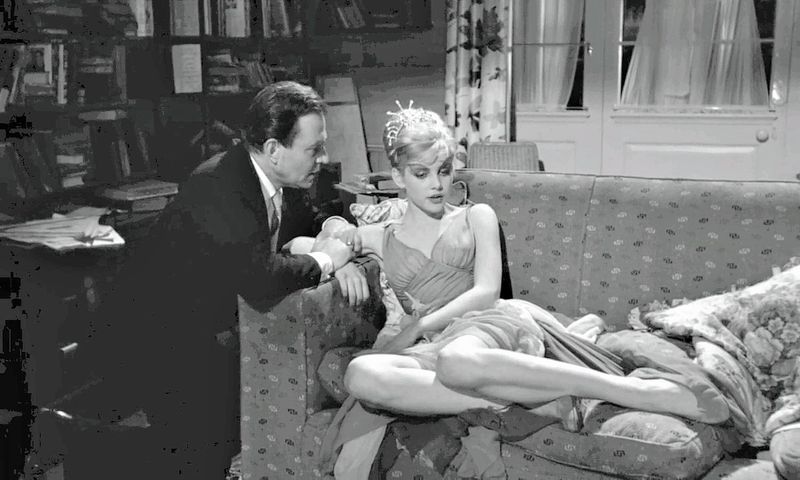
Cinematic Adaptation of Lolita (1962), starring James Mason as Humbert Humbert and Sue Lyon as Lolita

Storyline of The Novel

Lolita, Vladimir Nabokov’s immaculate and disturbing masterpiece, is the story of middle-aged paedophile man Humbert Humbert—a handsome, French-born intellectual on the one hand, and unapologetic sexual predator on the other and his tragic love affair with his 12-year-old, bubble-gum popping stepdaughter Dolores Haze, who is fondly called Lolita by Humbert. It’s a post-war road novel, the odyssey of a venerable European man and a prepubescent American girl bouncing across the United States, trying to outrun the past and find a future that doesn’t exist.

Lolita (1962)

Humbert’s sociopathic behaviour might be traced back to a sexual experience when he was 13, when he meets his “first love” Annabel—a 12-year old girl who is travelling with her parents. They lust for each other fervently, with an intensity that leaves a permanent impression on Humbert. He describes his passion with a cannibalistic “frenzy of mutual possession [that] might have been assuaged only by our actually imbibing and assimilating every particle of each other’s soul and flesh.” Their failure to complete the dirty deed leaves an indelible, unresolved tension in Humbert—an impoverished thirst for early-pubescent girls that carries through to adulthood, which he is forced to lie about . He gets married to a widow who he physically abuses to get his own way. He constantly admits himself to sanatoriums, but finds the doctors ridiculous and uses his intelligence to mislead them. He swings from “ashamed and frightened” to “recklessly optimistic,” craving hedonistic intercourse with 11 to 14 year-old girls, but living in the wrong country and century. He tries to justify his urges by recounting accepted paedophilia throughout history, but even his vindications are half-hearted and remorseless—he’s a grown man who wants to have intercourse with children, and there’s nothing to be done about it. He’s an “artist and a madman, with a bubble of hot poison in his loins.” His anguish is illustrated beautifully by Russian-born Nabokov, whose mastery of English is mind-blowing. The animalistic language that he uses is both shocking and enthralling, and some sentences are appalling in their vividness.

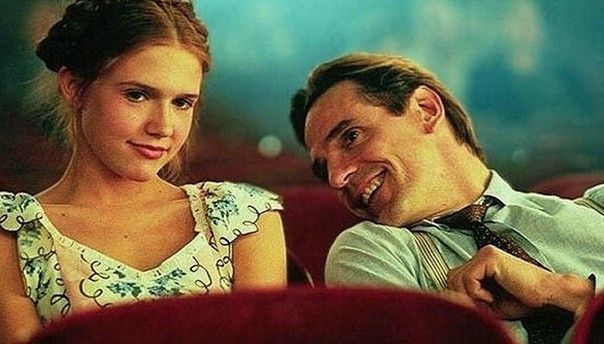
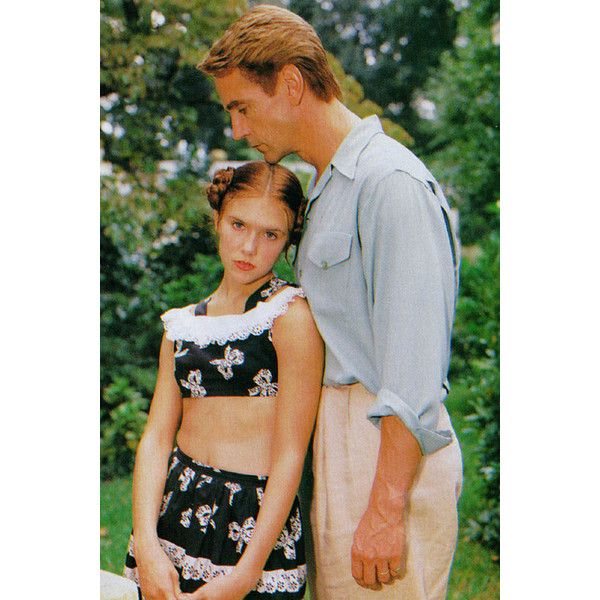
Cinematic Adaptation of Lolita (1997), starring Jeremy Irons as Humbert Humbert and Dominique Swain as Lolita

Humbert understands the precariousness of his attachment to Dolores. She’s a hostage who he appeases with countless and expensive bribes, spawning a crippling jealousy that his nymphet will run away with someone else, especially because of her flirtatious nature. The juvenile sensuality of Dolores Haze makes a paedophile and a green-eyed monster of Humbert, who becomes more and more paranoid as the story unfolds. 

Analysis of The Novel

To be sure, this novel isn’t for the faint of heart, but neither should prospective readers retreat to any kind of moral high ground. Nabokov, in fact, threads an unexpected and affirming emotional serenity through his portrait of obsession. His enigmatic narrator leaves us in spellbound rapture. Because for all of its linguistic pyrotechnics — as Humbert confesses, “you can always count on a murderer for a fancy prose style” — and for all its controversial subject matter, Lolita is one of the most beautiful love stories you’ll ever read. It may be one of the only love stories you’ll ever read. This is the most thrilling and beautiful and most deeply disturbing aspect of the novel — and it’s what most persuasively recommends the book — that in addition to finding Humbert’s soul on the page, we also find, like it or not, a little of our own.

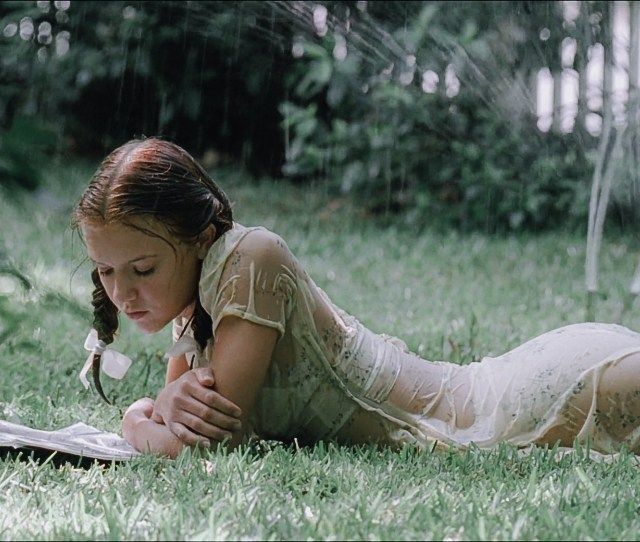
Lolita (1997)

The Author has afflicted poor Humbert with a special and taboo variety for a couple of contradictory reasons. In the first place, its illicit nature will both shock the reader into paying attention and prevent sentimentally false sympathy from distorting his judgment. Contrariwise, I believe, Mr. Nabokov is slyly exploiting the American emphasis on the attraction of youth and the importance devoted to the ‘teen-ager’ in order to promote an unconscious identification with Humbert’s agonies. 

Criticism of The Novel

The art that palliates Humbert’s misery has not notably relieved the distress of reviewers, most of whom have felt obliged to ask themselves, how the author could come up with such horrific storyline. Some have concluded, rather desperately, that he hasn’t done it at all. According to one interpretation, Mr. Nabokov has merely written an allegory of a European intellectual who falls in love with America and discovers, to his gentle sorrow, that the country is still a trifle immature. Aside from the difficulty of assigning roles, the fact that the author is obviously capable of writing such a story without the aid of a nympholeptic allegory throws considerable doubt on the argument. It has also been suggested, ingeniously, that Mr. Nabokov really wanted to write a tale of romantic passion in the grand, or nineteenth-century, manner, and found that the only way to make such a passion interesting to the contemporary reader was to disguise it as psychopathology. If this interpretation is correct, one can only say that Mr. Nabokov has beautifully concealed his disappointment at having to portray his heroine as a child.

Lolita (1997)

Despite Humbert’s evil, the fallout from the relationship is heartbreaking. Our empathy for the odious rogue is Nabokov’s greatest achievement in the novel. We both detest and sympathise with him, leaving us feeling confused and perhaps a little guilty. Humbert’s vile actions and fantasies, in which he dreams of painting a mural and re-live hopelessness of falling in love with a girl who could never love him back. Like Humbert’s love for DoloresLolita felt like a forbidden fruit, breaking the sturdiest of taboos to illuminate the mind of an infatuated, sociopathic paedophile, which is a mind we rarely get to see. 

Lolita (1997)

Conclusion

Lolita is old enough and infamous enough to be known as a story of unhinged paedophilia. But it’s also a beautiful and depressing love story, with a tortured antagonist who despite his crimes, and due to the skill of the book’s author Vladimir Nabokov, we can eventually empathise with.

The Sopranos – A Timeless Classic

The Sopranos is an American television drama series considered to be masterpiece by critics and audiences alike. Created and written by David Chase, The Sopranos aired for six seasons (1999–2007) on Home Box Office (HBO) and earned an international following as a result of its excellence. The Sopranos is said to have set the standard for what a crime drama series should be; full of suspense, thrill and excitement. It is impossible to overstate The Sopranos’ influence on television across the globe. Many famous and successful shows that followed The Sopranos in years to come like Breaking Bad and Peaky Blinders seem to have traces of inspiration and borrow certain elements from this legendary show.

Synopsis

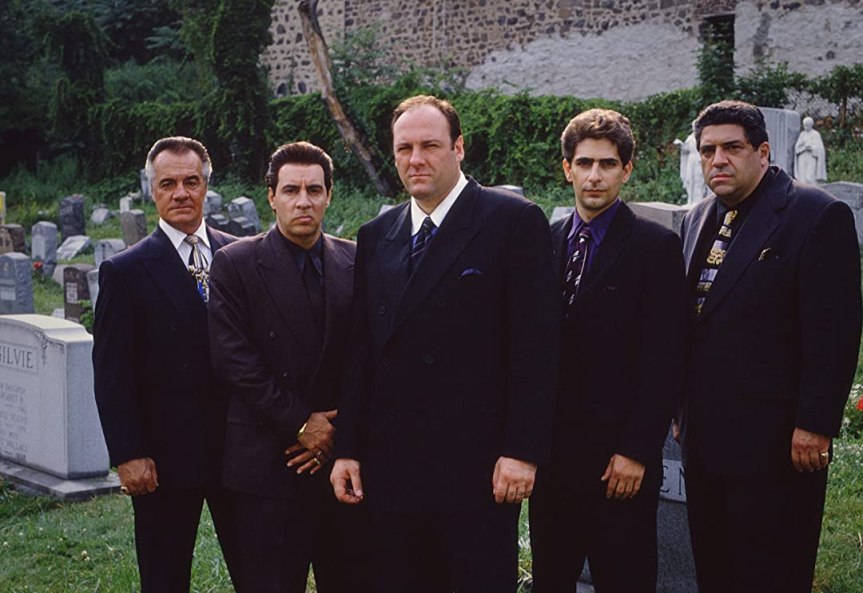
Set in New Jersey, The Sopranos follows Mafia boss Tony Soprano (James Gandolfini) through regular sessions with a psychiatrist (Lorraine Bracco) to whom he goes for help after experiencing panic attacks that cause him to black out. His infidelity and the violent nature of a life in organized crime form the backdrop for the dysfunctional relationship he has with his own family. Beset by enemies and family difficulties, he struggles to come to terms with power, morality, and death.

Christopher (Michael Imperioli), Paulie (Tony Sirico), and Silvio (Steve Van Zandt) form Tony’s most trusted inner circle, while many others enter and leave the circle as the series progresses. The themes of identity, guilt, and denial are highlighted by the selective acknowledgment of the harsh realities of Tony’s crime world by his wife, Carmela (Edie Falco), and the Sopranos children, Meadow (Jamie-Lynn Sigler) and Anthony Jr. (Robert Iler).

Popularity

The Sopranos is widely regarded as one of the greatest television series of all time. It won a multitude of awards, including Peabody Awards for its first two seasons, 21 Primetime Emmy Awards, and 5 Golden Globe Awards. It has been the subject of critical analysis, controversy, and parody, and it has spawned books, a video game, soundtrack albums, and assorted merchandise. Several members of the show’s cast and crew were largely unknown to the public but have since had successful careers. In 2013, the Writers Guild of America named The Sopranos the best-written TV series of all time, and many sites have ranked it the best television series of all time.

The main reason for the show’s success has to be James Gandolfini and his portrayal of Tony Soprano. The masterful complexity of Gandolfini’s portrayal of Tony Soprano and the uneasy juxtaposition of brutality and sensitivity on display challenge the viewer to step inside Tony’s world and examine his choices from an intimate and personal perspective. Gandolfini plays Tony as a rough and tough guy, but doesn’t neglect the gentle fragility guarded within him. Not good, not bad, just human. It was also so famous because of how it explored so many important themes that really reflected modern America’s existential preoccupations. The show highlights things like mental health, homosexuality, family relations, sexual harassment, etc. It was a raw and real show that didn’t pull any punches. Hence, it is not just a mob drama, but also a social satire, a domestic drama and a statement of the rise in Western consumerism. The Sopranos rightly got a lot of praise for nearly all of this, but one thing is often overlooked; it was also a really funny show. It was funny not because the script was full of jokes and punchlines, but because it created very funny situations and circumstances in a very natural manner. All of these aspects and elements made it not only a show well worth watching, but also one that set the benchmark and is revered to this day.  

Conclusion

The influence of The Sopranos cannot be quantified, and it was the foundation upon which HBO became a cultural force. Sex and the City premiered on HBO six months before The Sopranos, breaking ground for women in television and comedy and becoming an influential trend factory. But while Sex and the City gave HBO glitz, The Sopranos gave it gravitas. Due to this show, the network became synonymous with quality drama, the great TV-making seal of approval.

Many contend that till today, The Sopranos remains the best TV series in the world. Though this is subjective, there seems to be overwhelming support from audiences and critics alike that this show is one of the best, if not best crime drama ever made. Regardless, if you have not seen it yet, you should definitely give it a try and you may notice how this show laid the groundwork for many other great shows in years to come.

The Little Prince and why all love him

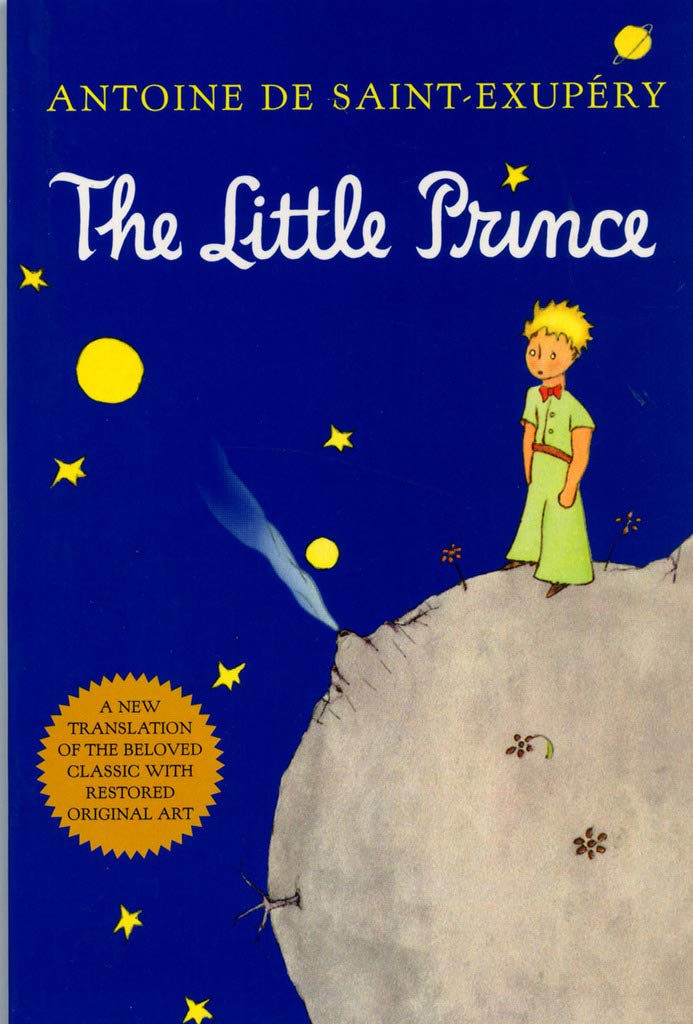
The Little Prince by Antoine de Saint-Exupery is a all time classic in children’s literature. And yet, after reading it, a part of me felt that there could seldom be books as beautiful as this one for any age group. It starts with the buildup of a character of a narrator who loves childhood and treats their intellect superior to those of adult. From the very first page, a reader will laugh with the author and commend him for his though process. And suddenly switches to the backdrop of a war – the second world war to be specific. There he meets a young boy – a boy not more than 12 and clad in his own idiosyncratic behaviour – childish behaviour. This boy is our little prince.

The story deals with love, life, friendship, knowledge, curiosity and death – all as the prince sees them. And it is exactly this part of the story where the reader is lost with the author. Admiration, adoration, love and tears – all move with the prince, a character so beautiful that he cannot die in the heart if the one who has read that that book.

It is a small book and in that small novella is a plethora of beautiful and innocent lines that are bound to steal your heart away or to quote the book,

“What makes the desert beautiful,’ said the little prince, ‘is that somewhere it hides a well…”

Make friends with the little prince and whenever you shall see a star, that one meaningless star will have a laugh or a smile for you each time.

Amazon.com: The Little Prince (8580001044842): Antoine de Saint-Exupéry,  Richard Howard: Books