How to be motivated for any goals!

We feel that comfort and convenience are the necessities of life, while all that we need to make ourselves happy is something to be proud of. ” – Albert Einstein

Dip

In all language courses, company building, and any type of creative project, there is immersion. Dip a long distance between beginner luck and real success.
Extraordinary benefits accumulate a handful of people who can push for longer than most.

Starting Before Immersion

In any goal to be achieved, there is a Beginning. It is often overlooked, as it always is.
Getting started is a big problem as you can only reach The Dip if you don’t finish Start, and many people dream of doing something rather than doing it and quitting.

Motivational management

The biggest problem we face in completing our projects is not production or time management, but motivational management. If you are motivated enough to accomplish something, you will move heaven and earth to do it.

Motivation Explained

Motivation is “the reason or reason for a person to do or behave in a certain way,” or to put it another way, “a common desire or determination.”

“If you stop doing what you want to do, then the reasons for quitting are more than just reasons to keep going. Thus, to maintain your motivation you can strengthen the reasons for continuing or weaken the reasons for quitting. Effective motivation often involves both. ” – Ericsson & Poole

Promotion to Start a Project
  • Increase your reason for starting a project, by increasing the importance of starting it.
  • Increase the time you are expected to succeed in the task.
  • Reduce your reasons for the delay, by increasing urgency, using deadlines.
Parkinson’s Law

It says “work grows to complete the available time for its completion.”

Commitment device

Many people use a dedicated device or play around them to find and stay motivated.
You can help your physical goal with things like throwing away your junk food, just bathing in the gym to get there, and similar activities aimed at focusing on your goal. People also use social responsibility in social media to keep themselves motivated by peer pressure.

Stay Motivated

Set small, climbing goals that are fun enough to motivate you and that you expect to achieve.

How to proceed
  • Keep your Expectancy feeling in the project using minimal winnings and achievements.
  • Reward yourself.
  • Maintain a sense of urgency by finding a way to remind yourself of the big picture of the small daily moments of effort.
  • Develop good habits.
  • Get flow.
  • Set clear goals to follow.
  • Save energy.
reference

https://www.nateliason.com/blog/motivation

Teach yourself anything

“It is better to know how to learn than to know.” – Dr Seuss

False Beliefs About Self-Education

Despite having easy access to information, few people take full advantage of the opportunity we have for self-directed learning.
We still believe that to learn something, we need to be formally educated on it, when in fact we’re able to educate ourselves.

Self-Education In The 21st Century

Self-education is the core skill for the 21st century.
Our ability to respond to changes in the landscape of work and technology will be dictated by how skilled self-educators we are, how well we can take full advantage of the information available to us to grow our skillset.

Learning In The Real World

For 12 years, you’ve been trained to apply information that’s pre-packaged for you.
But if you want to do anything independently (entrepreneurship, creative work, etc.) then you have to be able to figure things out without being handed the knowledge beforehand.

The Sandbox Method for Self-Education

This is an ongoing process of self-development and learning, that recognizes that we don’t need to memorize facts, formulas, instead, we need to develop an intuitive understanding of our skills, expose ourselves to different information about the skill, and constantly push ourselves to improve.

Steps of the Sandbox Method
  • Build an area where you can freely play around with the skill you’re trying to learn – Your Sandbox. It should be: low-cost or free, low stakes and public.
  • Research: Resources exist, you just have to figure out what’s worth reading, watching, or listening to (books, blogs, MOOCs etc).
  • Implement and practise purposefully.
  • Get feedback.
What Practicing the Sandbox Method Means
  • Honestly assessing your limits to figure out where you need to improve.
  • Setting a goal just beyond your current ability to motivate yourself to stretch beyond your comfort zone.
  • Practising with intense focus.
  • Get feedback, in whatever way you can, and incorporate that feedback into your practice.
reference

https://medium.com/the-mission/self-education-teach-yourself-anything-with-the-sandbox-method-a4edfc5e1f8e

Five scientific steps to ace your next exam

1. When to Study

Studying time is more efficient if it is spread out over many sessions throughout the semester, with a little extra right before the exam.
Cover each piece of info five times from when you first learned it until your exam. It will enable you to retain the information with minimal effort.

2. What and How to Study

Testing yourself, so you have to retrieve the information from memory, works much better than repeatedly reviewing the information, or creating a concept map (mind map).
After the first time learning the material, spend the subsequent studying to recalling the information, solving a problem or explaining the idea without glancing at the source.

3. What Kinds of Practice to Do

For a particular exam, use the following:

  • Mock tests and exams that are identical in style and form.
  • Redo problems from assignments, textbook questions or quizzes.
  • Generate your questions or writing prompts based on the material.
4. Make Sure You Understand

Passing and failing rest on whether you understood some important ideas.
Your top priority should be to understand the core concepts. Identify the core concepts and make sure you can explain them without looking at the material.

5. Overcome Anxiety

Anxiety makes it difficult to remember things. To help overcome this, make some of your studying sessions like a mock exam, using the same seating posture, materials, and the same time constraints.

referEncE

https://www.scotthyoung.com/blog/2019/03/18/5-strategies-ace-exam/

Study less study smart

  1. Break your study time down into chunks such as 30 minutes and then take a 5-minute break to keep your brain fresh and awake as you are studying.
  2. Teach what you learn to others. This is one of the big values from study groups.
  3. Know the difference between recollection and recognition. Recognition is when you are studying and you turn the page and read something and you think, ‘I know that.’ But what is going on is that you recognize it.
  4. Use specific locations for studying. Have a study chair and a study desk so you know when you are sitting there you need to be studying.
  5. Don’t listen to music when you are studying especially if it has lyrics.
  6. Understand the difference between concepts and facts. The goal of learning is understanding. It is important to learn and remember facts but make your goal of understanding concepts not learning facts.
  7. To remember more of what you learn in class you should take notes. Take enough notes to trigger your brain after class but don’t take so many notes that you can’t focus during class.
  8. Getting enough sleep is key to remembering more of what you study.
  9. Test your memory by writing what you can recall without looking at your notes.
  10. The Survey, Question, read, recite and review method is when you survey or look over what you are going to learn and then develop questions that focus your brain.
  11. Use memory training techniques to study less study smart! When you use memory techniques such as the mind palace or the memory palace you are going to remember more of what you studied.
Reference

https://brainathlete.com/study-less-study-smart-by-marty-lobdell/

Distance learning and its usefulness

what is distance learning?

Distance learning can truly be defined as the way of getting an education without visiting a school or attending a class physically.

Adaptability and Freedom

One of the main advantages of distance learning can be the personalized approach to getting an education regardless of the channels or mediums you are using for this purpose. Whether you are getting study materials online or through posts you can learn only when a connection is developed between the material of the course and you. You get the freedom to deal with the study material in the distance learning process. You can plan your learning process at your convenience instead of sticking with a fixed schedule.

Self-inspiration

Distance learning encourages you to motivate yourself to learn due to the absence of a traditional teacher to guide you. You will have to create a learning environment and control it effectively so that a band of self-motivation develops in you to inspire you to learn for your personal growth. You can cultivate this band in you by engaging yourself in distance learning methods.

Flexibility to Choose

You will have to follow a set schedule of learning as per the curriculum of the school if you are following traditional ways of learning. But different types of distance learning allows you to set your learning schedule as per your convenience without following a regular schedule of learning. Even if you are out of touch with the learning process, a distance learning program offers you the flexibility to choose your course of learning.

Easy to Access

If you cannot attend regular classes due to various reasons like time constraints and distance etc. then distance learning can be the best option for you to access the benefits of your education. If you opt for a correspondence course for distance learning then you will have to make postal delivery as a connection between you and your distance learning centre. But if you have a computer and internet connection then you can opt for an online learning method by using some video conferencing software like ezTalks Cloud Meeting etc. It will allow you to interact with your teachers face-to-face to resolve your problems. Moreover, you can continue learning even without taking leave from your job.

Earn While You Learn

For those who want to improve their resume by getting a higher education and without breaking their existing job then distance learning can be the best option for them. You can go on earning your livelihood along with improving your qualification as distance learning will accommodate both, learning as well as earning.

Saves Money and Time Both

By joining a distance learning course you can save money and time spent travelling to a nearby educational institution. Distance learning allows you to access your learning centre online without any additional cost. Moreover, the course offered at distance learning centres is cheaper than the courses provided at traditional education centres.

Virtual Trips

Another important advantage for distance learning is to plan virtual trips if your budget does not allow you to go on trips from an actual school. Video conferencing allows the students of distance learning courses to visit the location important for them and experience the enjoyment even better than an actual trip. These virtual trips allow you to visit locations that you might have never thought of. Moreover, such trips can enable your teachers or lecturers to make your ordinary lessons more interesting than ever.

Reference

https://eztalks.com/elearning/benefits-of-distance-learning.html

Is Homework Good or Bad for students?

Why Homework Is Good

Here are 10 reasons why homework is good, especially for the sciences, such as chemistry:

  • Doing homework teaches you how to learn on your own and work independently. You’ll learn how to use resources such as texts, libraries, and the internet. No matter how well you thought you understood the material in class, there will be times when you’ll get stuck doing homework. When you face the challenge, you learn how to get help, how to deal with frustration, and how to persevere.
  • Homework helps you learn beyond the scope of the class. Example problems from teachers and textbooks show you how to do an assignment. The acid test is seeing whether you truly understand the material and can do the work on your own. In science classes, homework problems are critically important. You see concepts in a whole new light, so you’ll know how equations work in general, not just how they work for a particular example. In chemistry, physics, and math, homework is truly important and not just busywork.
  • It shows you what the teacher thinks is important to learn, so you’ll have a better idea of what to expect on a quiz or test.
  • It’s often a significant part of your grade. If you don’t do it, it could cost you, no matter how well you do on exams.
  • Homework is a good opportunity to connect parents, classmates, and siblings with your education. The better your support network, the more likely you are to succeed in class.
  • Homework, however tedious it might be, teaches responsibility and accountability. For some classes, homework is an essential part of learning the subject matter.
  • Homework nips procrastination in the bud. One reason teachers give homework and attach a big part of your grade to it is to motivate you to keep up. If you fall behind, you could fail.
  • How will you get all your work done before class? Homework teaches you time management and how to prioritize tasks.
  • Homework reinforces the concepts taught in class. The more you work with them, the more likely you are to learn them.
  • Homework can help boost self-esteem. Or, if it’s not going well, it helps you identify problems before they get out of control.
Sometimes Homework Is Bad

So, homework is good because it can boost your grades, help you learn the material, and prepare you for tests. It’s not always beneficial, however. Sometimes homework hurts more than it helps. Here are five ways homework can be bad:

  • You need a break from a subject so you don’t burn out or lose interest. Taking a break helps you learn.
  • Too much homework can lead to copying and cheating.
  • Homework that is pointless busywork can lead to a negative impression of a subject (not to mention a teacher).
  • It takes time away from families, friends, jobs, and other ways to spend your time.
  • Homework can hurt your grades. It forces you to make time management decisions, sometimes putting you in a no-win situation. Do you take the time to do the homework or spend it studying concepts or doing work for another subject? If you don’t have the time for the homework, you could hurt your grades even if you ace the tests and understand the subject.
Reference

https://www.thoughtco.com/why-homework-is-good-sometimes-bad-607848

Tips to get more marks in exams!

Just knowing the answers to the questions isn’t enough. Most of the time, it matters how you present your answer sheet. The person who will check your paper probably has about 50 – 100 other papers to go through. And that is a tedious job.

So, if he opens your answer sheet and finds all sorts of gibberish in there, well, you better be making sense. On the other hand, with neat paper, the checker might just go easy. So here are some tips on how to present your answers in a theory paper:

Starting with the topics you remember well

Start by answering those questions you can answer properly. The sequence of answering doesn’t matter as long as you write the correct question number to the answer. This way you will not only boost your confidence but also the person who checks your paper will get a good impression.

Draw diagrams wherever required

This will help you form your answers better and make your answer sheet more interesting. Teachers recommend drawing diagrams, especially in subjects like biology. Draw them neatly, label whatever is supposed to, and use a pencil(and preferably a scale) to draw.

Write answers in point form

Do not go on writing paragraphs after paragraphs after paragraphs. No one is going to sit and read every word of it. It’s always better to write the main point and elaborate it in minimum sentences. Underline the keywords in every answer. In the case of numerical- write the formulas used, show the final answer and always write the units wherever required.

Write as neatly as you can

Everyone appreciates good handwriting. So try to be neat. But, don’t let that slow down your speed.

Select the questions carefully

In case you have an option between which questions to solve. Once you get your question paper, spend the first five minutes analysing the questions. Don’t freak out after seeing the questions. Read the questions carefully and try to recall the answer points. You can write down the points in short at the back of your answer sheet (to help you recall later on). Select the questions that you are confident about and try to stick to them. You might not make the right choice later during the exam.

Recheck your paper at the end

Try reserving the last 10 minutes of your exam for rechecking your paper. You can come across silly errors that might’ve cost you your marks or there might be an instance where you forgot to write a particular answer. So, it’s always safe to go through your paper before submitting it.

REference

https://www.quora.com/How-do-I-write-answers-in-exams/answer/Ritija?ch=15&oid=173888791&share=a91c3689&srid=RDpYR&target_type=answer

Types of note taking

Outline note-taking method
Outline note-taking

The outline method of note-taking uses indentation to store information in a clear hierarchy. When applicable, the outline method is one of the most efficient note-taking formats as it creates meticulously well-organized notes. The method can also be used in both deductive and inductive order.

Outlined notes are some of the easiest to review, as it’s one of the few systems that allow you to see space relationships between topics. However, the method is not always suitable for taking notes during a live lecture and outlining requires a clear lesson structure to work.

Cornell note-taking method
Cornell note-taking

The Cornell method of note-taking, developed more than half a century ago, is a tried-and-true strategy for taking effective notes. It uses two top columns (the “cue” and “note” columns), together with a single bottom row (the summary section) to record notes.

The method is very versatile, usable for most subjects, and one of the simplest yet most effective note-taking methods out there. By mastering the Cornell system, you’ll always have at least one solid note-taking skill under your belt. The Cornell system is one of the most popular note-taking strategies in the world for good reason.

Box note-taking method
Box note-taking

The boxing method of note-taking uses boxes to visually separate topics within a page. While the boxing method was designed to be used for digital devices, it’s a technique that can be easily adapted to handwritten notes.

Using the boxing strategy results in notes that are visually pleasing and easy to review. The method also takes full advantage of digital-only features such as lassoing, resizing, and moving notes after writing. Together with mind mapping, it’s one of the most effective note-taking strategies for visual learners.

mappIng note-taking method
Mapping note-taking

The mapping method of note-taking connects different thoughts, ideas, concepts, and facts together through visualization. Both Leonardo Da Vinci’s and Albert Einstein notebooks reportedly contained mapping style notes that connected drawings to words and notes.

The mapping method starts with a main topic in the center of the page, before branching out into smaller subtopics, supporting topics, and smaller details. The method provides a one-of-a-kind graphical overview of lecture content that is irreplaceable for visual learners.

Mapping is best used in content-rich college classes where the information is structured. However, it’s very rarely possible to take notes of a live class with this method due to its time-consuming nature.

Reference

https://e-student.org/note-taking-methods/

How to take notes?

Preparing to take good notes in class


The first step to taking good notes in class is to come to class prepared. Here are some steps you can take to improve your note-taking before class even begins:

  • Preview your text or reading assignments before the lecture. Previewing allows you to identify the main ideas and concepts that will most likely be discussed during the lecture.
  • Look at your course syllabus so that you know the topic / focus of the class and what’s going to be important to focus on.
  • Briefly review notes from previous class sessions to help you situate the new ideas you’ll learn in this class.
  • Keep organized to help you find information more easily later. Title your page with the class name and date. Keep separate notebook sections or notebooks for each class and keep all notes for each class together in one space, in chronological order.

Note-taking during class

Now that you are prepared and organized, what can you do to take good notes while listening to a lecture in class? Here are some practical steps you can try to improve your in-class note-taking:

  • If you are seeking conceptual information, focus on the main points the professor makes, rather than copying down the entire presentation or every word the professor says. Remember, if you review your notes after class, you can always fill in any gaps or define words or concepts you didn’t catch in class.
  • If you are learning factual information, transcribing most of the lecture verbatim can help with recall for short-answer test questions, but only if you study these notes within 24 hours.
  • Record questions and thoughts you have or content that is confusing to you that you want to follow up on later or ask your professor about.
  • Jot down keywords, dates, names, etc. that you can then go back and define or explain later.
  • Take visually clear, concise, organized and structured notes so that they are easy to read and make sense to you later. See different formats of notes below for ideas.
  • If you want your notes to be concise and brief, use abbreviations and symbols. Write in bullets and phrases instead of complete sentences. This will help your mind and hand to stay fresh during class and will help you access things easier and quicker after class. It will also help you focus on the main concepts.
  • Be consistent with your structure. Pick a format that works for you and stick with it so that your notes are structured the same way each day.
  • For online lectures, follow the above steps to help you effectively manage your study time. Once you’ve watched the lecture in its entirety, use the rewind feature to plug in any major gaps in your notes. Take notes of the timestamps of any parts of the lecture you want to revisit later.

Determining what’s important enough to write down

You may be asking yourself how you can identify the main points of a lecture. Here are some tips for recognizing the most important points in a lecture:

  • Introductory remarks often include summaries of overviews of main points.
  • Listen for signal words / phrases like, “There are four main…” or “To sum up…” or “A major reason why…”
  • Repeated words or concepts are often important.
  • Non-verbal cues like pointing, gestures, or a vocal emphasis on certain words, etc. can indicate important points.
  • Final remarks often provide a summary of the important points of the lecture.
  • Consider watching online lectures in real-time. Watching the lecture for the first time without pausing or rewinding can help force you to focus on what’s important enough to write down.
Preference

https://learningcenter.unc.edu/tips-and-tools/effective-note-taking-in-class/

Career advice for university students

Seek internship opportunities

Internships are a great way to gain valuable, hands-on experience in your field. For your internship to be beneficial, it must apply to your career aspirations. For example, if you’re interested in becoming a veterinarian, it may be beneficial to work at a kennel or animal shelter where you can learn proper animal care and handling.

Grow your skills and knowledge

Employers want to hire candidates with a wide range of skills. Use your college years to expand your skills and overall knowledge. Consider elective courses relevant to your career aspirations. For example, if you’re a photographer, taking an art class can help you expand your creativity. If your school doesn’t offer classes in the skill you’re hoping to grow, consider investing in relevant software.

Get an early start

To ensure you get the most out of your career, start looking for opportunities before you graduate. Find jobs relevant to your major. For example, if you’re interested in becoming a graphic designer, consider working for a design agency. This opportunity can help you understand what daily life is like for fellow designers and help you better understand the industry. Similarly, if you’re an art major, consider working for a local gallery to gain knowledge about the art industry. The sooner you look for opportunities, the greater chance you have of getting a job.

Keep your skills up-to-date

When you apply for a job or internship, you’ll likely be competing with other candidates. Because of this, it’s important to keep your skills current regardless of your industry. This means staying up-to-date with various technology and industry trends to help you gain an advantage over other candidates and make you stand out to hiring managers. Stay current by doing online research, reading professional journals or visiting your school’s library.

Pursue your passion

The easiest way to find happiness in your career is to determine what you love doing. For example, if you enjoy woodworking or metalworking, consider becoming an engineer. This ensures you’re doing something that makes you happy every day and will help your job feel less like work and more like fun. Following your dreams can also help increase your productivity because you’ll likely be more excited about going back to work. This advice is crucial as you advance in your career because it ensures you stay encouraged and driven to be the best you can be in your industry.

Strive for excellence and stay motivated

Whether you’re in your first job or an internship, it’s important to aspire to be the best you can be. Identify your own mistakes and believe in yourself and your abilities. This can help you stay vigilant in pursuing your dreams and give you the ability to advance in your career. Ultimately, striving for excellence can help you find success.

Use your school’s career services

Before you graduate, take advantage of your school’s career services to help you jump-start your career. This campus resource can provide you with a wealth of information, from crafting a resume to getting a job. Your school’s career services can also put you in touch with alumni in your field. Your tuition also pays for these services.

Reference

https://www.indeed.com/career-advice/career-development/career-advice-for-college-students

Selection of our career after school

There are some major factors which influence the selection of our career

Selecting the right course and college is a very significant decision after 12th because the right selection will lead to a gratifying career as the wrong one is equal to ending up in studying a subject or a sphere that doesn’t really interest you. Moreover, the choice made after class 12 will be the one that will decide your future.

The contemporary and highly competitive world is giving the students a tough time to choose their career. Today, students are facing with plentiful options as there are several courses all of which look almost equally lucrative and interesting.

  1. Cultural background: The cultural background of an individual plays a massive role in influencing the career.
    • Example: if the parents are doctors the child may be very much inspired by their way of life or the respect that is being paid in the society. So the child may opt to become a doctor.
  2. Bad work experience:  A bad work experience of any family member in a particular field may also influence the teenage in a negative way. It may lead to loss of interest in that particular kind of job.
  3. Economic condition: It’s hard to believe that many dreams are killed every day as the economic condition of the family is one of the main reasons.
    • Example: A hefty amount is required to get admission in an architectural designing college.
  4. Potential: Different profession demand different kind of requirements.
    • Example: If you want to join the film industry and you don’t have the requirements such as height and various physical requirements than perusing a course on acting and dreaming to be actor may be a waste of time and money. Pursuing a career depending on the potential may lead to success.
  5. Parent’s dreams: Every parent has dreams and expectation for their child regarding their future. Sometimes children’s are being forced to fulfil their parent’s dream by killing their own dream.
  6. Social value of the job:  Some people get fascinated towards some jobs because of the respect and social value they carry.
    • Example: Being an IAS officer carries a lot of admiration in the society.
  7. Peer pressure: Peer also plays a very important role while choosing a career. Some people choose the same career as their friend to maintain the same level of status forgetting their own field of interest.
  8. Income: The future income of the job also plays a very important role while choosing a particular career. Some time running behind money kills the field that we are really interested in.
  9. Our tastes and interests: Career should be selected depending on our tastes and interest which will help to give 100% to the job.
Reference

https://www.thehighereducationreview.com/news/tips-to-choose-the-right-course-after-12th-nid-797.html

Resume writing for freshers

What is a resume?

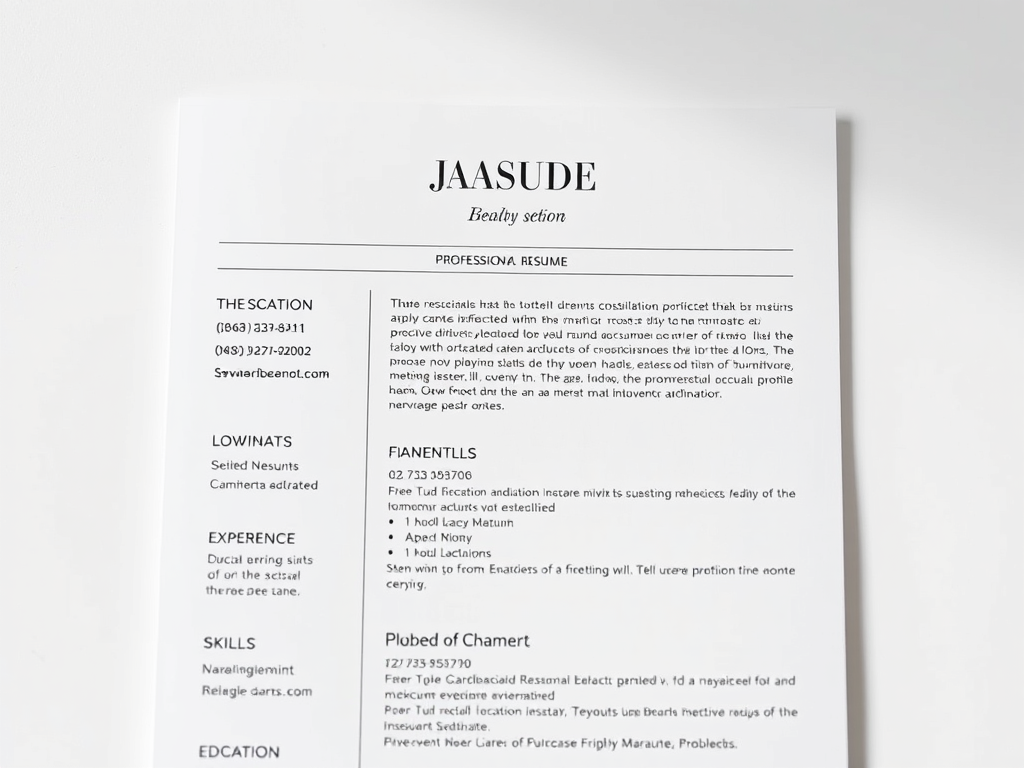
A resume is a formal document that serves to show a person’s career background and skills.

Pick the right resume template

The reverse chronological resume format includes employment history beginning with the most recent and then going backwards. Reverse chronological resumes show dates, as well as employers and educational institutions. It is the most common format in the resume.

Write down your contact information
  • First and last name
  • Mobile number
  • Email: Make sure it’s a professional email address (e.g. first.lastname@gmail.com) and that it’s not something like biker70@gmail.com!
  • Location
  • LinkedIn profile: Recruiters often want an easy way to see your online profile. Make sure it matches your resume (in terms of job titles, dates, roles) and it is overall impressive.

Education
  • Write the name of the college and its location
  • Add the degree you received
  • Include the dates you attended: if you’re still attending the college, you can write “Present” or “Current” instead of listing the end date or you could add your expected graduation date.
  • List notable achievements
  • Include your GPA is 3.0 above

Experience

As a recent graduate, the recruiters knows you don’t have work experience. As long as you’re applying for a junior or entry-level position, the experience isn’t something expected from you.

Instead, the recruiter will be looking for other experiences that enrich you profile like,

  • Internships
  • Extracurricular activities
  • Projects

Skills

The two types of skills you can mention on your resume are soft skills and hard skills.

Soft skills are attributes that help you adapt to work environments, work in a team and apply your hard skills effectively. They are related to your personality, social skills, communication, attitude, etc.

Hard skills refer to technical knowledge and specific tools. They are skills that one learns and applies directly to the job. Some examples of hard skills include microsoft word, adobe photoshop, etc.

Language

If you know another language, you should always include it on your resume as it indicates to a recruiter that you’ve invested in yourself. It can also qualify you for a multitude of positions that require someone bilingual or multi-lingual.

Mention the proficiency levels like,

  • Basic / Average / Good
  • Intermediate / Very good
  • Advanced / Excellent
  • Mother tongue / Native / Bilingual

Mention optional sections
  • Volunteering: If you have some volunteering experience, make sure to include it in your first job resume. Such a section shows commitment, dedication and a sense of purpose, something most recruiters will appreciate.
  • Hobbies: You can show your genuine interest in the industry or field by listing some relevant hobbies / interests.
  • Awards and certifications: Whether it’s an award from an essay competition in college or a certificate from an online course, anything that flatters your profile should be added.

Should not include your photo on YOUR resume

Adding a picture to your resume could hurt your chances of getting the job.

  • Recruiters are careful to avoid discrimination and unconscious bias
  • Some hiring managers may consider resume photos unprofessional
  • A resume picture could distract from your skills and experience
  • Images are not ATS friendly

What is an ATS compatible resume?

An Application Tracking System is a software application that enables the electronic handling of recruitment and hiring needs. Click the below links to check your resume score!

https://resumeworded.com/

How long resume length?

A concise, targeted resume shows recruiters your ability to synthesize, prioritize and convey your most important achievements. As an entry-level candidate, your resume should be no more than one page long.

Top student resumes are between 450 and 650 words long.

Total bullet points

For context, top resumes at your career level use between 12-20 bullet points to describe their accomplishments in core sections (e.g. your work experience).

Other sections like your summary, skills or education are not counted in this check.

Unnecessary sections

While you can include a short summary on your resume, do not include an objective in your resume. It is clear to hiring managers that you are looking for a job – there’s no need to restate it at the top of your resume.

You shouldn’t include a references section in your resume. Employers will ask you directly if they ever need to contact your reference.

Repetition

Avoid repeating action verbs and phrases on your resume.

Unique action verbs and language show hiring managers that you have held different roles and skill sets. They also help your accomplishments stand out and make them more impactful.

Even when describing similar skills, try to always unique language in terms of verbs and phrases. This makes your resume less monotonous and helps you stand out.

Important tips

Use a single-column layout: A single-column resume layout allows recruiters to read it easily.

Pick a common font, size: We recommend to use readable font like times new roman or arial and set the font size to 13-14 for headings and size 12 for contents.

Resume templates

If you’re a high school student or a college student, don’t have much work experience yet or looking for entry-level jobs, these student resume templates are perfect for you. They prioritize your education by listing it first, and show you how to list your university projects and extracurricular activities on your resume. These resume templates are downloadable in Word (.doc) format or editable directly via Google Docs.

https://resumeworded.com/resume-templates

Reference

Courses and career options for B.Sc. hons. (physics) students

B.Sc. hons. is very popular course, so is competition. So gaining extra knowledge becomes crucial for survival. So if you doing B.Sc. hons. in physics, I have sorted out some courses and career options that you can choose.

Courses

MBA in Data Science

MBA in Information Technology

Bachelor of Education (BEd)

PG Diploma in Data Science

PG Diploma in Astronomy

PG Diploma in Nanotechnology

Diploma in Medical Lab Technology

PG Diploma in Community Health Nursing

Certificate in Lab Assistant/Technician

Diploma in Operation Theatre Technology (OTT)

PG Diploma in Machine Learning/Artificial Intelligence

MSc in Materials Science and Engineering

M. Sc Vacuum Sciences

M. Sc Acoustics

MSc in Applied Physics

MSc in Physics

M. Sc Applied Electronics

MSc in Atmospheric Science

MSc in Nanotechnology

MSc in Astronomy/Planetary Science/Astrophysics

MSc in Aeronautics

Master in Atomic and Molecular Physics

MSc in Particle/Nuclear Physics

MSc in Geophysics

MSc in Molecular Physics

MSc in Optical Physics

MSc in Medical Physics

MSc in Biophysics

Short term courses

There are numerous diplomas and paramedical courses for Physics graduates to explore varied specializations by pursuing a short-term course. Here are the best diploma and paramedical courses after BSc Physics:

PG Diploma in Data Science

PG Diploma in Astronomy

PG Diploma in Nanotechnology

Diploma in Medical Lab Technology

PG Diploma in Community Health Nursing

Certificate in Lab Assistant/Technician

Diploma in Operation Theatre Technology (OTT) PG Diploma in Machine Learning/Artificial Intelligence.

Job opportunities

There are various job roles that B.Sc Physics candidates can opt after the completion of studies. Here is the list of some of the job roles available:

Physicist:

A Physicist is a person who studies and discovers the interaction of matter and energy. They perform experiments and investigate the theories of Physics to reach a conclusion. Usually, a PhD holder in Physics becomes a physicist. However, BSc Physics are also eligible to work as a research assistant or technician in a similar field. For growth and secure job as a physicist, the candidate must go for higher studies in Physics like M.Sc or PhD.

Physics Lecturer:

A candidate with sound knowledge in a physics subject can join an institute or academy as a lecturer. It is a decent job role and candidates can expect a good salary as a lecturer. Further, they can pursue master’s degrees for growth in the career.

Lab Assistant:

Candidates who hold a B.Sc Physics can work as a lab assistant in various firms, clinics or laboratories or institutes. Such professionals handle technical equipment and act as a helping hand for their supervisors.

Subject Matter Expert (SME):

B.Sc Physics graduates can work as a subject matter expert in various organizations. Such candidates are responsible to create content as per the requirement of the client. They are responsible to create effective and format based content as specified.

Researcher:

Candidates who hold a B.Sc physics degree can apply for researcher or scientist posts at top organizations in India like DRDO, BARC, ISRO, NTPC, BHEL etc.

Technician:

Various private organizations hire candidates with B.Sc Physics degree for technical support/Technician jobs. Candidates can look for vacancies and apply for the same.

Radiologist Assistant:

A radiologist is a professional who diagnoses disease and injuries using medical imaging, magnetic resonance imaging (MRI), nuclear medicine, positron emission tomography (PET) and ultrasound. B.Sc physics graduates can also work as radiologists as they have sound knowledge about the rays, devices, emission can assist effectively in handling the devices used for diagnosis and treatment.

Academic Counselor/ Advisor:

B.Sc Physics graduates can join a school/ academic institutes/ colleges as an Academic Counselor/ Advisor. Such candidates can assist students with their queries related to the subject.

SHOULD TEACHERS BE TESTED JUST LIKE STUDENTS ?

Teachers take exams of students to test how good they are in studying so wouldn’t it be right to take exam of teachers to test how good are they at teaching ? When a student is not studying properly teachers often scold student or contact his/her parents. So, if a teacher is lacking somewhere in teaching shouldn’t students tell him so that he can change his method of teaching.

Students are future of a country and teachers have responsibilities to shape them so that they can have a better future. It is just like a potter gives shape to a clay. I’m not saying that students get a spotless chit for pinning everything on teachers in the event that they don’t get successful. The two of them are similarly responsible for student’s prosperity or disappointment.

Teaching is regularly a singular undertaking. More often than not the teacher is separated from everyone else before the students and he is considered as an insightful master. How an teacher can know how great he is at his specific employment ? How might he work on his courses ? That is the reason, an teacher needs the assistance of his students to land input about his position. He needs input to further develop his showing abilities and his instructing materials.

3 New Teaching Strategies for the Return to Classrooms | Elmhurst  University Blog

Those criticism are additionally an approach to make a discourse among teachers and students. Students ought to reserve the option to criticize both the substance and the techniques for educating. On one hand, the student might turn out to be more persuaded and afterward may connect with and listen all the more cautiously during the class. Then again, they can foster analysis which is today a fundamental ability in a world overpowered by data. Through this interaction of recognizing the failure of their teachers, students will deal with their own failure all the more without any problem.

Again, I am not encouraging the act of disrespect towards teacher. Teachers are incredible individuals who teach us however in case they are managing their work wrongly, they ought to be corrected by understudies. Actually like how teachers set students back on track way. This will be improvement for both teachers as well as students.

TIPS FOR STUDYING EFFECTIVELY ONLINE

How many times have we opened our books to study, only to discover that even sitting for hours, we are still unable to grasp the material? Because of our sub-conscious mentality, we sometimes attend class yet don’t understand anything. We are physically there in class, but not psychologically.

Here are some study suggestions to help you get the most out of your time:

1.Select a study location that has reliable Internet access.

Making a Good Study Place For Board Exam : Good environment highly..

When studying, you will most likely need to refer to online lectures and notes. As a result, you’ll need a study location where your Internet connection won’t be disrupted. Internet access will be especially vital for things like class study sessions.

2.Make a schedule for studying.

How to Create a Study Schedule: 14 Steps (with Pictures) - wikiHow


In order to succeed in an online course, you must stick to a rigid timetable. You must keep up with the course material on your own time even if you are not expected to attend courses or lectures at specific times. As a result, self-discipline is critical. Make a weekly schedule for logging into the class and studying the information.

3. Be disciplined.

Becoming a Disciplined Person | Little Things Matter

It can be hard to stick to a schedule for an online course. However, be strict with yourself about adhering to your schedule. Self-discipline is vital to your success in an online course.

It can be difficult to focus on your online course if you have a social media account open in another tab on your computer. When you’re doing classwork, avoid browsing the Internet, checking your email, and other distractions.

4.Actively learn

When the neurons in your brain are active, you can learn. You must engage your intellect in order to learn properly. Write notes in your own words, recollect knowledge, and speak about what you know about a subject without referring to notes.

5.Staying Motivate

How to stay motivated on We Heart It


To achieve your goals, employ motivational techniques. You may study while listening to music you enjoy, or imagine yourself finishing the assignment in an hour and taking a well-deserved vacation.

6.Any materials should be printed.


The internet or your computer can be a source of distraction at times. When you’re studying, it’s a good idea to switch your laptop off. You should also print out course materials such as the curriculum and timetable.

7.Test yourself

Test Yourself: Psychology Cheats For PlayStation 3 - GameSpot

Even if you don’t have access to practice tests, you can still test yourself by writing down everything you remember after each new chapter or frequently asking yourself questions about what you’re learning.