
The International Day of Indigenous people

One of the most tragic instances in history would be that of the holocaust – a word that in itself is a definition of six years of European geopolitics. In Russia, Palestine and China, the expulsion of the White Army, the expulsion of the Arabs and the brutual suppression of cultures across China in the name of cultural revolution respectively bring to picture the way in which states and not just people can sometimes be the enemy of people. However, there have been several such instances in history, most of them hidden because they were carried out by the more ancestors of the ones who ended up being economically and intellectually influential communities.
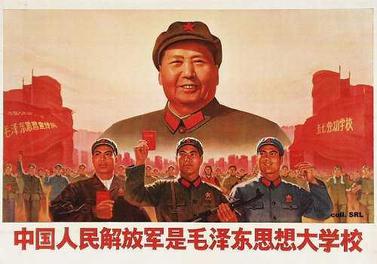
Cultural Revolution - Wikipedia
A poster calling out for Chinese Cultural Revolution

Human history is a record of forced displacements both internal and external, ethnic cleaning and genocides and murders both to the dismay and sponsored by states. When Captain Cook discovered the down under, it led a massive import of British criminals on the continent. With them came officers, scientists and explorers. The businessmen and civilians searching for more opportunities came in later. The people of the continent – the Australian arboginals, the Maoris from Oceania and many more tribes were reduced to a mere holder of small patches of lands and often no land at all by the British who had a superior military.

When the first Irish and British settlers landed in the new World of America, the red Indians offered them food and shelter which soon became a situation where the Red Indians had to fight for the survival of their lives and their cultures which was systematically and quite institutionally taken away by the New World settlers. Similarly, when the Spanish invaded Latin America, it meant a complete and absolute dissolution of their traditions and a genocide that would annihilate their population to an extent where even after 400 years, they would not attain the same.

The Last Days Of The Incas - HistoryExtra
Machu Pichu stands as a testimony to the Grand Incan Empire in the Andes before the Spanish arrived.

To add to all these miseries are the tales of the Rohingya community from Myanmar, the Tamils in Sri Lanka, the Kashmiri Pandits in Indian state of Jammu and Kashmir, the now diminishing sea faring communities in Philippines and Malaysia and many more. Japanese and Italian unifications were also carried out at the cost of the local traditions, cultures and ways that the communities living there had been practicing for a millennia. In India, the use of English and Hindi have slowly gobbled up on the rich culture of local languages that the communities had. In fact, many communities from the state of Bihar and Uttar Pradesh have completely given up on their languages. Bihar – a state where only 6% people had Hindi as their mother tongue now has a minority of about 20%!!

World loses about 1 language every 15 days!!!

Wikipedia defines Indigenous people as – “Indigenous peoples, also referred to as first peopleaboriginal peoplenative people, or autochthonous people, are culturally distinct ethnic groups who are native to a place which has been colonised and settled by another ethnic group. ” But, a broader definition is the fact that indigenous people are defined by their cultures which is at a steady loss across the globe. The most important thing is to treasure the fragments of their traditions that still remain. Because a rainbow is better a rainbow.

COVID-19 and Indigenous peoples | United Nations For Indigenous Peoples

Happy International Day for the Indigenous communites.

Communism in India

The change of administration at the centre in 2014 has brought with it new promises, but it has also brought suffering to the people of India who are being drugged or tranquillized in the hope of long-term benefits. The people of the country will vote for the current government for a second term because they perceive no credible opposition or viable alternative to it.

Although the current government’s administrative efficiency is marginally better than its predecessor’s, the majority of Hindus applaud their radical non-secular approach on specific topics like as the sacredness of the cow or actions against minority appeasement. Furthermore, the minority appeasement approach used by previous Congress-led governments has warped the Indian polity’s secular nature, which must be remedied. However, the BJP government’s work is more of an antithesis to past practises and cannot be termed long-term strategies because it will transform India into a non-secular nation-state with characteristics akin to those of a Fascist state. This is the time for the Left Parties to move forward quietly but earnestly, despite political and economic restraints, and endeavour to enlist the support of the common man. Maharashtra, Gujarat, and Rajasthan are three states that have refused to recognise the Left Parties as an option and have been difficult for the Left to crack for the past seventy-one years.

In Maharashtra, the Indian National Congress (INC), National Congress Party (NCP), and, to a lesser extent, the Shiv Sena are well entrenched, and removing them will be difficult. Except for a brief period under Shankar Singh Vaghela’s leadership, the Bharatiya Janata Party has ruled Gujarat for the past thirty years. Rajasthan has seen five-year transitions between the Bharatiya Janata Party and the Indian National Congress since 1993. In Maharashtra, the sole RED Flag-affiliated party with some clout is the Shetkari Kamgaar Paksha, whose presence and political clout are insufficient to gain an absolute majority in the state legislature. The left must build cadres in these three states over the next few years, as well as re-establish acceptance in West Bengal and Tripura, and attempt a second consecutive inning in Kerala. Along with it, the Communists, or the Left Front, should endeavour to train cadres and prepare for the elections set for 2024, or else aim for an absolute majority in the Lok Sabha elections in 2029.

The road will be rough, but the people of our country require a third option that is superior to both previous and current regimes. This must be a joint effort by all of the Left Parties, i.e.

Except in a few places such as West Bengal, Kerala, and Tripura, the average man in India has not yet developed the needed confidence and faith in the Left Parties, and this has been their most significant disadvantage. There is yet a chance if the Left Parties examine and adjust their approach, making it more inclusive and abstaining from sticking to the Marxist norms that must be abandoned in order to win the trust of the Indian people. A more Machiavellian style, similar to that of Comrade Vladimir Illyich Ulyanov Lenin during the early years of Communist leadership in Russia. Despite the fact that Indian Communism will be relatively different and distinct in light of the country’s economic and social structure, it is the answer, the ultimate answer to equitable and fair governance.