Prizes for National School Band Competition 6.0

Daily writing prompt
Write about your first computer.

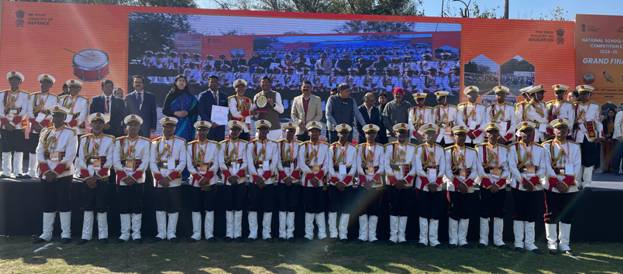
Union Minister of State for Defence, Shri Sanjay Seth, gave away prizes for the National School Band Competition 6.0. Secretary, Department of School Education and Literacy (DoSEL), Ministry of Education, Shri Sanjay Kumar and Additional Secretary,DoSEL, Shri Anandrao V. Patilwere also present at the event.

Shri Sanjay Seth, while addressing the audience, praised the exceptional performance of the young participants, describing the event as a mini replica of the nation. Highlighting the individual performances of several teams, he urged students to reduce their reliance on mobile devices, as advised by Prime Minister Shri Narendra Modi, and to engage in outdoor activities and creative pursuits. He encouraged the students to become brand ambassadors of the Viksit Bharat of 2047.

Shri Anandrao V. Patil, in his address, encouraged students to carry forward the message of Ek Bharat Shreshtha Bharat, as envisioned by Prime Minister Shri Narendra Modi, and to contribute to nation-building with a nation-first approach.
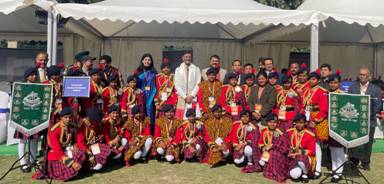
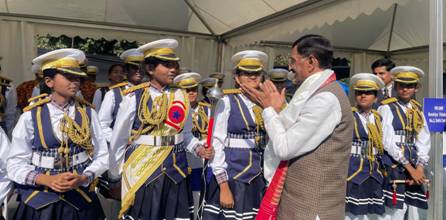
In the Brass Band – Girls category, Government Sr. Sec. School West Point, Gangtok, Sikkim, secured the First Prize. St. Joseph’s Convent Sr. Sec. School, Bhopal, Madhya Pradesh, received the Second Prize, while St. Joseph’s Anglo-Indian Girl’s Higher Secondary School, Kozhikode, Kerala, earned the Third Prize. The team from GayatriVidyapeeth, Shantikunj, Haridwar, Uttarakhand, received the Consolation Prize.

In the Brass Band – Boys category, the First Prize went to Prince Lotus Valley, Sikar, Rajasthan. St. Xavier’s Higher Secondary School, Pathaliyaghat, Sepahijala, Tripura, won the Second Prize, and Pinegrove School, Solan, Himachal Pradesh, secured the Third Prize. The team from St. Xavier’s English Medium School, Pathalgaon, Chhattisgarh, received the Consolation Prize.

In the Pipe Band – Girls category, the First Prize was awarded to PM SHRI KGBV Patamda, PurbiSinghbhum, Jharkhand. Bhonsala Military School Girls, Nasik, Maharashtra, secured the Second Prize, and Shri ThakurdwaraBalikaVidyalaya, Ghaziabad, Uttar Pradesh, earned the Third Prize. The team from Monte CBSE School, Pandipadu Village, KallurMandal, Kurnool, Andhra Pradesh, received the Consolation Prize.

In the Pipe Band – Boys category, City Montessori School, Kanpur Road Campus, Sec DLDA Colony, Kanpur Road, Lucknow, Uttar Pradesh, claimed the First Prize. North Sikkim Academy, Nangan, Sikkim, secured the Second Prize, while RBP Military School Sports Academy, Sangli, Maharashtra, won the Third Prize. PM SHRI KendriyaVidyalaya No. 2, BelagaviCantt., Karnataka, received the Consolation Prize in this category.

The First Prize-winning teams will receive ₹21,000, while the Second Prize-winning teams will be awarded ₹16,000, and the Third Prize-winning teams will receive ₹11,000. Teams receiving the Consolation Prize will be awarded ₹3,000. In addition to the cash prizes, all winning teams will be presented with a trophy and certificates.

Ministry of Education, in collaboration with the Ministry of Defence, organised the grand finale of National School Band Competition 6.0 on 24-25 January 2025 at Major Dhyan Chand National Stadium, New Delhi. This year 16 band teams from 13 States with 463 children were shortlisted for the finale (list annexed) through State- and Zonal-level competitions. At the State-Level Competitions, 568 teams comprising 13,999 children participated; while at the Zonal Level, 84 teams comprising 2,337 children took part.

For the first time:

1.   Band Teams from three government schools have got the opportunity to participate in the Republic Day Parade.

2.   PM SHRI KGBV Patamda, PurbiSinghbum, Jharkhand school students will be giving their performance at the rostrum in front of the Presidential stage.

3.   Two band teams (KendriyaVidyalaya and Government Sr. Sec. School West Point, Sikkim) will be performing at Vijay Chowk in the Republic Day Parade.

4.   In tandem with the “whole of Government approach”, initiative has been taken for training of PM SHRI school band teams by the band instructors/teams of Army Regimental Centres. Training has begun in 11 States/UTs and will commence shortly in the rest of the States/UTs. This is a step towards imparting holistic education to students of PM SHRI schools and developing them into well-rounded personalities.

The National Education Policy 2020 is the first education policy of the 21st century and aims at large-scale transformational reforms in the education sector. In that direction, this program will not only instil a sense of patriotism and national pride but will also enhance the musical skills of the students and inculcate discipline among them. This initiative aims to rejuvenate the spirit of patriotism and unity amongst school students throughout the country and help in the furtherance of holistic education.

Joint Secretary, DoSEL, Dr.AmarpreetDuggaland other dignitaries from the Ministry of Education and Ministry of Defence

*****

Bharat Internet Utsav

 Department of Telecommunications (DoT) is pleased to announce the successful conclusion of the “Bharat Internet Utsav”, a celebration that brought together citizens from all corners of the nation to share their stories/videos about how the internet has transformed their lives. The event conducted in collaboration with MYGOV for 45 days (07.07.2023 to 21.08.2023), witnessed an overwhelming response with over 24,000 participations highlighting the profound impact of the internet on socio-economic development.

The DoT in partnership with MYGOV, extends its deepest gratitude to every participant who shared their stories/videos to the Bharat Internet Utsav. The sheer volume   (24,128 entries) reflects the widespread recognition of the internet’s impact on individual lives, communities, and the nation’s progress as a whole.

Since its launch on July 7, 2023, the Bharat Internet Utsav garnered an extraordinary influx of stories/videos from individuals, communities, and organizations across India. These heartwarming videos showcase on how the internet has become an integral part of daily life, enabling progress, connectivity and knowledge-sharing like never before. The event captured stories that spanned diverse sectors, ranging from education and healthcare to entrepreneurship and cultural preservation

As the event concludes, the evaluation process to select the most impactful stories/videos has begun. The jury will meticulously review each submission to determine the winners. As a part of appreciation participants will be felicitated as:

A)   Best three (3) stories/videos will be given certificate and cash prize of Rs.15,000, Rs.10,000 and Rs.5000 respectively.

b)        Rs. 1,000 cash prize along with certificate will be given to one best story/video from each state/UTs.

c)         In addition, 10 more best stories/videos will get the appreciation certificate.

d)        These stories/videos shall be displayed on various social media handles of Ministry of Communications, Government of India.

The overwhelming success of the Bharat Internet Utsav reaffirms the Department of Telecommunication’s commitment to provide secure, reliable, and affordable telecommunications services to every citizen, ensuring that the benefits of the digital age reach the farthest corners of the country.

For more updates and information about the Bharat Internet Utsav please visit https://innovateindia.mygov.in/bharat-internet-utsav/.

*******

'YUVA PRATIBHA – Singing Talent Hunt

 With an aim to promote Indian music at the grassroots level on a national scale by identifying and recognising the new and young talent in various singing genres, MyGov in collaboration with Ministry of Culture is launching a YUVA PRATIBHA – Singing Talent Hunt on Wednesday, May 10, 2023.

The initial submission for the competition will be open for a period of one and half month.

Singing Talent Hunt is a unique opportunity for citizens across India to display their singing talent and skills and to gain national recognition. If one wishes to be New India’s emerging artist singer, or musician, then he/she can participate in the YUVA PRATIBHA – Singing Talent Hunt and lend the melodic voice in the various genres: 

  • Folk Songs
  • Patriotic Songs
  • Contemporary Songs

How to Participate:

  1. Log in to https://innovateindia.mygov.in/  
  2. The contest is open to all Indian citizens.
  3. All entries must be submitted on the MyGov portal. Entries submitted through any other mode will not be considered for evaluation.
  4. The participants have to record a video while singing and shall submit their entry via YouTube (Unlisted Link), Google Drive, Dropbox, etc, and ensure that the link can be accessible. Entry shall lead to disqualification automatically if the Access will not be granted.
  5. This contest will be available in Hindi & English.
  6. One participant can participate only once in the contest.
  7. Top 3 Winners will be announced in the Finale (Physical Event) in New Delhi.

Reward & Recognition:

  • 1st Winner: INR. 1,50,000/- + Trophy + Certificate
  • 2nd Winner: INR. 1,00,000/- + Trophy + Certificate
  • 3rd Winner: INR. 50,000/- + Trophy + Certificate
  • Following 12 Contestants will be rewarded with a Cash Prize of INR. 10,000/- each

Mentorship: Top 3 Winners will be mentored for a period of 1 month with a mentorship stipend. 

MyGov is inviting citizens to come and participate in the contest and earn recognition on National level. Visit https://innovateindia.mygov.in/singing-challenge/ for more details.

*****

From Trash to Treasure: A Hackathon on Innovative Solutions for Waste Utilization

 Driven by the message of Mission LiFE and circular economy goals, the Central Pollution Control Board is organizing an online ‘Waste to Wealth Ideation Hackathon’ for undergraduate and above students on 14th May, 2023 (Sunday) the registration for which are currently open on https://cpcb.nic.in/w2w-hackathon-cpcb/#

 It is a nationwide event to provide platform to college students across the country to solve real-world waste management challenges on (a) plastic waste (b) electronic waste (c) battery waste (d) crop residueIt will help them to build upon their understanding of waste management and present innovative solutions for Waste to Wealth conversion.

The Ideation Hackathon offers a one-of-a-kind opportunity to students to win cash prizes worth up to Rs. 3.6 Lakhs across all waste streams. On the day of Ideation Hackathon i.e. May 14, 2023 (Sunday), one problem Statement each for four waste categories will be posted on the CPCB website at 09:00 am and students will be required to email the original ideas pertaining to it on w2w.cpcb[at]gov[dot]in by 05:00 pm in a given template. The best original ideas under each waste category will be awarded cash prize of Rs. 50,000, Rs. 25,000 and Rs. 15,000. Along with this, chosen ideas will get incubation support, industry exposure, and mentoring from top scientists of CPCB. For further details regarding eligibility, process, important dates and problem scope, please visit https://cpcb.nic.in/w2w-hackathon-cpcb/.

The last date for registration is May 12, 2023 (Friday).


CONTACT

Central Pollution Control Board

Parivesh Bhawan, East Arjun Nagar, Delhi 110092, India

mscb.cpcb[at]gov[dot]in   

CAPITALISM

Capitalism is a political and economic system where a country’s trade and industry are controlled by private owners and not by the state. It is basically a system where there is private ownership of property. Capitalistic ownership means owners control the factors of production and derive their income from their ownership. That gives them the ability to operate their companies efficiently. It works for profit maximisation rather than public benefit. Capitalism needs a free market to work efficiently and succeed.   In a capitalist society, the distribution of goods and services is according to the laws of demand and supply. According to the law of demand, when the demand for a particular product increases then it also leads to an increase in its price. In a capitalist society there are a number of competitors. When these competitors realise that they can make a higher profit since the demand is high then, they increase production . The greater supply reduces prices to a level where only the best competitors remain.

EMERGENCE OF CAPITALISM

Capitalism emerged during the 16th century and expanded during the Industrial Revolution, pushed forward by colonialism, the nascent factory system, and the Atlantic Slave Trade. This system generated wealth and prestige for owners, but also exploited people who had very little or no power like the workers in the factory and people indigenous to Africa and the Americas. The expansion of Capitalism in America in the 19th-century relied on economic growth and was generated through the labour of enslaved people on land that were forcefully taken from Native Americans.

The United States is one example of capitalism. The other examples of capitalist countries are: Singapore, New Zealand, Australia, Switzerland, Ireland , United Kingdom, Canada, Denmark etc.

HOW CAPITALISM WORKS

In a capitalist society the owner of supply competes against each other to earn the highest profit by selling the goods at the highest possible price while keeping their costs as low as possible. Competition keeps prices moderate and production efficient, although it can also lead to worker exploitation and poor labour conditions. As there are a number of options for the consumer in the market due to competition then the consumer has a lot of choices.

Another component of capitalism is the free operation of the capital markets. The laws of supply and demand set fair prices for stocks, bonds, derivatives, currency, and commodities. Capital markets also  allow the companies to raise funds to expand.

According to the  economic theory Laissez- faire it argues that the government should take a hands-off approach to capitalism and should only intervene to maintain a level playing field. The government’s role is to protect the free market. It should prevent the unfair advantages obtained by monopolies or oligarchies. It ought to prevent the manipulation of information, making sure it is distributed equitably.

ADVANTAGES OF CAPITALISM

  • It creates healthy competition in the market.
  • Due to the number of companies and products in the market consumers have more choices.
  • Since the consumer’s demands are high and they will pay more for what they want, Capitalism results in the best products for the best prices.
  • It results in efficient production. In a capitalist system, firms have incentives to be productively efficient by cutting costs to improve competitiveness and productivity. If firms don’t remain productive and efficient they will run out of business.
  • Capitalism encourages trade between different nations and different people which is a mechanism for overcoming discrimination and bringing people together.
  • It raises the standard of living.
  • As the capitalist economy is dependent on the push factor of individuals, there is no limit to the level of wealth an individual can accumulate through progression within the economy.
  • Through capitalism, firms and companies are inclined to produce with greater efficiency, by cutting cost and improving efficiency. This is done with an aim to prevent losses in an industry where competition is high, bettering the economy as a whole.

DISADVANTAGES OF CAPITALISM

  • Private ownership of capital enables firms to gain a monopoly power in product and labour markets. Firms with monopoly power can exploit their position to charge higher prices.
  • Social benefit is ignored, as the owner cares about profit maximisation, public good is ignored, the poor people who cannot afford expensive products have no option.
  • A capitalist society argues it is good if people can earn more leading to income and wealth inequality. However, this ignores the diminishing marginal utility of wealth.
  • In a capitalist system where the means of production and distribution of goods and services are owned by just a few members of the society, the wealth of an entire nation could be controlled by just a few wealthy individuals and families and hence there is unequal distribution of wealth.
  • Due to the market being profit and demand driven, negative externalities such as pollution are generally ignored until they become a serious issue within the economy.
  • Socialists and communists are people who do not support capitalism. They say it hurts workers, because businesses make more money by selling things than they pay the workers who make the things. Business owners become rich while workers remain poor and exploited. 

Source: https://www.thebalance.com/capitalism-characteristics-examples

Porter’s Five Forces Model

Porter’s 5 Forces Model is a business model and a tool which helps in identifying main competitive forces of an industry or a sector. The 5 Forces Model is mainly used to create a corporate strategy which will help a company to enhance its long- term profitability.

Understanding Porter’s Five Forces Model

The 5 Forces Model was created by Harvard Business School’s Professor Michael E. Porter and was published in his book “Competitive Strategy: Techniques for Analyzing Industries and Competitors” in 1980. The model was created to explain why various industries are able to maintain varying level of profitability. Porter’s 5 Forces helps in analyzing the industry of the company so that a company can adjust their corporate strategy, boost their profitability and beat their competition.

What are the five forces of the Porter’s Model?

  • Competition in the industry
  • Potential of new entrants into the industry
  • Power of Suppliers
  • Power of Customers
  • Threat of substitute products

Competition in the Industry

For most industry, the level of competition in the industry determines the positioning of the product in the market. The intense the competition in the market, the more the company has to focus on innovation, marketing, price, etc. of the product. When the competition is less, a company has more authority to charge higher prices and establish the terms of deals in order to increase sales and profits.

Potential of New Entrants into the Industry

A company’s positioning is also affected by the new entrants in the market.  This in turn puts pressure on prices, costs, and the rate of investment needed to sustain a business within the industry. The less the time, money and effort it takes for a competitor to enter the market, more is the threat for a company to lose its market share. On the contrary, if there are strong barriers to entry in the industry, companies more secure about their market share.

Power of Suppliers

Power of suppliers in a market means how easily suppliers can increase the cost of the inputs. The suppliers’ power in the market is determined by the factors like number of suppliers in the market, uniqueness of the inputs they provide, cost of switching a supplier for a company. If the number of suppliers in an industry is less, a company would depend more on its current supplier, thus giving more power to supplier in terms of cost of inputs and other advantages in trade. However, if the suppliers are more in the market, then company has the advantage of switching the supplier in case the supplier increases the price or if a company finds a cheap supplier, thus keeping their input costs low and increasing their profitability.

Power of Customers

Customers are more powerful in an industry when there are less number of customers in an industry and more number of suppliers. Because the client base for a company is smaller and more strong, each customer has greater negotiating leverage to get better rates and deals. A company with a large number of smaller, independent consumers will find it easier to raise prices and increase profits.

Threat of Substitute Products

A substitute is a product or service that can be easily replaced with another by consumers. In economics, products are often substitutes if the demand for one product increases when the price of the other goes up. When there are no close substitutes in the market, a company can take advantage of charging higher prices. However, if there is availability of close substitutes, customers will switch to substitutes in case of increase of the prices of the products of a company.

Understanding Porter’s Five Forces and how they apply to a particular industry can help a company change its business plan to make better use of its resources and generate more profits for its shareholders.

India’s Olympic Wins

The first modern Olympics were held in Athens, Greece, in 1896 and it took India only four years before seeing their first representation at the Summer Olympic Games. It all started for India in 1900 when they sent the athlete Norman Pritchard to Paris where he won two medals in Men’s 200 meters and Men’s 200 meter hurdles. Till date, India has participated in every Summer Games since 1900, sending their first Olympic team in 1920 comprising four athletes and two wrestlers. It was, however, not till 1928 that India saw its next medal, after which there have been several Olympic medals obtained. Today India holds a total of 28 Olympic medals and seems to be improving its performance at the Olympics.

Hockey

The Indian hockey team dominated the Olympics from 1928 for decades to come, winning an unprecedented 3 gold medal titles. The dominance of India’s hockey team started in 1928 in Amsterdam, when Dhyan Chand scored a hat-trick against the Netherlands in the final. Major Dhyan Chand is revered today as one of the greatest sportsman in India, and also the greatest player in the history of hockey. By the Berlin Olympics in 1936, the gold medals had piled up for India and London 1948 was the first gold medal post-independence for India. The Indian team kept winning until 1960 when the gold streak was finally broken.

Boxing

In Beijing 2008, Vijender Singh became the first Indian boxer in history to win an Olympic medal. Then in London 2012, India’s newfound love for boxing saw Mary Kom winning a bronze medal for the country. With her win, Mary Kom had become, and remains to be a role model for Indian women wanting to get involved in sports.

Shooting

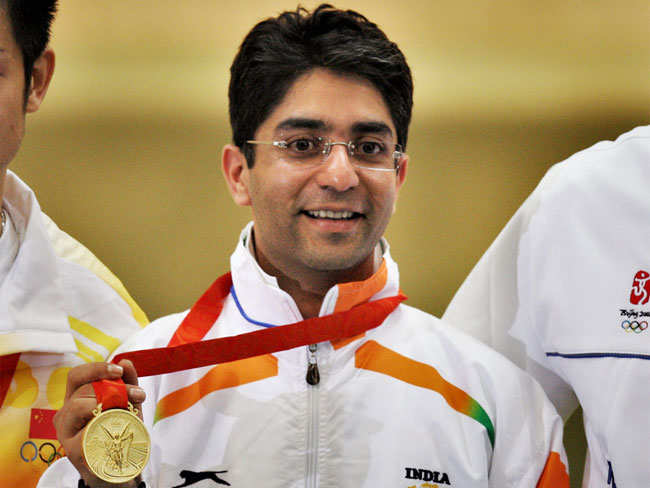
Rajyavardhan Singh Rathore was the first shooter to help India get a medal at the Athens Olympics in 2004, and inspired an entire generation to take up the sport. Following his footsteps, Abhinav Bindra won the gold medal in Men’s 10m Air Rifle at the 2008 Beijing Olympics. He remains the only individual Olympic gold medalist in India and perhaps the most notable among the Indian Olympic winners.

Tennis

India had gone without a medal of any sort for four straight editions before Leander Paes won a bronze medal in 1996. After losing to Andre Agassi in the semi-final, Paes went on to beat Fernando Meligani in the bronze medal match. The medal was a huge achievement for India as they had returned without a medal for many years before Paes won in Atlanta.  

Weightlifting

Breaking the norm of only men fetching Olympic medals for the nation, India saw Andhra Pradesh’s Karnam Malleswari clinching the bronze medal in the 54kg category at Sydney 2000, becoming the first woman in doing so. She had created history, and after her many female athletes would follow to win medals for India.

Wrestling

In 1952, Khashaba Dadasaheb Jadhav had created history by becoming the first Indian to win an Olympic medal in an individual sport at the Helsinki Olympics. The sport was wrestling, and he had won a bronze medal for it. After that in 2008, Sushil Kumar clinched a bronze medal in wrestling after a great deal of struggle and effort. Furthermore, in a traditionally male-dominated sport, Sakshi Malik became the first Indian woman wrestler to win an Olympic medal with her bronze medal finish in the Women’s freestyle 58 kg category at the 2016 Rio Olympics.

Badminton

In London 2012, Saina Nehwal became the first Indian badminton player to win an Olympic medal when her opponent, China’s Wang Xin, was forced to retire hurt during the match in the semi-final. She was the first Indian athlete to win an Olympic bronze medal in the women’s badminton singles. In the following 2016 Rio Olympics, the nation witnessed PV Sindhu take one step closer to gold by becoming the first Indian shuttler to reach an Olympic final in the 2016 Games. She was not able to clinch the victory but won a silver medal in the Olympics. She was also the youngest Indian (21 years old) to achieve this feat.

Conclusion

Every single Indian medal winner may not be mentioned in this Article, but it is important to highlight that every single person who has won a medal for India must be respected, whether that medal is bronze, silver or gold. The Olympics are a worldwide event with the highest level of competition possible, so we should be proud of those who have won for India.

Want to know about Business Risk?

Business risk is defined as the possibility of occurrence of any unfavorable event that has the potential to minimize gains and maximize loss of a business. In simple words, business risks are those factors that increase the chances of losses in a business and reduce opportunities of profit.

Characteristics of Business Risk

1. Business risk arises due to uncertainties. Uncertainty is when it is not known what is going to happen in future. Examples of uncertainties that affect a business are change in government policy, change in demand, change in technology, etc.

2. Risk is an essential part of the business. Risk involved plays a crucial role in business operations. The risk involved in can be reduced to some extent but it cannot be completely eliminated.

3. Every business has risk which varies in severity based on the type of business. For example a large Corporation or business will carry more risk as compared to small scale businesses.

4. Businesses take risk with the motive or expectation of earning profit because it is considered more the risk higher is the amount of profits from operations.

The art of predicting business risks: Why non-experts do it better | Fortune

Causes of Business Risk

 1. Natural Causes:- Natural causes are the causes those which arise due to interference of nature. Humans and businesses do not have a control over the natural causes. These include natural calamities like earthquake, tsunami, tornado, famine, floods and drought, etc. Humans and businesses do not have a control over the natural causes

2. Human Causes:- The human causes of business risk arise due to the loss of business that arises from changes in customer preferences, employee mindset, agitation by workers, negligence by employees, strikes and lockouts.

3. Economic Causes:- Economic causes of business risk arise from changes in the different economic factors such as increasing competition, changing market conditions, increase in price of raw materials, production cost.

Three types of competition and how to tackle control them with examples

Does Business Require Competition?

“Competition is a good thing; it forces us to do our best.”

  • Nancy Pearcey

Since every aspect in life has two angles, competition too can be considered in the positive as well as the negative sense. Mostly, competition is used in the negative sense which is the reason most of the businesses end on a short note. Thus, we will be learning a positive sense of this word in today’s article.

The term becomes negative when you resolve to imitating the procedures followed by your competition. As discussed in earlier articles, a business needs to stand out for which uniqueness is quintessential. Thus, blindly following the footsteps of your competition isn’t going to help. Also, focussing merely on your competition and their profits isn’t the right move because that diverts your attention from the possible surplus you could generate. In short, avoid opening up an encyclopaedia of services offered by your competition just so as to match their ability because that isn’t possible. All have different capabilities and varied ways of thinking. Perhaps you could do better than the competition and in order to believe yourself, lay aside continuous inspection of the competition. Let us understand this better.

For instance, a company selling electrical appliances and will of course have competition because one can’t possibly come up with a business extremely alien to all, owing to the desires of the mob. Thus, competition persists because we need to consider the needs of the population on this planet and arrange for such services that would benefit. Uniqueness must come in the way we exhibit or present those services.

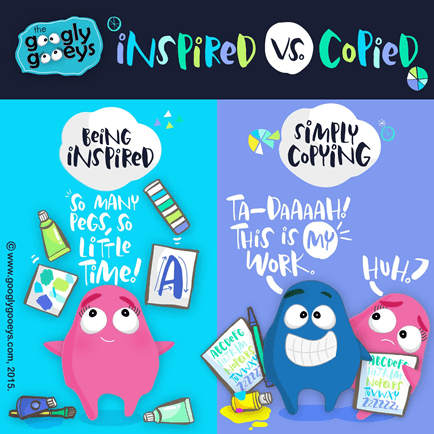
Getting back to the story, you are receiving good deal traffic but are occupied in considering the competition. You’re trying to get into their good books so as to know more about their ways of introducing and presenting the services. However, while you are busy understanding your competition, you failed to comprehend over the fact that you could understand the psychology of the customers and list their desires thereby coming up with a unique form of exhibition of your services. In short, you lose access to creativity when you are busy imitating which certain businessmen term as ‘taking inspiration’. A point to be noted is, that inspiration means simply learning from the competition and coming up with your own unique form of services while imitation is looking up services provided by the competition that seem to best appeal to the mob and trying out the same! Most businessmen resort to the latter but coin their efforts as former!

Yes, there is a possibility of better inclining towards the latter because we feel that more customers would be attracted to us as well, as they do to the competition. But a point that we miss out on is, that if the customers have already tried that way out, why would they be interested in yet another company offering the same format with no particular speciality or uniqueness in its services? Also, customers remain glued to the same company for ages owing to the trust and genuineness they feel towards that brand which is the reason, they wouldn’t actually be interested in trying out a new brand with the same level of services. Why take the risk and opt for a new brand with same manner of exhibition of services when the old one does the trick? That is when uniqueness comes into the picture because your aim shouldn’t be to snatch the customers of your competition which is a tedious task and may gain no possible results. Instead, your aim should be to gain a new set of enthusiastic customers for yourself. Don’t go for Renaissance in business that is rebirth or revival of your competition. Go for something unique that people would be excited enough to try out owing to the way it functions.

Thus, competition should be taken in a positive sense. Take inspiration from them. Capture some of their bonus points that help them and develop your business with creativity on the basis of that structure. In short, use your competition as stepping stones to success! Also, competition can help you grow vividly because it helps understand updates of market trends which keep changing and are visible in your competition. By closely observing the same, you could flourish your business and step by step, move further than your competition not by imitating them but by personal creativity. The competition would neither blame you for stealing their ideas nor would you feel guilty of being a copy cat! So, be yourself and unique in business to ensure additional bonuses in the future!

Thank You For Reading!

Why Competition Is Bad

In ancient times, the rules of nature were easy. If you didn’t compete for food, shelter or women, you would die. We still compete for those things, but the competition actually makes us weaker.

When we compete, two negative things can happen.

  1. We start imitating the competition
  2. We focus too much on our competitor, instead of our business

In our personal lives, we often imitate our competitors. We all compete on some level with colleagues, friends, and family. This will make you lose your identity and dignity. True power comes from within. Don’t compete with others. You don’t have to have a better car.

You can also apply this to business. When Microsoft and Google were focussing on each other, Apple became one of the biggest tech companies in the world. Microsoft dropped the ball because they only focused on Apple. In the meantime, Apple focused on innovation and creating value.

In life and business, it’s not a case of “best” so and so. That’s only true in sports. But in life, most things are subjective. Being different is what matters more. And in business, the ones who are first win.

Competition itself is bad because it’s not the point. Focus on the value that you add, not on how much better you are compared to someone else.

“Your competition is not other people but the time you kill, the ill will you create, the knowledge you neglect to learn, the connections you fail to build, the health you sacrifice along the path, your inability to generate ideas, the people around you who don’t support and love your efforts, and whatever god you curse for your bad luck.”
– James Altucher