Polynomials and identities

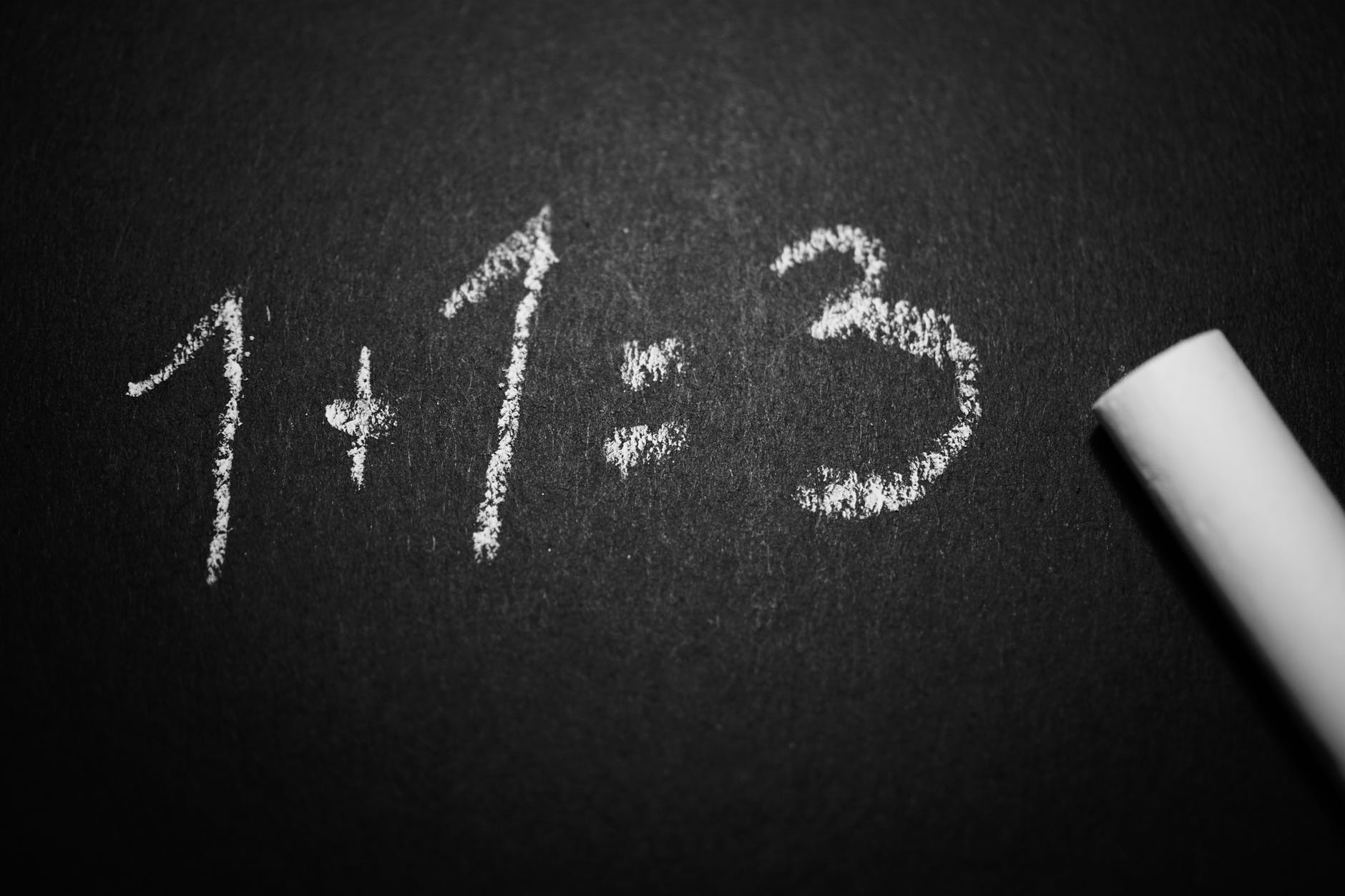
Photo by George Becker on Pexels.com

TO start with the topic first of all its necessary to know basic identities:-

a + b whole square is what? I.e a square +2ab+ b square. Similarly there are many more. TO begin with our basic topic we will try some questions and their approaches.

Q1. IF x +1/x = 4 then what is x2 +1/x2

So guys we are given value of x + 1/x =4. Now simply square both sides. You will get x2 + 2 + 1/x2 as 16. Now if you take to on RHS side it will be simply 16-2 i.e 14. Hence 14 is your answer. So dear reader you can follow a shortcut to solve orally that 4 square minus 2. I.e same 16-2 . Similarly if you have 9 instead of 4 in the question the answer would be 81-2 =79.

If now instead of this you need to find value of x4 +1/x4 . Then how would you solve. Just take out value of earlier one and square it and minus. For eg in first question as 14 was our answer subtract 2 from it and its your new answer .

Q2. If now in first question you need to find x3 +1/x3 (note its cube not three)

So you can use a shortcut i.e. p3 -3p. I.e. 4 cube -4×3 which will be 64-12=52.

Q3. If x-1/x =p then x3-1/x3 will be

Its easy just in above formula replace minus sign by plus . p3+3p.

Q4. If in first question I need to find x5+1/x5 then.

Here you need to know just the basic formula (xa )b = xa+b . Dear reader we now that 2+3=5 . So find the value in example 1 and 2. I.e 14 and 52 now multiply both of them and minus with value in question. 728-4=724.

For reference

https://www.google.com/url?sa=t&source=web&rct=j&url=https://byjus.com/maths/algebraic-identities/&ved=2ahUKEwiXnezZueLxAhWIxzgGHfbGChQQFnoECDMQAQ&usg=AOvVaw3kOAhEDrCdK4_MLjcyXg9U

https://www.google.com/url?sa=t&source=web&rct=j&url=https://www.vedantu.com/maths/algebraic-identities&ved=2ahUKEwiXnezZueLxAhWIxzgGHfbGChQQFnoECDQQAQ&usg=AOvVaw3S4Vj2T2sw7UHmGmefLXFC

Blood relations:logical reasoning

This is an important topic if you are preparing for any of the competitive exam. To solve such type of questions break the question into generations. For eg I and my brother will belong to one generation. My father and my mother will belong yo3 one generation and so on.

You need to use arrows and represnt Male and females differently. For eg you can use plus sign for males and minus for females. Lets understand with example.

POINTING TO RAJA RANI SAID “HIS MOTHER’S BROTHER IS THE FATHER OF MY SON RAJKUMAR.”HOENIS RAJA RELATED TO RANI. This simplifies that raja ‘s mother’s brother is father of my son. That means rani s husband is uncle of raja. Hence raja is nephew.

eg 2. Amit pointing a photo of girl says she is daughter of only son of my grandfather.

This means the girl is daughter of only son of my grandfather means his father’s daughter is that girl and girl is sister of amit.

eg3. Pointing to a man :-his only brother is the father of my daughter’s father.

My daughter’s father means me and my father’s brother. Now how I am related to my father’s brother Its easy I am his nephew.

Also you can get some questions like p+q means p is brother of q. p-q means p is sister of q.

a+b-c. a is brother of b and b is sister of c.

https://www.google.com/url?sa=t&source=web&rct=j&url=https://www.indiabix.com/verbal-reasoning/blood-relation-test/&ved=2ahUKEwj1ztjFteDxAhXU73MBHfI-C7IQFnoECAQQAQ&usg=AOvVaw0MgoIJWqewxjffJsJzcQZL

https://www.google.com/url?sa=t&source=web&rct=j&url=https://byjus.com/govt-exams/blood-relations-logical-reasoning/&ved=2ahUKEwj1ztjFteDxAhXU73MBHfI-C7IQtwJ6BAgnEAE&usg=AOvVaw1L3I0xndZBU6CMGDQZsoVh

Basic Maths: Averages

What do you understand by averages?

Average is sum of all observations upon number of observation. For eg. Kripa had monthly salary of 20000 and krishna of 40000. There average would be 40000+20000 i.e. sum 60000 upon 2. Answer is 30000. In this question there were 2 observation.

some basic formulas

Sum of first n natural no. = n(n+1)/2

Sum of first n odd no. = n square

Sum of first n even no.= n(n+1)

sum of square of first n natural no. = n(n+1)(2n+1)/6

sum of cube of first n natural no= (n(n+1/2))whole square

  • If n is odd: The average of n consecutive numbers, consecutive even numbers or consecutive odd numbers is always the middle number.
  • If n is even: The average of n consecutive numbers, consecutive even numbers or consecutive odd numbers is always the average of the middle two numbers.

When two groups of Parts or objects are combined together, then we can talk of the average of the entire group. However, if we know only the average of the two groups individually, we cannot find out the average of the combined group of objects.

Ex: The average of 6 consecutive even number is 21. Find the largest number? Largest no. = A + (n−1)
A = average
n = no. of terms
Largest no. = 21 + ( 6 -1) = 26


Ex: The average of 5 consecutive even number is 46. Find the smallest number? 
Smallest no. = A – (n – 1)
A = average
n = no. of terms
Smallest no. = 46 -( 5 -1)
= 42

Ex: The average of 6 consecutive odd number is 22. Find the smallest number?Smallest no. = A – (n – 1)
A = average
n = no. of terms
Smallest no. = 22 – ( 6 – 1)
= 17

https://www.google.com/url?sa=t&source=web&rct=j&url=https://www.sscadda.com/quant-notes-average/amp&ved=2ahUKEwjhqr2rz8nxAhWw73MBHYxgA8gQFjACegQIBBAG&usg=AOvVaw1TahxS_tOROsOMfdE7IkbH&ampcf=1&cshid=1625408936926

https://www.google.com/url?sa=t&source=web&rct=j&url=https://byjus.com/free-cat-prep/shortcut-techniques-in-averages/&ved=2ahUKEwjhqr2rz8nxAhWw73MBHYxgA8gQFjADegQIHhAC&usg=AOvVaw0blWocmvGQEsmRMUWkhM2w&cshid=1625408936926