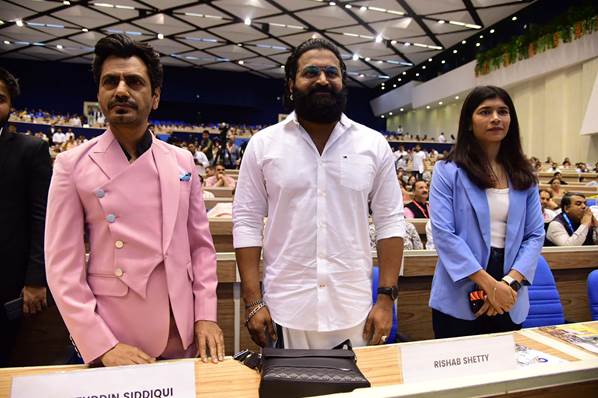
First STI Conclave on “Traditional Knowledge for Sustainable Livelihoods” organised jointly by ISTIC-UNESCO and CSIR

 The International Science, Technology, and Innovation Centre for South-South Cooperation (ISTIC) under the auspices of UNESCO together with the Council of Scientific and Industrial Research (CSIR) constituents, Traditional Knowledge Digital Library Unit (CSIR-TKDL Unit), New Delhi, and CSIR-Indian Institute of Chemical Technology (CSIR-IICT), Hyderabad, India is organizing a STI Conclave on “Traditional Knowledge for Sustainable Livelihoods” on 29-31 July 2024 at New Delhi, India.
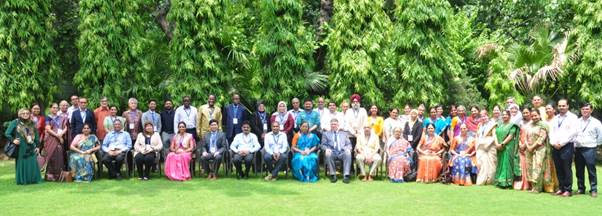
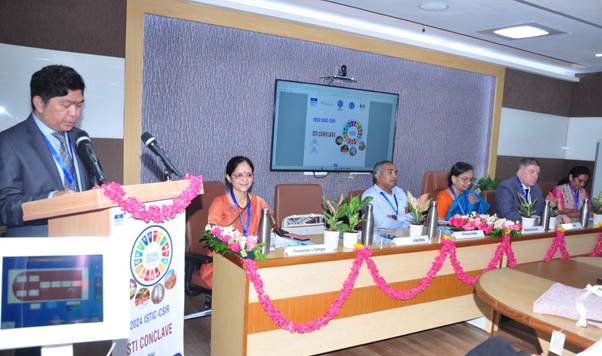
Dr. N. Kalaiselvi, DG, CSIR and Secretary, DSIR inaugurated the first STI Conclave. The Guests of Honour were Dr. D. Srinivasa Reddy, Director, CSIR- IICT, Hyderabad and Dr. Benno Boer, UNESCO Natural Science Specialist in New Delhi. The Plenary Talk was delivered by Prof. Anant Darshan Shankar, Founder and Vice Chancellor of the Trans-Disciplinary University (TDU), Bengaluru.

The three-days Conclave has internationally acclaimed speakers from India on varied subject such as biodiversity, traditional cultural expressions, integrative health and research, national and international policies on TK, IPR and associated matters, besides South-South Cooperation. The ISTIC-UNESCO team was led by Prof.  Mohd Basyaruddin Abdul Rahman, Chairperson, Governing Council and Dr. Sharizad Dahlan, Director of the organization. From the CSIR, Dr. Viswajanani J Sattigeri, Head, CSIR-TKDL Unit and Dr. D. Shailaja, Chief Scientist, CSIR-IICT led the efforts on organizing the Conclave in India.

Speaking on the occasion, Dr. Kalaiselvi remarked that the STI Conclave targets a topic which is the need of the hour considering that sustainability of lives is a matter of growing concern world over. She said that the Conclave provides a platform to bring awareness among the next-gen youth about the importance and value of the knowledge and practices inherited from our ancestors. Stating that modernity is always connected to the fundamentals of our traditional knowledge, she acknowledged that this Conclave rightly spreads the importance of bringing together traditions and modern S&T together.

Dr. Srinivasa Reddy, Director, CSIR-IICT highlighted the CSIR activities related to validation, innovation and integration of traditional medicines and modern S&T interventions as effective tools to address healthcare for all.
A group of people at a conferenceDescription automatically generated

Dr. Benno Boer elaborated on the three important aspects of sustainability through education, science and culture and how UNESCO brings together collaboration and cooperation to empower people and planet. He stated it was important to respect and live in harmony with nature for achieving sustainable living. He also spoke about the UNESCO’s platforms related to biodiversity spheres and the LINKS programs, that reiterates the need to explore and understand the meaning of local knowledge systems to conserve and preserve nature and thereby livelihoods.

The Conclave envisages promoting understanding and enhancing academic and professional capabilities under the theme of “Strengthening Competencies in Digitization, Preservation and Protection of Traditional Knowledge (TK) – Intellectual Property (IP) and People’s Rights”, among the participants with the aim to provide a platform for exchange of information on challenges related to TK in their countries and learn the best practices being adopted by India and others in safeguarding TK. The participants are from Indonesia, Philippines, Nepal, Democratic Republic of Congo, Kenya, Malaysia and India. The Conclave aims to emphasise the importance of engaging in collaborative learning models and expand the partnership and networks through engagement and cooperation for addressing the development challenges of the region, specifically through sustainable living through local knowledge systems.

About ISTIC-UNESCO

The International Science, Technology and Innovation Centre for South-South Cooperation under the Auspices of UNESCO (ISTIC) is a UNESCO Category 2 Centre, the Malaysian Government has hosted since 2008. The Centre acts as an international platform offering sustainable programmes and services and augmenting sustainable development for South-South Cooperation. The Centre’s hosting is based on a six-year Agreement between the Malaysian Government represented by the Ministry of Science, Technology and Innovation (MOSTI) and UNESCO. Its current Agreement is from February 2022 until January 2028. The Mission of the organization is to be “A leading international platform offering sustainable programmes and services in producing holistic talents towards institutional excellence and augmenting sustainable development for South-South Cooperation.” Its Vision is to be “A global leader in STI and the driving force for developing countries’ nation-building and socio-economic development.”

For more information, please visit: https://www.istic-unesco.org/web/about-istic/

****
5th Edition of ICC Sustainability Conclave 2023

 The Department of Chemicals and Petrochemicals, Ministry of Chemicals and Fertilizers and Indian Chemical Council (ICC) organizing the two days Conclave with the theme of “Integrating Sustainability & Business Strategy for the Chemical Industry- Addressing Challenges and Opportunities”.

Union Minister of State for Chemicals and Fertilizers and New and Renewable Energy, Shri Bhagwanth Khuba, Minister for Industries, Energy, and MSME, Government of Odisha Shri Pratap Keshari Deb, Secretary Department of Chemicals and Petrochemicals, Ms Nivedita Shukla Verma and senior officials of the Ministry of Chemicals and Fertilizers, Officials from ICC and champions of the Industries were present on the occasion.

Addressing the event, Shri Bhagwanth Khuba said that Chemical and Petrochemical Industry holds a pivotal position in our economy serving as a backbone for numerous sectors offering a diverse range of over 80000 commercial products. While the government has commendably taken steps to reduce our reliance on imports, enhance infrastructure, and improve the business environment, it is imperative that we infuse a strong focus on chemical sustainability into this narrative of growth. With our Industry posed to grow from its current value of approximately USD 215 bn to an estimated USD 300 bn by 2025, it is crucial that this growth is accompanied by an unwavering commitment to sustainable development.

Shri Khuba further stated that he envisions the chemical sector growing sustainably, reducing carbon emissions, and making a positive contribution to the environment. He also expresses hope that the industry maintains its growth and continues to be a significant contributor to the Indian economy.

On this occasion, Secretary, Department of Chemicals and Petrochemicals, Ms Nivedita Shukla Verma said that with the objective of Make in India and Make for the World, Govt of India with its ‘whole of government’ approach is making all-out efforts to promote manufacturing in all the sectors. She further stated that our department is actively engaged in the promotion of the chemicals industry and enhancing the ease of doing business whenever required.  As we aim to provide a secure and reliable industrial ecosystem in the world, the chemical sector in India holds immense potential for expansion. With its natural advantages, India is an attractive place for investment and this is borne out by the fact that about 90% of the growth has been recorded in FDI in the chemical sector in 2021-22.

This is a major initiative of the Indian Chemical Industry for encouraging sustainability in the management of the entire life cycle of chemicals. Environment Resource Management (ERM), a globally renowned entity in the sector, is the Knowledge Partner for the Conclave.

ICC Sustainability Conclave holds immense significance in light of India’s international commitments to address climate change, decrease carbon footprints, increase renewable energy utilization, and encourage sustainable corporate practices. The two-day event will bring together senior representatives from Indian and Global companies, government officers, multilateral organizations, chemical industry bodies, and academic experts to discuss trending issues and opportunities, including ESG strategies, de-carbonization, net-zero transition, digital transformation, green growth, cleaner energy, safety promotion, and product stewardship beyond regulations.

******

National Conclave on Agrotech – Accelerating productivity of agriculture & horticulture products

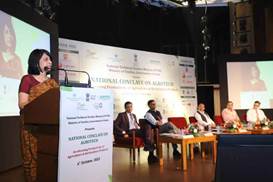
 Ministry of Textiles, under its flagship scheme National Technical Textiles Mission (NTTM), organized National Conclave on Agrotech emphasizing on the importance of accelerating productivity of agriculture & horticulture products in India in association with ITTA and SASMIRA, here today.


The event encompassed 5 technical sessions focusing on innovations for sustainable and resilient agriculture, Indian Standards and QCOs under Agrotextiles, performance and sustainability of Agrotextiles and recent advances in Agrotech technology including digital transformation in Agriculture and Horticulture. There was a special session also discussing future growth and opportunities in Agrotextiles. A Conclave Booklet and a Report on Indian Agrotech Industry Opportunity: Fibre to Field, were released during the National Conclave.

More than 150 participants attended the conclave including officials and representatives from Central Ministries, user Departments of Central and State Governments, Institutes, industry leaders, scientific experts, researchers, and professionals related to Agro textiles.

Ms. Rachna Shah, Secretary, Ministry of Textiles, Government of India, highlighted that agriculture plays a significant role in the Indian economy and the life of its citizens. Agriculture is also a major contributor with its share in country’s GDP has a long-term trend of around 18-20%.

She opined that Agro textiles can play an important role in addressing the unique agricultural challenges like climate variations, water constraints and high demand of agri-produce with limited arable land available. Use of Agro textiles plays a significant role in improving agricultural productivity and quality of Agri-based products by extending the growing cycle of crops, shielding plants from weather conditions and pests etc.

She stated that research and studies have shown that the use of Agro textiles in horticulture leads to increase in farm productivity by 2-5 times, increase in crop intensity, reduction in water consumption by 30- 45%, reduction in fertilizer usage by 25- 30%, and higher harvest cycle per year.

A collaborative approach between Certification Agencies, Research Organizations, Industry, Academia and Ministry is imperative to address the cost implications of Agro textiles and work together in increasing awareness and education amongst farmers for wider adoption by the larger agricultural community for the growth of the sector, she further added.

Shri. Shri. Z. P. Patel, Vice Chancellor, Navsari Agriculture University highlighted that there is an average farming production loss of 10-40% due to climate change, especially in the rain-fed areas. Agrotextiles such as Crop Cover, Mulch mats, Polyhouses, etc. hold the potential to manage and stimulate the microclimate for crops during farming leading to higher productivity for agriculture products, he emphasized.

He mentioned that on the back of diverse geographical location-based benefits of Agrotextiles, the segment has proved to be tremendously beneficial for the agricultural sector in India. There is a need for bio-degradable agro-fibre based agrobags which can be automatically degraded in the soil after the mulching process overtime, leading to planting process and sustainability.

There is a need of developing innovative Agro textile products like soil- degradable Agro-fabrics, artificial soil which are nutrient rich and has water holding capacity, super- absorbent polymer fibres to prevent waterlogging in high-rain areas, weather, and micro-organisms resistant fabrics, etc., he further added.

Shri. Rajeev Saxena, Joint Secretary, Ministry of Textiles, Government of India, highlighted that the India holds a tremendous potential in the global Agro textiles market of ~USD 12 Bn wherein India’s share is ~3%. Though India is one of the biggest markets for Fishing Nets, other Agro-textile products like mulch-mats, anti-bird nets holding significant share in global demand, can also be promoted in the context of Indian domestic market.

To ensure superior quality, wider safety, and comprehensive reliability of products in Agro textiles, he mentioned that Ministry of Textiles has notified QCO for 20 Agrotextile items, which will come in-effect from 1st April 2024.

Further, Ministry has also sanctioned 11 R&D projects in Agro textiles valuing INR 13.67 Cr for development of innovative products.

He also announced that Ministry of Textiles is going to establish a Climate Smart Agrotextile Demonstration Center to Revolutionize Agriculture through Digitized Microclimate Farming in partnership with SASMIRA.

Shri Priya Ranjan, Joint Secretary (INM Horticulture), Ministry of Agriculture & Farmers Welfare stated that Agrotextiles has a critical role to play in overcoming the unprecedented challenges agriculture sector faces due to climate change, soil degradation, and water scarcity which can threaten the very foundation of our food security. 

Schemes such as Mission for Integrated Development of Horticulture (MIDH) has incorporated the different agrotextile products for wider usage and penetration. Furthermore, other collaborative segments within Ministry of Agriculture and Farmers’ Welfare are being looked into for further inclusion of agrotextile products, he further added.

He stated that by adopting the advanced technologies under Agrotextiles, our farmers can not only increase the agriculture yields but also increase functional benefits and reduced input costs. This, in turn, will translate into increasing farmers income and the

growth and development of the overall agriculture sector.

Shri Ashok Tiwari, Senior Director, SASMIRA appreciated the support of Ministry of Textiles and appreciated the participation of dignitaries from other organizations.


****


Second Edition of ICAR-CIBA’s Shrimp Farmers Conclave-2023 at Navsari, Gujarat

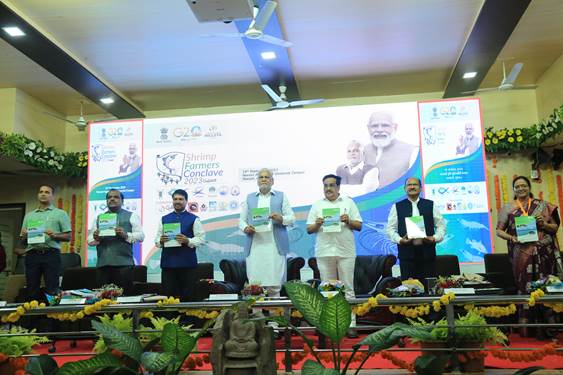
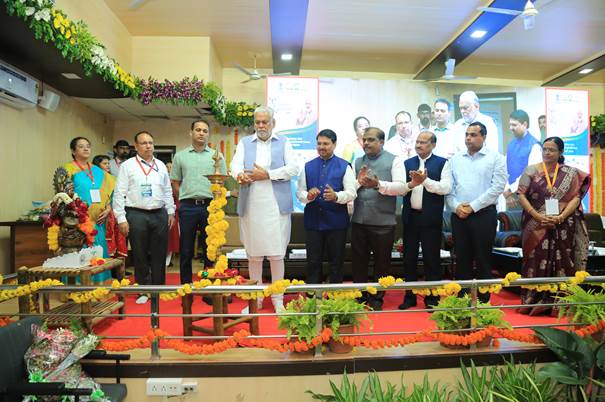
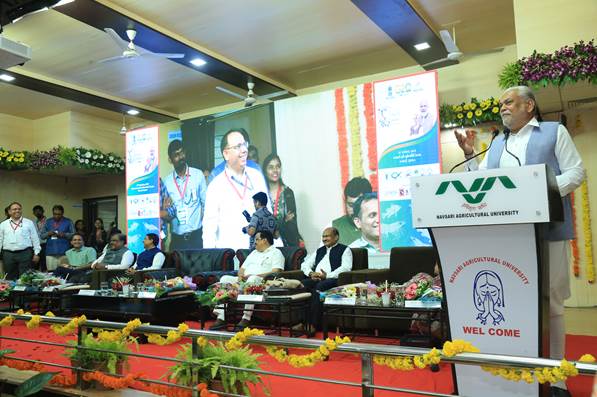
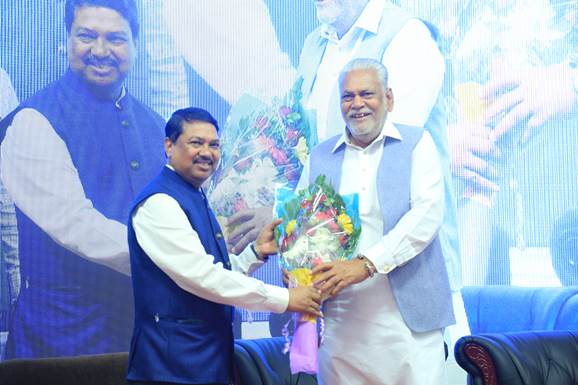
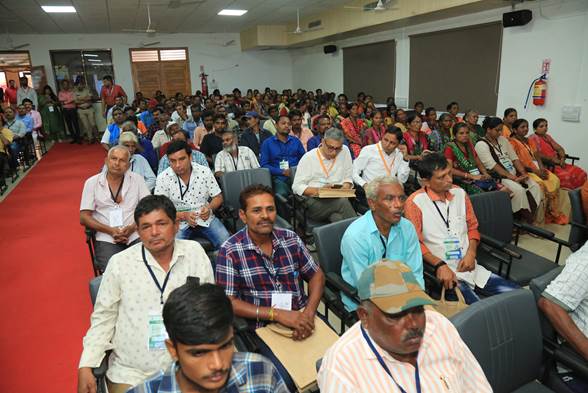
 Union Minister of Fisheries, Animal Husbandry and Dairying, Shri Parshottam Rupala inaugurated Second Edition of ICAR-CIBA’s (ICAR-Central Institute of Brackish water Aquaculture) Shrimp Farmers Conclave-2023 at the Navsari Agricultural University Campus in Gujarat today. About 410 aqua farmers across the coastal districts of Gujarat participated in the conclave.

In his address, Shri Parshottam Rupala conveyed his gratitude to Prime Minister Shri Narendra Modi, for approving the Pradhan Mantri Matsya Sampadan Yojana with the financial outlay of Rs. 20,050 crores for the sustainable development of fisheries and aquaculture sector. This paved the way for developing a project implemented by ICAR-CIBA on Genetic improvement program of Penaeus indicus (Indian white shrimp)-Phase-I” with an outlay of Rs.25 crores under the Pradhan Mantri Matsya Sampada Yojana (PMMSY) to establish a National Genetic Improvement Facility for shrimp breeding. Union Minister Shri Rupala congratulated CIBA scientists for developing a therapeutic EHP-Cura-I for the control of EHP disease in shrimp and asked them to make available the farmers at the earliest. The Minister also launched the Shrimp Crop Insurance scheme developed by the Agricultural Insurance Company (AIC) with the support of ICAR-CIBA during the occasion in the presence of the Chairman cum Managing Director of AIC, Smt. Grija Subramanian.

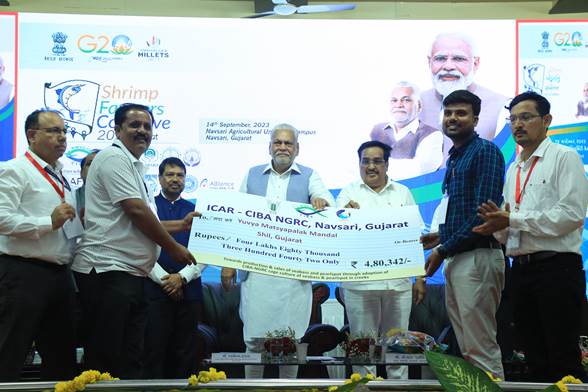
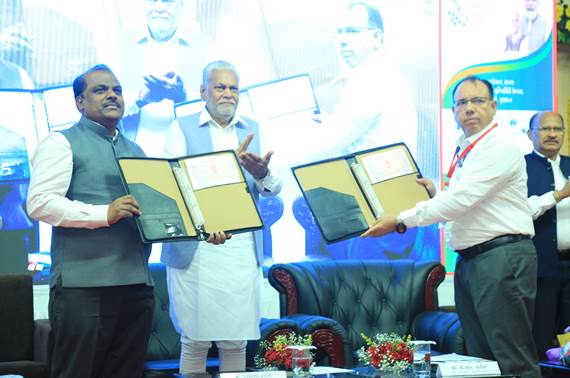
Two Memorandums of Understanding (MoU) were signed between CIBA and National Fisheries Development Board (NFDB); CIBA and Fish Farmers Producer Organization (FFPO) of Gujarat respectively for implementing the crop insurance for aquaculture with premium subsidy offered by the NFDB and technology support for the FFPO. Shri Rupala also handed over a sum Rs.40.05 Lakhs income earned by the SC, ST and Cage Culture beneficiaries of Navsari region through adoption of CIBA technologies for the livelihood development supported by NGRC-CIBA scientists. Navsari-Gujarat Regional centre of CIBA is doing good services to the aqua farmers of Gujarat and other inland saline areas of Rajasthan, Punjab and Haryana and Shri Rupala advised the Department of Fisheries of Gujarat to extend all the facilities and support required for the centre to grow it as a full-fledged research facility for the entire west coast. Union minister Shri Rupala also visited the exhibition of live shrimps and finfish species, CIBA hatchery produced shrimp and fish seeds. He also handed over the CIBA produced Asian sea bass fish seeds to the farmers.

Member of Parliament, Navsari constituency, Shri C.R. Patil participated in the Conclave as Guest of Honour. He appreciated ICAR-CIBA for conducting this mega event in Navsari and assured the  Navsari-Gujarat Regional centre of CIBA for all the  support. Deputy Director General (Fisheries) of ICAR, Dr. J. K. Jena in his address highlighted that shrimp is the major item contributing about 70% Indian seafood exports in value terms worth Rs.35,000 crores. However, in the recent years due to the supply of more quantities of shrimp from the Ecuador, the import of Indian farmed shrimp in the international markets has been showing a declining trend which in turn reduced the market price at the local level. Therefore, innovative strategies are the need of the hour both at the market as well as in the farming sectors to overcome this issue. Similarly, diversification of brackish water aquaculture with other species like SPF tiger shrimp and genetically improved Indian white shrimp may give an advantage to the Indian shrimp farmers in the days to come.

The registration of shrimp farms with the Coastal Aquaculture Authority (CAA), Govt. of India for availing any government schemes and reforms brought out in the registration were clearly articulated by Member Secretary, CAA, Dr. V. Kripa. She assured the farmers that CAA will work for consideration of aquaculture as a farming activity and inclusion of it as a farming sector in national disaster management list.

Director, ICAR-CIBA, Dr. Kuldeep K Lal in his welcome address set the stage for the conclave by articulating the importance of the shrimp farmers conclave, the present scenario of brackish water aquaculture in the country and specifically in the state of Gujarat, the efforts of CIBA in addressing the issues in shrimp farming, diseases monitoring, diversification of the systems and species, feed formulations with alternative protein sources and technical backstopping in developing regulatory guidelines, developmental policies and societal development.

During the technical session of the conclave the shrimp export present scenario and immediate prospects, disease prevention and management with special reference to Hepatopancreatic microsporidiosis (HPM) caused by a microsporidian (Enterocytozoon hepatopenaei (EHP), crop insurance for shrimp farming, development of Genetically Improved Indian White Shrimp (Penaeus indicus) and diversification of brackish water aquaculture with Mudcrab and Asian Seabass fish were discussed.

Director, ICAR-CIBA, Dr. Kuldeep K Lal said that the Govt. of India under the Prime Minister’s Matsya Sampada Yojana (PMMSY) funding the National Disease Surveillance Programme for Aquatic Animal Diseases (NSPAAD) for reporting of emerging disease pathogens in the country and a “Report Fish Disease APP” was developed for reporting of existing and emerging pathogens by the farmers was demonstrated to the farmers during the conclave. Subsequently, a vivid presentation was made on the Hepatopancreatic microsporidiosis (HPM) caused by a microsporidian (Enterocytozoon hepatopenaei (EHP), its diagnosis and Management in shrimp farms was made by Scientist of ICAR-CIBA, Dr. T. Sathish Kumar. During his presentation, the promising results given by a therapeutic developed by CIBA to manage the EHP pathogen in shrimp farms was also detailed.

Subsequently, a special session on ‘Shrimp Crop Insurance’ was convened wherein the Agricultural Insurance of Corporation of India, United India Insurance Corporation of India and the mediator Alliance Insurance Brokers along with Principal Scientist, CIBA, Dr. T. Ravisankar, and the Chief Executive of the National Fisheries Development Board, Dr. L. Narashima Murthy participated and explained about the insurance product developed by the United India Insurance for shrimp farming and the premiums for basic and disease cover and the 20-30% subsidy component provided by the NFDB. The farmers were optimistic about the scheme and expressed their willingness to participate in that. 

Shrimp farmers expressed their issues, requirements especially on shrimp seed quality, shrimp price, electricity tariff etc. before an inter-departmental panel of officials and got appropriate advisories which was coordinated by the Coordinator of the Farmers Conclave Dr. M. Kumaran. Later, Dr. M. Kailasam and Heads of Departments, CIBA, Dr. C. P. Balasubramanian presented on diversification of brackish water Aquaculture respectively with Asia sea bass and Mud crab and their farming practices.

The conclave was conducted with the financial support of the National Fisheries Development Board (NFDB), Govt. of India under the PMMSY scheme, NABARD, SCAFi and Agricultural Insurance Corporation Ltd. The scientific team led by Dr. Akshaya Panigrahi, Mr. Pankaj A Patil and Mr. Jose Antony of the NGRC of CIBA coordinated the conclave. Various officials, technicians, faculty and students were also participated in the event in large number.

*****

CONCLAVE-CUM-SYMPOSIUM ON SELF RELIANCE IN MISSILE TECHNOLOGY HELD AT VISAKHAPATNAM

 The Missile Technology Conclave-cum-Symposium themed ‘Aatmanirbharta in Missile Repairs & Indigenisation Technologies (AMRIT-2023)’, was organised by INS Kalinga at Samudrika Auditorium, Naval Base, Visakhapatnam on 23 Aug 23. The event was inaugurated by Vice Admiral Sameer Saxena, AVSM, NM, Chief of Staff, Eastern Naval Command. Dr Y Srinivas Rao, DS, DG NS&M and Shri GA Srinivasa Murthy, DS, Director DRDL delivered special address during inaugural session. Papers were presented and technical talks were held by personnel from varied organisations leading to an effervescent exchange of ideas. Academia partners from Military Institute of Technology, Pune and National Research and Development Corporation (NRDC), also actively engaged in the discussions, drawing vital inputs for their work.

           
The Symposium received an overwhelming response from viz. DRDO, PSUs, DPSUs, Indian Private Defence industries, MSMEs/ Start-ups, representatives from State Government and Society of Indian Defence Manufacturers (SIDM). Exhibition stalls were also set-up during the event, wherein the DRDO labs, DPSUs and private defence firms showcased their expertise and capabilities in Missile Repairs and Indigenisation.
           
The seminar provided and fostered a symbiotic environment for all stakeholders viz. Indian Public & Private Industries, DRDO Labs, Academia and Indian Navy in line with the Government of India’s initiative – ‘Aatmanirbhar Bharat’ mission. Going forward it is envisaged to benefit the Indian Navy in particular and the Armed Forces in general to minimise dependence on Foreign OEMs and also strengthen the core competencies of our Defence Industry and ultimately lead the nation towards Aatmanirbharta.
 
The Chief Guest congratulated all the participating agencies to have partnered in the journey towards ‘Aatmanirbhar Bharat’ and in making AMRIT-23 a grand success. Cmde CS Nayar, Commanding Officer, INS Kalinga delivered the vote of thanks. The exhibition stalls were also visited by naval personnel, Subject Matter Experts, local firms, technical institutes and engineering colleges.
***
CGR/VM/JSN

National Conclave on 9 Years of Union Government Witnesses

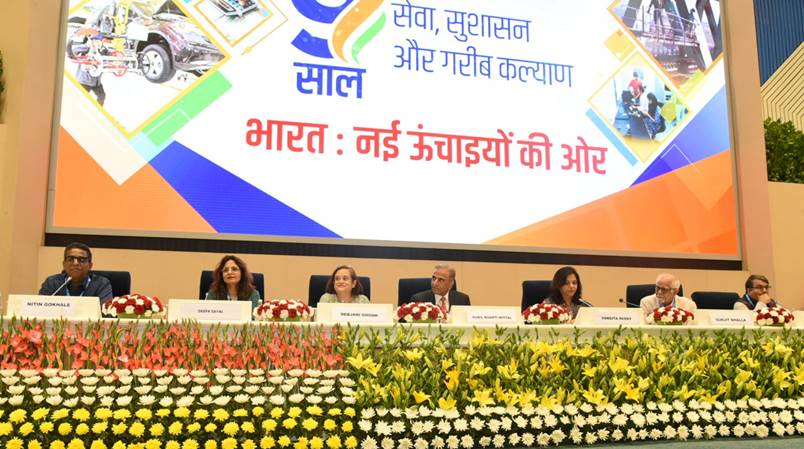
On completion of 9 Years of the Union Government, a National Conclave was organised by the Ministry of Information and Broadcasting with the theme “9 Years of Seva, Sushasan, Garib Kalyan” at Vigyan Bhawan in New Delhi. As part of the Conclave, three thematic sessions were held with esteemed panellists to discuss various achievements of the Union Government under the decisive leadership of Prime Minister Shri Narendra Modi and the persistent efforts being undertaken by the Government for rapid advancement of the nation and betterment of masses. The first session was on the theme ‘India: Surging Ahead’. The session elucidated how India has undergone a remarkable transformation into a prominent global leader under the able leadership of Prime Minister Shri Narendra Modi.
The session was moderated by eminent journalist, Shri Nitin Gokhale and featured distinguished speakers from different walks of life, including Shri Sunil Bharti Mittal, Founder Chairman of Bharti Enterprises, Smt. Sangita Reddy, Joint Managing Director, Apollo Hospital, Smt. Debjani Ghosh, President NASSCOM, Shri Surjit Bhalla, former Executive Director for IMF India, Shri Soumya Kanti Ghosh Group Chief Economic Advisor, State Bank of India and Smt. Deepa Sayal, Founder and President of Indian Women Institutional League (IWIL) India.
Shri Gokhale, setting the backdrop for the session said, “India has embarked on a path of transformation which has not been seen for decades together and India stock has risen globally”. He said “Morgan Stanley said in November 2022 that this is going to be India’s Decade. IMF in April, 2023 predicted India will emerge as the fastest growing economy in the world. India is surging and taking a lead in balancing the world order and therefore this conclave could not have come at a better time.”
Shri Sunil Bharti Mittal, talking about the decade of good governance under Prime Minister Shri Narendra Modi, said that we have all experienced and seen the difference in the past few years. He said businesses require decisive leadership and after a long period of time we have a leader who is recognised as a global leader and one determined to make India a developed nation. Talking about telecom sector, he said India has the fastest 5G rollout and by March, 2024, India will have 5G across every nook and cranny of the country. He added that “Government has used the power of technology to its utmost advantage for ushering in the reforms and benefits to the masses of the country”. He said we have seen fantastic 9 years and the audacious target of 5 trillion-dollar economy which looked like a difficult task a few years back is now in sight and we should be able to achieve it by 2027.
Smt. Sangita Reddy, Joint Managing Director, Apollo Hospital, spoke about how India made extensive and effective plan to fight the COVID Pandemic. She said our country stood out in tackling a crisis which wiped out many countries and it was due to the masterful management of the situation by our Prime Minister and the Government. She praised the People’s curfew which provided the time and space for the necessary infrastructure to be put in place and helped in tackling the pandemic effectively. Talking about the COVID Vaccines, she said “its commendable and reflective of India and our Prime Minister’s Global thought process that 50% of world’s vaccines were manufactured in India and it created a vaccine diplomacy on an unprecedented scale”. She said Government’s approach was “well-coordinated, fantastically masterminded strategy which was powerfully executed”. She further added that “the foundation is well set in India and not only can India take care of its own people well but has become the medical tourism destination of the world, currently we are number 4 but I believe that soon we will be number 2”. She urged the youngsters to use Yoga, Ayush and take care of their health as India has a great future ahead and it lies with the younger Generation.
Shri Surjit Bhalla, former Executive Director for IMF India, at the very onset said India has emerged as the best performing economy in the world during the shocking COVID period and today. Talking about the poverty reduction he said, “the entire process of government was geared towards ensuring that the bottom half of the population at least did not suffer any hardship as a consequence of COVID”. He spoke about the infrastructure transformation and said he is working on a study to see whether there is any economy in the world that has shown such a transformation in the last 9 years. He added that this government has shown to first, imagine the impossible and second, deliver it effectively and this is the real performance index of this government. He said Indian innovation is truly unique, Indian and better than any country in the world and books will be written about the speed of the transformation of India.
Smt. Debjani Ghosh, President NASSCOM said in 2008 only 17% Indians had bank accounts and a study said it would take India 46 years to achieve 80% penetration but India took just 7 years to do it. Why India could do it and disrupt status quo is due to technology, Aadhar, India stack, Digital Payment and the most genius financial inclusion program Jan Dhan Yojana. She said “the JAM trinity programme has enabled us to take banking to the grassroot level. Technology is available to all but what made the difference in India was the talent, the people which enabled us to challenge the status quo. 245 billion dollar revenue is what our tech industry generates and pace of growth and innovation is unprecedented and is being driven by talent which has made India an innovation hub and a startup hub”. She asserted that the ‘I’ in innovation stands for India., it has brought all big companies to do their innovation in India. She further added that “technology had been a luxury of the rich and urban but India turned this on its head and started from the grassroots and scaled it up. Ability to think bottoms up has made it possible”. She said 36% of the 5.3 million people working in tech sector are women and they are driving the change and innovation.
Smt. Deepa Sayal, Founder and President of Indian Women Institutional League (IWIL) India said she is very proud that my nation is changing at such pace and the pace and scale at which the government is bringing change praise worthy and immaculate. She stated that “Morgan Stanley has said our GDP will double to 7.5 trillion dollars by the end of the decade which is huge”. She said I have been lucky to be able to go to various states and connect with Startups, and women and children all are so charged up to begin and be self-employed. She talked about the phenomenal journey of startup that have increased from 450 in 2016 to 90000 startups in 2023 and said she must congratulate Prime Minister Shri Narendra Modi for this.
Shri Soumya Kanti Ghosh, Group Chief Economic Advisor, State Bank of India talking about the key numbers said “COVID was the largest disruption for mankind but last year our nominal GDP expanded by 37 trillion. FY 2014 – 20 our average was 14.5 trillion so we did 2.5 times more than last 6 years that’s why recovery was fastest. Talking about 5 Trillion Dollar Economy goal, he said India took 57 years to get to 1 trillion and then every 7 years we added 1 trillion and now norm is every three years we add one trillion and in the last two years our economy added 750 billion and that is why in 2014 we were 10th largest economy, in 2015 we are 7th, in 2019 we were 6th and 2022 we were 5th and supposed to be 4th in 2026 and 3rd in 2028 and this is the transition in terms of rebound”. He talked about various schemes of the Union government and informed that women involvement has been very high in all of them and it has led to women empowerment and financial freedom. He said our service exports has doubled in past 7 years. Summing up he said that all numbers point out towards an India which is inclusive and expanding at an exponential rate.
In conclusion, all spoke about what is next for India in the coming 5-10 years. Smt. Deepa Sayal said employability is an opportunity and a challenge and we need to inculcate the right skill set to tap this opportunity. Smt. Debjani Ghosh said the power of youth, talent, innovation will ensure that when the world thinks digital, technology and innovation the world will think of India. Shri Sunil Mittal said “the foundation for a very bright future for our country has been laid in the last 9 years and we need to build on what we need to do. This is a rare opportunity for India with a confluence of a decision leadership and strong tailwinds and it is a delightful position for India, and we need to ensure good education, training and skilled for our large young population which will together ensure a bright future for India”. Smt. Sangeeta Reddy said last 9 years is 468 weeks and over 500 schemes launched so 1 scheme every week and we have the time to guide these schemes over next 10 years. She praised Prime Minister Shri Modi for promoting women led development and said the respect for women is going to be transformational for India and set an example for the world. In terms of thought and spiritual and humane leadership India is and will always be number one. Shri Surjit Bhalla said a lot has been achieved and a major reform that India needs is in Direct Taxation and concluded by saying the India is one of the most overtaxed economies in the world and hoped that a reform will come to lower the effective tax rate which will help in achieving a higher GDP Growth Rate.
*****

National Conclave: 9 Saal – Seva, Sushasan, Gareeb Kalyan

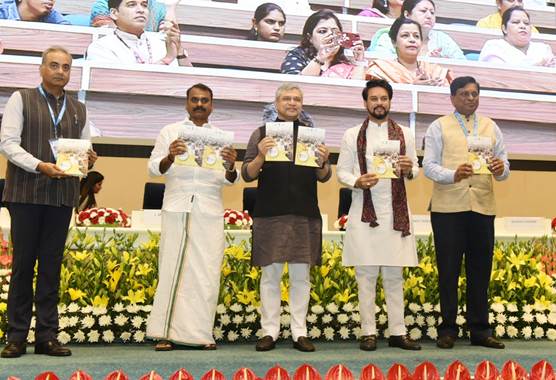
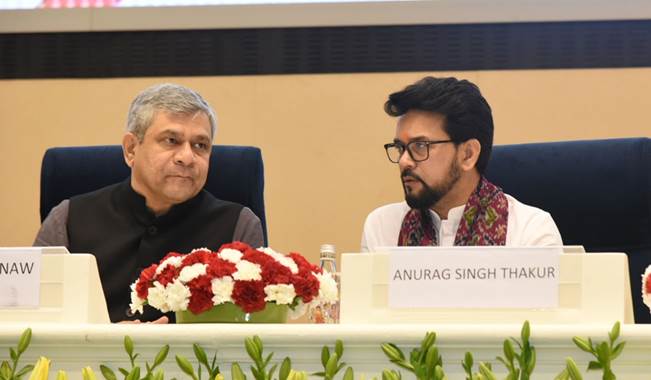
 Union Minister of Railways Shri Ashwini Vaishnav today inaugurated the National Conclave: 9 Saal – Seva, Sushasan, Gareeb Kalyan at Vigyan Bhawan in New Delhi. The event witnessed the presence of Union Minister of Information and Broadcasting Shri Anurag Thakur, Union Minister of State for Information and Broadcasting Dr L. Murugan. Secretary, Min of I&B Shri Apurva Chandra and CEO, Prasar Bharati, Shri Gaurav Dwivedi were also present on the occasion.

Union Minister Shri Ashwini Vaishnav made a comparative presentation juxtaposing the performance of the governments before 2014 with the government since and said while the previous governance efforts had become synonymous with scams, the current Government works with the ethos of ‘Pai Pai Se Gareeb Ki Bhalai’ (every penny for the benefit of the poor). This has been reflected in the way schemes and programmes have been implemented keeping the poor and the destitute as its central pillar, he added.

The Minister underlined that owning a house is a factor that brings a transformative change in a poor person’s life. To that end, today 3.5 crore houses have been constructed in the country under PM Awas Yojana bringing qualitative change in the lives of the poor.

The Minister said that the idea of connecting every house with piped water connection was always considered a behemoth, never to be attempted or achieved. But, he added, the Prime Minister took it up as a challenge and today 12 crore people have water connections. At the same time, he said the Government has strived to end the travesty that was traditional chulhas and provided 9.6 crore families with gas cylinders.

He further spoke about the efforts of the government to come through for the people in need and said that when the world was struggling to fight the travails of the COVID19 pandemic, the government overcame massive logistical challenges to bring free ration to 80 crore people. No government has spoken of fundamental human needs, like toilets, that are the indicators of inclusive growth, during Independence Day speeches. But PM Modi spoke about the construction of toilets in every house in his speech from Red Fort. This has caused a revolution in the field of women safety and sanitation with the construction of 11.72 crore toilets today. 

Shri Vaishnav said that India today runs the world’s largest healthcare insurance programme under Ayushman Bharat that has created provisions for free medicare up to Rs five lakh for the needy, the total coverage which is more than the population of the USA and Russia combined.

Shri Vaishnav credited the Prime Minister with creating a new definition of social justice taking it away from appeasement and towards empowerment.

The Minister said that domestic infrastructure has seen an unprecedented makeover since 2014, which was largely missing earlier due to a lack of proper mindset and thought process in the past. He cited the creation of 74 airports in 9 years, a figure matching the number created till 2014. He added that where 91 thousand kilometers of road were created since independence, almost 54 thousand kilometers have been constructed since 2014. India has gone from having no waterways till 2014 to having 111 waterways today and India’s railway stations have world-class facilities like airports.

The Minister said that India had lagged in world economic rankings for a long time, but today India stands tall as the 5th largest economy. He further said that India is well on its way to becoming the 4th largest economy in another two years and the third largest in another six years.

The Minister spoke about the government’s strong commitment to national security and said that when in past India has been at the receiving end of major terror activities, today the country has the means and willingness to respond to attacks in kind.       

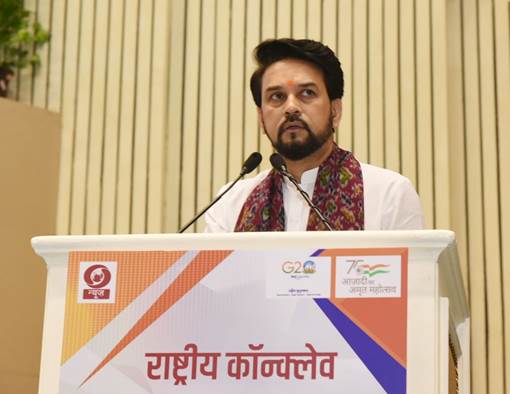
Shri Anurag Thakur, while addressing the audience gathered at the conclave, said that the past nine years have seen a dramatic change in the life of the common people of India and the achievements of the Government have surpassed expectations of the people. He exemplified this by adding further that where India was a weak and ramshackle economy riddled with corruption in the past, today it has covered the distance from Fragile Five to Top Five economies of the world.

He further stated that while the benefits of government schemes used to reach only a few in the past, the government today works with the motto of Antyodaya, where the Government is committed to the upliftment of the last person standing at the end of the queue. Herein lies the secret of our efforts that have lifted 27% of people out of poverty, he added. A combination of a sense of service, big ideas, good governance, infusion of technology, and building transparency and accountability into the delivery mechanism, are the things that have gone into ensuring last-mile delivery of public services.

The Minister said that the government has been steadfast in shedding legacies of the colonial past and adopting modern and domestic symbols. This is evident in the creation of the Kartavya Path and will be evident in the new parliament.

The Minister highlighted that the Prime Minister had said that the youth had a critical role to play in shaping the future of this country. To that end, the Minister credited the youth for achieving a milestone where India can today boast of almost one lakh startups and over hundred Unicorns.

The Minister said that while on the one hand the country answered the Prime Minister’s call for Har Ghar Tiranga, the same tricolor was used by students of other countries to get out of a conflict zone during Operation Ganga. While surveys have called him the most popular leader, Shri Thakur said that he has in fact made the tricolour the strongest flag in the world.

Secretary Shri Apurva Chandra welcomed all the guests for the various thematic sessions during the day. He also welcomed the audience from various sections of society.

The National Conclave on 9 years of the Government is comprised of three thematic sessions after the inaugural session and a valedictory session.

Session 1 “India: Surging Ahead” moderated by Shri Nitin Gokhale, Senior Journalist will see participation from

  • Sunil Bharti Mittal, Founder and Chairman, Bharti Enterprises
  • Sangita Reddy, Joint Managing Director of Apollo Hospitals
  • Debjani Ghosh, President of NASSCOM
  • Surjit Bhalla, Former Executive Director for International Monetary Fund, India
  • Soumya Kanti Ghosh, Group Chief Economic Advisor, State Bank of India
  • Deepa Sayal, President and Patron in Chief, IWIL India


Session 2: Jan Jan Ka Vishwas moderated by Richa Anirudh, Journalist will see participation from

  • Nawazuddin Siddiqui, Actor
  • Cynthia McCaffrey, UNICEF Representative to India
  • Kiran Mazumdar Shaw, Executive Chairperson, Biocon Limited (Video message)
  • Padma Shri Shanti Teresa Lakra, Nurse
  • Nikhat Zareen, Boxer
  • Anil Prakash Joshi, Environmentalist Divya Jain, Co-founder, Seekho


Session 3: Yuva Shakti: Galvanizing India moderated by Raunac, Radio Jockey, Red FM with the following panelists

  • Ritesh Agarwal, CEO, OYO Rooms Rishab Shetty, Actor
  • Amaan Ali Bangash, Musician
  • Viren Rasquinha, Former Indian Hockey Captain
  • Yashodhara Bajoria, Director, Espresso Technologies
  • Akhil Kumar, Boxer

****