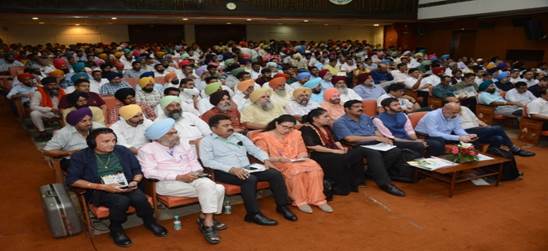
The Missile Technology Conclave-cum-Symposium themed ‘Aatmanirbharta in Missile Repairs & Indigenisation Technologies (AMRIT-2023)’, was organised by INS Kalinga at Samudrika Auditorium, Naval Base, Visakhapatnam on 23 Aug 23. The event was inaugurated by Vice Admiral Sameer Saxena, AVSM, NM, Chief of Staff, Eastern Naval Command. Dr Y Srinivas Rao, DS, DG NS&M and Shri GA Srinivasa Murthy, DS, Director DRDL delivered special address during inaugural session. Papers were presented and technical talks were held by personnel from varied organisations leading to an effervescent exchange of ideas. Academia partners from Military Institute of Technology, Pune and National Research and Development Corporation (NRDC), also actively engaged in the discussions, drawing vital inputs for their work.
Tag: Conference
Paddy Straw Management Workshop
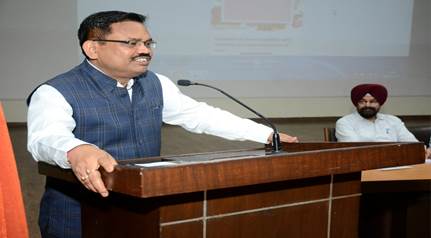
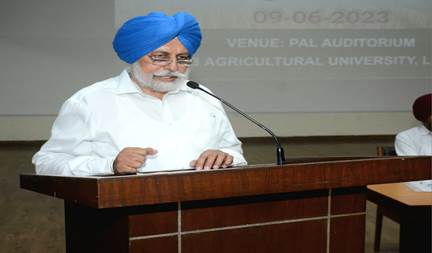
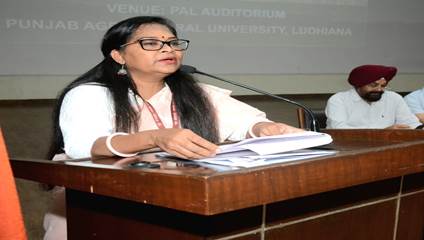
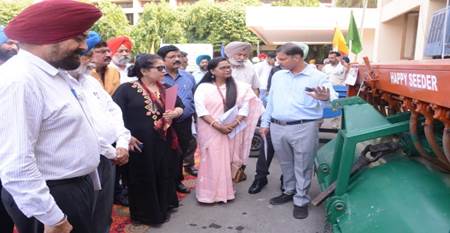
Ministry of Agriculture and Farmers’ Welfare, Government of India, the state of Punjab and PAU organised workshop on ‘Paddy Straw Management and Action Plans’ commenced at Punjab Agricultural University, Ludhiana. Senior officers from govt of India and the state agriculture department, KVK, scantiest from PAU, stakeholders in the Central Government, State Governments of Punjab, Haryana, Uttar Pradesh, and NCR of Delhi, State Pollution Control Boards, Indian Council of Agricultural Research, academia, various stakeholder agencies, social groups and NGOs, agricultural machinery manufacturing industries, and biomass industry associations and more than 300 farmers participated in the workshop.
The Chief Guest, Shri K.A.P. Sinha (IAS), Additional Chief Secretary of the Ministry of Agriculture and Farmers’ Welfare in the Government of Punjab, highlighted the significance of farming by quoting, “Once in your life you need a doctor, lawyer, policeman, or preacher but every day — three times a day — you need a farmer.” He acknowledged the desire to eliminate the practice of paddy straw burning but identified obstacles hindering progress. Further he proposed increasing baler capacity, deploying more machinery in high-burning areas, involving cooperative societies to support SC beneficiaries, and replicating successful initiatives. He expressed his hope for no-burn agriculture to become the norm by the following year.

Dr Satbir Singh Gosal, PAU Vice-Chancellor, cautioned that stubble burning emits toxic pollutants which disperse in the surroundings and, eventually, affect the air quality and people’s health as well as soil health. He advocated the concept of conservation agriculture which up-cycles paddy straw without producing any waste. He called for synergy among the Department of Agriculture, NGOs, academia, industry and farmers to tackle the menace of paddy straw burning.

Smt. S. Rukmani, Joint Secretary, Department of Agriculture and Farmers’ Welfare, GoI, briefed about Central Sector Scheme to support for crop residue management. The scheme provides financial assistance of 50% for farmers to purchase designated machinery and 80% for Cooperative Societies, Farmers Producers Organization (FPOs), and Panchayats to establish Custom Hiring Centres (CHCs). While addressing she emphasized on air pollution and subsidizing machinery. Smt. Rukmani revealed a reduction of 30-40% in paddy straw burning since last year and emphasized the workshop’s goal of creating a value-chain plan to utilize paddy straw as a resource and minimize losses for farmers and express her thought on joint action plan for paddy straw management.


Shri Arvind Nautiyal, Member Secretary of the Commission for Air Quality Management (CAQM), New Delhi, underlined the detrimental effects of air pollution on the environment, climate, and human health. He recommended measures such as crop diversification, the DSR method, and promoting basmati varieties as well as short-duration and long straw-generating varieties. ex-situ management through strategic mapping of villages, establishing briquetting/pelleting plants at strategic locations, and developing a supply chain for utilizing straw as fuel in various industries and for biomass power generation, compressed biogas production, bio-ethanol, packaging material etc.

Dr. Ajmer Singh Dhatt, PAU’s Director Research, sensitized the gathering and said that efforts being made by PAU to tackle the burning issue of paddy straw management with machines like Happy Seeder and Super Seeder as well as technologies for ex-situ and in-situ straw management. Further he encouraged farmers to adopt this cost-effective, eco-friendly, and water-efficient method to enhance soil health, crop output, and overall yield while reducing input costs. Dr Gurvinder Singh, Director Agriculture and Farmers’ Welfare, Punjab talked about the state’s paddy straw management strategies and action plans for the 2023 season. Earlier, Dr Gurmeet Singh Buttar, Director Extension of PAU delivered the welcome address while Dr G P S Sodhi, Additional Director of Extension Education proposed the vote of thanks. Dr Vishal Bector, Associate Director (Institution Relations) coordinated the programmme.
During the workshop the officers from Ministry of Power, Ministry of Petroleum and Natural Gas, Ministry of New and Renewable Energy highlighted the initiatives for utilization of biomass and paddy straw such as ‘Sustainable Alternative towards Affordable Transportation’ (SATAT) promote setting up of CBG projects using biomass as raw material, Oil Marketing Companies are setting up 2G ethanol plants based on various feed stocks including paddy straw in the country, Ministry of Power has issued revised policy on biomass utilization for power generation through co-firing in coal based power plants which mandates the use of 5 -7% biomass pellets made primarily of agro-residue along with coal in thermal power plants, Central Pollution Control Board (CPCB) has framed guidelines for providing one-time financial assistance for establishment of paddy straw based palletization and torrefaction plants, MNRE is implementing Biomass Programme with the broader objectives of promoting technologies for optimum use of country’s biomass resources and the major recommendations have been summarized by joint secretary DA&FW and Dr. AN Meshram, Deputy commissioner, DA&FW offered vote of thanks.
*****
Indo – Scandinavian Leadership Conference and Workshop
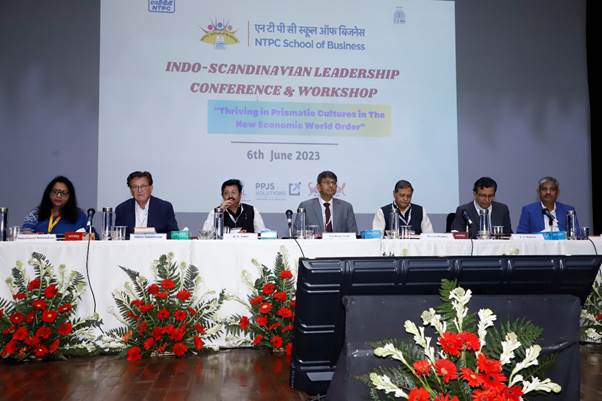
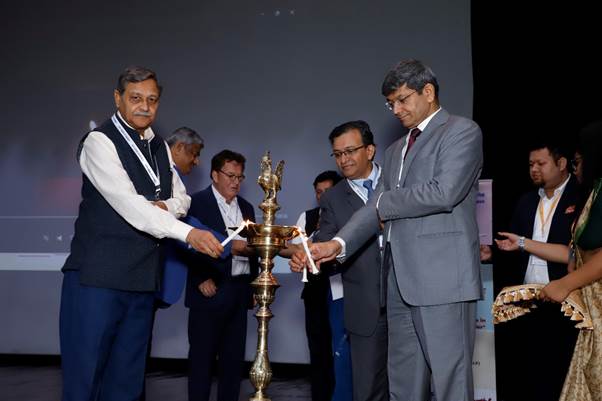
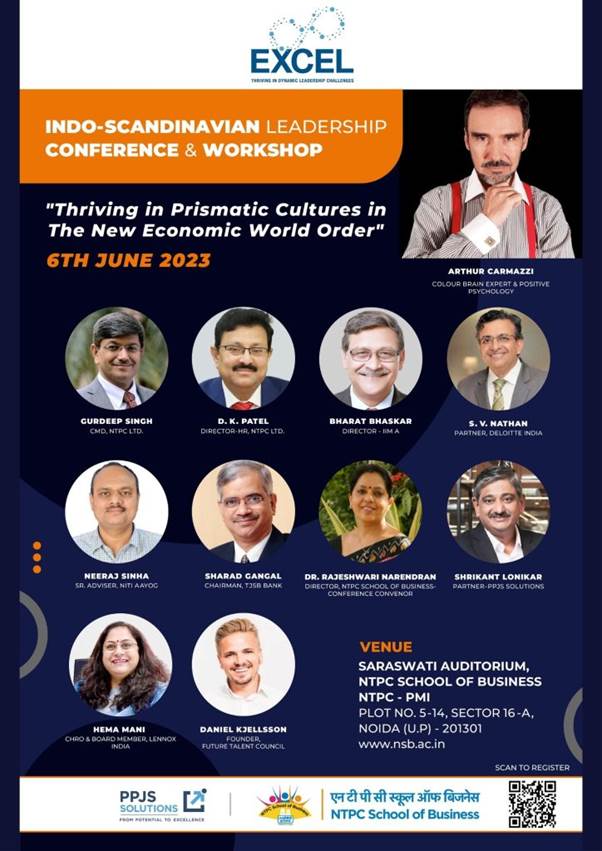
An Indo – Scandinavian Leadership Conference and Workshop was held by NTPC School of Business at its Noida campus on 6th June, 2023. Thought leaders belonging to several geographies deliberated on the dynamics of cultures, perceptions and the preparedness of the mind to enable adaptation under the changing economic and environmental milieu. The conference has been organized, recognizing that this is essential for coherence and purpose orientation in a world that calls for increasingly high levels of inclusiveness. About 150 leading professionals from domains such as disaster mitigation, community empowerment, energy efficiency and emission reduction, higher management education; bilateral and multilateral forums and research participated in the event.

Founder of Directive Communication Methodology, Dr. Arthur Carmazzi highlighted the facets and analysis of coloured brain contours.
Director, IIM Ahmedabad, Dr Bharat Bhaskar emphasised credibility and integrity as the main traits of leadership.
Partner, Deloitte India, S. V. Nathan spoke of what he referred to as six signature leadership traits, namely Curiosity, Collaboration, Commitment, Courage, Cultural intelligence and Preparedness to unlearn, relearn and expand the mind’s horizons.
Dr. Hakan Svennerstal spoke about inner leadership and psychology-safety.
D K Patel, Director (HR), NTPC highlighted the contours of industry leadership.
The CMD of NTPC Gurdeep Singh delivered the Presidential address, focusing on NTPC’s stewardship vision to assist India meet her developmental aspirations through a portfolio of climate-efficient measures. These will ensure economic and environmental gains relevant at the national, regional and global levels; in line with India’s strategic role at the G-20.


***
Blue Economy and Space Economy
Blue Economy and Space Economy are among some of the new concepts introduced in last 9 years by Prime Minister Narendra Modi.
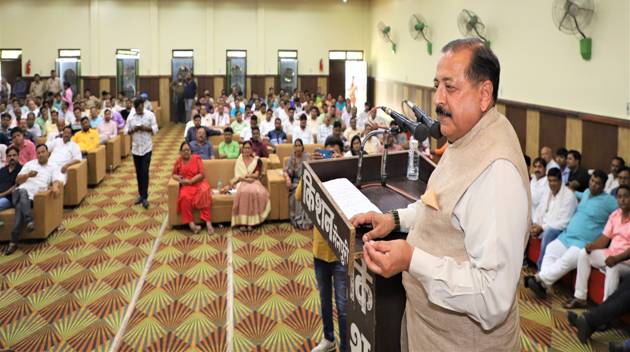
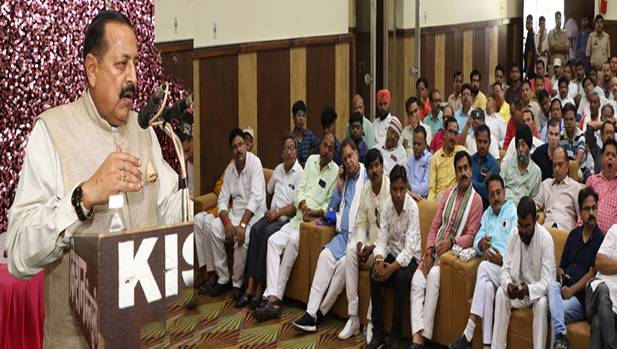
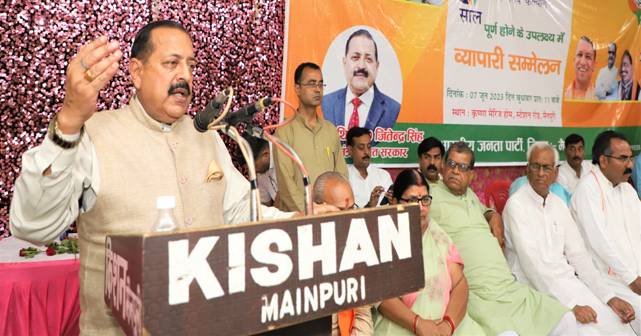
This was stated here today by Union Minister of State (Independent Charge) Ministry of Science & Technology, PMO, Ministry of Personnel, Public Grievances & Pensions, Atomic Energy and Space, Dr. Jitendra Singh while addressing “Vyapar Sammelan” (Industry and traders’ Meet) as a part of the month-long campaign to commemorate the 9 years of Modi government.

Dr. Jitendra Singh said, one of the hallmarks of Prime Minister Modi’s approach towards the economy has been that he not only reinforced and strengthened the existing pillars of economy by imposing a check on pilferage or malpractice and by reducing the load of avoidable restrictions and regulations for ease of business, but he also introduced new dimensions to Indian economy which hardly received any attention by previous governments even though these were important. If India has to compete globally, it will have to stand up to global parameters and the value addition to the future economy of the country will come from hitherto lesser explored areas like ocean resources and Space.
It is also a matter of pride, said the Minister, that even though our space journey started several years after countries like USA and Soviet Union, but today, these countries are using our technology provided by ISRO (Indian Space Research Organisation) for launching their satellites. 353 out of the total 385 foreign satellites launched so far have been launched during the last 9 years and 174million US Dollars have been earned while the launching of the European Satellites has yielded 86 million Euros.

Dr Jitednra Singh said, while India has as the fastest growing economy, overtaken the United Kingdom, it has also generated revenue by launching their satellites.
As far as the Blue Economy is concerned, Prime Minister Modi spoke about the Deep Sea Mission in his Independence Day address because he wants to make people aware of the Blue wealth that lies hidden under the seabed.

Dr Jitendra Singh called upon the business community to adapt to the new culture of business and make maximum use of technology.
The Minister said, there is no such technology which is not available in India but sometimes we were not able to utilise it because we are not fully aware of it. The government today is not only providing ease of business but also offering assistance in developing new entrepreneur products and marketing the same, he said.
The Minister particularly called upon the business community to identify potential StartUps. He said it goes to the credit of Prime Minister Narendra Modi that India stands at Number-3 in the world in StartUp Ecosystem. But in order to sustain this, we have to continuously work hard.
Dr Jitendra Singh also hailed Prime Minister Narendra Modi for revival of Khadi business which has yielded more than 10 Lakh Crore of turnover.
Conference on Consumer-Centric Approaches for E-Cooking Transition
How can we accelerate the deployment of energy-efficient, clean and affordable e-cooking solutions in India? On World Environment Day today, a conference organized in New Delhi by the Bureau of Energy Efficiency (BEE), Ministry of Power, Government of India, in collaboration with CLASP, sought to find new answers to this question. The “Conference on Consumer-Centric Approaches for E-cooking Transition” brought together institutional consumers, consumer research groups, policy makers, think tanks and manufacturers in a discussion on strategy for the transition to electric cooking.
Delivering the special address, Additional Secretary, Ministry of Power, Ajay Tewari said that e-cooking is going to be an environment-friendly habit for all Indians in the times to come. “Some people take it very lightly, but e-cooking has many dimensions for families in urban and rural areas. Given our large population, a change in our behaviour can have the biggest impact on the planet.”
Speaking about Mission LiFE launched by the Prime Minister at the 26th UN Climate Change Conference of the Parties (COP26) in Glasgow in 2021, the Additional Secretary said that India has emerged as the leader in energy transition. “We are going to achieve renewable energy targets much earlier than the timelines we announced. This is evident from our achievement of Nationally Determined Contributions nine years ahead of target and our renewable energy targets.”
Move towards e-cooking driven by 24/7 Electricity
The Additional Secretary said that we want to move towards e-cooking since we have 24/7 electricity in our households. “India has, in just 18 months, given Saubhagya connections to 26 million households who did not have electricity access. Never before in the history of the world has so many households been given electricity connection in such a short time. We are supplying energy for 23.5 hours in all urban areas and 23 hours and more in rural areas. It is a big achievement that the age of power cuts is behind us.” He added that 700 million people in the world however still do not have access to electricity and that universal energy access is one of the priorities of G20.
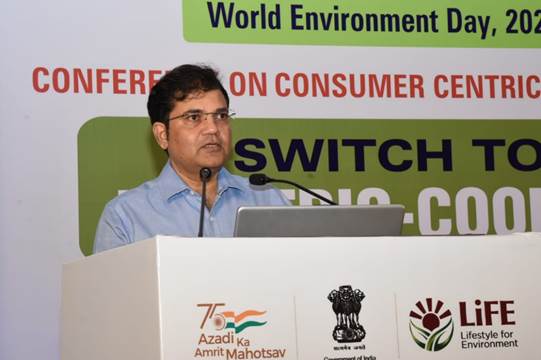
“E-cooking is going to be the future of the Indian kitchen”
The Additional Secretary asserted that once all Indian households have electricity access, e-cooking is going to be the future of the Indian kitchen. “We can promote electric cooking since the technology is available. It must be scaled up, a model needs to be developed so that the energy comes from renewable sources, so that there is aggregation of carbon credits. The model should work in such a way that it becomes affordable in both urban and rural areas.”
“Need to come up with Affordable E-Cooking Business Models”
After success of UJWALA and thus having transitioned to clean cooking, we now want to make the transition to e-cooking, said the Additional Secretary. Highlighting the importance of affordability, he said that we must promote e-cooking from renewable energy sources such as solar power and thermal power. “We are coming up with aggregation models whereby prices can be brought down. We are moving towards an Indian model of e-cooking to serve Indian kitchens. If we have standard and affordable models, we should be able to cover all urban areas within 2-3 years. By 2030, we will like to cover as many households as possible under e-cooking. This will contribute significantly to our fight against climate change.”
“Very few technology barriers towards adopting e-cooking, need replication at Scale”
In his keynote address, Director General, Bureau of Energy Efficiency, Abhay Bakre said that we have today come to an important juncture in our movement towards environment protection where we are moving ahead with Mission LiFE. Speaking about electric cooking, the Director General said that there is comparatively very little research required in this field since we have e-cooking appliances and consumers too are aware of this. “The principal barriers towards adopting e-cooking were customers’ concerns regarding potential faults in e-cooking appliances and whether all dishes could be prepared using e-cooking. When we launched the GO Electric Campaign, we faced big challenges such as setting up the electric vehicle charging infrastructure, the cost of Electric Vehicles and the production capacity. Contrary to this, we don’t have such challenges in e-cooking. We have found that almost all dishes prepared using conventional stoves can be prepared using e-cooking as well. So, what is needed is replication at scale. Our focus has been on kitchens and locations where cooking can happen for longer periods of time, of 8 – 10 hours per day. Rather than going for full replacement, consumers could go for replacing 50% of their cookers by electric cookers, so that they get the time to build confidence in e-cooking before making full transition.”
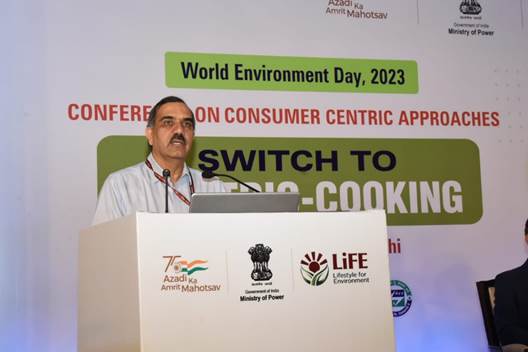
“E-Cooking a Win-Win for both Power Sector and Consumers”
Speaking about Sustainable Development Goal 7.1, the Director General said that 2.1 billion people do not today have access to clean cooking, and are exposed to harmful ways of cooking. “The promotion to e-cooking is a natural way of moving ahead with the SDGs, which are to be achieved by 2030. The first part – universal access to electricity – has been achieved in India. Most of our households also have access to LPG, thanks to UJALA. When we transition to e-cooking, it is going to be a much cleaner fuel. Electric cooking is the future and consumer participation is very important here. E-cooking can save energy consumed in reheating as well.” In conclusion, the DG said that we have to start with urban areas and move to Tier-2, Tier-3 towns and then to rural areas. He said that by 2030, e-cooking is going to be a win-win solution for both the power sector and for consumers as well.
“Transition to e-cooking can improve quality of life, reduce carbon emissions and improve indoor air quality”
Senior Director, CLASP, Bishal Thapa recalled that as we celebrate the 50th anniversary of World Environment Day today, it is time for decisive and transformative action and that the transition to e-cooking represents that opportunity. Noting that the Prime Minister’s articulation of Mission LiFE is bold and visionary, he said that the transition to e-cooking will enable a cleaner, greener and environmentally benign lifestyle. “The potential for e-cooking is not limited to rural areas. It is highly relevant for households and commercial areas in urban areas as well. The transition to e-cooking can help reduce energy imports and reduce our supply vulnerabilities. Overall, the transition can improve the quality of life, reduce carbon emissions and significantly improve indoor air quality.”
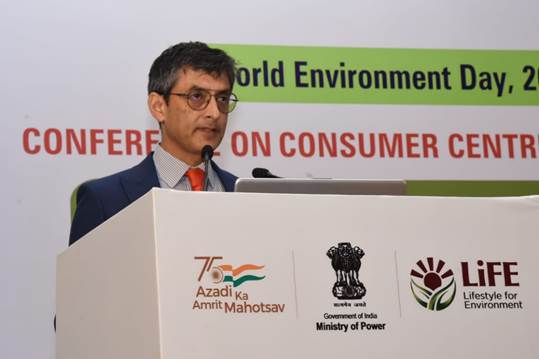
The CLASP Senior Director said that the transition now requires greater consumer awareness, encouraging consumer choices and additional supply. “New partnerships are now required to drive this energy transition.”
The participants took a pledge on Mission LiFE, to adopt environment-friendly lifestyle in all ways possible and to promote the same among fellow citizens.
The Secretary, BEE, Milind Deore delivered the vote of thanks at the conclusion of the inaugural session.
E-cooking Key to Mission LiFE
The focus on electric cooking is based on the recognition that e-cooking is a key pathway to Mission LiFE (Lifestyle for Environment), an India-led global mass movement to nudge individual and community action to protect and preserve the environment. Launched by Prime Minister Narendra Modi at the 26th UN Climate Change Conference of the Parties (COP26) in Glasgow in 2021, Mission LiFE seeks to transform persons into pro-planet people, who would adopt sustainable lifestyles.
Access to clean cooking energy is a crucial aspect of India’s energy transition journey. The choices we make regarding cooking fuel can have a significant impact on India’s trajectory towards becoming a sustainable economy. India’s clean cooking transition requires rethinking individual and community actions and decisions that drive energy consumption.
Conference to deliberate on Enablers and Approaches for Adopting E-Cooking Solutions
The one-day conference on Consumer-Centric Approaches for E-cooking Transition will explore enablers for adoption of e-cooking solutions such as finance, demand aggregation, carbon credits and business models.
The conference will also brainstorm on consumer-centric approaches and behaviours to bring about the e-cooking transition.
The conference will also have a presentation by Energy Efficiency Services Limited, on e-cooking market transformation program and a presentation by BEE on initiatives undertaken to promote e-cooking.
***
National Conclave on 9 Years of Union Government Witnesses

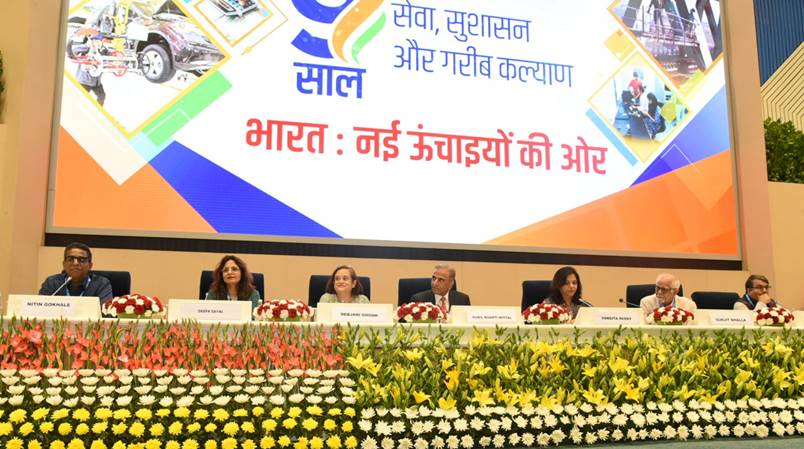
National Conclave: 9 Saal – Seva, Sushasan, Gareeb Kalyan
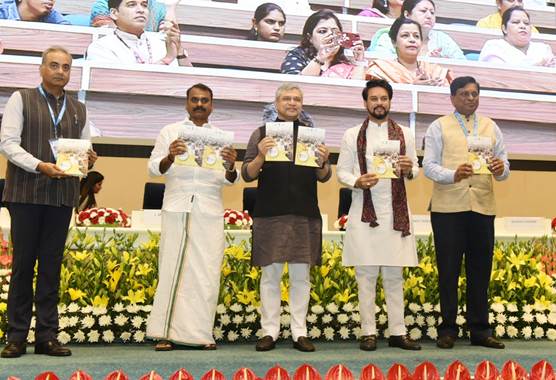
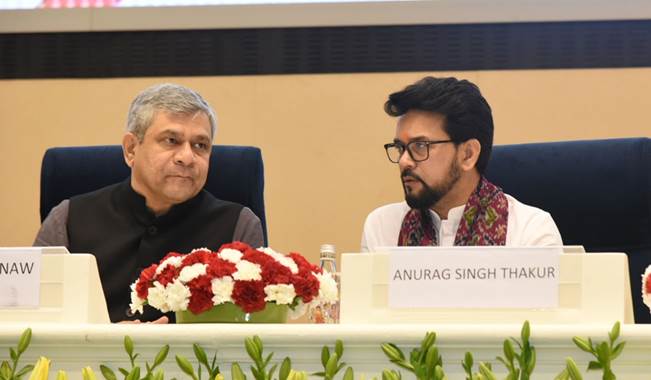
Union Minister of Railways Shri Ashwini Vaishnav today inaugurated the National Conclave: 9 Saal – Seva, Sushasan, Gareeb Kalyan at Vigyan Bhawan in New Delhi. The event witnessed the presence of Union Minister of Information and Broadcasting Shri Anurag Thakur, Union Minister of State for Information and Broadcasting Dr L. Murugan. Secretary, Min of I&B Shri Apurva Chandra and CEO, Prasar Bharati, Shri Gaurav Dwivedi were also present on the occasion.

Union Minister Shri Ashwini Vaishnav made a comparative presentation juxtaposing the performance of the governments before 2014 with the government since and said while the previous governance efforts had become synonymous with scams, the current Government works with the ethos of ‘Pai Pai Se Gareeb Ki Bhalai’ (every penny for the benefit of the poor). This has been reflected in the way schemes and programmes have been implemented keeping the poor and the destitute as its central pillar, he added.
The Minister underlined that owning a house is a factor that brings a transformative change in a poor person’s life. To that end, today 3.5 crore houses have been constructed in the country under PM Awas Yojana bringing qualitative change in the lives of the poor.
The Minister said that the idea of connecting every house with piped water connection was always considered a behemoth, never to be attempted or achieved. But, he added, the Prime Minister took it up as a challenge and today 12 crore people have water connections. At the same time, he said the Government has strived to end the travesty that was traditional chulhas and provided 9.6 crore families with gas cylinders.

He further spoke about the efforts of the government to come through for the people in need and said that when the world was struggling to fight the travails of the COVID19 pandemic, the government overcame massive logistical challenges to bring free ration to 80 crore people. No government has spoken of fundamental human needs, like toilets, that are the indicators of inclusive growth, during Independence Day speeches. But PM Modi spoke about the construction of toilets in every house in his speech from Red Fort. This has caused a revolution in the field of women safety and sanitation with the construction of 11.72 crore toilets today.
Shri Vaishnav said that India today runs the world’s largest healthcare insurance programme under Ayushman Bharat that has created provisions for free medicare up to Rs five lakh for the needy, the total coverage which is more than the population of the USA and Russia combined.
Shri Vaishnav credited the Prime Minister with creating a new definition of social justice taking it away from appeasement and towards empowerment.
The Minister said that domestic infrastructure has seen an unprecedented makeover since 2014, which was largely missing earlier due to a lack of proper mindset and thought process in the past. He cited the creation of 74 airports in 9 years, a figure matching the number created till 2014. He added that where 91 thousand kilometers of road were created since independence, almost 54 thousand kilometers have been constructed since 2014. India has gone from having no waterways till 2014 to having 111 waterways today and India’s railway stations have world-class facilities like airports.
The Minister said that India had lagged in world economic rankings for a long time, but today India stands tall as the 5th largest economy. He further said that India is well on its way to becoming the 4th largest economy in another two years and the third largest in another six years.
The Minister spoke about the government’s strong commitment to national security and said that when in past India has been at the receiving end of major terror activities, today the country has the means and willingness to respond to attacks in kind.
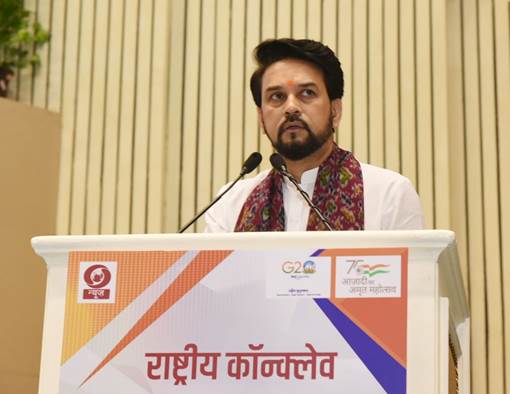
Shri Anurag Thakur, while addressing the audience gathered at the conclave, said that the past nine years have seen a dramatic change in the life of the common people of India and the achievements of the Government have surpassed expectations of the people. He exemplified this by adding further that where India was a weak and ramshackle economy riddled with corruption in the past, today it has covered the distance from Fragile Five to Top Five economies of the world.

He further stated that while the benefits of government schemes used to reach only a few in the past, the government today works with the motto of Antyodaya, where the Government is committed to the upliftment of the last person standing at the end of the queue. Herein lies the secret of our efforts that have lifted 27% of people out of poverty, he added. A combination of a sense of service, big ideas, good governance, infusion of technology, and building transparency and accountability into the delivery mechanism, are the things that have gone into ensuring last-mile delivery of public services.
The Minister said that the government has been steadfast in shedding legacies of the colonial past and adopting modern and domestic symbols. This is evident in the creation of the Kartavya Path and will be evident in the new parliament.
The Minister highlighted that the Prime Minister had said that the youth had a critical role to play in shaping the future of this country. To that end, the Minister credited the youth for achieving a milestone where India can today boast of almost one lakh startups and over hundred Unicorns.
The Minister said that while on the one hand the country answered the Prime Minister’s call for Har Ghar Tiranga, the same tricolor was used by students of other countries to get out of a conflict zone during Operation Ganga. While surveys have called him the most popular leader, Shri Thakur said that he has in fact made the tricolour the strongest flag in the world.
Secretary Shri Apurva Chandra welcomed all the guests for the various thematic sessions during the day. He also welcomed the audience from various sections of society.
The National Conclave on 9 years of the Government is comprised of three thematic sessions after the inaugural session and a valedictory session.
Session 1 “India: Surging Ahead” moderated by Shri Nitin Gokhale, Senior Journalist will see participation from
- Sunil Bharti Mittal, Founder and Chairman, Bharti Enterprises
- Sangita Reddy, Joint Managing Director of Apollo Hospitals
- Debjani Ghosh, President of NASSCOM
- Surjit Bhalla, Former Executive Director for International Monetary Fund, India
- Soumya Kanti Ghosh, Group Chief Economic Advisor, State Bank of India
- Deepa Sayal, President and Patron in Chief, IWIL India
Session 2: Jan Jan Ka Vishwas moderated by Richa Anirudh, Journalist will see participation from
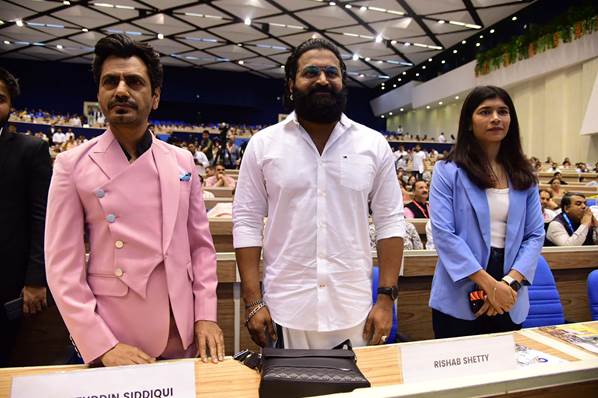
- Nawazuddin Siddiqui, Actor
- Cynthia McCaffrey, UNICEF Representative to India
- Kiran Mazumdar Shaw, Executive Chairperson, Biocon Limited (Video message)
- Padma Shri Shanti Teresa Lakra, Nurse
- Nikhat Zareen, Boxer
- Anil Prakash Joshi, Environmentalist Divya Jain, Co-founder, Seekho
Session 3: Yuva Shakti: Galvanizing India moderated by Raunac, Radio Jockey, Red FM with the following panelists
- Ritesh Agarwal, CEO, OYO Rooms Rishab Shetty, Actor
- Amaan Ali Bangash, Musician
- Viren Rasquinha, Former Indian Hockey Captain
- Yashodhara Bajoria, Director, Espresso Technologies
- Akhil Kumar, Boxer

****
Cooperation under EU – India Clean Energy and Climate Partnership
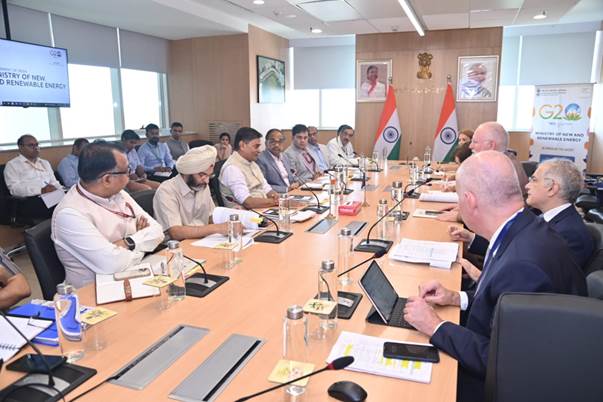
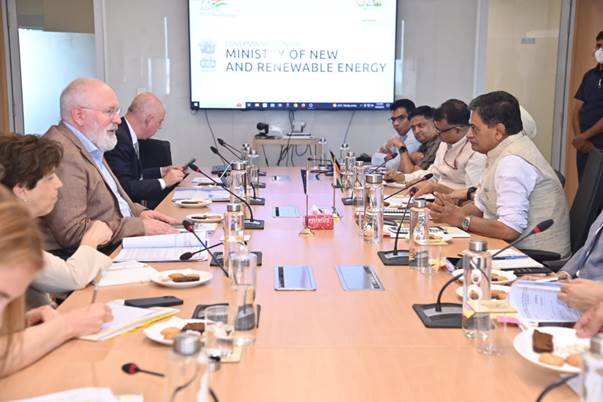
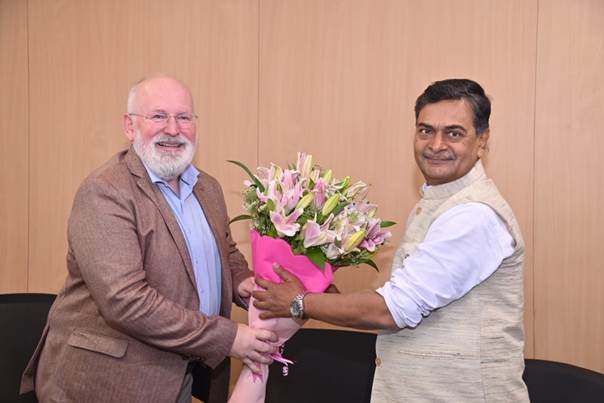
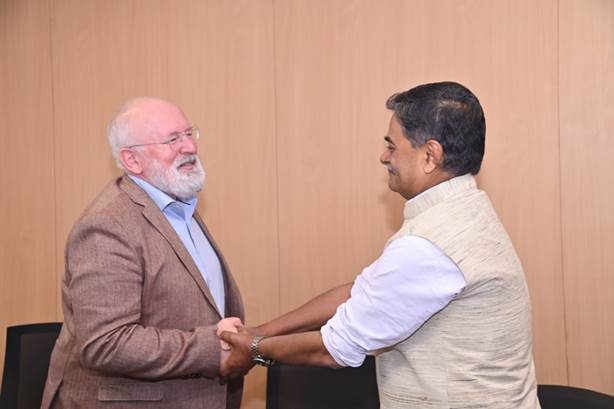
The Union Power and New & Renewable Energy Minister R. K. Singh held a meeting with Frans Timmermans, Executive Vice President, European Green Deal, European Union in New Delhi yesterday, May 26, 2023. The meeting was held to discuss cooperation under the EU – India Clean Energy and Climate Partnership. The discussion touched upon energy efficiency; renewable energy, including solar and offshore wind, green hydrogen; energy storage, diversification of global supply chain for energy sector, the International Solar Alliance, India’s presidency of the G20 and how India and EU can partner each other on the clean energy transition.

“Looking for Partners who believe in going Green as fast as possible”
The Power and New & Renewable Energy Minister informed the visiting EU delegation that as India is growing, the power demand is accelerating. While the established capacity in India is 416 GW, it is going to double by 2030. India is accordingly adding rapidly to its power generation capacity. onHHonTheThe Minister pointed out that despite India’s per capita and cumulative emissions being one of the lowest in the world, it has emerged as a leader in Energy Transition and Climate Action.
“Need to Add Manufacturing Facilities for Energy Storage, to Bring Down Storage Cost”
The Power and New & Renewable Energy Minister informed the European Union delegation of the various steps being taken by India to ramp up renewable energy capacity. He said that manufacturing capacity for the most advanced solar cells and panels is coming up; and by 2030, total manufacturing capacity of 80 GW will come up. This will meet India’s requirements and provide surplus for exports. This will address the supply chain issues of the world. The Minister stated that storage is needed in order to provide round-the-clock renewable energy and the transition to Net Zero. He informed that recognizing the need to add storage capacity, the government is coming up with bids for more storage. Government of India has already come up with a bid for Production Linked Incentive for energy storage; and it is planning to have one more bid. He sought the cooperation of the EU in encouraging other countries too to add manufacturing facilities for energy storage so that the price of storage comes down.
Speaking of the need for alternative chemistries such as sodium ion, the Minister suggested that India and the EU do joint pilots, in areas such as green steel and other frontier technologies. The Minister informed that India is doing a pilot for round-the-clock renewables, using hydrogen and ammonia as storage. A construct across the world in this respect will help, he added.
“Journey to Green Hydrogen needs to be on the basis of free and open trade”
The Power and New & Renewable Energy Minister observed that the industry is switching to green hydrogen and that if the journey is to continue, it will have to be on the basis of free and open trade, without barriers. He told the EU delegation that we should guard against protectionism. He also said that we need to increase electrolyser manufacturing capacity if we need to increase use of green hydrogen. India is going to come up with a PLI bid on that, he informed.
The Executive Vice President of European Green Deal appreciated India for its leadership in Renewable energy and energy efficiency and suggested that the two sides find ways to bring the agenda of energy efficiency to the global stage, and help set global energy efficiency targets.
The Executive Vice President spoke of the need for global targets in introduction of renewables and said that we need to look at developing industrial ecosystems which promote renewables. He said that the EU is developing new generations of solar panels and that green hydrogen is also taking off and Europe will become a truly global market. Given the high costs of transporting green hydrogen, he opined that the places producing green hydrogen will attract industrial investment.

Grid-Scale Battery-based Energy Storage Systems
The Power and New & Renewable Energy Minister spoke of the opportunity for collaboration in batteries for grid-scale storage. He informed that India has come out with a separate Production Linked Incentive for batteries for green mobility. He said that India is going to be one of the biggest markets for green mobility, with 80% of India’s 2-wheelers, 3-wheelers and about 50% of 4-wheelers expected to be green by 2030.
The Executive Vice President said that heat pumps is an area where lot of innovation is expected to happen, given the rising needs for cooling and heating. He also said that there is a strong consensus in the EU on need to adopt renewable energy and on making the green transition.
Need to Detoxify Agriculture
The Power and New & Renewable Energy Minister expressed the government’s goal of detoxifying agriculture, by making a transition away from chemical fertilizers in the times to come.
“Need to Support Energy-Populations in Getting Energy Access”
The problem of lack of access to energy by 800 million people around the world was discussed. The Power and New & Renewable Energy Minister recalled that even as India and the EU make progress through this collaboration, a large part of the world population, especially in the African continent, suffers from poor energy access.
The two sides discussed the role of International Solar Alliance in bringing solar energy to the millions of people in Africa without access to energy. We need to support them to help them get clean energy and we need to get countries to work with the International Solar Alliance to contribute to clean energy, said the Minister.
This suggestion has been welcomed heartily by the Executive Vice President of the European Green Deal. It was agreed that EU, ISA, Africa and India will need to set up a partnership to address this issue.


The Executive Vice President of European Green Deal was accompanied by Ugo Astuto, Ambassador of the European Union to India; Edwin Koekkoek, First Counsellor, Energy & Climate Action, EU Delegation; Sara Zennaro Atre, First Secretary, Trade Section, EU Delegation; Estela Pineiro Kruik, Member of Cabinet; Damyana Stoynova, Member of Cabinet; and Diana Acconcia, Director, International Affairs and Climate Finance, Directorate-General for Climate Action, EU.
The Power and New & Renewable Energy Minister was joined by Alok Kumar, Power Secretary; Bhupinder Singh Bhalla, New & Renewable Energy Secretary; and other officers of the two Ministries.
About European Green Deal
As per the European Union, the European Green Deal seeks to transform the EU into a modern, resource-efficient and competitive economy, ensuring:
- no net emissions of greenhouse gases by 2050
- economic growth decoupled from resource use
- no person and no place left behind
One third of the €1.8 trillion investments from the Next Generation EU Recovery Plan, and the EU’s seven-year budget will finance the European Green Deal. More about the Deal here.
***
REWARD Program with World Bank Team
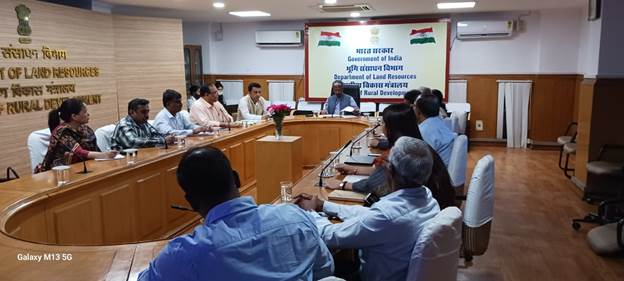
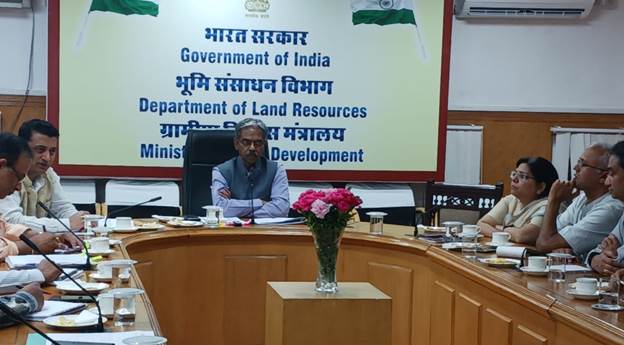
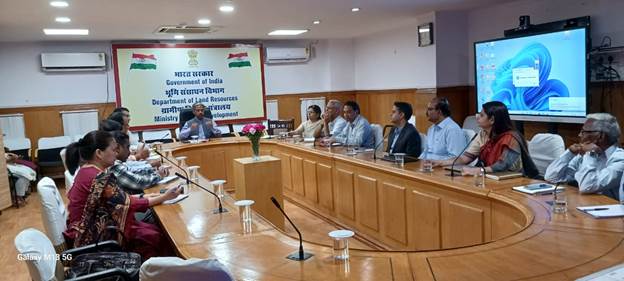
The Secretary, Department of Land Resources (DoLR), Government of India (GoI) Shri Ajay Tirkey reviewed the Implementation Support Mission of World Bank Assisted Rejuvenating Watersheds for Agricultural Resilience through Innovative Development (REWARD) program.

REWARD is a World Bank assisted Watershed development program which is being implemented from 2021 to 2026. The Development Objectives of REWARD program is to “Strengthen capacities of National and State institutions to adopt improved watershed management for increasing farmers resilience and support value chains in selected watersheds of participating States”. The program is being implemented to introduce modern watershed practices in the Department of Land Resources in the Ministry of Rural Development and in the States of Karnataka and Odisha. The total budget outlay of REWARD program is USD 167.71 million over a program period of 4.5 years. This includes USD 115 million from World Bank [Karnataka (USD 60 million), Odisha (USD 49 million) and DoLR (USD 6 million)], USD 46.71 million from two participating States [Karnataka (USD 25.71) and Odisha (USD 21.0 million)] and USD 6 million from DoLR. The funding pattern is 70:30, between World Bank and States whereas it is 50:50 between World Bank and DoLR.

At the central level, the scope of the REWARD program covers management, monitoring, communication and knowledge sharing functions by DoLR. At the State level, the REWARD program will be contiguous in scope to the WDC-PMKSY 2.0, and support implementation of key science-based activities and demonstrations which eventually aims at synergising broader perspective of WDC-PMKSY 2.0 in other States in India.

As a part of third Implementation Support Mission (ISM), the team of World Bank headed by Smt. Preeti Kumar visited DoLR & REWARD States for 3rd ISM to review the progress and to discuss about the plan of action for the next 6 months. After completing the mission, yesterday the team visited Department of Land Resources, Government of India to debrief the outcomes of ISM to the Secretary, DoLR. During the debriefing, the team felt that the progress of REWARD is on track and complemented the efforts of DoLR for the present progress and requested Secretary, DoLR for his continuous support to achieve the progress as per the Disbursement Linked Indicators of the program.
The other points discussed during the debriefing meeting includes strengthening of Centre for Excellence on watershed component which was established in Bengaluru under REWARD program, organizing National level workshop on science based watershed management, development of protocols for expansion of Land Resource Inventory (LRI) across the country on a pilot basis, providing LRI based digital advisory services to farmers and Exposure visits of REWARD officials etc.
Shri Nitin Khade, Joint Secretary (WM), Dr. C.P. Reddy, Senior Additional Commissioner, ISM members from World Bank, Experts of NPMU of REWARD program and other officials of DoLR attended the meeting.
*****
Roundtable conference with leading CEOs of Pharmaceutical industry
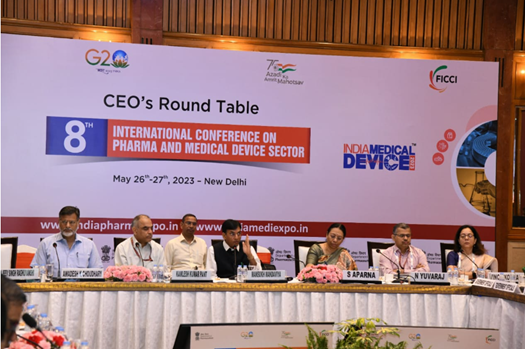
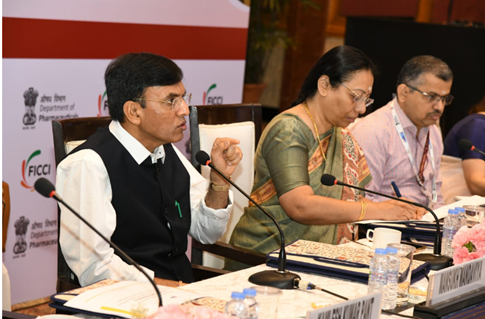
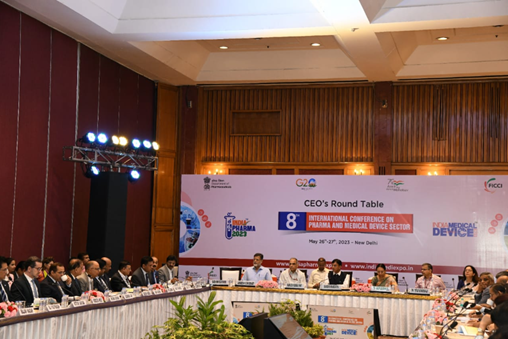
Union Minister of Chemicals and Fertilizers, and Health and Family Welfare Dr Mansukh Mandaviya chaired a roundtable meeting with the leading CEOs of pharmaceutical industry in the country on the second day of 8th International Conference on Pharma and Medical Device Sector, here today. Ms. S Aparna, Secretary, Department of Pharmaceuticals was also present.

Lauding the growth momentum of the industry, the Minister said “the industry is progressing at a rapid rate, and to maintain our stature as the ‘Pharmacy of the World’, we need to focus on quality and affordable manufacturing with an increased focus on research and innovation.” Adding further Dr. Mandaviya urged the stakeholders to capitalize on the current opportunities, stating “substantial investment in terms of Production Linked Incentive schemes as well as upcoming drug parks are bearing fruitful results. To catalyze growth, we must maintain a degree of competitiveness to consolidate our presence in the world.”

Reiterating the government’s commitment and resolve, the Union Health Minister stated “the government is industry friendly and welcomes opportunities for collaboration. The government and industry, both integral to the nation’s progress, must work cohesively to achieve holistic growth.”
Affirming government support, Dr. Mandaviya invited the stakeholders to put forth their suggestions addressing the aspects of pricing, regulatory, policy and strategy, with the respective action points in a detailed presentation and due consideration will be given to facilitate further policy support and growth.

Underscoring the potential future growth of the industry, Ms. S Aparna, Secretary, Department of Pharmaceuticals urged the attending representatives to collate and collectively represent their perspectives adhering to the aforementioned four categories to facilitate policy makers, government in fostering a stronger ecosystem for all.
The roundtable brought together participants from over 60 companies represented by senior leadership, with several key players having a presence in the national as well as international markets. Shri N Yuvaraj, Joint Secretary, Department of Pharmaceuticals, Shri Awadhesh Kumar Choudhary, Senior Economic Advisor, Smt. Vinod Kotwal Member Secretary, National Pharmaceutical Pricing Authority, DCGI Dr. Rajeev Raghuvanshi, Chairman NPPA Shri Kamlesh Pant, various industry stakeholders and representatives of academia and associations were also present in the conference.
About International Conference on Pharma and Medical Device Sector:
The annual flagship conference will be conducted over two days – 26th May 2023 dedicated for India Medical Device sector on the theme “Sustainable MedTech 5.0: Scaling and Innovating Indian MedTech,” and 27th May 2023 dedicated for the Pharmaceutical sector on the theme “Indian pharma industry: Delivering Value through Innovation.
****
CONFERENCE ORGANIZED BY THE UNION MINISTRY OF TRIBAL AFFAIRS AT KHUNTI
The President of India, Smt Droupadi Murmu graced and addressed a Women Conference organized by the Union Ministry of Tribal Affairs at Khunti, Jharkhand today (May 25, 2023).
Addressing the gathering, the President said that being a woman or being born in a tribal society is not a disadvantage. She shared that there are countless inspiring examples of the contribution of women in our country and that women have made invaluable contributions in social reform, politics, economy, education, science and research, business, sports and military forces and many other fields. She said that for becoming successful in any field, it is very important that they recognize their talent and do not judge themselves on the scale of others. She urged women to awaken the infinite power that is within them.
The President said that both the social and economic aspects of women empowerment are equally important. She said that hardworking sisters and daughters of Jharkhand are capable of making a significant contribution to the economy of the state as well as the economic development of the country. She urged them to recognize their talent, and move ahead with confidence.
The President said that women power provides energy to the rural economy of Jharkhand. Therefore, it is very important to connect more and more women with self-help groups in Jharkhand and provide employment by their skill development. She expressed confidence that through this Conference, women would become more aware of their rights and various schemes run by the government in their interest.
The President said that the tribal society presents ideal examples in many fields. One of these is the non-prevalence of the dowry system in the tribal society. She pointed out that many people in our society, even the well-educated ones, have not been able to give up the dowry system till date.
Click Here for President’s Speech
*****
G20 Tourism Meeting
Ministry of Ports, Shipping and Waterways (MoPSW )embarkedupon its much-anticipated 2 day Chintan Shivir at Munnar in Kerala. The Shivir was Chaired and inaugurated by Shri Sarbananda Sonowal, Union Minister of Ports, Shipping & Waterways and AYUSH in the august presence of the Shri Shripad Naik, MoS, MoPSW and Tourism, Shri Shantanu Thakur, MoS, MoPSW, Shri Sudhansh Pant, Secretary, MoPSW and others including Chairpersons of all major ports, heads of the other organizations/PSU’s of the Ministry and senior officials.
UTL7.jpeg)
Speaking on the occasion, Shri Sonowal lauded the commitment and hard work exhibited by MoPSW and each of the organizations in positioning India as a global leader in the maritime sector. Recognizing the significance of enhancing connectivity and fostering new business opportunities, he emphasized the Ministry’s goal to educate and create awareness among the common people too by highlighting the impact of the Maritime sector in simple language and how it impatcs the lives of the common people.
0MIL.jpeg)
“Under the dynamic leadership of our Hon’ble Prime Minister Narendra Modi, India has achieved a new reputation globally and the Ministry in coordination with all the major organizations are working to further boost and implement the vision of our PM towards making India Atmanirbhar.” the Minister added.
4L3V.jpeg)
Shri Shripad Y Naik, MoS, MoPSW mentioned the excellent performance achieved during the FY-2022-23 in all aspects of port operations. He said, “The MIV 2030 launched under the leadership of PM Modi has led the blueprint of the actions that would lead us towards making India one of the leading blue economies of the world and we should try to achieve the determined targets”.
HYP3.jpeg)
On this occasion Shri Shantanu Thakur, MoS, MoPSW stated,” India is one of the leading economies of the world and the considerable amount of work has been done towards infrastructure documentation in the Ports enhancing ease of doing business, increasing the share of renewable energy in the sectors and promoting ship building and ship repair”. He also added that now we should focus on making India a hub for Maritime training and strengthening Maritime institutions.
X4KN.jpeg)
During the first day of the Chintan Shivir, the achievements and targets set during the previous Chintan Shivir were discussed. An exclusive session with the HoDs of the major ports, chaired by Shri Sarbananda Sonowal, focused on the innovative ideas of the ports. The other session focused on lighthouse tourism and how to become a global player in shipbuilding and enhance India’s tonnage. Apart from this, the participants from various organisations shared valuable insights, paving its way for informed decision-making and effective implementation strategies.
VV1S.jpeg)
The day two of the Chintan Shivir will focus on cargo handling by Major Ports, improving and optimizing port call procedures, digitalization and standardization, Inland waterways and coastal shipping enhancing cargo and good governance.
FJ7B.jpeg)
MJPS
G20 Tourism Working Group Meeting
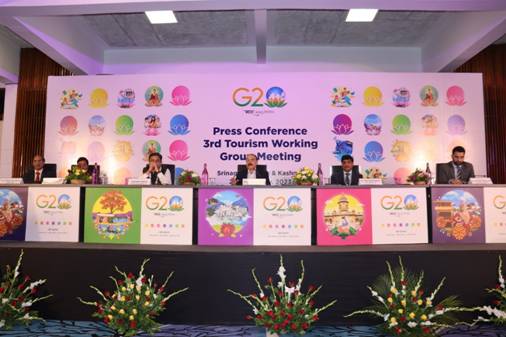
The ‘Third G20 Tourism Working Group Meeting’, will be held from 22nd to 24th May 2023 in Srinagar, Jammu and Kashmir. This was informed by Secretary, Ministry of Tourism, Shri Arvind Singh while addressing a press conference at SKICC Srinagar today.
Giving details, Sh. Arvind Singh said, the stage is set for discussions and deliberations on final deliverables and there are two key deliverables of the Tourism Working Group, which include GOA Roadmap for Tourism as a vehicle for achieving sustainable development goals (SDGs) and G20 Tourism Ministers’ Declaration.

This is the only working group meeting taking place in Srinagar as part of G20 effort with excellent response from all the member countries, all the invited countries and the international organisations, having the highest participation registered compared to the first two Tourism Working Group Meetings at Rann of Kutch and Siliguri.
Sh. Arvind Singh further said, G20 member countries, invited countries, and international organizations will give valuable inputs and feedback on these two draft documents and after negotiations with G20 Member Countries on these drafts, final versions will be placed in the ‘Fourth Tourism Working Group Meeting’.
Sh. Singh informed, the ‘3rd Tourism Working Group Meeting’ will deliberate on the five key priority areas namely Green Tourism, Digitalization, Skills, MSMEs and Destination Management. These priorities are key building blocks for accelerating the transition of the tourism sector and achieve the targets for 2030 SDGs.
Shri Arvind Singh said that a side event on ‘Film Tourism for Economic Growth and Cultural Preservation’ will be organized on 22nd and 23rd May 2023, focusing on strategies to promote film tourism in J&K. The event will witness the participation of G20 member countries, invited countries, international organizations, and industry stakeholders. He also said that a draft ‘National Strategy on Film Tourism’ will be unveiled to provide a roadmap for harnessing the role of films in promoting tourist destinations.
Sh. Harsh VardhanShringla, Chief Coordinator G20 said, that it is the vision of Prime Minister Shri Narendra Modi that the message of India’s G20 Presidency is taken to the grassroot level through active Jan Bhagidari . Shri Shringla appreciated the efforts of Jammu and Kashmir Government to sensitise the people about goals and purpose of G20 through multiple public activities.
Chief Secretary J&K, Sh. Arun Mehta said, the change in J&K is evident on ground with the arrival of highest number of tourists (18.8 million) in 2022.
300 new tourist destinations will come come up in Jammu and Kashmir seeing the influx of tourists with each destination providing enough to the tourists, said Sh. Mehta.
Sh. Mehta further said, the influx of highest number of foreign tourists to Jammu and Kashmir is a healthy sign for tourism in J&K.
During the 3rd Tourism Working Group meeting, the delegates will also visit the Art and Craft Bazaar organized by the State Government showcasing local handicrafts, work of artisans, signifying the importance of community participation. The delegates will also have ‘hands-on’ experience through DIY Activities at the Craft Bazaar.
During the press conference, it was also informed that the Ministry of Tourism is also promoting local products of Jammu and Kashmir by handing below souvenirs to delegates from ODOP like Paper Mache Box, Saffron from Pampore, Kawa Cups and Brass Spoon, Walnuts from Anantnag, Shopian and Kupwara.
This G20 Tourism Working Group meeting in Srinagar aims to strengthen economic growth, preserve cultural heritage, and promote sustainable development of the region.
The Ministry of Tourism, Government of India, welcomes the participation of delegates from G20 member countries, invited countries, and international organizations to collectively work towards advancing the tourism sector and achieving the UN sustainable development goals 2030.
The G20 event presents a unique opportunity to highlight the tourism potential and cultural richness of the region. A detailed presentation about the event was also made by Additional Secretary, Sh. Rakesh Verma, Additional Director General PIB Region, Sh. Rajinder Chaudhry and Secretary Tourism J&K, Syed Aabid Rasheed Shah were also present at the media briefing.
*****
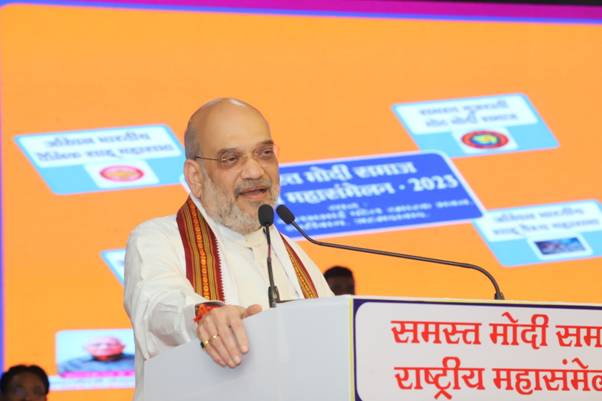
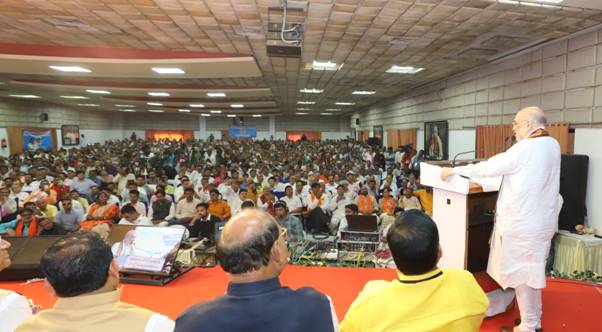
National Convention of Modi Samaj in Ahmedabad
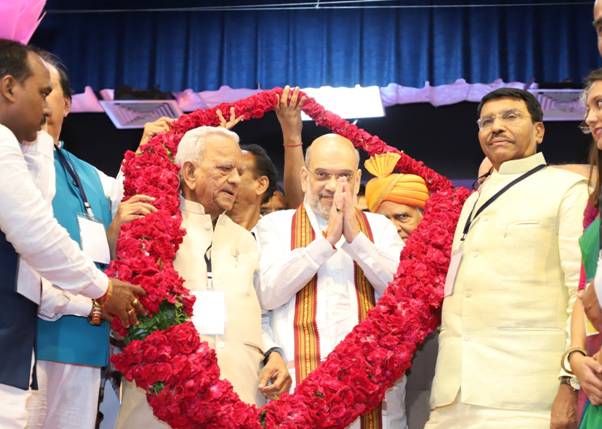
Union Home Minister and Minister of Cooperation, Shri Amit Shah inaugurated the National Convention of Modi Samaj in Ahmedabad, Gujarat, today

In his address, Shri Amit Shah said that efforts are being made to unite the dispersed community, and it is a good sign for both the community and the nation. He said that this community has progressed ahead due to its continuous efforts and strength and it will get the representation. Shri Shah said that this society is blessed by Lord Shiva himself.
Union Home Minister and Minister of Cooperation said that Shri Narendra Modi has visited every village in Gujarat and inspired the youth and by forming an organization provided a unparalleled structure for bringing change in Gujarat. He said that on the basis of his public welfare works during his tenure as Chief Minister of Gujarat, Shri Narendra Modi became the Prime Minister of the country, and now as a Prime Minister, he is increasing India’s pride across the world.
Shri Amit Shah said that the previous governments always harassed and humiliated the OBC community and ignored them, Prime Minister Modi took many initiatives for giving respect to the OBC community and took many steps for the welfare of the OBC community in last 9 years. He said that many OBCs have been made Chief Ministers from our party, the constitutional status has been provided to the OBC commission by the government under the leadership of Prime Minister Narendra Modi and for the first time 27 ministers from the OBC community have been included in the Union cabinet.

Union Home Minister said that earlier there was no reservation for OBCs in Kendriya Vidyalaya, Navodaya Vidyalaya and NEET exam, but it has now been ensured by the government under the leadership of Prime Minister Shri Narendra Modi. He said that a venture capital fund for OBC young entrepreneurs has been set up. The amendment process in the OBC list was also initiated by the government under the guidance of Prime Minister Shri Narendra Modi.Shri Shah said that during the last 56 years rule of the previous governments, not a single initiative was takenfor ensuring respect for the OBC community, but Shri Narendra Modi has taken countless measures in the past 9 years, through which the OBC community is rising and achieving its due place.
Shri Amit Shah said that the Prime Minister Shri Narendra Modi has made efforts to provide all kinds of facilities to the poor because Shri Modi, himself was born in a poor household and became the Prime Minister of the country through the democratic process. For the first time, a person who came has seen such poverty became the Prime Minister of the country and Shri Modi, who understood the suffering of the poor, provided gas cylinders to the homes of about 13 crore people of the country, built toilets in 10 crore houses, gave houses to 3 crore people, more than 3 crore houses were provided electricity, all health facilities up to Rs. 5 lakh were given free of cost to 70 crore people and 5 kg food grains per person per month free of cost were provided to 80 crore people for two and a half years. ShriShah said that during the Covid-19 pandemic, considering everyone equal, Prime Minister Shri Narendra Modi provided the Corona vaccine to 130 crore people. He said that Prime Minister Modi has shown how technology can be used for every section of the society. He said that Prime Minister Shri Narendra Modi is using technology to provide facilities to the poorest of the poor. He said that Prime Minister Modi has eliminated corruption by linking many public welfare schemes of the government with DBT and sending their benefits directly to the bank accounts of the poor.

Union Home Minister and Minister of Cooperation Minister said that Rathore, Teli, Sahu community has made a huge contribution for the country and given the country such a Prime Minister who has worked to establish India’s pride in the world.When the President of America says that Prime Minister Shri Narendra Modi, you are very popular in America, and he wants your autograph, then every Indian feels proud. He said that the Indian economy which was earlier ranked 11th in the world, has moved up to the 5th position today and Prime Minister Modi has set a target that the Indian economy will become a $5 trillion economy by 2025. Shri Shah said that India ranks second in the world in smartphone usage and production, third in aviation market, third in automobile market, third in start-ups and ranks third in the world in renewable energy.He said that after the independence of the country, in comparison to the 50 years of opposition governments, the 9 years of government under the leadership of Prime Minister Shri Narendra Modi has many significant achievements.
**************
Clean energy transition ambitions
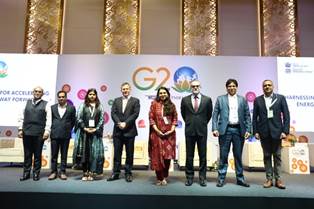
As part of the third Energy Transition Working Group (ETWG) meeting under India’s G20 Presidency, the Ministry of New and Renewable Energy (MNRE), Government of India, in collaboration with the Global Wind Energy Council (GWEC) and National Institute of Wind Energy (NIWE) convened a high-level event “Harnessing Offshore Wind for Accelerating Energy Transition: The Way Forward” on 16th May, 2023 in Mumbai. The event brought saw a gathering of government representatives, financial institutions and senior domestic and international industry representatives. The event emerged as a platform for the exchange of urgent priorities for bolstering offshore wind deployment in India and globally - permits and clearances, supply chain resilience, low-cost financing, capacity building and business volumes to boost market attractiveness.
Mr Bhupinder Singh Bhalla, Secretary, Ministry of New and Renewable Energy (MNRE), Government of India, attributed offshore wind as a solution to air pollution and climate change mitigation. He emphasized the jobs creations opportunity through the flourishment of the offshore wind value chain. He outlined India’s strides in harnessing offshore wind given its role in balancing the grid. He further added that India’s G20 Presidency is an opportunity for offshore wind countries, businesses, and financial institutions to work together and build on mutual strengths to support national, regional, and global offshore wind and clean energy transition ambitions.

Mr Alok Kumar, ETWG Chair and Secretary Ministry of Power, Government of India emphasized the ever-growing role of offshore wind in India’s power mix. He outlined how India’s offshore potential is almost comparable to hydro and nuclear capacities that India may add in the future. In addition, he suggested how having an offshore wind horizon, beyond 2030, emerges as an opportunity for the country and a mission mode approach may give even further force to the country’s aspirations that may lead to the development of a robust value chain and attract more enthusiastic participation of the industry.
Mr Dinesh Dayanand Jagdale, Joint Secretary, Ministry of New and Renewable Energy (MNRE), Government of India, outlined the country’s progress on various facets of offshore wind – including proposed business models, upcoming plans of rolling out tender, international collaborations, and extensive engagements between government and the industry to facilitate a robust enabling environment.
Mr Sumant Sinha, Chairperson of GWEC India collaboration between government and industry and partnership between Indian and international offshore wind companies, as well as power generators and original equipment manufacturers, and finally the role of multilateral development banks. He also pressed for long-term PPAs and necessary infrastructure. He also added on supply chain resilience- availability of customized equipment, ships, cables, and trained people among others.

There were two high-level panel discussions moderated by Ms Rebecca Williams, Global Head of Offshore Wind, GWEC and Mr Chintan Shah, former Director of IREDA, respectively. The session titled “Role of Global Offshore Wind Sector in Reaching Net Zero Targets” focussed on deliberations around global offshore wind experience, international best practices, supply chain priorities, and expectations of the industry from the emerging Indian offshore wind market.

The panel discussion on “Financing and Capacity Building for Offshore” presented a comprehensive view of available instruments to feed the need for the development of an offshore wind ecosystem. Senior representatives of ADB, World Bank, Corio Generation, Aon, NTPC REL Limited, NIWE, ReNew, IREDA, Center of Excellence on Offshore Wind and Renewable Energy, IEA, O2 Power and SGRE among others spoke in these panels.
In his concluding remarks, Mr Dinesh Dayanand Jagdale, Joint Secretary, MNRE, summarized the enriching discourse as part of the event and thanked distinguished speakers and esteemed participants for their enthusiastic participation.
*****


You must be logged in to post a comment.