Amid decline in China's construction sector, India emerges as 'saviour' for global steel demand, says report

India has emerged as a saviour for the sagging global steel demand with China’s enormous construction sector still in a funk and the US and Europe probably heading into recessions.

India is experiencing a building boom and is on track to surpass China as the world’s most populated nation by the end of the year. In an effort to compete with China as a manufacturing hub, Prime Minister Narendra Modi is attempting to revamp the roadways, rail systems, and ports.

According to the World Steel Association, this will result in a 6.7% increase in steel demand, reaching over 120 million tonnes in 2023, the greatest growth rate among large nations. This year, India experienced similar growth and surpassed the US to overtake China as the world’s second-largest user of steel.

The biggest producer in the country, JSW Steel Ltd., stated that “the nation-building phase of any economy demands a lot of steel and commodities.” According to him, India is currently moving through that phase, which might increase its steel demand to more than 200 million tonnes by 2030.

Restrictions on many Construction & Demolition(C&D) activities to continue in the NCR

 The Commission for Air Quality Management in NCR and Adjoining Areas (CAQM) in furtherance of Direction No. 44 dated 16/11/2021 and its Order dated 27.11.2021 directs with immediate effect that Construction and Demolition (C&D) activities shall not be allowed in NCR, except for the following categories of projects:


(a)        Railway services / Railway stations;

(b)        Metro Rail Services including stations;

(c)        Airports and Inter State Bus Terminals (ISBTs);

(d)        National security/ Defence related activities/ projects of national importance;

(e)        Hospitals/ nursing homes / health care facilities;

(f)        Linear public projects such as highways, roads, flyovers, over bridges, power transmission, pipelines etc.;

(g)        Sanitation and public utility projects like sewage treatment plants, water pumping stations etc.;

(h)        Ancillary activities specific to and supplementing the above categories of projects.


Further, the above said exemptions are subject to strict compliance of the C&D Waste Management Rules, dust prevention/ control norms including compliance with the directions of the Commission issued from time to time in this regard.

As per the report of IIT Kanpur (2016) namely “Comprehensive Study on Air Pollution and Green House Gases in Delhi”, construction and demolition activities in Delhi are frequent and “this source is the third most contributor to area source emission in PM10 and importantly it is a consistent source all through the year”. Additionally, the study estimated that the emission load from C&D activities in Delhi is 5167 kg per day and 1292 kg per day with respect to PM10 and PM2.5 respectively.

As per “Source Apportionment of PM10 and PM2.5 of Delhi NCR for Identification of Major Sources”, study of August, 2018 prepared by Automotive Research Association of India (ARAI) and The Energy and Resources Institute (TERI), PM10 contribution from dusty sources (example – road, construction and soil dust) was significant in winter season ranging from 23 to 31 %.  Similarly, contribution of dusty sources PM2.5 in winter was 15% in Delhi-city as well as NCR Towns.

C&D activities in urban agglomeration of Delhi city and NCR are frequent, numerous and dispersed and dust from the construction and demolition activities is a major source of Air Pollution in the National Capital Region and contributes significantly to adverse PM2.5 and PM10 levels.

While the Commission’s restrictions are still in force to control air pollution from two other major sectors contributing to air pollution namely industries and transport and it is both advisable and desirable to follow a phased approach in respect of construction sector also considering the air quality in NCR.

Keeping in view the current air quality in Delhi-NCR, there is a need to exercise control on various sectors that significantly contributes to air pollution. Taking into consideration different studies that clearly show that C&D sites are a major contributor of air pollution across the NCR, the Commission if of the view that except for the above said exemptions, C&D activities should not be allowed in the NCR till further orders.

Since the current air quality index is within the ‘Very Poor’, it would not be advisable to allow the operations at all C&D sites. Based on air quality forecast and significant improvement in air quality, the decision will be reviewed further.

As per the Hon’ble Supreme Court’s Order dated 24.11.2021, States shall use the funds collected as labourcess for the welfare of constructions workers and provide them subsistence for the period during which construction activities are prohibited and pay wages notified under the minimum Wages Act for the respective categories of workers.

***

Why Skyscrapers are not that great.

The story of early skyscrapers begins in the late 19th and early 20th century America. Between 1884 and 1945 numerous skyscrapers were built American cities of New York City and Chicago. The two cities competed with each other with many subsequent constructions surpassing the earlier one. The growth of the skyscrapers in the 20th century American cities were mainly fueled by dynamic economic growth as the demand for various new office spaces to hold America’s expanding workforce of white-collar employees continued to grow. With better engineering and construction methods it became easier to construct taller buildings.    

Flatiron Building in New York City finished its construction in June 1902. The 22 floors building was one of the first tallest skyscrapers and later in the subsequent decades even taller buildings were constructed.

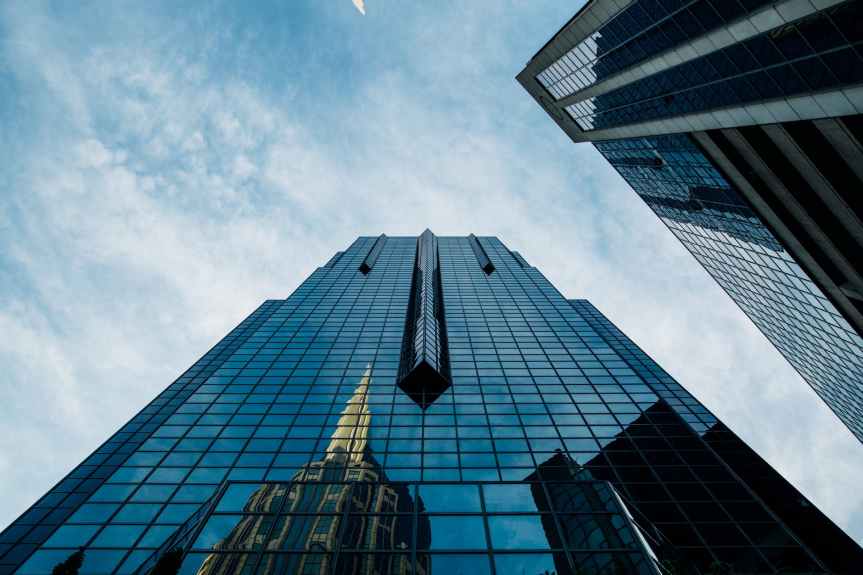
But the developments of modern skyscrapers have many challenges and questions that need to be cleared. Though the growth of skyscrapers has not subsided, they are not the most ideal form of buildings. According to engineer Tim Snelson, of the design consultancy, a typical skyscraper will have at least double the carbon footprint of a 10-story building of the same floor area. This tells us that skyscrapers are not environmentally sustainable. Also, any additional methods to minimize the environmental impact will require overcoming the fight of the handicap of being a tall skyscraper in the first place. As the majority of the building is made with glass and steel frame, high-rise buildings are subject to the consequence of the substantial amount of sunlight and a lot of wind on their mostly glass skins. Glass is inherently inefficient in keeping excessive heat out of the buildings in summer or keep heat trapped in the colder months. This also leads to the reliance on continuous Air Conditioning.

The modern construction of skyscrapers in the cities of today is no longer driven purely by economic growth or the need for commercial office space, but instead, it is more driven by glamorous architecture construction and many times the dirty money gets funneled into the construction of Skyscrapers.  High rises also separate people from the street and people lose a connection to nature and the outdoors. The occupants in the tall buildings are often isolated from the street of the city and meaningful contact with ground-level events is often disconnected with taller buildings.  

High-rise buildings also lead to gentrification and inequality. It is no surprise that taller buildings often tend to be luxury units as the higher a building rises, it becomes more expensive to construct. This means that high rises also inflate the prices of the adjacent lands and driving out the affordable properties, thus increasing the inequality. The areas near the skyscrapers are often dark and swept under the shadow of these tall buildings.

Contrary to the popular notion, skyscrapers are not the only way to build high-density construction. The mid-rise buildings are often more able to house more amount of people per area compared to the high rises. Mid rises are also more flexible to affordable.  The mid-rises can work as a good middle ground between the taller buildings and low-density buildings. Instead of blindly building taller buildings we will have to look at the construction of our future buildings that are more sustainable, affordable, and efficient.

References: