Intern at Hariyali Foundation In collaboration with Educational News
In a country with such a huge population and so much of diversity in culture and nature, it is so common that there would surely be diversity among various types of violence too. Domestic violence includes any type of violence or torture basically against women in any form whether it is physical, emotional, sexual, verbal or economic abuse or torture.
India is poorly ranked in a total of 167 countries all across the world according to the data for cases of domestic violence. Domestic violence has always been a shame for the Indian society. A woman contributes a lot in the nurturing of a whole family and sacrifices her dreams (in most of the cases) for taking care of her husband and his parents and the children too.
A woman is the only person in the family who is always ready to sacrifice her health, her dreams and her happiness just for making the family happy. A woman is the one who turns a house into a home. A home built with the bricks of a woman’s dreams and her crushed desires. Everyone wants to go out, see the world and meet the people, enjoy their selves, but for making this happen somebody is always there at home for taking care of food and for arranging everything, it is always and always a Woman.
In spite of making all these sacrifices, it is the woman only who has to become the victim of the anger of her husband, her in-laws and her children too. Basically in India, it is generally assumed that the woman, the bride is a servant (when she’s jobless) and an ATM machine without any password (when she’s working). A woman is the one who is always expected to make sacrifices and take care of her family and home. Why? Because it is her work, this is the stuff why she was born?! If somebody gets angry, then she is the only river to pour down all the anger.
Moving ahead, everyone knows that from the past times and still at present most of the women at their place are going and suffering through a lot. According to a National Family and Health Survey in 2005, total lifetime prevalence of domestic violence was 33.5% and 8.5% for sexual violence among women aged 15–49. A survey carried out by Thomson Reuters Foundation said that India is the most dangerous country in the world for women.
In 2012 National Crime Records Bureau report of India states a reported crime rate of 46 per 100,000, rape rate of 2 per 100,000, dowry homicide rate of 0.7 per 100,000 and the rate of domestic cruelty by husband or his relatives as 5.9 per 100,000.
But every reader knows that these are just figures and data, too away from the reality. Yes, every reader is correct. Because of poverty and lack of awareness and education, at present many women don’t at all know that they can really complain about this suffering of theirs. Many women don’t tell the concerned authorities for saving the respect of their husband and their family and start making compromises; some fear of survival as they never went to school and couldn’t get a job after separation.
There is mental or psychological absue too. Psychological abuse can erode a woman’s sense of self-worth and can be incredibly harmful to overall mental and physical wellbeing. Emotional/psychological abuse can include harassment; threats; verbal abuse such as name-calling, degradation and blaming; stalking; and isolation.
Women who experience domestic violence overwhelmingly tend to have greater overall emotional distress, as well as disturbingly high occurrences of suicidal thoughts and attempts. According to a study by the National Centre for Biotechnology Information, suicide attempts in India are correlated with physical and psychological intimate partner violence. Of the Indian women who participated in the study, 7.5% reported attempting suicide. This correlation is supported by the high rates of domestic violence in India, although the rates differ greatly by region, individual socioeconomic status and other factors.
And it is shocking to listen that this lockdown period that occurred for stopping the rapid spread of Covid-19 was even more painful for women. As all the activities were banned and there was complete lockdown, men were continuously at home along with all other family members. Hence, many women were suffering domestic violence to far greater extent. The number of domestic violence complaints received by the National Commission for Women has doubled from 123 distress calls to 239 domestic violence complaints, from March 23, 2020, to April 16, 2020.
This so pathetic to read that the lockdown, ‘the so called national holiday when most of the people developed new skills, helped their wives at home’, there were some more monsters and demons who physically, emotionally and sexually assaulted their wives at home.
It actually never changed for women. Almost every Indian woman has to make compromises every day. A lot of women who can’t bear the physical and the emotional pain commit suicides. The report by the National Crime Records Bureau says that in 2018, the number of housewives killing themselves –22,937 – increased by 6.9% when compared to 21,453 women in 2017.
Cases of domestic violence occur either due to the demand of dowry or simply the ill mentality of the husband or the family or even both. Women need to stand against this. There are various laws in the constitution including Dowry Prohibition Act of 1961 and the other two new sections, Section 498A and Section 304B were introduced into the Indian Penal Code in 1983 and 1986. On 19 March 2013, the Indian Parliament passed a new law with the goal of more effectively protecting women from sexual violence in India. It came in the form of the Criminal Law (Amendment) Act, 2013, which further amends the Indian Penal Code, the Code of Criminal Procedure of 1973, the Indian Evidence Act of 1872, and the Protection of Children from Sexual Offences Act, 2012. The law makes stalking, voyeurism, acid attacks and forcibly disrobing a woman explicit crime for the first time, provides capital punishment for rapes leading to death, and raises to 20 years from 10 the minimum sentence for gang rape and rapes committed by a police officer. However, talking about the downside of the law, the new law doesn’t address marital rape, rape committed by the armed forces or rape against men.
Therefore, people should realize that domestic violence of any form is not at all acceptable by men and women both. Keeping into mind the mental health of the sufferer it should be realized that awareness should be spread amongst people and they should be told about their rights. Those who are able bodied and well aware, should take this responsibility into their hands. And whenever a woman or even a man (in some cases) is seen suffering from domestic violence, it should not go unreported.
Because those who stay silent after seeing everything are more wrong than those who commit such heinous acts.
As the world battles the COVID-19 pandemic, countries are moving to stringent measures like lockdowns and curfews. With markets crashing, the global economy is staring at a deep distress.
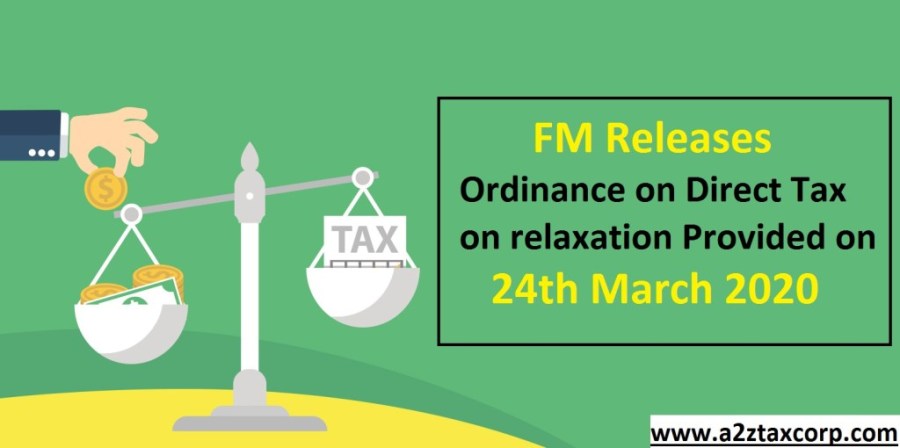
Entire world is fighting against epidemic COVID 19 outbreak and Hon’ble Prime Minister of India Sh. Narendra Damodardas Modi has taken much need precautionary step of complete lockdown from midnight 12’o clock of 24th March, 2020 onwards for next 21 days and again extended to 3rd May, 2020 for another 19 days.
In this difficult environment, each regulatory body is releasing relief measures and guidelines for easing out the impact of COVID 19. On the financial and compliance front, announcements have been flowing from the Government authorities in the form of deferment of statutory due dates or relaxation in payment terms to overcome the financial crisis being faced due to lock-down.
Similar to several countries, the Government of India has begun working on an economic package to deal with the impact of the pandemic. Realising the hardships faced by its citizens, the Union Finance & Corporate Affairs Minister Smt. Niramla Sitharaman has announced several important relief measures on tax and regulatory aspects.
The Finance Minister also announced that necessary legal circulars and legislative amendments for giving effect to these relief measures will be issued by the concerned Authority.
Following is the summarised form of the key announcements made by the Finance Minister here below:
Direct Taxes
1. Extension of tax return filing deadline
The deadline for the following types of tax return have been extended from 31 March 2020 to 30 June 2020
Belated income-tax return for tax year 2018-19
Revised income-tax return for tax year 2018-19
2. The timeline for linking Aadhaar with PAN has been extended to 30 June 2020
3. Relief with regards to delay in payment of taxes
Interest at the reduced rate of 9% (i.e. 0.75% per month instead of 1/1.5 percent per month) will be charged on delay in respect of following payments made between 20 March 2020 and 30 June 2020:
Advanced tax
Self-assessment tax
Regular tax
Taxes withheld or collected at source
Equalization levy
Securities Transaction Tax and
Commodities Transaction Tax
Penalty and late fees in relation to the above mentioned payments are to be waived off
4. Extension of compliance due dates
In respect of the following, where the due dates fall between 20 March 2020 and 29 June 2020, the revised due dates shall be 30 June 2020:
Issue of notice
Intimation
Notification
Approval order
Sanction order
Filing of appeal
Furnishing of return, statements, applications, reports, any other documents
Completion of proceedings by the authority and
Any compliance by the taxpayer including investment in saving instruments or investments for roll over benefit of capital gains
5. The Direct Tax Vivad se Vishwas Act, 2020:
The timeline for payment of disputed arrears without attracting additional 10% amount under the Vivad se Vishwas Scheme extended from 31 March 2020 to 30 June 2020.
Indirect Taxes
1. Extension of GST return filing deadlines:
The last date for filing the forms GSTR-3B due in months of March, April and May 2020 (i.e. returns of February, March and April 2020) will be extended till 30 June 2020 (in staggered manner)
Date for filing GST annual returns of FY 18-19, which is due on 31 March 2020 is extended till the last week of June 2020
2. Relief in respect of payment of taxes
For those having aggregate annual turnover less than INR 50mn, no interest, late fee, and penalty will be charged for the period
However, for those having an aggregate annual turnover of more than INR 50mn, a reduced rate of interest @ 9% per annum will be charged from 15 days after due date (current interest rate is 18 % per annum) for the delayed payment between 20 March 2020 and 30 June 2020, but no late fee and penalty will be charged if complied before 30 June 2020
Last date for making payments by the Composition dealers for the quarter ending 31 March 2020 will be extended till the last week of June 2020
Payment under Sabka Vishwas Scheme shall be made without interest till 30 June 2020
3. Extension of compliances due dates
In respect of the following under GST law, where the due date falls between 20 March 2020 and 29 June 2020, shall be extended to 30 June 2020:
Issue of notice
Notification
Approval order
Sanction order
Filing of appeal and
Furnishing of return, statements, applications, reports, any other documents
4. Date for opting for composition scheme for the F.Y. 2020-2021 is extended till 30 June 2020
5. 24X7 Custom clearance till end of 30 June 2020
Corporate Laws
1. CARO 2020
Applicability of Companies (Auditor’s Report) Order, 2020 will be effective from FY 2020-2021
2. Board meeting
The mandatory requirement of holding Board meetings within prescribed interval provided by the Companies Act, 2013 (120 days) shall be extended by a period of 60 days till next two quarters i.e. till 30 September
3. Meeting of Independence Directors
For FY 2019-20, if mandatory one meeting of independent directors is not held, the same will not be treated as non-compliance
4. Form INC-20A- Declaration of commencement of Business
New Companies being given 6 more months for filing declaration of commencement of business
5. Debenture
Time line to invest 15% of debentures maturing in a particular year has been extended from 30 April 2020 to 30 June 2020
6. Deposit Reserve
Requirement of creating a Deposit Reserve (equal to 20%) of deposits maturing during FY 20-21, extended to 30 June 2020 instead of 30 April 2020
7. Minimum residency
Non-compliances with 182 days residency in India by Director will not treated as non-compliance
8. No Additional Fees
Moratorium period from 1 April 2020 to 30 September 2020, during which no additional fee would be charged in respect of any filing, irrespective of its due date
9. Insolvency and Bankruptcy Code 2016 (IBC)
Minimum amount of default required to initiate insolvency and liquidation on corporate debtors raised from INR 1 lakh to INR 1 crore, effective immediately, in order to prevent admission of MSMEs defaulting due to economic conditions in lieu of COVID-19
Proposed Suspension of new initiations of Corporate Insolvency Resolution Process under Sections 7, 9 and 10 of IBC for 6 months, contingent upon scenario beyond 30 April 2020 as a safeguard companies from defaults attributable to financial downturn pursuant to the COVID-19 pandemic
Among the measures announced late on Tuesday, the government extended the e-way bill validity for the second time since the lockdown was imposed. The e-way bill generated on or before March 24 and expiring during the March 20-April 15 period would now be valid till May 31. This is likely to help trucks stuck en route to reach their destinations.
Further, the notification extended by three months the deadline for furnishing the annual return and GST audit for financial year 2018-19 to September 30. Additionally, a taxpayer can now furnish monthly return GSTR-3B showing nil sales through SMS using the registered mobile number. This return would be verified by a registered mobile number based one-time password (OTP) facility, the notification said.
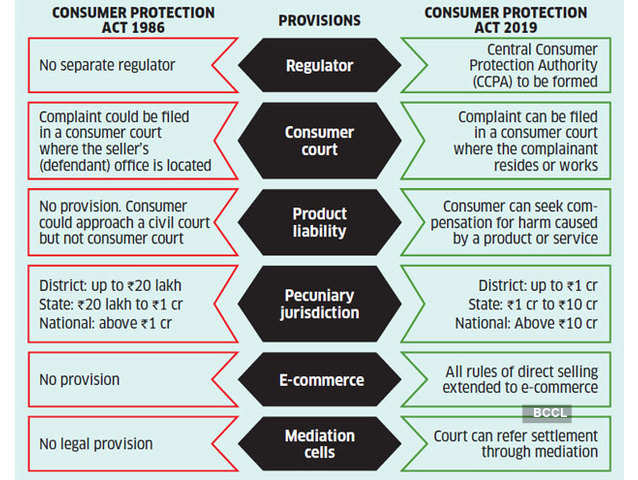
The Consumers can now cheer as the Consumer Protection Act, 2019 has recently replaced the three decade old Consumer Protection Act, 1986. The Consumer Protection Act, 2019 which came into effect on Monday (July 20) has replaced the earlier Consumer Protection Act, 1986.
The new Act as per the Experts say that “it gives more power to the consumers”. It seeks to revamp the process of administration and settlement of consumer disputes, with strict penalties, including jail term for adulteration and misleading ads by firms.
On July 20, 2020 certain provisions of the Consumer Protection Act, 2019 came into force as notified by the Central Government. Following the the key features of the relevant provisions:-
Key features of the Consumer Protection Act, 2019 which came into effect on July 20, 2020:-
1) Consumers can now institute a complaint from where they reside or work for gain.
2) The original pecuniary jurisdiction of the District Commissions has increased upto ₹1 crore from ₹20 lakh earlier.
3) The Pecuniary jurisdiction of State Commissions has been increased from ₹1 crore to Rs. 10 crore.
4) The National Commission can hear cases above ₹10 crore when compared to above ₹1 crore earlier.
5) While the provisions relating to e-commerce are not yet notified, a section relating to electronic service provider (covering software services, electronic payments) is notified.
6) The opposite party needs to deposit 50% of the amount ordered by the District Commission before filing an appeal before the State Commission. Earlier, the ceiling was a maximum of ₹25,000, which has been removed.
7) The limitation period for filing of appeals to the State Commission has been increased from 30 days to 45 days.
8) The Parties can be allowed to settle the disputes through mediation.
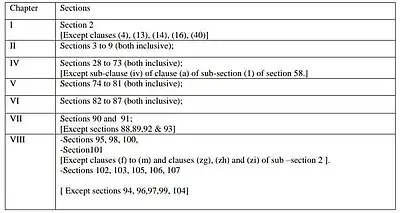
Following are the Sections which came into force:
Above mentioned provisions pertain to the Consumer Protection Councils, Consumer Disputes Redressal Forum, Mediation, Product Liability, punishment for manufacturing, selling, distributing etc spurious good or products which contain adulterant.
As per the rules, the e-commerce players will have to display the total ‘price’ of goods and services offered for sale along with break-up of other charges. Only a few certain miscellaneous provisions with regards and respect to the powers of the Central and State Government to make the rules and regulations have also been enforced.
On misleading advertisements there is provision for jail term and fine for manufacturers. There is no provision for jail for celebrities but they could be banned for endorsing products if it is found to be misleading.
For the first time there will be an exclusive law dealing with Product Liability. A manufacturer or product service provider or product seller will now be responsible to compensate for an injury or damage caused by the defective product or deficiency in services.
The Act has also defined an “e-commerce” as the buying or selling of goods or services including the digital products over digital or electronic networks. The existing definition of e-commerce has been adopted from India’s FDI Guidelines on e-commerce.
The definition of ‘e-commerce Entity’ as provided under the FDI Guidelines includes inventory and market place models.
There is also a provision for class action law suit for ensuring that rights of consumers are not infringed upon. The authority will have power to impose a penalty on a manufacturer or an endorser of up to 10 lakh rupees and imprisonment for up to two years for a false or misleading advertisement.
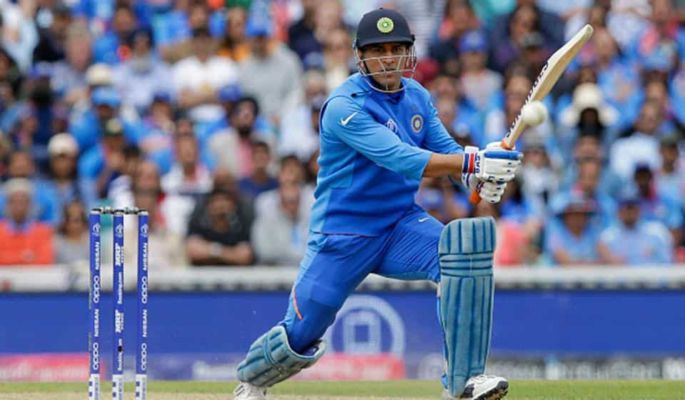
MS Dhoni’s manager Mihir Diwakar has clarified that the wicketkeeper batsman does not seem to be harbouring thoughts of retirement as of now. The former India captain, who has not played any form of cricket since India’s World Cup exit last year, turned 39 on Tuesday.
His manager and childhood friend Mihir Diwakar, while speaking to PTI, gave a peek into the trailblazer’s reclusive life at his home in Ranchi.
“Patriotism is in his blood, be it serving for the country (in defence) or (farming) the land, he’s very passionate about it. He has about 40-50 acres of farm land and he is busy growing organic crops like papaya, banana there,” Diwakar said.
The wicketkeeper-batsman was expected to be back in action at the IPL but that has been postponed indefinitely due to the COVID-19 pandemic.He was recently seen driving a tractor during the lockdown. Diwakar said they are soon going to launch their organic fertiliser under their company’s name Neo Global.
He said the fertiliser is being tested at Dhoni’s farm. Dhoni recently spoke about the harmful impact of pesticides in a video to promote organic farming. “We have a team of experts and scientists and they have developed the fertiliser and it should be launched within two-three months,” Diwakar said.”I spoke to him past midnight. It was a normal business talk. As usual, Dhoni would be at home with his family, with a quiet birthday celebration.”
Asked whether retirement has crossed Dhoni’s mind, Diwakar said: “Being friends, we don’t talk about his cricket. But looking at him, he’s not all thinking about retirement.”He is very determined to play the IPL. He has worked really hard for this. If you remember he was there in Chennai one month in advance before everything was shut down,” he pointed out.
“He is very determined to play the IPL. He has worked really hard for this. If you remember he was there in Chennai one month in advance before everything was shut down,” he pointed out.
“He has maintained his fitness regimen at his farmhouse and will start practice after the lockdown is lifted. Everything now depends on how fast the situation returns to normalcy,” he concluded.
‘Intellect’ refers to the creations of the mind. Intellectual Property is a type of intangible property and includes inventions, literary and artistic works, symbols, names and paintings.
Intellectual Property Rights (IPRs) are the Rights granted to the creators of Intellectual Property (IP) by the Government. The nature of IPR is territorial. In any country an IP has to seek protection separately under the relevant laws.
Mechanisms which are Special in nature have been kept in place for various territories in order to provide protection to different types of IPRs. It confers an exclusive right to the inventor/ creator or assignee to fully utilize the invention/ creation for a given period of time.
It’s been established that the intellectual labor associated with the innovation should be given due importance so that public good emanates from it.
This is a strong tool, to protect investments, time, money, effort invested by the inventor/creator of an IP, since it grants the inventor/creator an exclusive right for a certain period of time for use of his invention/creation.
Hence it aids in the economic development of a country by promoting healthy competition and encouraging industrial development which shall also aid in the growth of the economy.
WHAT IS AN INTELLECTUAL PROPERTY?
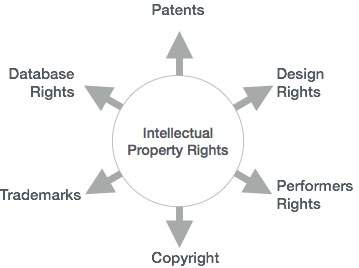
Intellectual Property(IP) refers to creations of the mind; inventions; literary and artistic works; and symbols, names and images used in commerce.
IP is divided into two categories: 1) Industrial Property:- includes patents for inventions,trademarks, industrial designs and geographical indications. 2) Copyright:- covers literary works (such as novels,poems and plays), films, music, artistic works (e.g., drawings, paintings, photographs and sculptures) and architectural design.
In Intellectual property(IP), there are Rights which relates to the rights of performing artists in their performances, producers of phonograms in their recordings, and broadcasters in their radio and television programs are included.
WHAT ARE INTELLECTUAL PROPERTY RIGHTS?
So what do you mean by intellectual property rights? IP rights like any other property right allow creators, or owners, of patents, trademarks or copyrighted works to benefit from their own work or investment in a creation.
These rights are outlined in Article 27 of the UDHR which provides for the right to benefit from the protection of moral and material interests resulting from authorship of scientific, literary or artistic productions.
The importance of intellectual property was first recognized in the Paris Convention for the Protection of Industrial Property (1883) and the Berne Convention for the Protection of Literary and Artistic Works (1886). Both treaties are administered by the World Intellectual Property Organization (WIPO).
There are various pros which are more compelling than the cons.
1) The progress and well-being of humanity rest on its capacity to create and invent new works in the areas of technology and culture.
2) The legal protection of new creations and this encourages the commitment of additional resources for further innovation.
And Lastly the third pros is that the 3) Promotion and protection of intellectual property spurs economic growth, creates new jobs and industries, and enhances the quality and enjoyment of life.
An efficient and equitable intellectual property system can help all countries to realize intellectual property’s potential as a catalyst for economic development and social and cultural well-being. The intellectual property system helps strike a balance between the interests of innovators and the public interest, providing an environment in which creativity and invention can flourish.
INTELLECTUAL PROPERTY HOLDERS IN A QUANDARY DUE TO COVID-19 PANDEMIC
While experts are in a combat mode and the race is on to discover the cure for COVID-19, the claim of intellectual property rights for exclusive use of the cure poses a dilemma as it is not considered the most rational thing to do at the moment.
Carlos Correa addressed to organizations like WHO, WTO and WIPO via an open letter to seek support for WTO countries that invoke the ‘security exception’ contained in Article 73 of the Agreement on Trade Related Intellectual Property Rights (TRIPS) Agreement, to take ‘actions it considers necessary for the protection of its essential ‘security interests’ in the wake of COVID-19 threat.
It has been suggested that invocation of exception under Article 73 will be warranted to procure medical products and devices or to use the technologies to manufacture them as necessary to take cue of the present public health emergency.
By suspending the enforcement of any Intellectual Property right as given under Article 73(b) of TRIPS Agreement, an obstacle for the procurement or local manufacturing of the medical equipments shall be necessary in order to protect the population of the world will be outlasted.
The question which is raised due to the above is regarding IP rights which are aimed to aid the public by promoting technological advancement in return of providing the inventor an exclusive right over the invention, though for a limited time. Though the IP rights are at a standstill due to the outbreak the IP Registry offices all over have limited their functioning.
TYPES OF INTELLECTUAL PROPERTY
Trade Mark: –
A trademark is used in order to identify a business entity and it also differentiates the goods made or services offered by a company or an individual. Names, Words, Logos, Colors, Packaging, Sounds (audible), Signs (visual) or any combination thereof are considered and can be filed as trademarks.
A trademark must be Unique and Distinctive in nature and must also avoid adjectives for eg efficient and Names of person or places (E.g. India). Even Obscene words, Religious or Government words or symbols (E.g. OM) and Common Shapes (Square) should be avoided.
The Trade mark means a mark used in relation to goods for the purpose of indicating a connection in the course of trade between the goods and some person having the right as proprietor to use that mark.
The function of a trade mark is to give an indication to the purchaser or a possible purchaser as to the manufacture or quality of the goods, to give an indication to the trade source from which the goods come or the trade hands through which they pass on their way to the market.
The Trade Marks Act, 1999 is an act which provides for the registration and better protection of trademarks for goods and services and for the prevention of the use of fraudulent marks. A trade mark is valid for a period of 10 years.
Case Name: The Coca-Cola Company v. Bisleri International Pvt. Ltd Case Citation: Manu/DE/2698/2009
Copyright: –
Copyright is an exclusive legal right granted to the creators of an intellectual work. The owner of a Copyright has rights to reproduce, translate, adapt, perform, distribute and must be publicly allowed to display the work, etc.
Registration is not mandatory since copyright comes into existence as soon as the intellectual work is created but it is recommended to register a copyright for better enforceability, since registered copyrights have more evidentiary value in court.
(a) Types of Works covered under Copyright:-
(1) Literary including Software – Books, Essay, Compilations, Computer Programs.
(2) Artistic – Drawing, Painting, Logo, Map, Chart, Plan, Photographs, Work of Architecture.
(3) Dramatic – Screenplay, Drama.
(4) Musical – Musical Notations.
(5) Sound Recording – Compact Disc.
(6) Cinematograph Films – Visual Recording which includes sound recording.
(b) Duration of Copyright:-
(1) Literary, Dramatic, Musical or Artistic Works – Lifetime of the author + 60 years from the death of the author.
(2) Anonymous & Pseudonymous Works – 60 years from the year the work was first published.
(3) Works of Public Undertakings & Government Works – 60 years from the year the work was first published.
(4) Works of International Organizations – 60 years from the year the work was first published.
(5) Sound Recording – 60 years from the year in which the recording was published.
(6) Cinematograph Films – 60 years from the year in which the film was published.
Case Name:- Indian Performing Rights Society Ltd. v. Eastern India Motion Picture Association Case Citation: – 1977 SCR (3) 206
Designs: – The Design Act, 2000 states that it protects the aesthetic and ornamental features of an object. As per the Act a 2D or 3D pattern of a handicraft, a product, or even an industrial commodity.
The Unique Selling Point (USP), protects the looks and feels of the product and it prevents the duplication of the product. An industrial design helps in drawing a customer’s attention and helps in increasing the commercial value of an article.
Case Name:-Cello Household Products v. M/S Modware India and anr Case Citation:- Notice of Motion (L) No. 209/2017 in Suit (L) No. 48/2017
Patents On the 4th December, 2018, The Ministry of Commerce and Industry released the draft (rules amendment) for Patents Act 1970. These rules are mainly amended with respect to international applications, patent opposition and a few form related extensions. The Central Government proposes to make these amendments in exercise of the powers conferred by section 159 of the Patents Act, 1970.In order to align with TRIPS, inventions which are not patentable have been included even, wider rights of patentee is incorporated. Uniform period of protection is 20years. Case Name: Bajaj Auto Limited v.TVS Motor Company Limited. Case Citation: JT 2009 (12) SC 103
5. Integrated Circuits
Semiconductor Integrated Circuits Layout Design (SICLD) Act 2000 states the meaning of Semi conductor Integrated Circuit as, a product having transistors and other circuitry elements designed to perform an electronic circuitry function. There are 2 types of designs as per the act:-
(i) Layout Design – A layout of transistors and other circuitry elements including lead wires which connects semiconductor integrated circuits.
(ii) Layout-Design Registry (SICLDR) is the office where the applications on Layout-Designs of integrated circuits are filed for registration. The jurisdiction of this Registry is whole of India. The Registry, as per the guidelines laid down in the Semiconductor Integrated Circuits Layout Design (SICLD) Act 2000 and the Semiconductor Integrated Circuits Layout-Design (SICLD) Rules 2001, examines the layout-designs of the Integrated Circuits and issues the Registration Certificate to the original layout-designs of the Semiconductor Integrated Circuits.
Case Name: Sunil Alag v. Union of India and Others Case Citation: W.P. (C) 8152/2013
6. Biological Diversity
The Biological Diversity Act 2002 was enacted to realize the objectives enshrined in the United Nations Convention on Biological Diversity (CBD) 1992 which was passed by the Lok Sabha on 2nd December 2002 and by the Rajya Sabha on 11th December 2002.
It recognizes the sovereign rights of states to use their own Biological Resources due to the scarcity and also to conserve it. The Act provides for a mechanism for equal sharing of benefits arising out of the use of traditional biological resources and knowledge. It is a federal legislation enacted by the Parliament of India for preservation of biological diversity in India.
Case Name: Environment Support Group vs National Biodiversity Authority Case Citation: W.P. No.41532 / 2012
7. Plant Varieties and Farmers
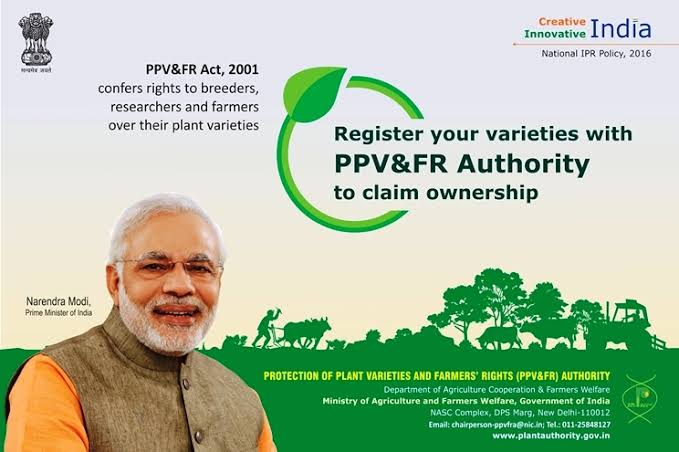
Protection of Plant Varieties and Farmer’s Rights Act of 2001(PPV & FR Act, 2001) confers right to breeders, researchers and farmers over their plant varieties. Reaching legislation with regards to establishing rights for farmers to save, use, exchange and sell farm saved seed.
The Act establishes nine rights for farmers of which the most important in this regard are the right to “seed” and the right to “compensation” for crop failure (Art. 39). Not only does the 2001 Act protect the rights of framers to save, use, exchange and sell farm- saved seed, it also seeks to ensure that these seeds are of good quality, or at least that farmers are adequately informed about the quality of seed they buy.
In addition, safeguards are provided against innocent infringement by farmers. Farmers who unknowingly violate the rights of a breeder are not to be punished if they can prove that they were not aware of the existence of such a breeder’s right (Art 42).
Case Name:- Monsanto Technology LLC & Ors Vs. Nuziveedu Seeds Ltd & OrsHigh Court of Delhi Case Citation: CS (Comm) 132/2016
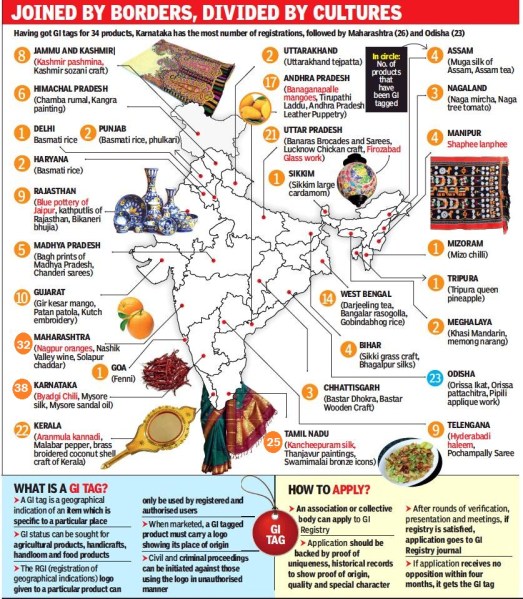
The Geographical Indication of Goods:- The Geographical Indications of Goods (Registration and Protection) Act, 1999 states Geographical Indication as it is primarily an agricultural or food product, natural or a manufactured product (handicrafts, Handloom textiles or industrial goods) originating from a definite geographical territory. A product is considered to be manufactured in a territory if any one of the activities of either the production or of processing or preparation of the goods takes place there. It promotes the producers prosperity of goods which have been produced in the geographical territory.
It helps the producer community to differentiate its products from other competing products that are present in the market and generate goodwill around its products. Hence, it acts as a signaling device by helping consumers to identify genuine quality products.
Case Name:- Tea Board Vs ITC Limited on 20 April, 2011 Case Citation:- GA No. 3137 of 2010 CS No. 250 of 2010
It has been suggested that invocation of exception under Article 73 will be warranted to procure medical products and devices or to use the technologies to manufacture them as necessary to take cue of the present public health emergency.
CONCUSION
The above overview clearly depicts that India has adopted and adhered to the latest IPR Regime and it has forayed into the global trade competition with a double edged sword.
After Unlock 2.0 we again hearing that some state govt going for lockdown, firstly on March 24 Prime Minister Narendra Modi announce 21 day lockdown than it’s extended many times. So, today let’s talk about legality of the lockdown is this legal or illegal ? Govt can put lockdown or not ?
Under Section 6 of the Disaster Management Act Ministry of Home Affairs announce the nationwide lockdown under his powers in Section 10 of the Disaster Management Act, as the Chairman of the National Executive Committee constituted U/S 8 of the Act.
The term Lockdown and curfew have not been defined under Indian law but are still being used to markdown the fundamental right of movement induct under article 19 [1] of the Indian constitution. This cannot be termed invalid as this right is subject to restrictions under Article 19 [2].
Section 2 and 2A of Epidemic Diseases act gives power to the Central or State Government to take necessary steps in the situation where people have danger to life or mankind. Section 2 [d] reads; “‘Disaster means a mishap, calamity or grave occurrence in any area, arising from natural or man-made causes, or by accident or negligence which results in substantial loss of life or human suffering or damage to, and destruction of property, or damage to, or degradation of, environment, and is of such a nature or magnitude as to be beyond the coping capacity of the community of the affected area.”
This section is not meant to deal with epidemics or diseases of any kind but causes such as, but not limited to, tsunamis and earthquakes. MHA declared the spread of COVID-19 as a “notified disaster”, thus bringing into play Section 2(d) of the Disaster Management Act. This enabled the State Governments to use a larger part of the State Disaster Response Fund to fight the spread of the virus.
In furtherance of the declaration of a nationwide lockdown, the Ministry of Home Affairs published guidelines using Section 10 [2][l] of the Disaster Management Act on the measures State and Central Governments must take during this twenty-one day period. The guidelines established that all types of transport services (Air, Train, & Road travel) will not be operational during this period. Commercial and private establishments shall remain closed, except for ration shops, banks, ATMs, media services, and telecommunication companies and other essentials.
The guidelines also said that any person who violates these containment measures will be liable under Sections 51 to 60 (Offenses and Penalties) of the Disaster Management Act, and under section 188 of the Indian Penal Code which creates the punishment for disobedience to order duly promulgated by a public servant.
Yes, we can say that In an ideal scenario, the government should have involved the states in a spirit of cooperative federalism rather than the top down approach that was adopted earlier.
However, at the end of the day, it came down to the Doctrine of Necessity, which proclaims loud and clear that “Necessity knows no law”.
These are some really different times, most of us in our lifetimes have never experienced a situation like this where our always prepared future plan seems bleak and our present seems stuck. We have been under Lockdown from the past 3 months due to an ongoing pandemic which seems to be in full flow in our country with cases skyrocketing to more than 7,50,000 making our country the third most affected nation due to coronavirus.
All of our daily activities including education were halted for a significant amount of time and although we always seem to find a solution to everything, a reliable solution to continue with our education seemed lost but as we all know, life seems to find a way and we also found answers to continue with our daily routine with education taking the online route. Softwares like Zoom, Cisco Webex and Microsoft Teams came to our rescue and the education system went online. In the start it seemed weird, looking at our friends and teachers through a screen sitting comfortably in our pyjamas but overtime it became a habit and this system amalgamated pretty well with our schedule. Online education has proved to be a boon in this lockdown as even though everything seems uncertain, we are able to continue to grow as individuals and receive our education.
Faculties are able to impart knowledge from the comfort of their houses and same is the case for students which makes it even more acceptable and a reliable means for the foreseeable future.


















 Eduindex
You must be logged in to post a comment.