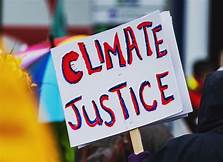
“We don’t inherit the earth from our ancestors, we borrow it from our children”
According to united nations framework convention on climate change “Climate change means a change of climate which is attributed directly or indirectly to human activity that alters the composition of the global atmosphere and which is in addition to natural climate variability observed over comparable time periods”.
Climate is determined by many factors influencing energy flows the most important being greenhouse gases. Sun’s energy influences climate on earth. The amount of heat radiations which the earth receives depends on how far the sun is from the earth and the sun’s emission power. The sunlight received by earth, a part of it is reflected back to space by the atmosphere, clouds, land, water surface and ice. Aerosols tiny particles in the atmosphere can increase the reflection of sunlight. This solar energy absorbed by earth is returned to space as infrared (heat) radiations. Not all gases interact with infrared radiations. Some gases like water vapor, methane and carbon-dioxide absorb infrared radiation flowing upwards from earth’s surface and re-radiate it in all directions. They thus impede outward flow of infrared energy from earth to space. This is called ‘greenhouse effect and the gases that cause it are called greenhouse gases.
Climate change is a phenomenon which mainly occurs through natural or anthropogenic factors. Latitude, ocean currents, wind and air masses, elevation, relief and nearness to water are some important natural factors that affect climate change. Anthropogenic factors affecting climate change include air pollution from vehicles, crackers and industrial activity, overuse and exploitation of natural resources like fossil fuels and infrastructure activities lay roadway to development but at the same time affects climate severely.
Reducing climate change involves reducing the factors that affect it like greenhouse gases. We as citizens can reduce the human interference with climate change by lowering our fuel consumption which in turn is possible by using cycles instead of two or four wheelers, by using community vehicles more often, by walking to nearby areas instead of using vehicles, switching off power plugs when not needed, saving water by not wasting it while we bath, brush or clean things. United nations framework convention on climate change (UNFCCC) is an international environmental treaty addressing climate change, negotiated and signed by 154 states at the united nations conference on environment and development informally called the earth summit. UNFCCC has its main objective to stabilize greenhouse gas concentrations in the atmosphere. Today it has 197 member countries which ultimately works to prevent dangerous human interference with the climate system. Under this framework the industrialized countries have to report regularly on their climate change policies and measures, including issues governed by Kyoto protocol. They must also submit an annual inventory of their GHG emissions.
Kyoto protocol is an international treaty which extends the 1992 UNFCCC. Under this 192 nations committed to reduce their emissions by an average of 5.2% by 2012 which would be 29% of world’s total emissions.
In 2019 a report published by the United Nations said that to limit the temperature rise to 2 degree Celsius, the world will need to cut emissions by 2.7 % each year from 2020 to 2030, and triple the climate targets. Even if all the Paris agreement pledges as they are in 2019, are fulfilled the temperature will rise by 3.2 degrees this century.
“Corporate social responsibility is a concept whereby companies integrate social and environmental concerns in their business operations and in their interaction with their stakeholders on a voluntary basis.”
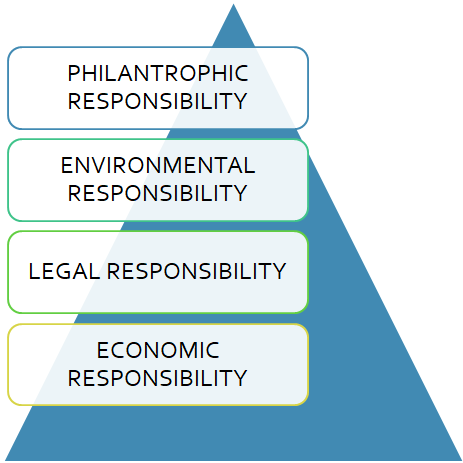
CSR is termed as “triple-bottom-approach” which helps the companies in promoting itself as well as in fulfilling its responsibility that it hold towards the society at large. According to United Nations Industrial Development Organisation, CSR based on triple bottom line approach can help countries in the developing bracket to accelerate their socio-economic growth and help them become more competitive. Companies can fulfill their responsibilities through various activities like pollution control mechanisms, waste reduction or by contributing in educational and social programs. CSR is said to improve brand image of a company and increase its goodwill.
There are three basic principles that comprise CSR-
Sustainability- If resources of an organization are utilized efficiently then they will be available for the future generations too after satisfying needs of present generations. As the availability of resources is limited and non-renewable resources like oil, natural gas, minerals which are used in abundance are regenerated after long spans of years resources must be used optimally.
Accountability- The main aim of a business organization is to maximise its profits. But apart from making profits a company should be accountable to its employees and community members. A satisfied and motivated workforce will work more productively than exploited workers.
Transparency – From government’s point of view transparency is very essential for an organization. All its activities must be transparent so that if any organization tries to hide anything about the conduct of its activities it can be easily located.
Any actions that the organization undertakes has an effect on its external environment in which it resides whether it be social, legal, cultural or economic environment. An organization can have very significant effect on its external environment and can actually change that environment through its activities. Organizational activities can affect utilisation of natural resources, competition between various firms, land transformation or degradation dur to raw material extraction, distribution of wealth among owners and workers of the firm and the greatest of all affected is climate change due to greenhouse gas emissions.
The most recent concern that every organization faces is effect of its activities on climate. Companies act, 2013 has formulated section 135, companies (corporate social responsibility) rules, 2014 and schedule VII which prescribes mandatory provisions for the companies to fulfill their CSR. A company or subsidiary of the company having net worth of Rs. 500 crore or more or turnover of Rs 1000 crore or more, or net profit of Rs. 5 crore or more during the immediately preceding financial year must undertake CSR activity. A foreign company having its branch office or project office in India, which fulfills the above criteria is applicable for CSR. However, if a company ceases to meet the above criteria for 3 consecutive financial years then it is not required to comply with CSR provisions till such time it meets the specified criteria.
Every company on which CSR is applicable is required to constitute a CSR committee with directors on its board.
Functions of CSR committee-
Formulate and recommend to the board a CSR policy which shall indicate all the activities to be undertaken by the company Recommend the expenditure required on the above mentioned activities.
Monitor the CSR policy from time to time.
Institute a transparent monitoring mechanism for implementing the CSR projects or programs undertaken by the company. The board of directors shall disclose contents of CSR policy in its report and the same shall be displayed on the company’s website.
Schedule 7 of the act states the activities that the companies can undertake under CSR-
Eradicating hunger, poverty and malnutrition, promoting health care including preventive health care and sanitation.
Rural development projects.
Slum area development.
Promoting education, including special education and employment enhancing vocation skills.
Promoting gender equality, empowering women, setting up homes and hostels for woman and orphans, setting up old age homes, day care centers etc.
About 20 most influential companies contribute one-third of all the greenhouse gas emissions that we have presently. Companies can reduce their greenhouse gas emissions as a part of social obligation, by following stringent guidelines. Smart thermostats and motion-activated lights can be used to avoid wasting energy, reducing GHG emissions. Companies can measure and analyse GHG emissions and accordingly reduce its energy consumption. They can use renewable energy sources, can use environment-friendly infrastructure and transport, promote environment-friendly ways of working and most important of all it can spread awareness among its employees and various stakeholders.
Companies take actions to reduce GHG emissions in the environment. Microsoft has pledged to reduce operational emissions by 75% by 2030, but has been operating as 100% carbon neutral since 2012. Tata chemicals spent the highest on CSR in 2019, although its prescribed CSR budget for 2019-2020 was 21.39 Crores, the company spent 37.81 Crores on community development projects. Tata chemicals as a part of its CSR responsibility established Tata chemicals society for rural development in 1980 as a society and trust.
Since the lockdown began TCSRD has been actively supporting government by distributing disinfectants, stitching masks, ensuring food security and providing medical help. Infosys Ltd. Spent 2% of its profit towards various schemes of corporate social responsibility. BHEL a government company as a part of its corporate social responsibility for COVID-19 relief , organized ‘Swachhata Pakhwada 2020’ from July 1 to 15, 2020. Mahindra and Mahindra ltd company spent 93.50 Crores out of which 8.36 Crore was spent on project Nanhi kali which provides educational support to underprivileged girls in India through an afterschool support programme.
















 Eduindex
You must be logged in to post a comment.