IGNOU (Indira Gandhi National Open University)

IGNOU (Indira Gandhi National Open University) offers various courses and programs through different schools. Here are some of the schools and their respective groups:

Schools and Groups

  1. School of Social Sciences (SOSS)
    1. Bachelor of Arts (BA)
    2. Bachelor of Social Work (BSW)
    3. Master of Arts (MA) in various disciplines
  2. School of Humanities (SOH)
    1. Bachelor of Arts (BA) in various disciplines
    2. Master of Arts (MA) in various disciplines
  3. School of Education (SOE)
    1. Bachelor of Education (B.Ed)
    2. Master of Education (M.Ed)
    3. Diploma in Elementary Education (DElEd)
  4. School of Sciences (SOS)
    1. Bachelor of Science ((link unavailable)) in various disciplines
    2. Master of Science ((link unavailable)) in various disciplines
  5. School of Management Studies (SOMS)
    1. Master of Business Administration (MBA)
    2. Post-Graduate Diploma in Management (PGDIM)
  6. School of Law (SOL)
    1. Bachelor of Arts and Bachelor of Law (BA LLB)
    2. Master of Laws (LLM)
  7. School of Engineering and Technology (SOET)
    1. Bachelor of Technology (B.Tech) in various disciplines
    2. Master of Technology (M.Tech) in various disciplines
  8. School of Health Sciences (SOHS)
    1. Bachelor of Science in Nursing (BScN)
    2. Master of Science in Nursing (MScN)
    3. Post Basic Bachelor of Science in Nursing (PBBScN)
  9. School of Computer and Information Sciences (SOCIS)
    1. Bachelor of Computer Applications (BCA)
    2. Master of Computer Applications (MCA)
    3. Post-Graduate Diploma in Computer Applications (PGDCA)
  10. School of Continuing Education (SOCE)
    1. Certificate and Diploma programs in various disciplines

Please note that the courses and programs offered by IGNOU may change over time. It’s always best to check the official IGNOU website for the most up-to-date information.

UGC invites applications for 6 Days’ Basic Training Programme in Indian Knowledge System,

The University Grants Commission (UGC) is going to conduct a ‘6 Days Basic Training Programme in Bharatiya Jnana Parampara (IKS)’ for the faculty members as well as regular research scholars from Higher Educational Institutions (HEls) across the country.

 
Highlighting that the IKS is in keeping with the National Education Policy (NEP) 2020, the UGC notification states, “The National Education Policy (NEP) of 2020 boldly places Bharatiya Jnana Parampara (Indian Knowledge Systems) at the heart of Indian education. It champions our cultural roots, ignites pride in our heritage-both ancient and modern-and envisions an educational landscape deeply steeped in Indian ethos. To breathe life into this vision, the NEP advocates for curricula and teaching methods firmly rooted in the Indian context. Nationwide, an ambitious training program equips faculty members with the tools to seamlessly integrate Indian Knowledge Systems into their teaching practices. Simultaneously, it empowers research scholars to rejuvenate Indian scientific knowledge through a transformed mindset. With this aim, UGC is going to organize ‘6 Days Basic Training Programme in Bharatiya Jnana Parampara (IKS)’ for the Faculty Members as well as Regular Research Scholars from HEls across the country.”
 
HEls (universities/colleges) that are keen may submit the application for conducting the training programme.
 
The last date for submission of application for conducting the training programme is October 2, 2024.
 

The application submission link for faculty members is https://docs.google.com/forms/d/e/1FAIpQLSeyxwCREzDp1SGsYHroGeTvYbXY4awkzoQfnhCx_Risw71cOQ/viewform, and for research scholars, it is https://docs.google.com/forms/d/e/1FAIpQLScTkx80O7pjAFZdPtjva6022pEV7pY-CHYPs6JnvwcfNOOrww/viewform

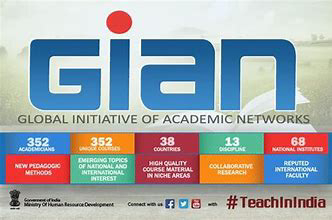
GIAN (Global Initiative of Academic Networks) courses

GIAN (Global Initiative of Academic Networks) courses are a program initiated by the Indian government to promote international collaboration and academic exchange. Here’s a detailed overview:

_Objective:_
GIAN aims to facilitate international faculty and scholar participation in Indian educational institutions, promoting global perspectives and expertise.
_Course Structure:_
– Short-term courses (1-2 weeks)
– Taught by international faculty and scholars
– Interdisciplinary and cutting-edge topics
– Hands-on training and workshops
_Subject Areas:_
– Engineering
– Science
– Humanities
– Social Sciences
– Management
_Benefits:_
– Exposure to global perspectives and expertise
– Enhanced research collaborations
– Networking opportunities
– Access to international resources and funding
– Certification and credits
_Eligibility:_
– Indian students, researchers, and faculty
– International students and scholars (in some cases)
_How to Apply:_
– Check the GIAN website for course announcements
– Register and apply online
– Meet the course-specific eligibility criteria
_Funding:_
– Government funding for course fees and logistics
– Scholarships and travel grants available
_Implementation:_
– Courses are conducted in Indian educational institutions
– International faculty and scholars are invited to teach
– Local faculty and experts also participate
_Impact:_
– Enhanced global competitiveness of Indian education
– Increased international collaborations and research
– Exposure to new ideas and pedagogies
– Capacity building and skill development
By participating in GIAN courses, students, researchers, and faculty can gain valuable international exposure, expertise, and networking opportunities, contributing to India’s global academic and research landscape.

B.Ed (Bachelor of Education)

The B.Ed (Bachelor of Education) entrance exam is a competitive examination conducted by various universities and institutions to select candidates for admission to their B.Ed programs. Here’s a detailed overview:

_Objective:_
The B.Ed entrance exam assesses a candidate’s aptitude, knowledge, and skills to become a teacher.
_Eligibility:_
– Candidates must have a bachelor’s degree (or equivalent) in any discipline with a minimum of 50% marks.
– Some institutions may have additional eligibility criteria.
_Exam Pattern:_
– The exam pattern varies across institutions, but typically includes:
    – Multiple Choice Questions (MCQs)
    – Short-answer questions
    – Essay questions
– Sections:
    – General English
    – General Knowledge
    – Teaching Aptitude
    – Subject-specific knowledge (depending on the institution)
_Syllabus:_
– General English: Grammar, Vocabulary, Comprehension
– General Knowledge: Current Affairs, History, Geography, Science
– Teaching Aptitude: Pedagogy, Child Development, Educational Psychology
– Subject-specific knowledge: Varies depending on the institution and program
_Scoring:_
– Marks vary across institutions, but typically:
    – 1 mark for each correct answer
    – 0.25 marks deducted for each incorrect answer
_Result:_
– Candidates are ranked based on their scores.
– Cut-off marks vary across institutions.
_Admission Process:_
– Candidates must apply to B.Ed programs separately, using their entrance exam scores.
– Counseling and admission processes follow.
_Important Dates:_
– Registration starts: March-April
– Exam date: May-June
– Result declaration: July-August
_Tips and Preparation:_
– Focus on general knowledge and current affairs.
– Improve English language skills.
– Study teaching aptitude and pedagogy.
– Practice with sample papers and online resources.
By understanding the B.Ed entrance exam pattern, syllabus, and preparation tips, candidates can prepare effectively for this competitive exam.

List of certificate courses on IGNOU

Here are some certificate courses offered by IGNOU ¹:

*Certificate Courses*
– _Certificate in Business Skills_: This certification course has been developed to help unprivileged students and puts more emphasis on self-employment. This is a vocational certification course that helps in the development of important business skills such as business communication, computer knowledge, entrepreneurship, accounting, etc.
– _Certificate in Beekeeping_: A certification course in Beekeeping is something completely different from what we usually study about Horticulture. The honey production industry is an unorganized sector with great potential.
– _Certificate Programme in Yoga_: This IGNOU certificate course in yoga has been developed to impart all the information regarding the principles as well as practices of yoga.
– _Certificate in Information Technology_: Although information technology is a widely opted career option, this certification course in IT at IGNOU is wholly skill-based and practical.
– _Certificate in Human Rights_: This certification course in IGNOU is perfect for all those who wish to work with NGOs or other human rights organizations and want to give back something to society.
– _Certificate in Organic Farming_: Agriculture in India has always been seen as an unskilled practice and most of the farming in India is done without any scientific knowledge but the learning and skills that have been imparted through generations.
– _Certificate in Visual Arts- Applied Arts_: This certificate course in applied arts sets the base for creative and aesthetic designing skills.
– _Certificate in Community Radio_: This certificate course in IGNOU is aimed at helping individuals from different backgrounds who have a keen interest in broadcasting.
– _Certificate in Disaster Management_
– _Certificate in Consumer Protection_
– _Certificate in Social Work and Criminal Justice System_
– _Certificate in Performing Arts- Hindustani Music_
– _Certificate in Community Health_
– _Certificate in Poultry Farming_
– _Certificate in First Aid_
– _Certificate in Tourism Studies_
– _Certificate in Fashion Design_
– _Certificate in Water Harvesting & Management_
Would you like more details on any of these courses?

Why to Join IGNOU Courses

Here are the benefits of doing a course from Indira Gandhi National Open University (IGNOU):

1. *Flexibility*: IGNOU offers flexible timing and duration for completing courses, making it ideal for working professionals and those with other commitments.
2. *Accessibility*: With a presence in over 40 countries, IGNOU’s courses can be pursued from anywhere, making it a great option for those who cannot attend traditional universities.
3. *Affordability*: IGNOU courses are relatively inexpensive compared to traditional universities, making higher education more accessible to a wider audience.
4. *Recognition*: IGNOU is recognized by the University Grants Commission (UGC) and the All India Council for Technical Education (AICTE), ensuring that its degrees are valid and respected.
5. *Wide range of courses*: IGNOU offers over 200 courses in various disciplines, including humanities, social sciences, sciences, engineering, and management.
6. *Open and distance learning*: IGNOU’s open and distance learning model allows students to learn at their own pace and convenience.
7. *Self-paced learning*: IGNOU’s courses are designed to allow students to learn at their own pace, making it ideal for those who need to balance studies with other responsibilities.
8. *No age limit*: IGNOU has no age limit for admission, making it a great option for those who want to pursue higher education later in life.
9. *Credit transfer*: IGNOU allows credit transfer from other universities, making it easier for students to switch to IGNOU.
10. *Support services*: IGNOU offers support services like counseling, academic support, and placement assistance to its students.
11. *Online resources*: IGNOU provides online resources like e-books, online lectures, and online discussions to support learning.
12. *Career opportunities*: IGNOU’s courses are designed to enhance career prospects and provide skills relevant to the industry.
Overall, IGNOU offers a unique and flexible way to pursue higher education, making it an attractive option for many students.

10 Days Research Methodology Course hosted by Department of Architecture and Planning, MANIT Bhopal

The Department of Architecture and Planning at Maulana Azad National Institute of Technology (MANIT), Bhopal, successfully conducted a 10-day Research Methodology Course from 13th to 22nd July 2024. Sponsored by the Indian Council of Social Science Research (ICSSR), this course aimed to enrich the skills of PhD scholars. It was coordinated by Dr. Kavita Dehalwar and co-coordinated by Dr. Surabhi Mehrotra from the Department of Architecture and Planning.
The 10-day Research Methodology Course was meticulously designed to enhance the research capabilities of research scholars and young faculty members in the fields of social sciences, planning, and architecture. This comprehensive course aimed to prepare participants for rigorous research endeavors by providing expert sessions on a variety of critical topics. These included Research Methodology, Tools and Techniques, Research Ethics and Integrity, Data Management and Analysis, as well as Publication and Writing Skills tutorials. By addressing these key areas, the course sought to equip participants with the necessary knowledge and skills to excel in their research pursuits.
Thirty research scholars were selected from prestigious institutes such as IITs, NITs, and Central/State Universities, representing 15 states across India. This diverse group of participants brought a wealth of perspectives and experiences, enriching the learning environment and fostering a collaborative atmosphere.
The distinguished panel of experts for the course included several prominent figures in the field. Dr. Shankar Chatterjee, former Professor and Head of the Centre for Policy Management and Evaluation (CPME) at the National Institute of Rural Development and Panchayati Raj (NIRD & PR), Hyderabad, shared his extensive knowledge and insights. Dr. Raka Arya, Professor of Political Science, Dean of Student Welfare, and Chief Hostel Warden at the National Law Institute University (NLIU), Bhopal, provided valuable guidance on various aspects of research. Dr. Poonama Prakash, Professor at the School of Planning and Architecture, New Delhi, contributed her expertise in planning and architectural research.
Additionally, Dr. M. Sadik Batcha, Professor and Head of the Department of Library and Information Science at Annamalai University, Annamalai Nagar, Tamil Nadu, offered his profound understanding of data management and research tools. Dr. Kalpana Pandit, Associate Professor in the Department of Architecture at Malaviya National Institute of Technology (MNIT), Jaipur, shared her experience in architectural research and methodologies. Dr. Tanuj Nandan, Professor at the School of Management Studies, Motilal Nehru National Institute of Technology (MNNIT), Prayagraj, discussed management studies and research techniques.
The course also featured Dr. Vishakha Kawathekar, Dean of Faculty Welfare and Head of the Centre for Cultural Knowledge Systems at the School of Planning and Architecture, Bhopal, who provided insights into cultural knowledge systems and their relevance to research. Dr. Sanjeev Khanna from MITS Gwalior, along with other experts such as Dr. Gyaneshwar Singh Kushwaha and Dr. Pushpendra Yadav from MANIT, delivered lectures on various topics related to research methodology. Their contributions significantly enhanced the participants’ learning experience, providing them with a well-rounded understanding of the research process and its practical applications.

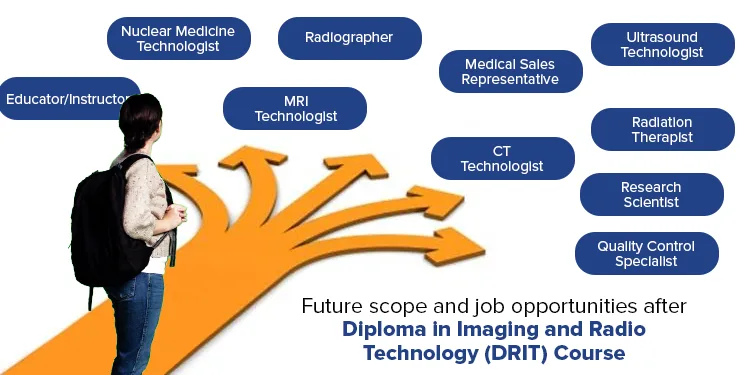
Future scope and job opportunities after Diploma in Imaging and Radio Technology (DRIT) course

Diploma in Imaging and Radio Technology (DRIT) course
Choosing a fascinating  career in Imaging and Radio Technology can open up so many opportunities in various fields of the healthcare sector. After this course you can also join as well as in research, academic, and various corporate industries.There are various Best paramedical colleges which provide best placement opportunities after the Diploma in Imaging and Radio Technology (DRIT) course.

After this diploma there are also job opportunities in the government sector too. You can join AIIMS, PGI, and other government hospitals and healthcare centres. You can also serve in various community centres and other district hospitals on attractive salary packages.

1.Radiographer: Radiographer famously known as radio technologists. After the DRIT course you can also become a Radiographer and it is one of the most demanding paramedical jobs in the medical sector. They are experts in handling various instruments in Radiology centres. They take out clear images of the patient’s body. They also control and ensure safety of patients while taking out images with dangerous rays coming out from machines which are very dangerous to the human body. They minimise the exposure of dangerous rays and patient body contact.

2. MRI Technologist: MRI technologists are the experts of operating magnetic resonance imaging (MRI) scanners. They create clear images of patients’ different body parts so the abnormalities inside the patient’s body could be identified and diagnosed with the proper medical treatment. MRI Technicians produce detailed images of mainly every internal structure in the human body like the organs, bones, muscles and blood vessels. With the help of these images Medical consultants identify the abnormality in the patient body to provide treatment. MRI technicians play a very important role in diagnosing various medical conditions of the patients.

3. CT Technologist: A CT technologist is mindful of helping patients and working hardware to perform radiologic exams. They plan and calibrate the CT filtering hardware. The technologist clarifies the preparation to the understanding, positions them for the check and makes a difference so they stay calm amid the method. After the strategy, the technologist assesses the picture closely to make beyond any doubt it’s clear.

In expansion to CT and CAT filters, a technologist may moreover perform ultrasounds, X-rays or mammograms, and they can run extra symptomatic tests.

4. Ultrasound Technologist: 

Ultrasound professionals are trained in creating images mainly called ultrasounds or sonograms. Sonography is done with the help of  high-frequency sound waves to create pictures of the human body’s organs and tissues. A sonographer is responsible for checking parts of your body with various equipment and  tries to create a clear image. In this process high sound waves are sent in the body and on behalf of their echoes the image formation is done by the Sonographer experts. The echoes shape a picture of the interior of your body on the sonographer’s computer screen.

5. Nuclear Medicine Technologist: A nuclear medicine technologist conducts nuclear imaging tests.He also assists doctors with making medical diagnoses of the patient. Under the supervision of physicians, they provide radioactive drugs, known as radiopharmaceuticals, to the patients. They also use imaging equipment to identify how radioactive elements respond and react with a patient’s organs and tissues. Physicians use the results of those tests to diagnose the disease and treat disease such as cancer.

6. Radiation Therapist: Radiation therapists provide radiation treatment to patients who are facing life-threatening conditions like cancer and other serious diseases. Providing medical knowledge with deep understanding of the equipment that are used to provide balanced radiation treatment, radiation therapists play a very important role in the treatment and supporting patients. They also provide mental support to the patient’s as they face a diagnosis that will likely be one of the most important events of their lives.

7. Research Scientist: DRIT graduates can pursue careers in medical research. Research scientists are one of the most responsible  and reputed job designations in the medical field. Research scientists are responsible for the investigation of various projects and identify the errors or other issues. They research, formulate, and at last execute the research that they have done. They are responsible and they conduct in-house research and presentations. Research scientists also perform laboratory-based experiments and trials and work in many fields of medical science. They plan and conduct various different experiments that become topics of research papers and reports. They collect samples and work out other types of field research and monitor their experiments by recording and analysing the data. 

8. Educator/Instructor: After completing you can study further and also become a teacher. By becoming a teacher you have a good opportunity to share your knowledge and experience with other aspiring candidates who are new in this field. Your experience and knowledge can embark on their future.

9. Medical Sales Representative: After the DRIT course you can work as a medical representative at any pharma company or medical instrument manufacturing company and promote the products.

10. Quality Control Specialist: Quality control specialists are the ones who work with various government and private imaging centres.  Quality control specialists confirm that imaging objects meet regulatory standards and perform well. Quality control specialists work for healthcare facilities, equipment manufacturers, diagnostic and imaging centres etc.

Responsibilities of Radiographers.

  • Has Clinical, Ethical, and legal responsibility, Performs Procedure in event of accident, radiographer and Patient.

  • Performs General Preliminaries to examination , patient on stretcher , Anaesthetizes Patient

  • Maintains Hygiene in X-Ray department 

  • Maintains Drugs in X-Ray department, Preparation of Patient Purgatives, Prevention of Intestine gas.

  • Checks Diabetic Patient, Infant, Mobile X-Ray set , Precaution in Patient.

This course provides you better knowledge and skills to work in all of the fields given above. There are various job opportunities in the government and private sector. These courses are available in various best paramedical colleges in delhi.  You can join this course and embark your career and secure your future.

How do children learn playfully on courses from CodaKid?

In today’s rapidly evolving world, acquiring essential skills and knowledge is crucial for children to thrive in the future. However, traditional teaching methods often fail to engage and inspire young learners. That’s where CodaKid steps in, offering a unique and playful learning experience that captivates children’s imaginations while nurturing their technical skills. In this article, we will explore how children can learn playfully on courses from CodaKid.

Photo by Julia M Cameron on Pexels.com

Playful Learning at Its Best

CodaKid understands that learning should be enjoyable and engaging, especially for children. They have designed their courses to harness the power of play, making learning a fun and interactive experience. Here’s how they achieve this:

  1. Gamified Learning: CodaKid transforms learning into an exciting adventure by gamifying the curriculum. Children complete coding challenges, build projects, and earn badges as they progress. This game-like environment motivates them to keep learning and leveling up their skills.
  2. Real-world Projects: CodaKid’s courses focus on hands-on, project-based learning. Rather than passively absorbing information, children actively apply what they learn to create their apps, games, and websites. This practical approach not only reinforces their understanding but also empowers them to build real-world solutions.
  3. Interactive Lessons: CodaKid’s instructors break down complex concepts into easy-to-understand lessons. They use interactive tools, videos, and quizzes to keep children engaged and ensure they grasp each topic thoroughly. This dynamic learning environment promotes active participation and enhances retention.
  4. Personalized Learning: Every child is unique, and CodaKid recognizes this. They offer personalized learning pathways, allowing children to choose the courses and projects that align with their interests and abilities. This flexibility fosters a sense of ownership over their learning journey.

Empowering Future Innovators

CodaKid’s playful approach to education goes beyond just teaching coding. It instills essential skills that prepare children for the future, such as problem-solving, critical thinking, and creativity. Here’s how CodaKid empowers young innovators:

  • Coding for All Ages: CodaKid offers courses suitable for children aged 7 and up. Whether your child is a beginner or already has some coding experience, there is a course tailored to their skill level and age group.
  • Tech Trends: In a world driven by technology, CodaKid ensures children are well-versed in relevant programming languages and technologies. They stay updated with the latest industry trends, equipping children with the skills needed for future careers.
  • Parental Involvement: CodaKid understands the importance of parents’ involvement in their child’s education. They provide parents with progress reports and support, allowing them to track their child’s growth and actively participate in their learning journey.

Conclusion

CodaKid has redefined the way children learn by infusing playfulness into education. Their gamified, interactive, and personalized approach to learning not only equips children with valuable technical skills but also cultivates essential life skills. By offering courses that cater to various age groups and skill levels, CodaKid ensures that every child can embark on a playful learning journey tailored to their needs. With CodaKid, the future looks brighter for young innovators, as they learn, create, and thrive in a world driven by technology and creativity. Embrace the power of playful learning with CodaKid and unlock your child’s full potential.

Enrolment Open: Getting Started with Writing and Publishing Your Research MOOC; Starts 16th April 2024

 Exciting news! We’re thrilled to announce the opening of enrollment for our latest online course: “Getting Started with Writing and Publishing Your Research.” This course is tailor-made for researchers and scientists in low- and middle-income countries, particularly geared towards early career researchers or those with limited experience in writing research grant proposals.

Picture this: six weeks of immersive learning alongside thousands of fellow researchers from across the globe. Our course, running from April 16th to May 27th, covers a comprehensive agenda:

Week 1: Delve into understanding previous research.
Week 2: Navigate the ethics of research with confidence.
Week 3: Equip yourself to craft your research paper.
Week 4: Master the art of writing your research paper.
Week 5: Dive into the process of publication.
Week 6: Wrap up and consolidate your newfound knowledge.

Throughout this journey, you’ll tackle various learning objectives, including overcoming access challenges, navigating ethical dilemmas, enhancing your writing skills, selecting the right journal, and effectively handling peer reviewer feedback.

Who will guide you through this enriching experience? A team of seasoned facilitators from the AuthorAID network, ensuring you receive expert guidance every step of the way. Plus, with live discussion sessions timed to accommodate different global time zones, you’ll have ample opportunities to engage and interact with your peers.

Ready to embark on this transformative journey? Enrolling is simple! Just head over to our Moodle website at https://learn.inasp.info/course/view.php?id=371 and follow the instructions to create your learn@inasp account. Act fast, as enrollment may be limited due to server capacity.

But don’t just take our word for it. Hear from past participants who have found tremendous value in this course:

A participant from Ghana shares, “This course provided invaluable insights, especially on handling reviewer’s comments, which boosted my confidence as an author.”

Another participant from Nigeria expresses, “My knowledge and confidence in research writing and publication have significantly improved. I feel empowered to contribute more actively to research discussions.”

And a participant from Uganda highlights, “The feedback I received helped me meet a submission deadline, and I’ve learned crucial aspects of scientific writing that I used to overlook.”

Join us and experience the transformative power of mastering research writing and publication. At INASP, we are committed to creating inclusive learning environments that cater to diverse perspectives and needs, ensuring everyone has the opportunity to thrive.

to join the course login to https://www.authoraid.info/en/accounts/login/

How to prepare for a technical interview | 6 Topics to prepare for your Interview

How to prepare for a technical interview

How to prepare for a technical interview which will help you to get placed? The syllabus of computer science is very vast in that case Preparation tips for Technical Interviews will definitely help you to focus on the target topics. It is impossible to cover every topic in depth especially when you have less time left for the interview. If you start covering everything little by little and with the correct strategy, you can gain what most students can lack.

Please take reference fromhttps://www.freecodecamp.org/news/interviewing-prep-tips-and-tricks/

Qualifying technical round is not tough and if done with proper planning, everything can be achieved. Let us look at the most important topics:

6 Topics to prepare for your Interview:

Interview Image

  1. C- Programming:

C-Programming is a very basic programming language to start coding.  Mostly it is taught in 1st year of your college. It can be an advantage if you have already covered this language during your schooling and then college provides you enough time to revise the topics. But if you are doing it for that first time do not worry it is still not late to get started with C programming.


Where should you start learning C programming:

I myself started learning C programming when I took admission in an engineering college, and this is how I started:

  • C programming tutorials on Naresh IT channel with instructor Shriniwas on Youtube.
  • C programming with Sourabh Shukla on Youtube.
  • Many practice question sites are better, to begin with.
  • Online portals like Sololearn, Geekforgeek are awesome with their educational material.

These resources really helped me, and I will be glad if you too can be helped with these.

C Programming Interview questions: 

  • Chances of mostly tricky questions to check how and what logic will you apply for the real-world problem.
  • Don’t forget to revise basic concepts and all the definitions, the inventor name, loop, if-else, pointers, strings, recursion, and application along with Tower of Hanoi problems.
  • Also, check for Interview Questions in C https://www.tutorialspoint.com/cprogramming/cprogramming_interview_questions.htm
  1. Data Structures:

    1. This is the most important area where you can expect a guaranteed question,
    2. Algorithms like Sorting, Time and Space Complexities of algorithms.
    3. Dynamic Allocation of Memoryusing malloc( ) and calloc( ) functions.
    4. Tree traversals
    5. Stacks and Queues and their operations and applications.
    6. Linked lists and their Operations performed(ex: insertion, deletion, searching).

Algorithms:

  1. Dynamic Programming and usage of it in various problem statements. (ex: Travelling salesperson,0/1 Knapsack, etc).
  2. Calculation of Time and Space Complexitiesof algorithms.
  3. Sorting
  4. Databases:

Mainly DBMS is taught in the 2nd year or after they cover C Programming & Data Structure. SQL (or Oracle) will help you to generate a large database along with queries.

What topics are important in DBMS:

  • DDL, DML, DCL, and TCL commands.
  • SQL constraints like JOIN, NOT NULL, UNIQUE, CHECK.
  • NORMALIZATION (1 NF, 2NF, 3NF, BCNF, 4NF, 5NF)
  • All the keys: primary key, candidate key, super key, and foreign key.
  • Transaction and its types i.e ACID properties.
  • Also, don’t forget to cover the basic interview question of DBMS from google and you can cover them from the trusted education websites.


  1. Computer Networks:

  • Also called Data Communications. Pure theoretical topics which discuss many networking techniques.
  • OSI model and TCP/IP models.
  • IPV4, IPV6, TCP, UDP, Routers, Modems, knowledge about.


  1. Operating Systems:

This could increase your confidence as most of the Operating system topics are theoretical and you can easily cover them all by hand in less than a week.

  • The basic definition of OS, advantages, application, types, etc.
  • All scheduling algorithms PROCESS and CPU scheduling algorithms.
  • MEMORY MANAGEMENT
  • DEADLOCK, deadlock prevention, deadlock avoidance, deadlock ignorance, and deadlock detection & recovery
  • SYSTEM CALLS


  1. Java(J2SE and J2EE):

  • Difference between C++ and Java.
  • OOPS concepts
  • Types of Overloading.
  • Exception Handling and Multi-tasking (Multiprocessing & Multi-Threading).
  • Collection framework.
  • Servlets and JSP’s.
  • Applet

Revise these all topics as mentioned also check the resources through youtube and many helpful education sites which are doing great in giving students ease to easily read the topics online without notes.


Preparation tips for Technical Interview

These tips helped me so much and I will want you to follow these steps to get well with your topics:

  • Don’t wait for last-minute study for placement rather cover the topic together with your university.
  • Make notes, this is key to success point, how you understand your handwritten notes, you can never understand the same way from any other resource.
  • Keep revising topics in your semester break that will build your concepts more and will make it easy for you in your 4th year of college.
  • If you are unclear with any topic, don’t wait for the instructor to teach you or visit many sites offering you all the materials for free. They are: Geeksforgeeks, Sololearn, Tutorialspoint, Javapoint, etc

If still you remain unclear then watch tutorials from youtube on the topic you are interested in. I hope this helps you, comment below for any further queries/doubt will be happy to help you.

All the Best!

Virtual Certificate Course in Research Methodology

 The Valedictory Programme of the first batch of the three months virtual Certificate Course in Research Methodology conducted by Knowledge Resource Centre at Indian Institute of Corporate Affairs (IICA) was held on Wednesday. The course had started on July 7th and was conducted online via Blackboard in October. The event was graced by esteemed dignitaries and witnessed the culmination of this unique programme. 

Chief Guest Shri Praveen Kumar acknowledged the corporate institution IICA’s role in the research field and shared his appreciation for the feedback from the participants and the successful completion of the programme’s first batch. Shri Kumar also presented digital certificates to the participants in recognising their achievements.

Prof. Sangeeta Jauhari, the Guest of Honor, Pro V C Rabindranath Tagore University, Bhopal, highlighted the significance of quality research in the current scenario, emphasising its value and impact.

Earlier, moderating the function, Dr. Lata Suresh, Course Director, IICA, introduced all the participants and thanked them for actively participating in the programme. Dr. Suresh also acknowledged the dedication and collective efforts of the esteemed faculty members, including Ms. Oluwatoyin Oyekenu, Dr. Santosh H, Dr. Sumit Narula, Ferdinand, Dr. Adesh Chaturvedi, and Dr. Ameer Hussain.

The students shared their positive feedback on the course, reflecting on their experiences and the knowledge they’ve gained and gathered much knowledge in the field of research methodology and writing research proposals.

The programme concluded with a vote of thanks, expressing gratitude to all attendees, guests, faculty, and participants for their contributions and support in making the First Batch of the Certificate Course in Research Methodology a success.

****

Defence Correspondents Course – 2023 Commences at ENC, Visakhapatnam

 The 2023 edition of Defence Correspondents Course (DCC), a three week course conducted by the Ministry of Defence for select journalists from National and Regional Media organisations, commenced at Eastern Naval Command (ENC), Visakhapatnam on 21 August 2023. Vice Admiral Sameer Saxena AVSM, NM Chief of Staff, ENC delivered the inaugural address and Shri A Bharat Bhushan Babu, Spokesperson (MoD) and Additional Director General (Media & Communication) gave an insight into Defence Journalism of the course at the Maritime Warfare Center. The aim of DCC is to bring media and military closer and enable a pool of journalists at all levels to have better appreciation of the Armed Forces and are cognizant of the domain when reporting on stories relating to the maritime environment.

 During the one-week naval attachment, the participants will be addressed by subject matter experts from within the Navy and the Coast Guard. They will acquaint the journalists with various aspects of the Navy including naval operations, naval diplomacy, Humanitarian Assistance and Disaster Relief and the organisational structure of the Navy and Coast Guard. As part of the course, the participants visited the Indian Naval ship and submarine on 21 Aug 2023 and they were briefed on various facets of life onboard. The participants will also have a scheduled tour at Naval Dockyard, Naval Air Station and onboard Coast Guard ships at Visakhapatnam in this week.  A sea sortie onboard a front-line warship of the Indian Navy is the highlight of the naval leg of the course, which will provide the journalists an insight into naval operations at sea.

****

ISRO Announces Free Online Course With Certificates on Remote Sensing, GI System

ISRO has announced a five-day free online course on remote sensing and GIS, being conducted by IIRS for government officials, policy-makers, and research scholars. Read on for more details to apply.

Sounds Interesting? Share it now!

Follow Us

The Indian Space Research Organisation (ISRO) has invited applications for a free online course called RS and GIS Applications in Atmospheric and Oceanic Hazards. The five-day course has been organised by the Indian Institute of Remote Sensing (IIRS) under ISRO.

The course has been designed for all stakeholders that need to be aware of natural and man-made disasters — such as tsunamis, cyclones, floods, storm surges, extreme rainfall, and dust storm. It will provide participants with an overview of utilising remote sensing and GIS data to avert them.

The curriculum is suitable for central and state government officials, policymakers, professionals and specialists from universities, educational institutes, operational and research institutes, and research scholars.
Things to know

The course is free.
The course can be completed in five days.
Course study materials, such as lecture slides and video-recorded lectures, will be made available through e-class.
There is a limited number of seats available. Registration will be done on a first come first serve basis.
A certificate will be given to the participants who have 70 percent attendance in the course.
How to apply

Applications will be submitted online.
To participate in this programme, the interested organisations, universities, departments, and institutes have to identify a coordinator at their end.
The identified coordinator will have to register his/her institute as a nodal centre on the IIRS website.
The course can then be taken by registered participants through the e-class platform of IIRS-ISRO.
Important dates

The course will begin on 27 February 2023 and end on 3 March 2023.

One need to spend 4 years instead of 3, to graduate in honours degree.

Students looking to earn an honours degree in undergraduate courses will have to pursue four-year programmes under new regulations likely to be announced by the University Grants Commission this week,  PTI reported.

“Students will be able to get a UG [undergraduate] degree in three years on completion of 120 credits (measured through the number of academic hours) and a UG honours degree in four years on completion of 160 credits,” the news agency quoted from the draft Curriculum and Credit Framework of the University Grants Commission.

At present, students get an honours degree after completing three years of undergraduate programmes. Under the National Education Policy (NEP) 2020, universities and colleges will offer four-year undergraduate degrees with multiple exit and entry options. Several universities, including DU, and Jawaharlal Nehru University (JNU), have already adopted the programme.

A senior UGC official, requesting anonymity, said, “There will be only one honours degree, that is four-year UG with honours or honours with research. The regulations will be applicable for students who will be enrolled under the new norms from this year onwards.”