Growth Profile of an Indian Startup- CRED

CRED is an Indian Fintech Company which offers rewards to customers who use its platform to pay their bills of credit card.

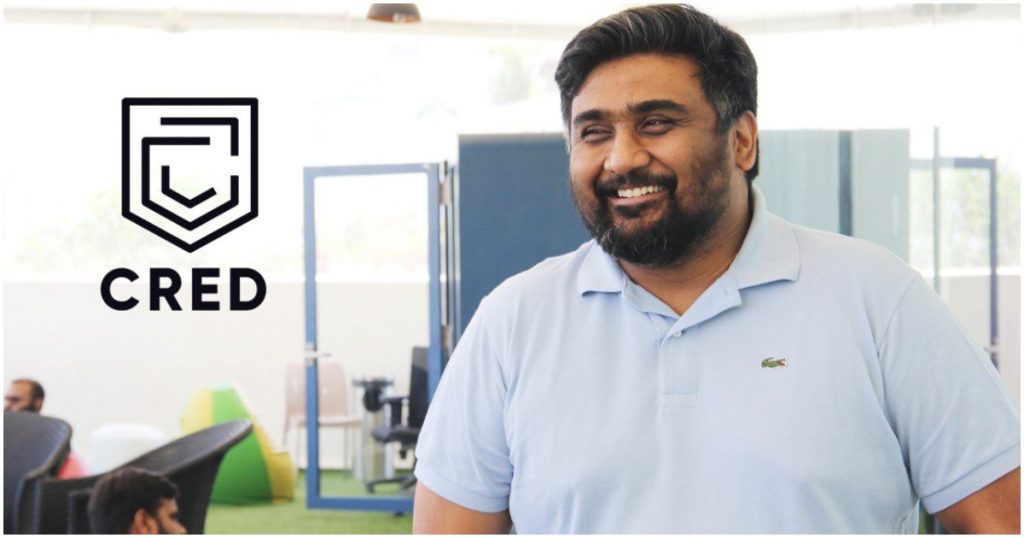
CRED is a Bengaluru Based startup found by Kunal Shah who also happens to be the CEO of the Company. Kunal is an Indian Entrepreneur who has been recognized for launching new ventures for the second time. Kunal graduated in Philosophy from Wilson College and later pursued MBA from Narsee Monjee Institute of Management Studies, but he had to drop in the middle to pursue his dreams as an Entrepreneur. Kunal started his entrepreneurial journey with PaisaBack, a website for cashback, coupons, and other offers for the users along with Sandeep Tandon. However, They had to shut down its operations in order to find FreeCharge in 2010. FreeCharge was acquired by Snapdeal in April 2015 but the company still continued as an independent entity led by Shah. He left the firm the next year and eventually founded Cred in 2018, which has successfully turned into an unicorn on April 6, 2021.

BUSINESS MODEL – CRED

The plan of action of the organization comprises of four sections :

•   The Cred application

The Cred application is a flawless looking, wonderfully planned application, which the clients can visit assuming they need to go through the offers that are accessible after they cover their charge card bills. They can without much of a stretch sign up on the application and view every one of the offers that they can profit.

Businesses that give offers on the application

The clients of Cred can likewise track down a wide scope of offers from various organizations. For this, CRED carries organizations locally available and works together with them. Alongside helping CRED and its clients, who can benefit of the restrictive offers given by the organizations, it is likewise a mutually beneficial arrangement for the organizations. This is on the grounds that they are likewise immensely profited from the perceivability they get.

• Users who take care of their Mastercard bills –

CRED additionally fills in as a smooth and remunerating stage for the clients who use it to take care of their Visa bills. In contrast with banking or other applications, the end-clients can pick CRED as an application to take care of their charge card bills and get various offers and advantages. Then again, the clients who like the application likewise share CRED with their loved ones.

Cred Mint

Cred uncovered its new element, Cred Mint on August 20, 2021, which is planned as a distributed loaning stage assist that with willing assistance Cred clients loan their inactive cash to trustworthy individuals. It is a somewhat straightforward interaction that just permits the dependable Cred individuals bragging an insignificant FICO rating of 750 or higher to be the borrowers. Besides, the banks can likewise pull out their cash at whatever point they need with the premium that they have aggregated for the period.

GROWTH OF CRED-

Cred has shown a consistent development consistently. Being a startup that was established in 2018, it effectively joined the unicorn club on April 6, 2021, shutting its Series D round where the organization had wiped up $215 million. CRED controls “22% of all charge card installments in India consistently,” said Kunal Shah in his assertion delivered in April 2021.

Kunal Shah further took to his Linkedin profile on July 10, 2021, and shared features of the achievements came to by CRED in the long stretch of June:

Cred presented Cred Mint on August 20, 2021, which will fill in as a distributed loaning highlight that can be utilized by the clients of CRED. Cred Mint has been dispatched by Cred in a joint effort with RBI-supported P2P Non-Banking Financial Company.

With this component, the Cred individuals would now be able to loan cash to the reliable individuals from Cred dependent on the predefined financing costs. Cred Mint can be utilized to loan one more reliable client to assist them with acquiring around 9% per credit. In any case, it is likewise announced that Cred Mint may be accessible for clients with nice FICO assessments.

CONCLUSION-

Cred is one of the best examples of this how a brand born in India of an idea to provide users to make credit card payments through its app for which they get rewarded. Others have also been able to provide value to other countries, This is the power of globalization and this was achieved because of an entrepreneur who had a vision in his mind.

CRED's Master Plan – CRED Business Study

Hello everybody, CRED is one of the most fascinating business case studies in the Indian start-up ecosystem. In just 2 years, CRED went from 0 to hitting a $2B valuation and became one of the youngest Indian startups to reach this milestone. Now, the peculiarity of CRED is that in 2020 alone CRED incurred a massive loss of ₹360 crores which is a massive increase of 492% from 2019. And for every rupee of revenue that CRED generated they spent ₹727 which is a massive cashburn. 

We all have seen the result of massive expenditure into creative marketing. beating noises So now the question is, even with such massive losses how is it that CRED is getting so much funding ? And what exactly is Kunal Shah’s strategy ? Well, the beauty of this case study is the that if you only understand what CRED is doing you will more or less understand a large chunk of the Indian startup ecosystem because most of the giant companies like Jio, Ola, PharmEasy also operate in a similar fashion. and the most important factor that is common in all of them is that they extensively work on altering the behavioural design of the society. And the anticipation of that behavioural design, is what makes them billion dollar companies. 

This golden strategy works out in 4 discrete steps The first phase is what we call cash burn and here’s where The company, first identifies a major problem in the society, Number two, it designs a system to fix that problem Number three, it raises a million dollars in funding and lastly it entices the customers to use the product by giving out unbelievable offers which are almost too good to be true.

 A very simple example of the same is Jio. First of all, Jio identified internet accessibility as a major problem in the Indian society and then Reliance spent about ₹1.5 lakh crores into building the infrastructure required for Jio. And then in 2016 when Jio got launched, they gave out offers that almost looked impossible. -free sim cards, free calls and free internet. And the moment this announcement happened, millions of people rushed to buy Jio sims. And Jio did everything in it’s capacity to maximise it’s number of it’s users without even bothering about profits. Which is why, on top of the heavy investment that they made they further incurred a loss of Rs. 31 crores in 2016.

 Just like this, when CRED rolled out in 2018 they identified 3 of the biggest pains of a credit card holder which are; number one, hidden charges Number two, late fees due to forgetfulness and number three is the extra interest. And they rolled out massive cashbacks and offers to incentivise the act of on-time payment. And these offers were as amazing as free flight tickets extremely lucrative discounts and ₹1000 cashbacks also Fast foward to 2021, CRED today, has over 30 lakh users and today, CRED is already processing 20% of all the premium credit card transactions. 

So this is how within a short span of time, in Phase 1, companies present incentives in order to get customers to use their product, eventually, to increase their user base. And this is what brings us to Phase 2. Phase 2 is all about habituation. Once you bought a Jio sim, you never bothered about talktime, you never bothered about data. And we all recklessly got habituated to this newfound luxury of Internet Similarly, in case of CRED, the people who have 2-3 credit cards found it so simple to use CRED that they stopped using their conventional method wherein they had to go through this long list of their statements or putting in effort to dig in and find out whether there are hidden charges, on each credit card As a CRED user myself, I can’t even tell you how amazing it feels as compared to having this terrible feeling wherein you have no idea where the hell your money is going. 

In fact, there was a time when I thought that some hacker is stealing my money, alright ? and I’m not even kidding about this. So, this is how in Phase 2, using their super efficient system companies seemlessly get us habituated to new normal wherein we are no longer used to adjusting to the ‘hurdles of the system’. Here’s where we enter the most crucial phase of all, that is, Phase 3 and Phase 3 is what we can call as Irreversibility. 

A classy example of the same is Google Maps Now you might have observed that most of the people of our generation never even bother to remember the name of a landmark, street or chowk In fact, I’ve got so used to Google Maps that in my own city, if you leave me in some street I will start wandering as if I am in some strange jungle. That is how much I have got habituated to Google Maps And by the way, this does not include those superhumans who have this amazing memory to remember any route, even if they have visited that place only once and you know which friend am I talking about… So the point is, 

Google Maps has made our lives so easy that finding a way to a place no longer occupies our headspace and in case of CRED, users no longer have to remember to pay their credit card bills, they no longer have to remember when exactly is their due dates or bother about late fees. Similarly in case of Ola, we are no longer used to finding taxi on the streets In case of Jio, when there is no Internet you all know how you feel So you see, once these companies came in there has been an irreversible change in our behaviour wherein the small acts of booking a cab or paying a credit card bill has changed to such a large extent that we will never ever go back to our past system. 

Now CRED is yet to complete this phase which is why all the numbers that you see about CRED is in the negatives now because CRED is yet to change a significant part of the consumer behaviour. After this we come to Phase 4. Now, this is the goldmine that every investor waits for wherein the company starts making profits and if you look at the numbers, it literally looks like a goldmine. For that matter look at the numbers of Jio. In just 1.5 years, Jio became profitable that is in the 3rd quarter of 2017 with a profit of ₹504 Crores From there onwards it has been on a magnificent run wherein in 2020, Jio has posted a net profit of ₹5,562 crore and the reason why CRED is also sitting on a similar goldmine is because the customers of CRED are by default the richest 1% of the country.

 These people are literally the dream customers of any company. Their incomes are high, so they make expensive purchases on a regular basis which results into massive profit margins for every company And my sense is that in the 4th phase, CRED could leverage it’s golden customer base in three very very powerful ways. 

Number one, CRED could become this must have expense management app which will also allow it’s users to file their income tax and just like it cured the headaches of the credit card users by saving their money from hidden charges. CRED might also might start saving it’s customers a ton of money through their income tax rebate filings by turning the entire process of income tax filing into a very simple and efficient process and if this happens, I don’t think any of us will ever leave the CRED club.

So, Kunal sir if you’re watching this please help us out over here. Number two, CRED has one of the most valuable customer data in terms of purchase preferences For example, CRED clearly knows that Parsh loves to spend ₹20,000 into sports. Ganesh loves to spend ₹10,000 in education and books. So CRED could use this data to show relevant advertisements with exclusive coupons to get people to spend heavily on the things they absolutely love eventually, to make a comission out of it. 

Lastly, CRED could also became a bank for the top 1% of India and the reason why I think so is because there are two important factors that are very very crucial for any bank’s existence.

 Number one, every bank wants customers who have a lot of money deposited in their bank account after all their investment and expenses. And this money is what the bank uses to lend to businesses and customers in the form of home loans, car loans etc. 

Number two, every bank needs borrowers who pay back their loans judiciously. So that they can charge an interest on top of it eventually to make money out of the lending business. And guess what ? CRED literally has these exact people in it’s customer base which is why my sense is, CRED could literally extend itself to become a full fledged bank or maybe even become a full fledged portfolio management system for the top 1%.

 Eventually to become the most revolutionary fintech start-up of India So to put that straight, for ordinary people like you and me CRED might look like a weird idea but in reality it is a revolutionary idea coming from one of the most amazing entrepreneurs in the Indian start-up space. 

And we must consider ourselves to be extremely fortunate that we are getting to witness their processes and we must learn from these revolutionary start-ups that are going to redefine 21st century India forever.  

CRED's Master Plan – CRED Business Study

Hello everybody, CRED is one of the most fascinating business case studies in the Indian start-up ecosystem. In just 2 years, CRED went from 0 to hitting a $2B valuation and became one of the youngest Indian startups to reach this milestone. Now, the peculiarity of CRED is that in 2020 alone CRED incurred a massive loss of ₹360 crores which is a massive increase of 492% from 2019. And for every rupee of revenue that CRED generated they spent ₹727 which is a massive cashburn. 

We all have seen the result of massive expenditure into creative marketing. *beating noises* So now the question is, even with such massive losses how is it that CRED is getting so much funding ? And what exactly is Kunal Shah’s strategy ? Well, the beauty of this case study is the that if you only understand what CRED is doing you will more or less understand a large chunk of the Indian startup ecosystem because most of the giant companies like Jio, Ola, PharmEasy also operate in a similar fashion. and the most important factor that is common in all of them is that they extensively work on altering the behavioural design of the society. And the anticipation of that behavioural design, is what makes them billion dollar companies. 

This golden strategy works out in 4 discrete steps The first phase is what we call cash burn and here’s where The company, first identifies a major problem in the society, Number two, it designs a system to fix that problem Number three, it raises a million dollars in funding and lastly it entices the customers to use the product by giving out unbelievable offers which are almost too good to be true.

 A very simple example of the same is Jio. First of all, Jio identified internet accessibility as a major problem in the Indian society and then Reliance spent about ₹1.5 lakh crores into building the infrastructure required for Jio. And then in 2016 when Jio got launched, they gave out offers that almost looked impossible. -free sim cards, free calls and free internet. And the moment this announcement happened, millions of people rushed to buy Jio sims. And Jio did everything in it’s capacity to maximise it’s number of it’s users without even bothering about profits. Which is why, on top of the heavy investment that they made they further incurred a loss of Rs. 31 crores in 2016.

 Just like this, when CRED rolled out in 2018 they identified 3 of the biggest pains of a credit card holder which are; number one, hidden charges Number two, late fees due to forgetfulness and number three is the extra interest. And they rolled out massive cashbacks and offers to incentivise the act of on-time payment. And these offers were as amazing as free flight tickets extremely lucrative discounts and ₹1000 cashbacks also Fast foward to 2021, CRED today, has over 30 lakh users and today, CRED is already processing 20% of all the premium credit card transactions. 

So this is how within a short span of time, in Phase 1, companies present incentives in order to get customers to use their product, eventually, to increase their user base. And this is what brings us to Phase 2. Phase 2 is all about habituation. Once you bought a Jio sim, you never bothered about talktime, you never bothered about data. And we all recklessly got habituated to this newfound luxury of Internet Similarly, in case of CRED, the people who have 2-3 credit cards found it so simple to use CRED that they stopped using their conventional method wherein they had to go through this long list of their statements or putting in effort to dig in and find out whether there are hidden charges, on each credit card As a CRED user myself, I can’t even tell you how amazing it feels as compared to having this terrible feeling wherein you have no idea where the hell your money is going. 

In fact, there was a time when I thought that some hacker is stealing my money, alright ? and I’m not even kidding about this. So, this is how in Phase 2, using their super efficient system companies seemlessly get us habituated to new normal wherein we are no longer used to adjusting to the ‘hurdles of the system’. Here’s where we enter the most crucial phase of all, that is, Phase 3 and Phase 3 is what we can call as Irreversibility. 

A classy example of the same is Google Maps Now you might have observed that most of the people of our generation never even bother to remember the name of a landmark, street or chowk In fact, I’ve got so used to Google Maps that in my own city, if you leave me in some street I will start wandering as if I am in some strange jungle. That is how much I have got habituated to Google Maps And by the way, this does not include those superhumans who have this amazing memory to remember any route, even if they have visited that place only once and you know which friend am I talking about… So the point is, 

Google Maps has made our lives so easy that finding a way to a place no longer occupies our headspace and in case of CRED, users no longer have to remember to pay their credit card bills, they no longer have to remember when exactly is their due dates or bother about late fees. Similarly in case of Ola, we are no longer used to finding taxi on the streets In case of Jio, when there is no Internet you all know how you feel So you see, once these companies came in there has been an irreversible change in our behaviour wherein the small acts of booking a cab or paying a credit card bill has changed to such a large extent that we will never ever go back to our past system. 

Now CRED is yet to complete this phase which is why all the numbers that you see about CRED is in the negatives now because CRED is yet to change a significant part of the consumer behaviour. After this we come to Phase 4. Now, this is the goldmine that every investor waits for wherein the company starts making profits and if you look at the numbers, it literally looks like a goldmine. For that matter look at the numbers of Jio. In just 1.5 years, Jio became profitable that is in the 3rd quarter of 2017 with a profit of ₹504 Crores From there onwards it has been on a magnificent run wherein in 2020, Jio has posted a net profit of ₹5,562 crore and the reason why CRED is also sitting on a similar goldmine is because the customers of CRED are by default the richest 1% of the country.

 These people are literally the dream customers of any company. Their incomes are high, so they make expensive purchases on a regular basis which results into massive profit margins for every company And my sense is that in the 4th phase, CRED could leverage it’s golden customer base in three very very powerful ways. 

Number one, CRED could become this must have expense management app which will also allow it’s users to file their income tax and just like it cured the headaches of the credit card users by saving their money from hidden charges. CRED might also might start saving it’s customers a ton of money through their income tax rebate filings by turning the entire process of income tax filing into a very simple and efficient process and if this happens, I don’t think any of us will ever leave the CRED club.

So, Kunal sir if you’re watching this please help us out over here. Number two, CRED has one of the most valuable customer data in terms of purchase preferences For example, CRED clearly knows that Parsh loves to spend ₹20,000 into sports. Ganesh loves to spend ₹10,000 in education and books. So CRED could use this data to show relevant advertisements with exclusive coupons to get people to spend heavily on the things they absolutely love eventually, to make a comission out of it. 

Lastly, CRED could also became a bank for the top 1% of India and the reason why I think so is because there are two important factors that are very very crucial for any bank’s existence.

 Number one, every bank wants customers who have a lot of money deposited in their bank account after all their investment and expenses. And this money is what the bank uses to lend to businesses and customers in the form of home loans, car loans etc. 

Number two, every bank needs borrowers who pay back their loans judiciously. So that they can charge an interest on top of it eventually to make money out of the lending business. And guess what ? CRED literally has these exact people in it’s customer base which is why my sense is, CRED could literally extend itself to become a full fledged bank or maybe even become a full fledged portfolio management system for the top 1%.

 Eventually to become the most revolutionary fintech start-up of India So to put that straight, for ordinary people like you and me CRED might look like a weird idea but in reality it is a revolutionary idea coming from one of the most amazing entrepreneurs in the Indian start-up space. 

And we must consider ourselves to be extremely fortunate that we are getting to witness their processes and we must learn from these revolutionary start-ups that are going to redefine 21st century India forever.  

CRED's Master Plan – CRED Business Study

Hello everybody, CRED is one of the most fascinating business case studies in the Indian start-up ecosystem. In just 2 years, CRED went from 0 to hitting a $2B valuation and became one of the youngest Indian startups to reach this milestone. Now, the peculiarity of CRED is that in 2020 alone CRED incurred a massive loss of ₹360 crores which is a massive increase of 492% from 2019. And for every rupee of revenue that CRED generated they spent ₹727 which is a massive cashburn. 

We all have seen the result of massive expenditure into creative marketing. *beating noises* So now the question is, even with such massive losses how is it that CRED is getting so much funding ? And what exactly is Kunal Shah’s strategy ? Well, the beauty of this case study is the that if you only understand what CRED is doing you will more or less understand a large chunk of the Indian startup ecosystem because most of the giant companies like Jio, Ola, PharmEasy also operate in a similar fashion. and the most important factor that is common in all of them is that they extensively work on altering the behavioural design of the society. And the anticipation of that behavioural design, is what makes them billion dollar companies. 

This golden strategy works out in 4 discrete steps The first phase is what we call cash burn and here’s where The company, first identifies a major problem in the society, Number two, it designs a system to fix that problem Number three, it raises a million dollars in funding and lastly it entices the customers to use the product by giving out unbelievable offers which are almost too good to be true.

 A very simple example of the same is Jio. First of all, Jio identified internet accessibility as a major problem in the Indian society and then Reliance spent about ₹1.5 lakh crores into building the infrastructure required for Jio. And then in 2016 when Jio got launched, they gave out offers that almost looked impossible. -free sim cards, free calls and free internet. And the moment this announcement happened, millions of people rushed to buy Jio sims. And Jio did everything in it’s capacity to maximise it’s number of it’s users without even bothering about profits. Which is why, on top of the heavy investment that they made they further incurred a loss of Rs. 31 crores in 2016.

 Just like this, when CRED rolled out in 2018 they identified 3 of the biggest pains of a credit card holder which are; number one, hidden charges Number two, late fees due to forgetfulness and number three is the extra interest. And they rolled out massive cashbacks and offers to incentivise the act of on-time payment. And these offers were as amazing as free flight tickets extremely lucrative discounts and ₹1000 cashbacks also Fast foward to 2021, CRED today, has over 30 lakh users and today, CRED is already processing 20% of all the premium credit card transactions. 

So this is how within a short span of time, in Phase 1, companies present incentives in order to get customers to use their product, eventually, to increase their user base. And this is what brings us to Phase 2. Phase 2 is all about habituation. Once you bought a Jio sim, you never bothered about talktime, you never bothered about data. And we all recklessly got habituated to this newfound luxury of Internet Similarly, in case of CRED, the people who have 2-3 credit cards found it so simple to use CRED that they stopped using their conventional method wherein they had to go through this long list of their statements or putting in effort to dig in and find out whether there are hidden charges, on each credit card As a CRED user myself, I can’t even tell you how amazing it feels as compared to having this terrible feeling wherein you have no idea where the hell your money is going. 

In fact, there was a time when I thought that some hacker is stealing my money, alright ? and I’m not even kidding about this. So, this is how in Phase 2, using their super efficient system companies seemlessly get us habituated to new normal wherein we are no longer used to adjusting to the ‘hurdles of the system’. Here’s where we enter the most crucial phase of all, that is, Phase 3 and Phase 3 is what we can call as Irreversibility. 

A classy example of the same is Google Maps Now you might have observed that most of the people of our generation never even bother to remember the name of a landmark, street or chowk In fact, I’ve got so used to Google Maps that in my own city, if you leave me in some street I will start wandering as if I am in some strange jungle. That is how much I have got habituated to Google Maps And by the way, this does not include those superhumans who have this amazing memory to remember any route, even if they have visited that place only once and you know which friend am I talking about… So the point is, 

Google Maps has made our lives so easy that finding a way to a place no longer occupies our headspace and in case of CRED, users no longer have to remember to pay their credit card bills, they no longer have to remember when exactly is their due dates or bother about late fees. Similarly in case of Ola, we are no longer used to finding taxi on the streets In case of Jio, when there is no Internet you all know how you feel So you see, once these companies came in there has been an irreversible change in our behaviour wherein the small acts of booking a cab or paying a credit card bill has changed to such a large extent that we will never ever go back to our past system. 

Now CRED is yet to complete this phase which is why all the numbers that you see about CRED is in the negatives now because CRED is yet to change a significant part of the consumer behaviour. After this we come to Phase 4. Now, this is the goldmine that every investor waits for wherein the company starts making profits and if you look at the numbers, it literally looks like a goldmine. For that matter look at the numbers of Jio. In just 1.5 years, Jio became profitable that is in the 3rd quarter of 2017 with a profit of ₹504 Crores From there onwards it has been on a magnificent run wherein in 2020, Jio has posted a net profit of ₹5,562 crore and the reason why CRED is also sitting on a similar goldmine is because the customers of CRED are by default the richest 1% of the country.

 These people are literally the dream customers of any company. Their incomes are high, so they make expensive purchases on a regular basis which results into massive profit margins for every company And my sense is that in the 4th phase, CRED could leverage it’s golden customer base in three very very powerful ways. 

Number one, CRED could become this must have expense management app which will also allow it’s users to file their income tax and just like it cured the headaches of the credit card users by saving their money from hidden charges. CRED might also might start saving it’s customers a ton of money through their income tax rebate filings by turning the entire process of income tax filing into a very simple and efficient process and if this happens, I don’t think any of us will ever leave the CRED club.

So, Kunal sir if you’re watching this please help us out over here. Number two, CRED has one of the most valuable customer data in terms of purchase preferences For example, CRED clearly knows that Parsh loves to spend ₹20,000 into sports. Ganesh loves to spend ₹10,000 in education and books. So CRED could use this data to show relevant advertisements with exclusive coupons to get people to spend heavily on the things they absolutely love eventually, to make a comission out of it. 

Lastly, CRED could also became a bank for the top 1% of India and the reason why I think so is because there are two important factors that are very very crucial for any bank’s existence.

 Number one, every bank wants customers who have a lot of money deposited in their bank account after all their investment and expenses. And this money is what the bank uses to lend to businesses and customers in the form of home loans, car loans etc. 

Number two, every bank needs borrowers who pay back their loans judiciously. So that they can charge an interest on top of it eventually to make money out of the lending business. And guess what ? CRED literally has these exact people in it’s customer base which is why my sense is, CRED could literally extend itself to become a full fledged bank or maybe even become a full fledged portfolio management system for the top 1%.

 Eventually to become the most revolutionary fintech start-up of India So to put that straight, for ordinary people like you and me CRED might look like a weird idea but in reality it is a revolutionary idea coming from one of the most amazing entrepreneurs in the Indian start-up space. 

And we must consider ourselves to be extremely fortunate that we are getting to witness their processes and we must learn from these revolutionary start-ups that are going to redefine 21st century India forever.  

CRED : THE KING OF INDIAN STARTUP

CRED HAS BECOME ONE AMONGST THE MOST SYNONYMOUS
STARTUPS IN INDIA. IT IS A FINANCIAL TECHNOLOGY COMPANY,
STARTED IN 2018. IT HELPS IN CREDIT CARD PAYMENTS THROUGH
ITS APP FOR WHICH THE CUSTOMER GETS REWARDED. WITHIN LESS
THAN 4 YEARS IT HAS BECOME THE SECOND MOST-FASTESTGROWING STARTUP IN INDIA.
KUNAL SHAH, THE FOUNDER OF CRED, AN INDIAN ENTREPRENEUR
AND CAPITALIST WAS BORN IN A MIDDLE CLASS FAMILY AND HAD
TO GO THROUGH INNUMERABLE FINANCIAL ISSUES. INSPITE OF
NUMEROUS BARRIERS AND HURDLES IN THE PATH OF HIS SUCCESS,
HE CONTINUED TO WORK HARD AND TODAY, HE IS ONE OF THE

QUOTES HOLD A BUNDLE OF KNOWLEDGE AND EXPERIENCE. SO
HERE ARE FEW MORE FROM THE MASTER OF SECOND MOSTFASTEST-GROWING STARTUP IN INDIA:
“AS A PRODUCT, IF YOU TRY TO BECOME EVERYTHING TO EVERYONE
BEFORE YOU BECOME SOMETHING TO SOMEONE, YOU END UP
BECOMING NOTHING FOR NO ONE”
“ONLY GOOD USE OF MONEY IS TO BUY TIME. TIME TO INVEST IN
KNOWLEDGE, HEALTH AND RELATIONSHIP.”
“EXPERIENCE IS A CURSE IF NOT KEPT CURRENT”
“YOU ARE A SLAVE TO THOSE WHO REVOKE A REACTION OUT OF
YOU”