In an era where profit margins often dictate business decisions, the concept of Corporate Social Responsibility (CSR) serves as a beacon guiding companies towards a more sustainable and ethical path. CSR entails integrating social and environmental concerns into business operations, going beyond mere profit generation to actively contribute to the well-being of society and the planet. This article delves into the essence of CSR, its significance, and how it shapes the modern business landscape.
Defining Corporate Social Responsibility
Corporate Social Responsibility, often abbreviated as CSR, refers to a company’s commitment to managing its economic, social, and environmental impact responsibly and ethically. It involves considering the interests of various stakeholders, including employees, customers, communities, and the environment, alongside the pursuit of financial goals. Rather than viewing profitability as the sole measure of success, CSR advocates for a balanced approach that takes into account broader societal and environmental concerns.
Pillars of Corporate Social Responsibility
Economic Responsibility: Businesses have a fundamental responsibility to generate profits and provide returns to shareholders. However, this does not imply sacrificing ethical principles or disregarding the welfare of stakeholders. Ethical financial practices, fair wages, and transparency in accounting are essential aspects of economic responsibility.
Social Responsibility: Companies are expected to contribute positively to society by fostering diversity and inclusion, ensuring workplace safety, and supporting local communities through philanthropic initiatives and volunteerism. Moreover, promoting human rights, labor rights, and fair employment practices are integral components of social responsibility.
Environmental Responsibility: With growing concerns about climate change and resource depletion, environmental responsibility has become a pressing issue for businesses worldwide. Adopting sustainable practices, reducing carbon emissions, minimizing waste generation, and conserving natural resources are key elements of environmental responsibility.
Importance of Corporate Social Responsibility
Enhanced Reputation and Brand Image: Companies that prioritize CSR often enjoy a favorable reputation among consumers, investors, and other stakeholders. By demonstrating a commitment to social and environmental causes, businesses can build trust and loyalty, which can translate into increased brand value and market competitiveness.
Risk Mitigation: Embracing CSR helps companies mitigate various risks, including regulatory fines, legal liabilities, and reputational damage. Proactive measures to address social and environmental issues can preempt potential crises and safeguard the long-term viability of the business.
Attracting and Retaining Talent: In today’s job market, employees are increasingly drawn to companies that align with their values and offer a sense of purpose beyond financial compensation. A robust CSR strategy can attract top talent, boost employee morale, and improve retention rates.
Stakeholder Engagement and Long-Term Sustainability: Engaging with stakeholders, including customers, employees, investors, and communities, is essential for long-term business sustainability. CSR provides a platform for dialogue and collaboration, fostering mutually beneficial relationships that extend beyond profit-driven transactions.
Challenges and Criticisms
Despite its numerous benefits, CSR faces several challenges and criticisms. Critics argue that CSR initiatives may sometimes serve as mere window dressing, designed to enhance corporate image without effecting substantial change. Moreover, balancing social and environmental objectives with financial considerations can be complex, especially in highly competitive industries where profit margins are razor-thin.
Additionally, measuring the impact of CSR activities and ensuring accountability remain ongoing challenges for many companies. Without clear metrics and transparent reporting mechanisms, it becomes difficult to assess the effectiveness of CSR initiatives and hold businesses accountable for their commitments.
Conclusion
Corporate Social Responsibility represents a paradigm shift in the way businesses perceive their role in society and the broader ecosystem. By embracing CSR, companies can move beyond short-term profit maximization and embrace a more holistic approach to business management that considers the interests of all stakeholders. While challenges persist, the growing recognition of CSR’s importance signals a positive trajectory towards a more sustainable and ethical business landscape. Ultimately, integrating social and environmental concerns into corporate strategy is not only a moral imperative but also a strategic imperative for long-term success.
The concept of social responsibility in relation to business means that the firm functions to accomplish its financial objectives and serves the society as well. No business exists in isolation. Every organ of the society contributes towards the success of a business. Thus it becomes imperative that business too does something for the society in return. This responsibility of business towards the society is called social responsibility.
A socially responsible firm should not work solely for profit maximization but should also seek the welfare of different sections of the society. Social responsibility of business refers to its obligations to take those decisions and perform those actions which are acceptable in terms of the objectives and values of the society.
Why business need to do social responsibility?
Business is a Part of Society:
Since business organisations are a part of society they must have a positive attitude towards the needs of society. Business is only a sub-system of society and this sub-system must contribute to the welfare of the main system. Therefore, the decisions taken by the manager should take into consideration the welfare of not only his organisation but also the welfare of other sub-systems (different parts of society like customers, shareholders, employees, etc.)
Long-Term Interest:
It is in the long-term interest of the business to discharge its social obligations by serving different interest groups such as employees, consumers, government and citizens. Wise business persons know that unless they serve the society by fulfilling its needs, they will not be able to climb the success ladder.
Indebted to Society:
A business uses the resources of the society for its functioning. Hence, it becomes obligatory for it to pay back its dues by serving the society. Businessmen should tend to the needs of the society and use its resources for community welfare. This practice ultimately helps the organization in establishing itself on the strong foundation of a pleased society and a cooperative labour force.
Public Image:
The activities of business towards the welfare of the society earn goodwill and reputation for the business. The earnings of business also depend upon the public image of its activities. People prefer to buy products of a company that engages itself in various social welfare programmes. Again, good public image also attracts honest and competent employees to work with such employers.
Social Awareness:
These days, employees and customers are more informed about their rights. While consumers expect the seller to abide by the fair trade practices, workers want fair wages and other employee benefits. If the expectations of these interest groups are not met, they may resort to either anti-social activities or seek help from trade unions and consumer courts. This will lead to industrial turmoil and unrest within the society which is harmful for proper functioning of the business.
Its been six years of the advent of the Companies Act, of 2013 that obligated companies to contribute over a specific size and profitability, a portion of their profits or benefits towards societal development, discourses about corporate social responsibility, or CSR, is all over the place. There have been workshops, seminars, meetings, newspaper articles, and award distribution ceremonies galore on the matter. Today, CSR has become an important aspect for all companies in contributing towards both, society as well as increasing the brand value reputation of the companies. As corporate social responsibility (CSR) is not compulsory, many companies might not prioritize it or engage in it. However, there are many companies ranging from middle-class companies to highly valued companies who have contributed a lot to CSR and continue to contribute, knowing its importance. The top 6 companies with the best CSR reputation are:
INFOSYS LIMITED
Image credit: Alamy
Infosys Limited is ranked as the top company in India, contributing the most towards CSR. Being an early adopter of corporate social responsibility (CSR) initiatives, its contributions to the environment and society have been key factors in the holistic growth of its business.
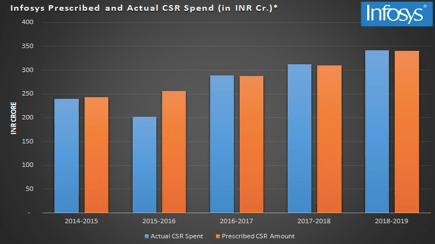
The company spent nearly Rs. 360 crores on various CSR schemes in the financial year 2019-20[1]. It has contributed to many covid relief works and among its main CSR initiatives in the financial year, 2019-20 were a 100-bed quarantine set up in Bengaluru in partnership with Narayana Health City, and another one which had 182 beds for COVID-19 patients for Bowring and Lady Curzon Medical College & Research Institute[2]. This company has also established the Infosys foundation— a nonprofit nodal body aimed at contributing toward community and society development and betterment and also fulfilling its CSR commitments. Infosys Foundation has worked with many non-government organizations for implementing its projects. Highlights of the Foundation’s interventions in the past include the introduction of Aarohan Social Innovation Awards, restoration of water bodies in Karnataka, enabling the pursuit of access and excellence in sports through the GoSports Foundation, and disaster relief efforts in Tamil Nadu, Karnataka, and Kerala[3].
Image credit: The CSR journal
The above graph shows CSR spending of Infosys Ltd. in the last 5 years[4]
ROLEX WATCH CO. LTD.
Image credit: prezi.com
Rolex has been on the top 10 list of the most reputable companies in the world for four consecutive years. Rolex’s success is attributed to the authenticity and longevity of its charity work. By investing in and committing to long-term social enterprise projects, Rolex has an impressive record of over forty years of philanthropic work[5]. The Rolex Awards for Enterprise which were established to commemorate the 50th anniversary of the Oyster Chronometer is a great example of CSR activity carried out by the company. All the individuals who demonstrate leadership and entrepreneurialism in the areas of technology, applied sciences, and the environment are presented with these awards. Since the inception of the Awards, 33,000 people from over 190 countries have applied, and 140 laureates have been selected[6]. These laureates have worked on projects benefitting millions of people in 60 countries across the globe[7]. Several initiatives under the Rolex Perpetual Planet have been taken up for upgrading our environment. These include watching over the Earth’s blue heart, Heroes of the Oceans, and Paula Kahumbu: defending rights for elephants.
MAHINDRA AND MAHINDRA LTD.
Image credit: Avinash Chandra
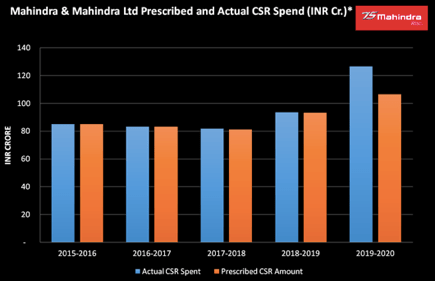
Mahindra and Mahindra ltd. is known for its contributions to climate change and sustainable business practices. The company spent INR 93.50 crores on CSR initiatives during the financial year 2018-19[8]. The biggest CSR project for educating girls in India known as Nanhi Kali was conducted by Mr. Mahindra. This project provides free education to girls, who belong to low-income backgrounds and also empowers their families. The group works closely with non-profits like Naandi Foundation, which feeds over 1.3 million government school children every[9]. This project also encourages environment-friendly farming practices by working with many small farmers. Mahindra and Mahindra Ltd. has also won the award for India’s best CSR project in the Environment and Sustainability category for its green initiative of project Hariyali, which aims at planting 1 million trees on India’s green cover every year. In the financial year 2019-20, Mahindra & Mahindra planted 1.32 million trees, taking the total tally to 17.93 million trees[10]. Of these, 10.78 million trees have been planted in the Araku Valley, which besides greening the environment, also provides livelihood support to tribal farmers growing coffee in the region[11]. The company’s other CSR projects include Mahindra Pride schools: a unique 90-day livelihood training program for youths from socially and financially disadvantaged communities, Integrated Watershed Management Programme, saving a life with safer roads, employee social options, and covid-19 releif[12].
Image credit: The CSR Journal
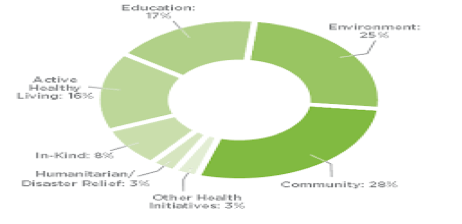
The above graph shows the CSR Spends of Mahindra and Mahindra Limited for the last five years.
WALT DISNEY COMPANY
Image credit: Money Inc
Considering the Walt Disney company CSR report, it can be said that it is well organized, and consistent, and is in connection with the global reporting initiative (GRI) too. The company has contributed a lot towards renewable energy, workforce investment, community engagement, charitable giving, and diversity and inclusion. In the financial year of 2019-20, Disney brought online a massive 270-acre, 50+-megawatt solar facility onsite in Orlando, in collaboration with the Reedy Creek Improvement District and Origis Energy USA[13]. The facility generates enough power from the sun to operate two of the four theme parks at Walt Disney World annually[14]. This, along with other initiatives, helped to reduce the net emissions by 47% in FY19 from 2012 levels[15].
Disney has also donated a lot towards workforce investment, supporting the long-term career goals of its employees through education.
The company is investing $150 million over the first five years to cover 100% of employee tuition, books, and education fees[16].
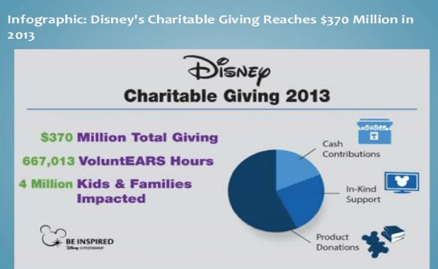
Disney also gave $338.2 million in cash and in-kind donations to non-profit organizations that bring comfort, inspiration, and opportunity to kids, families, and communities around the world[17].
Image credit: Slideshare
COCA- COLA COMPANY
Image credit: India Frontline
Coca-Cola aims to create a sustainable and better future. For this, they follow various activities like Focusing on a World Without Waste, Maximising water conservation, reducing carbon footprint, etc.
In addition to this, all the countries where coca-cola has its market, have increased employment and helped to raise the standard of living which has, in turn, helped to strengthen the national economy.
The company has also launched its project known as the last mile, which aims to expand access to HIV and malaria medicines across Africa. The Coca-Cola Foundation recently awarded a $2 million grant to Project Last Mile—$1 million for South Africa and $1 million for additional countries across the continent—as part of the foundation’s $20 million “Stop the Spread” fund[18]. An additional $500,000 grant from The Coca-Cola Foundation has supported COVAX, a program co-led by the World Health Organization (WHO) to ensure equitable global access to COVID-19 vaccine tests and treatments in the world’s poorest countries[19].
The company also aims at making all its packaging 100% recyclable and also reduce its carbon emissions 25% by 2030 from a 2015 base year[20]
Image credit: research-methodology.net
TATA CHEMICALS LTD.
Image credit: csrbox.org
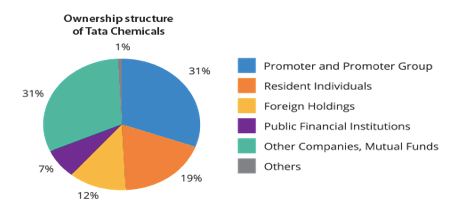
The CSR model of Tata chemicals limited is very unique. Although the prescribed CSR for 2019-2020 was 21.39 Crores, the company went on to spend 37.81 crores on community development projects[21]. Tata Chemicals spends INR 12 crores on CSR annually, and wildlife conservation accounts for 30% of the budget of the TCSRD[22]. The company has also established the Tata Chemicals society for rural development. The company’s CSR agenda also focuses on empowerment, inclusion—especially of women and socially backward communities, volunteering, technology, innovation, etc. At Okhai, the company provides sustainable livelihood to 900 rural women artisans by applying their traditional handicraft-making skills to create marketable products[23].
Blossom: Promotion and development of native handicrafts •Enhance: Overall enhancing the quality of life, Aspire: Education and vocational skill development, Conserve: Investment in Bio-diversity, natural resource, and climate change management leading to increase in environmental sustainability, Nurture: Health care, sanitary solutions, and safe drinking water are some of the other projects taken up by Tata chemicals ltd[24].
Corporate Social Obligation (CSR) is the proceeding with responsibility by organizations to coordinate social and ecological worries in their business activities. Changes in the worldwide climate progressively challenge organizations all throughout the planet to look past monetary execution. It likewise provokes the business to incorporate social and natural worries into their essential administration. The idea of CSR went through a huge turn of events and got undeniably more consideration in the second 50% of the twentieth century. During that time, it arrived at the cutting edge of the interests of political associations, including the Committee for Economic Development. CSR principally shows as correspondence with vested parties. That is the means by which organizations face expanded requests from their vested parties concerning data on CSR exercises.
CSR in India
CSR in India was customarily seen as a charitable movement. With regards to the Indian practice, it was accepted that each organization has an ethical obligation to assume a functioning part in releasing the social commitments. These are dependent upon the monetary well-being of the organization. In the mid-’90s, Mahatma Gandhi presented the idea of trusteeship helping financial development. CSR was impacted by family esteems, customs, culture, and religion. On 29th August 2013, The Companies Act 2013 supplanted the Companies Act of 1956. The New Act has presented expansive changes that influence an organization’s development, organization, and administration. Likewise, it joins an extra area, for example, Segment 135 – statement on Corporate Social Responsibility commitments (“CSR”) for organizations recorded in India. The statement covers the fundamental requirements relating to the execution, reserve portion, and announcing for fruitful task execution.
HOW ARE INDIAN COMPANIES FULFILLING CSR?
Execution of CSR (according to Schedule VII) in Project Mode by the firm in India are as per the following: Annihilating yearning, neediness, and hunger. Likewise, advancing medical services, including preventive medical services and disinfection. It embraces a commitment to the Swachh Bharat setup by the Central Government. They Promote schooling, work upgrading job abilities, particularly among youngsters, ladies, the older, and the in an unexpected way abled individuals. Likewise, advance sexual orientation correspondence, engaging ladies, setting up homes and inns for ladies and vagrants. They Ensure natural supportability, environmental equilibrium, assurance of widely varied vegetation. Insurance of public legacy, workmanship, and culture, including the rebuilding of structures and destinations of authentic significance and show-stoppers.
The main organization that strikes a chord as a reference point of good corporate administration is the Indian IT industry bellwether, Infosys. To be sure, Infosys is one of the organizations that has set benchmarks for different organizations in India as well as everywhere. This way, corporate administration, and social obligation are dealt with and projected to the rest of the world. The point here is that organizations not just need to walk the discussion for CSR yet additionally broadcast their accomplishments to the world on the loose. Another Indian organization that has made an excellent showing of depicting itself as a decent corporate resident is the TATA bunch. Followed by The Body Shop (earlier possessed by Anita Roddick) organization in the United States. While these two organizations are at various closures of the range, the extent that their product offerings and lines of business are concerned. Notwithstanding, the general population sees these organizations’ ideal principally because of the visionary chiefs that have driven these organizations. Additionally, their standing has been set up through many years of making the best decision.
THE FINAL THOUGHT
The key detract from this conversation is that organizations do acquire substantial and immaterial advantages by rehearsing CSR; and by extending a picture of good administration and social obligation to the outer world. Obviously, we have perceived how organizations resort to “Green Washing” and twist to project something which doesn’t exist completely or somewhat. The point about these models is that these organizations seek after socially and earth capable systems, yet in addition make it a highlight be on heartfelt terms with every one of the partners. They can be the providers, legislative offices, representatives, shoppers, and society on the loose. These endeavors further convert into quantifiable and immense advantages to these organizations.
At long last, being a decent corporate resident carries its own advantages to the organizations. For example, it is entirely expected to discover pioneers from these organizations sitting on different sheets and warning boards, which say a lot about the high regard. This converts into moment acknowledgment and a “radiance” impact. All things considered, it resembles the worship that demigods and sports characters get from individuals. The point here is that acceptable corporate conduct is remunerated eventually or the other. Consequently, organizations should try to progress admirably and make the best choice consistently. While not lecturing, a portion of these organizations additionally help different organizations in completing their dreams for society; and by being groundbreaking change specialists just as impetuses for CSR. Organizations and organizations cooperate with legislative offices to advance feasible practices. Additionally, ease the extremely natural and social issues that are plaguing us. In this regard, the organizations ought to, in fact, look past their main concern. They need to have a social part in their bookkeeping articulations as a method for estimating the ecological and social effects of their organizations.
“Creating strong business and building a better world are the essential ingredients for long term success.”Corporate Sustainability is an evolving management paradigm for companies. While the concept understands the significance of profitability, it also reiterates the need for environmental protection and social equity.
FOUNDATION OF THE CONCEPT
Corporate Sustainability borrows elements from four main concepts.
Sustainable development
It is a broad concept that aims to balance economic growth and environmental protection. We cannot leave efforts for achieving sustainable development to the government only. Companies are the engines of economic growth. Therefore, they ought to be proactive in making consistent efforts towards achieving sustainable development.
Corporate Social Responsibility (CSR)
CSR is a self-regulating business model. According to this concept, companies have an ethical obligation to respond to the needs of society. CSR is based on four theories-
Social Contract Theory
The theory revolves around the fact that individuals and organisations enter into various implicit and explicit contracts. When a company extracts resources from the environment, it enters into a contract. The contract is to be socially responsible towards the environment.
Social Justice Theory
This theory argues that in a fair society, all members hold equal importance. It also highlights the significance of social equity and justice. Hence companies must respond to the needs of all the people in a society.
Rights Theory
According to this theory, a company should respect the human rights of their employees and the local communities around them. It must behave ethically with them and ensure a safe working environment.
Deontological theory
The theory throws light on the golden rule that companies have a moral duty towards society. They should therefore listen, consider and respond to the needs of the society while framing strategies.
Stakeholder theory
A stakeholder is an individual or organisation that can affect or is affected by an organisation’s goals. This theory emphasizes that the stronger the relationship a company has with the external parties, the easier it is to achieve its business goals. Consequently, good external relationships help gain a competitive edge.
Corporate Accountability
There is a fiduciary relationship between a stakeholder and a company. Hence a company must be accountable for its actions to the stakeholders. Accountability refers to the legal or ethical responsibility to justify one’s actions. The ambit of Corporate Accountability extends to society as well. A company enters into various implicit and explicit contracts with society. Since a company gets its resources from society, therefore, it must be accountable for its actions.
THE PILLARS OF CORPORATE SUSTAINABILITY
Three main pillars lay the foundation of Corporate Sustainability.
Environment pillar
Companies rely on society for getting resources. Some of these resources are non-renewable, some are renewable. Companies need to instill an understanding that renewable resources need time to get replenished or renewed. Therefore they should respect these natural cycles and should reform extraction processes. It would ensure that the resources get plenty of time for renewal.
Social Pillar
Corporate Sustainability requires companies to recognize their impact on the people. This recognition can be in terms of committing to fair wages, showcasing ethical behavior and a safe working environment for employees. The Social Pillar promotes practices that help prosper the health, safety and well-being of the employees.
Economic Pillar
Each company faces intense pressure to earn immediate profits. But Corporate Sustainability encourages investment in technology for the future even if financial benefits show up later. The economic pillar is all about investment in creating technologies for the future.
WHAT’S THE DIFFERENCE BETWEEN CSR AND CORPORATE SUSTAINABILITY?
CSR is a broader term than Corporate Sustainability. CSR often looks backwards to reflect on what the company has done in the past to contribute to society. On the other hand, Corporate Sustainability looks forward and aims to make efforts in the present to create future opportunities. CSR initiatives mainly target the opinion-forming groups like media while Corporate Sustainability targets the various stakeholders.
A PEEP INTO CORPORATE SUSTAINABILITY REPORTING
We have a concept called Green GDP to measure the economic growth of the countries. Green GDP is an accounting system that considers the environmental loss incurred during the process of economic growth. Thence countries can measure the environmental deterioration caused and can take measures to reduce it. Similar to this is the concept of Corporate Sustainability Reporting. It represents a potential mechanism to generate data and measure the contribution of companies towards achieving sustainable development.
THE FINAL THOUGHT
The vision of doing business is certainly changing over time. The government and stakeholders expect companies to make efforts for people and the environment. According to Global Risks 2020, climate change ranks first as a global risk. Societal risks like water crises and infectious diseases are also threatening. It expects air pollution to become a major cause of environmental mortality by 2050. These facts highlight the urgent need for action. Corporate Sustainability provides a prospective solution to this. Therefore we need consistent efforts from the end of companies as they are the engines of economic development in a society.
Corporate social responsibility, often abbreviated “CSR,” is a corporation’s initiatives to assess and take responsibility for the company’s effects on environmental and social wellbeing. The term generally applies to efforts that go beyond what may be required by regulators or environmental protection groups.
As the business environment changes, customer’s expectations from a company also change. Nowadays, Customers prefer brands that are socially responsible and give back to the society. Let’s take a look at CSR initiatives taken by the Cafe Coffee Day, one of India’s leading coffee brands.
CSR goals at Cafe Coffee Day
Improving livings standards for communities through increasing employment opportunities- CCD believes in working for the people, and working with the people. It ensures that it creates new employment and livelihood opportunities for millions across the globe. This is done through direct employment and contracts, as well as through inclusive business opportunities.
Enhancing the health and wellbeing of communities– It works with communities at large and aims to help them become healthier and happier.
Reducing environmental footprint– It works towards reducing its environmental footprint by ensuring that it allows the legislation regarding carbon production and release. It works towards designing operational processes that reduce water and land pollution. All products manufactured and distributed come with a disposal method to reduce wastage, and increase recycling.
Corporate social responsibility is an integral part of CCD’s operations. They are committed to offering ethically purchased and responsibly produced products of the highest quality, and serving quality coffee that is responsibly grown and ethically traded. They facilitate UTZ and Rainforest certification for their major coffee supplier’s estates. The UTZ Code of Conduct is a recognized global ‘decency’ standard for coffee and production criteria for socially and environmentally appropriate growing practices and efficient farm management techniques. The Rainforest Alliance works to conserve biodiversity and improve livelihoods by promoting and evaluating the implementation of the most globally respected sustainability standards in a variety of fields which are designed to generate ecological, social and economic benefits. CCD aims to create the most value in the following aspects:
Nutrition- The primary focus remains on ensuring health safety for children and infants.
Water- It administers all its internal sewage plants to dispose of waste optimally without risking water life.
Air Cleansing- The company also takes responsibility for ensuring that all its industrial sites and operations are placed away from residential areas to reduce maximum exposure of plant operations to the public.
Rural Development– It created varied employment and livelihood opportunities for these communities to help them raise their living standards and quality of life.
Protecting water- With the high scarcity of clean drinking water, CCD works and strives to provide communities with clean drinking water through having installed filter plants.
Protecting natural resources- It ensures that all its operational sites are designed in a way that they do not harm or risk the natural ecosystem. In addition, the company works towards protecting the environment by building green spaces.
Safeguarding the environment- The operations of CCD, like other players in the industry, are being affected by the climatic changes, and the weather alterations. To fight this change, and to safeguard the environment, CCD works towards creating safe green spaces through high rate plantations. This is to ensure environmental sustainability and enrichment of the ecosystem.
Commitments made by CCD
Commitments at CCD have helped shape its CSR and CSV approach based on multiple trends from across the globe. These commitments have helped maintain focus in giving back to the community as well as in developing a more sustainable environment and workplace. Commitments are the long-term goals that CCD wants to fulfil and achieve in the following different aspects:
For individuals and families • Living healthier lives– Helping individuals attain a balance between healthy nutrition and physical exercise as a means of a healthier lifestyle and healthy living. With today’s work style and busy schedules, this is quite a challenge. • Having Nutritional Knowledge- CCD works with the long-term aspiration of enhancing the lifestyles of communities. The company plans to do it by sharing information regarding nutritional facts, and by raising awareness of nutritional intake.
For Communities
• Rural Development– It works towards developing rural communities-especially where it is operational and present. The company engages not only in employment creation but also infrastructure development and education deployment programs to help communities improve their living standards. • Promoting Diversity– It works towards inclusion through its diversity programs. The company has designed programs and policies to ensure the inclusion of all community groups in the employment cycle. In addition, the company also conducts training and skill enhancement sessions for all community groups including disabled and special persons.
Finding the potential in coffee is a key part of success. Similarly, CSR activities focus on finding the potential in the people, society and environment.
TRAINING CCD works through a unique partnership model wherein they have established strategic partnerships with various training bodies, non-governmental organizations, and government and leverage their relationship to provide skill training and employability to the under privileged. In states like Jammu and Kashmir and Orissa, they have provided self-improvement and vocational training to youth.
DIFFERENTLY-ABLED EMPLOYMENT Coffee Day Global has also tied up with NGOs such as “Enable India” to work out avenues to employ more differently-abled people. Over 150 speech and hearing-impaired people are employed at their cafés, popularly called as “silent brew masters”.
WATER, SANITATION AND HYGIENE During the manufacturing process and value additions, Cafe Coffee Day maintains an emphasis on water, sanitation and hygiene. All plants and manufacturing units operated by Cafe Coffee Day have an authorized sanitation system in place which ensures minimal water wastage. Besides, all industrial waste is disposed of off through authorized channels only ensuring that no natural water body and water source is harmed or polluted.
NATURAL RESOURCE STEWARDSHIP Cafe Coffee Day is also an active pioneer of natural resource stewardship. Cafe Coffee Day has devised ways to ensure that natural resources are sustainably used for industrial operations, and are not damaged during business processes. Cafe Coffee Day shares this knowledge publicly for the overall welfare of the environment and the planet.
WOMEN EMPOWERMENT During its manufacturing process, Cafe Coffee Day also ensures to employ women labour in various managerial and operational level jobs. These women are usually from local communities and are trained for new skill development and enhancement. In doing so, Cafe Coffee Day ensures that women are equipped with the confidence and decision-making abilities that they advance not only in their professional but also in their personal and social lives.
ANIMAL WELFARE In all its sourcing, CCD ensures that no animals are harmed. CCD makes sure that all animals are fed high quality fodder, and that they are kept in a clean and safe environment. In addition, it also provides safe breeding grounds for animals and regularly authorizes veterinary check-ups for all animals in partner farms.
HUMAN RIGHTS CCD is also particularly careful to ensure that all human rights are upheld in its business operations. This includes no child labour, and inclusive diversity, amongst other things. Also, the business operations of CCD also include high dependence on local workers for labour and management, making sure all local and global human rights are followed thoroughly.
CCD changing lives with Education and Employment
· Their social transformation initiatives are led by SVGH Vocational Training College (VTC) at Chikmagalur, Karnataka and are fully funded by their Promoter. VTC seeks to promote education to economically underprivileged rural youth and supporting them to be independent, responsible and adaptable to urban environment. VTC has trained over 2,500 students, many of whom have since joined CCD Group companies, including Coffee Day Global’s outlets across the country. The entire expenses of the course which includes imparting education, providing food and accommodation, uniforms and transport facilities is borne by VTC.
· The institute provides free education and training to youngsters, with all their expenses being covered by the chairman’s trust. The chairman and founder, V G Siddhartha, was keen to create employment for the rural youth, so that they could lead a productive life and contribute to society. A large number of youths were unemployable due to skill gaps, so it was decided to offer hotel management courses at Yuva (their vocational training institute).
· The institute provides a one-year course in hotel management, which includes six months of theory and six months of internship, where students get an on-the-job experience. Apart from hotel management, the institute also provides courses in audit, micro-finance, supply chain and culinary skills, which depends on the needs and demands of the organisation.
· It provides them an opportunity for personal and professional development thereby equipping them with skills to handle the rapidly changing environment. The college has trained 1180 students many of whom have found employment at CCD outlets across the country. Courses offered include Certificate Course in Hospitality Management & Micro Finance. The Trust bears the entire expenses of the course which includes imparting education, providing food and accommodation, uniforms and transport facilities. The trained students are guaranteed employment. Current employees are involved actively in SVGH programs and help by conducting modules etc.
· “Communication skills are critical to success in customer-service roles and there is a strong commitment to building job-ready skills.” The focus has been on right skilling and reskilling to keep pace with the dynamic market needs. They aim to groom students who can think, ideate, solve problems, communicate and collaborate. They also provide specialisation studies to the students in the last quarter of the course, so as to place them in various roles at CCD in accordance with their skills. Placements are done within the organisation. By providing quality education and employment to these students, the organisation is changing their lives and offering them a great career path.
· Every year, around 350 students pass out from the institute and are employed by the organisation. Almost all of them are hired by Café Coffee Day. This kind of programme also creates loyalty in the minds of the employees and they are likely to stick around for a longer period of time.
· Providing a good career path, professionalism and quality skill training, the institute— which had taken birth as a simple CSR activity—is changing the lives of its students and their families. This is the best way to not only educate the underprivileged but also provide jobs to those who actually need them.
Infosys Limited is an Indian multinational information technology company that provides business consulting, information technology, and outsourcing services. The company was founded in Pune and is headquartered in Bangalore. The company changed its name to Infosys Technologies Private Limited in April 1992 and to Infosys Technologies Limited when it became a public limited company in June 1992. Infosys has been an early adopter of corporate social responsibility (CSR) initiatives. Corporate social responsibility (CSR) has become an integral part of the standard business models for many companies, serving as a platform for businesses to give back to society and create social value, especially within the industry and community in which they function in. Infosys foundation was established in 1996 with a vision for boosting CSR initiatives.
It is a non-profit organization with Sudha Murthy as the chairman of Infosys foundation in India. It also partners with various non-government organizations (NGOs) to make a difference along with local communities. The company has always aimed at contributing to the sustainable development of society and the environment for the betterment of planet earth. The CSR committee comprises two independent directors and the COO and Whole-time Director. The members of the CSR committee are – Kiran Mazumdar-Shaw, Chairperson; U.B. Pravin Rao and Dr. Punita Kumar-Sinha.
Infosys foundation supports programs in areas of Education, Rural Development, Healthcare, Arts & Culture, and Destitute care. It has implemented many programs across various states of India. During the last financial year 2019-2020, it supported COVID-19 PAN India by contributing to the PM CARES fund. This helped hospitals, the destitute, daily wage workers, and underprivileged sections of the society. Also, it took part in the Construction of a Dharamshala at AIIMS, Jhajjar, and providing training to teachers in Andhra Pradesh and Odisha.
The foundation provides access to primary healthcare, awareness of basic hygiene, and treatment for underprivileged patients. It organizes health camps in rural India and also has donated medicines and medical equipment to hospitals. It partners with schools in rural India to enhance and education and library facilities, and promote primary education among underprivileged children. It promotes traditional art, crafts, and dance. They offer financial assistance to underprivileged artists and authors to promote their art. It supports programs of NGOs in the rural areas across India. It also provides vocational training to help the destitute to live with dignity and earn a livelihood. It undertakes programs to improve the welfare of people in rural India. It conducts livelihood projects awareness campaigns on hygiene, sanitation, vocational training, and entrepreneurship.
Recently, Infosys foundation donated 4,000 PPE kits to Mysuru City Corporation. Due to a shortage of PPE kits, the MCC had appealed to Infosys Foundation to donate the kits under its CSR. Infosys Mysuru Manager Anant Bondade handed over the kits to MCC Health Officer Dr. M.S. Jayanth at the MCC Office. Through CSR, the company promotes change and progress throughout the world.
There are myriad reasons why Infosys foundation inspires others. It adds to the prosperity of society. They provide an opportunity to the people who require it and thus subsequently making a positive effect on them and society, in general. Moreover, it inspires people in their surroundings to do the same.
A company is a voluntary association of individuals formed to carry on business to earn profits or for non profit purposes. These persons contribute towards the capital by buying its shares in which it is divided. A company is an association of individuals incorporated as a company possessing a common capital i.e. share capital contributed by the members comprising it for the purpose of employing it in some business to earn profit.
“As per Companies Act 1956, a company is formed and registered under the Companies Act or an existing company registered under any other Act”.
Types of Companies:
Companies can be classified under the following heads:
1. On the basis of formation.
2. On the basis of liability.
3. On the basis of ownership.
1. On the basis of formation: On the basis of formation companies can be categorised as:
(a) Statutory Company: A company formed by a Special Act of parliament or state legislature is called a Statutory Company. Reserve Bank of India, Industrial Financial Corporation of India, Life Insurance Corporation of India, Delhi State Finance Corporation are some of its examples.
(b) Registered Company: A company formed and registered under the Companies Act, 1956 or earlier Companies Acts is called a Registered Company. The working of such companies is regulated by the provisions of the Companies Act.
2. On the basis of liability: On the basis of liabilty, companies can be catagorised as:
(a) Company limited by shares: The liability of the member of such company is limited to the face value of its shares.
(b) Company limited by guarantee: The liabilty of each member of such company is limited to the extent of guarantee undertaken by the member. It may arise in the event of its being wound up.
(c) Unlimited Company: The company not having any limit on the liability of its members, is called an unlimited company. Liability in such a case extends to the personal property of its shareholders. Such companies do not use the word ‘limited’ at the end of their name.
(d) Company under section 25: A company created under section-25 is to promote art, culture and societal aims. Such companies need not use the term limited at the end of their name. Punjab, Haryana, Delhi chambers of commerce, etc. are the examples of such companies.
3. On the basis of ownership: On the basis of ownership, companies can be catagorised as :
(a) Private Company: A private company is one which by its Articles of Association :
(i) restricts the right of members to transfer its shares;
(ii) limits the number of its members to fifty (excluding its past and present employees);
(iii) prohibits any invitation to the public to subscribe to its shares, debentures.
(iv) The minimum paid up value of the company is one lakh rupees (Rs 100000). The minimum number of shareholders in such a company is two and the company is to add the words ‘private limited’ at the end of its name. Private companies do not involve participation of public in general.
(b) Public Copmpany: A company which is not a private company is a public company. Its Articles of association does not contain the above mentioned restrictions. Main features of a public company are : (i) The minimum number of members is seven.
(ii) There is no restriction on the maximum number of members.
(iii) It can invite public for subscription to its shares.
(iv) Its shares are freely tansferable.
(v) It has to add the word ‘Limited’ at the end of its name.
(vi) Its minimum paid up capital is five lakhs rupees (Rs 500,000).
(c) Government Company: A Government company is one in which not less than 51% of its paid up capital is held by (1) Central Government or (2) State Government, or (3) partly by Central Government and partly by State Governemt. Example of a Government company is Hindustan Machine Tools Limited, (HMT) State Trading Corporation (STC). Minerals as metals training corporation (MMTC).
(d) Foreign company: A foreign company is one which is incorporated outside India but has a place of business in India, for example Philips, L.G, etc. standard materials.
(e) Holding company and Subsidiary company: A holding company is a company which controls another company (called subsidiary company) either by acquiring more than half of the equity shares of another company or by controlling the composition of Baord of Directors of another company or by controlling a holding company which controls another company.
(f) Listed company and unlisted company: A company is required to file an application with stock exchange for listing of its securities on a stock exchange. When it qualifies for the admission and continuance of the said securities upon the list of the stock exchange, it is known as listed company. A company whose securities do not appear on the list of the stock exchange is called unlisted company.
Corporate engagement with society, also termed corporate social responsibility (CSR), has become a commonly used term in contemporary society and refers to one process by which an organization expresses and develops its ‘corporate culture’ and social consciousness.
CSR has been receiving lots of attention from various backgrounds of researchers worldwide, it has attracted a great deal of attention over the past decade and according to some researchers, has gathered great momentum over the past number of years and is now regarded to be at its most prevalent. Therefore business leaders, government officials, and academics are focusing more and more attention on the concept of “corporate social responsibility”.
Almost all corporate websites/ policies/reports talk about their endeavors for CSR, which has become a way of ensuring that the organization is fulfilling all the obligations towards society and thus is eligible for the license to operate. It assures that the organization can grow on sustainable basis. There are also societal pressures with respect to social issues such as human rights and the environment on the corporations and CSR is widely regarded as the response of corporations to this pressure and according to Bénabou & Tirole (2009), responding to such pressure, business leaders, governments and academics are now also emphasizing the notion of CSR.
In CSR, the central issue is the appropriate role of business that overlaps, almost completely, with its reference area and now business organizations have waked up to the need for being committed towards CSR because the role of businesses in society is no longer focused on creating wealth alone but is also focused on acting responsibly towards stakeholders.
Everyone agrees that firms should obey the law. But beyond full compliance with environmental regulations do firms have additional moral or social responsibilities to voluntarily commit resources to environmental protection. To be specific, why companies do CSR? For this, it is answered that CSR is situations where the firm goes beyond compliance and engages in “actions that appear to further some social good, beyond the interests of the firm and that which is required by law” and it is also due to various reasons such as to attract new investors, part of branding strategy, an obligation from the government and the lists go on. However, CSR does not mean just taking part in charitable activities and events; it means holding the responsibility to develop the society by envisioning future plans for socio-economic justice and be conscious about their responsibility for the welfare of society around them. Therefore, according to Zu & Song (2008), a large number of companies appear increasingly engaged in a serious effort to define and integrate CSR into all aspects of their businesses.
Corporate executives have also encountered demands from multiple stakeholder groups to devote resources to CSR. This may be partially due to the pressure generated by a union of ethics-oriented campaigners including NGOs, anti-capitalism activists, labor unions, and news media; and partially due to the demand for doing so by their customers, employees, suppliers, communities, governments, and even stockholders. Ismail (2011) stated that CSR is supported by the case whereby the government alone is definitely cannot afford to have a sole responsibility in improving the lives of their people as it exceeds their capabilities. If the government is unable to fulfill the increasing demand of their people thus this is where the corporations should support the government. However, those who opposed this statement saw the situation as unfair to the business corporations, such as Friedman’s (1970) famous statement that ‘the only responsibility of a business is to maximize shareholders’ wealth’. But according to Krishnan & Balachandran, companies are beginning to realize the fact that in order to gain strategic initiative and to ensure continued existence, business practices may have to be molded from the normal practice of solely focusing on profits to factor in public goodwill and responsible business etiquettes.
An examination of some of the factors, which have led to the development of the concept of CSR, would be ideal starting ground for the conceptual development of suitable corporate business practices for emerging markets. Krishnan & Balachandran also expressed that in the last twenty years, there has been a sea change in the nature of the triangular relationship between companies, the state and the society.
No longer can firms continue to act as independent entities regardless of the interest of the general public. The evolution of the relationship between companies and society has been one of slow transformation from a philanthropic coexistence to one where the mutual interest of all the stakeholders is gaining paramount importance. Bénabou & Tirole (2009) asserted that CSR is somewhat of a “catch-all” phrase for an array of different concepts.
Eligible for Tax Exemption u/s 80G of Income Tax Act.
Customize projects as per the need of the Donor Company.
No minimum or maximum size of Donation. You may support us by any amount.
All Documentation Support provided like 3 years Balance Sheet, Registration Certificate, etc.
Project Name shall be on your organization name if you require.
Promotions of your company on our Social Media Platforms and website.
All the beneficiary of the projects can be seen and a meeting can be organized with them like in AGM or any other event of company.
Your funds shall be used on the sector you choose – Education or Health Care
What we can do for corporates?
We, at Drishti Foundation Trust have a vast network of experienced, highly qualified and committed professionals, who have successful track record of dealing in various social initiatives from time to time. Over the years we have been associated with number of corporate houses as CSR partner/collaborators. At this juncture we offer our following specialized services to corporate sector;















 Eduindex
You must be logged in to post a comment.