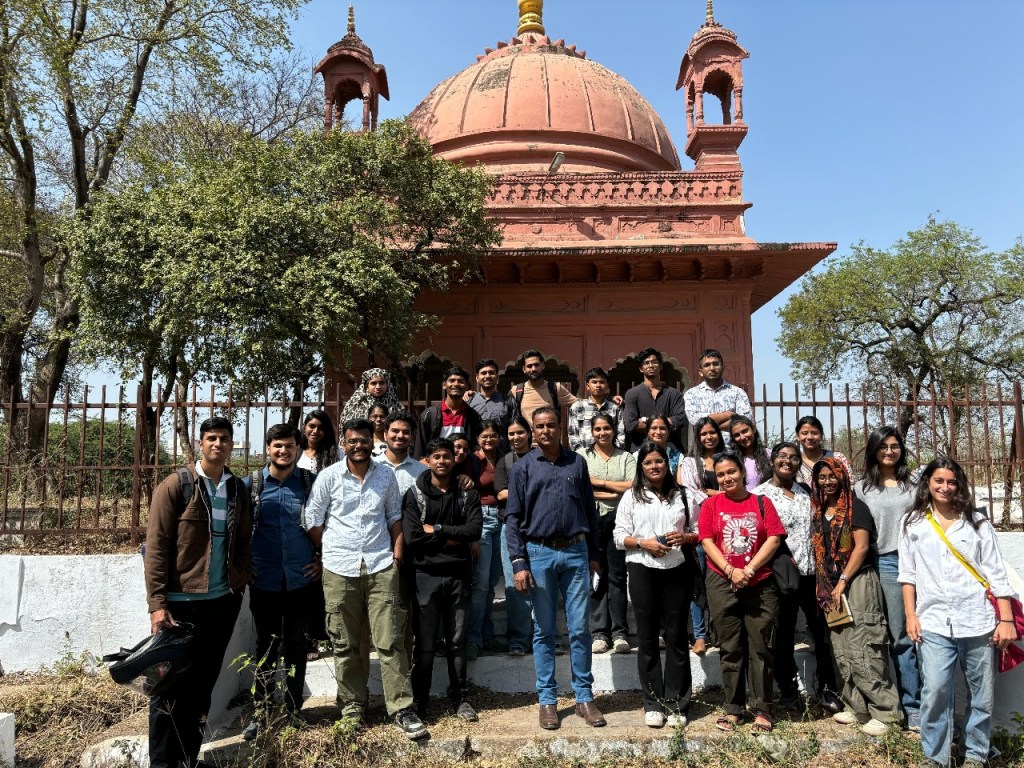
Bhopal: The historic Bada Bagh stepwell and mausoleums in Bhopal are undergoing conservation efforts under the guidance of Professor Jagdish Singh from the Department of Architecture and Planning, MANIT Bhopal, in collaboration with the INTACH Bhopal Chapter. This remarkable heritage site, dating back to 1809-1816, is a three-story deep stepwell located within the Bada Bagh cemetery. Originally commissioned by Nawab Wazir Mohammad Khan, it was later preserved and maintained by Nawab Qudsia Begum.
The site also houses the mausoleums of Wazir Mohammad Khan (1806-1816) and his son, Nazar Mohammad Khan (1816-1819). Following Nazar Mohammad Khan’s demise, Qudsia Begum constructed her husband’s tomb within the same premises, at which point the stepwell became known as Nazar Bagh. A detailed architectural study has revealed intricate design elements, including colonnaded structures adorned with arches and slender pillars, showcasing the craftsmanship of that era.
The conservation efforts focus on structural stabilization, documentation of architectural details, and restoring the stepwell’s original grandeur. Special attention is being given to preserving the ornamental structures surrounding the well. This initiative bridges academic research with practical heritage conservation, ensuring that Bada Bagh’s historical significance is safeguarded for future generations. Awareness programs are also being conducted to highlight the site’s cultural heritage.
Through collective restoration efforts, this project aims to revive the architectural marvel of Bada Bagh, cementing its place as an invaluable part of Bhopal’s historical and cultural legacy.
Archaeological Survey of India (ASI) carries out upkeep of all Nationally protected monuments. Besides, Amenities and information has been provided at important monuments to enrich the experience of the visitors. Furthermore, the Government of India has launched Adopt A Heritage 2.0 Programme in 2023 to create framework for engaging public/private sector companies, NGOs, Trusts, Societies etc. to provide amenities at protected monuments to enhance visitors experience to make them visitor friendly.
Through the academies and ZCCs; the focus is on cultural preservation, documentation, research, publication, cultural exchange programmes, capacity building and conservation.
The Government of India promotes Indian folk Arts and Culture abroad through Global Engagement Scheme under which Festivals of lndia are organized in other countries showcasing folk art and other cultural events as exhibitions, dance, music, theatre, food fest, film fest, yoga etc. and through grant-in-aid to lndo-Foreign Friendship Cultural Societies for organizing programmes and activities including folk art and other cultural activities for their promotion abroad
The Government of India has taken several initiatives for enrich India’s cultural heritage during last 5 years. An Umbrella Scheme ‘Kala Sanskriti Vikas Yojana’ comprising several sub-schemes has been developed to provide financial assistance for the promotion of Arts and Culture, such as:Promotion of Guru Shishya Parampara.Promotion of Art and Culture.Construction of Tagore Cultural Complex.Scheme for Scholarship and fellowship for Promotion of Art and Culture. The Details of funds disbursed under Kala Sanskriti Vikas Yojana in the last five years and are given as under:- (Amount Rs. in Crores)S. No.Years Total funds disbursed1.2020-21100.312.2021-22126.183.2022-23182.254.2023-24166.955.2024-25(Up to 21.11.2024)59.98
MoUs have been signed under ‘Adopt A Heritage 2.0’ for the following monuments in the State of Bihar and Maharashtra: S. No.Name of StateName of Monument1.BiharBuddhist Stupa, Kesariya, Champaran2.MaharashtraElephanta Caves, Raigarh (Maharashtra) The details of financial assistance to the States of Maharashtra and Bihar under “kala Sanskriti Vikas Yojana” scheme is given below: – (Amount Rs. in Crores)S. No.YearsTotal funds disbursedBiharMaharashtra1.2020-212.694.482.2021-223.406.983.2022-236.288.544.2023-248.1916.285.2024-25(up to 21.11.2024)1.454.79
The Government of India has set up seven Zonal Cultural Centres (ZCCs) in the country with headquarters at Patiala (Punjab), Nagpur (Maharashtra), Udaipur (Rajasthan), Prayagraj (Uttar Pradesh), Kolkata (West Bengal), Dimapur (Nagaland) and Thanjavur (Tamil Nadu) to protect, promote and preserve various forms of folk art & culture throughout the country and also to set up mechanism for development of the cultures of various regions. The mandate behind setting up of these ZCCs was to bind the nation culturally while retaining the individuality of the regions that comprise them. The aims and objectives of establishing these ZCCs are:
to preserve and promote the projection and dissemination of arts in the concerned zone;
to develop and promote their rich cultural diversity;
to encourage folk & tribal arts and preservation of vanishing arts;
to involve youth in creative cultural communication and lay special emphasis on the linkages between different areas and their contribution to Indian culture.
A Corpus Fund was provided to each ZCC towards cost of equipment and infrastructure including buildings. Government of India provided Rs. 10.00 crore each to all the seven ZCCs in 7th & 10th Plan. During 2014-15, an additional amount of Rs. 10.00 crore each was provided to six (6) ZCCs viz. North Zone Cultural Centre, Patiala; South Zone Cultural Centre, Thanjavur; South Central Zone Cultural Centre, Nagpur; West Zone Cultural Centre, Udaipur; North Central Zone Cultural Centre, Prayagraj & Eastern Zonal Cultural Centre, Kolkata and Rs. 20.00 crore was provided to North East Zone Cultural Centre (NEZCC), Dimapur towards corpus enhancement, taking the total corpus to Rs. 30.00 crore for NEZCC, Dimapur and Rs. 20.00 crore each for the remaining six ZCCs. All the administrative expenses of these ZCCs are being met by the interest accrued on this Corpus Fund. Land required by each Centre was provided free of cost by the State Governments wherein the headquarters of ZCCs are located.
For the promotion of art & culture in the country, these ZCCs organize various cultural activities and programmes on regular basis throughout the year for which annual grant-in-aid is provided to them. Besides, Ministry of Culture also organizes Rashtriya Sanskriti Mahotsavs (RSMs) through these ZCCs where a large number of artists from all over India are engaged who showcase their talents during these programmes. From November, 2015 onwards, fourteen (14) RSMs and four (04) Zonal Level RSMs have been organized by Ministry of Culture across the country. In addition, a minimum number of 42 Regional Festivals are organized by these ZCCs every year for promotion of art and culture.
The Ministry of Culture is committed to the preservation, conservation and promotion of India’s rich cultural heritage, including regional languages, traditional art forms, and performing arts that are at risk of extinction. Through its autonomous bodies and Zonal Cultural Centres (ZCCs), several targeted initiatives are carried out by the ministry.
Sahitya Akademi (SA)works for the promotion of literature in24 recognized languages and various unrecognized and tribal languages by organizing language conventions and awarding the Bhasha Samman to scholars for their contributions to unrecognized languages like Haryanvi, Koshali-Sambalpuri, Paite, Magahi, Tulu, Kurukh, Ladakhi, Halbi, Saurashtra, Kumauni, Bhili, Warli, Banjara/Lambadi, Khasi, Mising, Kodava, Chakma, Rajbanshi, Awadhi, Bundeli, Garhwali, Kachchhi, Himachal, Ao, Karbi, Angami, Gondi, Ho, Chhattisgarhi, Gojri, Bhojpuri, Ahirani, Lepcha, Mundari, Garo, Bhili, Kui, Khasi, Mizo, Pahari, Kokborok.
Sangeet Natak Akademi (SNA) and Lalit Kala Akademi (LKA) undertake initiatives to preserve endangered performing arts and visual arts, respectively, by organizing workshops, exhibitions, and residencies, and creating platforms like Museum of Performing Arts and the PARI project to showcase regional art and talent. Several other initiatives like Kala Deeksha, Kala Dharohar, Museum of Performing Arts, Kala Pravah (Temple Festival Series), Jyotirgamaya, camps for puppetry, Dokra Casting, Mask Making, Rangoli Workshop, Tribal art conclave, have been undertaken by these autonomous bodies for the preservation of the dying and rare performing art forms across the country.
Indira Gandhi National Centre for the Arts (IGNCA) focuses on documenting endangered languages and art forms through films, texts, digital archives, and workshops. National Mission on Manuscripts undertakes the works of conserving manuscripts to tap into the vast potential of Indian Knowledge Systems (IKS) and to make rare manuscripts accessible to scholars, researchers, and the general public.
Zonal Cultural Centres (ZCCs) play a pivotal role in reviving rare and vanishing art forms through schemes like Guru-Shishya Parampara, which trains disciples under eminent Gurus, and the Young Talented Artists Award to encourage young talents. Other notable initiatives include Theatre Rejuvenation, which supports stage shows and workshops, Shilpgram, which promotes rural crafts and organizes fairs, and National Cultural Exchange Programme (NCEP), which fosters cross-cultural understanding.
The Ministry’s plan of action includes sustained documentation of endangered art forms and languages, expanding digital archives for research, and ensuring intergenerational transmission through training programs like Guru-Shishya Parampara. It is envisaged to organize cultural festivals, exhibitions, and exchange programs across the country through public-private collaborations, and state-level partnerships to enhance awareness and appreciation of India’s diverse heritage with a view to safeguard the country’s cultural legacy for future generations. Honouring artists and scholars with awards like Bhasha Samman and promoting North-East cultural heritage through initiatives like Octave are among the integral parts of the Ministry’s strategy.
November is a vibrant month filled with various festivals and celebrations across different cultures and regions. Here are some significant festivals in November:
Hindu Festivals
Diwali (Dates vary, typically in November): The festival of lights, symbolizing victory over darkness and evil.
Govardhan Puja (1st November): Celebrating Krishna’s victory over Indra, the god of rain.
Bhai Dooj (2nd November): Honoring the bond between brothers and sisters.
Kartik Purnima (Full Moon Day, typically in November): A sacred day for spiritual growth and rituals.
Tulsi Vivah (typically in November): Celebrating the marriage of Lord Vishnu and Tulsi.
Other Important Days
All Saints’ Day (1st November): A Christian holiday honoring saints and martyrs.
All Souls’ Day (2nd November): A Christian holiday commemorating the deceased.
World Vegan Day (1st November): Promoting veganism and animal rights.
National Author’s Day (1st November): Honoring authors and writers.
International Day for Tolerance (16th November): Promoting tolerance and understanding.
World Children’s Day (20th November): Advocating for children’s rights and welfare.
Thanksgiving Day (4th Thursday of November, USA): Expressing gratitude and appreciation.
Islamic Festivals
Mawlid al-Barzanji (Dates vary, typically in November): Celebrating the birth of Prophet Muhammad.
Sikh Festivals
Guru Nanak Jayanti (full moon day, typically in November): Celebrating the birth of Guru Nanak, the founder of Sikhism.
Buddhist Festivals
Loi Krathong (Dates vary, typically in November): A festival of lights, releasing lanterns onto rivers.
Jain Festivals
Kartik Purnima (Full Moon Day, typically in November): A sacred day for spiritual growth and rituals.
Other Cultural Festivals
Day of the Dead (Día de los Muertos) (1st-2nd November, Mexico): Honoring ancestors and loved ones.
Bonfire Night (5th November, UK): Commemorating the Gunpowder Plot.
These festivals showcase the diversity and richness of cultures worldwide, promoting unity, gratitude, and celebration.
The Ministry of Culture administers various Central Sector Schemes under which financial assistance is provided to eligible cultural organizations / individuals working for promotion and preservation of art and culture across the country including Palghar district of Maharashtra and tribal areas of the country. The brief of these scheme is given atAnnexure – I.
The year-wise details of funds released to various cultural organizations / individuals under various schemes in the state of Maharashtra including Palghar district during the last five years are given at Annexure – II.
This information was given by the Minister of Culture and Tourism, Shri Gajendra Singh Shekhawat in a written reply in the Lok Sabha today.
****
Beena Yadav
Annexure– I
Annexure referred to in reply of part (a) and (b) of the Lok Sabha Unstarred Question No. 166 for 22.07.2024
FINANCIAL ASSISTANCE FOR PROMOTION OF GURU-SHISHYA PARAMPARA (REPERTORY GRANT)
The objective of this scheme is to provide financial support for all genres of performing arts activities like dramatic groups, theatre groups, music ensembles, children theatre etc. and imparting training of artists by their respective Guru on regular basis in line with Guru–Shishya Parampara. As per the scheme, support is provided to 1 Guru and maximum 18 Shishyas in the field of theatre and 1 Guru and maximum 10 Shishyas in the field of music & dance. The Amount of Assistance for Guru is Rs.15000/- p.m. and for the Shishya, the same is Rs.2000-10000/-p.m depending upon the age of artist.
FINANCIAL ASSISTANCE FOR PROMOTION OF ART AND CULTURE: This scheme has following sub-components :
Financial Assistance to Cultural organizations with National Presence
To promote and support cultural organisations with national presence involved in promotion of art and culture throughout the country, this grant is given to such organisations that have a properly constituted managing body, registered in India; having a pan-India character with national presence in its operation; adequate working strength; and have spent 1 crore or more during 3 of the last 5 years on cultural activities. The quantum of grant under this scheme is Rs.1 crore which can be increased to Rs. 5 crore in exceptional cases.
Cultural Function & Production Grant (CFPG)
The objective of this scheme component is to provide financial support to NGOs/ Societies/ Trusts/ Universities etc. for Seminars, Conference, Research, Workshops, Festivals, Exhibitions, Symposia, Production of Dance, Drama-Theatre, Music etc. The maximum grants provided under CFPG is Rs.5 Lakh for an organization which can be increased to Rs. 20.00 lakhs in exceptional cases
Financial Assistance for the Preservation & Development of Cultural Heritage of the Himalayas
The objective of this scheme component is to promote and preserve the cultural heritage of the Himalayas through research, training and dissemination through audio visual programmes. The financial support is provided to the organizations in the States falling under the Himalayan Region i.e. Jammu & Kashmir, Himachal Pradesh, Uttarakhand, Sikkim and Arunachal Pradesh. The quantum of funding is Rs. 10.00 lakhs per year for an organization which can be increased to Rs. 30.00 lakhs in exceptional cases.
Financial Assistance for the Preservation & Development of Buddhist/Tibetan Organization
Under this scheme component financial assistance is provided to the voluntary Buddhist/Tibetan organizations including Monasteries engaged in the propagation and scientific development of Buddhist/Tibetan Cultural and tradition and research in related fields. The quantum of funding under scheme component is Rs. 30.00 lakhs per year for an organization which can be increased to 1.00 crore in exceptional cases
Financial Assistance for Building Grants including Studio Theatres
The objective of this scheme component is to provide financial support to NGO, Trust, Societies, Govt. Sponsored bodies, University, College etc. for creation of Cultural infrastructure (i.e. studio theatre, auditorium, rehearsal hall, classroom etc.) and provision of facilities like electrical, air conditioning, acoustics, light and sound systems etc. Under this scheme component, the maximum amount of grant is up to Rs.50 Lakh in metro cities and up to Rs.25 Lakh in non- metro cities.
Financial Assistance for Allied Cultural Activities
The objective of this scheme component is to provide financial assistance to all eligible organizations for creation of assets for enhancing the audio-visual spectacle for allied cultural activities to give firsthand experience of live performances on regular basis and during festivals in open/closed areas/spaces. Maximum assistance under the scheme component, including applicable duties & taxes and also Operation & Maintenance (O&M) costing for five years, will be as under:- (i) Audio: Rs.1.00 crore; (ii) Audio+Video: Rs. 1.50 crore.
vii. Domestic Festivals and Fairs
The objective of this scheme is to provide assistance for holding the ‘Rashtriya Sanskriti Mahotsavs’ organized by Ministry of Culture.
3. FINANCIAL ASSISTANCE FOR CONSTRUCTION OF TAGORE CULTURAL COMPLEXES (TCC)
The aim of the scheme component is to provide financial support to NGO, Trust, Societies, Govt. Sponsored bodies, State / UT Govt. University, Central/State Govt. agencies/bodies, Municipal Corporations, reputed not-for-profit organizations etc. for creation of new Large Cultural Spaces such as Auditorium with facilities and infrastructure for stage performances (dance, drama and music), exhibitions, seminars, literary activities, green rooms, etc. The Scheme component also provides support for restoration, renovation, extension, alteration, up-gradation, modernization of existing cultural facilities (Rabindra Bhawans, Rangshalas) etc. Under this scheme component, the financial assistance for any project will normally be up to a maximum of Rs. 15.00 crore. Central financial assistance would be 90% of the total approved project cost and remaining 10% of the total approved project cost will be borne by the recipient State Govt./NGO or concerned organization for NER Projects and except NER, there is 60:40 ratio for central assistant and state share (matching share).
4. SCHEME OF SCHOLARSHIP AND FELLOWSHIP FOR PROMOTION OF ART AND CULTURE: The scheme consists of following three components:
Scheme for the Award of Fellowship to Outstanding Persons in the field of Culture
Upto 400 fellowships (200 Junior and 200 Senior) are awarded in a batch year to outstanding persons in the age group of 25 to 40 years (Jr.) and above 40 years (Sr.) in different cultural fields @ of Rs. 10,000/- p.m. and 20,000/-p.m. for the period of 2 years for cultural research. The Fellowship is released in four equal six monthly installments.
Scheme for Scholarships to Young Artistes in Different Cultural Fields
Upto 400 Scholarships are awarded in a batch year. Under this scheme financial assistance is given to young artistes of outstanding promise in the age group of 18-25 years for advanced training within India in the field of Indian Classical Music, Indian Classical Dance, Theatre, Mime, Visual art, Folk, Traditional and Indigenous Arts and Light Classical Music etc. @ Rs. 5,000/- p.m. for 2 years. The Scholarship is released in four equal six monthly installments.
Tagore National Fellowship for Cultural Research
The purpose of the Scheme Component is to invigorate and revitalize the various institutions under the Ministry of Culture (MoC) and other identified cultural institutions in the country, by encouraging scholars/ academicians to affiliate themselves with these institutions to work on projects of mutual interest. Upto 15 Fellowships (Rs.80,000/- p.m. + Contingency Allowance) and 25 Scholarships (Rs.50,000/- p.m. + Contingency Allowance) for a maximum period of 2 Years. The Fellowship is released in four equal six monthly installments.
FINANCIAL ASSISTANCE FOR VETERAN ARTISTS
The objective of this Scheme is to provide financial assistance of Rs.6.000/- p.m. to the old artistes and scholars aged 60 years above having annual income not exceeding Rs.72,000/- who have contributed significantly in their specialized fields of arts, letters etc. In the event of death of the beneficiary, the financial assistance is transferred to his/her spouse.
SEVA BHOJ YOJANA
Under the Scheme of ‘Seva Bhoj Yojna’ Central Goods and Services Tax (CGST) and Central Government’s share of Integrated Goods and Services Tax (IGST) paid on purchase of specific raw food items by Charitable/Religious Institutions for distributing free food to public shall be reimbursed as Financial Assistance by the Government of India. Free ‘prasad’ or free food or free ‘langar’ / ‘bhandara’ (community kitchen) offered by charitable/religious institutions like Gurudwara, Temples, Dharmik Ashram, Mosques, Dargah, Church, Math, Monasteries etc. are covered under Seva Bhoj Yojana.
Annexure – II
Annexure referred to in reply of part (c) of the Lok Sabha Unstarred Question No. 166 for 22.07.2024
Details of the funds released under various Schemes during the last five years in the state of Maharashtra
Sl. No.
Name of Scheme
Financial Year
2019-20
(Rs. in lakhs)
Financial Year
2020-21
(Rs. in lakhs)
Financial Year
2021-22
(Rs. in lakhs)
Financial Year
2022-23
(Rs. in lakhs)
Financial Year
2023-24
(Rs. in lakhs)
Financial Assistance for Promotion of Guru-Shishya Parampara (Repertory Grant)
197.76
156.04
237.36
900.72
625.70
Financial Assistance to Cultural Organization with National Presence (including R.K. Mission)
5.81
–
–
–
15.00
Cultural Function & Production Grant (CFPG)
38.97
56.27
63.63
104.12
24.64
Financial Assistance for the Development of Buddhist/Tibetan Culture & Art
–
20
15
38.25
26
Building Grant including Studio Theatre
–
8.8
5.4
–
8.00
Allied Cultural Activities
35.48
–
–
–
–
Scheme for the Award of Fellowship to Outstanding Persons in the Field of Culture
59.40
66.00
121.80
118.80
84.00
Scheme for Scholarships to Young Artistes in Different Cultural Fields
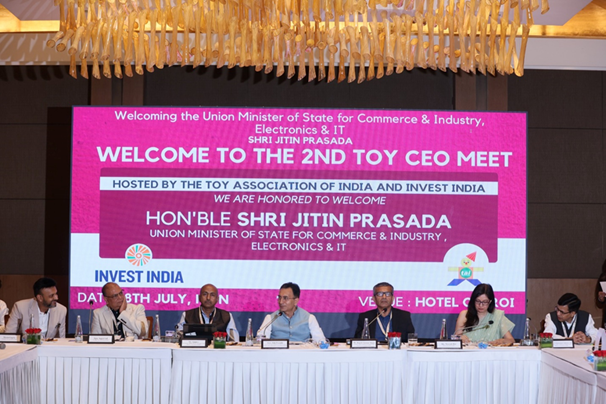
Union Minister of State for Commerce and Industry and Electronics & Information Technology, Shri Jitin Prasada encouraged the toy industry to support Indian artisans, and nurture creativity and imagination through toys that inspire and educate children across the globe. While delivering the keynote address at the ‘2nd Edition of Toy CEO Meet’ organized by the Toy Association of India in association with the Department for Promotion of Industry and Internal Trade (DPIIT) and Invest India, in New Delhi on 8th July 2024, the Minister highlighted the vision of the Prime Minister, Shri Narendra Modi, of, “Sabka Saath, Sabka Vikas, Sabka Vishwas”. He also motivated the participants to continue collaboration and celebrate India’s toy making legacy.
The 2nd Edition of Toy CEO Meet provided a platform for collaboration between the Indian and Global Toy industry, with the aim of working towards the mission of positioning India as a Global Toy Hub. The event was attended by prominent global players including Walmart, Amazon, Spin Master, IMC Toys, etc., and members from the domestic Toy industry including Sunlord Apparels Manufacturing Company Pvt. Ltd., Playgro Toys India Pvt. Ltd, etc.
Secretary, DPIIT, Shri Rajesh Kumar Singh, while addressing the participants highlighted that the initiatives of the Government together with the endeavors of the domestic manufacturers have resulted in remarkable growth of the Indian Toy industry. These developments indicate India’s increasing self-reliance and enhanced manufacturing prowess in toy manufacturing, he said.
Joint Secretary, DPIIT, Shri Sanjiv, applauded the efforts made by the Indian Toy industry, especially the Toy Association of India for successful organization of the 15th Toy Biz International B2B Expo. He encouraged the Toy industry members to continue engaging with DPIIT in case of any challenges and expressed that the mission is to make Indian Toys synonymous with quality, uniqueness, innovation, and sustainability.
While discussing the investment opportunities in India for Toys, CEO & MD, Invest India, Ms. Nivruti Rai, highlighted that India has a huge market potential for investment due to expanding Toy demand with a growing young population.
During the stakeholder discussions, global players such as Walmart, IMC Toys, Spin Master etc. spoke about their own growth stories and expressed enthusiasm to expand operations in India. The vision shared by the speakers provided the audience with insights on the Indian toy industry and opportunities for growth and collaboration. The event has played a pivotal role in harnessing synergies, leveraging complementary strengths, and capitalizing on emerging opportunities in the global marketplace for Indian Toy industry.
This event was a part of the 15th edition of the India Toy Biz International B2B Expo, one of the largest toy fairs in the country, which has brought together prominent global and domestic toy manufacturers, artisans, retailers and Government officials to harness the burgeoning opportunities in the domestic toy sector
India has long been a vibrant centre of artistic expression, with its rich history of public art reflecting the country’s cultural and spiritual diversity. From ancient rock-cut temples and intricate frescoes to grand public sculptures and vibrant street art, Bharat’s landscapes have always been adorned with artistic marvels. Historically, art has been deeply intertwined with daily life, religious practices, and social customs, manifesting through various modalities such as dance, music, theatre, and visual arts.
Project PARI (Public Art of India), an initiative by the Ministry of Culture, Government of India, being executed by Lalit Kala Akademi and National Gallery of ModernArt seeks to bring forth public art that draws inspiration from millennia of artistic heritage (lok kala/lok sanskriti) while incorporating modern themes and techniques. These expressions underscore the intrinsic value that art holds in Indian society, serving as a testament to the nation’s enduring commitment to creativity and artistic expression.
The first intervention under Project PARI is taking place in Delhi. It coincides with the 46th session of the World Heritage Committee scheduled to be held in New Delhi, India between 21-31 July 2024.
The representation of art in public spaces is particularly significant, reflecting the nation’s rich and diverse cultural heritage. The democratization of art through public installations transforms urban landscapes into accessible galleries, where art transcends the confines of traditional venues such as museums and galleries. By integrating art into streets, parks, and transit hubs, these initiatives ensure that artistic experiences are available to one and all. This inclusive approach fosters a shared cultural identity and enhances social cohesion, inviting citizens to engage with art in their daily lives. Project PARI aims at stimulating dialogue, reflection, and inspiration, contributing to the dynamic cultural fabric of the nation.
More than 150 visual artists from all over the country have come together to create the various wall paintings, murals, sculptures and installations being prepared under this project. The creative canvas includes but is not limited to artwork inspired by and /or drawn in styles of Phad paintings (Rajasthan), Thangka painting (Sikkim/Ladakh), miniature painting (Himachal Pradesh), Gond art (Madhya Pradesh), Tanjore paintings (Tamil Nadu), Kalamkari (Andhra Pradesh), Alpona art (West Bengal), Cheriyal painting (Telangana), Pichhwai Painting (Rajasthan), Lanjia Saura (Odisha), Pattachitra (West Bengal), Bani Thani Painting (Rajasthan), Warli (Maharashtra), Pithora Art (Gujarat), Aipan (Uttarakhand), Kerala Murals (Kerala), Alpana art (Tripura) and more.
The proposed sculptures being created for Project PARI include wide ranging ideas that include but are not limited to paying tributes to nature, ideas inspired by the Natyashastra, Gandhi ji, toys of India, hospitality, ancient knowledge, Naad or Primeval Soun, Harmony of life, Kalpataru – the divine tree etc.
In sync with the proposed 46th World Heritage Committee Meeting some of the artworks and sculptures draw inspiration from World Heritage Sites such as Bimbetka and the 7 natural World Heritage Sites in India find a special place in the proposed artworks.
Women artists have been an integral part of Project PARI and their participation in large numbers is a testimony of Bharat’s NARI SHAKTI. Come and join the celebrations. Click your selfie with a Project PARI creation and share your pictures on social media with #ProjectPARI.
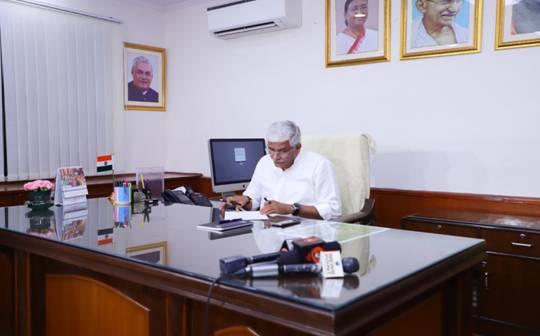
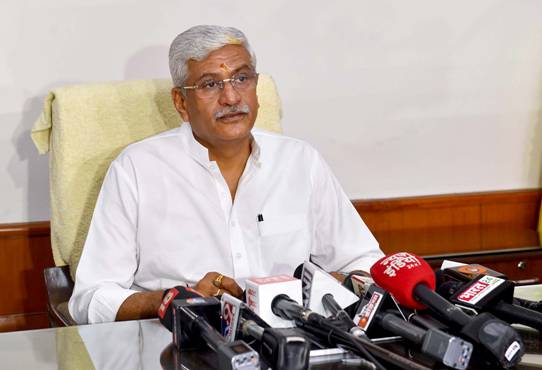
Shri Gajendra Singh Shekhawat assumed charge as Union Minister of Culture, here today. Speaking with the media on the occasion, Shri Shekhawat expressed his gratitude to Prime Minister Shri Narendra Modi for reposing his faith in him and giving this opportunity to preserve, protect and promote the vibrance of Bharateeyata both across our country and the world.
He further stated that in transitioning from India to Bharat, under the leadership of PM Shri Narendra Modi we have been taking giant steps in shedding our colonial cloak and reinstating our glorious cultural heritage. Shri Shekhawat stated that our nation’s growing soft power is in its rich cultural fabric and its myriad manifestations in the form of art, music, dance, textiles among others. ‘Let’s work together to strengthen it in this Amrit kaal and make culture a strong thread to weave Viksit Bharat’, the minister added.
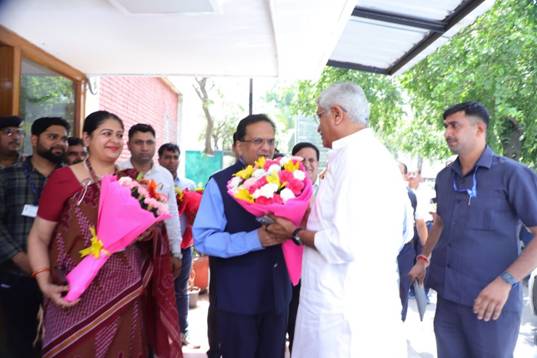
Shri Gajendra Singh Shekhawat was welcomed by Secretary Shri Govind Mohan and other senior officials of the Culture Ministry.
On December 10,2020 when PM Narendra Modi laid the foundation stone of the new parliament building, the deadline for the completion of the project was October 2022 which was shifted to March, 2023. The March deadline was also not met, but everybody knows that the project is near completion, and the inauguration date could be announced any time and as per expectations 28 May is decided as the date for the inauguration of the new Parliament.
It was not surprising that as soon as the announcement was made, many opposition parties started firing allegation towards government. What came as a surprise for many of us was the pacing of ‘Sengol’ in the new parliament building. Many questions hits in mind one by one. What is Sengol? Where was it all the time? Who made it? What does it signify? Where will it be placed? Don’t worry. Your mind will be free from question related to Sengol after reading this write up as it contains answers to all your question.
The historic ‘Sengol’ that is going to be installed in the new parliament building was received by the first PM of India Jawaharlal Nehru from the then Viceroy of India Lord Mountbatten on 14 August 1947 at around 10:45 PM at his residence in the presence of many other prominent leaders of the time. PM Nehru received this as the symbol of the transfer of power from British at his residence. When the decision of the independence of India was final, Lord Mountbatten was sent as the viceroy to complete the process of independence without hinderance. Mountbatten being unaware of rituals and customs of Indian culture he asked PM Nehru about the special ceremony to be organized for the transfer of power. Nehru discussed this with C. Rajagopalachari fondly known as Rajaji, and after extensive research of Indian culture Rajaji told Pandit Nehru about the tradition of transfer of power during Chola dynasty and how ‘Sengol’ was used to mark this.
The Sengol gets its name from the Tamil word ‘semmai’, meaning righteousness. The sceptre is a historical symbol of Independence as it signifies the transfer of power from the British to the Indians. “The Sengol signifies justice, integrity and unfailing good governance of the king who holds it,” said Mani Maran, a Tamil Pandit at Saraswathi Mahal Library in Thanjavur in an interview given to Times of India on Wednesday. “Tamil emperors like Cholas were usually holding a sceptre in their hands. After crowning the new king, his predecessor or the rajaguru handed over the sceptre during the ceremonial occasion. Thiruvalluvar mentions the sceptre while referring to the rule of law. Sangam works like the Silapathikaram mentions the superiority and importance of the sceptre,” he added. Union Home Minister Amit Shah addressing a press conference on Wednesday said, “The ‘sengol’ represents values of fair and equitable governance.”
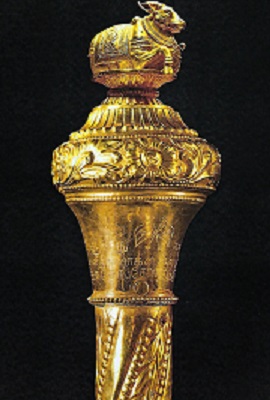
The responsibility of arranging a sceptre was handed to Rajaji by Pandit Nehru. Rajaji reached out to Thiruvaduthurai Atheenam, a well-known mutt in Tamil Nadu’s Tanjore district for assistance and its leader commissioned the manufacturing of the Sengol to Chennai-based “Vummidi Bangaru Chetty” jewelers, as per the official document. It was crafted by two men namely, Vummidi Ethirajulu and Vummidi Sudhakar. It is made of silver with a coat of gold. The sceptre is five feet tall and has a ‘Nandi’ bull on top, symbolizing justice and goddess Laxmi is inscribed on it. It was made in 30 days. According to the official documents, the sceptre was handed to Lord Mountbatten by the Deputy high priest of the Adheenam and was taken back. It was then taken to Pandit Nehru’s house in procession and handed over to him. A special song was rendered, as specified by the high priest. The ceremonial sceptre was kept at the Allahabad Museum, along with several other historical objects associated with Jawaharlal Nehru, as part of the Nehru Gallery of the museum.
Now the Sengol has been moved to Delhi and would be placed near the Lok Sabha speaker’s chair in the new parliament building. Citing resources India Today reported that the Sengol will be ceremoniously transported to the House in a grand procession. The occasion is likely to be steeped in Tamil tradition. The Nadaswaram, would lead the procession with a group of musicians will be playing Tamil Nadu’s traditional instrument. Modi is expected to walk along with the procession. “Adheenams,” or priests from Shaivite mutts in Tamil Nadu, will be present in the Lok Sabha’s Well. The priests will sanctify the Sengol with holy water after Modi greets them at the well, India Today added. The “Oduvars,” or Tamil temple singers, will lyrically recite the “Kolaru Padhigam” in the background as the Nadaswaram musicians enchant with their soulful music. The Sengol will be presented to the prime minister after this revered ceremony and placed in a glass case next to the Speaker’s seat in the House.
After decades of anonymity, this holy sceptre will quadruple the magnificence of new parliament building. and always remind us of the hardship that our forefathers had while fighting for independence and will motivate us to defend this independence.
India is a country of diverse cultures and traditions, with each region and state having its own unique cultural identity. Here are the top ten cultures of India:
North Indian culture – This includes the cultural traditions of states like Punjab, Haryana, Uttar Pradesh, and Delhi, known for their vibrant music, dance, and cuisine, and famous festivals like Holi and Diwali.
South Indian culture – This includes the cultural traditions of states like Tamil Nadu, Kerala, Karnataka, and Andhra Pradesh, known for their rich history, classical dance forms like Bharatanatyam and Kathakali, and delicious cuisine.
East Indian culture – This includes the cultural traditions of states like West Bengal, Assam, and Odisha, known for their unique art and handicrafts, traditional festivals like Durga Puja, and delicious cuisine.
West Indian culture – This includes the cultural traditions of states like Gujarat, Maharashtra, and Goa, known for their rich history, vibrant music and dance forms, and delicious cuisine.
Kashmiri culture – This includes the cultural traditions of the Kashmir valley, known for its beautiful landscapes, traditional handicrafts like Pashmina shawls, and delicious cuisine.
Punjabi culture – This includes the cultural traditions of the state of Punjab, known for its vibrant music and dance forms like Bhangra, and delicious cuisine like Sarson ka Saag and Makki di Roti.
Rajasthani culture – This includes the cultural traditions of the state of Rajasthan, known for its vibrant art and handicrafts, traditional dance forms like Ghoomar and Kalbelia, and delicious cuisine like Dal Bati Churma and Laal Maas.
Bengali culture – This includes the cultural traditions of the state of West Bengal, known for its rich history and literature, traditional music and dance forms like Rabindra Sangeet and Baul, and delicious cuisine like Rosogolla and Sandesh.
Marathi culture – This includes the cultural traditions of the state of Maharashtra, known for its rich history, traditional music and dance forms like Lavani and Koli, and delicious cuisine like Vada Pav and Misal Pav.
Tribal culture – India is home to numerous tribes, each with its unique culture and traditions, known for their traditional art and handicrafts, music, and dance forms, and traditional way of life.
These cultures of India not only represent the country’s rich cultural diversity but also showcase the skill and creativity of its people, making India a unique and vibrant country with a rich cultural heritage.
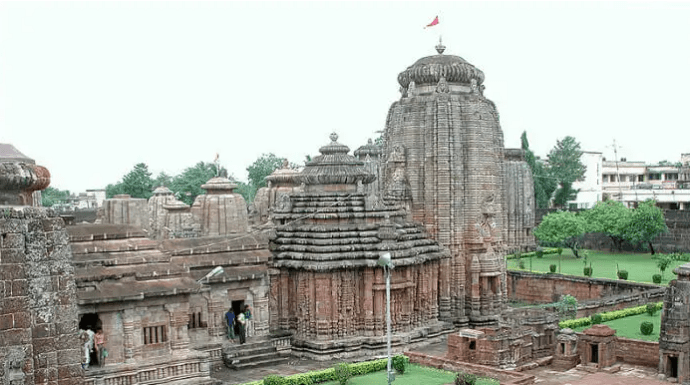
The 54m-high Lingaraj Mandir dedicated to Shiva dates from 1090 to 1104 – though some parts are more than 1400 years old–and is surrounded by several smaller temples and shrines. The granite block within, representing Tribhubaneswar (Lord of Three Worlds), is bathed daily with water, milk and bhang (marijuana). The main gate, guarded by two mustachioed yellow lions, is a spectacle in itself as lines of pilgrims approach with offerings in hand. The temple is closed to non-Hindus.
Given the high compound wall, foreigners can view the temple’s interiors only from a viewing platform (this may also include Hindu foreigners). Face the main entrance, walk right, then follow the wall around to the left and find the viewing platform on your left, just before you reach Chitrakarini Temple. There is occasional aggressive hassling for ‘donations’ at the viewing platform. The money will not go to the temple, so stand your ground and do not pay.
Location: Lingaraj Road, Old Town Bhubaneswar, Odisha Timings: 5:00 AM to 9:00 PM Entry Fees: No entry fee
Nandankanan Zoological Park
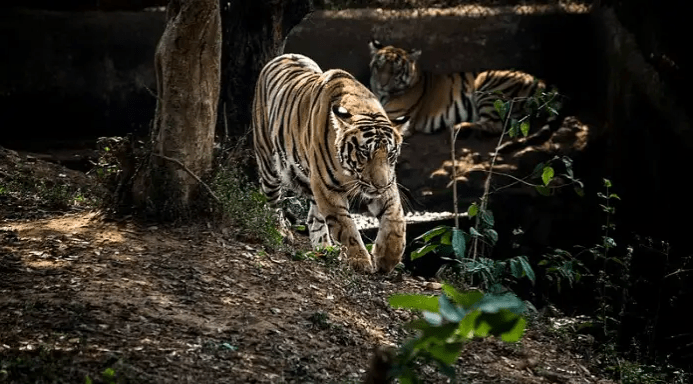
Spread over 400 hectares in the Chandaka forest lies the impressive Nandankanan Zoological Park. Located on the banks of Kanjia Lake, this zoo is home to over 67 kinds of mammals, 81 species of birds and 18 varieties of reptiles. It was the first zoo in India to join the World Association of Zoos and Aquariums (WAZA) and also houses a botanical garden. Visitors can see black panthers, white tigers, gharial crocodiles and many other animals, birds and reptiles in an attempt to maintain the natural balance of nature against the growing urbanisation of Bhubaneswar.
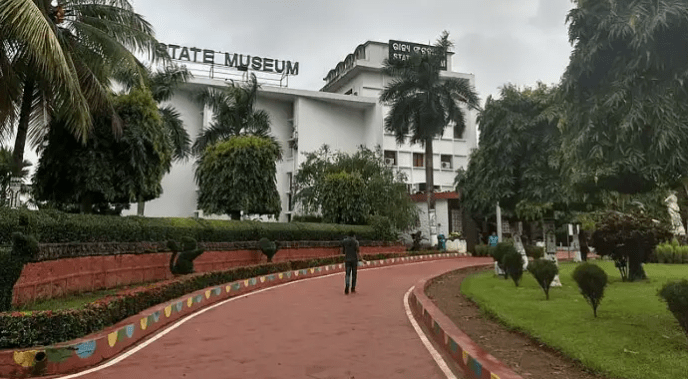
Wondering what to do in Bhubaneswar? Visit Odisha State Museum, which houses a treasure trove of artifacts emphasizing the magnificent history of the state and the families which ruled it for centuries. The museum, established in the year 1948, houses the best collection of erratic palm-leaf manuscripts, scroll paintings, folk musical instruments, and Bronze Age tools.
Location: Near Lewis Road, Kalpana Square, BJB Nagar Bhubaneswar, Odisha Timings: 10 AM to 5.00 PM Entry Fees: INR 10 for Indians and INR 50 for foreigners
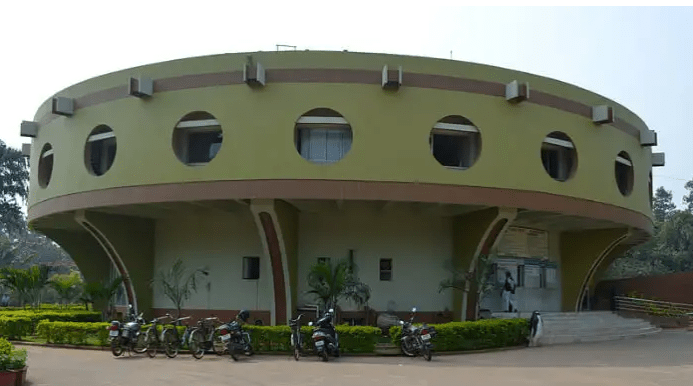
Pathani Samanta Planetarium
The Pathani Samanta Planetarium was recognized to create awareness of astrophysics, astronomy, and space science. Multiple shows, workshops, regular conferences about outer space are organized here. There is an extensive library with an impressive number of books from the field of astronomy, science and technology are there.
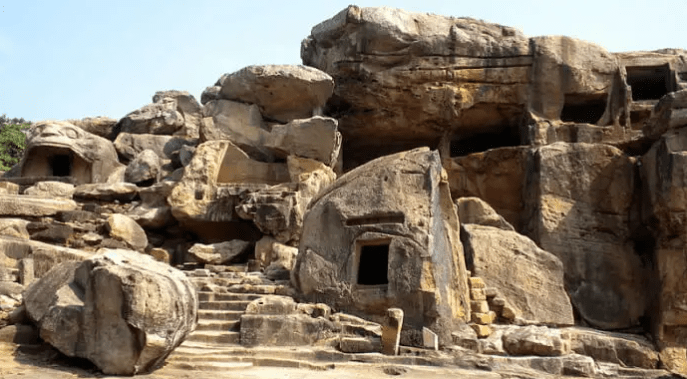
Udayagiri and Khandagiri caves are located six kilometres to the west of Bhubaneswar. These caves offer a brief look into the history of Jain religion and Kalinga Empire. The names of these caves were derived from the hills on which they are located. The caves have been numbered according to the Archaeological Survey of India, Hatigumpha, and Ganesha Gumpha are the most popular in the area. Cave 1 is decked out by sculptural wall painting with carved figures of athletes, women, elephants, and geese carrying flowers.
Location: Khandagiri, Bhubaneswar, Odisha Timings: 9.00 AM to 6.00 PM Entry Fees: INR 15 for Indians and INR 200 for foreigners
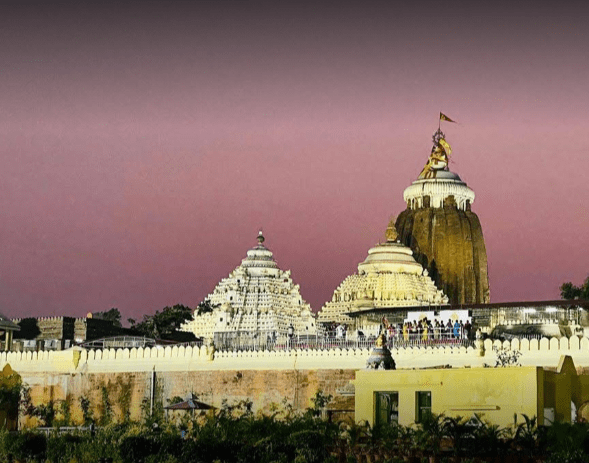
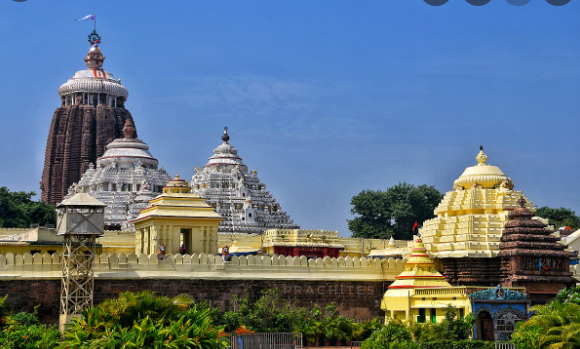
Shri Jagannath’s Temple in Puri has uttermost importance for the Hindu devotees as it is one of the Char-Dham pilgrimages i.e. Puri, Dwaraka, Badrinath, and Rameshwar. This temple is famous for its annual Rath Yatra, but that’s not the sole reason people worship Lord Jagannath and Devi Subhadra and elder brother Lord Balabhadra.
Jagannath Puri is also famous for the mysteries and undefinable facts that catch the traveler’s eye worldwide. Devotees believe that all these are blessings of Lord Jagannath, and people who consider these as myths should visit the place themselves and find themselves dumbfounded. So, here are some most intriguing facts about Jagannath Puri.
1. No birds, no planes fly above the Lord
They say no one’s above God, so nothing flies above it. It’ll leave you surprised to encounter such a divine miracle that no birds, no planes fly above the temple. This is a rare contrast compared to other temples, as we have always seen birds resting on the top of temples are other entities. The temple is considered as a no-fly zone, not by any state government orders but by the Lord himself. And this phenomenon apparently has no scientific explanation.
2. Flag defying the power of wind
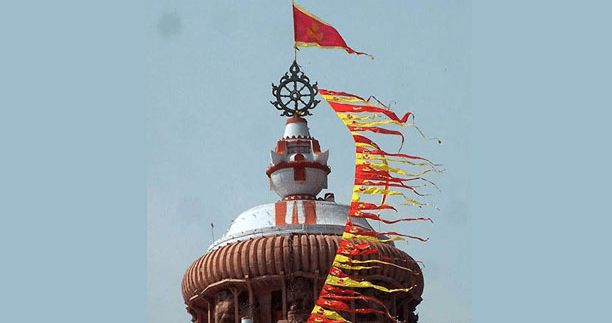
All of us know that any cloth flows towards wind direction, be it the sails of ship or the kites we flew in our childhoods. But here, the flag that flies atop of the Jagannath temple is an exception to this common principle. No scientific explanations reason the flag flow in the opposite direction of wind.
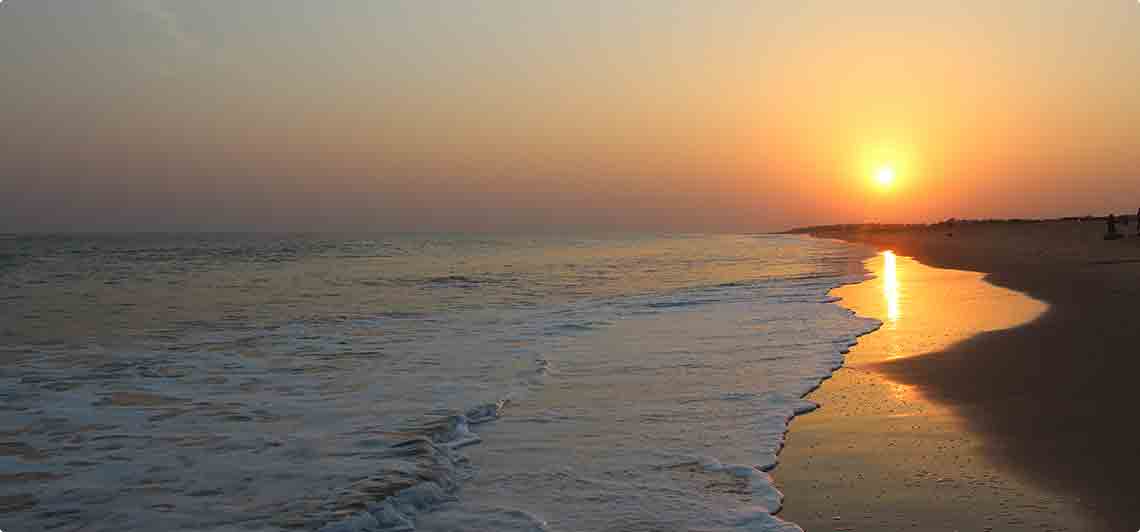
3. Mute oceans
As soon as you step inside the main door, i.e. Singha Dwara entrance of the temple, you can’t hear the burble of water. And this phenomenon is more prominent in the evenings. But once you step out the audibility of water returns. It’s said that Devi Subhadra wished for serenity inside the temple walls and by this her wish was duly fulfilled.
4. Neela Chakra at the pinnacle
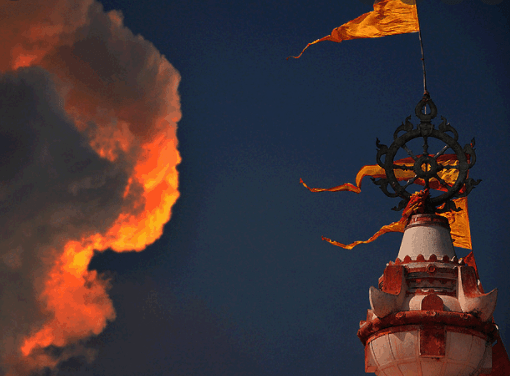
The riddle of Neela Chakra (Blue wheel) has still been unsolved. First, just think about the fact, how did the wheel made of 8 different alloys and a 36 feet circumference get up there at the pinnacle with just a human force of that century. Second, the view of this wheel doesn’t really depend on the direction that we look at it from. It’s like it was designed to look the same from all directions.
5. The temple casts no shadows
Every small object/thing/ peoples have shadows. But ever wondered what if something doesn’t have a shadow? The temple Jagannath Puri doesn’t cast any shadow on any part of the day under sunlight. If this is not a miracle, what would it be; just an unexplained phenomenon with no scientific reason to back up.
6. The magical techniques to cook
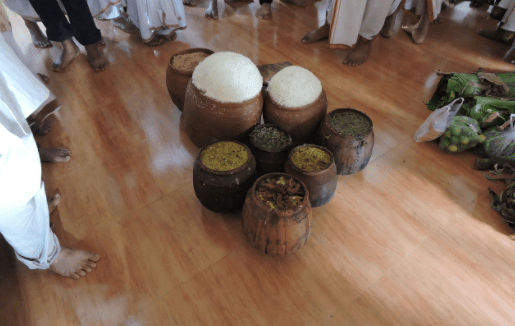
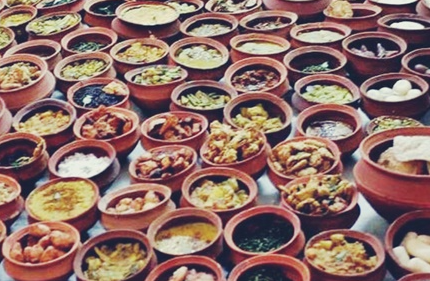
The traditional methods for cooking the mahaprasadam have been preserved here from the start. They place exactly 7 pots, one above the other on the firewood. Enchantingly, the upper pot gets cooked first, followed by the rest in order.
7. Mahaprasad never goes vain here
In India, wasting food is considered as a bad sign; the temple crew lives by this same. So, here at Jagannath temple the food is never futile, even if the crowd of devotees may vary from 2,000 to 2,00,000. Miraculously, the Parsadam prepared every day is never wasted, not even a bite. Could this be an effective management or the Lord’s will?
After reading such celestial facts, you might want to see them yourself. So, do not forget to check these facts on your next trip to Odisha and share your experience with me.
The Prime Minister, Shri Narendra Modi flagged off the World’s Longest River Cruise-MV Ganga Vilas and inaugurated the Tent City at Varanasi via video conferencing today. He also inaugurated and laid the foundation stones for several other inland waterways projects worth more than Rs. 1000 crores during the event. In line with the Prime Minister’s endeavour to boost river cruise tourism, the huge untapped potential of river cruises will get unlocked with the launch of this service and it will herald a new age of river cruise tourism for India.
Addressing the gathering, the Prime Minister hailed Lord Mahadev and greeted everyone on the auspicious occasion of Lohri. The Prime Minister emphasised charity, faith, tapasya and faith in our festivals and the role of rivers in them. This makes the projects related to river waterways all the more significant, he said. He pointed out that the longest river cruise from Kashi to Dibrugarh is being flagged off today which will bring to the fore, places of tourism in North India on the world tourism map. He said other projects being dedicated today in Varanasi, West Bengal, Uttar Pradesh and Bihar, Assam worth 1000 crore will give a push to the tourism and employment potential in eastern India.
Underlining the central role of river Ganga in the life of every Indian, the Prime Minister lamented that the area around the banks lagged behind in development in the post-independence period thereby leading to a massive exodus of population from this area. The Prime Minister elaborated on a twin approach to address this unfortunate situation. On the one hand, the campaign to clean Ganga was undertaken through Namami Gange and ‘Arth Ganga’ was taken up on the other. In ‘Arth Ganga’ steps have been taken to create an environment of economic dynamism in the states from where Ganga passes.
Directly addressing the tourists from foreign countries who are traveling on the maiden journey of the cruise, the Prime Minister said, “Today India has everything and a lot beyond your imagination.” He further added that India can only be experienced from the heart as the nation has welcomed everyone with open hearts irrespective of region or religion, creed or country and welcomed tourists from all parts of the world.
Throwing light on the experience of the river cruise, the Prime Minister informed that it has something special for everyone. He added that those seeking spirituality will cover destinations like Kashi, Bodh Gaya, Vikramshila, Patna Sahib and Majuli, tourists looking out for a multinational cruise experience will get the opportunity to via Dhaka in Bangladesh, and those wanting to witness the natural diversity of India will cross through Sundarbans and the forests of Assam. Observing that the cruise will pass through 25 different river streams, the Prime Minister said that this cruise has significant importance for those who have a keen interest in understanding the river systems of India. He also mentioned that it is a golden opportunity for those who want to explore the myriad culinary and cuisines of India. “One can witness the extraordinary amalgamation of the heritage of India and its modernity on this cruise”, the Prime Minister remarked as he shed light on the new era of cruise tourism where new employment opportunities will be created for the youth of the country. “Not just foreign tourists but Indians who traveled to different nations for such an experience can head towards North India now”, the Prime Minister said. He also informed that similar experiences are being readied in other inland waterways of the country to give a boost to cruise tourism while keeping in mind the budget as well as the luxury experience.
The Prime Minister also mentioned that India is entering into a robust phase of tourism as with a growing global profile, curiosity about India is also increasing. That is why, said the Prime Minister, in the last 8 years various steps were taken to expand the tourism sector in the country. Places of faith were developed on priority and Kashi is a live example of such efforts. With improved facilities and the rejuvenation of Kashi Vishvanath Dham, Kashi has seen a huge increase in the number of visiting devotees. This has given a massive boost to the local economy. The New Tent City, infused with modernity, spirituality and faith, will provide a novel experience to the tourists.
The Prime Minister said that today’s event is a reflection of the policies, decisions and direction taken after 2014 in the country. “This decade of the 21st century is a decade of infrastructure transformation in India. India is witnessing a level of infrastructure which was unimaginable a few years ago.” He said from Social infrastructure like houses, toilets, hospitals, electricity, water, cooking gas, educational institutes to digital infrastructure to physical connectivity infrastructure like railways, waterways, airways and roads, all these are strong indicators of the rapid growth of India. In all the fields India is seeing the best and biggest, he pointed out.
The Prime Minister underlined the low usage of river waterways in India before 2014 despite the rich history in this mode of transport in the country. Post 2014, India is harnessing this ancient strength to the cause of modern India. There is a new law and detailed action plan for developing waterways in big rivers of the country. The Prime Minister informed that in 2014 only 5 national waterways were there in the country, now there are 111 national waterways in the country and about two dozen are in operation already. Similarly, there has been a 3 times increase in cargo transportation via river waterways from 30 lakh metric tonnes 8 years ago.
Coming back to the theme of development of eastern India, the Prime Minister said that today’s events will help in making eastern India a growth engine for Developed India. This connects Haldia multimodal terminal with Varanasi and is also connected with India Bangladesh protocol route and Northeast. This also connects Kolkata port and Bangladesh. This will facilitate business from Uttar Pradesh, Bihar, Jharkhand, and West Bengal to Bangladesh.
Emphasising the need for training of the staff and skilled workforce, the Prime Minister informed that a Skill Development Center has been set up in Guwahati and a new facility is also being constructed in Guwahati for the repairing of ships. “Be it a cruise ship or a cargo ship, they not only give a boost to transport and tourism, but the entire industry associated with their service also creates new opportunities”, the Prime Minister said.
Referring to a study conducted, the Prime Minister informed that waterways are not just beneficial to the environment but also help in saving money. He said that the cost of operating waterways is two and a half times lesser than that of roadways, and one-third lesser when compared to railways. The Prime Minister also touched upon the National Logistics Policy and said that India has the potential to develop a waterway network of thousands of kilometres. He also emphasised that India has more than 125 rivers and river streams which can be developed to transport goods and ferry people while also giving impetus to further expanding port-led development. He emphasised the need to build a modern multi-modal network of waterways and informed about the partnerships with Bangladesh and other countries which have strengthened the water connectivity in the Northeast.
Concluding the address, the Prime Minister remarked on the continuous development process of developing waterways in India and said, “Strong connectivity is essential for building a developed India.” The Prime Minister expressed the belief that the river of India will give new heights to water power and trade and tourism of the country and wished a pleasant journey to all the cruise passengers.
Chief Minister of Uttar Pradesh, Shri Yogi Adiyanath, Chief Minister of Assam, Shri Himanta Biswa Sarma, Union Minister of Port Shipping and Waterways, Shri Sarbananda Sonowal among others were present on the occasion.
Background
MV Ganga Vilas
MV Ganga Vilas will begin its journey from Varanasi in Uttar Pradesh and travel around 3,200 km in 51 days to reach Dibrugarh in Assam via Bangladesh, sailing across 27 river systems in India and Bangladesh. MV Ganga Vilas has three decks, 18 suites on board with a capacity of 36 tourists, with all the luxury amenities. The maiden voyage has 32 tourists from Switzerland signing up for the entire length of the journey.
The MV Ganga Vilas cruise is curated to bring out the best of the country to be showcased to the world. The 51 days cruise is planned with visits to 50 tourist spots including World Heritage Sites, National Parks, River Ghats, and major cities like Patna in Bihar, Sahibganj in Jharkhand, Kolkata in West Bengal, Dhaka in Bangladesh and Guwahati in Assam. The journey will give the tourists an opportunity to embark upon an experiential voyage and indulge in the art, culture, history, and spirituality of India and Bangladesh.
In line with PM’s endeavour to boost river cruise tourism, the huge untapped potential of river cruises will get unlocked with the launch of this service and it will herald a new age of river cruise tourism for India.
Tent City at Varanasi
Tent City has been conceptualised on the banks of the River Ganga to tap the potential of tourism in the region. The project has been developed opposite to city ghats which will provide accommodation facilities and cater to the increased tourist influx in Varanasi, especially since the inauguration of Kashi Vishwanath Dham. It has been developed by Varanasi Development Authority in PPP mode. The tourists will reach the Tent City by boats from different Ghats situated in the vicinity. The tent city will be operational from October to June every year and will be dismantled for three months due to the rise in river water level in the rainy season.
Inland Waterway projects
Prime Minister will inaugurate Haldia Multi-Modal Terminal in West Bengal. Developed under Jal Marg Vikas Project, Haldia Multi-Modal Terminal has a cargo handling capacity of around over 3 Million Metric Tonne Per Annum (MMTPA) and the berths are designed to handle vessels up to around 3000 Deadweight tonnage (DWT).
The Prime Minister also inaugurated four floating community jetties at Saidpur, Chochakpur, Zamania in Ghazipur district and at Kanspur in Ballia district in Uttar Pradesh. Besides, the Prime Minister laid foundation stones for the five Community Jetties at Digha, Nakta Diyara, Barh, Panapur in Patna district and Hasanpur in Samastipur district in Bihar. More than 60 community jetties are being constructed along the river Ganga across the states of Uttar Pradesh, Bihar, Jharkhand and West Bengal to boost the economic activities and improve the livelihoods of local communities in the region. The community jetties would play a key role in improving the livelihoods of people by providing simple logistics solutions for small farmers, fishery units, unorganised farm-producing units, horticulturists, florists and artisans focussing on economic activities in and around the hinterland of river Ganga.
The Prime Minister also inaugurated the Maritime Skill Development Centre for North East at Guwahati. It will help hone the rich talent pool in the North Eastern region and will provide for better employment opportunities in the burgeoning logistics industry.
In addition to these, the Prime Minister also laid the foundation stone for a ship repair facility and an elevated road at Pandu Terminal in Guwahati. The Ship Repair facility at the Pandu Terminal will save a lot of valuable time as it takes more than a month for a ship to be transported to the Kolkata Repair facility and back. Moreover, it will also result in huge savings in terms of money as the transportation cost of the ship will also be saved. The dedicated road connecting the Pandu Terminal to NH 27 will enable 24-hour connectivity.
Northern India has emerged as the most favoured spiritual travel destination followed by Southern, Western and Eastern regions in the country, reveals OYO Cultural Travel 2022 Roundup Report by global hospitality chain OYO.
Regarded as the spiritual capital of India, Varanasi, which is also one of the oldest cities in the world, emerged as the top religious destination for bookers across India. This was followed by Tirupati, Puri, Amritsar and Haridwar, as per the report.
In the North zone, Varanasi emerged as the most popular destination due to its favored status among Hindus and Buddhists. This was followed by Prayagraj, Amritsar, Haridwar, Katra, and Rishikesh.
The cultural cities of Vijayawada, Mysore, Tirupati, Madurai and Vellore were most favored in South India. In the West zone, Shirdi received the maximum traction from travellers followed by Mahabaleshwar, Nashik, Ujjain, and Pushkar. Goa, which has always been a popular tourist spot, was the most favoured destinations in East India, along with Puri.






 Eduindex
You must be logged in to post a comment.