Poverty

Poverty! Poverty is lack of food, Poverty is lack of shelter, Poverty is being sick and can not afford medicines, Poverty is knowing how to read but can’t afford going to School, Poverty is being unemployed. And Poverty is lack of representation and freedom.Poverty has so many faces, and can describe in different ways. Most often, poverty is a situation people want to escape.

We have to take the step to reduce poverty so that many more may have enough food to eat, adequate shelter to cover their head, access to education and health.Overpopulation and underdevelopment in the country is the main cause for poverty. The birth rate in India is very high and the former has taken the measure of the ‘one child policy’ to change the situation, but the latter has not made any effort yet.

Underdevelopment is another reason, the country do not have enough economic growth to support their growing populations.Poverty in India can eradicate with some effective programmes, just need a joint effort from everyone not only from the government. Government of India should make effective policies aiming to develop rural areas through the key components like primary education, population control policies, family welfare, job creation and many more.

We can define poverty as the condition where the basic needs of a family, like food, shelter, clothing, and education are not fulfilled. It can lead to other problems like poor literacy, unemployment, malnutrition, etc. A poor person is not able to get education due to lack of money and therefore remains unemployed. An unemployed person is not able to buy enough & nutritious food for his family and their health decline. A weak person lacks the energy required for the job. A jobless person remains poor only. Thus we can say that poverty is the root cause of other problems.

How Poverty is Measured?

For measuring poverty United nations have devised two measures of poverty – Absolute & relative poverty.  Absolute poverty is used to measure poverty in developing countries like India. Relative poverty is used to measure poverty in developed countries like the USA. In absolute poverty, a line based on the minimum level of income has been created & is called a poverty line.  If per day income of a family is below this level, then it is poor or below the poverty line. If per day income of a family is above this level, then it is non-poor or above the poverty line. In India, the new poverty line is  Rs 32 in rural areas and Rs 47 in urban areas.

Causes of Poverty

According to the Noble prize winner South African leader, Nelson Mandela – “Poverty is not natural, it is manmade”. The above statement is true as the causes of poverty are generally man-made. There are various causes of poverty but the most important is population. Rising population is putting the burden on the resources & budget of countries. Governments are finding difficult to provide food, shelter & employment to the rising population.

The other causes are- lack of education, war, natural disaster, lack of employment, lack of infrastructure, political instability, etc. For instance- lack of employment opportunities makes a person jobless & he is not able to earn enough to fulfill the basic necessities of his family & becomes poor. Lack of education compels a person for less paying jobs & it makes him poorer. Lack of infrastructure means there are no industries, banks, etc. in a country resulting in lack of employment opportunities. Natural disasters like flood, earthquake also contribute to poverty.

In some countries, especially African countries like Somalia, a long period of civil war has made poverty widespread. This is because all the resources & money is being spent in war instead of public welfare. Countries like India, Pakistan, Bangladesh, etc. are prone to natural disasters like cyclone, etc. These disasters occur every year causing poverty to rise.

Ill Effects of Poverty

Poverty affects the life of a poor family. A poor person is not able to take proper food & nutrition &his capacity to work reduces. Reduced capacity to work further reduces his income, making him poorer. Children from poor family never get proper schooling & proper nutrition. They have to work to support their family & this destroys their childhood. Some of them may also involve in crimes like theft, murder, robbery, etc. A poor person remains uneducated & is forced to live under unhygienic conditions in slums. There are no proper sanitation & drinking water facility in slums & he falls ill often &  his health deteriorates. A poor person generally dies an early death. So, all social evils are related to poverty.

Government Schemes to Remove Poverty

The government of India also took several measures to eradicate poverty from India. Some of them are – creating employment opportunities, controlling population, etc. In India, about 60% of the population is still dependent on agriculture for its livelihood. Government has taken certain measures to promote agriculture in India. The government constructed certain dams & canals in our country to provide easy availability of water for irrigation. Government has also taken steps for the cheap availability of seeds & farming equipment to promote agriculture. Government is also promoting farming of cash crops like cotton, instead of food crops. In cities, the government is promoting industrialization to create more jobs. Government has also opened  ‘Ration shops’. Other measures include providing free & compulsory education for children up to 14 years of age, scholarship to deserving students from a poor background, providing subsidized houses to poor people, etc.

Poverty is a social evil, we can also contribute to control it. For example- we can simply donate old clothes to poor people, we can also sponsor the education of a poor child or we can utilize our free time by teaching poor students. Remember before wasting food, somebody is still sleeping hungry.


Photo by namo deet on Pexels.com

Brief History of Hindi Cinema.

In the course of its long history, the Hindi Cinema has gone through constant evolutions and is still witnessing massive socio-cultural changes, however, from substantive and insular point of view; the Hindi Film Industry still retains its own unique and peculiar characteristics. Since the beginning, the Hindi Cinema has drawn its inspiration from the styles and aesthetics of the mega diverse Indian culture.

In general great emphasis has been put on classical Indian traditions over the years including Indian storytelling, epics, and poems and like. Although movies came to India in July 1896 as famous French Lumiere Brothers screened their short films in Watson Hotel, Mumbai, the first ever Indian film was ‘Raja Harishchandra’, a mythological film released in 1913 directed by Dada Saheb Phalke, who is often called as the father of Indian Cinema.

Film Poster of Raja Harishchandra, 1913.

Raja Harishchandra being a silent film had Hindi, Marathi and English interfiles. In 1905, filmmaker Hiralal Sen documented “Swadeshi Movement of India” and screened it at Town Hall, Calcutta on 22nd of September which is considered as India’s first political film. H.S. Bhatavdekar’s first movie and the first film by an Indian Filmmaker was shot in 1899 in which he shot a Wrestling Match in Mumbai’s Hanging Gardens. By the 1930s, the industry was producing 200 films per year and it was in 1931, the industry had its first sound film named ‘Alam Ara’ by director Ardeshir Irani which had a mixture of both Hindi and Urdu.

Alam Ara, India’s first Sound Film. (1931)

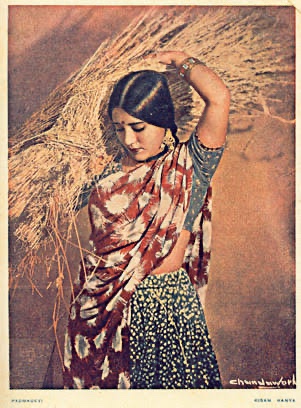
Since then the talkie films quickly were in high demand by the audience mostly in big cities and hence the industry permanently switched to sound films. The first ever Hindi color film was released in 1937 by Ardeshar Irani named “Kisan Kanya ”, however the colour films became popular among the audience only in late 1950s and early 1960s. The industry has also witnessed the breakdown of the studio system and complete on location shooting over the years. At present, Hindi Cinema produces over 1000 movies per year.

A still from Kisan Kanya (1937).

The Song and Dance Sequences

As mentioned earlier, the Hindi movies have always been a reflection of Indian culture and so hasn’t been any Hindi movie without a song till date. Two of the major characteristics of Hindi Cinema are songs and dance sequences. In fact, these two unique features are considered as the ‘peculiarities’ of Hindi Cinema which separates it from Hollywood or any other foreign film industry. In earlier times whenever there was a requirement of steamy scenes in movies, the protagonists, that is the hero and the heroine used to indulge into a song and dance sequel. The song and dance sequences pop up here and there according to necessary requirements and situations. The 1932 movie Indra Sabha was one of the first Indian movies with over 70 songs.

Film Poster of Indra Sabha (1932).

Truly, Hindi Cinema has entertained audiences worldwide for more than a century now. Informally and popularly known as Bollywood, Hindi Films will always have a special place in hearts of millions of Bollywood fans!

Deserts

In the world we find varied geographical regions which includes mountains, plains, deserts, plateaus all with their own physical features. Desert is basically a piece of barren land which is filled with sand and lacks water bodies and have dry weather all along. In day time deserts are extremely heated up and at night it becomes chilling cold at the same place. In the Indian subcontinent we find desert in the western part of the subcontinent in the state of Rajasthan.

The animals and plants in the deserts have their own adaptations, among plants we find a variety of cactus, cactus plants have special adaptations to survive in the desert, they have fleshy stem which holds water in them which turns out to be useful when there is scarcity of water also they have very long roots which can penetrate deep inside the soil in search of water also they don’t have leaves and have thorns in place of them in cactus the food is prepared in the step as it contains chlorophyll and is green in color. Also, we find camel in desert their feet have adaptation to walk on the sand also they can survive with less water and they have long eyelashes to protect their eyes from dust storms.

Types of Deserts :

1. Coastal Deserts :

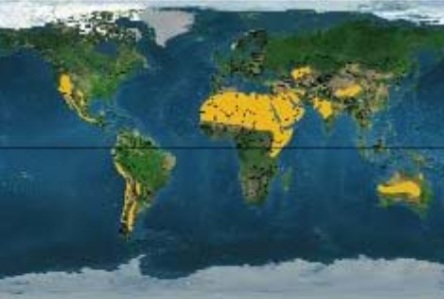
Coastal deserts occur in cool to warm areas along the coast. They have cool winters and long, warm summers. Coastal deserts are located on the west coasts of continents between 20° to 30° lattitude. Winds off the coast blows in an easterly pattern and prevents the moisture from moving onto the land. The Namib desert in Africa and the Atacama desert in chile are coastal deserts.

2. Subtropical Deserts :

Subtropical deserts the hottest deserts. They are found in Asia, Australia, Africa and North and south America. In the united states, the chilhuahuan, sonoran and Mojave are all subtropical deserts. Subtropical deserts are very hot and dry in the summner and cooler but still dry in the winter. Rainfall happens in short bursts. The air is so hot and dry in these deserts that sometimes rain evaportaes before it even has a chance to hit the ground. The soil in subtropical deserts is usually either sandy or coarse and rocky.
Plants and animals in subtropical deserts must be able to withstand the hot temperatures and lack of moisture. Shrubs and small trees in the subtropical desert usually have leaves adapted to retain moisture. Animals in sbtropical deserts are usually active at night, when it is cooler.

3. Cold wintet Deserts :

Cold winter deserts are also known as semiarid deserts . They have long, dry summers and cold winters with low rain or snowfall. In the united states the Great basin, the colorado plateau and the Red Desert are all cold winter deserts. Other cold winter deserts include the Gobi desert in china and Mongolia and the patagonian desert in Argentina. The lack of rainfall in cloud winter deserts is often caused by the rainshadow effect. The rainshadow effect happens when a high mountain range stops moisture from reaching an area. The Himalayan Mountain prevent rainfall from reaching the Gobi desert.

4. Ploar Deserts :

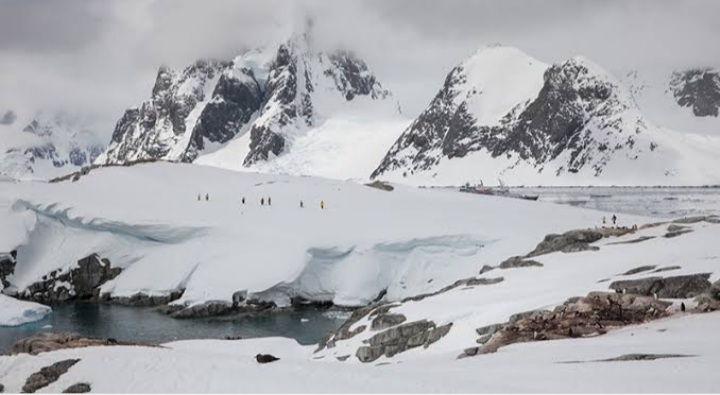
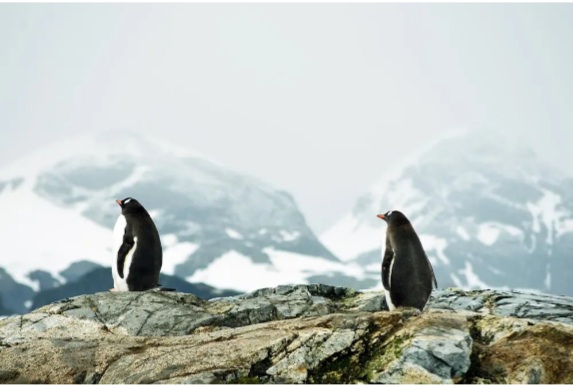
Polar deserts are found in the Arctic and Antarctic regions. Like warmer deserts, they also get very little precipitation.polar deserts are cold year- round.

Largest Desert in the world :

The antarctic polar Desert, which makes up the vast majority of Antarctica, is the largest desert in the world. In fact this single desert is larger than the combined size of the Gobi Desert, the Arabian Desert, and the sahara Desert.

* The driest desert of the world Atacama is surely the most dangerous desert of all.

The strongest animal in the Desert :

Based on strength to weight ratio, the dung beetle of the scarab is the strongest creature on earth. They can lift 1141 times their own body weight. It helps them a lot in finding the mate and food. The dung beetles also constitute a large percentage of scarab family.

The 7 hardest Animals to Hunt :

* Leopards

* Mountain Goats.

* Elk

* Eland.

* cape Buffalo

* Roan and sable

* Bears.

what can kill you in the Desert?

Aside from the oppressive heat and lack of water, the desert is also full of critters that can bite and sting. Some of these guys can even kill you if you aren’t able to find medical help. Spiders, scorpions, centipedes, and snakes are all found in dark places , abandoned builidings and under rocks.

Most Famous Deserts :

* Namib Desert – Africa

* Atacama Desert – South Americs.

* sahara Desert – Africa

* Gobi Desert – china

* Mojave Desert – Nevada

* Antarctic Desert – Antarctica

* Sonoran Desert – USA

* Thar Desert – India

* Rub’al khali – saudi Arabia

* Tabernas Desert – spain

* Taklamakan Desert – central Asia

* pinnacles Desert – Australia

* Salar de uyuni Desert – Bolivia

* Dasht- e kavir – Iran

* Chihuahuan Desert –New Mexico

* White Desert, Farafra – Egypt

Music – Unarticulated yet a Beautiful Language

Photo by cottonbro on Pexels.com

Every living creature living in this universe is divided into different fragments of communities and societies. These societies are present in different countries and parts where we are all unique by the language and culture which we follow which represents our originality.

One thing which we all are united with each other is “Music”. It is one simple form of Art that makes all of us as one human being Community. The beautiful thing about Music is that it doesn’t need any language to be understood neither one tries to understand, rather music is a language of the heart. It is a feeling that everyone connects when they hear music.

Music in Diversity

A language, country, and Culture have always made a bridge among people and created consequences and war between them, but the only thing which unities all humans and breaks these boundaries are the presence of Music.

 In Today’s era, we are all Living in Multicultural communities where we have different types of music tastes and our preferences are unique just like us,  We have people around us who listen to different types of music which don’t match with ours, yet we are all united by music.

Music always creates a sense of belongingness among each other, even though we are unaware of each other’s religion, language and country but through music, it keeps us closer to each other.

We all have some kind of music that connects to our hearts and feelings, we get more connected because the magic a musician uses connects with our own life.

Music is a medium through which our soul remains blissful and we feel stressed from our bustling lives.

For decades, Music is one of those art forms which have revolutionized in many versions but have always gained popularity due to the sense of connectedness between the audiences and the Musicians.

Dated back then, when people used to watch operas which were one of the common elite forms of entertainments, which not only portrayed music but traveled through many stories through the tune of every string played through the music Instruments.

Music took a major role in plays and dramas, which is still Engraved in our magnificent history. It has also contributed a massive hand in legends of  Literature. There were many prominent writers like Jane Austen and Pablo Neruda who claimed music as one of the key factors of human harmony.

Music always renovates as the decades passed by, presently music comes under the Category of Pop Music or Pop culture where many bands are popularizing music by making people aware of how music is important and how it plays a vital role to connect and how even in today’s generation music is helping society to know about the moral attitudes which we all need as human beings.

There are several forms of Music, taking one of the examples is K Pop Music which is gaining worldwide recognition with a high amount of social awareness. We can never forget some great bands like “The Beatles”, who are still considered one of the best Classical bands to date.

BTS“, one of the famously known Boy Bands who are on the top-notch with the extraordinary songs and contribution they are providing to the music industry. There is a fandom for BTS all over the world that shows us that people don’t need any language to get connect rather it’s a heart-to-heart language to understand and feel the music.

Music was never meant to be always vocal, sometimes just a tune is all you need to connect, as rightly some artists like Mozart, Chopin’s explained us through their beautiful music.

Music Is a language that not only connects with a mind and body but also with a soul. No matter whatever the occasion is we humans were bound with music and music has different versions for different situations. The world of Music accepts a very living being that has a soul to connect with.

“We all just need a music to connect, rest the music will ultimately unite us with its alluring tune which strings with our heart forever”.

What is Social Conformity ?

The society maintains its order by means of the Normative system .
Normativity is the phenomenon in human societies of designating some actions or outcomes as good or desirable or permissible and others as bad or undesirable or impermissible. A norm in this normative sense means a standard for evaluating or making judgments about behavior or outcomes.

Normative system refers to the system of rules which the people are expected to accept , obey and appreciate .

When the people act in consonance with the norms they become “Conformists “.

People often choose to conform to society rather than to pursue personal desires – because it is often easier to follow the path others have made already, rather than forging a new one.

Norms which are implicit, specific rules, shared by a group of individuals .
Conformity is action that is oriented to social norms and falls within the range of behaviour permitted by the norms .

Hence , conformity is the act of matching attitudes, beliefs, and behaviors to group norms.
Unwillingness to conform carries the risk of social rejection. Conformity strongly affects humans of all ages.

Conformity implies behaving in accordance with the norms .
It implies that the individual consciously approves of a particular behaviour and is presented to follow the same .

___________________________________________

Types of Conformity :-

Kelman stated three different types of conformity:

Compliance (or group acceptance)

According to Kelman, , this occurs
when an individual accepts influence because he hopes to achieve a favorable reaction from another person or group. He adopts the induced behavior because….he expects to gain specific rewards or approval and avoid specific punishment or disapproval by conformity “

Compliance stops when there are no group pressures to conform, and is therefore a temporary behavior change.

Internalization (genuine acceptance of group norms)
According to Kelman , this occurs ‘

when an individual accepts influence because the content of the induced behavior – the ideas and actions of which it is composed – is intrinsically rewarding. He adopts the induced behavior because it is congruent [consistent] with his value system”

This is the deepest level of conformity where the beliefs of the group become part of the individual’s own belief system. This means the change in behavior is permanent. Internalization always involves public and private conformity. A person publicly changes their behavior to fit in with the group, while also agreeing with them privately.

Identification (or group membership)

According to Kelman , this occurs

when an individual accepts influence because he wants to establish or maintain a satisfying self-defining relationship with another person or group.”

Individuals conform to the expectations of a social role, e.g.doctorsv, lawyers , nurses, police officers. It is similar to compliance as there does not have to be a change in private opinion.
___________________________________________

Causes of Conformity:-

Harry Johnson established a few causes of Conformity to the social norms .
Some of them are :-

Socialisation :- it is through the process of socialisation that social norms are internalised by the individuals. Hence , norms become an inseparable part of their personality . Proper social training always supports conformity.

Hierarchy of Norms :- Norms are ranked in order of precedence . The hierarchy of norms as well their time and place aspect is part of culture .
For instance , a soldier may be put to such a conflicting situation in which either he will have to attend to the needs of the ailing mother who is on the deathbed or rush to the battle ground to attend to the urgent call of the army .
The hierarchy values and norms of his society help the soldier to make the appropriate decision.

It is through the socialisation hierarchy aspects of the norms are learnt . If the different aspects of the culture system are properly integrated an individual will have no difficulty in following the expected forms of behaviour .

Social Control :- Various formal as well as Informal means of social control help the socialised actor to imagine and anticipate what would happen to him if he violated the norms . Thus sanctions lead to conformity even though they are not actually applied .

Ideology :- People’s conformity to group norms depends to some extent upon the ideas and ideology that they hold . The norms partly express broader values that are more purely and precisely emphasized in ideology . Ideology strengthens faith in the existing system. Ideology adds to the norms themselves a kind of an “Intellectual ” support . Hence helps to motivate people to conform to its norms.

Vested Interest :- Conformity to social norms does not always depend upon idealistic motives alone . Sometimes , due to vested interest or self – interest also people conform to them . Norms define rights as well as obligations . They protect our rights also .
Some of the rights protect the exclusion of other members . Those who enjoy such advantages are likely to be satisfied with the norms that protect them . Hence , they support these norms with a greater sense of conviction than the disadvantaged persons . Property rights are a good example in this regard.

Other causes

Robert Bierstedt gives four causes for the question – ” why we conform to the norms “
Some causes are :-

• Indoctrination :- We conform to the norms simply because we have been indoctrinated to do so . Indoctrinated refers to the process of injecting into the personality of the child the group norms . The norms that are indoctrinated become a part and parcel of the personality of the individual. Conformity to the norms becomes very natural because of indoctrination.

Habituation :- What is customary is likely to become habitual in many cases . Some norms are indoctrinated in the beginning , but they become habitual practices afterwards.
We are taught to wash our hands and mouth before and after meals but after a while it becomes a matter of habit . Repetition makes a practice a habit and most of the folkways come to be rooted in the individual in this way .
Habituation reinforces the norms and guarantees the regularity of conformity.

Utility :- Norms help us interact with others with much comfort and ease . We appreciate the unity of norms and hence we conform to them . In many social situations we realised the utility of the norms to which we conform.

Group Identification :– We conform to the norms of our own social groups rather than to those of groups to which we do not belong . We thus conform to the norms because conformity is a means of group identification . By conformity to the norms we express our identification with the groups .
Sometimes , some groups even conform to some irritating folkways because they are their own and they identify them with their society and their own social groups.

___________________________________________

Social Control and Conformity

Social control ” refers to various ways and means by which a group or society attempts to achieve social order . Social Order could be achieved by making the people accept and follow the group norms . Behaving in accordance with norms or rules can be referred to as Conformity.

Thus , one of the main purposes of social control is conformity . Social control also involves the processes and means whereby deviations from social norms are limited by the group.

Conformity to institutionalised norms is ,of course , ‘normal ‘. The individual having internalised the norms , feels something like to need to conform.

Both internalised need and sanctions are effective in bringing about conformity .
Conformity is achieved by two different ways –
: Immediate conformity which is the result of social pressure or control
: Long term result of conformity which is the product of socialisation .

Social factors constrain the individual to follow the group pattern . The reason an individual greatly values group life is because the group provides us many advantages and satisfaction.

The social control towards conformity is always in terms of the prevailing norms .
Many individuals who don’t agree with certain norms accept and conform to them outwardly . Those who are not convinced of them lack the power to resist them .

Thus in conformity we find two factors which may or may not be consistent :compliance and conviction .

“Conformity without conviction occurs when the individual cannot withdraw from the group or values much his membership in the group and does not wish to offend or is afraid of the consequences of non Conformity. “

Group norms are actually group standards which the members are encouraged to imitate or follow . But some deviation is bound to be there in every group.

As the deviation from the norm becomes greater the more serious the offence becomes in the eyes of the group and the more serves becomes the penalty .

Conformity influences the formation and maintenance of social norms, and helps societies function smoothly and predictably by the self-elimination of behaviors seen as contrary to unwritten rules.

Hence, for social control it’s important to have social conformity where deviations from social norms are limited by the group .

Biodiversity In India

Biological diversity’ means the variability among living organisms from all sources including, inter alia, terrestrial, marine and other aquatic ecosystems and the ecological complexes of which they are a part; this includes diversity within species, between species and of ecosystems. The word Biodiversity means Gk. Bios- Life, diversity- forms. The occurrence of difference species of organisms with the whole range of their variants (Biotypes) & genes adapted to different climates, environments along with their interactions & processes. This term was coined by Walter G. Rosen- 1985. Biodiversity refers to the numbers, variety and variability of living organisms and ecosystem. It includes all terrestrial, marine and other aquatic organisms. Also covers diversity within species, between species as well as variations among ecosystems.

Biodiversity has contributed in many ways to the development of human culture, and, in turn, human communities have played a major role in shaping the diversity of nature at the genetic, species, and ecological levels.

Types of Biodiversity

  • Genetic diversity – Diversity of genes within a species. i.e. genetic variability among the populations and the individuals of the same species. Genetic diversity is the total number of genetic characteristics in the genetic makeup of a species. Ex. Domestic Dogs. Humans have created distinct breeds of dogs within the species by selectively breeding individuals.
  • Species diversity – Diversity among species in an ecosystem. “Biodiversity hotspots” are excellent examples of species diversity. Species diversity is defined as the number of species and abundance of each species that live in a particular location. Each species is distinct from other species in form & character such as cow & goat. Species diversity is the most common level to describe biodiversity of any area.
  • Ecosystem diversity – Diversity at a higher level of organization, the ecosystem. To do with the variety of ecosystems on Earth. Ecosystem diversity deals with the variations in ecosystems within a geographical location and its overall impact on human existence and the environment. EX. deserts, forests, grasslands, wetlands and oceans. Ecological diversity is the largest scale of biodiversity, and within each ecosystem, there is a great deal of both species and genetic diversity.

VALUES OF BIODIVERSITY

1. Consumptive value : The most important point of consumptive use is that some rural communities closets to the forests or other natural areas can prosper through the sustainable harvesting of wildlife species. Hunting, Direct consumption-herbs, plants, mushrooms are all consumptive uses.

2. Productive Value : Products that are commercially harvested for exchange in formal markets. Each species is valuable to human. The global collection of genes, species, habitat & ecosystems is a resource that provides for human needs. It is also essential for human survival in the future. This is often then only value of biological resources that is reflected in the income accounts.

3. Social Value : Social value of biodiversity refers to religious and cultural importance. Trees are worshiped as God. ex. Banyan tree, Peepal Tree. Flowers, Tulsi leaves are offered during pooja.

4. Ethical Value : ‘All life must be preserved’ based on ‘Live & let live’. This means we don’t use the species directly or indirectly, but we feel sorry about the loss of species. They have a existence value.

5. Aesthetic Value : It is related to the beauty of biodiversity. The pleasure, excitement & visual peace of any area. Concept of Eco- tourism & willingness to pay are gaining grounds, leading to monetary estimate for aesthetic value of biodiversity.

6. Option Value : The option values of biodiversity suggests that any species may be proved to be a valuable after someday. At present the potentials/ uses/ values are unknown. Ex. Growing technology field is searching new species for causing the diseases of cancer & AIDS.

HOT SPOTS OF BIODIVERSITY

biodiversity hotspot is a bio-geographic region that is both a significant reservoir of biodiversity and is threatened with destruction. The term biodiversity hotspot specifically refers to 25 biologically rich areas around the world that have lost at least 70 percent of their original habitat. The original 25 hotspots covered 11.8% of the land surface area of the Earth.

PATTACHITRA: AN INDEGENOUS FOLK AND TRIBAL ART OF ODISHA

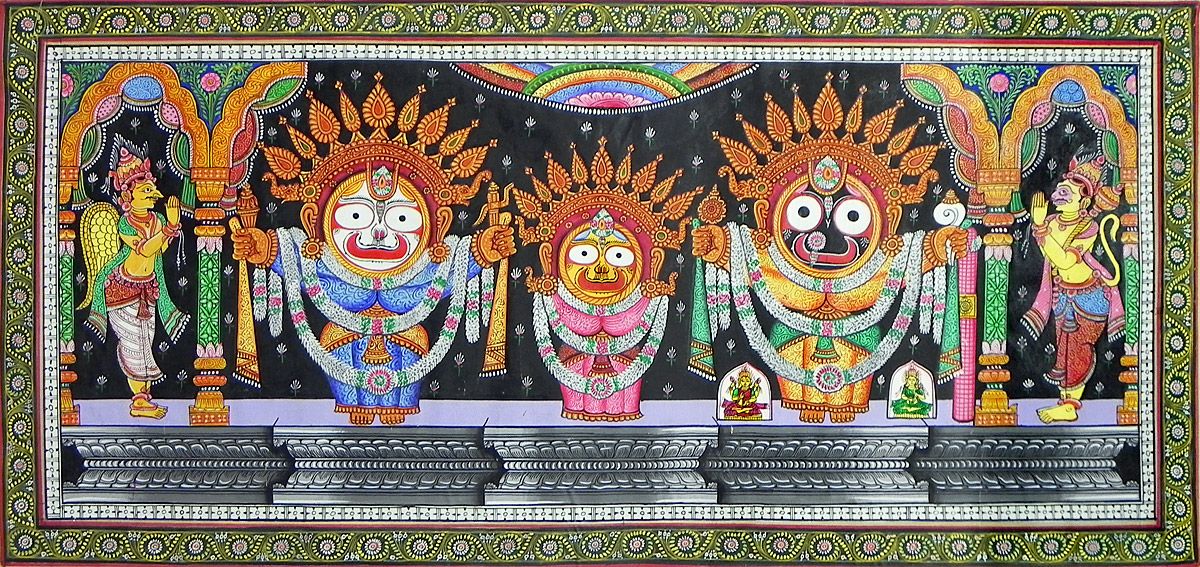
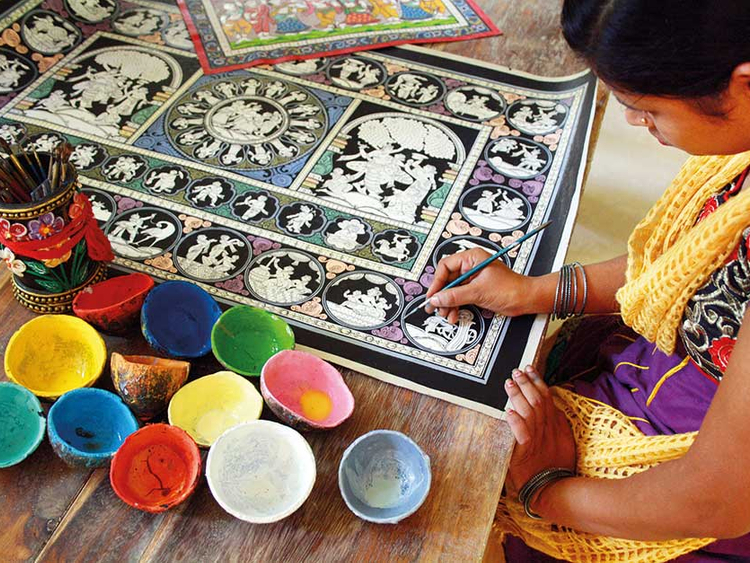
Pattachitra or Patachitra is the ancient traditional and indigenous cloth based painting technique of Odisha and is highly known for its intricate details. The word Pattachitra is derived from Sanskrit words, “Patta” meaning canvas and “Chitra” meaning painting or picture. Thus, Pattachitra is painting which is done on canvas and makes use of rich colors, creative motifs and designs for mythological narratives and folktales.

Pattachitra is a traditional and popular art forms of Odisha, India and is inspired by Jagannath and Vaishava. The specialty of the painting is that, it uses colors that are natural and are fully made by Chitraakaras or Odiya Painter. The tradition of Pattachitra painting is more than thousand years old and is still practiced in the state.

HISTORY OF THE ART FORM

The arts inscribed in “Pattachitra” resemble the ancient murals of Odisha and Lord Jagannath is taken as the source of the art form. The artform mainly shows the religious centers of Puri, Konark and Bhubaneswar region and the best works of the artform are found in and around Puri and especially in village of Raghurajpur. Other such regions were the artform is still being practiced in Paralakhemundi, Chikiti and Sonepur. The color schemes used in the artform are similar to the color schemes of deities of Puri. The wooden statues of the three deities of Puri are covered with cloth and are painted with the four limited colors of red, yellow, white and black. These deities also have their traditional art and painting which shows their life events and different tales and these are as old as the deities themselves.

Some of the popular tales or themes that are depicted in this art form are “Thia Badhia: A Depiction fo temple of Jagannath”, “Krishna Lila: Enactment of Jagannath as Lord Krishna and his powers displayed during his childhood”, “Panchamukhi: Depiction of Lord Ganesh as a five headed deity” etc. These themes are the soul of the art form and are the true reason behind the existence of this artform. The artform requires unbending concentration and careful craftmanship and it takes nearly five days of work for completing the art and it may take long or shorter period onnthe basis of the complexity of work and labour required.

Pattachitra showing Krishna Lila
Pattachitra showing Thia Badhia
Pattachitra showing Panchamukhi

THE MAKING OF PATTACHITRA

Making of Pattachitra

While making Pattachitra following steps are followed:

  1. Making the Patta : Done with the help of tamarind paste and my soaking tamarind seeds in water for three days and then are crushed to make paste which is called Niryas Kalpa.
  2. Holding the two pieces of cloth together with the tamarind paste and coating a powder of soft clay to make it firm.
  3. After the cloth becomes dry, it is polished with rough stone followed by wood or smooth stone until the surface becomes smooth and leathery.
  4. The canvas is ready for being painted.
  5. Preparing the paste using naturally available raw materials to being about indigenous paints. This is the most important step in preparation of Pattachitra.
  6. The root of Keya plant is the most common ingredient used for making the brush and then the cloth is painted.

WHAT MAKES PATTACHITRA SPECIAL ?

Pattachitra Wood Necklace

Pattachitra painting is a disciplined art form and the makers always stick to the use of natural products only for making Pattachitras. They have certain rules the follow and abide by while making an artform and end up creating remarkable paintings that depict emotions, tales, history, culture etc. and the Chitrakars try their best to being the most accurate expression through the use of the rich colorful motifs.

Pattachitra has came a long way and has gone through large number of transitions and the chitrakaras have painted on tussar silk and even on palm leaves. Wall hangings and showpieces are also being created. And all this is done by strictly following the rules and these have remained intact throughout generations.

Pattachitra Wall Hanging

Places in India that turn beautifully green during Monsoons.

Monsoons not only give new life to nature, but also drape the surroundings in lively greens. While those used to city life might be unaware of such a thing, India boasts of places that turn lush green during the rainy season. If you are also interested to visit such places, here’s a list of places that turn beautifully green during the monsoons.

Top stunning places for your monsoon wishlist.

Cherrapunji, Meghalaya

Cherrapunji, being the second wettest place on Earth, boasts of pleasant weather throughout the year. When here, you might witness rains coming in with such velocity that you will be drenched in no time. And although it receives a huge amount of rainfall, the beauty of this place is that it does not get flooded. In fact, the place turns livelier during the rainy season, with sounds of chirping and humming of birds and insects, along with the thundering sound of rivers flowing at the bottom of the valley.

Chikmagalur, Karnataka

Chikmagalur is blessed with many attractions that turn magical during the monsoons. Sitting in the lap of Western Ghats, it is one of the places that you will make you crave for more. During this time, you can enjoy a drive to Charmadi Ghat near Chikmagalur; the drive will take you through the Western Ghats, home to many gorgeous waterfalls. Further, the spot is also dotted with tall mountains, vast tropical rain forests, and green valleys, all of which turn alive during the monsoons. You need to visit this spot during this time to believe it.

Bhandardara, Maharashtra

Monsoon is a very pleasant time in Bhandardara, as the Randha Falls and streams and lakes get drenched in monsoon rains. The landscape turns fresh, dewy, and green, making it a lovely spot to visit during this time. Further, Bhandardara being situated in the Sahyadri Mountains of the Western Ghats, it also turns into a haven for hikers and trekkers in and around Maharashtra. However, be sure to avoid the trails that turn slippery during the rains.

Mussoorie, Uttarakhand

During monsoons, Mussoorie turns greener than ever, and makes rains the best time to visit. The crowd too gets thinner at this time as compared to summers and winters. If you visit the Queen of Hills during the rainy season, you get the opportunity to witness the dreamlike setting of monsoon that brings out the best of Mussoorie. The beautiful landscapes, serene ambience, make this spot a must ‘green getaway’ during the rainy season.

Banswara, Rajasthan

Also known as the City of Hundred Islands, it’s a paradise of a place to visit during the monsoons. It got its name from the bans or bamboo trees that once grew in abundance here. Lush green hillocks, scenic surroundings, the presence of youthful lakes and rivers, make this spot so gorgeous that you will forget that you are in Rajasthan. When here, visit the lake banks and Mahi river dam that turn stunning during the rains, thereby making it a dreamy monsoon destination.

The Surreality of the Pamirs

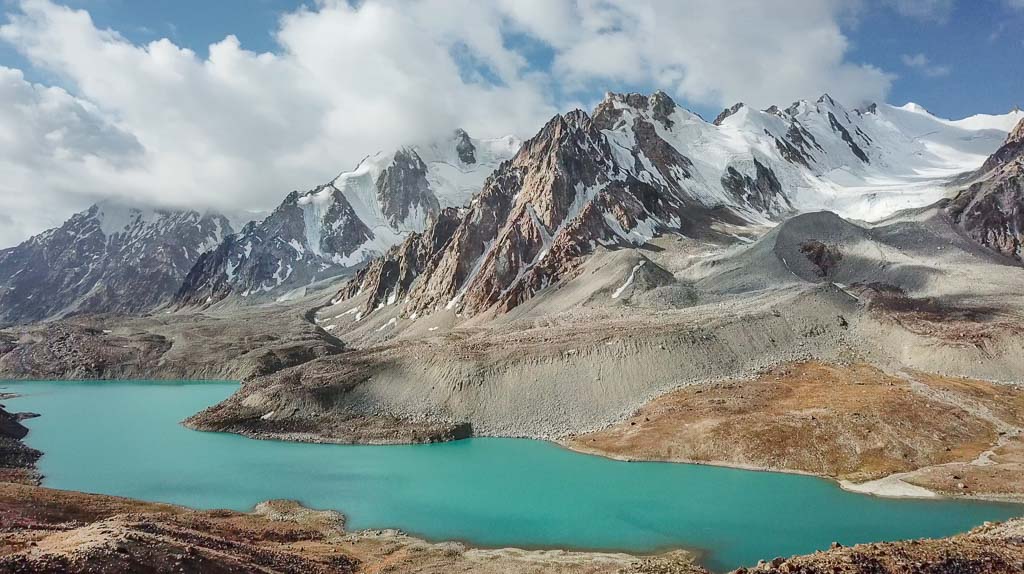
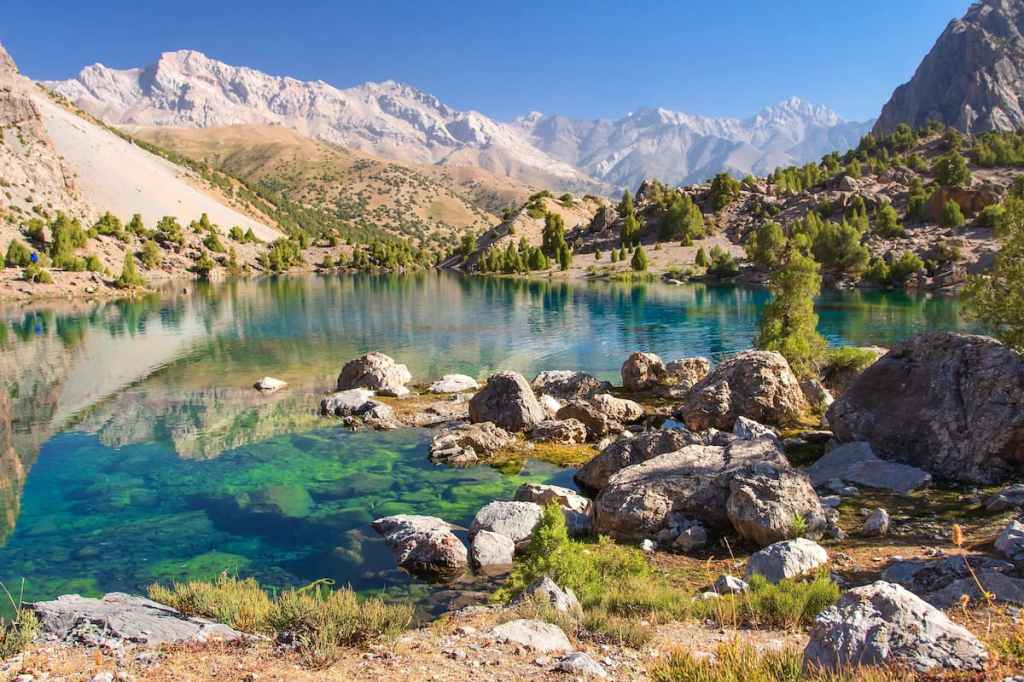
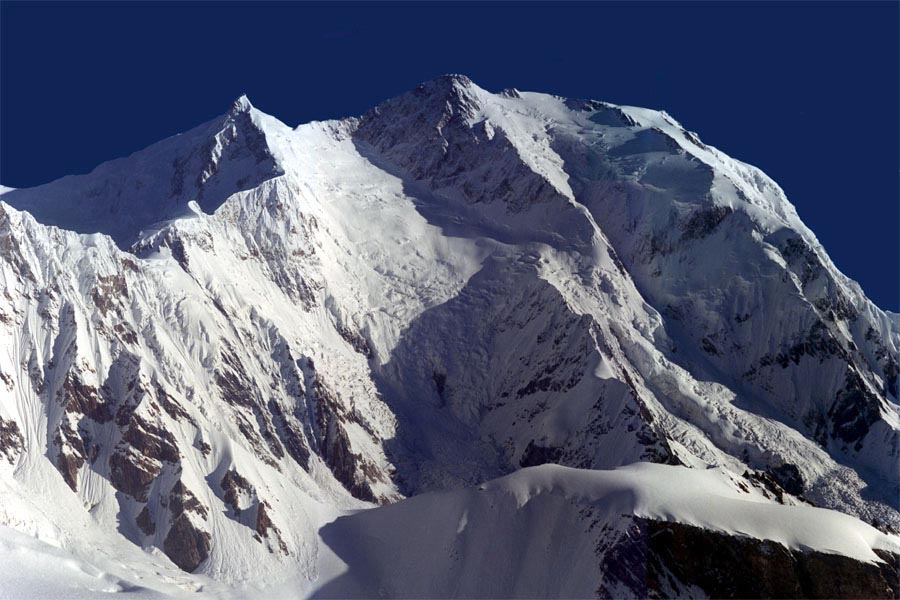
Amongst the World’s highest ranges, the majestic Pamir Mountains are situated between Central Asia, South and East Asia. They are located at the junction of the Himalayas with the Karakoram, Hindu Kush and the Tian Shan ranges.

Geography

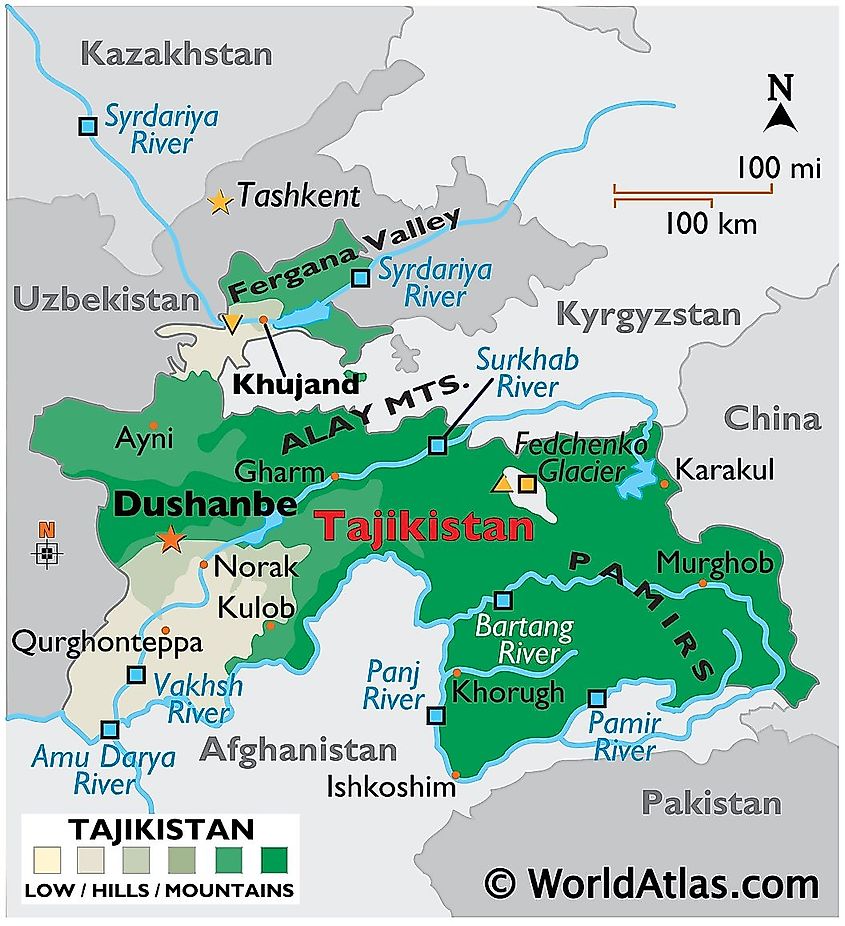
The lie mainly in the Gorno-Badakshan autonomous region of Tajikistan. The connect the Tian Shan mountains to the North, along the Alay valley of Kyrgyzstan. To the south, they border the Hindu Kush mountains along Afghanistan’s famous anomaly of a province, the Wakhan corridor. To the east, they extend to the range that includes China’s Kongur Tagh, the Pamir’s highest point,  separated by the Yarkand valley from the Kunlun Mountains. The Panj and the Pamir are the major rivers that flow through the ranges.

The three highest mountains in the Pamirs core are the Ismoil Somoni (known from 1932 to 1962 as Stalin Peak, and from 1962 to 1998 as Communism Peak), 7,495 m (24,590 ft), Ibn Sina (still unofficially known as Lenin Peak), 7,134 m (23,406 ft); and Korzhenevskaya ,7,105 m (23,310 ft). Kongur Tagh lies in China in the region known as the ‘Eastern Pamirs’.

There are many glaciers present in the ranges. The 77 km long Fedchenko Glacier is the longest in the former USSR and the longest outside the Polar regions. The majestic lake Karakul is located in the nearby region.

Climate

The ranges are covered in snow throughout the year and has mainly alpine climate, the Pamirs are famous for having long and bitterly cold winters, and short, cool summers. Annual rainfall is about 130 mm (5 in), which supports grasslands but very few types of trees.

History

Historically, the Pamir Mountains were considered a strategic trade route between Kashgar(Xinjiang, China) and Kokand(Uzbekistan) on the legendary Silk Road, a prehistoric route, and had been subject to numerous territorial conquests. The Northern Silk Road connected the ancient Chinese capital of Xi’an over the Pamir Mountains towards the west to emerge in Kashgar before linking to ancient Parthia.

Potential

The region has massive tourism potential and many hiking enthusiasts, travelers, mountaineers and adventure seekers do visit this massive region. The region’s importance will only grow further due its unique strategic location.

https://uncorneredmarket.com/pamir-mountains-beginners-guide/#langar

https://www.worldatlas.com/articles/pamir-mountains-natural-wonders-of-asia.html

APJ ABDUL KALAM

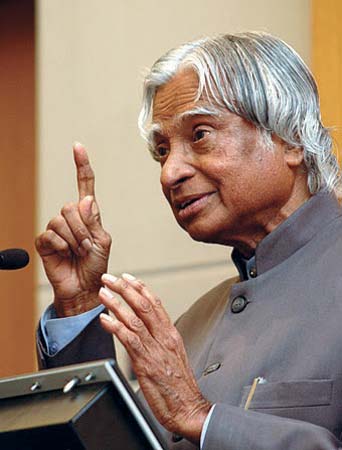
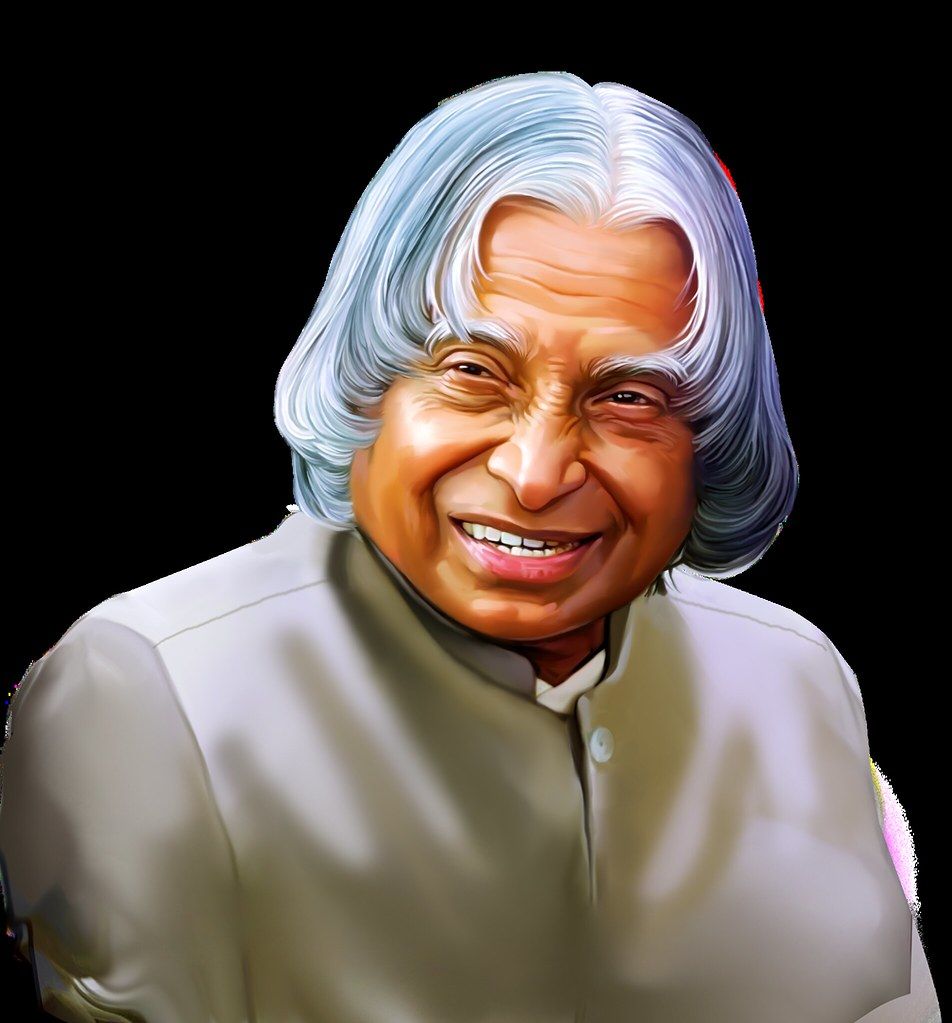
Dr APJ Abdul Kalam was a scientist who later became the 11th President of India and served the country from 2002 to 2007.

He was the most respected person in the country, as he contributed a lot to the country as a scientist and a president.

His contribution to the Indian Space Research Organization is unforgettable.

There were many projects under his leadership such as Rohini-1, Project Devil and the launch of Project Valent, missiles (under Mission Agni and Prithvi), etc.

For his great contribution in increasing India’s nuclear power, he is popularly known as “Missile Man of India”. He has been awarded the highest civilian awards for his dedicated work.

After completing his service to the Government of India as President, he served the country as a visiting professor at various valuable institutions and universities.

HIS CAREER AND CONTRIBUTION:

He was born on 15 October 1931 to Zainuldeben and Aashiyamma. His family’s financial situation was a bit bad, so he started supporting his family financially at an early age.

He started earning money to support his family but never gave up his education.

He completed his graduation from Madras Institute of Technology in 1954 from St. Joseph’s College, Tiruchirapalli and Aerospace Engineering.

After completing his graduation, he joined the Aeronautical Development Foundation of the Defense Research and Development Organization (DRDO) as a leading scientist.

Soon he moved to the Indian Space Research Organization as the Project Director of India’s first indigenous satellite launch vehicle.

He also served as the Chief Executive of the Integrated Guided Missile Development Program, which is involved in the simultaneous development of missiles.

He had also become the Chief Scientific Adviser of the Prime Minister and Secretary of the Defense Research and Development Organization from the year 1992 to 1999.

He was called the “Missile Man of India” after his successful contribution as the Chief Project Coordinator for Pokhran II nuclear tests.

Pilpantri: a model of environmentalism and feminism

Pilpantri, a village with a population of 8000 , located in Rajasmand district of Rajasthan has been a matter of pride for the entire nation. It is the perfect example of how the cycle of change starts from one person itself. This small village has been attracting attention from all over the world due to its efforts of saving the environment and promoting the girl child birth and education. Now, feminism and Rajasthan in one sentence may be shocking to some as Rajasthan has a tanned image for female infanticide, child marriage and is considered to be one of the least progressive state for females. However, times are changing. Pilpantri, itself being an example of this change which has made it a role model of eco feminism.

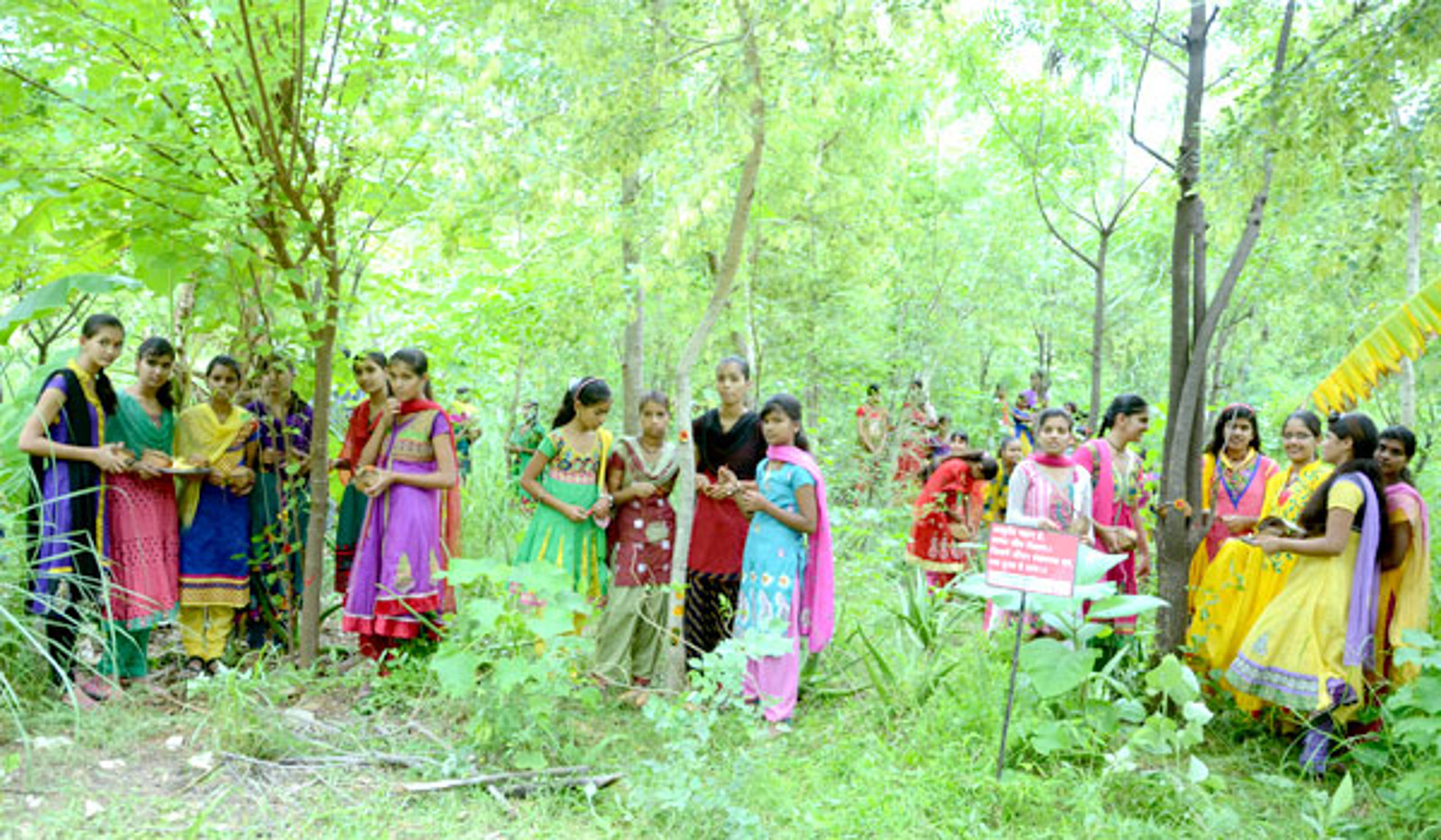
This village plants 111 trees for every single girl child being born there. The number of trees being “111” for every girl child has a different story behind it. India is a land of traditions which is what makes us unique. It is a tradition in India that on every auspicious occasion a donation of 101, 111, 1100 or the similar numbers being made ,which is termed as “shagun” in Indian terms. The traditions when used in an innovative way may prove extremely beneficial for the present times. The plantation of such a huge number for every girl child born increases the green cover around the village protecting the people there from the pollution and its aftermath, which is one of the biggest problems in India. The saying “Nature has solution to every problem provided you regard it well” holds true.

History of the plantation drive

In 2005, when Shyam Sunder Paliwal had taken over as the village sarpanch, the entire area surrounded by hills was denuded for mining. The district of Rajasmand is known for marble block mining and is the largest producer of marble in the entire country. Mining leads to the loss of vegetation and invites several problems in the mined areas such as floods, water logging, soil erosion as the natural protectors of environment i.e. the trees are sacrificed in mining and no or least attempt is made to restore them.

Two years later, when Kiran , Paliwal’s 17 year old darling daughter died due to dehydration, he decided to honor her by planting a tree in her name on the village entrance. He then thought of implying this scheme for the birth of every daughter in the village . Not only to celebrate the birth of a girl (which is a very rare practice in India) are trees planted but also to commemorate the lives of those who died. The village plants 11 trees in the memory of every person that dies here.

Pilpantri as a model of feminism

In India, where patriarchy has a strong hold, females are neglected since birth and are seen only as an institution to carry on the generations forward. The birth of the female becomes a matter of shame for the family while some starts to worry about the dowry of a new born girl. To put a stop to all these problems, the people came with a very “horrifying” solution which is to kill the girl before she is born. A report suggests that in Rajasthan, the child sex ratio is 888 girls per 1000 boys. The census also revealed that of total deaths in Rajasthan, over 20% of them were infant deaths. Overall, the female child population (age 0-6) between 2001 and 2011 dropped by 3 million. One journalist referred to this as “the silent genocide.” Female infants are sometimes tragically killed by opium poisoning, starvation, or even being crushed with stones or drowned in water.

Pilpantri , a small hamlet not only cares for the environment with every girl born but also secures her future through the various schemes implemented by the village. As reported by The Hindu, Rs. 21,000 is collected from the village residents at the birth of a girl child and Rs.10,000 from the girl’s father and this sum of Rs. 31,000 is made into a fixed deposit for the girl, with a maturity period of 20 years. Also, the village authorities make these parents sign an affidavit promising that they would not marry her off before the legal age, send her to school regularly and take care of the trees planted in her name.

When the girls grow up, they tie Rakhi( a holy sibling bond signifying the protection of each other) to the trees.

Pilpantri as a model for environmentalism

According to a report by BBC, the region now has more than 350,000 trees, from mango and gooseberry to sandalwood, neem, peepal and bamboo, growing across the once-barren lands and covering an estimated 1,000 hectares. To plant the trees what is required is soil and water along with the saplings. The more the greenery, it will attract higher numbers of birds , bring more rain and prosperity to the region.

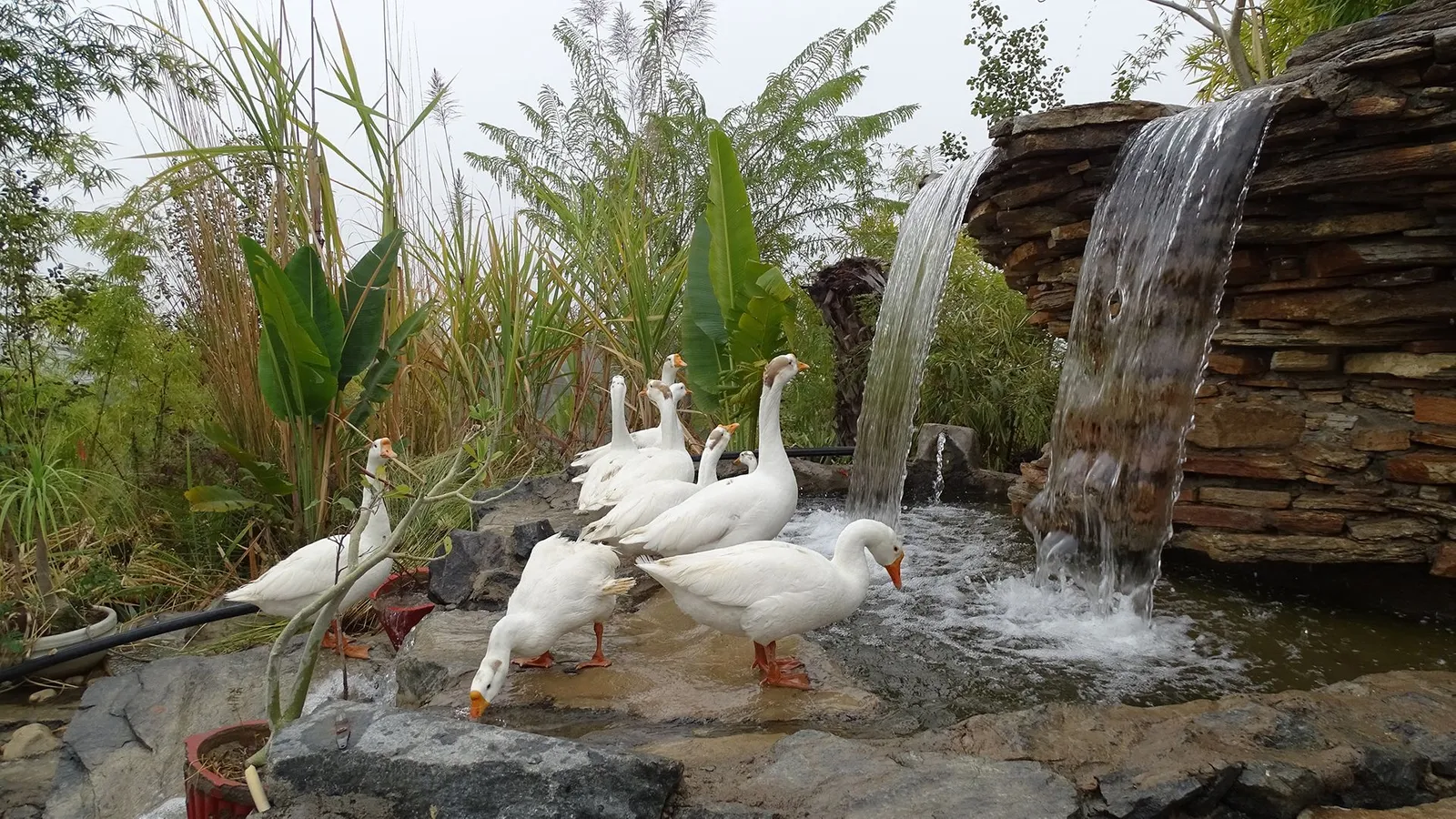
The village has also developed a water harvesting system , where the run off rain water is collected through ditches, bunds and dams. Now, clear pools of water shone and adorn the village attracting animals like geese and rabbits.

Also, to protect the large number of trees from termites villagers plants aloe vera in large amounts near the trees which in turn is utilized by the women of the village to make aloe juice ,gels and cosmetics for sale in the market, increasing the village economy and their independency.

In 2018 the state government instituted a training center there to educate people on the “Piplantri Model”. The building hosts engineers, officials and residents from other districts who hope to replicate Piplantri’s model of water harvesting and tree planting elsewhere in Rajasthan and the country. As many as 50 to 60 visitors come to Piplantri some days – most of whom come to attend workshops in the training center – and the village even has a set of cottages to house them. 

Now, the birth of a daughter is no more considered to be a burden but a matter of pride and celebration. It is the efforts of Shyam Sunder Paliwal which have adorned the earlier dried village considering females as a burden , into a developed hamlet which is an inspiration for the entire country in more than one ways. The woman has been associated with “fertile lands” in literary terms by many poets since ancient times . It is not only because of her ability to reproduce which gives her this association but also her ability to nurture and regrow an arid land of which Pilpantri is the best example.

GENERATION GAP

ACCORDING TO CAMBRIDGE DICTIONARY “situation in which older and younger people do not understand each other because of their different experiencesopinionshabits, and behaviour.”

The gap between the old and the young people is called generation gap. Old people feel that lack of respect for the elders and disrespect to the existing system of the society will bring disaster for young generation. Young boys and girls, on the other hand, feel that ‘the old are fools’. The gap between the old and the new generations is widening owing to several reasons.

First, all young people feel that the present education has no relation with the realities of life. Secondly, the present life has become busy and fast. Thirdly, the young people are generally idealistic. When they find corruption in every sphere of life, they feel disgusted. Fourthly, to express their unhappiness with the existing state of affairs, young people take to violence or behave oddly.

In order to bridge the generation gap, elders should be sympathetic towards the young. They should realise the emotion, ambition and problems of the young. The young should realise that they have no experience in life.

So, they should value the advice of the elders. The general gap between the two groups of people is so wide in the western countries that they live separately. In India the traditional joint family system has slowed the growth of this gap. But now such a family also is breaking down.

CHILDREN DAY

All the kids chin up, smile and celebrate the day dedicated specially to you! November 14 is celebrated as Children’s Day (also called Bal Diwas) in our country and the occasion also commemorates the birth anniversary of Jawaharlal Nehru, the first Prime Minister of India. As the schools and colleges gear up to celebrate this day, here is all you need to know about the history, importance and significance of the occasion.

Nehru was known for his affection and love for kids, whom he regarded as the ‘future of the country’ and was fondly called as Chacha Nehru. “The children of today will make the India of tomorrow. The way we bring them up will determine the future of the country,” he exclaimed once. He always emphasised on the education of children and played a major role in establishment of colleges in the country which are still considered one of the best in the country.

After his demise in 1964, his birth date, November 14, was decided to be celebrated as Children’s Day every year.

On this day, schools and colleges organise various programmes like plays, competitions, cultural events etc., and sweets, books, stationary and other gifts are distributed to children. Also, November 20 is celebrated as the Universal Children’s Day, as declared by the United Nations.

The day is a reminder that every child deserves education, nurturing and the best of everything. They are the building blocks of the nation and hence, the future of the nation depends how well they are brought up. To those who are now an adult, keep the kid inside you alive.

MAHATMA GANDHI

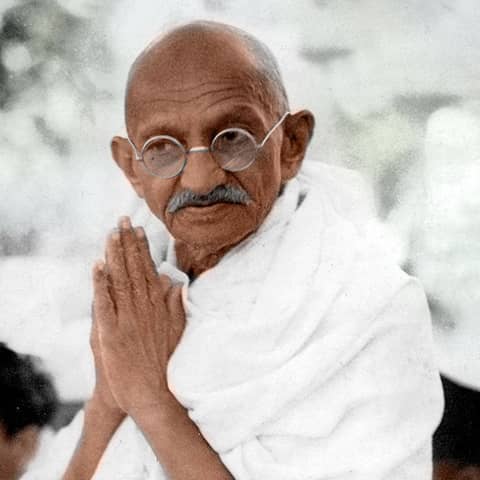
Gandhi was the youngest child of his father’s fourth wife. His father—Karamchand Gandhi, who was the dewan (chief minister) of porbandar, the capital of a small principality in western India (in what is now gujrat state) under British suzerainty—did not have much in the way of a formal education. He was, however, an able administrator who knew how to steer his way between the capricious princes, their long-suffering subjects, and the headstrong British political officers in power.

Early Life

Mohandas Karamchand Gandhi was born on October 2, 1869, at Porbandar, in the present-day Indian state of Gujarat. His father was the dewan (chief minister) of Porbandar; his deeply religious mother was a devoted practitioner of Vaishnavism (worship of the Hindu god Vishnu), influenced by Jainism, an ascetic religion governed by tenets of self-discipline and nonviolence. At the age of 19, Mohandas left home to study law in London at the Inner Temple, one of the city’s four law colleges. Upon returning to India in mid-1891, he set up a law practice in Bombay, but met with little success. He soon accepted a position with an Indian firm that sent him to its office in South Africa. Along with his wife, Kasturbai, and their children, Gandhi remained in South Africa for nearly 20 years.

The Birth of Passive Resistance

In 1906, after the Transvaal government passed an ordinance regarding the registration of its Indian population, Gandhi led a campaign of civil disobedience that would last for the next eight years. During its final phase in 1913, hundreds of Indians living in South Africa, including women, went to jail, and thousands of striking Indian miners were imprisoned, flogged and even shot. Finally, under pressure from the British and Indian governments, the government of South Africa accepted a compromise negotiated by Gandhi and General Jan Christian Smuts, which included important concessions such as the recognition of Indian marriages and the abolition of the existing poll tax for Indians.

Leader of a Movement

As part of his nonviolent non-cooperation campaign for home rule, Gandhi stressed the importance of economic independence for India. He particularly advocated the manufacture of khaddar, or homespun cloth, in order to replace imported textiles from Britain. Gandhi’s eloquence and embrace of an ascetic lifestyle based on prayer, fasting and meditation earned him the reverence of his followers, who called him Mahatma (Sanskrit for “the great-souled one”). Invested with all the authority of the Indian National Congress (INC or Congress Party), Gandhi turned the independence movement into a massive organization, leading boycotts of British manufacturers and institutions representing British influence in India, including legislatures and schools.

Why do North Koreans hate South Korea and America (USA)?

Korea was a part of the Japanese empire between 1910 to 1945. The dynastic kingdom- Joseon Korea had signed the Japan-Korean Treaty in 1876 and formed a coalition with the Meiji government of Japan. Through the treaty, Japan had indirect control of Korea as it also gave protection to it, followed by the annexation of Korea by Japan in 1910. This annexation was arbitrary and without the consent of the Korean emperor. 

  As with any other colonization in the world, it too was a brutal one. People were exploited by the Japanese army. Industrialization was accelerated in Korea to benefit Japan. Soon they also attacked Korean history and culture. The environment too was exploited. Soon, the need for a freedom movement became palpable. Many rallies took place throughout the nation after the death of the Korean emperor as there was widespread suspicion that he was poisoned. The Japanese violently responded to these protests and subsequently suppressed the movement. An estimated 2 million people participated in the country-wide protests and about 7000 people were killed by the Japanese forces during the 1 year. According to the Korean reports, almost 50,000 people were arrested and 16000 wounded.

March 1 movement

  Following the dropping of atomic bombs on Hiroshima and Nagasaki, Japan surrendered to the Allied forces on 15 August 1945, ending 35 years of Japanese occupation. American forces under General John R. Hodge arrived at the southern part of the Korean Peninsula on 8 September 1945, while the Soviet Army and some Korean Communists had stationed themselves in the northern part of the Korean Peninsula. U.S. Colonel Dean Rusk proposed to Chischakov, the Soviet military administrator of northern Korea, that Korea should be split at the 38th parallel. This proposal was made at an emergency meeting to determine post-war spheres of influence, which led to the division of Korea. After the surrender of Japan on 15 August 1945, the United States and the Soviet Union divided Korea along the 38th parallel into two zones of occupation. The Soviets (Russia and allies) administered the northern zone and the Americans administered the southern zone. Post World War 2, the Cold war began. It was an ideological war between Communism of Russia & allies and The Capitalism of the USA. 

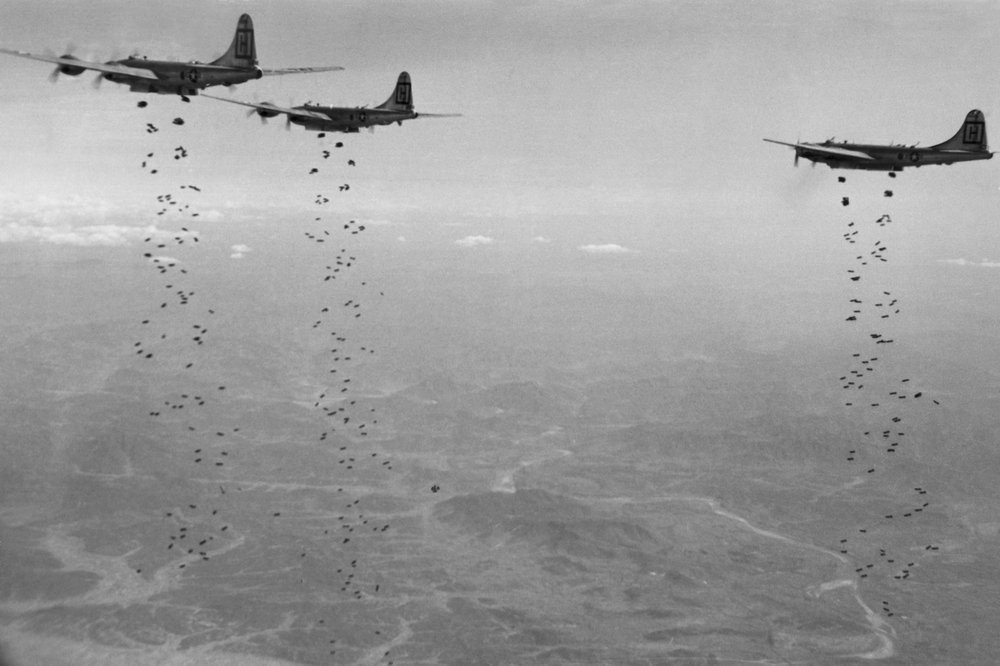
The US bombings.

  The Soviet Army crossed the borders and attacked South Korea in June 1950. The UN denounced this as arbitrary and an invasion. Soon the UN sent their forces to help the South Korean army and counter the attack. Twenty-one countries of the United Nations eventually contributed to the UN force, with the United States providing around 90% of the military personnel. Russia, too, sent in more forces to help the North Korean attack. The South, backed by UN and US forces, was successful in defending and driving the invading forces out. Post this, they invaded the north. China too joined the war and backed its ideological ally- Russia and helped the North. The Chinese army invaded the South but was pushed back to positions around the 38th parallel from where it all started. The North had to face immense American bombing. Many civilians died. The backbone of the northern army was broken. This war which started in June 1950 ended in July 1953. Approximately 3 million people died in the Korean War, the majority of whom were civilians, making it perhaps the deadliest conflict of the Cold War era. Compounding this devastation for Korean civilians, virtually all of the major cities on the entire Korean Peninsula were destroyed as a result of the war. The May 1953 bombing of major North Korean dams threatened several million more North Koreans with starvation, although large-scale famine was averted with emergency aid provided by North Korea’s allies. North Korea was the country most devastated by the war, which resulted in the death of an estimated 12%–15% of the North Korean population (appox. 10 million), “a figure close to or surpassing the proportion of Soviet citizens killed in World War 2”, according to Charles K. Armstrong. Post-war, South Korea took comparatively less time to recover. As America was an ally, South Korea grew on the principles of Capitalism and Democracy while, North Korea, having the Soviet Union as an ally, moved ahead with Communism, and no sooner it turned into a dictatorship. People’s life there is miserable. No freedom of speech, expression. No press freedom. South Korea, on the other hand, is very democratic and is one of the fastest-growing economies. But South Korea is constantly at threat of war with the North. With the dictator of North Korea having now initiated many nuclear tests, even the US is under a threat of attack. North Korea was devastated to a great extent by the south and the US. The hatred of the North Koreans and the dictator himself towards these two is very evident.