



The Street Space Index (SSI) is a concept used primarily in urban planning and transportation studies. It is a measure that assesses the efficiency, accessibility, and utilization of street spaces in cities. The index evaluates how well the street environment accommodates different functions like walking, cycling, driving, and public transport. The goal is to help cities improve the design and use of their streets for more sustainable and livable urban spaces.

Key Aspects of Street Space Index:
- Multimodal Transport Integration: The SSI often takes into account various transportation modes—cars, buses, bicycles, pedestrians, etc.—and measures how well these modes coexist and are prioritized in the street design.
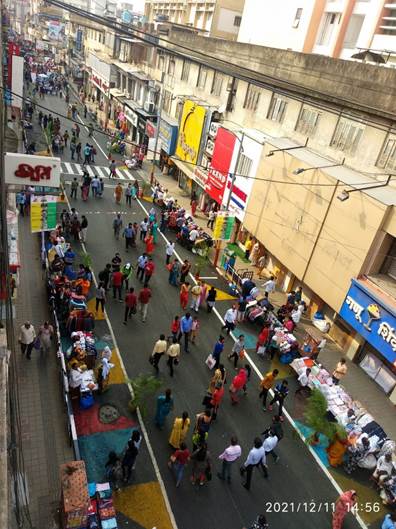
- Space Allocation: It looks at how much space is dedicated to each mode of transportation and public space (e.g., sidewalks, bike lanes, lanes for cars, parking spots). A high-quality street space prioritizes pedestrians and cyclists over cars, enhancing safety and reducing congestion.
- Accessibility and Connectivity: It considers how easily people can access public transport, walkways, or bike paths, and how well-connected the street is to other key areas of the city.
- Public Space and Amenities: The SSI may also evaluate the presence of public amenities such as benches, trees, lighting, and street furniture that contribute to the street’s overall livability.
- Environmental Impact: The environmental sustainability of street space is also a consideration. This includes assessing factors like green spaces, water drainage, and the presence of nature, as well as the promotion of low-carbon transport options.
Purpose of the Street Space Index:
- Urban Planning: The SSI helps city planners identify areas where streets are underutilized or poorly designed. This information can guide interventions to make streets more efficient and inclusive for all users.
- Sustainability: It aids in designing streets that promote sustainable transport modes like cycling or public transport and reduce dependency on private cars.
- Quality of Life: By improving the design and functionality of street spaces, cities can enhance residents’ overall quality of life, making neighborhoods more pedestrian-friendly and less car-dominated.
In essence, the Street Space Index provides a quantitative and qualitative evaluation of how streets function and how they could be improved to meet the needs of urban communities.

 Eduindex
You must be logged in to post a comment.