Multisystem Toxicological Effects of Petroleum Hydrocarbon Exposure in Chickens: A Sex- And Duration-Dependent Analysis

Daily writing prompt
If you could un-invent something, what would it be?

How to Cite

Harrison, E. O., & Melford, C. M. (2026). Multisystem Toxicological Effects of Petroleum Hydrocarbon Exposure in Chickens: A Sex- And Duration-Dependent Analysis. International Journal of Research, 13(1), 147–157. https://doi.org/10.26643/eduindex/ijr/2026/9

Authors:
Eruotor Ogheneochuko Harrison¹* and Chinwebudu M. Melford²

¹ Department of Biochemistry, Faculty of Science, University of Port Harcourt, Rivers State, Nigeria

ORCID: https://orcid.org/0009-0000-9415-2993
² Department of Medical Technology, College of Allied Medical Sciences, Cebu Doctors’ University, Mandaue City, Cebu, Philippines

ORCID: https://orcid.org/0009-0005-0654-5479

Corresponding Author (post-publication):
Eruotor Ogheneochuko Harrison
Email: harrisoneruotor2014@yahoo.com

ABSTRACT

Petroleum hydrocarbon contamination remains a persistent environmental challenge in regions with sustained oil exploration and production, where chronic exposure frequently occurs alongside heavy metal co-pollution. Unlike acute toxicity, long-term environmental exposure may induce progressive and interconnected disturbances across multiple physiological systems. This study evaluated the multisystem toxicological effects of chronic petroleum hydrocarbon exposure in chickens using an integrated analytical framework. Chickens exposed to a petroleum hydrocarbon-contaminated environment for 6 and 12 months were compared with unexposed controls, with analyses stratified by sex and exposure duration. Endocrine, hepatic, renal, cardiovascular, hematological, oxidative stress, inflammatory, and heavy metal parameters were jointly assessed to characterize systemic toxicity. Chronic exposure was associated with coordinated disturbances across all evaluated systems, including endocrine dysregulation, hepatorenal impairment, cardiovascular injury, hematological abnormalities, antioxidant depletion, lipid peroxidation, inflammatory activation, and accumulation of chromium, lead, and zinc. Oxidative stress and inflammation emerged as central mechanisms linking multisystem dysfunction, while heavy metal burden further amplified toxicological effects. Sex-dependent differences were evident, with females exhibiting greater endocrine, oxidative, and inflammatory disturbances and males showing more pronounced cardiovascular injury and metal accumulation. Toxicological severity increased with exposure duration, indicating cumulative effects of prolonged environmental contamination. This integrated multisystem evaluation demonstrates that petroleum hydrocarbons induce systemic toxicity through interacting biological pathways rather than isolated organ-specific mechanisms. The findings highlight chickens as sensitive sentinel species and underscore the ecological, food safety, and public health implications of chronic petroleum hydrocarbon contamination.

Keywords: Petroleum hydrocarbons, Multisystem toxicity, Oxidative stress, Inflammation, Heavy metals, Chickens, Nigeria


INTRODUCTION

Petroleum hydrocarbon contamination remains a major environmental and public health concern in regions with sustained oil exploration, production, and transportation activities. Chronic release of petroleum-derived compounds into soil and water ecosystems results in prolonged exposure of resident organisms to complex mixtures of hydrocarbons and associated co-pollutants, including heavy metals. Unlike acute toxic exposure, chronic environmental contamination exerts its effects gradually, often through subtle but cumulative disruptions across multiple physiological systems, leading to long-term biological consequences that may not be immediately apparent (Cleveland Clinic, 2025; Harvey, Sharp, & Phillips, 1982).

Emerging evidence indicates that petroleum hydrocarbons do not target isolated organs but instead induce multisystem toxicity involving coordinated dysfunction of endocrine regulation, metabolic processes, cardiovascular integrity, hematopoietic function, immune responses, and redox balance. These effects are mediated through interconnected mechanisms such as oxidative stress, inflammatory activation, endocrine disruption, and bioaccumulation of toxic metals. As these pathways interact, injury in one physiological system may exacerbate dysfunction in others, resulting in compounded biological consequences over time and progressive loss of homeostatic control (Dey et al., 2015;Liu et al., 2025).

Sex-related differences further complicate the toxicological impact of petroleum hydrocarbon exposure. Variations in hormonal regulation, antioxidant capacity, immune responsiveness, and metal metabolism between males and females may influence susceptibility, adaptive responses, and severity of toxic effects. In addition, duration of exposure plays a critical role in determining toxicological outcomes, as prolonged exposure permits cumulative tissue damage, persistent inflammation, endocrine imbalance, and sustained oxidative stress, thereby amplifying systemic dysfunction (Oleforuh‑Okoleh et al., 2023; Fowles et al., 2016).

Avian species, particularly chickens, represent valuable sentinel organisms for assessing multisystem environmental toxicity. Their close interaction with contaminated soil, water, and feed, combined with physiological sensitivity to endocrine, oxidative, cardiovascular, and inflammatory disturbances, makes them suitable models for evaluating integrated toxicological effects. Moreover, because chickens are directly linked to human food systems, multisystem toxicity observed in these animals may serve as an early warning indicator of broader ecological and public health risks associated with petroleum hydrocarbon pollution.

While previous studies have largely focused on individual toxicological endpoints, such as reproductive dysfunction, hepatic injury, oxidative stress, immune alterations, or cardiovascular effects, there remains a paucity of studies adopting an integrated multisystem approach that simultaneously evaluates endocrine, hepatorenal, cardiovascular, hematological, oxidative, inflammatory, and heavy metal–related effects within the same exposed population. Such an approach is essential for capturing the full biological burden of chronic petroleum hydrocarbon exposure and for identifying sex- and duration-dependent vulnerability patterns that may otherwise remain obscured when systems are examined in isolation.

Against this background, the present study was designed to evaluate the multisystem toxicological effects of chronic petroleum hydrocarbon exposure in chickens by integrating endocrine, hepatic, renal, cardiovascular, hematological, oxidative stress, inflammatory, and heavy metal parameters within a single analytical framework. The study sought to characterize how prolonged exposure to a petroleum hydrocarbon-contaminated environment disrupts physiological homeostasis across multiple organ systems and biological pathways, and to determine whether the magnitude and pattern of multisystem toxicity vary according to sex and duration of exposure (6 months versus 12 months). It was anticipated that chronic petroleum hydrocarbon exposure would result in concurrent endocrine disruption, hepatorenal impairment, cardiovascular injury, hematological dysregulation, oxidative stress, inflammatory activation, and heavy metal accumulation in exposed chickens when compared with unexposed controls. Furthermore, it was hypothesized that these toxicological effects would be significantly modulated by sex and exposure duration, with prolonged exposure and sex-specific physiological differences contributing to increased vulnerability and severity of multisystem dysfunction. Through this integrative approach, the study aimed to provide a comprehensive assessment of systemic toxicity and to advance understanding of the complex biological consequences of long-term exposure to petroleum hydrocarbon-contaminated environments.

MATERIALS AND METHODS

This study adopted an integrated comparative experimental design to evaluate the multisystem toxicological effects of chronic exposure to a petroleum hydrocarbon-contaminated environment in chickens. The analysis synthesized endocrine, hepatorenal, cardiovascular, hematological, oxidative stress, inflammatory, and heavy metal parameters to provide a comprehensive assessment of systemic toxicity. Exposed chickens were compared with unexposed controls, with stratification by sex and duration of exposure (6 months and 12 months) to evaluate sex-dependent susceptibility and cumulative toxicological effects.

Chickens in the exposed group were obtained from an environment with sustained petroleum hydrocarbon contamination resulting from prolonged hydrocarbon-related activities, while control chickens were sourced from a comparable environment without documented petroleum hydrocarbon pollution. All birds were maintained under similar husbandry conditions, including access to feed and water, to minimize confounding influences unrelated to environmental exposure. A total of eighteen chickens were included in the study, comprising twelve exposed birds and six controls. The exposed group consisted of chickens exposed for 6 months (male, n = 3; female, n = 3) and 12 months (male, n = 3; female, n = 3), while the control group included chickens maintained for 6 months (male, n = 2; female, n = 2) and 12 months (male, n = 1; female, n = 1).

Blood samples were collected aseptically from each chicken via venipuncture under standard laboratory conditions. Samples were processed to obtain serum and whole-blood fractions as required for biochemical, immunological, hematological, and heavy metal analyses. All samples were handled, stored, and analyzed according to established laboratory protocols to preserve analytical accuracy and integrity.

Multisystem assessment incorporated validated biomarkers across seven physiological domains. Endocrine evaluation included reproductive and thyroid hormones to assess hypothalamic–pituitary–gonadal and hypothalamic–pituitary–thyroid axis function. Hepatic and renal function were evaluated using standard liver enzyme activities, protein indices, bilirubin fractions, renal electrolyte concentrations, and nitrogenous waste markers. Cardiovascular integrity was assessed using cardiac injury and stress biomarkers alongside hematological indices reflecting oxygen-carrying capacity, immune status, and hemostatic balance. Oxidative stress status was determined through antioxidant enzyme activities and lipid peroxidation indices, while inflammatory responses were evaluated using cytokines, acute-phase proteins, and nitric oxide levels. Heavy metal burden was assessed by measuring serum concentrations of chromium, lead, and zinc as representative co-pollutants commonly associated with petroleum hydrocarbon contamination.

For the purposes of this multisystem analysis, individual biomarker results were evaluated both independently and collectively to identify convergent patterns of toxicity. Parameters were interpreted within and across physiological systems to assess interactions among endocrine disruption, organ dysfunction, oxidative stress, inflammation, and metal accumulation. Emphasis was placed on sex- and duration-specific comparisons to identify differential vulnerability and cumulative toxicological effects.

Data were analyzed using appropriate statistical software. Descriptive statistics were expressed as mean ± standard deviation. Inferential analyses included independent-sample t-tests to compare exposed and control groups and one-way analysis of variance to evaluate differences based on sex and duration of exposure, with post-hoc testing applied where appropriate. Statistical significance was set at p < 0.05. To avoid redundancy and ensure publication integrity, this multisystem analysis emphasized integrative interpretation and pattern synthesis rather than repetition of system-specific statistical outcomes reported in companion papers.

All experimental procedures involving animals were conducted in accordance with internationally accepted ethical guidelines for the care and use of experimental animals, and all efforts were made to minimize animal stress and discomfort throughout the study.

RESULTS AND DISCUSSION

Chronic exposure of chickens to a petroleum hydrocarbon-contaminated environment produced coordinated toxicological disturbances across multiple physiological systems, demonstrating true multisystem toxicity rather than isolated organ-specific effects. Endocrine disruption, hepatorenal impairment, cardiovascular injury, hematological dysregulation, oxidative stress, inflammatory activation, and heavy metal accumulation occurred concurrently, reflecting interconnected pathogenic mechanisms driven by prolonged environmental exposure. The convergence of these alterations underscores the systemic biological burden imposed by petroleum hydrocarbons and associated co-pollutants.

Endocrine disturbances observed in exposed chickens, including altered reproductive and thyroid hormone profiles, appeared closely linked to oxidative and inflammatory stress. Disruption of gonadotropin secretion, sex steroid balance, and thyroid regulation suggests impaired hypothalamic–pituitary control. Oxidative stress is known to interfere with hormone synthesis, transport, and receptor signaling, while pro-inflammatory cytokines can suppress endocrine gland function, indicating that redox imbalance and immune activation likely amplified endocrine toxicity in exposed birds (Movahedinia et al., 2018; Dey et al., 2015; Huang et al., 2017).

Hepatic and renal dysfunction further contributed to systemic toxicity. Elevated liver enzymes, altered protein indices, increased bilirubin fractions, and deranged renal electrolytes and nitrogenous waste markers reflect compromised detoxification and excretory capacity. Impairment of these organs may exacerbate endocrine and cardiovascular toxicity by reducing clearance of petroleum hydrocarbons, hormones, and inflammatory mediators. Such dysfunction facilitates bioaccumulation of toxic metabolites and heavy metals, reinforcing a cycle of cumulative toxicity (Thomas et al., 2021; Lala, Zubair, & Minter, 2023).

Cardiovascular injury was evident through elevations in cardiac troponin I, creatine kinase-MB, and natriuretic peptides, indicating myocardial injury and hemodynamic stress. These changes were accompanied by hematological abnormalities, including anemia, leukocytosis, elevated erythrocyte sedimentation rate, and platelet alterations. Hematological dysregulation may worsen tissue hypoxia and inflammatory burden, thereby increasing cardiac strain. The parallel occurrence of cardiovascular and hematological disturbances suggests that altered blood composition and immune activation contribute to hydrocarbon-induced cardiac injury (Lawal et al., 2019; Miller, 2022).

Oxidative stress and inflammation emerged as central mechanistic pathways linking multisystem toxicity. Depletion of antioxidant enzymes, increased lipid peroxidation, and elevated inflammatory mediators collectively indicate persistent redox imbalance and immune activation. These processes disrupt cellular membranes, impair enzyme function, and alter gene expression, thereby affecting endocrine glands, liver, kidneys, heart, and hematopoietic tissues simultaneously. Chronic inflammation likely potentiated oxidative injury, establishing a self-perpetuating toxicological cascade (Altanam, Darwish, & Bakillah, 2025; Bellanti et al., 2025).

Heavy metal accumulation further intensified multisystem toxicity. Elevated concentrations of chromium, lead, and zinc in exposed chickens reflect environmental bioavailability and biological uptake from contaminated ecosystems. Heavy metals can directly generate reactive oxygen species, inhibit antioxidant enzymes, and modulate immune responses, thereby amplifying oxidative and inflammatory damage initiated by petroleum hydrocarbons. The coexistence of hydrocarbon exposure and heavy metal burden therefore represents a compounded toxicological threat under chronic exposure conditions (Javed et al., 2025; Aljohani, 2023).

Sex-dependent differences were evident across multiple systems. Female chickens generally exhibited greater endocrine disruption, oxidative stress, and inflammatory responses following prolonged exposure, whereas males demonstrated relatively higher heavy metal accumulation and more pronounced cardiovascular markers. These differences may be attributed to sex-specific hormonal regulation, metabolic capacity, antioxidant defenses, and metal handling pathways. Such findings highlight the importance of sex-stratified analyses in environmental toxicology to avoid masking vulnerable subpopulations (Hao, Xie, & Li, 2025; Ebrahimi, Ebrahimi, & Shakeri, 2023).

Duration of exposure emerged as a critical determinant of toxicity severity. Chickens exposed for 12 months consistently demonstrated more pronounced multisystem alterations than those exposed for 6 months, emphasizing the cumulative nature of petroleum hydrocarbon toxicity. Prolonged exposure permits progressive oxidative damage, persistent inflammation, endocrine exhaustion, and organ dysfunction, ultimately resulting in systemic failure rather than adaptive compensation.

Overall, these findings demonstrate that petroleum hydrocarbon exposure induces integrated multisystem toxicological effects in chickens, mediated through interacting pathways involving oxidative stress, inflammation, endocrine disruption, organ dysfunction, and heavy metal accumulation. The observed sex- and duration-dependent patterns provide important insight into vulnerability dynamics and reinforce the value of chickens as sentinel species for assessing complex environmental toxicity.

CONCLUSION

This study provides compelling evidence that chronic exposure to petroleum hydrocarbon-contaminated environments induces profound multisystem toxicological effects in chickens. Integrated assessment revealed concurrent disruption of endocrine regulation, hepatic and renal function, cardiovascular integrity, hematological homeostasis, redox balance, immune responses, and heavy metal accumulation. The simultaneous occurrence of these alterations confirms that petroleum hydrocarbons exert systemic toxicity through interconnected biological pathways rather than isolated organ-specific mechanisms.

Oxidative stress and inflammatory activation emerged as central mediators linking multisystem dysfunction. Depletion of antioxidant defenses, increased lipid peroxidation, and sustained elevation of inflammatory biomarkers likely contributed to endocrine disruption, organ injury, cardiovascular damage, and hematological abnormalities. Heavy metal accumulation further intensified toxicity by amplifying oxidative and inflammatory pathways and impairing detoxification capacity, resulting in a cumulative toxicological burden that worsened with prolonged exposure.

Sex- and duration-dependent differences highlight differential vulnerability to petroleum hydrocarbon toxicity. Female chickens showed greater endocrine, oxidative, and inflammatory disturbances with prolonged exposure, whereas males exhibited more pronounced cardiovascular and metal-related alterations. Collectively, these findings underscore the importance of incorporating sex-specific and temporal analyses in environmental toxicology and highlight chickens as sensitive sentinel species for assessing ecological, food safety, and public health risks in petroleum-impacted regions.

LIMITATIONS AND FUTURE DIRECTIONS

Despite the robustness of the multisystem findings, certain limitations should be acknowledged. The relatively small sample size may limit broad generalization, although the consistency of toxicological patterns across multiple physiological systems supports the biological relevance of the results. Environmental exposure conditions did not permit precise characterization of individual petroleum hydrocarbon fractions or metal speciation, which may influence toxicity profiles. In addition, the absence of histopathological and molecular analyses limited confirmation of mechanistic pathways at the tissue and cellular levels.

Future studies should incorporate larger sample sizes, controlled exposure models, and detailed chemical characterization of environmental contaminants. Histopathological evaluation of endocrine glands, liver, kidney, heart, and hematopoietic tissues would strengthen mechanistic interpretation, while molecular analyses of oxidative, inflammatory, and endocrine signaling pathways would further elucidate cross-system interactions. Longitudinal investigations assessing reversibility of toxicity following environmental remediation would also provide valuable insight into recovery potential and long-term health outcomes.

Funding Statement

This research did not receive any specific grant from funding agencies in the public, commercial, or not-for-profit sectors.

REFERENCE

Cleveland Clinic. (2025). Thrombocytosis. Cleveland Clinic Health Library. https://my.clevelandclinic.org/health/diseases/13350-thrombocytosis

Harvey, S., Sharp, P. J., & Phillips, J. G. (1982). Influence of ingested petroleum on the reproductive performance and pituitary‑gonadal axis of domestic ducks (Anas platyrhynchos). Comparative Biochemistry and Physiology Part C: Comparative Pharmacology, 72(1), 83–89. https://doi.org/10.1016/0306‑4492(82)90208‑8

Dey T, Gogoi K, Unni B, Bharadwaz M, Kalita M, Ozah D, Kalita M, Kalita J, Baruah PK, Bora T. Role of environmental pollutants in liver physiology: special references to peoples living in the oil drilling sites of Assam. PLoS One. 2015 Apr 13;10(4):e0123370. doi: 10.1371/journal.pone.0123370. PMID: 25874634; PMCID: PMC4395329.

Liu, Z., Wang, X., Zheng, G., Li, J., Qin, J., Wang, L., Ouyang, X., Wang, J., & Gu, W. (2025). Effects of petroleum contamination on soil metal(loid)s and microbial communities. Journal of Environmental Sciences, 157, 662–673. https://doi.org/10.1016/j.jes.2024.12.008

Oleforuh-Okoleh VU, Sikiru AB, Kakulu II, Fakae BB, Obianwuna UE, Shoyombo AJ, Adeolu AI, Ollor OA, Emeka OC. Improving hydrocarbon toxicity tolerance in poultry: role of genes and antioxidants. Front Genet. 2023 Jun 14;14:1060138. doi: 10.3389/fgene.2023.1060138. PMID: 37388938; PMCID: PMC10302211.

Fowles JR, Banton MI, Boogaard PJ, Ketelslegers HB, Rohde AM. Assessment of petroleum streams for thyroid toxicity. Toxicol Lett. 2016 Jul 8;254:52-62. doi: 10.1016/j.toxlet.2016.05.001. Epub 2016 May 2. PMID: 27150732.

Movahedinia A, Salamat N, Kheradmand P. Effects of the environmental endocrine disrupting compound benzo[a]pyrene on thyroidal status of abu mullet (Liza abu) during short-term exposure. Toxicol Rep. 2018 Mar 1;5:377-382. doi: 10.1016/j.toxrep.2018.02.018. PMID: 29854607; PMCID: PMC5977374.

Dey T, Gogoi K, Unni B, Bharadwaz M, Kalita M, Ozah D, Kalita M, Kalita J, Baruah PK, Bora T. Role of environmental pollutants in liver physiology: special references to peoples living in the oil drilling sites of Assam. PLoS One. 2015 Apr 13;10(4):e0123370. doi: 10.1371/journal.pone.0123370. PMID: 25874634; PMCID: PMC4395329.

Huang M, Mesaros C, Hackfeld LC, Hodge RP, Blair IA, Penning TM. Potential Metabolic Activation of Representative Alkylated Polycyclic Aromatic Hydrocarbons 1-Methylphenanthrene and 9-Ethylphenanthrene Associated with the Deepwater Horizon Oil Spill in Human Hepatoma (HepG2) Cells. Chem Res Toxicol. 2017 Dec 18;30(12):2140-2150. doi: 10.1021/acs.chemrestox.7b00232. Epub 2017 Oct 27. PMID: 29035516; PMCID: PMC5734992.

Thomas CC, Nsonwu-Anyanwu AC, Usoro CAO, Agoro ES, Idenyi AN. Hepato-renal toxicities associated with heavy metal contamination of water sources among residents of an oil contaminated area in Nigeria. Ecotoxicol Environ Saf. 2021 Apr 1;212:111988. doi: 10.1016/j.ecoenv.2021.111988. Epub 2021 Feb 3. PMID: 33548571.

Lala, V., Zubair, M., & Minter, D. A. (2023). Liver function tests. In StatPearls [Internet]. StatPearls Publishing. https://www.ncbi.nlm.nih.gov/books/NBK482489/

Lawal, A. O., Oluyede, D. M., Adebimpe, M. O., Olumegbon, L. T., Awolaja, O. O., Elekofehinti, O. O., & Crown, O. O. (2019). The cardiovascular protective effects of rooibos (Aspalathus linearis) extract on diesel exhaust particles-induced inflammation and oxidative stress involve NF-κB- and Nrf2-dependent pathways modulation. Heliyon, 5(3), e01426. https://doi.org/10.1016/j.heliyon.2019.e01426

Miller MR. The cardiovascular effects of air pollution: Prevention and reversal by pharmacological agents. Pharmacol Ther. 2022 Apr;232:107996. doi: 10.1016/j.pharmthera.2021.107996. Epub 2021 Sep 25. PMID: 34571110; PMCID: PMC8941724.

Altanam SY, Darwish N, Bakillah A. Exploring the Interplay of Antioxidants, Inflammation, and Oxidative Stress: Mechanisms, Therapeutic Potential, and Clinical Implications. Diseases. 2025 Sep 22;13(9):309. doi: 10.3390/diseases13090309. PMID: 41002745; PMCID: PMC12469104.

Bellanti, F., Coda, A. R. D., Trecca, M. I., Lo Buglio, A., Serviddio, G., & Vendemiale, G. (2025). Redox imbalance in inflammation: The interplay of oxidative and reductive stress. Antioxidants, 14(6), 656. https://doi.org/10.3390/antiox14060656

Javed, S. A., Al Bratty, M., Al-Rajab, A. J., Alhazmi, H. A., Najmi, A., Alam, M. F., Makeen, H. A., & Ahsan, W. (2025). Heavy metals content in broiler chicken tissues and health risk assessment posed to consumers in Jazan Region, Saudi Arabia. Pakistan Journal of Zoology, 57(1), 395–406. https://doi.org/10.17582/journal.pjz/20220224120205

Aljohani, A. S. M. (2023). Heavy metal toxicity in poultry: A comprehensive review. Frontiers in Veterinary Science, 10, Article 1161354. https://doi.org/10.3389/fvets.2023.1161354

Hao M, Xie Y, Li C. Integrating transcriptome and metabolome reveals sex-dependent meat quality regulation in Qiandongnan Xiaoxiang chickens. BMC Genomics. 2025 Nov 12;26(1):1103. doi: 10.1186/s12864-025-12316-z. PMID: 41257556; PMCID: PMC12709793.

Ebrahimi, R., Ebrahimi, M., & Shakeri, M. (2023, April 19). Heavy metals‑induced oxidative stress in poultry. In Encyclopedia. Retrieved January 08, 2026, from https://encyclopedia.pub/entry/43242


DATA AVAILABILITY STATEMENT
The datasets generated during the current study are available from the corresponding author upon reasonable request.

Pradhan Mantri Awas Yojana-Urban (PMAY-U): A Comprehensive Review of Progress, Implementation Challenges, and Future Directions for Affordable Housing in India

Daily writing prompt
If you could un-invent something, what would it be?

How to Cite it

Singh, M., & Dehalwar, K. (2025). Pradhan Mantri Awas Yojana–Urban (PMAY-U): A Comprehensive Review of Progress, Implementation Challenges, and Future Directions for Affordable Housing in India. Journal for Studies in Management and Planning, 11(11), 29–50. https://doi.org/10.26643/jsmap/2026/1

The Pradhan Mantri Awas Yojana-Urban (PMAY-U), launched in 2015, is one of India’s largest national missions aimed at achieving inclusive urban development through affordable housing for all. This review paper synthesizes existing research, policy documents, government progress reports, and evaluation studies to assess the mission’s performance across its four verticals-Beneficiary-Led Construction (BLC), Affordable Housing in Partnership (AHP), Credit-Linked Subsidy Scheme (CLSS), and In-Situ Slum Redevelopment (ISSR). The analysis highlights PMAY-U’s achievements in expanding homeownership among economically weaker sections (EWS) and low-income groups (LIG), promoting formal housing finance access, and leveraging public-private partnerships for housing delivery. At the same time, the review identifies persistent challenges such as delays in construction, land availability constraints, financial bottlenecks, quality of construction, institutional fragmentation, and limited uptake of certain verticals such as ISSR. The paper also discusses the social and economic impacts of PMAY-U, including improved living conditions, tenure security, gender empowerment through joint ownership mandates, and incremental effects on local economies. Based on emerging evidence, the review outlines future policy directions, emphasizing integrated urban planning, strengthening governance capacity, technology-driven monitoring, sustainable construction practices, and targeted support for vulnerable populations. The findings contribute to an improved understanding of the mission’s role in shaping India’s affordable housing landscape and provide insights for enhancing the next phase of urban housing policy.

LINK to PDF

Topics for Writing Content for Internship

Daily writing prompt
If you could un-invent something, what would it be?

General Categories

AGeneral Economics and Teaching
BHistory of Economic Thought, Methodology, and Heterodox Approaches
CMathematical and Quantitative Methods
DMicroeconomics
EMacroeconomics and Monetary Economics
FInternational Economics
GFinancial Economics
HPublic Economics
IHealth, Education, and Welfare
JLabor and Demographic Economics
KLaw and Economics
LIndustrial Organization
MBusiness Administration and Business Economics • Marketing • Accounting • Personnel Economics
NEconomic History
OEconomic Development, Innovation, Technological Change, and Growth
PPolitical Economy and Comparative Economic Systems
QAgricultural and Natural Resource Economics • Environmental and Ecological Economics
RUrban, Rural, Regional, Real Estate, and Transportation Economics
YMiscellaneous Categories
ZOther Special Topics

A. General Economics and Teaching

 
A1General Economics
A10General
A11Role of Economics • Role of Economists • Market for Economists
A12Relation of Economics to Other Disciplines
A13Relation of Economics to Social Values
A14Sociology of Economics
A19Other
 
A2Economic Education and Teaching of Economics
A20General
A21Pre-college
A22Undergraduate
A23Graduate
A29Other
 
A3Collective Works
A30General
A31Collected Writings of Individuals
A32Collective Volumes
A33Handbooks
A39Other

B. History of Economic Thought, Methodology, and Heterodox Approaches

 
B00General
 
B1History of Economic Thought through 1925
B10General
B11Preclassical (Ancient, Medieval, Mercantilist, Physiocratic)
B12Classical (includes Adam Smith)
B13Neoclassical through 1925 (Austrian, Marshallian, Walrasian, Wicksellian)
B14Socialist • Marxist
B15Historical • Institutional • Evolutionary
B16Quantitative and Mathematical
B17International Trade and Finance
B19Other
 
B2History of Economic Thought since 1925
B20General
B21Microeconomics
B22Macroeconomics
B23Econometrics • Quantitative and Mathematical Studies
B24Socialist • Marxist • Sraffian
B25Historical • Institutional • Evolutionary • Austrian • Stockholm School
B26Financial Economics
B27International Trade and Finance
B29Other
 
B3History of Economic Thought: Individuals
B30General
B31Individuals
B32Obituaries
 
B4Economic Methodology
B40General
B41Economic Methodology
B49Other
 
B5Current Heterodox Approaches
B50General
B51Socialist • Marxian • Sraffian
B52Historical • Institutional • Evolutionary • Modern Monetary Theory
B53Austrian
B54Feminist Economics
B55Social Economics
B59Other

C. Mathematical and Quantitative Methods

 
C00General
C01Econometrics
C02Mathematical Methods
 
C1Econometric and Statistical Methods and Methodology: General
C10General
C11Bayesian Analysis: General
C12Hypothesis Testing: General
C13Estimation: General
C14Semiparametric and Nonparametric Methods: General
C15Statistical Simulation Methods: General
C18Methodological Issues: General
C19Other
 
C2Single Equation Models • Single Variables
C20General
C21Cross-Sectional Models • Spatial Models • Treatment Effect Models • Quantile Regressions
C22Time-Series Models • Dynamic Quantile Regressions • Dynamic Treatment Effect Models • Diffusion Processes
C23Panel Data Models • Spatio-temporal Models
C24Truncated and Censored Models • Switching Regression Models • Threshold Regression Models
C25Discrete Regression and Qualitative Choice Models • Discrete Regressors • Proportions • Probabilities
C26Instrumental Variables (IV) Estimation
C29Other
 
C3Multiple or Simultaneous Equation Models • Multiple Variables
C30General
C31Cross-Sectional Models • Spatial Models • Treatment Effect Models • Quantile Regressions • Social Interaction Models
C32Time-Series Models • Dynamic Quantile Regressions • Dynamic Treatment Effect Models • Diffusion Processes • State Space Models
C33Panel Data Models • Spatio-temporal Models
C34Truncated and Censored Models • Switching Regression Models
C35Discrete Regression and Qualitative Choice Models • Discrete Regressors • Proportions
C36Instrumental Variables (IV) Estimation
C38Classification Methods • Cluster Analysis • Principal Components • Factor Models
C39Other
 
C4Econometric and Statistical Methods: Special Topics
C40General
C41Duration Analysis • Optimal Timing Strategies
C43Index Numbers and Aggregation
C44Operations Research • Statistical Decision Theory
C45Neural Networks and Related Topics
C46Specific Distributions • Specific Statistics
C49Other
 
C5Econometric Modeling
C50General
C51Model Construction and Estimation
C52Model Evaluation, Validation, and Selection
C53Forecasting and Prediction Methods • Simulation Methods
C54Quantitative Policy Modeling
C55Large Data Sets: Modeling and Analysis
C57Econometrics of Games and Auctions
C58Financial Econometrics
C59Other
 
C6Mathematical Methods • Programming Models • Mathematical and Simulation Modeling
C60General
C61Optimization Techniques • Programming Models • Dynamic Analysis
C62Existence and Stability Conditions of Equilibrium
C63Computational Techniques • Simulation Modeling
C65Miscellaneous Mathematical Tools
C67Input–Output Models
C68Computable General Equilibrium Models
C69Other
 
C7Game Theory and Bargaining Theory
C70General
C71Cooperative Games
C72Noncooperative Games
C73Stochastic and Dynamic Games • Evolutionary Games • Repeated Games
C78Bargaining Theory • Matching Theory
C79Other
 
C8Data Collection and Data Estimation Methodology • Computer Programs
C80General
C81Methodology for Collecting, Estimating, and Organizing Microeconomic Data • Data Access
C82Methodology for Collecting, Estimating, and Organizing Macroeconomic Data • Data Access
C83Survey Methods • Sampling Methods
C87Econometric Software
C88Other Computer Software
C89Other
 
C9Design of Experiments
C90General
C91Laboratory, Individual Behavior
C92Laboratory, Group Behavior
C93Field Experiments
C99Other

D. Microeconomics

 
D00General
D01Microeconomic Behavior: Underlying Principles
D02Institutions: Design, Formation, Operations, and Impact
D04Microeconomic Policy: Formulation, Implementation, and Evaluation
 
D1Household Behavior and Family Economics
D10General
D11Consumer Economics: Theory
D12Consumer Economics: Empirical Analysis
D13Household Production and Intrahousehold Allocation
D14Household Saving • Personal Finance
D15Intertemporal Household Choice • Life Cycle Models and Saving
D16Collaborative Consumption
D18Consumer Protection
D19Other
 
D2Production and Organizations
D20General
D21Firm Behavior: Theory
D22Firm Behavior: Empirical Analysis
D23Organizational Behavior • Transaction Costs • Property Rights
D24Production • Cost • Capital • Capital, Total Factor, and Multifactor Productivity • Capacity
D25Intertemporal Firm Choice: Investment, Capacity, and Financing
D26Crowd-Based Firms
D29Other
 
D3Distribution
D30General
D31Personal Income, Wealth, and Their Distributions
D33Factor Income Distribution
D39Other
 
D4Market Structure, Pricing, and Design
D40General
D41Perfect Competition
D42Monopoly
D43Oligopoly and Other Forms of Market Imperfection
D44Auctions
D45Rationing • Licensing
D46Value Theory
D47Market Design
D49Other
 
D5General Equilibrium and Disequilibrium
D50General
D51Exchange and Production Economies
D52Incomplete Markets
D53Financial Markets
D57Input–Output Tables and Analysis
D58Computable and Other Applied General Equilibrium Models
D59Other
 
D6Welfare Economics
D60General
D61Allocative Efficiency • Cost–Benefit Analysis
D62Externalities
D63Equity, Justice, Inequality, and Other Normative Criteria and Measurement
D64Altruism • Philanthropy • Intergenerational Transfers
D69Other
 
D7Analysis of Collective Decision-Making
D70General
D71Social Choice • Clubs • Committees • Associations
D72Political Processes: Rent-Seeking, Lobbying, Elections, Legislatures, and Voting Behavior
D73Bureaucracy • Administrative Processes in Public Organizations • Corruption
D74Conflict • Conflict Resolution • Alliances • Revolutions
D78Positive Analysis of Policy Formulation and Implementation
D79Other
 
D8Information, Knowledge, and Uncertainty
D80General
D81Criteria for Decision-Making under Risk and Uncertainty
D82Asymmetric and Private Information • Mechanism Design
D83Search • Learning • Information and Knowledge • Communication • Belief • Unawareness
D84Expectations • Speculations
D85Network Formation and Analysis: Theory
D86Economics of Contract: Theory
D87Neuroeconomics
D89Other
 
D9Micro-Based Behavioral Economics
D90General
D91Role and Effects of Psychological, Emotional, Social, and Cognitive Factors on Decision Making

E. Macroeconomics and Monetary Economics

 
E00General
E01Measurement and Data on National Income and Product Accounts and Wealth • Environmental Accounts
E02Institutions and the Macroeconomy
 
E1General Aggregative Models
E10General
E11Marxian • Sraffian • Kaleckian
E12Keynes • Keynesian • Post-Keynesian • Modern Monetary Theory
E13Neoclassical
E14Austrian • Evolutionary • Institutional
E16Social Accounting Matrix
E17Forecasting and Simulation: Models and Applications
E19Other
 
E2Consumption, Saving, Production, Investment, Labor Markets, and Informal Economy
E20General
E21Consumption • Saving • Wealth
E22Investment • Capital • Intangible Capital • Capacity
E23Production
E24Employment • Unemployment • Wages • Intergenerational Income Distribution • Aggregate Human Capital • Aggregate Labor Productivity
E25Aggregate Factor Income Distribution
E26Informal Economy • Underground Economy
E27Forecasting and Simulation: Models and Applications
E29Other
 
E3Prices, Business Fluctuations, and Cycles
E30General
E31Price Level • Inflation • Deflation
E32Business Fluctuations • Cycles
E37Forecasting and Simulation: Models and Applications
E39Other
 
E4Money and Interest Rates
E40General
E41Demand for Money
E42Monetary Systems • Standards • Regimes • Government and the Monetary System • Payment Systems
E43Interest Rates: Determination, Term Structure, and Effects
E44Financial Markets and the Macroeconomy
E47Forecasting and Simulation: Models and Applications
E49Other
 
E5Monetary Policy, Central Banking, and the Supply of Money and Credit
E50General
E51Money Supply • Credit • Money Multipliers
E52Monetary Policy
E58Central Banks and Their Policies
E59Other
 
E6Macroeconomic Policy, Macroeconomic Aspects of Public Finance, and General Outlook
E60General
E61Policy Objectives • Policy Designs and Consistency • Policy Coordination
E62Fiscal Policy • Modern Monetary Theory
E63Comparative or Joint Analysis of Fiscal and Monetary Policy • Stabilization • Treasury Policy
E64Incomes Policy • Price Policy
E65Studies of Particular Policy Episodes
E66General Outlook and Conditions
E69Other
 
E7Macro-Based Behavioral Economics
E70General
E71Role and Effects of Psychological, Emotional, Social, and Cognitive Factors on the Macro Economy

F. International Economics

 
F00General
F01Global Outlook
F02International Economic Order and Integration
 
F1Trade
F10General
F11Neoclassical Models of Trade
F12Models of Trade with Imperfect Competition and Scale Economies • Fragmentation
F13Trade Policy • International Trade Organizations
F14Empirical Studies of Trade
F15Economic Integration
F16Trade and Labor Market Interactions
F17Trade Forecasting and Simulation
F18Trade and Environment
F19Other
 
F2International Factor Movements and International Business
F20General
F21International Investment • Long-Term Capital Movements
F22International Migration
F23Multinational Firms • International Business
F24Remittances
F29Other
 
F3International Finance
F30General
F31Foreign Exchange
F32Current Account Adjustment • Short-Term Capital Movements
F33International Monetary Arrangements and Institutions
F34International Lending and Debt Problems
F35Foreign Aid
F36Financial Aspects of Economic Integration
F37International Finance Forecasting and Simulation: Models and Applications
F38International Financial Policy: Financial Transactions Tax; Capital Controls
F39Other
 
F4Macroeconomic Aspects of International Trade and Finance
F40General
F41Open Economy Macroeconomics
F42International Policy Coordination and Transmission
F43Economic Growth of Open Economies
F44International Business Cycles
F45Macroeconomic Issues of Monetary Unions
F47Forecasting and Simulation: Models and Applications
F49Other
 
F5International Relations, National Security, and International Political Economy
F50General
F51International Conflicts • Negotiations • Sanctions
F52National Security • Economic Nationalism
F53International Agreements and Observance • International Organizations
F54Colonialism • Imperialism • Postcolonialism
F55International Institutional Arrangements
F59Other
 
F6Economic Impacts of Globalization
F60General
F61Microeconomic Impacts
F62Macroeconomic Impacts
F63Economic Development
F64Environment
F65Finance
F66Labor
F68Policy
F69Other

G. Financial Economics

 
G00General
G01Financial Crises
 
G1General Financial Markets
G10General
G11Portfolio Choice • Investment Decisions
G12Asset Pricing • Trading Volume • Bond Interest Rates
G13Contingent Pricing • Futures Pricing
G14Information and Market Efficiency • Event Studies • Insider Trading
G15International Financial Markets
G17Financial Forecasting and Simulation
G18Government Policy and Regulation
G19Other
 
G2Financial Institutions and Services
G20General
G21Banks • Depository Institutions • Micro Finance Institutions • Mortgages
G22Insurance • Insurance Companies • Actuarial Studies
G23Non-bank Financial Institutions • Financial Instruments • Institutional Investors
G24Investment Banking • Venture Capital • Brokerage • Ratings and Ratings Agencies
G28Government Policy and Regulation
G29Other
 
G3Corporate Finance and Governance
G30General
G31Capital Budgeting • Fixed Investment and Inventory Studies • Capacity
G32Financing Policy • Financial Risk and Risk Management • Capital and Ownership Structure • Value of Firms • Goodwill
G33Bankruptcy • Liquidation
G34Mergers • Acquisitions • Restructuring • Corporate Governance
G35Payout Policy
G38Government Policy and Regulation
G39Other
 
G4Behavioral Finance
G40General
G41Role and Effects of Psychological, Emotional, Social, and Cognitive Factors on Decision Making in Financial Markets
 
G5Household Finance
G50General
G51Household Saving, Borrowing, Debt, and Wealth
G52Insurance
G53Financial Literacy
G59Other

H. Public Economics

 
H00General
 
H1Structure and Scope of Government
H10General
H11Structure, Scope, and Performance of Government
H12Crisis Management
H13Economics of Eminent Domain • Expropriation • Nationalization
H19Other
 
H2Taxation, Subsidies, and Revenue
H20General
H21Efficiency • Optimal Taxation
H22Incidence
H23Externalities • Redistributive Effects • Environmental Taxes and Subsidies
H24Personal Income and Other Nonbusiness Taxes and Subsidies
H25Business Taxes and Subsidies
H26Tax Evasion and Avoidance
H27Other Sources of Revenue
H29Other
 
H3Fiscal Policies and Behavior of Economic Agents
H30General
H31Household
H32Firm
H39Other
 
H4Publicly Provided Goods
H40General
H41Public Goods
H42Publicly Provided Private Goods
H43Project Evaluation • Social Discount Rate
H44Publicly Provided Goods: Mixed Markets
H49Other
 
H5National Government Expenditures and Related Policies
H50General
H51Government Expenditures and Health
H52Government Expenditures and Education
H53Government Expenditures and Welfare Programs
H54Infrastructures • Other Public Investment and Capital Stock
H55Social Security and Public Pensions
H56National Security and War
H57Procurement
H59Other
 
H6National Budget, Deficit, and Debt
H60General
H61Budget • Budget Systems
H62Deficit • Surplus
H63Debt • Debt Management • Sovereign Debt
H68Forecasts of Budgets, Deficits, and Debt
H69Other
 
H7State and Local Government • Intergovernmental Relations
H70General
H71State and Local Taxation, Subsidies, and Revenue
H72State and Local Budget and Expenditures
H73Interjurisdictional Differentials and Their Effects
H74State and Local Borrowing
H75State and Local Government: Health • Education • Welfare • Public Pensions
H76State and Local Government: Other Expenditure Categories
H77Intergovernmental Relations • Federalism • Secession
H79Other
 
H8Miscellaneous Issues
H80General
H81Governmental Loans • Loan Guarantees • Credits • Grants • Bailouts
H82Governmental Property
H83Public Administration • Public Sector Accounting and Audits
H84Disaster Aid
H87International Fiscal Issues • International Public Goods
H89Other

I. Health, Education, and Welfare

 
I00General
 
I1Health
I10General
I11Analysis of Health Care Markets
I12Health Behavior
I13Health Insurance, Public and Private
I14Health and Inequality
I15Health and Economic Development
I18Government Policy • Regulation • Public Health
I19Other
 
I2Education and Research Institutions
I20General
I21Analysis of Education
I22Educational Finance • Financial Aid
I23Higher Education • Research Institutions
I24Education and Inequality
I25Education and Economic Development
I26Returns to Education
I28Government Policy
I29Other
 
I3Welfare, Well-Being, and Poverty
I30General
I31General Welfare, Well-Being
I32Measurement and Analysis of Poverty
I38Government Policy • Provision and Effects of Welfare Programs
I39Other

J. Labor and Demographic Economics

 
J00General
J01Labor Economics: General
J08Labor Economics Policies
 
J1Demographic Economics
J10General
J11Demographic Trends, Macroeconomic Effects, and Forecasts
J12Marriage • Marital Dissolution • Family Structure • Domestic Abuse
J13Fertility • Family Planning • Child Care • Children • Youth
J14Economics of the Elderly • Economics of Disability • Non-Labor Market Discrimination
J15Economics of Minorities, Races, Indigenous Peoples, and Immigrants • Non-labor Discrimination
J16Economics of Gender • Non-labor Discrimination
J17Value of Life • Forgone Income
J18Public Policy
J19Other
 
J2Demand and Supply of Labor
J20General
J21Labor Force and Employment, Size, and Structure
J22Time Allocation and Labor Supply
J23Labor Demand
J24Human Capital • Skills • Occupational Choice • Labor Productivity
J26Retirement • Retirement Policies
J28Safety • Job Satisfaction • Related Public Policy
J29Other
 
J3Wages, Compensation, and Labor Costs
J30General
J31Wage Level and Structure • Wage Differentials
J32Nonwage Labor Costs and Benefits • Retirement Plans • Private Pensions
J33Compensation Packages • Payment Methods
J38Public Policy
J39Other
 
J4Particular Labor Markets
J40General
J41Labor Contracts
J42Monopsony • Segmented Labor Markets
J43Agricultural Labor Markets
J44Professional Labor Markets • Occupational Licensing
J45Public Sector Labor Markets
J46Informal Labor Markets
J47Coercive Labor Markets
J48Public Policy
J49Other
 
J5Labor–Management Relations, Trade Unions, and Collective Bargaining
J50General
J51Trade Unions: Objectives, Structure, and Effects
J52Dispute Resolution: Strikes, Arbitration, and Mediation • Collective Bargaining
J53Labor–Management Relations • Industrial Jurisprudence
J54Producer Cooperatives • Labor Managed Firms • Employee Ownership
J58Public Policy
J59Other
 
J6Mobility, Unemployment, Vacancies, and Immigrant Workers
J60General
J61Geographic Labor Mobility • Immigrant Workers
J62Job, Occupational, and Intergenerational Mobility
J63Turnover • Vacancies • Layoffs
J64Unemployment: Models, Duration, Incidence, and Job Search
J65Unemployment Insurance • Severance Pay • Plant Closings
J68Public Policy
J69Other
 
J7Labor Discrimination
J70General
J71Discrimination
J78Public Policy
J79Other
 
J8Labor Standards: National and International
J80General
J81Working Conditions
J82Labor Force Composition
J83Workers’ Rights
J88Public Policy
J89Other

K. Law and Economics

 
K00General
 
K1Basic Areas of Law
K10General
K11Property Law
K12Contract Law
K13Tort Law and Product Liability • Forensic Economics
K14Criminal Law
K15Civil Law • Common Law
K16Election Law
K19Other
 
K2Regulation and Business Law
K20General
K21Antitrust Law
K22Business and Securities Law
K23Regulated Industries and Administrative Law
K24Cyber Law
K25Real Estate Law
K29Other
 
K3Other Substantive Areas of Law
K30General
K31Labor Law
K32Energy, Environmental, Health, and Safety Law
K33International Law
K34Tax Law
K35Personal Bankruptcy Law
K36Family and Personal Law
K37Immigration Law
K38Human Rights Law • Gender Law • Animal Rights Law
K39Other
 
K4Legal Procedure, the Legal System, and Illegal Behavior
K40General
K41Litigation Process
K42Illegal Behavior and the Enforcement of Law
K49Other

L. Industrial Organization

 
L00General
 
L1Market Structure, Firm Strategy, and Market Performance
L10General
L11Production, Pricing, and Market Structure • Size Distribution of Firms
L12Monopoly • Monopolization Strategies
L13Oligopoly and Other Imperfect Markets
L14Transactional Relationships • Contracts and Reputation • Networks
L15Information and Product Quality • Standardization and Compatibility
L16Industrial Organization and Macroeconomics: Industrial Structure and Structural Change • Industrial Price Indices
L17Open Source Products and Markets
L19Other
 
L2Firm Objectives, Organization, and Behavior
L20General
L21Business Objectives of the Firm
L22Firm Organization and Market Structure
L23Organization of Production
L24Contracting Out • Joint Ventures • Technology Licensing
L25Firm Performance: Size, Diversification, and Scope
L26Entrepreneurship
L29Other
 
L3Nonprofit Organizations and Public Enterprise
L30General
L31Nonprofit Institutions • NGOs • Social Entrepreneurship
L32Public Enterprises • Public-Private Enterprises
L33Comparison of Public and Private Enterprises and Nonprofit Institutions • Privatization • Contracting Out
L38Public Policy
L39Other
 
L4Antitrust Issues and Policies
L40General
L41Monopolization • Horizontal Anticompetitive Practices
L42Vertical Restraints • Resale Price Maintenance • Quantity Discounts
L43Legal Monopolies and Regulation or Deregulation
L44Antitrust Policy and Public Enterprises, Nonprofit Institutions, and Professional Organizations
L49Other
 
L5Regulation and Industrial Policy
L50General
L51Economics of Regulation
L52Industrial Policy • Sectoral Planning Methods
L53Enterprise Policy
L59Other
 
L6Industry Studies: Manufacturing
L60General
L61Metals and Metal Products • Cement • Glass • Ceramics
L62Automobiles • Other Transportation Equipment • Related Parts and Equipment
L63Microelectronics • Computers • Communications Equipment
L64Other Machinery • Business Equipment • Armaments
L65Chemicals • Rubber • Drugs • Biotechnology • Plastics
L66Food • Beverages • Cosmetics • Tobacco • Wine and Spirits
L67Other Consumer Nondurables: Clothing, Textiles, Shoes, and Leather Goods; Household Goods; Sports Equipment
L68Appliances • Furniture • Other Consumer Durables
L69Other
 
L7Industry Studies: Primary Products and Construction
L70General
L71Mining, Extraction, and Refining: Hydrocarbon Fuels
L72Mining, Extraction, and Refining: Other Nonrenewable Resources
L73Forest Products
L74Construction
L78Government Policy
L79Other
 
L8Industry Studies: Services
L80General
L81Retail and Wholesale Trade • e-Commerce
L82Entertainment • Media
L83Sports • Gambling • Restaurants • Recreation • Tourism
L84Personal, Professional, and Business Services
L85Real Estate Services
L86Information and Internet Services • Computer Software
L87Postal and Delivery Services
L88Government Policy
L89Other
 
L9Industry Studies: Transportation and Utilities
L90General
L91Transportation: General
L92Railroads and Other Surface Transportation
L93Air Transportation
L94Electric Utilities
L95Gas Utilities • Pipelines • Water Utilities
L96Telecommunications
L97Utilities: General
L98Government Policy
L99Other

M. Business Administration and Business Economics • Marketing • Accounting • Personnel Economics

 
M00General
 
M1Business Administration
M10General
M11Production Management
M12Personnel Management • Executives; Executive Compensation
M13New Firms • Startups
M14Corporate Culture • Diversity • Social Responsibility
M15IT Management
M16International Business Administration
M19Other
 
M2Business Economics
M20General
M21Business Economics
M29Other
 
M3Marketing and Advertising
M30General
M31Marketing
M37Advertising
M38Government Policy and Regulation
M39Other
 
M4Accounting and Auditing
M40General
M41Accounting
M42Auditing
M48Government Policy and Regulation
M49Other
 
M5Personnel Economics
M50General
M51Firm Employment Decisions • Promotions
M52Compensation and Compensation Methods and Their Effects
M53Training
M54Labor Management
M55Labor Contracting Devices
M59Other

N. Economic History

 
N00General
N01Development of the Discipline: Historiographical; Sources and Methods
 
N1Macroeconomics and Monetary Economics • Industrial Structure • Growth • Fluctuations
N10General, International, or Comparative
N11U.S. • Canada: Pre-1913
N12U.S. • Canada: 1913–
N13Europe: Pre-1913
N14Europe: 1913–
N15Asia including Middle East
N16Latin America • Caribbean
N17Africa • Oceania
 
N2Financial Markets and Institutions
N20General, International, or Comparative
N21U.S. • Canada: Pre-1913
N22U.S. • Canada: 1913–
N23Europe: Pre-1913
N24Europe: 1913–
N25Asia including Middle East
N26Latin America • Caribbean
N27Africa • Oceania
 
N3Labor and Consumers, Demography, Education, Health, Welfare, Income, Wealth, Religion, and Philanthropy
N30General, International, or Comparative
N31U.S. • Canada: Pre-1913
N32U.S. • Canada: 1913-
N33Europe: Pre-1913
N34Europe: 1913-
N35Asia including Middle East
N36Latin America • Caribbean
N37Africa • Oceania
 
N4Government, War, Law, International Relations, and Regulation
N40General, International, or Comparative
N41U.S. • Canada: Pre-1913
N42U.S. • Canada: 1913–
N43Europe: Pre-1913
N44Europe: 1913–
N45Asia including Middle East
N46Latin America • Caribbean
N47Africa • Oceania
 
N5Agriculture, Natural Resources, Environment, and Extractive Industries
N50General, International, or Comparative
N51U.S. • Canada: Pre-1913
N52U.S. • Canada: 1913–
N53Europe: Pre-1913
N54Europe: 1913–
N55Asia including Middle East
N56Latin America • Caribbean
N57Africa • Oceania
 
N6Manufacturing and Construction
N60General, International, or Comparative
N61U.S. • Canada: Pre-1913
N62U.S. • Canada: 1913–
N63Europe: Pre-1913
N64Europe: 1913–
N65Asia including Middle East
N66Latin America • Caribbean
N67Africa • Oceania
 
N7Transport, Trade, Energy, Technology, and Other Services
N70General, International, or Comparative
N71U.S. • Canada: Pre-1913
N72U.S. • Canada: 1913–
N73Europe: Pre-1913
N74Europe: 1913–
N75Asia including Middle East
N76Latin America • Caribbean
N77Africa • Oceania
 
N8Micro-Business History
N80General, International, or Comparative
N81U.S. • Canada: Pre-1913
N82U.S. • Canada: 1913–
N83Europe: Pre-1913
N84Europe: 1913–
N85Asia including Middle East
N86Latin America • Caribbean
N87Africa • Oceania
 
N9Regional and Urban History
N90General, International, or Comparative
N91U.S. • Canada: Pre-1913
N92U.S. • Canada: 1913–
N93Europe: Pre-1913
N94Europe: 1913–
N95Asia including Middle East
N96Latin America • Caribbean
N97Africa • Oceania

O. Economic Development, Innovation, Technological Change, and Growth

 
O1Economic Development
O10General
O11Macroeconomic Analyses of Economic Development
O12Microeconomic Analyses of Economic Development
O13Agriculture • Natural Resources • Energy • Environment • Other Primary Products
O14Industrialization • Manufacturing and Service Industries • Choice of Technology
O15Human Resources • Human Development • Income Distribution • Migration
O16Financial Markets • Saving and Capital Investment • Corporate Finance and Governance
O17Formal and Informal Sectors • Shadow Economy • Institutional Arrangements
O18Urban, Rural, Regional, and Transportation Analysis • Housing • Infrastructure
O19International Linkages to Development • Role of International Organizations
 
O2Development Planning and Policy
O20General
O21Planning Models • Planning Policy
O22Project Analysis
O23Fiscal and Monetary Policy in Development
O24Trade Policy • Factor Movement Policy • Foreign Exchange Policy
O25Industrial Policy
O29Other
 
O3Innovation • Research and Development • Technological Change • Intellectual Property Rights
O30General
O31Innovation and Invention: Processes and Incentives
O32Management of Technological Innovation and R&D
O33Technological Change: Choices and Consequences • Diffusion Processes
O34Intellectual Property and Intellectual Capital
O35Social Innovation
O36Open Innovation
O38Government Policy
O39Other
 
O4Economic Growth and Aggregate Productivity
O40General
O41One, Two, and Multisector Growth Models
O42Monetary Growth Models
O43Institutions and Growth
O44Environment and Growth
O47Empirical Studies of Economic Growth • Aggregate Productivity • Cross-Country Output Convergence
O49Other
 
O5Economywide Country Studies
O50General
O51U.S. • Canada
O52Europe
O53Asia including Middle East
O54Latin America • Caribbean
O55Africa
O56Oceania
O57Comparative Studies of Countries

P. Political Economy and Comparative Economic Systems

 
P00General
 
P1Capitalist Economies
P10General
P11Planning, Coordination, and Reform
P12Capitalist Enterprises
P13Cooperative Enterprises
P14Property Rights
P16Capitalist Institutions • Welfare State
P17Performance and Prospects
P18Energy • Environment
P19Other
 
P2Socialist and Transition Economies
P20General
P21Planning, Coordination, and Reform
P22Prices
P23Factor and Product Markets • Industry Studies • Population
P24National Income, Product, and Expenditure • Money • Inflation
P25Urban, Rural, and Regional Economics
P26Property Rights
P27Performance and Prospects
P28Natural Resources • Energy • Environment
P29Other
 
P3Socialist Institutions and Their Transitions
P30General
P31Socialist Enterprises and Their Transitions
P32Collectives • Communes • Agriculture
P33International Trade, Finance, Investment, Relations, and Aid
P34Financial Economics
P35Public Economics
P36Consumer Economics • Health • Education and Training • Welfare, Income, Wealth, and Poverty
P37Legal Institutions • Illegal Behavior
P39Other
 
P4Other Economic Systems
P40General
P41Planning, Coordination, and Reform
P42Productive Enterprises • Factor and Product Markets • Prices • Population
P43Public Economics • Financial Economics
P44National Income, Product, and Expenditure • Money • Inflation
P45International Trade, Finance, Investment, and Aid
P46Consumer Economics • Health • Education and Training • Welfare, Income, Wealth, and Poverty
P47Performance and Prospects
P48Legal Institutions • Property Rights • Natural Resources • Energy • Environment • Regional Studies
P49Other
 
P5Comparative Economic Systems
P50General
P51Comparative Analysis of Economic Systems
P52Comparative Studies of Particular Economies
P59Other

Q. Agricultural and Natural Resource Economics • Environmental and Ecological Economics

 
Q00General
Q01Sustainable Development
Q02Commodity Markets
 
Q1Agriculture
Q10General
Q11Aggregate Supply and Demand Analysis • Prices
Q12Micro Analysis of Farm Firms, Farm Households, and Farm Input Markets
Q13Agricultural Markets and Marketing • Cooperatives • Agribusiness
Q14Agricultural Finance
Q15Land Ownership and Tenure • Land Reform • Land Use • Irrigation • Agriculture and Environment
Q16R&D • Agricultural Technology • Biofuels • Agricultural Extension Services
Q17Agriculture in International Trade
Q18Agricultural Policy • Food Policy • Animal Welfare Policy
Q19Other
 
Q2Renewable Resources and Conservation
Q20General
Q21Demand and Supply • Prices
Q22Fishery • Aquaculture
Q23Forestry
Q24Land
Q25Water
Q26Recreational Aspects of Natural Resources
Q27Issues in International Trade
Q28Government Policy
Q29Other
 
Q3Nonrenewable Resources and Conservation
Q30General
Q31Demand and Supply • Prices
Q32Exhaustible Resources and Economic Development
Q33Resource Booms
Q34Natural Resources and Domestic and International Conflicts
Q35Hydrocarbon Resources
Q37Issues in International Trade
Q38Government Policy
Q39Other
 
Q4Energy
Q40General
Q41Demand and Supply • Prices
Q42Alternative Energy Sources
Q43Energy and the Macroeconomy
Q47Energy Forecasting
Q48Government Policy
Q49Other
 
Q5Environmental Economics
Q50General
Q51Valuation of Environmental Effects
Q52Pollution Control Adoption and Costs • Distributional Effects • Employment Effects
Q53Air Pollution • Water Pollution • Noise • Hazardous Waste • Solid Waste • Recycling
Q54Climate • Natural Disasters and Their Management • Global Warming
Q55Technological Innovation
Q56Environment and Development • Environment and Trade • Sustainability • Environmental Accounts and Accounting • Environmental Equity • Population Growth
Q57Ecological Economics: Ecosystem Services • Biodiversity Conservation • Bioeconomics • Industrial Ecology
Q58Government Policy
Q59Other

R. Urban, Rural, Regional, Real Estate, and Transportation Economics

 
R00General
 
R1General Regional Economics
R10General
R11Regional Economic Activity: Growth, Development, Environmental Issues, and Changes
R12Size and Spatial Distributions of Regional Economic Activity
R13General Equilibrium and Welfare Economic Analysis of Regional Economies
R14Land Use Patterns
R15Econometric and Input–Output Models • Other Models
R19Other
 
R2Household Analysis
R20General
R21Housing Demand
R22Other Demand
R23Regional Migration • Regional Labor Markets • Population • Neighborhood Characteristics
R28Government Policy
R29Other
 
R3Real Estate Markets, Spatial Production Analysis, and Firm Location
R30General
R31Housing Supply and Markets
R32Other Spatial Production and Pricing Analysis
R33Nonagricultural and Nonresidential Real Estate Markets
R38Government Policy
R39Other
 
R4Transportation Economics
R40General
R41Transportation: Demand, Supply, and Congestion • Travel Time • Safety and Accidents • Transportation Noise
R42Government and Private Investment Analysis • Road Maintenance • Transportation Planning
R48Government Pricing and Policy
R49Other
 
R5Regional Government Analysis
R50General
R51Finance in Urban and Rural Economies
R52Land Use and Other Regulations
R53Public Facility Location Analysis • Public Investment and Capital Stock
R58Regional Development Planning and Policy
R59Other

Y. Miscellaneous Categories

 
Y1Data: Tables and Charts
Y10Data: Tables and Charts
 
Y2Introductory Material
Y20Introductory Material
 
Y3Book Reviews (unclassified)
Y30Book Reviews (unclassified)
 
Y4Dissertations (unclassified)
Y40Dissertations (unclassified)
 
Y5Further Reading (unclassified)
Y50Further Reading (unclassified)
 
Y6Excerpts
Y60Excerpts
 
Y7No Author General Discussions
Y70No Author General Discussions
 
Y8Related Disciplines
Y80Related Disciplines
 
Y9Other
Y90Other
Y91Pictures and Maps
Y92Novels, Self-Help Books, etc.

Z. Other Special Topics

 
Z00General
 
Z1Cultural Economics • Economic Sociology • Economic Anthropology
Z10General
Z11Economics of the Arts and Literature
Z12Religion
Z13Economic Sociology • Economic Anthropology • Language • Social and Economic Stratification
Z18Public Policy
Z19Other
 
Z2Sports Economics
Z20General
Z21Industry Studies
Z22Labor Issues
Z23Finance
Z28Policy
Z29Other
 
Z3Tourism Economics
Z30General
Z31Industry Studies
Z32Tourism and Development
Z33Marketing and Finance
Z38Policy
Z39Other

Registration for 8th edition of Pariksha Pe Charcha Concludes with a Record-Breaking over 3.5 Crore Applications

Daily writing prompt
If you could un-invent something, what would it be?

Registration for the flagship initiative of Prime Minister Shri Narendra Modi, Pariksha Pe Charcha (PPC), concluded with a record-breaking over 3.5 crore participation from students, teachers and parents. This is a nationwide movement to transform exam-related stress into a festival of learning and celebration. The 8th edition of PPC 2025 has set an unprecedented milestone in terms of registrations from students, teachers, and parents across India and abroad. This remarkable response underscores the growing resonance of the program as a true Jan Andolan.

The online registration for PPC 2025 was hosted on the MyGov.in portal, from 14 December 2024 to 14 January 2025. The program’s immense popularity highlights its success in addressing the mental well-being of students and fostering a positive outlook towards examinations.

The interactive event, organized annually by the Department of School Education and Literacy under the Ministry of Education, has become a much-anticipated celebration of education. The 7th edition of PPC in 2024 was held at Bharat Mandapam, Pragati Maidan, New Delhi, in a town hall format and received widespread acclaim.

In line with the spirit of PPC, a series of engaging school-level activities commenced on 12 January 2025 (National Youth Day) and will continue till 23 January 2025 (Netaji Subhash Chandra Bose Jayanti). The activities aim to foster holistic development and inspire students to celebrate examinations as an Utsav. These activities include:

      •     Indigenous games sessions

      •     Marathon runs

      •     Meme competitions

      •     Nukkad Natak

      •     Yoga-cum-meditation sessions

      •     Poster-making competitions

      •     Inspirational film screenings

      •     Mental health workshops and counselling sessions

      •     Performances by CBSE, KVS, and NVS students

Through these activities, PPC 2025 reinforces its message of resilience, positivity, and joy in learning, ensuring that education is celebrated as a journey rather than a pressure-driven task.

*****

Registration Portal for Kashi Tamil Sangamam Phase 3

Daily writing prompt
If you could un-invent something, what would it be?

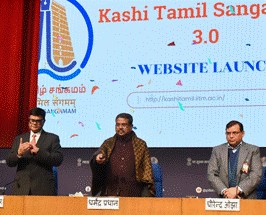
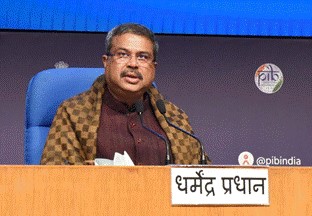
Union Minister for Education, Shri Dharmendra Pradhan, launched the registration portal for the 3rd edition of Kashi Tamil Sangamam (KTS). The Minister, while addressing a press conference, announced that KTS 3.0 will commence on 15th February 2025 in Varanasi, Uttar Pradesh. This 10-day-long event will conclude on 24th February 2025, he added. The portal, kashitamil.iitm.ac.in – hosted by IIT Madras, will accept registrations till 1st February 2025, he added.

2025-01-15 15:34:13.787000

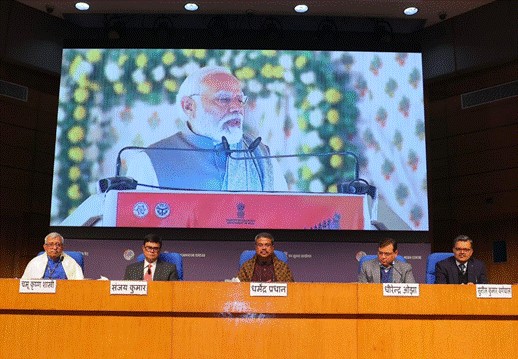
Secretary, Ministry of Education, Shri Sanjay Kumar; Principal DG, PIB, Shri Dhirendra Ojha; Additional Secretary, Higher Education, Ministry of Education, Shri Sunil Kumar Barnwal; Chairman, Bhartiya Bhasha Samiti, Shri Chamu Krishna Shastry, and other officials also attended the Press Conference.

Shri Pradhan, while interacting with the media, said that the inseparable bonds between Tamil Nadu and Kashi are set to come alive through Kashi Tamil Sangamam 3.0.

The Minister highlighted that Kashi Tamil Sangamam, a brainchild of Prime Minister, Shri Narendra Modi, is an inspirational initiative to celebrate the timeless bonds between Tamil Nadu and Kashi, strengthen the civilisational links and further the spirit of Ek Bharat Shrestha Bharat.

Shri Pradhan said that Kashi Tamil Sangamam will be a celebration of one of India’s most revered sages—Maharishi Agasthyar. Maharishi Agasthyar’s legacy is deeply woven into India’s cultural and spiritual fabric, Shri Pradhan highlighted. His intellectual brilliance is the bedrock of Tamil language and literature as well as our shared values, knowledge traditions and heritage, he added.

2025-01-15 15:36:17.733000
2025-01-15 15:36:17.805000

Shri Pradhan said, that this year, Kashi Tamil Sangamam holds a special significance as it is coinciding with the Mahakumbh, and it is also the 1st Sangamam after the ‘Pran Pratishtha’ of Shri Ram Lalla in Ayodhya.

With Maharishi Agasthyar as the central theme and Mahakumbh and Shri Ayodhya Dham as the backdrop, Kashi Tamil Sangamam 3.0 will offer a divine experience and bring Tamil Nadu and Kashi—the two timeless centres of our civilisation and culture, more closer than ever, he said.

Shri Pradhan encouraged people of Tamil Nadu to participate in Kashi Tamil Sangamam 3.0 wholeheartedly.

An exhibition on the different facets of Sage Agasthyar and his contributions to world of Health, Philosophy, Science, Linguistics, Literature, Polity, Culture, Art, particularly to Tamil and Tamil Nadu, etc. and Seminars, workshops, book release, etc. will be organised at Kashi during KTS 3.0. Competitions and other awareness programs in Tamil Nadu prior to KTS 3.0 will be organised in a befitting manner in major cities of India and abroad where there is considerable Tamil diaspora.

This year, the government has decided to bring around 1000 delegates from Tamil Nadu under five categories/groups: (i) Students, Teachers, and Writers; (ii) Farmers and Artisans (Vishwakarma Categories); (iii) Professionals and Small Entrepreneurs; (iv) Women (SHG, Mudra Loan beneficiaries, DBHPS Pracharaks); and (v) Start-up, Innovation, Edu-Tech, Research. This year, an additional group of around 200 students of Tamil origin studying in various CUs will be a part of this event to enliven the bond between Kashi and Tamil Nadu. Participation of youth in all categories will be encouraged this year.

The duration of the tour will be 8 Days (4 for travel, 4 at site). The first group will leave Tamil Nadu on 13th February 2025 and the last group will return to Tamil Nadu on 26th February 2025.

The objective of the Kashi Tamil Sangamam is to rediscover, reaffirm, and celebrate the age-old links between Tamil Nadu and Kashi—two of the country’s most important and ancient seats of learning.

Kashi Tamil Sangamam is being organized by the Ministry of Education, Govt. of India in collaboration with other ministries including Culture, Textiles, Railways, Tourism, Food Processing, I&B etc. and the Govt. of UP. The programme aims to provide an opportunity for scholars, students, philosophers, traders, artisans, artists and people from other walks of life from the two regions to come together, share their knowledge, culture and best practices and learn from each other’s experience. It also aims to make the youth aware and experience cultural oneness. The endeavour is in sync with NEP 2020’s emphasis on integrating the wealth of Indian Knowledge Systems with modern systems of knowledge. IIT Madras and BHU are the two implementing agencies for the programme.

The Government has so far celebrated the Kashi Tamil Sangamam on two occasions earlier; i.e., for one month in 2022 and for a fortnight in 2023 and around 4000 delegates from Tamil Nadu have been a part of this event. In both the editions of KTS, there were overwhelming responses from people of Tamil Nadu and Uttar Pradesh. IIT Madras will be the sender institution and BHU the receiving institution, as in the earlier editions. IIT Madras will call for applications for participation through a portal, which was launched today.

KTS 2.0 was inaugurated by Prime Minister Shri Narendra Modi at Varanasi on 17th December, 2023, with the first-ever real-time, app-based translation of a part of the Prime Minister’s speech in Tamil for the benefit of visiting Tamil delegates.

*****

Is NSHSS a Legitimate Academic Organization?

Bloganuary writing prompt
If you could un-invent something, what would it be?

The National Society of High School Scholars (NSHSS) frequently comes into conversation among students, parents, and educators across the nation. Promising a vast array of benefits from scholarship opportunities to academic prestige, it naturally sparks curiosity — as well as skepticism — regarding its legitimacy. With invitations arriving in the mailboxes of high-achieving students, the central question arises — is the honor of being an NSHSS member as distinguished as it appears? In this article, we’ll delve into the NSHSS’s background, operations, and the perceptions that it holds among various academic stakeholders.

Understanding the National Society of High School Scholars

The National Society of High School Scholars was founded in 2002 by Claes Nobel, a member of the family known for the Nobel Prizes, and James Lewis, an educator. It markets itself as an organization that connects high-performing students with unique educational and career opportunities. The NSHSS champions itself as being a springboard to future success and a network where young scholars can thrive.

Membership to NSHSS includes a one-time fee. Following payment, members are provided with various resources such as access to scholarship platforms, academic competitions, and university admissions resources. It’s the outlay of this fee that has people questioning, “Is NSHSS a scam?” and wondering about the true value of its benefits.

Examining the Criteria for NSHSS Membership and Offerings

One of the most debated aspects of NSHSS is the criteria for membership. To join, students need to meet certain academic standards, such as maintaining a specific GPA or achieving a particular score on standardized tests. These thresholds are set by the society and used as benchmarks for prospective members.

Once a part of NSHSS, members have access to a suite of benefits. These include exclusive scholarships, events for leadership development, and college fairs specifically geared toward members. The organization also provides various tools and resources to aid in the college application process.

Additionally, the NSHSS sells branded merchandise and offers members the chance to buy honor cords and other recognition paraphernalia for graduation ceremonies. For some, these tangible items add to the perceived value of membership, while for others, they represent a commercial aspect of the society that undermines its academic foundation.

Scholarships awarded via NSHSS are diverse, ranging from merit-based to those targeted toward specific fields of study or extracurricular interests. The society also provides avenues to internships and mentorship programs, furthering its mission to prepare members for their educational and professional futures.

Debating the Value and Recognition of NSHSS in Academic Circles

Discussion often arises regarding how well-regarded NSHSS membership is within academic and professional spheres. Some educators and college admissions officers recognize the society for its efforts in rewarding academic achievement. However, this recognition isn’t universally held across all educational institutions.

Critics argue that while NSHSS provides benefits, the value may not align with the cost of membership. From an admissions standpoint, simply being part of an organization like NSHSS isn’t always a distinguishing factor. Admissions committees increasingly look for depth in activities and personal achievements beyond membership in honor societies.

Furthermore, the marketing tactics used by NSHSS have been a point of contention. With aggressive advertising and bold claims about society’s impact on a student’s future success, some question the substance behind the style. It’s important for students and parents to thoroughly research and weigh these factors before committing to membership.

Overall, the NSHSS presents a mix of opportunities and challenges for high-achieving students seeking to enhance their academic and professional journeys. While some find value in the networking and resources provided, others question the cost and the actual impact on college admissions and future success. As with any such decision, it is imperative for students and parents to conduct thorough research, consider testimonials from both students and educators, and reflect on personal objectives before committing to membership in NSHSS or similar organizations.