DATA SCIENCE

Introduction:-

Data scientists combine mathematics, statistics and the use of computer science to extract,analyze data from thousands of data sources in order to build creative and innovative business solutions.Data Scientist’s job involves solving the problems of his or her client by providing solutions using real time data and tools and algorithms.


Industries and Departments in which Data Scientist are hired:-

Data scientists and analysts are largely employed by IT companies, marketing, finance and retail sectors.
Companies use Data Scientists to give them a report on what their clients demands and needs and give them innovative solutions on how to cater to them. Oil, gas and telecommunication companies also have started employing data scientists to better cater to their clients.
Other sectors and departments that employ data scientists are
● NHS
● Government offices
● Research institutions and universities.
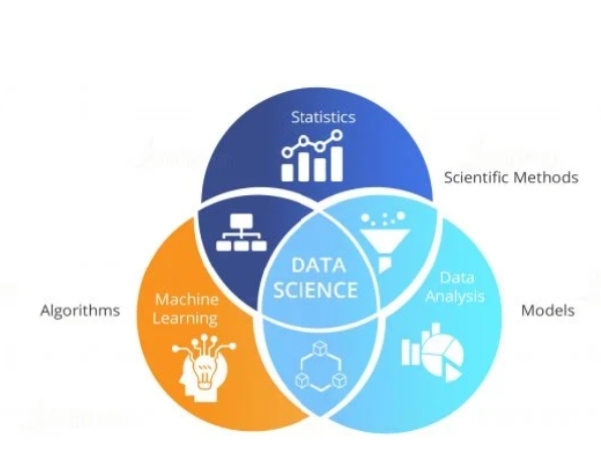
The roles and responsibilities of a data scientist:-

● To handle vast amounts of data and choose reliable sources.

● Developing prediction models and advanced machine learning algorithms

● Verifying data using data investigation and data analysis.

● Using data visualization techniques to present findings.

● Finding solutions to business problems by working with data engineers and data analysts

Educational qualification For data scientist:-

● Should have a BSc/BA degree in the field of Computer Science/ Software Engineering/Information Science/Mathematics.


● Should have a postgraduate degree/diploma certification in Data Science/Machine Learning.

Career growth of a Data Scientist:-

The life of a Data Scientist starts from an associate data analyst and can go up to the role of Chief Data Scientist.Promotion can take two to five years it is based on the performance.After some experience they get into some higher position.

CONCLUSION:-

Data Scientists are one of the most in demand people in the world. They can skyrocket companies’ shares and make them reach new heights.Data Science is a very high paying industry thus finding a job with a seven-figure salary won’t be a problem. Data Science as an industry has a very bright future.Data Scientists have the ability to change the world’s future.
DS0101EN: Introduction to Data Science course by edX

Hey peeps! Here is a course for all the engineering students out there who want to pave their way towards being a data scientist. So, gear up and tighten the seat belts. Let’s get into the world of data science.

Top 10 Careers in Data Science that are Shaping the Future

In this course you will:

  • Meet people who work in data science
  • Explore definitions of data science
  • Learn about data science in a business context
  • Discover some use cases and applications of data science

Syllabus

Module 1 – Defining Data Science

  • What is Data Science?
    • Fundamentals of Data Science
    • The Many Paths to Data Science
    • Advice for New Data Scientists

Module 2 – What Data Scientists Do

  • A Day in the Life of a Data Scientist
    • Old problems, new problems, Data Science solutions
    • Data Science Topics and Algorithms
    • Cloud for Data Science

Module 3 – Data Science in Business

  • Foundations of Big Data
    • How Big Data is Driving Digital Transformation
    • What is Hadoop?
    • Data Science Skills and Big Data
    • Data Scientists at New York University

Module 4 – Use Cases for Data Science

  • What is the Difference?
    • Neural Networks and Deep Learning
    • Applications of Machine Learning

Exercise – Computer Vision with IBM Watson

Module 5 – Data Science in Business

  • How Data Science is Saving Lives
    • How Companies Should Get Started in Data Science
    • Applications of Data Science

Module 6 – Careers and Recruiting in Data Science

  • How Can Someone Become a Data Scientist
    • Recruiting for Data Science
    • Careers in Data Science
    • High School Students and Data Science Careers

MODULE 1:

Learning Objectives

In this module you will:

  • Hear from data science professionals to learn what data science is.
  • Learn about the many paths to data science.
  • Hear from data science professionals as they give advice to anyone who is passionate about data science.
  • Learn some statistics about the field of data science, the demand for data scientists, and some of the qualities of excelling data scientists.
  • Learn why data science is the sexiest job of the 21st century.

SUMMARY:

In this module, you have learned:

  • Data science is the study of large quantities of data, which can reveal insights that help organizations make strategic choices.
  • There are many paths to a career in data science; most, but not all, involve a little math, a little science, and a lot of curiosity about data.
  • New data scientists need to be curious, judgemental and argumentative.
  • Why data science is considered the sexiest job in the 21st century, paying high salaries for skilled workers.

MODULE 2:

Learning Objectives

In this module you will:

  • Hear from data scientists as they share with you what a typical day in the life of a data scientist looks like.
  • Hear from data scientists as they share with you what tools, algorithms, and technologies they use on a daily basis.
  • Hear from data scientists as they try to explain the term “cloud”.
  • Learn about data science, data scientists, and how each is defined.

In this module, you have learned:

  • The typical workday for a Data Scientist varies depending on what type of project they are working on.
  • Many algorithms are used to bring out insights from data. 
  • Accessing algorithms, tools, and data through the Cloud enables Data Scientists to stay up-to-date and collaborate easily.

MODULE 3:

In this module, you have learned:

  • How Big Data is defined by the Vs: Velocity, Volume, Variety, Veracity, and Value.
  • How Hadoop and other tools, combined with distributed computing power,  are used to handle the demands of Big Data.
  • What skills are required to analyse Big Data. 
  • About the process of Data Mining, and how it produces results.

MODULE 4:

Learning Objectives

In this module you will:

  • Hear from Norman White, the Faculty Director of the Stern Centre for Research Computing, at New York University.
  • Hear from Norman White as he talks about data science and what skills are required for anyone interested in pursuing a career in this field.
  • Hear from Norman White as he explains some of the popular data science tools and algorithms.
  • Hear from Norman White as he gives advice to high schools students, in particular, and anyone, in general, who are looking to start a career in data science.
  • Learn about data mining, and the steps the comprise the process of mining a given dataset.
  • Learn about regression and what questions can be put to regression analysis.

SUMMARY:

In this module, you have learned:

  • The differences between some common Data Science terms, including Deep Learning and Machine Learning.
  • Deep Learning is a type of Machine Learning that simulates human decision-making using neural networks.
  • Machine Learning has many applications, from recommender systems that provide relevant choices for customers on commercial websites, to detailed analysis of financial markets.
  • How to use regression to analyze data.

MODULE 5:

Learning Objectives

In this module you will:

  • Learn about what companies need to do in order to start with data science.
  • Learn about some of the qualities that differentiate data scientists from other professionals.
  • Learn about some applications of data science.
  • Learn about analytics and what important role data scientists play in this process.
  • Learn about story-telling and the importance of an effective final deliverable.
  • Learn about the main components of an effective final deliverable.
  • Apply what you learned about data science to answer open-ended questions.
  • Demonstrate your understanding of the readings to define what data science and data scientist mean.
  • Demonstrate your understanding of the readings to answer a question about the final deliverable of data science project.

Summary:

In this module, you have learned:

  • Data Science helps physicians provide the best treatment for their patients, and helps meteorologists predict the extent of local weather events, and can even help predict natural disasters like earthquakes and tornadoes.
  • That companies can start on their data science journey by capturing data. Once they have data, they can begin analysing it.
  • Some ways that data is generated by consumers. 
  • How businesses like Netflix, Amazon, UPs, Google, and Apple use the data generated by their consumers and employees.
  • The purpose of the final deliverable of a Data Science project is to communicate new information and insights from the data analysis to key decision-makers.

MODULE 6:

Learning Objectives

In this module you will:

  • Learn about what companies need to do in order to start with data science.
  • Learn about some of the qualities that differentiate data scientists from other professionals.
  • Learn about some applications of data science.
  • Learn about analytics and what important role data scientists play in this process.
  • Learn about story-telling and the importance of an effective final deliverable.
  • Learn about the main components of an effective final deliverable.
  • Apply what you learned about data science to answer open-ended questions.
  • Demonstrate your understanding of the readings to define what data science and data scientist mean.
  • Demonstrate your understanding of the readings to answer a question about the final deliverable of data science project.

SUMMARY:

In this module, you have learned:

  • The length and content of the final report will vary depending on the needs of the project.
  • The structure of the final report for a Data Science project should include a cover page, table of contents, executive summary, detailed contents, acknowledgments, references, and appendices.
  • The report should present a thorough analysis of the data and communicate the project findings.

Data Science

A deep dive into the course revolutionising business worldwide.

What is Data Science?

According to Wikipedia Data Science is an interdisciplinary field that uses scientific method, processes, algorithms and system to extract insights from structured and unstructured data.

There is an humongous amount of data being generated every minute and so, industries need experts who can solve problem fast.
Currently, many popular universities across the world offer postgraduate programs specialising in Data Science.

Why is Data Science is important for students and businesses?

The importance of data Science brings together the domain expertise from programming, mathematics, and statistics to create insights and make sense of data. When we think about why data science is increasingly becoming important, the answer lies in the fact that the value of data is soaring heights.
Data science is high in demand domain and explains how digital data is transforming businesses and helping them make sharper and critical decisions. So data that is digital is ubiquitous for people who are looking to work as a data scientist.

Is Data Science a good career?

Data scientists are in constant demand because it is a data-heavy world! Data scientists are a new growing breed of professionals, highly in demand today.
Data science has been called “the sexiest job of the 21st Century” by Harvard Business Review. The Scope of Data science is getting more popular in recent times. Data scientists are professionals who can simplify big data through coding and algorithms and turn it into a problem-solving solution for the business.

What Will I Study?

A chance to study subject like
• Machine learning
• Data analytics
• Business analysis
• Data visualisation
• Cloud computing
• Database systems
• Internet technology
• Algorithm

What Exams Do I Need To Take?

Most of the universities in the United States prefer students to undertake the GRE/GMAT exam.
Many universities in Australia, Canada, UK, Ireland and New Zealand assess the student based on their academic background and may not ask for GRE/GMAT scores.

Career Opportunities?

Being one of the most sought – after courses in these days, Data Science is a field to ripe opportunities for you, not to mention handsome remuneration.

Career option after data science
• Business Intelligence Developer
• Data Scientist
• Marketing Analyst
• Statistician
• Quantitative Analyst

ARTIFICIAL INTELLIGENCE

Artificial Intelligence, or simply AI, is the ability of a computer system or machine to operate and interpret information in the same way that a human does. It is capable of learning, analyzing, copying, and adapting to new knowledge without the need for external optimization. Experts believe that AI will be able to make human existence more easier in the future by providing solutions to nearly all problems. Artificial Intelligence will also make humans aware of potential hazards ahead of time. Artificial intelligence (AI) is one of the most rapidly evolving disciplines of science and creation. Artificial intelligence (AI), also known as “man-made reasoning,” is a branch of software engineering that aims to create machines that can think and function like humans.

Artificial Intelligence (AI): A Brief History

Artificial insight research was also started in 1950. The development of electronic computers and stored programs computers sparked AI research. A connection could not interface a PC to reason or act like a human psyche for a long time after that. Following that, Norbert Wiener made a revelation that accelerated AI’s early development tremendously. He demonstrated that the reaction component is responsible for all creative behavior in individuals. Logic Theorist was another step toward modern AI. It is considered the most important AI programs, having been created by Newell and Simon in 1955.

Who is the Father of Artificial Intelligence?

Mr. John McCarthy (1927-2011) is known as the “Father of AI.” He was born in Boston, Massachusetts, to a poor European immigrant family. McCarthy had already excelled in Mathematics as a teenager. He used to work as a carpenter and a fisherman to help support his family before becoming an official at the California Institute of Technology, Caltech. John McCarthy received his bachelor’s degree in mathematics from Caltech in 1948 and his doctorate in 1951.

Who was John McCarthy?

John McCarthy, also regarded as the “Father of AI,” was a brilliant computer scientist and cognitive scientist. He has been fascinated by artificial intelligence since 1948, and in 1955, he created the term. The formalization of common sense information has been his principal artificial intelligence research topic. In 1958, he created the LISP programming language, and in the late 1950s and early 1960s, he pioneered the concept of time-sharing. Since the early 1960s, he has worked on proving that computer programs fit their specifications. In 1978, he developed the circumscription approach of non-monotonic reasoning.

Applications of Artificial Intelligence:

Marketing: Marketing, which has been a significant area for improvement and the current AI trends, is one of the most notable artificial intelligence examples applications. In terms of AI’s application in the marketing arena online, the early 2000s were not very promising. Yes, there was e-commerce, but the search was not very good. When you didn’t know the specific name of anything, finding it in a store was difficult. Smart suggestions are now far more effective thanks to advancements in AI. Consumers on the web may soon be able to buy things by snapping a photo of them, thanks to advances in AI. This concept is already being tested by companies like Cam Find and their competitors. AI Platforms like IFlyTek also has many AI softwares that leverages on machine and AI intelligence such as text-to-speech and document translation tools to improve everyday life.

Gaming: Artificial Intelligence (AI) has been an important aspect of the game business in recent years. In fact, one of AI’s greatest achievements is in the gaming business. One of the most notable achievements in the field of AI is DeepMind’s AI-based AlphaGo software, which is famous for defeating Lee Sedol, the world champion in the game of GO. The gaming world is the best illustration of clever artificial intelligence applications because it is on this platform that there are many changes in the purpose. AI is employed to create the game, develop the characters, and, to some extent, frame the tale.

Healthcare: The healthcare industry has been one of the most enthusiastic adopters of AI technology. It all comes down to AI’s ability to crunch numbers quickly and learn from previous data, which is important in the healthcare industry. AI has also made a significant contribution to assisting people in the care of patients. The automated bots and healthcare software ensure that patients are properly medicated and treated in the facilities. In some circumstances, AI programs have been reported to assist surgeons during operations.

Chat Bots: Virtual assistants have become increasingly popular in recent years. Almost every home has a virtual assistant that manages the household equipment. Siri and Cortana, for example, are gaining popularity as a result of the user experience they deliver. Amazon’s Echo is an example of how AI can be used to interpret human words into desired actions. This device employs speech recognition and natural language processing to carry out a variety of operations at your direction. It’s capable of much more than just playing your favorite music. It may be used to control your home’s electronics, book cabs, make phone calls, order your favorite meals, and check the weather, among other things.

Data Scientist Evergreen Career – Demand for Data Scientist is growing around the World

Data consumption has already increased manifold during the global pandemic anyway. As much data is being generated, its consumption is also being done accordingly. Mobile phones, social media, apps, payment wallets are generating so much data that the need of experts is being felt to manage it.

According to a study, the demand for data scientists around the world is estimated to increase by about 28 per cent. At the same time, India is second after the US in terms of making the most appointments in the field of data science or analytics.

Actually, data scientists study data. By analyzing the data, they help companies or institutions plan for the future. Under this, they first collect data. Then store them and then sort them into different categories i.e. packaging of data. Finally, data delivery takes place. Simply to say that data scientists know how to visualize data better. Apart from all this, they also help in finding the lost data, removing the chaos and avoiding other flaws.

Important skills with academics

To become a data scientist, a candidate must have an M.Tech or MS degree in Maths, Statistics, Computer Science, Engineering, Applied Science. Under Data Science people have to study Maths, Algorithm Techniques, Statistics, Machine Learning and Programming languages like Python, Hive, SQL, R, etc. which requires a lot of hard work, time and patience. The data scientist should also have a good understanding of the business and strong communication skills. Also, it is good to gather complete information about any program or course before selecting it. 

Course

Many top institutes in the country offer courses related to it. For example, the Post Graduate Diploma in Business Analytics (Data Science) program jointly run by IIM Calcutta, ISI Calcutta and IIT Kharagpur is quite popular. Apart from this, you can also do a course from IIIT Bengaluru. If you want to learn online, you can explore the platforms of Simplilearn, Jigsaw Academy, Edureka, Learnbay, etc. According to experts, the maths background is beneficial for making a career in data science.

The possibilities

By 2026, it is expected to be around 11 million new jobs coming in this sector. Talking about India, the demand for data scientists in 2018 was seen to increase by 4.17 per cent, which is likely to continue in the coming time. Youngsters aspiring to pursue a career in this field can work on the profiles of data engineers, data administrators, statisticians, data and analytics managers, etc. There will be good demand in sectors like agriculture, healthcare, aviation, cybersecurity etc.

Hiring will increase even after COVID 19

Data scientists play a key role in building business analytics, data products, and software platforms. Today, 2.5 quintillion bytes of data is being created in the world every day, which will require skilled professionals to manage. There will be tremendous opportunities for them. Especially in Big Data Analytics and IT industry, they will have special demand.

According to a global study, after COVID 19, millions of data science professionals will be needed in the US alone. Global companies will hire a large number of data scientists to manage their businesses.

A similar situation will prevail in India. For this, youth can enrol in postgraduate courses offered in different universities of the country or can also take online courses from Coursera, Metis, MIT (EDX), Harvard or Udemy. But doing a full course would be better. If you can work with machine learning in deep learning frameworks like Neural Networks, TensorFlow, Keras, PyTorch, and have working knowledge of Hadoop and Spark, then there can be golden opportunities to move forward in the industry. It is also important for the data scientist to have critical thinking.

Premier Institutes:

ASI Calcutta

http://www.isical.ac.in

IIM, Calcutta

https://www.iimcal.ac.in/

IIT Kharagpur

http://www.iitkgp.ac.in/

Indian Institute of Management, Bangalore

https://www.iimb.ac.in/

Great Lakes Institute of Management, Tamil Nadu

https://www.greatlakes.edu.in/

IIIT Bangalore

https://www.iiitb.ac.in/