
Make in India- A great Initiative

 Make in India Scheme- A Great Initiative 

Make in India is an initiative by the government of India to encourage companies to manufacture products in India. This program is designed to facilitate investment, foster innovation, enhance skill development, protect intellectual property and build best-in-class manufacturing infrastructure in the country. It was launched by Prime Minister in September 2014 as part of a wider set of nation-building initiatives. 

The aim is to transform India into a global design and manufacturing hub. The primary objective of this initiative is to attract investments from across the globe and strengthen India’s manufacturing sector. This program is very important for the economic growth of India as it aims to utilize the existing Indian talent base, creating employment opportunities and empowering the secondary and tertiary sectors.

Make in India needed a different kind of campaign, instead of the typical newspaper advertisements, this exercise required messaging that was informative, well-packaged and most importantly, credible. It had to inspire confidence in India’s capabilities amongst potential partners abroad, the Indian business community, and citizens at large; provide a framework for a vast amount of technical information on 25 industry sectors; and reach out to a vast local and global audience via social media and constantly keep them updated about opportunities, reforms, etc.

The Department for Promotion of Industry and Internal Trade (DPIIT) worked with a group of highly specialized agencies to build brand new infrastructure, including a help desk and a mobile-first website that simply contain information. The focus of the Make in India program is on 25 sectors. These include automobiles, automobile components, aviation, biotechnology, chemicals, construction, defense manufacturing electrical machinery, electronic systems, food processing, IT & BPM, leather, media and entertainment, mining, oil and gas, pharmaceuticals, ports and shipping, railways, renewable energy, roads and highways, space, textile and garments, thermal power, tourism and hospitality, and wellness.

DPIIT initiated this process by inviting participation from Union Ministers, Secretaries to the Government of India, state governments, industry leaders, and various knowledge partners. A National Workshop on sector-specific industries in December 2014 brought Secretaries to the Government of India and industry leaders together to debate and formulate an action plan for the next three years, aimed at raising the contribution of the manufacturing sector to 25% of the GDP by 2020. This demonstrated the transformational power of public-private partnership and has become a hallmark of the Make in India initiative.

In a short period, this initiative grows a lot with a transparent and user-friendly system. The ministry has engaged with the World Bank Group to identify areas of improvement. Now, the credibility of India becomes stronger. There are visible changes in the business sector of India as this program opened doors for investors and promoted entrepreneurs. Now India is on its way to becoming the largest and most powerful economy. 
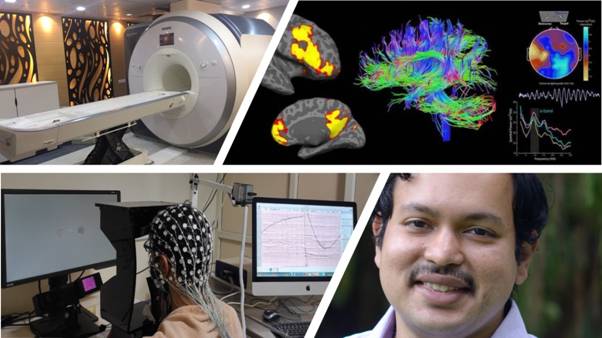
Swarnajayanti fellow’s work to pave way for developing strategies to manage and treat attention disorders

 Prof. Sridharan Devarajan, currently an Associate Professor in the Centre for Neuroscience & Associate faculty in Computer Science and Automation, Indian Institute of Science (IISc), Bangalore, is a recipient of the Swarnajayanti fellowship for the year 2021. He seeks to identify brain regions and neural mechanisms that mediate human attention, with potential applications in developing therapies for treating attention disorders.

The human brain has the remarkable ability to pay attention to important objects and locations in our world while ignoring irrelevant ones. Although attention has been studied behaviourally for many decades, we know very little about how attention works in the brain. Unexplored territories include— identifying brain regions that allow us to sustain attention on particular objects, brain regions that suppress irrelevant information, and brain processes that are disrupted in disorders of attention.

Along with his group, Prof. Sridharan is employing combinations of cutting-edge, non-invasive technologies. Including functional and diffusion Magnetic Resonance Imaging (fMRI/dMRI), Electro-Encephalography (EEG), and Trans-Magnetic and Electrical Stimulation (TMS/TES) to both record and perturb human brain activity in a targeted manner.

In his recent work, Prof. Sridharan has identified how particular brain regions – both in the neocortex (outermost layer of the brain) as well as in the deeper midbrain – contribute to attention. His group has shown that human participants with asymmetric wiring between the midbrain and the cortical hemispheres also show marked asymmetries in the way they pay attention. In another recent study, they have shown that perturbing activity in a particular region in the neocortex (the parietal cortex) can affect participants’ ability to pay attention. To analyse and simulate how attention works in the brain, they also developed detailed mathematical and computational (deep learning) models of the neocortex and midbrain. This research has been published in various prestigious journals, including PLoS Computational Biology.

“While these studies from our group and others have hinted at the role of several brain regions in attention, very few have experimentally established these links directly. As part of the Swarnajayanti Fellowship, our lab will seek to understand “causal” mechanisms of attention in the brain. We will follow a three-pronged approach,” told Prof. Sridharan.

First, they will track changes in the structure, activity, and connectivity between specific brain regions (“neuroplasticity”) when participants are learning to paying attention. Measuring such neuroplastic changes in the brain may have key implications for testing the effectiveness of interventions for managing attention disorders, both in children and adults.

Second, they will develop brain-machine interface technologies that can be used to train participants to voluntarily control activity in attention-related brain regions (“neurofeedback”). They will then try to find out whether achieving such neurofeedback control improves participants’ attention abilities. This type of interface may be developed into a non-invasive tool for training attention capacities in healthy individuals, as well as in patients with attention disorders.

Third, they will perturb and image brain activity in real-time, with millisecond precision (“neurostimulation”), to identify the role of particular brain regions in attention. This technology may be adapted in clinical settings for targeting brain regions implicated in disorders of attention, such as attention deficit disorder (ADD).

All of the experiments will be carried out at the state-of-the-art JN Tata National MRI facility at the Indian Institute of Science (IISc), which houses a 3T (Siemens Prisma) MRI scanner with integrated MR-EEG and MR-TMS setups.

“Broadly, the research findings from this proposal will advance our fundamental understanding of key principles by which attention works in the human brain and may pave the way for developing rational strategies to manage and treat attention disorders,” added Prof. Sridharan.

Description: C:\Users\Admin\Downloads\Slide 2.jpg


Publication link: https://journals.plos.org/ploscompbiol/article/authors?id=10.1371/journal.pcbi.1009322