The integrated and sustainable development in rural India is at the heart of the Government’s strategy. The focus is on holistic economic betterment through decentralized planning, better access to credit, empowerment of women, basic housing, and education, among others. This was stated by the Economic Survey 2024 tabled by Union Minister for Finance and Corporate Affairs Smt. Nirmala Sitharaman in the Parliament today.
Enhancing the Quality of life in rural India
The Economic Survey stated that quality of life in rural areas has progressed in terms of basic amenities, education, health and financial inclusion. In terms of basic amenities, 11.57 crore toilets were constructed under the Swachh Bharat Mission- Grameen and 11.7 crore households were provided with tap water connection under Jal Jeevan Mission as of 10th July 2024. The Survey reports that in the PM-AWAS-Gramin, 2.63 crore houses were constructed for the poor in last nine years (as of 10th July 2024) .
In addition, 35.7 crore RuPay debit cards have been issued under Pradhan Mantri Jan Dhan Yojana (PMJDY) as of 26th June 2024 leading to enhanced financial inclusion in rural areas. In the health sector, 1.58 lakh sub centres and 24,935 primary health centres have resulted in enhancement of quality of life in the rural areas.
Strengthening and modernising the safety net of MGNREGS
The Economic Survey 2023-24 observed that to ensure elimination of leakages in MGNREGS (Mahatma Gandhi National Rural Employment Guarantee Scheme), geotagging before, during and after the work is being done and 99.9 per cent payments are through National Electronic Management System.
The Survey stated that MGNREGS has made significant progress in terms of person-days generated and women participation rate with person-days generated increasing from 265.4 crore in 2019-20 to 309.2 crore in 2023-24 (as per MIS) and women participation rate increasing from 54.8 per cent in 2019-20 to 58.9 per cent in 2023-24.
The Economic Survey also points out that MGNREGS has evolved into an asset creation programme for sustainable livelihood diversification, as seen in the rise in the share of individual beneficiary ‘works on individual land’ from 9.6 per cent of total completed works in FY14 to 73.3 per cent in FY24.
Nurturing rural entrepreneurship at the grassroots
The Government continues to provide a fillip to rural entrepreneurship by implementing a bouquet of vibrant schematic interventions with a distinct focus on seamless access to affordable finance and generating lucrative market opportunities. Schemes and programmes like Deendayal Antyodaya Yojana- National Rural Livelihood Mission (DAY-NRLM), Lakhpati Didis initiative, and Deen Dayal Upadhyaya Grameen Kaushalya Yojana (DDU-GKY) have enhanced livelihood generation and easy access to finance in rural areas.
Digitisation initiatives for rural governance
Digitisation initiatives like e-Gram SWARAJ, SVAMITVA Scheme, Bhu-Aadhaar have improved rural governance. Under SVAMITVA Scheme, drone survey of 2.90 lakh villages has been completed and 1.66 crore property cards have been prepared. The Economic Survey points out that 200 per cent increase in rural internet subscriptions between 2015 and 2021 can reduce the distance between the village and the administrative headquarters leading to regional developments.
NITI Aayog is organizing a workshop on the theme of Nari Shakti: Towards Women-led Development on 8 November 2023 (Wednesday) at Park Hotel, New Delhi. This will be eighth in the series of G20 Feeder Thematic Workshops being organized on 10 themes discussed in the G20 New Delhi Leaders’ Declaration (NDLD). The knowledge partner of this workshop is the Institute of What Works to Advance Gender Equality (IWWAGE).
This workshop will endeavour to bring together various views from experts, entrepreneurs, innovators, academia, representatives of think-tanks, and government working on gender equality and empowerment to identify the way forward and the required resources to achieve the objectives and outcomes mentioned in the G20 New Delhi Leaders’ Declaration.
It will be divided into following four segments. Each segment will aim to coalesce into specific action points and strategies that are required to implement the vision laid out in the NDLD:
Women in the economy: Enhancing women’s economic and social empowerment: Women’s social and economic empowerment is of paramount importance for fostering inclusive and thriving societies. The segment will explore various pathways to increase women’s meaningful participation in the workforce, role of government and private sector to achieve the same as well as the resources required to enable women to join workforce.
Women’s collectives: strengthening SHGs, women-led FPOs and rural women’s leadership abilities: Women collectives like SHGs, Farmer Producer Organisations (FPOs) etc. are undeniably a unique and important gender-responsive policy solution in terms of securing employment, financial autonomy secured through credit and savings, improving women’s capabilities around decision-making, fostering leadership, and communicative abilities and so on. This segment will discuss strategies that will enable these groups/collectives to reach the next stage of economic empowerment and also to expand their coverage in the urban areas.
Women and the future of work: bridging digital and skilling gaps for access to jobs and strengthening women’s entrepreneurship: Women’s access to digital and financial services can be a critical enabler of their labor force participation. This segment will delve into the trends in the future work, strategies to improve women’s access to these skills and to bridge the gender skill gap and various strategies to promote women’s entrepreneurship.
Legal safeguards for the empowerment of women: Legal frameworks can provide a powerful avenue for women to not only access justice, but also proactively set norms for their empowerment. The segment will explore various strategies to further strengthen the legal safeguards to create a safe space for women’s safety and empowerment.
This workshop will be an opportunity for industry, academics, experts, and civil society representatives to collaborate and design a roadmap for comprehensive gender equality and empowerment.
A momentous collaboration has been cemented as the Ministry of Social Justice & Empowerment and the National Safai Karamcharis Finance and Development Corporation (NSKFDC) inked a Memorandum of Understanding (MoU) for the fiscal years 2023-24 and 2024-25. This strategic partnership aims to enhance the socio-economic upliftment of Safai Karamcharis, Manual Scavengers, Waste Pickers and their dependants focusing on empowering these marginalized communities across the nation.
The MoU underscores the commitment to accelerate inclusive growth through the effective allocation and utilization of funds for targeted welfare programs. The joint endeavor strives to amplify initiatives that promote safety, education, skill development, entrepreneurship, and sustainable employment opportunities, contributing to the holistic advancement of these workers who toil hard braving inclement weather to keep our surroundings clean.
NSKFDC, a prominent organization dedicated for this cause will collaborate closely with the Ministry to ensure the transparent and effective utilization of allocated funds. This alliance seeks to synergize expertise and resources for impactful implementation of programs that empower these marginalized populations.
The signing of this MoU is a testament to the shared vision of fostering equal opportunities and societal progress. Both parties are eager to channel their collective efforts to drive positive changes, fostering an environment where every individual can thrive and contribute to the nation’s growth.
Making a transformative milestone in the realm of banking services, India Post Payments Bank (IPPB) proudly declares the continuation of its profit streak, reiterating its steadfast dedication to sustainable financial inclusion and citizen empowerment. Celebrating maiden profit journey last financial year and continuing of a successful profit run with the close of first-quarter this financial year, the IPPB is wholeheartedly committed to driving the Digital India initiative, ensuring no one is left behind, even in the remotest corners of the country.
Since its foundation, the IPPB has been motivated by the dream of extending doorstep banking services to millions of households nationwide. The journey began with pilot branches launched in Ranchi, Jharkhand and Raipur, Chhattisgarh in the year 2017 and witnessed unprecedented success in a remarkably short span to make it a dominant banking service provider at the last mile.
The IPPB is delighted to share the extraordinary accomplishment of generating a net profit of Rs. 20.16 crore during financial year 2022-23, culminating in a year of tremendous progress for the bank. A growth of 66.12 per cent in overall revenue was witnessed, which surpassed an increase in overall operating costs of 17.36 per cent, were the main factors in this accomplishment, demonstrating the power of IPPB’s customer-centric and cost-effective banking model.
“The IPPB’s success story is a testament to the collective efforts of our dedicated team, stakeholders, and most importantly, the trust of our family consisting of more tthan seven crore valuable customers,” quoted Shri J Venkatramu, MD & CEO, India Post Payments Bank. “Thanks to the slew of policy initiatives like Jan Dhan, Aadhaar, India Stack, etc & regulatory push like differentiated banking category, e-KYC, etc in the domain of financial inclusion that contributed tremendously in propelling IPPB’s success story. The bank’s prudent financial management, backed by regulatory support, has paved the way for exponential growth in customer base and product offerings,” he added.
Today IPPB has become the Most Accessible, Affordable and Trusted Bank for the unbanked & underbanked common man in India by leveraging the World’s Largest Postal Network comprising 1,55,000 Post Offices (1,35,000 in rural areas) and 3,00,000 postal employees, aided amply by the country’s Digital Public Infrastructure in delivering citizen centric financial services to the common man at their doorstep. Thus, a PHYGITAL Banking Service platform at a national scale has been created, with a differential positioning, envisaged to operate where traditional banking failed to catch up owing to conventional barriers.
This journey to profit with a purpose has been a collective effort. IPPB is indebted to tireless services of the Postmen/Gramin Dak Sevaks who have immensely contributed to the journey. IPPB will continue to sow seeds of financial prosperity with newly introduced services including loan referral services, low cost health & accidental products like Antyodaya Shramik Suraksha Yojana for Shramyogis registered on e-Shram portal, Digital Life Certificate to pensioners, citizen services initiatives like Aadhaar-mobile update, child Aadhaar enrolment, Aadhaar based banking transactions (AePS), enabling citizen access to govt. Direct Benefit Transfer programmes like PM KISAN etc. It’s initiatives like ‘Niveshak Didi’ has been able to reach to women beneficiaries across countries and helped them in providing much needed financial literacy to lay strong foundation of empowered India of the future.
Going forward, the IPPB aims to transform itself into a Universal Service platform bridging the last mile accessibility gaps using Digital Public Infrastructure.
About India Post Payments Bank
Communication with 100 per cent equity owned by Government of India. The IPPB was launched by the Prime Minister Shri Narendra Modi on September 1, 2018. The bank has been set up with the vision to build the most accessible, affordable and trusted bank for the common man in India. The fundamental mandate of India Post Payments Bank is to remove barriers for the unbanked & underbanked and reach the last mile leveraging the Postal network.
The IPPB’s reach and its operating model is built on the key pillars of India Stack – enabling Paperless, Cashless and Presence-less banking in a simple and secure manner at the customers’ doorstep, through a CB—integrated smartphone and biometric device. Leveraging frugal innovation and with a high focus on ease of banking for the masses, IPPB delivers simple and affordable banking solutions through intuitive interfaces available in 13 languages.
It is committed to provide a fillip to a less cash economy and contribute to the vision of Digital India. India will prosper when every citizen will have equal opportunity to become financially secure and empowered. Our motto stands true – Every customer is important, every transaction is significant and every deposit is valuable.
Atal Innovation Mission (AIM), NITI Aayog, and the United Nations Capital Development Fund (UNCDF) today jointly launched a whitepaper aimed at making India a global leader in Agri-Tech innovation and expanding these innovations to the least developed countries in Asia and Africa.
The whitepaper, meticulously prepared by experts from AIM, NITI Aayog, and UNCDF, offers actionable steps to overcome challenges faced by Agri-Tech start-ups and facilitate their growth at national and international levels.
The whitepaper outlines the significant observations and recommendations required to tackle challenges in the agriculture sector and promote sustainable practices that support smallholder farmers across developing economies. Agri-Tech innovations will help address food security, supply chain inefficiencies, and climate change concerns.
Addressing the audience, Mr. Samuel Praveen Kumar, Joint Secretary, Ministry of Agriculture and Farmers Welfare stated, “Agri-tech startups in India have emerged as a game-changer in the agriculture sector, offering innovative solutions to the emerging challenges in Agriculture like Climate change, Improving Productivity etc. The AIM-UNCDF Agri-tech challenge has uncovered the immense promise and potential of this market, and we are excited to see what the future holds.”
Speaking during the launch, Mission Director Atal Innovation Mission Dr. Chintan Vaishnav said “the agriculture sector is critical to food security, supply chain efficiency, and climate change mitigation, and the Agri-Tech start-ups in India have provided significant solutions to these challenges. Through this partnership with UNCDF, we aim to facilitate cross-border engagement, knowledge exchange, and investments to support high-impact Agri-Tech innovations and make agriculture practices efficient, resilient, and sustainable for smallholder farmers across developing economies. We look forward to working with our partners to realize this vision.”
At the launch, Jaspreet Singh, Global lead, Financial health and Innovation, UNCDF, said, “The learnings from the Agri-tech challenge have been immense and revealed that the market is enormous and has immense potential for global south-south collaboration. Moving forward, we are working towards creating a community platform for smallholder farmers which can be helpful for Agri and Agri-tech startups to exchange ideas, explore collaboration, and share knowledge”
With over 70% of the agricultural workforce in India comprising smallholder farmers, Agri-tech start-ups have emerged as the solution to the challenges faced by farmers. AIM, in partnership with UNCDF, aims to create a south-south collaboration environment where start-ups from Asia and Africa can exchange ideas and generate opportunities in their respective countries.
AIM, an anchor partner of the south-south collaboration initiatives, collaborates with partner countries such as Indonesia, Malaysia, Kenya, Uganda, Malawi, and Zambia. The collaboration focuses on addressing three key challenges in the agriculture sector, namely low productivity, poor risk resilience, and inefficient supply chain management. Out of 25 potential Agri-Tech start-ups that aim to solve critical challenges around production, supply chain, risk, and climate change, the partners have shown interest in and are at various stages of cross-border engagement.
The Agri-Tech start-ups in emerging economies have successfully provided digital solutions to several agricultural challenges that the sector has faced in the past. AIM, in partnership with UNCDF, is committed to supporting high-impact Agri-Tech innovations, creating an enabling environment that facilitates start-up growth and sharing of knowledge across borders. The Indian start-up sector has the potential to play the role of a knowledge hub and support market development in less-developed start-up economies across the globe.
The launch of the whitepaper marks a significant milestone in the journey towards making India a global leader in Agri-Tech innovation and expanding these innovations to the least developed countries in Asia and Africa. AIM, NITI Aayog, and UNCDF are committed to working together towards this goal and achieving sustainable and inclusive growth in the agriculture sector.
Sustainable development refers to a way of meeting the needs of the present generation without compromising the ability of future generations to meet their own needs. However, there are several challenges to achieving sustainable development, including:
Climate Change: Climate change is one of the most significant challenges facing sustainable development. The burning of fossil fuels and deforestation are major contributors to climate change, leading to rising temperatures, changing weather patterns, and more frequent natural disasters.
Poverty and Inequality: Achieving sustainable development requires reducing poverty and promoting equity. Poverty and inequality are major obstacles to sustainable development, as they can prevent people from accessing basic resources and opportunities.
Biodiversity Loss: The loss of biodiversity, caused by factors such as habitat destruction, overfishing, and pollution, threatens the balance of ecosystems and the sustainability of many industries that rely on natural resources.
Population Growth: The world’s population continues to grow, putting increasing pressure on natural resources and contributing to environmental degradation.
Unsustainable Consumption: Unsustainable patterns of consumption and production, such as overconsumption of meat and other animal products, can strain resources and contribute to environmental damage.
Political Will and Governance: Achieving sustainable development requires political will and effective governance. However, many governments lack the political will or capacity to enact policies that promote sustainable development.
Technological Innovation: Technological innovation has the potential to drive sustainable development, but it also presents challenges. New technologies can have unintended consequences and can be expensive to develop and implement on a large scale.
Overall, achieving sustainable development requires a collective effort to address these challenges and ensure that economic, social, and environmental goals are met in an integrated and equitable way.
The evolution of clocks is a fascinating story that spans thousands of years, from the earliest timekeeping devices to the most accurate atomic clocks of today. In this article, we will explore the major milestones in the history of clocks and how they have shaped our understanding of time.
Creator – Jorge Villa
The earliest known timekeeping devices were sundials, which were used by ancient civilizations such as the Egyptians, Greeks, and Romans. Sundials work by casting a shadow on a marked surface, indicating the time of day based on the position of the sun in the sky. Although sundials were effective in providing a rough estimate of time, they were not very accurate and could only be used during daylight hours.
The invention of the mechanical clock in the 14th century marked a major leap forward in timekeeping technology. These early clocks used gears and springs to power the movement of the hands and were able to keep time more accurately than any previous device. The first mechanical clocks were large and expensive and were primarily used in churches and other public buildings.
The development of the pendulum clock in the 17th century was another major breakthrough in timekeeping technology. The pendulum clock uses a swinging weight to regulate the movement of the gears, making it much more accurate than earlier mechanical clocks. The invention of the pendulum clock made it possible for individuals to own their own timekeeping devices, and clocks soon became a common household item.
In the 19th century, the invention of the electric clock paved the way for even greater accuracy and precision. Electric clocks use a quartz crystal to regulate the movement of the hands, making them much more reliable than mechanical clocks. Electric clocks also allowed for the development of synchronized timekeeping systems, which made it possible for people all over the world to keep the same time.
The invention of the atomic clock in the mid-20th century was another major milestone in the history of timekeeping. Atomic clocks use the vibrations of atoms to keep time, making them the most accurate clocks ever created. Atomic clocks are now used in a wide range of applications, from satellite navigation systems to scientific research.
Today, clocks come in all shapes and sizes, from traditional mechanical timepieces to digital clocks and smartwatches. Although the basic technology behind clocks has remained largely unchanged over the centuries, advances in materials, electronics, and software have allowed for ever-greater accuracy and precision.
In conclusion, the evolution of clocks has been a long and fascinating journey, marked by major milestones in technology and innovation. From the simple sundials of ancient times to the sophisticated atomic clocks of today, clocks have played a vital role in shaping our understanding of time and the world around us.
The concept of MBO is closely connected with the concept of planning. The process of planning implies the existence of objectives and is used as a tool/technique for achieving the objectives. Modern managements are rightly described as ‘Management by Objectives’ (MBO). This MBO concept was popularized by Peter Drucker. It suggests that objectives should not be imposed on subordinates but should be decided collectively by a concerned with the management. This gives popular support to them and the achievement of such objectives becomes easy and quick.
Management by Objectives (MBO) is the most widely accepted philosophy of management today. It is a demanding and rewarding style of management. It concentrates attention on the accomplishment of objectives through participation of all concerned persons, i.e., through team spirit. MBO is based on the assumption that people perform better when they know what is expected of them and can relate their personal goals to organizational objectives. Superior subordinate participation, joint goal setting and support and encouragement from superior to subordinates are the basic features of MBO. It is a result-oriented philosophy and offers many advantages such as employee motivation, high morale, effective and purposeful leadership and clear objectives before all concerned per-sons.
MBO is a participative and democratic style of management. Here, ample a scope is given to subordinates and is given higher status and positive/participative role. In short, MBO is both a philosophy and approach to management. MBO concept is different from MBC (Management by Control) and is also superior in many respects. According to the classical theory of management, top management is concerned with objectives setting, directing and coordinating the efforts of middle level managers and lower level staff. However, achievement of organizational objectives is possible not by giving orders and instructions but by securing cooperation and participation of all persons. For this, they should be associated with the management process. This is possible in the case of MBO and hence MBO is different from MBC and also superior to MBC.
MBO is an approach (to planning) that helps to overcome these barriers. MBO involves the establishment of goals by managers and their subordinates acting together, specifying responsibilities and assigning authority for achieving the goals and finally constant monitoring of performance. The genesis of MBO is attributed to Peter Drucker who has explained it in his book ‘The Practice of Management’.
Definitions Of Management By Objectives MBO :-
According to George Odiome, MBO is “a process whereby superior and subordinate managers of an Organisation jointly define its common goals, define each individual’s major areas of responsibility in terms Of results expected of him and use these measures as guides for operating the unit and assessing the contribution of each of its members.”
According to John Humble, MBO is “a dynamic system which seeks to integrate the company’s needs to clarify and achieve its profits and growth goals with the manager’s need to contribute and develop himself. It is a demanding and rewarding style of managing a business.”
Features Of Management By Objectives MBO :-
Superior-subordinate participation: MBO requires the superior and the subordinate to recognize that the development of objectives is a joint project/activity. They must be jointly agree and write out their duties and areas of responsibility in their respective jobs.
Joint goal-setting: MBO emphasizes joint goal-setting that are tangible, verifiable and measurable. The subordinate in consultation with his superior sets his own short-term goals. However, it is examined both by the superior and the subordinate that goals are realistic and attainable. In brief, the goals are to be decided jointly through the participation of all.
Joint decision on methodology: MBO focuses special attention on what must be accomplished (goals) rather than how it is to be accomplished (methods). The superior and the subordinate mutually devise methodology to be followed in the attainment of objectives. They also mutually set standards and establish norms for evaluating performance.
Makes way to attain maximum result: MBO is a systematic and rational technique that allows management to attain maximum results from available resources by focussing on attainable goals. It permits lot of freedom to subordinate to make creative decisions on his own. This motivates subordinates and ensures good performance from them.
Support from superior: When the subordinate makes efforts to achieve his goals, superior’s helping hand is always available. The superior acts as a coach and provides his valuable advice and guidance to the subordinate. This is how MBO facilitates effective communication between superior and subordinates for achieving the objectives/targets set.
Steps In Management By Objectives Planning :-
Goal setting: The first phase in the MBO process is to define the organizational objectives. These are determined by the top management and usually in consultation with other managers. Once these goals are established, they should be made known to all the members. In setting objectives, it is necessary to identify “Key-Result Areas’ (KRA).
Manager-Subordinate involvement: After the organizational goals are defined, the subordinates work with the managers to determine their individual goals. In this way, everyone gets involved in the goal setting.
Matching goals and resources: Management must ensure that the subordinates are provided with necessary tools and materials to achieve these goals. Allocation of resources should also be done in consultation with the subordinates.
Implementation of plan: After objectives are established and resources are allocated, the subordinates can implement the plan. If any guidance or clarification is required, they can contact their superiors.
Review and appraisal of performance: This step involves periodic review of progress between manager and the subordinates. Such reviews would determine if the progress is satisfactory or the subordinate is facing some problems. Performance appraisal at these reviews should be conducted, based on fair and measurable standards.
Advantages of Management By Objectives MBO :-
Develops result-oriented philosophy: MBO is a result-oriented philosophy. It does not favor management by crisis. Managers are expected to develop specific individual and group goals, develop appropriate action plans, properly allocate resources and establish control standards. It provides opportunities and motivation to staff to develop and make positive contribution in achieving the goals of an Organisation.
Formulation of dearer goals: Goal-setting is typically an annual feature. MBO produces goals that identify desired/expected results. Goals are made verifiable and measurable which encourage high level of performance. They highlight problem areas and are limited in number. The meeting is of minds between the superior and the subordinates. Participation encourages commitment. This facilitates rapid progress of an Organisation. In brief, formulation of realistic objectives is me benefit of M[BO.
Facilitates objective appraisal: NIBO provides a basis for evaluating a person’s performance since goals are jointly set by superior and subordinates. The individual is given adequate freedom to appraise his own activities. Individuals are trained to exercise discipline and self control. Management by self-control replaces management by domination in the MBO process. Appraisal becomes more objective and impartial.
Raises employee morale: Participative decision-making and two-way communication encourage the subordinate to communicate freely and honestly. Participation, clearer goals and improved communication will go a long way in improving morale of employees.
Facilitates effective planning: MBO programmes sharpen the planning process in an Organisation. It compels managers to think of planning by results. Developing action plans, providing resources for goal attainment and discussing and removing obstacles demand careful planning. In brief, MBO provides better management and better results.
Acts as motivational force: MBO gives an individual or group, opportunity to use imagination and creativity to accomplish the mission. Managers devote time for planning results. Both appraiser and appraise are committed to the same objective. Since MBO aims at providing clear targets and their order of priority, employees are motivated.
Facilitates effective control: Continuous monitoring is an essential feature of MBO. This is useful for achieving better results. Actual performance can be measured against the standards laid down for measurement of performance and deviations are corrected in time. A clear set of verifiable goals provides an outstanding guarantee for exercising better control.
Facilitates personal leadership: MBO helps individual manager to develop personal leadership and skills useful for efficient management of activities of a business unit. Such a manager enjoys better chances to climb promotional ladder than a non-MBO type.
Limitations of Management By Objectives MBO :-
Time-consuming: MBO is time-consuming process. Objectives, at all levels of the Organisation, are set carefully after considering pros and cons which consumes lot of time. The superiors are required to hold frequent meetings in order to acquaint subordinates with the new system. The formal, periodic progress and final review sessions also consume time.
Reward-punishment approach: MBO is pressure-oriented programme. It is based on reward-punishment psychology. It tries to indiscriminately force improvement on all employees. At times, it may penalize the people whose performance remains below the goal. This puts mental pressure on staff. Reward is provided only for superior performance.
Increases paper-work: MBO programmes introduce ocean of paper-work such as training manuals, newsletters, instruction booklets, questionnaires, performance data and report into the Organisation. Managers need information feedback, in order to know what is exactly going on in the Organisation. The employees are expected to fill in a number of forms thus increasing paper-work. In the words of Howell, “MBO effectiveness is inversely related to the number of MBO forms.
Creates organizational problems: MBO is far from a panacea for all organizational problems. Often MBO creates more problems than it can solve. An incident of tug-of-war is not uncommon. The subordinates try to set the lowest possible targets and superior the highest. When objectives cannot be restricted in number, it leads to obscure priorities and creates a sense of fear among subordinates. Added to this, the programme is used as a ‘whip’ to control employee performance.
Develops conflicting objectives: Sometimes, an individual’s goal may come in conflict with those of another e.g., marketing manager’s goal for high sales turnover may find no support from the production manager’s goal for production with least cost. Under such circumstances, individuals follow paths that are best in their own interest but which are detrimental to the company.
Problem of co-ordination: Considerable difficulties may be encountered while coordinating objectives of the Organisation with those of the individual and the department. Managers may face problems of measuring objectives when the objectives are not clear and realistic.
Lacks durability: The first few go-around of MBO are motivating. Later it tends to become old hat. The marginal benefits often decrease with each cycle. Moreover, the programme is deceptively simple. New opportunities are lost because individuals adhere too rigidly to established goals.
Problems related to goal-setting: MBO can function successfully provided measurable objectives are jointly set and it is agreed upon by all. Problems arise when: (a) verifiable goals are difficult to set (b) goals are inflexible and rigid (c) goals tend to take precedence over the people who use it (d) greater emphasis on quantifiable and easily measurable results instead of important results and (e) over-emphasis on short-term goals at the cost of long-term goals.
Lack of appreciation: Lack of appreciation of MBO is observed at different levels of the Organisation. This may be due to the failure of the top management to communicate the philosophy of MBO to entire staff and all departments. Similarly, managers may not delegate adequately to their subordinates or managers may not motivate their subordinates properly. This creates new difficulties in the execution of MBO programme.
Essential Conditions for Successful Execution / Implementation of MBO Or…
Q.How To Make MBO Effective?
Support from all: In order that MBO succeeds, it should get support and co-operation from the management. MBO must be tailored to the executive’s style of managing. No MBO programme can succeed unless it is fully accepted by the managers. The subordinates should also clearly understand that MBO is the policy of the Organisation and they have to offer cooperation to make it successful. It should be a programme of all and not a programme imposed on them.
Acceptance of MBO programme by managers: In order to make MBO programme successful, it is fundamentally important that the managers themselves must mentally accept it as a good or promising programme. Such acceptances will bring about deep involvement of managers. If manages are forced to accept NIBO programme, their involvement will remain superfluous at every stage. The employees will be at the receiving-end. They would mostly accept the lines of action initiated by the managers.
Training of managers: Before the introduction of MBO programme, the managers should be given adequate training in MBO philosophy. They must be in a position to integrate the technique with the basic philosophy of the company. It is but important to arrange practice sessions where performance objectives are evaluated and deviations are checked. The managers and subordinates are taught to set realistic goals, because they are going to be held responsible for the results.
Organizational commitment: MBO should not be used as a decorative piece. It should be based on active support, involvement and commitment of managers. MBO presents a challenging task to managers. They must shift their capabilities from planning for work to planning for accomplishment of specific goals. Koontz rightly observes, “An effective programme of managing by objective must be woven into an entire pattern and style of managing. It cannot work as a separate technique standing alone.”
Allocation of adequate time and resources: A well-conceived MBO programme requires three to five years of operation before it provides fruitful results. Managers and subordinates should be so oriented that they do not look forward to MBO for instant solutions. Proper time and resources should be allocated and persons are properly trained in the philosophy of MBO.
Provision of uninterrupted information feedback: Superiors and subordinates should have regular information available to them as to how well subordinate’s goal performance is progressing. Over and above, regular performance appraisal sessions, counseling and encouragement to subordinates should be given. Superiors who compliment and encourage subordinates with pay rise and promotions provide enough motivation for peak performance.
A plan is a determined course of action for achieving a specific objective. An individual may prepare a plan for his journey or tour or for a family function. Similarly, a business unit may prepare a plan to achieve a particular objective. It is called a business plan which includes production plan, sales plan, and so on. A business unit prepares a master plan for the whole unit. Such master plan is again divided into departmental plans for actual execution. Planning is a process of thanking to action. It is a means to achieve well defined objectives. Business plan and business planning move together.
Planning is the primary function of management and occupies the first position in the management process. It is the starting point of the whole management process as other management functions are related to planning function. Planning, in simple words, means to decide the objectives clearly and to prepare a plan. Thereafter to take suitable steps for the execution of the plan. Planning function is performed by managers at all levels. It is deciding the objective to be achieved and taking suitable follow-up steps for achieving the same.
Planning is, now, universally accepted as a key/passport to success, progress and prosperity in business as well as in all other aspects of life. It acts as a base of all purposeful human activities. The concept of planning is old enough. Planning was advocated by Confucius almost 2500 years ago. He said “A man who does not think and plan long ahead will find trouble right at his door”. Thus, planning is the centre around which all business activities move.
In planning, various business problems are studied, decisions are taken regarding the future course of action and business activities are adjusted accordingly. Thus, planning means deciding in advance the objectives to be achieved and preparing plans/programmes for achieving them. In other words, planning is the process of foreseeing desired objectives – anticipating problems and developing solutions. It serves as a core of the whole management process.
Planning bridges the gap from where we are to where we want to go. In the absence of planning, events are left to chance. A plan is to-day’s projection for tomorrow’s activity.
2. Definitions of Planning
According to Koontz and O’Donnell, “Planning is deciding in advance what to do, how to do it, when to do it, and who is to do it. Planning bridges the gap between where we are and where we want to go. It makes it possible for things to occur which would not otherwise happen”.
According to George R Terry, “Planning is the selecting and relating of facts and the making and using of assumptions regarding the future in the visualization and formulation of purposed activities believed necessary to achieve desired results”.
According to Philip Kotler, “Planning is deciding in the present what to do in the future. It is the process whereby companies reconcile their resources with their objectives and opportunities”.
3. Need of Planning
The need of planning is universally accepted in the business as well as in other aspects of life. The following points justify the need of business planning/planning in business:
Planning is needed for survival and growth of a business unit in an orderly manner.
Planning is needed in order to face new problems/difficulties developed due to growth of markets, market competition, changes in consumer expectations and so on.
Planning is needed in order to face challenges created by changing environmental factors/forces.
Planning is needed as it acts as a pre-requisite to good management. It is needed as it is the core of the whole management process.
Planning is needed in order to achieve the objectives decided by the management. It is also needed as it ensures accuracy, economy and operational efficiency in busin6s management.
4. Importance of Planning in Business Management
The importance of planning as an element in the management process is universally accepted. It plays a positive role in the management of a business unit. Planning brings stability and prosperity to a business unit. It brings unity of purpose and diverts all efforts in one direction for the achievement of certain well defined objectives. Planning also improves the performance of a business unit. In fact, in the absence of planning there will be disorder, confusion, inefficiency, wastage of human efforts and material resources. Planning is rightly treated as the pre-requisite to efficient management. The fact that large majority of business units use planning as a tool of management indicates its utility and importance. Planning brings safety to business operations. It is the only way for survival in the competitive business world.
Planning is important as it is more than a mere theoretical exercise or paperwork. It has practical utility and creative value. Planning is also a rational and intelligent activity. It is, now, rightly treated as a highly professionalized aspect of business management.
Planning is important but planning alone is not adequate. It should be supplemented by suitable follow-up actions on the part of managers. Planning may not be able to solve all managerial problems, but it certainly helps the thoughtful managers in overcoming various managerial problems. A plan will remain on paper if suitable follow-up steps are not taken at different levels for its execution. Thus, planning is a means and not the end in itself
5. Advantages of Planning
Facilitates quick achievement of objectives: Planning facilitates quick achievement of business objectives. In the planning process, the objectives to be achieved are clearly decided / finalised and plans are prepared and executed for achieving such well defined objectives. Planning ensures achievement of objectives in an orderly and quick manner.
Brings unity of purpose and direction: Planning brings unity of purpose and direction before the entire organisation as it is for achieving certain well defined goals. Planning diverts all resources in one direction for achieving well defined objectives.
Ensures full utilisation of resources: Planning ensures effective/maximum utilisation of available human and material resources. It eliminates wastages of all kinds (of material resources and human efforts) and this ensures fuller utilisation of available resources.
Avoids inconsistency in efforts: Planning avoids inconsistency in efforts and also avoids possible frictions and duplications. It ensures economy in business operations.
Raises competitive capacity/strength: Planning raises competitive potentialities of a business unit. It enables a business unit to stand with confidence in a competitive market. It keeps ready solutions for possible problems and enables a business unit to function with confidence.
Promotes managerial efficiency: Planning promotes managerial efficiency. It covers all managerial functions and helps management to execute future programmes in a systematic manner. It makes managerial direction and control effective.
Avoids hasty decisions and actions: Due to planning, hasty decisions and haphazard actions by managers are avoided. It also encourages systematic thinking by the managers. Planning facilitates effective delegation of authority, removes communication gaps and thereby raises overall efficiency. It even encourages innovative thinking among managers.
Ensures effective control on the Organisation: Planning ensures effective control on the whole organisation. It fixes targets in clear terms and draws plans and programmes for achieving them. This facilitates effective control on the functioning of the business unit.
Acts as an insurance against future uncertainties: Planning acts as an insurance against future uncertainties. It takes care of all business uncertainties. In fact, in planning, future problems and situations are studied in advance and alternative solutions are kept ready. This enables management to face any type of critical situation with ease and confidence.
Facilitates other managerial functions: Planning facilitates other managerial functions. It is the basic managerial function and other managerial functions such as organising, etc. move as per the plans prepared. It acts as a motivating force behind other managerial functions.
Improves motivation: Planning facilitates participation of managers and workers in the normal functioning of an enterprise. It develops team spirit and raises morale and motivation of employees. Workers know what is expected from them. This ensures high degree of efficiency from them. Planning also provides training to managers. It serves as a tool for manpower development in an Organisation.
Planning ensures survival, stability and progress of a business unit.
Ensures uniform decision-making.
Acts as a key to solve problems and challenges faced by a business unit.
Sets performance standards for functional departments.
Planning enables a business unit to adjust itself with ever changing business environment.
6. Limitations of Planning
Time-consuming and costly: It is argued that planning is a lengthy process as it involves collection of data, forecast, research and analysis. Similarly, planning is essentially the job of highly paid experts. As a result, planning is a time-consuming and costly activity. Only large firms can undertake planning due to heavy cost and lengthy procedure involved in it.
Ineffective due to environmental changes: Business environment changes frequently and plans are required to be adjusted as per the changes in the situation through suitable modifications. However, such revision/modification creates a number of problems. Such adjustments in the operational plan are always costly, time-consuming.
Dangers of unreliable data: Planning needs accurate data from internal and external sources. The quality of planning depends on such accurate feedback. If the information supplied by various departments is unreliable, the planning process will be adversely affected. Planning based on incomplete information may prove to be even dangerous. In brief, plans based on unreliable data are not useful /effective. Securing reliable information is always difficult and this brings deficiencies in the entire planning process.
Encroachment on individual freedom and initiative: Planning is a centralized process. At the lower levels, plans are to be executed as per the directives issued. This affects individual freedom and initiative at the lower levels. Employees at the lower levels act as instruments for the execution of plan prepared by the top level managers. People are asked to become cogs in the machine with little scope for initiative or independent thinking.
Delays actions: Planning is a lengthy process. As a result, the actions to be taken for execution are delayed. Planning is not useful when quick decisions and actions are required.
Unsuitable to small firms: Small firms prefer to function without long term comprehensive planning as they find planning rather costly and time-consuming. They prefer to face the situations as they come. Similarly, quick decisions and prompt actions are necessary in the case of certain business activities. Here, long term planning is not suitable.
Limited practical value: It is argued that planning is too theoretical and has limited practical utility. Planning takes long time for preparation and the situation changes when such plans are ready for execution. Planning for example, is not suitable in the case of speculative business. It is also not useful for taking quick benefits of business opportunities. In brief, planning has limited practical value.
No guarantee of expected results: Planning is for achieving certain well defined objectives. However, there is no guarantee that the objectives will be achieved within the specific time limit by using planning as a tool. Actual performance may not be as per the expectation due to various reasons. Thus planning has an element of uncertainty. Planning leads to probable results and not the expected results. It gives benefits but may not be exactly as per the expectation. Thus, there is no guarantee that planning will give 100 per cent positive/expected results.
Generates frustration: At the lower levels, plans are imposed on the employees. No consideration is given to their difficulties, views and opinions. The targets may be too ambitious and the employees may not be able to achieve them in spite of best efforts. This leads to frustration among employees at lower levels.
Involves huge paper work: Planning involves huge paper work in the preparation of master plan and departmental plans.
Danger of overdoing: Sometimes, planners overload the work. Elaborate reports are prepared without practical utility.
The advantages of planning are more important/significant while its limitations are few and also not of serious nature. Moreover, these limitations can be minimized. The practical utility of planning is universally accepted. It is not fair to give up the concept of planning due to certain limitations. The better alternative is to make it more effective, purposeful and result oriented.
7. Steps in Planning Process
Planning is a lengthy process which moves gradually and step by step approach is usually adopted. These steps are like stations in the journey of planning process. Usual steps in the planning process are as briefly explained below:
Classifying the problems: The planning process starts with clear understanding and classifying business problems faced by a business unit. Identification of problems or opportunities by managers justifies the need for action. It is like the diagnosis of the health problem of a patient by his doctor. Planners have to understand the problems of the Organisation first and, then, prepare a plan to deal with the problems in the light of the prevailing business environment.
Determining the objectives: In this second stage in the planning process, the planners decide the overall objectives to be achieved. Planning is always for achieving certain well defined objectives and naturally objectives must be spelt out precisely. Objectives act as pillars of the entire planning process. Business objectives may be decided in terms of profit, sales, production or market reputation. Objectives may be defined in quantitative or qualitative terms.
Collecting complete information and data: The planners have to collect information relating to problems facing the business unit. Such information is necessary and useful for analyzing the problems in depth and also for accuracy in planning. Information can be collected from internal and external sources. Reliable, updated and adequate data make planning process result-oriented.
Analyzing and classifying the information: At this stage, the information collected is analyzed and interpreted systematically for drawing specific conclusions. This facilitates purposeful use of information, while preparing alternative plans. Irrelevant information can be discarded through such analysis.
Establishing planning premises: Planning premises are various assumptions and predictions about the future business situation. Such premises act as background for planning activities. The planning premises are expected to supply relevant facts, information and data on the basis of which forecasts are prepared and future trends are indicated. Planning premises reduce uncertainties in the planning process. Planning premises are three in number viz., (a) Controllable permises, (b) Semi-controllable permises, and (c) Uncontrollable premises.
Determining alternative plans: Here, the planners prepare and keep ready alternative plans suitable for use under different situations. The best among the available alternative plans is used for actual execution. The preparation of alternative plans is essential as one plan is normally not adequate under all types of situations. It is a type of stand-by arrangement useful for meeting any emergency situation.
Selecting operating plan and preparing derivative plans: After study of the business environment and the alternative plans available, the planners select the best plan for actual execution. This decision is a delicate one and must be made with proper care. After the selection of operating plan, the planners have to prepare derivative plans. Such plans are related to different departments/activities and constitute sub-sections of the operating plan. The division of overall plan into derivative plans is necessary for effective execution.
Arranging timing and sequence of operations: Timing involves fixation of starting and finishing time for each job or piece of work. Sequence of operations ensures proper flow of work. This step in planning process is important as it brings coordination in the activities of different departments. The timings and sequence of operations must be communicated to concerned departments, managers and staff for implementation of the plan.
Securing participation of employees: Planning needs willing participation of all employees and departments. For this, information regarding the operative plan should be given to employees well in advance. Here, the internal communication system should be used extensively. For such participation, employees should be associated with the planning process.
Follow-up of the proposed plan: The purpose of follow-up is to make periodical review of the execution process. It is useful for understanding actual progress and deficiencies in the process of execution of the plan. This also facilitates adoption of suitable remedial measures as and when required.
As directed by the Coal Ministry, coal/lignite PSUs are taking several steps for conservation and efficient use of mine water by supplying the same in its command areas for community usages such as drinking and irrigation. Mine water discharged from the operational mines as well as water available in abandoned mine voids of Coal/Lignite PSUs are benefitting approximately 18 lakh people living in about 900 villages in the proximity of coal mining areas.
During the current fiscal, coal/lignite PSUs planned to supply around 4000 LKL of mine water for community use of which 2788 LKL has been supplied till December 2022. From this 881LKL has been used for domestic purposes including drinking. The beneficiaries of mine water are mainly tribal people and those living in remote areas. This endeavour is in line with the Government’s Jal Shakti Abhiyan of water conservation effort.
In 2022-23, Coal India Ltd. (CIL) has already surpassed its annual plantation target of 1510 hectares by expanding its green cover to 1600 hectares ending December of FY’23. CIL has planted over 31 lakh saplings in the current fiscal till December, 2022.
Greening initiatives inside mine lease area during the last five years in 4392 hectares has created a carbon sink potential of 2.2 LT/year. Coal/Lignite PSUs have covered around 2230 Ha land under plantation in the current fiscal till December 2022 and around 360 Ha under grassing. Use of new techniques like seed ball plantation, seed casting through drones and Miyawaki plantation in its various mines are in place. Mined out areas, overburden dumps and other disturbed areas are concurrently reclaimed as soon as they get delinked from the active mining zones. These afforestation activities and green belt development works are also creating carbon sinks. The dense tree coverage also helps to control air pollution, arrests the suspended dust particles emitted during mining operations.
The Prime Minister, Shri Narendra Modi laid the foundation stone, inaugurated and dedicated to the nation various key initiatives worth over Rs. 4350 crores. The projects include the launch of Grih Pravesh programme for beneficiaries under Pradhan Mantri Awas Yojana – Urban and Rural, connectivity projects for the widening of the Agartala bypass (Khayerpur – Amtali) NH-08, laying the foundation stones for 32 roads of more than 230 kilometres in length under PMGSY III and improvement projects of 112 roads covering a distance of over 540 kilometres. The Prime Minister also inaugurated the State Institute of Hotel Management at Anandnagar and Agartala Government Dental College.
Addressing the gathering, the Prime Minister thanked everyone present on the occasion for waiting eagerly for the commencement of the function and also apologised for the slight delay that was caused due to the engagements in Meghalaya where he laid the foundation stones and dedicated multiple projects earlier in the day.
The Prime Minister acknowledged the commendable work carried out in the state regarding cleanliness campaigns for the past 5 years and remarked that it is the people of Tripura who have turned it into a public movement. As a result, Tripura has come out as the cleanest state in India when it comes to small states area-wise. “With the blessing of Maa Tripura Sundari, the development journey of Tripura is witnessing new heights”, he said.
The Prime Minister congratulated the people of Tripura for today’s projects which are related to connectivity, skill development and schemes related to the household of the poor. “Tripura is getting its first dental college today”, the Prime Minister remarked as he said that the youth of Tripura will now have the opportunity to become doctors without having to leave the state. He further informed that today, more than 2 lakh poor people from the state are performing Grih Pravesh in their new pucca homes where the owners of the houses are our mothers and sisters. The Prime Minister took the opportunity to congratulate the women from these households who will become homeowners for the first ever. “Tripura is one of the leading states when it comes to building houses for the poor”, the Prime Minister informed as he praised the work done by Shri Manik Saha ji and his team. He also remarked on the warm reception that he received from thousands of supporters while he was on the way to the venue.
Recalling the meeting of the North Eastern Council that the Prime Minister attended earlier in the day, he gave insights on the discussions of the road map of development of the future for all Northeastern states including Tripura. He informed about the ‘Asht Aadhar’ or eight key points for the development of ‘Asht Lakshmi’ or the eight Northeastern states. Highlighting the double-engine government of Tripura, the Prime Minister said that constant efforts are being made to pace up development initiatives in the state.
The Prime Minister pointed out that before the double-engine government, the Northeastern states were talked about only during the times of election and acts of violence. “Today, Tripura is being discussed for cleanliness, infrastructural development and providing houses to the poor”, he remarked. He further added that the Central Government is spending thousands of crores of rupees for infrastructure development and the state government is making it possible by showing the results on the ground. “In the last 5 years, many villages of Tripura got road connectivity and fast-paced work is already underway to connect all villages of Tripura by roads”, he said. The Prime Minister added that the projects whose foundation stones are laid today will further strengthen the road network of the state, ease the traffic in the capital and make life easier.
“The Northeast region via Tripura is becoming a gateway for international trade”, the Prime Minister remarked as he informed about the new avenues that will open up with the Agartala-Akhaura railway line and the India-Thailand-Myanmar highway infrastructure. He further added that connectivity has got a boost with the construction of the international terminal at Maharaja Bir Bikram Airport in Agartala. As a result, Tripura is developing as an important logistics hub of the Northeast. The Prime Minister credited the efforts of the government to make internet connectivity available in Tripura which is extremely useful for the youth of today. “It is due to the efforts of the double-engine government of Tripura that many panchayats are now connected with optical fiber”, he added.
Throwing light on the efforts of the double-engine government to strengthen social infrastructure, the Prime Minister gave the example of Ayushman Bharat Scheme under which seven thousand plus health and wellness centres have been approved in the villages of the Northeast. “Around a thousand such centres are being set up right here in Tripura. Similarly, under the Ayushman Bharat-PM Jay scheme, thousands of poor people of Tripura have got the facility of free treatment up to Rs.5 lakh”, he continued. “Be it toilets, electricity or gas connections, such extensive work has been carried out for the first time”, Shri Modi said. He further added that the double-engine government is working at a fast pace to bring piped gas at cheaper prices and deliver piped water to every household. The Prime Minister informed that 4 lakh new families of Tripura have been connected with piped water facilities in just 3 years.
The Prime Minister touched upon the Pradhan Mantri Matri Vandana Yojana which has benefitted more than 1 lakh pregnant mothers of Tripura, under which thousands of rupees have been directly deposited in the bank account of every mother for nutritious food. He further added that as a result, more and more deliveries are taking place in hospitals today and saving the lives of both mother and child. Throwing light on Atmanirbharta (self-reliance) for our mothers and sisters, the Prime Minister informed that the government has released a special package of hundreds of crores for the employment of women. He also praised the efforts of the state government and said, “The number of women self-help groups in Tripura has increased 9 times after the double engine government.”
“For decades, Tripura has been ruled by parties whose ideology has lost importance and who practice politics of opportunism”, the Prime Minister remarked as he lamented how Tripura had been deprived of development. He further added that it was the poor, the youth, the farmers and the women who were most affected by this. “This type of ideology, this type of mentality cannot benefit the public. They only know how to spread negativity and do not have any positive agenda”, he said. He further added that it is the double-engine government which has the resolve as well as a positive path for achievement.
Reflecting on the great harm caused to our tribal societies due to the politics of power, the Prime Minister lamented the lack of development in the tribal society and tribal areas. “BJP has changed these politics and that is why it has become the first choice of tribal society”, the Prime Minister said as he recalled the recent Gujarat elections and credited the contributions of the tribal society towards BJP’s massive victory even after 27 years. “The BJP has won 24 of the 27 seats reserved for tribals”, he added.
The Prime Minister highlighted the development works carried out for the betterment of tribal communities and recalled that it was Atal ji’s government that first arranged for a separate ministry and separate budget for the tribals. “The budget for the tribal community which was 21 thousand crore rupees, is 88 thousand crore rupees today”, he remarked. The Prime Minister informed that the scholarship of tribal students has also been more than doubled. “Before 2014 there were less than 100 Eklavya Model Schools in tribal areas whereas today this number is reaching more than 500. More than 20 such schools have been approved for Tripura as well”, the Prime Minister informed. He also drew everyone’s attention to the fact that earlier governments used to give MSP only on 8-10 forest products whereas the BJP government is giving MSP on 90 forest produce. “Today, there are more than 50,000 Van Dhan Kendras in tribal areas which are providing employment to about 9 lakh tribals, most of whom are women”, he added.
The Prime Minister also pointed out that it is the BJP government which understood what pride means for the tribals, and hence, started celebrating the birth anniversary of Lord Birsa Munda on November 15 as Janjatiya Gaurav Diwas across the country. The Prime Minister informed that 10 Tribal Freedom Fighter Museums are being set up across the country and in Tripura, President Draupadi Murmu ji recently laid the foundation stone of Maharaja Birendra Kishore Manikya Museum and Cultural Centre. He further added that the Tripura government is also making constant efforts to promote tribal contribution and culture and highlighted the privilege of awarding Padma Samman to the personalities who have taken forward the tribal art and culture of Tripura.
The Prime Minister reiterated the endeavour of the double-engine government to create better opportunities for small farmers and entrepreneurs of Tripura. “Efforts are being made to make the local here global”, Shri Modi highlighted as he gave the example of the pineapple from Tripura reaching abroad. “Not only this, hundreds of metric tonnes of other fruits and vegetables have also been exported from here to Bangladesh, Germany and Dubai and as a result, the farmers are getting higher prices for their produce. He further added that lakhs of farmers from Tripura have received more than Rs 500 crore so far from PM Kisan Samman Nidhi. He also highlighted the Agar-wood industry in Tripura and said that it will become a source of new opportunities and income for the youth of Tripura.
Concluding the address, the Prime Minister stated that Tripura is now on the path of peace and development with the advent of the double engine of development in the state. “I have full faith in the capability of the people of Tripura. We will speed up the pace of development, with this belief, many congratulations to all of you”, Shri Modi concluded.
Chief Minister of Tripura, Prof (Dr) Manik Saha, Governor of Tripura, Shri Satyadeo Narain Arya, Deputy Chief Minister of Tripura, Shri Jishnu Dev Varma and Union Minister of State Kum. Pratima Bhoumik were those present on occasion among others.
Background
A significant focus of the Prime Minister has been towards ensuring that everyone has a house of their own. In a key step towards ensuring the same in the region, the Prime Minister launched the Grih Pravesh programme for beneficiaries under Pradhan Mantri Awas Yojana – Urban and Pradhan Mantri Awas Yojana – Rural. These houses, developed at a cost of over Rs 3400 crores, will cover over 2 lakh beneficiaries.
With a focus on improving road connectivity, the Prime Minister inaugurated the project for widening the Agartala bypass (Khayerpur – Amtali) NH-08, which will help ease traffic congestion in Agartala city. He laid the foundation stones for 32 roads of more than 230 Km in length under PMGSY III (Pradhan Mantri Gram Sadak Yojana) and for the improvement of 112 roads covering a distance of over 540 Km. The Prime Minister also inaugurated the State Institute of Hotel Management at Anandnagar and Agartala Government Dental College.
India has slipped to the 107th position in the Global Hunger Index (GHI) in 2022, down from the 101st position in 2021. The GHI, jointly published by Concern Worldwide and Welthungerhilfe, comprehensively measures and tracks hunger at the global, regional, and country levels. Of the 121 countries on the GHI, India is ranked behind its neighbours Nepal (81), Pakistan (99), Sri Lanka (64), and Bangladesh (84).
The Global Hunger Index score is calculated on four indicators – undernourishment, child wasting (the share of children under the age of five with low weight for their height), child stunting (children under the age of five with low height for their age) and child mortality (the mortality rate of children under the age of five).
India’s global hunger index score is 29.1, which puts the country in the “serious” category of hunger problems. India’s score has improved slightly from last year’s 27.5. However, in 2000, India’s score was a much better 38.8 points. NB
The index calculates the hunger levels and malnutrition across the world. This year, the report accessed data from 136 countries but evaluated 121 of them. The report on the index said that sufficient data was not available for the remaining countries.
· The Smart Cities Mission is a creative and recent project by the Indian government that aims to promote local development and use technology to produce smart outcomes for citizens in order to increase economic growth and improve people’s quality of life.
· A “smart city” is one that has the fundamental infrastructure necessary to provide a respectable standard of living as well as a healthy and sustainable environment.
· It consists of the most fundamental infrastructure, such as a sufficient supply of water, energy, sanitary facilities that are sustainable, solid waste management, effective urban transportation, reasonably priced housing, and strong IT connectivity and e-governance.
· The most urgent demands and life-improving potential are the focus of Smart Cities.
· To alter things, they use a variety of strategies, including public-private partnerships, best practices in urban planning, digital and information technology, and policy change. They constantly prioritize people.
Its main Objectives
· The goal of the Smart Communities Mission is to “promote cities that provide basic infrastructure, give its residents a respectable standard of living, a clean and sustainable environment, and the implementation of ‘Smart’ Solutions.”
· The objective is to look at compact regions and construct a repeatable model that will operate as a lighthouse for other aspirant cities, with an emphasis on sustainable and inclusive development.
· The goal of the Smart Cities Mission is to provide models that can be used to create similar Smart Cities both inside and outside of the Smart City. This will help the country as a whole.
COVERAGE AND DURATION
The Mission will last for five years and encompass 100 cities (FY2015-16 to FY2019-20).
Following a review by the Ministry of Urban Development (MoUD), the Mission might be resumed after incorporating the lessons learned.
FINANCING OF SMART CITIES
The Central Government wants to provide financial support to the Smart City Mission in the amount of Rs. 48,000 crores over five years, or on average Rs. 100 crores per city each year. The Smart City Mission would be run as a Centrally Sponsored Scheme (CSS).
The State/ULB will be required to provide an equal amount on a matching basis, making almost Rs. 1 lakh crore in government/ULB funds available for the creation of smart cities.
Progress up until now
1. 89 cities have been chosen three years after the announcement, yet little has changed in terms of urban transformation.
2. A few cities have approached the challenge with seriousness. Pune has started by issuing municipal “smart city” bonds in order to raise money.
3. An urban knowledge center, a high-tech transit signal system, and a multimodal railway hub have all been introduced in Bhubaneswar.
4. Through a command and control center, the New Delhi Municipal Corporation has begun implementing mini-sewerage plants, Wi-Fi-activated “smart” street lighting, and city surveillance systems.
5. However, most cities are still having trouble with their initial planning, and project financial close is still a ways off.
6. More crucially, little has been done to identify and describe private investment.
Concerns/Challenges faced by the Indian government
1. Smart cities serve as specialized vehicles that have broken away from conventional urban governing frameworks.
2. Instead of a citywide inclusive development, it may result in the development of particular regions.
3. Governments at the state and local levels lack the fine-grained data or the analytical tools necessary to comprehend the changing requirements of their constituents.
4. Despite the fact that India’s Smart Cities Mission has identified over 20 priority areas, the interventions made by the appropriate organizations are ineffective.
5. Inadequate attention is paid to how urban municipal bodies operate.
6. Only around 3% of the urban regions connected to these smart cities will use the Area Based Development strategy, which involves building a sewage system somewhere or a network of roads in another city.
7. Urban local governments are understaffed and unprofessional on both a technical and human level.
Conclusion
On the way to smartness, there are undoubtedly many opportunities for immediate gains that can be seized with an agile approach to policy.
Instead of focusing solely on a technology-driven vision, the plan should acknowledge that diverse and supportive settings are essential to a city’s lively vitality.
The wise course of action involves having clean common areas, simple movement, and a foundation of dependable civic services.
It is crucial to concentrate on local governance as urbanization becomes more prominent in the discussion of global policy.
In 2012, at the United Nations (UN) Conferences on Sustainable Development in Rio de Janeiro, Brazil, world representatives created the Sustainable Development Goals (SDGs). The purpose of creating SDGs was to produce a set of universal goals that meet the urgent environmental, political and economic challenges facing our world, according to the UN Development Programme. There are 17 SDGs that the UN hopes to meet by 2030, the second of which is Zero Hunger. More than 800 million people around the world are hungry. The United Nations’s second Sustainable Development Goal, Zero Hunger, aims to end world hunger by 2030.
Hunger is not caused by food shortage alone, but by a combination of natural, social, and political forces. Currently, natural resources that are necessary for human survival—like freshwater, the ocean, forests, soils, and more—are dwindling. Climate change is contributing to the degradation of precious resources, as severe weather events, like droughts, become more common and affect harvests, leading to less food for human consumption. Poverty and inequality are also two drivers of hunger, affecting who can buy food, as well as what kind of food, and how much, is available. Hunger is also a product of war and conflict. During periods of unrest, a country’s economy and infrastructure can become severely damaged. This negatively affects civilian access to food by either driving up food prices, interfering with food production, or forcing people from their homes. Some governments and military groups have even used starvation as a war tactic, cutting off civilians from their food supply. In 2018, the UN declared this tactic a war crime.
The total number of persons suffering from severe food insecurity has been on the rise since 2015, and there are still millions of malnourished children. The economic slowdown and the disruption of food value chains caused by the pandemic are exacerbating hunger and food insecurity. In addition, the upsurge in desert locusts remains alarming in East Africa and Yemen, where 35 million persons already experience acute food insecurity. Owing to the pandemic, some 370 million schoolchildren are missing the free school meals that they rely on. Measures to strengthen food production and distribution systems must be taken immediately to mitigate and minimize the impacts of the pandemic.
The world is not on track to achieve Zero Hunger by 2030. If recent trends continue, the number of people affected by hunger would surpass 840 million by 2030. According to the World Food Programme, 135 million suffer from acute hunger largely due to man-made conflicts, climate change and economic downturns. The COVID-19 pandemic could now double that number, putting an additional 130 million people at risk of suffering acute hunger by the end of 2020.
The Dialogue and Development Commission of Delhi is envisioned as a think-tank of the Government of National Capital Territory of Delhi advising the government in finding sustainable, people centric solutions to the critical development challenges facing Delhi.
DDC Delhi has the following four broad functions:
1) Policy Design: Consider ideas, innovations, best practices nationally and globally, evidence of impact in a core set of policy areas and translate them into concrete policy recommendations for the Government of National Capital Territory of Delhi.
2) Support Policy Implementation: Support expeditious implementation of critical reforms by developing innovative models of contracting, model RFPs, leveraging technology and by actively bridging knowledge and capacity gaps, if any.
3) Promote Participatory Governance: Establish platforms that bridge the gap between government and external stakeholders such as the private sector, civil society, academia and communities in effective design and implementation of policies and government schemes.
4) Monitoring, Evaluation and Learning: Promote the use of data, evidence and modern monitoring and evaluation techniques for improved policy-making and better delivery of public services. Further, document the impact of reforms and policy innovations of the Government of National Capital Territory of Delhi to facilitate internal and external learning.
To fulfill its mandate, the Dialogue and Development Commission of Delhi’s work is organized around the following six sectors/verticals:
1) Social Sector: The Social Sector team advises and assists the government’s work in following areas:
a. Provide world-class education to every child, from early childhood education and higher education with a particular focus on outcomes of quality education.
b. Provide affordable and accessible healthcare facilities for all within the framework of a three-tiered universal healthcare system comprising of Mohalla Clinics, polyclinics and hospitals for tertiary care.
c. Ensure the welfare, social security and safety of all vulnerable sections such as children, women, elderly, SCs/STs, transgender, unorganized workers etc.
2) Environment: The Environment team advises and assists the government’s work in the following areas:
a. Reduce air pollution and carbon emissions substantially from current levels by forming a scientific understanding of underlying sources, and implementing innovative, evidence-backed mitigation measures.
b. Clean-up Yamuna by ensuring no untreated water flows into the Yamuna and develop a beautiful
river side on the Yamuna, which will play a big role in maintaining the Yamuna Eco system and creating a new tourist destination.
c. Make Delhi among India’s cleanest cities by working in close coordination with Municipal Corporations to get rid of open dhalavs and institute modern practices for collection, transportation & disposal of solid waste.
3) Transport and Infrastructure: The Transport and Infrastructure team advises and assists the government’s work in the following areas:
a. Create a world-class and affordable public transportation system comprising of buses, metro and efficient last-mile connectivity that gives priority to electric vehicles and non-motorized modes of transport.
b. Build well-designed, beautifully landscaped and safe roads that cater to the needs of all its users – the essential hallmark of a world-class city.
c. Provide dignified housing and essential services to all residents of Delhi with a focus on the needs of slum dwellers and residents of unauthorized colonies.
4) Economy: The Economy team advises and assists the government’s work in the following areas:
a. Undertake reform measures for the continued growth of Delhi’s economy including modernization of market and industrial areas, furthering the ease of doing business, nurturing the growth of culture and creative economy and establishing Delhi as the nation’s hub for start-ups.
b. Promote the growth of quality jobs and employment opportunities by investing in world-class skill training and better industry-government collaboration in labor-intensive sectors.
c. Undertake all possible steps to increase the participation of women in Delhi’s economy, including initiatives that connect housewives with job and business opportunities from or near their homes.
5) Governance: The Governance team advises and assists the government’s work in the following areas:
a. Establish and nurture platforms of participatory governance that bridge the gap between government and external stakeholders such as the private sector, civil society, academia and communities ineffective design and implementation of government schemes and policies.
b. Undertake appropriate administrative and institutional reforms to ensure that public institutions and governance in Delhi is capable of serving the needs and aspirations of the national capital of 21st century India.
c. Encourage the usage of modern IT and e-governance tools for transparent and efficient administration.
d. Promote a culture of research and innovation to address the most critical development challenges facing Delhi.
6) Monitoring, Evaluation & Learning: This team advises and assists the government’s work in the following areas:
a. Strengthen the use of data and modern monitoring tools such as Outcome budgeting, performance dashboards,
high-frequency monitoring etc. for timely course corrections and improved policy implementation.
b. Conduct independent surveys and rigorous evaluations of government schemes and policies, either internally (for small/rapid assessments) or in collaboration with external organizations to generate insights on which programmed work and why.
c. Act as a knowledge hub on policy innovations and impact of various reforms of Government of National Capital Territory of Delhi and facilitate internal and external learning by publishing policy briefs, case studies, white papers etc. and hosting seminars and conferences.



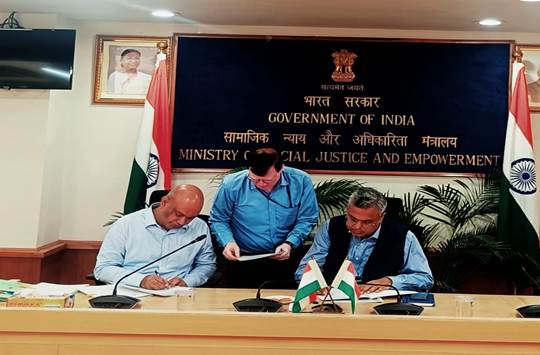
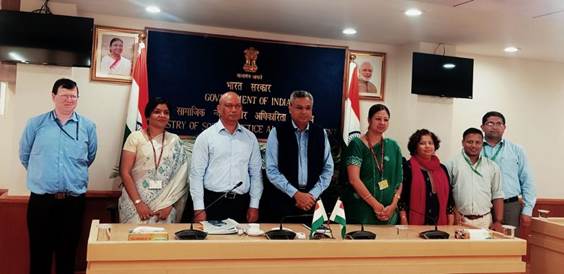


 Definitions Of Management By Objectives MBO :-

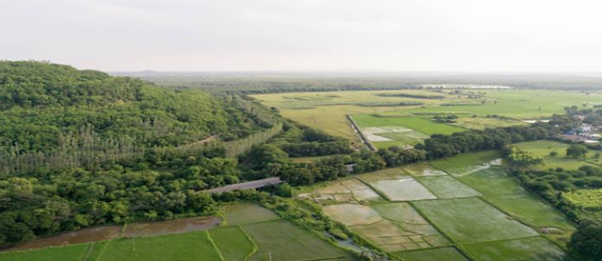
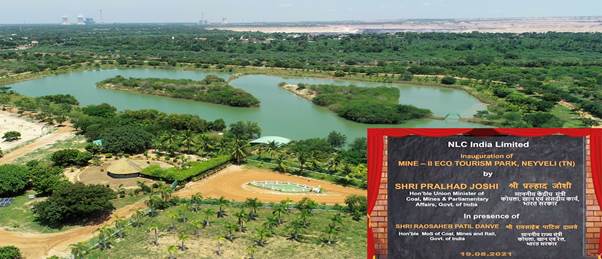




 Eduindex
You must be logged in to post a comment.