
Gender inequality and discrimination

Discrimination and inequality are deep rooted in the society. It can be traced back since ancient time, and this is not only on the bases of gender but, even with the skin a person is born, a person who had dark skin tone was declared a disgrace for the society they have to suffer in terms of the occupation, facilities and even to have the basic necessities fulfilled. This was a common behaviour of the society back then where a person who was born with certain skin is titled unacceptable and suffered of cruelty from his own people.


In many countries, even after so many years of independence people do suffer and the concept of discrimination and inequality is very normal for some. Specifically talking about gender-based inequality it is very common in the backward communities and in the modern society it still prevails in the thinking of people who have always accepted this as normal and not trying to change the orthodox mindset. In many cases the mindset which accepts inequality and discrimination is kind of hereditary and they can not accept change which is totally wrong. There are many households where a girl and a boy are treated differently no matter what, it is like rules are fixed but, who fix those rule ‘the society – as per the preference, likes, dislikes and most importantly what they feel is appropriate as per the narrow mindset which has not changed since infinity. It is actually painful and saddening to see a human treating another human this way, it is targeting our own people to support some ancient concepts which are hampering the growth of a society.

If we can not stop this or at least reduce the number of such incidences that are happening worldwide, how can we expect development of a nation. Afterall, we live on the same land, we breath same air, drink same water and when every one will be a part of the development process then only a nation prospers, its people prosper.


The worst part is the person who has to face all this like even from a small age for instance- if in a family there are two kids and both are treated differently then isn’t it harmful for their growth, a child can feel the difference he or she might grow introverted and disturbed mentally. If not this way, then in future, if the system remains the same the same child can experience discrimination and inequality at any other stage of life may be in terms of the opportunity they will get or even salary they will receive for the same work.


This should be learned that a person is not harmful for the society it’s the difference that we create is harmful. It is not solving any purpose but, creating unnecessary hurdles in the path of change and development. Strict laws and rules can control it up to some extend but, not fully. Today, we are still accepting changes and supporting open minded thinking so this discrimination and inequality should also end soon to have a clearer view of bright future.
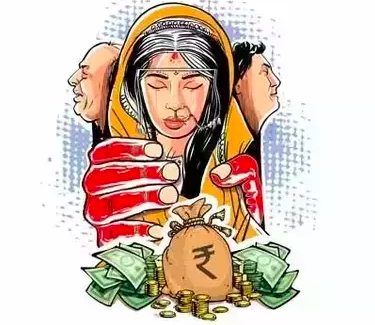
Why is Dowry Still Popular in India?

Dowry is basically the transfer of parental property, gifts, money or anything else of monetary value, usually by the wife’s family to the husband and his family upon marriage. Hence, dowry serves as a gift from the bride’s family to the groom’s family in consideration of their marriage and accepting the bride into the groom’s home. This practice of dowry is an old, obsolete and discriminatory practice. It has its roots in ancient Indian culture that placed women at an inferior position to men, such that women had to pay a price through dowry just to be with them. In older times, women had no individual identity and their identity was tied to their husbands through marriage. Dowry is a practice which took advantage of this convention and exploited women due to their inferior social position. With the change in times and beliefs, the payment of dowry has been prohibited under specific Indian laws such as the Dowry Prohibition Act, 1961 and subsequently by Sections 304B and 498A of the Indian Penal Code. However, the practice is still prevalent to a high degree in India today despite its prohibition, leading to things like harassment, domestic violence and even dowry deaths. There are many reasons for this.

Reasons for Dowry till existing

  • Firstly, dowry still exists in India because it is perceived as a source of easy income by the groom’s family. This is why we see the practice of dowry today predominantly in the rural areas and among the households of the poor. Without any of their own effort or hard work, and by simply relying on this social convention, the groom’s family can ask for dowry and gain wealth for free. Yet, research suggests that dowry is highly prevalent even among urban households and households of the rich and educated. This is unusual and it raises the question as to why someone who is educated and aware of laws indulge in the practice of dowry. Even recently in 2019, there was CCTV footage released of a retired Madras High Court judge Nooty Rama Mohana Rao harassing and beating his daughter in law for the payment of dowry. Hence, there are other factors that cause the practice of dowry to continue.
  • In most cases, due to patriarchy and preference of a boy child over a girl, the sex ratio in many states of India is disparate. This leads to a greater number of men compared to women. It could be argued that due to a greater number of men, dowry might hardly exist. However, this isn’t practically true, because the men having characteristics desired by the bride and her family are few. These characteristics include physical features, income, family status, etc. Thus, the bid for these highly demanded men leads to the existence of dowry. This is a typical market approach focusing on the demand and supply of desired partners which still exists in India today. Dowry is essentially the price to be paid to gain a husband or son-in-law, called the ‘groom price’.
  • Another reason for the prevalence of dowry is the notion of security. Research suggests that in-laws show more preference towards the daughter-in-law that brings a large dowry, giving her more autonomy and say in households matters and giving her fewer chores to do. In some cases, the bride herself encourages the payment of dowry as she sees it as a transfer of wealth from her paternal side to her husband’s side, leading to a rise in the financial position and status of her new family. Hence, the play of power and autonomy has led dowry to still exist.

Conclusion

Hence, we can see that despite its abolishment, dowry is still practiced to a large extent in India. This is because of the reasons stated above, and also generally because we are in a modern era with new requirements. We have an open economy which fosters free trade and globalization, which in turn has nurtured a consumerist attitude in us. The growing consumerism has affected the way dowry is perceived in India, and it is now being encouraged as it helps satisfy the consumerist needs of people. Furthermore, any attempt by a woman to file a complaint or report a case of domestic violence/harassment with regard to dowry is often silenced by the husband or his family by threat or coercion. Therefore, India must try its best to create some sort of support system for women and work to abolish the practice of dowry at all levels so as to remove this discriminatory practice from Indian society.

The Spanish Inquisition: A Turbulent Time

What was the Spanish Inquisition?

The Spanish inquisition was a judicial institution that prevailed in Spain from 1478 to 1834. It was set up through the Catholic church to root out and punish any heresy (religious beliefs that differed from those prevailing at the time, in this instance Catholicism) being practiced in the country. In each region of Spain, tribunals comprising of Catholic officials were set up to perform the functions of the inquisition. This system was aimed at consolidating power and establishing control in the country, but today the reputation of the inquisition is that it was an extremely brutal and turbulent time in Spanish society.

What happened during this time?

The Spanish inquisition is a well-known historical event but for reasons that should not be praised. It marked a period of violence and intolerance. The people working for inquisitions were called inquisitors. They would arrive in a town, and announce their presence to all the townspeople. Any heretics present in the town would be given a chance to confess, and thereby receive punishment which ranged from whipping to pilgrimage and repentance. Any person who was accused of being a heretic was forced to admit to it, and in case they did not voluntarily confess, they would be subject to violent torture and even execution. More often than not, people were victims of false allegations of being a heretic, but there was no formal court procedure or trial and the mere suspicion of being a heretic was enough to enforce severe punishment. Once a person was accused, even if falsely, there was no escaping either torture, imprisonment, or death. So, many people would end up confessing early on, even if they weren’t actual heretics, to say themselves from any severe consequences later on. This shows how much fear and tyranny was present in society at that time.

This period also represented one of xenophobia and parochialism. When the inquisition began, Spain was a very diverse country, both ethically and religiously. Many different communities like the Jews, Muslims and Christians all lived in harmony in the same regions. The objective of the inquisition was to eradicate such people from Spain who did not identify with the Catholic church and its beliefs. For more than 350 years, people who were not Catholics were subject to torture and exile from Spain.

We can clearly draw a comparison here to Nazi Germany under Hitler’s dictatorship, where only white people of the Aryan race were allowed to live in the country while others were deported or killed in cold blood. In both cases the victims were subject to inhumane torture and suffering. Also, the Jewish people were the major victims in both situations. Under the inquisition, Spanish Jews were forced to either convert to Catholicism or leave Spain entirely. Even those who converted, called the ‘Conversos’ were not safe as they were constantly under suspicion of secretly practicing Judaism while using Catholicism as a disguise. Eventually focus shifted to Muslims converting to Christianity to save themselves, called the ‘Moriscos’. In 1609 they were all ordered to leave Spain entirely.

Any punishments to be given were done so in public for everyone to see, and they were called ‘acts of faith’. It was meant to show the public what it means to defy the Catholic church and their beliefs, and why they should not follow any other ideology. In the worst of cases, where there were unrepentant heretics, they would even burn them alive at the stake for all of the public to witness.

Conclusion

Eventually in 1834, the inquisition was put to an end and the Catholic church’s power diminished in Spain. However, we cannot disregard the damage that had been caused in the 350 odd years. Thousands of people were tortured, killed or exiled from their homes in Spain. They were stripped of their land and wealth, and left homeless and poor. Many religious minorities had to flee from Spain, leaving behind their home land and all that they knew, while those that remained faced discrimination and suffering at the hands of the inquisitors. Not only mainland Spain, but even the Spanish territories like those in America had their own smaller inquisitions that took their own tolls (Mexico, Peru). However, as time progressed, so did political thinking, and Spain realized its mistake in introducing such a violent system and removed it. Today, Spain is a tolerant and accepting country with diverse groups of people all living in harmony.

COLORISM IN INDIA

See the source image

Colorism

Colorism is the practice of favoring lighter skin over darker skin. The preference for lighter skin can be seen within any racial or ethnic background. Race can be defined as the attributes, traits and features which differentiates one group from the other existing social groups. In simple words, races are the physical qualities that one inherits biologically and serves as a way of self-identification from the other groups. Racism is a theory that one race is superior that the other based on the physical attributes, caste, creed, ethnicity or origin. A person is being racist when he displays the emotions of hatred, prejudice, biasness and intolerance against another person solely due to his skin color, structure of his lips, language, place of origin or any other attribute which he might have gained biologically.

Colorism in India

India is known as one of the most mega diverse nations in the world. It is indeed a diverse country and a home for people belonging to different caste, religion, color, creed, culture and traditions. Indians are known for their varied degrees of skin complexion termed as fair skinned and dark skinned. The skin color has always remained an important factor in determining a person’s value and worth. Fair skin people are considered to be of a superior status than to the people with a dark sin. Racism has been prevailing in India since the Rig Veda Period, followed by the Mughal era and the British ruleWe live in a society where the people are highly obsessed with one’s skin tone. Indians have varied degrees of skin complexion and they are categorized as fair, dusky, dark etc. Indians believe that fair-skinned people are of a much more worth and value than those who are dark skinned. The fair is considered the intellectual and gets the respect, dignity and the social status while the dark are left behind struggling for their rights and status. We face color hatred and prejudice and somehow still choose to remain silent about it.

The people need to understand that a person’s worth or status is not determined by his or her color. There are numerous cosmetic brands promoting skin lightening creams and lotions. There are advertisements promoting the desperate need of looking fair. The question is why? No one has the right to question or judge one’s complexion. Racial discrimination brings down the morale and the enthusiasm of the dark, they do not get a chance to stand up and speak up or fight for themselves. The mindset of the Indian society should realize the fact that no matter what the skin tone is, what caste or origin a person belongs to, irrespective of all the other physical traits, a person is entitled to equality before the law and has every right to deserve the same respect and honor a fair person gets. Racism is a refuge for the ignorant. It seeks to divide and to destroy. It is the enemy of freedom, and deserves to be met head-on and stamped out.