
New Education Policy of India 2020

 The New Education Policy (NEP) of India was launched in 2020 with the aim of revamping the education system in the country and bringing about significant changes in the way education is imparted. The NEP is the first education policy in India to be launched in the 21st century, and it replaces the earlier National Policy on Education, which was launched in 1986 and revised in 1992.

The NEP is based on the principles of access, equity, quality, affordability, and accountability, and it aims to provide a holistic and multidisciplinary education to students from all backgrounds. The policy is designed to promote lifelong learning and to equip students with the skills and knowledge they need to succeed in a rapidly changing world.
One of the major goals of the NEP is to provide universal access to education from preschool to secondary school. The policy aims to increase enrollment rates and reduce dropout rates by providing free and compulsory education to all children between the ages of 3 and 18 years. It also emphasizes the importance of early childhood education and aims to provide high-quality preschool education to all children.
The NEP also seeks to bring about a significant shift in the curriculum and pedagogy of schools and colleges. It emphasizes the importance of multidisciplinary learning and encourages the integration of vocational and academic education. The policy aims to reduce the emphasis on rote learning and memorization and promote critical thinking, creativity, and problem-solving skills.
Another significant feature of the NEP is its focus on the use of technology in education. The policy aims to promote the use of technology to enhance learning outcomes and make education more accessible and affordable. It also emphasizes the importance of digital literacy and aims to provide students with the skills they need to use technology effectively.
The NEP also seeks to promote the internationalization of education and encourage greater collaboration between Indian and foreign educational institutions. The policy aims to attract foreign students to study in India and encourage Indian students to study abroad.
The NEP also addresses the issue of teacher training and professional development. It emphasizes the importance of continuous learning and aims to provide teachers with the skills and knowledge they need to deliver high-quality education. The policy also encourages the use of technology in teacher training and aims to provide teachers with access to high-quality online resources.
The NEP also addresses the issue of funding for education. The policy aims to increase public investment in education and encourage private investment in the sector. It also proposes the establishment of a National Research Foundation to fund research and innovation in education.
The NEP has received mixed reactions from stakeholders in the education sector. While some have praised the policy for its focus on access, equity, and quality, others have criticized it for being too ambitious and lacking in detail. Some critics have also raised concerns about the implementation of the policy, particularly in terms of funding and teacher training.
In conclusion, the New Education Policy of India is a comprehensive and ambitious policy that seeks to bring about significant changes in the education system of the country. The policy has the potential to transform the education sector and provide students with the skills and knowledge they need to succeed in a rapidly changing world. However, its success will depend on the effective implementation of the policy and the commitment of all stakeholders to work towards its goals.
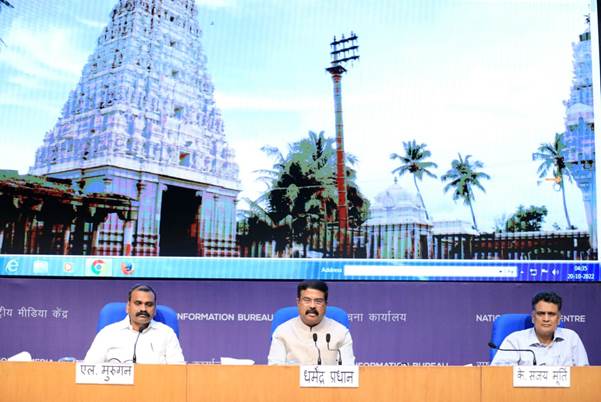
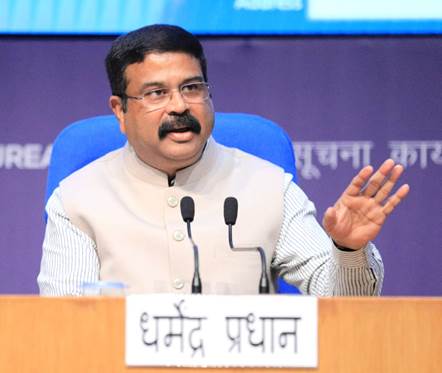
“KASHI TAMIL SANGAMAM” and launches the website for the registration process

 Union Education and Skill Development & Entrepreneurship Minister Shri Dharmendra Pradhan along with MoS, I&B and Ministry of Fisheries, Animal Husbandry and Dairying Shri L. Murugan today announced the “KASHI TAMIL SANGAMAM” to be held from 16th Nov to 19th Dec 2022. Shri Dharmendra Pradhan also launched the website for registering for “KASHI TAMIL SANGAMAM”.

Bharatiya Bhasha Samiti (BBS) has come up with a proposal to   rediscover, reaffirm and celebrate the age-old links between the Tamil culture and Kashi that has existed since centuries. A month long “Kashi Tamil Sangamam” is to be organized in Varanasi (Kashi)  from 16th November to 19th December,2022  during which academic exchanges – seminars, discussions etc will be held between experts/ scholars on various facets of the two ancient manifestations of Indian Culture, with focus on bringing out the links and shared values between the two.  The broader objective is to bring the two Knowledge and Cultural traditions closer, create and understanding of our shared heritage and deepen the people-to-people bond between the regions.

While addressing the press conference, Shri Dharmendra Pradhan said that India is a symbol of civilizational connectivity. The Kashi-Tamil Sangamam shall be an ideal platform to understand the unity in India’s civilizational assets through two historic centres of knowledge & culture. The Sangamam to be organised under the overall framework and spirit of “Ek Bharat, Shrestha Bharat” will create a bridge between ancient India and contemporary generation. Kashi Sangamam will rediscover the link between these two ancient centres of knowledge, culture and heritage, he further added.

Shri Pradhan informed that Kashi-Tamil Sangamam will be centred around a series of themes that cover various facets of knowledge – literature, ancient texts, philosophy, spirituality, music, dance, drama, yoga, Ayurveda, handlooms, handicrafts as well as the modern innovations, trade exchanges, edutech and other gen next technology etc. Seminars, discussions, lectures, lec-dems etc will be held on these themes, for which subject experts will be invited. This shall be unique learning experience for students, scholars, academics, practising professionals, etc. on various facets of Indian Knowledge Systems, Education & Training Practices, Arts & Culture, Language, Literature, etc, he added.


WhatsApp Image 2022-10-20 at 5.59.32 PM.jpeg


WhatsApp Image 2022-10-20 at 5.59.36 PM.jpeg


To ensure that the benefit of these discussions reaches the actual practitioners of these knowledge streams, it is proposed that in addition to experts, common practitioners from various groups from different parts of Tamil Nadu, can be brought for an 8-day visit of Varanasi and its neighbouring areas. Tentatively, 12 such groups have been identified including students, teachers, literary (authors, poets, publishers), cultural experts, professionals (practicing arts, music, dance, drama, folk art, yoga, Ayurveda), entrepreneurs, (SMEs, start-ups) business people, (community business groups, hoteliers,) artisans, heritage related experts (archaeologists, tour guides, bloggers etc) spiritual, rural, sampradaya organizations. These people will participate in the academic programs, interact with people of Varanasi associated with the same field, and visit places of interest in and around Varanasi.

It is proposed that around 210 people from different parts of Tamil Nadu can be taken in one group for a period of 8 days. 12 such groups, comprising around 2500 people can visit over a month.

At the end of the Sangamam event, people of Tamil Nadu shall get an immersive experience of Kashi and the people of Kashi shall also get to know the cultural richness of Tamil Nadu through a healthy exchange of knowledge sharing experiences – events, visits, conversations, etc.

******