

Are you hungry all the time?

Bulimia Nervosa

Bulimia (boo-LEE-me-uh) nervosa, commonly called bulimia, is a serious, potentially life-threatening eating disorder. People with bulimia may secretly binge — eating large amounts of food with a loss of control over the eating — and then purge, trying to get rid of the extra calories in an unhealthy way.

To get rid of the gained weight this people follow things like self-induce vomiting or misuse laxatives, weight-loss supplements, diuretics or enemas after bingeing.

Or you may follow other unhealthy measures such as fasting, strict dieting or excessive exercise.

Causes

The exact cause of bulimia is unknown. Many factors could play a role in the development of eating disorders, including genetics, biology, emotional health, societal expectations and other issues.

Symptoms

The major symptoms of this disorder are:

  • Being preoccupied with your body shape and weight
  • Living in fear of gaining weight
  • Repeated episodes of eating abnormally large amounts of food in one sitting
  • Feeling a loss of control during bingeing — like you can’t stop eating or can’t control what you eat
  • Forcing yourself to vomit or exercising too much to keep from gaining weight after bingeing
  • Using laxatives, diuretics or enemas after eating when they’re not needed
  • Fasting, restricting calories or avoiding certain foods between binges
  • Using dietary supplements or herbal products excessively for weight loss

Diagnosis

If you have any bulimia symptoms, seek medical help as soon as possible. If left untreated, bulimia can severely impact your health.

Share your bulimia symptoms and feelings with a mental health professional and seek treatment immediately.

Some symptoms you can notice in a bulimia affected person are:

  • Constantly worrying or complaining about being fat
  • Having a distorted, excessively negative body image
  • Repeatedly eating unusually large quantities of food in one sitting, especially foods the person would normally avoid
  • Strict dieting or fasting after binge eating
  • Not wanting to eat in public or in front of others
  • Going to the bathroom right after eating, during meals or for long periods of time
  • Exercising too much
  • Having sores, scars or calluses on the knuckles or hands
  • Having damaged teeth and gums
  • Changing weight
  • Swelling in the hands and feet
  • Facial and cheek swelling from enlarged glands

Complications

Bulimia may cause numerous serious and even life-threatening complications. Possible complications include:

  • Negative self-esteem and problems with relationships and social functioning
  • Dehydration, which can lead to major medical problems, such as kidney failure
  • Heart problems, such as an irregular heartbeat or heart failure
  • Severe tooth decay and gum disease
  • Absent or irregular periods in females
  • Digestive problems
  • Anxiety, depression, personality disorders or bipolar disorder
  • Misuse of alcohol or drugs
  • Self-injury, suicidal thoughts or suicide

Prevention methods

Although there’s no sure way to prevent bulimia, you can steer someone toward healthier behavior or professional treatment before the situation worsens. Here’s how you can help:

  • Foster and reinforce a healthy body image in your children, no matter what their size or shape. Help them build confidence in ways other than their appearance.
  • Have regular, enjoyable family meals.
  • Avoid talking about weight at home. Focus instead on having a healthy lifestyle.
  • Discourage dieting, especially when it involves unhealthy weight-control behaviors, such as fasting, using weight-loss supplements or laxatives, or self-induced vomiting.
  • Talk with your primary care provider. He or she may be in a good position to identify early indicators of an eating disorder and help prevent its development.
  • If you notice a relative or friend who seems to have food issues that could lead to or indicate an eating disorder, consider supportively talking to the person about these issues and ask how you can help.
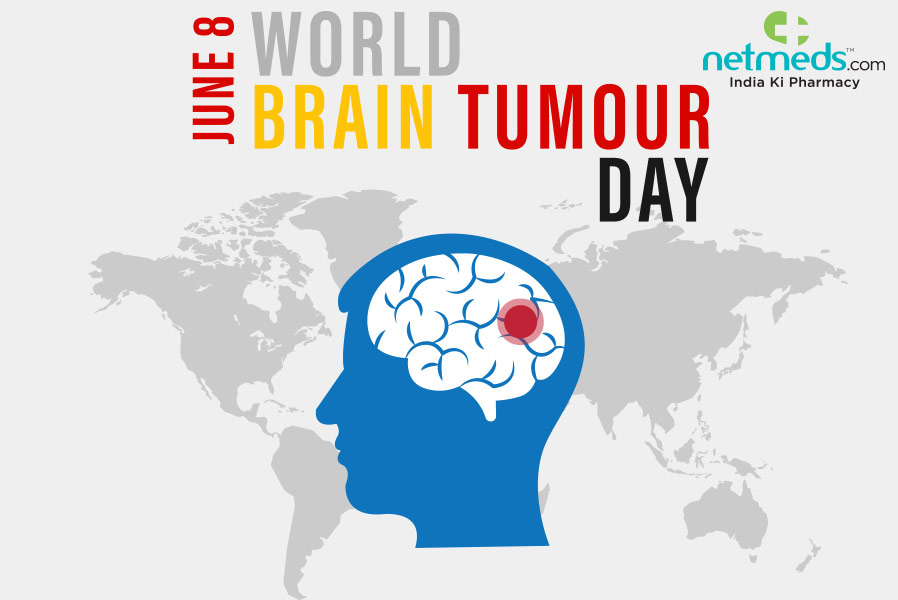
History behind World brain Tumor day:June 8

June 8 2020 is also observed as World Brain Tumor Day apart from World Ocean Day which was intiated by a non profit organization in Germany called Deutsche Hirntumorhilfe in German.

They are providing facilities for scientists and health professionals to develop efficient treatment of Brain tumor. They also provide support to the Brain tumor patients and their families.

Apart from the tribute given, This day is also observed as international day to provide awareness about the disorder and spread information on it.

A Tumor is basically the abnormal growth of cells. This can be broadly decided into two Benign (non-cancerous) and Malignant (cancerous). Malignant tumor can be again divided into primary originating from Brain Or spine where as secondary are those cancer that spread from elsewhere in the body to the Brain. This secondary is more common than primary.

Causes and major risk factors:

The exact cause of brain cancer is unknown. However, factors that can increase your risk of brain cancer include exposure to high doses of ionizing radiation and a family history of brain cancer.

Cancer in other part of the body is also a risk factor. Major cancers that spread to Brain are:

  • Lung cancer
  • Breast cancer
  • Kidney cancer
  • Bladder cancer
  • Melanoma

Other factors are:

  • increased age
  • long-term smoking
  • exposure to pesticides, herbicides, and fertilizer
  • working with elements that can cause cancer, such as lead, plastic, rubber, petroleum, and some textiles
  • having an Epstein-Barr virus infection, or mononucleosis

Symptoms

Symptoms that arises due to increased pressure inside the skull. They are:

Severe head ache associated with nausea and vomiting, blurring or dimmed vision, excessive sleepiness, loss of memory, seizures.

Symptoms that are arise due to location of tumor. They are:

Weakiness of one side of body, hearing loss, visual blindness, facial deviation, slurring of speech.

Diagnosis method

CT scan or MRI scanning of the brain. Further diagnosis can be done by PET scan or angiography.

Treatment

Surgery is the main treatment. Modern micro surgical methods and aids such as neuro navigation and intra op imaging have made surgery safe and effective.

Other modalities such as Gamma knife/stereotaxis radiosurgery, radiation therapy and chemotherapy may be used alone or in combination

Prognosis

Brain tumor is considered as incurable disease but if given proper treatment it gives good outcome and patients are able to go to their normal lives.

Conclusion

Brain tumor can give good outcome when diagnosed and treated early. It may lead to severe mental, physical and financial burden to the patient and family. One should consult the best doctor and get adequate treatment. More public awareness need to be given to reduce panic.

ANTIBACTERIAL CHEMOTHERAPY-INTRODUCTION AND DEVELOPMENT

Antibacterial Chemotherapy refers to the use of any chemical or drug for the treatment of bacterial diseases. It is the part of antimicrobial chemotherapy.
Antimicrobial chemotherapy can be divided into several branches on the basis of type of pathogen, for e.g.
For bacterial pathogen – Antibacterial Chemotherapy
For viral pathogen – Antiviral Chemotherapy
For fungal pathogen – Antifungal Chemotherapy, etc

ANTIMICROBIAL CHEMOTHERAPY –
Chemotherapy may either mean involvement of any drug that fight against any cancerous cell or it may involve the use of any antimicrobial drug to cure diseases caused by infectious microorganisms or pathogens.
Antimicrobial drugs work by different mechanisms for different type of organisms. The overall mechanism by which any antimicrobial drug functions is by interfering with the structure and/or function of microorganisms. They either directly kill microbial cell or function by inhibiting their growth.

DEVELOPMENT OF ANTIMICROBIAL CHEMOTHERAPY
The development of chemotherapy has been known to begin with the successful research of a German physician, Paul Ehrlich (1854-1915).
Ehrlich was always fascinated to learn more about the dyes that bind to and stain the microbial cells. He was sure and stated that one of the dyes could be used as a chemical that would selectively destroy or kill the infectious pathogen inside the human body without making any harm to human cell and he named it “Magic Bullet”. Working more on this, he was able to find that the dye, trypsan red was active against the trypanosome that causes African Sleeping Sickness. Later, Ehrlich with his assistant Sahachiro Hata tested a variety of arsenic-based chemicals on Syphilis-infected rabbits and was successful in finding that Arsphenamine (an arsenic based chemical compound) was active against the Syphilis spirochete which was then made available in the market.
The other German scientist, Domagk in 1927 found the another Magic Bullet to treat diseases. He observed the antimicrobial activity of a synthetic dye, Prontosil Red which was able to cure Streptococcal and Staphylococcal infections with very limited toxicity. Sulfanilamide (one of the active breakdown products of prontosil in body) was the first synthetic antimicrobial drug.

A Synthetic Antimicrobial is a drug that is developed from any type of a chemical compound that is not found in nature.

Penicillin was the first naturally synthesized antibiotic which was initially discovered by a 21 years old French medical student. No one remembered his work until Alexander Fleming in September 1928 accidently rediscovered the antibiotic. The petri plate of Staphylococcus which was inoculated by Fleming was found to develop certain molds which made the clear zone of inhibition of staph-bacterial species around them. It was meant that the mold infected the petri plates even before the bacteria were inoculated. Fleming suggested that the mold (probably the strain of Penicillium notatum) produced a substance which inhibited the bacterial growth surrounding it and hence had an antibacterial property.
Further experiment results concluded that Penicillin was active against streptococci, meningococci and Corynebacterium diphtheriae, which is the causative agent of diphtheria.
The isolation, mass production and purification of penicillin were accomplished by Howard Florey and Ernst Chain for which they got the nobel prize. They found that the penicillin once pured was effectively able to show antimicrobial properties against streptococcal infection in mice.
Later, Dorothy Hodgkin observed and analyzed the structure of various naturally synthesized products using X-rays. Because of her observation on the chemical structure of naturally synthesized penicillin, it was easier for many scientists to produce a variety of semi synthetic penicillin.

A semisynthetic antimicrobial is defined as the chemically modified product of a natural antibiotic.

After the discovery of penicillin, other scientists got the determination for the discovery of more antibiotics by natural or chemical synthesis.
Selman Waksman developed a new antibiotic, Streptomycin which was produced by the actinomycete, Streptomyces griseus. This antibiotic was discovered by the soil microorganisms, particularly bacteria and fungi. It was the first discovery of antibiotic- producing soil microorganism. It was found that streptomycin was successful in treating tuberculosis.
Other microorganisms producing chloramphenicol, neomycin, terramycin and tetracycline were also isolated later.