DIVERSITY OF INDIA


India is uniquely characterized by its unity and diversity. A grand synthesis of cultures, religions and languages of the people belonging to different castes and communities has upheld its unity and cohesiveness despite multiple foreign invasions. National unity and integrity have been maintained even through sharp economic and social inequalities have obstructed the emergence of egalitarian social relations. It is this synthesis which has made India a unique mosque of cultures. Thus, India present seemingly multicultural situation within in the framework of a single integrated cultural whole.
The term ‘diversity’ emphasizes differences rather than inequalities. It means collective differences, that is, differences which mark off one group of people from another. These differences may be of any sort: biological, religious, linguistic etc. Thus, diversity means variety of races, of religions, of languages, of castes and of cultures.
Unity means integration. It is a social psychological condition. It connotes a sense of one- ness, a sense of we-ness. It stands for the bonds, which hold the members of a society together.
Unity in diversity essentially means “unity without uniformity” and “diversity without fragmentation”. It is based on the notion that diversity enriches human interaction.
When we say that India is a nation of great cultural diversity, we mean that there are many different types of social groups and communities living here. These are communities defined by cultural markers such as language, religion, sect, race or caste.
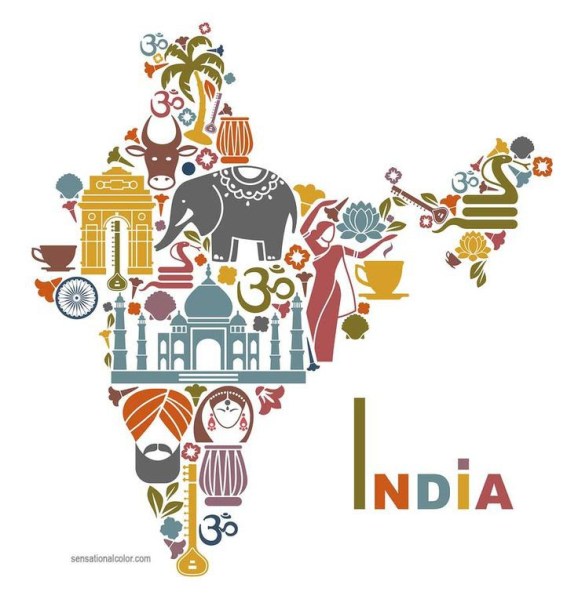
India is a land of diversity each state in the country is home to several communities who live in harmony with each other while preserving and upholding their own distinct culture and traditions. From Delhi, the capital of India, to Tamil Nadu, the southernmost state of India, the land, is blessed with amazing scenic beauty. The country is also home to several historical monuments which add to the varied heritage of India.
India is also classified by the Dravidian and the Nagara architectural styles as the focal focus of Hindu architecture. In the empires, in the South of India, the Dravidian style prospered, whilst in the North of India, the Nagara style predominately appeared.
India’s history, culture and religion are ingrained in its architecture.
India have cultural domains all over the nation.Few are listed below:

The inheritance of diversity of languages: The relationship between language and culture is perfectly embedded. In fact they are entangled. Peoples Linguistic Survey of India identified 780 languages of which 50 got extinct in past five decades. Officially there are 122 languages but 22 languages in the Eighth Schedule of the constitution give cultural pockets like Assamese, Gujarati, Konkani, Maithili, Manipuri, Oriya, Tamil, Telugu etc.
Religious diversity: According to the data on Population by Religious Communities of Census 2011, Hindu 96.63 crores (79.8%); Muslim 17.22 crores (14.2%); Christian 2.78 crores (2.3%); Sikh 2.08 crores (1.7%); Buddhist 0.84 crores (0.7%); Jain 0.45 crores (0.4%) are dispersed all over the nation forming cultural pockets.
Racial diversity: Most contemporary anthropologists categorize Indians as belonging to racial admixture. Mongoloids are largely confined to the North-eastern region whereas Negritos are found on the Andaman Islands.
Ethnic diversity: As per the 1901 census, the eight different ethnic groups found in India are: 1. Pre-Dravidian 2. Dravidian 3. Indo-Aryan 4.Turko-Iranian 5.Scytho-Dravidian 6. Arya- Dravidian 7. Mongoloid 8.Mongoloid-Dravidian. Because of this, India has been termed as an ethnological museum. A particular ethnic group shared a common culture, common language or dialect, a common religion, a common norm, practices, customs and history. Such multiple groups appeared as cultural pockets.

Advantages of diversity:
• It helps in strengthening love and tolerance promoting amity and unity and openness to other diverging views
• It is the identity that India had asserted for long in three international foras
• Diversity of culture translates into diversity of ideas and innovations
• The rich heritage and culture resultant of this diversity has enormous potential for tourism capable of creating large scale employment
• Geographical diversity creates rich reserve of flora and fauna benefiting the environment, tourism, pharmaceutical etc.
Disadvantages:
• The social tension and conflicts arising from this diversity leading to growth of divisive tendencies like communalism, regionalism, linguism etc. present a major that to the social fabric, economic development and survival of democracy

Threats:
Disputes are inevitable in any diverse society and when not managed properly they can turn into conflict, threatening the very survival of society as was the case in Balkan Peninsula. Similarly Indian society faces following challenges which endanger its ‘unity in diversity’.
• Communalism: the rising majoritarian tendencies such as call for a ‘Hindu rashtra’, cow vigilantism, love jihad claims against inter-religion marriages threaten the secular fabric of Indian society
• Regionalism: the demands of new states and even secession based on language (gorkhaland, Dravidnaad), religion (khalistan), ethnicity (nagalim) continue to mar the unity and integrity of nation
• Linguism: perceived threats to the local language and recent attempts the Fife Hindu on non-willing sections have in the past led to movements like Dravidian movement and can be seen in recent times as well such as Gokhaland and Bodoland movements
• Casteism: caste oppression had continued for long time with scant attempts to challenge it until recently. With the opportunities provided by increasing literacy rate and economic reforms and excessive politicisation, caste identities are becoming more pronounced than before. While some use it to challenge the oppression they have faced (Bhima-koregaon), others use it to claim benefits of reservation (Jat, Patidar, Maratha)
• Racism: discrimination against people of North-east, people of south in northern states and vice versa threatens a whole section of the society, dissipating discrimination into division
• Separatist movements: The ongoing separatist movements in J&K and North-East along with Naxalism have for long and continue to pose significant risks to India’s unity.

Ensure this unity:
A society based on justice, liberty, equality and fraternity only can stay united for long, especially society as diverse as India. As the Sachar committee report has pointed out, minorities continue to fare poorly in socio-economic indicators as compared to majority. Similar is the case with tribals and Dalits where high GDP growth has not translated into development and improvement in quality of life.

It is therefore necessary that principles espoused in directive principles are realised in spirit. Investments in the social sector including health and education, electoral reforms to keep out the divisive tendencies, providing for development needs of deprived sections such as tribals and Dalits, inclusive and equitable urbanization and curbing the majoritarian tendencies through appropriate legal measures is the only way forward to ensure a united and integrated India.
Linguistic composition in India

At the time of Independence from the British rule in 1947, there were many princely states. Sardar Vallabh Bhai Patel, the then home minister, played a stellar role in amalgamating these states into the union of India. The Constitution of India was adopted on 20th November 1949 and came into effect on 26th January 1950, which defined Union of India, comprising of different states and union territories. In 1956, the states were recognized on linguistic basis.

Language is a system of mutually intelligible vocal symbol by which the member of a society communicates. It serves as a medium of communication and expression of and for the masses, thereby instilling in them a sense of belongingness and warmness. In a broader sense, language plays an essential ROK in constructing a sense of identity.

India is one such country which holds more than a billion population comprising of a vast communities having its own ethnocentric and distinctive profile of spoken and written languages. About 400 languages and 300 dialects spoken across 29 states and 7 Union Territories of India. According to 2011 linguistic survey, census at a reports there are a total of 121 languages and 270 mothertongues. There are 22 languages specified in the 8the constitution of India, of which Hindi is the predominant language spoken by about 43.63% of the population followed by Bengali (8.03%), Marathi (6.83%), Telugu (6.70%) and Tamil (5.70%).

The multilingual aspect of the country affects every aspect of its national life. At present the language problem has become so acute that it has posed a major threat to national integration. Most often linguistic tensions are being manifested in the borders which are bilingual.

Of course English is a great language, but the problem is that, no nation can grow great with the help of a foreign language, simply because a foreign language fails to represent the indigenous culture. In the past, India did not have the problem of languages, because Sanskrit and Prakrit served as link language. At present, although Hindi has been recognized as the official language of the Union, but his has promoted bitter hostilities, particularly in the South.

Development of one national language, that is, Sanskrit maybe keep the linguistic unrest under control as most of the languages owe their origin to the Sanskrit grammar and literature. States should be recognized as administrative unit rather than linguistic units. There should be ban on the political organizations which try to solidify linguism.

In conclusion, language is the most delicate part of the body of community. It should not ordinarily be disturbed in the process of national development or social regeneration.

Salient features of Indian Society, Diversity of India

Indian society is very unique and diverse. We have a lot of cultures, communities, religions, languages, etc

India is a plural society, characterized by its unity and diversity. A grand combination different cultures, religions and languages of the people belonging to different castes and communities has upheld its unity. This combination of different culture and ethnicities is what that has made India unique from other countries. Different events such as the foreign invasions, immigration from other parts of the world, and the existence of diverse languages, cultures and religions have made India’s culture open- minded , on the one hand, and a unique continuing and living culture, with its specificity and historicity, on the other. Not only we have diversity in racial compositions, religious and linguistic distinction but also in patterns of living, life styles, land tenure systems, occupational pursuits, inheritance and succession law, and practices and rites related to birth, marriage death etc. 

Post-Independent India is a nation united against several odds and obstacles. India is a secular state. It has one Constitution providing guarantees for people belonging to diverse regions, religions, cultures and languages. It covers people belonging to all socioeconomic strata. The Article 15 of the Indian Constitution talks about Prohibition of discrimination on grounds of religion, race, caste, sex or place of birth. Our Indian Constitution itself safeguards and protects the rights of every individual irrespective of their religion, race, caste sex or place of birth. It gives everyone opportunity and treats everyone equally.

DIFFERENT FEATURES OF INDIAN SOCIETY

MULTI RELIGIOUS SOCIETY

India consists of people from many different religions. Hinduism, Islam, Christianity, Buddhism, Jainism, Sikhism are some major religion in India, However there are other different religions as well. Hinduism is the most dominant religion in India.

As per the census 2021, there are approx. 110 crore people follow Hinduism in India. The Hindus are most numerous in 29 States/UTs except in Manipur, Arunachal Pradesh, Mizoram, Lakshadweep, Nagaland, Meghalaya, Jammu & Kashmir, and Punjab.

Approx.  20 crores of people are Muslims In India. The Muslims professing Islam are in majority in Lakshadweep and Jammu & Kashmir.

In 2021 approx. 3.20 Crores people are Christians in India. Christianity has emerged as the major religion in three North-eastern states, namely, Nagaland, Mizoram, and Meghalaya. 

In 2021 approx. 2.4 Crores people follow Sikhism in India.

In 2021 approx. 10 million or 1 Crore people are followers of Buddhism in India and In 2022 approx. 5 million or 50 Lakh people follow Jainism in India.

MULTI RACIAL SOCIETY

Race is a group of people with a set of distinctive physical features such as skin colour, type of nose, form of hair, etc. India is a country of people with different racial groups. The latest racial classification of the Indian people based on researches in this field has been given by B.S. Guha (1952). He has identified six racial types (1) the Negrito, (2) the Proto Australoid, (3) the Mongoloid, (4) the Mediterranean, (5) the Western Brachycephals, and (6) the Nordic.

MULTI LINGUAL SOCIETY

According to the latest analysis of a census more than 19,500 languages or dialects are spoken as mother tongue in India.

There are 121 languages which are spoken by 10,000 or more people in India, which has a population of 121 crore. Only 22 languages are listed in Schedule VIII of the Indian Constitution. The 96.71 per cent population in the country have one of the 22 scheduled languages as their mother tongue and the remaining 3.29 per cent is accounted for other languages. Not all these languages are, however, equally widespread. Many of them are tribal speeches and these are spoken by less than one percent of the total population so here we can clearly see see that in India there is a great deal of linguistic diversity as there are so many people of different languages and dialects.

MULTI CASTE SYSTEM

The term caste is generally used in two senses: sometimes in the sense of Varna and sometimes in the sense of Jati. In India, caste system is very much prevalent. The Varna system is basically a four fold system in the Hindu society based on their functional criteria, the four divisions are Brahmins, which is on the top of this system followed by kshatriya, Vaishyas and then shudra with their functions as learning or teaching, defense, trade and manual labour. We find castes among the Muslim, Christian, Sikh as well as other communities. One must have heard of the hierarchy of Shaikh, Saiyed, Mughal, Pathan among the Muslim. Similarly, caste consciousness among the Christian in India is not unknown. Since a vast majority of Christians in India are converted from Hindu fold, the converts have carried the caste system into Christianity. Among the Sikh again we have so many castes including Jat Sikh and Majahabi Sikh (lower castes).

In addition to the above described major forms of diversity, we have diversity of many other sorts like settlement patterns – tribal, rural, urban; marriage and kinship patterns along religious and regional lines; cultural patterns reflecting regional variations, and so on.

Some other of the salient features applicable to Indian Society are:

  1. Unity In Diversity
  2. Patriarchal Society
  3. Tribes
  4. Family
  5. Kinship System
  6. Balance between spiritualism and materialism
  7. Co-existence of traditionalism and modernity

India is a very diverse country and because of its unique feature it always attracts people from all parts of the world.

.

The Beauty of Diversity – INDIA

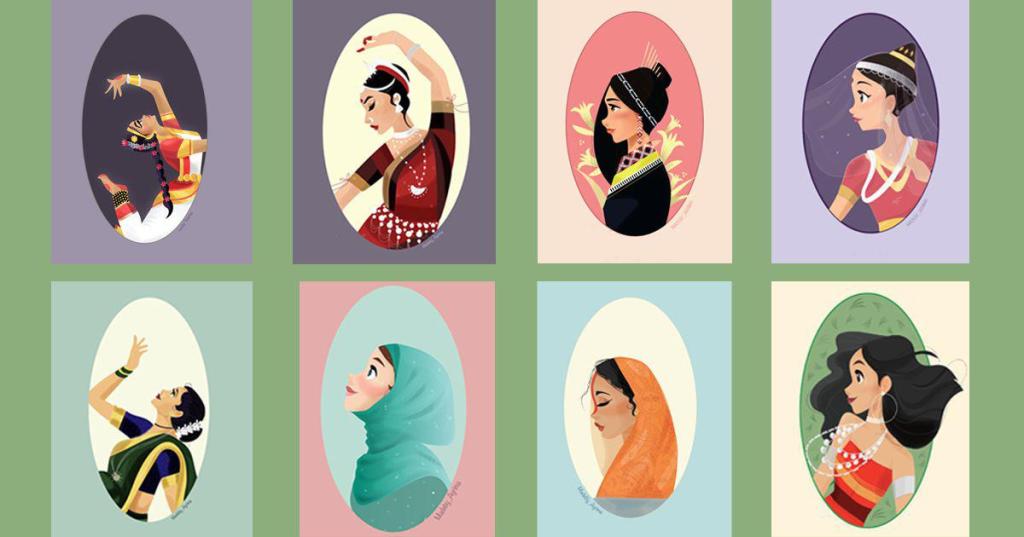
India a name when comes to your mind, what is the the picture of india for you? If you know about india and had lived here than you will have a picture of where some wear dhoti other lungi and some other pajama. There is even diversity in the way of wearing saree like bangali, Gujarat, assami, marathi, orria and much more.

The real beauty of India

India is actually a planet in it self, where there are numerous festivals, people, issues etc all of a different kind but in one nation. Where you will find a Hindu enjoying eid with Muslim, a Muslim taking care of a Hindu temple, a Sikh serving langer to each and every being on this earth who wants to have it.

In India everything is diverse our geography, climate, culture, attaire, language, cuisine, looks, religion, festivals etc. But one thing is common in everyone that is we are Indians and we love our india. We celebrate eachother’s festivals, we enjoy eachother’s cuisine, we wear eachother’s attaire, ultimately we are united.

We fight among ourself (which I agree is not a good thing), but when anyother tries to offend our country we unites.

India’s is really an amazing country, whose real essence is ‘unity in diversity’.

The International Day of Indigenous people

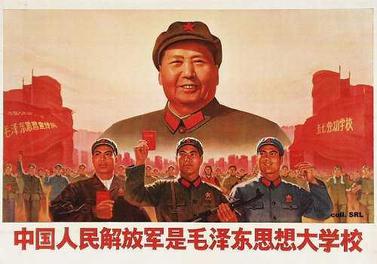
One of the most tragic instances in history would be that of the holocaust – a word that in itself is a definition of six years of European geopolitics. In Russia, Palestine and China, the expulsion of the White Army, the expulsion of the Arabs and the brutual suppression of cultures across China in the name of cultural revolution respectively bring to picture the way in which states and not just people can sometimes be the enemy of people. However, there have been several such instances in history, most of them hidden because they were carried out by the more ancestors of the ones who ended up being economically and intellectually influential communities.

Cultural Revolution - Wikipedia
A poster calling out for Chinese Cultural Revolution

Human history is a record of forced displacements both internal and external, ethnic cleaning and genocides and murders both to the dismay and sponsored by states. When Captain Cook discovered the down under, it led a massive import of British criminals on the continent. With them came officers, scientists and explorers. The businessmen and civilians searching for more opportunities came in later. The people of the continent – the Australian arboginals, the Maoris from Oceania and many more tribes were reduced to a mere holder of small patches of lands and often no land at all by the British who had a superior military.

When the first Irish and British settlers landed in the new World of America, the red Indians offered them food and shelter which soon became a situation where the Red Indians had to fight for the survival of their lives and their cultures which was systematically and quite institutionally taken away by the New World settlers. Similarly, when the Spanish invaded Latin America, it meant a complete and absolute dissolution of their traditions and a genocide that would annihilate their population to an extent where even after 400 years, they would not attain the same.

The Last Days Of The Incas - HistoryExtra
Machu Pichu stands as a testimony to the Grand Incan Empire in the Andes before the Spanish arrived.

To add to all these miseries are the tales of the Rohingya community from Myanmar, the Tamils in Sri Lanka, the Kashmiri Pandits in Indian state of Jammu and Kashmir, the now diminishing sea faring communities in Philippines and Malaysia and many more. Japanese and Italian unifications were also carried out at the cost of the local traditions, cultures and ways that the communities living there had been practicing for a millennia. In India, the use of English and Hindi have slowly gobbled up on the rich culture of local languages that the communities had. In fact, many communities from the state of Bihar and Uttar Pradesh have completely given up on their languages. Bihar – a state where only 6% people had Hindi as their mother tongue now has a minority of about 20%!!

World loses about 1 language every 15 days!!!

Wikipedia defines Indigenous people as – “Indigenous peoples, also referred to as first peopleaboriginal peoplenative people, or autochthonous people, are culturally distinct ethnic groups who are native to a place which has been colonised and settled by another ethnic group. ” But, a broader definition is the fact that indigenous people are defined by their cultures which is at a steady loss across the globe. The most important thing is to treasure the fragments of their traditions that still remain. Because a rainbow is better a rainbow.

COVID-19 and Indigenous peoples | United Nations For Indigenous Peoples

Happy International Day for the Indigenous communites.

Biodiversity : An overview

The earth provides for millions of species across the globe. Some of which are known to us and others not. We all are connected to each other in various ways and have to support each other too. Species which make proper and sustainable use of this system perish while others meet their destruction.

Biodiversity deals with the degree of nature’s variety in biosphere. This variety can be observed at three levels

  • The genetic variability within a species
  • The variety of species within a community
  • And the organization of species in an area into distinctive plant and animal communities.

Biodiversity provides a variety of environmental services from its species and ecosystem that are essential at the global, regional and local levels. The Production of oxygen, reduction of carbon dioxide, maintenance of the water cycle and protection of the soil are some important services.

Biodiversity is the amount of variety of life on Earth. It is the number of different species of plants, animals, and microorganisms. It includes organisms from Earth’s vastly different ecosystems, including deserts, rainforests, coral reefs, grasslands, tundra, and polar ice caps. Our biodiversity is very important to the well-being of our planet. Most cultures, at least at some time, have recognized the importance of conserving natural resources. Biodiversity is the occurrence of different types of ecosystems, different species of organisms with the whole range of their variants and genes adapted to different climates, environments along with their interactions and processes.

Importance of Conserving Biodiversity

Biodiversity produces a number of products harvested from nature and sold in commercial markets. Indirectly it provides economic benefits to people which include water quality soil protection, equalisation of climate, environmental monitoring, scientific research, recreation etc. The consumptive value can be assigned to goods such as fuel woods, leaves, forest products etc. which may be consumed locally and do not figure in national and international market.

The loss of biodiversity directly influences the social life of the country possibly through influencing ecosystem functions (energy flow and biogeochemical cycle). This be easily understood by observing detrimental effects of global warming and acid rain which cause an unfavourable alteration in logical processes

Aesthetic values such as refreshing fragrance of the flowers, taste of berries, softness of mossed, melodious songs of birds, etc. compel the human beings to preserve them. The earth’s natural beauty with its colour and hues, thick forest, and graceful beasts has inspired the human beings from their date of birth to take necessary steps for its maintenance. Similarly botanical and zoological gardens are the means of biodiversity conservation and are of aesthetic values.

Since earth is homeland of all living organisms, all have equal right to coexist on the surface of earth with all benefits. Unless some legal value is attached to biodiversity, it will not be possible to protect the rapid extinction of species. Biodiversity must be seen in the light of holding ethical value. Since man is the most intelligent amongst the living organisms, it should be prime responsibility and moral obligation of man to preserve and conserve other organisms which will directly or indirectly favour the existence of the man.

Biodiversity holds great ecological value because it is indispensable to maintain the ecological balance. Any disturbance in the delicately fabricated ecological balance maintained by different organisms, will lead to severe problems, which may threaten the survival of human beings.

Biodiversity has great economic value because economic development depends upon efficient and economic management of biotic resources. In the day to day life, human beings are maintaining their lifestyle at the sacrifice of surrounding species which come from diversity of plants and animals struggling for their existence.

Cultural Diversity!

Cultural diversity can be explained as the presence of different cultures within a social system, which differ in values, norms and behavior and encompasses different ways of thinking, managing, and communicating. It is important because a country, workplaces, and schools increasingly consist of various cultural, racial, and ethnic groups and hence makes a country stronger and better able to compete in the new global economy . People from diverse cultures bring language skills, new ways of thinking, creative solutions to difficult problems and negotiating skills.

Cultures are created through communication which is considered to be the means of human interaction through which cultural characteristics are created and shared. In every culture there are basic standards for social interaction such as personal space distance, eye contact, amount of body language displayed in public, negotiating style etc. Culture is very important because it covers many different parts of human life. It is directly related to the human experiences regardless of gender, age and race. It forms people’s everyday life, their views, lifestyles, basic assumptions, their perceptions and above all, the culture shapes the individuals’ relationship.People express their culture through the values they possess about life and the world around them which in turn affects their reasoning in what behaviors suits to certain situations. Learning about another culture does not necessarily mean that one must internalize the norms of another culture and accept them. It provides a channel to learn how to manage the cross-cultural conflicts and helps people understand different perspectives within the world in which they live, and helps eliminate negative stereotypes and personal biases about different groups.

Diversity is a concept that counters discrimination and embraces the inclusion of people with various experiences and backgrounds such education, parental status, geographic location, language, and culture. It is also about learning from others, providing support and respect to those with similar and different experiences.

Culture is a way of regarding and living life that is shared by members of a social group and that is passed on to people from the previous generation. More specific, culture consists of ways to behave and value aspects in life and is derived from the social environment where people grew up. Due to globalization and labor migration the presence of diversity in society and in organizations has accelerated the process cultural diversity further. Therefore it is evident that cultural diversity is becoming an unavoidable factor in many areas.

To support cultural diversity in our workplace or at school, we can increase our level of understanding about other cultures by interacting with people outside our culture, be proactive in listening, accepting, and welcoming people and ideas that are different from your own, avoid imposing values on others that may conflict or be inconsistent with cultures other than your own , intervene in an appropriate manner when you observe others engaging in behavior that show cultural insensitivity or bias and advocate for the representation of various cultural groups within the local community and the society in general.

As diversity keeps growing globally, cultural diversity should be embraced as it acknowledges and values various cultural ideas, encourages contributions from all groups, recognizes and respects diversity, people are empowered to achieve their full potential and differences are celebrated.