Your few drops of Blood can be someone’s new ray of hope.
“A drop of blood can save a life! Don’t waste it and donate blood.”
Blood donation is a vital part of worldwide healthcare. It relates to blood transfusion as a life-sustaining and life-saving procedure as well as a form of therapeutic phlebotomy as a primary medical intervention. Over one hundred million units of blood are donated each year throughout the world. Donation is the only way of obtaining blood. In the presence of medical and technological advances it is wrongly thought that blood can currently be made but the only source is through blood donation. In developed countries donors are volunteers who donate for their community and whereas in developing countries many people often donate only when their family and friends need it. The prospective donors are being checked that there blood is safe for use. Specialist medical staffs are available at all times during the donation drive and it safe and painless procedure. There is no risk for donors irrespective of the age factor. There is a constant need for regular blood supply because blood can be stored for only a limited time before use. Regular blood donations by a sufficient number of healthy people are needed to ensure that safe blood will be available whenever and wherever it is needed.
Why should you donate blood
Blood is the most precious gift that anyone can give to another person the gift of life. A decision to donate your blood can save a life, or even several if your blood is separated into its components – red cells, platelets and plasma – which can be used individually for patients with specific conditions.
The reason to donate is simple because it helps to save people’s lives. In fact, every two seconds of every day, someone needs blood. Since blood cannot be manufactured outside the body and has a limited shelf life, the supply must constantly be replenished by generous blood donors only.Many patients are waiting for operation in hospital but because of non-availability of blood donors they have to wait unless they find s reliable source they have to keep on waiting. Every two seconds someone in the world needs blood which are required for surgeries, cancer treatment, chronic illnesses, and traumatic injuries etc.
Who should not donate blood
Pregnant or lactating women, or those who have recently had an abortion.
Persons who are on steroids, hormonal supplements or certain specified medication.
Persons with multiple sexual partners or those who are addicted to drugs.
Persons who have had an attack of infection like jaundice, rubella, typhoid or malaria.
Persons who have undergone surgery in the previous six months.
Persons who have consumed alcohol in the 12 hours prior to donation.
Women should avoid donation during their menstruating period.
Blood donation is a major concern to the society as donated blood is lifesaving for individuals who need it. Blood is scarce. There is a shortage to active blood donors to meet the need of increased blood demand. One of the biggest challenges to blood safety particularly is accessing safe and adequate quantities of blood and blood products. Safe supply of blood and blood components is essential, to enable a wide range of critical care procedures to be carried out in hospitals. Interactive awareness on blood donation should be organized to create awareness and opportunities for blood donation.
PPLO is started by G.Sanjay on 2019 as an initiative to serve the lunch to the poor people who starve for food.
PPLO’s motive is to “Reduce Shortage by Donating the Wastage“.
FOOD WASTAGE- A SHORT GLIMPSE AND STATS:
Having food is something to celebrate but have you ever wondered consciously just much food you waste. Have you ever stopped to analyze just how much food is wasted in your household, society, country and the world? It is not something that people, who have food readily available whenever they feel hungry, worry about. However, for people who are not even able to eat one meal a day, often wonder if all the food that is being wasted around them on a daily basis could have filled their stomach.
Food waste is an issue of importance to global food security and the environment. But what a lot people may not realise is that is impacts a country’s economy as well. Every day, food suitable for human consumption is wasted in large quantities in medium and high-income countries at the retail and consumer level. In fact, a significant food loss and waste occur at the production to processing stages in the food supply chain in low-income countries.
Food Wastage in India:
Contrary to the belief of Indians that we don’t waste food, data showed that India wastes as much food as the whole of United Kingdom consumes. In fact, food wastage is an alarming issue in India and country’s streets, garbage bins and landfills have sufficient evidence to prove this. According to the United Nations Development Programme, up to 40 per cent of the food produced in India is wasted and about 21 million tonnes of wheat are wasted annually.
You don’t even have to scour through several resources to see how much food is wasted in the country. During the nationwide lockdown this year, India registered high wastage because of a poor supply chain. Food delivery website MilkBasket lost 15,000 litres of milk and 10,000 kg of vegetables in a single day after delivery agents were denied entry in societies due to lockdown. Farmers in Belagavi district of Karnataka spilt thousands of litres of milk in a river after they could not reach the people due to the lockdown. Several other reports surfaces which showed how much food was wasted.
Food Wastage stats:
Around 67 million tonnes of food is wasted in India every year which has been valued at around Rs 92,000 crores. For context, this amount is enough to feed all of Bihar for a year
Annually, nearly 21 million metric tonnes of wheat rots in India. This figure is equal to Australia’s total annual production
According to old 2018 BMC data, Mumbai generates close to 9,400 metric tonnes of solid waste per day, from which 73% is food, vegetable, and fruit waste, while only 3% is plastic.
National Delhi also generates around 9,000 metric tonnes of waste per day, with the country’s largest landfill located in East Delhi.
Economic Impact:
Food Wastage not only leads to negative environmental impact but also causes economic loss. According to an FAO report, approximately one-third of all food produced for human consumption is lost or wasted. The economic costs of this food wastage are substantial and amount to about $1 trillion each year. However, the hidden costs of food wastage extend much further. In addition to the $1 trillion of economic costs per year, environmental costs reach around $700 billion and social costs around $900 billion.
Global food wastage costs as per FAO report:
3.5 Gt CO2e of greenhouse gas emissions. Based on the social cost of carbon, these are estimated to cause $394 billion of damages per year.
Increased water scarcity, particularly for dry regions and seasons. Globally, this is estimated to cost $164 billion per year.
Soil erosion due to water is estimated to cost USD 35 billion per year through nutrient loss, lower yields biological losses and off-site damages. The cost of wind erosion may be of a similar magnitude.
Risks to biodiversity including the impacts of pesticide use, nitrate and phosphorus eutrophication, pollinator losses and fisheries overexploitation are estimated to cost $32 billion per year.
Increased risk of conflict due to soil erosion, estimated to cost $396 billion per year.
Loss of livelihoods due to soil erosion estimated to cost $333 billion per year.
Adverse health effects due to pesticide exposure, estimated to cost $153 billion per year.
Earlier this year, former Union Minister of Consumer Affairs, Food and Public Distribution Ram Vilas Paswan said that in financial year 2019-20, foodgrain wastage in the country stood at 1,930 tonnes, which was 0.002 per cent of the total procurement. The total procurement in FY 2019-20 was 751.72 LMT (Lakh Metric Tonnes). The minister shared the data on Twitter and asserted that the notion that foodgrain wastage is high in FCI (Food Corporation of India) godowns is not true. While he was right, the truth is that over a thousand tonnes of foodgrains was wasted which could have fed millions of people.
Now that it is clear that food wastage cripples a country’s economy to an extent that most are unaware, some measures that the government needs to take is to include containing wastage in transportation, improve storage facilities. Food processing also needs to be sped up so food is saved and wasted less to feed more.
PPLO’s WORK:
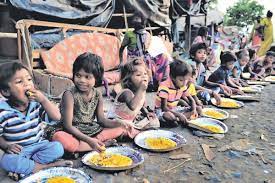
In PPLO Sanjay and his friends collects the food wasted by common people from their schools and houses and test the quality of the food ensuring that only healthier and good food will be served. We then serve the lunch for the poor people in need instead of throwing to the dusbin. If we find the food has been contaminated we convert the food into a manure by composting.
So in PPLO we ensure that the food is not wasted and it is either used to feed humans or to nurture plants.
Why eat lunch?
Lunch is an important meal for everyone. It provides energy and nutrients to keep the body and brain working efficiently through the afternoon. A packed lunch made at home can be a healthy and delicious choice and gives you control over the foods and ingredients included so the mothers or fathers or children who cook their food for loved ones can able to help the people in need by donating their wastage. So, we took a step to serve the lunch to the needs.
We were able to provide lunch for the slum consisting of 370 people from food collected from a single school. So, we can able to feed the whole world if the wastage is managed properly.
Food waste as fertilizer.
Foods which we find contaminated are transformed to manure to Grow plants. We could use all the food waste and prepare a compost out of them which can be used as organic fertilizer. This way we save the earth from the pollution caused by food waste and also do something productive.
Food waste is unique as a composting agent, it is the main source of organic matters. Fruits, vegetables grains, coffee filters, eggshells can be composted.
PPLO MISSION:
FOOD FOR ALL AND WASTE FOR NONE.
PPLO ACCOMPLISHMENT:
PPLO was successful in providing lunch for nearly 400 people from the food remains generated by a school of 527 students.
If you would like to support PPLO or if you need support from PPLO


 Eduindex News
You must be logged in to post a comment.