



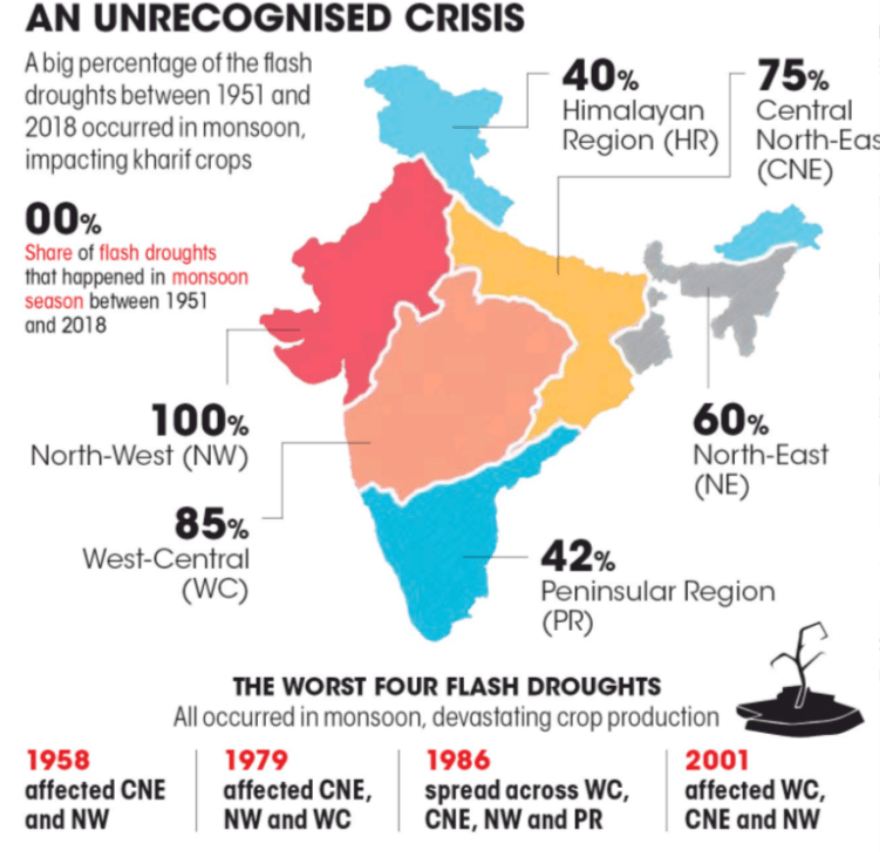
Flash drought is a rapidly developing drought phenomenon characterized by a sudden onset and rapid intensification of dry conditions over a short period, typically weeks to months. Unlike traditional droughts that develop slowly over years, flash droughts emerge quickly due to a combination of factors, including weather anomalies and land-atmosphere interactions. These events can cause significant agricultural, hydrological, and ecological damage due to their abrupt nature.
Key Characteristics of Flash Drought
- Rapid Onset: Flash droughts can develop within a few weeks, often catching farmers, water managers, and policymakers off guard.
- Meteorological Drivers:
- High Temperatures: Heatwaves and above-average temperatures increase evapotranspiration rates.
- Low Precipitation: Sudden declines in rainfall or prolonged dry spells exacerbate moisture deficits.
- Land-Atmosphere Interaction:
- Soil Moisture Loss: Rapid depletion of soil moisture due to high temperatures and lack of precipitation.
- Vegetation Stress: Plants face water stress, affecting growth and crop yields.
- Short Duration: Typically lasts a few weeks to several months but can have lasting impacts, particularly in agriculture.
Causes of Flash Drought
- Climate Variability: Changes in atmospheric circulation patterns can disrupt normal weather, leading to reduced rainfall.
- Human Activities: Land use changes, deforestation, and over-extraction of water resources exacerbate the risk of flash drought.
- Natural Cycles: Phenomena like El Niño-Southern Oscillation (ENSO) influence rainfall patterns and temperature anomalies.
Impacts of Flash Drought
- Agricultural:
- Damage to crops due to sudden water stress.
- Reduced yields, particularly in rain-fed agriculture.
- Economic losses for farmers.
- Ecological:
- Stress on aquatic and terrestrial ecosystems.
- Increased vulnerability of wildlife to habitat degradation.
- Hydrological:
- Rapid depletion of reservoirs and groundwater.
- Reduced streamflow and water availability for human and industrial use.
- Socioeconomic:
- Food insecurity due to crop failures.
- Increased costs for irrigation and water management.
Monitoring and Prediction
- Satellite Technology: Remote sensing helps monitor soil moisture, vegetation health, and precipitation patterns.
- Climate Models: Advanced modeling techniques are employed to predict flash drought risks based on temperature and precipitation forecasts.
- Indices:
- Standardized Precipitation Index (SPI)
- Evaporative Stress Index (ESI)
- Soil Moisture Deficit Index (SMDI)
Mitigation Strategies
- Improved Forecasting: Investing in meteorological services to provide early warnings.
- Water Management:
- Promoting efficient irrigation techniques.
- Storing water during wet periods for use during drought.
- Agricultural Practices:
- Using drought-resistant crop varieties.
- Adopting conservation agriculture practices to retain soil moisture.
- Policy Interventions:
- Developing drought preparedness plans.
- Subsidizing crop insurance for farmers.
Examples of Flash Drought Events
- 2012 United States: A flash drought severely impacted corn and soybean crops, causing billions in economic losses.
- 2019 Southeast Asia: A rapid drought affected rice production, leading to food shortages.
- 2022 Europe: Unseasonably high temperatures and low rainfall caused sudden agricultural stress in parts of Western Europe.
Conclusion
Flash droughts represent an increasing challenge in the context of climate change. Their rapid onset and severe impacts demand robust monitoring systems, adaptive strategies, and sustainable resource management. By understanding their drivers and effects, societies can better prepare for and mitigate the risks associated with these sudden drought phenomena.

 Eduindex News
You must be logged in to post a comment.