Global warming’ is the term used to describe the rise in global surface temperatures. The term is often used interchangeably with ‘climate change’. The phenomenon revolves around the rise in surface temperatures – over land and oceans – that have led to an accelerated increase in temperatures. This has in turn led to the progressive shrinkage of the glaciers and polar ice caps, leading to rise in sea level. Another observed effect has been the disruption of cyclical weather patterns and the rising number of freak natural disasters.
The rise in temperatures has been attributed to the build-up of greenhouse gases, such as carbon dioxide and methane, at especially accelerated levels as a result of the industrialisation of the past 100 years. A concerted global effort to counter and mitigate the effects of this phenomenon has been elusive, with developed nations and developing countries facing off over the respective levels of emission cuts they would have to effect domestically.
However, there is also a considerable minority, especially in the US, that holds the assumption that global warming as a hoax perpetrated by certain countries for their own benefit.
According to a Climate Central map, hundreds of cities on India’s eastern coast will be under water by 2050. CEEW says more than 80% of India’s population is vulnerable to “extreme climate risks”
According to a map created by Climate Central, hundreds of cities on the eastern coast of India will be under water by the year 2050. Over 27 states and union territories in India and more than 80% of the country’s population are vulnerable to “extreme climate risks”, says a report by the Council on Energy, Environment and Water.
These statistics show that the lives of many communities are put in danger due to climate change, and that a significant number of them lose their livelihood to it as well. Ritayan Mukherjee, a photojournalist, shares that while covering the pastoral nomads in the Himalayas, he came across the Changpa community who take their yak and sheep to grazing grounds that are 10,000-11,000 feet above the sea level. “The livelihood of these people is directly dependent on nature, because they move with their herd from one place to another,” says he.
Mukherjee shares that because of global warming, rising temperatures and the winter months getting shorter, the pastoralists have to take their herds to even higher grazing grounds. A report that Mukherjee worked on for the People’s Archive of Rural India said that the yak population in Leh fell about 57% between 1991-2010, according to the Department of Animal Husbandry and Dairying. A lot of these pastoralists don’t just depend on yak for their economic incomes, but they also use the yak-wool to build traditional tents, called Rebos. However, Mukherjee shares that these residential tents have disappeared over the past few years for reasons that can be attributed to climate change.
According to a Climate Central map, hundreds of cities on India’s eastern coast will be under water by 2050. CEEW says more than 80% of India’s population is vulnerable to “extreme climate risks”.
How many headlines and news articles did you come across in the last month that told you the condition of the climate is deteriorating? That a big chunk of our lives will be lost battling global warming in the next few decades? It’s no secret that climate change is impacting lives every single day, but let’s take a look at how it has been affecting us and what we can do to change its course.
Times are not just difficult but also alarming for every sphere of our existence. At first glance, it might appear that the raging pandemic has temporarily paused climate action and initiatives related to other environmental issues. Sustainability, it appears, may have taken a back-seat too. However, with a decade left for the end of ‘Agenda 2030’, achieving sustainable development has become even more important.
A significant feature of the raging pandemic is that it has disrupted the hyper-interconnected world characterized by globalization. Supply chains are badly affected and global markets are under severe stress. Evidently, the virus has laid bare the vulnerabilities and risks of a globalized world order. In fact, it has put under scanner not just globalization but also the Sustainable Development Goals. Nevertheless, this could be a turning point for the international community to unlearn and revamp its basic conduct on global governance and make it more inclusive in nature. Besides, the pandemic has also thrown open an opportunity to give impetus to a glocalized framework of global governance to protect the ‘global commons’ in the light of the broader debate on sustainability.
This is where glocalization can fill the gap. Simply put, glocalization refers to the interpretation, representation and replication of the global elements at the local level.
The term, glocalization, is used quite frequently in business parlance but it has begun to gain momentum in cultural, social and political arenas too. Utilizing it appropriately in the environmental domain is the need of the hour.
The term, glocalization, is used quite frequently in business parlance but it has begun to gain momentum in cultural, social and political arenas too. Utilizing it appropriately in the environmental domain is the need of the hour.
Covid-19 has brought about the necessity of refining and revising globalization. This can be done by integrating glocal elements to achieve global good, be it sustainable development or climate action, by roping in local actors, such as subnational agencies, grassroots bodies, non-governmental organizations and other relevant non-State actors in the discussion on sustainability. Localizing economies would provide leverage to the development targets of those like India. This can help attain the much-needed balance between ecological equity and economic growth. Additionally, it is hard to overlook the expertise and knowledge offered by local populations that are located at ground zero and are in tune with ground realities. This kind of resource efficiency could prove to be useful in operationalizing the potential glocal elements of global governance. Factors like accountability, transparency and trust-building among the State and non-State actors are also vital in this context.
Considering the changes in modern living, starting from working remotely to radically cutting down on carbon footprints, glocalization could turn out to be a viable alternative to globalization, thereby creating innovative pathways for sustainable development in the near future.
Snake are deadliest animal. Whenever one encounters it many get hurt or you can easily say they are dangerous to humans. They have aggressive nature. They are very dangerous especially for rural area people’s. There are estimated 3,500 snake species out of which 600 are venomous. Their estimated yearly attacks ranges from 53 lakhs to 54 lakhs, out of which more than 1 lakh people die due to their attack.
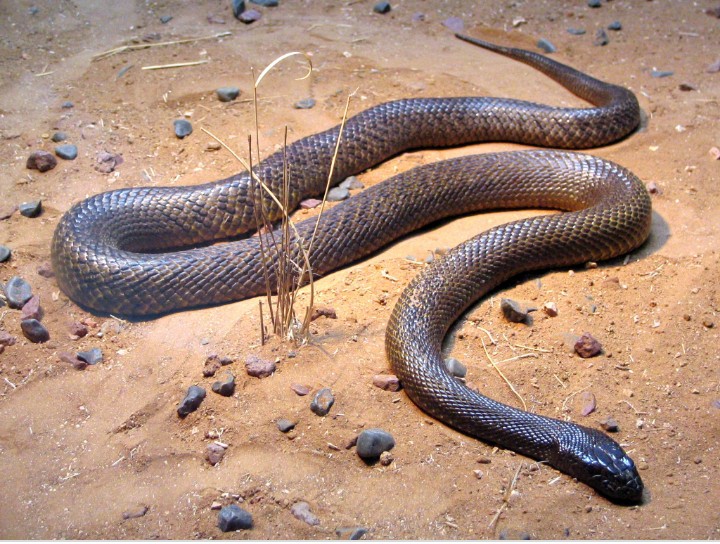
1) Inland Taipan
They are also known as fierce snake. They has the most toxic venom in the world. The average quantity venom give by this snake is 44mg while the most given is 110mg, which is enough to kill 100 people. Its venom consists of neurotoxins, Hemotoxins (procoagulants) affecting the blood, myotoxin affecting the muscles, nephrotoxins affecting the kidneys and hemorrhaggins causing hemorrhage. Its venom paralysis the body and cause hemorrhage. It is found in Australia.
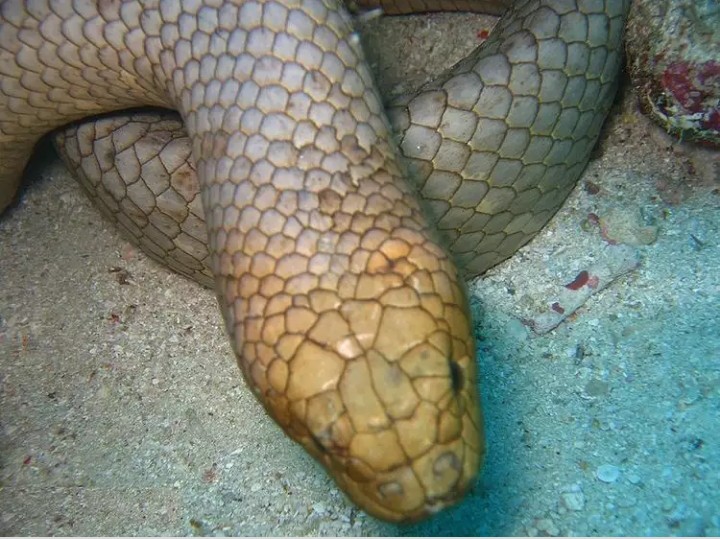
2) Dubois sea snake
Dubois sea snake is also known as reef shallow sea snake. It is a species of venomous sea snake. Adult sea snake grows upto 4.86ft but usually grow upto 2.6ft. It is most venomous sea snake and one of the top three most venomous snakes in the world. The venom is lethal and contains neurotoxin that act on the nerve cell, myotoxins acting on muscles. The venom of this snake paralysis the respiratory system which ultimately cause death of the person. They feed on fish and swallow the whole fish. True incident of sea snake bite has not been recorded but they might have caused bite in rural area where taking record might not be possible. They are not aggressive but can bite if feel threatened or surprised. Fisherman’s are more likely to get trapped in their bites often when they try to remove them from fishing net. They are found in Australia, and some parts of Indian Ocean and Timor sea.
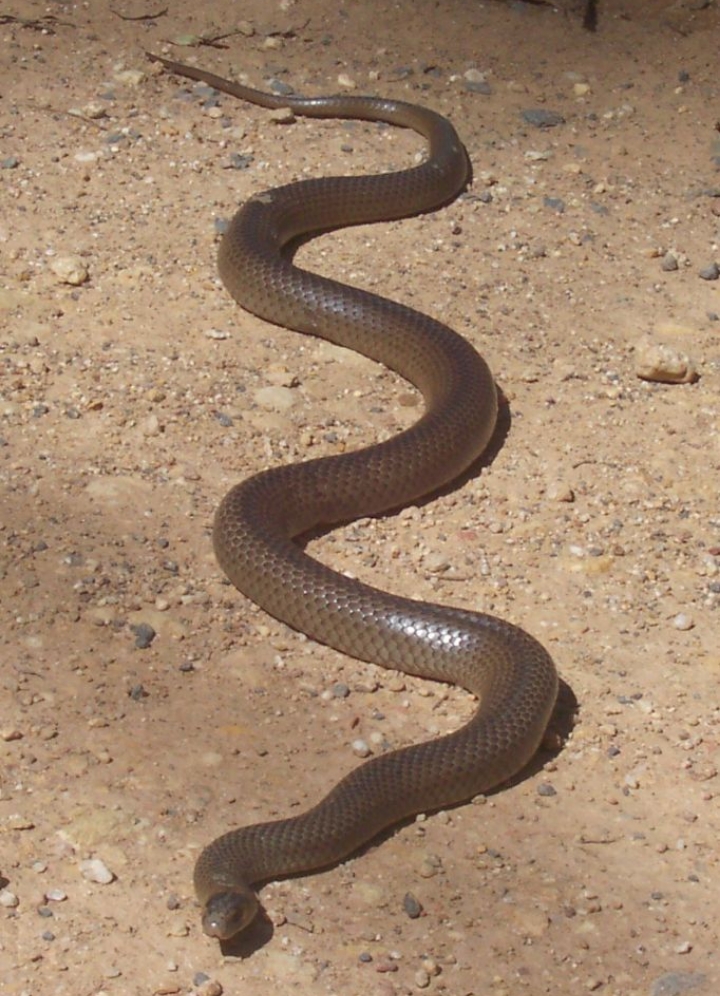
3) Eastern brown snake
Eastern brown snake or also known as common brown snake. This snake is highly venomous snake in the family Elapidae. Adult eastern brown snake goes upto 2m or 7ft. The venom of the snake mainly affects the circulatory system, coagulopathy, hemorrhage, cardiovascular collapse and cardiac arrest mainly the death occurs due to cardiac arrest. And one of the main components of venom is prothombinase which breaks down prothrombin. It is responsible for about 60% of snake bite death in Australia. They are native to eastern and central Australia and southern New Guinea.
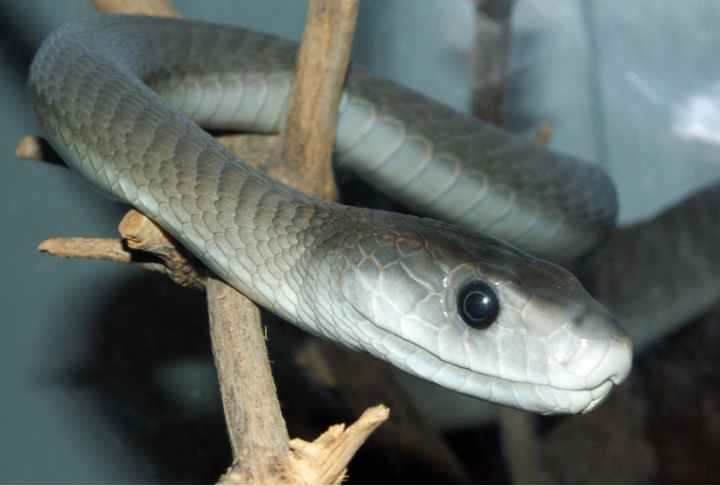
4) Black mamba
Black mamba also belongs to highly venomous species of family Elapidae. It is second longest venomous snake after king cobra. It grows upto 2m (6ft 7in) and commonly grow to 3m (9ft 10in). Its colour varies from grey to dark brown and it’s species is both terrestrial and arboreal (found on trees). It is native to parts of Sub Sahara Africa. Its venom is composed of neurotoxins and it’s induce symptoms within ten minutes and is frequently fatal. This species of snake is aggressive but only attack when threatened or cornered. It constantly bites more than once and it’s bite derive 100mg-120mg of venom, the highest venom recorded is 400mg. It is considered as snake of medical importance by World Health Organization. Its venom if not treated on time will result in respiratory failure, cardiovascular collapse and ultimately death.
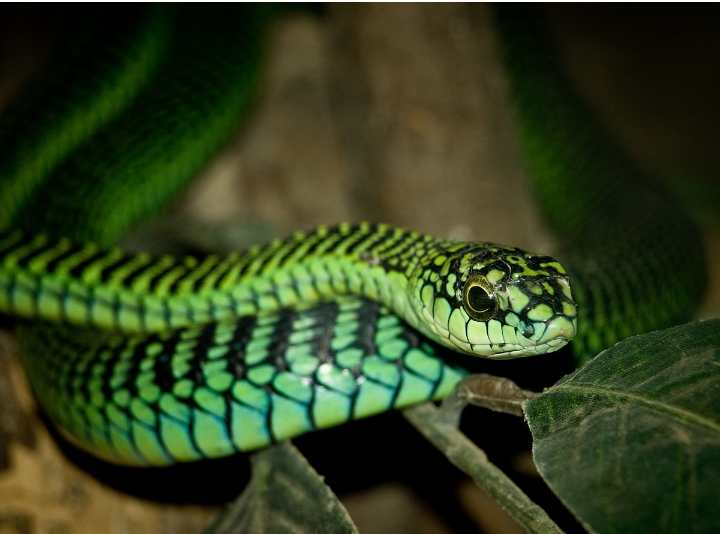
5) Boomslang
Boomslang snake is one of the venomous snake of family Colubridae Average adult Boomslang is 100-160 cm in total length and exceeds to 183cm. Colouration is very different like males are light green with black or blue scale edge while females may be brown. Their weight varies from 175 to 510 g. The Boomslang snake is able to open its jaws up to 170 degree when butting. It is found in sub Saharan Africa, south africa, Botswana and Namibia. Its venom is hemotoxin and disables coagulation process and the victim die as a result of internal or external bleeding. Its venom cause hemorrhaging in to tissue such as muscles and the brain tissue. Its venom is slow acting. This snake is timid and only bite if attempted to handle, catch or kill.





 Eduindex
You must be logged in to post a comment.