The manufacturing sector has the potential to drive economic growth, create employment opportunities, and increase productivity. However, the share of the manufacturing sector in India’s GDP has remained stagnant at around 15-16% for several years.
Tag: economic growth
Green Revolution
Green revolution, great increase in production of food grains (especially wheat and rice) that resulted in large part from the introduction into developing countries of new, high-yielding varieties, beginning in the mid-20th century. Its early dramatic successes were in Mexico and the Indian subcontinent.
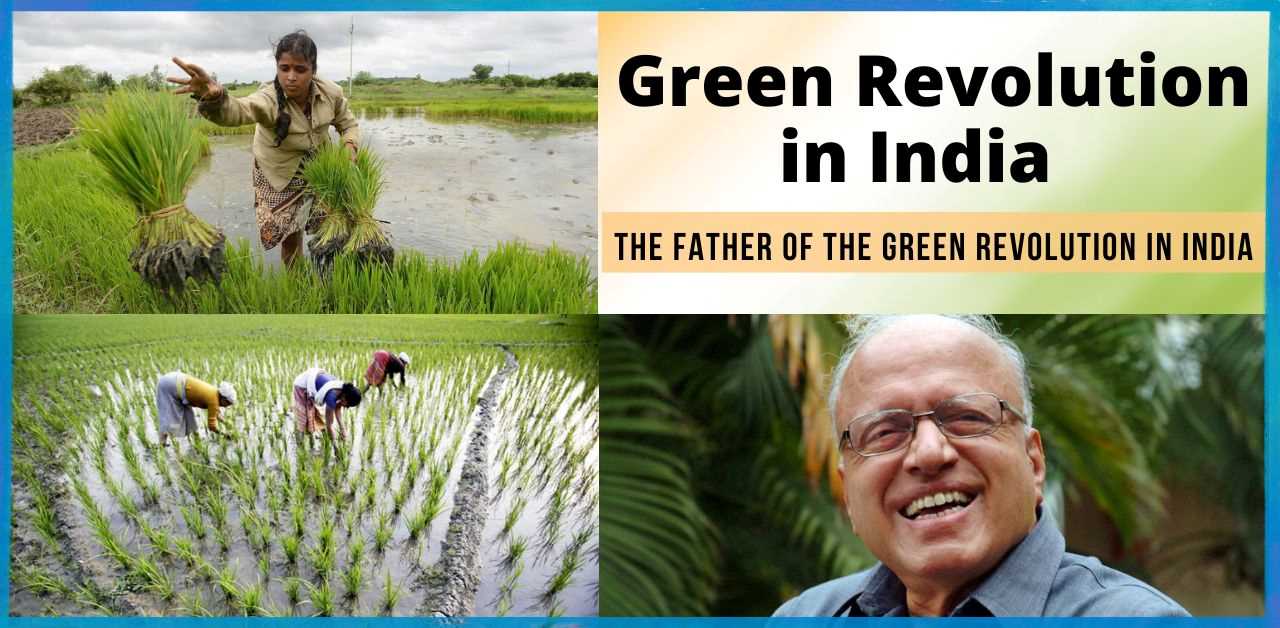
part of a larger initiative by Norman Borlaug, Green Revolution in India was founded by M S Swaminathan. The aim was to increase agricultural productivity in the developing world with use of technology and agricultural research.
The Green Revolution was initiated in the 1960’s to address the issue of malnutrition in the developing world. The technology of the Green Revolution involved bio-engineered seeds that worked in conjunction with chemical fertilizers and heavy irrigation to increase crop yields.
The amount of greenhouse gas emissions will help to reduce this. It allows us to create more food than conventional methods of growing. In uncooperative conditions, it offers us with predictable yields. It allows a decline in food costs for the world economy.
it was beneficial because it helped produce more food and prevented the starvation of many people. It also resulted in lower production costs and sale prices of produce. Although it had several benefits, the Green Revolution also had some negative effects on the environment and society.
The Green Revolution was a significant period of agricultural innovation and development that began in the mid-20th century, aiming to increase agricultural productivity worldwide, particularly in developing countries.
Key elements of the Green Revolution included:
-
High-Yielding Varieties (HYVs): Scientists developed new varieties of seeds, particularly for staple crops like wheat, rice, and maize, which had higher yields and were more resistant to diseases and pests.
-
Intensive Use of Chemical Fertilizers and Pesticides: To support the growth of these high-yielding crops, farmers began using synthetic fertilizers and pesticides on a larger scale.
-
Irrigation Techniques: Implementation of improved irrigation systems, like drip irrigation, helped provide water to crops more efficiently.
-
Mechanization: Introduction of machinery and technologies into agriculture, such as tractors and combine harvesters, to streamline farming processes.
The Green Revolution had several positive impacts:
- Increased Agricultural Productivity: Crop yields soared, leading to more food being produced on existing farmland.
- Food Security: It helped alleviate hunger in many parts of the world by increasing food availability.
- Economic Growth: Improved agricultural productivity contributed to economic growth in many developing countries.
However, there were also concerns and criticisms associated with the Green Revolution:
- Environmental Impact: Excessive use of chemical fertilizers and pesticides led to soil degradation, water pollution, and loss of biodiversity.
- Social Disparities: The benefits of the Green Revolution were not equally distributed, leading to socioeconomic disparities between wealthy and poor farmers.
- Sustainability Concerns: Reliance on high inputs of water, chemicals, and specific seed varieties raised concerns about the long-term sustainability of this agricultural model.
Efforts have been made to address these issues through sustainable agricultural practices, emphasizing environmentally friendly approaches and technologies while aiming for increased productivity and food security without compromising the environment or social equity.
Rising economic growth and strengthening partnership
Union Minister of Commerce & Industry, Consumer Affairs, Food & Public Distribution and Textiles, Shri Piyush Goyal expressed confidence in strengthening UAE-India Partnership. While addressing at a meeting with top Business Leaders from India & UAE hosted by Abu Dhabi Chamber, the Minister said that rising economic growth of the two countries and strengthening partnership offers opportunities for businesses on both sides to tap into for faster growth.
Shri Goyal emphasized the UAE’s pivotal role in this partnership, citing it as India’s second-largest export destination, third-largest trade partner, and the largest investor in terms of foreign direct investment. The Comprehensive Economic Partnership between the two countries forms a strong foundation for collaboration, he said. Both nations share a rich history, culture, and tradition, combined with present-day capabilities and future possibilities, which the Minister believes will provide the impetus for this partnership to thrive.
Shri Piyush Goyal said that the crucial areas of collaboration between India and UAE range from food security, education, energy security, climate change mitigation to space technologies. The promotion of each other’s cultures and initiatives like the Startup20, B20, the UAE-India Business Council and Bharat Bazaar were also highlighted by the Minister.
The Minister stated India’s role as a large market with 1.4 billion aspirational citizens, presenting a significant opportunity for businesses in the UAE. He outlined the “30 by 30 by 30” opportunity, with India’s average age being under 30 for the next 30 years and a goal to add $30 trillion to its GDP by 2047. He encouraged businesses to seize these opportunities and collaborate in the spirit of cooperation and competition.
Shri Goyal emphasized the warmth of the welcome he received and the infectious enthusiasm to bolster the UAE-India partnership. The Minister said that the incredible love and affection that the people of India and the people of the UAE have for each other, along with the immense contribution that businesses are making to strengthen this geopolitical strategic partnership, is set to make this the defining partnership and brotherhood of the 21st century.
He said that India has witnessed remarkable economic growth over the last nine years under the leadership of the Prime Minister Shri Narendra Modi, transforming from one of the fragile five economies globally to now being the world’s fifth-largest economy. Shri Goyal highlighted this impressive journey and the ambitious goal of becoming the world’s third-largest economy within the next four years. He termed the next 25 years as the golden period for India’s development.
In his closing remarks, Shri Piyush Goyal compared the UAE-India partnership to a rising tide lifting all boats and expressed his belief that the growing friendship and cooperation between the two nations will offer tremendous opportunities for businesses on both sides.
***
The Smart City mission
·
The Smart
Cities Mission is a creative and recent project by the Indian government that
aims to promote local development and use technology to produce smart outcomes
for citizens in order to increase economic growth and improve people’s quality
of life.
·
A
“smart city” is one that has the fundamental infrastructure necessary
to provide a respectable standard of living as well as a healthy and
sustainable environment.
·
It
consists of the most fundamental infrastructure, such as a sufficient supply of
water, energy, sanitary facilities that are sustainable, solid waste
management, effective urban transportation, reasonably priced housing, and
strong IT connectivity and e-governance.
·
The most
urgent demands and life-improving potential are the focus of Smart Cities.
·
To alter
things, they use a variety of strategies, including public-private
partnerships, best practices in urban planning, digital and information
technology, and policy change. They constantly prioritize people.
Its main Objectives
·
The goal
of the Smart Communities Mission is to “promote cities that provide basic
infrastructure, give its residents a respectable standard of living, a clean
and sustainable environment, and the implementation of ‘Smart’ Solutions.”
·
The
objective is to look at compact regions and construct a repeatable model that
will operate as a lighthouse for other aspirant cities, with an emphasis on
sustainable and inclusive development.
·
The goal
of the Smart Cities Mission is to provide models that can be used to create
similar Smart Cities both inside and outside of the Smart City. This will help
the country as a whole.
COVERAGE
AND DURATION
The Mission will last for five years and encompass 100 cities (FY2015-16
to FY2019-20).
Following a review by the Ministry of Urban Development (MoUD), the
Mission might be resumed after incorporating the lessons learned.
FINANCING
OF SMART CITIES
The Central Government wants to provide financial support to the Smart
City Mission in the amount of Rs. 48,000 crores over five years, or on average
Rs. 100 crores per city each year. The Smart City Mission would be run as a
Centrally Sponsored Scheme (CSS).
The State/ULB will be required to provide an equal amount on a matching
basis, making almost Rs. 1 lakh crore in government/ULB funds available for the
creation of smart cities.
Progress up
until now
1.
89 cities
have been chosen three years after the announcement, yet little has changed in
terms of urban transformation.
2.
A few
cities have approached the challenge with seriousness. Pune has started by
issuing municipal “smart city” bonds in order to raise money.
3.
An urban
knowledge center, a high-tech transit signal system, and a multimodal railway
hub have all been introduced in Bhubaneswar.
4.
Through a
command and control center, the New Delhi Municipal Corporation has begun
implementing mini-sewerage plants, Wi-Fi-activated “smart” street
lighting, and city surveillance systems.
5.
However,
most cities are still having trouble with their initial planning, and project
financial close is still a ways off.
6.
More
crucially, little has been done to identify and describe private investment.
Concerns/Challenges
faced by the Indian government
1.
Smart
cities serve as specialized vehicles that have broken away from conventional
urban governing frameworks.
2.
Instead of
a citywide inclusive development, it may result in the development of
particular regions.
3.
Governments
at the state and local levels lack the fine-grained data or the analytical
tools necessary to comprehend the changing requirements of their constituents.
4.
Despite
the fact that India’s Smart Cities Mission has identified over 20 priority
areas, the interventions made by the appropriate organizations are ineffective.
5.
Inadequate
attention is paid to how urban municipal bodies operate.
6.
Only
around 3% of the urban regions connected to these smart cities will use the
Area Based Development strategy, which involves building a sewage system
somewhere or a network of roads in another city.
7.
Urban
local governments are understaffed and unprofessional on both a technical and
human level.
Conclusion
On the way to smartness, there are undoubtedly
many opportunities for immediate gains that can be seized with an agile
approach to policy.
Instead of focusing solely on a
technology-driven vision, the plan should acknowledge that diverse and
supportive settings are essential to a city’s lively vitality.
The wise course of action involves having clean
common areas, simple movement, and a foundation of dependable civic services.
It is crucial to concentrate on local governance
as urbanization becomes more prominent in the discussion of global policy.
The world sees India as an engine of economic growth
Union Minister for Commerce and Industry, Consumer Affairs, Food and Public Distribution and Textiles, Shri PiyushGoyal today said that the world now sees India as an engine of economic growth. He was addressing the gathering at the VyapariUdyamiSammelan in New Delhi today.
Stressing that India enjoyed the confidence of the world today, Shri Goyal said that developed countries very keen to sign trade deals with India now. He added that before 2014, Indian economy was considered to be fragile and investors had their doubts bout doing business with India.
Stressing upon the need for transparency and ease of doing business, the Minister assured traders and entrepreneurs that the Government will fully support traders who raise their voice against harassment by any authority.
He called upon traders to work with the Government to reduce compliance burden of people and businesses, but asked that they strictly follow ethical trade practices. Unnecessary, cumbersome and counter-productive laws and regulations must be uprooted to improve ease of doing business, he added.
He asked traders to give priority to the quality of goods and services that India offered. He also underscored the need to encourage youngsters to come forward and lend a youthful energy to India’s growth story with new ideas. The clarion call of ‘vocal for local’ given by the Prime Minister, Shri Narendra Modi must be taken up by the youth of the nation, the Minister said. He added that we must also encourage more and more women to become traders and entrepreneurs.
Applauding Prime Minister’s visionary welfare policies, Shri Goyal said that these policies have been helping the poor emerge as consumers and have successfully transformed India’s population into its greatest strength. He added that the Prime Minister’s tireless work had ensured that every household in the country gets access to basic amenities such as cooking gas, drinking water, electricity and toilet and every village gets access to the internet. Shri Goyal said that the policies of the government had also given every Indian the courage to be ambitious and the confidence to aspire to become entrepreneurs.
The Minister also emphasized that traders and Micro, Small and Medium Enterprises (MSMEs) should benefit from demand of goods by beneficiaries of the Prime Minister’s welfare schemes. He asked all traders, entrepreneurs, and businesses, both big and small, to take a collective resolve to work together to take forward the dream of a self-reliant India by promoting more and more Indian products.
***
Initiatives to boost domestic and foreign investments
Government has taken various steps to boost domestic and foreign investments in India. These include reduction in Corporate Tax Rates, easing liquidity problems of NBFCs and Banks, improving Ease of Doing Business, FDI Policy reforms, Reduction in Compliance Burden, policy measures to boost domestic manufacturing through Public Procurement Orders, Phased Manufacturing Programme (PMP), Schemes for Production Linked Incentives (PLI) of various Ministries. To facilitate investments, measures such as India Industrial Land Bank (IILB), Industrial Park Rating System (IPRS), soft launch of the National Single Window System (NSWS), National Infrastructure Pipeline (NIP), National Monetisation Pipeline (NMP), etc, have also been put in place.
As a result, India registered the highest ever annual FDI Inflow of US$ 81.97 billion (provisional figure) in the financial year 2020-21. FDI inflows in the last 7 financial years (2014-21) is US$ 440.27 billion, which is nearly 58% of the total FDI inflow in last 21 financial years (2000-21: US$ 763.83 Billion). Top five countries from where FDI Equity Inflows were received during April, 2014 and August, 2021 are Singapore (28%), Mauritius (22%), USA (10%), Netherlands (8%) and Japan (6%). Computer Software & Hardware sector attracted the largest share of FDI inflows at 19%, followed by Service (15%), Trading (8%) and Telecommunications & Construction (Infrastructure) (7% each) during the same period in the last more than seven years.
Empowered Group of Secretaries (EGoS) &Project Development Cells (PDCs)
With a view to support, facilitate and provide investor friendly ecosystem to investors, the Union Cabinet approved constitution of an Empowered Group of Secretaries (EGoS), and also Project Development Cells (PDCs) in Ministries to fast-track investments in coordination between the Central Government and State Governments and thereby grow the pipeline of investible projects in India to increase domestic investments and FDI inflow.
- have now been established in 29 Ministries of the Government of India, headed by Joint Secretary-level officers. All PDCs are executing clearly defined investor engagement strategies, which includes identification of prospective investors, multi-level engagement with investors who have shown interest, active engagement with a wide range of stakeholders to resolve existing investors’ issues, to develop new projects and to promote existing investment opportunities.
Estimates point out that a total of 863 Investment Projects are under active consideration by the PDCs with an investment of $121 Billion. This includes 272 Highly Probable (more than 90% probability) worth $41 Bn, 279 Moderately Probable (51-90%) proposals worth $69 Bn and Long Term (less than 50%) projects worth $11 Bn.
Production Linked Incentive (PLI) Schemes
Keeping in view India’s vision of becoming ‘Atmanirbhar’ and to enhance India’s Manufacturing capabilities and Exports, an outlay of INR 1.97 lakh crore (over US$ 26 billion) has been announced in Union Budget 2021-22 for PLI schemes for 13 key sectors of manufacturing starting from fiscal year (FY) 2021-22.
The 13 key sectors include already existing 3 sectors namely (i) Mobile Manufacturing and Specified Electronic Components, (ii) Critical Key Starting materials/Drug Intermediaries & Active Pharmaceutical Ingredients, (iii) Manufacturing of Medical Devices and 10 new key sectors which have been approved by the Union Cabinet in November 2020. These 10 key sectors are:
(i) Automobiles and Auto Components, (ii) Pharmaceuticals Drugs, (iii) Specialty Steel, (iv) Telecom & Networking Products, (v) Electronic/Technology Products, (vi) White Goods (ACs and LEDs), (vii) Food Products, (viii) Textile Products: MMF segment and technical textiles, (ix) High efficiency solar PV modules, and (x) Advanced Chemistry Cell (ACC) Battery.
PLI Scheme for an additional sector, Drones and Drone Components, has also been approved by the Union Cabinet in September 2021. With the announcement of PLI Schemes, significant creation of production, employment, and economic growth is expected over the next 5 years and more.
The schemes have been specifically designed to attract investments in sectors of core competency and cutting edge technology; ensure efficiency and bring economies of size and scale in the manufacturing sector and make Indian manufacturers globally competitive so that they can integrate with global value chains.
It is expected that the PLI schemes will lead to significant creation of production (US$ 504 billion plus), enhance employment (nearly 1 crore plus) and economic growth expected over the next 5 years and more.
Make in India
‘Make in India’ was launched on September 25, 2014, to facilitate investment, foster innovation, building best in class infrastructure, and making India a hub for manufacturing, design, and innovation. The development of a robust manufacturing sector continues to be a key priority of the Indian Government.
It was one of the first ‘Vocal for Local’ initiatives that exposed India’s manufacturing domain to the world. The sector has the potential to not only take economic growth to a higher trajectory but also to provide employment to a large pool of our young labour force.
Since its launch, Make in India has made significant achievements and is now focusing on 27 sectors under Make in India 2.0. DPIIT is coordinating Action Plans for 15 manufacturing sectors, while the Department of Commerce is coordinating for 12 service sectors. DPIIT is also working closely with 24 sub-sectors which have been chosen keeping in mind the Indian industries strengths and competitive edge, need for import substitution, potential for export and increased employability.
Investment Clearance Cell (ICC)
While presenting Budget 2020-21, the Finance Minister announced plans to set up an Investment Clearance Cell (ICC) that will provide “end to end” facilitation and support to investors, including pre-investment advisory, provide information related to land banks and facilitate clearances at Centre and State level. The cell was proposed to operate through an online digital portal.
Envisioned as a one-stop for taking all the regulatory approvals and services in the country, NSWS [www.nsws.gov.in], was soft-launched on 22nd September 2021 by the Commerce & Industries Minister, Shri Piyush Goyal. This national portal integrates the existing clearance systems of the various Ministries/ Departments of Govt. of India and State Governments without disruption to the existing IT portals of Ministries/ Departments. Approvals of 19 Ministries/ Departments and 11 States Single Window Systems havebeen on-boarded in Phase I. Complete on-boarding of 32 Central Ministries/ Departments and 14 States would be in next phases, all remaining States will be on-boarded in a phase manner.
One District One Product (ODOP)
Government of India is working on a transformational initiative to foster balanced regional development across all districts of the country. This is called the One District One Product (ODOP) initiative, with the objective of identifying and promoting the production of unique products in each district in India that can be globally marketed. This will help realise the true potential of a district, fueling economic growth, generating employment and rural entrepreneurship. ODOP initiative is operationally merged with the ‘Districts as Export Hub’ initiative being implemented by DGFT, Department of Commerce with DPIIT as a major stakeholder to synergize the work undertaken by DGFT. The major activities that are being facilitated by DPIIT with Invest India under ODOP initiative are manufacturing, marketing, branding, internal trade and e-commerce.
Under the initial phase of the ODOP, 106 Products have been identified from 103 districts across the country. Considerable success has been achieved for boosting exports under ODOP initiative.