
All you need to know about an Economic Recession.

The National Bureau of Economic Research (NBER) defines a recession as “a significant decline in activity spread across the economy, lasting more than a few months, visible in industrial production, employment, real income, and wholesale-retail trade.” A recession is also believed to be signalled when businesses cease to expand, the GDP diminishes for two consecutive quarters, and the unemployment rate rises. The nature and causes of recessions are simultaneously evident and uncertain. Recessions are, in essence, a cluster of business failures being realized simultaneously. Firms are forced to reallocate resources, scale back production, limit losses, and, usually, lay off employees. Those are the clear and visible causes of recessions. There are several different ways to explain what causes a general cluster of business failures, why they are suddenly realized simultaneously, and how they can be avoided.

What Causes a Recession?

Some recessions can be traced to a clearly-defined cause. For instance, the recession of 1973-1975 began as a result of the 1973 oil crisis. However, most recessions are caused by a complex combination of factors, including high interest rates, low consumer confidence, and stagnant wages or reduced real income in the labour market. Other examples of recession causes include bank runs and asset bubbles.

Psychological Factors of a Recession

Psychological factors are frequently cited by economists for their contribution to recessions also. The excessive exuberance of investors during the boom years brings the economy to its peak. The reciprocal doom-and-gloom pessimism that sets in after a market crash at a minimum amplifies the effects of real economic and financial factors as the market swings. Moreover, because all economic actions and decisions are always to some degree forward-looking, the subjective expectations of investors, businesses, and consumers are often involved in the inception and spread of an economic downturn.

Economic Factors of a Recession

Real changes in economic fundamentals, beyond financial accounts and investor psychology, also make critical contributions to a recession. Some economists explain recessions solely due to fundamental economic shocks, such as disruptions in supply chains, and the damage they can cause to a wide range of businesses. Shocks that impact vital industries such as energy or transportation can have such widespread effects that they cause many companies across the economy to retrench and cancel investment and hiring plans simultaneously, with ripple effects on workers, consumers, and the stock market. There are economic factors that can also be tied back into financial markets. Market interest rates represent the cost of financial liquidity for businesses and the time preferences of consumers, savers, and investors for present versus future consumption. In addition, a central bank’s artificial suppression of interest rates during the boom years before a recession distorts financial markets and business and consumption decisions.
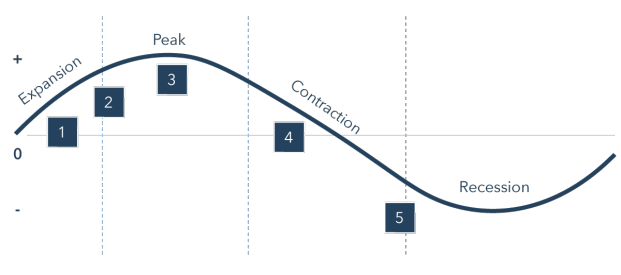
What Are the Indicators of a Recession?

Economists determine whether an economy is in recession by looking at a variety of statistics and trends. Factors that indicate a recession include:

  • Rising in unemployment
  • Rises in bankruptcies, defaults, or foreclosures
  • Falling interest rates
  • Lower consumer spending and consumer confidence
  • Falling asset prices, including the cost of homes and dips in the stock market

All of these factors can lead to an overall reduction in the Gross Domestic Product (GDP). The European Union and the United Kingdom define a recession as two or more consecutive quarters of negative real GDP growth.

Impact of Covid-19 Pandemic on the Economy

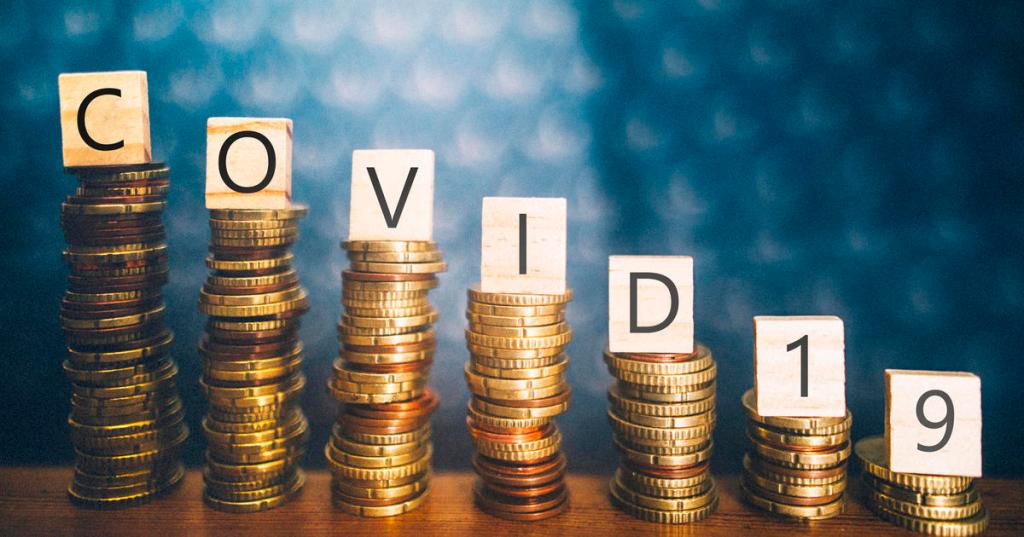
In February 2020, the National Bureau of Economic Research (NBER) announced that according to their data, the U.S. was in a recession due to the economic shock of the widespread disruption of global and domestic supply chains and direct damage to businesses across all industries. These events were caused by the COVID-19 epidemic and the public health response. Some of the underlying causes of the two-month recession (and economic hardship) in 2020 were the overextension of supply chains, razor-thin inventories, and fragile business models. The pandemic-related recession, according to NBER, ended in April 2020, but the financial hardship caused by the pandemic is still impacting Americans.
For simpler understanding-

https://www.youtube.com/watch?v=SwaCg7Gwtzw: All you need to know about an Economic Recession.
All you need to know about an Economic Recession.
The National Bureau of Economic Research (NBER) defines a recession as “a significant decline in activity spread across the economy, lasting more than a few months, visible in industrial production, employment, real income, and wholesale-retail trade.” A recession is also believed to be signalled when businesses cease to expand, the GDP diminishes for two consecutive quarters, and the unemployment rate rises. The nature and causes of recessions are simultaneously evident and uncertain. Recessions are, in essence, a cluster of business failures being realized simultaneously. Firms are forced to reallocate resources, scale back production, limit losses, and, usually, lay off employees. Those are the clear and visible causes of recessions. There are several different ways to explain what causes a general cluster of business failures, why they are suddenly realized simultaneously, and how they can be avoided.

What Causes a Recession?

Some recessions can be traced to a clearly-defined cause. For instance, the recession of 1973-1975 began as a result of the 1973 oil crisis. However, most recessions are caused by a complex combination of factors, including high interest rates, low consumer confidence, and stagnant wages or reduced real income in the labour market. Other examples of recession causes include bank runs and asset bubbles.

Psychological Factors of a Recession

Psychological factors are frequently cited by economists for their contribution to recessions also. The excessive exuberance of investors during the boom years brings the economy to its peak. The reciprocal doom-and-gloom pessimism that sets in after a market crash at a minimum amplifies the effects of real economic and financial factors as the market swings. Moreover, because all economic actions and decisions are always to some degree forward-looking, the subjective expectations of investors, businesses, and consumers are often involved in the inception and spread of an economic downturn.

Economic Factors of a Recession

Real changes in economic fundamentals, beyond financial accounts and investor psychology, also make critical contributions to a recession. Some economists explain recessions solely due to fundamental economic shocks, such as disruptions in supply chains, and the damage they can cause to a wide range of businesses. Shocks that impact vital industries such as energy or transportation can have such widespread effects that they cause many companies across the economy to retrench and cancel investment and hiring plans simultaneously, with ripple effects on workers, consumers, and the stock market. There are economic factors that can also be tied back into financial markets. Market interest rates represent the cost of financial liquidity for businesses and the time preferences of consumers, savers, and investors for present versus future consumption. In addition, a central bank’s artificial suppression of interest rates during the boom years before a recession distorts financial markets and business and consumption decisions.

What Are the Indicators of a Recession?

Economists determine whether an economy is in recession by looking at a variety of statistics and trends. Factors that indicate a recession include:

  • Rising in unemployment
  • Rises in bankruptcies, defaults, or foreclosures
  • Falling interest rates
  • Lower consumer spending and consumer confidence
  • Falling asset prices, including the cost of homes and dips in the stock market

All of these factors can lead to an overall reduction in the Gross Domestic Product (GDP). The European Union and the United Kingdom define a recession as two or more consecutive quarters of negative real GDP growth.

Impact of Covid-19 Pandemic on the Economy

In February 2020, the National Bureau of Economic Research (NBER) announced that according to their data, the U.S. was in a recession due to the economic shock of the widespread disruption of global and domestic supply chains and direct damage to businesses across all industries. These events were caused by the COVID-19 epidemic and the public health response. Some of the underlying causes of the two-month recession (and economic hardship) in 2020 were the overextension of supply chains, razor-thin inventories, and fragile business models. The pandemic-related recession, according to NBER, ended in April 2020, but the financial hardship caused by the pandemic is still impacting Americans.

For simpler understanding-

Need for switch from physical to human capital

Human capital refers to stock of ‘skill and expertise’ embodied in humans. Human capital is as important as physical capital for economic development. Human capital formation is the process of adding to stock of human capital over time. Human capital can be developed through creation of skilled, trained and efficient labour force by providing better education, health care facilities, etc. Highly skilled people can create new ideas and methods of production. Thus, expenditure on education, on health and on on-job-training are key instruments of human capital formation. Expenditure on education is one of the most important way of enhancing and enlarging a productive workforce in the country. Expenditure on health can create more efficient and more productive human capital. Further, on-the-job-training helps workers to update skills. Training enhances the productivity and is expected to accelerate the process of human capital formation.

Human Capital and Economic Growth

When we talk about economic growth, human capital is the main reason for the accelerated growth and expansion for many countries that provide investment in human capital. This gives the best advantages to these countries for providing the best situations for work and lifestyles.A significant advantage in generating a stable environment for growth is that the nation has the expanded high-quality human capital in fields like health, science, management, education, and other fields. Here, the main components of human capital are definitely human beings, but presently, the principal component is a creative, educated, and enterprising person with a high level of professionalism.

Human capital in the economy manages the central portion of the national wealth. Hence, all researchers consider that human capital is the most important resource of the community, which is more powerful than nature or wealth. In most countries, human capital determines the rate of development, economic, technological, and scientific progress.

(i) Inventions, innovations, and technological improvement

 (ii) Higher productivity of physical capital

 (iii) Raises production

 (iv) High rate of participation and equality

 (v) Improves the quality of life

The difference between human capital and physical capital

Both forms of capital formation are outcomes of conscious investment decisions. Decision regarding investment in physical capital is taken on the basis of one’s knowledge in this regard. The entrepreneur possesses knowledge to calculate the expected rate of return to a range of investments and internationally decide which one of the investments should be made. Physical capital is the outcome of the conscious decision of the owner the physical capital formation is mainly and economic and technical process. A substantial part of human capital formation takes place in one life when she or he is unable to decide whether it will maximize her or his earnings. Children are given different types of school education health care facilities by parents and society. The peers, educators and society influence the decisions regarding human capital investment even at the tertiary level, at the college level. Human capital formation at this stage is dependent upon the already from human capital at the school level. Human capital formation is partly a social process and partly a conscious decision of the possessor of the human capital. The owner of a physical capital, does need not be present in the place where it is used; a bus driver who possesses the knowledge and ability to drive the bus should be present when the bus is used for transportation of people and other materials physical capital is tangible and can be easily sold in the market like any other commodity. Human Capital is intangible it is endogenously built in the body and mind of its owner. Human Capital is not sold in the market; service of human capital is sold and hence there arises the necessity of owner of the human capital to be present in the place of production. Physical capital is variable from its owner where does the human capital is in separable from its owner. The two forms of capital differ in terms of mobility across space. Capital is completely mobile between countries except for some artificial trade restrictions. Human capital is not a perfectly movable between countries as movement is restricted by nationality and culture. Physical Capital formation can be built it even do import, human capital formation is to be done through conscious policy formulations in consensus with nature of society and economy expenditure by the state and the individual.

Both forms of capital depreciate with the time but the nature of depreciation differs between the two continuous use of machine lead to depreciation and change of Technology makes a machine of solute. Human capital, eating but can reduce, for large through continuous investment in education and health on the job training. This investment also facilitates the human capital to cope with change in technology which is not the case with physical capital. Natures of benefits flowing from human capital are different from that of physical capital. Human Capital benefits not only the owner but also the society in general. This is called external benefit. Educated person can effectively take part in a democratic process and contribute to the socio economic progress of a nation. Healthy person, by maintaining personal hygiene and sanitation, stops the spread of contagious diseases and epidemics. Human Capital creates both private and social benefits where as physical capital creates only private benefits. That is, benefits from a capital good flow to those who pay the price for the product and services provided by it.

Importance of Human Capital Formation:

Although the accumulation of physical capital is quite important in the process of economic growth of a country but with the passage of time, it is being increasingly realised that the growth of tangible capital stock depends extensively on the human capital formation must get its due importance.In the absence of adequate investment in human capital, utilisation of physical capital will be at low pace, leading to retardation of development.Prof. Galbraith observed, “We now get the larger part of our industrial growth not from more capital investment but from investment in men and improvements brought about by improved men.” Unless these developed economies spread education, knowledge, know-how and raise the level of skills and physical efficiency of their people, the productivity of physical capital would have been reduced at this moment.

Most of the underdeveloped countries are suffering from low rate of economic growth which is again partially resulted from lack of investment in human capital. These underdeveloped countries are facing mainly two basic problems. They lack critical skills very much needed for the industrial sector and again have a surplus labour force.Thus human capital formation wants to solve these problems by creating necessary skills in man as a productive resource and also providing him gainful employment.In order to remove economic backwardness of the underdeveloped countries as well as to instill the capacities and motivations to progress, it is quite necessary to increase the level of knowledge and skills of the people.Thus in the absence of proper development of the quality of the human factor, the underdeveloped countries will not be able to attain the desired rate of progress.

Takeaway

Economic and social benefits of human capital formation and Human Development are well-known. The spread of education and Health Services across different sectors of the society should be ensured so as to simultaneously attain economic growth and equity. The need of the hour is to better it qualitatively and provide such conditions so that they are utilised in our own country.

Need for switch from physical to human capital

Human capital refers to stock of ‘skill and expertise’ embodied in humans. Human capital is as important as physical capital for economic development. Human capital formation is the process of adding to stock of human capital over time. Human capital can be developed through creation of skilled, trained and efficient labour force by providing better education, health care facilities, etc. Highly skilled people can create new ideas and methods of production. Thus, expenditure on education, on health and on on-job-training are key instruments of human capital formation. Expenditure on education is one of the most important way of enhancing and enlarging a productive workforce in the country. Expenditure on health can create more efficient and more productive human capital. Further, on-the-job-training helps workers to update skills. Training enhances the productivity and is expected to accelerate the process of human capital formation.

Human Capital and Economic Growth

When we talk about economic growth, human capital is the main reason for the accelerated growth and expansion for many countries that provide investment in human capital. This gives the best advantages to these countries for providing the best situations for work and lifestyles.A significant advantage in generating a stable environment for growth is that the nation has the expanded high-quality human capital in fields like health, science, management, education, and other fields. Here, the main components of human capital are definitely human beings, but presently, the principal component is a creative, educated, and enterprising person with a high level of professionalism.

Human capital in the economy manages the central portion of the national wealth. Hence, all researchers consider that human capital is the most important resource of the community, which is more powerful than nature or wealth. In most countries, human capital determines the rate of development, economic, technological, and scientific progress.

(i) Inventions, innovations, and technological improvement

 (ii) Higher productivity of physical capital

 (iii) Raises production

 (iv) High rate of participation and equality

 (v) Improves the quality of life

The difference between human capital and physical capital

Both forms of capital formation are outcomes of conscious investment decisions. Decision regarding investment in physical capital is taken on the basis of one’s knowledge in this regard. The entrepreneur possesses knowledge to calculate the expected rate of return to a range of investments and internationally decide which one of the investments should be made. Physical capital is the outcome of the conscious decision of the owner the physical capital formation is mainly and economic and technical process. A substantial part of human capital formation takes place in one life when she or he is unable to decide whether it will maximize her or his earnings. Children are given different types of school education health care facilities by parents and society. The peers, educators and society influence the decisions regarding human capital investment even at the tertiary level, at the college level. Human capital formation at this stage is dependent upon the already from human capital at the school level. Human capital formation is partly a social process and partly a conscious decision of the possessor of the human capital. The owner of a physical capital, does need not be present in the place where it is used; a bus driver who possesses the knowledge and ability to drive the bus should be present when the bus is used for transportation of people and other materials physical capital is tangible and can be easily sold in the market like any other commodity. Human Capital is intangible it is endogenously built in the body and mind of its owner. Human Capital is not sold in the market; service of human capital is sold and hence there arises the necessity of owner of the human capital to be present in the place of production. Physical capital is variable from its owner where does the human capital is in separable from its owner. The two forms of capital differ in terms of mobility across space. Capital is completely mobile between countries except for some artificial trade restrictions. Human capital is not a perfectly movable between countries as movement is restricted by nationality and culture. Physical Capital formation can be built it even do import, human capital formation is to be done through conscious policy formulations in consensus with nature of society and economy expenditure by the state and the individual.

Both forms of capital depreciate with the time but the nature of depreciation differs between the two continuous use of machine lead to depreciation and change of Technology makes a machine of solute. Human capital, eating but can reduce, for large through continuous investment in education and health on the job training. This investment also facilitates the human capital to cope with change in technology which is not the case with physical capital. Natures of benefits flowing from human capital are different from that of physical capital. Human Capital benefits not only the owner but also the society in general. This is called external benefit. Educated person can effectively take part in a democratic process and contribute to the socio economic progress of a nation. Healthy person, by maintaining personal hygiene and sanitation, stops the spread of contagious diseases and epidemics. Human Capital creates both private and social benefits where as physical capital creates only private benefits. That is, benefits from a capital good flow to those who pay the price for the product and services provided by it.

Importance of Human Capital Formation:

Although the accumulation of physical capital is quite important in the process of economic growth of a country but with the passage of time, it is being increasingly realised that the growth of tangible capital stock depends extensively on the human capital formation must get its due importance.In the absence of adequate investment in human capital, utilisation of physical capital will be at low pace, leading to retardation of development.Prof. Galbraith observed, “We now get the larger part of our industrial growth not from more capital investment but from investment in men and improvements brought about by improved men.” Unless these developed economies spread education, knowledge, know-how and raise the level of skills and physical efficiency of their people, the productivity of physical capital would have been reduced at this moment.

Most of the underdeveloped countries are suffering from low rate of economic growth which is again partially resulted from lack of investment in human capital. These underdeveloped countries are facing mainly two basic problems. They lack critical skills very much needed for the industrial sector and again have a surplus labour force.Thus human capital formation wants to solve these problems by creating necessary skills in man as a productive resource and also providing him gainful employment.In order to remove economic backwardness of the underdeveloped countries as well as to instill the capacities and motivations to progress, it is quite necessary to increase the level of knowledge and skills of the people.Thus in the absence of proper development of the quality of the human factor, the underdeveloped countries will not be able to attain the desired rate of progress.

Takeaway

Economic and social benefits of human capital formation and Human Development are well-known. The spread of education and Health Services across different sectors of the society should be ensured so as to simultaneously attain economic growth and equity. The need of the hour is to better it qualitatively and provide such conditions so that they are utilised in our own country.

How Rich People Avoid Taxes

Taxes are those compulsory financial charges or some other type of levy imposed on a taxpayer by a governmental organization in order to fund government spending and various public expenditures. Everyone who is of a certain pay grade and receiving a certain amount of income has to pay taxes, and even corporations have to pay a certain amount of money in the form of taxes. Hence, there are various types of taxes that must be paid as a financial obligation to the government, to help in defraying government expenses for public welfare. The money given in the form of taxes are meant to be put to productive use, thereby benefitting all those people who have given tax in the first place. However, nowadays we can observe the trend of inequitable taxing in many countries, as the rich are getting away with tax avoidance while ordinary middle class and working-class people are being taxed unreasonably. Failure to pay taxes, as well as tax evasion/avoidance is punishable by law, but many rich people get away with these activities.

The Main Reason

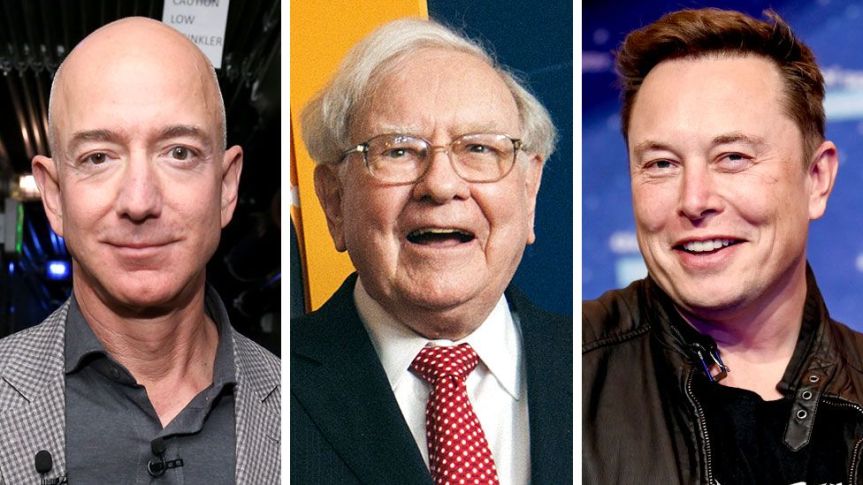
While regular working-class people get paid wages and salary as their income, the rich do not get paid any such fixed remuneration. People with normal jobs get a pay check and pay income tax, ranging from 10-37%. However, wealthy people mainly have capital income, meaning they earn from investments like stocks and real estate. These investments are taxed as capital gains tax, and things like long-term stock have a maximum tax rate of only 20%. Thus, the capital gains tax is taxed at nearly half the rate as income tax. It is clear that there is a large discrepancy in taxation here. This is evidenced by the fact that a billionaire like Warren Buffet has said that he pays less tax than even his secretary.  

Hence, billionaires often face small and insubstantial tax amounts in comparison to what they are earning, and the main reason for these small tax rates is the fact that these people maintain their wealth differently than ordinary people. Their wealth is not being held in their wallets or in their bank accounts. Instead, it is being held in assets like stocks and real estate, which are only taxed when sold. Until then, they are considered ‘unrealized’ and cannot be counted as income. Even when they are sold, the capital gains tax that applies is minimal.

People like Warren Buffet and Jeff Bezos are worth so much money because of the stock they hold, but these stocks are not tangible, spendable or taxable money. This allows them to preserve their wealth effectively, and protect it from excessive taxation. Jeff Bezos, the richest man in the world, pays almost nothing in taxes because his holdings are not defined by U.S. laws as taxable income unless and until he sells them. So, even though he is worth around $200 billion, he is never taxed unless he sells a stock and turns it into real money. This is why we say billionaires are worth so much, but almost never have to pay taxes.   

Conclusion

The reality is that most rich people today do not pay taxes proportionate to their wealth or earnings. It is definitely a problem if wealthy people are not paying their fair share of taxes while normal people are bearing the burden of taxation. Such taxation systems allow the rich to keep getting richer without any real consequence, while everyone else is limited from increasing their financial position due to high tax obligations. To solve this, maybe taxes could be imposed on wealth, or on gains in the stock market. Wealth is the value of the things you own, such as stocks, bonds, houses, etc. Generally, there is no tax on wealth, but it should be implemented as a means of more justified taxation. Even things like increasing the income tax of those at the top, or increasing estate tax will help in taxing the rich more. Basically, taxation must become proportionate to wealth so as to keep a check on the rich, while staying fair to the people working normal jobs.

Why is Dowry Still Popular in India?

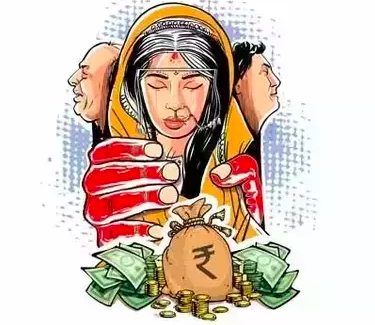
Dowry is basically the transfer of parental property, gifts, money or anything else of monetary value, usually by the wife’s family to the husband and his family upon marriage. Hence, dowry serves as a gift from the bride’s family to the groom’s family in consideration of their marriage and accepting the bride into the groom’s home. This practice of dowry is an old, obsolete and discriminatory practice. It has its roots in ancient Indian culture that placed women at an inferior position to men, such that women had to pay a price through dowry just to be with them. In older times, women had no individual identity and their identity was tied to their husbands through marriage. Dowry is a practice which took advantage of this convention and exploited women due to their inferior social position. With the change in times and beliefs, the payment of dowry has been prohibited under specific Indian laws such as the Dowry Prohibition Act, 1961 and subsequently by Sections 304B and 498A of the Indian Penal Code. However, the practice is still prevalent to a high degree in India today despite its prohibition, leading to things like harassment, domestic violence and even dowry deaths. There are many reasons for this.

Reasons for Dowry till existing

  • Firstly, dowry still exists in India because it is perceived as a source of easy income by the groom’s family. This is why we see the practice of dowry today predominantly in the rural areas and among the households of the poor. Without any of their own effort or hard work, and by simply relying on this social convention, the groom’s family can ask for dowry and gain wealth for free. Yet, research suggests that dowry is highly prevalent even among urban households and households of the rich and educated. This is unusual and it raises the question as to why someone who is educated and aware of laws indulge in the practice of dowry. Even recently in 2019, there was CCTV footage released of a retired Madras High Court judge Nooty Rama Mohana Rao harassing and beating his daughter in law for the payment of dowry. Hence, there are other factors that cause the practice of dowry to continue.
  • In most cases, due to patriarchy and preference of a boy child over a girl, the sex ratio in many states of India is disparate. This leads to a greater number of men compared to women. It could be argued that due to a greater number of men, dowry might hardly exist. However, this isn’t practically true, because the men having characteristics desired by the bride and her family are few. These characteristics include physical features, income, family status, etc. Thus, the bid for these highly demanded men leads to the existence of dowry. This is a typical market approach focusing on the demand and supply of desired partners which still exists in India today. Dowry is essentially the price to be paid to gain a husband or son-in-law, called the ‘groom price’.
  • Another reason for the prevalence of dowry is the notion of security. Research suggests that in-laws show more preference towards the daughter-in-law that brings a large dowry, giving her more autonomy and say in households matters and giving her fewer chores to do. In some cases, the bride herself encourages the payment of dowry as she sees it as a transfer of wealth from her paternal side to her husband’s side, leading to a rise in the financial position and status of her new family. Hence, the play of power and autonomy has led dowry to still exist.

Conclusion

Hence, we can see that despite its abolishment, dowry is still practiced to a large extent in India. This is because of the reasons stated above, and also generally because we are in a modern era with new requirements. We have an open economy which fosters free trade and globalization, which in turn has nurtured a consumerist attitude in us. The growing consumerism has affected the way dowry is perceived in India, and it is now being encouraged as it helps satisfy the consumerist needs of people. Furthermore, any attempt by a woman to file a complaint or report a case of domestic violence/harassment with regard to dowry is often silenced by the husband or his family by threat or coercion. Therefore, India must try its best to create some sort of support system for women and work to abolish the practice of dowry at all levels so as to remove this discriminatory practice from Indian society.

Why Indians are Shorter on Average

Indians are among the shortest people in the world on average. Despite impressive rates of economic growth in India over the past decade or two, India remains one of the worst performing countries worldwide in terms of height, among both children and adults. This is unusual because data and research has shown that over time people become progressively taller as living standards improve. There has, however, been an increase in average height in India itself as the standards of living have increased. Between 1914 and 2014, the average height of Indian men increased by about 3cm to become 165 cm, while women grew taller by about 5cm to become 153 cm. Also, it seems that children in India today are much taller than their parents were at their age, according to studies conducted into the matter. But why are Indians still shorter than the global average while Most countries have shown an increase in height over the past century or so?

Some Factors

Genes contribute to only a small portion of a person’s height, and so most scholars around the world have disregarded the hypothesis that genetic factors are of prime importance in explaining the small stature among Indians relative to international standards. Instead, it has been identified that environmental factors such as the mother’s health, infant and child nutrition, sanitation and environmental pollution are the major reasons for smaller heights in India. Nutrition here not only implies that there is malnutrition in the country, but also the fact that India has a very large vegetarian population. This means that many people are not gaining nutrition from a very good source: meat. Protein obtained through meat is great for growing height. Though vegetarians can get protein from dal or soybean, they are not nearly as good sources of protein, and the best quality of protein comes from animal sources. Apart from this, the low status of women in Indian society, high rates of gastro-intestinal infections spread by the widespread practice of open defecation (especially in rural areas), and certain eating habits are said to contribute to height.

Furthermore, research has shown that forward caste men are the tallest in India, and scheduled caste and scheduled tribe men are the shortest. This is proof of the fact that better living conditions and nutrition helps in height growth. Thus, there is decreased importance of genetic factors in explaining the disappointing growth performance of Indians, and it is more of the socioeconomic and environmental factors prevailing in India. This is evidenced by the fact that ethnic Indian adults in England are much taller than in India, because of their standard of living and environment.

Conclusion

Today in India, children are definitely much healthier and better-fed than they used to be, and adults are gradually getting taller than their previous generation. However, Indians are still much shorter than Americans or Europeans, and it is estimated that the height difference will take around 250 years to eliminate at the British growth rate. And the reason behind all this is not Indian genetics, but rather things like malnutrition and poverty in the country. Today, nearly 40 percent of Indian kids today are short enough to be classed as stunted by international standards. Furthermore, it is mostly Indian men that we see gradually growing in height to meet the international average, while women are growing taller at less than a third of the rate at which Indian men are growing taller. This matches the pattern of discrimination that we often see in India, which is a mostly patriarchal country. Hence, we will only be able to increase in average height if we are able to raise the standard of living for everyone in the country and aim for equitable treatment of all.