The Man you admire most- M.K. Gandhi

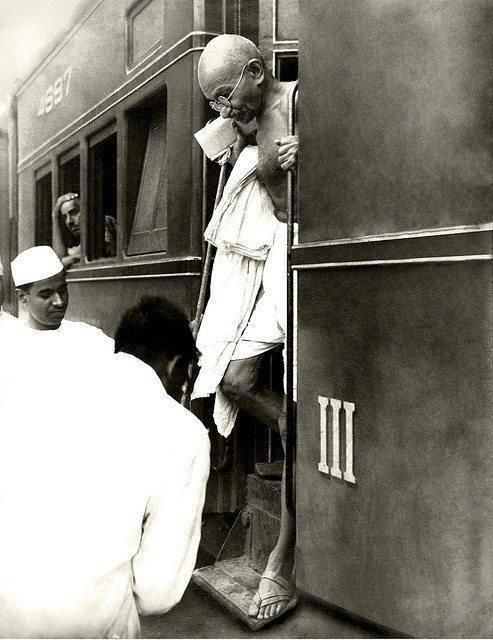
The man I admire most is M. K. Gandhi. His full name is Mohandas Karamchand Gandhi. He was attributed ‘Mahatma’ for his glorious life. He was born at Porebandar in Gujarat (India) on 2 October, 1869. His father, Karamchand Uttamchand Gandhi (1822–1885), served as the diwan of Porbandar state. Gandhi’s mother name was Putlibai. In May 1883, the 13-year-old Mohandas was married to 14-year-old Kasturbai Makhanji Kapadia (her first name was usually shortened to “Kasturba”), in an arranged marriage, according to the custom of the region at that time. His wedding was a joint event, where his brother and cousin were also married. Recalling the day of their marriage, he once said, “As we didn’t know much about marriage, for us it meant only wearing new clothes, eating sweets and playing with relatives.” As was prevailing tradition, the adolescent bride was to spend much time at her parents’ house, and away from her husband.

In an interview Gandhi said about his lustful feelings he felt for his young bride” even at school I used to think of her, and the thought of nightfall and our subsequent meeting was ever haunting me. He later recalled feeling jealous and possessive of her, such as when she would visit a temple with her girlfriends, and being sexually lustful in his feelings for her.”

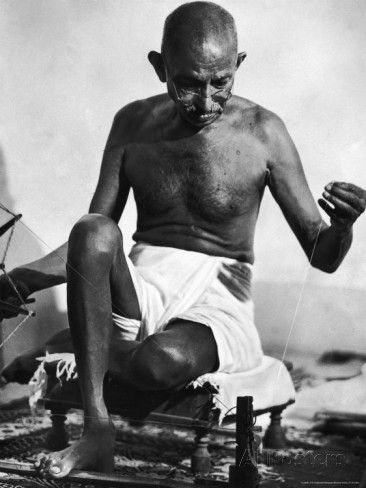
In 1921, Gandhi adopted the use of an Indian dhoti and a shawl (in the winter) and only (dhoti in the summer) woven with yarn hand-spun on a traditional Indian spinning wheel (charkha) as a sign of identification with India’s rural poor.
After completing education in India he went to England in order to study Law. He obtained the degree in Law and returned to India and began to practise in Mumbai High court at first and then in South Africa. While he was there, he started a new era of non-violence movement to reduce the oppression of the Europeans against the natives of South Africa. The movement became famous as Satyagraha and when he came to India again he used this method against the British rule. It was strengthened in Non-cooperation Movement in 1921 and Quit India Movement in 1942. He became the leader of the people giving his clarion call-“Do or die’. After a long struggle under his leadership India won her independence on 15 August in 1947.

Gandhi did many experiment like experiment with food, non-violence, and the freedom fight but the experiment which has made him a villain in everyone’s eye was “The experiment of Gandhi’s Brahmacharya” which was criticised by various senior leaders like- Jawaharlal Nehru, Sardar Vallabhbhai Patel had called it a “terrible blunder”, and had asked him to stop it.
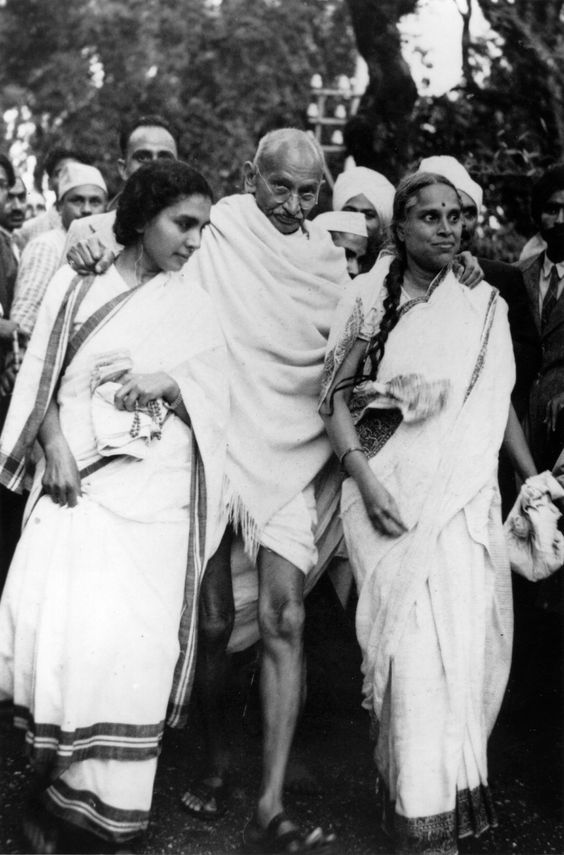
Gandhi tried to test and prove to himself his brahmacharya. The experiments began some time after the death of his wife in February 1944. At the start of his experiment, he had women sleep in the same room but in different beds. He later slept with women in the same bed but clothed, and finally, he slept naked with women. In April 1945, Gandhi referenced being naked with several “women or girls” in a letter to Birla as part of the experiments.

According to Gandhi he asked his grandniece Manu when she was 18 years old if she wanted to help him with his experiments to test their “purity”, for which she readily accepted. Gandhi slept naked in the same bed with Manu with the bedroom doors open all night. Manu stated that the experiment had no “ill effect” on her. Gandhi also shared his bed with 18-year-old Abha, wife of his grandnephew Kanu. Gandhi would sleep with both Manu and Abha at the same time. None of the women who participated in the brahmachari experiments of Gandhi indicated that they had sex or that Gandhi behaved in any sexual way. Those who went public said they felt as though they were sleeping with their aging mother.

He was shot dead on 30 January, 1948 by a derailed young man named Nathuram Godse. But his life and message are still the source of inspiration not only in the national field, but also in the international field.
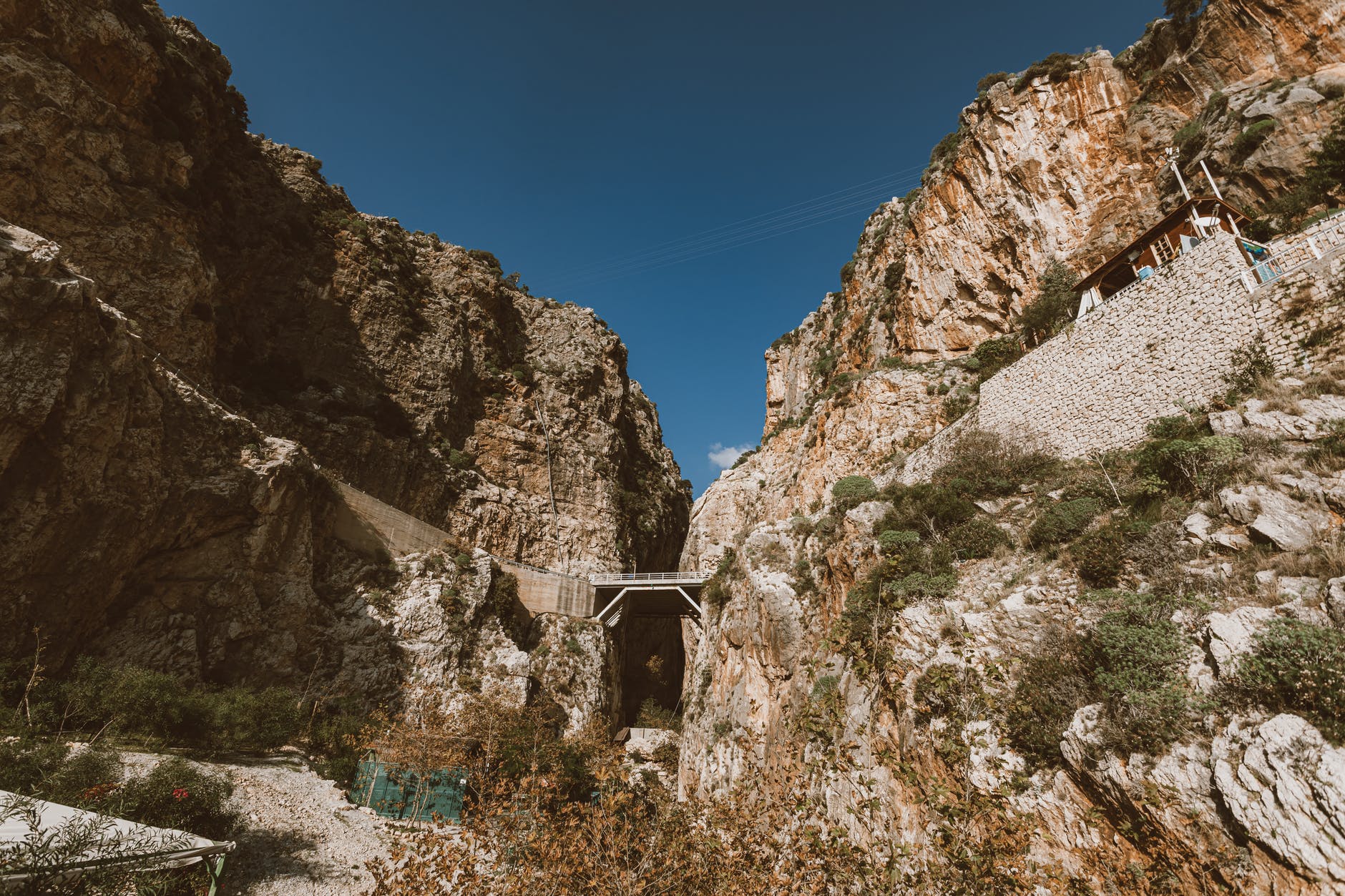
Mountains- A history (Part-2)- Tectonic plates

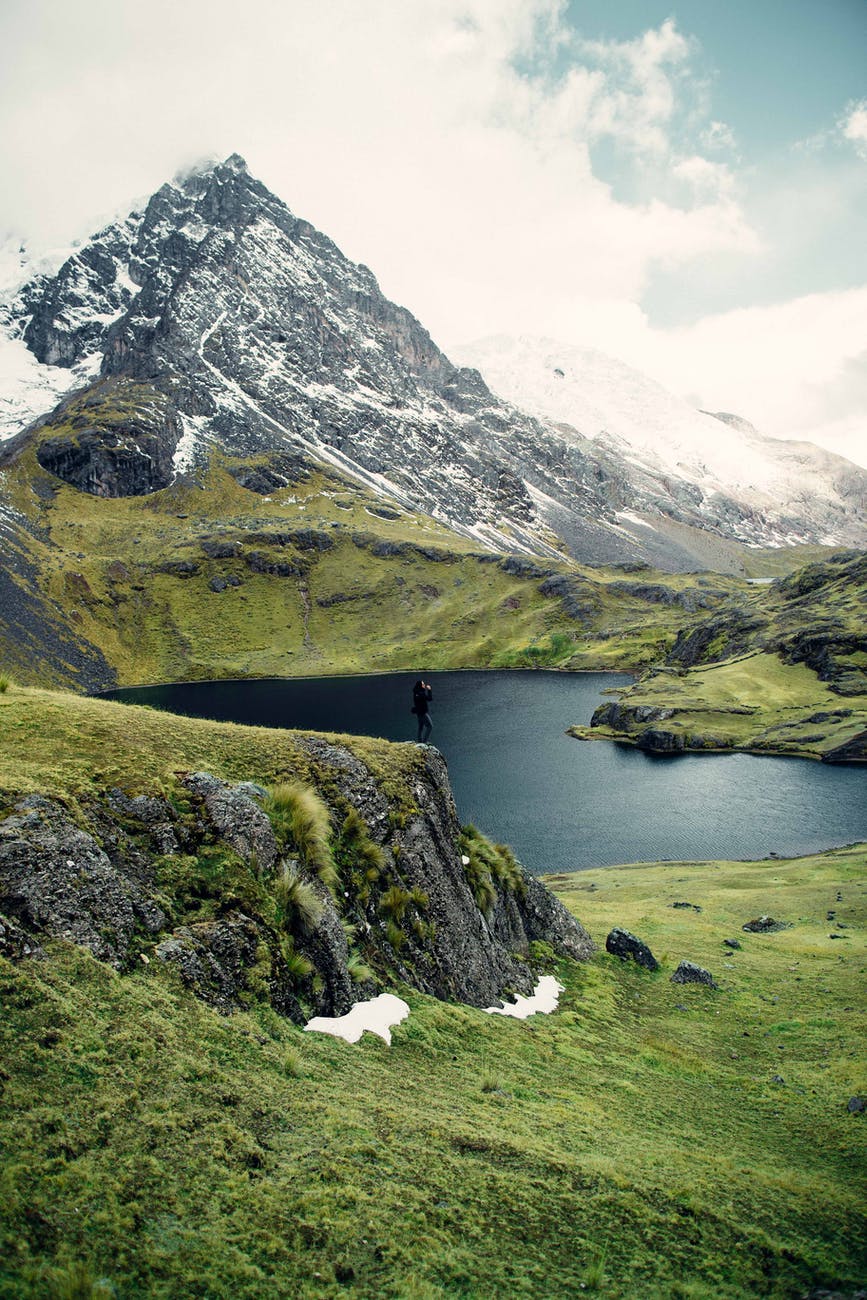
Photo by ROMAN ODINTSOV on Pexels.com

Now, before going any further with our mountains, let us first see the various types of interactions possible between our 2 types of tectonic plates- The Oceanic crust and the Continental crust: The 3 basic interactions are converging boundaries, diverging boundaries and transform boundaries.

  • Converging- It is defined as the two plates moving towards each other, colliding in the process. Now, there are 3 possibilities-
  1. Continental-continental collision- Here, two continental landmasses( eg.- The North American plate or the Eurasian plate or collision of Australia, South America and New Zealand (It formed the Great Australian Dividing range)) collide and the two plates fold over one another and lead to the formation of fold mountains. Try using a paper bringing it closer from the opposite ends. The raised structure represents the fold mountains. They have no volcanic activity (though earthquakes are possible). Examples are the Urals, the Atlas, The Rockies, the Alps, the Himalayas
  2. Oceanic- Oceanic Collision- In these types of collision, the heavier oceanic plate subducts under the lighter oceanic plate(forming trenches- eg. Mariana Trench). Due to subduction, it reaches the area of high pressure and temperature in the mantle and thus melts converting to magma. This magma later rises and when it finds an opening (like the one created by the diverging limbs) in the oceanic crust, it comes out. It, hence, forms oceanic volcanoes, ridges and later volcanic islands like those of Indonesia and the Phillipines.
  3. Continental Oceanic Collision- When a continental and an oceanic plate collide, it leads to the formation of either fold mountains(Rockies) or trenches(Philippines Trench) or both(Andes and the Peru- Chile Trench).
  • Diverging- When two plates or landmasses move away from each other ,in the opposite directions, it is known as diverging. Even here, there are 2 possibilities-
  1. Continental continental diversion- When two continental plates move away from each other, it leads to the formation of rift valleys and plateaus. Examples are- The east African rift valley (formed due to the drifting apart of Arabian peninsular plate from African plate- they were connected millions of years ago).
  2. Oceanic oceanic diversion- It occurs when two oceanic plates move away from each other, creating a ridge in its wake. The Atlantic ocean is divides by a ridge known as the Mid oceanic ridge (named so because it passes through the middle of Atlantic ocean). Here, the plate boundaries of Africa, Eurasia, North America , South America diverge from each other. The Pacific and the Indian ocean are the other two oceans that have ridges.
  • Transform – When one tectonic plate moves past another, it forms transform plate boundary. These plate movements most commonly produce earthquakes as during movements the plates experience friction and intermolecular force of attraction due to which one plate might find itself bounded to another plate. Then, when the plates move past one another it requires a lot of energy and produces heat and waves. Example- the boundary between Pacific plate and North American plate in Western California.

Now, that we know about tectonic plates, studying the formation of mountains becomes a lot easier. Stay tuned for the 3rd part where we will look into the formation of various mountains and the tectonic plates and movements involved . Till then, take care (a smiley emoji).

MAGIC IN A CUP OF TEA!!!

Every morning won’t be complete without a cup tea right? Many people can’t do their work without a cup pf tea. Tea gives us refreshness and make us active. Though many like coffee, there are people who love tea too. The reason for me to talk about tea is nothing but today’s topic revolves around tea. Let me tell you an essay written by Eric Arthur Blair about a cup of tea.

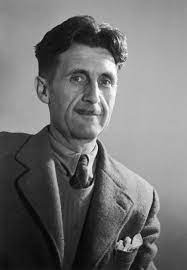
Eric Arthur Blair, known by his pename George Orwell, was an English Novelist, journalist and a critic. He opposed totalitarianism and supported democratic socialism. He is best known for the Allegorical novella ‘Animal farm” and the dystopian novel “Nineteen Eighty Four”. He wrote an essay about ‘A nice cup of tea’ and it was published in London Evening Standards in 1946. It is about the discussion of the art of making tea. He states ten rules to be followed while making tea. Let me tell you about his essay.

Eric Arthur Blair (George Orwell)

The author said that there are no cookery books that has the preparation of tea as a recepie. Countries like Eire, NewZealand and Australia which has tea as a part of civilization. He says that Chinese tea has virtues but there is no much stimulation in it. So the author prefers Indian or Ceylonese tea.

  • The first rule is that one should prefer Indian or Ceylonese tea. One does not feel wiser or more optimistic after drinking it. ‘A nice cup of tea’ literally means Indian tea.
  • Second rule is that tea should be made in small quantities in a tea pot. The teapot should be made of China or earthenware. Silver and birtannia ware tea pots produce inferior tea and enamel parts are worse. In the army, the tea is made in a big cauldron, tastes of grease and whitewash.
  • Thirdly, the pot should be warmed beforehand rather than placing it with water in it.
  • Fourthly, the tea should be strong. He states that one strong cup of tea is better than twenty weak ones. All tea lovers not only love a strong tea but like it a little longer with each year that passes.
  • Fifthly, the tea should be put straight into the pot. Don’t use strainers or muslin bags to imprison the tea. One can swallow tea-leaves in considerable quantities without ill effect and if the tea is not loose in the pot it never infuses properly.
  • Sixthly, one should take teapot to the kettle and no other way about. The water should be boiling at the time, one should keep it on the flame while pouring it.
  • Seventhly, after making the tea, one should stir it, or better give it a good shake allowing the leaves to settle.
  • Eighthly, one should drink it out in a cylindrical type of cup rather than a shallow type of cup. The shallow cup will have the tea half cold before one starts, drinking it.
  • Ninthly, one should pour the cream off the milk before using it for tea. Milk with cream gives a sickly taste.
  • Tenthly, one should pour tea into the cup first and then add milk. By pouring the tea first, one can regulate the amount of milk to be added to the tea. He also says that one should drink tea without adding sugar. Adding sugar, destroys the taste of the tea. He also asks the question to the tea lovers, How can you call yourself a tea lover if you destroy the flavour of your tea by adding sugar into it? He also says that adding sugar is similar to drinking a hot water.

The points said by him are quite controversiable. But try to drink a cup of tea without sugar for a fortnight, and you will never ruin your tea by adding sugar to it. Think about yourself guys. This essay is quite interesting. I like this essay and how about you guys?

Read more;

Mountains- A history(Part-1)

Photo by Sam Kolder on Pexels.com

We have all seen mountains or hope to see them, after all they are a very famous holiday destination. All of us certainly have a wonderful mountain destination in our bucket list- be it the Himalayas, The Rockies, The Alps, Mt. Fuji or the Swiss Alps. But have you ever wondered how these mountains came into being? How is it that a flat piece of earth rose so high, almost touching the sky? Well, if you have, then here is the answer. And if you haven’t, even then a little extra knowledge never hurts anybody, right?

So, the mountains were formed millions and even billions of year ago (the oldest one-the Barberton Greenstone Belt in South Africa, is 3.6 billion year old) when the continents were being formed. The most widely accepted theory, currently, believes that the earth’s mantle(the astenosphere layer- a semi-solid) has convection current flowing through them(a result of differential heating- the lighter material rises whereas the denser material sinks ). This current belt in the astenosphere moves with it the lithosphere(continental crust, oceanic crust and the top-most part of mantle(upper mantle)). These movements in the lithosphere are the movements of continents and oceans that lead to earthquakes , volcanoes, tsunamis and the formation of volcanic islands, plateaus (all these for some other day) and fold mountains as well as volcanic mountains.

These convection currents move with them large pieces of land, ocean or both and these large pieces are termed as tectonic plates. There are currently 7 major and some minor tectonic plates. The major tectonic plates are-

  1. Indo-Australian plate
  2. North American plate
  3. South American plate
  4. Pacific plate
  5. Antarctic plate
  6. Eurasian plate
  7. African plate

The minor plates are-

  1. Fillipino plate
  2. Nazca plate
  3. Scotia plate
  4. Caribbean plate
  5. Indian plate
  6. Arabian plate
  7. Cocos plate
  8. Juan-de-fuca plate

Let us first see the types of mountains. There are 4 types of mountains-

  1. Fold mountains- These mountains are formed when one tectonic plate folds over the other, due to collision of two plate boundaries. The plates need not be continental as is in the case of the Alps , the Atlas and the Himalayas. An oceanic and a continental plate boundary collision can also form a fold mountain. The examples of such fold mountains are the Rockies and the Andes
  2. Block mountains- These mountains are formed due to the diverging plate boundaries. When two boundaries diverge, it creates a crack on the surface between them known as a rift. Later, the surrounding raised plate undergoes erosion and takes the shape of a mountain. Examples are The East African Rift Valley, The Rhine Valley, The Vindhyas and Satpuras .
  3. Volcanic mountains- Mountains formed due to fissures in the earth’s surface, that lead to release of magma. The examples are Mt. Fuji, Mt. Mayon. Also, they are known as mountains of accumulation.
  4. Residual mountains- Mountains that are either formed due to the erosion of existing mountains (denudation) or plateaus(dissection) by agents such as rivers, winds, glaciers. Examples are Mt. Manodnock (The Appalachians) , Highlands of Scotland, Scandinavia and Deccan Plateau.

The movement of the tectonic plates creates one of the above or even a combination of the above kind of mountains. Stay tuned for the next part to know how are many of the world mountains created and where are they located? Is there something common about their location? What is the reason for exceptions?

How does blogging gain you money?

Is it not interesting when you get income by pursuing your passion? Bloggers are people who write blogs and put forth their opinions or pen their thoughts which are incorporated into websites. While blogging was initially an opportunity to outbring an individuals writing skills like a diary or journal, it has grown more over the years from which you can even acquire income. These days blogging has taken in its form in a video material called video blog or video log condensed to vlog. Blogging has grown by 12% since 2015 and presently there are roughly over 1.9 billion web pages. Bloggers come up with a wide range of contents like food blogging, travel blogs, fashion blogs, fitness blogs, DIY blogs, finance blogs, business blogs, parenting, news blogs, gaming, and many such things that fascinates our interest. People visit such blogging pages when they are looking out for ideas and information about a particular area of field where there is a lack of grip and that’s where the blogging becomes a popular tool, bloggers bring the outside world more closer to us, of things which we may not be aware of and want to acquire knowledge about. This is how the bloggers bring traffic to their page and gain profit.

A blogger can earn anything between $100 and $10000 per month. On an average a typical blogger earns around $300-$400 per month. If the blogger is more experienced they can earn up to $30000 + also. There are various income streams and lets have a look at some of them.

  • One of the most common ways to make money is affiliate marketing. It is just promoting other’s products on your blog and when someone makes a purchase of that product, you get paid for it, like a paid promotion not necessary that bloggers have to come up with their products/services.
  • When you a have a large amount of followers on your page people offer advertisements and pay the website owners based on how many people have seen their ads. Cost per click ads are usually banners that bloggers place in their content/sidebar. Each time a reader clicks on the ad, they are paid for that click. Click per impression are ads that pay the bloggers a fixed amount of money based on the views.
  • Bloggers also make ventures by introducing their own products through the websites and gain money by selling them online.
  • Paid reviews are also one of the common modes of gaining income. This is making a review about the product that the bloggers use and get paid for making such reviews in their videos, the bloggers need to be mindful about the products reviewing on the blog.
  • Launching online courses is a very consistent way to make income. It is a form of selling what you know which just needs an investment in time and work. The topics that can be covered in the online courses is very vast including language, educational courses, parenting, make up artistry, technology, marketing, finance etc.
  • There are also social media applications which can provide you income just on the views you bring to your blogs or vlogs.

So there are numerous streams to make money through blogging. The most prominent factor to dwell as a successful blogger is the consistent work and the quality of content. You should have a well built connection and never be reluctant or cease building great connections, acquire adequate knowledge about the websites and the topic. It may take time to become successful in the field, all you need is endurance, real focus, SEO knowledge, flexibility, strong work ethics and be passionate and the victory is never afar.

MY LOVE AFFAIR WITH …

My love affair with paper & pen is something that I would love to share with you all .At an early age of 8 I used to run my fingers through the corners of story books as I love reading them , I used to draw the characters with the help of pencil on the corners of the book . When ever I used to read I always used to have a pen in my hand , I feel paper & pen are the most powerful thing in this whole world , do you want to know how ? I will tell you !

I can put my thoughts on paper , for introverts , who are not able to express themselves in front of any one , writing diary every day works the best . When you have a paper & pen in your hand it has many benefits to you , some of them are :

Provides Clarity –Penning down our thoughts bring structure to the vast inner world of fragmented emotions and thoughts that goes on in our hearts and minds. 

Self-discovery– Journaling helps us to introspect, to gain great insights into ourselves- our strengths, weakness, ambitions, and obstacles which is a step towards personal growth and development. It is one of the roads to self-discovery, so when ever you write on a paper with you pen you are putting you best foot forward to know yourself a bit extra.

Alleviate Stress– Expressing our anger, frustration or sadness on paper reduces the intensity of our emotions and makes us feel calmer hence helping us to gain more clarity and make rational decisions. It lets loose the negativity that we have festering inside us and reduces its deleterious effects. 

Self Expression/Venting Out– When voice fails us, we can express ourselves through written words. While writing down our emotions and thoughts, boundaries of topic, structure, punctuation, grammar and syntax can be transcended to free flowing expression of ourselves. When we write, our thoughts fly from the cage of our restless minds and are clearly displayed on the paper in front of us.

You saw , paper & pen helps you reliving from your stress also . This is what I was talking about . In professional terms also a written statement is considered move valuable & powerful , penning down your thoughts on paper & publishing them will also work the best best for you . It’s not always easy to discern and express our emotions especially when we are going through dark storms in our lives. At that time we might have a cornucopia of turbulent thoughts and emotions which might not be easy to voice. While writing, we don’t have to fear that the paper or diary will have any bias or prejudice towards us or we have to make sense in order to clearly express ourselves. A paper & pen will never be biased towards you , though the whole world be , hence I am in love with them

The Missile Man

Introduction

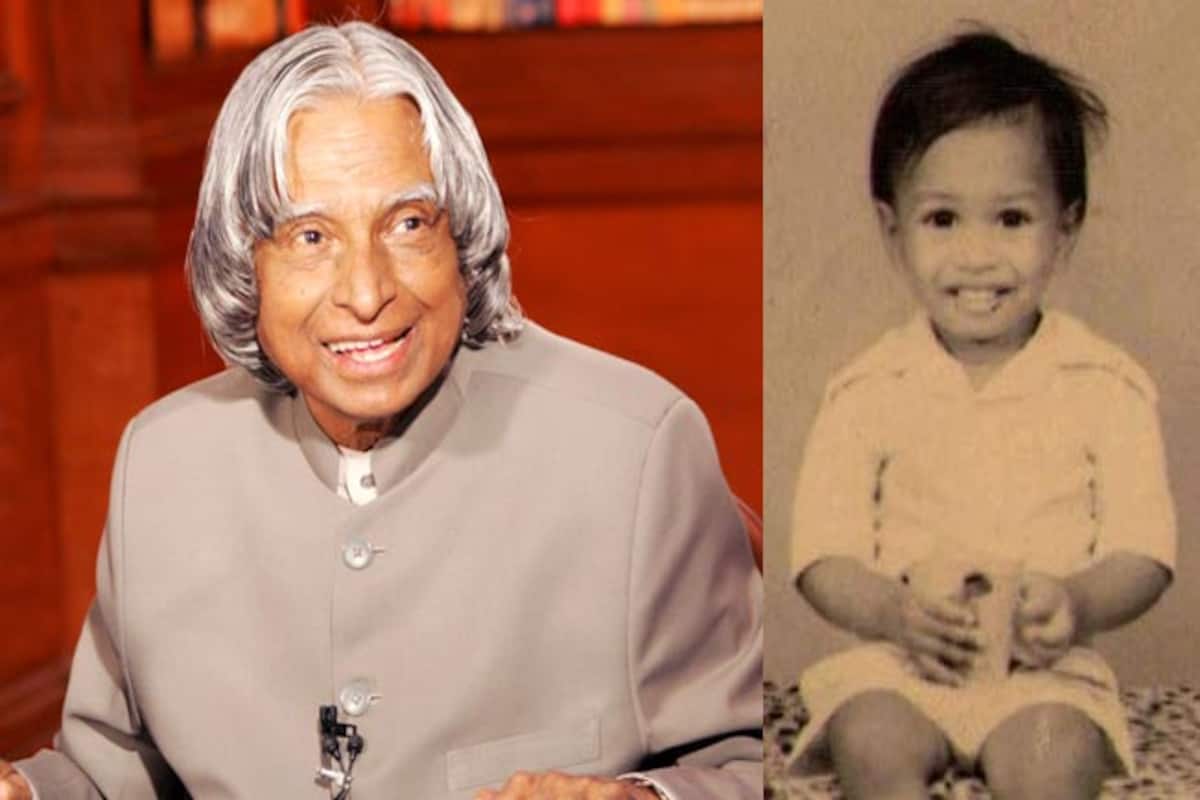
Dr. APJ Abdul Kalam was famously known as the “Missile Man” of India. He was also known for his humility. All the citizens of India are remembering him on his death anniversary on July 27th, when in 2015 he passed away because of a heart attack he suffered in Shillong. He is known to be the people’s President because of his simplicity and humility. He was one of the few Presidents every citizen loved and was fond of. He was the only President of India who did not have a political connection, that is, came from a non-political background. He was the 11th President of India, from 2002 to 2007. This year, July 27th, 2021 is his 6th death anniversary.

About Him

His full name was Avul Pakir Jainulabdeen Abdul Kalam. He was born on 15 October 1931. He was an Indian scientist and politician who played a major role in developing India’s missile and nuclear weapons programs. He was born into a Tamil Muslim family in the pilgrimage center of Rameswaram on Pamban Island, which was then in the Madras Presidency, which now is the State of Tamil Nadu. His father was a boat owner and an imam of their local mosque and his mother was a homemaker. He was the youngest of four brothers and one sister in his family. His ancestors were wealthy Marayakar traders and landowners but the family had lost all fortunes during the poverty-stricken time. Marayakar is a Muslim ethnic found in Tamil Nadu and Sri Lanka who are claimed to be descendants of Arab traders and local women. As a young boy, he sold newspapers to help his family in contributing income.

During his school years, he scored average grades but he was said to be a bright and hardworking student with a desire to learn. He spent a lot of his time studying, especially Mathematics. On completing his education, he went to Saint Joseph’s College, Tiruchirappalli, which was at that time affiliated with the University of Madras. He graduated from there in Physics in 1954. In 1955, he moved to Madras to study aerospace engineering from Madras Institute of Technology. Once while he was working on a senior project, the Dean was dissatisfied because of the lack of progress and he threatened Kalam to either finish the project in three days or get his scholarship revoked. To his surprise, Kalam met the deadline and impressed the Dean. His dream was to become a fighter pilot which he missed by one place.

Career as a Scientist

He had joined the Defense Research and Development Organization (DRDO) in 1958 as a senior scientific assistant. Later on, in 1969, he joined the Indian Space Research Organization (ISRO) where his responsibility was as the project director of the SLV-III, which is known as the first satellite launch vehicle.

He then rejoined DRDO in 1982 as the director. This is when he got the name of the “Missile Man” because of the implementation of the Integrated Guided Missile Development Program. He was then appointed as the senior scientific adviser to India’s defense minister in 1992. He also played an eminent role in the Pokhran-II tests in May 1998.

Awards

He won various awards:

  • Padma Bhushan – 1981
  • Padma Vibhushan – 1990
  • Bharat Ratna – 1997
  • Indira Gandhi Award for National Integration – 1997
  • Veer Savakar Award – 1998
  • SASTRA Ramanujan Prize – 2000
  • Von Braun Award – 2013

Conclusion

We should take a look at his inspiring quotes on this death anniversary and follow the great inspiration that he is to all of us. One of the most important one is “We are all born with a divine fire in us. Our efforts should be to give wings to this fire and fill the world with the glow of its goodness.”

References

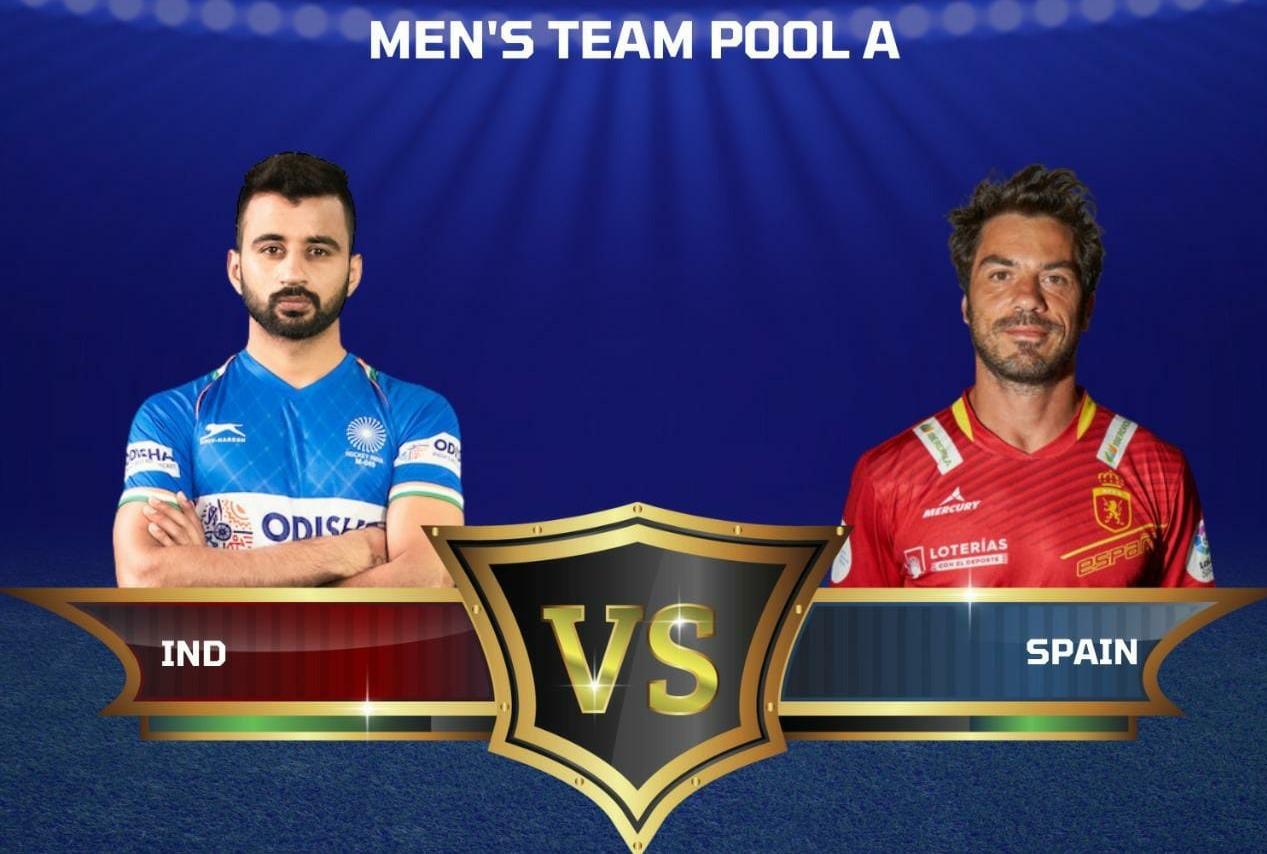
Men in blue beats Spain 3-0,to progress into next round of Tokyo Olympics

Spain in their first match leveled 1-1 against defending champions Argentina. In their next match they lost 4-3 to New Zealand. They conceded 2 goals in the last quarter and eventually lost their lead and match too.

India on the other hand started their campaign with defeating New Zealand 3-2, vice-captain Harmanpreet singh scored 2 goals and Rupinder pal singh scored 1 goal. In their next match, India encountered the number 1 team Australia. Australia defeated India by a margin of 7-1 and it’s one of the worst defeat for the Indian Hockey team in Olympics.

Rupinder pal and simranjeet singh handed Spain a 3-0 defeat

Today morning in OI Hockey Stadium, India and Spain locked horns and India dominated throughout the game and handed Spain a 3-0 defeat.

Simranjeet Singh scored in 14th minute and Rupinder Pal Singh was hero of the match and he striked twice in 15th and 51st minute.

Spain side got many chances but they failed to convert them into goals. With this win India have inched closer to a quarterfinal berth. India have moved to the second spot in Pool A of the Tokyo Olympics. India will face Olympic champion Argentina on Thursday. Spain are yet to register their first win.

Facts about Yagnaseni- Draupadi

Draupadi’s birth

Draupadi was the daughter of King Drupada of Panchala. Draupadi was an unwanted child born to him. She was not born from her mother’s womb. Instead, it is said that Draupadi was born out of revenge as an adult. King Drupada was defeated by the Pandava prince Arjuna on behalf of Drona, who then took half of his kingdom. By burning the fire of revenge, king Draupada performed tapas followed by a Yajna to obtain a boy child as a means of blessing who can take revenge from Guru Drona. Draupadi appeared as a beautiful dark-skinned young woman from the sacrificial fire after her sibling Dhrishtadyumna.

Various names of Draupadi

Draupadi is one of the leading characters of Mahabharata. Draupadi is known by several names and each name defines her different qualities.

  • Drupadi – daughter of king Drupad
  • Panchali – Princess of the kingdom of Panchala
  • Parshati – Granddaughter of Prishata
  • Yagnaseni – Born from the sacrificial fire
  • Sairandhri – An expert maid
  • Nityayuvani – One who remains young forever and never becomes old.
  • Malini – One who makes garlands.
  • Krishnaa – Represent for her dark complexion and pure skin, radiating purity, honor, and principality.

Draupadi condition for Pandavas

Draupadi agreed to become the wife of five Pandavas on one condition, i.e., she would never share her household with any other women, which means the Pandavas had no right to bring their other wives to Indraprastha.

Draupadi cursed the Dogs

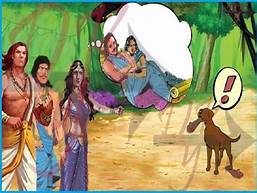
Draupadi mentioned a condition in front of Pandavas that only one brother was allowed to enter her chamber at a time. The Pandava who will enter her chamber will keep his shoes outside the chamber. The one who will violate this condition will be sent to long-term exile.

But one day, when Yudhisthar was in her chamber, the dog stole his shoes. Unaware of the fact Arjun entered the chamber of Draupadi seeing no shoes outside and saw his brother Yudhisthir with Draupadi copulating. Arjun was sent to exile as per the condition of Draupadi. Embarrassed Draupadi cursed dogs by saying: “All the world will see you copulate in public, stripped of all shame.”

Incarnation of Kali

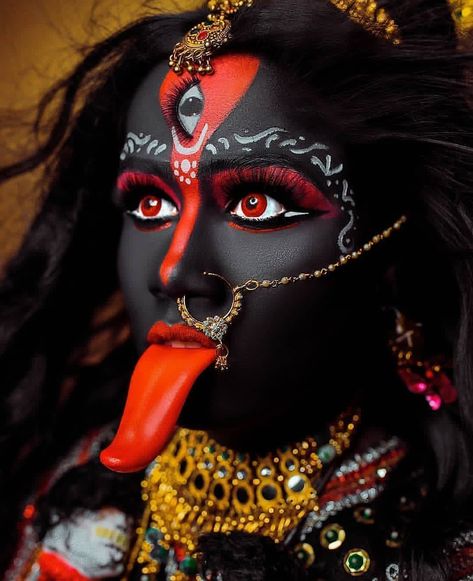
There is a common belief in South India that Draupadi was also an incarnation of Maha Kali. She was born to assist Lord Krishna to destroy all the arrogant Kings. That is why they are considered brothers and sisters although Draupadi was born from fire.

Avatars of Draupadi

As per Narada Purana and Vayu Purana, she is the combined avatar of;

Goddess Shyamala (wife of Dharma)

Bharati (wife of Vayu)

Shachi (wife of Indra)

Usha (wife of Ashwin)

Parvati (wife of Shiva)

Draupadi blessed to be a virgin

Draupadi is one of Panchakanyas including- Sita( Kunti), Ahalya, Draupadi, Tara, and Mandodari , known as five virgins. She used to walk through fire to regain her virginity and purity before she moved to the next Husband.  Such rules were never perceived before this. Pandavas have other wives, but these wives used to stay with their parents and they used to travel to them to visit their wives in four years.

History of Tea in India

Though the Camellia synesis is also native to India, and grew in the wild long before its actual value was understood, it is thought that tea was carried to India by silk caravans travelling from China to Europe centuries ago.

Native Americans ate the leaves occasionally, but they were largely employed for their medicinal powers.

Photo by Lisa on Pexels.com

It took a long time for it to evolve into what is currently known as chai, a flavorful black tea sweetened with sugar and milk, along with spices like cardamom and ginger, and used in cooking, vegetable dishes, and soup.

Tea was initially introduced to Indians by the British and is now an integral component of daily life. Tea originated in India thanks to the British, who sought to break China’s tea monopoly after discovering that Indian soil was ideal for growing these plants.

The presence of native flora indicated that the soil was suitable for transplanting Chinese seedlings, and the Assam valley and Darjeeling’s towering mountains were chosen as early tea planting sites.

Tea manufacturing in India began to blossom after 14 years of fruitless attempts, allowing the manufacture of a tea that was equivalent to, if not better than, its Chinese counterpart.

The native tea species

When Scotsman Robert Bruce identified a native type of Camellia sinensis plant in Assam in 1823, commercial tea plantations were first created under British rule.

According to legend, a local merchant named Maniram Dewan brought Bruce to the Singpho people, who drank a tea-like beverage. The Singphos gathered fragile leaves from a wild plant and dried them in the sun.

It’s worth noting that, at the time these changes were taking shape, the East India Company was attempting to break the Chinese monopoly on the global tea trade due to a growing conflict of interests.

In response to this scenario, one of the Company’s initiatives was to begin producing tea in British possessions, particularly India.

Around the year 1840, India’s tea industry began to take shape. Chinary tea plants, which were first tested in Assam, were later tested in the high-elevation districts of Darjeeling and Kangra, where they thrived.

Tea planting in Darjeeling began in 1841, when Archibald Campbell, the first superintendent of Darjeeling, experimented by planting a few chinar trees.

Tea consumption has evolved in a variety of ways, with each region of this large country producing its own chai variations. On one end of the scale are the gourmet stores that sell and serve good Indian tea, while on the other are the simple roadside chaiwallas who offer hundreds of steaming cups to people from all walks of life.

Photo by Tatiana Syrikova on Pexels.com

While India is today known for its high-quality tea and the countless cups of chai consumed by Indians, the custom of drinking tea as a regular beverage did not begin in India.

Tea had been used as a medicinal drink in India since ancient times (nearly identical to China), but it had never been used as a beverage.

After years of selling tea to Portugal, Japan opted to seal its doors to the rest of the world and isolate itself, leaving the global tea trade in the hands of the Chinese. While China was willing to trade, it was adamant about keeping the secrets of tea cultivation.

Darjeeling tea estates began in the 1850s, and the world soon sampled the “Champagne of teas,” Darjeeling tea.

The Chinese tea monopoly was fully broken with the creation of Darjeeling tea and widespread marketing by the British, and Indian teas quickly seized both the market and the imagination of worldwide tea consumers; and the rest, as we all know, is history.

References

http://www.teatrunk.in

http://www.wikipedia.com

http://www.cafesrichard.com

http://www.teabox.com

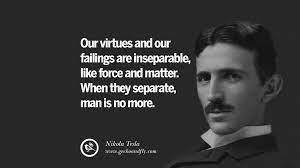
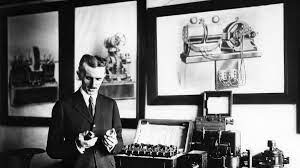
NIKOLA TESLA!!!

Many scientists have left their mark in the field of science. Their hardwork have led us to this development. Yes, if those scientists wern’t think of those different ideas, will you be able to live in this cosy and comfortable world. Think of those days, there were no mobile phones, mixer grinder, car and even current. When we think of this, the fullest credits goes to the scientists who invented this right? If there is no Edison, will there be any current now? If there is no Graham Bell, will there be a telephone? Have you ever thought if you can live without current and mobile phones? The answer would be no. Okay, let me get the point. You know about Edison, Graham Bell, Albert Einstein etc., and you know something about them. I will tell you about a scientist who left his mark in the field of physics. Yes. I’m to talk about our Nikola Tesla. He made many breakthrough in the production, application and transmission of the electric power. The first alternating current motor was invented by him. This made a breakthrough in the field of engineering. Come on! Let’s know something about him.

NIKOLA TESLA (1856 – 1943)

Nikola Tesla was born on 10th July 1856 in Croatia, America. His father, Milutin Tesla was preist in Eastern Orthodox Church. His mother,Đuka Mandić was very talented and she has the power to memorise Serbian epic poems. The crave for knowledge in Tesla came from his mother. Tesla was the fourth child of the family. He had three sisters and an older brother. His brother died when Tesla was five years old.

Tesla said that his interest in demonstration of electricity came from his physics teacher. He has a talent to calculate integral calculus in his head which prompted his teachers to believe that he was cheating. In 1875, Tesla enrolled at the Imperial Royal Technical College, Gauz, on a Military Frontier scholarship. During his first year, Tesla never missed a lecture, earned the highest grades possible, passed nine exams. He even got the letter of recommendations from his dean. After his father’s death in 1879, Tesla lost his scholarship and addicted to gambling. He never get through the final semester exams and didn’t finish of his degree. To hide fact, he severed the ties with his family and his friends thought that he was dead.

TESLA IN THE FIELD OF ELECTRICITY

  • In 1884, he reached America with the letter of inrtoduction to work with Thomas Edison, whose DC-based electrical works were fast becoming the standard in the country. Edison hired Tesla and the two worked hard tirelessly on Edion’s inventions. After some months, they two parted their ways due to some issues related to their business.
  • Tesla discovered, designed and developed ideas for a number of important inventions which were officially patented by other inventors including dynamos and the induction motor. Tesla designed the alternating-current (AC) electrical system, which had become the prominent power system of the 20th century and has remained the worldwide standard ever since.
  • In 1887, Tesla found funding for his new Tesla Electric Company, and by the end of the year, he had successfully filed several patents for AC-based inventions.
  • In 1895, Tesla designed what was among the first AC hydroelectric power plants in the United States.
  • In the 19th century, Tesla patented Tesla coil, which laid the foundation for wireless technologies and is still used in radio technology today. The heart of an electrical circuit, the Tesla coil is an inductor used in many early radio transmission antennas. The coil works with a capacitor to resonate current and voltage from a power source across the circuit.

Tesla died due to Chronic Thrombosis on 7th January 1943. He died in New York where he lived for sixty years. He worked hard to prove himself in the field of electricity. As the result of his hardwork, he was able to leave his marks in the field of elctricity. These are just a few information given by me. If you began to search on him, you can know various interesting facts about him.

Read more;

Comparing Writing forms of two Indian Writers- Twinkle Khanna and Dr. Shashi Tharoor

Twinkle Khanna has disarmed the audience with her thought- provoking writing and her charming wit. She is a popular newspaper columnist, Indian author, interior designer, film producer and a former Bollywood actress. She writes columns in The Times of India and Daily News Analysis (DNA), her discernible writing skills and her liberal opinions have captured the attention of her readers. Her craft of penning down funny fables and satirical writing has set her apart. She firmly believes that in life nothing is more sacred than laughter.

  • She writes anecdotes about everyday situations that a woman has to go through. The situations are mundane yet significant incidents in life. Her columns are random, though interesting, slice of life entries, adds life to her words through her self-deprecatory humour and unmatched wit with bits and pieces of life- learnings.
  • Her Popular works include – Mrs.Funnybones, Pyjamas are forgiving, The Legend of Laxmi Prasad
  • Her style of writing can be described as discernible, easy to read and has a smooth way of expressing herself through her writings. If a person is not an adamant reader, they will still be able to understand the picture that she is framing through her writings. Her flow of words is effortless.

 She deals with a wide range of topics from focusing on women empowerment, mental health and normalizing finding love at the age of sixty to WhatsApp forwards and her staff members being a menace to her. She masterfully manages to never belittle a problem or the issue and never diminishes their relevance in any way. Through her columns she can give words to your thoughts. Her columns are an amalgamation of intelligence, sarcasm, practicality and adulation.

  • Her choice of words is interesting, mostly uses expressive adjectives which intensifies her anecdotes. Includes – details that are distinctive, uses similes in her work which adds humor in situations and uses satire and irony which conveys absurdity and silliness of people, situations and things.
  • Her tone is joyful, sarcastic and cheerful.
  • Mood – she is comical, humorous and maddening.
Twinkle Khanna is ready with her third book and it is all about 'pyjama  girls' | Lifestyle News,The Indian Express

Dr. Shashi Tharoor is a best-selling author, columnist and a politician. He is currently member of parliament of Thiruvananthapuram. He has also served as a peacemaker and an administrator in the United Nations for over three decades. He certainly did not let his political career stop his pen. He is known to be the man of having many skills. Over the years he has made a reputation of an impactful orator and a prolific writer.

  • His popular work includes- The paradoxical prime minister, An era of darkness: The British Empire in India, Why I am a Hindu
  • He writes about politics and topical issues of caste system, society, democracy, foreign policy, patriotism, citizenship, nationalism and modern India. He chooses an immersive narrative for all his books and columns. His way of writing exhibits the qualities of good research and personal knowledge which gives a different and a new perspective to readers.

Readers who are looking for a refined viewpoint on the current events that unfold in our country’s political system must read his work. His ability to include the application of critical analysis creates better understanding of important matters that the country is facing or has faced.

  • He is known for having an inimitable style of writing. He has an extensive vocabulary and many people cannot perceive his work easily and often call it obscure in a way. His books are not an easy read and takes a time and efforts to understand vast concepts, debates, history and terminologies that he includes in his columns.
  • His choice of words is complex and informative. His work is recognized for brilliancy in the usage of satire to deliver serious messages. In his columns he has shown that a strong and thoughtful argument can be presented in a humorous way to prevent monotonousness, yet he manages to deliver the required message. By inculcating satire in his work, he candidly expresses himself.
  • His tone is firm, serious and formal.
  • Mood – critical and humorous  

The similarities in their work are that both have chosen topics that are relevant in our country. They both have strong stands and a sense of individuality which sets them apart in their felid of work. They are not hesitant to candidly express themselves and explain their point of views to the readers. Both have an interesting way to put across their messages. There writings include a few scathing statements but are thought-provoking and will entice the readers.

" HOW I LEARNT KINDNESS " based on true incident .

It was a rainy day . The monsoon was on its peak , I was getting ready for my school as it was my economics exam . I need to reach at my school campus at 10:00 O’clock & my school was 3 km away. At 9:45 , I asked my father to drive me to my school as fast as he could . My father took his bike & asked me to come fast . I took my umbrella , we were just crossing our flooded streets , my father stopped hi bike , & asked me to see a girl . I saw that girl , she was from my school only . Dad said she was waiting for rikshaw & every one listening to me right now can imagine how difficult is to get rickshaws in rainy season. I was getting angry because I was getting late for my exam as i can’t afford to leave my exam . I asked him to leave that place. He said , if you are so much concerned about your exam she would also be . He stopped his bike in front of her , asked her to come with us . She got scared . I could feel what what she was feeling . Everybody’s parents aske them the same thing ” DON’T TALK TO STRANGERS”. I looked at her face , I was angry , but could feel that she want some assurance , I asked her to come with us , she hesitated , I said politely ” come ! we are from same school & your security is in my hand “. she smiled . she sat with me, I put my umbrella on her head .

i reached at my school gate at 10:10 , i came off from the bike , so did she . She ran towards the school gate as it was about to close. While she was running , she turned towards us & said ” Thankyou uncle , thankyou Didi ” . On that day I learnt kindness from my dad . Smile on her face can clearly tells us how grateful she was to us or she would have left her exam . If I would be at my dad’s place. I would never stop my bike as it was raining heavily & her daughter is continuously shouting on him to drive fast . But he did , I learnt a lesson that in this world which is full of people who care for themselves , we should be the one who care for others , we should be the one who care for others , we should be the one who have to look & sense others problem . I learnt that people are always concerned about their own problems like me , I was concerned about my exam only , but their are people who are looking at others & their are people who are concerned about others . We should devote few hours of our day to look for others problem , this is what I learnt on that day .

Books- Our best companion

INTRODUCTION

Our best companies are books because they provide us with knowledge and comfort of mind.

Despite the fact that we have family and friends with whom we may discuss our opinions, we believe that books are the finest way to live a life full of wisdom and without explanation.

A book may be the one thing that one may read all day and leave all of their difficulties behind.

Photo by Mau00ebl BALLAND on Pexels.com

Although a book might provide us with knowledge, we should never expect us to remain obedient to the information provided. Books can also teach you about other facets of life.

Books are regarded for providing unbiased and reliable information. Books provide us with reliable research and information on a subject.

Like a wonderful buddy, good books approach our minds with knowledge and nice thoughts.

It is true that books are our best friends. Books will not abandon us in the face of adversity. They will be a terrific company for us at all times.

There are a lot of fantastic books out there that can help us modify our minds. To be motivated and inspired in our daily lives, we need a lot of good thoughts.

Learning new abilities by reading a book is a great approach to do so.

We can gain a comprehensive understanding of a subject. When we are feeling lonely, we can curl up with a nice book. I can assure you that you will begin to feel better. We must constantly avoid reading terrible novels.

A poor book can destroy your head and cause you to think negatively. That is why, before selecting a book, we should seek recommendations from friends or the internet.

Books can be expensive to purchase at times, but investing in a good book is well worth it. Money cannot be used to measure knowledge. That is why you should never stop purchasing books.

The public library has a lot of free books. If you like to read, you can also borrow books from your friends and elders. When you’re having a bad day and are feeling down, books can assist. Books can help you get out of a bind.

Photo by Leah Kelley on Pexels.com

We can learn many good things while reading a good book.

Books written by famous and experienced people helps us to become a better human being and also teach us how to serve the society in the best possible way.

When we are alone, we can always pick up a book and start reading to feel relax.

FAMOUS QUOTES

Good friends, good books, and a sleepy conscience: this is the ideal life.- Mark Twain

A great book should leave you with many experiences, and slightly exhausted at the end. You live several lives while reading.- William Styron

QUALITIES WE CAN LEARN FROM GOOD BOOKS

Being smart entails having a strong learning ability.

Brave: Willing to tackle challenges head on.

Nothing is impossible if you keep trying.

Demonstrate compassion by expressing positive thoughts toward people.

Don’t Insult Anyone: Be humble.

Always be grateful for what others have done for you.

Help others: Be a source of assistance to everyone.

Be Positive: Enjoy yourself in whatever you do.

Respect for people and their property is one of the most important moral values.

REFERENCES

http://www.vowelor.com

http://www.paragraphbuzz.com

Fundamentals of 'LAUGHTER YOGA'.

Laughing is very important for health:

The most important principle behind Laughter Yoga or the most significant driving force behind the several Laughter Clubs is the theory that Motion Creates Emotion. Quite a few people wonder how a person can laugh when he is in no mood to laugh or when one doesn’t have any reason to laugh. However, the answer is very simple. For, there is a well established link between the body and the mind. Whatever happens to the mind happens to the body as well. This is easily understood and observed too. If a person is sad or depressed, his body also appears quite lifeless and sluggish. Such a person doesn’t walk or talk enthusiastically. But, what most people fail to understand is that the opposite is also true.

Whatever happens to the body also happens to the mind. I remember my father once telling me, “Son, if you are sad or feeling a bit low, don’t sit idle. Keep doing some physical work or go for a walk or do some jogging or go out to play some cricket or football . You’ll feel better.” And most of the times dad was proved correct. I would start feeling better quite soon. In an unhappy state of mind, if we bring ourselves to behaving or acting happy, soon enough we will start feeling light-hearted and chirpy indeed!

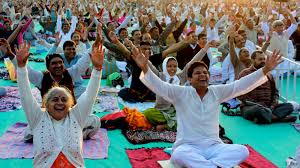
So, Laughter Yoga aims to use the two-way body-mind link to change the state of mind through voluntary physical gestures which include repetitive clapping, chanting, specific body movements along with laughter and breathing exercises. The result is so positive and its effects are so powerful that the modern world today has witnessed Laughter Yoga overcome severe and chronic depression in thousands of people right across the globe. In fact, several Laughter Clubs have adopted the motto, “If your Mind can’t laugh, bring your Body to our club.”

Laughter is all about playfulness. Have you ever wondered why children laugh 300 to 400 times a day whereas adults would consider themselves very fortunate if they manage laughter 10 to 15 times in a day? This is because of that seriously wicked and interfering tool called the brain! Adult use their brains or minds first to comprehend humour and then decide if they have to laugh. Very often, they suffer from what is said in Hindi the LKK Syndrome, that is “Log Kya Kahenge” or “What will people say?” This is called the “Mind-to-Body Model of Humour”.

On the other hand, children, who do not allow themselves to be too affected by the LKK Syndrome and don’t use their brain to seriously do the comprehension first, laugh the most while playing. Even if they fall into mud and slime while playing, they laugh heartily together without bothering about the consequences of soiling their spotlessly white school dress in case of a traditionally strict class teacher or headmistress in school or mother at home! Their laughter comes straight from the body and happily they don’t make use of intellectual capacity of the brain for it. Very clearly, they exhibit the “Body-to-Mind Model of Humour”, It is this childlike playfulness that Laughter Yoga aims at cultivating in people who are quite stressed these days.

Image -google.

What is sadly significant is the fact that more and more children and even women, to whom smiles and laughter and giggling should come as naturally as the turtle coming out of its shell to walk or leaves falling in autumn, are enrolling themselves as members of laughter clubs nowadays!

Laughter Yoga makes a clear distinction between Happiness and Joy. Happiness is a conditional response of the mind which is totally dependent on the fulfilment of certain desires of the mind. By its very nature, it is related to how one’s life had been in the past or how it will be in the future! It is not there at all in the present moment. The ironical and sad fact is that even if some dreams, goals or aspirations are fulfilled, happiness disappears quite quickly as the mind starts chasing new goalposts-a new, job, a new house, a bigger car, etc.

On the other hand, joyfulness is the unconditional commitment to be happy each moment, to have fun for the moment, despite the problems and challenges of life, no matter how insurmountable they seem to the mind. It is the promise that the Body makes to the mind to indulge in playfulness moment by moment and thereby give relaxation to it. During these periods of playfulness triggered by a plethora of physical activities like dancing, singing, playing and laughing, physiological and biochemical changes take place within our body that give us a sense of well-being that completely alters a negative outlook towards life and its challenges replacing it with confident positivism moment by moment.

Therefore, in Laughter Clubs, members develop positive conditioning of joy. By laughing together over a period of time, clapping in a rhythm ,chanting “Ho Ho Ha Ha” in unison and positive affirmations like ” Very Good Very Good Yay Yay”, the brain develops new neuronal connections to produce happy neuropeptides and hormones in the body that rejuvenate the members.

Finally, Laughter Yoga rectifies shallow and irregular breathing, which is the direct consequence of stress and negative mental state. According to Dr. Otto Warburg, a Nobel Laureate, one of the main reasons for falling sick is the lack of oxygen in the body cells due to incorrect breathing. So, let us laugh together and get the oxygen back into our cells!