

Education is critical in the growth of a person and the formation of an informed citizen. Education empowers individuals, aids in the suppression of societal ills, and contributes to the overall development of society and nation. Education aids in the unravelling of nature’s mysteries. It helps us to comprehend and enhance the functioning of our civilization. It lays the groundwork for a better existence. Education develops the skills needed to combat social injustice. Every person has the right to an education.
Along with China, India has one of the world’s largest and most complicated educational systems. The National Policy of Education defines the basis for India’s commitment to delivering basic education to its inhabitants. In India, elementary schooling is now required. Only 14 percent of India’s population was literate at the time of independence. After so many decades since independence, the number of literates has more than fivefold grown.
History of Education System:
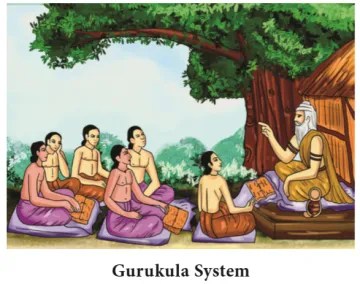
The history of Indian education may be traced back to the Ramayana and Mahabharata. The Gurukula system is another name for the traditional Indian schooling system. There were gurus back then, who are now known as instructors, and shishyas, who are now known as pupils. Gurus and shishyas lived together in Gurukula under one roof till they finished their study. As part of their education, the shishyas were required to assist the guru with all everyday duties. Gurus taught all topics to youngsters from upper social classes, ranging from Sanskrit to Holy Scriptures and mathematics to philosophy. During that period, the Gurukulas concentrated on the practical parts of life. The children were taught in an open classroom in a natural setting. This early school system in India lasted for many years until the modern education system arrived in the nineteenth century.
Lord Thomas Babington Macaulay introduced the modern education system to our country in the early nineteenth century, during the British period. The primary basis of this updated education system was tests and a well-defined curriculum that prioritised topics like science and mathematics while pushing subjects like philosophy and metaphysics to the sidelines. The open classrooms of the Gurukulas were replaced by brick and mortar classrooms. A more formal relationship between the instructor and the learner replaced the core of the guru shishya tie. Examinations were held at regular intervals to assess each student’s progress. The emphasis of the educational system moved from studying to remembering topics in order to achieve high scores in tests.
Problems of Indian Education System:
Over time, it has been discovered that there are several flaws in India’s educational system. Instead of comprehending the principles, pupils began cramming and memorizing them. Knowledge takes a second seat as high ranks take precedence. Modern parents have modified their mentality appropriately, and their objective is to guarantee that their children get high grades rather than learning from the ground up.
Private schools and universities are quickly expanding in the country, but the outcomes they generate are far from adequate. It has also been noticed that the quality of teachers has worsened with time. Our examination system is to blame for the large skill disparity. Every year, thousands of engineers and professionals are produced in India, yet only a portion of this number is employed. This is due to the Indian test system’s emphasis on high percentages rather than ongoing comprehensive review.
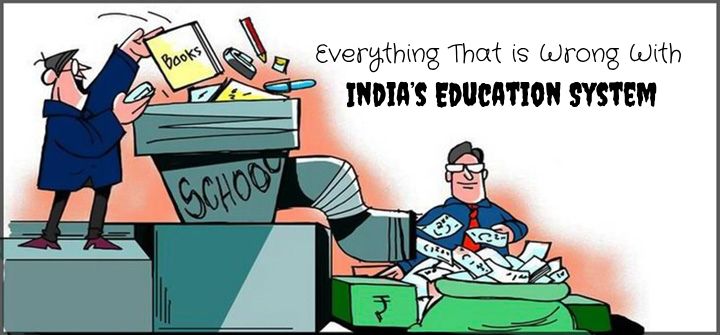
Research and development, which should be the foundation of our system, are given the least attention. Private schools and colleges are more concerned with the number of students admitted than with the quality of their education. This is the primary reason for the faculty’s and instructors’ lack of skills and expertise. The fact that a single professor is assigned to teach numerous courses demonstrates this.
How Can We Improve the Indian Education System?
First and foremost, we must reform the grading system. Rote learning should be avoided at all costs. Teachers and professors should pay greater attention to students’ analytical skills and evaluate them properly. Instead than just getting excellent grades, there should be a greater emphasis on complete evaluation. Workshops for teachers should be held on a regular basis to keep them up to speed on the newest advancements in the education field. Simultaneously, the curriculum should be restructured in accordance with India’s current educational demands.
The payroll structure of the teachers and the faculties especially in the government institutions should be improved. This step will help in motivating the teachers to develop their skills and they will take a keen interest in grooming or shaping up a student’s life and career. The government and other entities who are associated with the education sector, need to understand the importance of quality of education. Education should be a holistic process that must focus on the overall development of the physical, emotional, social and cognitive skills of a child. It needs to be a slow and cyclic process and must take place gradually to help the child develop into an autonomous, independent and knowledgeable individual.
Conclusion:
An educated person is one who can contribute to the advancement of the economic and social growth of the society as well as the country. The actual purpose of education must go beyond simply providing degrees and certificates to pupils. Education is not a means of earning a living; rather, it is a means of liberating one’s mind and spirit.
 Eduindex
You must be logged in to post a comment.