What is Being Done to Improve the Quality of Education For Students With Autism?


Susan Q Yin via Unsplash

It’s sometimes hard to know if you’re doing things right in Education, but students with disabilities like Autism have been notoriously left behind. With CDC figures suggesting 1 in 59 children in 2014 rising from 1 in 69 in 2010 have ASD (Autism Spectrum Disorder) what accommodations or lack thereof autistic students have are affecting more and more people? 

Official Accommodations

There is an expanding world of supports available to students in primary, secondary and tertiary education through a whole selection of classroom adaptations to account for different students’ needs outside of speciality schools.

Teachers allowing communication devices such as an AAC for students who have non-verbal episodes can entirely change a person’s ability to engage in the classes they are taking. Strict and clear schedules, and allowing time for students to process unavoidable changes can help with personal regulation and assist in avoiding meltdowns. Embracing autistic traits to enhance learning is also a fantastic tool, allowing students to adapt work towards a special interest of theirs can help with engagement and stress if they are having issues focusing on current work.

A lot of what’s being done isn’t particularly new but is being done in different ways with an understanding of the current research and how best to apply these systems, specifically having empathy for students as a baseline. In the best cases, autistic individuals who have gone through the system are consulted on what worked and what didn’t.

Helping Where We Can

Of course to access many of these allowances students are required to have an NDIS autism assessment, which is its own hurdle and not a simple process that forms its own issues when students waiting for an official diagnosis have to also wait for the help they need. This is where an almost reverse of the cut curb effect can help. 

The cut curb effect is when designing for accessibility winds up helping the whole community, named for how the ramp slope on sidewalks was initially added for those with wheelchairs, but it was quickly found that it also helped cyclists, the elderly and more. In schools, the wide adoption of things like fidget toys, understanding of a wide array of dietary requirements and focus on teaching healthy emotional regulation help autistic students as much as it does the general school population. 

This isn’t quite a reverse of the cut-curb effect because sometimes the policies were put in place to account for neurodivergent students though not always. Variety in food options is important for allergies and religious reasons, but having those options can also make it easier for autistic students to find food that won’t exacerbate their sensory processing issues.

And these school-wide policies go across all levels of education. Students raised in classrooms where fidget toys were commonplace don’t bat an eye at them being used in university lectures. For those seeing them for the first time in university, it can be incredibly relieving to finally have their coping strategies not made a big deal of by having to go through endless paperwork.

Other Opportunities 

It helps that there has been an improvement in the social understanding of autism though progress is slow. The general movement towards taking mental health seriously means schools are under pressure to take accountability for their effect on their student’s physical and mental well-being, and with online channels enabling more autistic individuals to speak up both on their own and collectively autistic people are finally getting a say in how they are treated.

Online forums with other autistic students are a huge resource that has suddenly appeared for current pupils. Usually hosted on easily accessible social platforms like TikTok and youtube. This is particularly helpful for adult students who are often overlooked in professional resources which finally have somewhere to turn to for advice to help them make the best of their education.

Like with any disability, ASD affects how you interact with the world, and when it comes to something as important as education, it’s integral that those on every level from governmental policymakers to the students themselves take those differences into consideration if we want the best outcomes for our students. We’re still learning about Autism but we need to keep applying those new findings to the classroom if we want to change our schools from a place where a few excel to a place where everyone learns everything they can.

~

Chris Pritchard is a 23-year-old freelance writer working in Melbourne, they write on a variety of topics and pursue work as a visual artist in their free time away from writing. 

United Service Institution of India to organise Annual UN Forum 2023 on ‘International Humanitarian Law & Peacekeeping’ in New Delhi

 United Service Institution of India (USI), the country’s oldest think-tank established in 1870 for research and debate on national security and military affairs, is organising its Annual UN Forum 2023 in New Delhi in November 21-22, 2023. The forum on ‘International Humanitarian Law and Peacekeeping’ is being organised in collaboration with the International Committee of the Red Cross and the Centre for UN Peacekeeping Operations.

With contemporary UN peacekeeping missions increasingly being deployed in volatile environments characterised by asymmetric warfare, ensuring adherence to International Humanitarian Law (IHL) principles has become critical. However, applying IHL norms presents challenges arising from the complexity of modern conflicts, actions by non-state actors and blurred lines between combatants and civilians in urban battlespaces.

Against this background, the forum aims to discuss the applicability and limitations of implementing IHL frameworks in UN peace operations through an interactive, multi-stakeholder approach. The sessions will enable a deeper examination of some of the contemporary issues like the protection of civilians, accountability for crimes against peacekeepers, the role of women in peacekeeping operations, and leveraging technology for more effective operations.

The forum will involve insightful perspectives presented by both academicians and practitioners who have first-hand experience of peacekeeping challenges. Keynote addresses will be delivered by senior officials from the Indian Armed Forces and the Ministry of External Affairs. The forum will be held over two days as under:

  • Session 1 will discuss application of IHL principles to peacekeeping given situations involving non-state actors and urban warfare.
  • Session 2 will analyse constraints to protection of civilian mandates and overcoming them by integrating IHL norms.
  • Session 3 will examine legal frameworks to ensure accountability when peacekeepers are targeted, and measures to enhance their protection.
  • Session 4 will focus on the importance of gender-inclusive peacekeeping and challenges for women peacekeepers.
  • Session 5 will discuss utilising technology for more effective peacekeeping through data analytics, AI and advanced surveillance.

The event will conclude with a plenary session aimed at consolidating takeaways for peacekeeping practitioners and providing recommendations to further informed discourse on IHL and its integration into UN peace operations. The dialogues during the forum can contribute to developing training modules and policy frameworks to make peacekeeping more effective while ensuring the rights and safety of peacekeepers and civilians.

****

Annual PhD Workshop at Indian Institute for Human Settlements (IIHS) New Delhi

 The Indian Institute for Human Settlements (IIHS) will host the tenth edition of the Annual PhD Workshop in a hybrid format (virtually and in-person) from 8 to 10 January 2024.


With a strong interdisciplinary focus, as well as an emphasis on the relationship between research and practice, IIHS nurtures research and innovation focused on the challenges and opportunities of India’s urban transition. IIHS has built a substantive on-ground presence of direct policy and programmatic engagement across India, across middle and senior administrative levels, and in multiple urban contexts in the Global South. This makes for a globally unique opportunity for scholars intending to research the Urban where it matters – at the intersection of theory and practice. IIHS’ Post-Doctoral programme and the proposed doctoral programme emphasise the institute’s wider connections into domestic and international policy, and to overlapping communities of practice. IIHS is also building an integrated programme of quality campus-based education and research, training and lifelong learning for working professionals, distance and blended learning, as well as an array of practice and advisory services.


About the PhD Workshop

The PhD Workshop is a unique educational intervention on interdisciplinary urban research designed to provide a dedicated space for PhD candidates to expand on their work. They do this by interacting with eminent urban scholars and practitioners from IIHS and leading universities, and research institutions across the world including Yale, MIT, IIT-Madras, TISS, among others.


Initiated in 2013, the PhD Workshop has had close to 200 participants from leading global and domestic institutions including University of Oxford, MIT, University of Pennsylvania, Cornell University, NUS, JNU, TISS, IIT-Bombay etc., across a wide range of disciplines such as Architecture, Planning, Sociology, Urban Health, Economics, Public Policy, Climate Change, Anthropology, Engineering, Governance and Law. The Workshop provides participants with an opportunity to explore emerging areas of urban research especially in India and other parts of the global South and give them the opportunity to theorise from both research and practice.


The Workshop aims to shape the trajectory of a doctoral career and enable participants to engage with the imperatives of the changing form of disciplines, and meet the substantive academic demands of the doctoral process. The foundational ethos of the Workshop is an interdisciplinary approach to the Urban, guided by theories of and from the Global South with an emphasis on grounded understandings. The Workshop provides scholars with a space to critically examine urban related issues of their interest, and their own position within it. This self-reflexive criticality allows participants to approach their field of inquiry as actors within, rather than as mere viewers of urban phenomena. In addition to guiding students through their work, the Workshop deals with specific processes of earning a doctoral degree. The aim is to create a space of convivial co-learning that opens conversations not only on fields of inquiry, but also on experiences of students navigating the path to a doctoral degree.


Structure of the Workshop

This iteration of the PhD Workshop is open to participants from across a wide range of disciplines, with a common thread being an interest in urban research and practice. The Workshop is designed to provide a platform for in-depth exploration and for early and mid-to-late stage PhD students and fine-tune their work. The structure of the Workshop and the modules within it are designed to be relevant to students from different disciplines and at different stages of their doctoral career. The structure also allows for specific attention to the needs of individual scholars and enables peer to peer learning.


In addition to thematic relevant to particular disciplines, the Workshop will also have a Commons track, and two specialised tracks. The Commons track will primarily involve engagement with eminent urban scholars and practitioners as they explore the possibilities of new methods and pedagogies in and around the Urban. This track provides an opportunity to learn about and understand a range of methods and data sources that are unique to urban India, ethical practices in research as well as the nuances of publishing in academia. Two specialised tracks will focus on early career students who are in the process of finalising their questions (Track 1) and late career students working on finalising their dissertation (Track 2).


The PhD Workshop will be in a hybrid format this year from 8 to 10 January 2024. Interested candidates should send in their submissions by 27 November 2023.


For queries on the Workshop, write to us at research@iihs.ac.in.

Things to expect in a counselling session

  A counselling session is meant to help a person with certain problems and giving them advice and suggestions on how to cope with them. Counselling is done primarily for the purpose of solving issues related to mental health . 

In a counseling session, you can expect a safe, confidential, and non-judgmental space where you can openly discuss your concerns. Here’s what typically happens in a counseling session:

  1. Establishing Rapport: At the beginning, the counselor will aim to create a comfortable atmosphere and build rapport. They may introduce themselves, explain the counseling process, and discuss confidentiality.

  2. Discussion of Concerns: The counselor will invite you to talk about the issues or challenges you’re facing. They may ask open-ended questions to understand your situation better.

  3. Active Listening: Expect the counselor to actively listen to you without judgment. They’ll pay attention to your thoughts, feelings, and experiences to gain insight into your concerns.

  4. Goal Setting: Together with the counselor, you’ll identify goals or outcomes you wish to achieve through counseling. These goals will guide the sessions and focus on areas you want to work on.

  5. Exploration and Reflection: The counselor might explore your thoughts, emotions, and behaviors related to your concerns. This exploration can help gain insights and offer different perspectives on the issues.

  6. Skill Building and Strategies: Depending on your needs, the counselor may teach coping skills, relaxation techniques, or offer strategies to manage emotions and situations more effectively.

  7. Feedback and Insights: The counselor might provide feedback or insights based on what you’ve shared. They may offer interpretations, reflections, or observations to help you gain a deeper understanding.

  8. Homework or Follow-Up: You might be given tasks or exercises to practice between sessions. These could be reflective journaling, practicing relaxation techniques, or implementing new coping strategies.

  9. Closure and Future Sessions: Towards the end of the session, there will be a discussion about progress made, any new insights gained, and plans for future sessions if needed.

Remember, counseling sessions vary based on the counselor’s approach, the specific issues being addressed, and your preferences. It’s essential to feel comfortable and safe with your counselor, so don’t hesitate to communicate your needs or concerns during the session.

ESG INVESTING

ESG investing also called socially responsible investing and impact investing is a type of investment made by large corporates which prioritizes environmental, social, and governance outcomes. This type of investment is the need of the hour, which highlights sustainable investment. The investment is based on the universal fact that organizational growth and financial performance is due to environmental and social factors. 


ESG investing has started to gain popularity in India. This is a way of investing in companies based on their commitment to the ESG factors. 

ESG (Environmental, Social, and Governance) investing is an approach that considers not only financial returns but also the impact of investments on society, the environment, and corporate behavior. Here’s a breakdown of each component:

  1. Environmental Factors (E): This includes considerations related to a company’s impact on the environment. ESG investors look at how a company manages its carbon footprint, energy efficiency, waste management, water usage, and its overall environmental sustainability practices.

  2. Social Factors (S): Social considerations involve how a company manages relationships with its employees, communities, customers, and suppliers. It includes aspects like labor standards, diversity and inclusion, human rights, employee relations, and the company’s impact on local communities.

  3. Governance Factors (G): Governance focuses on the leadership, structure, and policies that guide a company. It includes issues such as board diversity, executive compensation, transparency, ethical business practices, and the presence of anti-corruption measures.

ESG investing aims to align investments with ethical and sustainability goals while seeking competitive financial returns. Investors choose companies or funds based on their ESG performance, seeking those with strong sustainability practices, ethical business conduct, and positive societal impacts.

The growth of ESG investing reflects a shift in investor preferences, with more individuals and institutions seeking to support companies that align with their values and contribute positively to society and the environment.

However, challenges exist, including the lack of standardized ESG metrics, varying definitions and interpretations of ESG factors, and the need for more comprehensive and transparent reporting by companies regarding their ESG practices.

Overall, ESG investing represents a growing trend where financial decisions are influenced not just by potential returns, but also by a company’s impact on the world around it.


Leadership in Education

 Leadership in education is pivotal for shaping the direction, effectiveness, and culture of educational institutions. Educational leaders, which can include principals, superintendents, department heads, or educational policymakers, play multifaceted roles:


  1. Vision Setting: Effective leaders establish a clear vision and direction for the school or educational institution. They articulate goals and objectives that guide the community toward a common purpose.

  2. Instructional Leadership: They focus on improving teaching and learning practices. This involves supporting and developing teachers, implementing effective curriculum strategies, and ensuring student engagement and success.

  3. Creating a Positive School Culture: Educational leaders foster a positive and inclusive school environment that encourages collaboration, innovation, respect, and a sense of belonging among students, teachers, and staff.

  4. Strategic Planning and Management: They are responsible for strategic planning, resource allocation, budget management, and decision-making that aligns with the institution’s goals and needs.

  5. Community Engagement: Leaders build partnerships with parents, communities, and stakeholders to create a supportive network for the institution. They understand the importance of involving the community in the educational process.

  6. Adaptability and Innovation: Effective leaders stay updated with educational trends, research, and innovations. They encourage experimentation and innovation to adapt teaching methods and technologies for better outcomes.

  7. Advocacy and Policy Implementation: Educational leaders advocate for policies and practices that benefit students and educational quality. They implement and oversee policies that comply with educational standards and regulations.

  8. Professional Development: They support the continuous growth and development of teachers and staff by providing opportunities for professional learning, mentorship, and skill enhancement.

Leadership in education is not limited to formal administrative roles; it can also involve teachers who take on leadership roles within their classrooms or across departments. Effective leadership is crucial for fostering a conducive environment for learning, supporting students and staff, and achieving educational goals.

Effects of COVID-19 on Education system

Education is undoubtedly the backbone of modern civilization.Covid-19 affected every part of society so education is not left alone.As per United Nations, some 1 billion students and youth across the planet are affected by school and university closures due to the COVID-19 outbreak.In India schools ,colleges are closed more than 3 months as of now but still their is uncertainty about when and how the education system can come back to normal.

The COVID-19 pandemic has significantly impacted the education system worldwide, leading to a myriad of challenges and changes:

  1. School Closures: To control the spread of the virus, many countries implemented widespread closures of educational institutions. This disrupted traditional learning and affected millions of students globally, leading to interruptions in their education.

  2. Transition to Remote Learning: To mitigate the effects of closures, schools and universities shifted to remote learning and online classes. However, this transition was not seamless for everyone. Disparities in access to technology and the internet resulted in unequal learning opportunities for students.

  3. Learning Loss: Extended periods away from traditional classrooms led to learning loss for many students. The lack of face-to-face interaction, support, and structured learning environments affected academic progress.

  4. Mental Health Impact: The pandemic brought about increased stress and anxiety among students, teachers, and parents. Isolation, uncertainty, and the challenges of adapting to remote learning took a toll on mental health.

  5. Economic Impact: Families facing financial hardships due to the pandemic had to make difficult choices, potentially affecting their children’s ability to access education. This led to concerns about increased drop-out rates, especially among vulnerable populations.

  6. Educational Inequalities: Existing educational disparities were exacerbated. Students from low-income families, rural areas, or marginalized communities faced greater challenges in accessing remote learning due to lack of resources or inadequate infrastructure.

  7. Adaptation of Teaching Methods: Educators had to rapidly adapt their teaching methods to suit online platforms. This shift required training and resources, often posing challenges for teachers who were unfamiliar with technology-driven teaching methods.

  8. Reimagining Education: The pandemic forced a reevaluation of traditional educational systems. It highlighted the importance of flexibility, innovation, and resilience in education, leading to discussions about reforming teaching practices and educational policies.

Moving forward, there’s a push for hybrid learning models that combine in-person and online elements, increased investment in technology and infrastructure to bridge the digital divide, and a focus on mental health support for students and educators. The pandemic has spurred a conversation about reshaping education to be more adaptable and inclusive in the face of future challenges.

How to Look for Funding Opportunities

 Looking for funding opportunities can involve several steps. Here’s a guide to help you navigate the process:

How to Look for Funding Opportunities

Define Your Funding Needs:

  1. Identify Purpose: Clearly define what you need the funding for—whether it’s for a project, research, business expansion, etc.
  2. Determine Amount: Calculate the exact amount you need. This will help narrow down suitable funding sources.

Research Funding Options:

  1. Grants and Fellowships: Look for grants that align with your project or research. Websites like GrantWatch, Grants.gov (for U.S. federal grants), or specific foundation websites can be helpful.
  2. Angel Investors and Venture Capitalists: For startups or business ventures, explore angel investors or venture capitalists. Websites like AngelList or Crunchbase can provide information on investors interested in various industries.
  3. Crowdfunding Platforms: Websites like Kickstarter, Indiegogo, or GoFundMe are popular for raising funds for projects or causes.
  4. Government Programs: Many governments offer funding programs for various purposes. Check your country or local government websites for such programs.


Certainly! Here’s a more expanded guide on finding grants and fellowships:

Identifying Grant Opportunities:

  1. Grant Databases: Explore comprehensive databases like GrantWatch, Foundation Center (now Candid), or the Foundation Directory Online. These platforms provide extensive listings of grants across various sectors.
  2. Government Grants: In the U.S., Grants.gov is a central database for federal grants. It catalogs funding opportunities from various government agencies.
  3. Specific Foundation Websites: Many private foundations have their own grant programs. Research and visit the websites of foundations that align with your project or research area.
  4. Professional Associations and Organizations: Industry-specific groups often offer grants or fellowships. Explore associations related to your field for funding opportunities.

Narrowing Down the Opportunities:

  1. Alignment with Project Goals: Ensure that the grant’s focus aligns closely with your project or research objectives. Tailor your applications accordingly.
  2. Eligibility Criteria: Carefully review the eligibility requirements, such as geographic location, type of organization, or project stage. Apply only if you meet these criteria.
  3. Application Deadlines: Note the submission deadlines for each grant and organize your application timeline accordingly.

Preparing for Grant Applications:

  1. Thorough Research: Understand the grant-making organization’s mission, priorities, and previously funded projects. Align your proposal with their goals.
  2. Develop a Strong Proposal: Craft a compelling proposal that clearly outlines the problem statement, methodology, budget, expected outcomes, and the impact of your project.
  3. Letters of Recommendation: Some grants may require letters of recommendation. Identify and approach referees who can vouch for your credibility and the importance of your project.

Applying for Grants:

  1. Follow Application Guidelines: Adhere strictly to the application guidelines provided by the grant provider. Pay attention to formatting, word count, and any additional documents required.
  2. Seek Feedback: If possible, seek feedback on your proposal from peers, mentors, or professionals in your field before submission.
  3. Submit Ahead of Time: Aim to submit your application well before the deadline to avoid any last-minute technical glitches.

Post-Submission Follow-Up:

  1. Confirmation and Communication: Upon submission, confirm that your application was received. Follow up if you do not receive confirmation within the specified time frame.
  2. Prepare for Interviews or Presentations: Some grants may require interviews or presentations. Be ready to elaborate on your proposal if invited.

Continuous Search and Adaptation:

  1. Stay Updated: Regularly check for new funding opportunities and stay informed about changes or updates in grant programs.
  2. Adaptation and Feedback Incorporation: If unsuccessful, seek feedback and improve your proposal based on the suggestions for future applications.

Remember, securing grants often requires persistence and a well-tailored approach. Each application is an opportunity to refine your proposal and increase your chances of success.

Networking and Partnerships:

  1. Networking: Attend conferences, workshops, or events related to your field. Networking can help you discover funding opportunities and connect with potential funders.
  2. Partnerships: Collaborate with organizations or businesses that share similar goals. They might have access to funding or be willing to co-fund projects.

Prepare Your Pitch or Proposal:

  1. Grant Proposals: Craft a compelling grant proposal that clearly outlines your project, its objectives, methodology, budget, and expected outcomes.
  2. Investor Pitch: For investors, prepare a pitch deck or presentation highlighting your business idea, market potential, team, and financial projections.

Apply or Pitch:

  1. Submit Applications: Follow the guidelines provided by the funding source and submit your applications within the specified deadlines.
  2. Pitch to Investors: If approaching investors, set up meetings or presentations to pitch your idea and negotiate terms.

Stay Organized and Follow Up:

  1. Track Applications: Keep a record of all the applications submitted, deadlines, and contact information. Follow up if necessary.
  2. Thank You Notes: After meetings or presentations, send thank-you notes to express gratitude and maintain relationships.

Keep Exploring:

Funding opportunities can be diverse and dynamic. Keep exploring new sources, stay updated on trends, and adapt your approach based on feedback and changing circumstances.

Remember, finding funding can be competitive and may take time. Persistence and thorough research often pay off in the long run. Good luck!

New Education Policy of India 2020

 The New Education Policy (NEP) of India was launched in 2020 with the aim of revamping the education system in the country and bringing about significant changes in the way education is imparted. The NEP is the first education policy in India to be launched in the 21st century, and it replaces the earlier National Policy on Education, which was launched in 1986 and revised in 1992.

The NEP is based on the principles of access, equity, quality, affordability, and accountability, and it aims to provide a holistic and multidisciplinary education to students from all backgrounds. The policy is designed to promote lifelong learning and to equip students with the skills and knowledge they need to succeed in a rapidly changing world.
One of the major goals of the NEP is to provide universal access to education from preschool to secondary school. The policy aims to increase enrollment rates and reduce dropout rates by providing free and compulsory education to all children between the ages of 3 and 18 years. It also emphasizes the importance of early childhood education and aims to provide high-quality preschool education to all children.
The NEP also seeks to bring about a significant shift in the curriculum and pedagogy of schools and colleges. It emphasizes the importance of multidisciplinary learning and encourages the integration of vocational and academic education. The policy aims to reduce the emphasis on rote learning and memorization and promote critical thinking, creativity, and problem-solving skills.
Another significant feature of the NEP is its focus on the use of technology in education. The policy aims to promote the use of technology to enhance learning outcomes and make education more accessible and affordable. It also emphasizes the importance of digital literacy and aims to provide students with the skills they need to use technology effectively.
The NEP also seeks to promote the internationalization of education and encourage greater collaboration between Indian and foreign educational institutions. The policy aims to attract foreign students to study in India and encourage Indian students to study abroad.
The NEP also addresses the issue of teacher training and professional development. It emphasizes the importance of continuous learning and aims to provide teachers with the skills and knowledge they need to deliver high-quality education. The policy also encourages the use of technology in teacher training and aims to provide teachers with access to high-quality online resources.
The NEP also addresses the issue of funding for education. The policy aims to increase public investment in education and encourage private investment in the sector. It also proposes the establishment of a National Research Foundation to fund research and innovation in education.
The NEP has received mixed reactions from stakeholders in the education sector. While some have praised the policy for its focus on access, equity, and quality, others have criticized it for being too ambitious and lacking in detail. Some critics have also raised concerns about the implementation of the policy, particularly in terms of funding and teacher training.
In conclusion, the New Education Policy of India is a comprehensive and ambitious policy that seeks to bring about significant changes in the education system of the country. The policy has the potential to transform the education sector and provide students with the skills and knowledge they need to succeed in a rapidly changing world. However, its success will depend on the effective implementation of the policy and the commitment of all stakeholders to work towards its goals.

Education Policy of USA

 The education policy of the United States is a complex and multifaceted issue, as education is primarily a responsibility of the individual states. However, there are some overarching policies and initiatives at the federal level that impact education in the country.

One of the key federal policies is the No Child Left Behind Act (NCLB), which was signed into law in 2002. This law aimed to improve student achievement by requiring states to implement annual standardized testing to measure student progress in reading and math, and by holding schools accountable for their students’ performance.
In 2015, the NCLB was replaced by the Every Student Succeeds Act (ESSA), which continued the focus on accountability and standardized testing, but gave states more flexibility in implementing their own policies to improve education.
The federal government also provides funding for education through programs like Title I, which provides financial assistance to schools with a high percentage of students from low-income families, and special education funding for students with disabilities.
Another key policy issue in education is school choice, which refers to the ability of parents to choose where their children go to school, including private and charter schools. While some argue that school choice promotes competition and improves education, others are concerned about the impact it may have on public schools and access to education for disadvantaged students.
Overall, the education policy of the United States is a complex and often contentious issue, with ongoing debates about the best approaches to improving student achievement and access to education.

Eduindex News

 Eduindex News covers diverse subjects such as:


  1. Academic Research: Updates on recent research findings, scholarly publications, and academic conferences across different disciplines.

  2. Educational Policy: Discussions and analysis of educational policies, reforms, and developments at local, national, and international levels.

  3. Higher Education: Information on universities, colleges, courses, admissions, and trends in higher education globally.

  4. Student Resources: Tips, guides, and resources for students, including study techniques, career advice, and opportunities for internships or scholarships.

  5. Teaching and Learning: Insights into innovative teaching methods, classroom strategies, and educational technologies that enhance the learning experience.

  6. Educational Events: Coverage of seminars, workshops, webinars, and educational events happening around the world.

Eduindex News aims to cater to educators, researchers, students, and anyone interested in the field of education. It serves as a platform for sharing knowledge, fostering discussions, and keeping the audience informed about the latest developments and trends in education and academia.

2 Australian Universities in GIFT City

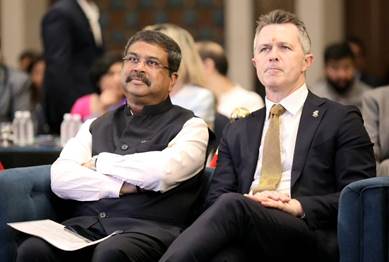
 Union Minister for Education and Skill Development & Entrepreneurship Shri Dharmendra Pradhan along with his Australian counterpart, Hon’ble Jason Clare, MP, Government of Australia, today visited the site for the upcoming campuses of Wollongong and Deakin Universities at GIFT City,Gandhinagar. They were briefed on the developments of the campus and future plans.

The Ministers attended an event, Arambh (The Beginning), formally announcing the opening of campuses at the GIFT City. Opening up of foreign universities on Indian soil is in line with the Nation Education Policy 2020’s vision of the internationalization of education.  Arambh  celebrated a significant milestone in the international educational landscape, bringing together eminent dignitaries, ministers, and academic leaders to mark the commencement of Australian university campuses in India.

The Vice-Chancellors of Deakin University and University of Wollongong stressed the importance of country-to-country partnerships, highlighting the significant growth in bilateral relations between India and Australia, even during challenging times such as the COVID-19 pandemic. They shared the future plans including the scheduled start of courses with opening up of the campuses in India.

Speaking on the occasion, Shri Pradhan congratulated the student and academic fraternity on a new ‘Arambh’. He said that Foreign University campuses at home will facilitate Study In India and also create a vibrant, diverse and inclusive educational environment as envisioned in the NEP 2020.

Shri Pradhan mentioned that opening up the campus of these two universities in the GIFT City—the land of opportunities—is a ‘Gift’ to the student community. He expressed his gratitude to Prime Minister Shri Narendra Modi for his vision and efforts to transform India’s education through the NEP 2020. He also said that students and faculty from different parts of the world will collaborate, learn, and grow together with such efforts.

This transformative policy emphasizes ‘Internationalization at Home’, aiming to create a vibrant, diverse, and inclusive educational environment within our own country, he added.

In the afternoon, both the Ministers addressed a conclave ‘Research Dialogue: New Horizons in Research Collaboration’. The aim of the conclave was to identify innovative opportunities for deepening bilateral collaboration in a thriving research ecosystem. Australian delegation, senior representatives of key Indian higher education and research institutions, and other dignitaries were also present at the conclave.

Shri Pradhan spoke at the ‘Research Dialogue’ , exhorting University leaders and researchers  to  catalyse new opportunities for deepening bilateral research collaborations between India and Australia. Research has to be a priority area for the larger benefit of society; both Australia and India are committed to promote research for mutual prosperity and global well-being, he added.

Both the Ministers met with academicians and industry leaders on Industry Education Partnerships where discussions were held on strengthening education-industry connections, benefiting industry through university partnerships, R&D collaboration etc.

***

Unveiling the Power of Knowledge: A Comprehensive Guide to Google Scholar

 Google Scholar, launched by Google in 2004, is a freely accessible web search engine designed to index scholarly articles, theses, books, conference papers, and other academic resources. It stands as a valuable tool for researchers, academics, students, and anyone seeking credible and scholarly information. This article delves into the key features, benefits, and impact of Google Scholar in the realm of academia and research.

1. Wide Academic Coverage

Google Scholar indexes a vast array of academic content, including peer-reviewed papers, theses, conference papers, preprints, technical reports, and more. It provides access to scholarly literature across various disciplines, making it a comprehensive platform for researchers seeking a wide range of academic resources.

2. User-Friendly Interface

Google Scholar offers a simple and intuitive interface, making it accessible to both seasoned researchers and newcomers to academic research. Users can easily search for specific articles, authors, keywords, or topics, and the results are displayed in a clear and organized manner, enabling efficient navigation through the scholarly landscape.

3. Citation Analysis and Metrics

One of the notable features of Google Scholar is its ability to track citations. Researchers can see who has cited their work, providing insight into the impact and influence of their research. Additionally, Google Scholar calculates metrics like h-index, i10-index, and citation counts, helping researchers gauge their scholarly productivity and influence within their field.

4. Integration with Libraries and Institutions

Google Scholar seamlessly integrates with academic libraries and institutions. It allows users to connect to their library’s subscription services, enabling access to full-text articles that may otherwise be behind paywalls. This integration enhances accessibility to a broader range of academic literature.

5. Alerts and Personalization

Researchers can set up alerts based on keywords, authors, or specific articles to stay updated on the latest research in their field. These email alerts notify users of new publications matching their criteria, ensuring they remain informed about recent developments and advancements.

6. Enhanced Discoverability

Google Scholar employs a robust search algorithm that enhances the discoverability of relevant research. The engine utilizes factors like relevance, citations, and authorship to rank search results, making it easier for users to find high-quality, pertinent academic material.

7. Global Accessibility and Open Access Advocacy

Google Scholar aligns with the ethos of open access by providing access to a substantial amount of freely available scholarly content. It emphasizes the importance of making research openly accessible, thereby contributing to the global dissemination of knowledge and fostering collaboration across geographic boundaries.

8. Limitations and Considerations

While Google Scholar is a powerful tool, it is important to acknowledge its limitations, including potential biases in indexing, varying quality of sources, and limited advanced search functionalities. Users should exercise critical evaluation and cross-verification of information obtained through Google Scholar.

Conclusion:

Google Scholar has emerged as an indispensable tool for researchers and academics, empowering them with easy access to a vast repository of scholarly knowledge. Its intuitive interface, comprehensive coverage, citation analysis capabilities, and dedication to open access underscore its significance in advancing the dissemination of knowledge. As Google Scholar continues to evolve and innovate, it is poised to play an even more critical role in shaping the landscape of academic research and collaboration.

Pradhan Mantri Uchchatar Siksha Protsahan (PM-USP) Yojana


 – Shashikant Nishant Sharma

1.               
Objective

To provide financial assistance to meritorious students from poor
families to meet a part of their
day-to-day expenses while pursuing
higher studies.


2.               
Scope

The scholarships are awarded by Ministry of Education, Government of
India on the basis of results of
Higher Secondary / Class XII Board Examination. A maximum of 82,000 fresh scholarships per annum are provided for pursuing graduate
/ postgraduate degree in
colleges and universities and for professional courses, such as Medical,
Engineering etc.


3.               
Allocation of Scholarship

The total number of scholarships are divided amongst the State Education
Boards based on the State’s
population in the age group of 18-25 years, after segregating share of CBSE and ICSE on the basis of
number of students passing out from various Boards
in the country. 50% of the
scholarships are earmarked for girls. Out
of the total scholarship slots
earmarked for UTs of Jammu & Kashmir and Ladakh, 3% slots shall be earmarked
for the students from the UT of Ladakh. The number of scholarships allotted
to a State Education Board is distributed amongst pass outs of the Humanities, Science and Commerce
streams in the ratio of 3:3:1. In case of shortfall
in the number of applications, the scholarship slots shall be interoperable among categories (Gen, OBC, SC & ST),
gender (Female, Male) and State Quota to maximize
use of slots for fresh scholarships with effect from academic year 2022-23, subject
to the condition that guidelines of Ministry of Finance
and NITI Aayog regarding SC/ST fund allocation of the
schemes are adhered to.


4.               
Eligibility for Scholarship

i.            
Students who are above 80th percentile of
successful candidates in the relevant stream
from the respective Board of Examination in Class XII of 10+2 pattern or equivalent;


ii.           
Pursuing regular degree courses and not
correspondence or distance
mode or pursuing Diploma courses;

iii.            
Pursuing courses at colleges/institutions recognized by All India Council for Technical Education and respective Regulatory Bodies concerned;

iv.            
Not availing benefit
of any other scholarship schemes
including State run scholarship schemes/
fee waiver & reimbursement scheme;

v.           
Students with gross parental/family income upto Rs. 4.5 lakh per annum are eligible for scholarship under the scheme.
Income certificate will be required only for the fresh applicants;

vi.            
Student changing his/ her college/institute of study will be allowed
to continue/renew the
scholarship provided the course of study and the institution is having valid AISHE Code; The AISHE code can be checked in the portal
https://aishe.gov.in/aishe/aisheCode

vii.           
Students who missed to apply for renewal of
application online on NSP will be allowed
to apply for renewal of scholarship for subsequent year on NSP, if he/she fulfils
eligibility condition for renewal;

viii.            
For renewal of scholarship in each year of study,
besides getting at least 50% marks in
the Annual Examination, maintenance of adequate attendance of at least 75%, will also be the criteria. Complaints
against the student regarding any in disciplined
or criminal behaviour including any complaints of having indulged in ragging,
will lead to forfeiture of scholarship;

ix.            
Beneficiaries/ Applicants under the scheme must apply
online in the National Scholarships
Portal (www.scholarships.gov.in) for the fresh/ renewal scholarships. Fresh/Renewal applications sent directly
to the Ministry of Education shall not be accepted.


5.           
Reservation

Students belonging to reserved categories/weaker sections /minorities
etc. are eligible to get benefit of reservation on the basis of merit, subject to Central
Reservation Policy [i.e. 15% seats
are earmarked for SCs, 7.5% for STs and 27 % for OBCs and 5% horizontal
reservation for Persons with Disabilities (PwDs) in all the categories]. The Central Reservation Policy will be
applicable in filling the slots against each
year’s target. If slots under a specific group is not filled after
considering all the States/UTs, the
vacant slots will be allocated to other categories so that maximum number
of eligible students
can get the benefit, subject to overall ceiling of slots.


6.               
Procedure for Application

i.            
The applications are received online only. Verification of credentials of the students
like caste, educational qualifications etc. are done through DIGILOCKER facility of the MeITY, Govt. of India.

ii.           
National Scholarships Portal (NSP)
(www.scholarships.gov.in) will provide the timelines
for opening & closing of the portal.

iii.            
The Guidelines for application, verification, selection and disbursement of scholarship will be as per the NSP.

iv.            
Selection list would be generated/displayed on NSP.

v.           
Online applications will be verified at two levels i.e
by the Institute, where the student is studying and thereafter by the concerned
State Higher Education
Department or any other Agency/ Official nominated by the State as State
Nodal Agency (both for fresh and
renewal applicants).

vi.            
Latest guideline on Timelines
will be made available on NSP.

vii.           
Students will not be permanently debarred for
scholarships due to delay to renew or
verification. However, students will have to submit renewal applications within a cut-off date. Renewal for that year will
not be allowed if an applicant misses this
deadline.


7.      Rate and Duration
of Scholarship (from financial year 2022-23)

The rate of scholarship is Rs.12,000/-per annum at Graduation level for
first three years of College and University courses
and Rs.20,000/-per annum at Post- Graduation
level. Students pursuing professional
courses, in case, where the duration of course
is five (5) years/Integrated course
will get Rs. 20,000/-per annum in the 4th
and 5th year. However,
students pursuing technical
courses such as B.Tech, B.Engg.
will get scholarship up to graduation level only i.e. Rs. 12,000
p.a. for 1st, 2nd and 3rd year and Rs. 20,000 in the 4th year.

Note: The rate of scholarship
is Rs.10,000/-per annum for first three years of fresh/ renewal scholarships with respect to academic year 2021-22, even
if the actual release happens in FY
2022-23.


8.      Payment of Scholarship

Students are required to have the bank accounts opened, especially, in
their name for availing the benefits
under the scheme. The scholarship will be disbursed directly into the savings bank accounts of the beneficiaries through Direct Benefit Transfer (DBT)


mode. The student can track
their payment status from the template “Know Your Payment”    in    the  
 Public  
 Financial    Management    System  
 (PFMS)  
 portal
[ https://pfms.nic.in/Users/LoginDetails/Login.aspx%5D either by indicating Aadhaar number or bank 
account number or NSP
Application ID.


9.      For Colleges/Universities

College and Universities will apprise the students about the “PM-USP
CSSS” during admission. Aadhaar based authentication of Institute Nodal Officer (INO)/ State Nodal Officer (SNO) is mandatory for every Institution/State before verification of the applications. INO/SNO should be a regular employee.


10.  For State Government/State Boards

Adequate publicity of the scheme may be initiated through the Schools/
Colleges/ Institutions to create
awareness and to facilitate/ assist the applicants in rural area to apply for
scholarship online on NSP.


11.               
Grievance Redressal

In case of any grievances/complaint regarding
the above scheme,
the same may be registered to the following link:

http://pgportal.gov.in/grievancenew.aspx

other than to
the Nodal Officer whose email is available on NSP portal (Services Tab).

Section Officer

National Scholarship Division

Department of Higher Education,
Ministry of Education, West Block 1, 2nd Floor, Wing 6, Room No. 6,

R. K. Puram, Sector 1, New Delhi 110066.

Tele: 011- 20862360

E-mail: es3.edu@nic.in


LINK TO APPLY NOW 


******

What are Top Ten Universities in India which Produces largest no. of Research Papers

Top universities in India known for producing a significant number of research papers. Please note that rankings and research output may have changed since then, so I recommend checking the latest rankings and statistics for the most up-to-date information. Here are ten prominent universities known for their research output:

Indian Institute of Science (IISc), Bangalore: IISc is renowned for its research in various fields, particularly in science and engineering.

Indian Institutes of Technology (IITs): Various IITs across India are known for their extensive research output, including IIT Bombay, IIT Delhi, IIT Madras, and others.

University of Delhi: The University of Delhi has several research-focused departments and institutes contributing to a significant number of research papers.

Jawaharlal Nehru University (JNU), Delhi: JNU is renowned for its social sciences and humanities research.

Tata Institute of Fundamental Research (TIFR): TIFR conducts research primarily in fundamental sciences and mathematics.

Indian Statistical Institute (ISI): ISI is known for its research in statistics, mathematics, and computer science.

Banaras Hindu University (BHU): BHU has a strong research tradition, particularly in the fields of science, technology, and humanities.

University of Calcutta: The University of Calcutta has a rich history of research output, especially in the sciences.

University of Mumbai: The University of Mumbai has several research centers and institutes contributing to research in various disciplines.

Anna University, Chennai: Anna University is known for research in engineering and technology.

Please keep in mind that these rankings may have changed, and the research output can vary by department within each university. To get the most current information on research output and rankings, it’s advisable to refer to recent sources and university websites.