J&K Now Stands Fully And Firmly Integrated With India

It is a national tragedy that it has taken 72 long years to fully and firmly integrate Jammu and Kashmir with India. It is a national tragedy that when this NDA government led by PM Narendra Modi and Home Minister Amit Shah decided to take the bull by the horns and carry out the most daring step since independence to protect our supreme national interests which we all must welcome and extend our unstinted support still we see that many leaders for furthering their own vested interests are opposing it tooth and nail even though leaders even from their own party are terming it as a daring move as we see in the case of former Union Law Minister Ashwani Kumar, senior Congress leader and also an eminent and senior Supreme Court lawyer who has hailed this bold move as “a daring resolve in line with the mood of the nation”. How can anyone ignore when such an eminent senior lawyer of Supreme Court and former Union Law Minister who hails not from ruling party BJP or its ally party but from the main opposition party which is the Congress says so openly with full confidence?

It is reliably learnt from many news channels that even another eminent and most experienced senior lawyer of Supreme Court who has also served earlier as Additional Solicitor General and is also a senior Congress leader Abhishek Manu Singhvi has also expressed his support to this bold decision taken by Centre! Salman Khurshid too has hailed it and has rightly questioned that who is Pakistan to meddle in our internal matters? Did Pakistani leaders wrote our Constitution? Were our leaders totally incapable? Certainly not! Then who is Pakistan to shout and scream? No one! They should mind their own business jolly well and concentrate on addressing the endless woes of the people living there who are resenting their brutal suppression by armed forces and not giving them any basic rights!

To be sure, Ashwani Kumar further reiterated that, “The J&K gamble by the Central government has received popular national support and seems to be consistent with the national mood although history and future alone can attest to its wisdom.” He also clarified that he can’t work by diktat! Very rightly so! It gives immense satisfaction to note that so many Congress leaders have openly come out in the open to support Centre’s bold and historic move!

No doubt, even though Congress is fulminating against revocation of Article 370 and Article 35A yet it is most heartening to note that many prominent faces of Congress party including Janardhan Dwivedi, Jyotiraditya Scindia, Deepender Hooda, Jiten Prasad, Salman Khurshid, Milind Deora among many others have expressed their solidarity with this latest move by Centre! Senior and eminent Congress leader Janardhan Dwivedi minced no words in saying that a historic blunder has been remedied today after the scrapping of Articles 35A and 370! Jyotiraditya Scindia said that he supported the Narendra Modi government’s proposed move to bifurcate the state into two Union Territories – Jammu and Kashmir and Ladakh. He tweeted minutes before the Lok Sabha voted on the resolution that, “I support the move on Jammu and Kashmir & Ladakh and its full integration into union of India. Would have been better if constitutional process had been followed. No questions could have been raised then. Nevertheless, this is in our country’s interest and I support this.”

As things stand, Congress senior leader Janardhan Dwivedi said happily that, “It is a very old issue. After Independence, many freedom fighters did not want Article 370 to remain. I had my political training under Dr Ram Manohar Lohia, who was against this Article. Personally, this is an issue of a matter of satisfaction for the nation. This historical mistake that happened at the time of independence has been rectified today, even though late, and is welcomed.” Mumbai Congress Chief – Milind Deora said that it was “very unfortunate” that Article 370 was being converted into a “liberal vs conservative debate”. He said in a tweet that, “Parties should put aside ideological fixations & debate what’s best for India’s sovereignty and federalism, peace in J&K, jobs for Kashmiri youth and justice for Kashmiri Pandits.”

Not stopping here, another Congress leader Deepender Hooda who is a three-time MP from Haryana’s Rohtak constituency said that, “I’ve always maintained that Article 370 should be scrapped. It is irrelevant and has no place in the 21st century. Abrogation of this article is in the interest of national integrity and the people of J&K which is an integral part of India. Senior Congress leader Anil Shastri also openly came out in support of Centre’s move and said that the the people are totally with the government on this issue! There can be no denying it! Kuldeep Bishnoi who is a special invitee to the Congress Working Committee also welcomed the removal of Article 370 calling it a “good decision”. He said that, “When this Article was implemented, then Nehru called it temporary. My personal view is that it is a welcome step. This amendment will be successful only when we are able to convince Kashmiris that they are a part of Akhand Bharat.”

Above all, even the Congress’s chief whip in the Rajya Sabha – Bhubaneshwar Kalita strongly protested against his party’s stand and said emotionally while quitting his membership in Rajya Sabha after the party asked him to issue a whip to all members for opposing the bill that, “I was asked by the party to issue a whip but this is against the mood of the nation. The party as it is on its way towards destruction and I can’t be a contributor to it.” Even Congress MLA from Rae Bareli Aditi Singh said on Twitter that, “United we stand! Jai Hind. 370”. She termed it a historic decision and urged people not to politicize it. When someone reminded that she was a Congress leader, she boldly retorted that, “Main ek Hindustani hoon (I am an Indian).” Absolutely right! Even former Union Minister RPN Singh of Congress has welcomed it.

Interestingly enough, even veteran Congress leader Karan Singh who is son of J&K’s last ruler, Maharaja Hari Singh who signed the Instrument of Accession in 1947 and who was a Union Minister in the Indira Gandhi Cabinet in 1967, has been a member of CWC and worked with four generations of the Nehru-Gandhi family took a divergent stand from that of his party and said that he did not agree with a “blanket condemnation” of the government’s decision and said that it has “several positive points”. He welcomed the government’s decision to make Ladakh a Union Territory and reminded that, “In fact, I had suggested this as far back as 1965, when I was still Sadr-i-Riyasat of J&K, when I had publically proposed reorganisation of the state.” He said that he hoped the hill councils of Leh and Kargil would “continue to function, so that in the absence of the Legislature, the grassroots opinion of the people of Ladakh are duly represented.” He minced no words to reiterate his support to scrap Article 35A and the government’s plan to initiate an exercise to redraw the contours of the Assembly constituencies. He said that, “The gender discrimination in Article 35A needed to be addressed as also the long-awaited and enfranchisement of lakhs of West Pakistan’s refugees and reservations for Scheduled Tribes which will be welcomed. There will also be a fresh delimitation which, for the first time, will ensure a division of political power between the Jammu and Kashmir regions.”

More pertinently, how can it be overlooked what Jawaharlal Nehru had himself said in Parliament that, “Article 370, as the House will remember, is a part of certain transitional, provisional arrangements. It is not a permanent part of the Constitution. It is a part so long as it remains so. As a matter of fact, as the HM has pointed out, it has been eroded…I repeat that it is fully integrated…So we feel that this process of gradual erosion of Article 370 is going on. We should allow it to go on. That process is continuing.” He had said most unequivocally that Article 370, a temporary and transient provision will “corrode and erode itself”. Can anyone deny this also? Article 370 which was introduced into the draft Constitution by N Gopalaswami Ayyangar as Article 306A and when he proposed that Kashmir state would have special status and would be excluded from the purview of the laws that the Parliament of India would make and also would have the power to make its own laws, this was strongly objected to by Maulana Hasrat Mohani who was the member from United Provinces who asked that, “Why this discrimination?” Even Dr BR Amendkar who drafted the Constitution was not in favour of it!

For the sake of brevity, Rakesh Dwivedi who is a senior advocate in the Supreme Court sums up by saying that, “Along with bifurcation of J&K into two UTs under Article 1 of the Constitution, central control over J&K would be complete. Parliament would get power to legislate over all matters subject to the legislative powers left to J&K legislature – somewhat akin to Delhi. People of India would be able to exercise their fundamental rights in Part 3 of the Constitution in J&K also. With the concept of state subject coming to an end, the people of J&K and rest of India stand at par. This should foster equality and fraternity. This should foster equality and fraternity. We expect this political process to stabilize J&K, consolidate Ladakh and eventually lead to development of J&K. This would eliminate vested interests who were exploiting J&K unrest even while encouraging terrorists and separatists. J&K occupies a sensitive position as it is contagious to China, Afghanistan, Russia and Pakistan. With withdrawal of the US from Afghanistan being worked out, the Modi government has acted with promptitude to consolidate and strengthen the Indian position in J&K.”

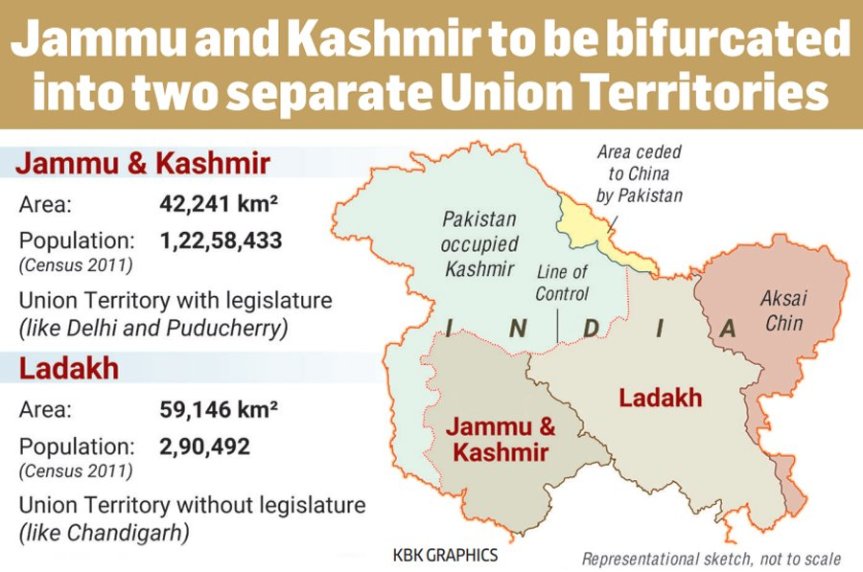
Needless to say, former Union Law Minister, Finance Minister and also Defence Minister who earlier was also a senior Supreme Court lawyer Arun Jaitley very rightly said that, “The government’s move on Article 370 is a monumental decision towards national integration.” The Jammu and Kashmir Reorganisation Bill of 2019 passed recently by both Houses of Parliament will certainly usher in revolutionary changes! President Ram Nath Kovind on August 9, 2019 gave assent to a legislation for bifurcation of Jammu and Kashmir into two Union Territories – Jammu and Kashmir, and Ladakh and it will come into existence on October 31. A Home Ministry notification said that, “In exercise of the powers conferred by clause (a) of Section 2 of the Jammu and Kashmir Reorganisation Act, 2019 (34 of 2019), the central government hereby appoints the 31st day of October, 2019 as the appointed day for the purposes of the said Act.” What a tragedy that those who are now opposing removal of Article 370 forget conveniently that on September 12, 1964, it was reported that a Bill in the Lok Sabha urged that Article 370 be done away with in the interest of complete integration of the state with the rest of the country!

Be it noted, Union Home Minister Amit Shah who tabled the Jammu and Kashmir Reorganisation Bill, 2019 and the statutory resolutions in Rajya Sabha around 11 am after the Union cabinet met at Prime Minister Narendra Modi’s residence at 9.30 am to grant the go-ahead said that, “Article 370 was a temporary provision…how long can a temporary provision be allowed to continue…After abrogation of Article 370, Jammu and Kashmir will truly become an integral part of India.” Saying Article 370 was at the root of terrorism, Amit Shah told the House that full state status will be restored to Jammu and Kashmir at an appropriate time when normalcy returns. He rightly said that the decision to do away with the special status of J&K and to bifurcate the state into two UTs was in the supreme national interest! No denying it!

As it turned out, Amit Shah rose to place four matters before the Rajya Sabha which are as follows:-

1. Constitution (Application to Jammu & Kashmir) Order, 2019 issued by President of India to supersede the 1954 order related to Article 370.

2. Resolution for the repeal of Article 370 of the Constitution of India.

3. Jammu & Kashmir (Reorganisation) Bill, 2019 by which Jammu and Kashmir which earlier was a state was now proposed to be converted to two Union Territories – Jammu and Kashmir with legislature and Ladakh without a legislature.

4. Jammu & Kashmir Reservation (Second Amendment) Bill, 2019 providing for 10 percent reservation for SC, ST and OBCs in J&K

It cannot be lost on us that an eminent and very senior Supreme Court lawyer who is also the former Attorney General of India – Soli J Sorabjee too has clarified that, “The opposition has condemned the legislation as murder of democracy and betrayal of the people of J&K. In my opinion the charge is exaggerated and not tenable. The J&K Reorganization Bill and the resolutions moved by Amit Shah have been passed by both the Houses. The result is that Jammu and Kashmir now has no special status and all laws applicable to people of India including fundamental rights guaranteed by Part III of the Constitution shall be available to people of J&K. In short, J&K is now constitutionally recognized as an integral part of India.” He also sought to make it clear that, “The other favourable points are that people from other states can buy land in Kashmir which they could not do before. RTI which was not applicable before cannot now be denied. There will be no separate flag for J&K, but only one flag, the Indian tricolor.” If this is not a daring move, then what else can it be? Can anyone please tell me?

Truth be told, the first statutory resolution stated: “That this House recommends the following public notification to be issued by the President of India under Article 370(3): ‘In exercise of the powers conferred by Clause (3) of Article 370 read with clause (1) of Article 370 of the Constitution of India, the President, on the recommendation of the Parliament, is pleased to declare that, as from 5th of August, 2019, all clauses of the said Article 370 shall cease to be operative except clause (1).”

To put things in perspective, Article 370 will survive on paper but will now read “All provisions of this Constitution, as amended from time to time, without any modifications or exceptions, shall apply to the State of Jammu and Kashmir notwithstanding anything contrary contained in Article 152 or Article 308 or any other article of this Constitution or any other provision of the Constitution of Jammu and Kashmir or any law, document, judgement, ordinance, order, bye-law, rule, regulation, notification, custom or usage having force of law in the territory of India, or any other instrument, treaty or agreement as envisaged under Article 363 or otherwise.”

Going forward, the second resolution pertaining to the Bill said that the President has referred the Jammu and Kashmir Reorganisation Bill, 2019 to the House “under the proviso to Article 3 of the Constituion of India for its views as this House is vested with the powers of the State Legislature of Jammu and Kashmir, as per proclamation of the President of India dated 19th December, 2018.” Amit Shah who is Union Home Minister tabled the Bill and the statutory resolutions after Ram Nath Kovind signed the official notification, The Constitution (Application to Jammu and Kashmir) Order 2019, superseding the Constitution (Application to Jammu and Kashmir) Order 1954 under which the Constitution was applied only selectively to the State. The notification said that, “All the provisions of the Constitution, as amended from time to time, shall apply in relation to the state of Jammu and Kashmir…”

It would be pertinent to mention here that the government has added in Article 367 of the Constitution a clause 4 which makes four changes. The order said references to Sadar-i-Riyasat of Jammu and Kashmir shall be construed as references to the Governor of J&K. Similarly, references to the Government of J&K shall be construed as reference to the Governor of J&K acting on the advice of the Council of Ministers. With Opposition members expressing their dismay that the Bill to bifurcate was not even circulated, Shah introduced the Bill and statutory resolutions again promptly.

Let us now try and understand its practical implications also. It would be better if this is done in point form. They are as follows:-

1. Now Jammu and Kashmir is open for all citizens of India to go, do any business there or settle there or apply for any job without any hassle.

2. Now there will be no separate flag.

3. Now Indian Penal Code will replace the Ranbir Penal Code.

4. Now it will not have its own separate Constitution and the Constitution of India shall be applicable to them and they can benefit equally from it just like any other citizen of India unlike earlier!

5. All of the state’s laws, including those that are pertaining to land, property and inheritance will be nullified.

6. Now those refugees who earlier could vote in Lok Sabha elections but not in Vidhan Sabha elections or even panchayat elections will be able to cast their vote just like any other voter in any other state. This will benefit lakhs of people residing in Jammu who came from West Pakistan and settled there since independence and yet could not cast their votes. Similarly they would be eligible now to apply for any jobs unlike earlier when they could apply only for Class IV job of sweeper!

7. All laws passed by Parliament will now be equally applicable to them including those that pertain to reservation for economically weaker section and instant triple talaq.

8. Now if a Pakistani marries a women from Jammu and Kashmir, he will not get all the rights straightaway and citizenship unlike earlier when he straightaway got all the rights!

9. Now if a Indian from any other state marries a women from Jammu and Kashmir, he will get the rights to settle there and also the women will not lose any of her rights or citizenship unlike earlier!

10. Now private investment and corporate investment will increase rapidly as there is now no bar on them.

11. Ladakh will now develop more rapidly as it has been made a separate Union Territory.

12. Jammu and Kashmir legislature will continue to make laws. But certain subjects will still be with the Centre to legislate on such as land, law and order – an arrangement that is similar to Delhi.

13. Now Article 356 will be applicable to Jammu and Kashmir also.

14. Now the term of Assembly will be five years and no six years unlike earlier.

15. Now Jammu and Kashmir will be able to benefit from Central laws and RTI that is Right to Information Act along with other laws like right of child to get free and compulsory education between the age of 6 to 14.

16. Now financial emergency can also be declared under Article 360.

17. There can now be quotas for minorities just like any other state.

18. All other special privileges will also now come to an end and it will have the same rights like any other part of India.

It is a no brainer that it is now that the integration of Jammu and Kashmir has become complete. It is now that India can confidently say that, “Jammu and Kashmir which is now a Union Territory along with Ladakh who also has been made a separate Union Territory are an integral part of India in the real sense.” What Sardar Patel was not allowed to do in Jammu and Kashmir and Ladakh what he did to other 562 princely states has now been done by the incumbent government in Centre led by Narendra Modi as Prime Minister and Amit Shah as Home Minister! Those who criticize the government’s move must remember that the governments in the past had affected 44-45 amendments to this article beginning with replacing Maharaja with Sadr-e-Riyasat in 1952. On all such occasions we find that the same Presidential Order route was adopted and this time also the same has been done!

Yes, what is extraordinary this time is that Pakistan which was gaining because of the wrong effects of Article 35A and Article 370 will now stop gaining and this alone explains that why it is so frustrated that it approached the UN Security Council which refused to meddle in between and same is the case with US and China who too advised Pakistan to behave cautiously with India! Yet Pakistan has resorted to heavy firing along border which India is responding effectively and has decided to recall its ambassador and also send India’s ambassador back to India because it is Pakistan which was directly gaining by the operation of Article 35A and Article 370 which is indisputable as is evident from Pakistan’s belligerent approach also! But now Pakistan must reconcile with the ground reality and accept that Jammu and Kashmir will henceforth be always treated as an integral part of India in the real sense! Thanks to the daring resolve by Centre to proceed ahead for integrating Jammu and Kashmir along with Ladakh with India even though many questioned its utility and some criticized it most bitterly!

We must also accept that whenever something great happens, it is initially criticized as done by JD(U) initially by staging a walkout and then accepting it after seeing the groundswell of public support it received from the people cutting across party lines, religion lines, caste lines and community lines! No denying it!

It will not be an exaggeration to say that it is now that Jammu and Kashmir stands fully and firmly integrated with India! Why should anyone protest to this ‘daring move” as was very rightly hailed by Ashwani Kumar? It is heartening to note that PM Narendra Modi has in his message made clear to the people of Jammu and Kashmir that it is they who will benefit most from this landmark and momentous decision and not just few political families and he would always work for their welfare and ensure that justice is done with them in all respects!

Sanjeev Sirohi, Advocate,

s/o Col BPS Sirohi,

A 82, Defence Enclave,

Sardhana Road, Kankerkhera,

Meerut – 250001, Uttar Pradesh.

Outlawing Of Triple Talaq Is Highly Commendable

“It is a happy moment for not just me but for Muslim society as a whole. We have been freed of an evil custom. Generations of women have suffered due to instant triple talaq. They have been thrown out of their house overnight and made to go through hell.”

– Shayara Bano who litigated in Apex Court to outlaw it.

It is most heartening to note that the triple talaq bill has been finally outlawed! But its passage has been far from smooth. The ruling dispensation that is NDA led by Prime Minister Narendra Modi and Union Law Minister Ravi Shankar Prasad showed a steely resolve, firm determination and grit to make sure that women get their basic rights and those men who insult them by resorting to triple talaq are not able to escape the long arms of the law! It took three attempts to make sure that ultimately it becomes a law!

Kudos to the Centre for taking such a historic initiative! It left no stone unturned to make sure that more and more members from different parties support this historic triple talaq bill to ensure that women don’t keep on suffering endlessly in silence as has been happening since past 72 years! Jawaharlal Nehru had the guts to usher in reforms in Hindu law and Hindu Marriage Act 1955 was passed and he very rightly ensured that Hindus who both male and female could marry as many as they want earlier were restricted to just one and if they violated they could be punished for a term of seven years for which Hindus must always be grateful to him and should salute him as it is because of this that the population has been controlled to a very large extent. But he did not do anything to ensure that polygamy is similarly banned among Muslims also which would have benefited them also and their population could have been brought under control! However, now PM Narendra Modi has done to Muslims what Jawaharlal Nehru could never do to ensure that Muslim women benefits by making sure that triple talaq bill gets passed in Parliament and finally becomes a law.

To put things in perspective, it is most heartening to note that “The Muslim Women (Protection of Rights on Marriage) Bill, 2019” better known as the Triple Talaq Bill finally got President Ram Nath Kovind’s assent on August 1, 2019. Hence it has now become a law which shall be binding on Muslims. This is no less than a boon for Muslim women who earlier were subjected to the mercy of the whims and fancies of her husband who could dump her whenever he wanted!

As it turned out, it must be mentioned here that with this assent of President, this historic Bill has replaced the triple talaq ordinance promulgated in February 2019. It was on July 25 that Lok Sabha passed this historic Bill with 303 votes in favour and 82 against. It was on July 30, 2019 that in the 245-member Upper House that is Rajya Sabha voted in favour of the Bill and 84 opposed it while 62 members stayed away by either walking out or abstaining or being absent!

Let me say this on record: It is because of this 62 members of Rajya Sabha who either walked out in the name of formal protest or abstained from voting or remained absent that this historic Bill could see the light of the day! Centre did not have enough members in Rajya Sabha to ensure that it get passed even though it had comfortable majority in Lok Sabha. But these 62 members decided to lend their support indirectly by not voting against the Bill by either remaining absent or staging a walk out or abstained from voting! All Muslim women must remain grateful to these 62 MPs also apart from Centre! There can be no denying or disputing it!

As things stand, this Triple Talaq Bill has been a bone of contention and a point of friction between the Narendra Modi led NDA government and the Opposition since December 2017, when the government first tabled this historic legislation in the Lok Sabha. The Bill followed a Supreme Court judgment famously known as Shayara Bano case and titled as Shayara Bano Vs Union of India & Ors. It was in this landmark case that the Supreme Court in a 3:2 majority verdict struck down the age-old regressive and abominable practice under which a Muslim man could divorce his wife by uttering the word “talaq” thrice in one sitting and declared it as void and illegal.

Be it noted, minutes after the vote, Prime Minister Narendra Modi tweeted that by abolishing triple talaq, “Parliament corrects a historical wrong done to Muslim women.” As many as eight Congress members were absent during the vote in Rajya Sabha. Janata Dal (U) and the AIADMK walked out. Also absent were high profile Opposition leaders like the NCP’s Sharad Pawar and Praful Patel thus lending their indirect support to this historic Bill!

It cannot be lost on us that Ravi Shankar Prasad who is Union Law Minister while hailing the passage of the Triple Talaq Bill pointed out emphatically that, “Finally, Parliament has passed the Triple Talaq Bill after three attempts. The kind of jubilation it has caused across the country, barring conservative elements, indicates how it is a proud moment for India. Our country is transforming and the women of India feel empowered. Triple talaq has never been sanctioned in Islamic scriptures. During the debate in Parliament, I quoted a very authoritative book on Islamic laws from an eminent jurist, Amir Ali, wherein Prophet Mohammad (PBUH) has been quoted as disapproving of it in the strongest possible terms, and, forcing one of his disciples who had given triple talaq to his wife to accept her again. Despite disapproval from the highest quarters in Islam, and the fact that many Muslim countries following sharia laws also chose to reform it one way or another – including making it penal in many cases – it took more than 70 years in India to not only delegitimise this curse, but also provide for penal consequences. Regrettably, this shows the hold the communal and conservative elements continue to exercise over the country’s polity.”

What’s more, Ravi Shankar Prasad further points out with full zeal that, “Today, I need to salute great women like Shayara Bano and Ishrat Jehan and many others who went to the Supreme Court in 2013 challenging this pernicious practice. When the NDA government came to power in 2014, the Prime Minister boldly directed me to stand firmly with these women and support their cause.” He also lamented that, “After the Supreme Court judgment set aside triple talaq, many of us had thought that now this practice will come to an end. However, it continued unabated, even on the flimsiest of grounds. I had shared before Parliament, a large number of cases that we could gather from the media and other reports, where it was revealed how helpless women (75 percent of the victims are poor) were driven out by uttering “talaq-talaq-talaq”, irrevocably annulling the marriage.”

Let me say this on record: What a complete mockery does this make of women! Should it be allowed to permit under any circumstances? Certainly not. If it was not made a penal offence then certainly it would not serve as a adequate deterrent. The worst sufferers in such case would have been none other than women herself!

It also cannot be lost on us that many opposition parties have opposed this historic Bill on the ground that it criminalizes the triple talaq and this will break marriages more quickly. What they very conveniently forget is that even Hindus earlier could marry as many as they wanted both men and women but it was outlawed and they were made liable to be punished under Section 494 of IPC for imprisonment which may extend to seven years and shall also be liable to fine! Then why so much of brouhaha for a three year bailable jail term for Muslims now?

It is a no brainer that to prevent this and taking on board such valid concerns, Ravi Shankar Prasad points out rightly that, “When we framed the law we took on board some of the legitimate concerns, namely: The FIR must be filed by the victim/wife or her relations, by blood or marriage, to prevent abuse, and, it must be compoundable. The provision of bail was specifically added, but after hearing the wife. Besides, there are provisions for subsistence allowance and custody of minor to the wife. It was a very simple and straight legal framework, and yet, the Congress took a very negative stand that it should not be made penal at all. Therefore, while formally opposing triple talaq Bill, the Congress was insisting upon a law whereby this curse could go unabated for want of any deterrence.” Very rightly said! How can this be permitted?

It would be fair to ask: if the law was not made penal, would it have served its desired purpose of protecting Muslim women from being subjected to arbitrary divorces? It goes without saying that certainly not. It would have been toothless and the offence against women would have continued unabated as rightly pointed out by the Law Minister!

Most importantly, noted Islamic scholar and former Union Minister in late PM Rajiv Gandhi’s Cabinet – Arif Mohammad Khan very rightly sums up by saying that, “This is a very positive step taken by the Government. It has performed its constitutional duty. It was an obligation of the government to ensure that the Supreme Court (SC) judgment is followed in letter and spirit. Unless some penal provision is incorporated or it is made a punishable offence, the law is not respected. The malpractice of triple talaq has its roots in history. In India, the Supreme Court held triple talaq unlawful on two counts. One, it is arbitrary. Second, it is part of the religious law. The aprties defending this malpractice also admitted in their affidavit that it is ‘Haram’ (prohibited), and it is ‘bidat’ (innovative practice), which is not part of the original scheme. They said it is sinful but legally permissible – bad in religion but good in law. On it, the SC judgement said that this is unimaginable that something in a religious law can be ‘bad in religion and good in law’. If something is bad in religion then it must be bad in religious law also.”

While lambasting the Opposition leaders for criticizing it, Arif Mohammad Khan minced no words in saying that, “If the parties like the Congress and AIMIM feel that an act which is “Haram” and sinful is part of the Muslim identity, then I can only feel sorry about it and I would say it is highly insulting to every Muslim.” He also condemned those who say it is an attack on the Muslim identity saying that, “I find this language and these assertions absolutely insulting for the Muslims, because the triple talaq, according to the defenders of the practice also, is prohibited and sinful.

About Nikah Halala, Arif Mohammad Khan said that, “I think Halala is a related issue. Once triple talaq comes to an end, Halala will die its natural death.” About polygamy, he said that, “Though I am not a practicing lawyer, I argued in the SC against triple talaq. And, I intend to do the same, when the polygamy issue is taken up. Based on my studies of the Quran, I am convinced that polygamy is as untenable as triple talaq and has very weak ground. The Quran clearly directs to ‘marry those among you who are single’. When the scripture is saying, ‘marry one who is single’, then why should she marry a man who already has a wife? I am very sure that it will also be outlawed. I am of the opinion that why should the government wait for the SC. The Legislature should initiate the process.”

It must be pointed out that Zakia Soman who is co-founder of Bharatiya Muslim Mahila Andolan has also hailed the outlawing of triple talaq by observing that, “The passage of the Triple Talaq Bill is a welcome development. Although this has been long overdue and Muslim women have been steadfastly demanding it for many years now, this is a historic step forward in the movement for gender justice by ordinary women.”

To conclude, in the 21st century why should women not have the same rights as men? Why should women suffer at the hands of men as he likes, whenever he likes, wherever he like and how he likes without any hindrance whatsoever? Why when polygamy was banned among Hindus in 1955 has it not been banned 54 years later in 2019? It is for Centre to answer! Hindus have gained as the population has come under control but Muslims still are suffering because of it not being outlawed. It must take the great initiative in this direction also as rightly pointed out by Arif Mohammad Khan! Let’s hope so!

Sanjeev Sirohi, Advocate,

s/o Col BPS Sirohi,

A 82, Defence Enclave,

Sardhana Road, Kankerkhera,

Meerut – 250001, Uttar Pradesh.

Parliament Rightly Makes Triple Talaq Criminal But Bailable Offence

“It is a happy moment for not just me but for Muslim society as a whole. We have been freed of an evil custom. Generations of women have suffered due to instant triple talaq. They have been thrown out of their house overnight and made to go through hell.”

– Shayara Bano who litigated in Apex Court to outlaw it and got it done.

It is a Himalayan blunder that while Hindus were banned from marrying more than one women or men but Muslims were not similarly banned which cannot be justified under any circumstances. Jawaharlal Nehru only thought about welfare and prosperity of Hindus but not of Muslims. The population of Hindus thus got contained due to which they have gained immensely but Muslims suffered terribly as their population swelled as they were permitted to marry upto 4 wives in case of Sunnis and no limit among Shias by virtue of Muta marriage and a large chunk of the population is compelled to live in dire straits!

Similarly Nehru took no other initiative to end other bad practices prevalent among Muslims like triple talaq and nikah halala by which if a husband pronounces triple talaq and he wants to marry her again then the women first has to undergo marriage with some other men then take divorce from him and then marry her former husband! Nothing on earth can be more terrible than this which makes a complete mockery of the dignity and esteem of women in the society! But why blame Nehru alone? No PM till recently ever took any initiative in this regard! Yes, late former PM Rajiv Gandhi wanted to take initiatives with his Union Minister Arif Mohammad Khan advising him but he buckled under pressure from fundamentalists and politicians supporting them within his party who were more in number!

What a crowning irony that now when PM Narendra Modi has taken this great initiative, he is being criticized and castigated by members of the same grand old Congress party! Former Finance Minister and senior BJP leader Arun Jaitley said that the triple talaq bill aimed at banning the practice of instant divorce among Muslims, “exposed those who consider themselves liberals”. He wrote in his tweet that, “A ‘liberal’ should ordinarily be hostile to the idea of discrimination and injustice perpetuated by an oral divorce. In this case, not one spoke in favour of the Bill which is ending the injustice. They raised weak arguments so that the fundamentalists amongst the Muslims are kept happy.”

Without mincing any words, the former Union Law Minister Arun Jaitley rightly said that, “Let us assume the reverse of the present situation. What if such a provision existed in Hindu law? Liberals, leftists, women organizations and perhaps even the judiciary would have been shocked with such a provision and would have attempted either for a repeal of the law or it being declared unconstitutional. These people stand exposed because what they have attempted to raise farcical objections.” He also rightly pointed out that, “While the Constitution has the right to practice and propagate one’s religion as well as an individual’s fundamental rights in the same chapter, there is a need to do a rethink on provisions of personal law which violate fundamental rights.” He then goes on to make a distinction between the rights and rituals in any religion. He wrote that, “Rituals cannot be decided by the law. They remain squarely within the right to practice one’s religion. However, fundamental rights belong to all. One section of the society cannot be denied these rights. What affects the right of a citizen – in this case the Muslim wife, cannot be determined by religion.”

Needless to say, “Triple talaq”, as it’s known, allows a husband to divorce his wife by repeating the word “talaq” (divorce) three times in any form, including email or text message. It has been mostly always misused by men and it is the women who had to bear the maximum brunt because of it. Opposition especially Congress is attributing political motives to Centre ‘s bold moves to ban it and criminalise it even though it is bailable. While rebutting all such charges, Amit Shah who is Union Home Minister rightly points out that, “We need to understand that women who fought a long battle against triple talaq didn’t have any political motive. They were normal women who showed extreme courage to fight against injustices they were subjected to. They were determined to put an end to this practice and finally won the battle in the country’s highest court. By legislating a triple talaq our government has given a statutory backing to their battle. After all, lawmakers and political parties are duty bound to give voice and right direction to such fights. Opposition’s argument questioning the need for law applicable only to Muslim society is also baseless. Independent India has seen enactment of laws aimed at reforming entrenched practices in other communities. Hindu Marriage Act, Christian Marriage Act, and laws to ban child marriage and dowry are examples of such interventions. Those engaging in opportunistic, narrow political arguments refuse to acknowledge these. Those who question making triple talaq a criminal offence conveniently ignore that several other practices related to Hindu society are considered criminal offence and attract severe punishment.” Why no brouhaha is made for them similarly? This leaves us in no doubt that all opposition is because of vote bank politics!

To put things in perspective, it is most heartening to note that “The Muslim Women (Protection of Rights on Marriage) Bill, 2019” better known as the Triple Talaq Bill finally got President Ram Nath Kovind’s assent on August 1, 2019. Hence it has now become a law which shall be binding on Muslims. This is no less than a boon for Muslim women who earlier were subjected to the mercy of the whims and fancies of her husband who could dump her whenever he wanted!

As it turned out, it must be mentioned here that with this assent of President, this historic Bill has replaced the triple talaq ordinance promulgated in February 2019. It was on July 25 that Lok Sabha passed this historic Bill with 303 votes in favour and 82 against. It was on July 30, 2019 that in the 245-member Upper House that is Rajya Sabha voted in favour of the Bill and 84 opposed it while 62 members stayed away by either walking out or abstaining or being absent!

Let me say this on record: It is because of this 62 members of Rajya Sabha who either walked out in the name of formal protest or abstained from voting or remained absent that this historic Bill could see the light of the day! Centre did not have enough members in Rajya Sabha to ensure that it get passed even though it had comfortable majority in Lok Sabha. But these 62 members decided to lend their support indirectly by not voting against the Bill by either remaining absent or staging a walk out or abstained from voting! All Muslim women must remain grateful to these 62 MPs also apart from Centre! There can be no denying or disputing it!

It is most heartening to note that the triple talaq bill has been finally outlawed! But its passage has been far from smooth. The ruling dispensation that is NDA led by Prime Minister Narendra Modi and Union Law Minister Ravi Shankar Prasad showed a steely resolve, firm determination and grit to make sure that women get their basic rights and those men who insult them by resorting to triple talaq are not able to escape the long arms of the law! It took three attempts to make sure that ultimately it becomes a law! Head of IMC (Ittehad Millat Council) – Maulana Tauqeer Raza Khan said that instead of opposing Triple Talaq Bill we should look at it from the viewpoint of a sister and daughter and it will protect them totally from harassment. He also rightly said this work should have been done by us but we didn’t do so Allah made Prime M inister Narendra Modi to do this! He rightly pointed out that, “In Islam triple talaq is criminalized since 1400 years and it was Khalifa-e-Waqt Hazrat Umar Farooq who had done this! The punishment is not as much as the Bani-e-Islam had expressed anger! Even Prophet Mohammad had expressed his anger at it”! Very rightly said!

Kudos to the Centre for taking such a historic initiative! It left no stone unturned to make sure that more and more members from different parties support this historic triple talaq bill to ensure that women don’t keep on suffering endlessly in silence as has been happening since past 72 years! Jawaharlal Nehru had the guts to usher in reforms in Hindu law and Hindu Marriage Act 1955 was passed and he very rightly ensured that Hindus who both male and female could marry as many as they want earlier were restricted to just one and if they violated they could be punished for a term of seven years for which Hindus must always be grateful to him and should salute him as it is because of this that the population has been controlled to a very large extent. But he did not do anything to ensure that polygamy is similarly banned among Muslims also which would have benefited them also and their population could have been brought under control! However, now PM Narendra Modi has done to Muslims what Jawaharlal Nehru could never do to ensure that Muslim women benefits by making sure that triple talaq bill gets passed in Parliament and finally becomes a law.

As things stand, this Triple Talaq Bill has been a bone of contention and a point of friction between the Narendra Modi led NDA government and the Opposition since December 2017, when the government first tabled this historic legislation in the Lok Sabha. The Bill followed a Supreme Court judgment famously known as Shayara Bano case and titled as Shayara Bano Vs Union of India & Ors. It was in this landmark case that the Supreme Court in a 3:2 majority verdict struck down the age-old regressive and abominable practice under which a Muslim man could divorce his wife by uttering the word “talaq” thrice in one sitting and declared it as void and illegal.

Be it noted, minutes after the vote, Prime Minister Narendra Modi tweeted that by abolishing triple talaq, “Parliament corrects a historical wrong done to Muslim women.” As many as eight Congress members were absent during the vote in Rajya Sabha. Janata Dal (U) and the AIADMK walked out. Also absent were high profile Opposition leaders like the NCP’s Sharad Pawar and Praful Patel thus lending their indirect support to this historic Bill!

It must be pointed out here that as many as 22 Muslim countries including Pakistan, Afghanistan and Bangladesh – or their provinces have abolished triple talaq either explicitly or implicitly. The list includes Turkey and Cyprus, which have adopted secular family laws; Tunisia and Algeria and the Malaysian state of Sarawak, which do not recognize a divorce pronounced outside a court of law; and Iran, where triple talaq doesn’t have validity under its Shia law. Instant talaq is also banned in Algeria, Jordon, Egypt, Iraq, Brunei, the UAE, Indonesia, Libya, Sudan, Saudi Arabia, Morocco and Kuwait.

It was way back in 1961 that Pakistan had abolished triple talaq. It also deserves mention that Sri Lanka’s Marriage and Divorce (Muslim) Act, 1951, as amended up to 2006, doesn’t recognize instant divorce. This is because the law requires a husband wishing to divorce his wife to give notice of his intention to a Qazi (Islamic Judge) who should attempt reconciliation between the couples over the next 30 days. It is only then after all this that the husband can give talaq to his wife and that too in the presence of the Qazi and two witnesses. But what we see in India is that triple talaq is given from telephone or even email which is most reprehensible as it degrades and demolishes the unique identity of women and subjects her to the whims and fancies of men alone! Describing the practice of triple talaq as “barbaric and inhuman”, Ravi Shankar Prasad rightly pointed out that nearly 22 countries have regulated triple talaq but gender justice was given a complete go-by in a secular country like India because of blatant vote bank politics.

It cannot be lost on us that Ravi Shankar Prasad who is Union Law Minister while hailing the passage of the Triple Talaq Bill pointed out emphatically that, “Finally, Parliament has passed the Triple Talaq Bill after three attempts. The kind of jubilation it has caused across the country, barring conservative elements, indicates how it is a proud moment for India. Our country is transforming and the women of India feel empowered. Triple talaq has never been sanctioned in Islamic scriptures. During the debate in Parliament, I quoted a very authoritative book on Islamic laws from an eminent jurist, Amir Ali, wherein Prophet Mohammad (PBUH) has been quoted as disapproving of it in the strongest possible terms, and, forcing one of his disciples who had given triple talaq to his wife to accept her again. Despite disapproval from the highest quarters in Islam, and the fact that many Muslim countries following sharia laws also chose to reform it one way or another – including making it penal in many cases – it took more than 70 years in India to not only delegitimise this curse, but also provide for penal consequences. Regrettably, this shows the hold the communal and conservative elements continue to exercise over the country’s polity.”

What’s more, Ravi Shankar Prasad further points out with full zeal that, “Today, I need to salute great women like Shayara Bano and Ishrat Jehan and many others who went to the Supreme Court in 2013 challenging this pernicious practice. When the NDA government came to power in 2014, the Prime Minister boldly directed me to stand firmly with these women and support their cause.” He also lamented that, “After the Supreme Court judgment set aside triple talaq, many of us had thought that now this practice will come to an end. However, it continued unabated, even on the flimsiest of grounds. I had shared before Parliament, a large number of cases that we could gather from the media and other reports, where it was revealed how helpless women (75 percent of the victims are poor) were driven out by uttering “talaq-talaq-talaq”, irrevocably annulling the marriage.”

Let me say this on record: What a complete mockery does this make of women! Should it be allowed to permit under any circumstances? Certainly not. If it was not made a penal offence then certainly it would not serve as a adequate deterrent. The worst sufferers in such case would have been none other than women herself!

It also cannot be lost on us that many opposition parties have opposed this historic Bill on the ground that it criminalizes the triple talaq and this will break marriages more quickly. What they very conveniently forget is that even Hindus earlier could marry as many as they wanted both men and women but it was outlawed and they were made liable to be punished under Section 494 of IPC for imprisonment which may extend to seven years and shall also be liable to fine! Then why so much of brouhaha for a three year bailable jail term for Muslims now?

It is a no brainer that to prevent this and taking on board such valid concerns, Ravi Shankar Prasad points out rightly that, “When we framed the law we took on board some of the legitimate concerns, namely: The FIR must be filed by the victim/wife or her relations, by blood or marriage, to prevent abuse, and, it must be compoundable. The provision of bail was specifically added, but after hearing the wife. Besides, there are provisions for subsistence allowance and custody of minor to the wife. It was a very simple and straight legal framework, and yet, the Congress took a very negative stand that it should not be made penal at all. Therefore, while formally opposing triple talaq Bill, the Congress was insisting upon a law whereby this curse could go unabated for want of any deterrence.” Very rightly said! How can this be permitted?

It would be fair to ask: if the law was not made penal, would it have served its desired purpose of protecting Muslim women from being subjected to arbitrary divorces? It goes without saying that certainly not. It would have been toothless and the offence against women would have continued unabated as rightly pointed out by the Law Minister!

Most importantly, noted Islamic scholar and former Union Minister in late PM Rajiv Gandhi’s Cabinet – Arif Mohammad Khan very rightly sums up by saying that, “This is a very positive step taken by the Government. It has performed its constitutional duty. It was an obligation of the government to ensure that the Supreme Court (SC) judgment is followed in letter and spirit. Unless some penal provision is incorporated or it is made a punishable offence, the law is not respected. The malpractice of triple talaq has its roots in history. In India, the Supreme Court held triple talaq unlawful on two counts. One, it is arbitrary. Second, it is part of the religious law. The aprties defending this malpractice also admitted in their affidavit that it is ‘Haram’ (prohibited), and it is ‘bidat’ (innovative practice), which is not part of the original scheme. They said it is sinful but legally permissible – bad in religion but good in law. On it, the SC judgement said that this is unimaginable that something in a religious law can be ‘bad in religion and good in law’. If something is bad in religion then it must be bad in religious law also.”

While lambasting the Opposition leaders for criticizing it, Arif Mohammad Khan minced no words in saying that, “If the parties like the Congress and AIMIM feel that an act which is “Haram” and sinful is part of the Muslim identity, then I can only feel sorry about it and I would say it is highly insulting to every Muslim.” He also condemned those who say it is an attack on the Muslim identity saying that, “I find this language and these assertions absolutely insulting for the Muslims, because the triple talaq, according to the defenders of the practice also, is prohibited and sinful.

About Nikah Halala, Arif Mohammad Khan said that, “I think Halala is a related issue. Once triple talaq comes to an end, Halala will die its natural death.” About polygamy, he said that, “Though I am not a practicing lawyer, I argued in the SC against triple talaq. And, I intend to do the same, when the polygamy issue is taken up. Based on my studies of the Quran, I am convinced that polygamy is as untenable as triple talaq and has very weak ground. The Quran clearly directs to ‘marry those among you who are single’. When the scripture is saying, ‘marry one who is single’, then why should she marry a man who already has a wife? I am very sure that it will also be outlawed. I am of the opinion that why should the government wait for the SC. The Legislature should initiate the process.”

It must be pointed out that Zakia Soman who is co-founder of Bharatiya Muslim Mahila Andolan has also hailed the outlawing of triple talaq by observing that, “The passage of the Triple Talaq Bill is a welcome development. Although this has been long overdue and Muslim women have been steadfastly demanding it for many years now, this is a historic step forward in the movement for gender justice by ordinary women.”

To conclude, in the 21st century why should women not have the same rights as men? Why should women suffer at the hands of men as he likes, whenever he likes, wherever he like and how he likes without any hindrance whatsoever? Why when polygamy was banned among Hindus in 1955 has it not been banned among Muslims 54 years later in 2019? It is for Centre to answer! Hindus have gained as the population has come under control but Muslims still are suffering because of it not being outlawed. It must take the great initiative in this direction also as rightly pointed out by Arif Mohammad Khan! Let’s hope so!

Sanjeev Sirohi, Advocate,

s/o Col BPS Sirohi,

A 82, Defence Enclave,

Sardhana Road, Kankerkhera,

Meerut – 250001, Uttar Pradesh.

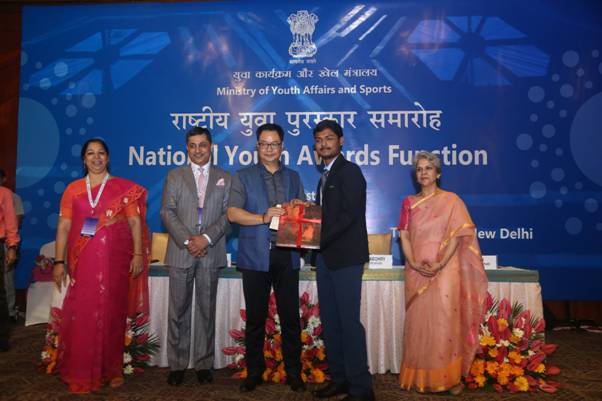
National Youth Awards for excellent work and contribution in different fields of development and social service

The
Union Minister for Youth Affairs & Sports (I/C) Shri Kiren Rijiju
here today conferred the National Youth Awards on individuals (aged
between 15-29 years) and organizations for excellent work and
contribution in different fields of development and social service, such
as health, promotion of human rights, active citizenship, community
service etc.
The
objective of the awards given by the Ministry of Youth Affairs and
Sports, Department of Youth Affairs is to motivate young persons to
achieve excellence in the field of national development and social
service, to encourage young people to develop a sense of responsibility
to the community and thus to improve their own personal potential as
good citizens and to give recognition to the outstanding work done by
voluntary organizations working with the youth for national development
including social service.
During
the National Youth Awards Function, Shri Kiren Rijiju also inaugurated a
Photo Exhibition on “China through Eyes of Indian Youth – 2019”. It was
an exhibition of photos taken by youth delegates who participated in
the recent Youth Exchange Program to China.
NYA 2016-17 was conferred upon the following 20 individuals and 3 organizations:
S. No.
Name
State
Individual Category
1.
Rohit Kumar Kashyap
Uttar Pradesh
2.
Vinit Devidas Malpure
Maharashtra
3.
Momota Thounaojam
Manipur
4.
Nitesh Kumar Sahu
Chhattisgarh
5.
Oddiraju Vamshikrishna
Telangana
6.
Prince Singhal
Jharkhand
7.
Apoorv Om
Delhi
8.
A G Padmanaban
Tamil Nadu
9.
Onkar Rajiv Navalihalkar
Maharashtra
10.
Gattem Venkatesh
Andhra Pradesh
11.
Kh Krishna Mohan Singha
Assam
12.
Prudhvi Golla
Andhra Pradesh
13.
Raju Gorai
West Bengal
14.
Rahul Dabur
Haryana
15.
Hansraj Khatawaliya
Rajasthan
16.
Priteesh Kumar
Uttar Pradesh
17.
Mrityunjay Dwivedi
Uttar Pradesh
18.
Mitesh Gajjar
Gujarat
19.
Subrat Kumar Das
Odisha
20.
Manu Kamboj
Rajasthan
Organization Category
1.
Eco-Pro Bahuuddeshiya Sanstha, Chandrapur
Maharashtra
2.
Care and Share Foundation
Manipur
3.
Samutkars Yuva Vikas Navyuvak Mandal
Rajasthan
The
individual award comprises of a medal, a certificate and a cash prize
of Rs. 50,000/-. The award to a youth organisation includes a medal, a
certificate and a cash prize of Rs. 2,00,000/-. In addition, 3 awards
were also conferred to individuals for the Photo Exhibition on “China
through Eyes of Indian Youth – 2019”.
Congratulating
the winners of the awards and greeting everyone on the occasion of the
International Youth Day, Sh Rijiju said that the Ministry is organizing
various programmes to motivate youth, under the guidance of Hon’ble
Prime Minister, Shri Narender Modi ji. The National Youth Awards
Function is one such programme. He stressed that India is a young
country filled with immense potential. The development of the country is
in the hands of youth who can shape its future. If the energy of youth
is channelized in right direction, the progress of country in various
fields can gain momentum, and youth can become prosperous. The Minister
said that the youth are idealistic, aim high and when they achieve their
goals through their efforts, it becomes necessary to grant recognition
to their efforts, which has been attempted through this program. Sh
Rijiju said that the awards give recognition as well as encouragement to
the winners, but at the same time gives them onerous responsibility to
carry forward the good work being done by them. He said that one should
not age in thoughts and action, and should remain young at heart.

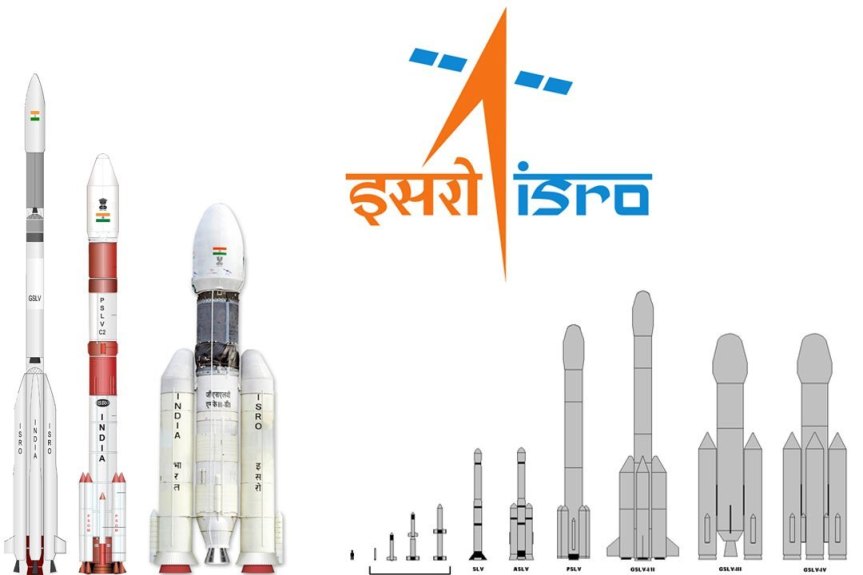
Vikram lander will land on Moon as a tribute to Vikram Sarabhai from crores of Indians

The
centenary celebration of the birth anniversary of the founding father
of ISRO – Dr. Vikram Sarabhai kicked off in Ahmedabad today in the
presence of dignitaries from ISRO, Department of Space, Department of
Atomic Energy and members of Sarabhai Family. Prime Minister of India
Shri Narendra Modi addressed the gathering through a video message.

In
his Video message, Shri Narendra Modi said that it will be a tribute to
Dr. Sarabhai from crore of Indians in true sense when ‘Vikram’ lander
will land on Moon. He also said that Vikram Sarabhai’s ideology leads
India to become a powerful country in the field of science and
technology. Shri Modi said Dr. Homi Bhabha’s demise had created a vacuum
in the world of Indian science. At that time, Vikram Sarabhai gave a
new dimension to science with his skills and leadership ability.
Describing Dr. Vikram Sarabhai as a dedicated soldier of Science,
Shri Modi said that he encouraged science as well as India’s culture
and Sanskrit language. He always gave time for the students. Shri Modi
said that Dr. Vikram Sarabhai has left a legacy for us and it is our
responsibility to take this legacy to the people. He also encouraged
school children to participate in the online space quiz launched by
ISRO.
Dr.
K Sivan, Chairman of ISRO, described Dr. Vikram Sarabhai as a great
institution builder. He said that Vikram Sarabhai has made a huge
contribution in the construction of Modern India by establishing
institutions in the fields of Modern Science, Physical Research and
Atomic Energy etc. He said that institutions set up by Vikram Sarabhai
have become the Center of Excellence today. He said that in this sense,
Dr. Vikram Sarabhai is the true Son of India.
During
the inaugural programme, an album on the life story of Dr. Vikram
Sarabhai, a coffee table book on ISRO and commemorative coin from
Department of Atomic Energy were released. ‘Space on Wheels’ an
exhibition inside a bus was also inaugurated on the occasion.
The
yearlong Dr. Vikram Sarabhai Centenary Programme includes exhibitions,
competitions to school children, journalism awards and speeches by
eminent personalities.  The programme will be conducted across 100
selected cities all over India commencing today and ending on August 12,
2020 with the valedictory function at Thiruvananthapuram.
Former
Director of Vikram Sarabhai Space Center Dr. B N Suresh, Former
Director of Space Application Center and a close associate of Dr.
Sarabhai Shri Pramod Kale, Former Chairman of ISRO Dr. Kasturirangan,
Chairman of Atomic Energy Commission Shri K N Vyas, former chairman of
Department of Atomic Energy Shri M R Shrinivasan and Son of Dr. Vikram
Sarabhai Dr. Karthikeya Sarabhai were also present on the occasion.

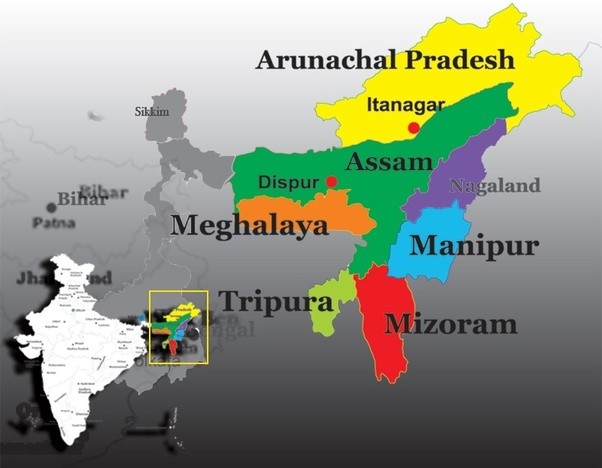
Development of North East Region is priority of the Government

The
Union Minister of State for Development of North Eastern Region (I/C),
Prime Minister’s Office, Personnel, Public Grievances & Pensions,
Atomic Energy and Space, Dr Jitendra Singh, has said that
the
Government led by the Prime Minister Shri NarendraModi has given a lot
of importance to the development and progress of the North Eastern
Region (NER). He was addressing as the Chief Guest at the “North East
Youth and Students Peace Assembly” organised on the occasion of the
United Nations International Youth Day,here today. The function was
organized by the Youth and Students for Peace-India, an initiative of
the Universal Peace Federation (UPF), and the North East MPs’ Forum.

Dr
Jitendra Singh said that the focus has been on brining the rest of
India closer to North east, as compared to the earlier focus of brining
only North East India closer to the mainstream. This has helped in the
integration and development of this region, he said. He said that the
DoNER Ministry has taken various initiatives for the security of the
students of NER who are studying in Delhi and other parts of the
country. The Minister said that a hostel for the North Eastern girl
students of Bangalore Universitywas inaugurated by the Prime Minister
recently. He also said that the work for building a hostel for North
East students in JNU has started. Another hostel in Rohini is also
coming up for the students studying in institutions affiliated to Delhi
University.
The
DoNERMinister said that more than 70% of the population in India is
below the age of 40 years. They have tremendous power and capacity that
needs to be channelized, he added. This huge youth power has proved to
be a decisive power, he added.He said that due to technology, now the
prospects for the youth have changed and now youth from all backgrounds
are making it to the prestigious exams. He encouraged the youth to
utilise the untapped potential of north east by having the benefit of
Venture funds for start-ups in NE region. The North East has become a
favourite destination for all, he added. He said that NE has unexplored
potential for tourism, handlooms, and other areas, which the youth
should explore. The DoNER Minister said when Government gives impetus to
the Act East policy, it will be the north east region that will be
benefited, due to its proximity to these neighbouring countries. This
will not only enrich NE, but will also enrich whole India, he said.
Dr
Jitendra Singh added that there is much more to learn from North east
youth and they are leading in all spheres of life. Earlier the
connectivity used to be a barrier for development, but now Government’s
focus on rail, road and air connectivity has led to the physical
proximity, which has in return broken the psychological barriers. The
Minister said that Prime Minister has encouraged to give special focus
to the North East region. During the first term of the Government, the
Prime Minister has paid more than 30 visits to the NE region, the
Minister added.
Earlier,
addressing the gathering after inaugurating the function, MoS for Youth
Affairs and Sports (I/C) and Minority Affairs, Shri KirenRijiju said
that it is the role of every individual to contribute to the society and
its well being. It is the responsibility of the whole society to work
together, he emphasized. He said that participation of the youth is very
important for the success of these initiatives. He added that it
doesn’t matter if we belong to different sections of society, we have to
be united and strive for peace. Shri Rijiju said that India must start
sending more volunteers to the United Nations and contribute much more
to the initiatives of UN. He said that Prime Minister Shri NarendraModi
has very focused attention towards youth development. Youth are the most
crucial component of the society, the Minister said. The youth
population is our most important asset and their energies should be
utilised in right direction, he added.

Structural Reforms in the Agricultural sector to make Agriculture profitable and Sustainable

The
Vice President of India, Shri M. Venkaiah Naidu has called for
introducing structural reforms in the agricultural sector along with
financial assistance schemes like Direct Benefit Transfer to make
agriculture profitable and sustainable.
He
was addressing the gathering after inaugurating the Mukhya Mantri
Krishi Ashirwad Yojna of the Jharkhand Government, in Ranchi, Jharkhand
today. Lauding the Jharkhand government for coming up with the scheme,
he expressed hope that it would go a long way in addressing agricultural
distress in the state.

Under
the scheme, all the small and marginal farmers of the state, who have
arable land up to a maximum of 5 acres, will be given a grant-in-aid at
the rate of Rs. 5000 / – per acre per year, which will also reduce their
dependence on loans. This amount would be given in two installments
through Direct Benefit Transfer to the beneficiary’s bank account. This
is in addition to PM Kisan Nidhi Yojana under which each small &
marginal farmer’s family having combined landholding/ ownership of up to
two hectares is paid Rs. 6, 000 per year, said the Vice President.
Shri.
Naidu opined that Direct Benefit Transfer would eliminate middlemen and
ensure that every penny of the financial assistance given by the
government reaches the beneficiaries.
The
Vice President said that the Government of India had taken a firm
resolve to double the income of farmers by 2022. He added that the
government was continuously increasing the minimum support price of food
grains to achieve this objective.
He
asserted that our development would be meaningless until the benefits
of progress reached the rural areas and made the lives of our farmers
better.
The
Vice President also stressed the need for water conservation and said
that “Conservation of natural resources like water is essential. For
this, a massive campaign of rainwater conservation should be carried
out, which will replenish our ground water”.
He
cautioned that groundwater levels are continuously falling due to
uncontrolled exploitation of groundwater. Due to which the cost of
irrigation is increasing. The Vice President also urged the farmers to
adopt traditional techniques to support groundwater conservation.
The
Governor of Jharkhand, Smt. Draupadi Murmu, the Chief Minister of
Jharkhand, Shri Raghuvar Das, the Deputy Chairman of Rajya Sabha, Shri
Harivansh Narayan Singh, the Minister of Agriculture, Animal Husbandry
and Co-operative Department, Government of Jharkhand, Shri Randhir Kumar
Singh and others were present on the occasion.

Indian Army Intensifies Flood Relief Operations in Maharashtra, Karnataka, Kerala & Tamil Nadu

The
Indian Army has intensified its relief and rescue operations in the
states of Maharashtra, Karnataka, Kerala and Tamil Nadu. 13 X Engineer
Teams of the Indian Army have been airlifted from Rajasthan to provide a
surge to its ongoing relief and rescue operations in Kerala. Additional
Engineer teams have also been put on standby to move at short notice to
the flood affected regions. 20 X medical teams are being moved to
provide medical support to the rescued personnel in Maharashtra and
Kerala.As on date more than 3000 army personnel have been deployed for
flood relief and rescue operations in 17 districts of the four affected
states.

Lieutenant
General SK Saini, Ati Vishisht Seva Medal, Yudh Seva Medal, Vishist
Seva Meal, General Officer Commanding -in- Chief, Southern Command
visited the flood affected areas of Maharashtra and reviewed the ongoing
relief and rescue operations being carried out by the brave and
dauntless troops of Southern Command .
A
total of approximately 10,000 persons have been rescued and more than
17,500 persons have been evacuated from the marooned / flooded areas.
The rescued and evacuated persons are being provided necessary medical
aid and food while the isolated people are being distributed food
packets and water. A special helpline number 020 26357444 is functional
for assistance of the citizens of Maharashtra. Similarly a helpline
number has also been made functional at Trivandrum (0471) 2352373,
2353030 for assistance of all citizens of Kerala. 
As
on 10 August 2019, a total of 09 Relief Teams, 12 Engineer Teams are
providing assistance to the flood affected persons of Kohlapur and
Sangli in Maharashtra while 33 Relief Teams, 37 Engineer Teams continue
to provide flood relief in Bagalkot, Raichur, Belgaum, Kalburgi and
Kodagu districts of Karnataka.  In the state of Kerala, 24 Relief Teams,
21 Engineer Teams have been employed for flood relief in Allepy,
Ernakulam, Pathanamthitta, Idukki, Malappuram, Wayanad, Kannur and
Kozhikodu districts while 06 Relief Teams have been deployed in Nilgiri
district of Tamil Nadu.

Children to play a leading role in making ‘New India’

Raksha
Rajya Mantri Shri Shripad Naik today encouraged children to take
inspiration from Prime Minister Shri Narendra Modi in taking India to
newer heights. Raksha Rajya Mantri was addressing 3,500 children from 41
government schools, who will display ‘Naya Bharat’, as well as 700 NCC
cadets who will participate in the Independence Day celebrations at the
majestic Red Fort here on August 15, 2019. Shri Shripad Naik called upon
the students to imbibe the virtues which will be shared by the Prime
Minister during his Independence Day address.

Raksha
Rajya Mantri also lauded the children for their determination by
sitting for long hours for the last few days in challenging weather in
the run up to the celebrations. Therefore, it gives me immense pleasure
to give you mementos for your hard work, he added.
Later,
Raksha Rajya Mantri gave away souvenirs to one teacher & one
student from each participating school and Unit-in-Charge of the NCC
group and a cadet on behalf of all participating children/cadets.

2-day exhibition on DAE Technologies: Empowering India through Technology

The
Department of Atomic Energy (DAE), Government of India, is organizing a
two-day exhibition on DAE spin-off technologies for non-power
applications at New Moti Bagh recreation club, New Delhi. The exhibition
was inaugurated by the
Secretary,
Union Public Service Commission (UPSC) Shri Rakesh Gupta here today. The
exhibition is open to public for two days (Aug 11-12, 2019).

The
exhibition is coveringtechnologies developed by the Bhabha Atomic
Research Centre (BARC), Raja Ramanna Centre for Advance Technology,
Indore and other Units of Department of Atomic Energy (DAE), which are
useful for the common man in day-to-day life e.g. in the field of
health, agriculture, water, food security and environment.

The details of the exhibits are as follows:

Health:
In health sector there are three segments  i) Development of Radio
Pharmaceuticals ii) Production & Distribution iii) its
implementation for diagnosis and therapeutic  application. The treatment
of Cancer is managed by Tata Memorial Hospital (TMH), a fully
autonomous aided institution of DAE, provides comprehensive treatment to
cancer patients.  Medical devices for Tele-ECG, Bhabhatron- A Radiation
tele-therapy machine, screening of TB and Cancer are on display.
Agriculture:
DAE has developed 44 high yielding seed varieties by inducing
mutationto suitlocal weather conditionsacross the country. DAEhas also
developed technologies of fertilizer production frombio-sludge and
encourages organic farming. The disease resistant, low maturity period
and high yielding crops have been well accepted by the farmers. Rural
technologies are also being made available to rural youth through
‘AKRUTI’ programme.
Water:
DAE has developed technologies for clean waterto fulfill departmental
requirements and as spin-off developed many techniques which finds
applications in ultra-filtration membrane, RO membrane, multistage flash
evaporation and water hydrology based on radiotracers. Low cost water
filters for removal of all contamination from drinking water have been
displayed.
Environment:
DAE technologies are findinga lot of applications for Swatch Bharat
Mission where bio-methanization& Urban Sludge Hygienization
technologies are being deployed across the country.  “Nisargruna” plant
is a bio- Methanization plant
for digesting kitchen food waste and green vegetable wastes from
agriculture markets to Methane gas which can be used for
cooking/generating electricity or even for running biogas vehicles. 
This plant can digest animal waste from slaughter house also.
While
inaugurating the exhibition, Shri Rakesh Gupta expressed his happiness
that such exhibition is being organized in New Delhi. He said that these
technologies are helpful in day to day life for common people. He added
that Government officials act as opinion leaders, so they should visit
the exhibition and understand these technologies. Shri Gupta emphasized
that these technologies should be adopted in the whole country at a
large scale.
The
Secretary, DAE, Dr K. N. Vyas reviewed the preparations for exhibition
yesterday. The former Secretaries of DAE, Dr Anil Kakodkar, Dr M R
Srinivasan were present. The former Secretary DST and member of Atomic
Energy Commission,
Prof. P. Rama Rao, also visited exhibits, along with CMD, NPCIL, Shri S. K. Sharma.

Vice President advocates Supreme Court Benches in different regions to take judiciary closer to people

The
Vice President of India, Shri M. Venkaiah Naidu has advocated the need
to set up Supreme Court benches in different regions in the country,
including one at Chennai, to bring the judicial system closer to
people. 
Concurring
with the recommendation of the Parliamentary Standing Committee on Law
and Justice to have separate benches in different regions, the Vice
President said “I think it is high time we had more benches because in a
country as vast as India the litigants have to travel long distances
and spend a huge amount of money and energy”’.
Shri
Naidu made the observations while addressing the gathering at the
launch of a book chronicling his two years in office titled ‘Listening,
Learning and Leading” by Union Home Minister, Shri Amit Shah, in Chennai
today. 
It
was not only the legislature and the executive that should become more
responsive to people, the judicial processes must become more
people-friendly, the Vice President stressed.
Emphasising
the urgency to decide election petitions and criminal cases against
sitting MPs and MLAs in a time-bound manner, he said, it has been found
that election petitions and criminal cases were not decided even for the
entire term of the legislators defeating the very purpose of the
election laws. 
Calling
for expeditious decisions by the Chairpersons of  Legislative bodies in
cases involving disqualification of members defecting to other parties,
Shri Naidu observed that the anti-defection law was not being
implemented in letter and spirit.
The
Vice President said because of the inaction of the Speaker or Chairman
the legislators not only continue in the new party but also become
Ministers in a few cases. “This kind of travesty of justice should not
be tolerated”, he emphasized and said that delay in such cases would
erode public confidence in the judicial and legislative bodies. 
Suggesting
special judicial tribunals to decide such cases in a reasonable time of
six months or one year, the Vice President called for revisiting the 10th
Schedule of the Constitution, containing anti-defection provisions, to
ensure a time bound disposal of such cases and make it more effective by
plugging loopholes.
Shri
Naidu also referred to the figures mentioned by the Chief Justice of
India recently about heavy pendency of cases in various courts and said
“apparently, there are nearly 60,000 cases pending in the Supreme Court
and nearly 44 lakh cases in the High Courts.  We need to take action to
reduce this heavy pendency. Justice delayed, as is often said, is
justice denied”, he added.
The
Vice President said the law enforcement machinery and the justice
dispensing structures must be accessible, credible, equitable and
transparently even-handed.
Expressing
his happiness over the decision of the government to increase the
number of judges in the Supreme Court by 10 per cent, the Vice President
said that a number of civil and criminal cases have been pending for
over 25 years and wanted the Supreme Court to have two divisions– one
dealing with Constitutional matters and another with appeals.
He
said the proposal for two divisions merits serious consideration
“because it would enable the Supreme Court to devote more time to
Constitutional issues and make it more accessible to common people”.  
Shri
Naidu said the procedure for appointment of judges might also have to
be revisited and a credible, transparent process instituted which will
steer clear of avoidable controversies.
Urging
Parliamentarians to refrain from dysfunctional behaviour, the Vice
President urged political parties to adopt a code of conduct for
legislators and other elected representatives.
Stating
that media – the fourth estate, also plays an important role in shaping
public discourse, enhancing accountability of the government and
providing news and views on various events around the world, he said “a
free and vibrant media keeps democracy alive and can enrich the quality
of life of people through information, education, entertainment and
insightful analysis”.
Cautioning
against unauthentic media posts, he said there was a need for need
media literacy to identify fake news, biased analysis and material
intended to promote hatred, division and discontent.
Shri
Naidu said “the media should be a dispassionate watchdog and an honest
messenger. Media should be the catalyst of positive change and be the
voice of the voiceless. It should question and seek answers and present
even ugly truths in such a manner that social transformation occurs in
positive direction. It should also help build public awareness and
motivate people to join societal movements for cleanliness, health,
hygiene and education.
Referring
to the untapped demographic dividend and the fundamentally sound Indian
economy that was growing faster than the economies of most other
countries, he said the circumstances were excellent to transform our
country and called for focussing on five Ds – ‘Discuss, Debate, Decide,
Decentralize and Deliver. “This can transform the quality of our
polity”, he added.
The
Governor of Tamil Nadu, Shri Banwarilal Purohit, the Union Minister for
Home Affairs, Shri Amit Shah, the Union Minister for Environment,
Forest & Climate Change and Information & Broadcasting, Shri
Prakash Javadekar, the Chief Minister of Tamil Nadu, Shri Edappadi K.
Palaniswami, the Deputy Chief Minister of Tamil Nadu, Shri O.
Panneerselvam, eminent Agricultural Scientist, Prof. M.S. Swaminathan,
former ISRO Chairman, Dr. K. Kasturirangan,  veteran journalist and
Editor of Tughlak, Shri S. Gurumurthy, the Chairman, Apollo Hospitals
Group, Dr. Pratap C. Reddy, Popular Actor, Shri Rajnikanth, the
President, Education Promotion Society of India and Founder Chairman of
VIT, Dr. G. Viswanathan, All India Badminton Coach, Shri Pullela
Gopichand and other dignitaries were present on the occasion.
Following is the text of Vice President’s address:
“I
am extremely happy to be amidst all of you today, especially with Shri
Amti Shah ji, the Hon’ble Home Minister who has so graciously released
this chronicle of my engagements over the last two years as the Vice
President of India.  I am thankful to Shri Prakash Javdekar ji and his
team in the Ministry of Information and Broadcasting for bringing out
such an attractive compilation.  I am happy that Shri Banwarilal Purohit
ji, Hon’ble Governor of Tamil  Nadu,  Shri Edappadi K. Palaniswami,
Hon’ble Chief Minister of Tamil Nadu and Shri O. Panneerselvam, Hon’ble
Deputy Chief Minister of Tamil Nadu are with us for this event today.
I
feel it a privilege to have amidst us on the dais a galaxy of
luminaries, Dr. M.S. Swaminathan ji who ushered in green revolution in
our country, Dr. Kasturirangan ji, former Director of ISRO and the
Chairman of the expert committee that has drafted the New National
Policy on Education, Thiru Gurumurthy ji, editor Tughlak is a leading
journalist and one of the most reputed financial experts, Dr. Prathap C.
Reddy garu, the pioneering founder of India’s first corporate chain of
hospitals, Dr. G. Vishwanathan ji, Founder and Chancellor VIT and Shri
Pullela Gopichand garu, Chief National Coach for the Indian badminton
team. 
I have learnt a lot from each one of these doyens and continue to learn new things whenever I meet and interact with them.
In
fact, the chronicle of events that has just been released has been
aptly titled because it reflects my quest to gather new information and
gain new insights through interaction with a vast cross section of our
population. That’s the quest which has enriched me and been the driving
force behind my over 330 engagements across the country in the last two
years.  That’s the quest which has helped me grow over the years as I
kept meeting thousands of party functionaries and people from different
walks of life in the nook and corners of different States in our
country.
As
I reflect on what I have seen, heard and experienced as well as analyse
the present developments in the country, I am filled with a sense of
buoyant but cautious optimism.  I would like to share these thoughts
with the people of our country. There are so many exciting achievements,
and so many ambitious programmes that are putting our country on a new
and distinctly faster trajectory. The Prime Minister Modi ji’s mantra of
“Reform Perform and Transform” has given a new impetus to
transformational development of our country. These far reaching and path
breaking reforms must be further accelerated. 
The
country’s space programme and the rapid advances made by scientists in
the research labs across the country as well as innovations in
Information Technology are truly remarkable. I have personally seen the
cutting edge research being done by our scientists and I am deeply
impressed by their sense of dedication and professional excellence.
I
am quite confident that the youth which constitutes over two thirds of
our population will shape a new India provided we create the conditions
for their success and growth. This is a huge demographic dividend that
we can hardly ignore.
Dear Sisters and brothers,
As we step into the 73rd
year of independent India in a few days from now, my thoughts go to the
quality of our polity. I think it is a moment for us to ponder on the
current situation of our three state organs – the legislature, the
executive and the judiciary – and see how we can further strengthen
these three pillars.
The
State legislatures and the Parliament have an important policy making
role.  They are supposed to make legislations for the betterment of the
country and the people, take up and deliberate on issues of public
importance and ensure the accountability of the government of the day.
While some legislative bodies are functioning well, in many of them
there is certainly considerable room for improvement. 
There
is a general perception that the quality of debates has been declining.
Disruptions have become a more common occurrence then before. Acrimony
and emotional outbursts have tended to dominate the proceedings. 
I
have been urging the Parliamentarians to refrain from such
dysfunctional behaviour. I have constantly reminded them of their
onerous responsibility and unique opportunity to shape public discourse.
I hope that all political parties will adopt a code of conduct for
their legislators and contribute to policy making through informed
decisions. 
As
I have repeatedly emphasized in my public speeches, I would like
legislators across the country to “discuss, debate and decide” not
‘disrupt’.
We
need legislators who are well informed and well intentioned and capable
of articulating a well presented viewpoint, not those who are eager to
rush to the well of the House.
We
need legislators who realize the dreams of our Constitution makers
through enlightened debates and forward looking legislations.
Dear sisters and brothers,
Making laws is only a part of the story. Implementing them is a more crucial aspect of governance. 
Designing
programmes, funding them, monitoring their implementation and
evaluating their outcomes is the crux of good governance. 
There
should be no gap between policy intent and policy implementation.  The
intended benefits of a programme must reach the people in time.  The
quality of service delivery is an area that needs more attention than
what is being done today. 
How effectively are we able to deliver public services like water, sanitation, power, housing, transport, education, health? 
How effectively are we able to provide support to farmers, youth, traders, entrepreneurs and industrialists?
How
efficiently are we building durable, world class infrastructure like
road, rail and air connectivity and an eco-system for growth and
development? 
How swiftly and sustainably are we creating conditions for inclusive growth and empowerment of people?
We
have to constantly reflect on these questions and find answers through
honest evaluation.  We have to act promptly and make our delivery
systems work better.  While a lot of improvement has been made over the
years, service delivery remains very often the big missing link in
certain areas. 
We
must ensure that the fruits of democratic governance reach everyone,
especially the ones who are at the farthest end of the development
spectrum. 
Results based management should become the norm.
I am glad that the reforms initiated by Prime Minister Modiji are a major step in this direction.
Dear sisters and brothers,
This
focus on people and their active participation in national development
is the essential foundation of a well functioning democracy like ours. 
Programmes tend to succeed when people get enthused and participate in
the implementation of programmes.  I strongly believe that
decentralization of powers and responsibility to local bodies needs to
be more efficiently implemented as per the Constitutional provisions. 
Funds, functions and functionaries must be transferred to these
institutions.  This will bring governance closer to people and enhance
its credibility and effectiveness.
Sisters and brothers,
It
is not only the legislature and the executive that should become more
responsive to people.  The judicial processes must become more
people-friendly.  The law enforcement machinery and the justice
dispensing structures must be accessible, credible, equitable and
transparently even-handed.  There is a lot of ground we have to cover in
this regard. 
The
Chief Justice of India has recently talked about heavy pendency of
cases in various courts.  Apparently, there are nearly 60,000 cases
pending in the Supreme Court and nearly 44 lakh cases in the High
Courts.  We need to take action to reduce this heavy pendency.  Justice
delayed, as is often said, is justice denied.
Based
on my personal interaction with retired judges and senior advocates, I
would like to suggest certain measures to streamline and make justice
delivery more effective.
I
have been emphasising the urgency to decide certain category of cases
that are time bound like the election petitions and criminal cases
against sitting MPs and MLAs.
It
has been found that election petitions, criminal cases and
disqualification proceedings under anti-defection law are not decided
even for the entire term of the legislators defeating the very purpose
of these laws. 
In
cases involving disqualification of member of legislature who change
parties, the chairperson of the legislative bodies must expeditiously
take a decision. Here also, the anti-defection law is not implemented in
letter and spirit and because of the inaction of the Speaker or
Chairman, the legislators continue in the new party and, in a few cases,
even become ministers in the government. This kind of travesty of
justice should not be tolerated.
Any delays in these cases erode public confidence in the judicial and legislative bodies. 
I
would suggest that we should have special judicial tribunals which will
decide the cases within a reasonable time of, let us say six months or
at the most one year. I would also suggest we revisit the 10th
Schedule of our Constitution, containing anti-defection provisions, to
ensure a time bound disposal of such cases and make it more effective by
plugging loopholes.
We
need to bring the judicial system closer to people.  Expanding the
Supreme Court bench and having separate benches in different regions and
at least one in Chennai on trial basis has been suggested by the
Parliamentary Standing Committee on Law and Justice. I tend to agree
with this recommendation. I think it is high time we had more benches
because in a country as vast as India the litigants have to travel long
distances and spend a huge amount of money and energy. 
It
is heartening that the government has enhanced the number of judges in
the Supreme Court by 10% but I am afraid it may be still inadequate. 
A
number of civil and criminal cases have been pending for over 25
years.  This makes me think that we need to not only expand the Supreme
Court but also divide the work into Constitutional Division and a number
of legal divisions or Courts of Appeal. As the Law Commission has
suggested, I would like the Supreme Court to have two divisions’ one
dealing with Constitutional matters and another with appeals. This
suggestion merits serious consideration and decision by the Supreme
Court as well as the government because it would enable the Supreme
Court to devote more time to Constitutional issues and make it more
accessible to common people.
The
suggestions of the Chief Justice of India to raise the retirement age
of high court judges and make tenure appointments to clear the backlog
seem to be pragmatic solutions in the current context.
The
procedure for appointment of judges may also have to be revisited and a
credible, transparent process instituted which will steer clear of
avoidable controversies. While the Judiciary didn’t quite approve of the
National Judicial Commission passed by the parliament and the system of
collegium has not been without certain drawbacks, the appointment of
Judges needs to be done through a process which inspires confidence and
credibility.  The procedures must be simplified and the proceedings
should be, by and large, conducted in the language understood by common
people in a particular state.
What is required is “de-mystification” of processes.
Legal literacy and legal aid will bridge the current gap between the judicial system and people.
It
is generally noticed that an efficient, transparent, accessible and
affordable judicial system is a key touchstone of good governance which
can improve ease of business as well as ease of living.
Dear sisters and brothers,
In
addition to the three pillars of our polity, we also have the fourth
estate, the media, which plays an important role in shaping public
discourse, enhancing accountability of the government and providing news
and views on various events around the world.  A free and vibrant media
keeps democracy alive and can enrich the quality of life of people
through information, education, entertainment and insightful analysis.
The
technological advances in recent years have brought in unprecedented
changes in the media landscape. Social media along with the traditional
press and the TV are having a profound influence on our lives and
lifestyles, on our work and relationships.
Like everything else in life, this transformation has the good, bad and the ugly side to it. 
What
we need to guard against today is to take all media posts as authentic.
We need media literacy and an ability to identify the fake news, biased
analysis and material that is intended to promote hatred, division and
discontent.
The
media should be a dispassionate watchdog, an honest messenger, a
friendly adviser and a wholesome entertainer.  This is the ideal we must
aim to achieve. Media should also like other organs of governance be
more accountable for the authenticity and objectivity of the content.  
Media
should be the catalyst of positive change and be the voice of the
voiceless. It should combine information with confirmation that is
considered to be more powerful than ammunition. It should question and
seek answers and present even ugly truths in such a manner that social
transformation occurs in positive direction. It should help build public
awareness and motivate people to join societal movements for
cleanliness, health, hygiene and education.
Dear sisters and brothers,
I
have dwelt at length on the foundations of our governance system. We
are proud inheritors of an ancient civilization that had an excellent
governance system based on sound theoretical and philosophic basis. 
We
have rebuilt this edifice on new, solid foundation in 1947. We have
struggled hard through 72 years to shape India as a vibrant democracy. 
We have done reasonably well. 
But
this is not a moment to be complacent, to be smug and rest on past or
present laurels.  We must constantly strive to be better than the best.
As the ancient sages had exhorted us, charaiveti, charaiveti. We must move on and move forward. 
We should focus on the five ‘D’s I have already mentioned:
‘Discuss, Debate, Decide, Decentralize and Deliver’.  This can transform the quality of our polity.
And
we have an excellent set of circumstances to transform our country. We
are a young, aspirational India. An untapped demographic dividend, a
fundamentally sound economy that is growing faster than most of the
other countries, a pool of front ranking individuals and a strong
leadership at all levels. 
If we can combine our collective competence for common good, we can easily achieve the mission we have set for ourselves. 
We
can not only be a 5 trillion dollar economy but also a more vibrant
democracy based on our civilizational values of tolerance, inclusion and
harmony.
We should tap into our enormous resources both human and material. 
We should incorporate values and ethics into the education system.
We
should preserve the best aspects of our rich cultural heritage and
propagate it. India has a rich linguistic diversity and literary
heritage. I have been repeatedly suggesting that children should have an
opportunity to study in their mother tongue at least up to the primary
stage. This will enable Indian languages to be preserved and children
will strengthen their foundational and cognitive abilities.
As
we shape our future, we must certainly focus on making agriculture more
remunerative and sustainable. The central and state governments must
work together to provide inputs, implements, insurance, credit,
warehousing and marketing in an integrated manner. Diversification of
crops, supplementation of farmers’ incomes through activities like
dairy, poultry, agro forestry and aquaculture as well as value addition
through food processing will address the twin issues of ensuring home
grown food security and hidden hunger.
Dear sisters and brothers,
We
should keep our feet and ears to the ground, listen to different voices
and various ideas and learn from the best practices from across the
globe.
I
am happy that I have had the privilege of listening to and learning
from a number of eminent persons as well as youth and farmers,
scientists and artists, leaders from around the world. 
This book, launched today, captures some glimpses of this journey. 
I
am happy to be a co-seafarer in this voyage with all my fellow citizens
as we sail through known and unknown seas and constantly unveil a new,
resurgent, resilient, inclusive and harmonious India.
Let us all work towards a bright future that beckons us.
Jai Hind!

‘Listening, Learning and Leading’ book chronicling Vice President`s two years in office released by Union Minister for Home Affairs

Vice President Shri Venkaiah Naidu has said that abrogation of
Article 370 is in the interest of the Nation. Speaking at a function, to
release a book titled “Listening, Learning and Leading” chronicling his
two years in office as Vice President, Shri. Naidu said abrogation of
Article 370 should not be considered as a political issue but a bold
move taken in the interest of security of the nation and the future of
people of Jammu and Kashmir.
Stating that people must always learn from history and move forward,
the Vice President said it is at this juncture that we should stand by
the people of Kashmir and restore normalcy.
     The Book “Listening, Learning and Leading” was released by Union
Minister of Home Affairs Shri Amit Shah. Vice President Shri Venkaiah
Naidu received the first copy.   The event was hosted by Ministry of
Information and Broadcasting. 
Recalling the Government’s move in bringing the bill for abrogation
of the article in the Rajya Sabha, Vice President  said  after views of
the cross section of the polity in the Upper house was heard, the bill
after proper vetting was passed by the house with a two third’s
majority.
   Reminiscing his days as a student leader from a humble farmer’s
family, he said commitment, dedication, sincerity to a cause in which he
believed had helped him achieve great heights both in the BJP and in
the Government.  He praised Prime Minister Narendra Modi for his mantra
on Reform Perform and Transform which brought about a massive change in
the mindset of the people on development and had put India in  a
pedestal receiving global attention.
   Urging Parliamentarians to refrain from dysfunctional behavior and
stop acrimony and emotional outbursts which disrupted the effective
functioning of the esteemed Upper House, Vice President called on
legislators to realize the dreams of the Constitution makers.
     Appealing to the Government to bridge the gap between policy
intent and implementation, he said there is serious introspection that
is needed to improve the quality of service delivery, to benefit the
people at large. Result based management system should become the norm,
he said.
      Listing a series of measures needed to reform the Judicial
system, the Vice President said that justice dispensing structures must
be accessible, credible, equitable and transparently even- handed . He
urged the government to take steps to set up a Bench of the Supreme
Court in Chennai, besides in the East and the West.
    Referring to the shortfalls in the anti-defection law, he said
the law was not implemented in letter and spirit .  He said because of
the  inaction of the Speaker or Chairman, the defecting legislators
continue in the new party, which is a kind of travesty of justice, which
should not be tolerated.
     Union Minister for Home Affairs Shri.Amit Shah  in his address
said he strongly believes that Article 370 would bring terrorism to an
end and will take Kashmir forward in the path of development. Stating
that Article 370 should have been abrogated a long time ago, Shri. Amit
Shah said he had no confusion in his mind that it scrapping of Article
370 was in the interest of the people of Kashmir.
He said Vice President and Chairman of Upper House, acumen led to
abrogation of Article 370  after taking into consideration the views of
all parties.  The Home Minister recalled Shri.  Venkaiah Naidu’s days as
a student leader, who had led an agitation against Article 370, and it
was sheer coincidence that he presided over the Rajya Sabha when the
Article 370 was abrogated.
     Paying accolades to the self less service of Vice President to
the Nation, he said Mr Venkaiah Naidu worked his heart out to turn his
vision for urban and rural development into reality.
     Union Minister for Information & Broadcasting and
 Environment, Forests & Climate Change, Shri Prakash Javadekar said
Vice President personal rapport with Parliamentarians was above party
affiliations,   ensuring functioning of the Upper House smoothly,
resulting in passage of record number of bills in the last session.
 Vice President Venkaiah Naidu’s popular alliteration and witty remarks,
created a cordial atmosphere in the Rajya Sabha, where the opposition
has its say, even as the Government had its way, in clearing legislative
businesses.  
      Tamil Nadu Governor Shri. Banwarilal Purohit, Chief Minister
Edappadi Palaniswamy, Deputy Chief Minister O.Paneerselvam and host of
dignitaries from various walks of life participated in the function.
   Ministry of  Information and Broadcasting Secretary Shri Amit Khare proposed the vote of thanks.
As part of the book release, Regional Outreach Bureau, Chennai
organized a photo exhibition highlighting the journey of the Vice
President from a student leader. Shri.  Venkaiah Naidu’s interaction
with cross section of society, meeting with world leaders and visits to
Universities, Research institutions were also pictured.         
******

Flood Situation in Karnataka and Maharashtra by undertaking an Aerial Survey

Union
Minister for Home Affairs, Shri Amit Shah undertook an aerial survey of
flood affected areas of Belgavi district of Karnataka and Sangli &
Kolhapur of Maharashtra today.
Shri
Shah was accompanied by the CM, Karnataka, Shri B.S. Yediyurappa, Union
Minister for Parliamentary Affairs, Coal and Mines, Shri Prahlad Joshi,
Minister of State for Railways, Shri Suresh Angadi, Member of
Parliament, Shri Prabhakar Kore, Local MLA , MLC and officers of the
State Government.

Thereafter,
the Home Minister held a meeting at the Belagavi Aiport to review the
flood situation in the Karnataka State. A presentation was made by the
state government officers depicting the extent of damage and the rescue
measures taken, including the NDRF teams deployed.
Shri
Shah also enquired about the further forecast and was informed that
further rain was not expected in that area and adjoining areas of
Maharashtra in the next 2-3 days and the situation is likely to improve.

53rd Convocation of Indian Institute of Foreign Trade held in Delhi

The 53rd Convocation of Indian Institute of Foreign Trade (IIFT) was held on August 8at the Institute’s campus in New Delhi. In a ceremony, Hardeep Singh Puri, Minister of State (Independent Charge) of Ministry of Housing & Urban Affairs and Civil Aviation and Minister of State for Commerce & Industry, awarded degrees tothe graduating students of PhDs, Full Time MBA, Weekend MBA programmes, Executive Post Graduate Diploma in International Business and Certificate Programme in Export Import Management courses. Distinguished members from Board of Management of IIFT, faculty members of IIFT and other dignitaries were present during the convocation.
In his address, Hardeep Singh Purispoke about the growth that the Indian economy has witnessed since the last few decades. Considering the contribution of foreign trade to approximatelyfifty percent in this economic growth of India, he emphasized on the importance of specialised institutes like IIFT. Hardeep Singh Puri appreciated the contribution of IIFT’s research based consultancy and corporate trainings and hoped that it will contribute towards attaining thetarget of India becoming a 5 trillion USD economy in the near future.  Congratulating the graduating students, Hardeep Singh Puri exhorted them to be lifelong learners and keep abreast of the latest developments in Foreign Trade.

Commerce Secretary and Chairman, IIFT, AnupWadhawan, complimented IIFT’s placements and role of globally placed alumni in taking the Institute to global heights which has only been possible due to its rigorous teaching pedagogy and unique courses including foreign languages. Commerce Secretary further acknowledged the strong role of IIFT towards the support extended in policy making through its newly established Centre of Trade Facilitation and Logistics (CTFL) as well as Centre for WTO Studies, Centre for Research in Trade (CRT), Centre for Trade and Investment Law (CTIL) and the Centre for North East Studies (Ce-NEST) at IIFT Kolkata. He also assured continued support of the Government to the Institute for its new campus which is being built at Maidan Garhi in New Delhi.

PM’s address to the Nation on Article 370 Jammu and Kashmir

As a country and as a family, you and us, together we took a historic decision. A system which denied due rights to our brothers and sisters of Jammu, Kashmir and Ladakh; a system which was huge hurdle in their development has now been eradicated. A dream which Sardar Vallabh bhai Patel had, a dream which Babasaheb Ambedkar had, the dream shared by Shyama Prasad Mukherjee, Atalji and crores of citizens, has now been fulfilled.

A new age has begun in Jammu-Kashmir and Ladakh. Now the rights and accountabilities of all the citizens of the country are similar. I congratulate the people Jammu-Kashmir, Ladakh and each and every citizen of the country.
Friends,
Sometimes certain things of the social life get so entangled with time that they are considered to be permanent. A sentiment of complacency develops and it is thought that nothing is ever going to change. A similar sentiment prevailed for Article 370. Because of this there was no debate or talk about the damage done to our brothers and sisters, our children in Jammu-Kashmir and Ladakh. Astonishingly, nobody was able to list the benefits that Article 370 delivered to the people of Jammu-Kashmir.
Brothers and sisters,
Article 370 and 35A have given nothing but secessionism, terrorism, nepotism and widespread corruption on a large scale to Jammu-Kashmir. Both these articles were used as a weapon by Pakistan to flare up the emotions of some people. Due to this about 42,000 people lost their lives in the last three decades. The development in Jammu-Kashmir and Ladakh could not be done on levels which the region deserved. After the removal of this flaw from the system, the people of Jammu-Kashmir will not only have a better present but also a bright future ahead.
Friends,
Whichever government comes to power, it works for the betterment of the country by enacting laws in the Parliament. No matter which party or coalition is in power, this work never stops. There is a lot of debate both inside and outside the Parliament when laws are enacted and made, a lot of debate and brainstorming occurs and serious arguments are put up over its importance and effect. The laws that are enacted after undergoing this process are beneficial for the people of the nation. However, it’s unfathomable that so many laws are enacted in the Parliament but are not implemented in a particular region of the country. Even previous governments who were hailed after enacting a law couldn’t claim that the same law would be implemented in the Jammu & Kashmir region.
More than 1.5 crore people of Jammu & Kashmir were deprived of the benefits of laws that were enacted for the benefit of the people of India. Imagine children in rest of the country have a right to education while children in Jammu & Kashmir were deprived of this right. The daughters of Jammu & Kashmir were deprived of the right that our daughters had in rest of the states. In all the other states, Safai Karamchari Act was enacted for hygiene workers but the workers of Jammu & Kashmir were deprived of this. In other states, strict laws were enacted to stop atrocities on Dalits but no such laws could be implemented in Jammu & Kashmir. To protect the rights of blue-collar workforce, Minimum Wages Act was enacted and implemented in all the other states while such a law is only found on papers in the state of Jammu & Kashmir. In all other states, (our) brothers and sisters from Scheduled Tribes got reservation while contesting elections, but such a thing is unheard of in the state of Jammu & Kashmir.
Friends, I am fully confident that, following abrogation of Article 370 and 35-A, Jammu and Kashmir would soon come out of its negative effects.
Brothers and sisters, in the new system, the priority of the central government would be to keep state government employees and Jammu and Kashmir police personnel at par with the state government employees and police personnel of other states in terms of facilities.  In Union Territories, the government provides many such financial facilities like LTC, House Rent Allowance, Education Allowance for children, Health Schemes etc., most of which are not provided to the employees of Jammu and Kashmir government. Such facilities would soon be provided to the employees of Jammu and Kashmir government and state police personnel following a review.
Friends, very soon the process to fill in the vacancies of central and state government will be initiated in Jammu and Kashmir and Ladakh.This would provide adequate employment opportunities to the local youth. Besides, public sector units of the central government and big private sector companies would also be encouraged to provide new employment opportunities. Apart from the above, Army and para military forces would organize rallies to recruit local youths. The government would also expand Prime Minister’s Scholarship Scheme so that more and more students can get its benefit. Jammu and Kashmir also suffers huge revenue loss. The central government will ensure to minimize its impact.
Brothers and sisters, after abrogation of Article 370, the central government has decided to keep the state of Jammu and Kashmir under its administration after putting in a lot of thought process it. It is essential for you to understand the reasons behind the decision. Ever since the state has been under governor’s rule, the administration of Jammu and Kashmir is directly under the central government. As a result the positive effect of Good Governance and Development have been observed on the ground. The schemes which earlier remained only in files, have been implemented on ground. Projects pending from decades have been speeded up. We have tried to bring transparency and a new work culture in the Jammu and Kashmir administration. As a result, be it IIT, IIM, AIIMS, various irrigation projects or power projects or the Anti-Corruption Bureau, we have been able to expedite the work on these projects. Besides, be it the projects of connectivity, roads or new rail lines, modernization of the airport, everything is being accelerated. 
Friends,
The democracy in our country is very strong; but you will be surprised to know that there have been thousands of brother and sisters living for decades in Jammu and Kashmir who had the right to cast their vote in Lok Sabha polls but were not allowed to cast vote in assembly and local body elections. They are the ones who had come to India following partition in 1947. Should we have allowed the injustice to continue in the same way?
Friends,
I would also like to clarify another important point to my brothers and sisters of Jammu and Kashmir. Your political representative will be elected by you, He will be one of you. The MLAs would be elected just as they used to be elected earlier. The forthcoming cabinet would just be as it used to be earlier. The chief ministers would just be as they were before.
Friends, I am fully confident that, under the new system, we would collectively be able to keep the state of Jammu and Kashmir free from terrorism and secessionism. When our Jammu and Kashmir- the paradise on earth, after achieving new heights of development, attract the whole world, and when there will be greater Ease of Living in the lives of citizens; when they would ceaselessly get their rights, when all the tools of governance would speed up the work in favor of the masses, then I don’t think there would be any need to continue with the system under the union government, yes it would continue in Ladakh though.
Brothers and sisters,
we all want assembly elections in Jammu and Kashmir, that a new government is formed, that a new chief minister is elected. I assure the people of Jammu and Kashmir that you would get the opportunity to elect your representative in a fully honest and transparent atmosphere. Just as Panchayat polls were held transparently recently, assembly polls would also be held in Jammu and Kashmir. I would urge the Governor of the state that the setting up of Block Development Council, which has been pending for past two-three decades, be constituted as early as possible.
Friends,
I have personally experienced that those who got elected in Panchayat polls in Jammu and Kashmir and Ladakh four-five months back, have been working nicely. Few months back when I visited Srinagar, I had a long meeting with them. When they came to Delhi I interacted with them for long at my home. It is because of these friends in Panchayats that the work has been done promptly at village level in Jammu and Kashmir. Be it the task of electrification in every home or making the state Open Defecation Free, the representatives in Panchayats have played a crucial role. I am fully confident that following abbrogation of Artcle 370, once these Panchayat members get a chance to work in the new system, they would do wonders.
I firmly believe that the people of Jammu and Kashmir would conquer secessionism and move forward with new hope. I firmly believe that the people of Jammu and Kashmir would achieve their objectives with renewed fervor in an ecosystem of Good Governance and Transparency. Friends, Family rule has not given any opportunity of leadership to any young citizen of Jammu and Kashmir in the State.
Now, my these young people will take leadership of the development of Jammu and Kashmir and take it to a new height. I appeal to the youth, sisters and daughters of Jammu and Kashmir and Ladakh to take over command of development of their area in their own hands.
Friends,
There is every possibility of Jammu and Kashmir and Ladakh becoming one of the greatest tourist destinations. The kind of environment required for this and the change in administration that is needed, is being taken care of. But for this I need the support of all the countrymen. There was a time when Kashmir was the favourite place for shooting Bollywood films. During that time perhaps there was no film for which shooting was not done in Kashmir. Now, situations in Jammu and Kashmir will normalize. Now not only from India, people from all over the world will come for shooting there. Every Film will bring with it new opportunity of employment for the people of Kashmir. I appeal to the Hindi, Telugu and Tamil Film Industry and people associated with it to definitely think over for investment, shooting of films and establishment of theatres and other resources in Jammu and Kashmir.
I appeal to those who are associated with the technology world, administration or private sector to give priority in their policies and their decisions as to how to disseminate technology in Jammu and Kashmir. When digital communication will be strengthened there and BPO Centres, Common Service Centres will increase in numbers, there will be enhanced opportunity of earning livelihood and the life of our brothers and sisters of Jammu and Kashmir will become easier.
Friends,
The decision taken by the Govt. will benefit youth of Jammu and Kashmir and Ladakh and those who aspire to progress in the world of sports. New sport academies, new sports stadium, training in scientific environment will help them to show their talent in the world. Friends, whether it is the colour of kesar or flavour of Kahwa or sweetness of apple or juiciness of apricot whether Kashmiri shawls or artefacts; organic products of Ladakh or herbal medicine of Jammu and Kashmir, all these need to be publicised in the whole of world.
I will give you one example. There is a plant in Ladakh, named solo. Experts say that this plant is like a sanjivini for people living in high altitude and for security forces deployed in heavy icy mountains. These plants have great role in maintaining immune system of the body at where oxygen level is low. Just think over, should these extraordinary items be sold or not in the whole world? Which Indian will not like this?
Friends, I have named only one plant. There are ample plants, herbal products spread over Jammu and Kashmir and Ladakh. Those will be identified. If they are sold, it will benefit the people and the farmers of Jammu and Kashmir and Ladakh. Therefore, I appeal to the people associated with Industry, Export, Food Processing Sector to come forward to ensure that local products of Jammu and Kashmir and Ladakh reach whole of the world.
Friends, after becoming a Union territory, the development of people of Ladakh is natural responsibility of the Govt. of India. Central Govt., with the cooperation of local representatives, the Development Council of Ladakh and Kargil, will make available the benefit of all developmental schemes at a faster rate. There is possibility of Ladakh becoming one of the greatest Centers of spiritual tourism, adventure tourism and eco-tourism. Solar Power generation could become a vast centre of Ladakh.
Now, the capability of people of Ladakh will be utilized appropriately and new opportunity of development will come without any discrimination. Now the innovative spirit of youth of Ladakh will get boosted, they will get good institutes for good education, people will get good hospitals, and infrastructure will be modernized with priority.
Friends,
It is possible in democracy that some people will agree to this decision and some will oppose it. I respect their disagreement and their objections. Whatever is being argued in this connection, Central Govt. is responding to that and it is trying to resolve the same. It is our democratic responsibility.But I urge them to act keeping the national interest as paramount and help the government in giving a new direction to Jammu – Kashmir-Ladakh. Come forward to help the country.
Moving ahead from the fact that who voted in Parliament, who didn’t, who supported the bill, who didn’t, now we all  have to come together to work unitedly in the interest of Jammu – Kashmir-Ladakh. I also want to convey every countryman that the concerns of Jammu – Kashmir and Ladakh are our collective concerns. These are the concerns of 130 crore citizens. We are not indifferent to their happiness or sorrows and sufferings. The riddance from Article 370 is a reality.  But it is also true that whatever odds are being caused now because of these historic steps are being fought by them only.
Our brothers and sisters of that region are patiently replying to those handful people, who want to vitiate the atmosphere there.  We should not forget that it is the patriots of Jammu – Kashmir who are strongly opposing the conspiracies of Pakistan of instigating terrorism and separatism.
Our brothers and sisters, who believe in Indian Constitution, deserve a better life. We are proud of them.Today I assure these friends of Jammu – Kashmir that the situation will gradually return to normal and all their troubles too will reduce.
Friends, the festival of Eid is around the corner. I extend my greetings to all on Eid. The government is taking all necessary steps so that the people of Jammu – Kashmir don’t face any problem while celebrating Eid. The government is extending all possible help to those friends who live outside Jammu – Kashmir and want to return back to their homes on Eid.
Friends, today on this occasion, I also express my gratitude to our friends in security forces, who are deployed for the security of the people of Jammu – Kashmir. The way all the administrative officials, state employees and Jammu – Kashmir police personnel are handling the situation is really commendable. Your this diligence has boosted my confidence that change can happen.
Brothers and sisters, Jammu – Kashmir is the crown of our country. We are proud that many brave sons and daughters of Jammu – Kashmir have sacrificed and risked their lives for its security. Maulvi Ghulam Din of Poonch district, who had informed Indian Army about Pakistani intruders during 1965 war. He was conferred Ashok Chakra. Col. Sonam Wangchug of Ladakh district, who forced enemies to bite dust during Kargil war, was honoured with Mahavir Chakra. Kirti Chakra was conferred on Rukshana Kausar of Rajauri, who had killed a big terrorist.Martyr Aurangjeb of Poonch, who was assassinated by terrorists last year and whose two brothers are now serving the country after joining the Army. The list of such brave sons and daughters is very long. Several jawans and officials of Jammu – Kashmir Police have also laid their lives while fighting with terrorists.  We have lost thousands of people from other parts of the country as well. They all had a dream of seeing a peaceful, safe and prosperous Jammu – Kashmir. We, together, have to realize their dream. Friends! This decision will help in economic development of the entire country alongwith Jammu – Kashmir and Ladakh. When peace and prosperity prevails in this important part of the globe, the efforts for peace in entire world will be naturally strengthened. 
I call upon my brothers and sisters of Jammu – Kashmir and Ladakh to come together to show the world how much strength, courage and passion we have. Let us come together to build a new India, as well as a new Jammu – Kashmir and Ladakh.
Thank you very much!
Jai Hind!!!