
SC Dismisses Petitions Seeking Probe Into Rafale Deal

In what has come as a big shot in the arm for the present ruling dispensation at the Centre led by PM Narendra Modi, the Supreme Court in its landmark judgment titled Manohar Lal Sharma vs Narendra Damodardas Modi & Ors in Writ Petition (Criminal) No. 225 of 2018 with W.P. (C) No. 1205/2018, W.P. (Crl) No. 297/2018 and W.P. (Crl) No. 298/2018 delivered on December 14, 2018 has dismissed a string of petitions seeking an independent probe into the 2015 Rafale deal, according it a clean chit in all respects – decision-making, pricing and procurement procedure. The Bench of Chief Justice of India Ranjan Gogoi and Justices SK Kaul and KM Joseph pronounced this landmark, laudable and excellent judgment on a batch of PILs by Advocates ML Sharma, Vineet Dhanda, Prashant Bhushan and former Union Ministers Arun Shourie and Yashwant Sinha and AAP MP Sanjay Singh for registration of FIR and Court-monitored investigation by CBI into corruption allegations in Rafale deal. All petty politics must now stop over Rafale deal and what the highest court of the land has held so unambiguously must be respected by all of us including the petitioners!Image result for narendra modji
                                          To begin with, para 1 sets the ball rolling by first and foremost pointing out that, “The issues arising in this group of writ petitions, filed as Public Interest Litigations, relate to procurement of 36 Rafale Fighter Jets for the Indian Airforce. The procurement in question, which has been sought to be challenged, has its origins in the post-Kargil experience that saw a renewed attempt to advance the strategic needs of the armed forces of the country.”
               In retrospect, para 2 then brings out that, “As far back as in the month of June of the year 2001, an in-principle approval was granted for procurement of 126 fighter-jets to augment the strength of the Indian Airforce. Simultaneously, a more transparent Defence Procurement Procedure (“DPP”) was formulated for the first time in the year 2002. A robust ‘offset clause’ was included in the DPP in the year 2005 so as to promote Indigenisation and to that effect Services Qualitative Requirements (“SQRs”) were prepared in June 2006. On 29th June 2007 the Defence Acquisition Council (“DAC”) granted the “Acceptance of Necessity” for the procurement of 126 Medium Multi Role Combat Aircrafts (for short “MMRCA”) including 18 direct fly-away aircrafts (equivalent to a single squadron) to be procured from the Original Equipment Manufacturer (“OEM”) with the remaining 108 aircrafts to be manufactured by Hindustan Aeronautics Limited (for short “HAL) under licence, to be delivered over a period of 11 years from the date of signing. The bidding process commenced in August 2007. Six (06) vendors submitted proposals in April 2008. The proposals were followed by technical and field evaluations; a Staff Evaluation Report and a Technical Oversight Committee Report. All these were completed in the year 2011. The commercial bids were opened in November, 2011 and M/s Dassault Aviation (hereinafter referred to as “Dassault”) was placed as the L-I sometime in January 2012. Negotiations commenced thereafter and continued but without any final result. In the meantime, there was a change of political dispensation at the centre sometime in the middle of the year 2014.”     
                          To be sure, para 3 then brings out that, “According to the official respondents negotiation continued. A process of withdrawal of the Request for Proposal in relation to the 126 MMRCA was initiated in March 2015. On 10th April, 2015 an Indo-French joint statement, for acquisition of 36 Rafale Jets in fly-away condition through an Inter-Governmental Agreement (hereinafter referred to as “IGA”), was issued and the same was duly approved by the DAC. The Request for Proposal for the 126 MMRCA was finally withdrawn in June 2015. Negotiations were completed after Inter-Ministerial Consultations with the approval of the Cabinet Committee on Security (for short “CCS”). The contract along with Aircraft Package Supply Protocol: Weapons Package Supply Protocol: Technical Arrangements and Offset contracts was signed in respect of 36 Rafale Jets on 23rd September, 2016. The aircrafts were scheduled to be delivered in phased manner commencing from October 2019.”
                                     More importantly, it is then brought out in para 4 that, “Things remained quiet until sometime in the month of September, 2018 when certain newspapers reported a statement claimed to have been made by the former President of France, Francois Hollande, to the effect that the French Government were left with no choice in the matter of selection of Indian Offset Partners and the Reliance Group was the name suggested by the Government of India. This seems to have triggered of the writ petitions under consideration.
                                  The first writ petition i.e. Writ Petition (Criminal) No. 225 of 2018 has been filed by one Shri Manohar Lal Sharma, a practicing lawyer of this Court. What is sought for in the said writ petition is registration of an FIR under relevant provisions of the Indian Penal Code, 1860 and a Court Monitored Investigation. The further relief of quashing the Inter-Governmental Agreement of 2016 for purchase of 36 Rafale Jets has also been prayed for.
                           Writ Petition (Civil) No. 1205 of 2018 has been filed by one Shri Vineet Dhanda claiming to be a public spirited Indian. The petitioner states that he was inspired to file the writ petition being agitated over the matter on the basis of the newspaper articles/reports.
                        The third writ petition bearing Writ Petition (Criminal) No. 297 of 2018 has been filed by one Shri Sanjay Singh, a Member of Parliament alleging illegality and non-transparency in the procurement process. The said writ petition seeks investigation into the reasons for “cancellation of earlier deal” and seeks a scrutiny of the Court into the alteration of pricing and, above all, how a ‘novice’ company i.e. Reliance Defence came to replace the HAL as the Offset partner. Cancellation of Inter-Governmental Agreement and registration of an FIR has also been prayed for.
                          The fourth and the last writ petition bearing Writ Petition (Criminal) No. 298 of 2018 has been filed by Shri Yashwant Sinha, Shri Arun Shourie and Shri Prashant Bhushan claiming to be public spirited Indians. They are aggrieved by non-registration of FIR by the CBI pursuant to a complaint made by them on 4th October, 2018 which complaint, according to the petitioners, disclose a prima facie evidence of commission of a cognizable offence under the provisions of the Prevention of Corruption Act, 1988. The prayer, inter alia, made is for direction for registration of an FIR and investigation of the same and submitting periodic status reports to the Court.”  
                                   It is then underscored in para 5 that, “Adequate Military strength and capability to discourage and withstand external aggression and to protect the sovereignty and integrity of India, undoubtedly, is a matter of utmost concern for the Nation. The empowerment of defence forces with adequate technology and material support is, therefore, a matter of vital importance.”
                                 Simply put, para 6 then stipulates that, “Keeping in view the above, it would be appropriate, at the outset, to set out the parameters of judicial scrutiny of governmental decisions relating to defence procurement and to indicate whether such parameters are more constricted than what the jurisprudence of judicial scrutiny of award of tenders and contracts, that has emerged till date, would legitimately permit.”
                                                  Broadly speaking, para 7 then makes the picture more clear by pointing out that, “Parameters of judicial review of administrative decisions with regard to award of tenders and contracts has really developed from the increased participation of the State in commercial and economic activity. In Jagdish Mandal vs State of Orissa and Ors, (2007) 14 SCC 517, this Court, conscious of the limitations in commercial transactions, confined its scrutiny to the decision making process and on the parameters of unreasonableness and mala fides. In fact, the Court held that it was not to exercise the power of judicial review even if a procedural error is committed to the prejudice of the tenderer since private interests cannot be protected while exercising such judicial review. The award of contract, being essentially a commercial transaction, has to be determined on the basis of considerations that are relevant to such commercial decisions, and this implies that terms subject to which tenders are invited are not open to judicial scrutiny unless it is found that the same have been tailor-made to benefit any particular tenderer or a class of tenderers. [See Maa Binda Express Carrier & Anr. Vs. North-East Frontier Railway & Ors. (2014) 3 SCC 760]. Para 8 then states explicitly that, “Various Judicial pronouncements commencing from Tata Cellular vs. Union of India (1994) 6 SCC 651, all emphasise the aspect that scrutiny should be limited to the Wednesbury Principle of Reasonableness and absence of mala fides or favouritism.”
                           Truth be told, para 9 then seeks to clarify that, “We also cannot lose sight of the tender in issue. The tender is not for construction of roads, bridges, etc. It is a defence tender for procurement of aircrafts. The parameter of scrutiny would give far more leeway to the Government keeping in mind the nature of the procurement itself. This aspect was even emphasized in Siemens Public Communication Networks Pvt. Ltd. & Ors. (2008) 16 SCC 215. The triple ground on which such judicial scrutiny is permissible has been consistently held to be “illegality”, “irrationality” and “procedural impropriety”.”
                            As it turned out, para 11 then elucidates that, “It is our considered opinion/view that the extent of permissible judicial review in matters of contracts, procurement, etc. would vary with the subject matter of the contract and there cannot be any uniform standard or depth of judicial review which could be understood as an across the board principle to apply to all cases of award of work or procurement of goods/material. The scrutiny of the challenges before us, therefore, will have to be made keeping in mind the confines of national security, the subject of the procurement being crucial to the nation’s sovereignty.”
                                       Going forward, it is then observed in para 12 that, “Adopting such an approach, on 10th October, 2018 when the first two writ petitions were initially listed before the Court, the Court had specifically observed in its order that it is proceeding in the matter by requiring the Government of India to apprise the Court of the details of the steps taken in the decision making process notwithstanding the fact that the averments in the writ petitions were inadequate and deficient. The Court had also indicated that it was so proceeding in the matter in order to satisfy itself of the correctness of the decision-making process. It was also made clear that the issue of pricing or matters relating to technical suitability of the equipment would not be gone into by the Court. The requisite information was required to be placed before the Court by the Government of India in sealed cover. Before the next date of hearing fixed i.e. 31st October, 2018, the other two writ petitions came to be filed.”
                                Be it noted, it is then revealed in para 13 that, “On 31st October, 2018, the Court in its order had recorded that in none of the writ petitions the suitability of the fighter jets and its utility to the Indian Airforce had been called into question. Rather what was doubted by the petitioners is the bona fides of the decision-making process and the price/cost of the equipment at which it was proposed to be acquired.” Para 14 then states that, “Pursuant to the order dated 10th October 2018, a note in sealed cover delineating the steps in the decision-making process was submitted to the Court and by order dated 31st October 2018 this Court had directed that such of the information which has been laid before the Court, which can legitimately be brought into the public domain, be also made available to the petitioners or their counsels. Details with regard to the induction of the Indian Offset Partner (IOP), if any, was also required to be disclosed. The Court also directed that the details with regard to pricing; the advantages thereof, if any, should also be submitted to the Court in a sealed cover.”
                                     Needless to say, para 15 then states that, “It is in the backdrop of the above facts and the somewhat constricted power of judicial review that, we have held, would be available in the present matter that we now proceed to scrutinise the controversy raised in the writ petitions which raise three broad areas of concern, namely, (i) the decision-making process; (ii) difference in pricing; and (iii) the choice of IOP.”  
              Decision Making Process
                                       It cannot be lost on us that para 16 then spells out that, “The details of the steps in the decision-making process leading to the award of the 36 Rafale fighter aircrafts’ order have been set out in response to the order dated 10th October, 2018. The Government states that the DPP 2002 has been succeeded by periodical reviews in 2005, 2006, 2008, 2011, 2013 and 2016. The preamble to DPP has been referred to capture its essence, which emphasises that –
“Defence acquisition is not a standard open market commercial form of procurement and has certain unique features such as supplier constraints, technological complexity, foreign suppliers, high cost, foreign exchange implications and geo-political ramifications. As a result, decision making pertaining to defence procurement remains unique and complex.”
It also states that –
              “Defence procurement involves long gestation periods and delay in procurement will impact the preparedness of our forces. The needs of the armed forces being a non-negotiable and an uncompromising aspect, flexibility in the procurement process is required, which has also been provisioned for.”
It is DPP 2013 which is stated to have been followed in the procurement in question.
                              It is no doubt true that paragraph 77 of the DPP 2013 reads as follows:
                    “77. This procedure would be in supersession of Defence Procurement Procedure 2011 and will come into effect from 01 June 2013. There are, however, cases which would be under various stages of processing in accordance with provision of earlier versions of DPP at the time of commencement of DPP-2013. The processing of these cases done so far under the earlier procedure will be deemed to be valid. Only those cases in which RFP is issued after 01 June, 2013, will be processed as per DPP-2013.”           
In other words when it is stated that only those cases in which RFP is issued after 1st June 2013 will be processed as per DPP 2013, in this case where the RFP was issued much prior to 1st April 2013 and it was withdrawn, as already noted, in June 2015, a question may arise as to how it could be claimed that DPP 2013 was followed. We, however, also notice clause 75 of DPP 2013 which reads as follows:
                  “75. Any deviation from the prescribed procedure will be put up to DAC through DPB for approval.”
                                    To put it gently, it is then observed in para 17 that, “Also, we notice that the official respondents have sought support from paragraph 71 of the DPP 2013. Para 71 of DPP 2013, in respect of the IGA has been referred to, which postulates possibilities of procurement from friendly foreign countries, necessitated due to geo-strategic advantages that are likely to accrue to the country. Such procurement would not classically follow the Standard Procurement Procedure or the Standard Contract Document, but would be based on mutually agreed provisions by the Governments of both the countries based on an IGA, after clearance from the Competent Financial Authority (hereinafter referred to as “CFA”). Of the total procurement of about Rs 7.45 lakh crores since 2002 under DPP, different kinds of IGAs, including Foreign Military Sales and Standard Clauses of Contract account for nearly 40%. With the object of promoting indigenization, a robust offset clause is said to have been included since 2005. As per the Defence Offset Guidelines of 2013, the vendor/Original Equipment Manufacturer (hereinafter referred to as “OEM”) is free to select its IOPs for implementing the offset obligation.”
                                           It would be pertinent to mention here that while shedding light on the unresolved issues involved in procuring the 126 fighter aircrafts is concerned, para 18 states eloquently that, “As far as the endeavour to procure 126 fighter aircrafts is concerned, it has been stated that the contract negotiations could not be concluded, inter alia, on account of unresolved issues between the OEM and HAL. These have been set out as under:
“i) Man-Hours that would be required to produce the aircraft in India: HAL required 2.7 times higher Man-Hours compared to the French side for the manufacture of Rafale aircraft in India.
ii) Dassault Aviation as the seller was required to undertake necessary contractual obligation for 126 aircraft (18 direct fly-away and 108 aircraft manufactured in India) as per RFP requirements. Issues related to contractual obligation and responsibility for 108 aircraft manufactured in India could not be resolved.”   
                                     Truly speaking, para 19 then minces no words in clearly and convincingly pointing out that, “The aforesaid issues are stated to have been unresolved for more than three years. Such delay is said to have impacted the cost of acquisition, as the offer was with ‘in-built escalation’ and was influenced by Euro-Rupee exchange rate variations. The stalemate resulted in the process of RFP withdrawal being initiated in March 2015. In this interregnum period, adversaries of the country, qua defence issues, inducted modern aircrafts and upgraded their older versions. This included induction of even 5th Generation Stealth Fighter Aircrafts of almost 20 squadrons, effectively reducing the combat potential of our defence forces. In such a situation, government-to-government negotiations resulted in conclusion of the IGA for the supply of 36 Rafale Aircrafts, as part of a separate process. The requisite steps are stated to have been followed, as per DPP 2013. An INT (Indian Negotiating Team) was constituted to negotiate the terms and conditions, which commenced in May 2015 and continued till April 2016. In this period of time, a total of 74 meetings were held, including 48 internal INT meetings and 26 external INT meetings with the French side. It is the case of the official respondents that the INT completed its negotiations and arrived at better terms relating to price, delivery and maintenance, as compared to the MMRCA offer of Dassault. This was further processed for inter-ministerial consultations and the approval of the CCS was also obtained, finally, resulting in signing of the agreement. This was in conformity with the process, as per para 72 of DPP 2013.”
                                      Of course, para 20 then adds that, “The petitioners, on the other hand, seek to question the very fulfillment of the prerequisites for entering into an IGA. The Government of France, giving onlya ‘Letter of Comfort’ and not a ‘Sovereign Guarantee’ has been questioned.”
               Taking the argument of the petitioners forward, para 21 then brings out that, “It is a say of the petitioners that para 71 envisages three eventualities, where the question of entering into an IGA would arise, which have not arisen in the present case:
(a)          Proven technology and capabilities belonging to a friendly foreign country is identified by our Armed Forces while participating in joint international exercises;
(b)         Large value weapon system/platform in service in a friendly foreign country is available for transfer or sale normally at a much lesser cost; or
(c)           Requirement of procuring a specific state-of-the-art equipment/platform where the Government of the OEM’s country might have imposed restriction on its sale and thus the equipment cannot be evaluated on ‘No Cost No Commitment’ basis.”
                                          Now coming to one of the most important paras of this landmark judgment which vindicates Centre’s stand on Rafale deal, para 22 very clearly and categorically holds that, “We have studied the material carefully. We have also had the benefit of interacting with senior Air Force Officers who answered Court queries in respect of different aspects, including that of the acquisition process and pricing. We are satisfied that there is no occasion to really doubt the process, and even if minor deviations have occurred, that would not result in either setting aside the contract or requiring a detailed scrutiny by the Court. We have been informed that joint exercises have taken place, and that there is a financial advantage to our nation. It cannot be lost sight of that these are contracts of defence procurement which should be subject to a different degree and depth of judicial review. Broadly, the processes have been followed. The need for the aircrafts is not in doubt. The quality of the aircraft is not in question. It is also a fact that the long negotiations for procurement of 126 MMRCAs have not produced any result, and merely conjecturing that the initial RPF could have resulted in a contract is of no use. The hard fact is that not only was the contract not coming forth but the negotiations had come practically to an end, resulting in a recall of the RFP. We cannot sit in judgment over the wisdom of deciding to go in for purchase of 36 aircrafts in place of 126. We cannot possibly compel the Government to go in for purchase of 126 aircraft. This is despite the fact that even before the withdrawal of RFP, an announcement came to be made in April 2015 about the decision to go in only for 36 aircrafts. Our country can afford to be unprepared/underprepared in a situation where our adversaries are stated to have acquired not only 4th Generation, but even 5th Generation Aircrafts, of which, we have none. It will not be correct for the Court to sit as an appellate authority to scrutinize each aspect of the process of acquisition.”      
                               Going forward, para 23 then observes that, “We may also note that the process was concluded for 36 Rafale fighter jet aircrafts on 23rd September, 2016. Nothing was called into question, then. It is only taking advantage of the statement by the ex-President of France, Francois Hollande that these set of petitions have been filed not only qua the aspect which formed the statement, that is, the issue of IOPs but also with respect to the entire decision-making process and pricing. We do not consider it necessary to dwell further into this issue or to seek clause-by-clause compliances.”
              Pricing
                                         On the issue of pricing, first and foremost the Apex Court Bench held in para 24 that, “The challenge to the pricing of the aircrafts, by the petitioners, is sought to be made on the ground that there are huge escalations in costs, as per the material in public domain, as found in magazines and newspapers. We did initially express our disinclination to even go into the issue of pricing. However, by a subsequent order, to satisfy the conscience of the Court, it was directed that details regarding the costs of the aircrafts should also be placed in sealed covers before the Court.”
                                       To put things in perspective, it is then very rightly observed by the top court in para 25 that, “The material placed before us shows that the Government has not disclosed pricing details, other than the basic price of the aircraft, even to the Parliament, on the ground that sensitivity of pricing details could affect national security, apart from breaching the agreement between the two countries. The pricing details have, however, been shared with the Comptroller and Auditor General (hereinafter referred to as “CAG”), and the report of the CAG has been examined by the Public Accounts Committee (hereinafter referred to as “PAC”). Only a redacted portion of the report was placed before the Parliament, and is in public domain. The Chief of the Air Staff is stated to have communicated his reservation regarding the weaponry which could adversely affect national security. The pricing details are stated to be covered by Article 10 of the IGA between the Government of India and the Government of France, on purchase of Rafale Aircrafts, which provides that protection of classified information and material exchanged under the IGA would be governed by the provisions of the Security Agreement signed between both the Governments on 25th January, 2008. Despite this reluctance, the material has still been placed before the Court to satisfy its conscience.”   
                             To say the least, it is then clarified in para 26 that, “We have examined closely the price details and comparison of the prices of the basic aircraft along with escalation costs as under the original RFP as well as under the IGA. We have also gone through the explanatory note on the costing, itemwise.
   Suffice it to say that as per the price details, the official respondents claim there is a commercial advantage in the purchase of 36 Rafale aircrafts. The official respondents have claimed that there are certain better terms in IGA qua the maintenance and weapon package. It is certainly not the job of this Court to carry out a comparison of the pricing details in matters like the present. We say no more as the material has to be kept in a confidential domain.”
              Offsets
                       To put it succinctly, para 27 then envisages that, “The issue of IOP is what has triggered this litigation. The offset contract is stated to have been governed by the Defence Offset Guidelines of DPP 2013. Two of the said contracts were signed with Dassault and M/s MBDA Missile Systems Limited on 23rd September, 2016, the same day on which the IGA was signed between the Government of India and the Government of France. These are the French industrial suppliers of the Aircraft package and Weapon Package respectively. There are stated to be no offset obligations in the first three years, but the offset obligations are to commence from October 2019 onwards.”
                        While craving for the exclusive indulgence of esteemed readers, it must be informed here that para 28 then while shedding light on the complaint of the petitioners brings out that, “The complaint of the petitioners is that the offset guidelines contemplate that the vendor will disclose details about the Indian Offset partner however, in order to help the business group in India in question, an amendment was carried out in paragraph 8 of the Offset Guidelines that too with retrospective effect. By virtue of the said amendment it is contended that cloak of secrecy is cast about the Offset partner and the vendor is enabled to give the details at a much later point of time. It is contended, however, that other provisions of the Offset Guidelines remain unamended, and, therefore, Government cannot pretend ignorance about the Indian Offset partner as has been done in the affidavit filed. It is complained that favouring the Indian business group has resulted in offence being committed under the Prevention of Corruption Act.”    
                     For esteemed readers exclusive indulgence, it must also be informed here that para 29 then discloses that, “As per clause 8 of DPP 2013, dealing with the processing of offset proposals, it has been stated in clause 8.2 as under:
                  “8. Processing of Offset Proposals
                    8.2 The TOEC (Technical Offset Evaluation Committee) will scrutinize the technical offset proposals (excluding proposals for Technology Acquisition by DRDO as per para 8.3) to ensure conformity with the offset guidelines. For this purpose, the vendor may be advised to undertake changes to bring his offset proposals in conformity with the offset guidelines. The TOEC will be expected to submit its report within 4-8 weeks of its constitution”.”
                                   Having said this, let us now turn to para 30 which says that, “It has been categorically stated that the vendor/OEM is yet to submit a formal proposal, in the prescribed manner, indicating the details of IOPs and products for offset discharge. A press release in the form of a ‘Clarification on Offset Policy’, posted on 22nd September, 2018 has also been placed before us. Inter alia, it states that the Government reiterates that it has no role to play in the selection of the IOP. As per the Defence Offset Guidelines, the OEM is free to select any Indian company as its IOP. A joint venture is stated to have come into being between Reliance Defence and Dassault in February 2017, which is stated to be a ‘purely commercial arrangement’ between the two private companies. Media reports of February 2012 are stated to suggest that Dassault, within two weeks of being declared the lowest bidder for procurement of 126 aircrafts by the previous Government, had entered into a pact for partnership with Reliance Industries (Another business group) in the Defence sector. Dassault has also issued a press release stating that it has signed partnership agreement with several companies and is negotiating with over hundred other companies. As per the guidelines, the vendor is to provide details of the IOPs, either at the time of seeking offset credit or one year prior to discharge of offset obligation which would be due from 2020 onwards. The aforesaid press release is in conformity with the clause dealing with IOPs which reads as under:
                    “4. Indian Offset Partner
                     4.3 The OEM/vendor/Tier-1 sub-vendor will be free to select the Indian offset partner for implementing the offset obligation provided the IOP has not been barred from doing business by the Ministry of Defence.”
                                Now coming to para 31, it stipulates that, “Despite the aforesaid illustration, the petitioners kept on emphasising that the French Government has no say in the matter, as per media reports. It is also stated that there was no reason for Dassault to have engaged the services of Reliance Aerostructure Ltd., through a joint venture, when the company itself had come into being only on 24th April, 2015. The allegation, thus, is that the Indian Government gave a benefit to Reliance Aerostructure Ltd., by compelling Dassault to enter into a contract with them, and that too at the cost of the public enterprise, HAL.”
                                       Now let us talk about para 32. It says: “It is no doubt true that the company, Reliance Aerostructure Ltd., has come into being in the recent past, but the press release suggests that there was possibly an arrangement between the parent Reliance company and Dassault starting from the year 2012. As to what transpired between the two corporate would be a matter best left to them, being matters of their commercial interests, as perceived by them. There has been a categorical denial, from every side, of the interview given by the former French President seeking to suggest that it is the Indian Government which had given no option to the French Government in the matter. On the basis of materials available before us, this appears contrary to the clause in DPP 2013 dealing with IOPs which has been extracted above. Thus, the commercial arrangement, in our view, itself does not assign any role to the Indian Government, at this stage, with respect to the engagement of the IOP. Such matter is seemingly left to the commercial decision of Dassault. That is the reason why it has been stated that the role of the Indian Government would start only when the vendor/OEM submits a formal proposal, in the prescribed manner, indicating details of IOPs and products for offset discharge. As far as the role of HAL, insofar as the procurement of 36 aircrafts is concerned, there is no specific role envisaged. In fact, the suggestion of the Government seems to be that there were some contractual problems and Dassault was circumspect about HAL carrying out the contractual obligation, which is also stated to be responsible for the non-conclusion of the earlier contract.”
                                      It is a no-brainer that para 33 while vindicating Centre’s position on rafale deal very clearly and convincingly points out that, “Once again, it is neither appropriate nor within the experience of this Court to step into this arena of what is technically feasible or not. The point remains that DPP 2013 envisages that the vendor/OEM will choose its own IOPs. In this process, the role of the Government is not envisaged and, thus, mere press interviews or suggestions cannot form the basis for judicial review by this Court, especially when there is categorical denial of the statements made in the Press, by both the sides. We do not find any substantial material on record to show that this is a case of commercial favouritism to any party by the Indian Government, as the option to choose the IOP does not rest with the Indian Government.”
                    Conclusion:
                                 In conclusion, it is then observed in para 34 that, “In view of our findings on all the three aspects, and having heard the matter in detail, we find no reason for any intervention by this Court on the sensitive issue of purchase of 36 defence aircrafts by the Indian Government. Perception of individuals cannot be the basis of a fishing and roving enquiry by this Court, especially in such matters. We, thus, dismiss all the writ petitions, leaving it to the parties to bear their own costs. We, however, make it clear that our views as above are primarily from the standpoint of the exercise of the jurisdiction under Article 32 of the Constitution of India which has been invoked in the present group of cases.”
                                          It must be revealed here that Centre has sought correction in para 25 of this landmark and laudable judgment which had stated that the pricing details were shared with the Comptroller and Auditor General of India and that the report was examined by the Public Accounts Committee. The Centre said the error in the Apex Court’s judgment was “perhaps on account of misinterpretation of a couple of sentences in a note” that was handed over to it in a sealed cover. The government said in an application to the court that, “The observations in the judgment have resulted in a controversy in public domain, and would warrant correction by the court in the interest of justice.” The government said in its original note submitted to the court, the word “is” had been replaced by the word “has been”, which created the confusion. The report of the CAG will be placed before the PAC as and when it is ready, the government said in the application.
                                               All said and done, Opposition must refrain from making a political capital out of this small mistake which Centre has itself acknowledged and has sought correction also to it! There is no point in making a mountain out of a molehill! But it is the Opposition which must realize this and gracefully accept this landmark judgment!
                                      No doubt, this landmark, laudable and extraordinary judgment must be truly respected by each and every Indian and we all should desist from making India a laughing stock in front of the world by crying “scam, scam and scam without giving any proof to substantiate it.” We all need to appreciate that the  Supreme Court is the highest court of the land and its landmark and laudable judgment must be respected by Centre, Opposition and all of us in equal measure! Former UP CM Akhilesh Yadav very rightly and gracefully has accepted this landmark judgment of three-Judges Bench of the Apex Court and has refused to support the Congress demand for a JPC into it! Politics over defence deals is most deplorable and disgusting and it is our national security which suffers the most in this political one-upmanship game! How can any good Indian support it? All petty politics over it must stop and political interest must relinquish its prime position which must be replaced by national interest and it has to be above everything else if our nation is to progress and prosper in the real true sense! Is it a tall order? Certainly not!     
Sanjeev Sirohi, Advocate,
s/o Col BPS Sirohi,
A 82, Defence Enclave,
Sardhana Road, Kankerkhera,
Meerut – 250001, Uttar Pradesh.
Bombay HC Quashes Government Resolution Making It Mandatory For Assistant Public Prosecutors To Secure 25% Conviction For A Promotion

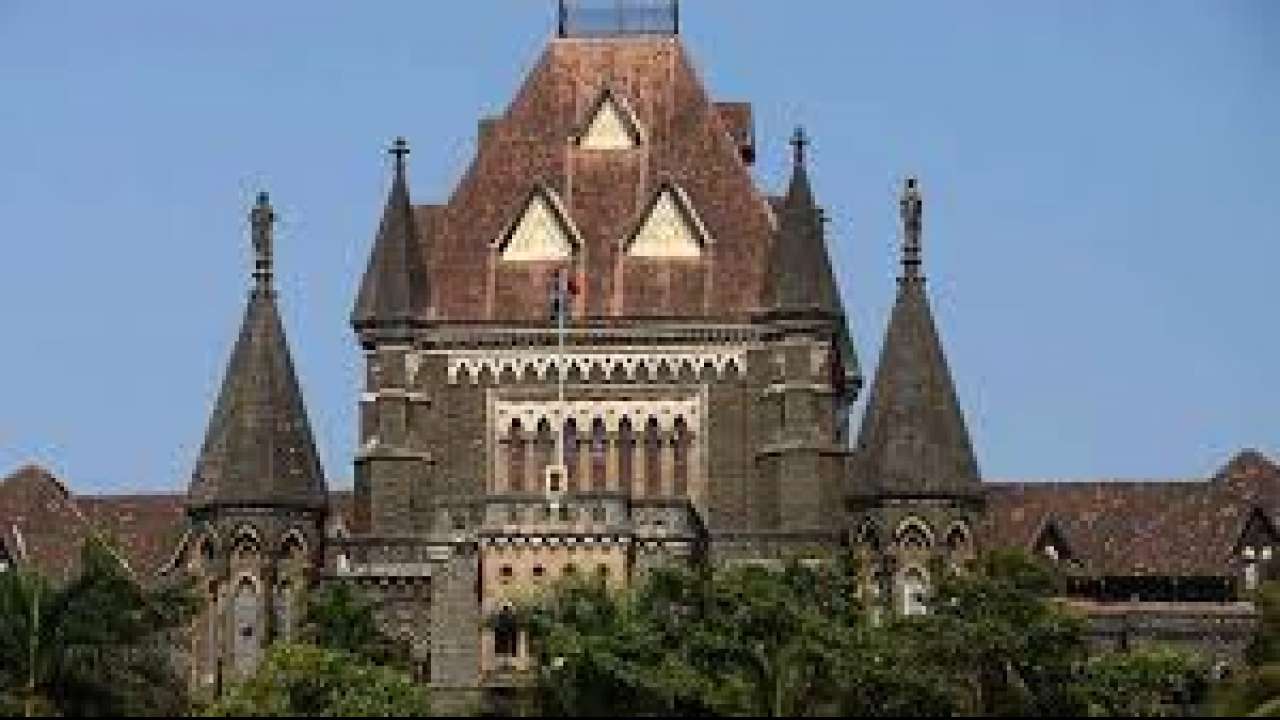
It must be noted first and foremost that in a landmark judgment with far reaching consequences for Assistant Public Prosecutors, the Aurangabad Bench of Bombay High Court in Maharashtra State Public Prosecutors Association Through its President Sanjay Purushottam Deshmukh versus 1. The State of Maharashtra Through its Secretary, Home Department, Mantralaya, Mumbai. 2. The Director of Prosecution, State of Maharashtra, Church Gate, Mumbai in Writ Petition No. 8117 of 2017 which was  reserved on 10th July 2018 and pronounced on 24th August 2018, has quashed resoundingly a government resolution dated May 12, 2015 imposing a condition that the Assistant Public Prosecutor, whose rate of conviction is less than 25% of the cases handled by him, is not entitled to promotion and thus accepted the contention of the petitioners as valid. A Division Bench of Justice SV Gangapurwala and Justice SK Kotwal at Aurangabad held that the said notification was irrational, unreasonable and against the law of the land. So it had to be quashed and naturally so! The Court was hearing a writ petition filed by Maharashtra State Public Prosecutors Association and the respondents were State of Maharashtra and the Director of Prosecution in the State. PR Katneshwarkar was advocate for the petitioner and NT Bhagat, A.G.P. for the State/respondent No. 1.Image result for bombay high court
            Submissions
                                 As it turned out, para 5 brings out that, “Learned Counsel for the petitioner submits that the impugned Government Resolution, specially Clause Nos. 4 and 7, mandating the Assistant Public Prosecutors in Maharashtra State to secure minimum 25% conviction in criminal cases for getting promotion, is unreasonable, contrary to the provisions of Criminal Procedure Code and decision of Supreme Court as well as decision of the High Court.”
                            To be sure, para 6 then points out that, “Learned Counsel for the petitioner submits that the Public Prosecutor, who represents the State in the criminal trial, is not expected to assure the State that in any case he would secure the conviction. On the other hand, being officer of the Court it is the duty of Public Prosecutor to place before the Court every material collected by the Investigating Officer fairly, irrespective of the fact whether it supports the prosecution case or not.”
                                         Bluntly put: Who can deny or dispute this? How can the Investigating Officer be biased and always disposed towards securing the conviction of the accused under any circumstances? Will this not make an open mockery of justice which always demands neutrality from not just Judges but also the Investigating Officers?  
                       It also cannot be lost on us that it is rightly contended in para 7 that, “Learned Counsel for the petitioner submits that the result of criminal trial depends on quality and quantity of evidence collected by the Investigating Officer and not on the performance of the Public Prosecutor. There is no nexus between the performance of Public Prosecutor and conviction or acquittal.” Absolutely right! To link the performance of Public Prosecutor with conviction or acquittal would be downright absurd!
                                   No wonder, it is then rightly stated in para 8 that, “His last submission is that the impugned Government Resolution being irrational and against the law of the land, deserves to be quashed. He placed reliance on the case of “S.B. Shahane and others Vs. State of Maharashtra and another”, [1995 Supp (3) Supreme Court Cases 37] and “Sushil Hiralal Chokhani Vs. State of Maharashtra”, [(2005) All M.R. (Cri.) 2673].” Can any sane person call such a Government Resolution rational? Speaking for myself, it has been rightly quashed by the Aurangabad Bench of the Bombay High Court!
                                    It would be apposite to now mention what has been contended by the Respondents. To begin with, it is pointed out in para 9 that, “Learned Counsels for the respondents submit that in the Maharashtra the rate of conviction in criminal case is less which compelled the Government to take policy decision and to pass the impugned Government Resolution for improvement in conviction rates, which is neither bias nor malafide, and therefore, the Court cannot interfere with the same. They submit that the conviction rate in Maharashtra State has dropped drastically as compared to the other States, which affects the public at large and sends a wrong signal to the society. The impugned Government Resolution was passed as a policy decision for achieving greater conviction rate and such sincere act of the State cannot be interfered by the Court.”
                                 Continuing in the same vein, it is then brought out in para 10 that, “Learned Counsels for the respondents submit that the respondents conduct seminars and workshops for the Public Prosecutors with sole object to help them to become competent and achieve higher conviction rate.” Para 11 then states that, “Respondents placed reliance on the case of “Delhi Science Forum Vs Union of India”, [1996 (2) SCC 405] wherein it is held that, “The Courts have their limitation as these issues rest with the policy makers of the nation. No directions can be given or is expected from the Courts while implementing such policies, unless there is a violation of infringement of any of the provisions” and “Tamil Nadu Education Department Vs State of Tamil Nadu”, (1980 Vol 3 SCC 97) wherein it is held that, “What was regarded as administratively impractical might, on later thought and activist reconsideration, turn out to be feasible and fair. The Court cannot strike down a Government Order or a Policy merely because there is a variation or contradiction. Life is sometimes a contradiction and even consistency is not always a virtue. What is important to know whether mala fide vitiates or irrational and extraneous factors foul”.”   
                                    Needless to say, para 12 then states that, “In fact, after going through the affidavit filed by respondent No. 2, it reveals that the respondent No. 2 has not played any role for passing the impugned Government Resolution and it was the policy decision of Government of Maharashtra. Our attention was drawn to the case of “Brij Mohanlal Vs Union of India and others”, [(2012) 6 SCC 502] wherein while considering when the Court should or should not interfere in the policy decision of the State, the following parameters are laid down:
(I)                         If the policy fails to satisfy the test of reasonableness, it would be unconstitutional.
(II)                     The change in policy must be made fairly and should give the impression that it was done so arbitrarily on any ulterior intention.
(III)                  The policy can be faulted on grounds of mala fides, unreasonableness, arbitration or unfairness, etc.
(IV)                 If the policy is found to be against any statute or the Constitution or runs counter to the philosophy behind these provisions.
(V)                     It is dehors the provisions of the Act or legislations.
(VI)                 If the delegate has acted beyond its power or delegation.”
                            After perusal of all the facts before it by the respondent, the Bench notes in para 13 that, “No doubt, after going through the data placed on record by the respondents, it is clear that conviction rate in Maharashtra State is dropping down. Now the question arises whether to enhance the conviction rate the Public Prosecutor, who represent the State in the criminal trial, can be compelled to get conviction at least in 25% cases handled by them.”
                           Going forward, it is then pointed out in para 14 that, “In the case of “S.B. Shahane and others Vs State of Maharashtra” (supra), while giving directions to the Government to separate Prosecution Department from Police Department, the Apex Court considered 14th Law Commission Report. The relevant paragraphs of that report are reproduced as under:-
“Para 12 – Police Prosecutors and their functioning –
                 It is obvious that by the very fact of their being members of the Police Force and the nature of the duties they have to discharge in bringing a case in court, it is not possible for them to exhibit that degree of detachment which is necessary in a prosecutor. It is to be remembered that a belief prevails amongst the Police Officers that their promotion in the Department depends upon the number of convictions they are able to obtain as prosecuting officers. Finally, they only control supervision of the work of these prosecuting officers that is exercised by the Department Officials.”
“Para 15. – Suggested remedial measure –
We therefore suggest that as a first step towards improvement, the prosecuting agency should be completely separated from the Police Department. In every district a separate prosecution department may be constituted and placed in charge of an official who may be called a ‘Director of Public Prosecutions’. The entire prosecution machinery in the District should be under his control. In order to ensure that he is not regarded as a part of the Police Department he should be independent official directly responsible to the State Government. The departments of the machinery of the Criminal Justice, namely, the Investigation Department and the prosecuting department should thus be completely separated from each other.”   
                                            It would be of immense significance to note here that para 15 explicitly states that, “After considering the above observations of the Law Commission, the Apex Court found that the Police Prosecutors who were functioning under the administrative and disciplinary control of the superior officers of the police force, were not able to exhibit needed degree of detachment expected of Prosecutors because their promotions to higher post in Department depended on the number of conviction they were able to obtain from the Court in the prosecutions conducted by them. Therefore, it was felt that the Prosecution Department should be beyond the control of police administration.”
                             Moving on, it is then observed in para 16 that, “The Apex Court in the case “State of Bihar Vs Ramnaresh Pandey and another” reported in (AIR 1957 SC 389) observed that the Public Prosecutor is an officer of the Court and he is bound to assist the Court with his fairly considered view and Court is entitled to have the benefit of the fair exercise of his function. Following this view the Division Bench of this Court in the case of “Sushil Chokhani” (supra) also held that the duty of Public Prosecutor is not merely to secure the conviction of and imposition of punishment to the accused. It is his primary duty to place before the Court all the evidence collected by investigating agency whether it be in favour or against accused for consideration thereof by the Court. Utmost fair and impartial attitude is expected in that regard from the Public Prosecutor.”
                                        Having said this, we now need to turn our attention to para 17 which while underscoring the need for Public Prosecutors to perform their duty impartially and drawing red lines for the State observes clearly and convincingly that, “Thus, it is clear that Public Prosecutors being an officer of the Court, is not expected to only grab the conviction, but is expected to act fairly before the Court and his performance should be only in the form of assistance to the Court for arriving at proper conclusion regarding conviction or acquittal of the accused. Considering such impartial duty to be performed by the Public Prosecutor, the State cannot set target before the Public Prosecutors to get conviction at least in 25% criminal cases handled by them. What is expected by the State of Maharashtra from the Public Prosecutor is totally against law as discussed above. In other words, by passing the impugned Government Resolution, the State Government cannot fix bench-mark for the Public Prosecutors to secure at least 25% conviction in the criminal cases handed by them, to get promotion.”
                             While underscoring the critical role played by the Investigating Officer, it is then pointed out in para 18 that, “The conviction or acquittal in criminal trial depends on various factors and mainly on the quality of material collected by the Investigating Officer. If the Investigating Officer has collected good quality of material as evidence against the accused and if he has taken necessary precaution while sealing and forwarding the important Muddemal articles to Chemical Analyst, certainly such case may result into conviction, provided that material witnesses stand constant at the stage of evidence. For conviction, the credit goes to Investigating Officer and witnesses. The conviction in criminal trial is not merely related with performance of the Public Prosecutor but as discussed supra depends upon various factors.”
                                  While punching holes in the impugned Government Resolution mandating 25% conviction in criminal trial, para 19 then goes on to add that, “Therefore, issuance of the impugned Government Resolution mandating achievement of 25% conviction in criminal trial is only as a result of above-said misconception. If any negligence has been committed by the Public Prosecutor while conducting the case, that cannot be ascertained only from conviction or acquittal, but it can be ascertained only on examination of the record of that particular case. Therefore, we hold that the condition of particular conviction rate to be achieved by Public Prosecutors, embodied in the impugned Government Resolution is definitely unreasonable.”
                                 Now coming to the concluding paras 20 to 22. Para 20 minces no words in concluding that, “Thus, the impugned Government Resolution is irrational, unreasonable and against the law of the land. Therefore, in view of the parameters laid down by the Apex Court in the case of Brij Mohan Lal” (supra), this Court can definitely quash the impugned Government Resolution. It follows that this Writ Petition deserves to be allowed.” Para 21 states that, “The Writ Petition is allowed. The impugned Government Resolution dated 12.05.2015 is quashed.” Finally, the judgment is concluded in para 22 by observing that, “Rule is made absolute in the above-said terms. Parties to bear their respective costs.”
                                       In the ultimate analysis, it is an exemplary and elegantly written landmark and laudable judgment which certainly deserves to be applauded! It is worth emulating by all the courts in all parts of India! This will ensure that Public Prosecutors can impartially render their job without getting biased with pre-determined notion to ensure conviction of accused at any cost to fulfil the criteria of ensuring the set 25% conviction rate to be eligible for promotions and other benefits which is downright absurd and can never serve the true purpose of justice in the real sense! No doubt, the Aurangabad Bench of Bombay High Court which has dared to deliver this landmark judgment deserves unqualified appreciation for it! It is the biggest warning to all States that they should desist from setting such ridiculous criteria and those who have already done so must immediately make suitable amendments to comply unconditionally with what the Aurangabad Bench of Bombay High Court has laid down so emphatically in this landmark case!
Sanjeev Sirohi, Advocate,
s/o Col BPS Sirohi,
A 82, Defence Enclave,
Sardhana Road, Kankerkhera,
Meerut – 250001, Uttar Pradesh.

Men Too Have Right Not To Be Defamed And Denounced

“You do me favors, I do you favors 30 years later
lets call it “me too”Image result for metoo
A strong woman does not wait 30, 20, 10 years to speak up, she slaps him on the first “bad touch” and knocks him out
Don’t hide your weakness, the favors in returns that you enjoyed and the work you got by “I was too scared” cry now
You were scared to say NO then because its hard to stand up for what is right and you were scared to loose your status and position in the work place, so YOU CHOOSE to accept the molestation and went back for more …Its very easy to play the abla nari card later and gain sympathy
The Shakti does not wait later to speak up, she silences the evil on spot…
My thoughts on this nonsense of me too
I don’t have me too stories …anyone who tried got a tight slap then and there and I was never afraid to walk out with my head held high ..be it a Job or relationship!
“strong women don’t have me too sob
Stories, they have I gave him thappad
(slap) back short essays”.”
        Geetanjali Arora in Sunday Times of India dated October 21, 2018
                                              First and foremost, I must laud, laud and laud Geetanjali Arora for what she has written so courageously on 9 October at 5.35 pm which got published on October 21 in one of the most reputed newspapers of India – The Times Of India! Why should women be treated always as victims? Why should women keep quiet for many decades and then speak up if she herself has nothing to hide from the world?
                                                  Even as this “#MeToo” campaign is being celebrated all over the world after American actress and activist Alyssa Milano kickstarted it by sending out a tweet asking anyone who’s faced sexual harassment or violence to write ‘me too’ as a reply which elicited a huge response in 85 countries, let me not shy away from saying that I very strongly feel that even men too have right not to be defamed and denounced before being tried in court of law in accordance with due procedure! This media trial even before the court trial has begun can never be justified under any circumstances! When women has nothing to hide from the world then why should there not be court trial instead of media trial?
                                                It cannot be ignored that even BJP lawmaker Udit Raj has termed the “#MeToo” movement as “wrong practice” and questioned the relevance of making sexual harassment allegations against anybody after 10 years. He has rightly questioned that, “What if complaints outing men for allegedly sexually harassing women proved wrong and the prestige of a man was destroyed? Taking action or seeking resignation of an accused merely on a complaint merely on a complaint of sexual exploitation means there is no need of police or the judicial system! Considering oral or written complaint of the victim of sexual exploitation as a judgement and taking action or seeking resignation means there is no need of police or judicial system. What if the matter proves wrong? Can the soiled prestige of a man be restored? The movement has intensified in the country with more women recounting their experiences of sexual harassment in the entertainment and media industry. There are several instances where women did this after taking money and then moved on to the next target.”
                                         Does men have no right? Should only women have all the right to speak up whenever she likes? Very few know that a woman had levelled serious allegations against eminent film actor Jitender about an act allegedly done by him 47 years ago when she was very young but the Himachal Pradesh High Court didn’t accept it and rejected the petition as it said that the time limit of lodging the complaint within the limitation period of 3 years was not complied with! Similarly MJ Akbar was left with no option but to resign as Union Minister of State for External Affairs even before the charges have been proved against him in any court and he too became a victim of “MeToo Media Trial”! Hang him if he is guilty but condemning him even before charges have been framed against him in any court and tarnishing his “impeccable reputation” which he has earned in his entire life in just few seconds cannot be justified under any circumstances!
                                           Is he not entitled to the benefit of the due process of law and legal defence? Should he not be given a chance to prove his innocence? There are many senior women journalists like Tavleen Singh who have always appreciated him and have said that they have never experienced any such “alleged misconduct” from him but this is never highlighted in the media! Only the numbers are highlighted that 16 or 17 women have levelled most serious charges against him but I want to ask: Why they never dared to lodge FIR against him in any police station of India till now? Why they kept quiet for so many years? Why inspite of being professional they chose to keep quiet? Were they not aware of their legal rights? Why did they not immediately complaint? Why they didn’t spill the beans earlier? Why was there a consensual conspiracy of silence? Why were they lured to keep quiet? Why they compromised themselves just for getting some material benefit? Are they not guilty just like an adulterous women?   
                                   Union Minister Pon Radhakrishnan asked: “If someone makes an allegation that such a thing happened when the incident happened we were playing together while in class 5. Would it be fair? The ‘MeToo’ movement had sullied the image of the country. Will it be right for men to start making similar accusations like them.” Even Union Minister for Tourism K Alphons has cautioned against frivolous complaints by “insincere” people with an agenda. He said that, “People should be extremely careful when they raise an allegation. Yes, if something inappropriate has taken place, it should be in public domain. There should not be any doubt about it, but I hope frivolous complaints are not raised by insincere people to fix people whom they do not like.” Just recently KWAN founder Anirban Das attempted suicide after sexual misconduct allegations but was saved by an alert police team patrolling the Navi Mumbai bridge! There are very few who care for what “mental trauma” a man undergoes when false allegations are levelled against him and he is defamed by “media trial” to the fullest even before charges are framed against him in any court! This must stop once and for all as it mutilates and maims to pieces a men’s integral right to reputation and right not to be defamed and denounced even before any court takes cognizance of the charges levelled against him!   
                                                It is rightly pointed in ‘The Times Of India’ editorial dated October 23, 2018 that, “The biggest threat to #Me Too is not fears of a male backlash over public shaming but anonymous complaints with sole intent to defame. Anonymous complaints have dangerous repercussions for personal lives, families and companies. Something as real and pervasive as corporate or professional rivalry and personal animosity can set the ball rolling. This then becomes less about and more about settling scores, hurting companies financially, or even gaming and subverting . Social media platforms also have a responsibility in such cases to remove the defamatory, anonymous material before it does more damage to reputations.”
                                                What has really shaken me most is the enlightening editorial written by Ramesh Thakur who is Professor of Public Policy, Australian National University in ‘The Times Of India’ dated November 9, 2018 titled “Believe Evidence Over Gender” which begins by coming straight to the point saying that, “The campaign began as a long overdue effort to call out men abusing positions of power and authority to exploit vulnerable women sexually, but then morphed into some settling of scores for dates gone wrong. In the age of social media, swarms of screaming mobs, and bird-dogging, the wildest accusations are amplified instantaneously across the whole world. This makes the charge themselves a powerful political weapon.” He rightly suggests the following to check mud slinging matches: “First, ensure anonymity for both or neither. Name only the guilty party after the trial. If the verdict is inconclusive, keep all names confidential. Second, treat both accuser and accused with sympathy, respect and courtesy. Evaluate the testimony of both with equal skepticism, ask questions accordingly, and weigh their statements against the facts. Everyone deserves a fair hearing: no one deserves to be believed in the absence of evidence; and shifting evidence and timeline to suit the narrative warrants over suspicion. Third, match the prosecution and penalty for false accusations to those of conviction. This will put in place a powerful deterrent. Without consequences, the political weaponisation of false charges will continue. Above all, believe evidence over gender. Senator Susan Collins was branded a rape apologist for doing so.”
                                                   Just recently we saw how in a landmark judgment titled ‘Joseph Shine v Union of India’, the Supreme Court very rightly decriminalized adultery as it felt that sex with consent cannot be crime! Law has to change with time. Even the definition of rape needs change and sex with consent should not be termed rape. A woman after having consensual sex with a men for many years cannot and should not be allowed suddenly to scream rape and play the victim card by weeping!  The moot question that arises here is: Why the women promptly didn’t lodge complaint if she was forced to enter into sexual relationship? Also, why always men alone be condemned? What if it was women who lured men into sex? Why always women version is to be believed? Why should women not be punished and sent to jail for at least an year if she levels false allegations against a men solely for denigrating, damaging and destroying his untarnished reputation in front of the world? Why should she not be made to pay compensation to him for tarnishing his reputation in front of the world? Why can’t the laws be suitably amended in this regard? Why should only women have right to reputation and right not to be defamed and denounced? Why do we ignore that our laws and Constitution treats men and women as alike? Why should men be deprived of the basic fundamental tenet of law that everyone is innocent until proven guilty?          
                           It cannot be lightly dismissed that in a criminal case, where the accused will forfeit his liberty if convicted, the standard of proof required to convict him not just is higher but also needs to be proved “beyond all reasonable doubt”. It is high time and all news channels and media groups should refrain from just glamourising “#MeToo” movement and should instead always convince so called “female victims” to approach the court at the earliest and not after 10 or 20 or 30 or 40 or 50 years and fight the legal battle which would seek evidence for both prosecution and proving innocence instead of just levelling the most damning allegations after many decades which only exposes her to “defamation suits” to get real justice for herself! Also, it must be ensured that the identity of both the women levelling the allegations and the men against whom allegations are levelled are not revealed in public until the case is decided at least in the lower court! Such cases too must be decided at the earliest and not after many years as the reputation of both the women and the men suffers enormously which only robs them of their right to privacy which just recently in KS Puttaswamy case has been declared to be a fundamental right!
                                                 We all have seen just recently how Italian actress Asia Argento who became a leading figure in the movement after accusing powerhouse producer Harvey Weinstein of rape, paid hush money to a man who claimed she sexually assaulted him when he was 17! The $380,000 payment was made to Jimmy Bennett who is an actor and rock musician who claimed Argento assaulted him in a California hotel room in 2013, according to the Times, which cited documents sent to the paper by an unidentified party. This was reported in Hindustan Times dated August 21.
                                            I am certainly not against women getting justice who have suffered at the hands of men but I also simultaneously favour the reasoned and logical stand that, “Men too have right not to be defamed and denounced without facing strictest legal scrutiny in accordance with due procedure of law”. Every Indian women must always abide by what Geetanjali Arora who is herself a female has said which I have quoted right at the beginning! Women are beating men in studies and outsmarting them in every field then why should they take things lying down when it comes to sexual offences?
                                           Why not lodge complaint at the first place instead of just indulging in character assassination after many years as part of “#MeToo” campaign and getting defamed yourself also and making a huge public spectacle of yourself? Now it is for women to decide for themselves which course of action they would like to adopt but now they must stop laying the victim card and abide in totality by what Geetanjali has said and never tolerate any sort of any misconduct from any men under any circumstances whatsoever! It is high time and now women must be actually treated at par with men by not always allowing women to play the victim card and encouraging her to always take men head on whenever any men dares to violate her physical or mental integrity in any manner!     
Sanjeev Sirohi, Advocate,     
s/o Col BPS Sirohi,
A 82, Defence Enclave,
Sardhana Road, Kankerkhera,
Meerut – 250001, Uttar Pradesh. 

Courts Have To Adequately Consider Defence Of The Accused U/s 313 CrPC; Non-Consideration Can Vitiate Conviction: SC

It must be observed right at the outset that in a remarkable and landmark judgment delivered on October 31, 2018 in Reena Hazarika v State of Assam in Criminal Appeal No. 1330 of 2018 (arising out of SLP(Crl.) No. 2440 of 2018) authored by Justice Navin Sinha for himself and Justice RF Nariman, the two Judge Bench of Apex Court observed quite clearly and convincingly that a solemn duty is cast on the court in the dispensation of justice to adequately consider the defence of the accused taken under Section 313 CrPC and to either accept or reject the same for reasons specified in writing. It was also held that, “Section 313, Cr.P.C. cannot be seen simply as a part of audi alteram partem, rather it confers a valuable right upon an accused to establish his innocence”. It also made it explicitly clear that if there has been no consideration at all of the defence taken by the accused under Section 313 of the Code of Criminal Procedure, the conviction can stand vitiated.   Image result for legal
                              In retrospect, it must be pointed out that a woman, who was convicted for the murder of her husband, had approached the Apex Court assailing concurrent verdicts of the trial court and the high court. In her 313 CrPC statement, she had stated that she was falsely implicated by one Manoj. She also said that she suspects some other persons are behind the murder of her husband.
                                   To put things in perspective, it is pointed out in para 2 that, “The appellant is the wife of the deceased convicted under Section 302 IPC and sentenced to life imprisonment with fine of Rs. 1000/- and in default, imprisonment for one month.” It is then pointed in para 3 that, “The deceased resided along with the appellant and his minor daughter CW-1, Miss Puja Hazarika, aged about 9 years, in the tenanted premises belonging to PW-1 Manoj Kumar Deka, PW-2 Dipen Deka and PW-3 Bhrigumoni Deka, who are brothers. The appellant is stated to have assaulted the deceased in the intervening night of 10.05.2013/11.05.2013. PWs. 1, 2 and 3 are stated to have heard noises and on going there, found the deceased with head injury attributed to a fall, but that the deceased was otherwise alright. They were unable to take him to the hospital because of rains and the unavailability of an ambulance. According to the post-mortem report proved by PW-6, Dr. Ritu Raj Chaliha the deceased had the following injuries on his person:-
(i)                         Chop wound of size 11cm x 2cm x muscle deep present on left side of cheek 6 cm medial tragus and 1 cm above angle of mandible.
(ii)                      Chop wound of size 9cm x 2cm x muscle deep present back of occipital region.
(iii)                   Chop wound of size 4cm x 2cm x muscle deep present on left side of forearm.
(iv)                   Laceration of size (5 x 4) cm present over left wrist joint on posterior aspect.
(v)                      Chop wound of size (4 x 1) cm x muscle deep, present over temporal region on right side.
(vi)                   Chop wound of size (6 x 2) cm of muscle deep present over back of scapula.
(vii)                Fracture of temporal bone on both sides.
 All injuries were ante mortem and caused by moderately heavy sharp cutting weapon and homicidal in nature.
                                     Simply put, it is then pointed out in para 4 that, “The Trial Court and the High Court held that the present was a case of circumstantial evidence. The last seen theory establishes the presence of the appellant with the deceased at night. Her unnatural conduct because she was not crying, she was the assailant of the deceased.” It is then rightly elaborated upon in para 5 that, “Mr. Singh, learned counsel for the appellant submitted that the courts below have erred in holding that the links in the chain of circumstances stood established leading to the only inescapable conclusion of the appellant being the assailant and no other hypothesis of innocence being possible. PW-6 has deposed that the injuries were caused by a moderately heavy sharp cutting weapon such as a dao, and that the fracture of the temporal bone may have been caused by a moderate heavy weapon. The recovery from the place of occurrence, as proved by PW-7 S.I. Nilomani Malakar, is of an ordinary knife used for cutting betel nut, one feet long with a bent sharp point. Chop injuries were not possible with the same. The alleged knife was not even shown to PW-6 for eliciting opinion if the injuries could have been caused by the same.”  
                                   Going forward, para 6 then states that, “Miss Diksha Rai, learned counsel for the appellant submitted that the appellant was last seen with the deceased in the room, confirmed by CW-1. The appellant has failed to offer any explanation of the circumstances as to how the death occurred at night. Her unnatural conduct in not even weeping was also noticed by PW-7. The knife used for assault , and blood soaked clothes of the deceased have also been recovered.”
                                Striking a note of caution, it is then observed in para 7 that, “We have considered the respective submissions, the orders of the courts below, as also the evidence available on record. Normally this court under Article 136 of the Constitution, would be reluctant in appeal to interfere with the concurrent findings of two courts by reappreciating the facts and evidence. But in an appropriate case, if this court finds that there has been erroneous consideration and appreciation of facts and evidence, leading to miscarriage of justice, this court is duty bound to ensure that ultimately justice prevails. It is a well established principle of criminal jurisprudence that several accused may go free, but an innocent person should not be punished. In Anant Chintaman Lagu v. State of Bombay, (1960) 2 SCR 460 this court observed as follows:-
“16. Ordinarily, it is not the practice of this Court to re-examine the findings of fact reached by the High Court particularly in a case where there is concurrence of opinion between the two Courts below. But the case against the appellant is entirely based on circumstantial evidence, and there is no direct evidence that he administered a poison, and no poison has, in fact been detected by the doctor, who performed the post-mortem examination, or by the Chemical Analyser. The inference of guilt having been drawn on an examination of a mass of evidence during which subsidiary findings were given by the two Courts below, we have felt it necessary, in view of the extraordinary nature of this case, to satisfy ourselves whether each conclusion on the separate aspects of the case, is supported by evidence and is just and proper. Ordinarily, this Court is not required to enter into an elaborate examination of the evidence, but we have departed from this rule in this particular case, in view of the variety of arguments that were addressed to us and the evidence of conduct which the appellant has sought to explain away on hypotheses suggesting innocence. These arguments, as we have stated in brief, covered both the factual as well as the medical aspects of the case, and have necessitated a close examination of the evidence once again, so that we may be in a position to say what are the facts found, on which our decision is rested”.”  
                                  While reiterating that benefit of doubt must be given to the accused, it is then stated in para 8 that, “The essentials of circumstantial evidence stand well established by precedents and we do not consider it necessary to reiterate the same and burden the order unnecessarily. Suffice it to observe that in a case of circumstantial evidence the prosecution is required to establish the continuity in the links of the chain of circumstances, so as to lead to the only and inescapable conclusion of the accused being the assailant, inconsistent or incompatible with the possibility of any other hypothesis compatible with the innocence of the accused. Mere invocation of the last seen theory, sans the facts and evidence in a case, will not suffice to shift the onus upon the accused under Section 106 of the Evidence Act, 1872 unless the prosecution first establishes a prima facie case. If the links in the chain of circumstances itself are not complete, and the prosecution is unable to establish a prima facie case, leaving open the possibility that the occurrence may have taken place in some other manner, the onus will not shift to the accused, and the benefit of doubt will have to be given.”
                                 Needless to say, para 9 then brings out that, “Before proceeding with the discussion further, we deem it proper to notice that the appellant did not have the benefit of a lawyer of her choice, both before the trial court and the High Court, naturally because of some handicap. She had to be provided legal assistance by the Legal Services Authority. This is not to make any comment or observation on the nature of the defence made available with the appellant but only to notice her handicap in establishing her innocence.”
                                        As it turned out, para 10 then observes that, “Pw-1 deposed that he was told by the deceased at about 11:00 p.m. on 10.05.2013 that he had suffered a head injury because of a fall, and that the witness did not provide any first aid to the deceased though he along with his brother PW-2, did try to call an ambulance at about 12:00 am. Additionally, that he did not see any other injuries on the deceased. On the contrary, CW-1 deposed that PW-1 had applied Dettol to the wounds of the deceased.” What follows next is para 11 which envisages that, “Contrary to the statement of PW-1, his brother, PW-2 deposed that he was woken up at about 2-3 a.m. by the appellant who was crying and told him that her husband had suffered head injury. The deceased is then stated to have himself told the witness that the injury was not serious. The contradiction in the evidence of PW-1 and PW-2 is further compounded by the third brother PW-3, deposing that PW-2 informed him of the injury to the deceased at 12:00 am. All the three witnesses have deposed that the deceased was of heavy built, because of which they were unable to take him to the hospital on the motor-cycle, for the treatment. The post mortem however recites that the deceased was of average built. If the deceased had merely suffered a head injury by fall and was otherwise fit to talk to the witnesses, we see no reason why he could not have been taken to the hospital on a motorcycle. While PW-3 states that the deceased was wearing clothes, the post-mortem report shows that the deceased was brought in an underwear only. The clothes of the deceased were found near the well in a gunny bag. But PW-7 did not consider it necessary to have the blood group examined by the FSL, which in our opinion in the facts of the case is a major lapse.”  
                       While pooh-poohing the serious charges levelled against the appellant, it is then observed in para 12 that, “The post-mortem report makes it evident that the chop wounds could not have been caused by the small knife alleged to have been recovered. Fracture of the temporal bone with the knife was an impossibility. PW-6 in the deposition ruled out that the injury could be caused by a fall. The post mortem did not find any alcohol in the body of the deceased. The witness also opined that injury no. 4 could have been caused while the deceased may have attempted to save himself from assault. The multiple injuries could certainly not have been caused by one person and tells an entirely different story by itself that the assailants may have been more than one. The chop injuries were possible by a modertae and heavy weapon like a dao. In our opinion also, if the deceased was of average built, it is difficult to accept, according to normal prudence and human behaviour and capacity, that the appellant being a woman, could have made such severe and repeated assault on the deceased, who was her husband, with a small knife, without any resistance and suffered no injury herself.”
                                     Punching further into the holes of the prosecution version, it is then observed in para 13 that, “PW-7 claimed to have found a knife with the smell of Dettol. Even if the knife had been wiped to erase traces of blood the wooden handle could have revealed much if it had been sent to the FSL. The witness again offers no explanation why he did not do so. No bottle of Dettol has been recovered. There is absolutely no evidence that the deceased would often assault the appellant and the minor child in a drunken condition. The fact that PW-7 did not notice tears in the eyes of the appellant, deemed an unnatural conduct by the courts below, cannot be sufficient to draw an adverse inference of guilt against the appellant. The appellant being in a helpless situation may have been stunned into a shock of disbelief by the death of her husband. It is not uncommon human behaviour that on the death of a near relative, or upon witnessing a murderous assault, a person goes into complete silence and stupor showing no reaction or sensibility. We also find it difficult to believe and rely upon the evidence of CW-1 primarily because of her minority. If the deceased had been assaulted by the appellant in the room at night, it would certainly have led to noise and shouts and the witness could not have possibly slept throughout without waking up.”
                                    It also cannot be lost on us that the very basis of the prosecution case against the appellant stands eroded when we go through para 14. It is pointed out in para 14 that, “PW-1 deposed that he informed the police the next morning at about 8:00 a.m. But PW-7 has deposed that information was given to the police station by PW-1 at about 12:00 p.m. on 11.05.2013 and the General Diary entry no. 452 made in the police station at 12.20 p.m., and the F.I.R. registered at 7:45 p.m. These are suspicious circumstances which leaves enough time for planning after thinking for the manner in which allegations were to be made for deflecting that the occurrence took place in a manner other than what may have happened actually.”
                         To be sure, it is then brought out in para 15 that, “In the background of the aforesaid discussion regarding the nature of evidence and the manner of its appreciation, we deem it proper to set out the English translation in the paper book of defence taken by the appellant under Section 313 Cr.P.C. as follows:-
“Ans: On the date of occurrence at about 8-8:30 while I have returend from my work at Satgaon, I saw that my husband was lying in the room with bleeding injury. On my cry, Manoj Deka and his brothers come there with drink in the hand of one brother. Thereafter I saw Manoj Deka was putting Dettol on the wound of my husband. I also rang to 108 ambulance. When, I wanted to call police Manoj Deka, snatched the phone from me. On my crying neighbouring peoples arrived there. I tred to take my husband to medical but due to non co-operation by Manoj Deka and others, I failed to take him to Medical. On that night at about 9.30 my husband expired and Manoj Deka and other neighbours were sitting. Subsequently, Manoj Deka has falsely implicated me. I have the suspicion that my husband was physically assaulted earlier at some place by Mintu Nath, Dipak Das and Jeetu Deka while taking liquor and brought my husband on injured condition and laid in the room. I also saw the lock of my room in broken condition, when I arrived here. I have not killed my husband. I am innocent.”
In this same para, it is then pointed out that, “PW-2 has acknowledged in his evidence that he would have drinks with the deceased. According to the post-mortem report, the stomach of the deceased was found empty, suggesting that the assault had taken place earlier in the evening contrary to the evidence of PWs. 1, 2 and 3 suggesting the assault in the late hours of the night by which time the deceased would undoubtedly have had his dinner.”
                      While underscoring the rights conferred by Section 313 of the Cr.P.C on the accused, para 16 then points out that, “Section 313, Cr.P.C. cannot be seen simply as a part of audi alteram partem. It confers a valuable right upon an accused to establish his innocence and can well be considered beyond a statutory right as a constitutional right to a fair trial under Article 21 of the Constitution, even if it is not to be considered as a piece of substantive evidence, not being on oath under Section 313(2), Cr.P.C. The importance of this right has been considered time and again by this court, but it yet remains to be applied in practice as we shall see presently in the discussion to follow. If the accused takes a defence after the prosecution evidence is closed, under Section 313(1)(b) Cr.P.C. the Court is duty bound under Section 313(4) Cr.P.C. to consider the same. The mere use of the word ‘may’ cannot be held to confer a discretionary power on the court to consider or not to consider such defence, since it constitutes a valubale right of an accused for access to justice, and the likelihood of the prejudice that may be caused thereby.Whether the defence is acceptable or not and whether it is compatible or incompatible with the evidence available is an entirely different matter. If there has been no consideration at all of the defence taken under Section 313 Cr.P.C., in the given facts of a case, the conviction may well stand vitiated. To our mind, a solemn duty is cast on the court in dispensation of justice to adequately consider the defence of the accused taken under Section 313 Cr.P.C. and to either accept or reject the same for reasons specified in writing.”  
                        It is then lamented in para 17 that, “Unfortunately neither Trial Court nor the High Court considered it necessary to take notice of much less discuss or observe with regard to the aforesaid defence by the appellant under Section 313 Cr. P.C. to either accept or reject it. The defence taken cannot be said to be irrelevant, illogical or fanciful in the entirety of the facts and the nature of other evidence available as discussed hereinbefore. The complete non-consideration thereof has clearly caused prejudice to the appellant. Unlike the prosecution, the accused is not required to establish the defence beyond all reasonable doubt. The accused has only to raise doubts on a preponderance of probability as observed in Hate Singh Bhagat Singh vs State of Madhya Bharat AIR 1953 SC 468. A similar view is expressed in M. Abbas vs. State of Kerala, (2001) 10 SCC 103 as follows:-
“10….On the other hand, the explanation given by the appellant both during the cross-examination of prosecution witnesses and in his own statement recorded under Section 313 CrPC is quite plausible. Where an accused sets up a defence or offers an explanation, it is well settled that he is not required to prove his defence beyond a reasonable doubt but only by preponderance of probabilities….”
                           While allowing the appeal in para 19, it is then finally and perhaps most importantly held in para 18 that, “The entirety of the discussion, in the facts and circumstances of the case, the nature of evidence available coupled with the manner of its consideration, leaves us satisfied that the links in the chain of circumstances in a case of circumstantial evidence, cannot be said to have been established leading to the inescapable conclusion that the appellant was the assailant of the deceased, incompatible with any possibility of innocence of the appellant. The possibility that the occurrence may have taken place in some other manner cannot be completely ruled out. The appellant is therefore held entitled to acquittal on the benefit of doubt. We accordingly order the acquittal and release of the appellant from custody forthwith, unless wanted in any other case.” Rightly said!
Sanjeev Sirohi, Advocate,
s/o Col BPS Sirohi,
A 82, Defence Enclave,
Sardhana Road, Kankerkhera,
Meerut – 250001, Uttar Pradesh.  

CJI Ranjan Gogoi Demonstrates His Firm Resolve And Firm Commitment To Expeditiously Fill Up Judicial Vacancies In Lower Courts

It is most reassuring, refreshing and reconsoling to note that for the first time in at least my memory have I ever noticed a Chief Justice of India who even before assuming office outlined his priorities very clearly and courageously – to fill up judicial vacancies especially in lower courts which are at an all time high and also in the high courts and even the Supreme Court and to ensure that justice is accessible to the poor, needy and deprived! We have seen for ourselves how many decades are consumed in deciding a very small petty case what to talk about complex cases like the one of Ayodhya which has been lingering since last more than 65 years! This must now come to an end and CJI Ranjan Gogoi appears fully committed to ensure this!

                                 To be sure, the Supreme Court on November 1 cautioned the States and the High Courts that it will resort to a “centralised selection mechanism” if they do not act promptly to fill the over 5,000 judicial posts lying vacant in the lower judiciary. The Apex Court did not pull back punches in reprimanding the States and also the High Courts for their inefficiency in filling the vacancies in the subordinate judiciary which is staggering at an all time high! It is a national shame that it takes many decades for cases to be decided even in lower courts and despite all this, the judicial vacancies are not filled up and it takes many months for the results of Preliminary exams to come and when it does come then another few months are consumed in conducting Mains and then months in interview and then again a lot of time in declaring the final merit list! Even after the final merit list is declared, it still takes a lot of time for successful candidates to ultimately join! This is especially true in big states like UP which has maximum pending cases and where maximum judges vacancies arise every year!  
                         Not just this, what is noticed is that some High Courts even attach minimum marks with interview for qualifying even though Supreme Court in Himani Malhotra v NCT (State of Delhi) and in other cases also clearly held that there would be no minimum marks for interview as it is whimsical, arbitrary and subject to the whhims and fancies of a single individual! Even vacancies are not notified for many years as we saw in Delhi where no vacancy was notified for HJS from 2010-2013 and in some other states like Haryana, Rajasthan etc the situation was much worse! Worst of all, arbitrary conditions are attached like candidate desiring to appear in exam must have minimum salary of few lakhs in a year as we saw in Haryana from 2014 onwards which deprives those bright lawyers from appearing in exam just because they don’t earn in few lakhs which under no circumstances can ever be justified because money can be no criteria for appearing in an exam for judge! Even eminent lawyers like KTS Tulsi did not get cases for initital few years in Supreme Court so was he not treated as lawyer and how can this be a handicap for barring him to appear in an exam for becoming Judge? By the way, money minded lawyers never want to become judge with few exceptions because for them money is first and top priority and as a Judge their salary is very miniscule when compared to their salary as a lawyer where they can mint money as much as they like by dint of their expertise and skills! This must all end and this is exactly what the CJI wants and very rightly so!
                                      Bluntly put, a Bench led by Chief Justice of India Ranjan Gogoi and also comprising Justice UU Lalit and Justice KM Joseph lambasted the High Courts and the States for not doing enough to fill up judicial vacancies in the lower judiciary both in the PCS and HJS! They held that, “We are telling all high courts and states that we are keeping you under constant gaze. If you cannot fill vacancies, then we will take over and have a centralised exam. We want our judges to be in place.”
                     As it turned out, the Chief Justice of India (CJI) Ranjan Gogoi rebuked the states and high courts for not filling up vacancies. The CJI minced no words in putting across his firm and blunt message by observing that, “Our gaze is on all states. If the vacancies cannot be filled by you, we will take over and do what is needed….There are hordes of applications by candidates who are deserving and what are you doing? Nothing was initiated to address the issue till we began monitoring! Our recurring queries have also not yielded any definite replies!”   
                                What is even more disquieting to note is that even Centre itself is not happy with all this! The Centre has proposed a centralised examination to fill them up, pointing to a staggering 2,76,74,499 cases pending in subordinate courts! Statistics reveal that there are 5,223 vacancies in trial courts! Why still have states and high courts miserably failed in filling up vacancies in time and in ensuring that results are declared in time and soon fresh vacancies are notified? Why was there no sense of urgency? With what face will now they accuse Centre of meddling in their domain when they have just not ensured the filling up of judicial vacancies in time? What is the point in now opposing the suggestion?
                                        As things stand, the situation in Delhi and Haryana was discussed as an example. It was pointed out by the Bench that Delhi had taken at least a year to fill up just 200 vacancies! Pulling up the Delhi High Court, the CJI said that, “It is taking over a year to complete the selection and recruitment when the number of posts is only 200. This casual attitude is not justified!” 
                                  As if this was not enough, in Haryana, the Bench revealed that the examination held in 2015 for filling up 60 posts of Judges was announced and 19,000 law graduates applied but it was cancelled and the fresh advertisement issued in 2018 attracted a huge rush with 13,000 more candidates applying which understandably led to collapse of the official website on the last date of application. No wonder, CJI Ranjan Gogoi was constrained to remark that, “All high courts and public service commissions (agency that holds exams) have been very casual.” All High Courts and Public Service Commissisons which is the agency that holds exams must seriously do a lot of self-introspection because it is none other than the CJI and 2 Judges of the Apex Court also along with him who have come to this unpalatable conclusion which is a stark reality and cannot be bruhed away lightly!
                                             Not stopping here, CJI added that nothing was initiated to address the issue till the Supreme Court began monitoring it on the administartive side. Even then, he rued, recurring queries have not yielded any definite replies! Both States and high Courts have a lot of explaining to do on this count!
                                         It may be recalled that it was on October 22 that the Bench headed by CJI Ranjan Gogoi took up the matter on its own volition under Article 142 of the Constitution and ordered all state governments and High Courts to update it on the status of recruitment of lower court Judges and whether the timeline for selection as laid down by the top court in a 2006 verdict by a Bench headed by the then CJI YK Sabharwal in April 2006 in the Malik Mazhar Sultan case was being followed. As per the order, appointment of new Judges to subordinate courts has to be completed in nine months. The vacancies must be notified by March 31 and they must be filled up by October 31!
                                   Be it noted, passing a suo motu order in the wake of the alarming number of vacancies for the post of Judges in the subordinate judiciary across the country, CJI Gogoi had required all the High Courts to relay to the registry of the Apex Court the following information by October 31 –
·      The dates on which the recruitment processes for lower and higher judicial services have been initiated and are expected to be completed;
·       Whether the time taken or likely to be taken is beyond the schedule prescribed by this court in Malik Mazhar Sultan v. UP Public Service Commission (2006). If yes, the reasons be furnished by the concerned registries;
·      Whether time expected to be taken to complete the ongoing process can be shortened to comply with the guidelines in Malik Mazhar which the court undertstands to be prescribing the outer time limit and not the minimum period;
·      The number of vacancies which have occurred in respect of the civil judge and the higher judicial services cadre since the date of issuance of advertisement of vacancies till the date on which the processes are expected to be completed;
·      Whether the infrastructure and manpower in different states are adequate if all posts which are borne in a cadre are to be filled up.
                              It would be imperative to mention here that deciding to examine the status in batches, the Bench summoned in person the Registrar General and authorized representatives of the Chief Secretaries of Uttar Pradesh, Maharashtra, West Bengal, Chhattisgarh, Delhi and the North-Eastern states on November 15 to be present for fast forwarding recruitment process. It would certainly not be an exaggeration to conclude that  this is the most historic and commendable step taken by the CJI for which the whole nation must stand indebted to him instead of targeting him for not focusing on issues which in his opinion are not as important as this! The Bench of Apex Court headed by CJI has also asked the Registrars General of the concerned High Courts, the Secretaries of the State Public Service Commissions as well as the Authorized Officer(s) of the States concerned to interact with senior and eminent lawyer Shri Shyam Divan who is Amicus Curiae in this vital case to present the result/position before the Court in as precise a manner as possible!
                                         Needless to say, if what has been commendably and courageously undertaken by CJI to fill up  all judicial vacancies in the lower courts in next nine months is undertaken expeditiously, it would be the biggest revolution in judiciary ever witnessed till now and it will certainly witness the huge pending cases coming down considerably! Who will not like this to happen? Only those who place vested interests above national interets! Not even a single Judge post should ever be vacant under any circumstances just like the post of MP and MLAs are never kept vacant and immediately bye elections are held whenever the seat becomes vacant due to any reason like death of sitting MP or MLA etc! With CJI Ranjan Gogoi at the helm of affairs we all have every reason to be pretty confident that the filling up of all vacancies in lower courts will no longer be a mirage or utopia and will certainly translate into palatable reality by expeditiously filling up the vacancies for which the CJI undoubtedly deserves full credit as it is his firm resolve and firm commitment that he right from the day he assumed office has demonstrated that he means action  and will not tolerate status quo of any kind as long as he is the CJI! Very rightly so!
Sanjeev Sirohi, Advocate,
s/o Col BPS Sirohi,
A 82, Defence Enclave,
Sardhana Road, Kankerkhera,
Meerut – 250001, Uttar Pradesh.

Aadhaar Held Mandatory For Government Subsidies And PAN After ApexCourt Upholds Its Validity By 4:1 Majority

                                        It must be stated first and foremost that in a landmark judgment with far reaching consequences directly affecting the common person, the Apex Court in Justice KS Puttaswamy (Retd) and another v Union of India and others in Writ Petition (Civil) No. 494 of 2012 and connected matters has upheld the validity of Aadhaar for availing government subsidies and benefits and for filing income tax returns! The lone dissenting Judge in this landmark case is Justice Dr DY Chandrachud. He differed entirely from the majority and struck down Section 139AA.Image result for aadhar card
                                         Before proceeding ahead, let us discuss the entire chronological events that led to this landmark and laudable judgment by the Apex Court. They are as follows: –
January 2009: Planning Commission notification on UIDAI.
2010-2011: National Identification Authority of India Bill, 2010 introduced.
November 2012: Retired Justice KS Puttaswamy and others file PILs in Supreme Court challenging validity of Aadhaar.
November 2013: Supreme Court orders all states and Union Territories be impleaded as respondents.
March 3, 2016: Aadhaar Bill, 2016 introduced in the Lok Sabha; later passed as money bill.
May 2017: Former Union Minister and Congress leader Jairam Ramesh moves Apex Court challenging the Centre’s decision to treat Aadhaar Bill as a money bill.
August 24, 2017: Supreme Court nine-Judge Bench rules that right to privacy is a fundamental right.
December 15, 2017: Supreme Court extends deadline for mandatory linking of Aadhaar with various services and welfare schemes till March 31, 2018.
January 17, 2018: Supreme Court five-Judge Bench begins hearing Aadhaar case.
January 25, 2018: Apex Court asks Chhattisgarh High Court to modify in 10 days its order directing all trial courts in the state to mandatorily accept copies of Aadhaar card for releasing an accused on bail.
February 19, 2018: Delhi BJP leader Ashwini Kumar Upadhyay seeks direction to Election Commission to take appropriate steps to implement an ‘Aadhaar based election voting system’.
February 21, 2018: Supreme Court says the alleged defect that citizens biometric details under the Aadhaar scheme were being collected without any law, could be cured by subsequently bringing a statute.
March 7, 2018: Supreme Court says Aadhaar number not mandatory for enrolment of students in all India exams.
March 13, 2018: Supreme Court extends March 31 deadline of Aadhaar linking till it gives its order.
March 22, 2018: UIDAI CEO says breaking the Aadhaar encryption may take “more than the age of the universe for the fastest computer on earth”.
March 28, 2018: Social activist Reshma Prasad seeks direction to the Centre to create a separate third gender category option on PAN cards for transgenders.
April 3, 2018: Centre tells Apex Court that Aadhaar law is just, fair and reasonable.
April 17, 2018: Apex Court raises concerns that there is a threat of Aadhaar data misuse.
April 25, 2018: Supreme Court questions Centre on mandatory seeding of Aadhaar with mobile.
May 10, 2018: Supreme Court reserves verdict.
September 26: Supreme Court upholds constitutional validity of Aadhaar. It also strikes down provisions including its linking with bank accounts, mobile phones and admissions.  
                                            To be sure, Justice AK Sikri while authoring the majority judgment for himself, CJI Dipak Misra and Justice AM Khanwilkar set the ball rolling by opening the judgment with the famous time-tested adage which says that, “It is better to be unique than the best. Because, being the best makes you the number one but being unique makes you the only one.” Para 2 then adds that, “ ‘Unique makes you the only one’ is the central message of Aadhaar, which is on the altar facing constitutional challenge in these petitions. ‘Aadhaar’ which means, in English, ‘foundation’ or ‘base’, has become the most talked about expression in recent years, not only in India but in many other countries and international bodies. A word from Hindi dictionary has assumed secondary significance. Today, mention of the word ‘Aadhaar’ would not lead a listener to the dictionary meaning of this word. Instead, every person on the very mentioning of this word ‘Aadhaar’ would associate it with the card that is issued to a person from where he/she can be identified. It is described as an “Unique Identity’ and the authority which enrolls a person and at whose behest the Aadhaar Card is issued is known as Unique Identification Authority of India (hereinafter referred to as ‘UIDAI’ or ‘Authority’). It is described as unique for various reasons. UIDAI claims that not only it is a foolproof method of identifying a person, it is also an instrument whereby a person can enter into any transaction without needing any other document in support. It has become a symbol of digital economy and has enabled multiple avenues for a common man. Aadhaar scheme, which was conceptualised in the year 2006 and launched in the year 2009 with the creation of UIDAI, has secured the enrolment of almost 1.1 billion people in this country. Its use is spreading like wildfire, which is the result of robust and aggressive campaigning done by the Government, governmental agencies and other such bodies. In this way it has virtually become a household symbol. The Government boasts of multiple benefits of Aadhaar.”
                                     Going forward, para 3 then goes on to say that, “At the same time, the very scheme of Aadhaar and the architecture built thereupon has received scathing criticism from a section of the society. According to them, Aadhaar is a serious invasion into the right to privacy of persons and it has the tendency to lead to a surveillance state where each individual can be kept under surveillance by creating his/her life profile and movement as well on his/her use of Aadhaar. There has been no other subject matter in recent past which has evoked the kind of intensive and heated debate wherein both sides, for and against, argue so passionately in support of their respective conviction. The petitioners in these petitions belonging to the latter category who apprehend the totalitarian state if Aadhaar project is allowed to continue. They are demanding scrapping and demolition of the entire Aadhaar structure which, according to them, is anathema to the democratic principles and rule of law, which is the bedrock of the Indian Constitution. The petitioners have challenged the Aadhaar project which took off by way of administrative action in the year 2009. Even after Aadhaar got a shield of statutory cover, challenge persists as the very enactment known as Aadhaar (Targeted Delivery of Financial and Other Subsidies, Benefits and Services) Act, 2016 (hereinafter referred to as the ‘Aadhaar Act’) is challenged as constitutionally impermissible. The wide range of issues involved in this case is evident from the fact that it took almost four months for the parties to finish their arguments in these cases, and the Court witnessed highly skilled, suave, brilliant and intellectual advocacy, with the traces of passions as well.”
                                     As things stand, para 4 then points out that, “The issue has generated heated public debate as well. Even outside the Court, there are groups advocating in favour of the Aadhaar scheme and those who are stoutly opposing the same. Interestingly, it is not only the commoners who belong to either of the two groups but intelligentsia is also equally divided. There have been number of articles, interviews for discourses in favour of or against Aadhaar. Those in favour see Aadhaar project as ushering the nation into a regime of good governance, advancing socio-economic rights, economic prosperity etc. and in the process they claim that it may make the nation a world leader. Mr. K.K. Venugopal, learned Attorney General for India, referred in the commendations by certain international bodies, including the World Bank. We clarify that we have not been influenced by such views expressed either in favour of or against. Those opposing Aadhaar are apprehensive that it may excessively intrude into the privacy of citizenry and has the tendency to create a totalitarian state, which would impinge upon the democratic and constitutional values. Some such opinions of various persons/bodies were referred to during the arguments. Notwithstanding the passions, emotions, annoyance, despair, ecstasy, euphoria, coupled with rhetoric, exhibited by both sides in equal measure during the arguments, this Court while giving its judgment on the issues involved is required to have a posture of calmness coupled with objective examination of the issues on the touchstone of the constitutional provisions.”
                                    More importantly, it is then revealed in para 5 that, “Initiative in spearheading the attack on the Aadhaar structure was taken by the petitioners, namely, Justice K.S. Puttaswamy (Retd.) and Mr. Pravesh Khanna, by filing Writ Petition (Civil) No. 494 of 2012. At that time, Aadhaar scheme was not under legislative umbrella. In the writ petition the scheme has primarily been challenged on the ground that it violates fundamental rights of the innumerable citizens of India, namely, right to privacy falling under Article 21 of the Constitution of India. Few others joined the race by filing connected petitions. Series of orders were passed in this petition from time to time, some of which would be referred to by us at the appropriate stage. In 2016, with the passing of the Aadhaar Act, these very petitioners filed another writ petition challenging the vires of the Act. Here again, some more writ petitions have been filed with the same objective. All these writ petitions were clubbed together. There are number of interventions as well by various individuals, groups, NGOs, etc., some opposing the petitions and some supporting the Aadhaar scheme.”
               Summary and Conclusions
                                Now it is time to dwell on summary and conclusions. This has been enunciated in para 446, 447 and 448. First of all, let us see what para 446 stipulates. It states that –
“446 (a) The architecture and structure of the Aadhaar Act reveals that the UIDAI is established as a statutory body which is given the task of developing the policy, procedure and system for issuing Aadhaar numbers to individuals and also to perform authentication thereof as per the provisions of the Act. For the purpose of enrolment and assigning Aadhaar numbers, enrolling agencies are recruited by the Authority. All the residents in India are eligible to obtain an Aadhaar number. To enable a resident to get Aadhaar number, he is required to submit demographic as well as biometric information i.e. apart from giving information relating to name, date of birth and address, biometric information in the form of photograph, fingerprint, iris scan is also to be provided. Aadhaar number given to a particular person is treated as unique number as it cannot be reassigned to any other individual.
(b) Insofar as subsidies, benefits or services to be given by the Central Government or the State Government, as the case may be, is concerned, these Governments can mandate that receipt of these subsidies, benefits and services would be given only on furnishing proof of possession of Aadhaar number (or proof of making an application for enrolment, where Aadhaar number is not assigned). An added requirement is that such individual would undergo authentication at the time of receiving such benefits etc. A particular institution/body from which the aforesaid subsidy, benefit or service is to be claimed by such an individual, the intended recipient would submit his Aadhaar number and is also required to give her biometric information to that agency. On receiving this information and for the purpose of its authentication, the said agency, known as Requesting Entity (RE), would send the request to the Authority which shall perform the job of authentication of Aadhaar number. On confirming the identity of a person, the individual is entitled to receive subsidy, benefit or service. Aadhaar number is permitted to be used by the holder for other purposes as well.
(c) In this whole process, any resident seeking to obtain an Aadhaar number is, in the first instance, required to submit her demographic information and biometric information at the time of enrolment. She, thus, parts with her photograph, fingerprint and iris scan at that stage by giving the same to the enrolling agency, which may be a private body/person. Likewise, every time when such Aadhaar holder intends to receive a subsidy, benefit or service and goes to specific/designated agency or person for that purpose, she would be giving her biometric information to that RE, which, in turn, shall get the same authenticated from the Authority before providing a subsidy, benefit or service.
(d) Attack of the petitioners to the Aadhaar programme and its formation/structure under the Aadhaar Act is founded on the arguments that it is a grave risk to the rights and liberties of the citizens of this country which are secured by the Constitution of India. It militates against the constitutional abiding values and its foundational morality and has the potential to enable an intrusive state to become a surveillance state on the basis of information that is collected in respect of each individual by creation of a joint electronic mesh. In this manner, the Act strikes at the very privacy of each individual thereby offending the right to privacy which is elevated and given the status of fundamental right by tracing it to Articles 14, 19 and 21 of the Constitution of India by a nine Judge Bench judgment of this Court in K.S. Puttaswamy.
(e) The respondents, on the other hand, have attempted to shake the very foundation of the aforesaid structure of the petitioners’ case. They argue that in the first instance, minimal biometric information of the applicant, who intends to have Aadhaar number, is obtained which is also stored in CIDR for the purpose of authentication. Secondly, no other information is stored. It is emphasised that there is no data collection in respect of religion, caste, tribe, language records of entitlement, income or medical history of the applicant at the time of Aadhaar enrolment. Thirdly, the Authority also claimed that the entire Aadhaar enrolment is foolproof inasmuch as within few seconds of the biometrics having been collected by the enrolling agency, the said information gets transmitted from the Authorities/CIDR, that too in an encrypted form, and goes out of the reach of the enrolling agency. Same is the situation at the time of authentication as biometric information does not remain with the requesting agency. Fourthly, while undertaking the authentication process, the Authority simply matches the biometrics and no other information is received or stored in respect of purpose, location or nature or transaction etc. Therefore, the question of profiling does not arise at all.
(f) In the aforesaid scenario, it is necessary, in the first instance, to find out the extent of core information, biometric as well as demographic, that is collected and stored by the Authority at the time of enrolment as well as at the time of authentication. This exercise becomes necessary in order to consider the argument of the petitioners about the profiling of the Aadhaar holders. On going through this aspect, on the basis of the powerpoint presentation given by Dr. Ajay Bhushan Pandey, CEO of UIDAI, and the arguments of both the sides, including the questions which were put by the petitioners to Dr. Pandey and the answers thereupon, the Court has come to the conclusion that minimal possible data, demographic and biometric, is obtained from the Aadhaar holders.
(g) The Court also noticed that the whole architecture of Aadhaar is devised to give unique identity to the citizens of this country. No doubt, a person can have various documents on the basis of which that individual can establish her identity. It may be in the form of a passport, PAN card, ration card and so on. For the purpose of enrolment itself number of documents are prescribed which an individual can produce on the basis of which Aadhaar card can be issued. Thus, such documents, in a way, are also proof of identity. However, there is a fundamental difference between the Aadhaar card as a mean of identity and other documents through which identity can be established. Enrolment for Aadhaar card also requires giving of demographic information as well as biometric information which is in the form of iris and fingerprints. This process eliminates any chance of duplication. It is emphasised that an individual can manipulate the system by having more than one or even number of PAN cards, passports, ration cards etc. When it comes to obtaining Aadhaar card, there is no possibility of obtaining duplicate card. Once the biometric information is stored and on that basis Aadhaar card is issued, it remains in the system with the Authority. Wherever there would be a second attempt for enrolling for Aadhaar and for this purpose same person gives his biometric information, it would be immediately get matched with the same biometric information already in the system and the second request would stand rejected. It is for this reason the Aadhaar card is known as Unique Identification (UID). Such an identity is unparalleled.
(h) There is, then, another purpose for having such a system of issuing unique identification cards in the form of Aadhaar card. A glimpse thereof is captured under the heading ‘Introduction’ above, while mentioning how and under what circumstances the whole project was conceptualised. To put it tersely, in addition to enabling any resident to obtain such unique identification proof, it is also to empower marginalised section of the society, particulary those who are illiterate and living in abject poverty or without any shelter etc. It gives identity to such persons also. Moreover, with the aid of Aadhaar card, they can claim various privileges and benefits etc. which are actually meant for these people.
(i) Identity of a person has a significance for every individual in his/her life. In a civilised society every individual, on taking birth is given a name. Her place of birth and parentage also becomes important as she is known in the society and these demographic particulars also become important attribute of her personality. Throughout their lives, individuals are supposed to provide such information: be it admission in a school or college or at the time of taking job or engaging in any profession or business activity, etc. When all this information is available in one place, in the form of Aadhaar card, it not only becomes unique, it would also qualify as a document of empowerment. Added with this feature, when an individual knows that no other person can clone her, it assumes greater significance.
(j) Thus, the scheme by itself can be treated as laudable when it comes to enabling an individual to seek Aadhaar number, more so, when it is voluntary in nature. Howsoever benevolent the scheme may be, it has to pass the muster of constitutionality. According to the petitioners, the very architecture of Aadhaar is unconstitutional on various grounds.
(k) The Court has taken note of the heads of challenge of the Act, Scheme and certain Rules etc. and clarified that the matter is examined with objective examination of the issues on the touchstone of the constitutional provisions, keeping in mind the ethos of constitutional democracy, rule of law, human rights and other basic features of the Constitution.
                       Discussing the scope of judicial review, the Court has accepted that apart from two grounds noticed in Binoy Viswam, on which legislative Act can be invalidated [(a) the Legislature does not have competence to make the law; and b) law made is in violation of fundamental rights or any other constitutional provision], another ground, namely, manifest arbitrariness, can also be the basis on which an Act can be invalidated. The issues are examined having regard to the aforesaid scope of judicial review.
(l) From the arguments raised by the petitioners and the grounds of challenge, it becomes clear that the main plank of challenge is that the Aadhaar project and the Aadhaar Act infringes right to privacy. Inbuilt in this right to privacy is the right to live with dignity, which is a postuate of right to privacy. In the process, discussion leads to the issue of proportionality, viz. whether measures taken under the Aadhaar Act satisfy the doctrine of proportionality.
(m) In view of the above, the Court discussed the contours of right to privacy, as laid down in K.S. Puttaswamy, principle of human dignity and doctrine of proportionality. After taking note of the discussion contained in different opinions of six Hon’ble Judges, it stands established, without any pale of doubt, that privacy has now been treated as part of fundamental right. The Court has held in no uncertain terms that privacy has always been a natural right which gives an individual freedom to exercise control over his or her personality. The judgment further affirms three aspects of the fundamental right to privacy, namely:
(i) intrusion with an individual’s physical body,
(ii) informational privacy and
(iii) privacy of choice.
(n) As succinctly put by Nariman, J., first aspect involves the person himself/herself and guards a person’s rights relatable to his physical body thereby controlling the uncalled invasion by the State. Insofar as second aspect, namely, informational privacy is concerned, it does not deal with a person’s body but deals with a person’s mind. In this manner, it protects a person by giving her control over the dissemination of material that is personal to her and disallowing unauthorised use of such information by the State. Third aspect of privacy relates to individual’s autonomy by protecting her fundamental personal choices. These aspects have functional connection and relationship with dignity. In this sense, privacy is a postulate of human dignity itself. Human dignity has a constitutional value and its significance is acknowledged by the Preamble. Further, by catena of judgments, human dignity is treated as fundamental right as a facet not only of Article 21, but that of right to equality (Article 14) and also part of bouquet of freedoms stipulated in Article 19. Therefore, privacy as a right is intrinsic of freedom, liberty and dignity. Viewed in this manner, one can trace positive and negative contents of privacy. The negative content restricts the State from committing an intrusion upon the life and personal liberty of a citizen. Its positive content imposes an obligation on the State to take all necessary measures to protect the privacy of the individual.
(o) In developing the aforesaid concepts, the Court has been receptive to the principles in international law and international instruments. It is a recognition of the fact that certain human rights cannot be confined within the bounds of geographical location of a nation but have universal application. In the process, the Court accepts the concept of universalisation of human rights, including the right to privacy as a human right and the good practices in developing and understanding such rights in other countries have been welcomed. In this hue, it can also be remarked that comparative law has played a very significant role in shaping the aforesaid judgment on privacy in Indian context, notwithstanding the fact that such comparative law has only persuasive value. The whole process of reasoning contained in different opinions of the Hon’ble Judges would, thus, reflect that the argument that it is difficult to precisely define the common denominator of privacy, was rejected. While doing so, the Court referred to various approaches to formulating privacy.
(p) We have also remarked above, the taxonomy of privacy, namely, on the basis of ‘harms’, ‘interest’ and ‘aggregation of rights’. We have also discussed the scope of right to privacy with reference to the cases at hand and the circumstances in which such a right can be limited. In the process, we have also taken note of the passage from the judgment rendered by Nariman, J. in K.S. Puttaswamy stating the manner in which law has to be tested when it is challenged on the ground that it violates the fundamental right to privacy.
 (q) One important comment which needs to be made at this stage relates to the standard of judicial review while examining the validity of a particular law that allegedly infringes right to privacy. The question is as to whether the Court, is to apply ‘strict scrutiny’ standard or the ‘just, fair and reasonableness’ standard. In the privacy judgment, different observations are made by the different Hon’ble Judges and the aforesaid aspect is not determined authoritatively , may be for the reason that the Bench was deciding the reference on the issue as to whether right to privacy is a fundamental right or not and, in the process, it was called upon to decide the specific questions referred to it. This Court preferred to adopt a ‘just, fair and reasonableness’ standard which is in tune with the view expressed by majority of Judges in their opinion. Even otherwise, this is in consonance with the judicial approach adopted by this Court while construing ‘reasonable restrictions’ that the State can impose in public interest, as provided in Article 19 of the Constitution. Insofar as principles of human dignity are concerned, the Court, after taking note of various judgments where this principle is adopted and elaborated, summed up the essential ingredients of dignity jurisprudence by noticing that the basic principle of dignity and freedom of the individual is an attribute of natural law which becomes the right of all individuals in a constitutional democracy. Dignity has a central normative role as well as constitutional value. This normative role is performed in three ways:
          First, it becomes basis for constitutional rights;
          Second, it serves as an interpretative principle for determining the scope of constitutional rights; and,
          Third, it determines the proportionality of a statute limiting a constitutional right. Thus, if an enactment puts limitation on a constitutional right and such limitation is disproportionate, such a statute can be held to be unconstitutional by applying the doctrine of proportionality.
(r) As per Dworkin, there are two principles about the concept of human dignity. First principle regards an ‘intrinsic value’ of every person, namely, every person has a special objective value which value is not only important to that person alone but success or failure of the lives of every person is important to all of us. It can also be described as self respect which represents the free will of the person, her capacity to think for herself and to control her own life. The second principle is that of ‘personal responsibility’, which means every person has the responsibility for success in her own life and, therefore, she must use her discretion regarding the way of life that will be successful from her point of view.
(s) Sum total of this exposition can be defined by explaining that as per the aforesaid view dignity is to be treated as ‘empowerment’ which makes a triple demand in the name of ‘respect’ for human dignity, namely:
     (i) respect for one’s capacity as an agent to make one’s own free choices;
     (ii) respect for the choices so made; and
    (iii) respect for one’s need to have a context and conditions in which one can operate as a source of free and informed choice.
(t) In the entire formulation of dignity right, ‘respect’ for an individual is the fulcrum, which is based on the principle of freedom and capacity to make choices and a good or just social order is one which respects dignity via assuring ‘contexts’ and ‘conditions’ as the ‘source of free and informed choice’. The aforesaid discourse on the concept of human dignity is from an individual point of view. That is the emphasis of the petitioners as well. That would be one side of the coin. A very important feature which the present case has brought into focus is another dimension of human dignity, namely, in the form of ‘common good’ or ‘public good’. Thus, our endeavour here is to give richer and more nuanced understanding to the concept of human dignity.
(u) We, therefore, have to keep in mind humanistic concept of Human Dignity which is to be accorded to a particular segment of the society and, in fact, a large segment. Their human dignity is based on the socio-economic rights that are read in to the Fundamental Rights as already discussed above.
          When we read socio-economic rights into human dignity, the community approach also assumes importance along with individualistic approach to human dignity. It has now been well recognised that at its core, human dignity contains three elements namely, Intrinsic Value, Autonomy and Community Value. These are known as core values of human dignity. These three elements can assist in structuring legal reasoning and justifying judicial choices in ‘hard cases’.
(v) When it comes to dignity as a community value, it emphasises the role of the community in establishing collective goals and restrictions on individual freedoms and rights on behalf of a certain idea of good life. The relevant question here is in what circumstances and to what degree should these actions be regarded as legitimate in a constitutional democracy? The liberal predicament that the State must be neutral with regard to different conceptions of the good in a plural society is not incompatible, of course, with limitation resulting from the necessary coexistence of different views and potentially conflicting rights. Such interferences, however, must be justified on grounds of a legitimate idea of justice, an “overlapping consensus” (“Overlapping consensus” is a term coined by John Rawls that identifies basic ideas of justice that can be shared by supporters of different religious, political and moral comprehensive doctrines) that can be shared by most individuals and groups. Whenever such tension arises, the task of balancing is to be achieved by the Courts.
               We would like to highlight one more significant feature which the issues involved in the present case bring about. It is the balancing of two facets of dignity of the same individual. Whereas, on the one hand, right of personal autonomy is a part of dignity (and right to privacy), another part of dignity of the same individual is to lead a dignified life as well (which is again a facet of Article 21 of the Constitution). Therefore, in a scenario where the State is coming out with welfare schemes, which strive at giving dignified life in harmony with human dignity and in the process some aspect of autonomy is sacrificed, the balancing of the two becomes an important task which is to be achieved by the Courts. For, there cannot be undue intrusion into the autonomy on the pretext of conferment of economic benefits.  
(w) In this way, the concept of human dignity has been widened to deal with the issues at hand. As far as doctrine of proportionality is concerned, after discussing the approaches that are adopted by the German Supreme Court and the Canadian Supreme Court, which are somewhat different from each other, this Court has applied the tests as laid down in Modern Dental College & Research Centre, which are approved in K.S. Puttaswamy as well. However, at the same time, a modification is done by focusing on the parameters set down of Bilchitz which are aimed at achieving a more ideal approach.
                                  To put things in perspective, para 447 then states explicitly that, “After stating the aforesaid manner in which different issues that arose are specified and discussed, these questions and conclusions thereupon are summarised below:
(1)         Whether the Aadhaar Project creates or has tendency to create surveillance state and is, thus, unconstitutional on this ground?
      Incidental Issues:
(a)          What is the magnitude of protection that need to be accorded to collection, storage and usage of biometric data?
(b)         Whether the Aadhaar Act and Rules provide such protection, including in respect of data minimisation, purpose limitation, time period for data retention and data protection and security?
Answer
(a)          The architecture of Aadhaar as well as the provisions of the Aadhaar Act do not tend to create a surveillance state. This is ensured by the manner in which the Aadhaar project operates.
(b)         We have recorded in detail the powerpoint presentation that was given by Dr. Ajay Bhushan Pandey, CEO of the Authority, which brings out the following salient features:
(i) During the enrolment process, minimal biometric data in the form of iris and fingerprints is collected. The Authority does not collect purpose, location or details of transaction. Thus, it is purpose blind. The information collected, as aforesaid, remains in silos. Merging of silos is prohibited. The requesting agency is provided answer only in ‘Yes’ or ‘No’ about the authentication of the person concerned. The authentication process is not exposed to the internet world. Security measures, as per the provisions of Section 29(3) read with Section 38(g) as well as Regulation 17(1)(d) of the Authentication Regulations, are strictly followed and adhered to.
(ii)  There are sufficient authentication security measures taken as well, as demonstrated in Slides 14, 28 and 29 of the presentation.
(iii)  The Authority has sufficient defence mechanism, as explained in Slide 30. It has even taken appropriate protection measures as demonstrated in Slide 31.
(iv)    There is an oversight by Technology and Architecture Review Board (TARB) and Security Review Committee.
(v) During authentication no information about the nature of transaction etc is obtained.
(vi) The Authority has mandated use of Registered Devices (RD) for all authentication requests. With these, biometric data is signed within the device/RD service using the provider key to ensure it is indeed captured live. The device provider RD service encrypts the PID block before returning to the host application. This RD service encapsulates the biometric capture, signing and encryption of biometrics all within it. Therefore, introduction of RD in Aadhaar authentication system rules out any possibility of use of stored biometric and replay of biometrics captured from other source. Requesting entities are not legally allowed to store biometrics captured for Aadhaar authentication under Regulation 17(1)(a) of the Authentication Regulations.
(vii) The Authority gets the AUA code, ASA code, unique device code, registered device code used for authentication. It does not get any information related to the IP address or the GPS location from where authentication is performed as these parameters are not part of authentication (v2.0) and e-KYC (v2.1) API. The Authority would only know from which device the authentication has happened, through which AUA/ASA etc. It does not receive any information about at what location the authentication device is deployed, its IP address and its operator and the purpose of authentication. Further, the authority or any entity under its control is statutorily barred from collecting, keeping or maintaining any information about the purpose of authentication under Section 32(3) of the Aadhaar Act.
(c) After going through the Aadhaar structure, as demonstrated by the respondents in the powerpoint presentation from the provisions of the Aadhaar Act and the machinery which the Authority has created for data protection, we are of the view that it is very difficult to create profile of a person simply on the basis of biometric and demographic information stored in CIDR. Insofar as authentication is concerned, the respondents rightly pointed out that there are sufficient safeguard mechanisms. To recapitulate, it was specifically submitted that there was security technologies in place (slide 28 of Dr Pandey’s presentation), 24/7 security monitoring, data leak prevention, vulnerability management programme and independent audits (slide 29) as well as the Authority’s defence mechanism (slide 30). It was further pointed out that the Authority has taken appropriate pro-active protection measures, which included disaster recovery plan, data backup and availability and media response plan (slide 31). The respondents also pointed out that all security principles are followed inasmuch as: (a) there is PK1-2048 encryption from the time of capture, meaning thereby, as soon as data is given at the time of enrolment, there is an end to end encryption thereof and it is transmitted to the Authority in encrypted form. The said encryption is almost foolproof and it is virtually impossible to decipher the same; (b) adoption of best-in-class security standards and practices; and (c) strong audit and traceability as well as fraud detection. Above all, there is an oversight of Technology and Architecture Review Board (TARB) and Security Review Committee. This Board and Committee consists of very high profiled officers. Therefore, the Act has endeavoured to provide safeguards.
(d) Insofar as use and protection of data is concerned, having regard to the principles enshrined in various cases, Indian and foreign, the matter is examined from the stand point of data minimization, purpose limitation, time period for data retention, data protection and security (qua CIDR, requisite entities, enrolment agencies and Registrars, authentication service agency, hacking, biometric solution providers, substantive procedural or judicial safeguards). After discussing the aforesaid aspect with reference to certain provisions of the Aadhaar Act, we are of the view that apprehensions of the petitioners stand assuaged with the striking down or reading down or clarification of some of the provisions, namely:
(i) Authentication records are not to be kept beyond a period of six months, as stipulated in Regulation 27(1) of the Authentication Regulations. This provision which permits records to be archived for a period of five years is held to be bad in law.
(ii) Metabase relating to transaction, as provided in Regulation 26 of the aforesaid Regulations in the present form, is held to be impermissible, which needs suitable amendment.
(iii) Section 33(1) of the Aadhaar Act is read down by clarifying that an individual, whose information is sought to be released, shall be afforded an opportunity of hearing.
(iv) Insofar as Section 33(2) of the Act in the present form is concerned, the same is struck down.
(v) That portion of Section 57 of the Aadhaar Act which enables body corporate and individual to seek authentication is held to be unconstitutional.
(vi) We have also impressed upon the respondents, to bring out a robust data protection regime in the form of an enactment on the basis of Justice B.N. Srikrishna (Retd.) Committee Report with necessary modification thereto as may be deemed appropriate.
(2) Whether the Aadhaar Act violates right to privacy and is unconstitutional on this ground? 
Answer:   
(a)          After detailed discussion, it is held that all matters pertaining to an individual do not qualify as being an inherent part of right to privacy. Only those matters over which there would be a reasonable expectation of privacy are protected by Article 21. This can be discerned from the reading of Paras 297 to 307 of the judgment.
(b)         The Court is also of the opinion that the triple test laid down in order to adjudge the reasonableness of the invasion to privacy has been made. The Aadhaar scheme is backed by the statute, i.e. the Aadhaar Act. It also serves legitimate State aim, which can be discerned from the introduction to the Act as well as the Statement of Object and Reasons which reflect that the aim in passing the Act was to ensure that social benefit to ensure that social benefit schemes reach the deserving community. The Court noted that the failure to establish identity of an individual has proved to be a major hindrance for successful implementation of those programmes as it was becoming difficult to ensure that subsidies, benefits and services reach the unintended beneficiaries in the absence of a credible system to authenticate identity of beneficiaries. The Statement of Objects and Reasons also discloses that over a period of time, the use of Aadhaar number has been increased manifold and, therefore, it is also necessary to take measures relating to ensuring security of the information provided by the individuals while enrolling for Aadhaar card.
(c)           It may be highlighted that the petitioners are making their claim on the basis of dignity as a facet of right to privacy. On the other hand, Section 7 of the Aadhaar Act is aimed at offering subsidies, benefits or services to the marginalised section of the society for whom such welfare schemes have been formulated from time to time. That also becomes an aspect of social justice, which is the obligation of the State stipulated in para IV of the Constitution. The rationale behind Section 7 lies in ensuring targeted delivery of services, benefits and subsidies which are funded from the Consolidated Fund of India. In discharge of its solemn Constitutional obligation to enliven the Fundamental Rights of life and personal liberty (Article 21) to ensure Justice, Social, Political and Economic and to eliminate inequality (Article 14) with a view to ameliorate the lot of the poor and the Dalits, the Central Government has launched several welfare schemes. Some such schemes are PDS, scholarships, mid day meals, LPG subsidies, etc. These schemes involve 3% percentage of the GDP and involve a huge amount of public money. Right to receive these benefits, from the point of view of those who deserve the same, has now attained the status of fundamental right based on the same concept of human dignity, which the petitioners seek to bank upon. The Constitution does not exist for a few or minority of the people of India, but “We the people”. The goals set out in the Preamble of the Constitution do not contemplate statism do not seek to preserve justice, liberty, equality and fraternity for those who have the means and opportunity to ensure the exercise of inalienable rights for themselves. These goals are predominantly or at least equally geared to “secure to all its citizens”, especially, to the downtrodden, poor and exploited, justice, liberty, equality and “to promote” fraternity assuring dignity. Interestingly, the State has come forward in recognising the rights of deprived section of the society to receive such benefits on the premise that it is their fundamental right to claim such benefits. It is acknowledged by the respondents that there is a paradigm shift in addressing the problem of security and eradicating extreme poverty and hunger. The shift is from the welfare approach to a right based approach. As a consequence, right of everyone to adequate food no more remains based on Directive Principles of State Policy (Art 47), though the said principles remain a source of inspiration . This entitlement has turned into a Constitutional fundamental right. This Constitutional obligation is reinforced by obligations under International Convention.
(d)         Even the petitioners did not seriously question the purpose and bona fides of the Legislature enacting the law.
(e)          The Court also finds that the Aadhaar Act meets the test of proportionality as the following components of proportionality stand satisfied:
(i)                         A measure restricting a right must have a legitimate goal (legitimate goal stage).
(ii)                      It must be a suitable means of furthering this goal (suitability or rationale connection stage)
(iii)                   There must not be any less restrictive but equally effective alternative (necessary stage).
(iv)                   The measure must not have a disproportionate impact on the right holder (balancing stage).
(f)            In the process, the Court has taken note of serious judgments pronounced by this Court pertaining to right to food, issuance of BPL Cards, LPG connections and LPG cylinders at minimal cost, old age and other kind of pensions to deserving persons, scholarships and implementation of MGNREGA scheme.
(g)          The purpose behind these orders was to ensure that the deserving beneficiaries of the scheme are correctly identified and are able to receive the benefits under the said scheme, which is their entitlement. The orders also aimed at ensuring ‘good governance’ by bringing accountability and transparency in the distribution system with the pious aim in mind, namely, benefits actually reached those who are rural, poor and starving.
(h)         All this satisfies the necessity stage test, particularly in the absence of any less restrictive but equally effective alternative.
(i)             Insofar as balancing is concerned, the matter is examined at two levels:
i)                 Whether ‘legitimate state interest’ ensures ‘reasonable tailoring’? There is a minimal intrusion into the privacy and the law is narrowly framed to achieve the objective. Here the Act is to be tested on the ground that whether it is found on a balancing test that the social or public interest and the reasonableness of the restrictions outweigh the particular aspect of privacy, as claimed by the petitioners. This is the test we have applied in the instant case.
ii)              There needs to be balancing of two competing fundamental rights, right to privacy on the one hand and right to food, shelter and employment on the other hand. Axiomatically both the rights are founded on human dignity. At the same time, in the given context, two facets are in conflict with each other. The question here would be, when a person seeks to get the benefits of welfare schemes to which she is entitled to as a part of right to live life with dignity, whether her sacrifice to the right to privacy, is so invasive that it creates imbalance?
(j)             In the process, sanctity of privacy in its functional relationship with dignity is kept in mind where it says that legitimate expectation of privacy may vary from intimate zone to the private zone and from the private to public arena. Reasonable expectation of privacy is also taken into consideration. The Court finds that as the information collected at the time of enrolment as well as authentication is minimal, balancing at the first level is met. Insofar as second level, namely, balancing of two competing fundamental rights is concerned, namely, dignity in the form of autonomy (informational privacy) and dignity in the form of assuring better living standards of the same individual, the Court has arrived at the conclusion that balancing at the second level is also met. The detailed discussion in this behalf amply demonstrates that enrolment in Aadhaar of the unprivileged and marginalised section of the society, in order to avail the fruits of welfare schemes of the Government, actually amounts to empowering these persons. On the one hand, it gives such individuals their unique identity and, on the other hand, it also enables such individuals to avail the fruits of welfare schemes of the Government which are floated as socio-economic welfare measures to uplift such classes. In that sense, the scheme ensures dignity to such individuals. This facet of dignity cannot be lost sight of and needs to be acknowledged. We are, by no means, accepting that when dignity in the form of economic welfare is given, the State is entitled to rob that person of his liberty. That can never be allowed. We are concerned with the balancing of the two facets of dignity. Here we find that the inroads into the privacy rights where these individuals are made to part with their biometric information, is minimal. It is coupled with the fact that there is no data collection on the movements of such individuals, when they avail benefits under Section 7 of the Act thereby ruling out the possibility of creating their profiles. In fact, this technology becomes a vital tool of ensuring good governance in a social welfare state. We, therefore, are of the opinion that the Aadhaar Act meets the test of balancing as well.
(k)          Insofar as the argument based on probabilistic system of Aadhaar leading to ‘exclusion’ is concerned, the Authority has claimed that biometric accuracy is 99.76% and the petitioners have also proceeded on that basis. In this scenario, if the Aadhaar project is shelved, 99.76% beneficiaries are going to suffer. Would it not lead to their exclusion? It will amount to throwing the baby out of hot water along with the water. In the name of 0.232% failure (which can in any case be remedied) should be revert to the pre-Aadhaar stage with a system of leakages, pilferages and corruption in the implementation of welfare schemes meant for marginalised section of the society, the full fruits thereof were not reaching to such people?
(l)             The entire aim behind launching this programme is the ‘inclusion’ of the deserving persons who need to get such benefits. When it is serving much larger purpose by reaching hundreds of millions of deserving persons, it cannot be crucified on the unproven plea of exclusion of some. It is clarified that the Court is not trivialising the problem of exclusion if it is there. However, what we are emphasising is that remedy is to plug the loopholes rather than axe a project, aimed for the welfare of large section of the society. Obviously, in order to address the failures of authentication, the remedy is to adopt alternate methods for identifying such persons, after finding the causes of failure in their cases. We have chosen this path which leads to better equilibrium and have given necessary directions also in this behalf, viz:
i)                 We have taken on record the statement of the learned Attorney General that no deserving person would be denied the benefit of a scheme on the failure of authentication.
ii)              We are also conscious of the situation where the formation of fingerprints may undergo change for various reasons. It may happen in the case of a child after she grows up; it may happen in the case of an individual who gets old; it may also happen because of damage to the fingers as a result of accident or some disease etc. or because of suffering of some kind of disability for whatever reason. Even iris test can fail due to certain reasons including blindness of a person. We again emphasise that no person rightfully entitled to the benefits shall be denied the same on such grounds. It would be appropriate if a suitable provision be made in the concerned regulations for establishing an identity by alternate means in such situations.
(m)     As far as subsidies, services and benefits are concerned, their scope is not to be unduly expanded thereby widening the net of Aadhaar, where it is not permitted otherwise. In this respect, it is held as under:
i)                 ‘Benefits’ and ‘services’ as mentioned in Section 7 should be those which have the colour of some kind of subsidies etc., namely welfare schemes of the Government whereby Government is doling out such benefits which are targeted at a particular deprived class.
ii)              It would cover only those ‘benefits’ etc. the expenditure thereof has to be drawn from the Consolidated Fund of India.
iii)           On that basis, CBSE, NEET, JEE, UGC etc. cannot make the requirement of Aadhaar mandatory as they are outside the purview of Section 7 and are not backed by any law.
(3)    Whether children can be brought within the sweep of Sections 7 and 8 of the Aadhaar Act?
Answer
a)  For the enrolment of children under the Aadhaar Act, it would be essential to have the consent of their parents/guardian.
b) On attaining the age of majority, such children who are enrolled under Aadhaar with the consent of their parents, shall be given the option to exit from the Aadhaar project if they so choose in case they do not intend to avail the benefits of the scheme.
c) Insofar as the school admission of children is concerned, requirement of Aadhaar would not be compulsory as it is neither a service nor subsidy. Further, having regard to the fact that a child between the age of 6 to 14 years has the fundamental right to education under Article 21A of the Constitution, school admission cannot be treated as ‘benefit’ as well.
d) Benefits to children between 6 to 14 years under Sarv Shiksha Abhiyan, likewise, shall not require mandatory Aadhaar enrolment.
e) For availing the benefits of other welfare schemes which are covered by Section 7 of the Aadhaar Act, though enrolment number can be insisted, it would be subject to the consent of the parents, as mentioned in (a) above.
f) We also clarify that no child shall be denied benefit of any of these schemes if, for some reasons, she is not able to produce the Aadhaar number and the benefit shall be given by verifying the identity on the basis of any other documents. This we say having regard to the statement which was made by Mr. K.K. Venugopal, learned Attorney General for India, at the Bar.
(4) Whether the following provisions of the Aadhaar Act and Regulations suffer from the vice of unconstitutionality:
       (i) Sections 2(c) and 2(d) read with Section 32
       (ii) Section 2(h) read with Section 10 of CIDR
       (iii) Section 2(l) read with Regulation 23
      (iv) Section 2(v)
       (v) Section 3
       (vi) Section 5
       (vii) Section 6
      (viii) Section 8
       (ix) Section 9
       (x) Sections 11 to 23
        (xi) Sections 23 and 54
        (xii) Section 23(2)(g) read with Chapter VI & VII – Regulations 27 to 32      
        (xiii) Section 29
        (xiv) Section 33
        (xv) Section 47
        (xvi) Section 48
        (xvii) Section 57
        (xviii) Section 59   
     Answer          
(a)          Section 2(d) which pertains to authentication records, such records would not include metadata as mentioned in Regulation 26(c) of the Aadhaar (Authentication) Regulations, 2016. Therefore, this provision in the present form is struck down. Liberty, however, is given to reframe the regulation, keeping in view the parameters stated by the Court.
(b) Insofar as Section 2(b) is concerned, which defines ‘resident’, the apprehension expressed by the petitioners was that it should not lead to giving Aadhaar card to illegal immigrants. We direct the respondent to take suitable measures to ensure that illegal immigrants are not able to take such benefits. 
(c) Retention of data beyond the period of six months is impermissible. Therefore, Regulation 27 of Aadhaar (Authentication) Regulations, 2016 which provides archiving data for a period of five years is struck down.
(d) Section 29 in fact imposes a restriction on sharing information and is, therefore, valid as it protects the interests of Aadhaar number holders. However, apprehension of the petitioners is that this provision entitles Government to share the information ‘for the purposes of, as may be specified by regulations’. The Aadhaar (Sharing of Information) Regulations, 2016, as of now, do not contain any such provision. If a provision is made in the regulations which impinges upon the privacy rights of the Aadhaar card holders that can always be challenged.
(e) Section 33(1) of the Act prohibits disclosure of information, including identity information or authentication records, except when it is by an order of a court not inferior to that of a District Judge. We have held that this provision is to be read down with the clarification that an individual, whose information is sought to be released, shall be afforded an opportunity of hearing. If such an order is passed, in that eventuality, he shall also have right to challenge such an order passed by approaching the higher court. During the hearing before the concerned court, the said individual can always object to the disclosure of information on accepted grounds in law, including Article 20(3) of the Constitution or the privacy rights etc.
(f) Insofar as Section 33(2) is concerned, it is held that disclosure of information in the interest of national security cannot be faulted with. However, for determination of such an eventuality, an officer higher than the rank of a Joint Secretary should be given such a power. Further, in order to avoid any possible misuse, a Judicial Officer (preferably a sitting High Court Judge) should also be associated with. We may point out that such provisions of application of judicial mind for arriving at the conclusion that disclosure of information is in the interest of national security, are prevalent in some jurisdictions. In view thereof, Section 33(2) of the Act in the present form is struck down with liberty to enact a suitable provision on the lines suggested above.
(g) Insofar as Section 47 of the Act which provides for the cognizance of offence only on a complaint made by the Authority or any officer or person authorised by it is concerned, it needs a suitable amendment to include the provision for filing of such a complaint by any individual/victim as well whose right is violated.
(h) Insofar as Section 57 in the present form is concerned, it is susceptible to misuse inasmuch as: (a) It can be used for establishing the identity of n individual ‘for any purpose’. We read down this provision to mean that such a purpose has to be backed by law. Further, whenever any such “law” is made, it would be subject to judicial scrutiny. (b) Such purpose is not limited pursuant to any law alone but can be done pursuant to ‘any contract to this effect’ as well. This is clearly impermissible as a contractual provision is not backed by a law and, therefore, first requirement of proportionality is not met. (c) Apart from authorising the State, even ‘any body corporate or person’ is authorised to avail authentication services which can be on the basis of purported agreement between an individual and such body corporate or person. Even if we presume that legislature did not intend so, the impact of the aforesaid features would be to enable commercial exploitation of an individual biometric and demographic information by the private entities. Thus, this part of the provision which enables body corporate and individuals also to seek authentication, that too on the basis of a contract between the individual and such body corporate or person, would impinge upon the right to privacy of such individuals. This part of the section, thus, is declared unconstitutional.
(i) Other provisions of Aadhaar Act are held to be valid, including Section 59 of the Act which, according to us, saves the pre-enactment period of Aadhaar project, i.e. from 2009-2016.
(5) Whether the Aadhaar Act  defies the concept of Limited Government, Good Governance and Constitutional Trust?
Answer:
     Aadhaar Act meets the concept of Limited Government, Good Governance and Constitutional Trust.
(6) Whether the Aadhaar Act could be passed as ‘Money Bill’ within the meaning of Article 110 of the Constitution?
Answer:
(a)          We do recognise the importance of Rajya Sabha (Upper House) in a bicameral system of the Parliament. The significance and relevance of the Upper House has been succinctly exemplified by this Court in Kuldip Nayar’s case. The Rajya Sabha, therefore, becomes an important institution signifying constitutional federalism. It is precisely for this reason that to enact any statute, the Bill has to be passed by both the Houses, namely, Lok Sabha as well as Rajya Sabha. It is the constitutional mandate. The only exception to the aforesaid Parliamentary norm is Article 110 of the Constitution of India. Having regard to this overall scheme of bicameralism enshrined in our Constitution, strict interpretation has to be accorded to Article 110. Keeping in view these principles, we have considered the arguments advanced by both the sides.
(b)         The petitioners accept that Section 7 of the Aadhaar Act has the elements of ‘Money Bill’. The attack is on the premise that some other provisions, namely, clause 23(2)(h), 54(2)(m) and 57 of the Bill (which corresponds to Sections 23(2)(h), 54(2)(m) and 57 of the Aadhaar Act) do not fall under any of the clauses of Article 110 of the Constitution and, therefore, Bill was not limited to only those subjects mentioned in Article 110. Insofar as Section 7 is concerned, it makes receipt of subsidy, benefit or service subject to establishing identity by the process of authentication under Aadhaar or furnish proof of Aadhaar etc. It is also very clearly declared in this provision that the expenditure incurred in respect of such a subsidy, benefit or service would be from the Consolidated Fund of India. It is also accepted by the petitioners that Section 7 is the main provision of the Act. In fact, introduction to the Act as well as Statement of Objects and Reasons very categorically record that the main purpose of Aadhaar Act is to ensure that such subsidies, benefits and services reach those categories of persons, for whom they are actually meant.
(c)           As all these three kinds of welfare measures are sought to be extended to the marginalised section of society, a collective reading thereof would show that the purpose is to expand the coverage of all kinds of aid, support, grant, advantage, relief provisions, facility, utility or assistance which may be extended with the support of the Consolidated Fund of India with the objective of targeted delivery. It is also clear that various schemes which can be contemplated by the aforesaid provisions, relate to vulnerable and weaker section of the society. Whether the social justice scheme would involve a subsidy or a benefit or a service is merely a matter of the nature and extent of assistance and would depend upon the economic capacity of the State. Even where the state subsidizes in part, whether in cash or kind, the objective of emancipation of the poor remains the goal.
(d)         The respondents are right in their submission that the expression subsidy, benefit or service ought to be understood in the context of targeted delivery to poorer and weaker sections of society. Its connotation ought not to be determined in the abstract. For as an abstraction one can visualize a subsidy being extended by Parliament to the King; by Government to the Corporations or Banks; etc. The nature of subsidy or benefit would not be the same when extended to the poor and downtrodden for producing those conditions without which they cannot live a life with dignity. That is the main function behind the Aadhaar Act and for this purpose, enrolment for Aadhaar number is prescribed in Chapter II which covers Sections 3 to 6. Residents are, thus, held entitled to obtain Aadhaar number. We may record here that such an enrolment is of voluntary nature. However, it becomes compulsory for those who seeks to receive any subsidy, benefit or service under the welfare scheme of the Government expenditure whereof is to be met from the Consolidated Fund of India. It follows that authentication under Section 7 would be required as a condition for receipt of a subsidy, benefit or service only when such a subsidy, benefit or service is taken care of by Consolidated Fund of India. Therefore, Section 7 is the core provision of the Aadhaar Act and this provision satisfies the conditions of Article 110 of the Constitution. Upto this stage, there is no quarrel between the parties.
(e)           On examining of the other provisions pointed out by the petitioners in an attempt to take it out of the purview of Money Bill, we are of the view that those provisions are incidental in nature which have been made in the proper working of the Act. In any case, a part of Section 57 has already been declared unconstitutional. We, thus, hold that the Aadhaar Act is validly passed as a ‘Money Bill’.
(7) Whether Section 139AA of the Income Tax, 1961 is violative of right to privacy and is, therefore, unconstitutional?
Answer:
      Validity of this provision was upheld in the case of Binoy Viswam by repelling the contentions based on Articles 14 and 19 of the Constitution. The question of privacy which, at that time, was traced to Article 21, was left open. The matter is reexamined on the touchstone of principles laid down in K.S. Puttaswamy. The matter has also been examined keeping in view that manifest arbitrariness is also a ground of challenge to the legislative enactment. Even after judging the matter in the context of permissible limits for invasion of privacy, namely (i) the existence of a law; (ii) a ‘legitimate State interest’; and (iii) such law should pass the ‘test of proportionality’, we come to the conclusion that all these tests are satisfied. In fact, there is specific discussion on these aspects in Binoy Viswam’s case as well.
(8) Whether Rule 9 of the Prevention of Money Laundering (Maintenance of Records) Rules, 2005 and the notifications issued thereunder which mandates linking of Aadhaar with bank accounts is unconstitutional?
Answer:  
(a) We hold that the provision in the present form does not meet the test of proportionality and, therefore, violates the right to privacy of a person which extends to banking details.
(b) This linking is made compulsory not only for opening a new bank account but even for existing bank accounts with a stipulation that if the same is not done then the account would be deactivated, with the result that the holder of the account would not be entitled to operate the bank account till the time sending of the bank account with Aadhaar is done. This amounts to depriving a person of his property. We find that this move of mandatory linking of Aadhaar with bank account does not satisfy the test of proportionality. To recapitulate, the test of proportionality requires that a limitation of the fundamental rights must satisfy the following to be proportionate: (i) it is designated for a proper purpose; (ii) measures are undertaken to effectuate the limitation are rationally connected to the fulfillment of the purpose; (iii) there are no alternative less invasive measures; and (iv) there is a proper relation between the importance of achieving the aim and the importance of limiting the right.
(c) The Rules are held to be disproportionate for the reasons stated in the main body of this Judgment.
(9) Whether Circular dated March 23, 2017 issued by the Department of Telecommunications mandating linking of mobile number with Aadhaar is illegal and unconstitutional?
Answer:
Circular dated March 23, 2019 mandating linking of mobile number with Aadhaar is held to be illegal and unconstitutional as it is not backed by any law and is hereby quashed.
(10) Whether certain actions of the respondents are in contravention of the interim orders passed by the Court, if so the effect thereof?
Answer:          
This question is answered in the negative.
                                   Having dwelt in detail on this landmark judgment, it must be revealed here that all major political parties have welcomed this landmark judgment including BJP and Congress! The Supreme Court has declared the Centre’s flagship Aadhaar scheme constitutionally valid but has also simultaneously struck down Section 57 of the Aadhaar Act, which allows not only the state, but also any “body, corporate or person” or private entity to demand an Aadhaar. Congress said that, “We welcome the Supreme Court’s decision to strike down Section 57 of the Aadhaar Act. Private entities are no longer allowed to use Aadhaar for verification purposes.” Supreme Court advocate Prashant Bhushan said that, “The apex court in its verdict struck down a few portions and read down others in the Aadhaar Act. It did not call it unconstitutional, but said it is needed for getting subsidies in government schemes.” We have thus seen how the Apex Court has declared the Centre’s flagship Aadhaar scheme as constitutionally valid but struck down some of its provisions including its linking with bank accounts, mobile phones and school admissions. Rahul Rai, Director of Delhi-based NGO, Indian Institute of Human Rights, said that it was a balanced judgment. He said that, “The controversy over the Aadhaar has been going for a long time, and it had to be laid to rest some day. So, I am glad it has been in the apex court verdict. Also, it is heartening to learn that in the judgment, it has been spelt out that private companies cannot insist on having an Aadhaar, be it banking or telecom services.” Justices DY Chandrachud and Ashok Bhushan who were also part of the Bench that delivered this landmark judgment wrote their individual opinions. While Justice Bhushan by and large agreed with the majority opinion but Justice Chandrachud differed strongly and said the Aadhaar Act could not have been passed as Money Bill as it amounted to a fraud on the Constitution. He said that bypassing the Rajya Sabha to pass the Act amounted to subterfuge and is liable to be struck down as violative of Article 110 of the Constitution. Noting that mobile has beome an important feature of life and its seeding with Aadhaar posed a grave threat to privacy, liberty, autonomy, Justice Chandrachud favoured deletion of consumers Aadhaar data by the mobile service providers. Activist Ranjana Kumari claimed that after this judgment, people will be “less suspicious” about getting their privacy violated! UIDAI  while welcoming ‘the historical and landmark majority judgment’ said that, “It has been established by the judgment that Aadhaar is not for the state surveillance as profiling is not possible using the minimal data that Aadhaar has. There are sufficient safeguards to disallow any abuse. Aadhaar Act has withstood the judicial scrutiny and the purpose of the Act is legitimate.” Finance Minister Arun Jaitley while hailing this landmark verdict as “historic” said that the opposition Congress has cut a very sorry figure after the Apex Court upheld the core of national biometric ID programme, which has helped save Rs 90,000 crore every year by plugging leakages in welfare schemes. Very rightly said!
Sanjeev Sirohi, Advocate,
s/o Col BPS Sirohi,
A 82, Defence Enclave,
Sardhana Road, Kankerkehra,
Meerut – 250001, Uttar Pradesh.  

Now Bar Council ID Card Is Valid Identity Proof For Train Journey As Railway Issues Circular Following Landmark Kerala HC Judgment

To begin with, it has to be appreciated and applauded in the right earnest that in a latest landmark judgment in W.P.(C) No. 35073 of 2014 delivered recently on August 8, the High Court of Kerala has in a historic move directed the Indian Railways to treat identity cards issued to lawyers by respective Bar Councils as a valid identity proof to undertake a train journey/travel. The court also asked the authorities concerned in the railways to issue appropriate orders notifying the above as expeditiously as possible. The railways have done accordingly by issuing a Circular and from now onwards the Bar Council ID Card is valid proof of identity for train journey as railways issues circular following landmark Kerala High Court judgment.Image result for id for train
                                        To be sure, the Circular issued by Joint Director Passenger Marketing of Railway Board following the judgment states that, “In pursuance of the judgment of the High Court of Kerala in W.P. (C) No. 35703 of 2014 the matter has been examined and it has been decided that photo identity cards with serial number issued to Advocates by Bar Councils of India may also be accepted as proof of identity of passengers for undertaking journey by train”. The Circular instructs Principal Chief Commercial Managers of all Zonal Railways to issue necessary instructions to all concerned to avoid inconvenience to passengers. It also directs the Zonal Managers to give wide publicity through all possible means to the revised instructions for the information of general public.
                                     Be it noted, this landmark and laudable judgment by Kerala High Court begins by pointing out that, “The petitioner, who is stated to be a practising Advocate on the Rolls of the Bar Council of Kerala, remonstratively accuses the Indian Railways of acting unfairly and discriminatorily in refusing to recognize and accept the photo identity cards issued by the Bar Council of Kerala as also that of the other States, as a valid proof of identity to undertake journey on trains in reserved seats.”
                     On the face of it, para 3 states explicitly that, “The singular grievance impelled by the petitioner in this writ petition is that even though several types and categories of identity cards are accepted by the Indian Railways, the photo identity cards issued by the various Bar Councils in India are expressly excluded. This, the petitioner predicates, is unfair and arbitrary, particularly because the said identity cards are issued by the various Bar Councils acting under the provisions of the Advocates Act, 1961.” Absolutely right! Who can deny or dispute it?
                                 To put things in perspective, on August 8, the Kerala High Court through a landmark judgment of Justice Devan Ramachandran directed the Railways to accept ID cards issued by Bar Councils as valid proof as they are statutory bodies under the Advocates Act. The order was made in this case where the request to consider the lawyer identity cards were rejected by the Indian Railways stating that Bar Councils were not government bodies, and further they are available at different levels in the country (district, state, national) and hence in the absence of any uniformity in the cards issued by such bodies, the same ought not to be considered as valid and acceptable.
                                      Needless to say, para 10 points out that, “After Sri. C.S. Dias and Sri. Manayani made their submissions as above, I elicited the specific views of the Kerala Bar Council through their Senior Counsel Sri. Gracious Kuriakose and the learned senior counsel informs me that it is the unequivocal and firm stand of the Bar Council of Kerala that the identity cards issued by them be accepted by all Authorities, including the Indian Railways and that they are always willing to offer verification of such cards as and when it is so required by any Authority, including the Railways.”
                                     As it turned out, while disapproving the stand of Railways, Justice Devan Ramachandran then held in para 11 that, “ Once I hear the submissions of Sri. Gracious Kuriakose, the learned senior counsel as afore, it becomes ineluctable that there cannot be any further cause or concern for the Indian Railways, in accepting the photo identity cards issued by the various Bar Councils, since the respective Councils are obligated to verify and affirm the authenticity of a card issued by them, in case its genuineness is suspected for any reason by the competent Authorities of the Indian Railways. This is more so because they are statutory bodies, operating under the ambit of the Advocates Act, thus enjoining them to ensure the validity and rectitude of the cards and documents issued by them, if it is so required by any Authority, in terms of law.” It was also held that the notion of different level of Bar Councils was incorrect, there being only one respective Bar Council for a state and a Bar Council of India at the national level. The Court therefore asked the authority concerned in the railways to issue appropriate orders notifying the above as expeditiously as possible.
                                           It cannot be lost on us that para 12 then stipulates that, “In the above perspective and being guided by the specific averments in para 7 of the counter affidavit filed on behalf of the Indian Railways, wherein they say that they will accept the identity card issued by the various Bar Councils if they undertake to verify its genuineness in case suspicions are raised on the authenticity of the cards, I order this writ petition and direct the competent Authority of the Indian Railways to issue appropriate proceedings/orders notifying the acceptance of the identity cards issued to Advocates by the Kerala Bar Council and all other Bar Councils in India as valid proof of identity for train journey/travel.”
                                     Finally and most importantly, para 13 then enunciates that, “This exercise shall be completed by the competent amongst the respondents 1, 5 and 6 as expeditiously as is possible, but not later than 2 months from the date of receipt of a copy of this judgment and the consequential orders shall be notified and published as per application procedure. This writ petition is thus ordered.”
                                All said and done, it is most heartening and refreshing to see that this landmark and laudable judgment delivered by the Kerala High Court through Justice Devan Ramachandran directing the Indian Railways to treat identity cards issued to lawyers by respective Bar Councils as a valid identity proof to undertake a train travel has now finally been implemented by the Railways by issuing the requisite Circular in this regard! This should have been there right from the start but better to be late than never! No doubt, full credit and full marks for this certainly goes to the Kerala High Court which has conveyed a loud and clear message to one and all that just like other identity cards, the identity cards issued to lawyers are also reliable identity proof and can be relied upon at any given point of time!    
Sanjeev Sirohi, Advocate,
s/o Col BPS Sirohi,
A 82, Defence Enclave,
Sardhana Road, Kankerkhera,
Meerut – 250001, Uttar Pradesh.
  

SC Sets Deadline On Sale Of BS-IV Vehicles; Says Health Of TeemingMillions Will Have To Take Precedence Over Greed Of A Few Auto Makers

It has to be stated right at the outset that in a landmark and laudable judgment titled MC Mehta v Union of India & Ors (In Re: Recommendation Nos. 2.2.1 and 2.2.2 of Report Nos. 71 and 78 submitted by EPCA) in Writ Petition (Civil) No. 13029 of 1985 authored by Justice Deepak Gupta for a three-Judge Bench of the Supreme Court comprising of Justice Gupta himself, Justice Madan B Lokur and Justice S Abdul Nazeer while holding clearly and convincingly that Bharat Stage IV-compliant vehicles should not be permitted to be sold in India after 31.03.2020 has commendably and categorically observed that health of the teeming millions of this country will have to take precedence over the greed of a few automobile manufacturers. It was rightly held that, “Even a day’s delay in enforcing BS-VI norms is going to harm the health of the people.” It is bound to have far reaching and significant consequences which shall directly impact each and every citizen of India!
                           To begin with, para 1 of this landmark judgment sets the ball rolling by first and foremost pointing out that, “The seminal issue to be decided is whether Bharat Stage IV (for short BS-IV) compliant vehicles should be permitted to be sold in India after 31.03.2020.” Para 2 then points out that, “In an earlier judgment dated 13.04.2017, we have given detailed reasons for the order dated 29.03.2017 whereby this Court had directed that on and from 01.04.2017, vehicles which are not BS-IV compliant, shall not be sold by any manufacturer or dealer or motor vehicle company whether such vehicle is a two wheeler, three wheeler, four wheeler or commercial vehicle etc. We had also by the said order prohibited registration of non-BS-IV vehicles from 01.04.2017 except if such vehicles were sold on or before 31.03.2017. Since in the judgment dated 13.04.2017, we have set out in detail the history leading to implementation of the Bharat stage compliant fuels, it is not necessary to repeat the same here. However, a short recap of the same would be apposite to understand the issues in hand.”
                                       To recapitulate, it is then pointed out in para 3 that, “In 2003, the Government of India announced the National Auto Policy based on the recommendations of the Mashelkar Committee constituted in 2001. BS-IV compliant vehicles were made compulsory for four wheelers in different parts of the country on different dates starting from 01.04.2005, from which date registration of only BS-IV compliant vehicles were permitted in the metropolises of Delhi, Ahmedabad, Bengaluru, Mumbai, Pune and Kolkata. Thereafter, it was made compulsory to have BS-IV compliant vehicles in some other cities from 01.04.2010. More cities were added on 21.05.2010 and on 14.07.2015. Finally, by amendment dated 19.08.2015 it was mandated that BS-IV norms would come into force throughout the country w.e.f. 01.04.2017.”
                                        Going forward, it is then pointed in para 4 that, “As far as two and three wheelers are concerned, they were made subject to BS-III norms on and with effect from 01.04.2010 by insertion of sub-rule 16 in Rule 115 of the Central Motor Vehicle Rules, 1989 hereinafter referred to as ‘the Rules’. With effect from 04.07.2014, it was mandated that on and from 01.04.2016 all two wheeler vehicles will comply with BS-IV emission norms and all existing models will shift to BS-IV emission norms from 01.04.2017. Similarly, Rule 17 was inserted in Rule 115 of the Rules on 12.06.2015 in respect of three wheelers wherein BS-IV standard would be applicable to new models on or after 01.04.2016. Resultantly, only those vehicles which were BS-IV compliant would be sold after 01.04.2017.”
                                         Not stopping here, para 5 then envisages that, “An issue was raised by the manufacturers of motor vehicles that they should be given reasonable and sufficient time for sale of stocks of those vehicles which are not BS-IV compliant vehicles but manufactured up to 31.03.2017. This Court did not accept the submission of the manufacturers and issued the direction referred to hereinabove. It would be interesting to note that though some of the manufacturers of two wheelers and three wheelers took a stand before this Court that great technological changes are required to make the vehicles BS-IV compliant, one of the largest manufacturers of two wheelers and three wheelers in India i.e. Bajaj Auto, filed an application in this Court praying that it was already manufacturing BS-IV compliant vehicles not complying to BS-IV norms should not be registered after 2017.”
                                        Needless to say, it is then pointed out in para 6 that, “The issue before us is somewhat similar. Mr. Ranjit Kumar, learned senior counsel and Mr. Sandeep Narain, learned counsel appearing for the Society of Indian Automobile Manufacturers (for short ‘SIAM’) have submitted that though they are not averse to manufacturing BS-VI compliant vehicles, they should be given some time to sell the stocks of non BS-VI compliant vehicles manufactured upto 31.03.2020. In this regard, they have made reference to the notification dated 20.02.2018 whereby sub-rule 21 has been inserted in Rule 115 of the Rules, which reads as follows:
     “In the Central Motor Vehicle Rules, 1989, in rule 115 after sub-rule (20), the following sub-rule shall be inserted namely:-
       “(21) New motor vehicles conforming to Emission Standard Bharat Stage-IV, manufactured before the 1st April 2020 shall not be registered after the 30th June, 2020:
        Provided that the new motor vehicles of categories M and N conforming to Emission Standard Bharat Stage-IV manufactured before the 1st April, 2020 and sold in the form of drive away chassis, shall not be registered after the 30th September, 2020.”
                                         To be sure, para 7 then says “It is submitted that the Government of India while balancing the need for a cleaner environment with the practical difficulties faced by the manufacturers has given a three months’ window to the automobile manufacturers to dispose of the vehicles conforming to BS-IV norms. In respect of certain categories of commercial vehicles in which only a chassis is sold and a body has to be built thereupon, the period of registration has been extended up to 30.09.2020.”
                               As things stand, para 8 then goes on to elaborate saying that, “It has been contended on behalf of SIAM that in Europe the normal practice is that about one year’s time is given to the manufacturers of vehicles when a higher quality of fuel is introduced and the fuel is introduced much earlier and thereafter an outer limit is fixed for sale of compliant vehicles. According to SIAM, BS-VI fuel will be available in the entire country only with effect from 01.04.2020. Therefore, it is not feasible for the manufacturers to switch over to BS-VI compliant vehicles overnight. They have to be given some reasonable time for sale of the accumulated stocks of non-BS-VI (i.e. BS-IV) compliant vehicles. It is further submitted that six to nine months’ time is required to shift the assembly line to make BS-VI compliant vehicles and if the request of the manufacturers is not accepted, they will have to start manufacturing BS-VI compliant vehicles well before 31.03.2020 and at least three to six months prior to the said date. It has also been contended that earlier BS-VI fuel was to be introduced with effect from 01.04.2024, which was pre-poned to 01.04.2023 and it was then pre-poned to 01.04.2021 and finally the date was advanced to 01.04.2020. It was decided to leapfrog from BS-IV fuel to BS-VI fuel without shifting to BS-V fuel. According to SIAM, this is creating a lot of difficulties for the manufacturers.”
                                       It is then brought out in para 9 that, “Mr. Gopal Subramaniam, learned senior counsel appearing for one of the manufacturers, submits that his clients are already manufacturing vehicles which are both BS-IV and BS-VI fuel compliant and they are on the road already. Mr. A.N.S. Nadkarni, learned Additional Solicitor General submits that keeping in view the difficulties faced by the manufacturers and balancing the need to have a cleaner environment, three months period given to the manufacturers is reasonable. He also urges that the Rules have not been challenged by any party and, therefore, this Court should not go into the validity of the Rules.”    
                                    Delving deeper, para 10 then brings out that, “On the other hand, Ms. Aparajita Singh, learned amicus curiae, has made a passionate plea that no non-BS-VI compliant vehicle should be permitted to be sold in the entire country after 01.04.2020. She has drawn our attention to the Report of the Parliamentary Standing Committee (for short ‘the Committee’) dated 07.08.2018. This Report mainly deals with National Capital Region (NCR) of Delhi but there are some references to the entire country. Some of the observations made by the Committee need to be considered and taken note of. The Committee in Para 5.15 notes that the problem of air pollution is affecting all human beings and any leniency on the part of the Government in tackling it will have a cascading effect on the health of the citizens. These observations have been made with specific reference to vehicular pollution and the need to ensure compliance of BS-VI norms with effect from 01.04.2020. There can be no two views that air pollution is hazardous to health. We may, also take note of certain observations of the Report of the Committee which show that one out of three children in Delhi suffers from respiratory problems. This is almost twice as high as compared to the city of Kolkata or rural areas. We may note that the World Health Organisation’s (WHO) database of more than 4,300 cities showed Indian cities of Gwalior, Allahabad, Raipur, Delhi, Ludhiana, Khanna, Varanasi and Patna as being among the most polluted in the world. (“World’s Most Polluted Cities”, World Economic Forum, 03.05.2018) Our attention has been drawn to various other documents which clearly show the deleterious effects of pollution on health. The hazards of pollution and its ill effect on the health of the citizens especially children are not limited to the city of Delhi or the NCR of Delhi but affects all the citizens of the country.”
                               Elaborating further on the efforts made, it is then explained in para 11 that, “The Union Government has spent about Rs 30,000 crores to manufacture BS-IV compliant fuel. We have been informed that another Rs 30,000/- crores of the taxpayers’ money have been expended by the Union to ensure that the fuel available in the country is BS-VI compliant. It is heartening to note that the Union, being concerned with the health of the citizens and also taking note of the urgent need for a clean environment, has taken steps to manufacture cleaner fuel. This fuel has already been made available in the National Capital Territory (NCT) of Delhi from 01.04.2018 and we have been informed that barring a few places, it shall be available in the entire NCR from 01.04.2019. It will probably be available in many parts of the country prior to 01.04.2020 and the entire country will shift to BS-VI fuel from 01.04.2020. Obviously, the manufacture of clean fuel is being done in a phased manner because all the refineries cannot simultaneously start manufacturing clean fuel. It is not as if on 01.04.2020 just by waving a magic wand the entire country will change to BS-VI compliant norms. If all the refineries and manufacturers by taking note of the requirement to bring in BS-VI fuel, have introduced such fuel from 2018 and are introducing it in a phased manner in the entire country by 31.03.2020, we see no reason why manufacturers of automobiles, two wheelers, three wheelers etc. cannot also do so.”
                    While punching holes in the lame arguments forwarded by SIAM, para 12 then notes that, “We may note that whereas in this Court SIAM has been canvassing that the shift to BS-VI compliant vehicles is a long drawn out process requiring huge changes in technology, the very same manufacturers are selling and exporting BS-VI compliant vehicles to Europe and other countries. With regard to two wheelers it has been specifically urged that the technological changes are immense. To counter this argument the learned amicus curiae has drawn our attention to a Press Release issued by M/s. Hero MotoCorp., which is one of the largest motor manufacturers of two wheelers in the country. In this Press Release issued in July 2017 it has been stated that M/s. Hero MotoCorp. has begun developing BS-VI compliant models and it aims to introduce such products much before the timeline of 2020. The company has also stated that it will manufacture only BS-VI fuel compliant vehicles well before the date stipulated by the authorities. If one manufacturer can do this, we see no reason why other manufacturers of two wheelers cannot do so.” Very rightly so! It is most shameful to note that SIAM cites hundred lame excuses for not shifting to BS-VI compliant vehicles in India while simultaneously and most shamelessly selling and exporting BS-VI compliant vehicles to Europe and other countries! Even the Apex Court has noted this with utmost dismay! The Apex Court also rightly cites that when M/s Hero MotoCorp. has already started developing BS-VI compliant models then why can’t others do?   
                                    As it turned out, it is then observed in para 13 that, “With regard to trucks and buses, from a news item published in the Financial Express dated 06.07.2018, it is apparent that Eicher is already manufacturing trucks and buses which are not only BS-VI compliant but BS-VI CNG compliant. Another manufacturer of heavy vehicles i.e. Ashok Leyland had, in August 2018 through its subsidiary Optare obtained an order to manufacture the world’s first electric double decker buses. The technology needed to manufacture such electric buses is much more advanced and difficult as compared to the technological changes required to manufacture petrol and diesel vehicles which are BS-VI compliant. Similarly, TVS Motors on 07.08.2018 has issued a press note that it will be manufacturing BS-VI compliant vehicles much ahead of the deadline of 2020. Many members of SIAM in the Auto Expo held in February, 2018 have exhibited vehicles which are technologically much more advanced than BS-VI compliant vehicles. These manufacturers have not only asserted that they can manufacture electric vehicles but also asserted that they are developing hydrogen cell fuel vehicles along with hybrid, electric and CNG vehicles.”
                                         It is then clarified in para 14 that, “We have mentioned these facts only to highlight that some of the manufacturers are not willing to comply with the 31.03.2020 deadline not because they do not have the technology but because the use of technology will lead to increase in the cost of the vehicles which may lead to reduction in sales of the vehicles and ultimately their profit.” It is then rightly underscored in this same para that, “There can be no compromise with the health of the citizens and if one has to choose between health and wealth, keeping in view the expanded scope of Article 21 of the Constitution, health of the teeming millions of this country will have to take precedence over the greed of a few automobile manufacturers. The automobile manufacturers must behave responsibly. We expected that keeping in view our earlier order, they would have themselves volunteered to be BS-VI compliant by 31.03.2020. Unfortunately, this has not been the case with some of the manufacturers and they want to stretch on the timeline by a few days or months for no other reason but to make a little more money.”
                   Interestingly enough, it is then pointed out in para 15 that, “When we compare BS-VI fuel with BS-IV fuel, there is a massive improvement in environmental terms. Once BS-VI emission norms are enforced, there will be a 68% improvement in PM2.5. This is not a small change. It is a vast improvement and the faster it is brought, the better it is. The amicus curiae has strenuously urged that, at least, in the NCR of Delhi, the BS-VI norms be applied for sale of vehicles from 01.04.2020. We feel that it may not be practical to introduce BS-VI compliant vehicles region-wise or city-wise. In our view, the BS-IV experiment in this regard was not very successful. BS-VI compliant vehicles are going to be more expensive than BS-IV compliant vehicles. People have a tendency to buy cheaper vehicle(s) even from a neighbouring city. We also strongly feel that the problem of pollution is not limited to the NCR of Delhi but it is a problem which has engulfed the entire country especially the major cities. India has the dubious distinction of having 15 out of the 20 most polluted cities in the world. The pollution in Gwalior, Raipur and Allahabad is worse than Delhi. The situation is alarming and critical. It brooks no delay.”
                               Simply put, para 16 then enumerates various landmark delivered by the Apex Court from time to time. It stipulates that, “It is an established principle of law that the right to life, as envisaged under Article 21 of the Constitution of India includes the right to a decent environment (Shantistar Builders v Narayan Khimalal Totame AIR 1990 SC 630; (1990) 1 SCC 520). It includes within its ambit the right of a citizen to live in a clean environment (Bhavani River-Sakthi Sugars Ltd., In re, (1998) 2 SCC 601). With regard to vehicular traffic, this Court has issued a number of directions to ensure a clean environment and reduce pollution (M.C. Mehta v. Union of India, (1998) 6 SCC 60, M.C. Mehta v. Union of India, (1998) 6 SCC 63, M.C. Mehta v. Union of India (Matter regarding emission standard for vehicles), (1999) 6 SCC 12, M.C. Mehta v. Union of India, (2002) 10 SCC 191, M.C. Mehta v. Union of India, 2017 SCC Online SC 394). It has been held that the right to clean environment is a fundamental right (N.D. Jayal v. Union of India, (2004) 9 SCC 362). The right to live in an environment free from smoke and pollution follows from the “quality” of life which is an inherent part of Article 21 of the Constitution. The right to live with human dignity becomes illusory in the absence of a healthy environment (Shantistar Builders vs Narayan Khimalal Gotame & Ors. Etc. AIR 1990 SC 630, M.C. Mehta v. Union of India (2004) 12 SCC 118, State of M.P. v Kedia Leather & Liquor Ltd., (2003) 7 SCC 389). The right to life not only means leading a life with dignity but includes within its ambit the right to lead a healthy, robust life in a clean atmosphere free from pollution. Obviously, such rights are not absolute and have to co-exist with sustainable development. Therefore, if there is a conflict between health and wealth, obviously, health will have to be given precedence. When we are concerned with the health of not one citizen but the entire citizenry including the future citizens of the country, the larger public interest has to outweigh the much smaller pecuniary interest of the industry. In this case the automobile industry, especially when the entire wherewithal to introduce the cleaner technology exists.”
                                 In hindsight, it is then observed in para 17 that, “It is therefore necessary to ensure that BS-VI compliance is uniform throughout the country so that even those areas of the country which fortunately have not suffered the ills of extreme pollution are safe in the future. The sale of automobiles and other vehicles is rising exponentially and the number of vehicles on the road is increasing day by day. Therefore, even a day’s delay in enforcing BS-VI norms is going to harm the health of the people. We are dealing here with a situation where children and unborn children suffer from pollution and issues of intergenerational equity are involved. Do we as a society or as manufacturers of automobiles have a right to manufacture more polluting vehicles when we have the technology to manufacture less polluting vehicles? The answer is obviously a big NO. If we were to factor only economics even then it makes no economic sense to have more polluting vehicles on the roads. The effect of pollution on the environment and health is so huge that it cannot be compensated in the marginal extra profits that the manufacturers might make. The amount spent on countering the ills of pollution such as polluted air, damaged lungs and the cost of healthcare far outweigh the profits earned.”
                                     Truth be told, para 18 then observes that, “It was urged on behalf of the manufacturers that there are multiple sources of pollution and vehicles only contribute to 2% of the pollution. We are not in agreement with this submission because the Report of the Committee to which we have adverted hereinabove states that contribution of vehicles to ambient PM2.5 concentration during winter season is 25% and in the summer season it contributes 9%. Even if we were to accept the figures submitted by SIAM, we are of the view that no step is too small when it comes to fighting pollution. Small steps to reduce pollution when taken together will lead to large scale reduction in pollution which will result in much cleaner air, which eventually will result in a cleaner and better environment, healthier citizens and most importantly a healthier generation to come.” We all must adhere to what the Supreme Court has said! Ultimately, it is we and the coming generation who will gain the most if we abide by the landmark judgment delivered in this case!
                                    It cannot be lost on us what the Apex Court has said in para 19 of this landmark judgment. It is held that, “In view of the fact that these proceedings have been pending in court for a long time and also in view of the fact that it is because of orders of this Court that BS-IV and now BS-VI norms have been introduced from the dates which were not even thought of by the Government, we feel that we have to take suo moto  notice of the Rules. At the outset, we may notice that sub-rule 21 of Rule 115 is very vague. It does not talk of sale of vehicles. It only mentions registration of vehicles and permits registration of vehicles conforming to BS-VI norms up to 30.06.2020 and in case of categories M&N, up to 30.09.2020. This rule, in our view, is violative of Article 21 of the Constitution in as much as it extends time for registration of vehicles beyond 31.03.2020 and must be accordingly read down. Any extension of time in introducing the new norms which is not absolutely necessary adversely impacts the health of the citizens and is, therefore, violative of Article 21 of the Constitution of India. This Rule goes against the spirit of all the orders passed earlier by this Court. In the month of March, 2017 we were dealing with a situation when BS-VI norms were to be made effective throughout the country with effect from 01.04.2020 and this Court had directed that non-BS-IV compliant vehicles shall not be registered on or after 01.04.2017. The situation in the present case is totally different. 31.03.2020 is almost 1½ years away. There is sufficient time for the manufacturers to change over to the new system and, therefore, we see no reason why they should be given a window of three or six months for sale of accumulated vehicles. Every vehicle sold after the cut-off date of 01.04.2020 is bound to cause more pollution and, therefore, the manufacturers, in our considered view, cannot be permitted to sell any non-BS-VI compliant vehicle on or after 01.04.2020. On the one hand, the Government has been pro-active in spending huge amounts of money to move to the BS-VI technology, but on the other hand, the automobile industry is coming up with a variety of untenable excuses just to delay the introduction of BS-VI compliant vehicles by a few months. We, in our judgment dated 13.04.2017, had clearly held “when the health of millions of our countrymen is involved, notification relating to commercial activities ought not to be interpreted in a literal manner.” We have to give a purposive interpretation to notifications specially those dealing with public health issues and even more so, when health not only of the citizens at present but also the citizens in the future is involved. There is more than sufficient time for the manufacturers to manufacture BS-VI compliant vehicles. They already have the technology to do so. The automobile industry must show the will, responsibility and urgency in this regard.”
                                 Having said this, it must be noted now what para 20 says. It states that, “The Government has developed a policy of phasing out polluting vehicles and discouraging the manufacturers of polluting vehicles. This has been done in a gradual manner. Europe introduced Euro-IV fuel in the year 2009 and Euro-VI standards in 2015. We are already many years behind them. We cannot afford to fall back further even by a single day. The need of the hour is to move to a cleaner fuel as early as possible.”
                                          Finally and far more importantly, para 21 which is the concluding para concludes by saying that, “Therefore, in exercise of the power vested in this Court under Article 142 of the Constitution, we read down sub-rule 21 of Rule 115 and direct that sub-rule 21 of Rule 115 shall be interpreted and understood to read that no motor vehicle conforming to the emission standard Bharat Stage-IV shall be sold or registered in the entire country with effect from 01.04.2020.”
                                         All said and done, it is a landmark and laudable judgment which must be earnestly implemented in letter and spirit. We all are directly and deeply impacted by the impact of increasing pollution. We are already behind European and other countries as has been noted by Apex Court also. So, it brooks no more delay! The Apex Court stands fully justified in setting a deadline on sale of BS-IV vehicles and it also very rightly observed that health of teeming millions will have to take precedence over greed of a few auto makers!  
Sanjeev Sirohi, Advocate,
s/o Col BPS Sirohi,
A 82, Defence Enclave,
Sardhana Road, Kankerkhera,
Meerut – 250001, Uttar Pradesh.

SC Refuses Complete Ban On Sale of Firecrackers; Online Sale Banned; Duration For Bursting Crackers Fixed

It has to be exclaimed with exuberance right at the outset that in a landmark judgment titled Arjun Gopal and others v Union of India and others in Writ Petition (Civil) No. 728 of 2015 with Writ Petition (Civil) No. 891 of 2016, Writ Petition (Civil) No. 895 of 2016, Writ Petition (Civil) No. 899 of 2016  and Writ Petition (Civil) No. 213 of 2017 delivered on October 23, 2018, the Supreme Court has passed a string of landmark directions which are certainly laudable and deserves to be implemented in totality. This landmark judgment was authored by Justice AK Sikri for himself and Justice Ashok Bhushan. No doubt, this landmark judgment will go a long way in ensuring that the environment is not slaughtered mercilessly by polluting it mercilessly!
                             Needless to say, this landmark judgment gets going by first and foremost pointing out that, “Writ Petition (Civil) No. 728 of 2015 was filed on September 24, 2015 on behalf of three infants, who are made petitioners in this writ petition. Petitioner No. 1 and 2, on the date of filing of this writ petition were six months old and petitioner No. 3 was fourteen months old. This petition has been filed through their next friends, i.e. their fathers, who are concerned about the health of their children as they feel that due to the alarming degradation of the air quality, leading to severe air pollution in the city of Delhi (where these petitioners reside), the petitioners may encounter various health hazards. Poor, very poor or severe air quality/air pollution affects all citizens, irrespective of their age. However, claim the petitioners, children are much more vulnerable to air pollutants as exposure thereto may affect them in various ways, including aggravation of asthma, coughing, bronchitis, retarded nervous system breakdown and even cognitive impairment. The petition accepts that there are number of reasons which have contributed to poor air quality in Delhi and National Capital Region (for short, ‘NCR’). At the same time, it is emphasised that air pollution hits its nadir during Diwali time because of indiscriminate use of firecrackers, the chemical composition whereof increases harmful particulate matters such as PM2.5 or PM10 at alarming level thereby bringing the situation of ‘emergency’. The petitioners have, thus, prayed for direction to the official respondents to take possible measures for checking the pollution by striking at the causes of the pollution, which includes seasonal crop burning, indiscriminate dumping of dust/malba and other pollutants, etc. The prayer also includes banning the use, in any form, of firecrackers, sparkles and minor explosives, in any form, during festivals or otherwise.”
                                             Simply put, we thus see here that the petitioner makes a strong case for banning the use in any form of firecrackers, sparkles and explosives, in any form, during festivals or otherwise as it has a very deleterious impact on the health of people especially children. It may be noted that the Bench of Justices AK Sikri and Ashok Bhushan had reserved its verdict on August 28 on the PILs filed by kid petitioners – Arjun Gopal, Aarav Bhandari and Zoya Rao Bhasin who were all aged between three and four years. Their lawyer Gopal Sankaranarayanan had sought a complete ban on sale, purchase and transportation of crackers.
                                      Truth be told, para 23 minces no words in stating clearly and convincingly that, “It can be discerned from the above that the air quality had worsened during Diwali. There were more patients with symptoms of eye, increased coughing and patients with high metal levels in urine. Even noise level had increased. These are the adverse impacts of firecracker bursting, though the study mentions that statistically it was not a significant increase.”
                                      To put things in perspective, para 42 then spells out quite clearly and categorically that, “We are of the opinion that the aforesaid suggestions strive a nice balance between the two competing interests. We accept the aforesaid measures as suggested by the Union of India and direct the Union of India and other concerned authorities to implement the same with immediate effect. In view thereof, following specific directions are issued:
(i)                         The crackers with reduced emission (improved crackers) and green crackers, as mentioned in Suggestion Nos. II and III above only would be permitted to be manufactured and sold.
(ii)                      As a consequence, production and sale of crackers other than those mentioned in Suggestion Nos. II and III is hereby banned.
(iii)                   The manufacture, sale and use of joined firecrackers (series crackers or laris) is hereby banned as the same causes huge air, noise and solid waste problems.
(iv)                   The sale shall only be through licensed traders and it shall be ensured that these licensed traders are selling those firecrackers which are permitted by this order.
(v)                      No e-commerce websites, including Flipkart, Amazon etc., shall accept any online orders and affect online sales. Any such e-commerce companies found selling crackers online will be hauled up for contempt of court and the court may also pass, in that eventuality, orders of monetary penalties as well.
(vi)                   Barium salts in the fireworks is also hereby banned.
(vii)                PESO is directed to review the clinical composition of fireworks, particularly reducing Aluminium content, and shall submit its report in respect thereof within a period of two weeks from today. For undertaking this exercise, PESO would also associate FRDC.
(viii)             Even those crackers which have already been produced and they do not fulfill the conditions mentioned in Suggestion Nos. II and III above will not be allowed to be sold in Delhi and NCR.
(ix)                   PESO will ensure fireworks with permitted chemicals only to be purchased/possessed/sold/used during Diwali and all other religious festivals, of any religion whatsoever, and other occasions like marriages, etc. It shall test and check for the presence of banned chemicals like Lithium/Arsenic/Antimony/Lead/Mercury.
(x)                      PESO will ensure suspension of the licenses of manufacture of such fireworks items and appropriate disposal of such stock.
(xi)                   PESO will ensure that only those crackers whose decibel (sound) level are within the limits are allowed in the market and will ensure to take action by suspending the licenses of the manufacturers on such violations and disposal of such lots. To add to it, as mentioned in the order dated September 12, 2017, the directions issued and restrictions imposed in the order passed by this Court on July 18, 2005 in Noise Pollution (V) shall continue to be in force.
(xii)                Direction Nos. 4 to 9 and 11 contained in the order dated September 12, 2017 shall continue to operate and are reiterated again.
(xiii)             Extensive public awareness campaigns shall be taken up by the Central Government/State Governments/Schools/IAs in Writ Petition (Civil) No. 728 of 2015 & Ors. Page 50 of 54 Colleges informing the public about the harmful effects of firecrackers.
(xiv)             On Diwali days or any other festivals like Gurpurab etc., when such fireworks generally take place, it would strictly be from 8:00 p.m. till 10:00 p.m. only. On Christmas even and New year eve, when such fireworks start around midnight, i.e. 12:00 a.m., it would be from 11:55 p.m. till 12:30 a.m. only.
(xv)                The Union of India, Government of NCT of Delhi and the State Governments of the NCR would permit community firecracking only (for Diwali and other festivals etc. as mentioned above), wherever it can be done. For this purpose, particular area/fields would be pre-identified and predesignated by the concerned authorities. This exercise shall be completed within a period of one week from today so that the public at large is informed about the designated places one week before Diwali. The areas designated now for the purpose of Diwali shall be valid for community fire cracking on other occasions/festivals as well, as mentioned above. Even for marriages and other occasions, sale of improved crackers and green crackers is only permitted. Insofar as other States are concerned, an endeavour shall be made by them also to explore the feasibility of community fire-cracking. However, it is made clear that Direction No.(xvi) pertaining to the duration within which fireworks can take place on all such occasions would be applicable throughout India. Similarly, Direction No. (xiii) for extensive public awareness campaigns is also a pan India direction.   
(xvi)             All the official respondents, and particularly the Police, shall ensure that fireworks take place only during the designated time and at designated places, as mentioned above. They shall also ensure that there is no sale of banned firecrackers. In case any violation is found, the Station House Officer (SHO) of the concerned Police Station of the area shall be held personally liable for such violation and this would amount to committing contempt of the Court, for which such SHO(s) would be proceeded against.
(xvii)          CPCB and respective State  Pollution Control Boards/Pollution Control Committees (SPCBs/PCCs) of the States and Union Territories shall carry out short-term monitoring in their cities for 14 days (commencing from 7 days prior to Diwali and ending 7 days after Diwali) for the parameters namely, Aluminium, Barium, Iron apart from the regulatory parameters against the short-term Ambient Air Quality Criteria Values (AAQCVs) proposed by CPCB with regard to bursting of firecrackers. This will help in generation of data on pollution caused by the bursting of firecrackers and would be helpful for regulation and control quantity of Aluminium, Barium and Iron used in the manufacture of firecrackers.”
                                                        To be sure, it is then observed in para 43 that, “One clarification needs to be given at this stage. Our discussion pertaining to the arguments based on Article 19(1)(g), Article 25 as well as the argument of loss of sustained revenue and unemployment, in case the manufacture and sale of the firecrackers is totally banned, is prima facie and we have not given our conclusive determination. It is because of want of detailed studies on various aspects which have been mentioned and taken note of during discussion in this order. However, we also make it clear that, prima facie, we do not find much merit in these arguments for which we have given our reasons in brief.”
                                                 In essence, para 44 then specifies that, “Having regard to the overall circumstances, we have decided that, for the time being, a balanced approach to tackle this problem is needed, which may take care of the concerns of both the parties and, at the same time, provide a reasonable and adequate solution. When the picture would become clearer after the requisite studies/research is undertaken, more stringent measures can be adopted in future if the situation so warrants.” Finally, it is observed in para 46 that, “The writ petition be listed on December 11, 2018.”
                                                   All said and done, this landmark judgment will certainly profusely check the noise pollution as well as the air pollution caused by fire crackers and other pollutants. It is also made clear that once the picture becomes clear after the requisite studies/research is undertaken then more stringent measures would be adopted in future if the situation so warrants so that no one dares to break the rules made in this regard! It is certainly a must read judgment for everyone!   
Sanjeev Sirohi, Advocate,
s/o Col BPS Sirohi,
A 82, Defence Enclave,
Sardhana Road, Kankerkhera,
Meerut – 250001, Uttar Pradesh.

Devotion Cannot Be Subjected To Gender Discrimination, SC Allows Women Entry In Sabarimala By 4:1 Majority

It has to be exclaimed right at the start with considerable degree of satisfaction that in one of the most landmark judgment that Supreme Court which is the highest court in India has delivered since independence which has garnered not just national headlines but also international headlines, the Apex Court on September 28, 2018 in Indian Young Lawyers Association & Ors v The State of Kerala & Ors in Writ Petition (Civil) No. 373 of 2006 by a 4:1 majority in one of the most keenly awaited judgment has very laudably permitted entry of women of all age groups to the Sabarimala temple, holding that ‘devotion cannot be subjected to gender discrimination’. It is one of the most progressive and path breaking judgment that we have witnessed in last many decades just like in the Shayara Bano case where Supreme Court not long time back had upheld triple talaq as unconstitutional! Very rightly so!
                                   Be it noted, the lone women in the Bench, Justice Indu Malhotra, dissented. Chief Justice Dipak Misra, Justice RF Nariman, Justice AM Khanwilkar and Justice DY Chandrachud constituted the majority. The Bench was delivering this landmark and laudable judgment in a 2006 PIL filed by Indian Young Lawyers Association challenging the centuries-old tradition of Sabrimala Temple banning entry of women of menstruating age inside the temple. Why do we forget that even in temples of Lord Hanuman who as per mythological beliefs was a bachelor yet no women of any age has ever been stopped from entering his temple and even Muslims and people from other religions are not barred from paying their respect to him if anyone of them so desire?
                                 At the very outset, this landmark  judgment written by the CJI Dipak Misra for himself and Justice AM Khanwilkar notes that, “The irony that is nurtured by the society is to impose a rule, however unjustified, and proffer explanation or justification to substantiate the substratum of the said rule. Mankind, since time immemorial, has been searching for explanation or justification to substantiate a point of view that hurts humanity. The theoretical human values remain on paper. Historically, women have been treated with inequality and that is why, many have fought for their rights. Susan B Anthony, known for her feminist activity, succinctly puts, “Men, their rights, and nothing more; women, their rights, and nothing less.” It is a clear message.”
                               More importantly, para 2 then rightly touches the raw nerve by pointing out clearly and categorically that, “Neither the said message nor any kind of philosophy has opened up the large populace of this country to accept women as partners in their search for divinity and spirituality. In the theatre of life, it seems, man has put the autograph and there is no space for a woman even to put her signature. There is inequality on the path of approach to understand the divinity. The attribute of devotion to divinity cannot be subjected to the rigidity and stereotypes of gender. The dualism that persists in religion by glorifying and venerating women as goddesses on one hand and by imposing rigorous sanctions on the other hand in matters of devotion has to be abandoned. Such a dualistic approach and an entrenched mindset results in indignity to women and degradation of their status. The society has to undergo a perceptual shift from being the propagator of hegemonic patriarchal notions of demanding more exacting standards of purity and chastity solely from women to be the cultivator of equality where the woman is in no way considered frailer, lesser or inferior to man. The law and the society are bestowed with the Herculean task to act as levellers in this regard.”
            Continuing in the same vein, para 3 then minces no words in saying that, “Any relationship with the Creator is a transcendental one crossing all socially created artificial barriers and not a negotiated relationship bound by terms and conditions. Such a relationship and expression of devotion cannot be circumscribed by dogmatic notions of biological or physiological factors arising out of rigid socio-cultural attitudes which do not meet the constitutionally prescribed tests. Patriarchy in religion cannot be permitted to trump over the element of pure devotion borne out of faith and the freedom to practise and profess one’s religion. The subversion and repression of women under the garb of biological or physiological factors cannot be given the seal of legitimacy. Any rule based on discrimination or segregation of women pertaining to biological characteristics is not only unfounded, indefensible and implausible but can also never pass the muster of constitutionality.”
                                 Going forward, para 4 then enunciates that, “It is a universal truth that faith and religion do not countenance discrimination but religious practices are sometimes seen as perpetuating patriarchy thereby negating the basic tenets of faith and of gender equality and rights. The societal attitudes too centre and revolve around the patriarchal mindset thereby derogating the status of women in the social and religious milieu. All religions are simply different paths to reach the Universal One. Religion is basically a way of life to relaize one’s identity with the Divinity. However, certain dogmas and exclusionary practices and rituals have resulted in incongruities between the true essence of religion or faith and its practice that has come to be permeated with patriarchal prejudices. Sometimes, in the name of essential and integral facet of the faith, such practices are zealously propagated.”        
                                          It cannot be lost on us that para 5 then observes that, “Having stated so, we will focus on the factual score. The instant writ petition preferred under Article 32 of the Constitution seeks issuance of directions against the Government of Kerala, Devaswom Board of Travancore, Chief Thanthri of Sabarimala Temple and the District Magistrate of Pathanamthitta to ensure entry of female devotees between the age group of 10 to 50 years to the Lord Ayyappa Temple at Sabarimala (Kerala) which has been denied to them on the basis of certain custom and usage; to declare Rule 3(b) of the Kerala Hindu Places of Public Worship (Authorisation of Entry) Act, 1965 (for brevity, “the 1965 Act”) as unconstitutional being violative of Articles 14, 15, 25 and 51A(e) of the Constitution of India and further to pass directions for the safety of women pilgrims.”
                                     It would be pertinent to mention here that para 6 then illustrates that, “The three-Judge Bench in Indian Young Lawyers Association and others v. State of Kerala and others, (2017) 10 SCC 689, keeping in view the gravity of the issues involved, sought the assistance of Mr. Raju Ramachandran and Mr. K. Ramamoorthy, learned senior counsel as Amici Curiae. Thereafter, the three-Judge Bench analyzed the decision and the reasons ascribed by the Kerala High Court in S. Mahendran v. The Secretary, Travancore Devaswom Board, Thiruvananthapuram and others AIR 1993 Kerala 42 wherein similar contentions were raised. The Bench took note of the two affidavits dated 13.11.2007 and 05.02.2016 and the contrary stand taken therein by the Government of Kerala.” Para 9 says that, “It is also worthy to note here that the Division Bench of the High Court of Kerala, in S. Mahendran (supra), upheld the practice of banning entry of women belonging to the age group of 10 to 50 years in the Sabarimala temple during any time of the year.”
                                  Having said this, let us now turn to see what Para 95 enunciates. It says that, “Though, the respondents have urged that the pilgrims coming to visit the Sabarimala temple being devotees of Lord Ayyappa are addressed as Ayyappans and, therefore, the third condition for a religious denomination stands satisfied, is unacceptable. There is no identified group called Ayyappans. Every Hindu devotee can go to the temple. We have also been apprised that there are other temples for Lord Ayyappa and there is no such prohibition. Therefore, there is no identified sect. Accordingly, we hold, without any hesitation, that Sabarimala temple is a public religious endowment and there are no exclusive identified followers of the cult.”
                                       To put things in perspective, para 96 then stipulates that, “Coming to the first and the most important condition for a religious denomination, i.e., the collection of individuals ought to have a system of beliefs or doctrines which they regard as conducive to their spiritual well-being, there is nothing on record to show that the devotees of Lord Ayyappa have any common religious tenets peculiar to themselves, which they regard as conducive to their spiritual well-being, other than those which are common to the Hindu religion. Therefore, the devotees of Lord Ayyappa are just Hindus and do not constitute a separate religious denomination. For a religious denomination, there must be new methodology provided for a religion. Mere observance of certain practices, even though from a long time does not make it a distinct religion on that account.”
                                      It is then brought out in para 97 that, “Having stated that the devotees of Lord Ayyappa do not constitute a religious denomination within the meaning of Article 26 and that Sabarimala Temple is a public temple by virtue of the fact that Section 15 of the 1950 Act vests all powers of direction, control and supervision over it in the Travancore Devaswom Board which, in our foregoing analysis, has been unveiled as ‘other authority’ within the meaning of Article 12, resultantly fundamental rights including those guaranteed under Article 25(1) are enforceable against the Travancore Devaswom Board and other incorporated Devaswoms including the Sabarimala Temple.”
                                    Now coming to para 100, it clearly and categorically says that. “The right guaranteed under Article 25(1) has nothing to do with gender or, for that matter, certain physiological factors, specifically attributable to women. Women of any age group have as much a right as men to visit and enter a temple in order to freely practise a religion as guaranteed under Article 25(1). When we say so, we are absolutely alive to the fact that whether any such proposed exclusion of women from entry into religious places form an essential part of a religion would be examined at a subsequent stage.”
                                    As it turned out, para 101 then spares no punches in explicitly stating that, “We have no hesitation to say that such an exclusionary practice violates the right of women to visit and enter  a temple to freely practice Hindu religion and to exhibit devotion towards Lord Ayyappa. The denial of this right to women significantly denudes them of their right to worship. We concur with the view of the Amicus Curiae, learned senior counsel, Mr. Raju Ramachandran, that the right guaranteed under Article 25(1) is not only about inter-faith parity but it is also about intra-faith parity. Therefore, the right to practise religion under Article 25(1) in its broad contour, encompasses a non-discriminatory right which is equally available to both men and women of all age groups professing the same religion.”
                      Simply put, para 104 then elucidates that, “Therefore, it can be said without any hesitation or reservation that the impugned Rule 3(b) of the 1965 Rules, framed in pursuance of the 1965 Act, that stipulates exclusion of entry of women of the age group of 10 to 50 years, is a clear violation of the right of such women to practice their religious belief which, in consequence, makes their fundamental right under Article 25(1) a dead letter. It is clear as crystal that as long as the devotees, irrespective of their gender and/or age group, seeking entry to a temple of any caste are Hindus, it is their legal right to enter into a temple and offer prayers. The women, in the case at hand, are also Hindus and so, there is neither any viable nor any legal limitation on their right to enter into the Sabarimala Temple as devotees of Lord Ayyappa and offer their prayers to the deity.”
                                      It was also clarified in para 105 that, “When we say so, we may also make it clear that the said rule of exclusion cannot be justified on the ground that allowing entry to women of the said age group would, in any way, be harmful or would play a jeopardizing role to public order, morality, health or, for that matter, any other provision/s of Part III of the Constitution, for it is to these precepts that the right guaranteed under Article 25(1) has been made subject to.”
                                 Needless to say, it is then underscored in para 110 that, “The right guaranteed under Article 25(1) has been made subject to, by the opening words of the Article itself, public order, morality, health and other provisions of Part III of the Constitution. All the three words, that is order, morality and health are qualified by the word ‘public’. Neither public order nor public health will be at peril by allowing entry of women devotees of the age group of 10 to 50 years into the Sabarimala temple for offering their prayers. As regards public morality, we must make it absolutely clear that since the Constitution was not shoved, by any external force, upon the people of this country but was rather adopted and given by the people of this country to themselves, the term public morality has to be appositely understood as being synonymous with constitutional morality.” Para 111 then seeks to make it clear that, “Having said so, the notions of public order, morality and health cannot be used as colourable device to restrict the freedom to freely practise religion and discriminate against women of the age group of 10 to 50 years by denying them their legal right to enter and offer their prayers at the Sabarimala temple for the simple reason that public morality must yield to constitutional morality.”
                          Conclusion
                              In a nutshell, it is then observed in para 144 that, “In view of our aforesaid analysis, we record our conclusions in seriatim:
(i)             In view of the law laid down by this Court in Shirur Mutt (supra) and S.P. Mittal (supra), the devotees of Lord Ayyappa do not constitute a separate religious denomination. They do not have common religious tenets peculiar to themselves, which they regard as conducive to their spiritual well-being, other than those which are common to the Hindu religion. Therefore, the devotees of Lord Ayyappa are exclusively Hindus and do not constitute a separate religious denomination.
(ii)          Article 25(1), by employing the expression ‘all persons’, demonstrates that the freedom of conscience and the right to freely profess, practise and propagate religion is available, though subject to the restrictions delineated in Article 25(1) itself, to every person including women. The right guaranteed under Article 25(1) has nothing to do with gender or, for that matter, certain physiological factors specifically attributable to women.
(iii)       The exclusionary practice being followed at the Sabrimala temple by virtue of Rule 3(b) of the 1965 Rules violates the right of Hindu women to freely practise their religion and exhibit their devotion towards Lord Ayyappa. This denial denudes them of their right to worship. The right to practise religion under Article 25(1) is equally available to both men and women of all age groups professing the same religion.
(iv)       The impugned Rule 3(b) of the 1965 Rules, framed under the 1965 Act, that stipulates exclusion of entry of women of the age group of 10 to 50 years, is a clear violation of the right of Hindu women to practise their religious beliefs which, in consequence, makes their fundamental right of religion under Article 25(1) a dead letter.
(v)          The term ‘morality’ occurring in Article 25(1) of the Constitution cannot be viewed with a narrow lens so as to confine the sphere of definition of morality to what an individual, a section or religious sect may perceive the term to mean. Since the Constitution has been adopted and given by the people of this country to themselves, the term public morality in Article 25 has to be appositely understood as being synonymous with constitutional morality.     
(vi)       The notions of public order, morality and health cannot be used as colourable device to restrict the freedom to freely practise religion and discriminate against women of the age group of 10 to 50 years by denying them their legal right to enter and offer their prayers at the Sabarimala temple.
(vii)    The practice of exclusion of women of the age group of 10 to 50 years being followed at the Sabarimala Temple cannot be regarded as an essential part as claimed by the respondent Board.
(viii)  In view of the law laid down by this Court in the second Ananda Marga case, the exclusionary practice being followed at the Sabarimala Temple cannot be designated as one, the non-observance of which will change or alter the nature of Hindu religion. Besides, the exclusionary practice has not been observed with unhindered continuity as the Devaswom Board had accepted before the High Court that female worshippers of the age group of 10 to 50 years used to visit the temple and conducted poojas in every month for five days for the first rice feeding ceremony of their children.
(ix)       The exclusionary practice, which has been given the backing of a subordinate legislation in the form of Rule 3(b) of the 1965 Rules, framed by the virtue of the 1965 Act, is neither an essential nor an integral part of the religion.
(x)          A careful reading of Rule 3(b) of the 1965 Rules makes it luculent that it is ultra vires both Section 3 as well as Section 4 of the 1965 Act, for the simple pure reason that Section 3 being a non-obstante provision clearly stipulates that every place of public worship shall be open to all classes and sections of Hindus, women being one of them, irrespective of any custom or usage to the contrary.
(xi)       Rule 3(b) is also ultra vires Section 4 of the 1965 Act as the proviso to Section 4(1) creates an exception to the effect that the regulations/rules made under Section 4(1) shall not discriminate, in any manner whatsoever, against any Hindu on the ground that he/she belongs to a particular section or class.
(xii)    The language of both the provisions, that is, Section 3 and the proviso to Section 4(1) of the 1965 Act clearly indicate that custom and usage must make space to the rights of all sections and classes of Hindus to offer prayers at places of public worship. Any interpretation to the contrary would annihilate the purpose of the 1965 Act and incrementally impair the fundamental right to practise religion guaranteed under Article 25(1). Therefore, we hold that Rule 3(b) of the 1965 Rules is ultra vires of the 1965 Act.”
                                         As things stand, Justice RF Nariman in his separate but concurring judgment too strongly backed the majority judgment that Sabarimala custom must yield to fundamental right of women to worship. He also rightly pointed out that although the rights claimed by the Thantri and the believers in the custom of the temple have protection under Article 25(1), the right of a woman believer is also protected under Article 25(1), and her right should prevail over the right to maintain the exclusionary custom.  
                                              Interestingly enough, Justice RF Nariman while concluding in para 32 notes that, “I, therefore, concur in the judgment of the learned Chief Justice of India in allowing the writ petition, and declare that the custom or usage of prohibiting women between the ages of 10 to 50 years from entering the Sabarimala temple is violative of Article 25(1), and violative of the Kerala Hindu Places of Public Worship (Authorisation of Entry) Act, 1965 made under Article 25(2)(b) of the Constitution. Further, it is also declared that Rule 3(b) of the Kerala Hindu Places of Public Worship (Authorisation of Entry) Rules, 1965 is unconstitutional being violative of Article 25(1) and Article 15(1) of the Constitution of India.”
                                            It is notable that another eminent Judge Dr DY Chandrachud also concurred with the majority judgment. He held in para 119 that, “I hold and declare that:
1)  The devotees of Lord Ayyappa do not satisfy the judicially enunciated requirements to constitute a religious denomination under Article 26 of the Constitution;
2)  A claim for the exclusion of women from religious worship, even if it be founded in religious text, is subordinate to the constitutional values of liberty, dignity and equality. Exclusionary practices are contrary to constitutional morality;
3) In any event, the practice of excluding women from the temple at Sabarimala is not an essential religious practice. The Court must decline to grant constitutional legitimacy to practices which derogate from the dignity of women and to their entitlement to an equal citizenship;
4) The social exclusion of women, based on menstrual status is a form of untouchability which is an anathema to constitutional values. Notions of “purity and pollution”, which stigmatize individuals, have no place in a constitutional order;
5) The notifications dated 21 October 1955 and 27 November 1956 issued by the Devaswom Board, prohibiting the entry of women between the ages of ten and fifty, are ultra vires Section 3 of the Kerala Hindu Places of Public Worship (Authorisation of Entry) Act 1965 and are even otherwise unconstitutional; and
6) Hindu women constitute a ‘section of class’ of Hindus under clauses (b) and (c) of Section 2 of the 1965 Act. Rule 3(b) of the 1965 Rules enforce a custom contrary to Section 3 of the 1965 Act. This directly offends the right of temple entry established by Section 3. Rule 3(b) is ultra vires the 1965 Act.
                            Before concluding, it must be brought out that there was only one dissenting Judge – Indu Malhotra. Ironically, she was the only women Judge in the five-Judge Bench who delivered this landmark judgment. She summarized her analysis as follows in para 16:
1.  The Writ Petition does not deserve to be entertained for want of standing. The grievances raised are non-justiciable at the behest of the Petitioners and Intervenors involved herein.
2.  The equality doctrine enshrined under Article 14 does not override the Fundamental Right guaranteed by Article 25 to every individual to freely profess, practise and propagate their faith, in accordance with the tenets of their religion.
3.  Constitutional Morality in a secular polity would imply the harmonisation of the Fundamental Rights, which include the right of every individual, religious denomination, or sect, to practise their faith and belief in accordance with the tenets of their religion, irrespective of whether the practise is rational or logical.
4.  The Respondents and the Intervenors have made out a plausible case that the Ayyappans or worshippers of the Sabarimala Temple satisfy the requirements of being a religious denomination, or sect thereof, which is entitled to the protection provided by Article 26. This is a mixed question of fact and law which ought to be decided before a competent court of civil jurisdiction.
5.  The limited restriction on the entry of women during the notified age group does not fall within the purview of Article 17 of the Constitution.
6.  Rule 3(b) of the 1965 Rules is not ultra vires Section 3 of the 1965 Act, since the proviso carves out an exception in the case of public worship in a temple for the benefit of any religious denomination or sect thereof, to manage their affairs in matters of religion.
                                   
                                          All said and done, it is one of the most landmark, laudable and progressive judgment that I have ever read in recent times. This alone explains why most of the Judges barring Justice Indu Malhotra have been all unanimous in deciding that women aged between age group of 10 to 50 years should not be barred from entering Sabarimala temple in any way and are fully entitled to go there. No politics should be done over it but politicians love to dabble in everything and support this worst discrimination against women even while talking about providing women equality in all spheres! This landmark judgment must be implemented in letter and spirit and all devotees and politicians must appreciate that they have to respect this final judgment delivered by the highest court of our country which is the Supreme Court and should refrain from stopping the interested women devotees from having a darshan of the holy Sabarimala shrine! Those who feel aggrieved by this judgment have every right to go for review petition but no one has the right to take law in their hands and stop women from entering the holy shrine as permission has been granted to them by the top court of India that is the Supreme Court!  
Sanjeev Sirohi, Advocate,
s/o Col BPS Sirohi,
A 82, Defence Enclave,
Sardhana Road, Kankerkhera,
Meerut – 250001, Uttar Pradesh.

There Cannot Be Any Mechanical Denial Of Appointment In Judicial Service On The Ground Of Moral Turpitude: SC

In a striking departure from the past, a three-Judge Bench of the Supreme Court comprising of Justice Kurian Joseph, Justice Sanjay Kishan Kaul and Justice Navin Sinha in a landmark judgment titled Mohammed Imran v State of Maharashtra and others in Civil Appeal No(s). 10571 of 2018 (arising out of SLP(C) No. 6599 of 2018) delivered on October 12, 2018 has directed the state authorities to reconsider the candidature of a successful aspirant for judicial service, whose selection for appointment was cancelled on the ground of ‘moral turpitude’ and even high court had turned down his plea against cancellation. Now the state authorities have no option but to comply with this landmark judgment and reconsider the candidature of this successful aspirant for judicial service named Mohammad Imran! Very rightly so!
                                           To begin with, para 2 of this landmark judgment discloses that, “The appellant, a successful aspirant for judicial service, is aggrieved by the order dated 04.06.2010 cancelling his selection for appointment due to the character verification report of the police, and the refusal of the High Court to interfere with the same.” The appellant felt aggrieved by the refusal of the High Court. So he approached the Supreme Court for relief.
                           To be sure, it is then pointed out in para 3 that, “Mr. Huzefa Ahmadi, learned senior counsel appearing for the appellant, submits that the denial of appointment on grounds of moral turpitude is wrong and unsustainable. The appellant has been acquitted of the charge under Sections 363, 366, 34, I.P.C. on 28.10.2004 much before he cleared the examination for appointment in the year 2009. He had truthfully and honestly disclosed his prosecution and acquittal by the Sessions Court, Sangli. According to the allegations, the appellant was in an auto-rickshaw along with another, following the auto-rickshaw in which the main accused was travelling with the girl. The main accused has also been acquitted of the charge under Section 376. In similar circumstances, another aspirant Sudhir Gulabrao Barde, who was prosecuted in Case No. 3022 of 2007 under Sections 294, 504, 34, I.P.C. but acquitted on 24.11.2009, has been appointed. The appellant has therefore been subjected to arbitrary and hostile discrimination. Reliance in support of the submissions was placed on Joginder Singh vs. Union Territory of Chandigarh and others, 2015 (2) SCC 377.”
                                Needless to say, para 4 then brings out that, “Learned counsel for the respondents submitted that the appellant being an aspirant for judicial service, the standards of behaviour and conduct, to consider suitability for appointment will have to be different from any other service. He was involved in an act of moral turpitude in kidnapping of the girl in question. The acquittal, because the prosecutrix turned hostile, cannot come to the aid of the appellant. The candidate referred to, for contending hostile discrimination, was not involved in an act of moral turpitude. Mere empanelment for appointment creates no rights to seek mandamus for appointment. The fact that he may have disclosed the alleged involvement in the attestation form, cannot be considered sufficient to ignore his conduct involving moral turpitude.”
                                 Simply put, after listening to the submissions made, it is then observed in para 5 that, “We have considered the submissions on behalf of the parties. The only allegation against the appellant in Sessions Case No. 173 of 2000 is that he along with another was travelling in an auto-rickshaw that was following the auto-rickshaw in which the prime accused Bilal, who was charged under Section 376 IPC was travelling with the girl in question. All the accused were acquitted because the prosecutrix did not support the allegations. The appellant was 21 years of age on the date of occurrence i.e. 25.05.2000.”    
                                        It is of utmost significance to note that it is then noted in para 6 that, “Employment opportunities is a scarce commodity in our country. Every advertisement invites a large number of aspirants for limited number of vacancies. But that may not suffice to invoke sympathy for grant of relief where the credentials of the candidate may raise serious questions regarding suitability, irrespective of eligibility. Undoubtedly, judicial service is very different from other services and the yardstick of suitability that may apply to other services, may not be the same for a judicial service. But there cannot be any mechanical or rhetorical incantation of moral turpitude, to deny appointment in judicial service simplicitor. Much will depend on the facts of a case. Every individual deserves an opportunity to improve, learn from the past and move ahead in life by self-improvement. To make past conduct, irrespective of all considerations, an albatross around the neck of the candidate, may not always constitute justice. Much will, however depend on the fact situation of a case.” Very rightly said! There can be no denying or disputing it!
                                          To put things in perspective, moral turpitude is then explained in para 7 of this landmark judgment saying “That the expression “moral turpitude” is not capable of precise definition was considered in Pawan Kumar vs. State of Haryana and other (1996) 4 SCC 17, opining:
          “12. “Moral turpitude” is an expression which is used in legal as also societal parlance to describe conduct which is inherently base, vile, depraved or having any connection showing depravity……””
                                    Going forward, it is then appreciated in para 8 noting that, “The appellant by dint of hard academic labour was successful at the competitive examination held on 16.08.2009 and after viva voce was selected and recommended for appointment by the Maharashtra Public Service Commission on 14.10.2009. In his attestation form, he had duly disclosed his prosecution and acquittal. Mere disclosure in an appropriate case may not be sufficient to hold for suitability in employment. Nonetheless the nature of allegations and the conduct in the facts of a case would certainly be a relevant factor. While others so recommended came to be appointed, the selection of the appellant was annulled on 04.06.2010 in view of the character verification report of the police.”
                                   Truth be told, it is then acknowledged in para 9 that, “It is an undisputed fact that one Shri Sudhir Gulabrao Barde, who had been acquitted on 24.11.2009 in Case No. 3022 of 2007 under Sections 294, 504, 34, IPC, has been appointed. We are not convinced, that in the facts and circumstances of the present case, the appellant could be discriminated and denied appointment arbitrarily when both the appointments were in judicial service, by the same selection procedure, of persons who faced criminal prosecutions and were acquitted. The distinction sought to be drawn by the respondents, that the former was not involved in a case of moral turpitude does not leave us convinced. In Joginder Singh (supra), it was observed as follows:
            “25. Further, apart from a small dent in the name of this criminal case in which he has been honourably acquitted, there is no other material on record to indicate that the antecedents or the conduct of the Appellant was not up to the mark to appoint him to the post….”” 
                                      As it turned out, it is then noted in para 10 that, “In the present proceedings, on 23.03.2018, this Court had called for a confidential report of the character verification as also the antecedents of the appellant as on this date. The report received reveals that except for the criminal case under reference in which he has been acquitted, the appellant has a clean record and there is no adverse material against him to deny him the fruits of his academic labour in a competitive selection for the post of a judicial officer. In our opinion, no reasonable person on the basis of the materials placed before us can come to the conclusion that the antecedents and character of the appellant are such that he is unfit to be appointed as a judicial officer. An alleged single misadventure or misdemeanor of the present nature, if it can be considered to be so, cannot be sufficient to deny appointment to the appellant when he has on all other aspects and parameters been found to be fit for appointment. The Law is well settled in this regard in Avtar Singh vs. Union of India and others, (2016) 8 SCC 471. If empanelment creates no right to appointment, equally there can be no arbitrary denial of appointment after empanelment.”
                                      Finally and most importantly, let us now discuss the concluding paras. It is held in para 11 that, “In the entirety of the facts and circumstances of the case, we are of the considered opinion that the consideration of the candidature of the appellant and its rejection are afflicted by a myopic vision, blurred by the spectacle of what has been described as moral turpitude, reflecting inadequate appreciation and application of facts also, as justice may demand.” It is then held in para 12 that, “We, therefore, consider the present a fit case to set aside the order dated 04.06.2010 and the impugned order dismissing the writ petition, and direct the respondents to reconsider the candidature of the appellant. Let such fresh consideration be done and an appropriate decision be taken in light of the present discussion, preferably within a maximum period of eight weeks from the date of receipt and production of the copy of the present order. In order to avoid any future litigation on seniority or otherwise, we make it clear that in the event of appointment, the appellant shall not be entitled to any other reliefs.” Finally, it is held in para 13 that, “The appeal is allowed as above.”
                                     All said and done, it is a landmark judgment which makes it abundantly clear that there cannot be any mechanical denial of appointment in the judicial service on the ground of moral turpitude. It is certainly a big victory for Mohammad Imran who was a successful aspirant for judicial service but whose candidature was cancelled on the specious ground of ‘moral turpitude’! This landmark ruling made it crystal clear that past conduct cannot be allowed to hang like an albatross around the neck of a candidate! Very rightly so! It is certainly a very progressive and landmark judgment which believes in Justice Krishna Iyer’s concept of Operation Valmiki which enunciates clearly and categorically that, “Every saint has a past and every criminal has a future”! This landmark judgment certainly took into account all other factors like the appointment of another candidate who was acquitted in a criminal case and his not figuring in any other criminal case!   
Sanjeev Sirohi, Advocate,
s/o Col BPS Sirohi,
A 82, Defence Enclave,
Sardhana Road, Kankerkhera,
Meerut – 250001, Uttar Pradesh.

Rights Of Accused Far Outweigh That Of Victims, Need Some Balancing So That Criminal Proceedings Are Fair To Both: SC

It has be said right at the beginning with considerable degree of satisfaction that the Supreme Court which is the top court of our country has in a latest landmark judgment titled Mallikarjun Kodagali (Dead) represented through Legal Representatives versus State of Karnataka and others in Criminal Appeal Nos. 1281-82 of 2018 [Arising out of S.L.P. (Cri.) Nos. 7040-7041 of 2014], the majority judgment delivered by Justice Madan B Lokur and Justice S. Abdul Nazeer on October 12, 2018 had no hesitation to concede right from the start while underscoring the rights of victims of crime that, “The rights of victims of crime is a subject that has, unfortunately, only drawn sporadic attention of Parliament, the judiciary and civil society. Yet, it has made great progress over the years. It is our evolving and developing jurisprudence that has made this possible. But we still have a long way to go to bring the rights of victims of crime to the centre stage and to recognise them as human rights and an important component of social justice and the rule of law.”
                                    Needless to say, in the majority judgment authored by Justice Madan B Lokur, it is rightly lamented in para 3 that, “The travails and tribulations of victims of crime begin with the trauma of the crime itself and, unfortunately, continue with the difficulties they face in something as simple as the registration of a First Information Report (FIR). The difficulties in registering an FIR have been noticed by a Constitution Bench of this Court in Lalita Kumari v. Government of Uttar Pradesh (2014) 2 SCC 1. The ordeal continues, quite frequently, in the investigation that may not necessarily be unbiased, particularly in respect of crimes against women and children. Access to justice in terms of affordability, effective legal aid and advice as well as adequate and equal representation are also problems that the victim has to contend with and which impact on society, the rule of law and justice delivery.”
                                        No doubt, these problems must be addressed by Centre on war footing and cannot be left unaddressed any longer! The one path breaking reform that needs to be ushered in right now is that the registration of FIR must be made most simplest and either the role of policemen in registering FIR must be totally eliminated or it must be made so strict that any policemen found not complying must be dismissed from service so that no policemen ever dares to refuse to lodge an FIR! It is criminals and law breakers who benefit most from this refusal of policemen to register FIR! How can any democratic country allow policemen to become conduits of criminals and law breakers? I would go so far to suggest that the right to registration of FIR must be made a fundamental right and those policemen who are found wanting in registering FIR must be immediately dismissed with no pension and other benefits! The worst thing a victim faces is when after suffering at the hands of criminals and offenders, he/she is further made to suffer more mental trauma when police refuses to lodge FIR on one pretext or the other or puts pressure on victim to register FIR on some less charge with the primary objective of ensuring that offender benefits and victim’s case is made weaker!
                                    As if this is not enough, the victim then faces more difficulties and traumas in court room battles spanning for many years first in lower courts, then in high court and then in top court which only serves to further rub salt to the victim’s wounds! It is rightly noted in para 4 that, “What follows in a trial is often secondary victimisation through repeated appearances in Court in a hostile or a semi-hostile environment in the courtroom. Till sometime back, secondary victimisation was in the form of aggressive and intimidating cross-examination, but a more humane interpretation of the provisions of the Indian Evidence Act, 1872 has made the trial a little less uncomfortable for the victim of an offence, particularly the victim of a sexual crime. In this regard, the judiciary has been proactive in ensuring that the rights of victims are addressed, but a lot more needs to be done. Today, the rights of an accused far outweigh the rights of the victim of an offence in many respects. There needs to be some balancing of the concerns and equalising their rights so that the criminal proceedings are fair to both. [Girish Kumar Suneja v. Central Board of Investigation, (2017) 14 SCC 809]. The Courts have provided solace to the victim with monetary compensation but that is not enough. [Hari Singh v Sukhbir Singh AIR 1988 SC 2127; Bodhisattwa Gautam v Subhra Chakraborty, AIR 1996 SC 922; Ankush Shivaji Gaikwad v State of Maharashtra, (2013) 6 SCC 770]. There are victim compensation schemes in force due to the mandate of Section 357A of the Code of Criminal Procedure, 1973 (the Cr.P.C.) but even that is not enough, though they are being implemented in several parts of the country. We are of the view that the judiciary is obliged to go and has gone beyond merely awarding compensation and has taken into consideration the larger picture from the perspective of the victim of an offence, relating to infrastructure in court buildings and has recommended and implemented some recommendations such as the construction of child friendly courts and courts that address the concerns of vulnerable witnesses [Sampurna Behura v Union of India, (2008) 4 SCC 433]. The Courts have done and are continuing to do their best for the victims of crime.” This is best illustrated in para 5 which points out that, “In Sakshi v. Union of India (2004) 5 SCC 518 this Court passed significant directions for holding in camera proceedings, providing for a screen between the accused and the victim and placed restrictions, in a sense, on the cross examination of witnesses. It is true that these directions have been passed in a case relating to sexual offences but the trend of this Court has been to show concern for the rights of victims of an offence and to address them.”    
                                While appreciating the role of Parliament in no uncertain terms, it is then observed in para 6 that, “Parliament also has been proactive in recognising the rights of victims of an offence. One such recognition is through the provisions of Chapter XXIA of the Cr.P.C. which deals with plea bargaining. Parliament has recognised the rights of a victim to participate in a mutually satisfactory disposition of the case. This is a great leap forward in the recognition of the right of a victim to participate in the proceedings of a non-compoundable case. Similarly, Parliament has amended the Cr.P.C. introducing the right of appeal to the victim of an offence, in certain circumstances. The present appeals deal with this right incorporated in the proviso to Section 372 of the Cr.P.C.” Para 7 goes further to add that, “In other words, a considerable amount has been achieved in giving life to the rights of victims of crime, despite the absence of a cohesive policy. But, as mentioned above, a lot more still needs to be done.”   
                               While dwelling on providing meaningful rights to the victims of an offence, para 8 then stipulates that, “Among the steps that need to be taken to provide meaningful rights to the victims of an offence, it is necessary to seriously consider giving a hearing to the victim while awarding the sentence to a convict. A victim impact statement or a victim impact assessment must be given due recognition so that an appropriate punishment is awarded to the convict. In addition, the need for psycho-social support and counseling to a victim may also became necessary, depending upon the nature of the offence. It is possible that in a given case the husband of a young married woman gets killed in a fight or a violent dispute. How is the young widow expected to look after herself in such circumstances, which could be even more traumatic if she had a young child? It is true that a victim impact statement or assessment might result in an appropriate sentence being awarded to the convict, but that would not necessarily result in ‘justice’ to the young widow – perhaps rehabilitation is more important to her than merely ensuring that the criminal is awarded a life sentence. There is now a need, therefore, to discuss these issues in the context of social justice and take them forward in the direction suggested by some significant Reports that we have had occasion to look into and the direction given by Parliament and judicial pronouncements.”  
                                        Going forward, it is then held in para 9 that, “The rights of victims, and indeed victimology, is an evolving jurisprudence and it is more than appropriate to move forward in a positive direction, rather than stand still or worse, take a step backward. A voice has been given to victims of crime by Parliament and the judiciary and that voice needs to be heard, and if not already heard, it needs to be raised to a higher decibel so that it is clearly heard.” Absolutely right!
                                       Now coming to para 10, it then goes on to add that, “With this background, we need to consider the questions that arise before us consequent to the introduction of the proviso to Section 372 of the Cr.P.C. with effect from 31st December, 2009. The questions are somewhat limited: Whether a ‘victim’ as defined in the Cr.P.C. has a right of appeal in view of the proviso to Section 372 of the Cr.P.C. against an order of acquittal in a case where the alleged offence took place prior to 31st December, 2009 but the order of acquittal was passed by the Trial Court after 31st December, 2009? Our answer to this question is in the affirmative. The next question is: Whether the ‘victim’ must apply for leave to appeal against the order of acquittal? Our answer to this question is in the negative.”
               Factual narrative
                                           Now let us deal with those paras which give the factual narrative in this landmark case. To begin with, para 11 first and foremost points out that, “The appellant ( Kodagali – now dead but represented by his legal representatives) was the victim of an attack on the night of 6th February, 2009. He lodged a First Information Report with the police and after investigations, necessary proceedings were taken before the District and Sessions Judge, Bagalkot against the accused persons under several sections of the Indian Penal Code (the IPC). Para 12 then states that, “In S.C. No. 49 of 2010 the District and Sessions Judge, Bagalkot (Karnataka) acquitted the accused by a judgment and order dated 28th October, 2013.”
                                      To be sure, para 12 then states that, “In S.C. No. 49 of 2010 the District and Sessions Judge, Bagalkot (Karnataka) acquitted the accused by a judgment and order dated 28th October, 2013. Para 13 then further states that, “Aggrieved thereby, Kodagali preferred an appeal in the High Court being Criminal Appeal No. 100016 of 2014. The appeal was preferred under the proviso to Section 372 of the Cr.P.C. but it was dismissed as not maintainable by a judgment and order dated 10th June, 2014. It was held by the High Court that the proviso to Section 372 of the Cr.P.C. came into the statute book with effect from 31st December, 2009 but the incident had occurred well before that date. Therefore, the appeal was not maintainable. Reliance was placed by the High Court on National Commission for Women v. State of Delhi and another (2010) 12 SCC 599.”
                                     As things stood, para 14 then reveals that, “Kodagali then preferred another appeal in the High Court being Criminal Appeal No. 100119 of 2014. This appeal was filed under the provisions of Section 378(4) of the Cr.P.C. By a judgment and order dated 4th July, 2014 the High Court held that the appeal was not mainatainable. The view taken by the High Court was on a plain reading of Section 378(4) of the Cr.P.C. namely, that the appeal was not filed in a case instituted upon a complaint before a Magistrate.”
                                     As it turned out, para 15 then brings out that, “Under these circumstances, Kodagali is before us challenging the judgment and orders dated 10th June, 2014 and 4th July, 2014. It is his contention that he has been left with no remedy against the acquittal of the accused. His submission is that one of the accused is a Member of the Legislative Assembly and it is for this reason that the State did not challenge the acquittal. It is not necessary for us to go into the merits of the controversy or the allegations made by Kodagali. Suffice it to say, we are only concerned with the question whether the appeal filed by Kodagali under the proviso to Section 372 of the Cr.P.C. was maintainable or not.”     
         Victims of crime and their rights
                                      It would be crucial to note that para 16 observes that, “In recent times, four Reports have dealt with the rights of victims of crime and the remedies available to them. The first Report in this sequence is the 154th Report of the Law Commission of India of August 1996. While this Report did not specifically deal with the right of a victim of crime to file an appeal, it did discuss issues of victims of crime, compensation to be paid to the victim and rehabilitation of the victim including the establishment of a Victim Assistance Fund.” Para 17 then observes that, “The second important Report is the March 2003 Report of the Committee on Reforms of Criminal Justice System commonly known as the Report of the Justice Malimath Committee. In the Chapter on Adversarial Rights, it is recommended under the sub-heading of Victims Right to Appeal as follows:
        “2.21. The victim or his representative who is a party to the trial should have a right to prefer an appeal against any adverse order passed by the trial court. In such an appeal he could challenge the acquittal, or conviction for a lesser offence or inadequacy of sentence, or in regard to compensation payable to the victim. The appellate court should have the same powers as the trial court in regard to assessment of evidence and awarding of sentence”.” 
                                    Moving forward, para 18 goes on to add that, “Thereafter, in the substantive Chapter on Justice to Victims, it is noted that victims of crime, in many jurisdictions, have the right to participate in the proceedings and to receive compensation for injury suffered. It was noted as follows:
     “6.3 Basically two types of rights are recognized in many jurisdictions particularly in continental countries in respect of victims of crime. They are, firstly, the victim’s right to participate in criminal proceedings (right to be impleaded, right to know, right to be heard and right to assist the court in the pursuit of truth) and secondly, the right to seek and receive compensation from the criminal court itself for injuries suffered as well as appropriate interim reliefs in the course of proceedings.” Para 19 then further states that, “Following up on this, and extending the rights of victims of crime, it was observed in paragraph 6.5 that “The right of the victim should extend to prefer an appeal against any adverse order passed by the trial court. The appellate court should have the same powers to hear appeals against acquittal as it now has to entertain appeal against conviction. There is no credible and fair reason why appeals against acquittals should lie only to the High Court.”
                                Simply put, para 20 observes that, “On this basis, the Justice Malimath Committee made the following recommendation enabling the victim of a crime to prefer an appeal. The recommendation (made in the Chapter having the same heading) reads as follows:
            “The victim shall have a right to prefer an appeal against any adverse order passed by the court acquitting the accused, convicting for a lesser offence, imposing inadequate sentence, or granting inadequate compensation. Such appeal shall lie to the court to which an appeal ordinarily lies against the order of conviction of such court.”
                                   Of course, para 20 then stipulates that, “On this basis, the Justice Malimath Committee made the following recommendation enabling the victim of a crime to prefer an appeal. The recommendation (made in the Chapter having the same heading) reads as follows:
          “The victim shall have a right to prefer an appeal against any adverse order passed by the court acquitting the accused, convicting for a lesser offence, imposing inadequate sentence, or granting inadequate compensation. Such appeal shall lie to the court to which an appeal ordinarily lies against the order of conviction of such court.”
                                It must be pointed out here that it is then ostensibly mentioned in para 21 that, “The third Report worth considering is the July 2007 Report of the Committee on the Draft National Policy on Criminal Justice also known as the Professor Madhava Menon Committee. While this Committee does not specifically deal with providing a right of appeal to the victim of a crime, it does refer to victim orientation to criminal justice and providing for a balance between the constitutional rights of an accused person and a victim of crime. One of the suggestions given by the Committee is to permit the impleadment of a victim in the trial proceedings. Obliquely, therefore, it follows that if a victim is impleaded as a party to the trial proceedings, the victim would certainly have a right to file an appeal against an adverse order, particularly an order of acquittal.”
                                 More importantly, para 22 then points out that, “The fourth Report that deserves a mention here is the 221st Report of the Law Commission of India April 2009. In this Report, the recommendation of the Law Commission of India was to the effect that as the law stands, an aggrieved person cannot file an appeal against an order of acquittal. However, a revision petition can be filed. The powers of a revisional court are limited and the process involved is cumbersome and it also involves a wastage of money and time. It was, therefore, recommended by the Law Commission that against an order of acquittal passed by a Magistrate, a victim should be entitled to file an appeal before the revisional court. It was also recommended that in complaint cases also an appeal should be provided in the Sessions Court instead of the High Court. In all such cases, the aggrieved person or complainant should have the right to prefer an appeal, though with the leave of the Appellate Court. The view of the Law Commission was expressed in the following words:
             “2.9 All appeals against orders of acquittals passed by Magistrates were being filed in High Court prior to amendment of section 378 by Act 25 of 2005. Now, with effect from 23.06.2006, appeals against orders of acquittal passed by Magistrates in respect of cognizable and non-bailable offences in cases filed on police report are being filed in the Sessions Court, vide clause (a) of sub-section (1) of the said section. But, appeal against order of acquittal passed in any case instituted upon complaint continues to be filed in the High Court, if special leave is granted by it on an application made to it by the complainant, vide sub-section (4) of the said section.”
             2.10 Section 378 needs change with a view to enable filing of appeals in complaint cases also in the Sessions Court, of course, subject to the grant of special leave by it.
             2.11 Further, at present, against orders of acquittal passed by Magistrates (where the offence is cognizable and non-bailable) or by Sessions Courts, appeal in cases filed on police reports can be filed only at the instance of the District Magistrate or the State Government, as the case may be, vide sub-section (1) of Section 378. In such matters, the aggrieved person or the informant cannot himself file an appeal. However, he can prefer a revision. If the revisional Court finds that the accused has been wrongly acquitted, it cannot convict him in view of sub-section (3) of section 401, but it has to remand the case. It is a cumbersome process and involves wastage of money and time. This provision also needs a change and in such matters also, where the District Magistrate or the State does not direct the Public Prosecutor to prefer appeal against an order of acquittal, the aggrieved person or the informant should have the right to prefer appeal, though with the leave of the Appellate Court. This will also give an opportunity to the aggrieved person to challenge the findings of fact recorded by lower court. Also, this will introduce more transparency and accountability in the lower judiciary, as at present, the percentage of acquittal is quite high.”
                                   Truth be told, para 23 then says that, “It is, apparently, on the basis of all these Reports and other material that Section 372 of the Cr.P.C. was amended on 30th December, 2009 with effect from 31st December, 2009. Section 372 of the Cr.P.C. as it stands today reads as follows: “372. No appeal to lie unless otherwise provided. – No appeal shall lie from any judgment or order of a Criminal Court except as provided for by this Code or by any other law for the time being in force:
       Provided that the victim shall have a right to prefer an appeal against any order passed by the Court acquitting the accused or convicting for a lesser offence or imposing inadequate compensation, and such appeal shall lie to the Court to which an appeal ordinarily lies against the order of conviction of such Court.”
                   Our conclusions
                In a nutshell, after mentioning many notable decisions and also dissenting judgments of different High Courts, the majority judgment of Justice Madan B Lokur and Justice S. Abdul Nazeer then finally and most importantly came to mentioning their own conclusions. To begin with, in para 71, it was held that, “It was submitted by learned counsel for the accused that the right to file an appeal is a substantive right and it should not be easily recognized unless specifically conferred by statute. We agree. There is no doubt that from the time of the Constitution Bench decision of this Court in Garikapati Veeraya v. N. Subbiah Choudhry 1957 SCR 488 it has been held that the right to appeal is not a mere matter of procedure but is a substantive right. We are bound by this decision as well as other decisions following this view. The question is whether this substantive statutory right has been conferred on the victim in a case such as the present.”
                             Not stopping here, it is then held in para 72 that, “It was also submitted by learned counsel for the accused that in the present fact situation, if we were to hold that Kodagali was entitled to file an appeal against the acquittal of the accused, then we would be giving retrospective effect to the proviso to Section 372 of the Cr.P.C. It was submitted that if Parliament intended to confer a statutory right of appeal on a victim with retrospective effect, it would have specifically said so. Since the proviso to Section 372 of the Cr.P.C. was not specifically given retrospective effect, it must operate prospectively and the crucial date in a case such as the present would be the date of the alleged offence.”
                                Rebutting what has been stated above, para 73 then states that, “To  counteract this, it was submitted by learned counsel for Kodagali that the view expressed by this Court in National Commission for Women was only an obiter and is not binding upon this Court. It is not necessary for us to go into this aspect of the matter since we are of the view that the decision rendered in National Commission for Women has been misunderstood and misinterpreted and is clearly distinguishable on facts. Even otherwise, the decision has been rendered by a Bench of the two learned judges and while the view expressed therein certainly has great persuasive value but it would not be binding on a Bench of three Judges. Besides the obiter dicta of this Court would not bind us.”
                                    It cannot be lost on us what para 74 of the majority judgment enunciates. It is clearly and convincingly held that, “What is significant is that several High Courts have taken a consistent view to the effect that the victim of an offence has a right of appeal under the proviso to Section 372 of the Cr.P.C. This view is in consonance with the plain language of the proviso. But what is more important is that several High Courts have also taken the view that the date of the alleged offence has no relevance to the right of appeal. It has been held, and we have referred to those decisions above, that the significant date is the date of the order of acquittal passed by the Trial Court. In a sense, the cause of action arises in favour of the victim of an offence only when an order of acquittal is passed and if that happens after 31stDecember, 2009 the victim has a right to challenge the acquittal, through an appeal. Indeed, the right not only extends to challenging the conviction of the accused for a lesser offence or imposing inadequate compensation. The language of the proviso is quite explicit, and we should not read nuances that do not exist in the proviso.”  
                           Most importantly, it has to be borne in mind what para 75 of this majority judgment envisages. While referring to the Declaration adopted by the General Assembly of the United Nations, it envisages that, “In our opinion, the proviso to Section 372 of the Cr.P.C. must also be given a meaning that is realistic, liberal, progressive and beneficial to the victim of an offence. There is a historical reason for this, beginning with the Declaration of Basic Principles of Justice for Victims of Crime and Abuse of Power, adopted by the General Assembly of the United Nations in the 96thPlenary Session on 29th November, 1985. The Declaration is sometimes referred to as the Magna Carta or the rights of victims. One of the significant declarations made was in relation to access of justice for the victim of an offence through the justice delivery mechanisms, both formal and informal. In the Declaration it was stated as follows:
“4. Victims should be treated with compassion and respect for their dignity. They are entitled to access to the mechanisms of justice and to prompt redress, as provided for by national legislation, for the harm that they have suffered.
  5.  Judicial and administrative mechanisms should be established and strengthened where necessary to enable victims to obtain redress through formal or informal procedures that are expeditious, fair, inexpensive and accessible. Victims should be informed of their rights in seeking redress through such mechanisms.
  6. The responsiveness of judicial and administrative processes to the needs of victims should be facilitated by:
      (a) Informing victims of their role and the scope, timing and progress of the proceedings and of the disposition of their cases, especially where serious crimes are involved and where they have requested such information;
     (b)  Allowing the views and concerns of victims to be presented and considered at appropriate stages of the proceedings where their personal interests are affected, without prejudice to the accused and consistent with the relevant national criminal justice system;
     (c)  Providing proper assistance to victims throughout the legal process;
    (d) Taking measures to minimize inconvenience to victims, protect their privacy, when necessary, and ensure their safety, as well as that of their families and witnesses on their behalf, from intimidation and retaliation;
     (e)  Avoiding unnecessary delay in the disposition of cases and the execution of orders or decrees granting awards to victims.
     7. Informal mechanisms for the resolution of disputes, including mediation, arbitration and customary justice or indigenous practices, should be utilized where appropriate to facilitate conciliation and redress for victims”.”       
                          Truly speaking, para 76 then goes forward to espouse victim’s rights thus declaring that, “Putting the Declaration to practice, it is quite obvious that the victim of an offence is entitled to a variety of rights. Access to mechanisms of justice and redress through formal proceedings as provided for in national legislation, must include the right to file an appeal against an order of acquittal in a case such as the one that we are presently concerned with. Considered in this light, there is no doubt that the proviso to Section 372 of the Cr.P.C. must be given life, to benefit the victim of an offence.”   
                                To put things in perspective, para 77 then minces no words in holding unambiguously that, “Under the circumstances, on the basis of the plain language of the law and also as interpreted by several High Courts and in addition the resolution of the General Assembly of the United Nations, it is quite clear to us that a victim as defined in Section 2 (wa) of the Cr.P.C. would be entitled to file an appeal before the Court to which an appeal ordinarily lies against the order of conviction. It must follow from this that the appeal filed by Kodagali before the High Court was maintainable and ought to have been considered on its own merits.” Para 78 then further adds that, “As far as the question of the grant of special leave is concerned, once again, we need not be overwhelmed by submissions made at the Bar. The language of the proviso to Section 372 of the Cr.P.C. is quite clear, particularly when it is contrasted with the language of Section 378(4) of the Cr.P.C. The text of this provision is quite clear and it is confined to an order of acquittal passed in a case instituted upon a complaint. The word ‘complaint’ has been defined in Section 2(d) of the Cr.P.C. and refers to any allegation made orally or in writing to a Magistrate. This has nothing to do with the lodging or the registration of an FIR, and therefore it is not at all necessary to consider the effect of a victim being the complainant as far as the proviso to Section 372 of the Cr.P.C. is concerned.”   
                           Final order
                           Now coming to final order, it is illustrated in para 79 of the majority judgment. It held that, “For the reasons mentioned above, the appeals are allowed and the judgment and orders passed by the High Court are set aside and the matters are remitted back to the High Court to hear and decide the appeal filed by Kodagali against the judgment and order of acquittal dated 28th October, 2013 passed by the District and Sessions Judge, Bagalkot (Karnataka) in S.C. No. 49 of 2010.”
                                        Last but not the least, Justice Deepak Gupta in his separate judgment observed that the pain which the victim of a criminal offence suffers should be understood by the courts and keeping in view the emerging trends in law, the rights of the victim should not be trampled. Justice Deepak also sought to send across a loud and unequivocal message that, “Victims must be treated with sensitivity, compassion and respect. They also must be permitted to access justice because it is sometimes found that the investigating and prosecuting agencies do not follow up cases with the zeal which is required.” All that needs to be done now is to ensure that victims rights are not trampled upon and it ought not to be forgotten that the rights of accused far outweigh that of the victim and this needs some balancing so that the criminal proceedings are fair to both as very rightly underscored in this landmark and laudable judgment!  
Sanjeev Sirohi, Advocate,
s/o Col BPS Sirohi,
A 82, Defence Enclave,
Sardhana Road, Kankerkhera,
Meerut – 250001, Uttar Pradesh.

Extra-Judicial Confession Of Accused Need Not In All Cases Be Corroborated : SC

To begin with, in a latest landmark judgment with far reaching consequences, the Apex Court Bench comprising of Justice R Banumathi and Justice Indira Banerjee in Ram Lal vs. State of Himachal Pradesh in Criminal Appeal No. 576 of 2010 with Criminal Appeal No. 577 of 2010, Criminal Appeal No. 578 of 2010 on October 3, 2018 minced no words in stating it clearly and convincingly that, “If the court is satisfied that if the confession is voluntary, the conviction can be based upon the same. Rule of prudence does not require that each and every circumstance mentioned in the confession must be separately and independently corroborated.” Absolutely right! There can be no denying it!
                                      At the outset, this landmark judgment begins by first and foremost pointing out that, “These appeals arise out of the judgment dated 22.12.2008 passed by the High Court of Himachal Pradesh at Shimla in Criminal Appeal Nos. 710-712 of 2000 in and by which the High Court affirmed the judgment passed by the trial court thereby affirming the conviction of the appellant under Section 13(1)(C) read with Section 13(2) of Prevention of Corruption Act, 1988 and under Sections 409 and 477-A IPC and the sentence of imprisonment imposed upon him.”
                               To recapitulate, para 2 of this landmark judgment points out that, “Briefly stated case of the prosecution is that accused was employed as a Peon in the United Commercial Bank in January 1987. He was assigned the job of the Clerk as there was a shortage of clerical staff in the bank and his job was of manning Saving Bank accounts counter. His job was to receive money from the account holders for deposit in Saving Bank accounts. He used to make entries in their pass books in his own hand but would not account money in the account banks of the bank nor did he pass it to the cashier. It is alleged that neither the appellant filled the pay-in-slips nor was any deposit made in the scroll, daily case receipt book and the cash payment book maintained by the cashier and he used to pocket that money. When the depositors approached him for withdrawals of money, he would make fake credit entries in the ledger accounts and fill in the withdrawal slips and submit the same to the officer concerned for payment. The Passing Officer misled by the fake credit entry would allow the withdrawals. This way, the appellant caused wrongful loss to the Bank to the tune of Rs 38,500/- during the year 1994. When the fraud came to light, a Committee of two officers namely, R.C. Chhabra (PW-3) and M.P. Sethi was deputed to hold a preliminary enquiry and the Committee noticed bungling of accounts by the appellant. After that, Enquiry Committee recommended thorough investigation in the matter. After the preliminary enquiry, FIR was registered against the appellant under Sections 409, 468, 471, 477-A IPC and under Section 13(1)(C) read with Section 13(2) of the Prevention of Corruption Act, 1988 (PC Act, 1988). After investigation, the appellant was charge sheeted for the said offences.”
                           Having said this, the Court then observes in para 3 that, “To prove the guilt of the accused, prosecution has examined thirteen witnesses and produced documentary evidence. Upon consideration of the oral and documentary evidence, the trial court held that the appellant in his capacity as a public servant, had misappropriated the money entrusted to him, in discharge of his duty, as a public servant. The trial court convicted him for the offences under Section 13(1)(c) read with Section 13(2) of the PC Act, 1988 and Section 477-A IPC for falsification of accounts with intent to defraud the Bank and he was sentenced to undergo rigorous imprisonment for a period of two years along with a fine of Rs 5,000/. For the offence under Section 409 IPC, the appellant was sentenced to undergo rigorous imprisonment for a period of five years with a fine of Rs 5,000/- and all the sentences were directed to run concurrently. The appellant was, however, acquitted for the offences under Sections 468 and 471 IPC for the charge of forgery by holding that the opinion expert is not precise. Being aggrieved by the conviction, the appellant preferred the appeal before the High Court which was dismissed by the impugned judgment.”
                                   Be it noted, para 4 while putting forward the contention of the appellant points out that, “Learned counsel for the appellant contended that the appellant was working as Peon in the bank and as per bank rules, no clerical job can be assigned to Peon/sub-staff which was admitted by the officers of the bank viz. Prem Chand (PW-1), R.K. Soni (PW-2), R.C. Chhabra (PW-3) and A.K. Gupta (PW-10). It was contended that when any particular job is assigned to an employee different from his duty, then the Manager is supposed to issue office order/duty sheet whereas in the present case, no office order/duty sheet was placed on record to establish that the appellant was assigned the clerical job as alleged. The appellant mainly assails the confessional statement contending that he did not voluntarily make any confession statement and the confessional statement could not have been made the basis for conviction.”
                                 As it turned out, the Apex Court in para 5 while putting forward the contention of the State brought out that, “Learned counsel for the State contended that the appellant acted with dishonest intention to defraud the Bank by making false credit and debit entries in the accounts of various account holders thereby falsifying the account books of the Bank and the courts below rightly convicted the appellant for defrauding the Bank and the impugned judgment warrants no interference.”
                                  Truth be told, it is revealed in para 10 about the confessional statement that, “After the preliminary enquiry was conducted, the Divisional Office nominated two senior officers namely, R.K. Soni (PW-2) and H.O. Aggarwal, who submitted the report consisting of 202 pages, which has been made part of the investigation report, Ex-PW-2/A. R.K. Soni (PW-2) deposed in his evidence that the writings at pages (143) and (144) of report Ex-PW-2/A, was prepared by the appellant-accused voluntarily in his own handwriting, in his presence and in the presence of his co-investigator H.O. Aggarwal and the appellant-accused admitted having received money from various account holders, for being deposited in their Saving Bank accounts and having made entries in their pass books. In his confession statement, the appellant also admitted that he did not account for the money, but misappropriated the same and that when the account holder visited the bank for the withdrawal of the money, he used to make fake credit entries in the ledger folio of their accounts and on the basis of those fake entries, withdrawals used to be made.”
                                   Needless to say, in para 13, it was observed that, “Extra-judicial confession is a weak piece of evidence and the court must ensure that the same inspires confidence and is corroborated by other prosecution evidence. In order to accept extra-judicial confession, it must be voluntary and must inspire confidence. If the court is satisfied that the extra-judicial confession is voluntary, it can be acted upon to base the conviction. Considering the admissibility and evidentiary value of extra-judicial confession, after referring to various judgments, in Sahadevan and Another v. State of Tamil Nadu (2012) 6 SCC 403, this Court held as under:-
   “15.1. In Balwinder Singh v State of Punjab 1995 Supp (4) SCC 259 this Court stated the principle that:
      “10. An extra-judicial confession by its very nature is rather a weak type of evidence and requires appreciation with a great deal of care and caution. Where an extra-judicial confession is surrounded by suspicious circumstances, its credibility becomes doubtful and it loses its importance.”
   15.4 While explaining the dimensions of the principles governing the admissibility and evidentiary value of an extra-judicial confession, this Court in State of Rajasthan v. Raja Ram (2003) 8 SCC 180 stated the principle that:
   “19. An extra-judicial confession, if voluntary and true and made in a fit state of mind, can be relied upon by the court. The confession will have to be proved like any other fact. The value of the evidence as to confession, like any other evidence, depends upon the veracity of the witness to whom it has been made.”
  The Court further expressed the view that:
   “19 …Such a confession can be relied upon and conviction can be founded thereon if the evidence about the confession comes from the mouth of witnesses who appear to be unbiased, not even remotely inimical to the accused, and in respect of whom nothing is brought out which may tend to indicate that he may have a motive of attributing an untruthful statement to the accused….”
    15.6 Accepting the admissibility of the extra-judicial confession, the Court in Sansar Chand v. State of Rajasthan (2010) 10 SCC 604 held that:
    “29. There is no absolute rule that an extra-judicial confession can never be the basis of a conviction, although ordinarily an extra-judicial confession should be corroborated by some other material. [Vide Thimma and Thimma Raju v. State of Mysore (1970) 2 SCC 105, Mulk Raj v State of U.P. AIR 1959 SC 902, Sivakumar v. State By Inspector of Police (2006) 1 SCC 714 (SCC paras 40 and 41: AIR paras 41 and 42), Shiva Karam Payaswami Tewari v. State of Maharashtra (2009) 11 SCC 262 and Mohd. Azad alias Shamin v. State of W.B. (2008) 15 SCC 449).”  
                                        To put things in perspective, the Apex Court Bench then held in para 14 conclusively and convincingly that, “It is well settled that conviction can be based on a voluntarily confession but the rule of prudence requires that wherever possible it should be corroborated by independent evidence. Extra-judicial confession of accused need not in all cases be corroborated. In Madan Gopal Kakkad v. Naval Dubey and Another (1992)  3 SCC 204, this court after referring to Piara Singh and Others v. State of Punjab (1977) 4 SCC 452 held that the law does not require that the evidence of an extra-judicial confession should in all cases be corroborated. The rule of prudence does not require that each and every circumstance mentioned in the confession must be separately and independently corroborated.”   
                                Going forward, it is then further held in para 15 that, “As discussed above, if the court is satisfied that if the confession is voluntary, the conviction can be based upon the same. Rule of Prudence does not require that each and every circumstance mentioned in the confession with regard to the participation of the accused must be separately and independently corroborated. In the case at hand, as pointed out by the trial court as well as by the High Court, R.K. Soni (PW-2) and R.C. Chhabra (PW-3) were the senior officers of the bank and when they reached the bank for inspection on 23.04.1994, the accused submitted his confessional statement (Ex.-PW-2/A). Likewise, in the enquiry conducted by R.C. Chhabra (PW-3), the accused had given confession statement (Ex-PW-3/A).”
                    Not stopping here, it is then held in para 16 that, “Contention of the appellant is that PWs 2 and 3 being the higher officials, it cannot be said that the confession statement of the accused has been made voluntarily and it must have been under the inducement or under false promise of favour. Mere allegation of threat or inducement is not enough; in the court’s opinion, such inducement must be sufficient to cause a reasonable belief in the mind of the accused that by so confessing, he would get an advantage. As pointed out by the trial court and the High Court, though the confession statement has been initially made in the presence of R.C. Chhabra (PW-3) and M.P. Sethi by the appellant, no question was put to R.C. Chhabra (PW-3) that extra-judicial confession (Ex-PW3/A) was an outcome of any threat, inducement or allurement. The statement which runs to eleven sheets has been held to be made by the appellant voluntarily. Likewise, confession statement (Ex-PW-2/A) was in the handwriting of the appellant made in the presence of R.K. Soni (PW-2) and H.O. Agrawal, the then Assistant Chief Officer (Inspection). Here again, it was not suggested to R.K. Soni (PW-2) that Ex-PW-2/A was outcome of some threat or pressure. The trial court as well as the High Court concurrently held that the confession statements (Ex-PW-3/A and PW-2/A) were voluntarily made and that the same can form the basis for conviction. We do not find any good ground warranting interference with the said concurrent findings.”
          What does all this adds up to? It clearly vindicates what the trial court as well as the High Court held concurrently that the confession statements were voluntarily made and this can form the basis for conviction. Regarding conviction, it was clarified in para 17 that, “In so far as the conviction under Section 13(1)(c) read with Section 13(2) of PC Act, 1988, the appellant was sentenced to undergo rigorous imprisonment for two years. For conviction under Section 477-A IPC, the appellant was sentenced to undergo rigorous imprisonment for two years. For conviction under Section 409 IPC, the appellant was sentenced to undergo rigorous imprisonment for five years. The occurrence was of the year 1992-94. Considering the passage of time and the facts and circumstances of the case, the sentence of imprisonment imposed on the appellant is reduced to three years.”
                                                 Finally and most importantly, it is then held in the concluding para 18 of this landmark judgment that, “In the result, the conviction of the appellant under Section 13(1)(c) read with Section 13(2) of the Prevention of Corruption Act, 1988 and sentence of imprisonment of two years is confirmed. The conviction under Sections 477-A and 409 IPC is confirmed and the sentence of imprisonment under Section 409 IPC is reduced to three years. These appeals are accordingly partly allowed. The appellant shall surrender himself within four weeks from today to serve the remaining sentence, failing which the appellant shall be taken into custody.”  
                                       In conclusion, this landmark ruling explicitly states that, “Extra-judicial confession of accused need not in all cases be corroborated.” Conviction of an accused can be based even on uncorroborated extra-judicial confession if it inspires confidence. This is exactly what we see here also in this landmark case! All courts must abide by this landmark ruling and should ensure that conviction of an accused is not rejected just because it proceeds upon the uncorroborated extra-judicial confession of the accused!
Sanjeev Sirohi, Advocate,
s/o Col BPS Sirohi,
A 82, Defence Enclave,
Sardhana Road, Kankerkhera,
Meerut – 250001, Uttar Pradesh.

Leaders Of Outfits Calling For Mob Violence Liable For Damages: SC

It has to be stated at the very outset that in a landmark judgment with far reaching consequences which will go a long way in ensuring that leaders of outfits calling for mob violence are held liable for damages, the Supreme Court just recently on October 1, 2018 in the landmark case titled Kodungallur Film Society vs. Union of India in Writ Petition (Civil) No. 330 of 2018 has issued comprehensive guidelines to control vandalism by protesting mobs. Vandalism is vandalism and it cannot be justified under any circumstances! Those who indulge in it and those who instigate it must all be held clearly accountable and made to pay for what they have done most shamefully!
While issuing guidelines, the Apex Court Bench of CJI Dipak Misra, Justice AM Khanwilkar and Justice DY Chandrachud has taken cue from the guidelines issued to control mob lynching in Tehseen Poonawala case. It ought to be mentioned here that the PIL filed by Kodungallur Film Society sought framing of guidelines to deter large scale acts of violence and hooliganism carried out rampantly by fundamentalist outfits and fringe elements in the name of public protests. The petitioner was compelled to file the PIL in the backdrop of rampant vandalism unleashed by goons of Karni Sena members during “Padmavat” agitation. The main prayer that was urged in the PIL was to direct the Central and State Governments to strictly implement the guidelines framed by the Court in the case In Re Destruction of Public and Private Properties v Govct of AP [(2009) 5 SCC 212]. 
At the outset, it must be mentioned that this landmark judgment notes in para 1 that, “The petitioners have filed the present writ petition on 25th January, 2018, in the backdrop of mob violence, protests and demonstrations which erupted across the nation in the recent past, especially against cultural programmes and establishments and the ensuing damage to public and private properties arising out of such violence. Petitioner No. 1 is a registered film society and petitioner no. 2, is a member of the petitioner no. 1 film society. They have highlighted law and order problems arising out of the release of several films, especially the violence surrounding the release of the film ‘Padmaavat’, and submit that fundamentalist outfits and fringe groups have been issuing threats and engaging in acts of violence against people and property to disrupt and prevent public exhibitions of these films on the pretext that they offend their cultural/religious sentiments. These groups engage in violence against artisitic expression, with utter impunity and show complete disregard for the rule of law and constitutional values. The films which are protested against are certified for public exhibition in accordance with law under the Cinematograph Act and by attempting to stop their exhibition, these groups operate as ‘super censors’, exercising unlawful authority and power outside the control and without the sanction of the State. These attacks on films are part of a larger problem whereby private individuals and groups impose unlawful restraints by threatening violence upon citizens’ artistic freedoms and thereby impinge on the freedom of speech and expression under Article 19(1)(a) of the Constitution of India. The petitioners contend that the respondent state governments then themselves ban the exhibition of such films, citing law and order problems, without clamping down on the root cause of such problems namely the individuals and groups who incite and commit violence. It is also contended that many such groups have tacit support from the political parties in power.” 
More importantly, this landmark judgment authored by Justice AM Khanwilkar for the Bench in para 7 then minces no words in stating it quite clearly, convincingly and categorically that, “The present petition highlights the disconcerting rise in the protests and demonstrations by private entities targeting, amongst others, exhibition of films and social functions and including sections of people, on moral grounds, in particular, using threats and actual violence. In addition to being patently illegal and unlawful, such acts of violence highlight a deeper malaise, one of intolerance towards others views which then results in attempts to suppress alternate view points, artistic integrity and the freedom of speech and expression guaranteed by the Constitution of India. Indeed, the people who perpetrate such actions, especially against private parties, do so without fear of consequence and reprisal, probably believing that private parties do not have the wherewithal to hold them accountable for such actions. In such situations, the State must step in and perform its duty by taking measures to prevent such actions from occurring in the first place, ensuring that law-enforcement agencies exercise their power to bring the guilty parties to book and imposing time-bound and adequate punishment for any lapses. This Court has time and again underscored the supremacy of law and that one must not forget that administration of law can only be done by law-enforcing agencies recognised by law. Nobody has the right to become a self-appointed guardian of the law and forcibly administer his or her own interpretation of the law on others, especially not with violent means. Mob violence runs against the very core of our established legal principles since it signals chaos and lawlessness and the State has a aduty to protect its citizens against the illegal and reprehensible acts of such groups. Very recently, we have dealt with almost similar grievances in Tehseen S Poonawalla vs Union of India & Ors [Judgment dated 17th July, 2018 in Writ Petition (Civil) No. 754 of 2016: AIR 2018 SC 3354].
As it turned out, the Apex Court conceded in para 15 that, “We are conscious of the fact that the crimes committed by groups of self-appointed keepers of public morality may be on account of different reasons or causes, but the underlying purpose of such group of persons is to exercise unlawful power of authority and that too, without sanction of State and create fear in the minds of the public or, in a given situation, sections of the community. The dispensation for preventing occurrences of such crimes or remedial measures and punitive measures would vest in the same police in the State. Therefore, a comprehensive structure will have to be evolved in the respective States so that the issues of accountability and efficiency in curbing incidents of peaceful protests turning into mob violence causing damage to property including investigation, remedial and punitive measures, are duly addressed. While doing so, the directions given by this Court in In Re: Destruction of Public and Private Properties (supra), Shakti Properties (supra), Shakti Vahini (supra) and Tehseen Poonawalla (supra) must be borne in mind.”
Finally and most importantly, in para 16 which is the last and most important para of this entire judgment and for which it will not be an exaggeration to say that, “It is the heart of this whole landmark judgment” makes it abundantly clear that, “There are overlapping areas of directions which albeit apply to the situations referred to in the concerned decision. For the purpose of the present writ petition, we have no hesitation in observing that the dispensation can be similar to the one decided recently in Tehseen Poonawalla (supra), for which reason the guidelines delineated in the said decision must apply proprio vigore in respect of peaceful protests turning into mob violence, causing damage to public and private properties.
A Ex abundant cautela, we may hasten to clarify that similar interim measures will operate in respect of any peaceful protest turning into mob violence, causing loss of life or damage to public and private properties, including violence designed to instill fear in the minds and terrorise the common man in the absence of any law to that effect. The recommendations/directions elucidated hereunder are not exhaustive but only to set out broad contour of the measures required to be taken and are in addition to the recommendations/directions given in In Re: Destruction of Public and Private Properties (supra):
A Structural and preventive measures 
a) In addition to the responsibilities ascribed to the responsibilities ascribed to the Nodal Officer(s) as set out in Tehseen Poonawalla (supra), the said Nodal Officer(s) would also be responsible for creating and maintaining a list containing the various cultural establishments, including theatres, cinema halls, music venues, performance halls and centres and art galleries within the district, and pin point vulnerable cultural establishments and property which have been attacked/damaged by mob violence over the past 5 (five) years. This list would be updated on a regular basis to account for any new openings/closings of establishments.
b) In addition to the prohibition against weaponry laid down in paragraph 12(11) of In Re: Destruction of Public and Private Properties (supra), any person found to be carrying prohibited weaponry, licensed or otherwise, during protests/demonstrations would prima facie be presumed to have an intention to commit violence and be proceeded in that regard as per law.
c) The State governments should set up Rapid Response Teams preferably district-wise which are specially trained to deal with and can be quickly mobilized to respond to acts of mob violence. These teams can also be stationed around vulnerable cultural establishments as mentioned hereinabove.
d) The State governments should set up special helplines to deal with instances of mob violence.
e) The State police shall create and maintain a cyber information portal on its website and on its internet-based application(s) for reporting instances of mob violence and destruction of public and private properties.
B. Remedies to minimize, if not extirpate, the impending mob violence
a) The Nodal Officer(s) will coordinate with local emergency services, including police stations, fire brigades, hospital and medical services and disaster management authorities during incidents of mob violence in order to have a comprehensive and consolidated response to the situation.
b) The authorities must consider the use of non-lethal crowd-control devices, like water cannons and tear gas, which cause minimum injury to people but at the same time, act as an effective deterrent against mob force.
c) The authorities must ensure that arrests of miscreants found on the spot are done in the right earnest.
d) The Nodal Officer(s), may consider taking appropriate steps as per law including to impose reasonable restrictions on the social media and internet-based communication services or mobile applications, by invoking enabling provisions of law during the relevant period of mob violence, if the situation so warrants.
e) The Nodal Officer(s) must take coordinated efforts and issue messages across various audio-visual mediums to restore peace and to stop/control rumours. This can extend to issuing communications on local TV channels, radio stations, social media like Twitter etc.
C. Liability of person causing violence
a) If a call to violence results in damage to property, either directly or indirectly, and has been made through a spokesperson or through social media accounts of any group/organization(s) or by any individual, appropriate action should be taken against such person(s) including under Sections 153A, 295A read with 298 and 425 of the Indian Penal Code, 1860. 
b) In instances where a group/organisation has staged a protest or demonstration resulting in violence and damage to property, the leaders and office bearers of such group/organisation should physically present themselves for questioning, on their own, within 24 (twenty four) hours, in the police station within whose jurisdiction the violence and damage occurred. Any such person(s) failing to present himself/herself in such manner without any sufficient reason should be proceeded against as a suspect and legal process must be initiated forthwith against him/her including for being declared an absconder in accordance with law.
c) A person arrested for either committing or initiating, promoting, instigating or in any way causing to occur any act of violence which results in loss of life or damage to property may be granted conditional bail upon depositing the quantified loss caused due to such violence or furnishing security for such quantified loss. In case of more than one person involved in such act of violence, each one of them shall be jointly, severally and vicariously liable to pay the quantified loss. If the loss is yet to be quantified by the appropriate authority, the judge hearing the bail application may quantify the amount of tentative damages (which shall be subject to final determination thereof by the appropriate authority) on the principle stated in paragraph 15 of the decision in In Re: Destruction of Public and Private Properties (supra), after hearing the submissions of the State/agency prosecuting the matter in that regard.
D Responsibility of police officials
a) When any act of violence results in damage to property, concerned police officials should file FIRs and complete investigation as far as possible within the statutory period and submit a report in that regard. Any failure to file FIRs and conduct investigations within the statutory period and without sufficient cause should be considered as dereliction of duty on behalf of the concerned officer and can be proceeded against by way of departmental action in right earnest.
b) Since the Nodal Officer(s) holds the overall responsibility in each district to prevent mob violence against cultural establishments and against property, any unexplained and/or unsubstantiated delay in filing FIRs and/or conducting investigations in that regard should also be deemed to be inaction on the part of the said Nodal Officer(s).
c) With reference to the videography mentioned in paragraphs 5(iv), 10 and 12 of In Re: Destruction of Public and Private Properties (supra), the officer-in-charge should first call upon from the panel of local video operators maintained by the concerned police station to video-record the events. If the said video operators are unable to record the events for whatever reason or if the officer-in-charge is of the opinion that supplementary information is required, then he/she can also call upon private video operators to record the events and request the media for information on the incident in question, if need be.
d) Status reports of the investigation(s) trial(s) concerning such offences as set out hereinabove, including the results of such trial(s), shall be uploaded on the official website of the concerned State police on a regular basis.
e) In the event of acquittal of any person(s) accused of committing such offences as set out hereinabove, the Nodal Officer(s) must coordinate with the Public Prosecutor for filing appeal against such acquittal, in the right earnest.
E Compensation
a) The person/persons who has/have initiated, promoted, instigated or any way caused to occur any act of violence against cultural programmes or which results in loss of life or damage to public or private property either directly or indirectly, shall be made liable to compensate the victims of such violence.
b) Claims arising out of such acts of violence should be dealt with in the manner prescribed in paragraph 15 of In Re: Destruction of Public and Private Properties (supra).
c) This compensation should be with regard to the loss of life or damage done to any public or private properties, both movable or immovable.
To put things in perspective, the Bench of Apex Court in para 17 finally directed that, “The recommendations that we have made hereinabove be implemented by the Central and State governments as expeditiously as possible, preferably within a period of 8 (eight) weeks from today.” It must be strictly implemented as directed by the top court! It brooks no delay anymore!
In a nutshell, it has to be said that all those leaders who call for mob violence must not be just held liable for damages but also must be severely punished and they must also be banned from participating in any elections in future! The biggest misfortune of India is that leaders get away easily even after being directly involved in mob violence which claims not just destruction of property but also killings of thousands of innocent people as we saw during anti-Sikh riots of 1984, after demolition of Babri Masjid in 1992, Gujarat riots of 2002 etc! This is most disgraceful! All rules are relaxed in India for politicians as for instance even if they are a former dacoit still they can become MP or MLA but if the same person wants government job, he/she is barred completely because for that not a single case should even be registered in FIR in any police station!
Why this double standard for politicians and for the rest of the crowd? Why should politicians not be placed on higher probity? This alone explains why more and more criminals are entering politics and all parties give them tickets if they feel that such candidates with criminal background can win elections for them! This open treachery with the people of India and different parameters for those aspiring for government jobs and those aspiring to become MPs and MLAs must be consigned immediately to the dustbin of history and politicians too must be made equally accountable if not more and no exemptions of any kind should be given to them also on ground of political rivalry and other such specious excuses! But for this to happen, a strong political will power is needed which we currently don’t see nor in the past 70 years did we ever see this happening! Still let’s hope that some day this miracle happens and politicians too are made to be subjected to “Code of Conduct for MPs and MLAs” as advocated earnestly and very rightly by our Vice President Venkaiah Naidu some time back! What is wrong in it? It will do our democratic country a world of good! 
Sanjeev Sirohi, Advocate,
s/o Col BPS Sirohi,
A 82, Defence Enclave,
Sardhana Road, Kankerkhera,
Meerut – 250001, Uttar Pradesh.

Section 377 IPC Decriminalised Partially By Supreme Court For Sex Between Consenting Adults

 “History owes an apology to members of this community and their family, for the delay in providing redressal for the ignominy and ostracism they suffered through the centuries. The members of this community were compelled to live a life full of fear of reprisal and persecution. This was on account of the ignorance of the majority to recognise that homosexuality is a completely natural condition, part of a range of human sexuality. The mis-application of this provision denied them the Fundamental Right to equality guaranteed by Article 14. It infringed the Fundamental Right to non-discrimination under Article 15, and the Fundamental Right to live a life of dignity and privacy guaranteed by Article 21. The LGBT persons deserve to live a life unshackled from the shadow of being ‘unapprehended felons’. ”
–        Justice Indu Malhotra who was one of the Five Judges along with CJI Dipak Misra, Justice DY Chandrachud, Justice RF Nariman, who delivered this landmark and path breaking judgment observed this in para 20 of her judgment
                                             What was for a long time just a mirage has now become a “living reality”! Yes, finally we see that the draconian 158-year-old Victorian era law – Section 377 of the IPC has been decriminalised partially by a Five Judge Constitution Bench of Supreme Court for sex between consenting adults on a batch of petitions filed by dancer Navtej Johar, journalist Sunil Mehra, chef Ritu Dalmia, hoteliers Aman Nath and Keshav Suri, business executive Ayesha Kapur and 20 students of the IITs challenging its constitutional validity in its landmark and laudable decision titled Navtej Singh Johar & Ors v Union Of India Thr Secretary Ministry Of Law And Justice in Writ Petition (Criminal) No. 76 of 2016 With Writ Petition (Civil) No. 572 of 2016 Writ Petition (Criminal) No. 88 of 2018 Writ Petition (Criminal) No. 100 of 2018 Writ Petition (Criminal) No. 101 of 2018 Writ Petition (Criminal) No. 121 of 2018 which shall be remembered always! This landmark judgment was delivered with a prayer to the LGBTQ community (Lesbian, Gay, Bisexual, Transgender, Queer) to forgive history for subjecting them to “brutal” suppression! We thus see that Constitutional morality finally trumps majoritarian suppressive notions! Even CJI Dipak Mishra himself said that, “I am what I am. So take me as I am… Denial of self-expression is like death”.
                                         No wonder, it has not just grabbed national headlines but international headlines also! But this has not happened overnight! A long gruelling battle has been fought for this to happen by the petitioners and they deserve all the credit for it! Hailing the Supreme Court judgment, Amnesty International India said that the verdict gave hope to everyone fighting for justice and equality. Asmita Basu who is Programmes Director of Amnesty International India said that, “The judgment closes the door on a dark chapter of Indian history. It marks a new era of equality for millions of people in India.”  
                                What a pity that Section 377 of IPC which was modelled after the 16th century Buggery Act of Britain has been continuing centuries later in same form in India till now even though it was discarded in Britain a long time back! It must be informed here that homosexual relations are legal in 25 countries besides India but 72 nations have continued to criminalise it. In Canada legal since 1969, marriage and adoption allowed. US legalized in 2003 and currently same-sex marriage, adoption legal. France legalized it in 1791 and same-sex marriage and adoption allowed. In UK legalized in 1967. Same-sex marriage and adoption allowed. In Russia legal since 1993 but no marriage allowed. In Japan legal since 1860 but no marriage or adoption. In China and Thailand legal since 1997 and 1956 but no marriage or adoption. In Nepal legal since 2007 but no marriage or adoption. In Australia legal since 1997 and marriage and adoption allowed. In 45, same sex relations between women are also outlawed. UP had the highest number of cases, 999, registered under Section 377 of the IPC during 2016. Kerala came second with 207 cases under the category of “unnatural offences”. Delhi followed with 182 cases.
                                         Truly speaking, in India too a long, gruelling legal battle had to be fought before this battle of decriminalizing consensual same sex could see the light of the day! Let us see the chronological order in which this happened:-
1994 – Delhi NGO AIDS Bhedbhav Virodhi Andolan moves High Court against Section 377.
2001 – Similar petition filed in Delhi High Court by NGO Naz Foundation. 1994 petition was dismissed.  
2003 – Naz Foundation moves Delhi High Court but its petition dismissed.
2006 – Supreme Court asks Delhi High Court to hear petition again.
July 2, 2009 – Delhi High Court decriminalizes homosexuality saying it violated Article 14, 15 and 21 of the Constitution and legalized consensual same gender sex for adults.
2013 – Several appeals filed in Supreme Court. A two-Judge Apex Court Bench of GS Singhvi and SJ Mukhopadhaya overturned the Delhi High Court judgment, claiming fewer than 200 people had been prosecuted under the law. Supreme Court finds Delhi High Court order “legally unsustainable”.
2014 – Supreme Court delivers NALSA judgment on the listed curative petition and recognizes rights of transgender persons.
2015 – MP Shashi Tharoor introduced a private member’s Bill to decriminalize homosexuality. BJP-majority Lok Sabha voted against it.
2016 – Fresh petitions in Supreme Court by Navtej Johar, Ritu Dalmia, Aman Nath and Ayesha Kapur move Supreme Court against Section 377. Others join later. Supreme Court refers pleas to 5-Judge Bench.
2017 – Supreme Court in Justice KS Puttaswamy ruling on right to privacy declares right to privacy a fundamental right, also observes “sexual orientation is an essential attribute of privacy”.
2018 – During Constitution Bench hearing leaves it to the wisdom of Supreme Court to decide the validity of Section 377.
September 6, 2018 – Constitution Bench of Supreme Court hears fresh batch of petitions against Section 377 and read down the colonial law thus decriminalizing homosexuality. It ruled consensual gay sex is not a crime. Says part of Section 377 that criminalized consensual unnatural sex are “irrational, indefensible and manifestly arbitrary”.
                                             Needless to say, the Five Judge Bench of Apex Court led by CJI Dipak Misra, unanimously held that criminalization of private consensual conduct between adults of the same sex under Section 377 of the IPC was clearly unconstitutional. The Court, however, held that the Section would apply to “unnatural” sexual acts like bestiality. Sexual act without consent continues to be a crime under Section 377 of IPC.
                                       To be sure, this landmark judgment begins first and foremost by quoting eminent thinkers. It begins by saying that, ‘Not for nothing, the great German thinker, Johann Wolfgang von Goethe, had said “I am what I am, so take me as I am” and similarly, Arthur Schopenhauer had pronounced, “No one can escape from their individuality”.In this regard, it would be profitable to quote a few lines from John Stuart Mill:-
         “But society has now fairly got the better of individuality; and the danger which threatens human nature is not the excess, but the deficiency of personal impulses and preferences.”
           The emphasis on the unique being of an individual is the salt of his/her life. Denial of self-expression is inviting death. Irreplaceability of individual and identity is grant of respect to self. This realization is one’s signature and self-determined design. One defines oneself. That is the glorious form of individuality. In the present case, our deliberation and focus on the said concept shall be from various spectrums.’   
                                         Be it noted, para 3 then points out that, “The overhauling ideals of individual autonomy and liberty, equality for all sans discrimination of any kind, recognition of identity with dignity and privacy of human beings constitute the cardinal four corners of our monumental Constitution forming the concrete substratum of our fundamental rights that has eluded certain sections of our society who are still living in the bondage of dogmatic social norms, prejudiced notions, rigid stereotypes, parochial mindset and bigoted perceptions. Social exclusion, identity seclusion and isolation from the social mainstream are still the stark realities faced by individuals today and it is only when each and every individual is liberated from the shackles of such bondage and is able to work towards full development of his/her personality that we can call ourselves a truly free society. The first step on the long path to acceptance of the diversity and variegated hues that nature has created has to be taken now by vanquishing the enemies of prejudice and injustice and undoing the wrongs done so as to make way for a progressive and inclusive realisation of social and economic rights embracing all and to begin a dialogue for ensuring equal rights and opportunities for the “less than equal” sections of the society. We have to bid adieu to the perceptions, stereotypes and prejudices deeply ingrained in the societal mindset so as to usher in inclusivity in all spheres and empower all citizens alike without any kind of alienation and discrimination.”  
                                   Going forward, para 4 then points out that, “The natural identity of an individual should be treated to be absolutely essential to his being. What nature gives is natural. That is called nature within. Thus, that part of the personality of a person has to be respected and not despised or looked down upon. The said inherent nature and the associated natural impulses in that regard are to be accepted. Non-acceptance of it by any societal norm or notion and punishment by law on some obsolete idea and idealism affects the kernel of the identity of an individual. Destruction of individual identity would tantamount to crushing of intrinsic dignity that cumulatively encapsulates the values of privacy, choice, freedom of speech and other expressions. It can be viewed from another angle. An individual in exercise of his choice may feel that he/she should be left alone but no one, and we mean, no one, should impose solitude on him/her.”  
                                    Now let us talk about para 9. It says that, “It has to be borne in mind that search for identity as a basic human ideal has reigned the mind of every individual in many a sphere like success, fame, economic prowess, political assertion, celebrity status and social superiority, etc. But search for identity, in order to have apposite space in law, sans stigmas and sans fear has to have the freedom of expression about his/her being which is keenly associated with the constitutional concept of “identity with dignity”. When we talk about identity from the constitutional spectrum, it cannot be pigeon-holed singularly to one’s orientation that may be associated with his/her birth and the feelings he/she develops when he/she grows up. Such a narrow perception may initially sound to subserve the purpose of justice but on a studied scrutiny, it is soon realized that the limited recognition keeps the individual choice at bay. The question that is required to be posed here is whether sexual orientation alone is to be protected or both orientation and choice are to be accepted as long as the exercise of these rights by an individual do not affect another’s choice or, to put it succinctly, has the consent of the other where dignity of both is maintained and privacy, as a seminal facet of Article 21, is not dented. At the core of the concept of identity lies self-determination, realization of one’s own abilities visualizing the opportunities and rejection of external views with a clear conscience that is in accord with constitutional norms and values or principles that are, to put in a capsule, “constitutionally permissible”. As long as it is lawful, one is entitled to determine and follow his/her pattern of life. And that is where the distinction between constitutional morality and social morality or ethicality assumes a distinguished podium, a different objective. Non-recognition in the fullest sense and denial of expression of choice by a statutory penal provision and giving of stamp of approval by a two-Judge Bench of this Court to the said penal provision, that is, Section 377 of the Indian Penal Code, in Suresh Kumar Koushal and another v Naz Foundation and others (2014) 1 SCC 1 overturning the judgment of the Delhi High Court in Naz Foundation v Government of NCT of Delhi and others (2009) 111 DRJ 1, is the central issue involved in the present controversy.”
                                       It may be recalled that the landmark judgment of the Delhi High Court in 2009 was delivered by the then Delhi High Court Chief Justice AP Shah and S Muralidhar in Naz Foundation case. They had held that, “We declare Section 377 of Indian Penal Code in so far as it criminalises consensual sexual act of adults in private is violative of Articles 21, 14 and 15 of the Constitution. In our view Indian Constitutional Law does not permit the statutory criminal law to be held captive by the popular misconception of who the LGBTs (lesbian, gay, bisexual & transgender) are. It cannot be forgotten that discrimination is antithesis of equality and that it is the recognition of equality which will foster dignity of every individual. The provisions of Section 377 will continue to govern non-consensual penile non-vaginal sex and penile non vaginal sex involving minors.”
                                      Let us now pay singular attention to what para 91 says. It says that, “The Supreme Court of Canada, while giving an expanisve interpretation to marriage by including same-sex unions within its encompass, in Re: Same Sex Marriage (2004) 3 SCR 698 has observed:-
           “The “frozen concepts” reasoning runs contrary to one of the most fundamental principles of Canadian constitutional interpretation: that our Constitution is a living tree which, by way of progressive interpretation, accommodates and addresses the realities of modern life.”
    Transformative Constitutionalism And Rights Of LGBT                   
                         Now it is time to talk about transformative constitutionalism as explained in various paras. Para 95 says that, “For understanding the need of having a constitutional democracy and for solving the million dollar question as to why we adopted the Constitution, we perhaps need to understand the concept of transformative constitutionalism with some degree of definiteness. In this quest of ours, the ideals enshrined in the Preamble to our Constitution would be a guiding laser beam. The ultimate goal of our magnificent Constitution is to make right the upheaval which existed in the Indian society before the adopting of the Constitution. The Court in State of Kerala and another and another v. N.M. Thomas and others AIR 1976 SC 490 observed that the Indian Constitution is a great social document, almost revolutionary in its aim of transforming a medieval, hierarchical society into a modern, egalitarian democracy and its provisions can be comprehended only by a spacious, social science approach, not by pedantic, traditional legalism. The whole idea of having a Constitution is to guide the nation towards a resplendent future. Therefore, the purpose of having a Constitution is to transform the society for the better and this objective is the fundamental pillar of transformational constitutionalism.” 
                                     Now coming to para 96, it says that, “ The concept of transformative constitutionalism has at its kernel a pledge, promise and thirst to transform the Indian society so as to embrace therein, in letter and spirit, the ideals of justice, liberty, equality and fraternity as set out in the Preamble to our Constitution. The expression ‘transformative constitutionalism’ can be best understood by embracing a pragmatic lens which will help in recognizing the realities of the current day. Transformation as a singular term is diametrically opposed to something which is static and stagnant, rather it signifies change, alteration and the ability to metamorphose. Thus, the concept of transformative constitutionalism, which is an actuality with regard to all Constitutions and particularly so with regard to the Indian Constitution, is, as a matter of fact, the ability of the Constitution to adopt and transform with the changing needs of the times.”
                                             Moving ahead, in para 97 , it is stated that, “It is this ability of a Constitution to transform which gives it the character of a living and organic document. A Constitution continuously shapes the lives of citizens in particular and societies in general. Its exposition and energetic appreciation by constitutional courts constitute the lifeblood of progressive societies. The Constitution would become a stale and dead testament without dynamic, vibrant and pragmatic interpretation. Constitutional provisions have to be construed and developed in such a manner that their real intent and existence percolates to all segments of the society. That is the raison d’ etre for the Constitution.” Very rightly said!
                                    Be it noted, para 98 then observes that, “The Supreme Court as well as other constitutional courts have time and again realized that in a society undergoing fast social and economic change, static judicial interpretation of the Constitution would stultify the spirit of the Constitution. Accordingly, the constitutional courts, while viewing the Constitution as a transformative document, have ardently fulfilled their obligation to act as the sentinel on qui vive for guarding the rights of all individuals irrespective of their sex, choice and sexual orientation.”
                Of course, para 99 then goes on to illustrate that, “The purpose of transformative constitutionalism has been aptly described in the case of Road Accident Fund and another v Moleyide 2008 (1) SA 535 (CC) wherein the Constitutional Court of South Africa, speaking in the context of the transformative role of the Constitution of South Africa, had observed:-
       “Our Constitution has often been described as “transformative”. One of the most important purposes of this transformation is to ensure that, by the realization of fundamental socio-economic rights, people disadvantaged by their deprived social and economic circumstances become more capable of enjoying a life of dignity, freedom and equality that lies at the heart of our constitutional democracy.”      
                                           Not stopping here, it is further stated in para 100 that, “In Bato Star Fishing (Pty) Ltd v Minister of Environmental Affairs and Tourism and others (2004) 2 ACC 15, the Constitutional Court of South Africa opined:-
       “The achievement of equality is one of the fundamental goals that we have fashioned for ourselves in the Constitution. Our constitutional order is committed to the transformation of our society from a grossly unequal society to one “in which there is equality between men and women and people of all races”. In this fundamental way, our Constitution differs from other constitutions which assume that all are equal and in so doing simply entrench existing inequalities. Our Constitution recognises that decades of systematic racial discrimination entrenched by the apartheid legal order cannot be eliminated without positive action being taken to achieve that result. We are required to do more than that. The efforts of discrimination may continue indefinitely unless there is a commitment to end it.”                                   
                         Now coming to para 103, it states that, “Again, the Supreme Court of South Africa in President of the Republic of South Africa v Hugo (1997) 6 BCLR 708 (CC) observed that the prohibition on unfair discrimination in the interim Constitution seeks not only to avoid discrimination against people who are members of disadvantaged groups but also that at the heart of the prohibition of unfair discrimination lies a recognition that the purpose of our new constitutional and democratic order is the establishment of a society in which all human beings will be accorded equal dignity and respect, regardless of their membership of particular groups.”
                                       It would be worth pointing out here that it is very rightly noted by Apex Court in para 106 that, “The society has changed much now, not just from the year 1860 when the Indian Penal Code was brought into force but continuous progressive change. In many spheres, the sexual minorities have been accepted. They have been given space after the NALSA judgment but the offence punishable under Section 377 IPC, as submitted, creates a chilling effect. The freedom that is required to be attached to sexuality still remains in the pavilion with no nerves to move. The immobility due to fear corrodes the desire to express one’s own sexual orientation as a consequence of which the body with flesh and bones feels itself caged and a sense of fear gradually converts itself into a skeleton sans spirit.”
                                         It must be submitted here that in para 107, it is revealed that, “The question of freedom of choosing a partner is reflective from a catena of recent judgments of this Court such as Shafin Jahan (supra) wherein the Court held that a person who has come of age and has the capability to think on his/her life partner. It is apposite to reproduce some of the observations made by the Court which are to the following effect:-
       “It is obligatory to state here that expression of  choice in accord with law is acceptance of individual identity. Curtailment of that expression and the ultimate action emanating therefrom on the conceptual structuralism of obeisance to the societal will destroy the individualistic entity of a person. The social values and morals have their space but they are not above the constitutionally guaranteed freedom. The said freedom is both a constitutional and a human right. Deprivation of that freedom which is ingrained in choice on the plea of faith is impermissible.”
                                    Going forward, it is then revealed in para 108 that, “Recently, in Shakti Vahini (supra), the Court has ruled that the right to choose a life partner is a facet of individual liberty and the Court, for the protection of this right, issued preventive, remedial and punitive measures to curb the menace of honour killings. The Court observed:-
           “When the ability to choose is crushed in the name of class honour and the person’s physical frame is treated with absolute indignity, a chilling effect dominates over the brains and bones of the society at large.”
After this comes para 109 which states that, “An argument is sometimes advanced that what is permissible between two adults engaged in acceptable sexual activity is different in the case of two individuals of the same sex, be it homosexuals or lesbians, and the ground of difference is supported by social standardization. Such an argument ignores the individual orientation, which is naturally natural, and disrobes the individual of his/her identity and the inherent dignity and choice attached to his/her being.”
                                       Simply put, para 110 then goes on to state that, “The principle of transformative constitutionalism also places upon the judicial arm of the State a duty to ensure and uphold the supremacy of the Constitution, while at the same time ensuring that a sense of transformation is ushered constantly and endlessly in the society by interpreting and enforcing the Constitution as well as other provisions of law in consonance with the avowed object. The idea is to steer the country and its institutions in a democratic egalitarian direction, where there is increased protection of fundamental rights and other freedoms. It is in this way that transformative constitutionalism attains the status of an ideal model imbibing the philosophy and morals of constitutionalism and fostering greater respect for human rights. It ought to be remembered that the Constitution is not a mere parchment; it derives its strength from the ideals and values enshrined in it. However, it is only when we adhere to constitutionalism as the supreme creed and faith and develop a constitutional culture to protect the fundamental rights of an individual that we can preserve and strengthen the values of our compassionate Constitution.”  
     Constitutional Morality and Section 377 IPC
                                             It would deem appropriate to now discuss some most relevant paras related with constitutional morality. In paras 112 and 114, it is explained as to what Dr BR Ambedkar meant by constitutional morality. Para 116 says that, “It is the concept of constitutional morality which strives and urges the organs of the State to maintain such a heterogeneous fibre in the society, not just in the limited sense, but also in multifarious ways. It is the responsibility of the State to curb any propensity or proclivity of popular sentiment or majoritarianism. Any attempt to push and shove a homogeneous, uniform, consistent and a standardised philosophy throughout the society would violate the principle of constitutional morality. Devotion and fidelity to constitutional morality must not be equated with the popular sentiment prevalent at a particular point of time.” Para 117 then says that, “Any asymmetrical attitude in the society, so long as it is within the legal and constitutional framework, must at least be provided an environment in which it could be sustained, if not fostered. It is only when such an approach is adopted that the freedom of expression including that of choice would be allowed to prosper and flourish and if that is achieved, freedom and liberty, which is the quintessence of constitutional morality, will be allowed to survive.”
                                         Going a step ahead, para 119 then stipulates that, “The duty of the constitutional courts is to adjudge the validity of law on well-established principles, namely, legislative competence or violations of fundamental rights or of any other constitutional provisions. At the same time, it is expected from the courts as the final arbiter of the Constitution to uphold the cherished principles of the Constitution and not to be remotely guided by majoritarian view or popular perception. The Court has to be guided by the conception of constitutional morality and not by the societal morality.”
                                  Of course, para 120 then goes further saying “We may hasten to add here that in the context of the issue at hand, when a penal provision is challenged as being violative of the fundamental rights of a section of the society, notwithstanding the fact whether the said section of the society is a minority or a majority, the magna cum laude and creditable principle of constitutional morality, in a constitutional democracy like ours where the rule of law prevails, must not be allowed to be trampled by obscure notions of social morality which have no legal tenability. The concept of constitutional morality would serve as an aid for the Court to arrive at a just decision which would be in consonance with the constitutional rights of the citizens, howsoever small that fragment of the populace may be. The idea of number, in this context, is meaningless; like zero on the left side of any number.”
                                            Now coming to para 121, it says “In this regard, we have to telescopically analyse social morality vis-à-vis constitutional morality. It needs no special emphasis to state that whenever the constitutional courts come across a situation of transgression or dereliction in the sphere of fundamental rights, which are also the basic human rights of a section, howsoever small part of the society, then it is for the constitutional courts to ensure, with the aid of judicial engagement and creativity, that constitutional morality prevails over social morality.” The Apex Court in para 122 then minces no words in making it absolutely clear that, “In the garb of social morality, the members of the LGBT community must not be outlawed or given a step-motherly treatment of malefactor by the society. If this happens or if such a treatment to the LGBT community is allowed to persist, then the constitutional courts, which are under the obligation to protect the fundamental rights, would be failing in the discharge of their duty. A failure to do so would reduce the citizenry rights to a cipher.” Para 124 then spells out that, “While testing the constitutional validity of impugned provision of law, if a constitutional court is of the view that the impugned provision falls foul to the precept of constitutional morality, then the said provision has to be declared as unconstitutional for the pure and simple reason that the constitutional courts exist to uphold the Constitution.”
             Perspective of human dignity
                                   It is time now to dwell on the perspective of human dignity. To start with, para 125 states that, “While discussing about the role of human dignity in gay rights adjudication and legislation, Michele Finck [ The role of human dignity in gay rights adjudication and legislation: A comparative perspective, Michele Finck, International Journal of Constitutional Law, Volume 14, Jan 2016, page no. 26 to 53] observes:-
         “As a concept devoid of a precise legal meaning, yet widely appealing at an intuitive level, dignity can be easily manipulated and transposed into a number of legal contexts. With regard to the rights of lesbian and gay individuals, dignity captures what Nussbaum described as the transition from “disgust” to “humanity”. Once looked at with disgust and considered unworthy of some rights, there is increasing consensus that homosexuals should no longer be deprived of the benefits of citizenship that are available to heterosexuals, such as the ability to contract marriage, on the sole ground of their sexual orientation. Homosexuals are increasingly considered as “full humans” disposing of equal rights and dignity functions as the vocabulary that translates such socio-cultural change into legal change.”
                                  While underscoring the invaluable importance of dignity, para 126 makes it clear that, “The Universal Declaration of Human Rights, 1948 became the Magna Carta of people all over the world. The first Article of the UDHR was uncompromising in its generality of application: All human beings are born free and equal in dignity and rights. Justice Kirby (Human Rights Gay Rights by Michael Kirly, Published in ‘Humane Rights’ in 2016 by Future Leaders) succinctly observed:-
     “This language embraced every individual in our world. It did not apply only to citizens. It did not apply only to ‘white’ people. It did not apply only to good people. Prisoners, murderers and even traitors were to be entitled to the freedoms that were declared. There were no exceptions to the principles of equality.”
                                            It is also rightly emphasized in para 127 that, “The fundamental idea of dignity is regarded as an inseparable facet of human personality. Dignity has been duly recognized as an important aspect of the right to life under Article 21 of the Constitution. In the international sphere, the right to live with dignity had been identified as a human right way back in 1948 with the introduction of the Universal Declaration of Human Rights. The constitutional courts of our country have solemnly dealt with the task of assuring and preserving the right to dignity of each and every individual whenever the occasion arises, for without the right to live with dignity, all other fundamental rights may not realise their complete meaning.” Para 128 underscores that, “To understand a person’s dignity, one has to appreciate how the dignity of another is to be perceived. Alexis de Tocqueville [56, New York State Bar Journal (No. 3, April 1984), p. 50] tells us:-
          “Whenever I find myself in the presence of another human being, of whatever station, my dominant feeling is not so much to serve him or please him as not to offend his dignity.”
                                 Having said this, now let us see what para 129 says. It makes no bones to underline most unequivocally that, “Every individual has many possessions which assume the position of his/her definitive characteristics. There may not be any obsession with them but he/she may abhor to be denuded of them, for they are sacred to him/her and so inseparably associated that he/she may not conceive of any dissolution. He/she would like others to respect the said attributes with a singular acceptable condition that there is mutual respect. Mutual respect abandons outside interference and is averse to any kind of interdiction. It is based on the precept that the individuality of an individual is recognized, accepted and respected. Such respect for the conception of dignity has become a fundamental right under Article 21 of the Constitution and that ushers in the right of liberty of expression. Dignity and liberty as a twin concept in a society that cares for both, apart from painting a grand picture of humanity, also smoothens the atmosphere by promoting peaceful co-existence and thereby makes the administration of justice easy. In such a society, everyone becomes a part of the social engineering process where rights as inviolable and sacrosanct principles are adhered to; individual choice is not an exception and each one gets his/her space. Though no tower is built, yet the tower of individual rights with peaceful co-existence is visible.”         
                              Dwelling on an important ruling, para 130 then observes that, “In Common Cause (A Regd. Society) (supra), one of us has observed that human dignity is beyond definition and it may, at times, defy description. To some, it may seem to be in the world of abstraction and some may even perversely treat it as an attribute of egotism or accentuated eccentricity. This feeling may come from the roots of absolute cynicism, but what really matters is that life without dignity is like a sound that is not heard. Dignity speaks, it has its sound, it is natural and human. It is a combination of thought and feeling.” The next para 131 then dwelling on another landmark ruling observes that, “In Maneka Gandhi v Union of India and another (1978) 1 SCC 248, Krishna Iyer, J. observed that life is a terrestrial opportunity for unfolding personality and when any aspect of Article 21 is viewed in a truncated manner, several other freedoms fade out automatically. It has to be borne in mind that dignity of all is a sacrosanct human right and sans dignity, human life loses its substantial meaning.”
                                  Moving on, para 132 then further elaborates on dignity. It says “Dignity is that component of one’s being without which sustenance of his/her being to the fullest or completest is inconceivable. In the theatre of life, without possession of the attribute of identity with dignity, the entity may be allowed entry to the centre stage but would be characterized as a spineless entity or, for that matter, projected as a ruling king without the sceptre. The purpose of saying so is that the identity of every individual attains the quality of an “individual being” only if he/she has the dignity. Dignity while expressive of choice is averse to creation of any dent. When biological expression, be it an orientation or optional expression of choice, is faced with impediment, albeit through any imposition of law, the individual’s natural and constitutional right is dented. Such a situation urges the conscience of the final constitutional arbiter to demolish the obstruction and remove the impediment so as to allow the full blossoming of the natural and constitutional rights of individuals. This is the essence of dignity and we say, without any inhibition, that it is our constitutional duty to allow the individual to behave and conduct himself/herself as he/she desires and allow him/her to express himself/herself, of course, with the consent of the other. That is the right to choose without fear. It has to be ingrained as a necessary pre-requisite that consent is the real fulcrum of any sexual relationship.”
                             It would be pertinent to mention here that para 133 then postulates that, “In this context, we may travel a little abroad. In Law v Canada (Minister of Employment and Immigration 1999 1 SCR 497) capturing the essence of dignity, the Supreme Court of Canada has made the following observations:-
             “Human dignity means that an individual or group feels self-respect and self-worth. It is concerned with physical and psychological integrity and empowerment. Human dignity is harmed by unfair treatment premised upon personal traits or circumstances which do not relate to individual needs, capacities, or merits. It is enhanced by laws which are sensitive to the needs, capacities and merits of different individuals, taking into account the context underlying their differences. Human dignity is harmed when individuals and groups are marginalized, ignored, or devalued, and is enhanced when laws recognise the full place of all individuals and groups within Canadian society.”
                                        Back home, it is then enunciated clearly in para 134 that, “It is not only the duty of the State and the Judiciary to protect this basic right to dignity, but the collective at large also owes a responsibility to respect one another’s dignity, for showing respect for the dignity of another is a constitutional duty. It is an expression of the component of constitutional fraternity.” Para 135 then states that, “The concept of dignity gains importance in the present scenario, for a challenge has been raised to a provision of law which encroaches upon this essential right of a severely deprived section of our society. An individual’s choice to engage in certain acts within their private sphere has been restricted by criminalizing the same on account of the age old social perception. To harness such an essential decision, which defines the individualism of a person, by tainting it with criminality would violate the individual’s right to dignity by reducing it to mere letters without any spirit.”
                                   Reverting back to international fora, it is then revealed in para 136 that, “The European Court of Justice in P v. S (Judgment of 30 April 1996 P v S and of 30 April 1996 P v S and Cornwall County Council Case C-13/94, paras 21-22) in the context of rights of individuals who intend to or have undergone sex reassignment has observed that where a person is dismissed on the ground that he or she intends to undergo or has undergone gender reassignment, he or she is treated unfavourably by comparison with persons of the sex to which he or she was deemed to belong before undergoing gender reassignment. To tolerate such discrimination would tantamount, as regards such a person, to a failure to respect the dignity and freedom to which he or she is entitled and which the Court has a duty to safeguard.”
                                    Going ahead, it is then revealed in para 137 that, “In Planned Parenthood of Southeastern Pa. v Casey SOS U.S. 833 (1992), the United States Supreme Court had opined that such matters which involve the most intimate and personal choices a person may make in a lifetime, choices central to personal dignity and autonomy, are central to the liberty protected by the Fourteenth Amendment.” The most important part of para 138 then states that, “Be it clarified that expression of choice, apart from being a facet of dignity, is also an essential component of liberty. Liberty as a concept has to be given its due place in the realm of dignity, for both are connected with the life and living of a persona.”
                         Sexual orientation
                                  To put things in perspective, para 140 states that, “Presently, we shall focus on the aspect of sexual orientation. Every human being has certain basic biological characteristics and acquires or develops some facets under certain circumstances. The first can generally be termed as inherent orientation that is natural to his/her being. The second can be described as a demonstration of his/her choice which gradually becomes an inseparable quality of his/her being, for the individual also leans on a different expression because of the inclination to derive satisfaction. The third one has the proclivity which he/she maintains and does not express any other inclination. The first one is homosexuality, the second, bisexuality and third, heterosexuality. The third one is regarded as natural and the first one, by the same standard, is treated to be unnatural. When the second category exercises his/her choice of homosexuality and involves in such an act, the same is also not accepted. In sum, the ‘act’ is treated either in accord with nature or against the order of nature in terms of societal perception.”
                               It would be imperative to mention here that para 141 then lays down that, “The Yogyakarta Principles define the expression “sexual orientation” thus:-
         “Sexual Orientation is understood to refer to each person’s capacity for profound emotional, affectional and sexual attraction to and intimate and sexual relations with, individuals of a different gender or the same gender or more than one gender.”
Para 142 then states that, “In its study, the American Psychological Association has attempted to define “sexual orientation” in the following manner:-
        “Sexual orientation refers to an enduring pattern of emotional, romantic and/or sexual attractions to men, women or both sexes. Sexual orientation also refers to a person’s sense of identity based on those attractions, related behaviors, and membership in a community of others who share those attractions. Research over several decades has demonstrated that sexual orientation ranges along a continuum, from exclusive attraction to the other sex to exclusive attraction to the same sex.” (American Psychological Association, “Answers to Your Questions For a Better Understanding of Sexual Orientation & Homosexuality”, 2008)
                                           In a nutshell, para 143 then states that, “From the aforesaid, it has to be appreciated that homosexuality is something that is based on sense of identity. It is the reflection of a sense of emotion and expression of eagerness to establish intimacy. It is just as much ingrained, inherent and innate as heterosexuality. Sexual orientation, as a concept, fundamentally implies a pattern of sexual attraction. It is as natural a phenomenon as other natural biological phenomena. What the science of sexuality has led to is that an individual has the tendency to feel sexually attracted towards the same sex, for the decision is one that is controlled by neurological and biological factors. That is why it is his/her natural orientation which is innate and constitutes the core of his/her being and identity. That apart, on occasions, due to a sense of mutuality of release of passion, two adults may agree to express themselves in a different sexual behaviour which may include both the genders. To this, one can attribute a bisexual orientation which does not follow the rigidity but allows room for flexibility.”
                                             As things stand, the Apex Court in para 144 then cites UNHCR guidelines which postulates that, “The society cannot remain unmindful to the theory which several researches, conducted both in the field of biological and psychological science, have proven and reaffirmed time and again. To compel a person having a certain sexual orientation to proselytize to another is like asking a body part to perform a function it was never designed to perform in the first place. It is pure science, a certain manner in which the brain and genitals of an individual function and react. Whether one’s sexual orientation is determined by genetic, hormonal, developmental, social and/or cultural influences (or a combination thereof), most people experience little or no sense of choice about their sexual orientation. [UNHCR GUIDELINES ON INTERNATIONAL PROTECTION NO. 9: Claims to Refugee Status based on Sexual Orientation and/or Gender identity within the context of Article 1A(2) of the 1951 Convention and/or its 1967 Protocol relating to the Status of Refugees]
                               More importantly, para 145 then further vindicates this by saying that, “The statement of the American Psychological Association on homosexuality which was released in July 1994 reiterates this position in the following observations:-
       “The research on homosexuality is very clear. Homosexuality is neither mental illness nor moral depravity. It is simply the way a minority of our population expresses human love and sexuality. Study after study documents the mental health of gay men and lesbians. Studies of judgment, stability, reliability, and social and vocational adaptiveness all show that gay men and lesbians function every bit as well as heterosexuals. Nor is homosexuality a matter of individual choice. Research suggests that the homosexual orientation is in place very early in the life cycle, possibly even before birth. It is found in about ten percent of the population, a figure which is surprisingly constant across cultures, irrespective of the different moral values and standards of a particular culture. Contrary to what some imply, the incidence of homosexuality in a population does not appear to change with new moral codes or social mores. Research findings suggest that efforts to repair homosexuals are nothing more than social prejudice garbed in psychological accouterments.”
                                       (Emphasis is ours)
                                   Continuing in the same vein, para 146 then adds that, “In the said context, the observations made by Leonard Sax to the following effect are relevant and are reproduced below:-
        “Biologically, the difference between a gay man and a straight man is something like the difference between a left-handed person and a right-handed person. Being left-handed isn’t just a phase. A left-handed person won’t someday magically turn into a right-handed person….. Some children are destined at birth to be left-handed, and some boys are destined at birth to grow up to be gay.”
                        It cannot be lost on us that in para 147, it is then noted that, “The Supreme Court of Canada in the case of James Egan and John Norris Nesbit v Her Majesty The Queen in Right of Canada and another [1995] 2 SCR 513, while holding that sexual orientation is one of the grounds for claiming the benefit under Section 15(1) as it is analogous to the grounds already set out in the list in Section 15(1) and the said list not being finite and exhaustive can be extended to LGBTs on account of the historical, social, political and economic disadvantage suffered by LGBTs, has observed:-
       “Sexual orientation is a deeply personal characteristic that is either unchangeable or changeable only at unacceptable personal costs, and so falls within the ambit of s. 15 protection as being analogous to the enumerated grounds.”
                 Privacy and its concomitant aspects
                               Truth be told, para 149 then lays down that, “While testing the constitutional validity of Section 377 IPC, due regard must be given to the elevated right to privacy as has been recently proclaimed in Puttaswamy (supra). We shall not delve in detail upon the concept of the right to privacy as the same has been delineated at length in Puttaswamy (supra). In the case at hand, our focus is limited to dealing with the right to privacy vis-à-vis Section 377 IPC and other facets such as right to choice as part of the freedom of expression and sexual orientation. That apart, within the compartment of privacy, individual autonomy has a significant space. Autonomy is individualistic. It is expressive of self-determination and such self-determination includes sexual orientation and declaration of sexual identity. Such an orientation or choice that reflects an individual’s identity is innate to him/her. It is an inalienable part of his/her identity. The said identity under the constitutional scheme does not accept any interference as long as its expression is not against decency or morality. And the morality that is conceived of under the Constitution is constitutional morality. Under the autonomy principle, the individual has sovereignty over his/her body. He/she can surrender his/her autonomy willfully to another individual and their intimacy in privacy is a matter of their choice. Such concept of identity is not only sacred but is also in recognition of the quintessential facet of humanity in a person’s nature. The autonomy establishes identity and the said identity, in the ultimate eventuate, becomes a part of dignity in an individual. This dignity is special to the man/woman who has a right to enjoy his/her life as per the constitutional norms and should not be allowed to wither and perish like a mushroom. It is a directional shift from conceptual macrocosm to cognizable microcosm. When such culture grows, there is an affirmative move towards a more inclusive and egalitarian society. Non-acceptance of the same would tantamount to denial of human right to people and one cannot be oblivious to the saying of Nelson Mandela – “to deny people their human rights is to challenge their very humanity.”  
                                        Now let us discuss some points which are internationally acclaimed and appreciated. To start with, para 150 states that, “Article 12 of the Universal Declaration of Human Rights, (1948) makes a reference to privacy by stating:-
          “No one shall be subjected to arbitrary interference with his privacy, family, home or correspondence nor to attacks upon his honour and reputation. Everyone has the right to the protection of the law against such interference or attacks.”
Para 151 then points out that, “Similarly, Article 17 of the International Covenant of Civil and Political Rights, to which India is a party, talks about privacy thus:-
       “No one shall be subjected to arbitrary or unlawful interference with his privacy, family, home and correspondence, nor to unlawful attacks on his honour and reputation.”
                                  On similar lines, para 152 then reveals that, “The European Convention on Human Rights also seeks to protect the right to privacy by stating:-
        “1. Everyone has the right to respect for his private and family life, his home and his correspondence.
          2. There shall be no interference by a public authority except such as is in accordance with law and is necessary in a democratic society in the interests of national security, public safety or the economic well being of the country, for the protection of health or morals or for the protection of the rights and freedoms of others.”  
Now comes para 153 which states that, “In the case of Dudgeon v United Kingdom (1981) 4 EHRR 149, privacy has been defined as under:-
      Perhaps the best and most succinct legal definition of privacy is that given by Warren and Brandeis – it is “the right to be left alone”.”
                                     Back home, para 154 citing a landmark case decided by Apex Court states that, “In R. Rajagopal v State of Tamil Nadu and others (1994) 6 SCC 632, while discussing the concept of right to privacy, it has been observed that the right to privacy is implicit in the right to life and liberty guaranteed to the citizens of this country by Article 21 and it is a “right to be let alone”, for a citizen has a right to safeguard the privacy of his/her own, his/her family, marriage, procreation, motherhood, child-bearing and education, among other matters.”
                                       In essence, para 155 then points out clearly, cogently and convincingly that, “The above authorities capture the essence of the right to privacy. There can be no doubt that an individual also has a right to a union under Article 21 of the Constitution. When we say union, we do not mean the union of marriage, though marriage is a union. As a concept, union also means companionship in every sense of the word, be it physical, mental, sexual or emotional. The LGBT community is seeking realisation of its basic right to companionship so long as such a companionship is consensual, free from the vice of deceit, force, coercion and does not result in violation of the fundamental rights of others.”
                           Due to paucity of space, it is not possible to dwell on each and every aspect of this landmark judgment. For the sake of brevity, therefore, it is time now to come to the crux of the matter! CJI Dipak Misra and Justice AM Khanwilkar in their concluding part of judgment observed in para 253 that, “In view of the aforesaid analysis, we record our conclusions in seriatim:-
(i)  The eminence of identity which has been luculently stated in the NALSA case very aptly connects human rights and the constitutional guarantee of right to life with liberty and dignity. With the same spirit, we must recognize that the concept of identity which has a constitutional tenability cannot be pigeon-holed singularly to one’s orientation as it may keep the individual at bay. At the core of the concept of identity lies self-determination, realization of one’s own abilities visualizing the opportunities and rejection of external views with a clear conscience that is in accord with constitutional norms and values or principles that are, to put in a capsule, “constitutionally permissible”.
(ii) In Suresh Koushal (supra), this Court overturned the decision of the Delhi High Court in Naz Foundation (supra) thereby upholding the constitutionality of Section 377 IPC and stating a ground that the LGBT community comprised only a minuscule fraction of the total population and that the mere fact that the said Section was being misused is not a reflection of the vires of the Section. Such a view is constitutionally impermissible.
(iii)  Our Constitution is a living and organic document capable of expansion with the changing needs and demands of the society. The Courts must commemorate that it is the Constitution and its golden principles to which they bear their foremost allegiance and they must robe themselves with the armoury of progressive and pragmatic interpretation to combat the evils of inequality and injustice that try to creep into the society. The role of the Courts gains more importance when the rights which are affected belong to a class of persons or a minority group who have been deprived of even their basic rights since time immemorial.  
(iv)  The primary objective of having a constitutional democracy is to transform the society progressively and inclusively. Our Constitution has been perceived to be transformative in the sense that the interpretation of its provisions should not be limited to the mere literal meaning of its words; instead they ought to be given a meaningful construction which is reflective of their intent and purpose in consonance with the changing times. Transformative constitutionalism not only includes within its wide periphery the recognition of the rights and dignity of individuals but also propagates the fostering and development of an atmosphere wherein every individual is bestowed with the adequate opportunities to develop socially, economically and politically. Discrimination of any kind strikes at the very core of any democratic society. When guided by transformative constitutionalism, the society is dissuaded from indulging in any form of discrimination so that the nation is guided towards a resplendent future.
(v)  Constitutional morality embraces within its sphere several virtues, foremost of them being the espousal of a pluralistic and inclusive society. The concept of constitutional morality urges the organs of the State, including the Judiciary, to preserve the heterogeneous nature of the society and to curb any attempt by the majority to usurp the rights and freedoms of a smaller or minuscule section of the populace. Constitutional morality cannot be martyred at the altar of social morality and it is only constitutional morality that can be allowed to permeate into the Rule of Law. The veil of social morality cannot be used to violate fundamental rights of even a single individual, for the foundation of constitutional morality rests upon the recognition of diversity that pervades the society.  
(vi)  The right to live with dignity has been recognized as a human right on the international front and by number of precedents of this Court and, therefore, the constitutional courts must strive to protect the dignity of every individual, for without the right to dignity, every other right would be rendered meaningless. Dignity is an inseparable facet of every individual that invites reciprocative respect from others to every aspect of an individual which he/she perceives as an essential attribute of his/her individuality, be it an orientation or an optional expression of choice. The Constitution has ladened the judiciary with the very important duty to protect and ensure the right of every individual including the right to express and choose without any impediments so as to enable an individual to fully realize his/her fundamental right to live with dignity.
(vii)  Sexual orientation is one of the many biological phenomena which is natural and inherent in an individual and is controlled by neurological and biological factors. The science of sexuality has theorized that an individual exerts little or no control over who he/she gets attracted to. Any discrimination on the basis of one’s sexual orientation would entail a violation of the fundamental right of freedom of expression.
(viii)   After the privacy judgment in Puttaswamy (supra), the right to privacy has been raised to the pedestal of a fundamental right. The reasoning in Suresh Koushal (supra), that only a minuscule fraction of the total population comprises of LGBT community and that the existence of Section 377 abridges the fundamental rights of a very minuscule percentage of the total populace, is found to be a discordant note. The said reasoning in Suresh Koushal (supra), in our opinion, is fallacious, for the framers of our Constitution could have never intended that the fundamental rights shall be extended for the benefit of the majority only and that the Courts ought to interfere only when the fundamental rights of a large percentage of the total populace is affected. In fact, the said view would be completely against the constitutional ethos, for the language employed in Part III of the Constitution as well as the intention of the framers of our Constitution mandates that the Courts must step in when ever there is violation of the fundamental rights, even if the right/s of a single individual is/are in peril.  
(ix)  There is a manifest ascendance of rights under the Constitution which paves the way for the doctrine of progressive realization of rights as such rights evolve with the evolution of the society. This doctrine, as a natural corollary, gives birth to the doctrine of non-retrogression, as per which there must not be atavism of constitutional rights. In the light of the same, if we were to accept the view in Suresh Koushal (supra), it would tantamount to a retrograde step in the direction of the progressive interpretation of the Constitution and denial of progressive realization of rights.  
(x)   Autonomy is individualistic. Under the autonomy principle, the individual has sovereignty over his/her body. He/she can surrender his/her autonomy willfully to another individual and their intimacy in privacy is a matter of their choice. Such concept of identity is not only sacred but is also in recognition of the quintessential facet of humanity in a person’s nature. The autonomy establishes identity and the said identity, in the ultimate eventuate, becomes a part of dignity in an individual.
(xi)    A cursory reading of both Sections 375 IPC and 377 IPC reveals that although the former Section gives due recognition to the absence of “willful and informed consent” for an act to be termed as rape, per contra, Section 377 does not contain any such qualification embodying in itself the absence of “willful and informed consent” to criminalize carnal intercourse which consequently results in criminalizing even voluntary carnal intercourse between homosexuals, heterosexuals, bisexuals and transgenders. Section 375 IPC, after the coming into force of the Criminal Law (Amendment) Act, 2013, has not used the words “subject to any other provision of the IPC”. This indicates that Section 375 IPC is not subject to Section 377 IPC.
(xii)  The expression “against the order of nature” has neither been defined in Section 377 IPC nor in any other provision of the IPC. The connotation given to the expression by various judicial pronouncements includes all sexual acts which are not intended for the purpose of procreation. Therefore, if coitus is not performed for procreation only, it does not per se make it “against the order of nature”.
(xiii) Section 377 IPC, in its present form, being violative of the right to dignity and the right to privacy, has to be tested, both, on the pedestal of Articles 14 and 19 of the Constitution as per the law laid down in Maneka Gandhi (supra) and other latest authorities.
(xiv) An examination of Section 377 IPC on the anvil of Article 14 of the Constitution reveals that the classification adopted under the said Section has no reasonable nexus with its object as other penal provisions such as Section 375 IPC and the POCSO Act already penalize non-consensual carnal intercourse. Per contra, Section 377 IPC in its present form has resulted in an unwanted collateral effect whereby even “consensual sexual acts”, which are neither harmful to children nor women, by the LGBTs have been woefully targeted thereby resulting in discrimination and unequal treatment to the LGBT community and is, thus violative of Article 14 of the Constitution.
(xv) Section 377 IPC, so far as it criminalises even consensual sexual acts between competent adults, fails to make a distinction between non-consensual and consensual sexual acts of competent adults in private space which are neither harmful nor contagious to the society. Section 377 IPC subjects the LGBT community to societal pariah and dereliction and is, therefore, manifestly arbitrary, for it has become an odious weapon for the harassment of the LGBT community by subjecting them to discrimination.
(xvi) An examination of Section 377 IPC on the anvil of Article 19(1)(a) reveals that it amounts to an unreasonable restriction, for public decency and morality cannot be amplified beyond a rational or logical limit and cannot be accepted as reasonable grounds for curbing the fundamental rights of freedom of expression and choice of the LGBT community. Consensual carnal intercourse among adults, be it homosexual or heterosexual, in private space, does not in any way harm the public decency or morality. Therefore, Section 377 IPC in its present form violates Article 19(1)(a) of the Constitution.
(xvii) Ergo, Section 377 IPC, so far as it penalizes any consensual sexual relationship between two adults, be it homosexuals (man and a man), heterosexuals (man and a woman) or lesbians (woman and a woman), cannot be regarded as constitutional. However, if anyone, by which we mean both a man and a woman, engages in any kind of sexual activity with an animal, the said aspect of Section 377 is constitutional and it shall remain a penal offence under Section 377 IPC. Any act of the description covered under Section 377 IPC done between two individuals without the consent of any one of them would invite penal liability under Section 377 IPC.
(xviii) The decision in Suresh Koushal (supra), not being in consonance with what we have started hereinabove, is overruled.
                                As it turned out, Justice RF Nariman in para 1 of his judgment begins by saying that, “The love that dare not speak its name” is how the love that exists between same-sex couples was described by Lord Alfred Douglas, the lover of Oscar Wilde, in his poem Two Loves published in 1894 in Victorian England. In para 2, Justice Nariman clarifies that, “The word “homosexual” is not derived from “homo” meaning man, but from “homo” meaning same. The word “lesbian” is derived from the name of the Greek island of Lesbos, where it was rumored that female same-sex couples proliferated. What we have before us is a relook at the constitutional validity of Section 377 of the Indian Penal Code which was enacted in the year 1860 (over 150 years ago) in so far as it criminalises consensual sex between adult same-sex couples.”
                                 In para 17, Justice Nariman rightly points out that it is interesting to note that Lord Macaulay’s Draft was substantially different from what was enacted as Section 377 and also spelled out the original Section 361 and 362 meant to punish unnatural lust. How many of us are aware of this?
                                    Simply put, para 18 of his judgment then mentions that, “What is remarkable for the time in which he lived is the fact that Lord Macaulay would punish touching another person for the purpose of gratifying “unnatural lust” without their “free and intelligent consent” with a term of imprisonment extendable to life (but not less than seven years) while the penalty for the same offence, when consensual, would be imprisonment for a maximum term of fourteen years (but not less than two years). Even in this most prudish of all periods of English history, Lord Macaulay recognized a lesser sentence for the crime of “unnatural lust”, if performed with consent.” Para 19 then reveals that, “At what stage of the proceedings before the various persons and committees after 1837, Section 377 finally took shape is not clear. What is clear is that it is the Committee of Sir Barnes Peacock which finally sent the draft equivalent of Section 377 for enactment.”
                              Now coming to para 20, it says that, “The Indian Penal Code, given its long life of over 150 years, has had surprisingly few amendments made to it. The 42nd Law Commission Report, early in this country’s history, did not recommend the amendment or deletion of Section 377. But B.P. Jeevan Reddy, J’s Law Commission Report of the year 2000 (the 172nd Report) recommended its deletion consequent to changes made in the preceding sections, which made it clear that anal sex between consenting adults, whether same-sex or otherwise, would not be penalized.”
                                It would be imperative to mention here that in para 21, Justice Nariman points out that the first enactment prohibiting same-sex intercourse was passed in the year 1533 in the reign of Henry VII and death penalty was prescribed even for consenting adults who indulged in the ‘abomination’. It is also mentioned in same para that the trial of persons such as Oscar Wilde is what led to law reform in the U.K. albeit 60 years later.
                                 It is also worth mentioning that in para 28, Justice Nariman points out that, “Changes came slowly. It was only in 1967 that the Wolfenden Committee Report was acted upon by the British Parliament by enacting the Sexual Offences Act, 1967, which abolished penal offences involving consenting same-sex adults”. In para 29, it is pointed that, “In 2017, the United Kingdom passed the Policing and Crimes Act which served as an amnesty law to pardon persons who were cautioned or convicted under legislations that outlawed homosexual acts.”           
                          It cannot be lost on us that in para 92, Justice Nariman observes that, “The fact that the legislature has chosen not to amend the law, despite the 172nd Law Commission Report specifically recommending deletion of Section 377, may indicate that Parliament has not thought it proper to delete the aforesaid provision, is one more reason for not invalidating Section 377, according to Suresh Kumar Koushal (supra). This is a little difficult to appreciate when the Union of India admittedly did not challenge the Delhi High Court judgment striking down the provision in part. Secondly, the fact that Parliament may or may not have chosen to follow a Law Commission Report does not guide the Court’s understanding of its character, scope, ambit and import as has been stated in Suresh Kumar Koushal (supra). It is a neutral fact which need not be taken into account at all. All that the Court has to see is whether constitutional provisions have been transgressed and if so, as a natural corollary, the death knell of the challenged provision must follow.”
                      To say the least, Justice Nariman very rightly points in para 94 of his judgment that, “After 2013, when Section 375 was amended so as to include anal and certain other kinds of sexual intercourse between a man and a woman, which would not be criminalized as rape if it was between consenting adults, it is clear that if Section 377 continues to penalize such sexual intercourse, an anomalous position would result. A man indulging in such sexual intercourse would not be liable to be prosecuted for rape but would be liable to be prosecuted under Section 377. Further, a woman who could, at no point of time, have been prosecuted for rape would, despite her consent, be prosecuted for indulging in anal or such other sexual intercourse with a man in private under Section 377. This would render Section 377, as applied to such consenting adults, as manifestly arbitrary as it would be wholly excessive and disproportionate to prosecute such persons under Section 377 when the legislature has amended one portion of the law in 2013, making it clear that consensual sex, as described in the amended provision, between two consenting adults, one a man and one a woman, would not be liable for prosecution. If, by having regard to what has been said above, Section 377 has to be read down as not applying to anal and such other sex by a male-female couple, then the Section will continue to apply only to homosexual sex. If this be the case, the Section will offend Article 14 as it will discriminate between heterosexual and homosexual adults which is a distinction which has no rational relation to the object sought to be achieved by the Section – namely, the criminalization of all carnal sex between homosexual and/or heterosexual adults as being against the order of nature. Viewed either way, the Section falls foul of Article 14.”
                                  Without mincing any words, Justice RF Nariman in para 95 further held that, “The fact that only a minuscule fraction of the country’s population constitutes lesbians and gays or transgenders, and that in the last 150 years less than 200 persons have been prosecuted for committing the offence under Section 377, is neither here nor there. When it is found that privacy interests come in and the State has no compelling reason to continue an existing law which penalizes same-sex couples who cause no harm to others, on an application of the recent judgments delivered by this Court after Suresh Kumar Koushal (supra), it is clear that Articles 14, 15, 19 and 21 have all been transgressed without any legitimate state rationale to uphold such provision.”
                             To put it succinctly, para 96 then sums up saying that, “For all the reasons therefore, we are of the view that, Suresh Kumar Koushal (supra) needs to be, and is hereby, overruled.” Para 97 further states that, “We may conclude by stating that persons who are homosexual have a fundamental right to live with dignity, which, in the larger framework of the Preamble of India, will assure the cardinal constitutional value of fraternity that has been discussed in some of our judgments (See (1) Nandini Sundar v State of Chhattisgarh, (2011) 7 SCC 547 at paragraphs 16, 25 and 52; and (2) Subramaniam Swamy v Union of India (2016) 7 SCC 221 at paragraphs 153 to 156). We further declare that such groups are entitled to the protection of equal laws, and are entitled to be treated in society as human beings without any stigma being attached to any of them. We further declare that Section 377 in so far as it criminalises homosexual sex and transgender sex between consenting adults is unconstitutional.”   
                               Finally, we see Justice RF Nariman winding up his judgment in para 98 directing that, “We are also of the view that the Union of India shall take all measures to ensure that this judgment is given wide publicity through the public media, which includes television, radio, print and online media at regular intervals, and initiate programs to reduce and finally eliminate the stigma associated with such persons. Above all, all government officials, including and in particular police officials, and other officers of the Union of India and the States, be given periodic sensitization and awareness training of the plight of such persons in the light of such persons in the light of the observations in this judgment.” 
                           Now it is time to dwell on what Justice Dr Dhananjaya Y Chandrachud says in his judgment. First and foremost, he begins by quoting Justice Leila Seth from an editorial in ‘The Times of India’ dated 26 January 2014 titled “A mother and a judge speaks out on Section 377”: “What makes life meaningless is love. The right that makes us human is the right to love. To criminalize the expression of that right is profoundly cruel and inhumane. To acquiesce in such criminalization or worse, to recriminalize it is to display the very opposite of compassion. To show exaggerated deference to a majoritarian Parliament when the matter is one of fundamental rights is to display judicial pusillanimity, for there is no doubt that in the constitutional scheme, it is the judiciary that is the ultimate interpreter.”
                         As expected, Justice Chandrachud in para 156 held that, “We hold and declare that: