Cancer is one of the most haunting diseases, squandering lives since ages. It occurs due to abnormal cell growth due to genetic mutations from environmental and lifestyle factors. Major of these factors are smoking, obesity, infections. There are also some certain chemicals known as carcinogens. Tobacco smoke causes almost 90% of the lung cancer. Physical inactivity and obesity also causes about 30-35% of cancer deaths.Not only cancer physical inactivity also hampers endocrine and immune system.
There are various types of cancer:
LEAUKEMIA : Commonly known as blood cancer,leukaemia affects the tissues of the bone marrow which is responsible for blood production. It is caused by abnormal production of white blood cells.
Myeloma: It targets plasma cells of our immune system. These cells divide in the bone marrow causing multiple tumours in the bones
LYMPHOMA: It affects the lymphocytes in the lymph nodes, which are a part of the immune system.
CNS CANCER: CNS (Central Nervous System) cancers originate from the brain and the spinal cord. Gliomas, vestibular schwannomas, meningiomas, primary CNS lymphomas, pituitary adenomas are few CNS cancers.
Melanoma: It is a form of skin cancer that targets melanin – the pigment responsible for skin colour. In this form of cancer, the melanocytes are affected resulting in the abnormal formation of melanin. It may also affect other tissues that are pigmented, such as the eyes.
Symptoms
There are various symptoms through which cancer can be detected such as irregular loss weight, fatigue, continuous pain, fever or any irregular changes in skin.
Causes
Cancer can be caused by innumerous factors such as genetical factors, tobacco, alcohol, obesity, unhealthy environment, exposure to unnatural radiations etc.
Treatment
With the advancement of science many cures have been found for the treatment of cancer. The process of treatment depends on the type and stages of cancer. Some of the common treatment includes surgery, chemotherapy, hormonal therapy, immunotherapy, and radiation therapy.
Congratulations on your outstanding achievement in finishing your undergraduate program. Completing college is not easy and takes a lot of effort and work. Between the fall of 2009 to 2019, the number of undergraduate enrollments in postsecondary institutions decreased by 5 percent, from 17.5 million to 16.6 million students. Of that number, only an average of 62 percent will be able to finish their bachelor’s degree in six years.
If you look at the total population, the percentage is even lower. In 2019, only around 22.5 percent of people ages 25 and older finished four years of college. Now that you are done with your bachelor’s degree, you might feel ready to face the challenges of the corporate world.
But are you really ready? With the competitive workplace, you might need more tools and skills for your career to move forward. Enrolling in graduate business school would give you a competitive edge. However, applying for graduate school can be overwhelming. So make sure you’re as prepared as possible.
The first step in your graduate school preparation is taking the GMAT, which is recognized globally as an indicator of your readiness to take a graduate business school. The GMAT measures relevant skills such as critical thinking and reasoning skills needed by the world’s top graduate business school. The GMAT exam is the most common test for MBA admission and is taken by at least 200,000 graduate school candidates each year. With over 7,000 MBA and master’s programs using the GMAT exam to screen their prospective graduate school students, it’s imperative to prepare thoroughly for the exam.
Understand The Sections
Total, Verbal, and Quantitative Scores
Analytical Writing Assessment Scores
Integrated Reasoning Scores
Take your time
The GMAT is a 3.5-hour business school entrance exam that has three sections:
● Analytical writing assessment– Measures your ability to analyze and critique an argument. It also measures your ability to communicate ideas and think critically through an essay in English. Topics will include business and other subjects that can help assess critical thinking and communication skills.
● Quantitative and verbal reasoning– Quantitative reasoning measures your mathematical reasoning, skills in problem-solving, and interpreting graphical data. It will involve an understanding of common concepts of geometry, arithmetic, and elementary algebra.
Meanwhile, verbal reasoning measures your reading comprehension, critical reasoning, and editing abilities. It also involves evaluating arguments and correcting materials to express ideas effectively.
● Integrated reasoning– Measures how good students are at analyzing and interpreting data displayed in different formats. It involves synthesizing information from graphics, numbers, text, table analysis, and evaluating information from multiple sources.
Total GMAT scores can range from 200-800. The average score between January 2015 to December 2017 was about 521.27 out of a total score of 800. Verbal and Quantitative sections are scored interactively and adaptively.
The number of questions answered, how correct they are, and even the question difficulty determine your score. These two sections have scores anywhere from 0-60 after being tabulated. However, scores below 6 and above 51 are rare in verbal and quantitative reasoning.
The Analytical Writing Assessment (AWA) involves the analysis of one argumentative essay. Scores are from 0-6 in intervals of 0.5. Machine algorithms and professional essay raters are used in scoring the essay. You can request a rescore if you feel it was inaccurate. The score can be adjusted pending the review of another human rater for a fee of $45, but any requests for rescoring should be made within six months of the date of the test.
Integrated Reasoning (IR) is rated on a scale of 1-8 within single-digit intervals. You are allowed to use an online calculator with basic functions to answer the questions. However, each question requires multiple responses and parts completed. So you have to answer all responses correctly because you do not receive partial credit if you leave sections blank.
Get Prepared for GMAT
You have to do your best to get the best score on GMAT and show you have what it takes to enter business school. Now that you know the scoring methodology, you need preparation to get your target score required to get into business school. It would be best to select suitable materials and a clear study plan. Then, shift into high gear and find resources such as a GMAT prep courseto help you fine-tune your test-taking.
The GMAT exam is a crucial step for business school candidates. Around 62 percent of GMAT test takers complete four or more weeks of preparation before their exam. The more time you put into studying, the greater chance you will do better in the exam.
“The key is not to prioritize what’s on your schedule, but to schedule your priorities.”
– Stephen Covey
Introduction
Productivity isn’t only for working people, it is equally if not more important for students. As a student you are learning a lot of new things at the same time, it might even become overwhelming. You can be in school or college, you will still need productivity and organization. It is important to stay on track, achieve your goals, be it short-term or long-term. Life as a student can be very distracting, there are too many things begging for attention, such as sports, friends, a social life, partying. At the same time, you are absorbing a lot of new information from everywhere, and to be on top of all your work will help in not feeling overwhelmed. This article aims to discuss how to increase productivity as a student.
Make a To-Do List
Now, this might sound a little stupid but To-Do Lists help a lot, speaking from personal experience. It will be ideal to make the list before sleeping, that way you will not have to waste some time of the day in making the list, and it will also help you in understanding how much you need to get done and you will wake up prepared for it. The very basic way is to just list down the tasks you have for the day but if you want to go a level up, you can schedule your tasks by the hour, that is make a timetable for the day which will include your daily activities as well. For Example:
7:30 – Wake up
8:00 – Attend Family Law Class
10:40 – Have breakfast
11:15 – Do research for Memo
1:00 – Have lunch
Understand Your Learning Style
Everyone has a different style of learning:
Visual learning – learning things by looking at things like graphs, charts, and infographics. Learning things by looking at them.
Kinesthetic learning – learning things through a practical approach like experiments.
Auditory learning – learning things by hearing them said aloud.
Reading and Writing Learner – learning things by writing them and then revising from them.
Once you figure out your learning style, you should try to follow it as that is the best-suited one for you and will help you in understanding better and quicker.
Take Breaks
Studies show that your productivity stays intact when you take short breaks after studying for some time. This gives your brain time to stay focused and motivated. If you keep pushing your brain beyond its capability, you are creating stress and you start getting tired.
Reduce Social Media time
It is a well-known fact that social media is the biggest distraction for everyone. Asking to quit also may sound absurd but all of it depends on your self-control. Personally, I am good at staying away from it when needed so I have never had to quit it temporarily, but if you know you do not have good self-control, you should try to quit it for some time. If that sounds like too much to you, you can try to set time slots when you get to check social media and keep it away when doing a task. Remember that developing self-control is very important.
Reward Yourself
It is important to understand that the practice of rewarding yourself will only work if you have a good sense of self-control. Once you achieve your goal, you can reward yourself with little things like watching a movie, an episode of your favourite series or going out with your friend. This way you have something to look forward to after finishing your work.
Conclusion
Productivity is best accompanied by time management, they both go hand-in-hand. You can only become more productive if you have learnt to manage your time properly. These tips should help with increasing productivity but you should take efforts to increase your self-control as it is a huge part of everything in our life.
Love is an intense feeling towards someone but as a science student I call it just hormonal action.
Friendship is the purest love…
– osho
Friendship is the sweetest form of love. Try to find love and friendship both in same person.
It is an intense affection towards a person or thing. It maybe anything like if a person read the novel and their hobby is to read a novel. By doing this he or she is just forget everything what is happening in this whole world. They can do anything just to read the next part of the book. Their mood is depend on what is going on in that novel.
Like if a person attracted towards someone, then the person sacrifice their own happiness for them.
As parents sacrifice their happiness just for the sake of their child’s happiness. They do everything just to see a smile on our face. that
Mother’s and father’s love is very different as we see mother’s love everyday Like- how can she make good meals for us, she make us feel good when we at our worst.
If we need something we don’t directly go to the Dad, we just say that to the mom and as a postman mom deliver our messages to the Dad. And she convinces the dad for doing that.
Dad don’t show us that how much they love us, how much day care for us. But he do every single thing everyday just to give us some comfort.
I Remember one thing in when my mom was admitted to the hospital, my dad has a bicycle there was a little seat on its rod and where I used to sit and a seat is also on back of the bicycle where my brother was used to sit. Dad take us to the hospital by bicycle and we used to talk all over the way to the hospital and it is best my memory of life.
My Dad was dropping and picking me up after school is my best memories of school time.
Dad work all the day just for us. So that we spend time with mom. And that is another way of showing love.
Dad was always doing things for me we talked like friends. And also my mom behave like a friend to me. We always share our feelings, everything. Mom never judge me what I say. She always understands my intentions. She always wants me to do right. She motivates me.
Whenever I think of that time, Nostalgia hit me like a truck.
In today’s world everyone thought love is just only between two couples.
Love has no limitations. It may be started from a little child’s affection towards their toy to a various sacrifices of our parents.
Pure love has sacrifices, trust, affection, care, mutual understanding. There is no space for selfishness.
Friendship is very important in every single relationship.
If there is no friendship in between parent – student, teacher – student, 2 couples or every single relationship then that relationship has to end at last.
Like we observe the relationship between 2 best friends are unbroken. No matter what happens between them their bond always remains same.
So only love is not necessary for a relationship, friendship is more important.
In every relationship, love and friendship both is very important.
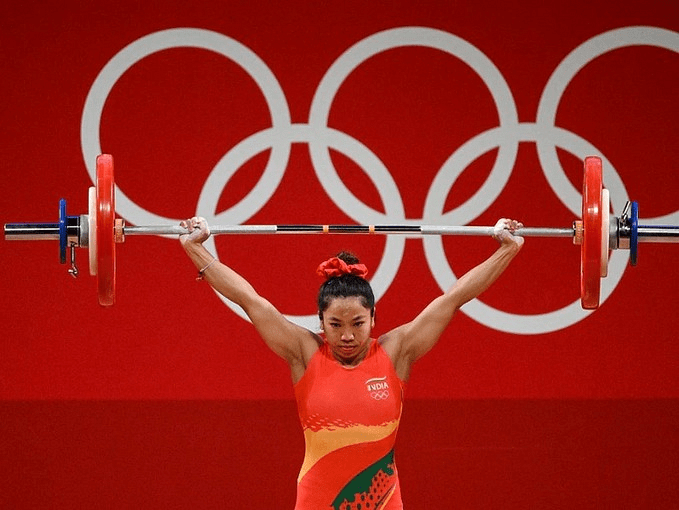
We are in day 5 of Olympics and toady I will discuss about the performances of Indian athletes so far. India had sent 127 athletes in Tokyo Olympics 2021. but performance so far is as usual its not been up to the mark and according to expectations of fans.
India got a perfect start on day 1 of the Tokyo Olympics as weightlifter Mirabhai chanu won Silver medal and created history of become just 2nd women weightlifter to win a medal in Olympics for India after Karnam Malleswari. there were many events but some of them were as:- After winning qualification round easily, Saurabh Chaudhary finished seventh in the 10m air pistol final. In archery, the pair of Deepika Kumari and Pravin Jadhav qualified for the finals but lost the next round from south korean archers. Our Mens hockey team won the first match of Olympics and defeated New Zealand by 3-2.
On day 2, India could not improve their medal tally. However, it was a good day for the Indian rowing team of Arjun Lal and Arvind Singh that were qualified for the semifinals. Shuttler PV Sindhu won her opener in a perfect start to better Rio campaign. Paddler Manika Batra moved to the third round.later, Mary Kom opened her Tokyo 2020 campaign with a round of 32 win in the 51kg category but all o us were shocked by India’s disappointment in shooting as Manu Bhaker, Yashaswini Deswal and Deepak Kumar, Divyansh Panwar failed to qualify for 10m air pistol in their respective categories. senior tennis player Sania Mirza and Ankita Raina were knocked out of the women’s doubles after losing 6-0, 6-7(0), 8-10 to the Kichenok twins of Ukraine. and India’s lone gymnast Pranati Nayak also failed to qualify.
Day 3 also didn’t bought any smile on Indian fans as Indian shooters dissapointed again and the hockey team were hammered by australia 1-7 but badminton star player P V Sindhu, boxing great M C Mary Kom and table tennis star Manika Batra won their respective matches. The 38-year-old Mary Kom, who is already an 2012 Olympic bronze-medallist, prevailed 4-1 against a rival who is 15 years her junior to start her pursuit of a second medal but apart from these 2-3 small success other athletes dissappointed.
on day 4,Team India had a heartbreaking day in Badminton and Shooting on Tuesday. Initially the day was good for India as Indian shooters Manu Bhaker, Saurabh Chaudhary topped their mixed team air pistol qualification Stage 1 but were unable to go ahead after that. The day then continued to worsen for Indian shooting as Divyansh/Elavenil and Anjum/Deepak also failed to make it to rifle final. but it was not enough as Divyansh/Elavenil and Anjum/Deepak also failed to make it to rifle final. Indian men hockey team made a terrific comeback and defeated Spain 3-0 after getting hammered by Australia. Meanwhile, boxer Lovlina Borgohain made indian fans smile was qualified to quarterfinals and is a step away from winning a medal. She will face Nien-Chin Chen of Chinese Taipei in the quarterfinal on Friday (July 30). (Stats source: https://indianexpress.com/article/olympics/tokyo-olympics-2020-day-4-live-updates-7423748/)
Apart from weightlifter Mirabhai chanu, India had really disappointed so far but we will continue to support our athletes and will expect a medal very soon. as many events our still remaining.
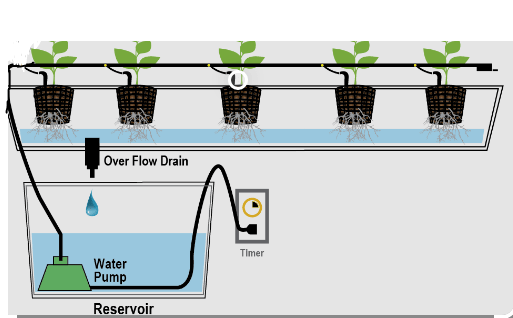
Micro Irrigation has gained attention during recent years because of its potential to increase yields and decrease water , fertilizer and labour requirements if managed properly.
Principal characteristics distinguishing the micro Irrigation with other pressurized technologies are:
Low flow rate
Localized , partial wetting of the soil volume
Frequent water application due to the limited wetted volume
Low operating pressure ,compared to sprinkler irrigation
Drip Irrigation involves technology for irrigating plants at the root zone through emitters fitted on a network of pipes( mains ,sub-mains and laterals). The emitting devices could be drippers ,micro sprinklers, mini sprinklers ,micro jets, misters ,fan jets, micro sprayers, foggers and emitting pipes, which are designed upon specific requirements , which may vary from crop to crop . Water requirement, age of plant spacing ,soil type , water quality and availability are some of the factors which would decide the choice of the emitting system .
In cases where the water sources is an open well or tubewell / borewell , then for assessment of water availability and pumping power requirement it is necessary to compute the following:
Depth of the water table
Discharge of the well
Total pumping level
The depth of water level below the ground level, before pumping begins ,is the depth of the water table . It can be measure by a simple procedure using a rope with a stone tied at one end .
The discharge of the well / tubewell is measured after running the pump for a period of 30 minutes to 1 hour . It can be measure by adopting volumetric measure.Under this method , the discharge is emptied into a ditch of container of know dimensions for a certain length of time . the rate of discharge is calculated by dividing the total volume of water discharged by the time taken. This method works for low discharge say upto 5 litres per second. For higher discharges volumetric measurement may be difficult and therefore standard devices like water meter/c.notch/flume may be used.
Total pumping level includes the depth of the water level, drawdown and height of the outlet above the ground level. To measure the drawdown the pump installed over the well/tubewell is run for a period of 30 minutes to one hour so that constant water level is attained in the well/tubewell. The new depth of the water level is measured. The difference between the depth and level above the ground level is also to be measured . Once the total pumping level is determined , the horsepower .
HP= Q*H/75*n
where Q = Discharge ,Ips
H=Total head ,m
n = Efficiency of the pump and motor
Depending up on the water availability and water requirement of the crop (as given in the table ) for the entire area in calculated .Then the piping network and number of sections will be decided accordingly.
“Education is the key to success”. But is it actually providing knowledge to the extent that it makes everyone better off ? Do the lessons taught in schools really matter in our lives ? Is the education system well-established keeping in mind the needs of the times ?
We need to accept that our education system is ruined by some corrupt people hindering the growth and success of the country. Somehow we all know that the training techniques in our schools is old style now and that it requires improvements.
It also becomes a burden for students when they are loaded with tests, assignments and project besides getting regular homework. The classrooms too get filled with only subject-related matter and less care is taken for extra-curriculum.
However there is more scope for extra-curriculum as compared to competitive and corrupt field of academics. It has become corrupt since leverage is being given to some sections or some particular people are being favored in terms of marks(/quotas) or job posts, allocation of funds, etc.
Instead of the regular pattern of teaching, the focus should be made on skill development of students. They acquire more importance in life. Now we see that students lack even the basics of what the corporate world demands of them. From there arises the need to join paid courses after school. You sacrifice peak time for decision making of your life in learning something that should have been the syllabus in the schools! Isn’t it frustrating for someone who holds personal responsibilities and obligations already and had been dreaming of placements and other great opportunities to come on way after education ? Shouldn’t our system be wide enough to support growth and development of individuals, accepting it as their duty towards the nation ?
But the need of the hour is to take action. We can’t continue blaming others’ unless we put forward a step by ourselves. As it has been well said “Be the change you want to see”. The schedule needs to be changed. There is a need for addition of classes for upskilling of students by professionals in the schools itself as there is no time left afterwards, as many say.
There should be attention towards holistic development of a child from the very beginning by arranging music classes, sports period, and other possible skill enhancement classes in schools. This would ensure inclined growth of the child towards his/her area of interest. The students will have knowledge of various fields from the very beginning and this will help them decide early what do they wish to pursue as a career. This is the major problem now-a-days that the youth is not sure of their future goals. They surely have the spark to do wonders but don’t have the correct guidance as to what is best for them or how can they achieve their aims in between the complexities of the world.
The academics should be limited now, to the extent of its feasibility in life and higher studies be offered with a wider choice so that the focus is narrowed upon the future without compromising with present. Knowledge and practical-ability should be given priority over marks and grades. There are innumerable examples of people who were weak in studies but their practical approach proved beneficial for the world. Therefore the students should be taught the practical aspects more than the bookish language and terms.
Coming back to skills, there are a variety of fields where interests of a student can be drawn upon. Painting or sketching, writing, dance and singing, sports(basketball, relay race, badminton), etc. should not be limited to a single period in a week. They should be emphasized as much as academics’ competitions. Training should be provided to those who are keen about such extra activities which are actually, not “extra”.
Our climate is changing around us faster than predicted. From more frequent and extreme storms to unprecedented heatwaves, from landslides to earthquake , we’re feeling the impacts of human-caused global warming. Global warming is the long-term heating of Earth’s climate system observed since the pre-industrial period (between 1850 and 1900) due to human activities, primarily fossil fuel burning, which increases heat-trapping greenhouse gas levels in Earth’s atmosphere. Certain gases in the atmosphere block heat from escaping. Long-lived gases that remain semi-permanently in the atmosphere and do not respond physically or chemically to changes in temperature are described as “forcing” climate change. Gases, such as water vapor, which respond physically or chemically to changes in temperature are seen as “feedbacks.”
SOME OF THE GASSES THAT CONTRIBUTE TO CLIMATE CHANGE ARE :
Water vapor. The most abundant greenhouse gas, but importantly, it acts as a feedback to the climate. Water vapor increases as the Earth’s atmosphere warms, but so does the possibility of clouds and precipitation, making these some of the most important feedback mechanisms to the greenhouse effect.
Carbon dioxide (CO2). A minor but very important component of the atmosphere, carbon dioxide is released through natural processes such as respiration and volcano eruptions and through human activities such as deforestation, land use changes, and burning fossil fuels. Humans have increased atmospheric CO2 concentration by 48% since the Industrial Revolution began. This is the most important long-lived “forcing” of climate change.
Methane. A hydrocarbon gas produced both through natural sources and human activities, including the decomposition of wastes in landfills, agriculture, and especially rice cultivation, as well as ruminant digestion and manure management associated with domestic livestock. On a molecule-for-molecule basis, methane is a far more active greenhouse gas than carbon dioxide, but also one which is much less abundant in the atmosphere.
Nitrous oxide. A powerful greenhouse gas produced by soil cultivation practices, especially the use of commercial and organic fertilizers, fossil fuel combustion, nitric acid production, and biomass burning.
Chlorofluorocarbons (CFCs). Synthetic compounds entirely of industrial origin used in a number of applications, but now largely regulated in production and release to the atmosphere by international agreement for their ability to contribute to destruction of the ozone layer. They are also greenhouse gases.
The consequences of changing the natural atmospheric greenhouse are difficult to predict, but some effects seem likely:
Earth becomes warmer .
Stronger green house effect will warm the earth , melt the glaciers , increasing sea levels
Outside of a greenhouse, higher atmospheric carbon dioxide (CO2) levels can have both positive and negative effects on crop yields. Some laboratory experiments suggest that elevated CO2 levels can increase plant growth. However, other factors, such as changing temperatures, ozone, and water and nutrient constraints, may more than counteract any potential increase in yield.
Rafflesia Arnoldii is a species of flowering plant in the parasitic genus Rafflesia. It is noted for producing the largest individual flower on Earth. It has a strong and unpleasant odor of decaying flesh. It is native to the rainforests of Sumatra and Borneo. Although there are some plants with larger flowering organs like the titan arum (Amorphophallus titanum) and talipot palm (Corypha umbraculifera), those are technically clusters of many flowers.
Rafflesia Arnoldii is one of the three national flowers in Indonesia, where it is known locally as the puspa langka or Padma paksasa. The other two being the white jasmine (Jasminum sambac) and moon orchid (Phalaenopsis amabilis). The first person to discover Rafflesia was the ill-fated French explorer Louis Auguste Deschamps in Java between 1791 and 1794, but his notes and illustrations were seized by the British in 1803 and were not available to western science until 1861.
Thailand, Rafflesia can be seen in Khao Sok National Park where the flowers are numbered and monitored by the park rangers. The regional name of Rafflesia Arnoldii is kerubut in Sumatra, cendawan biriang in the Minangkabau language in kecamatan (‘district’) of Pandam Gadang and “corpse flower” by the local people.
Antique illustration of Rafflesia Arnoldii
Although Rafflesia is a vascular plant, it lacks any observable leaves, stems or even roots, and does not have chlorophyll properties. It lives as a holoparasite on vines of the genus Tetrastigma. Similar to fungi, individuals grow as a mass of thread-like strands of tissue completely embedded within and in intimate contact with surrounding host cells from which nutrients and water are obtained. It can only be seen outside the host plant when it is ready to reproduce; the only part of Rafflesia that is identifiable as distinctly plant-like are the flowers, though even these are unusual since they attain massive proportions, have a reddish-brown colouration, and stink of rotting flesh. The flower of Rafflesia Arnoldii grows to a diameter of around one meter (3.3 feet), weighing up to 11 kilograms. These flowers emerge from very large, cabbage-like, maroon or dark brown buds typically about 30 cm (12 in) wide, but the largest flower bud ever recorded found at Mount Sago, Sumatra in May 1956 was 43 cm (17 in) in diameter. Indonesian researchers often refer to the bud as a ‘knop’ (knob).
Corpse flower, Rafflesia arnoldii, West Sumatra, Indonesia.
Rafflesia Arnoldii is found in both secondary and primary rainforests. The only host plant species of Rafflesia Arnoldii is Tetrastigma leucostaphylum in West Sumatra. Tetrastigma are themselves parasites of a sort, using the strength and upright growth of other surrounding plants to reach the light. The trees that Tetrastigma uses to climb up to light, are relatively limited in number of species, although they are generally the closest tree to the vine. The buds take many months to develop and the flower lasts for just a few days. The flowers are gonochorous – either male or female, thus both flowers are needed for successful pollination.
When Rafflesia is ready to reproduce, a tiny bud forms outside the root or stem of its host and develops over a period of a year. The cabbage-like head that develops eventually opens to reveal the flower. The stigmas or stamens are attached to a spiked disk inside the flower. A foul smell of rotting meat attracts flies and beetles. To pollinate successfully, the flies and beetles must visit both the male and female plants, in that order. The fruit produced are round berries filled with numerous minute seeds.
The flies like Drosophila colorata, Chrysomya megacephala and Sarcophaga haemorrhoidalis visit the late flowers. Black ants of the genus Euprenolepis may feed on the developing flower buds, perhaps killing them.
It’s conservation has not been assessed for the IUCN Red List. Ecotourism is thought to be a main threat to the species, at locations which are regularly visited by tourists the number of flower buds produced per year has decreased.
“Nothing in life is to be feared. It is only to be understood.’ –Marie Curie A phobia is a persistent, excessive, unrealistic fear of an object, person, animal, activity or situation. It is a type of anxiety disorder. A person with a phobia either tries to avoid the thing that triggers the fear, or […]
Although you may believe that you have dry, oily, or sensitive skin, do you truly know? Knowing your genuine skin type can help you shop for cosmetics the next time you’re in the store. In reality, using the wrong products for your skin type — or even famous Internet tips — can exacerbate acne, dryness, and other skin issues.
Which DIY skin hacks aren’t healthy, even if they seem to work, how to treat certain skin conditions like acne or scarring which DIY skin hacks aren’t healthy, even if they seem to work.
Building a daily skin care routine
A daily skin care programme can help you maintain general skin health and alleviate particular concerns like acne, scars, and dark spots, regardless of your skin type. A daily skin care routine consists of four essential stages that should be completed once in the morning and once before bedtime.
1. Cleansing: Choose a cleanser that doesn’t leave your skin tight after washing. Clean your face no more than twice a day, or just once, if you have dry skin and don’t wear makeup. Avoid washing for that squeaky-clean feeling because that means your skin’s natural oils are gone. Cleansers known to work well for all skin types include Cetaphil and Banila Clean It Zero Sherbet Cleanser.
2. Serums: A serum with vitamin C or growth factors or peptides would be better in the morning, under sunscreen. At night, retinol or prescription retinoids work best. Makeup Artist’s Choice has an effective vitamin C and E serum and retinol available.
3. Moisturizer: Even oily skin needs moisturizer, but use one that is lightweight, gel-based, and non-comedogenic, or doesn’t block your pores, like CeraVe’s facial lotion. Dry skin may benefit from more cream-based moisturizers like MISSHA Super Aqua Cell Renew Snail Cream. Most brands will label their products as gel or cream on their packaging.
4. Sunscreen: Apply sunscreen with at least 30 SPF 15 minutes before heading outdoors, as it takes a while for sunscreen to activate. Darker skin tones actually need more sun protection because hyperpigmentation is harder to correct. Try EltaMD’s sunscreen, which offers broad-spectrum UVA/UVB protection and is recommended by the Skin Cancer Foundation.
Suitable for all skin types
Keep yourself hydrated.
At least once a week, change your pillowcases.
Before going to bed, wash or wrap your hair.
Apply sunscreen 15 minutes before heading out every day.
To test how your skin reacts, start with a basic and uncomplicated routine. You can then add other products like exfoliants, masks, and spot treatments to increase your skin’s health if you’re comfortable.
Also, remember to patch test new products, especially if you have sensitive skin. This can aid in the detection of allergic reactions.
DIY Hacks to avoid
For typical skin concerns like acne pimples and dark patches, people claim that DIY remedies like lemon juice and toothpaste work miracles. Even Oscar winner Emma Stone claims that baking soda is her skin care secret. However, because these techniques might damage your skin’s barrier, they may cause more long-term harm than good.
Avoid these do-it-yourself blunders
Lemon juice: While it contains citric acid, it is far too acidic and might create dark spots following sun exposure. It might also cause your skin to become dry and irritated.
Baking soda (sodium bicarbonate) Baking soda, with a pH of 8, will stress your skin, severely reduce your skin’s water content, and produce dry skin.
Garlic: Garlic, when eaten raw, can cause skin allergies, eczema, and other skin conditions.
Toothpaste: While toothpaste’s chemicals destroy bacteria and absorb oil, they can also dry up or irritate your skin. Sugar: Sugar is too harsh for the skin on your face as an exfoliator.
Vitamin E: Applying vitamin E to your skin can irritate it, and it hasn’t been proven to improve scar look.
Although some of these substances are natural and inexpensive, they are not tailored for your skin. Even if you don’t experience any obvious negative effects, some substances can cause long-term or delayed harm. It’s important to utilise cosmetics designed specifically for your face. Before attempting DIY skin care, consult your doctor or dermatologist.
If your skin problems do not improve with over-the-counter products, you should contact a dermatologist. Prescription treatment for more severe acne, scarring, or other issues may be required, such as oral antibiotics, birth control, or topical prescription retinoids.
For deeper cysts or acne patches lodged beneath your skin, your dermatologist may conduct an extraction.
Keep in mind that the way goods perform depends on your skin type. Even when using a natural product, using the wrong one might cause breakouts, pimples, and redness.
It’s crucial to figure out your skin type and tailor your skin care routine accordingly. You can also take notes on product ingredients to determine if any of them are producing allergic reactions on your skin.
After cleansing your face, look for products that include these substances and incorporate them into your routine.
For a long time, aggressive driving has been an issue on our roads, and it appears to be growing worse. Screaming, unpleasant gestures, and even violence have become commonplace on our highways, to the point where it has gained its own name: road rage. Find out what causes road rage, if you’re prone to it, and how you can help keep our roads safe by refusing to give in to it.
After a series of shootings on many motorways throughout the city, local television station KTLA popularized the term “road rage.” The National Highway Traffic Safety Administration defines road rage as when a driver “commits moving traffic offences so as to endanger other persons or property; an assault with a motor vehicle or other dangerous weapon by the operator or passenger of one of one.
The National Highway Traffic Safety Administration distinguishes between road rage and aggressive driving, the former being a criminal offence and the latter a traffic violation, according to the NHTSA. The driver is held responsible in this definition.
Road Rage Factors
Here are some of the most typical circumstances that lead to road rage or aggressive driving behaviour.
Delays in traffic Heavy traffic, waiting at stoplights, seeking for a parking spot, or even waiting for passengers can all contribute to a driver’s rage.
Late for a meeting Drivers can become irritable if they are late for a meeting or appointment.
Anonymity Drivers may feel more comfortable engaging in risky driving behavior’s such as tailgating, cutting people off, excessive honking, or making rude gestures if they believe they won’t see other drivers again.
Ignorance of others and the law Some motorists may believe that the rules do not apply to them.
Learned or habitual conduct Aggressive driving may be the norm for some drivers.
Forms of road rage
Tailgating
Yelling
Honking in anger
Making angry gestures
Trying to block another vehicle from changing lanes
Cutting off another vehicle on purpose
Getting out of the vehicle to confront another driver
Bumping or ramming another vehicle on purpose
How to avoid road rage
To protect yourself from aggressive drivers or if you become a victim of a road rage incident, make sure you have the right car insurance policy.
Take your time. Allow yourself plenty of time to get where you want to go; you’ll be less likely to become impatient and take unnecessary risks if you do.
Allow yourself to cool down. Take some time to relax if you’re upset.
The Diagnostic and Statistical Manual of Mental Disorders does not list road rage as a mental disorder (DSM). The behaviours commonly associated with road rage, according to an article published by the Associated Press in June 2006, can be the result of an illness known as intermittent explosive disorder, which is recognised by the DSM.
Between 2001 and 2003, polls of 9,200 adults in the United States yielded this conclusion. The National Institute of Mental Health provided funding for the surveys.
Road rage is a serious offence that may be considered a threat to public safety. However, because it is not always feasible to determine purpose by external observation, “road ragers” who are caught by police may face additional charges such as careless or reckless driving, as well as a fine.
Youngsters are now facing the impact of climate change themselves. Many of them have experienced-led disasters such as floods and cyclones, more than their previous generation did.
Second, there is growing awareness on the regulatory requirement and the investor’s demand, said Jagdish Ratnani, a Professor.
Nevertheless, the fact is that many jobs of the future will require hordes of managerial talent who understand ESG. Its a great career opportunity, Aditya Shelar, a student at IIM Lucknow, thinks that business in future will think beyond numbers and they would need people who under- stand a range of issues.
The transition to electric vehicles, higher solar power adoption, green practices in real-estate as well as carbon neutral policies will all require manpower that drive these shifts.
Environment and sustainability will have to be embedded in both corporate thought and actions. Its a requirement for branding, for raising funds, and to capture young and aware consumers. Institutions will increasingly adopt that in the classroom and beyond. It was said by Gopal Sarangi of TERI Institute of Advance Studies.
Some firms want to evaluate if their manpower is conscious about ethical business strategies. Some firms want to evaluate if their manpower is conscious about ethical sourcing, environment reservation, SGD goals like equality at workspace, the side effects of child labour and fair wage.
All this will fuel demand for more courses in B- Schools.
There are numerous purposes behind singling out children’s rights in a different common liberties Convention . Children are neither the assets of guardians nor of the state, nor are they simple individuals really taking shape; they have equivalent status as individuals from the human family.
Children start life as absolutely dependent creatures , Children should depend on grown-ups for the support and direction they need to develop towards freedom. Such support is undeniably found from grown-ups in children’s families, yet when essential grown-up parental figures can’t address children’s issues, it is up to the State as the essential obligation conveyor to track down an option to the greatest advantage of the child. The activities, or inactions, of government sway children more unequivocally than some other gathering in the public eye . Essentially every space of government strategy – from schooling to general wellbeing – influences children somewhat. Childish policymaking that neglects to consider children adversely affects the fate of all citizenry.
Children’s perspectives ought to be heard and considered in the political interaction , Children by and large don’t cast a ballot and don’t generally partake in political cycles. Without extraordinary thoughtfulness regarding the assessments of children – as communicated at home and in schools, in neighborhood networks and surprisingly in governments – children’s perspectives go unheard on the numerous significant issues that influence them now or will influence them later on. Numerous progressions in the public eye are having an unbalanced, and regularly adverse, sway on children . Change of the family structure, globalization, environmental change, digitalization, mass relocation, moving business designs and a contracting social government assistance net in numerous nations all emphatically affect children. The effect of these progressions can be especially decimating in circumstances of equipped clash and different crises.
The solid improvement of children is essential to the future prosperity of any general public. Since they are as yet creating, children are particularly defenseless – more so than grown-ups – to helpless day to day environments like destitution, insufficient medical services, nourishment, safe water, lodging and ecological contamination. The impacts of infection, hunger and neediness undermine the fate of children and hence the eventual fate of the social orders wherein they live. The expenses for society of bombing its children are colossal
Social examination discoveries show that children’s soonest encounters essentially impact their future turn of events. The course of their improvement decides their commitment, or cost, to society throughout their lives.
Caste discrimination is one of the most exceedingly awful denials of basic freedoms on the planet today. It is minimal perceived and infrequently recognized, and influences in excess of 260 million individuals around the world. Through a hierarchical situation, the task of essential rights among different castes is profoundly inconsistent, with those at the top getting a charge out of most rights combined with least obligations and those at the base performing most obligations combined with no rights. The situation is kept up with through the inflexible implementation of social segregation (an arrangement of social and financial punishments).
Caste discrimination includes enormous infringement of common, political, financial, social and social rights. It is normal banned in nations influenced by it, yet an absence of execution of enactment and caste-inclination inside the equity frameworks to a great extent leave casualties without security.
The rejection of supposed ‘lower caste networks’ by different gatherings in the public eye and the intrinsic underlying disparity in these social connections lead to significant degrees of neediness among influenced populace gatherings. There is little admittance to advantages and improvement measures, and their position by and large blocks contribution in dynamic and significant investment openly and common life.India’s caste framework is maybe the world’s longest enduring social progressive system. A characterizing highlight of Hinduism, caste includes an unpredictable requesting of gatherings of people based on custom immaculateness. An individual is viewed as an individual from the caste into which the person in question is conceived and stays inside that caste til’ the very end, albeit the specific positioning of that caste might differ among areas and over the long run. Contrasts in status are generally advocated by the strict regulation of karma, a conviction that one’s place in life is controlled by one’s deeds in past lifetimes.
Conventional grant has portrayed this over 2,000-year-old framework inside the setting of the four head varnas, or enormous caste classes. Arranged by priority these are the Brahmins (ministers and educators), the Ksyatriyas (rulers and officers), the Vaisyas (dealers and merchants), and the Shudras (workers and craftsmans). A fifth classification falls outside the varna framework and comprises of those known as “untouchables” or Dalits; they are regularly appointed undertakings also customarily dirtying to justify incorporation inside the customary varna system.7 Almost indistinguishable designs are likewise noticeable in Nepal.
Regardless of its established abrogation in 1950, the act of “distance”- the inconvenience of social incapacities on people by reason of birth into a specific caste-stays a lot of a piece of rustic India. Addressing more than one-6th of India’s populace or exactly 160 million individuals Dalits suffer close to finish social segregation. “Untouchables” may not go too far isolating their piece of the town from that involved by higher castes. They may not utilize similar wells, visit similar sanctuaries, or drink from similar cups in tea slows down. Dalit youngsters are regularly made to sit at the rear of study halls. In what has been called India’s “covered up politically-sanctioned racial segregation,” whole towns in numerous Indian states remain totally isolated by caste.
“Distance” is supported by state portion of assets and offices; separate offices are accommodated separate caste-based areas. Dalits frequently get the less fortunate of the two, in the event that they get any whatsoever. In numerous towns, the state organization introduces power, disinfection offices, and water siphons in the upper-caste segment, however fails to do likewise in the adjoining, isolated Dalit region. Fundamental conveniences, for example, water taps and wells are additionally isolated, and clinical offices and the better, covered rooftop houses exist solely in the upper-caste province. As uncovered by the contextual analysis underneath on the tremor in Gujarat, these equivalent practices remain constant even in the midst of extraordinary cataclysmic event.




















 Eduindex
You must be logged in to post a comment.