

Yoga Policies and Programmes in Global Scanerio

Source: yoga alliance

Ongoing Pandemic has left with many physical and mental health issues; where we face constant on and off lockdowns. People suffering through financial hardship lead to an impact on their lifestyle and their work routine. Large population confronting Mental health issues, loneliness, constant fear of losing job, psychological suffering, anxiety depression, sleeping pattern and isolation.

It is natural for anyone to develop anxiety or any health issue but this time needs to focus on our mental health therefore, yoga is considered as a preventive measure. Yoga is helpful to decrease the intensity of mental health issues and lead us towards a healthy lifestyle. Government of India, private yoga institutes abroad, campus awareness exclusively works on yoga significant aspects of human life. But, not even government or yoga institutes have introduced yoga programs for GBV survivors. India is a country who extensively works on yoga Policies and programmes by state government ,yoga Universities. India has its own Ministry for yoga that promotes yoga events on a larger scale. 

USA (New Jersey, Newton Massachusetts)

The USA federal government had not supported any yoga Policy or even program. To make it easier here, we need to understand the difference between Policy and programme.

Programme – short term intervention that creates temporary improvement in wake of challenges not necessarily supported by the government. On the other hand, policies are those which are passed by legislature and implemented by executives. 

Therefore, there is no government funded yoga policy or programme. But many initiatives taken up by several universities or yoga school based programmes. More  Christian dominating states are not ready for school based yoga programs for their children according to The Atlantic report. States like Georgia, Alabama find yoga as Hindu and Buddhist roots. 

Many private yoga studios are opening in the USA or programs. For example

  • Outdoor fitness Program by New York City Dept of Parks  & Recreation (private & paid).
  • 80 hours online yoga training 
  • Online self paced Restoration yoga training 
  • Online yoga teacher training 50 hours
  • Paid programmes in Arizona, Miami, California and Oregon.
  • Vinyasa flow, Iyengar, Ashtanga, heated flow, Relax & Renew and Restoration Yoga 

France/UK/Istanbul

France

France also has the same situation when it comes to government Policy or programmes. Few paid programmes are there like :-

  • Yoga holiday in Ariege
  • Day yogic healing Retreat in Biarritz
  • Day meditation and yoga retreat in Chateaubriant

Istanbul

Istanbul yoga centers have joined the yoga alliance to promote the practices of yoga.

  • Yoga posture and breathing classes for all ages
  • Yoga instructor certificate program of VYASA
  • Yoga therapy for common ailments.

United kingdom

  • Isha foundation
  • Yoga for health & wellness

Yoga practices in the UK Study: cross sectional online anonymous survey. The study investigated the characteristics of people who practice yoga, reasons for initiating & maintaining practices and perceived impact of yoga on health & well being.

India 
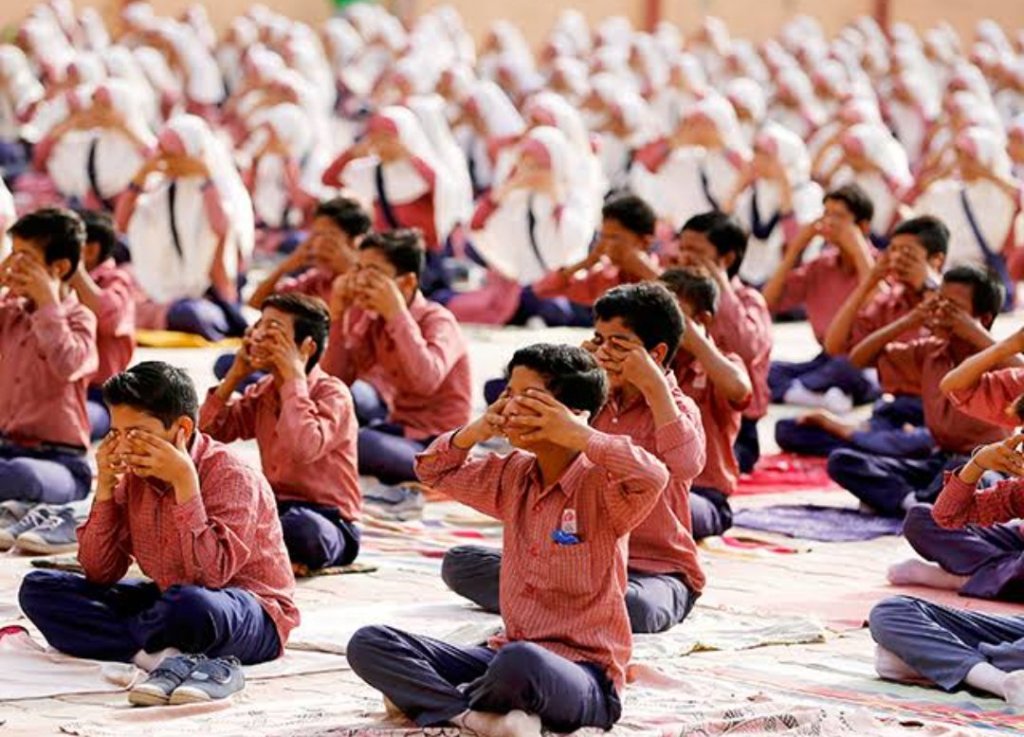
Source: International yoga day
  • Delhi Government launched online yoga classes for Covid 19 patients in home isolation. One hour each from 6am to 11am and 4pm to 7pm named the ” Dilli ki Yogshala”  programme.
  • Yoga on call promoting and facilitating yoga practices.
  • Yoga institutes give their services to transgenders, school children and senior citizens in Mumbai and Delhi.
  • Niti Aayog suggested yoga as a regular activity in schools to encourage healthy choices and behaviors.
  • Government schemes for those who are practicing yoga.
  • By HRD minister yoga training “study in India” program was introduced to enable foreign students to obtain authentic yoga training.
  • Haryana CM maintained a statement “yoga has been included in school curriculum for classes 1 to 10 from 2021” taking yoga to the grassroot level.
  • Many private/paid clubs are already in india.
  • Isha foundation
  • Art & living 
  • Total yoga

International organization

NGOs work overseas to promote yoga and well-being in people.

  • International yoga federation aims to create a world’s yoga community and environment of wellness through yoga.
  • Yoga alliance 
  • World yoga organization
  • International yoga training and healing center (Mauritius)
  • Sampoorna yoga
  • Total yoga program has group yoga classes, corporate wellness workshops, yoga retreats, seminars & events in Singapore, California and Philadelphia.
  • Yoga without Borders in Barcelona working in Palestine, Morocco and Tanzania
  • Art & Living (New Jersey) program teaches free breath meditation and breathing techniques that are helpful in reducing stress and make meditation effortless.
  • Isha foundation & Meditation class – Inner engineering Meetup group free meditation classes, different yoga programs and public events.
  • WHO also considers Yoga as one of the significant processes to protect themselves from coronavirus.
  • UN on International yoga day “yoga is also playing a significant role in psycho Social care and rehabilitation of Covid 19 patients during quarantine and isolation.

Private Research and Development

  • Dept of Ayush of Ministry of Ayush their laboratories come under Government of India R & D programs.
  • Kaivalyadhama established the scientific research Dept leading initiative in yoga recognised in the Institute of scientific research by the scientific & industrial research organization (SIRO) Ministry of science & technology Govt of india. More research on yoga’s impact on various biochemical, physiological and psychological parameters. Yoga effects on cancer, chronic diseases, immune diseases, psychogenic disorders, obesity, diabetes and stress.
  • Post graduate institute of medical education, Tshwane University of Technology and Uttarakhand Ayurved University put a recent development in yoga: A scientific perspective.
Globalisation

Introduction

Globalisation is the process of international integration arising from the interchange of world views, products, ideas and other aspects of life. The vital element of globalisation is ‘worldwide interconnectedness’ that is created and sustained as a consequence of these constant flows. Globalisation is a multi-dimensional concept. It has political, economic and cultural manifestations and these must be adequately distinguished. The impact of globalisation is vastly uneven- it affects some societies more than others and some parts of some societies more than others and it is important to avoid drawing general conclusions about the impact of globalisation without paying sufficient attention to specific contexts.

Causes of Globalisation

  • There are many causes of it but technology affects it more than anything else. Invention of printing, integrated chip(IC), telephone, internet has revolutionized communication between people in different parts of the world.
  • Due to faster communication and transportation, ideas, commodities, capital move more easily to any part of the globe than ever. As people got the technology of better communication and transportation they recognise these mediums to connect rest of the world.
  • The Ebola virus is not confined to only African continent but it affects other nations too.
  • It has mainly 3 types of consequences:-
    1. Political : Globalisation results in discomfort in functionality and working of government. The increased role of MNC all over the world leads to reduction in the capacity of govt. to take decisions on their own. But at the same time globalisation does not always reduce state capacity. The importance of state continues to be unchallenged basis of political community. Indeed in some manner state capacity has recieved a boost as a consequence of globalisation. Due to advancement in technology available in state, it can collect information about its citizens. With this information, the state is better governed. State becomes powerful than earlier due to emergence of new technology.
    2. Economic : The economic globalisation involves greater economic flows or exchange of commodities among different countries of the world. The mention of economic globalisation draws our attention to the role of international institutions like IMF and WTO in determining economic policies across world. The restrictions imposed by different countries on capital across countries and allowing imports of other countries have been reduced. Capital across countries means that investors in prosperous countries can invest in other countries including developing countries where they might get good returns. There is less movement of people across the globe because developed countries have carefully guarded their borders with visa policies to ensure that citizens of other countries cannot take away the jobs of their own citizens.
    3. Cultural : It refers to impact of globalisation in what we eat, wear, drink, watch and think. The cultural effect of globalisation poses a threat to different cultures in the world other than western culture. There is a cultural homegenisation which means rise of uniform culture, as we notice the popularity of American things like McDonald’s, Pizza, KFC, GOOGLE, blue jeans and hollywood movies has spreaded across the globe. This is dangerous not only for the poor countries but for the whole of humanity because it leads to the shrinkage or extinction of the rich cultural heritage of the entire globe. But cultural consequences of globalisation is not always negative as sometimes external culture influences simply enlarge our choices and sometimes they modify our culture without overwhelming the tradition. The Maggi is no substitute for noodles, therefore, does not pose any real challenge. Globalisation leads to each culture becoming more distinctive and different. This phenomenon is called Cultural Hetergenisation. Those who are concerned about social justice are worried about the extent of state withdrawal caused by process of economic globalisation. They point out that it is likely to benefit only a small section of population while impovershing those who were dependent on govt. for jobs and welfare. They have emphasised the need to ensure institutional safeguards to minimise the negative effects of globalisation on those who are economically weak. Many movements all over the world feel that safety nets are insufficient or unworkable. They have called for a stopping to forced economic globalisation, for its results would lead to economic ruin for the weaker countries, especially for the poor within these countries. Some economists have described economic globalisation as re-colonisation of the world. Advocates of economic globalisation argue that it generates greater economic growth and well-being for larger sections of population when there is de-regulation. Greater trade among countries allows each economy to do what it does best. This would benefit the whole world. They also argue that economic globalisation is inevitable.

India and Globalisation

From the colonial period, India became an exporter of primary goods and raw materials and a consumer of finished goods. After independence, because of the experience with British, we decided to make things ourselves rather than depending on others. We also decided not to allow others to export to us so that our own producers could learn to make things. This step generated its own problem. India had a fairly sluggish rate of economic growth (due to ignoring other sectors such as health, housing, etc.). In 1991, responding to a financial crisis and to the desire for higher rates of economic growth, India began programme of economic reforms that opened doors for trade and FDI.

India and Resistance to Globalisation

Resistance to globalisation in India has come from political parties as well as through forums like the Indian Social Forum. Trade Unions of industrial workforce as well as those representing farmers interests have organised protests against the entry of multinationals. The patenting of certain plants like Neem by American and European firms has also generated considerable opposition.

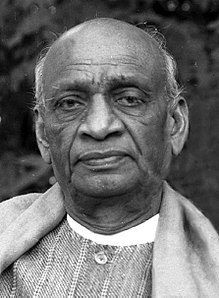
SARDAR VALLABHAI PATEL

Sardar Vallabhai Patel is called the ‘Iron man of India’ for his courage and willpower. He was born in a farmer’s family in 1875 in Gujarat which was then a part of Bombay State. His father’s name was Jawar Bhai.

He had his school education at Baroda and during his school career, he was a brilliant student. He was bold and fearless from his childhood. After finishing his school education, he joined college and finally passed his law degree with credit.

He started his practice as an advocate at Ahmedabad and earned fame as well as fortune. He started leading a luxurious life. During this period he came under the influence of Mahatma Gandhi and on his motivation gave up his practice and joined the Civil Disobedience Movement. He continued to be a staunch Congress worker and leader in all other movements undertaken by Congress.

Most famous of the movements led by Sardar Vallabhai Patel was the Bardoli Farmers Movement, which he very successfully conducted. It was a no-tax campaign and the Bombay Government had to yield to the demands of the Bardoli farmers. He was one of the top leaders in Congress like Gandhiji and Nehru and no policy decision was taken without consulting him. Though he hailed from Gujarat he was and All India leader from the beginning and had a powerful voice in Congress.

After independence he became the Deputy Prime Minister of India, the first to occupy that distinguished post. Jawaharlal Nehru was the Prime Minister.

In 1947 when we got Independence, there were a number of Princely States in India and the unity of India depended on their accession to Indian Union. There was some difficulty in respect of some Princely States like Hyderabad and Travancore. With tact and willpower of Sardar Vallabhai Patel, it became easy to get all Princely States merged with the Indian Union. By consolidating all Princely States, Sardar vallabhai Patel proved that he is really and Iron Man of India. But for him, the Police Action against the Nizam of Hyderabad would not have been taken. On account of his efforts, we had a United India before we became a Republic in 1950.

The Iron man of India breathed his last on 15th December 1951 at Bombay, leaving the new nation firm and on good foundation. Many are of the opinion that if only had Patel lived longer India would have become stronger than what it is today.

Education policies of India

Abstract

After the independence of India there was the urgent need for change in the education system. British education system was rigid and followed their principal. The evolution in education policies was slow. One education policy worked as the draft for another policy.

Introduction

Education policy : policies are a set of written rules and strategies given to an organisation ( government and private). Education policy is about policy which helps to set rules in the educational department. Education policies help the government to decide the objectives of education. Government decided some goals to empower the youth and achieve them through educational policies. 

How many policies have been established after independence.

After independence, Indian decided to degarde the British education system. British education system is just helpful for them. They have difficult course and exam patterns. There was an urgent need for new education policies which related to Indian context. 

  • Universal education system (1948)

It was the first education policy of independent India. It was headed by the first president Dr. Sarvepalli radhakrishnan. The committee gave recommendations for reorganising the examination pattern, medium of instruction, cultural heritage, vocational education and many more.

  • Secondary education system (1952)

This committee works with primary and secondary levels of education. The committee was headed by the Dr. A. L murlidhar. Recommendations given by the committee were reorganising the aim of education and teaching medium at the secondary level. It is also known as muralidhar committee.

  • Indian education system (1964-66)

After the Two committees  there were still some defeats in the education system. The previous committees gave suggestions to organise a new committee. The committee is known as the Kothari commission. It was headed by the D. S. Kothari. The major recommendations were improvement in the education system, focus on national development, addressing the needs and interest of aspiritant. The committee emphasized education for national development 

  • National education policy (1968)

In 1968, late former prime minister shri rajiv gandhi introduced the new education policy. According to him, we have an urgent need for a new education policy for the holistic development of the nation. Free and compulsory education for the children, protection and development for all education systems, and work experience in every field were the programmes under the NEP 1968. It was the first education policy which included agriculture and industries as the courses in education.

  • National educational policy (1986)

National education policy came in 1986. It was focused on equal opportunities for all. The police have an idea of inclusion of scheduled tribes, scheduled caste, handicapped, and women in education. NEP 1986 had 23 task forces under it. 

  • New education policy (2020).

The new education policy 2020 was introduced by the prime minister of India, Shri Narendra Damodardas modi. 

The main aim of NEP 2020 is to provide infrastructure support, innovative education centres to bring back dropouts into the mainstream besides tracking of students and their learning levels, facilitating multiple pathways to learning involving both formal and non-formal education modes and association of counsellors or well-trained social workers with schools.

The vision of NEP 2020 is The vision of the Policy is to instill among the

learners a deep-rooted pride in being Indian, not only in thought, but also in spirit, intellect,and deeds, as well as to develop knowledge, skills, values, and dispositions that support responsible commitment to human rights, sustainable development and living, and global well-being, thereby reflecting a truly global citizen.

The new education policy changed the school structure from 10+2 to 5+ 3+3+4.

 In the new education policy, early childhood and care is considered as the foundational year of learning. The ECC consists of 5 year of school structure. Children will go to bal vatika and anganwadis. There will be universal access to early child care and education. 

Upliftment of literacy and numeracy, cutting the droprate rates, universal access of free and compulsory education, change in pedagogical and curriculum system, rigid to flexible and enjoyable classroom environment, holistic development of the learner, increasing the critical thinking among the learners, empowerment of student through the flexibility in the subject choices, vocational education and teacher training are some major recommendations of new education policy 2020.

Conclusion

The Indian education system always works for the better development of the nation. Every education gives recommendations on the basis of the first one. The aim of all education policies was to provide education facilities to all.

References